Palestinian Art Style
Explore Palestinian art style through tatreez geometry, olive-wood texture, terraced landscapes, and a palette of memory, craft, and resilience.
Instantly rendered in Palestinian — or transform a photo
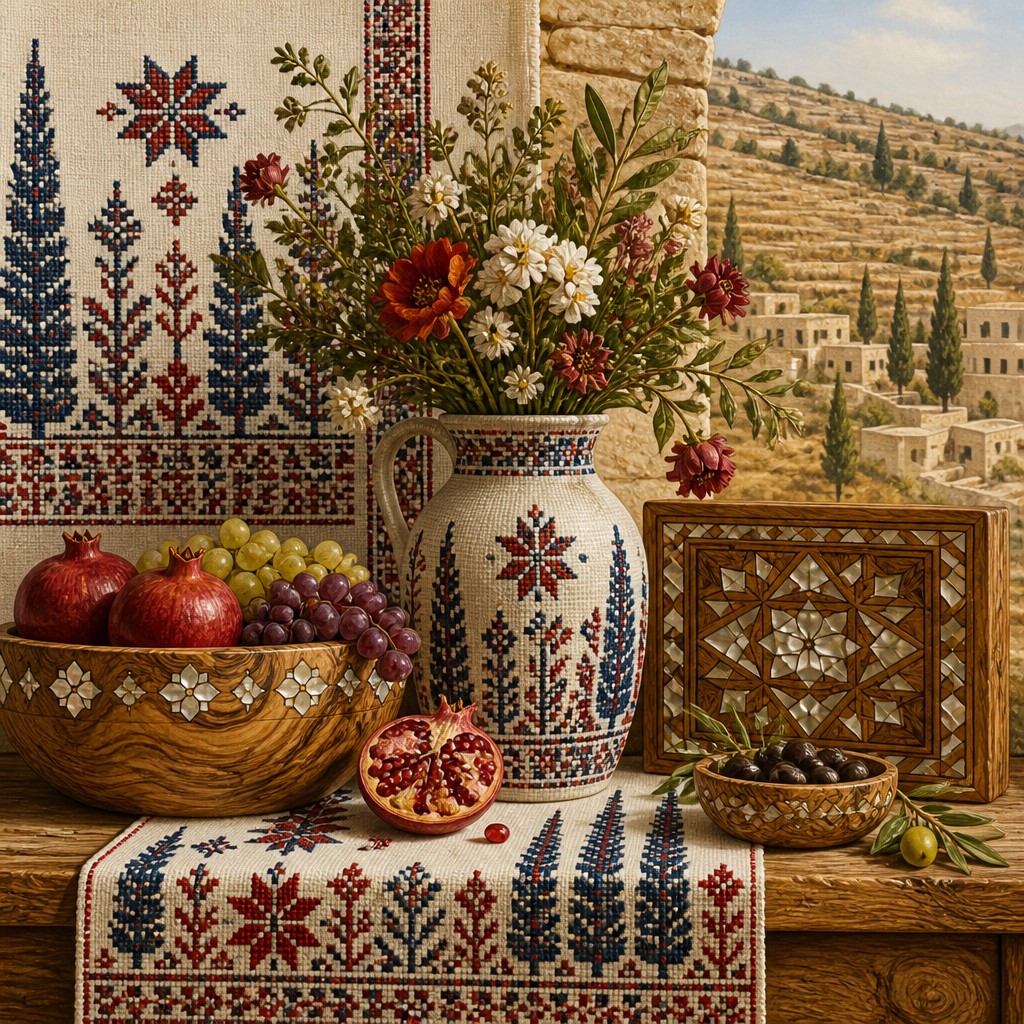
Palestinian Gallery
Tap any artwork to explore it
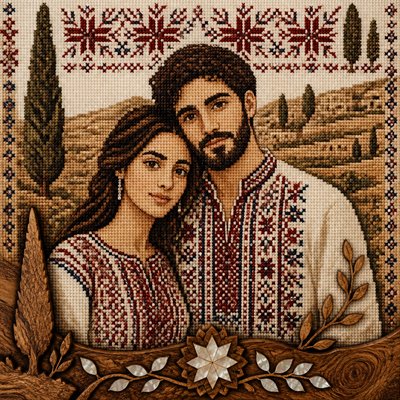
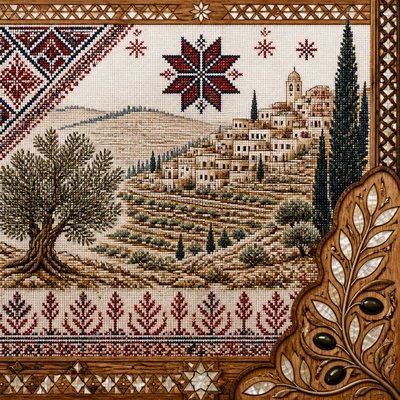
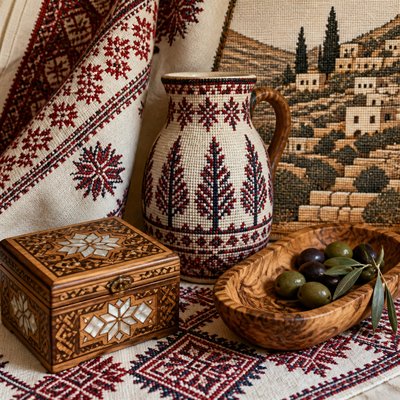
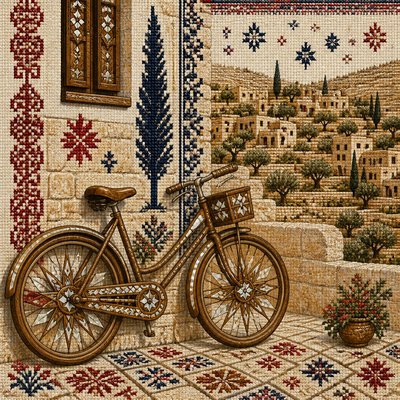
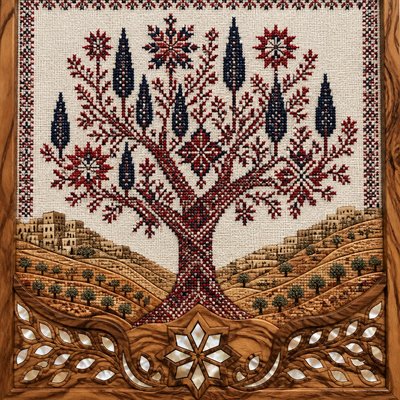
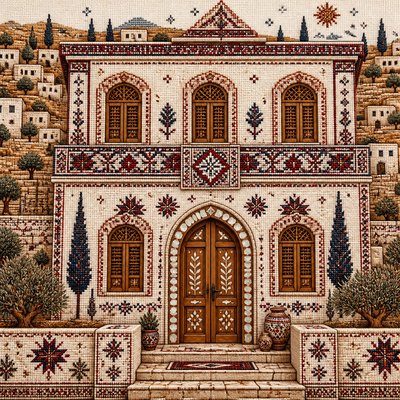
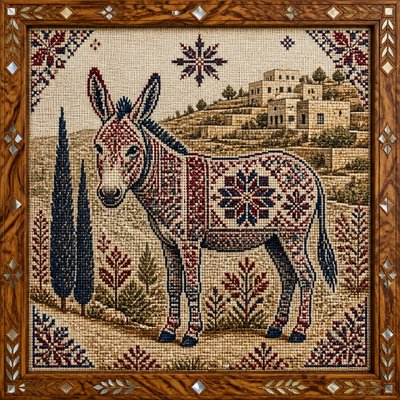
What is Palestinian Art Style?
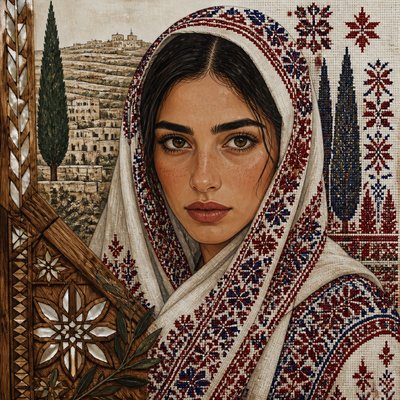
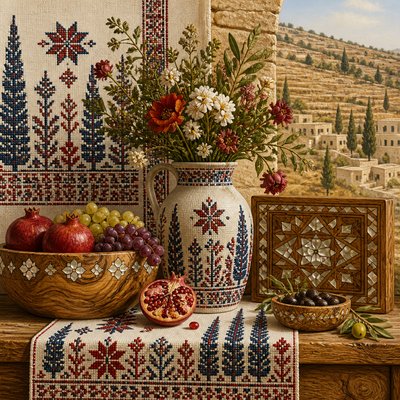
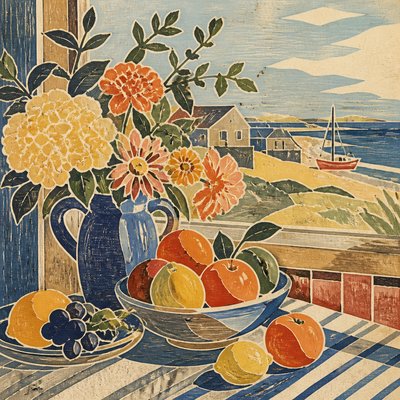
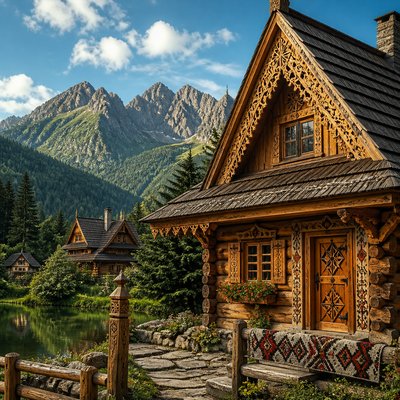
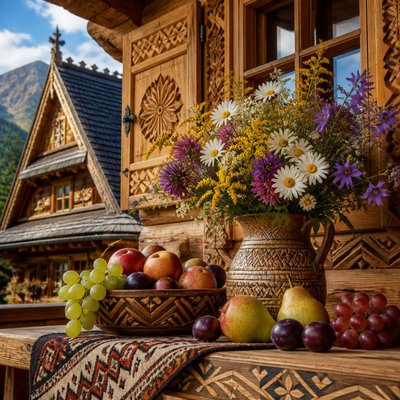
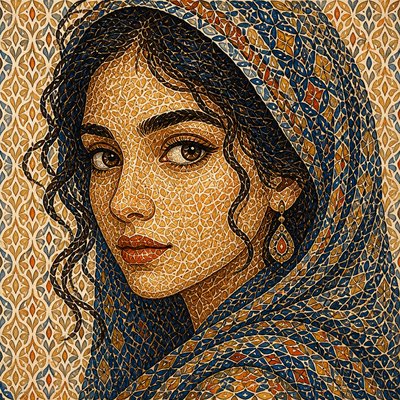
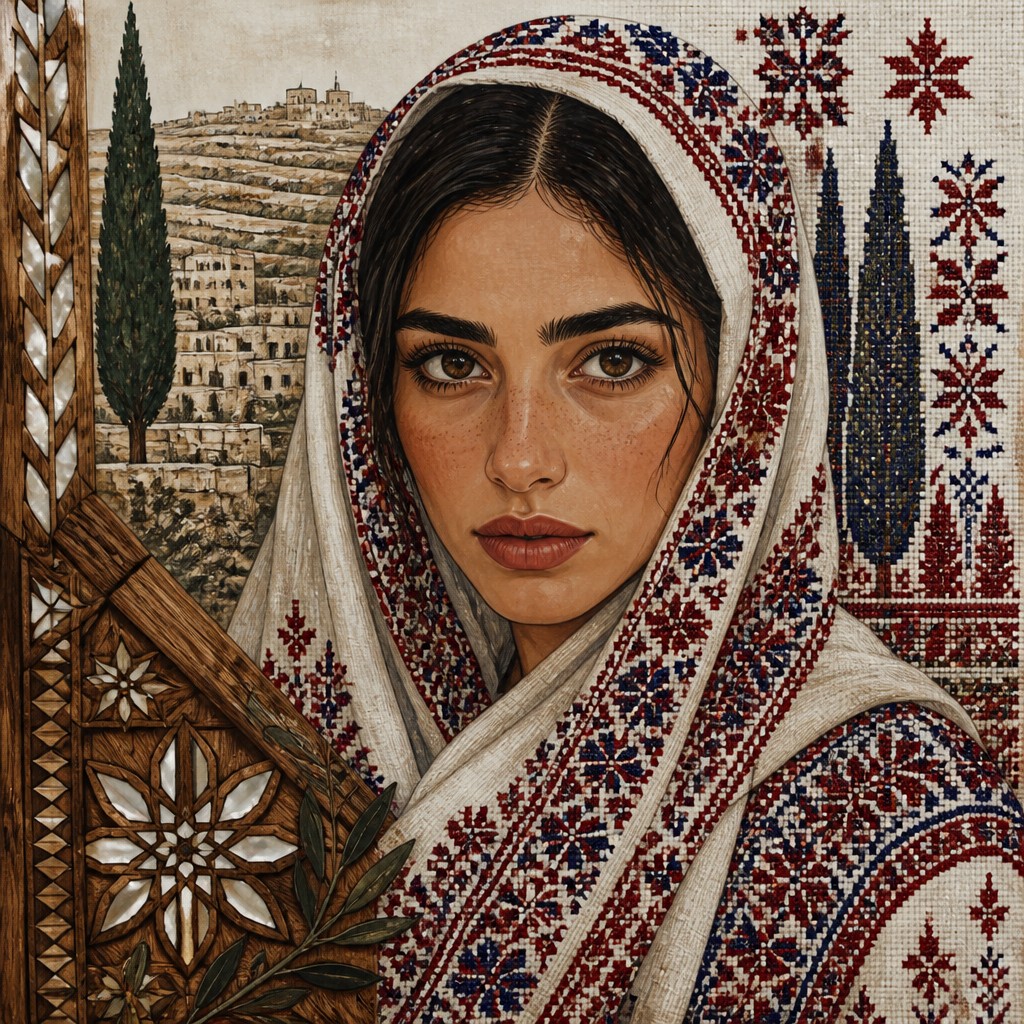
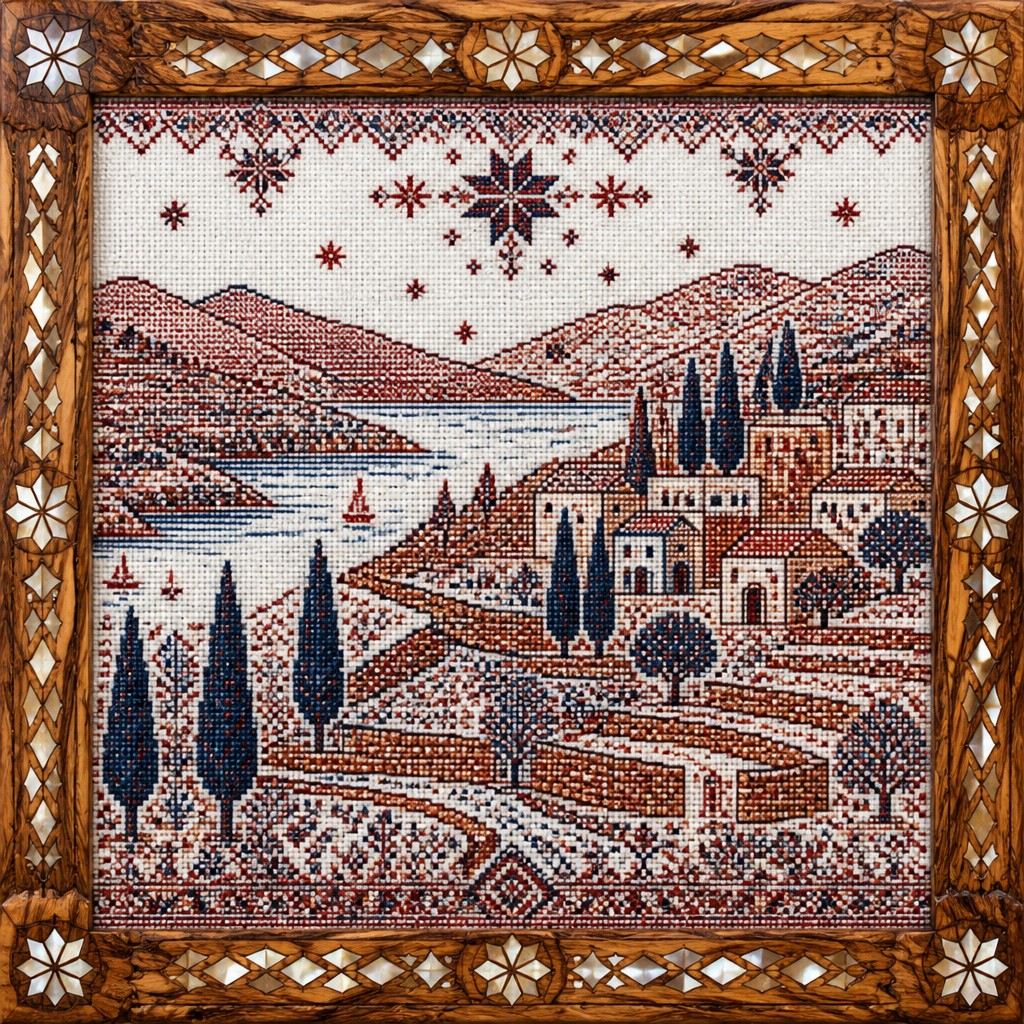
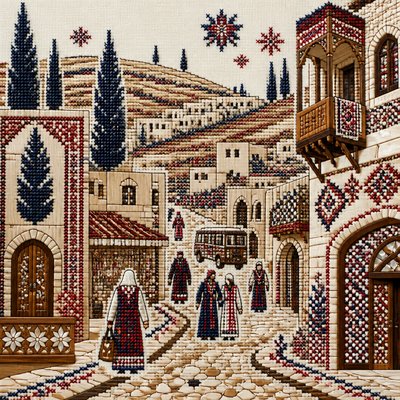
Palestinian art style is a contemporary visual synthesis rooted in tatreez embroidery, olive-wood craft, mother-of-pearl ornament, and the landscapes of Palestine. Its most recognizable imagery combines densely repeated cross-stitch geometry with cypress, star, floral, and architectural motifs, often set against white linen, earthen surfaces, or sunlit terraced hillsides. Deep red, indigo, black, cream, olive green, and warm brown create a palette associated with handmade textiles, agricultural land, and enduring cultural memory.
This is not a single historical movement with a fixed manifesto or period. Rather, it is an adaptable aesthetic language that translates material traditions into illustration, painting, textile design, photography, sculpture, and digital imagery. Its visual power comes from the contrast between measured pattern and organic texture: precise stitched grids sit beside irregular wood grain, weathered stone, folded cloth, and the soft contours of olive trees.
Try It On Your Photos
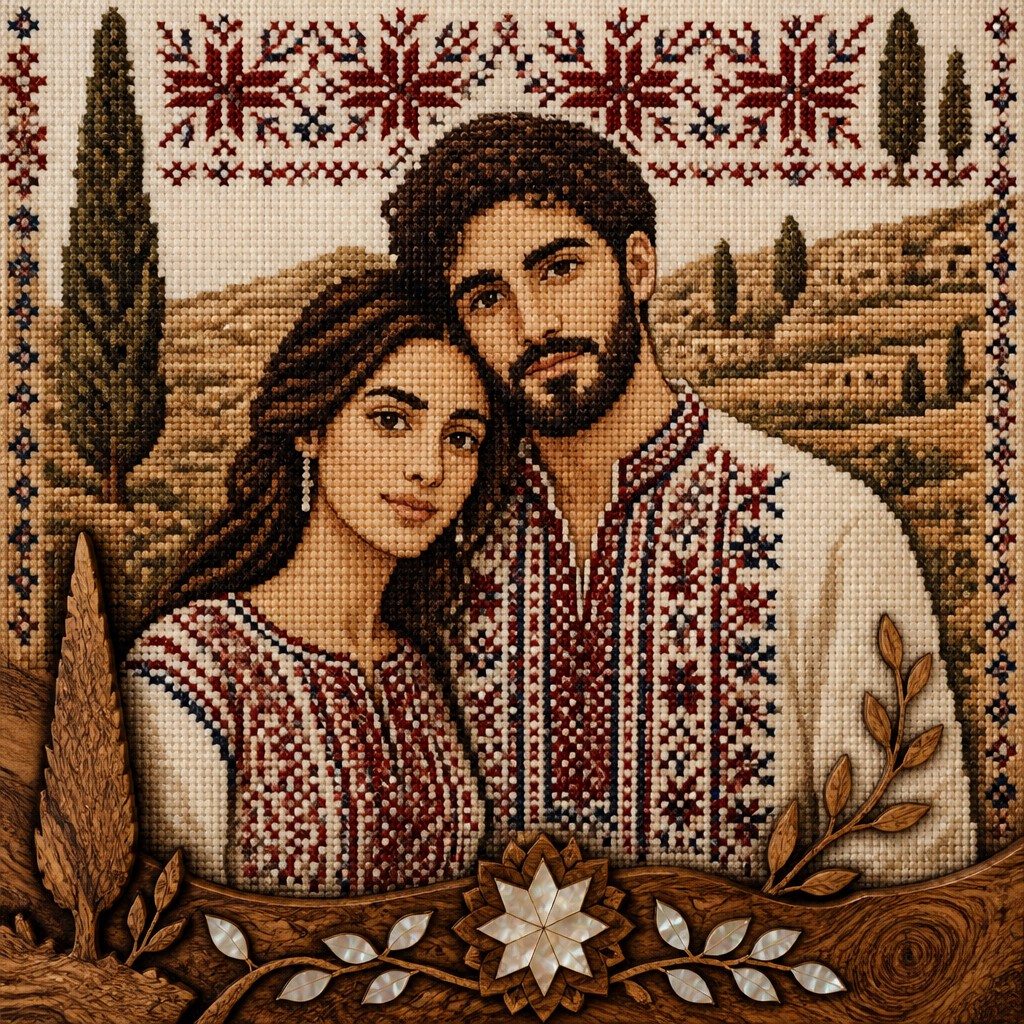
Upload any photo and convert it into Palestinian Art Style — drag the sliders to compare before and after.


What Defines Palestinian Art Style
The signature details, up close
Tatreez geometry
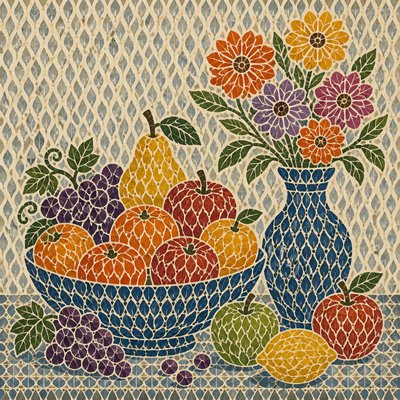
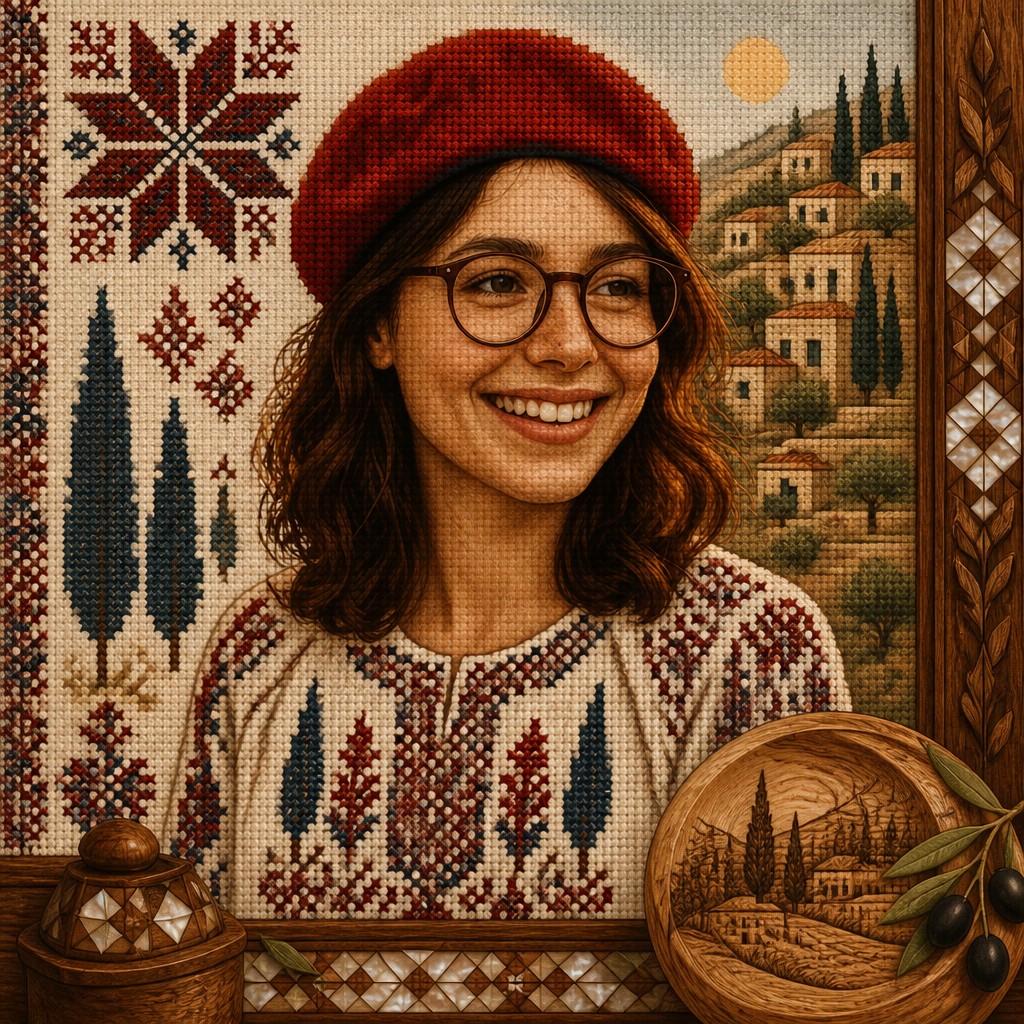
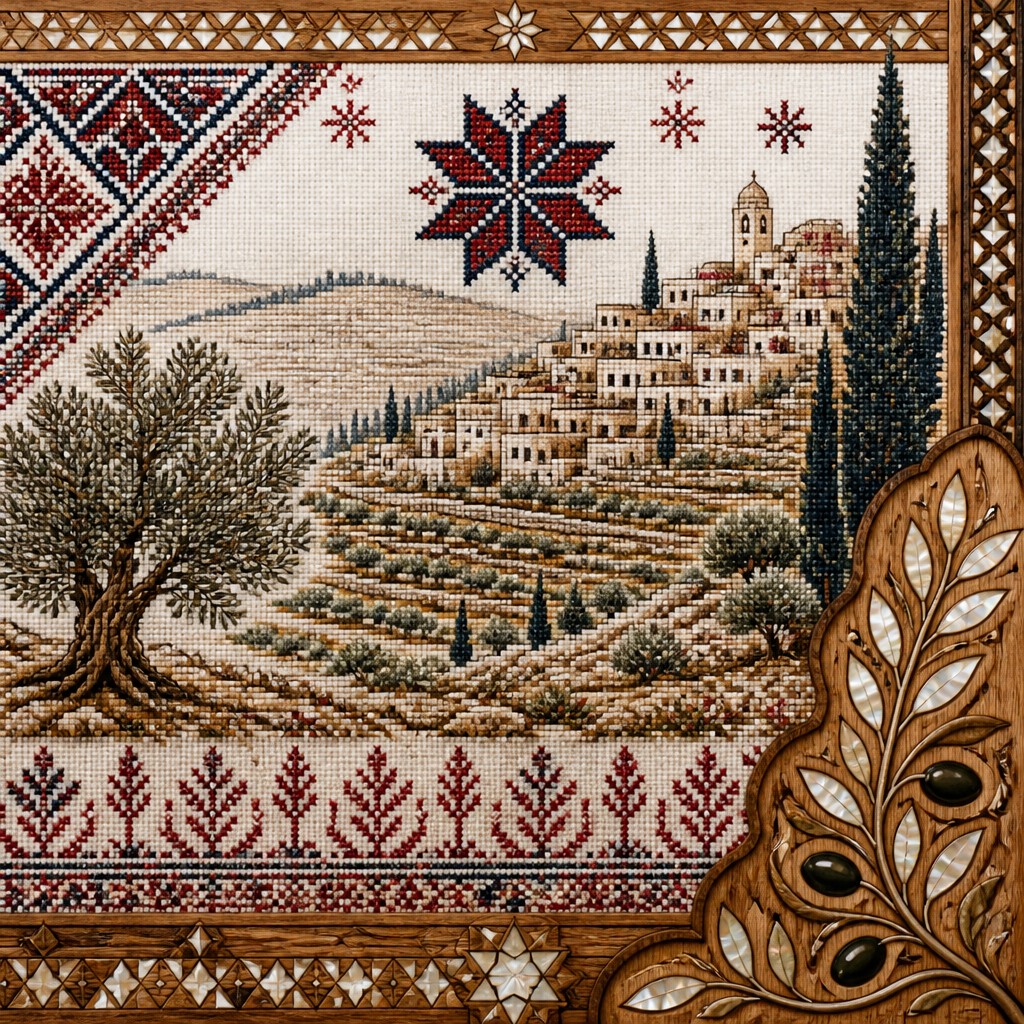
Counted cross-stitch grids produce stepped diamonds, chevrons, stars, cypress forms, branching shapes, and other repeated motifs. The geometry is usually visibly handmade rather than perfectly mechanical.
Red and indigo embroidery
Deep red is frequently paired with indigo, black, cream, or muted green on a light textile ground. Color may be arranged in horizontal bands, medallions, borders, or densely filled fields.
Olive-wood materiality
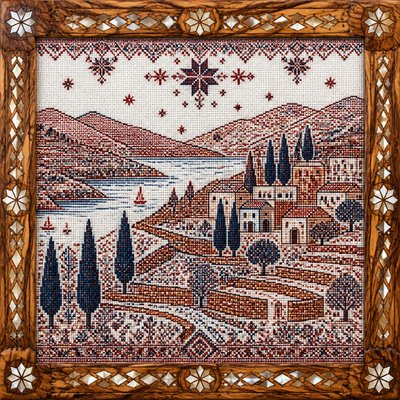
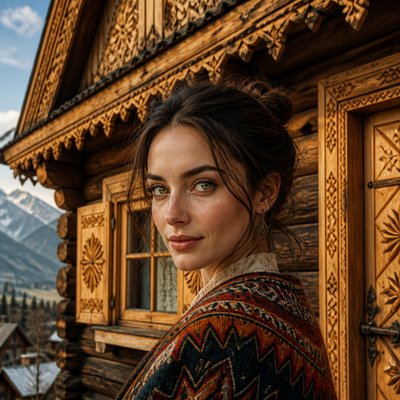
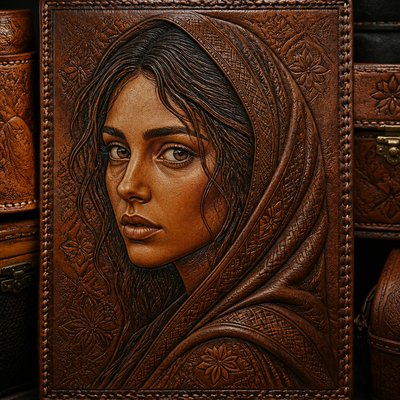
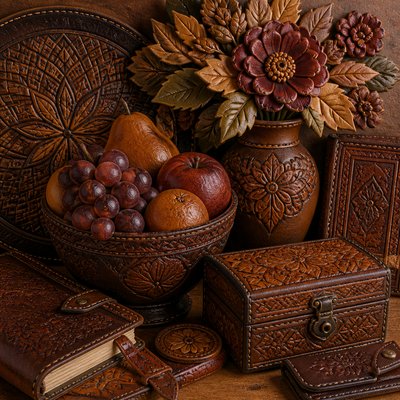
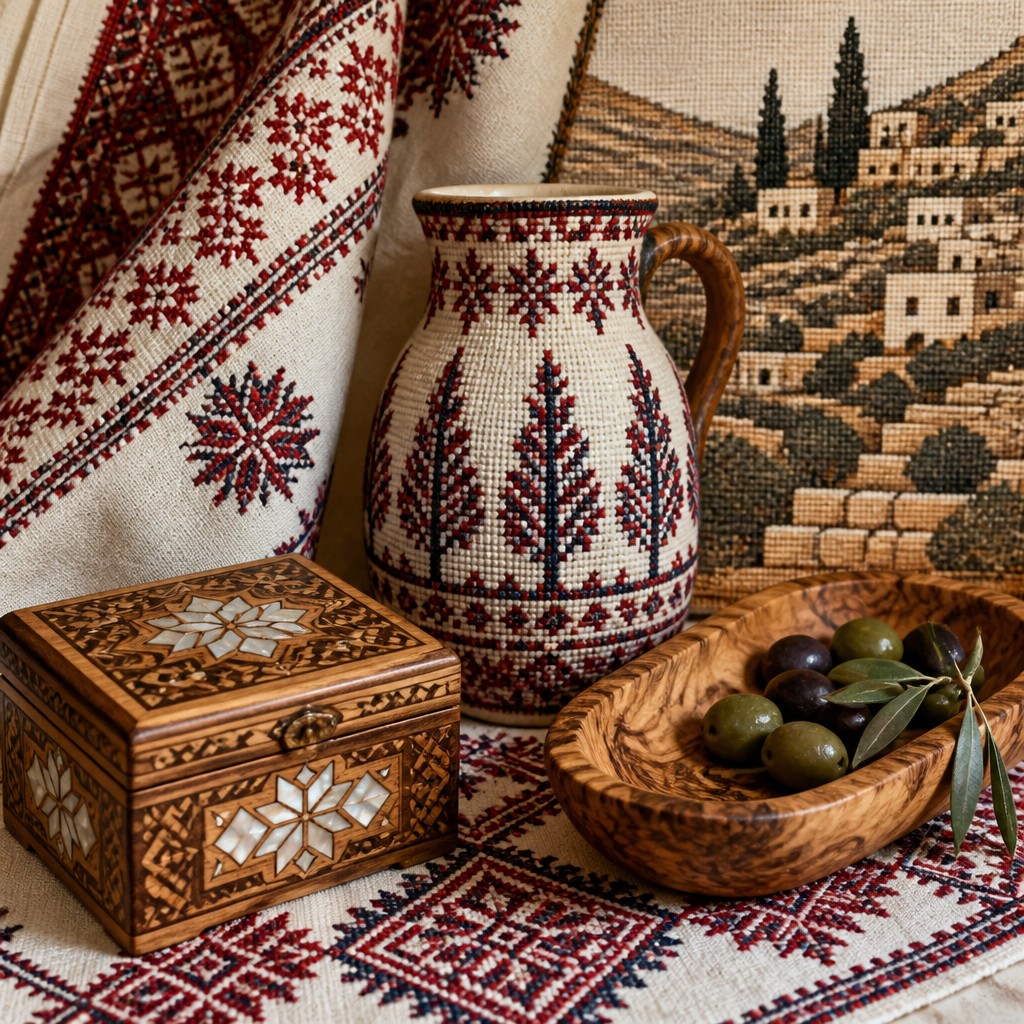
Irregular grain, knots, carved edges, and honey-brown tonal variation suggest the tactile presence of olive wood. The grain often appears as a frame, background, relief surface, or integrated part of the image.
Mother-of-pearl accents
Small iridescent inlays introduce pale flashes of cream, pink, blue, and silver. Used sparingly, they contrast with matte linen, wood, clay, and stone.
Terraced landscape imagery
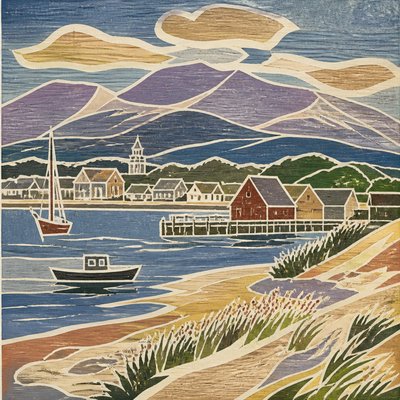
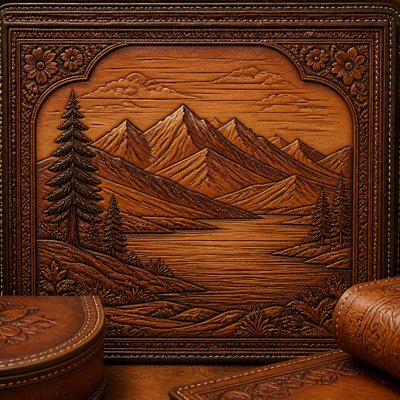
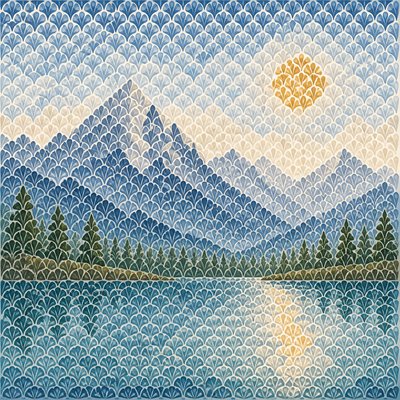
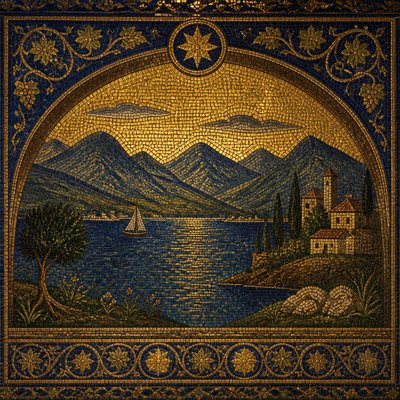
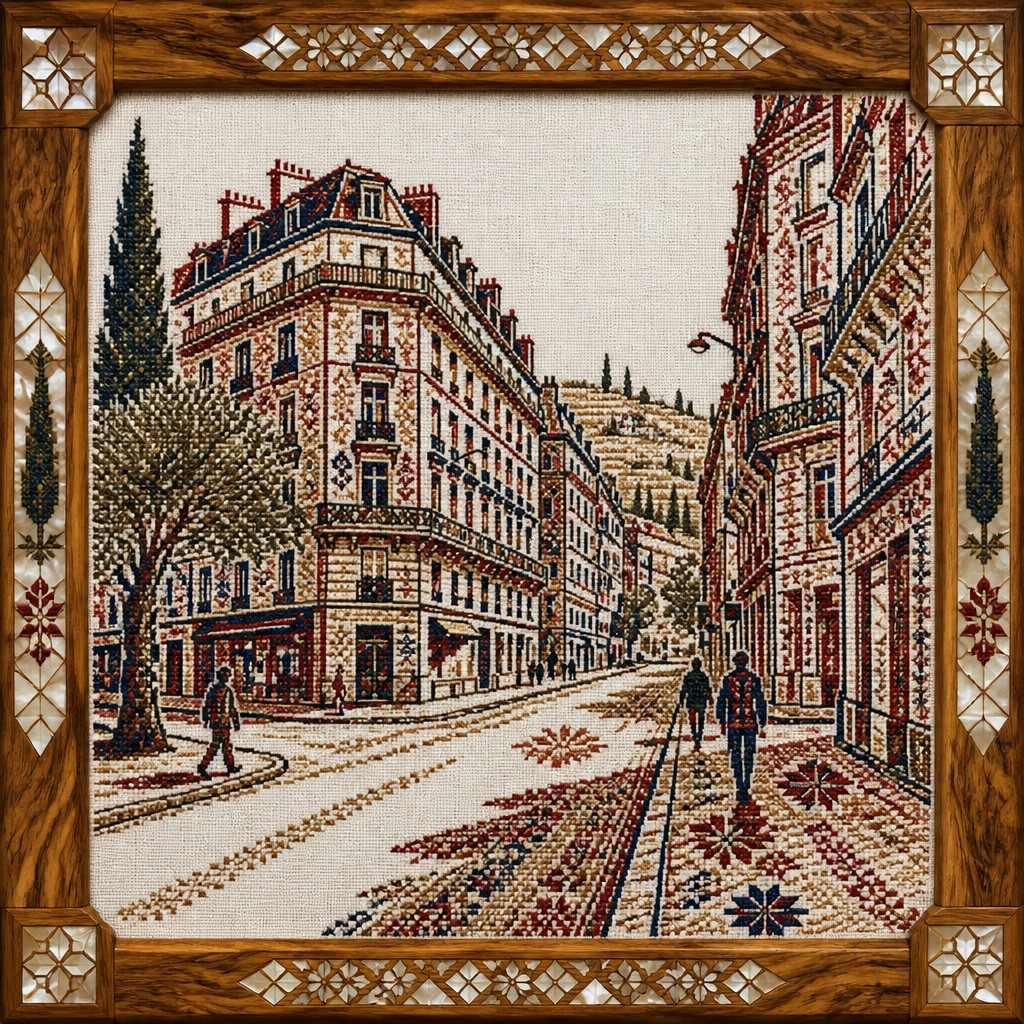
Olive groves, dry-stone terraces, village roofs, cypress trees, and sunlit hills provide a recurring sense of place. Landscapes are commonly simplified into layered bands that echo textile composition.
Handmade surface and visible process
Uneven stitches, frayed fibers, tool marks, worn pigment, wood pores, and slight asymmetry are important parts of the aesthetic. The finish should feel crafted and materially grounded rather than sterile.
Memory-centered symbolism
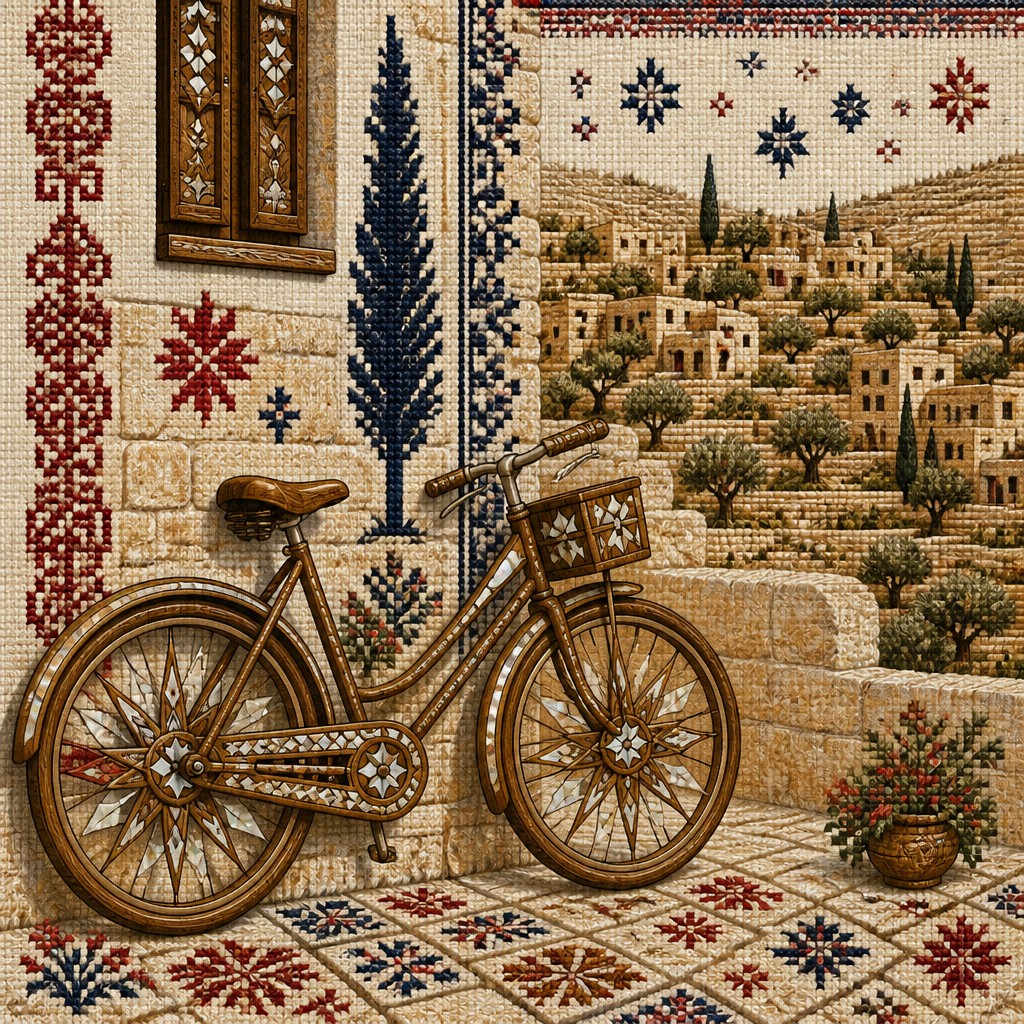
The style frequently uses domestic objects, garments, plants, and architectural fragments to suggest ancestry, continuity, land, and community. Symbolism is contextual and should not be treated as a universal fixed code.
Palestinian Prompt Ideas
Start from an idea — each one opens the generator with the style ready to go. See all 40 Palestinian prompts →
How to Create Palestinian Art
Master the craft step by step — or skip straight to creating. Read the full guide →
- 1
Build a counted-stitch grid
Sketch the composition on graph paper or a pixel-based grid, then construct motifs from repeated cross shapes and stepped diagonals. Keep borders and bands consistent while allowing small irregularities that suggest handwork.
- 2
Choose a restrained material palette
Begin with linen white, deep red, indigo, charcoal, olive green, ochre, and olive-wood brown. Add mother-of-pearl highlights selectively so they read as inlay rather than general sparkle.
- 3
Layer textile and landscape
Place embroidered borders, medallions, or garment fragments over simplified terraces, olive groves, stone walls, or village architecture. Use overlapping bands and tactile transitions instead of treating pattern as a flat decorative sticker.
- 4
Render believable surfaces
For traditional or digital work, vary thread thickness, stitch direction, wood pores, carved tool marks, pigment absorption, and fabric weave. Avoid perfectly uniform repetition, which can make the result resemble generic vector ornament.
- 5
Use respectful visual research
Study documented Palestinian textiles, regional variations, craft objects, and contemporary cultural work before selecting motifs. Identify whether a pattern is known, reconstructed, or invented, and avoid presenting a generic pattern as a specific village tradition.
- 6
Write precise generation instructions
Specify the subject, material hierarchy, motif density, palette, lighting, and surface imperfections—for example, counted cross-stitch on white linen, olive-wood grain at the edges, and sunbaked terraces behind it. Request readable geometry and restrained ornament rather than simply asking for 'ethnic' decoration.
The Story
History & Origins of Palestinian
The style draws primarily from tatreez, the Palestinian tradition of counted-thread embroidery used on dresses, jackets, head coverings, cushions, and household textiles. Patterns and color arrangements have varied by region and community, with motifs passed through families and adapted over time. Tatreez functions not only as decoration but also as a record of place, identity, skill, and social continuity. Olive-wood carving and mother-of-pearl inlay likewise belong to longstanding craft practices associated with Palestine, particularly devotional, domestic, and commemorative objects.
The unified visual formula described here is best understood as a contemporary and often diaspora-based synthesis rather than a historically bounded school. Artists and designers combine inherited textile geometry with landscape imagery, handmade surface effects, poster-like composition, and digital layering to express belonging, remembrance, displacement, and resilience without reducing Palestinian culture to a single regional look.
Influences: Its principal influences are Palestinian tatreez, Levantine textile traditions, olive-wood carving, mother-of-pearl inlay, vernacular architecture, agricultural landscape, and contemporary heritage-centered illustration. It also relates to folk art, textile art, appliqué, mosaic, relief decoration, documentary craft photography, and modern poster design. In digital form, it may borrow the layered composition of collage and the controlled repetition of pixel art, while retaining the irregularity and material emphasis of handmade work.
Frequently Asked Questions
What defines Palestinian art style?
It is defined by the combination of tatreez-inspired cross-stitch geometry, Palestinian craft materials, and imagery connected to land, home, and cultural memory. Common visual elements include red and indigo thread, linen, olive wood, mother-of-pearl, terraced hills, olive trees, and cypress motifs. It is a flexible contemporary synthesis rather than a single standardized historical style.
Is Palestinian art style the same as tatreez?
No. Tatreez is a specific Palestinian embroidery tradition based on counted stitches and regional patterns. Palestinian art style may incorporate tatreez while also using painting, illustration, photography, sculpture, architecture, wood grain, landscape, and digital collage.
How does it differ from generic Middle Eastern or folk art?
A thoughtful interpretation anchors its visual language in Palestinian materials, motifs, landscapes, and documented craft practices rather than combining indiscriminate regional ornament. It also recognizes that Palestinian communities have diverse local and diasporic traditions, so no single pattern represents everyone.
What colors are commonly used?
Deep red, indigo, black, cream, olive green, ochre, and warm brown are especially effective. The palette can vary by textile tradition, region, subject, and contemporary interpretation; authenticity does not require using the same colors in every image.
Can this style be created digitally or with generative tools?
Yes. Digital artists can construct motifs on a grid, overlay scanned fabric and wood textures, and add controlled stitch irregularity by hand. Prompt-based tools work best when the subject, materials, motif structure, palette, and degree of handmade imperfection are described separately.
Where is this style commonly used?
It appears in textile and fashion design, cultural posters, book and editorial illustration, heritage documentation, murals, decorative objects, jewelry, educational projects, and commemorative artworks. Its suitability depends on context, and commercial or ceremonial use should acknowledge the cultural source rather than treating motifs as anonymous decoration.
Create your first Palestinian artwork
Describe anything — or upload a photo — and see it in Palestinian Art Style in seconds.
Related Styles
Discover similar art styles