Palauan Art Style
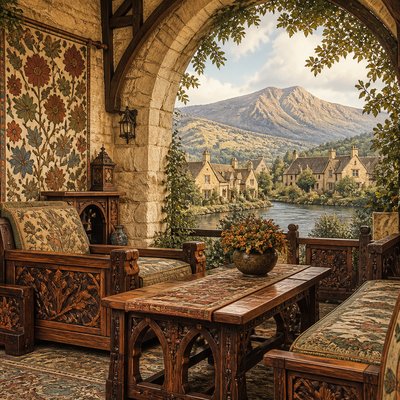
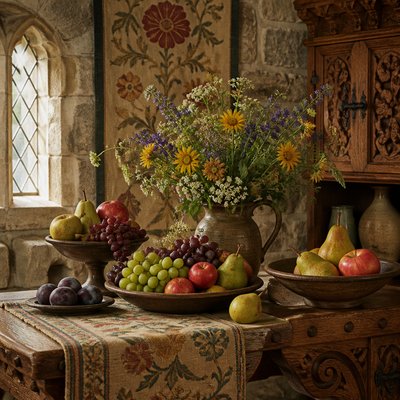
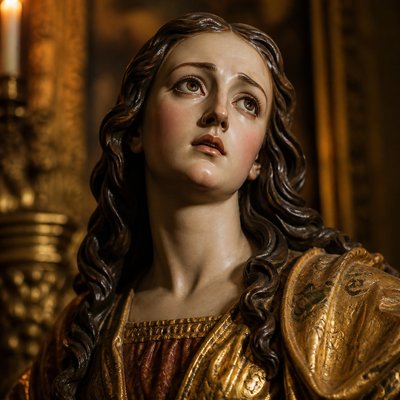
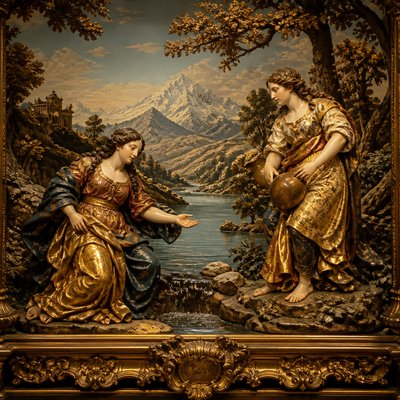
Explore Palauan art style: carved storyboards, painted bai gables, guardian figures, jungle greens, lagoon turquoise, and vivid narrative woodcraft.
Instantly rendered in Palauan — or transform a photo
Palauan Gallery
Tap any artwork to explore it
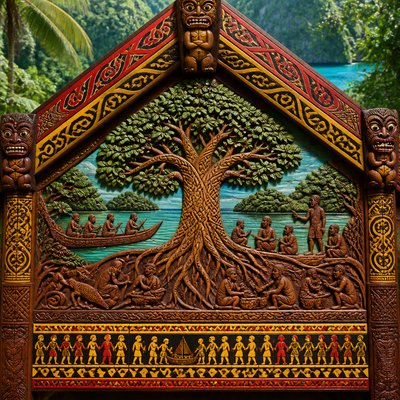
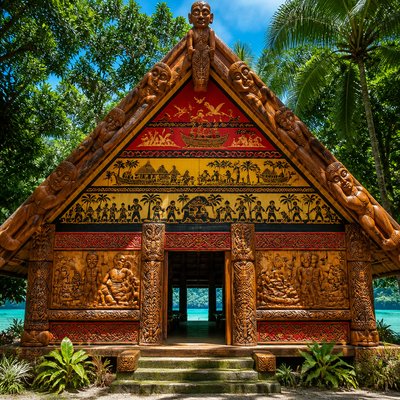
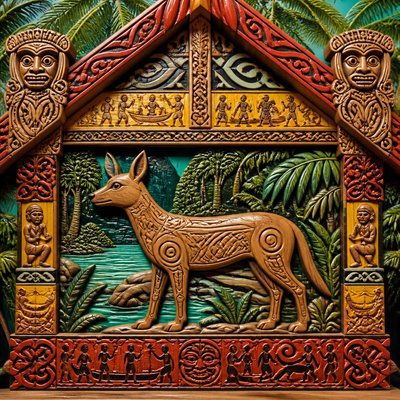
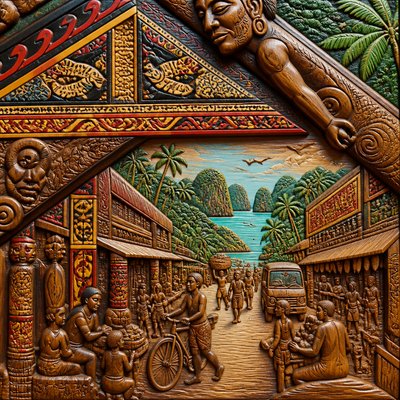
What is Palauan Art Style?
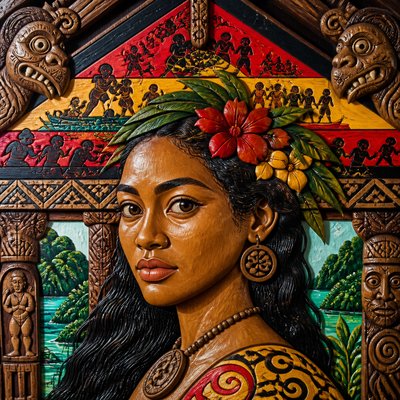
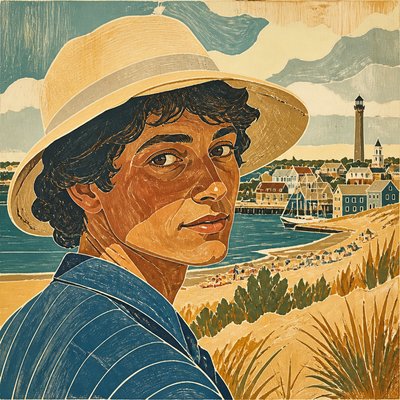
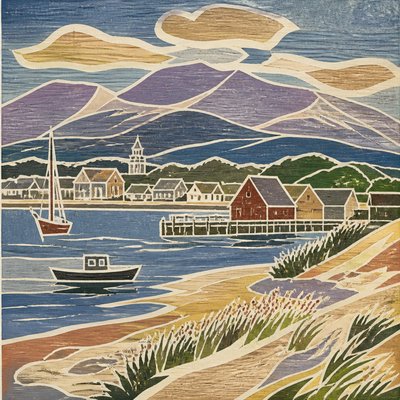
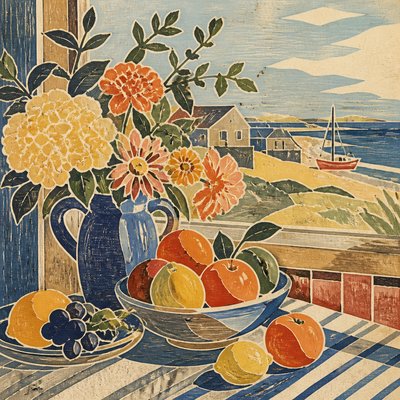
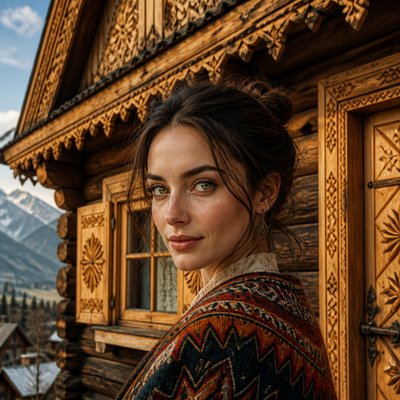
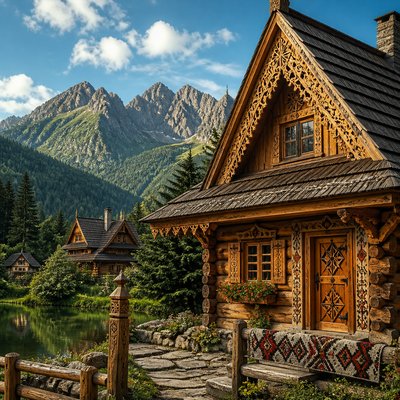
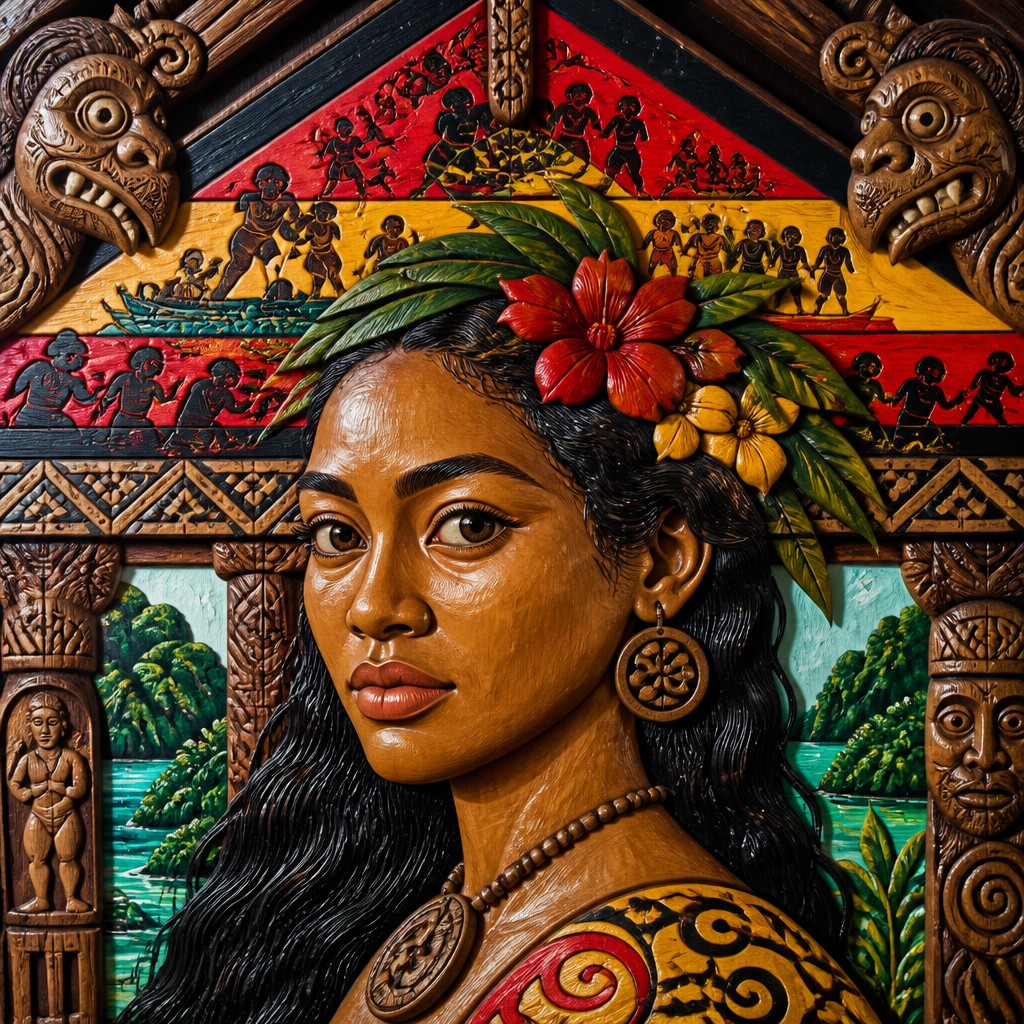
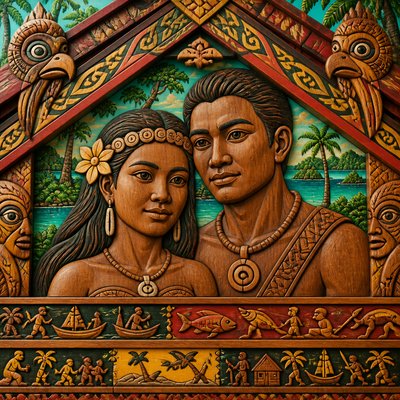
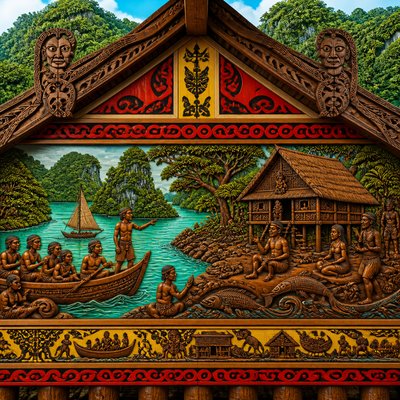
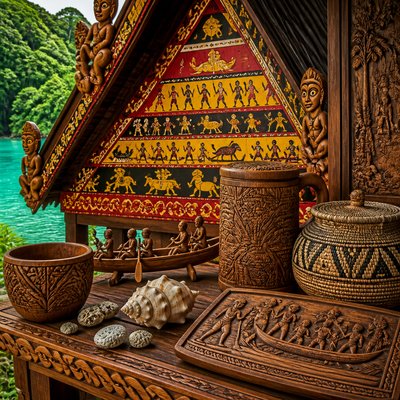
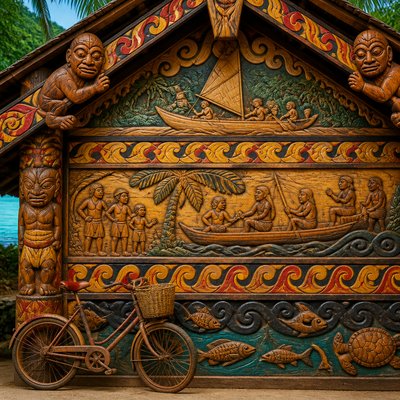
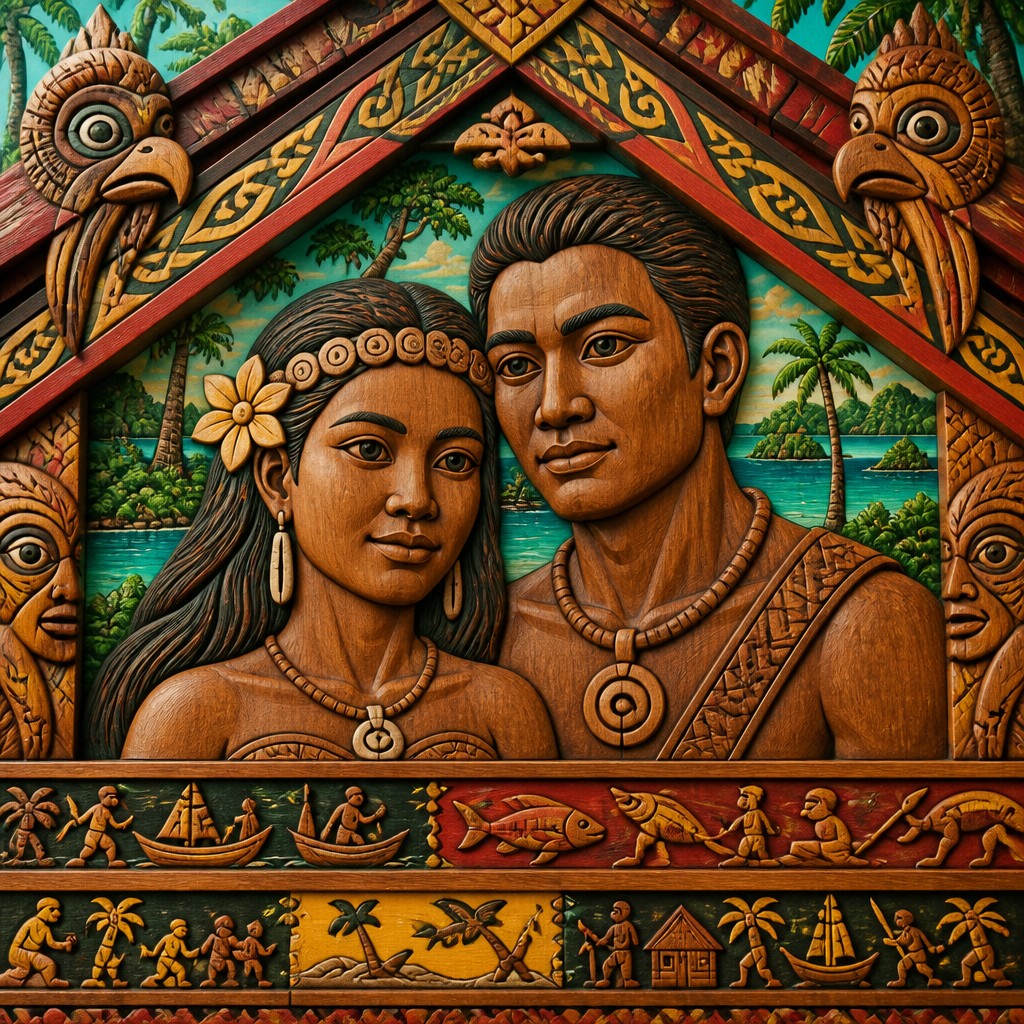
Palauan art style is a contemporary descriptive label for imagery inspired by the woodcarving, meeting-house architecture, and narrative traditions of Palau, an island nation in Micronesia. Its visual identity combines warm polished timber, low-relief storytelling, boldly painted bai gables, carved roof guardians, and tropical illumination shaped by dense jungle and clear lagoon water.
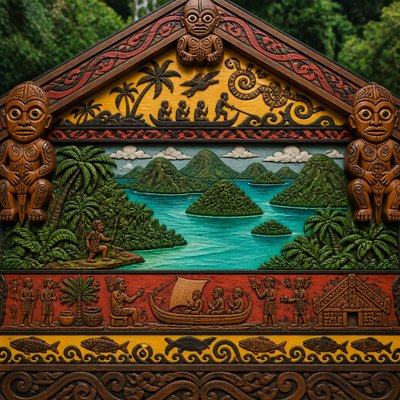
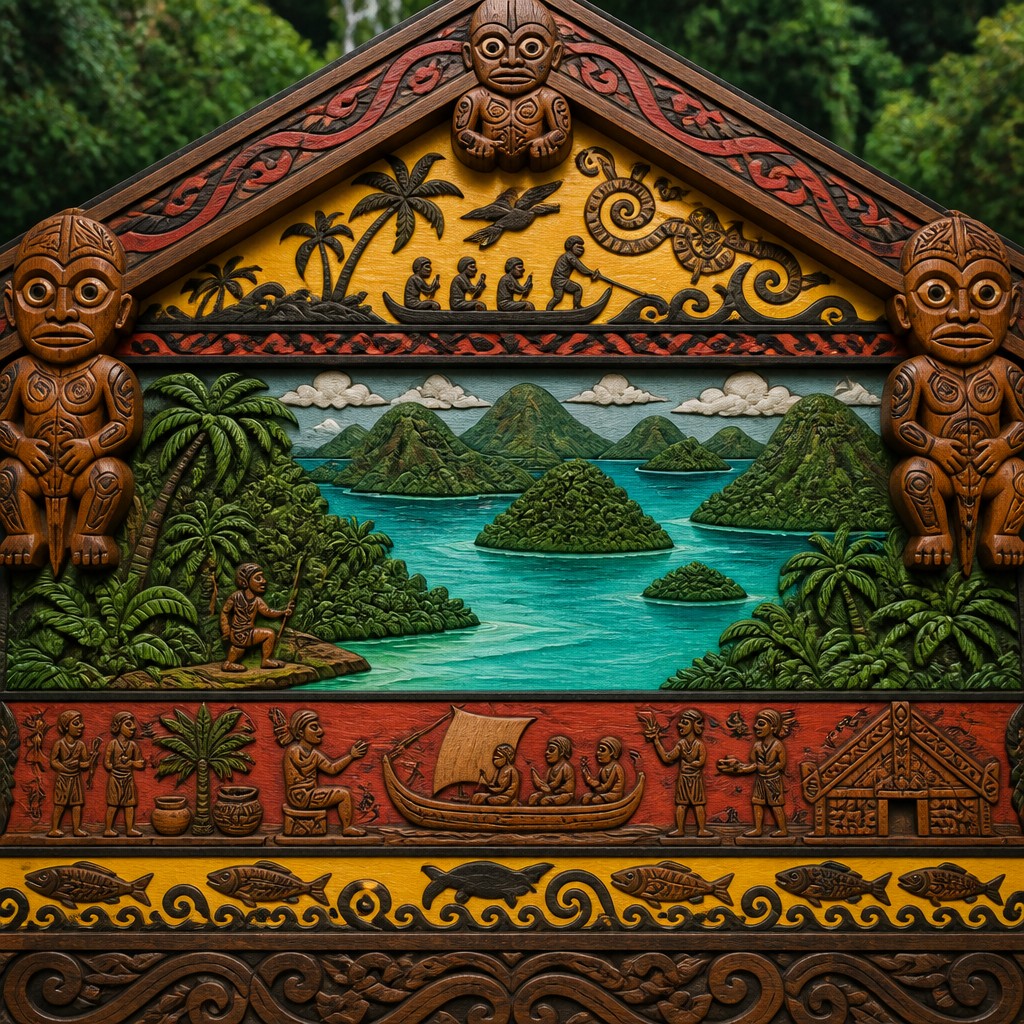
The style looks narrative because Palauan visual culture has long connected architecture and carving with community knowledge, genealogy, legends, and social values. In an image-making context, scenes are often organized like a carved panel or architectural frieze: recognizable figures, animals, canoes, plants, and symbolic events are arranged in rhythmic bands, with simplified forms and strong contours that remain legible in wood.
Try It On Your Photos
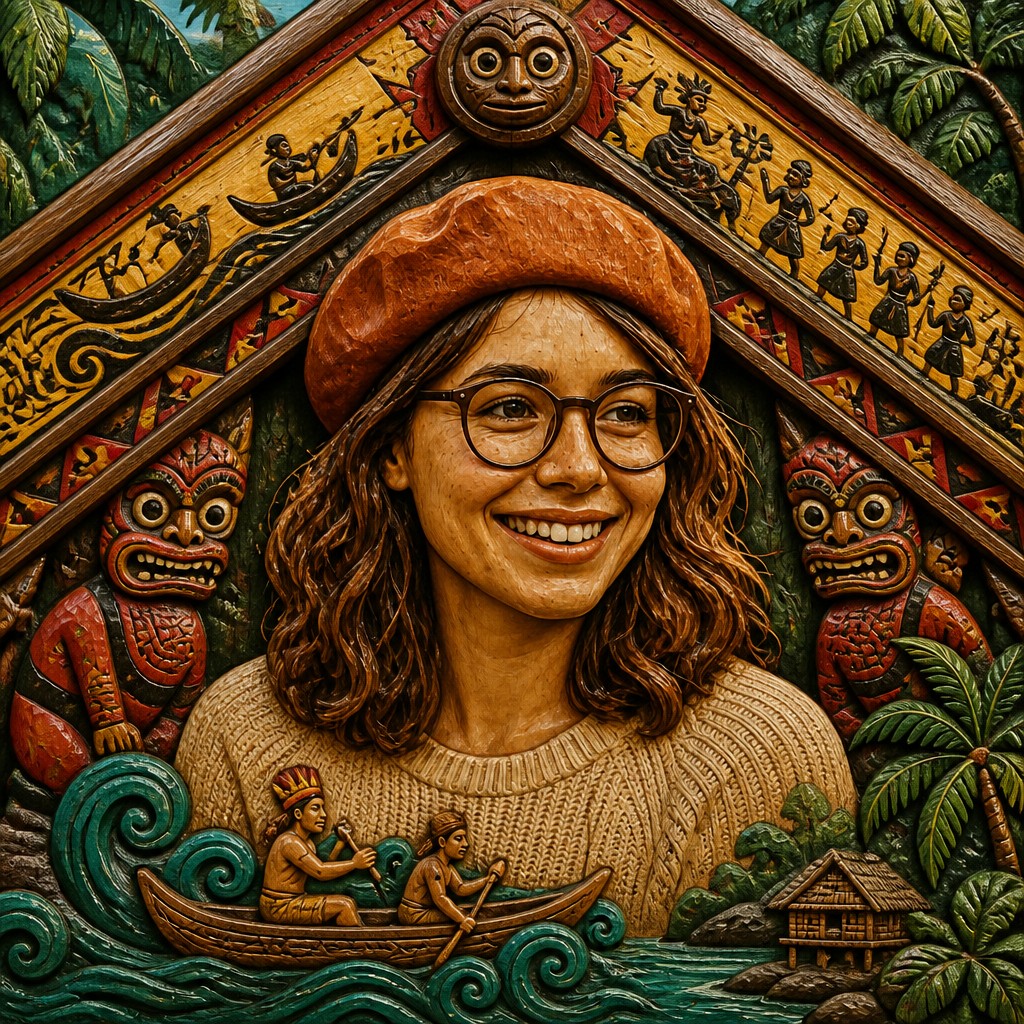
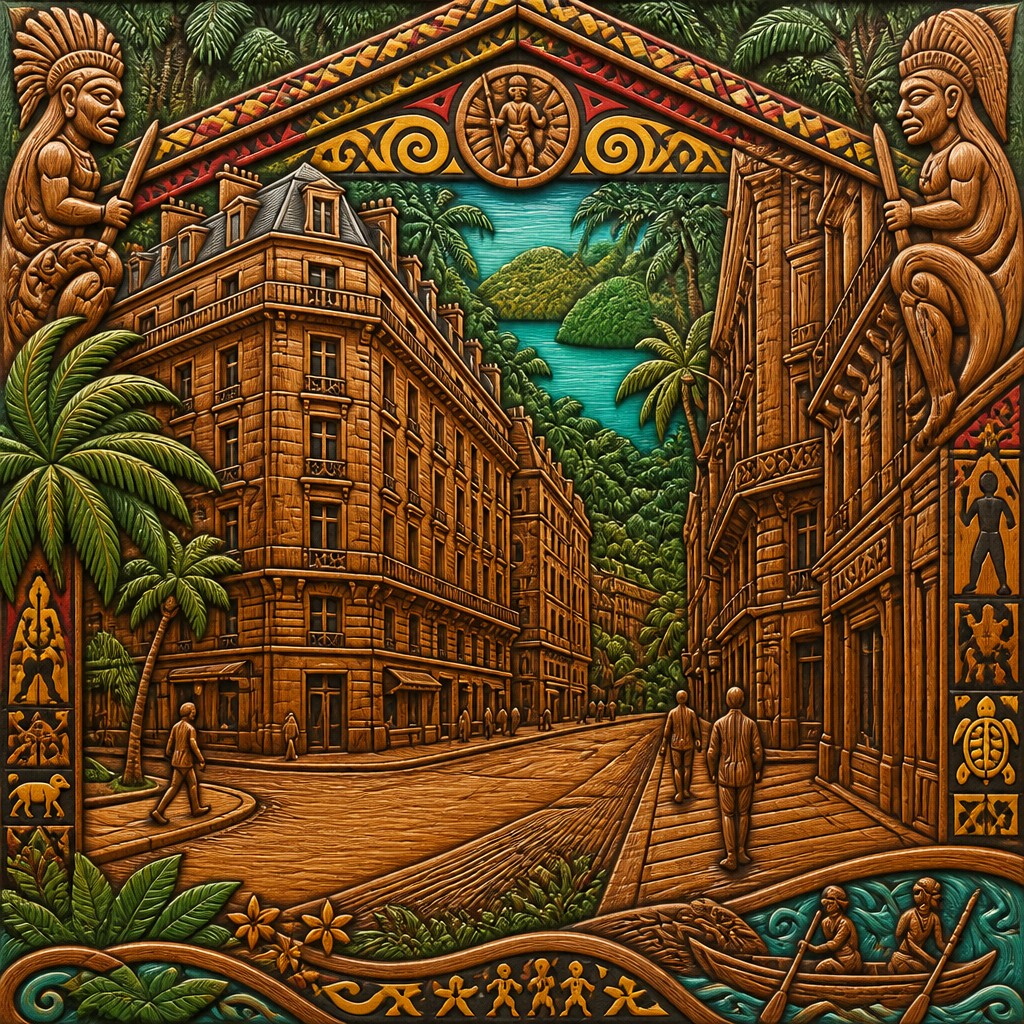
Upload any photo and convert it into Palauan Art Style — drag the sliders to compare before and after.


What Defines Palauan Art Style
The signature details, up close
Narrative relief carving
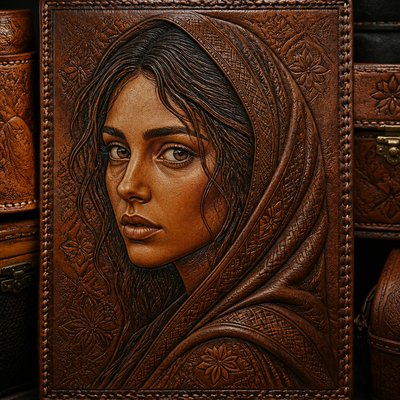
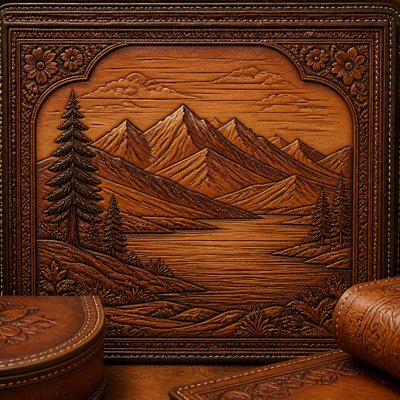
Figures and events are arranged in shallow relief, resembling a wooden storyboard or architectural panel. Clear silhouettes, overlapping forms, and sequential groupings make legends and everyday scenes easy to read.
Bai-inspired gables
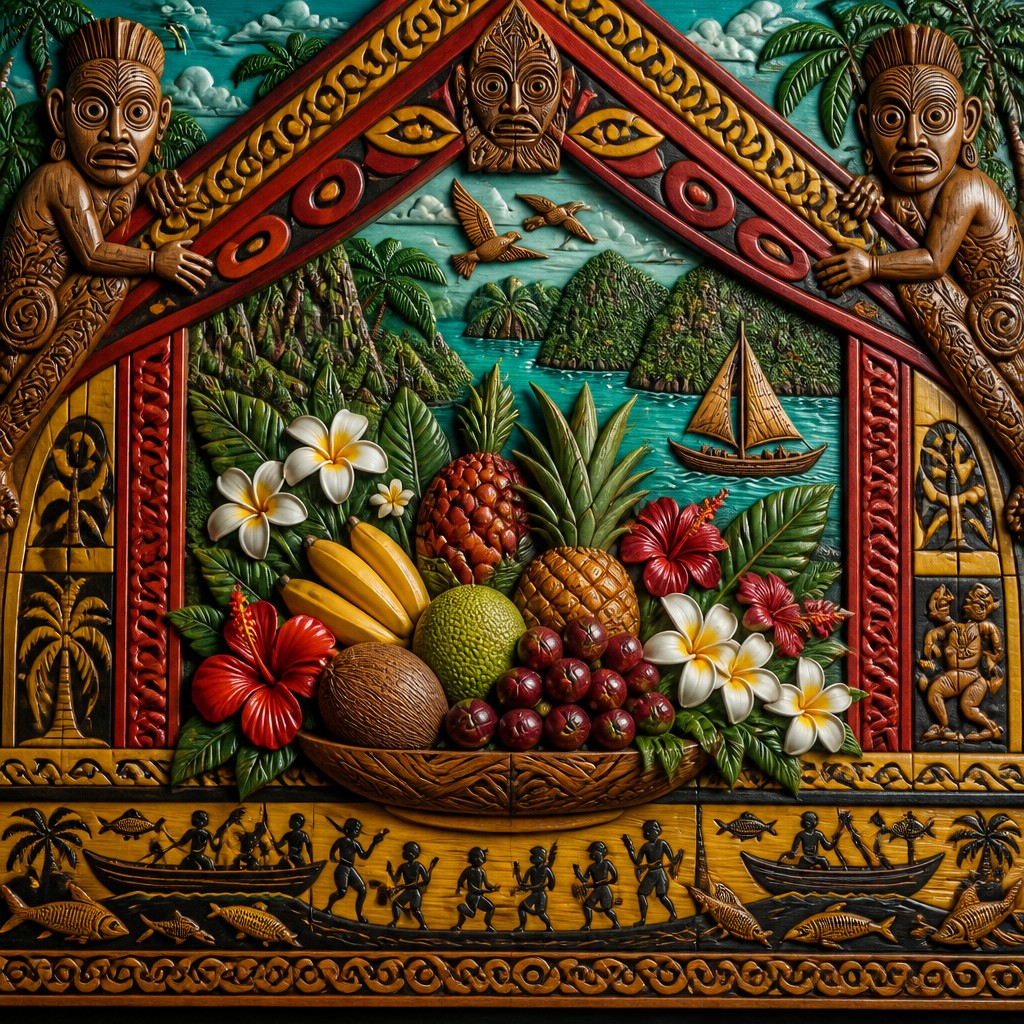
Steep meeting-house gables provide a strong architectural frame, often decorated with bold bands, repeated motifs, and emblematic figures. Use them as a cultural reference rather than as generic tribal ornament.
Warm carved timber
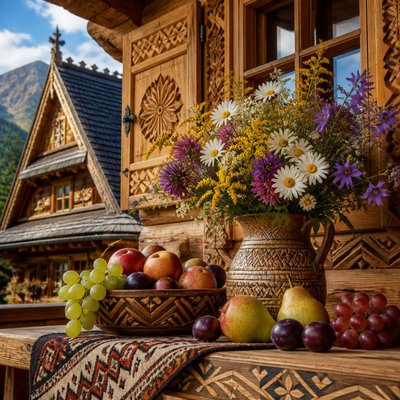
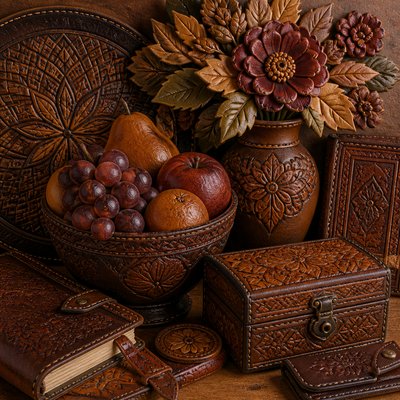
The palette favors reddish brown, honey, umber, and dark polished wood, with visible grain and hand-worked edges. Relief shadows and restrained highlights suggest carving, sanding, and oil-polished surfaces.
Bold painted bands
Red, yellow, black, cream, and earthen tones create graphic horizontal or diagonal bands across gables and panels. Flat fills and simplified patterning contrast with the organic irregularity of wood grain.
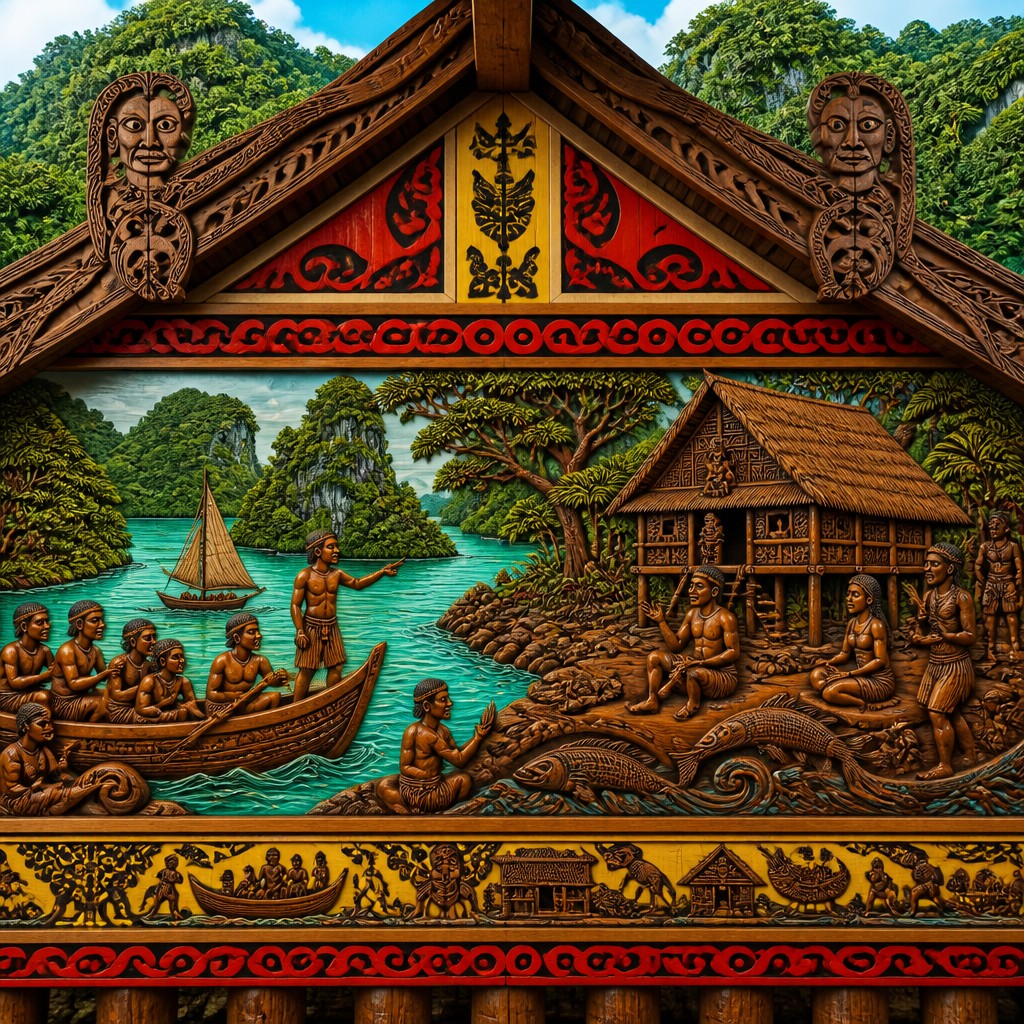
Guardian and ancestral figures
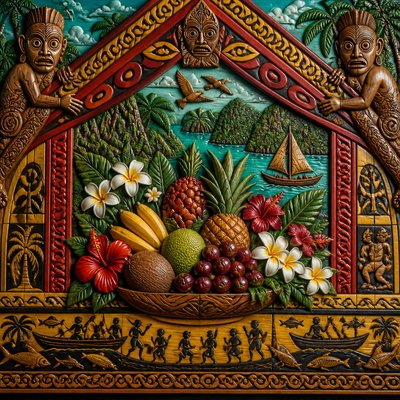
Stylized human or protective figures may appear along roof edges, entrances, or panel borders. Their gestures, posture, and placement should feel integrated with the architecture instead of functioning as arbitrary fantasy monsters.
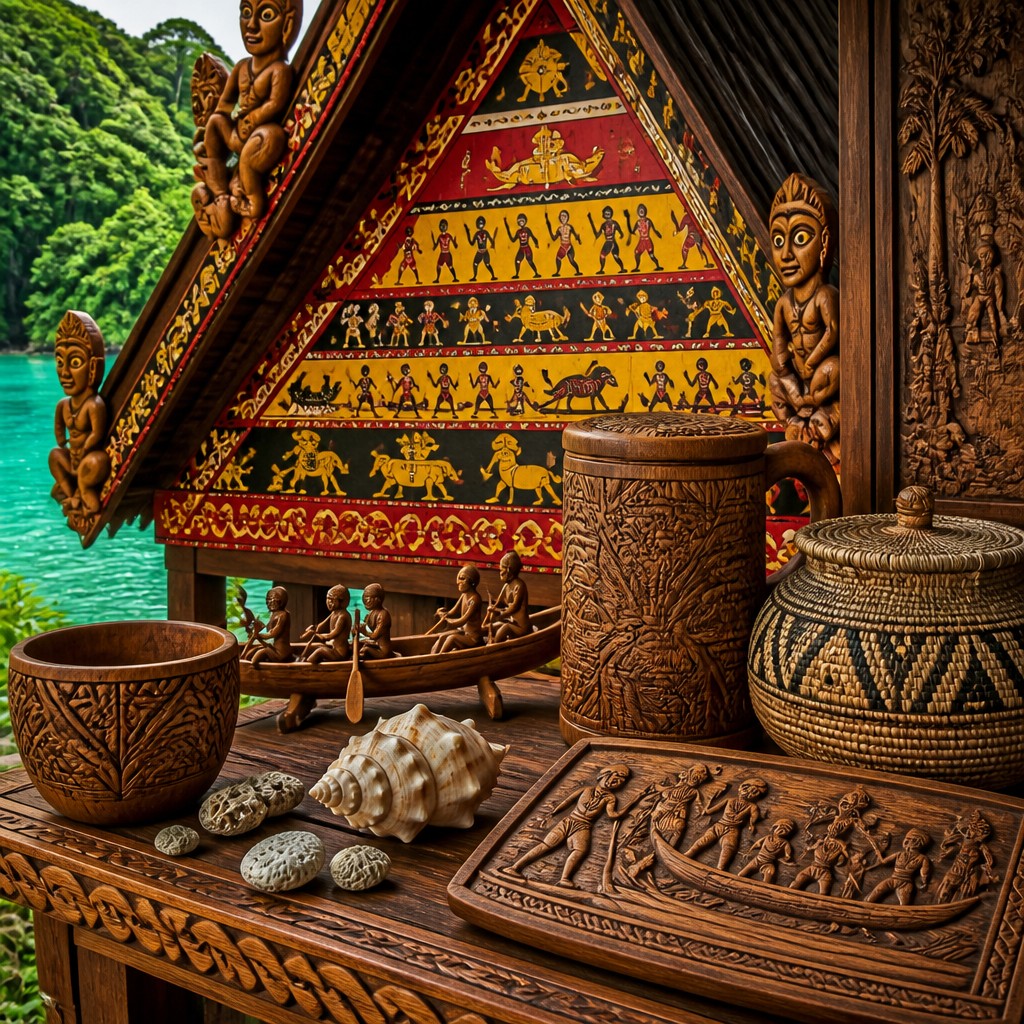
Jungle-lagoon atmosphere
Dense tropical greens, humid haze, turquoise water, and filtered sunlight establish Palau’s island environment. Natural light can produce a striking contrast between cool lagoon reflections and warm carved wood.
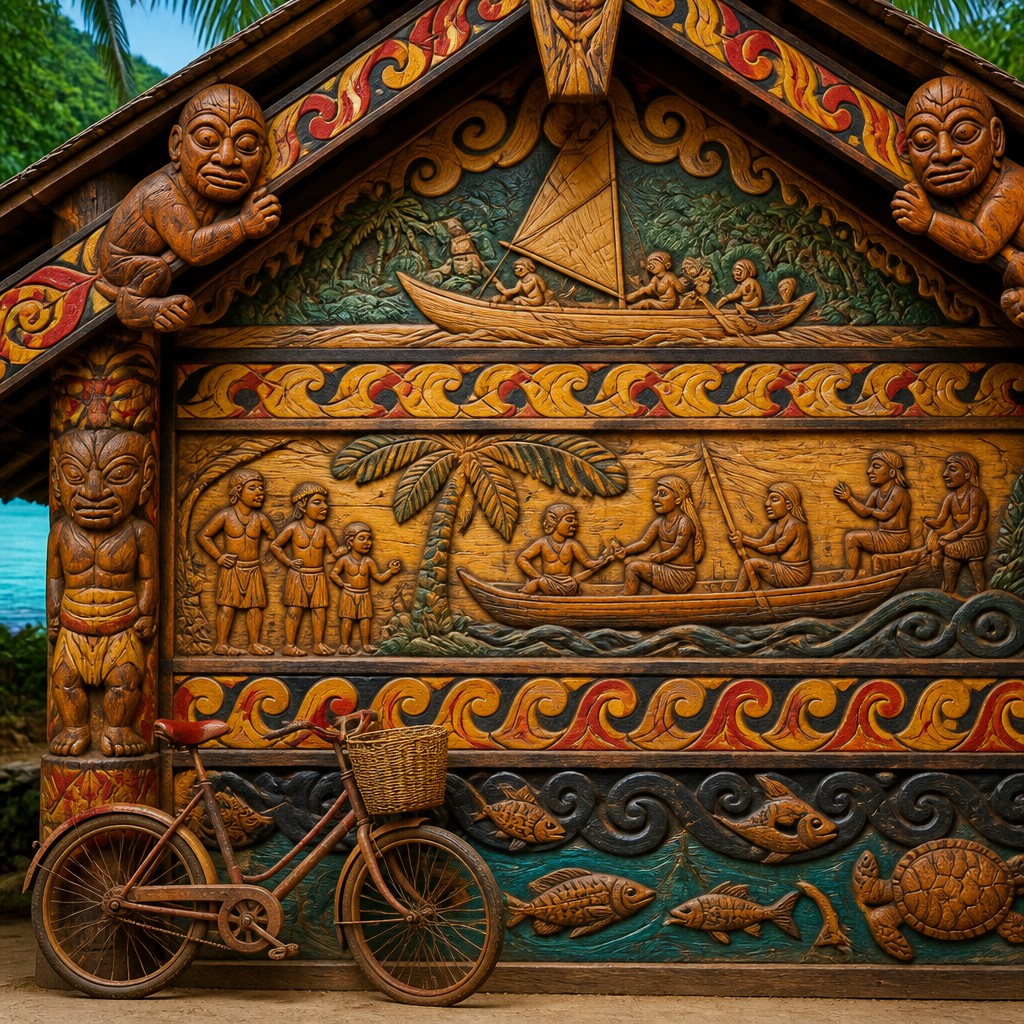
Rhythmic symbolic detail
Birds, fish, leaves, canoes, waves, and geometric motifs can repeat across a composition like a visual vocabulary. Detail is decorative but also supports place, story, and spatial rhythm.
Palauan Prompt Ideas
Start from an idea — each one opens the generator with the style ready to go. See all 40 Palauan prompts →
How to Create Palauan Art
Master the craft step by step — or skip straight to creating. Read the full guide →
- 1
Build the composition as a panel
Start with a horizontal storyboard layout, a central event, and supporting figures or animals arranged in readable tiers. Use a strong border or gable shape to make the image feel architectural.
- 2
Suggest carved wood digitally or by hand
For physical work, carve shallow relief into a soft, close-grained wood and emphasize tool marks, grain direction, and polished edges. Digitally, combine rough timber texture, bevelled relief, ambient occlusion, and directional raking light.
- 3
Use a disciplined palette
Limit the main design to warm wood, red, yellow, black, cream, jungle green, and lagoon turquoise. Reserve brighter highlights for painted details, water reflections, or polished surfaces.
- 4
Separate pattern from storytelling
Keep repeated bands and motifs subordinate to the main narrative so the scene remains legible. Vary scale between foreground figures, architectural ornament, and environmental details to imitate a carved frieze.
- 5
Write precise generation prompts
Specify narrative relief carving, polished timber, painted meeting-house gables, tropical lagoon light, bold graphic bands, and culturally grounded architecture; also state what to avoid, such as generic Polynesian masks, random tribal symbols, or glossy plastic surfaces.
- 6
Refine with image-to-image editing
When transforming a photograph, preserve the subject’s pose and broad composition while adding wood grain, shallow relief, painted pattern bands, and warm-cool island lighting. Reduce photographic clutter so the result reads as a crafted narrative panel.
The Story
History & Origins of Palauan
This is not a formally codified historical movement, but an aesthetic synthesis drawing from Palauan bai meeting houses, traditional woodcarving, painted architectural ornament, and the modern storyboard tradition. Bai are communal structures whose gables and interiors can carry imagery associated with local narratives and cultural teachings; carved storyboards later became a widely recognized form of Palauan craft and visual storytelling.
The style used in contemporary image generation should therefore be understood as an interpretive lineage rather than a claim that all Palauan art shares one appearance. A respectful treatment distinguishes living Palauan traditions from generalized tropical or Oceanic fantasy, retaining the importance of narrative, place, craft, and community context.
Influences: The aesthetic is related to Micronesian architectural ornament, Oceanic woodcarving, Indigenous narrative art, relief sculpture, vernacular architecture, and graphic traditions that use repeated bands and emblematic figures. It also intersects with contemporary craft illustration, diorama-like composition, tropical color studies, and digitally simulated carved surfaces, while remaining distinct from generalized Polynesian, tribal, or fantasy styles that detach motifs from Palauan cultural context.
Frequently Asked Questions
What defines the Palauan art style?
It is defined by the combination of narrative wooden relief, bai-inspired meeting-house forms, painted red-yellow-black ornament, guardian figures, and a jungle-to-lagoon color atmosphere. The overall image should feel crafted, symbolic, and architectural rather than merely tropical.
Is Palauan art style a formal historical art movement?
No. This label describes a contemporary visual synthesis inspired by several Palauan traditions and craft forms. It should not be presented as a single standardized movement or as a complete summary of all Palauan art.
What are Palauan storyboards?
Palauan storyboards are carved wooden narrative works associated with the depiction of legends, people, animals, and scenes from island life. They are commonly recognized for relief carving, expressive figures, and compositions that treat wood as a surface for visual storytelling.
How is this different from generic Oceanic or tribal art?
A culturally grounded interpretation focuses on specific Palauan references such as bai architecture, narrative carving, island ecology, and disciplined painted bands. Generic masks, invented symbols, or unrelated motifs can flatten distinct traditions into an inaccurate visual stereotype.
Can a photograph be transformed into this style?
Yes, but the most convincing result preserves the photograph’s pose or composition while restructuring surfaces as shallow relief. Add timber grain, carved edges, painted architectural framing, and filtered tropical light rather than applying only a brown wood texture.
Where is this style most effective?
It works well for legends, village scenes, canoes, marine life, communal architecture, travel illustrations, educational narratives, and carved-object studies. Subjects with a clear sequence or symbolic relationship are especially suited to its storyboard structure.
Create your first Palauan artwork
Describe anything — or upload a photo — and see it in Palauan Art Style in seconds.
Related Styles
Discover similar art styles