Oaxaca Art Style
Explore Oaxaca Art Style: vivid alebrije color, black barro negro pottery, woven geometry, colonial forms, and embroidered folk detail.
Instantly rendered in Oaxaca — or transform a photo
Oaxaca Gallery
Tap any artwork to explore it
What is Oaxaca Art Style?
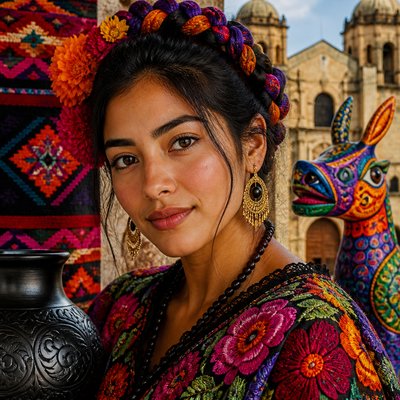
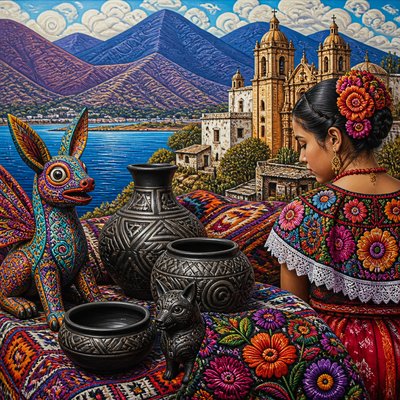
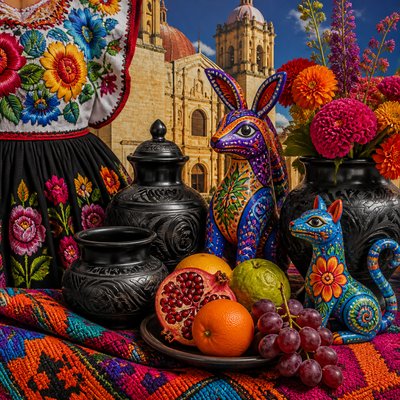
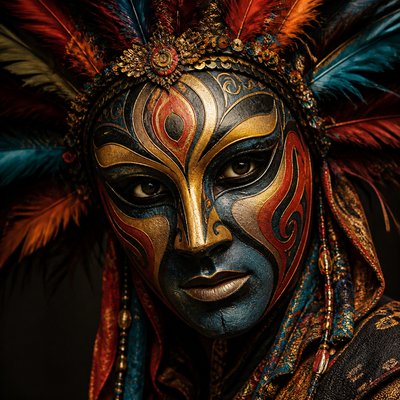
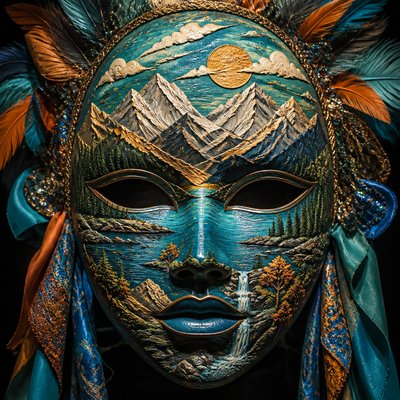
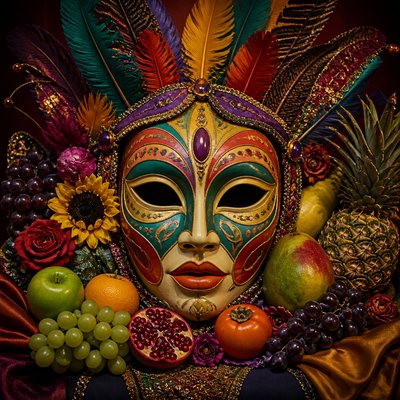
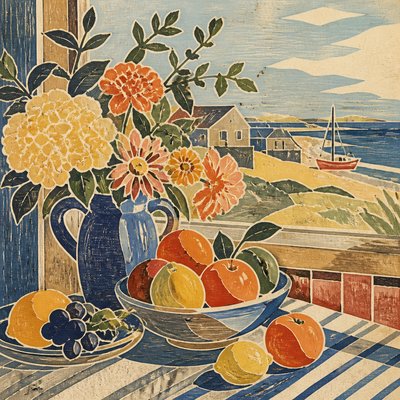
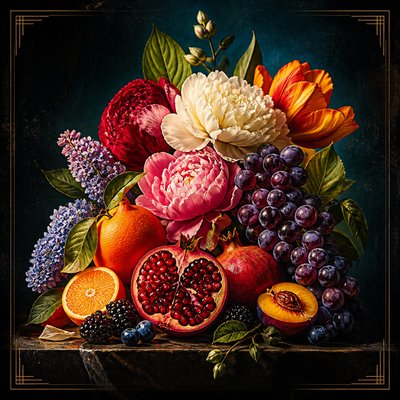
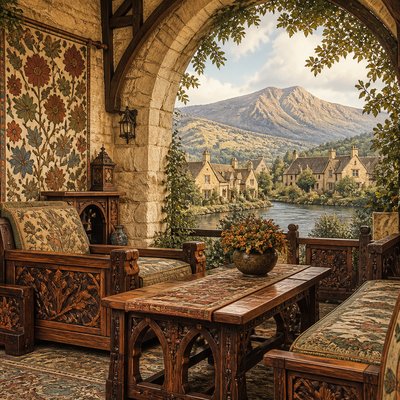
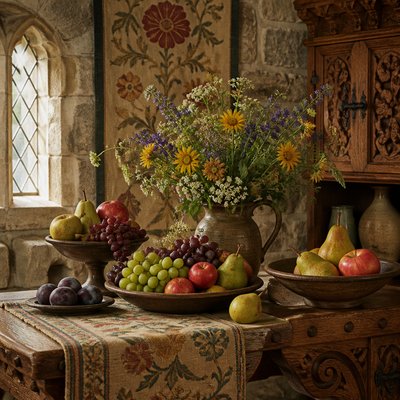
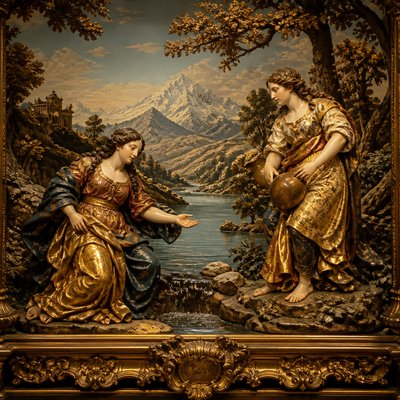
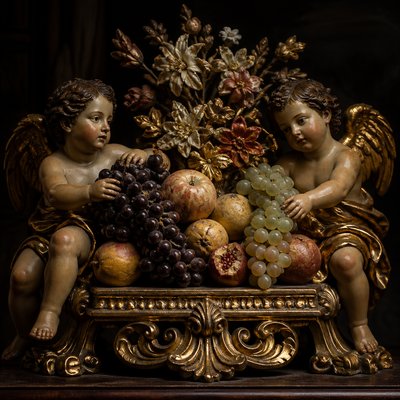
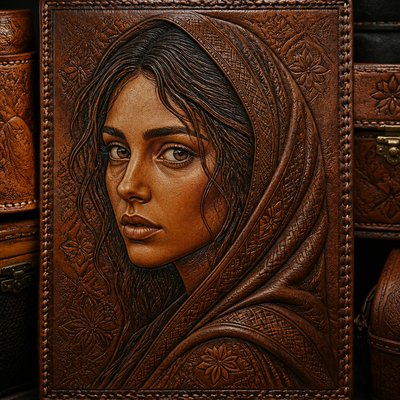
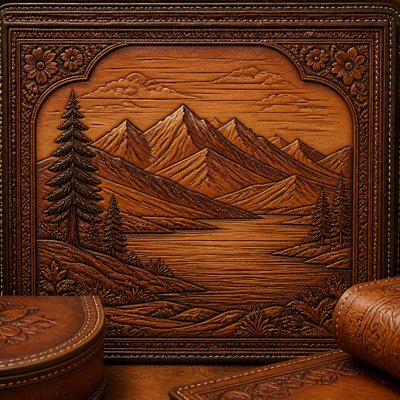
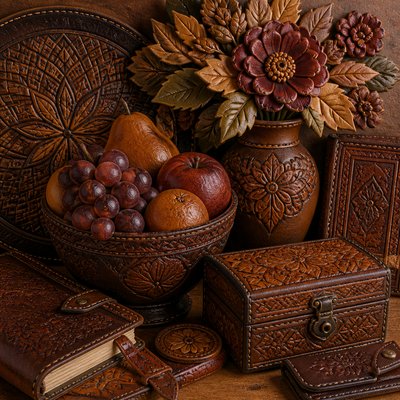
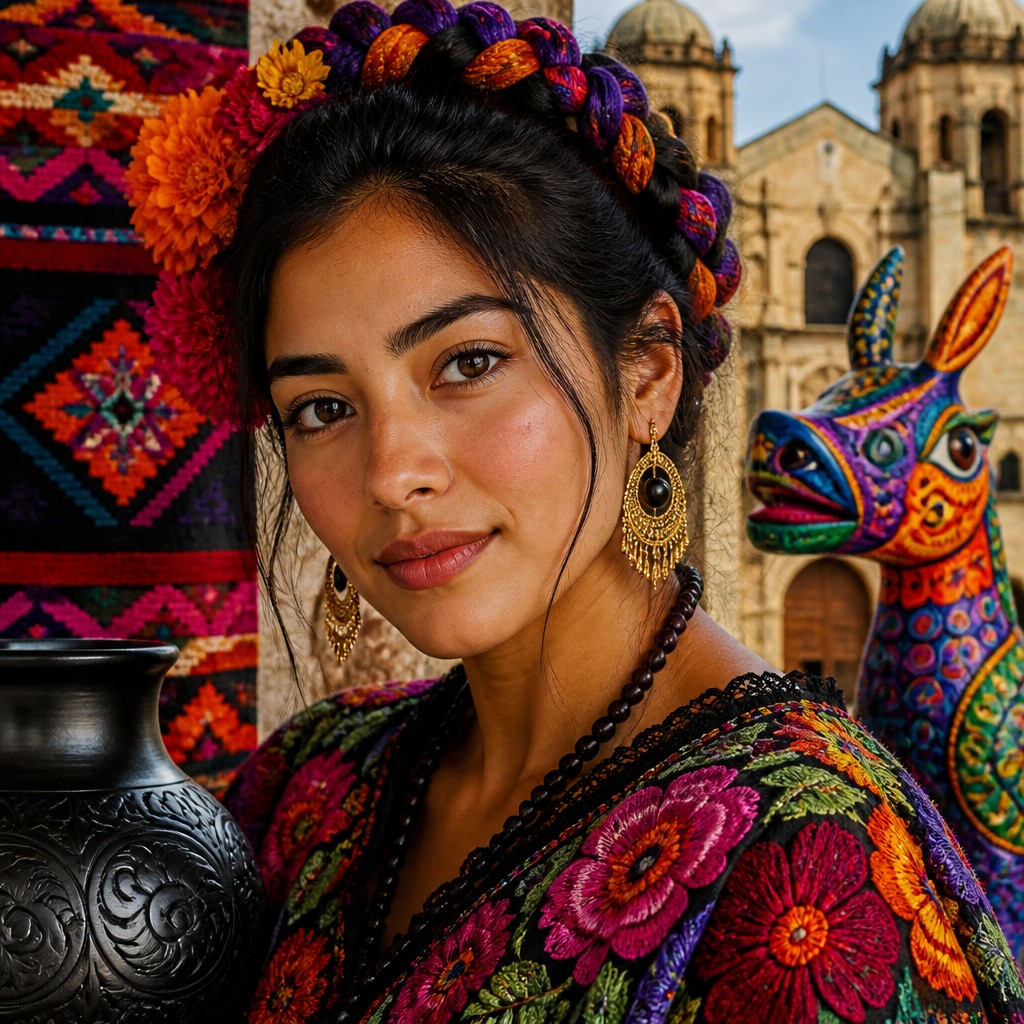
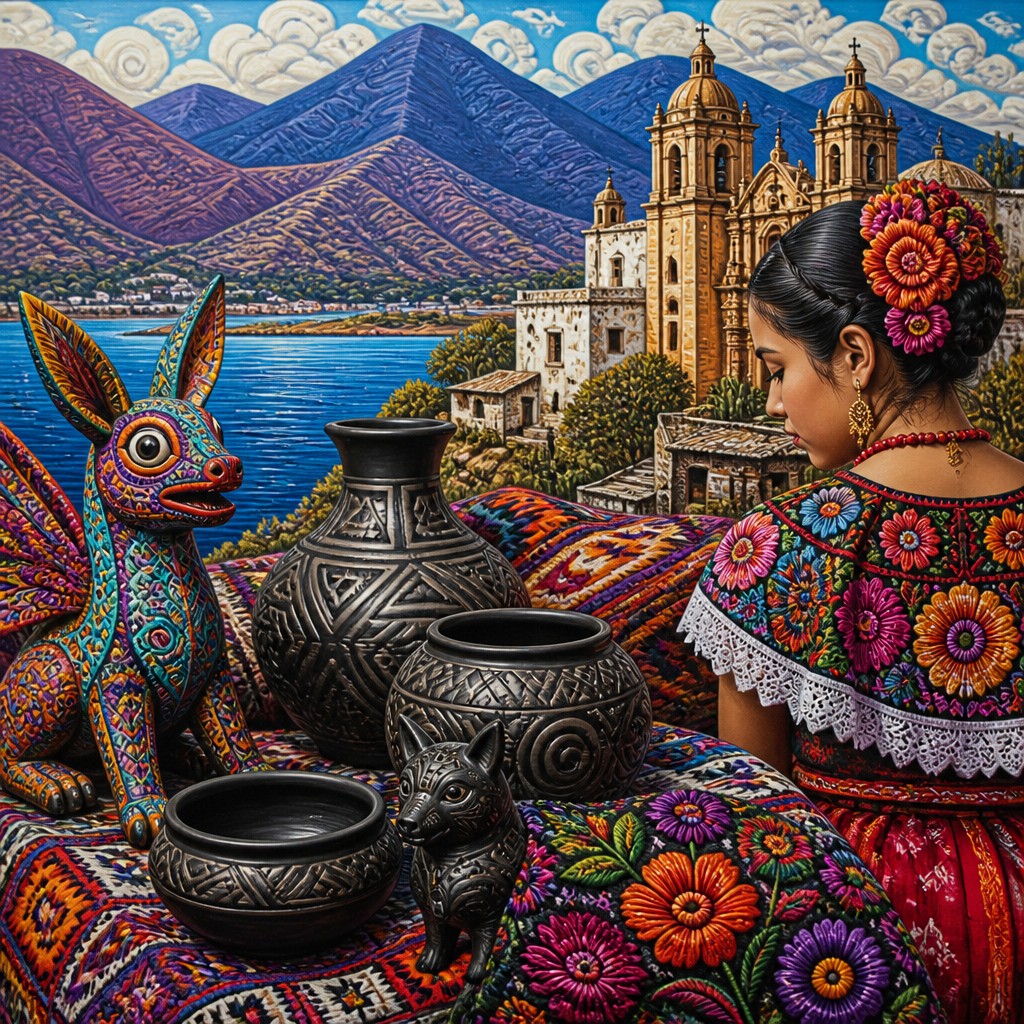
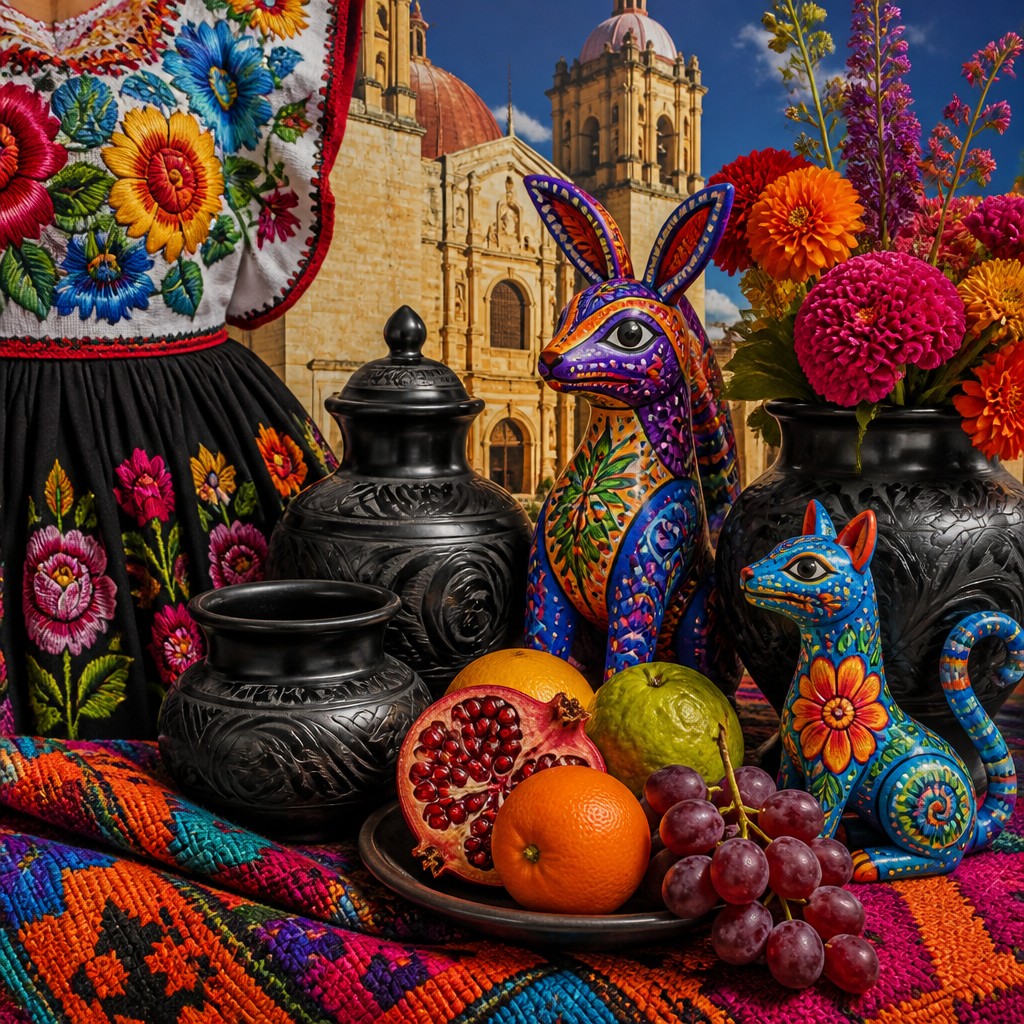
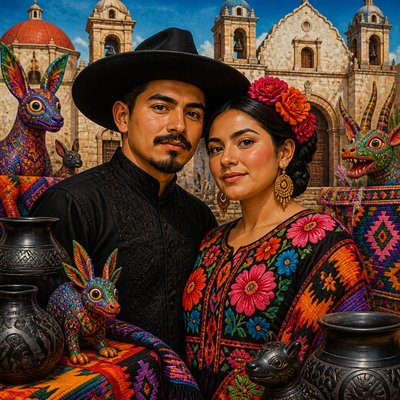
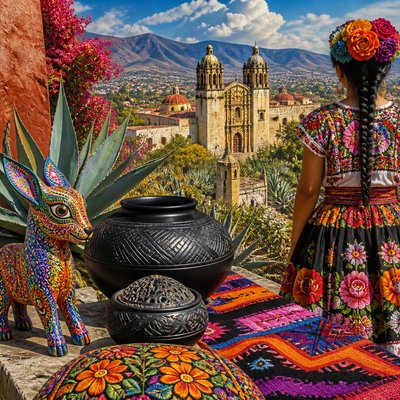
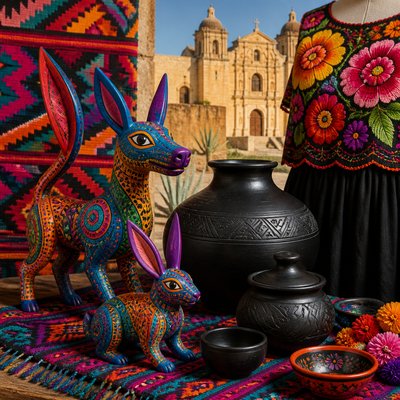
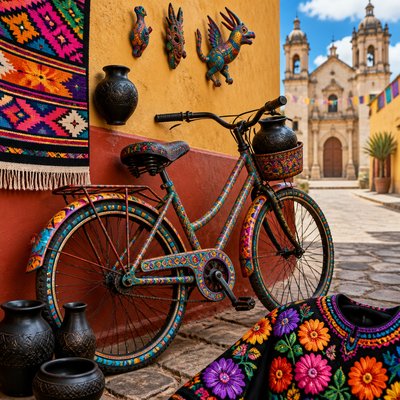
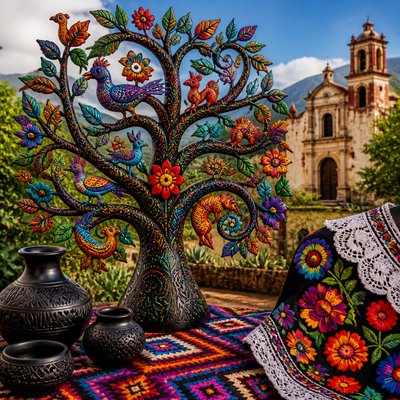
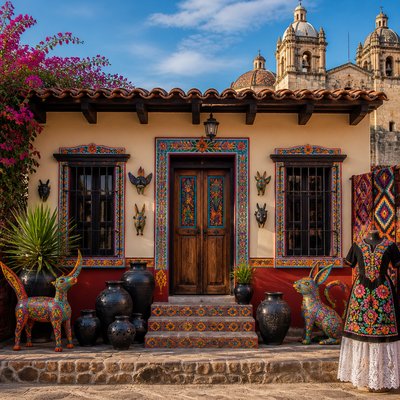
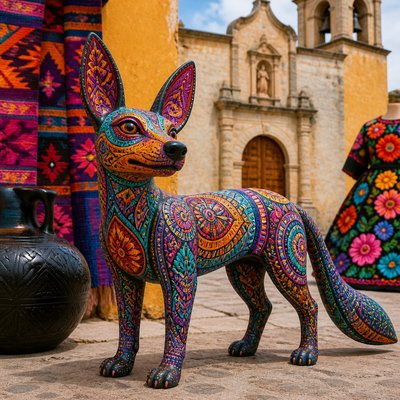
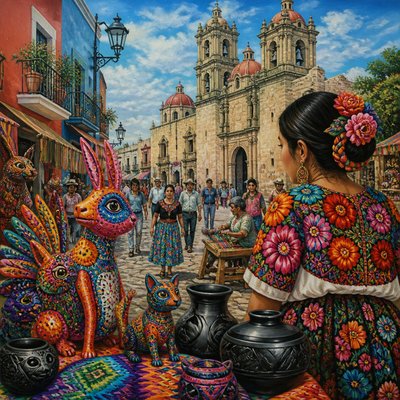
Oaxaca Art Style is a contemporary visual synthesis inspired by the craft traditions, material culture, architecture, and festive dress of Oaxaca, Mexico. Its identity combines the intense color and imaginative animal forms associated with painted wooden alebrijes, the deep matte-black surfaces of burnished barro negro pottery, bold geometric woven textiles, sun-weathered colonial facades, and richly embroidered floral garments.
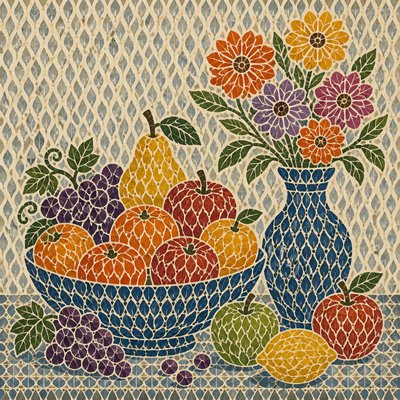
The style looks tactile and layered rather than mechanically polished. Saturated reds, yellows, turquoise, cobalt, magenta, and orange contrast with charcoal black, earthen brown, cream, and chalky plaster. Repeated diamonds, stripes, zigzags, flowers, leaves, and animal markings create a rhythmic surface language, while hand-painted irregularities, visible fibers, burnished clay, and faded sunlight suggest the presence of human craft.
Try It On Your Photos
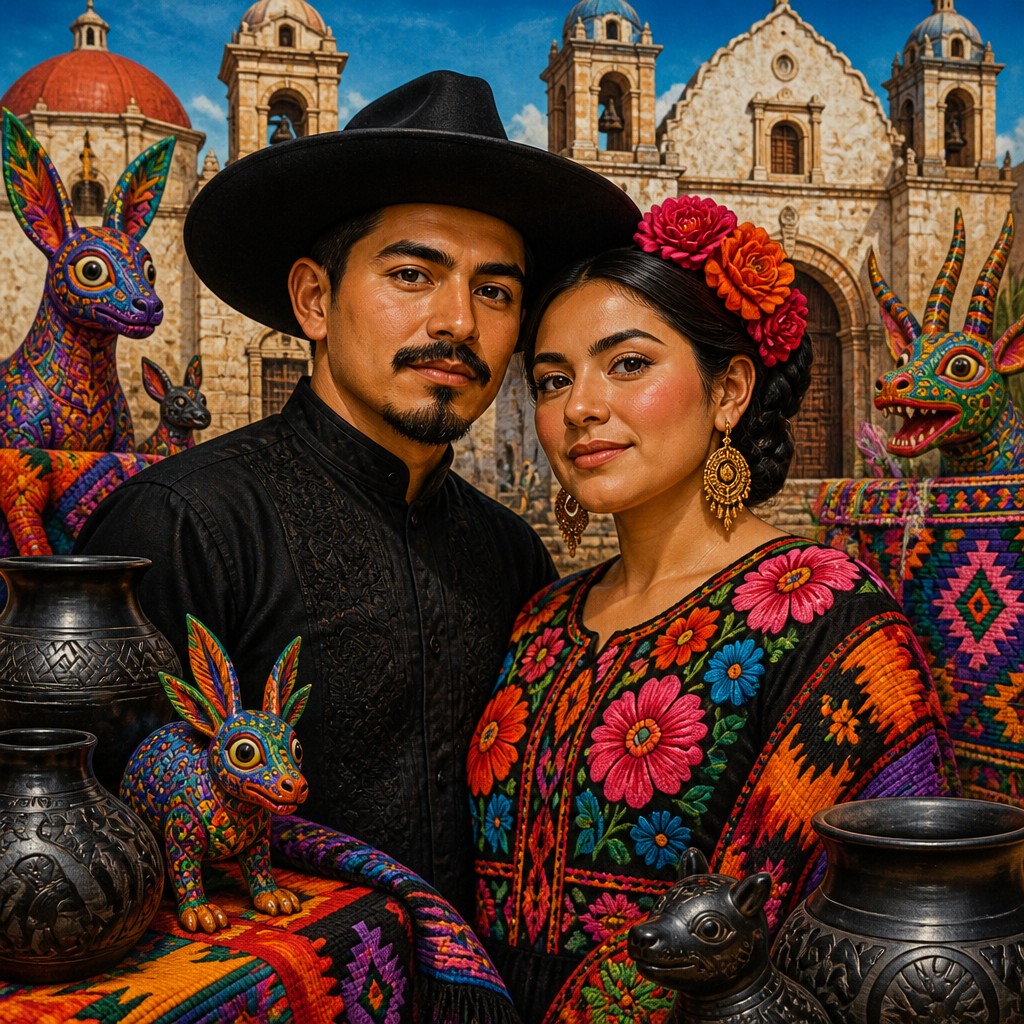
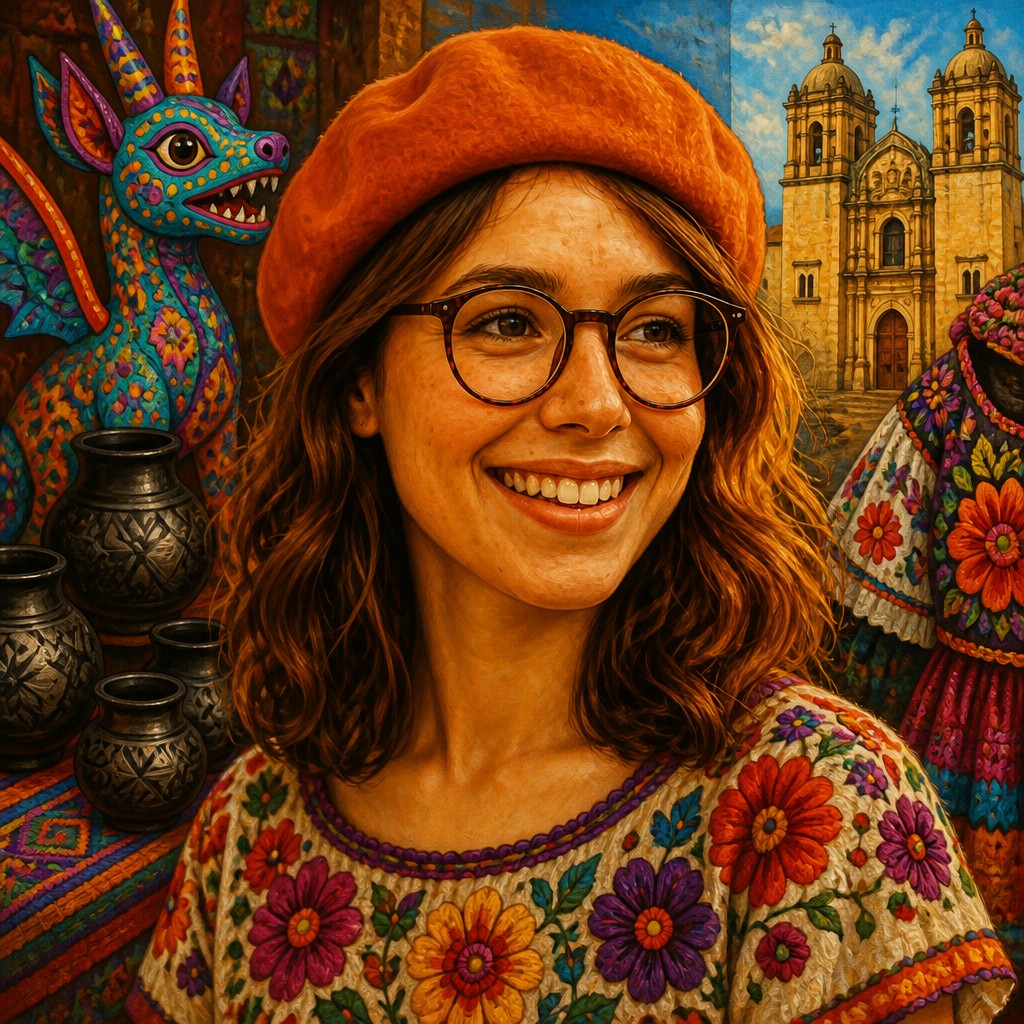
Upload any photo and convert it into Oaxaca Art Style — drag the sliders to compare before and after.


What Defines Oaxaca Art Style
The signature details, up close
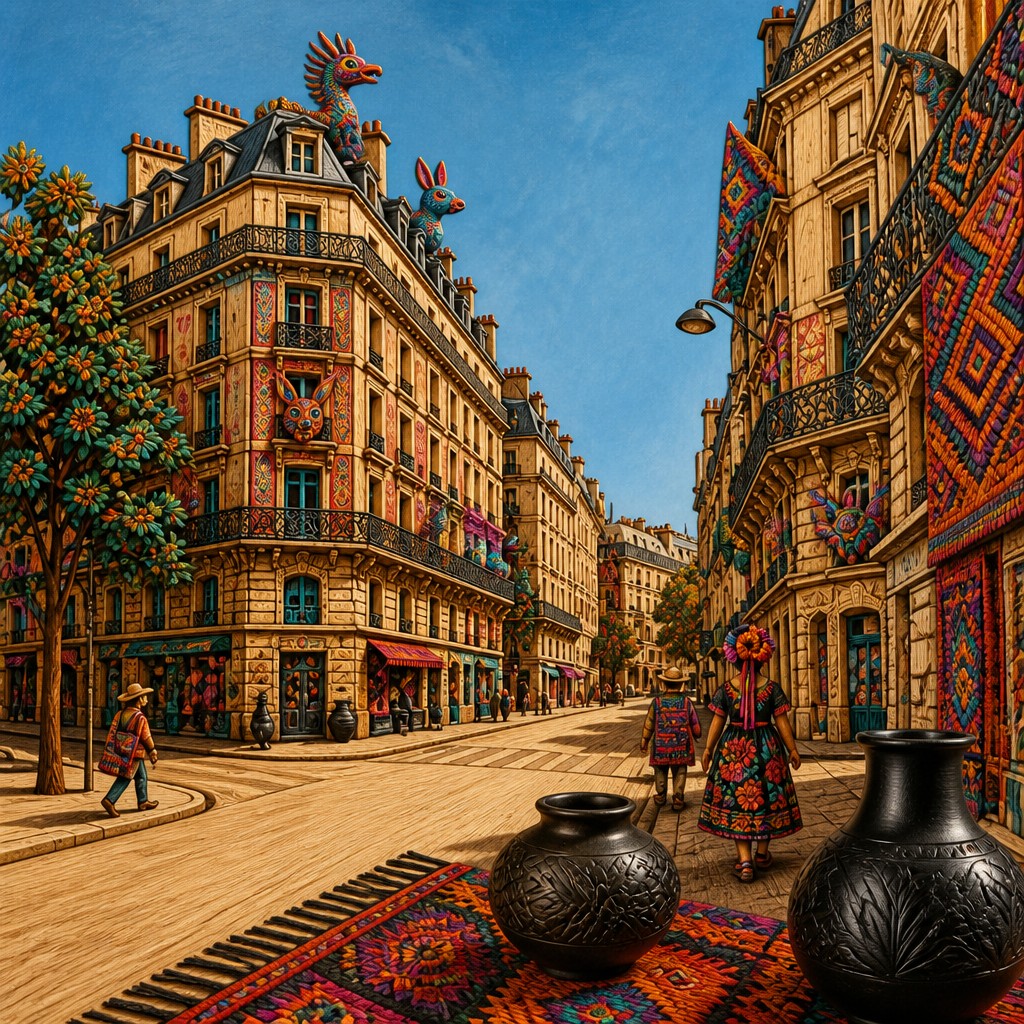
Vivid folk-craft palette
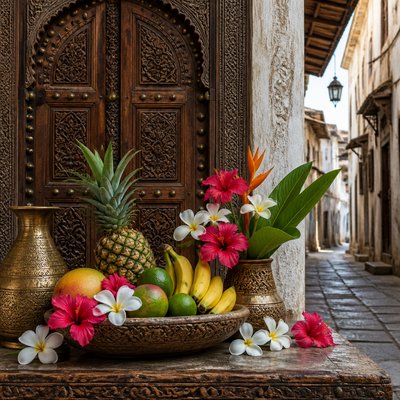
Use saturated vermilion, marigold, turquoise, cobalt, fuchsia, leaf green, and violet against black, clay, cream, or weathered plaster. Color is often applied in clear blocks and small decorative accents rather than blended softly.
Painted alebrije-like forms
Imaginary animals and hybrid creatures are rendered with lively silhouettes, exaggerated eyes, curling horns, feathers, scales, and dense dot or stripe patterns. The surface should feel hand-painted, with slight asymmetry and rhythmic ornament.
Black burnished pottery
Barro negro-inspired vessels have deep charcoal-black bodies, simplified profiles, and a low, matte-to-satin sheen produced by polished clay rather than glossy glaze. Subtle highlights should reveal turning, incised, or modeled surfaces.
Woven geometric pattern
Textiles feature stepped diamonds, stripes, chevrons, bands, and repeating border motifs that visibly follow a woven structure. Keep the pattern tactile by suggesting wool fibers, irregular threads, and changes in tension.
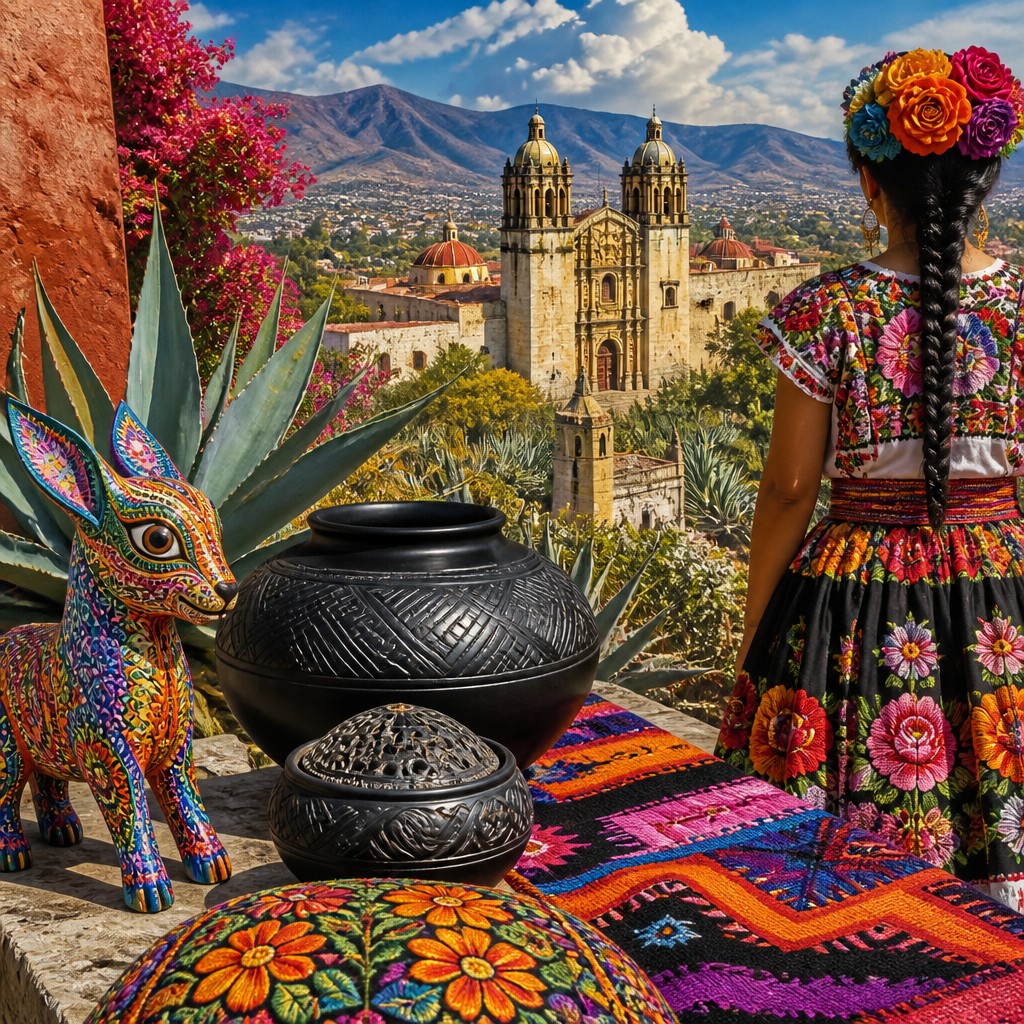
Embroidered floral costume
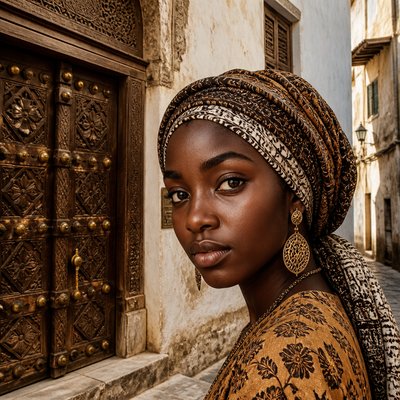
Garments and accessories may carry dense flowers, leaves, birds, and vegetal borders in contrasting thread colors. Embroidery is most convincing when it follows the fabric’s folds and retains a raised, stitched appearance.
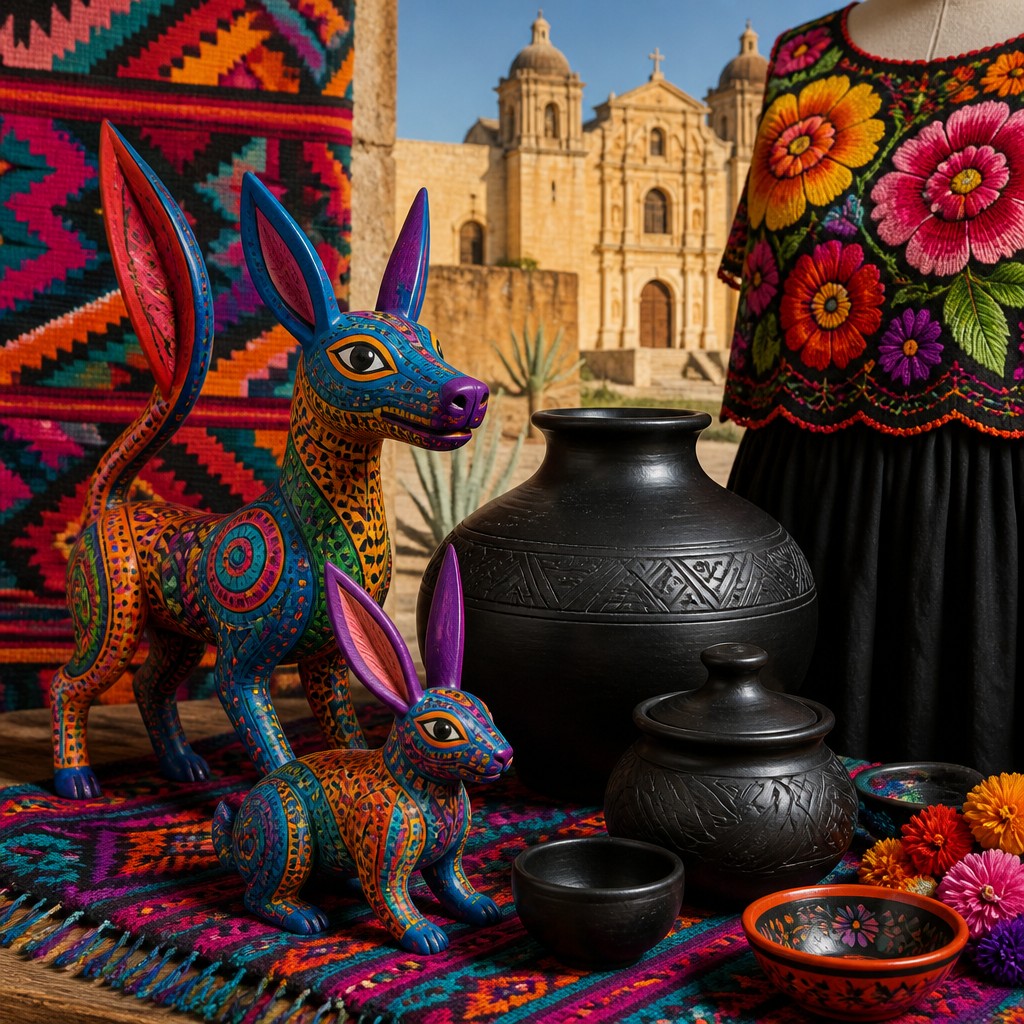
Weathered colonial architecture
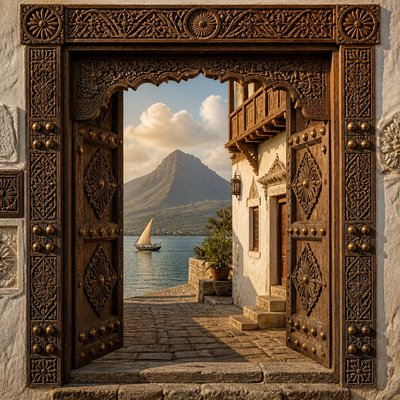
Plastered church walls, arcades, courtyards, carved stone, painted doors, and tiled roofs provide a sun-bleached architectural setting. Faded pigments, cracks, dust, and hard daylight balance the brighter craft details.
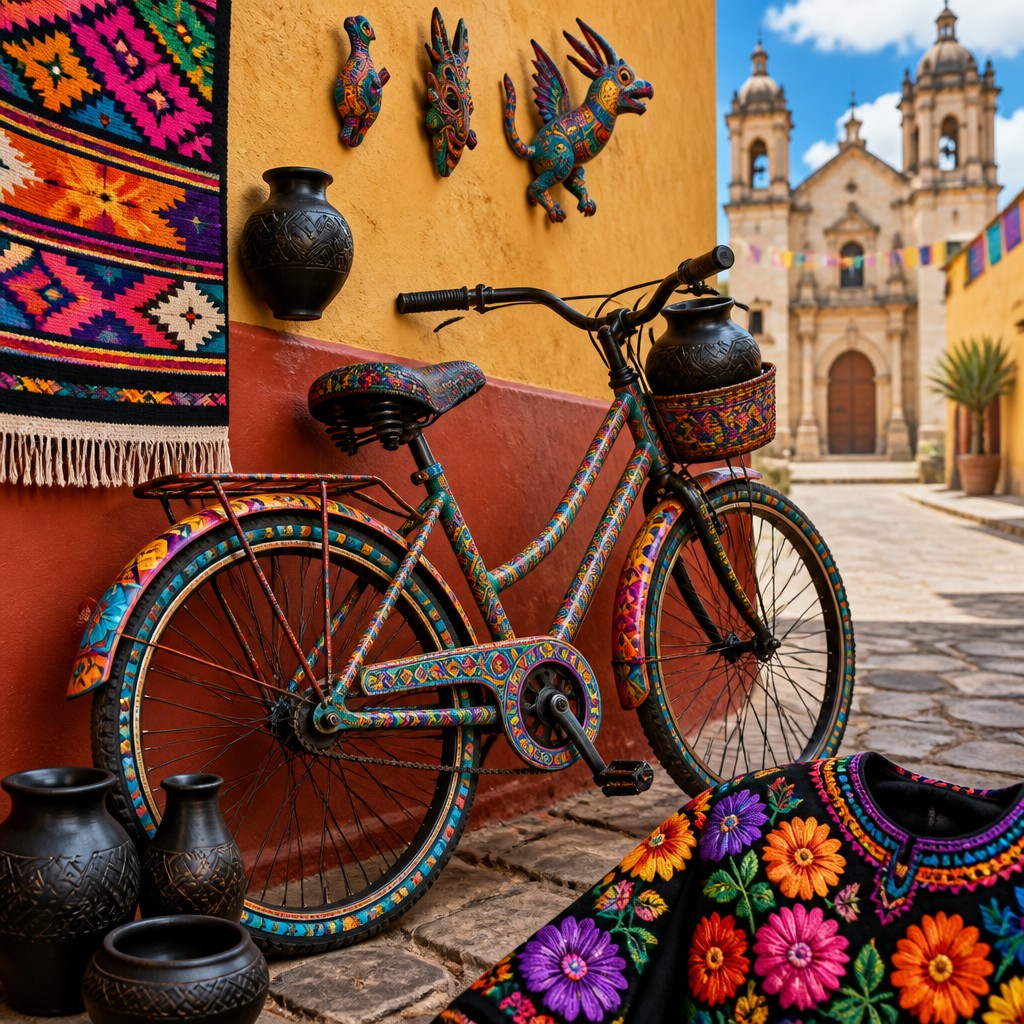
Handmade surface irregularity
Visible brush marks, uneven edges, small pigment variations, clay texture, woven fibers, and imperfect repetition keep the image grounded in material process. Avoid sterile symmetry and uniformly smooth digital surfaces.
Oaxaca Prompt Ideas
Start from an idea — each one opens the generator with the style ready to go. See all 40 Oaxaca prompts →
How to Create Oaxaca Art
Master the craft step by step — or skip straight to creating. Read the full guide →
- 1
Build a material-first palette
Start with charcoal black, terracotta, cream, and sun-faded plaster, then add a small group of saturated craft colors. Reserve the brightest hues for painted animals, embroidery, flowers, or patterned borders so the composition remains legible.
- 2
Layer pattern with restraint
Combine one dominant geometric textile pattern with smaller floral or animal motifs rather than covering every area equally. Vary scale, spacing, and wear to imitate woven cloth, painted wood, and handmade decoration.
- 3
Suggest physical craft techniques
For traditional work, use opaque paint, carved or modeled forms, burnished clay effects, and stitched or woven marks. In digital work, use textured brushes, grain overlays, displacement, and carefully limited edge irregularity to recreate those processes.
- 4
Compose around a clear subject
Place a vessel, animal sculpture, costumed figure, market scene, or courtyard at the center, then use textiles and architecture as framing elements. Strong silhouettes and broad color masses prevent intricate ornament from becoming visual noise.
- 5
Write material-specific prompts
For prompt-based generation, name the subject first and specify separate details for painted wood, burnished black clay, woven wool, embroidered fabric, or weathered plaster. Include terms such as hand-painted, visible fibers, matte sheen, irregular brushwork, and hard southern sunlight.
The Story
History & Origins of Oaxaca
This is best understood as an invented contemporary style label rather than a single historical movement from Oaxaca. Its aesthetic lineage draws on Indigenous textile and pottery traditions of southern Mexico, the modern craft practice of painted wooden animal sculptures, Spanish colonial architecture, and regional ceremonial clothing. These sources developed across different communities and periods, so they should not be treated as one uniform visual tradition.
The style’s current image-language reflects the way photography, illustration, design, and digital art combine recognizable Oaxacan materials and motifs into a unified composition. Its strongest references are the color systems of folk craft, the surface variation of handmade objects, and the coexistence of Indigenous, colonial, and contemporary cultural forms.
Influences: The style relates to Indigenous textile traditions of Oaxaca, regional ceramic practices including black burnished pottery, painted wooden folk sculpture, Mexican vernacular and colonial architecture, and festive dress with floral embroidery. It also intersects with folk art, craft revival, material-focused illustration, contemporary cultural design, and decorative pattern-making. Its visual logic is distinct from generic Mexican kitsch because it depends on specific material cues, regional craft references, and the contrast between vivid ornament and earth-toned surfaces.
Frequently Asked Questions
What defines Oaxaca Art Style?
It is defined by the combination of vivid hand-painted folk color, alebrije-like animal forms, black burnished barro negro pottery, geometric woven textiles, embroidered garments, and weathered colonial architecture. Tactile surfaces and deliberate handmade irregularity are as important as the motifs themselves.
Is Oaxaca Art Style a historical art movement?
No. The term describes a contemporary aesthetic synthesis rather than a formally established historical movement. It draws from multiple Oaxacan communities and craft traditions, which have distinct histories and should not be presented as a single homogeneous style.
How is it different from Mexican folk art in general?
Mexican folk art is a broad category covering many regions, materials, and visual languages. This style narrows the emphasis to Oaxacan references such as black pottery, painted wooden animals, regional textile geometry, embroidered dress, and sunlit colonial settings.
How can I make an image in this style without making it look generic?
Specify concrete materials and processes instead of relying only on cultural labels: burnished black clay, hand-painted wood, woven wool, raised embroidery, cracked plaster, and faded pigment. Use a restrained set of recurring motifs and include uneven edges or visible fibers to preserve a crafted appearance.
What subjects work well with Oaxaca Art Style?
Still lifes of pottery and textiles, imaginative animal sculptures, market scenes, village courtyards, ceremonial clothing, church facades, and festival compositions are especially effective. Subjects with clear silhouettes provide a strong base for dense pattern and ornament.
Can this style be used for photography or digital illustration?
Yes. Photography can emphasize local materials, strong sunlight, plaster textures, and carefully composed still lifes, while digital illustration can simulate painted wood, woven fibers, clay, and embroidery through layered texture. Cultural context and accurate material references help prevent the result from becoming a superficial decorative collage.
Create your first Oaxaca artwork
Describe anything — or upload a photo — and see it in Oaxaca Art Style in seconds.
Related Styles
Discover similar art styles