Mozambican Art Style
Explore Mozambican art style: Makonde ebony carving, shetani spirits, Mapiko mask forms, and warm Indian Ocean color.
Instantly rendered in Mozambican — or transform a photo
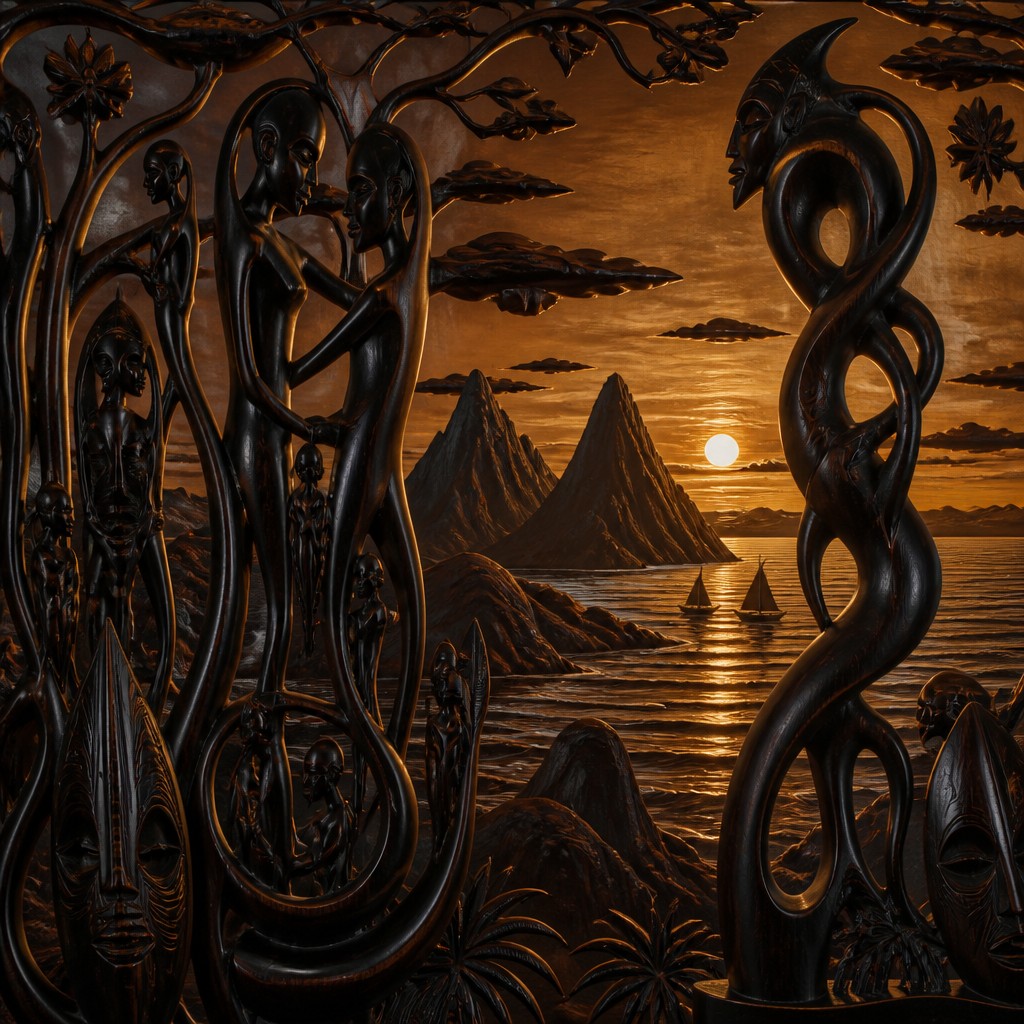
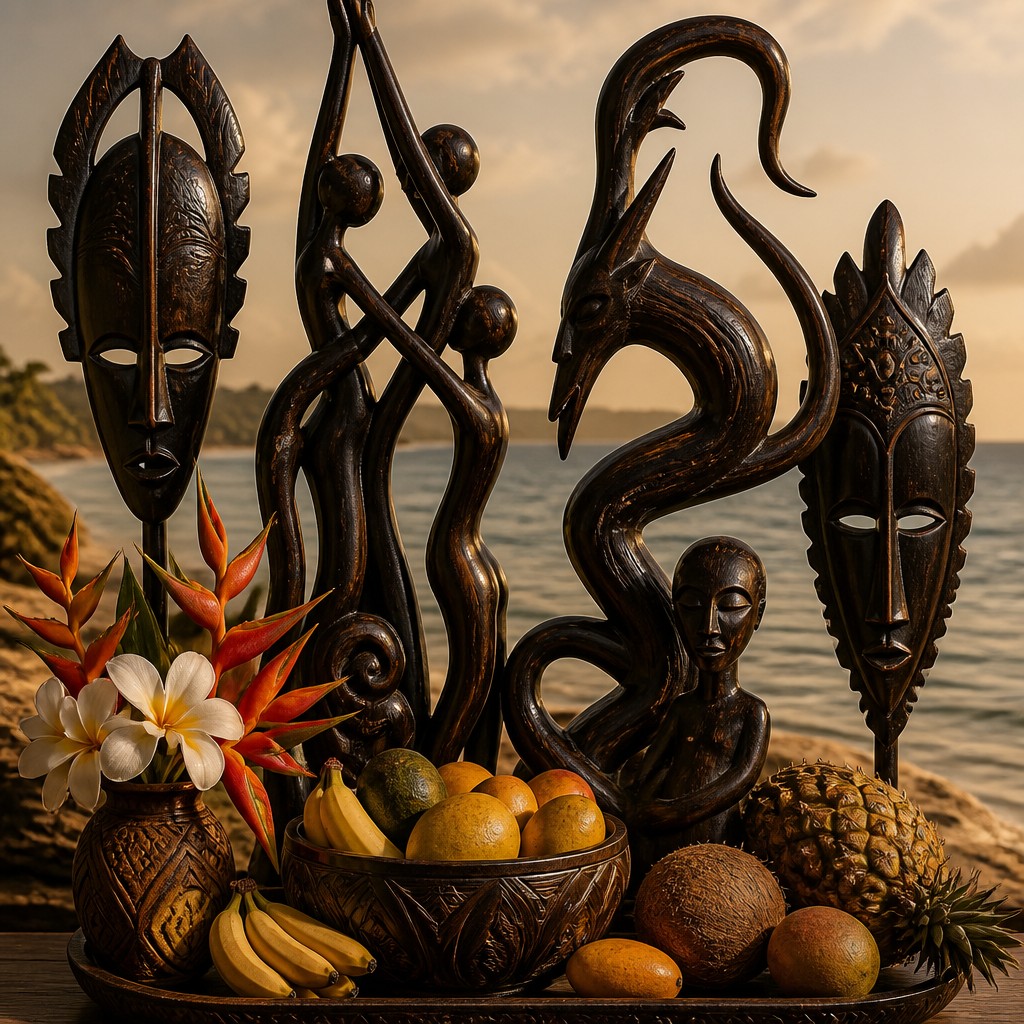
Mozambican Gallery
Tap any artwork to explore it
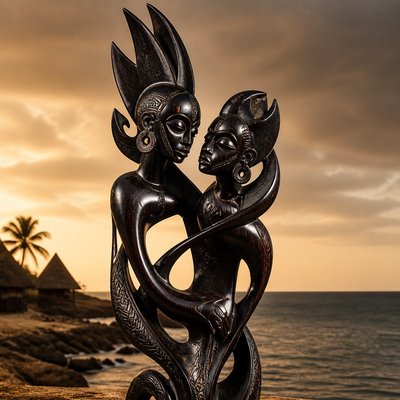
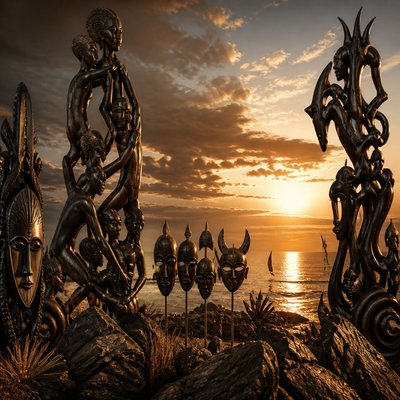
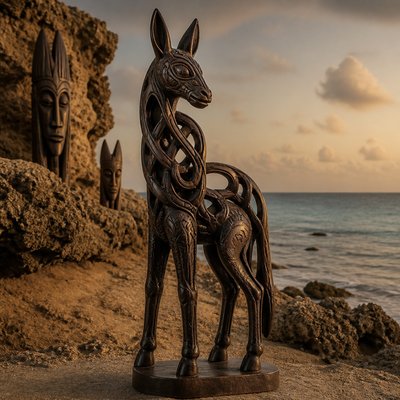
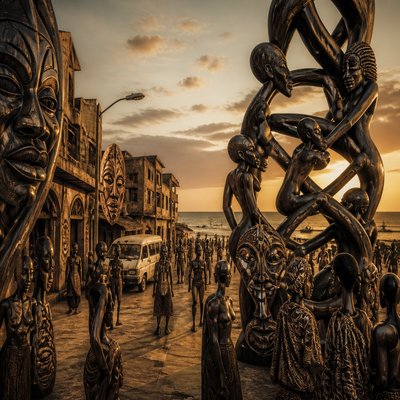
What is Mozambican Art Style?
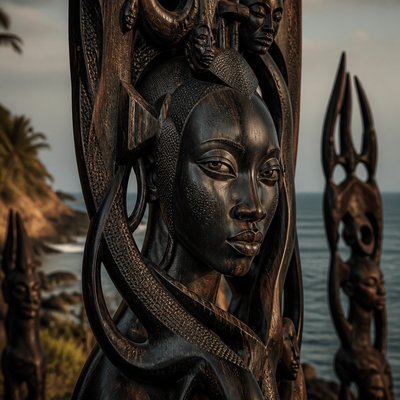
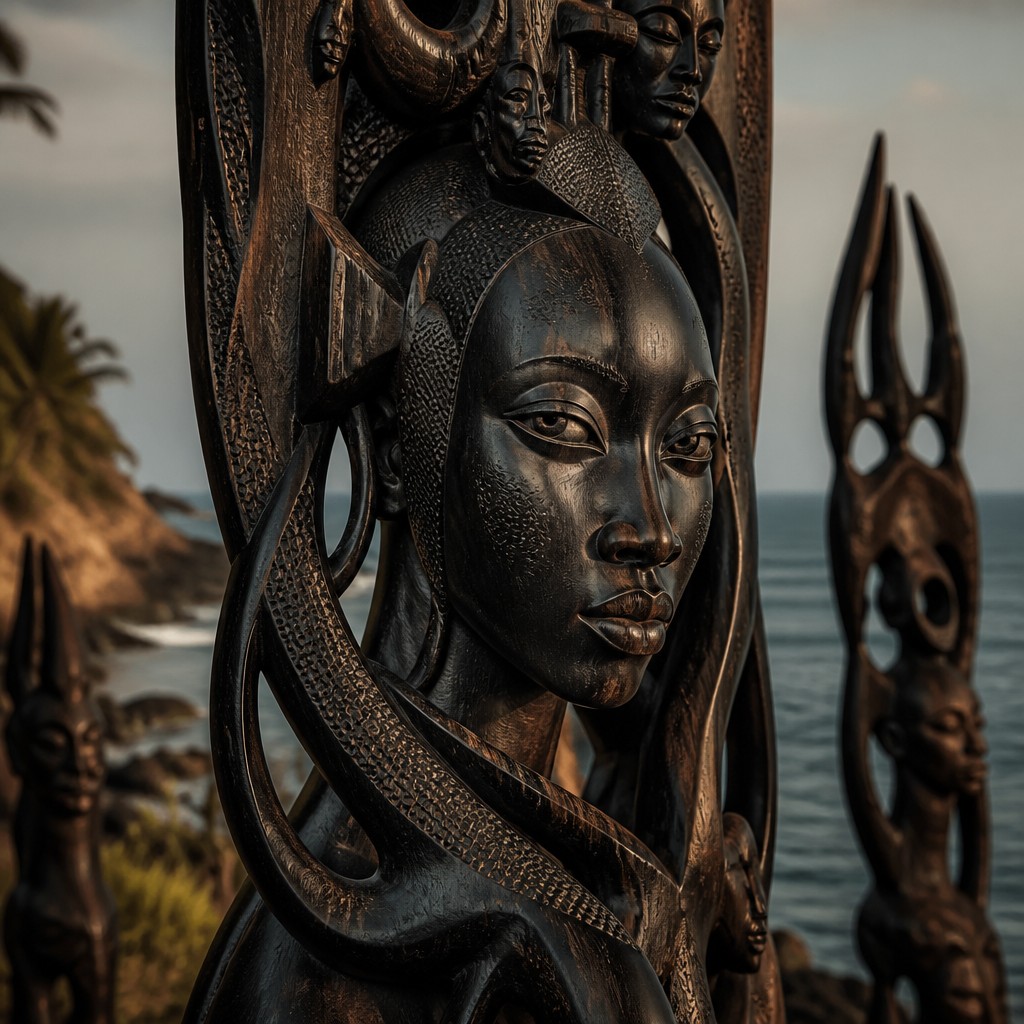
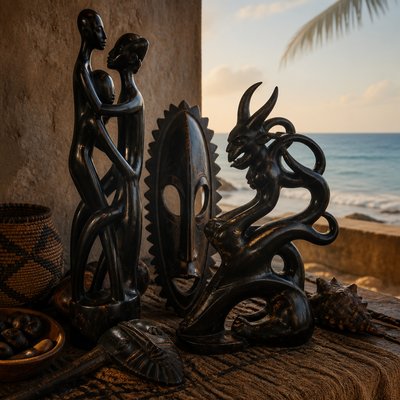
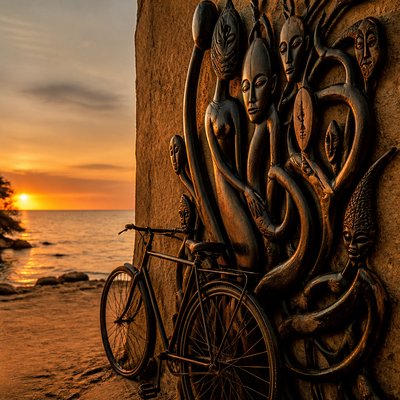
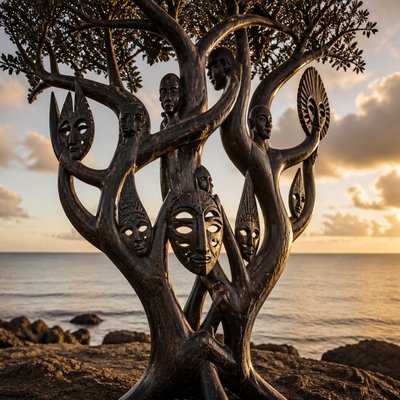
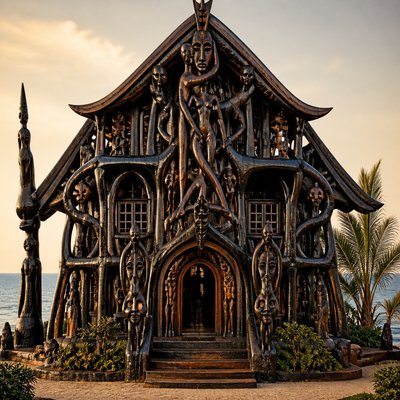
Mozambican Art Style is a contemporary descriptive label for imagery inspired primarily by Makonde carving traditions from northern Mozambique and neighboring areas of Tanzania. Its visual identity combines tall, interlocking human figures, polished dark ebony-like surfaces, elongated anatomy, carved mask silhouettes, and fantastical shetani spirit forms that coil into branches, limbs, and other organic shapes.
The style looks simultaneously tactile and dreamlike. Dense vertical compositions suggest a single carved block from which bodies emerge, while glossy umber-black grain gives the image the weight and finish of hardwood. Warm coastal illumination, restrained earth colors, and references to Mapiko masquerade create an atmosphere connected to the Indian Ocean region without reducing the diverse artistic traditions of Mozambique to a single national language.
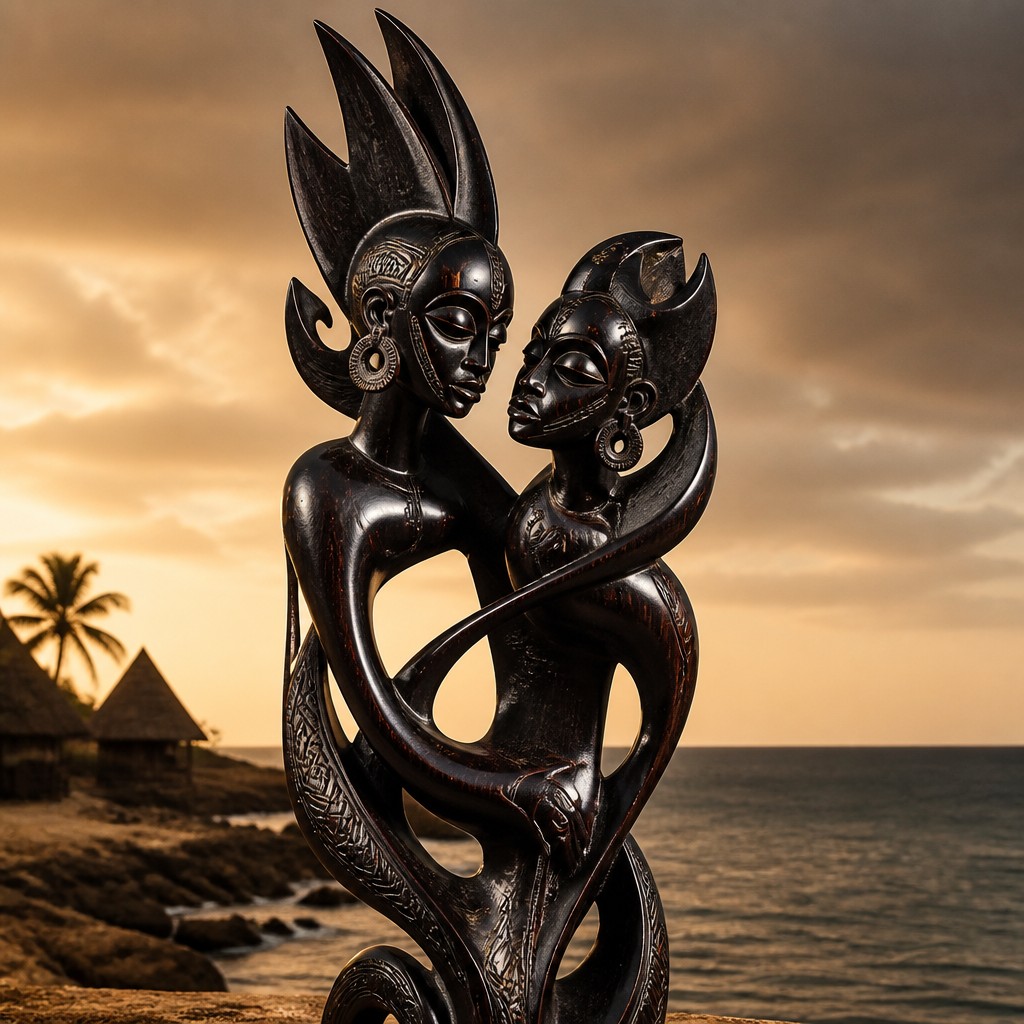
Try It On Your Photos
Upload any photo and convert it into Mozambican Art Style — drag the sliders to compare before and after.
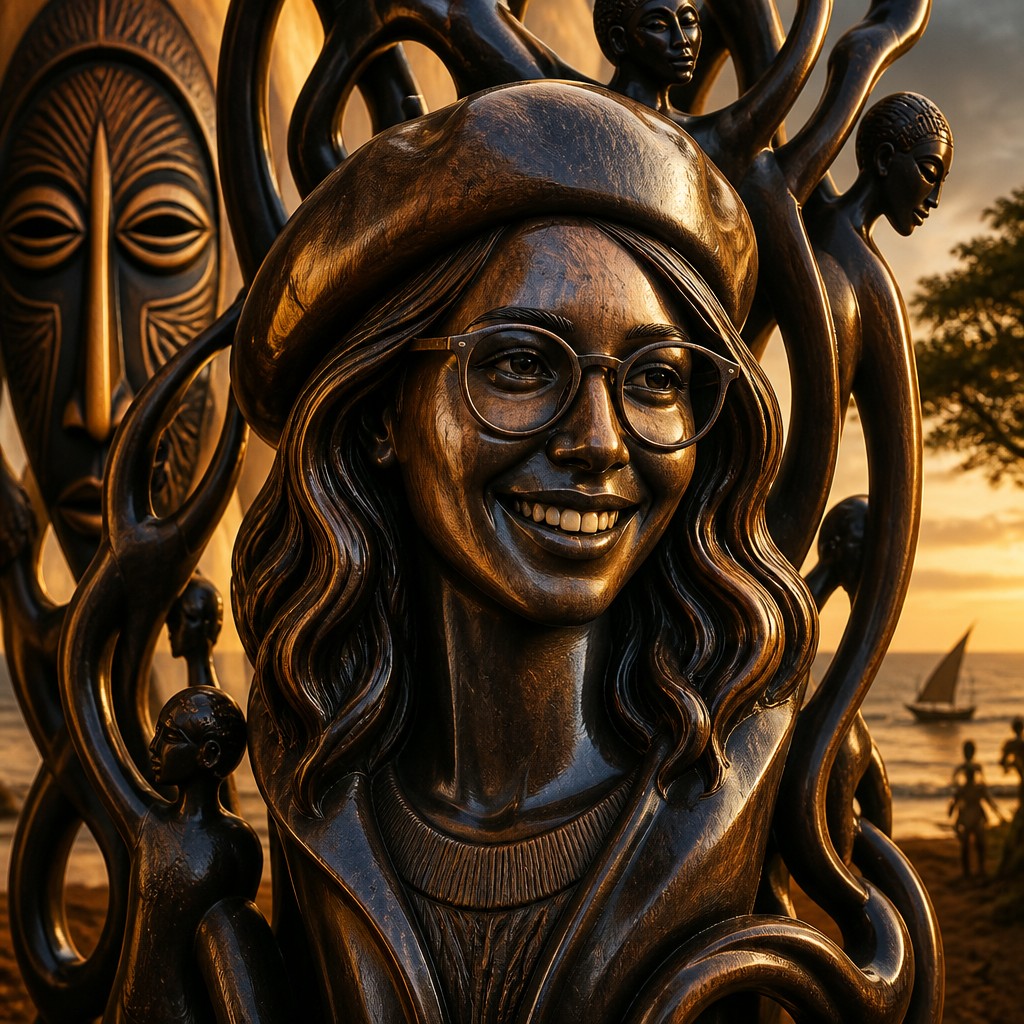


What Defines Mozambican Art Style
The signature details, up close
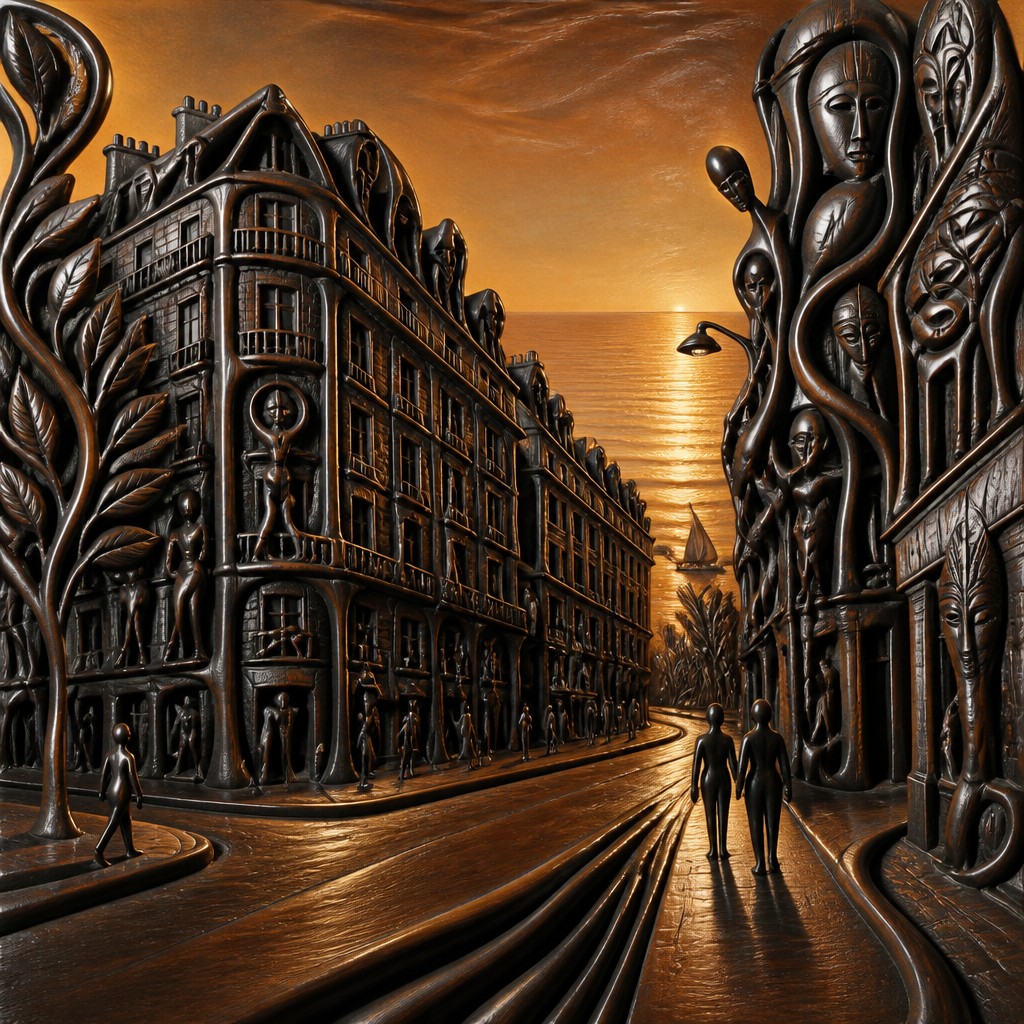
Interlocking vertical figures
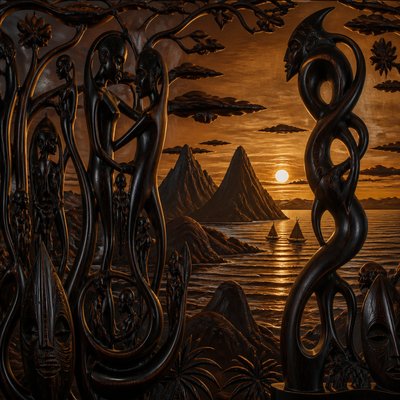
Human forms rise in stacked, connected arrangements, with limbs, torsos, and heads emerging from one another. This creates a sense of communal identity and the visual continuity of a single carved trunk.
Shetani-inspired fantasy
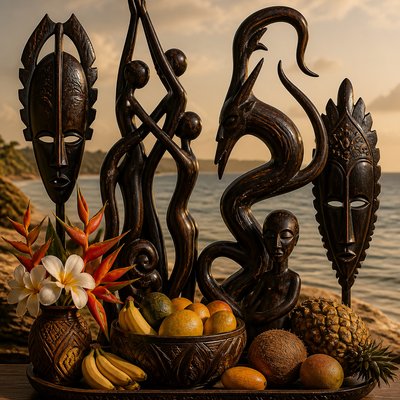
Spirit-like beings twist through exaggerated anatomy, curling joints, expressive faces, and hybrid organic forms. The imagery is uncanny and imaginative rather than simply monstrous.
Ebony-like surface
Deep black, chocolate, and umber tones suggest polished hardwood with visible grain. Highlights should skim across curved surfaces to communicate carving, weight, and hand-finished gloss.
Mask silhouettes
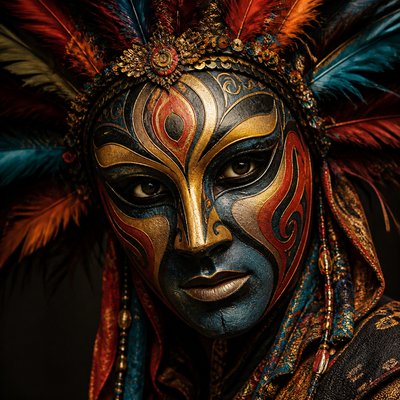
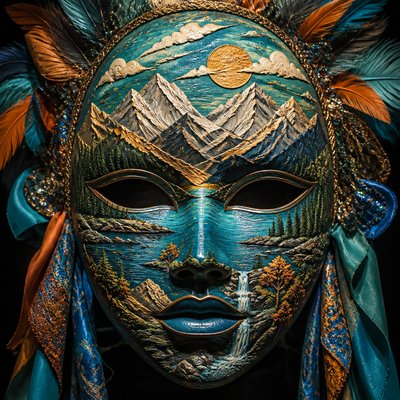
Flattened faces, enlarged features, geometric contours, and theatrical profiles evoke the visual impact of Mapiko masks. These references work best as formal influences rather than literal replicas of ritual objects.
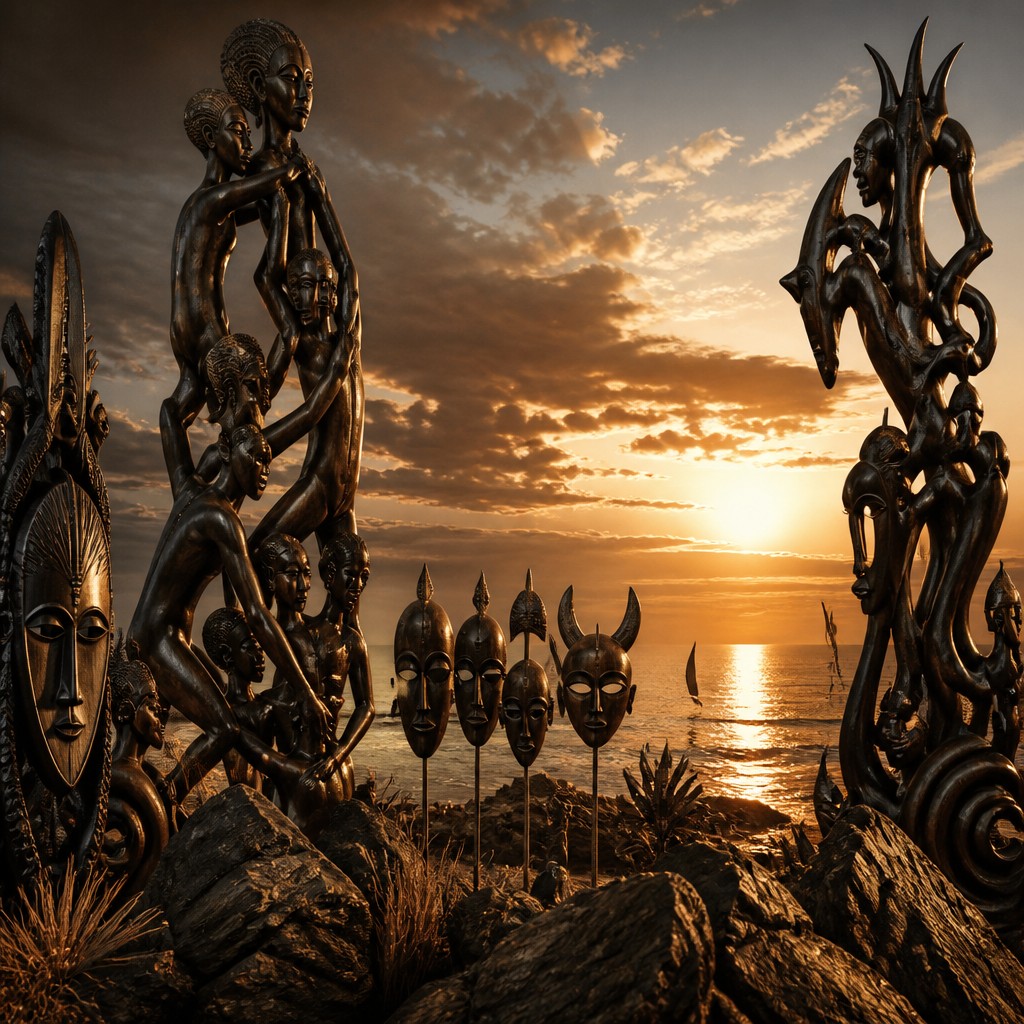
Organic interweaving
Bodies merge with roots, vines, branches, and spiraling shapes, producing a continuous sculptural rhythm. Negative spaces between forms are as important as the figures themselves.
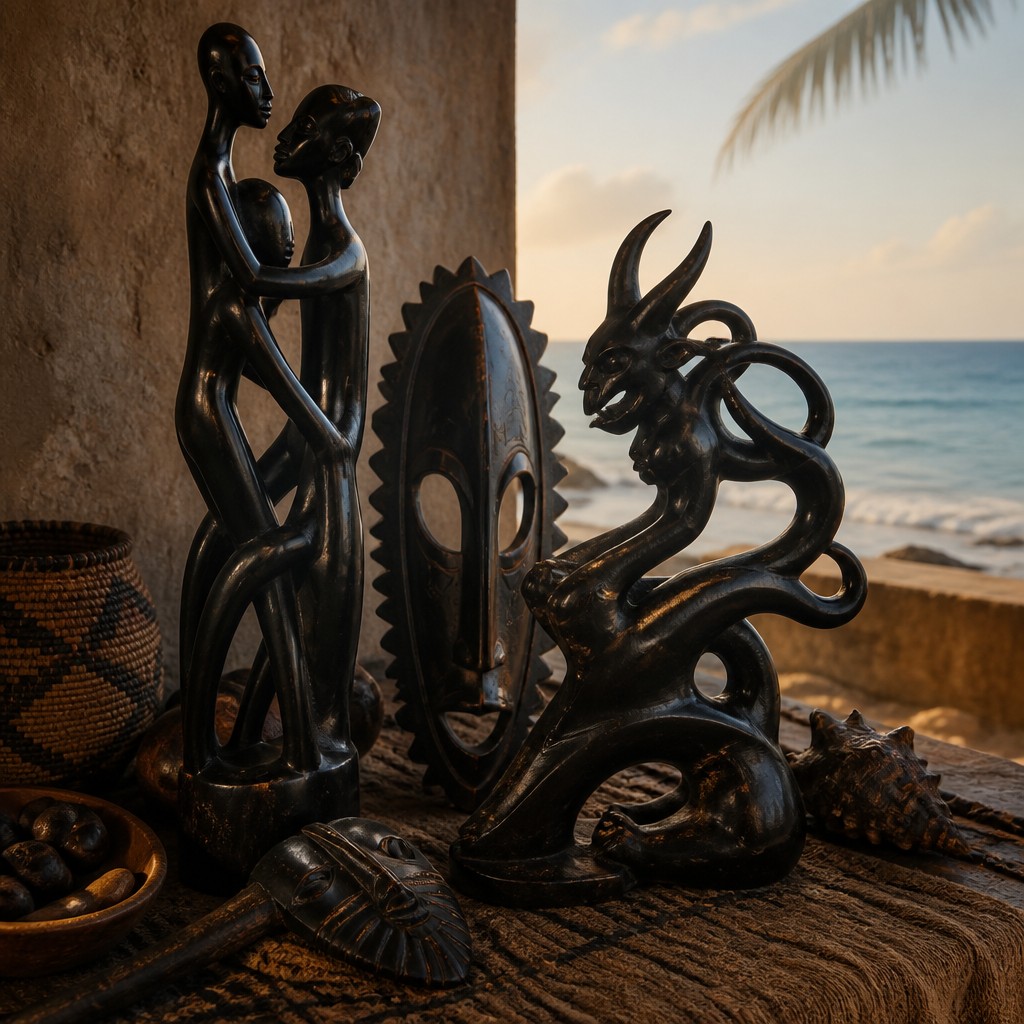
Coastal earth palette
Warm ochre, rust, sand, muted red, dark brown, and black dominate, with occasional Indian Ocean blue or turquoise accents. The palette suggests sunlit wood, soil, and tropical coastal atmosphere.
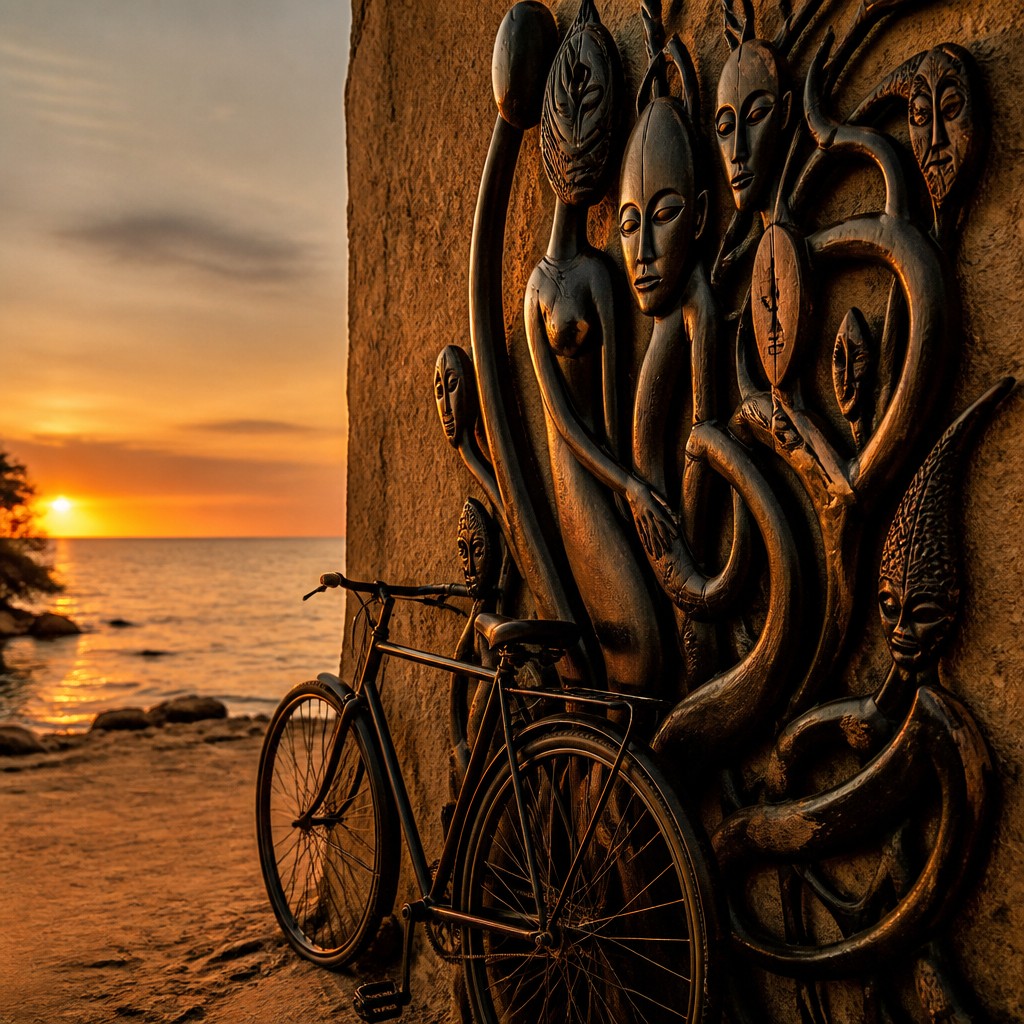
Sculptural lighting
Warm directional light reveals ridges, tool marks, polished edges, and deep recesses. Shadows should remain substantial, emphasizing the object-like solidity of the composition.
Mozambican Prompt Ideas
Start from an idea — each one opens the generator with the style ready to go. See all 40 Mozambican prompts →
How to Create Mozambican Art
Master the craft step by step — or skip straight to creating. Read the full guide →
- 1
Build from a single mass
For physical sculpture, begin with a simplified block or trunk-like volume and establish the main vertical rhythm before cutting secondary figures. Preserve bridges of material between forms so the composition feels carved as one connected structure.
- 2
Design the silhouette first
Whether drawing, modeling, or composing digitally, make the outer contour readable before adding surface detail. Use repeated arcs, narrow waists, mask-like heads, and deliberate negative spaces to create a convincing interlocking structure.
- 3
Model wood and polish
Use dark brown-black materials with subtle directional grain, moderate gloss, and rounded highlights. Add restrained tool marks and variations in reflectivity rather than making the surface uniformly black or plastic.
- 4
Layer spirit and masquerade references
Combine elongated human anatomy, fantastical shetani-like motion, and mask-inspired facial geometry while avoiding generic fantasy armor or unrelated monster tropes. Keep the result grounded in carved form and theatrical silhouette.
- 5
Use warm coastal illumination
Place a low, golden key light against deep ambient shadows, with a restrained background suggesting sand, tropical air, or the Indian Ocean. Strong rim light can separate dark figures without breaking the earthen palette.
- 6
Write precise generation prompts
Specify the subject, interlocking composition, ebony-like material, shetani-inspired organic distortion, mask silhouettes, lighting, and palette in that order. For image transformation, preserve the source subject's pose or architecture while requesting carved wood texture, connected anatomy, and sculptural lighting.
The Story
History & Origins of Mozambican
This style is best understood as an aesthetic lineage rather than a formally named historical movement. It draws on Makonde woodcarving, especially the tradition of carving figures and masks from dark hardwood, as well as shetani imagery depicting supernatural or mischievous spirit beings. Makonde communities live in northern Mozambique and southern Tanzania, and their artistic practices developed across a cultural region whose boundaries do not follow modern national borders.
Makonde carving gained wider international visibility during the twentieth century, while continuing to evolve through local traditions, workshop production, religious imagery, and contemporary sculpture. Mapiko masquerade is a performance tradition involving carved masks, dance, music, and social storytelling; its mask forms may inform the silhouettes and theatrical presence of this visual style, but the style itself is a modern synthesis rather than a historical Makonde category.
Influences: The style relates to Makonde woodcarving, Mapiko masquerade, East African ceremonial mask traditions, African modernist sculpture, surrealism, expressionist distortion, and contemporary fantasy sculpture. It also shares formal concerns with assemblage and organic abstraction, particularly the transformation of the human body into a continuous network of figures, roots, and symbolic forms. These connections should be treated as visual lineages, not as evidence that all African or Mozambican art belongs to one unified style.
Frequently Asked Questions
What defines the Mozambican Art Style?
It is defined by Makonde-inspired ebony carving, tall interlocking figures, shetani-like spirit forms, mask-influenced faces, and warm coastal lighting. The combination of dense vertical composition and dark polished wood texture is especially characteristic.
Is Mozambican Art Style a historical art movement?
No. The phrase is a contemporary descriptive label for an image aesthetic drawing on several Mozambican and regional traditions. Its principal lineage is Makonde carving and Mapiko masquerade, combined with surreal and fantasy-oriented digital or illustrative interpretation.
What are shetani figures?
Shetani are spirit beings represented in several East African cultural contexts, including Makonde-influenced carving. In sculpture, they are often imagined through exaggerated, twisting, uncanny, or hybrid forms; their meaning depends on context and should not be treated as a generic synonym for evil monsters.
How is this different from African tribal art or generic fantasy art?
Those broad labels obscure important regional distinctions. This style points more specifically toward northern Mozambican and cross-border Makonde carving, using carved-wood structure, masquerade silhouettes, and shetani-inspired distortion rather than applying an undifferentiated African appearance or standard fantasy design.
Can this style be made with materials other than ebony?
Yes. Walnut, dark-stained hardwood, clay, resin, bronze, or digital 3D materials can suggest the same visual language. The essential qualities are connected sculptural forms, visible material depth, controlled gloss, and a dark earthen palette.
Where is this style useful?
It suits sculptural portraiture, ceremonial scenes, fantasy concept art, editorial illustration, game environments, jewelry or mask studies, and atmospheric architectural objects. When referencing Mapiko or other living traditions, contextual and respectful presentation is important, especially if depicting recognizable ceremonial forms.
Create your first Mozambican artwork
Describe anything — or upload a photo — and see it in Mozambican Art Style in seconds.
Related Styles
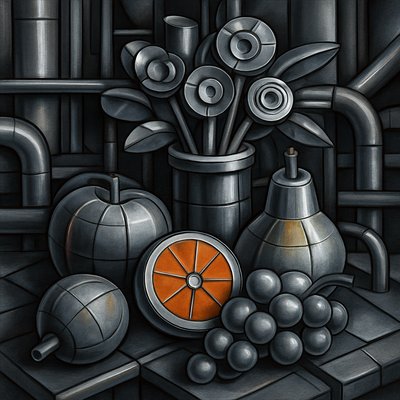
Discover similar art styles