Minoan Fresco Art Style
Explore Minoan fresco art: Bronze Age Aegean murals defined by marine life, spirals, fluid figures, mineral color and weathered plaster.
Instantly rendered in Minoan Fresco — or transform a photo
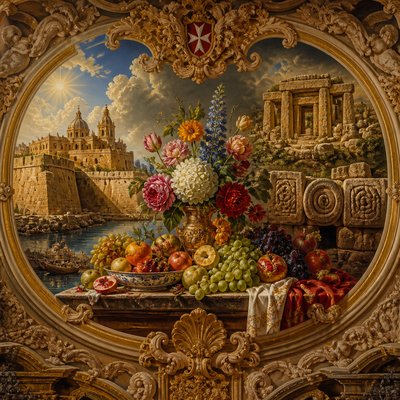
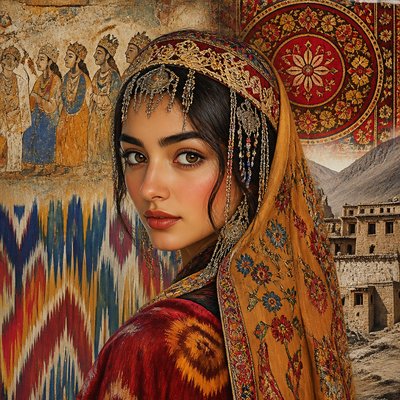
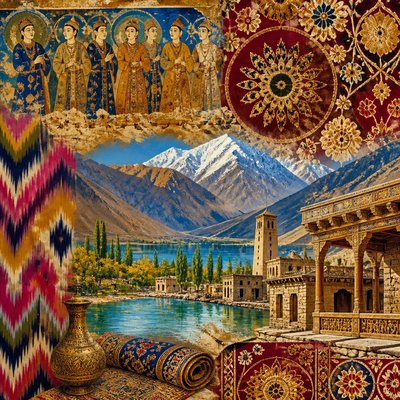
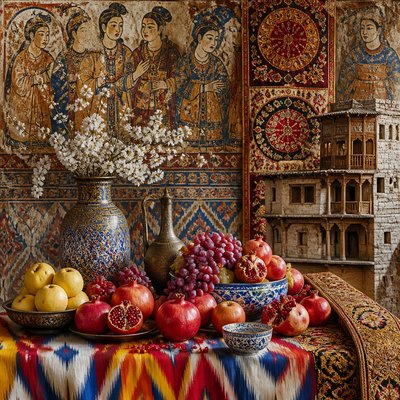
Minoan Fresco Gallery
Tap any artwork to explore it
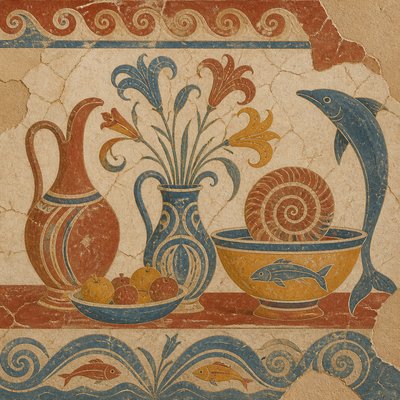
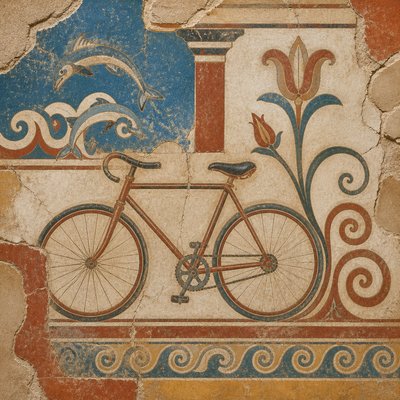
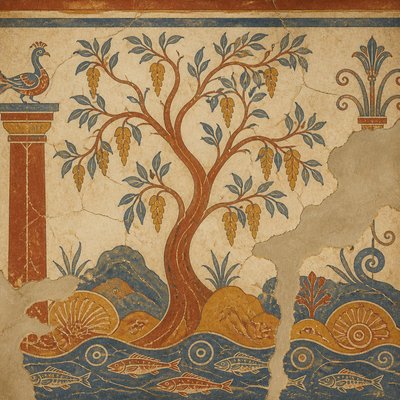
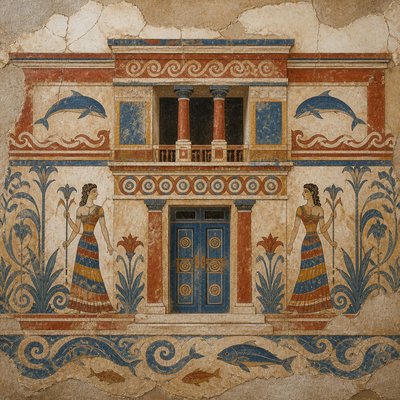
What is Minoan Fresco Art Style?
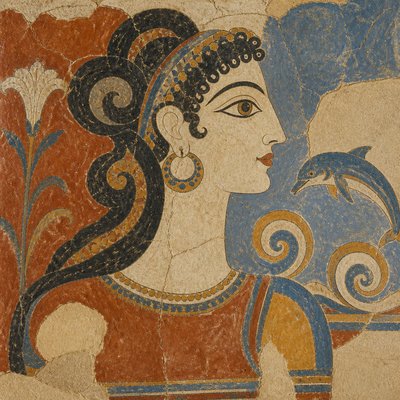
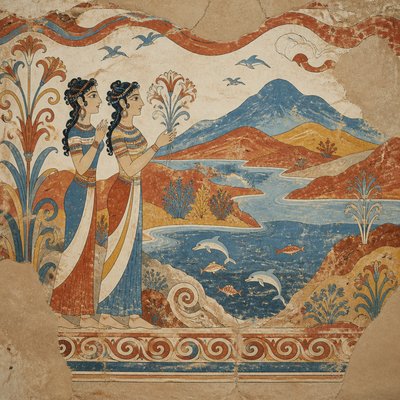
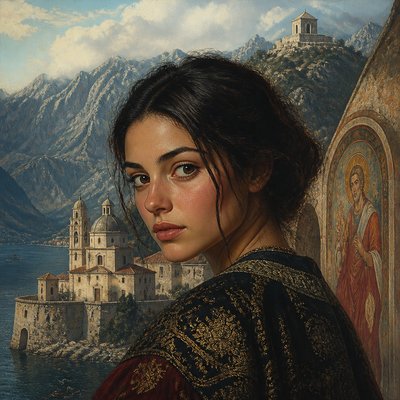
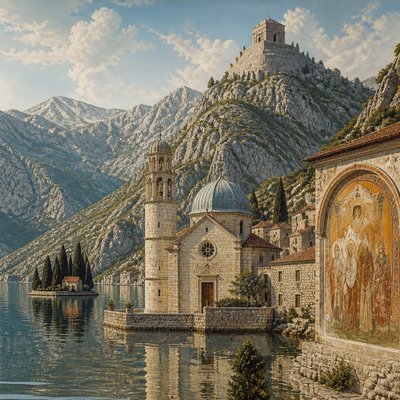
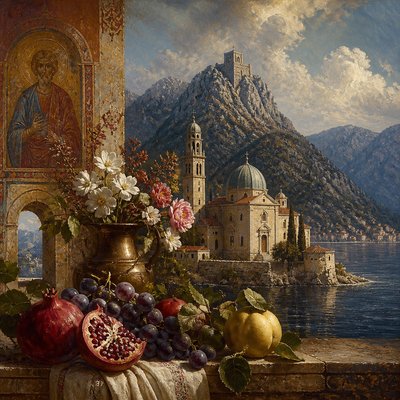
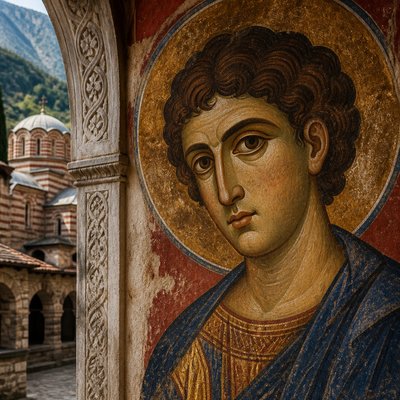
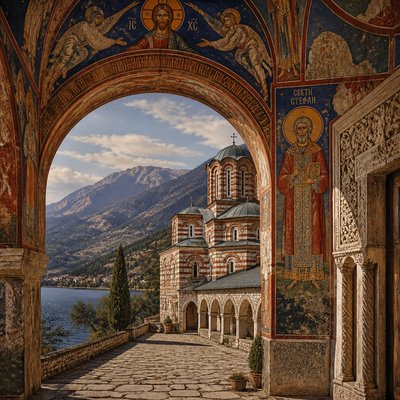
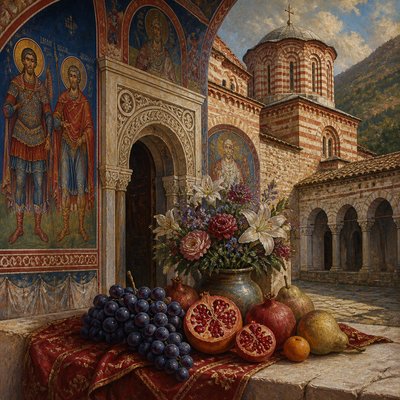
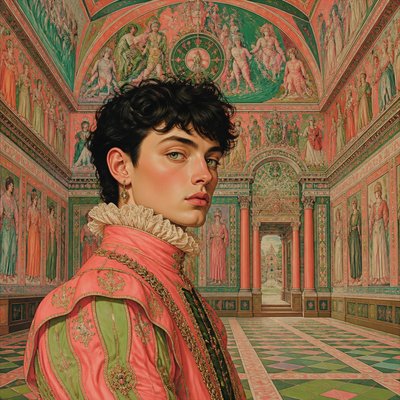
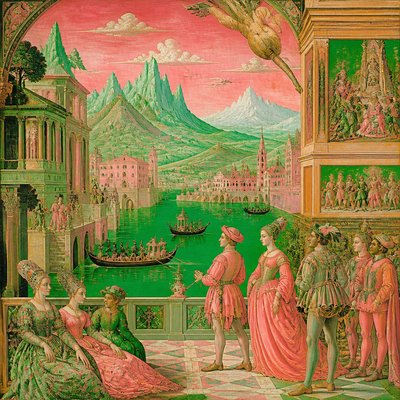
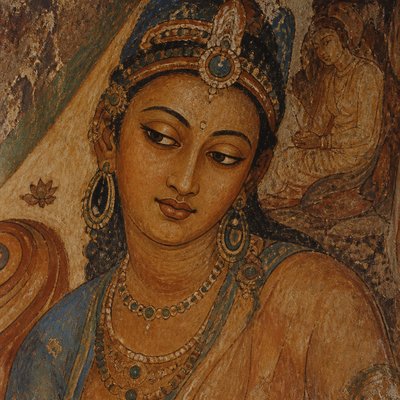
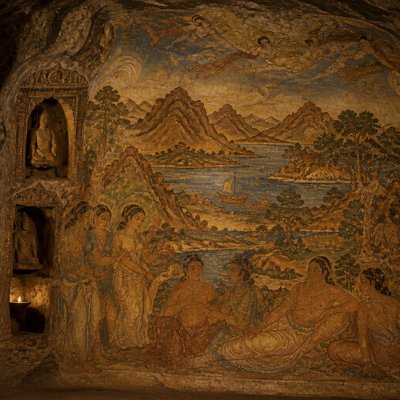
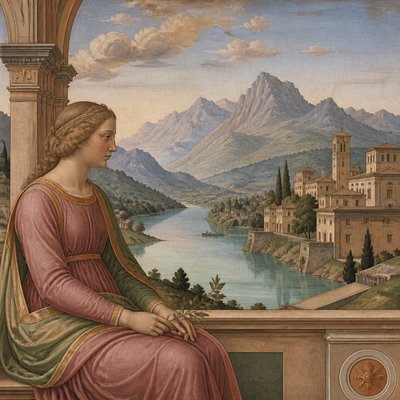
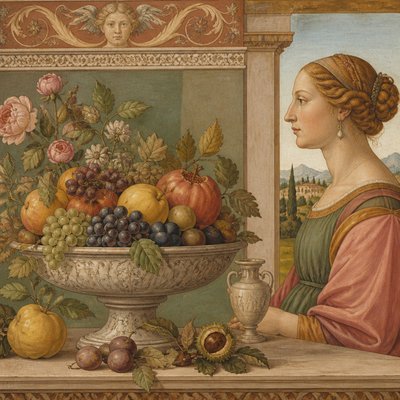
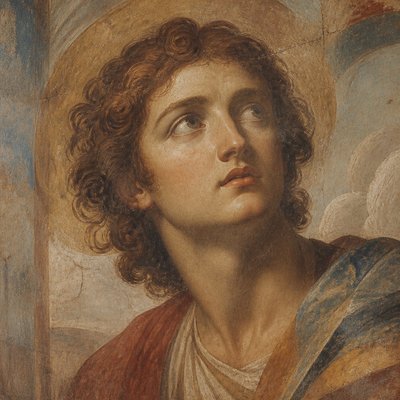
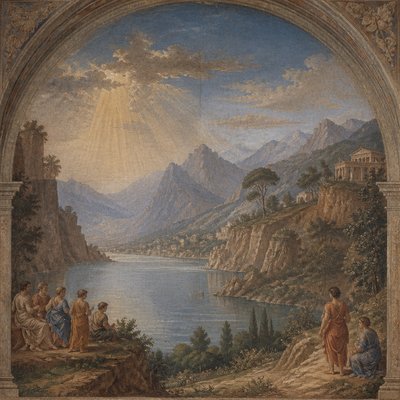
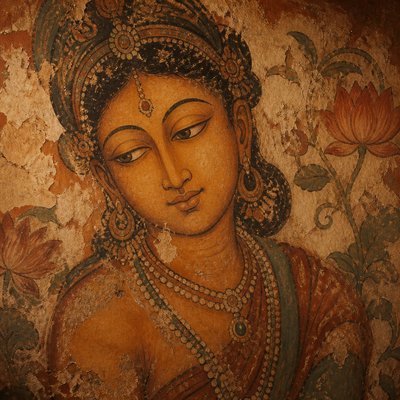
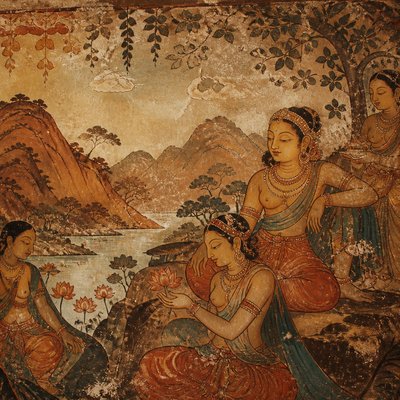
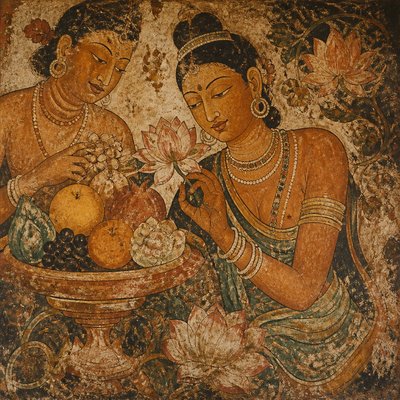
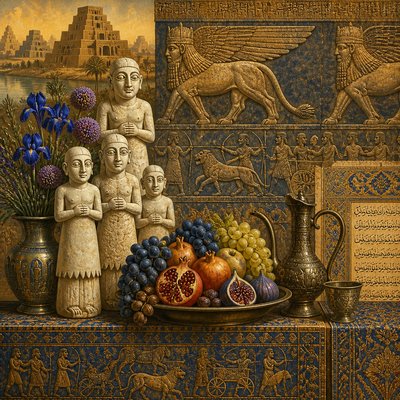
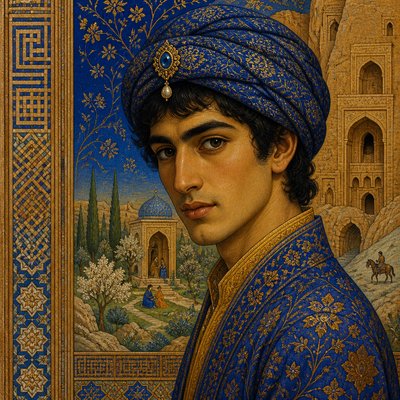
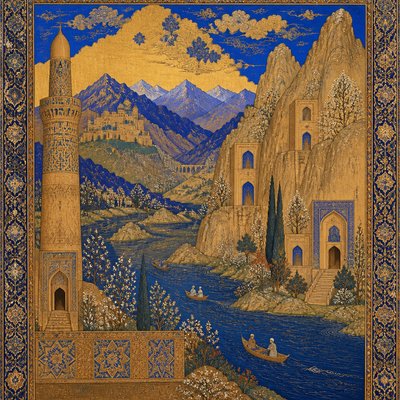
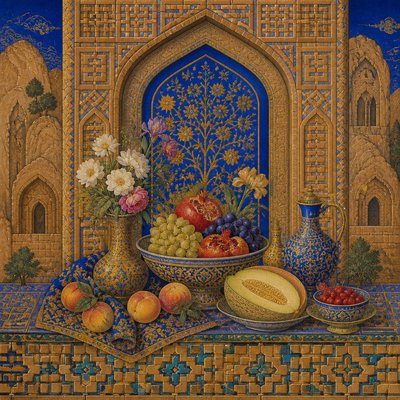
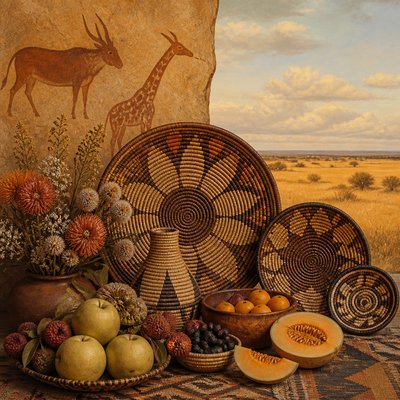
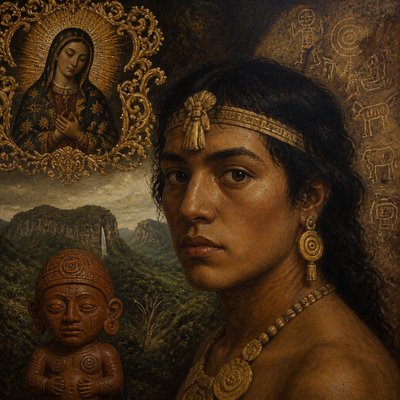
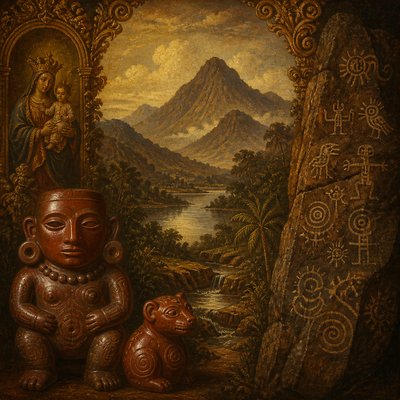
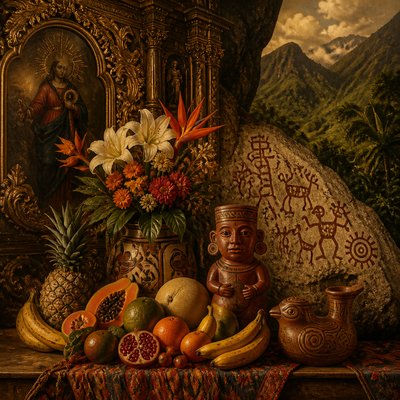
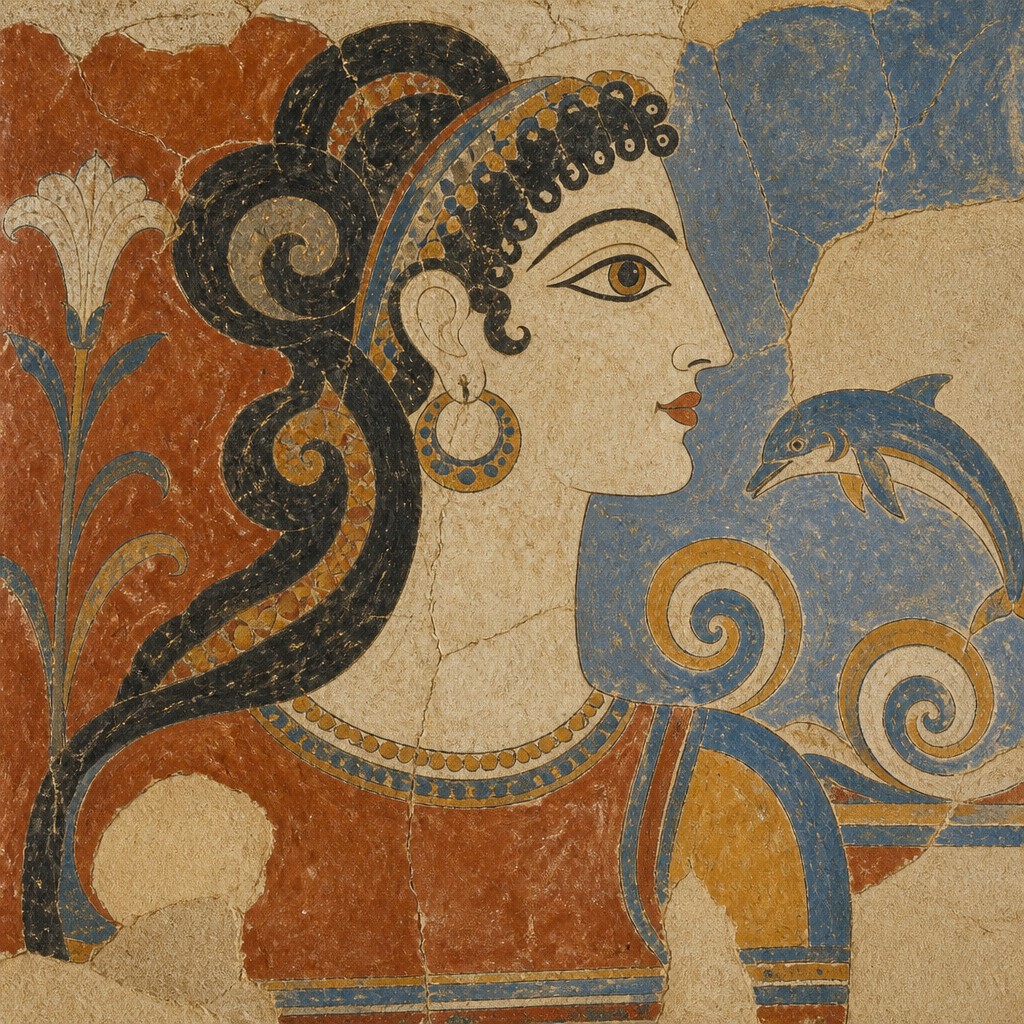
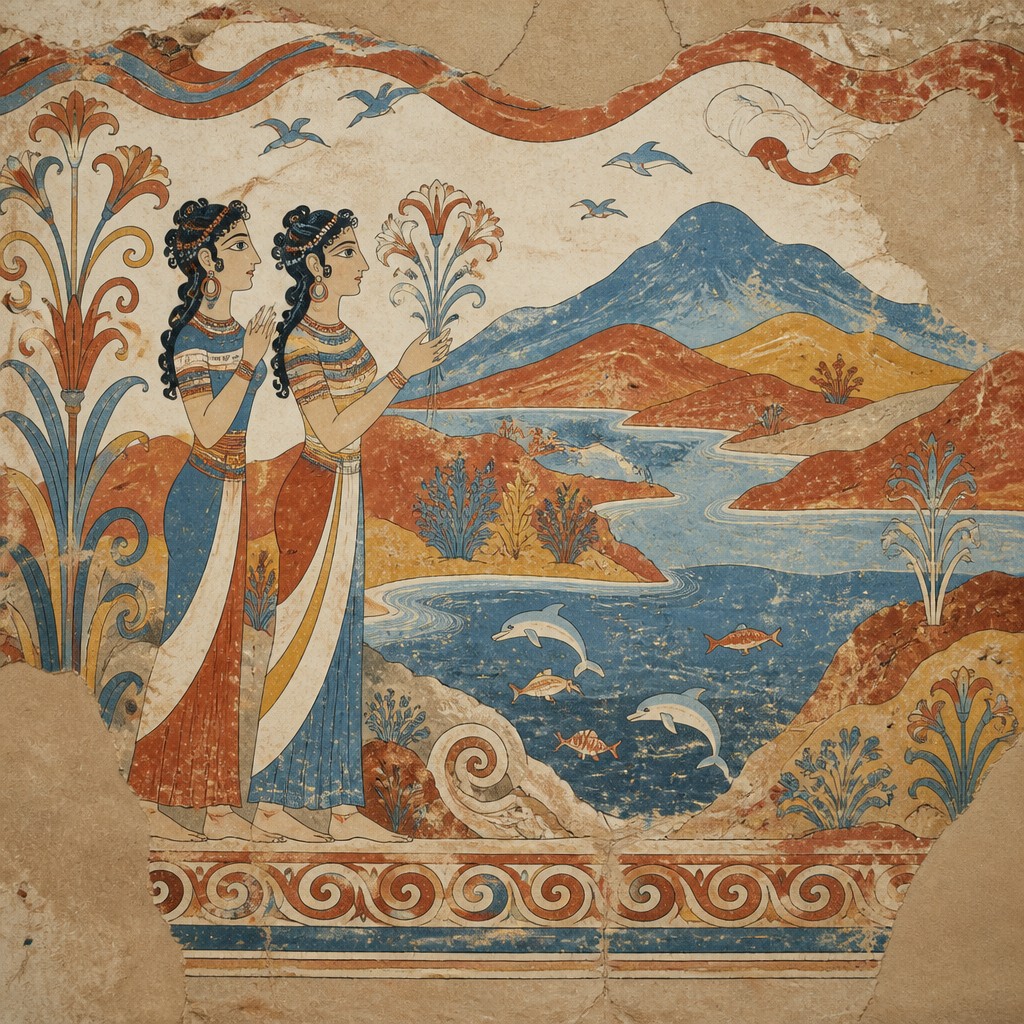
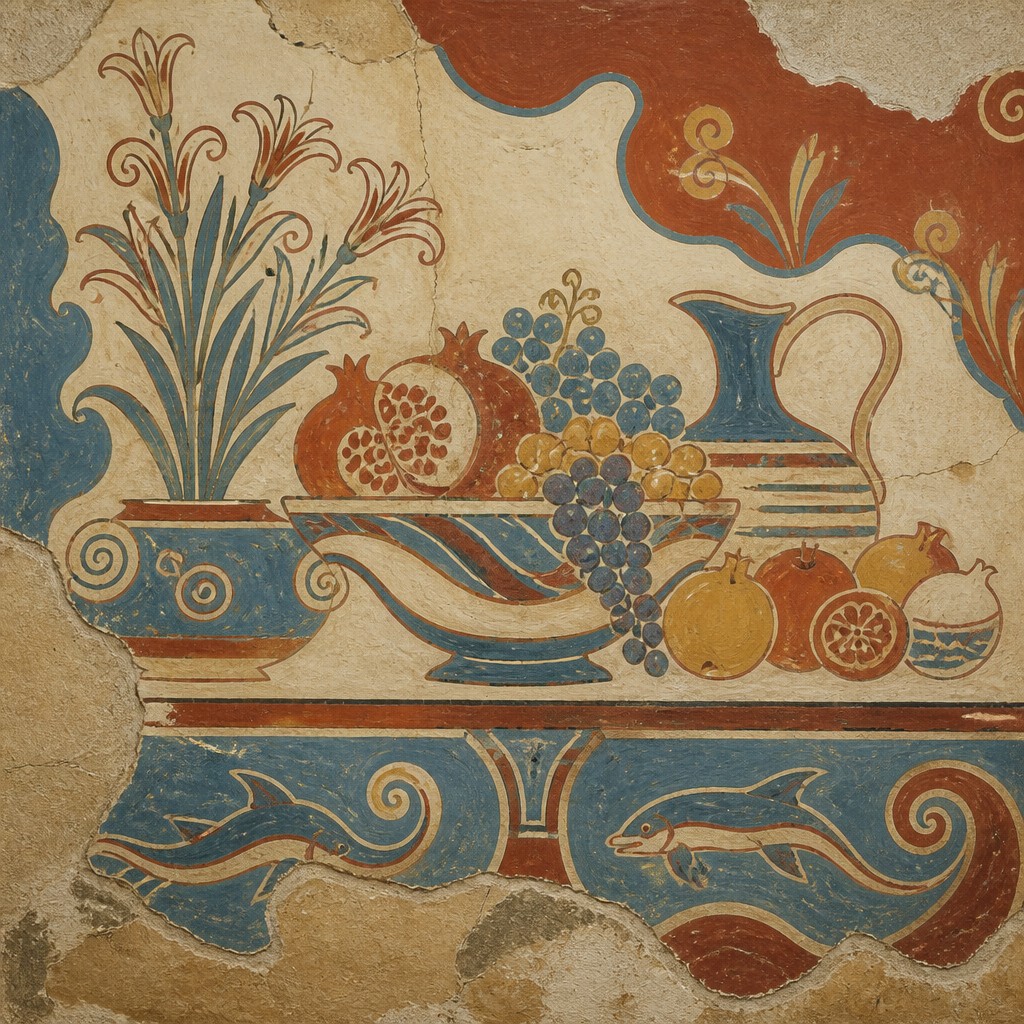
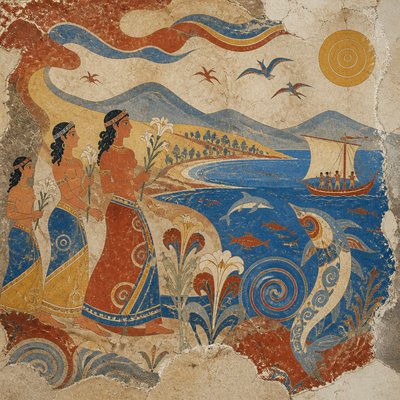
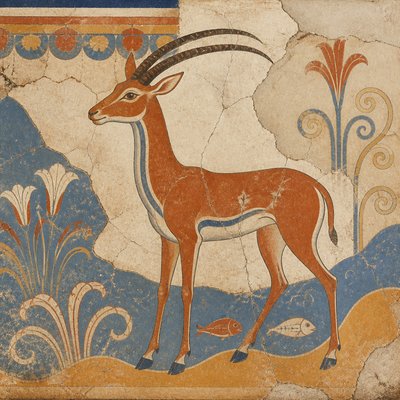
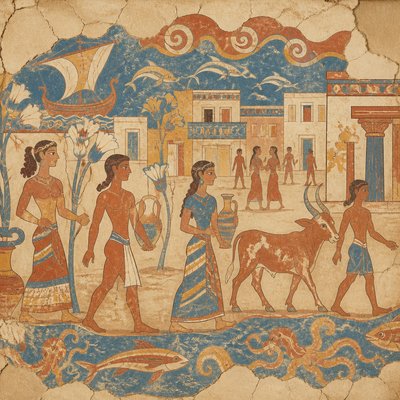
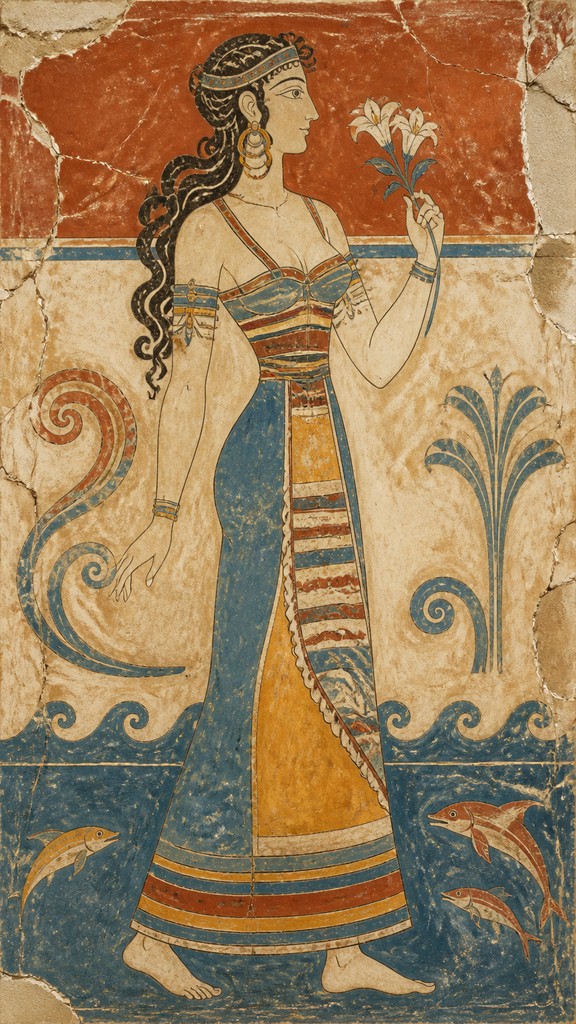
Minoan fresco art is the mural-painting tradition associated with Bronze Age Crete and the wider Aegean world. Its imagery includes leaping dolphins, octopuses, lilies, crocuses, birds, ceremonial processions, athletes and elegant figures shown in animated movement. Strong contours, rhythmic curves and clear areas of terracotta red, blue, yellow, white and black give the compositions a lively decorative character.
The style looks both vivid and weathered because it was originally painted on lime plaster and has survived in fragments, often with losses, cracks and later restoration. Rather than relying on deep modeling, Minoan murals use flattened forms, expressive profiles, simplified anatomy and repeated motifs to organize large architectural surfaces. Their sense of motion, close attention to plants and animals, and association with palaces and ritual spaces distinguish them from more rigidly formal ancient mural traditions.
Try It On Your Photos
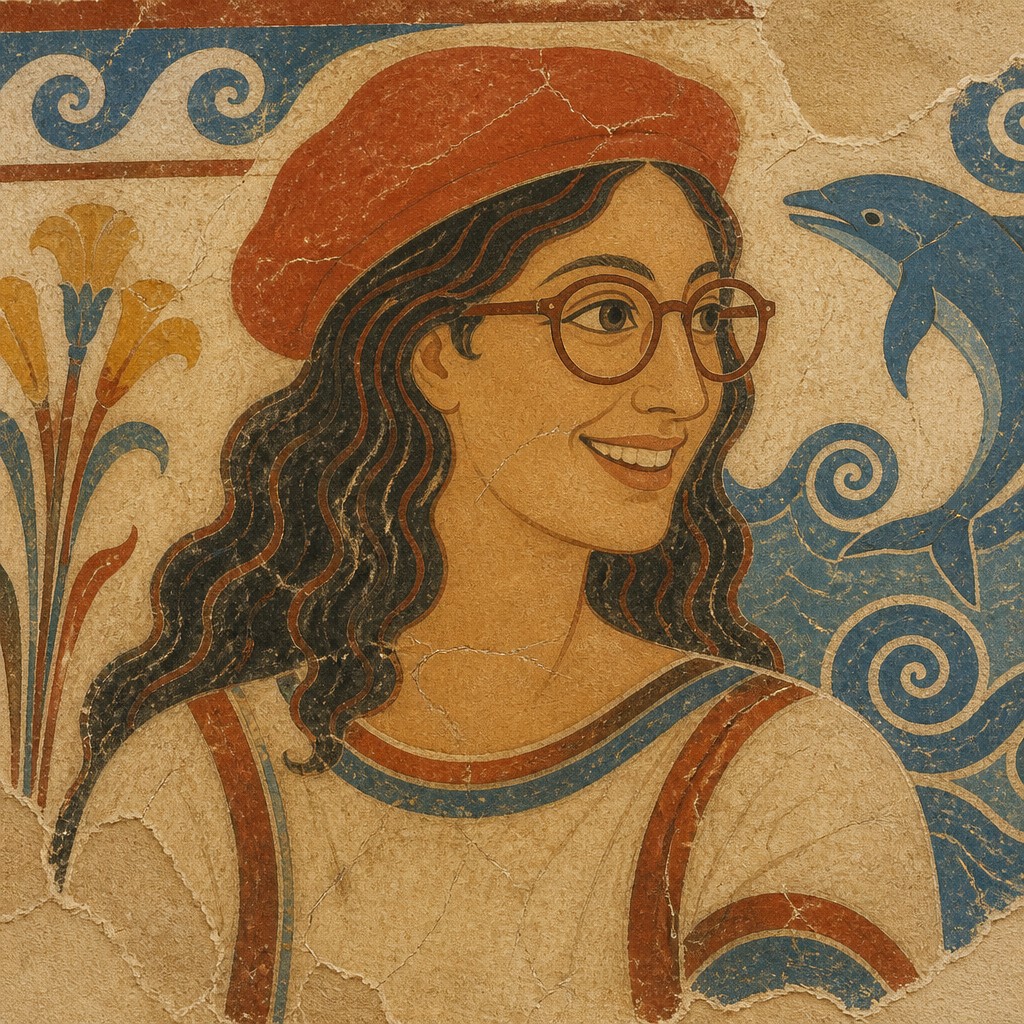
Upload any photo and convert it into Minoan Fresco Art Style — drag the sliders to compare before and after.


What Defines Minoan Fresco Art Style
The signature details, up close
Marine and botanical motifs
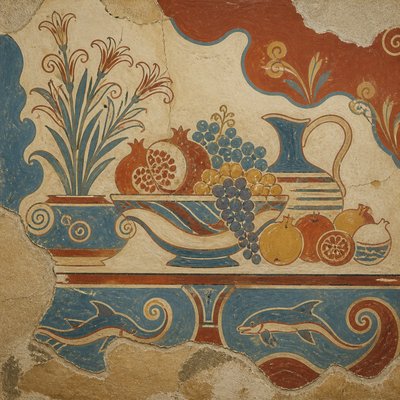
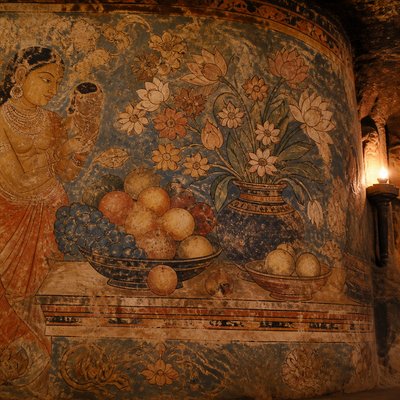
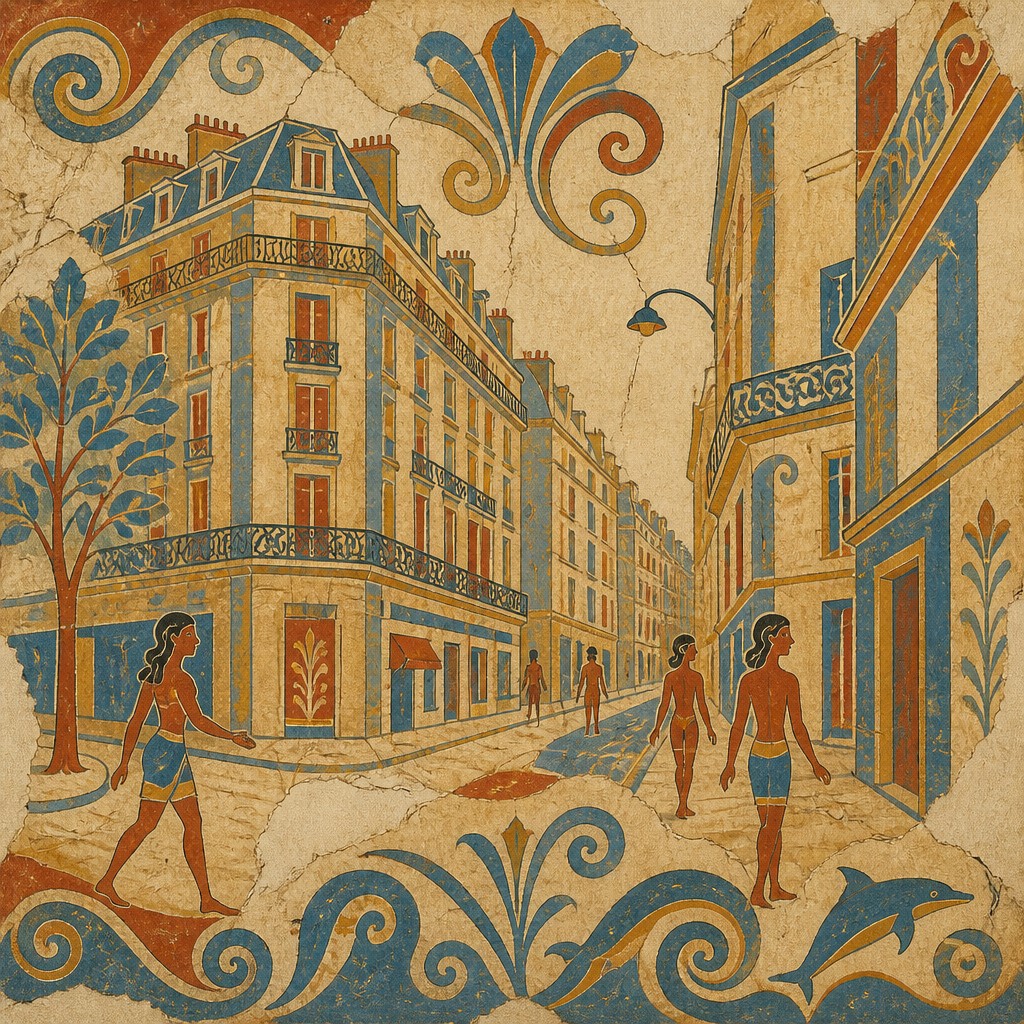
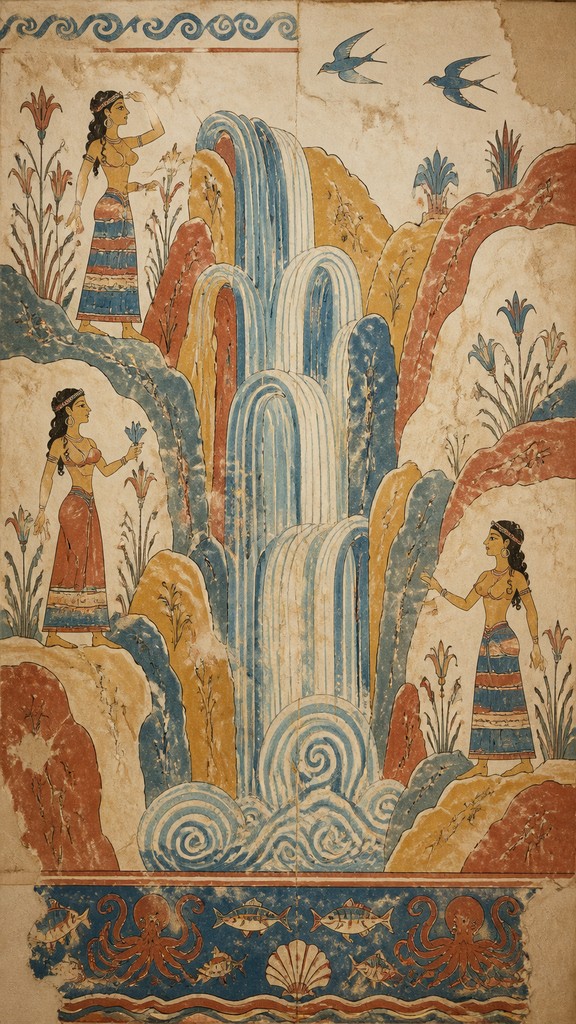
Dolphins, fish, octopuses, shells, birds, lilies and other plants fill fields with an abundant Aegean naturalism. Motifs are often arranged as repeating patterns rather than isolated scientific studies.
Fluid, rhythmic movement
Leaping animals, flying hair, curving stems and running spirals create a continuous sense of motion. Contours bend and flow across the wall instead of forming stiff geometric compartments.
Flattened profile figures
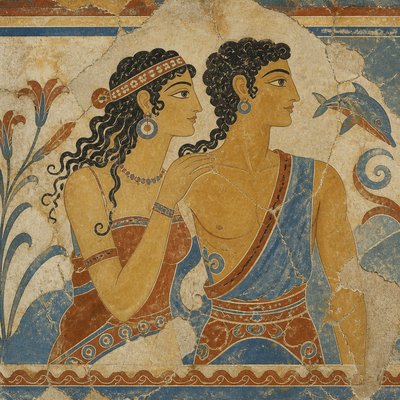
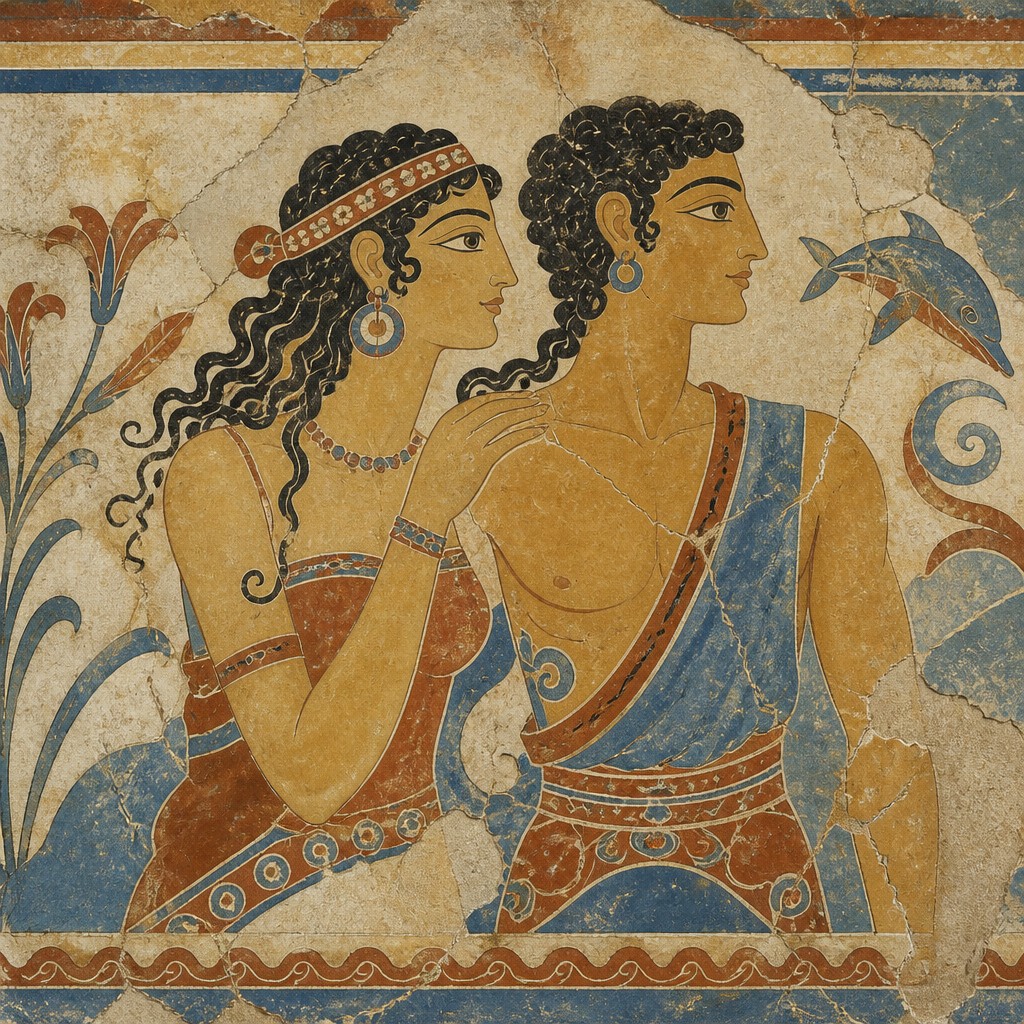
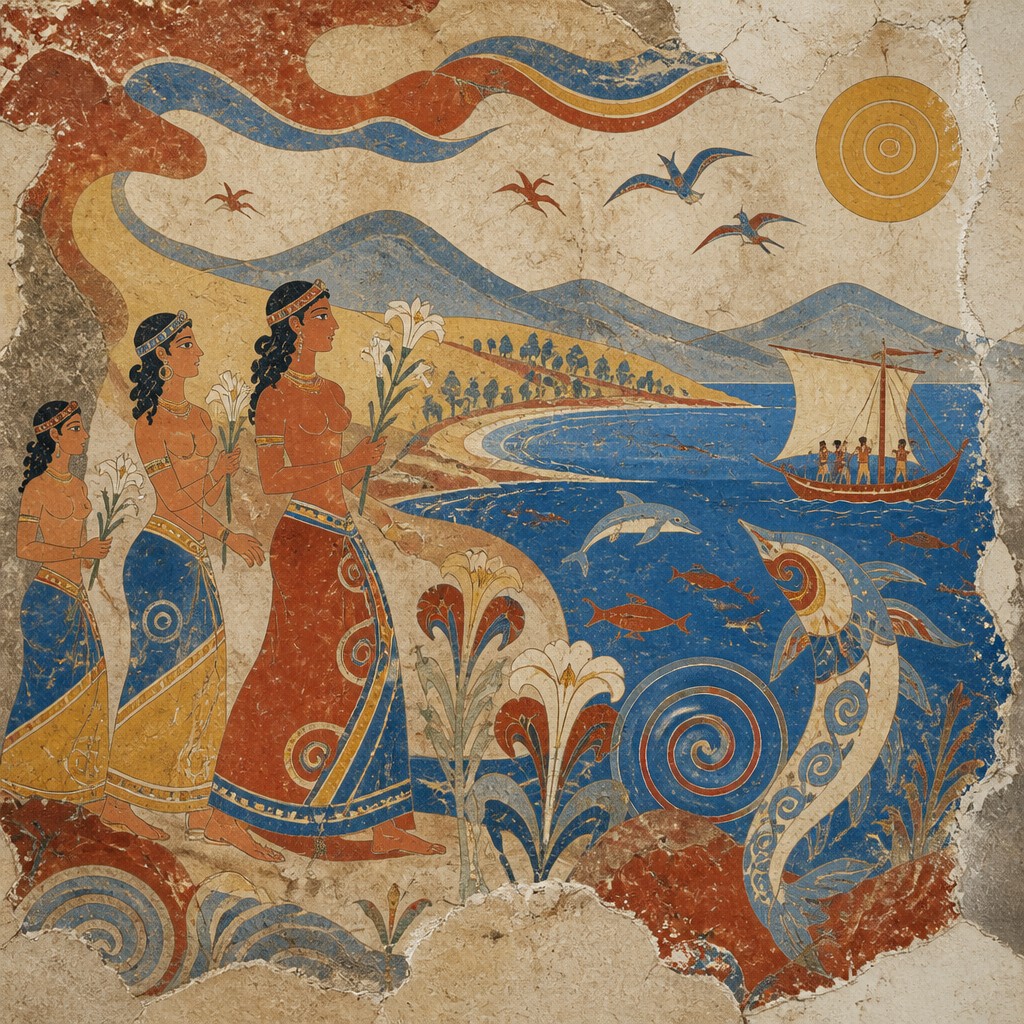
Human figures are commonly shown in profile or combined profile-and-front views, with elongated limbs, narrow waists and expressive gestures. Their simplified anatomy serves ceremonial, athletic or narrative movement rather than realistic volume.
Mineral color fields
Terracotta red, Aegean blue, saffron yellow, black and chalky white form a recognizable palette. Colors are usually applied in broad, relatively flat zones bounded by dark or strongly contrasting outlines.
Lime-plaster surface
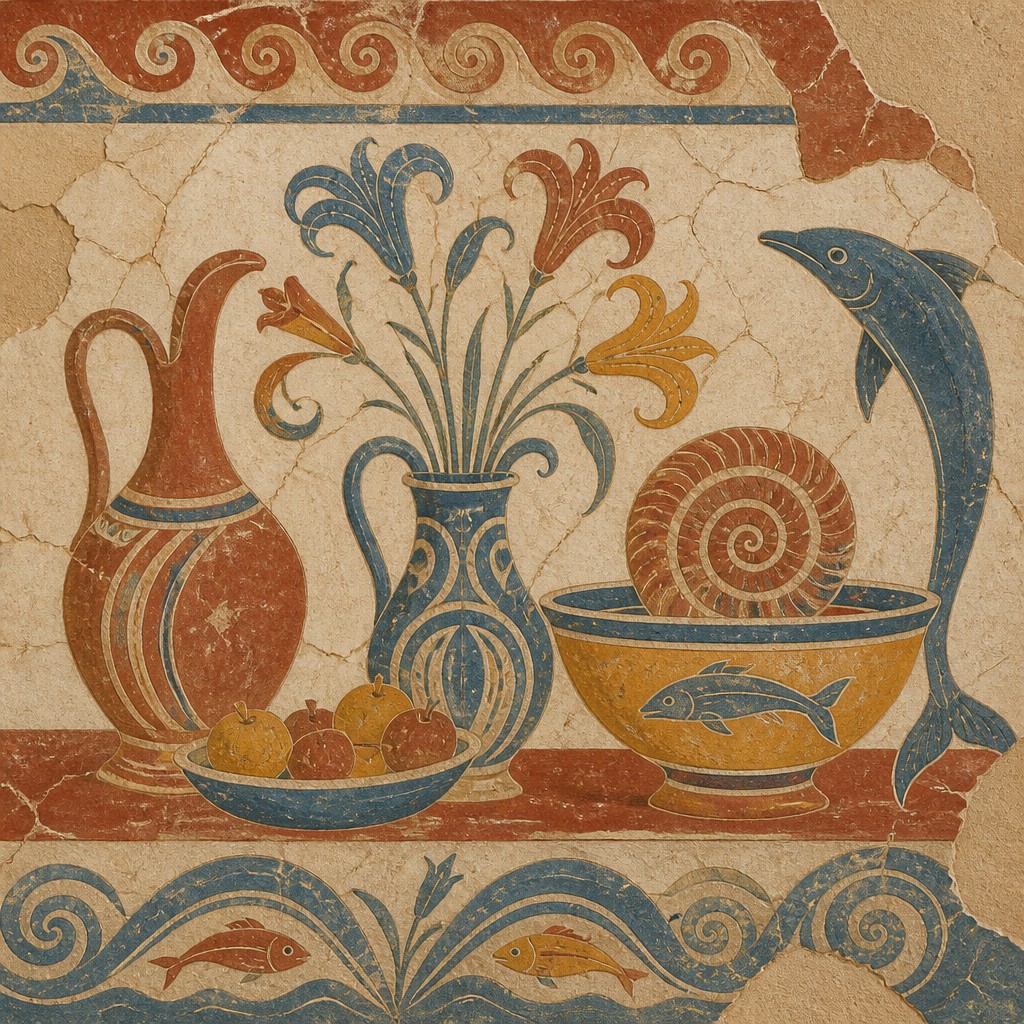
The visual identity depends on the absorbent, slightly uneven ground of fresco painting. A convincing interpretation suggests matte mineral color, porous plaster, abrasion, fading and areas of missing or repaired surface.
Spirals and ornamental borders
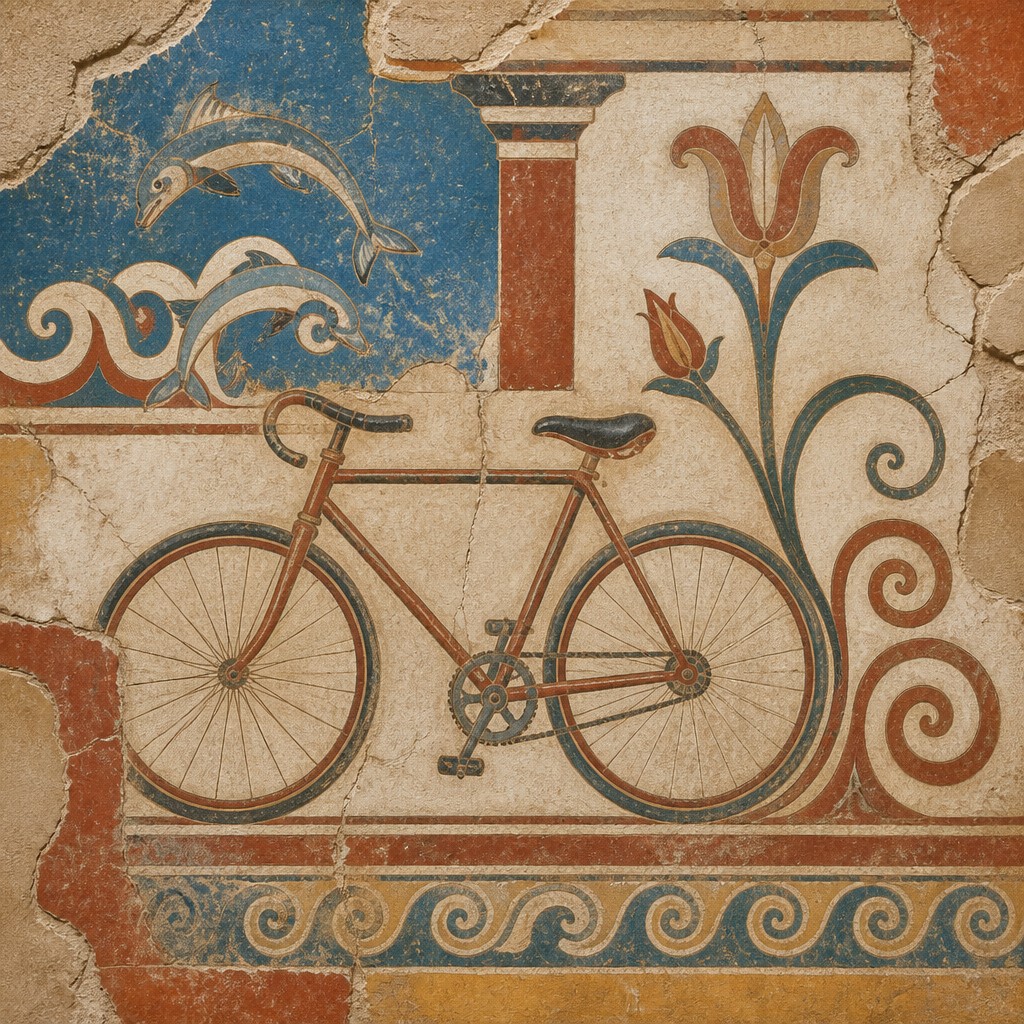
Coiling spirals, wave patterns, rosettes and bands help frame figures and organize architectural space. These ornaments link separate scenes through repeated curves and visual rhythm.
Palatial and ritual scale
The imagery was designed for walls, corridors, courts and important rooms rather than for small easel paintings. Compositions often combine decorative pattern with processions, ceremonies, landscapes or symbolic encounters.
Try It
Create Videos in Minoan Fresco Art Style
Styles aren't just for stills — describe a scene or animate an image and get a short video rendered in Minoan Fresco. Press play to see this pond come to life.
Make a VideoMinoan Fresco Prompt Ideas
Start from an idea — each one opens the generator with the style ready to go. See all 40 Minoan Fresco prompts →
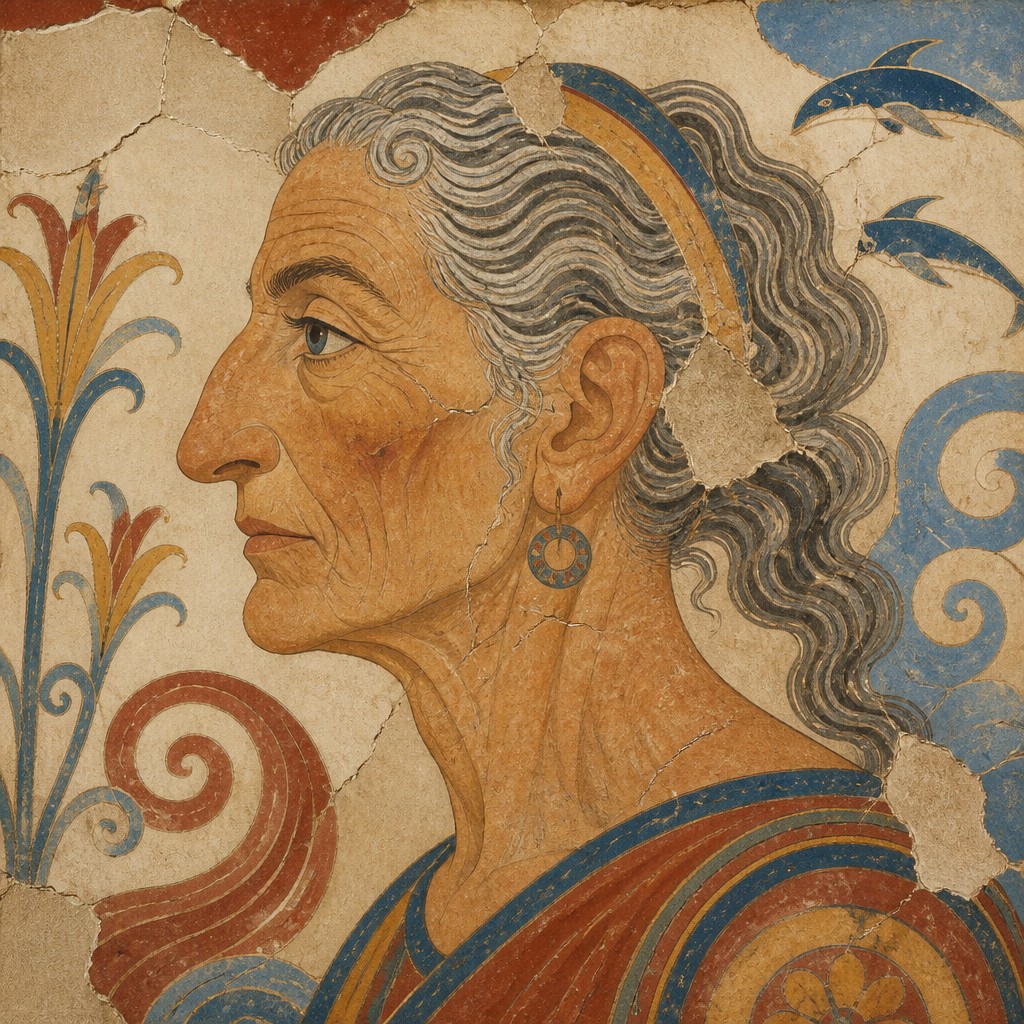
“close-up portrait of an elderly person with expressive weathered features”
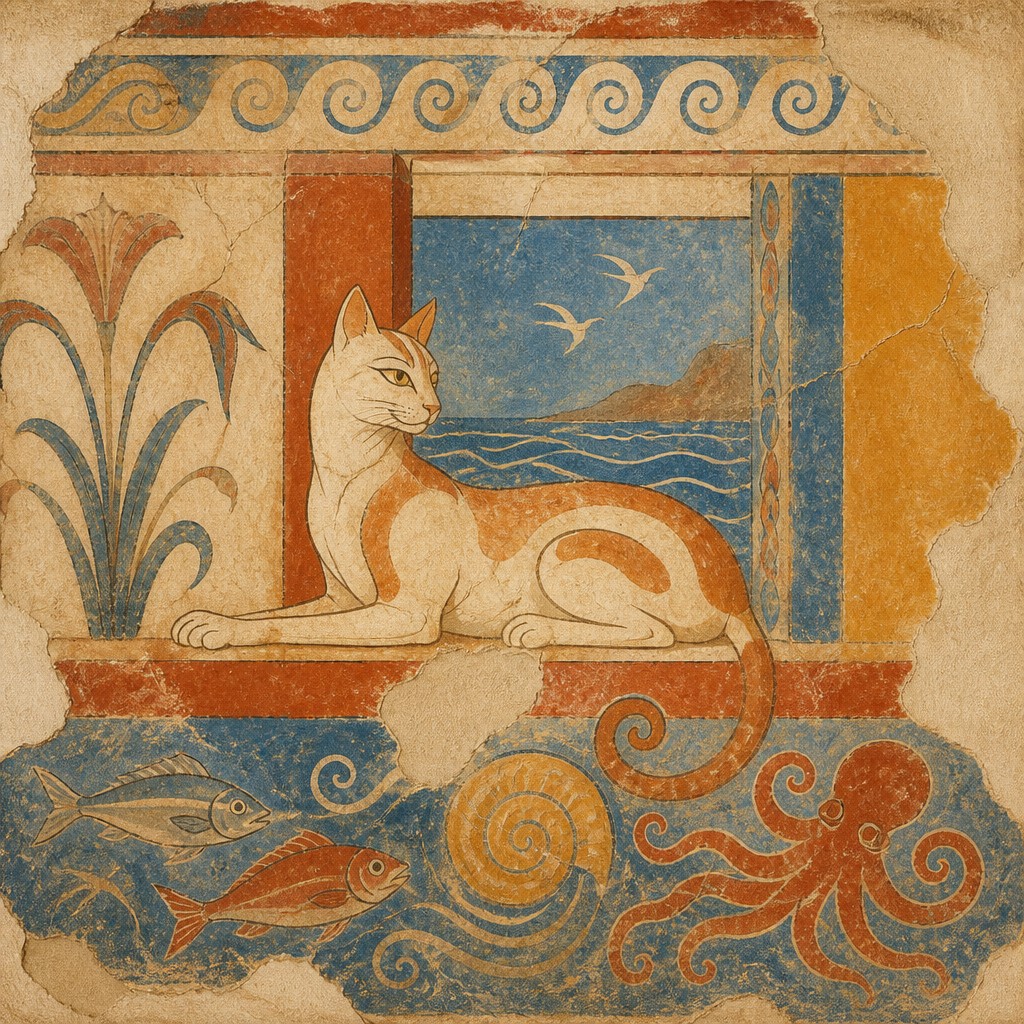
“a cat lounging in a sunlit window”
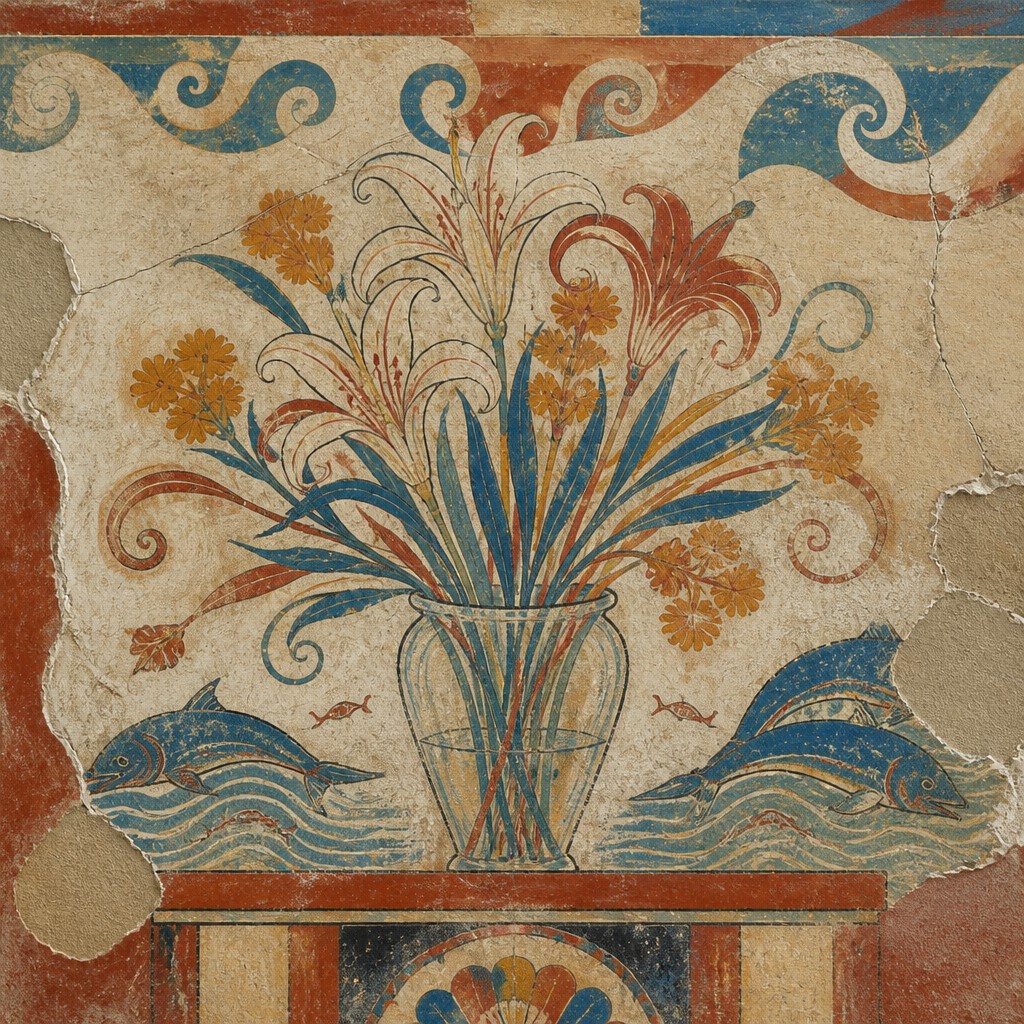
“bouquet of flowers in a glass vase”
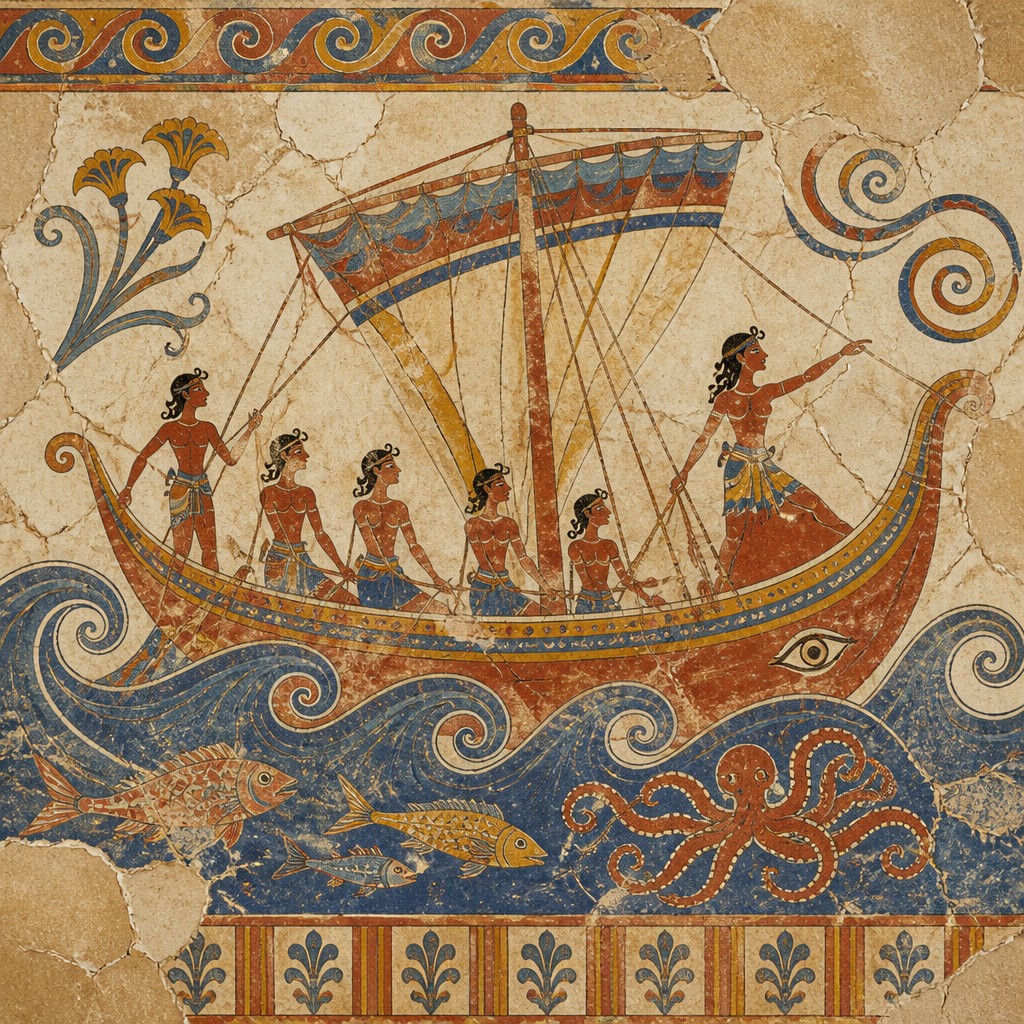
“sailing ship on a stormy sea”
How to Create Minoan Fresco Art
Master the craft step by step — or skip straight to creating. Read the full guide →
- 1
Prepare a plaster-like ground
For traditional work, build up a textured ground with lime-based plaster or a convincing mineral primer, then work with earth and mineral pigments. For digital work, begin with a matte, porous surface rather than a glossy canvas.
- 2
Limit and structure the palette
Use terracotta red, muted blue, saffron yellow, white and black as dominant colors, allowing the plaster ground to remain visible. Keep shading restrained and use color blocks to clarify silhouettes.
- 3
Draw with continuous contours
Construct animals, figures and plants from sweeping curves, slim profiles and expressive gestures. Add spirals, wave bands or botanical borders to connect the composition across the image.
- 4
Suggest archaeological age
Introduce chalky fading, small pigment losses, hairline plaster cracks and irregular restored patches without obscuring the main subject. Uneven wear should follow the surface rather than appear as random digital noise.
- 5
Compose for a wall
Use a broad horizontal or vertical arrangement with repeated motifs, friezes and clear zones of movement. Leave enough negative plaster around the subject so the image feels integrated with architecture.
- 6
Write precise generation instructions
For prompt-based generation, specify the subject first, then request lime plaster, mineral pigments, flat profile forms, fluid outlines, Aegean colors, marine or floral motifs and a sun-faded archaeological surface. For image-to-image work, preserve the source subject’s silhouette while replacing its surface, palette and background with these cues.
The Story
History & Origins of Minoan Fresco
Minoan fresco painting developed on Crete during the Middle and Late Bronze Age, broadly from the early second millennium BCE through the fifteenth century BCE, with important phases often described as Protopalatial and Neopalatial. It is especially associated with palace complexes and elite buildings at Knossos, Phaistos, Malia and Zakros, while related Aegean murals were produced at settlements such as Akrotiri on the island of Thera. The term “Minoan” is a modern archaeological designation, not a name used by the culture itself.
Painters generally applied mineral pigments to wet lime plaster, sometimes finishing details after the plaster had dried. Earth reds, carbon black, limestone white, yellow pigments and blue mineral color were combined with broad fields and confident lines. Surviving fragments, reconstructions and restored plaster panels mean that the familiar appearance of the style reflects both ancient technique and modern archaeological conservation.
Influences: Minoan fresco art belongs to the Bronze Age Aegean visual tradition and is closely related to Cycladic wall painting, Mycenaean palace decoration and ancient Mediterranean mural techniques. Its naturalistic marine imagery, ornamental repetition and flattened forms also resonate with later decorative painting, archaeological reconstruction, modernist interest in non-classical antiquity and contemporary mural design. It should not be confused with Classical Greek vase painting or the more rigid frontal conventions of many later ancient court arts.
Frequently Asked Questions
What defines Minoan fresco art?
It is defined by mineral pigments on lime plaster, lively contour drawing, flattened profile figures, marine and botanical imagery, and a strong sense of rhythmic movement. Terracotta red, blue, yellow, white and black are commonly organized into broad color fields. Weathered plaster and fragmentary restoration are part of its modern visual recognition.
When and where did Minoan fresco painting develop?
It developed in the Bronze Age, primarily on Crete from roughly the early second millennium to the fifteenth century BCE. Major palace sites include Knossos, Phaistos, Malia and Zakros. Related Aegean murals were also produced at Akrotiri on Thera.
Was Minoan fresco art always painted on wet plaster?
Much of the tradition used fresco technique, in which pigment is applied to wet lime plaster and becomes integrated with the surface as it dries. Painters could also add details to dry plaster, a method commonly called fresco secco. Surviving fragments often make the exact sequence of techniques difficult to determine.
How is Minoan art different from Classical Greek art?
Minoan imagery predates Classical Greek art by many centuries and tends to emphasize flowing movement, organic motifs, lively color and decorative integration with palace architecture. Classical Greek art more often pursues idealized proportion, balanced poses and increasingly naturalistic spatial or anatomical representation.
How can I make a modern image look like a Minoan fresco?
Use a restricted mineral palette, flattened silhouettes, bold curving outlines and subjects such as dolphins, flowers, processions or athletes. Add a matte lime-plaster ground, subdued shading, cracks and pigment loss, while avoiding glossy surfaces, photorealistic depth and highly modeled anatomy.
Where is this style commonly used today?
It is used in murals, archaeological reconstructions, museum interpretation, historical illustration, decorative interiors, book and game artwork, and digitally generated cultural or fantasy scenes. Contemporary uses often adapt its palette and movement without claiming to reproduce a specific surviving ancient panel.

Create your first Minoan Fresco artwork
Describe anything — or upload a photo — and see it in Minoan Fresco Art Style in seconds.
Related Styles
Discover similar art styles