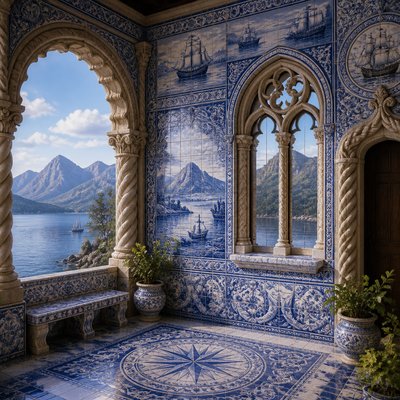
Marquetry Art Style
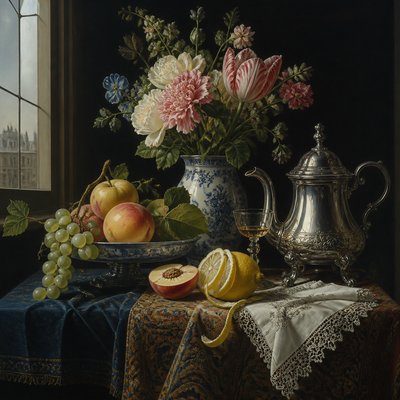
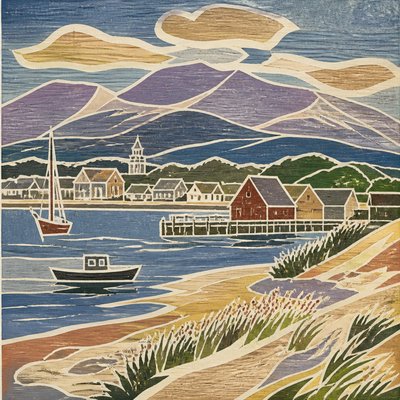
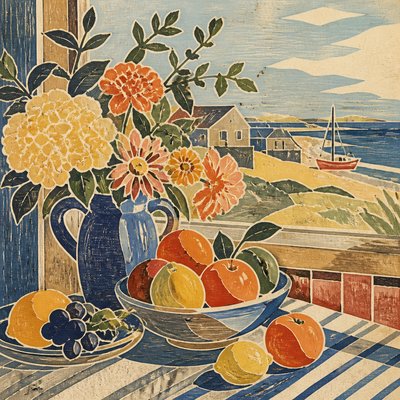
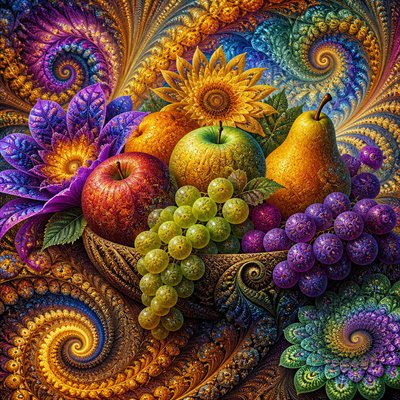
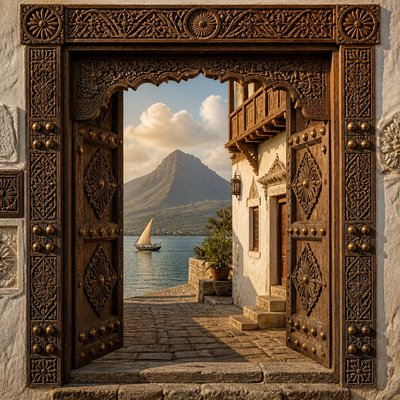
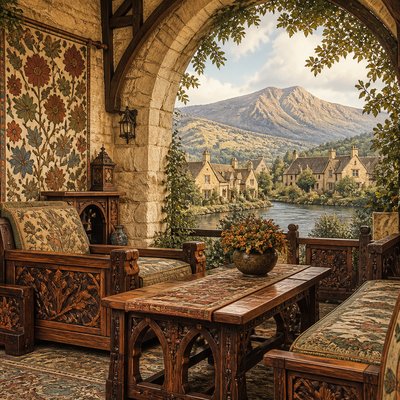
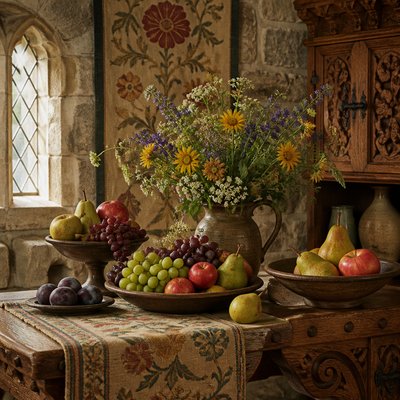
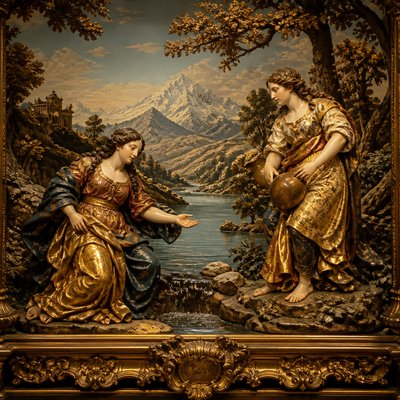
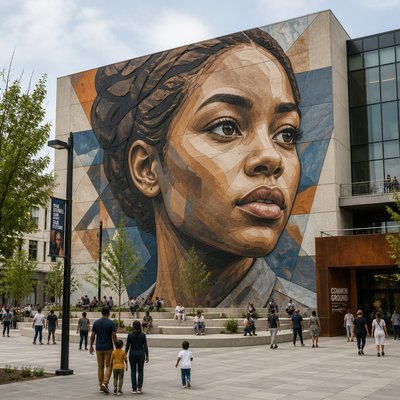
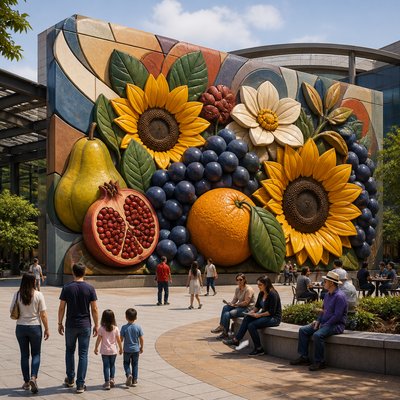
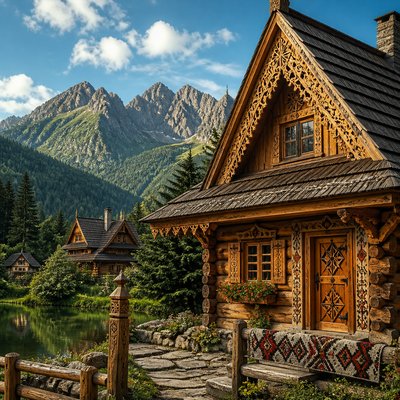
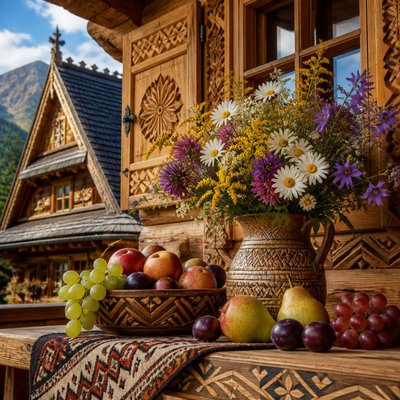
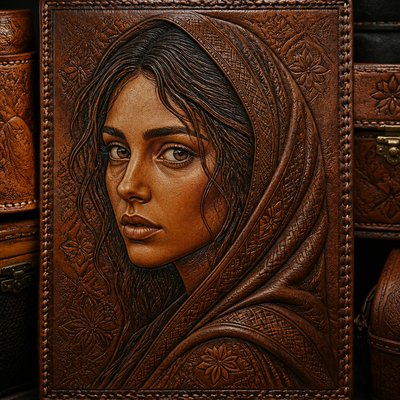
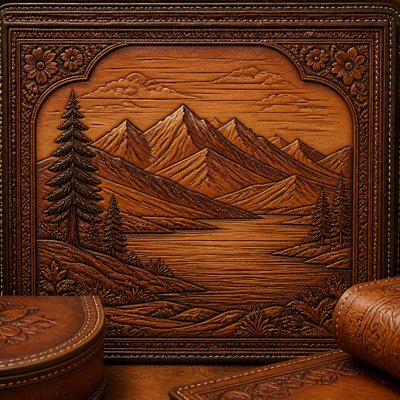
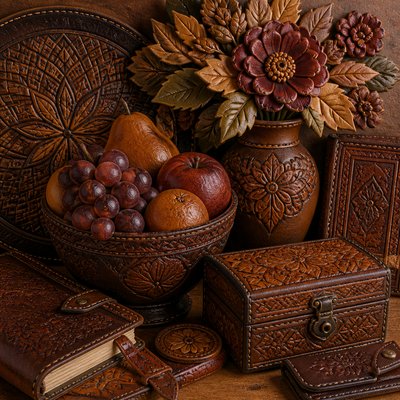
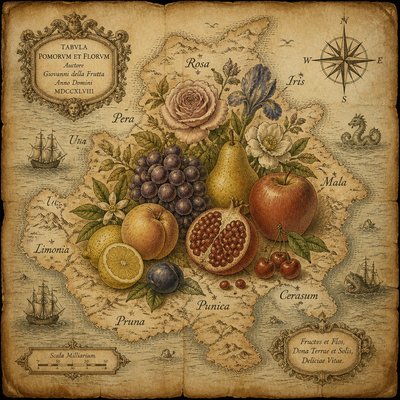
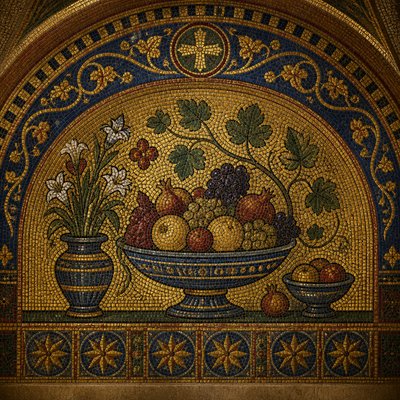
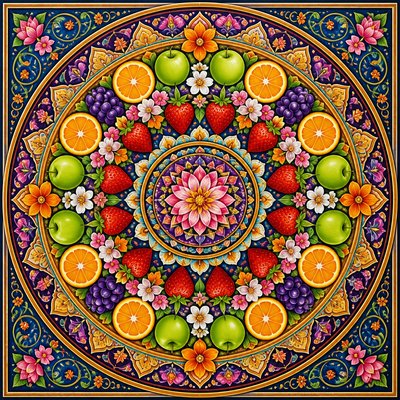
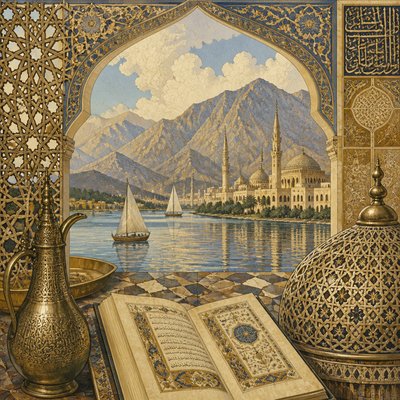
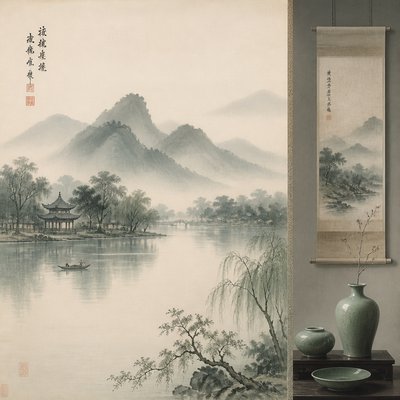
Explore marquetry art: intricate pictures and geometric designs assembled from contrasting wood veneers, visible grain, and polished surfaces.
Instantly rendered in Marquetry — or transform a photo

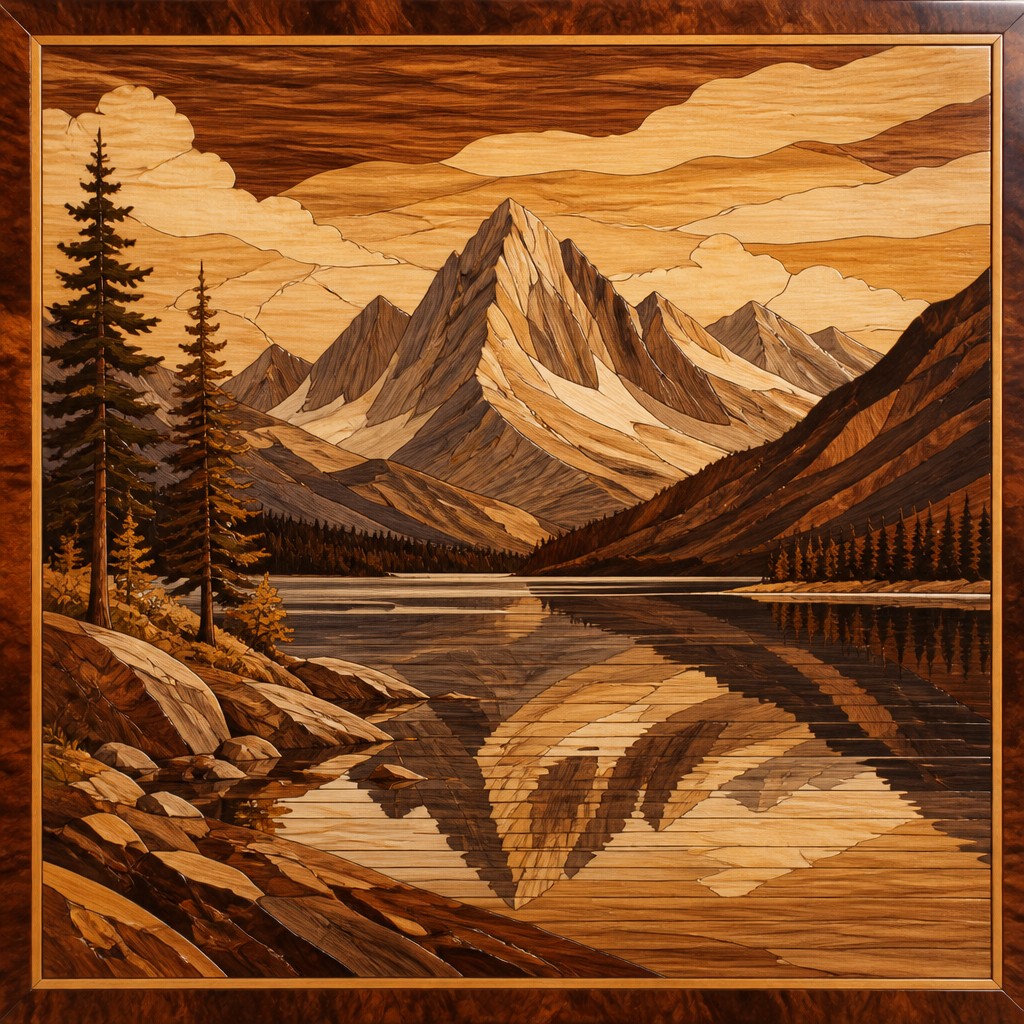
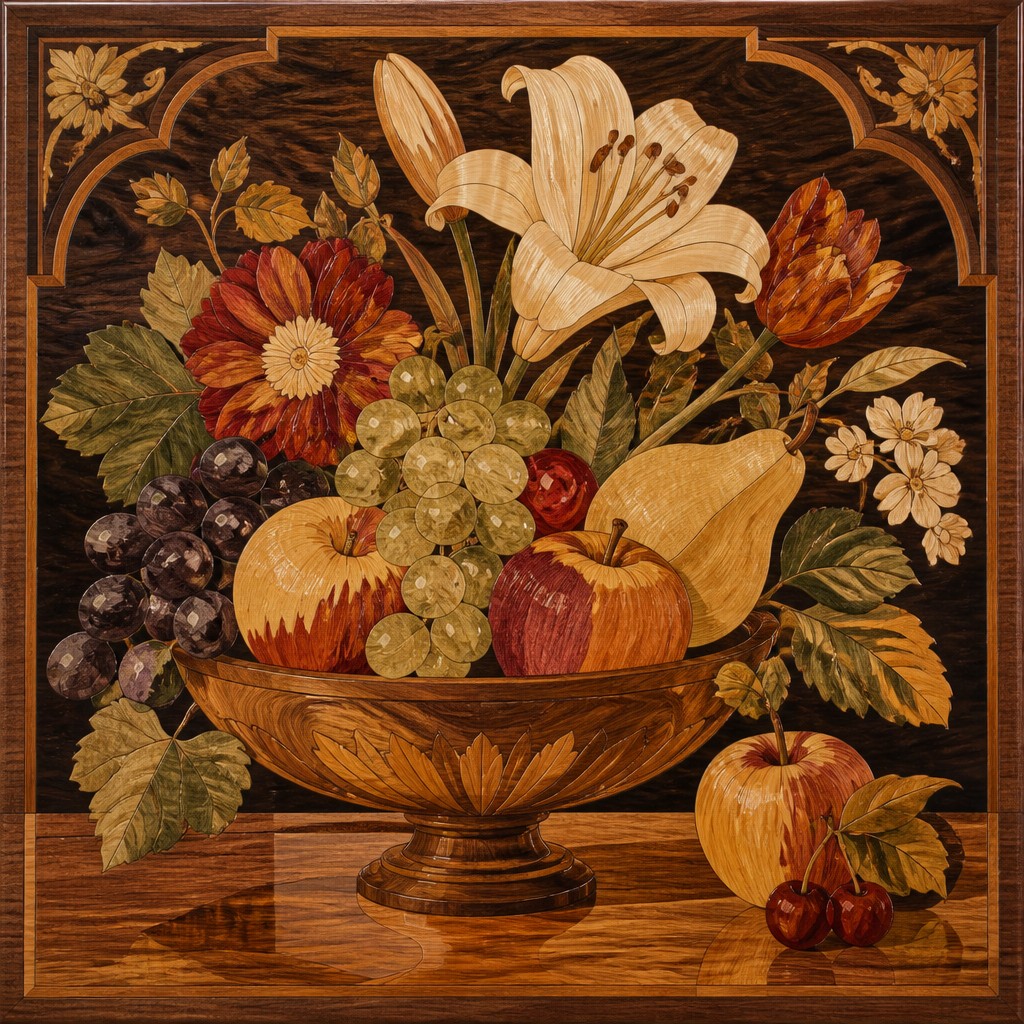
Marquetry Gallery
Tap any artwork to explore it

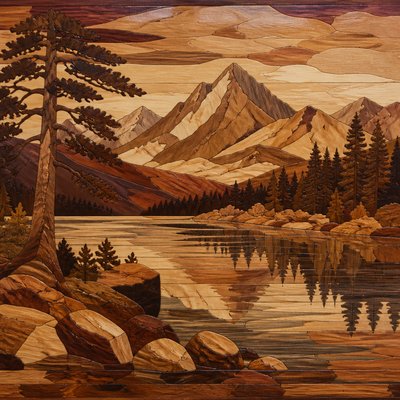
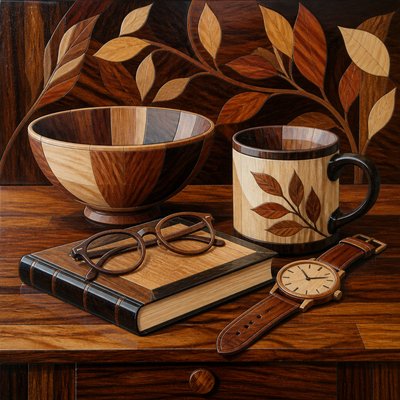
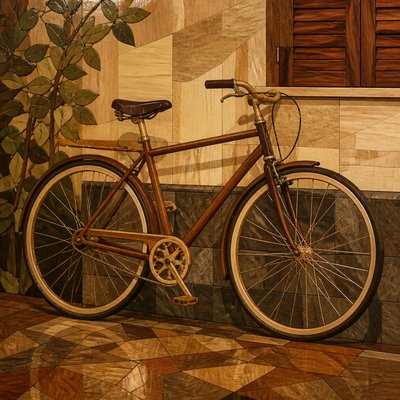
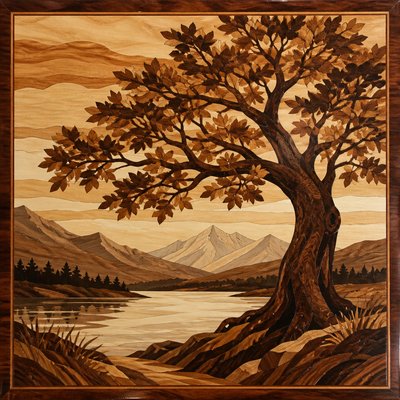
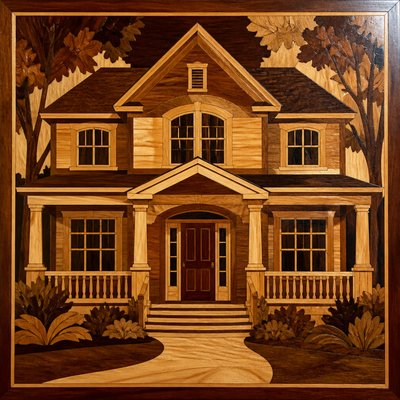
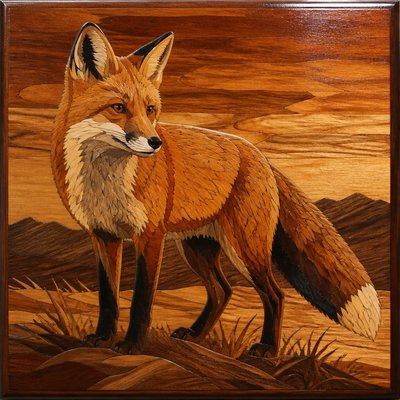
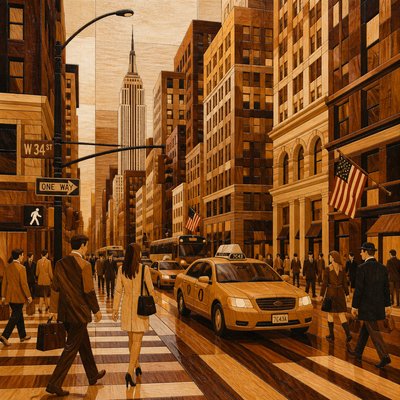
What is Marquetry Art Style?
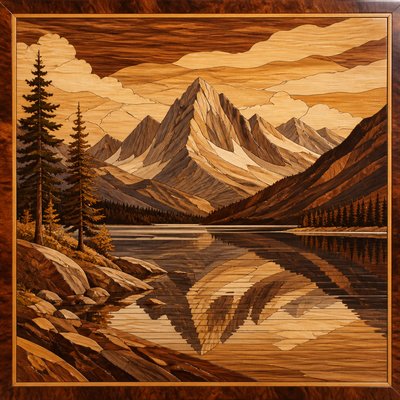
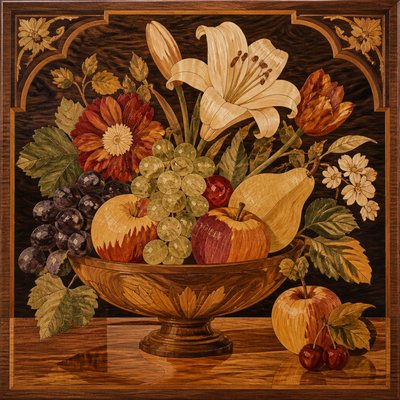
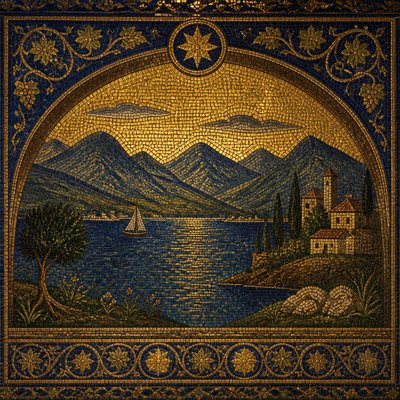
Marquetry is a decorative art technique in which thin sheets of wood veneer are cut and fitted together to form pictorial scenes, ornaments, landscapes, floral motifs, or geometric designs. The assembled veneer is applied to a stable surface such as furniture, cabinetry, architectural paneling, boxes, or wall decoration, then polished to reveal the material’s natural grain and color.
Its visual identity comes from the tension between image-making and woodworking. Each area of the composition is defined by a separate veneer, so contours often appear as precise sawn seams rather than drawn lines. Variations in grain direction, figure, color, and reflectivity create shading, texture, and depth while the unified polished surface gives the finished work a refined, tactile glow.

Try It On Your Photos
Upload any photo and convert it into Marquetry Art Style — drag the sliders to compare before and after.


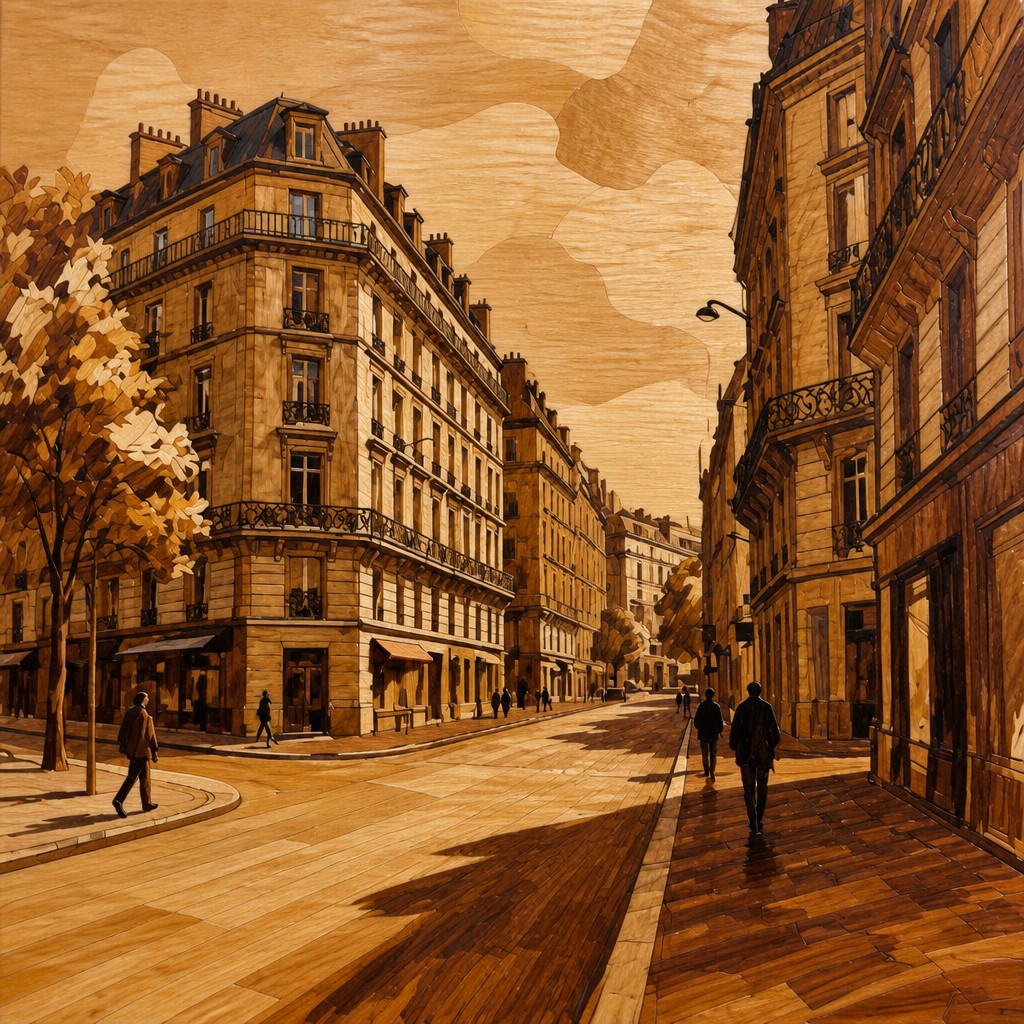

What Defines Marquetry Art Style
The signature details, up close
Thin veneer construction
The image is assembled from thin slices of natural wood rather than painted onto a solid surface. Veneers may be selected for their color, figure, porosity, or distinctive grain.
Fitted pictorial pieces
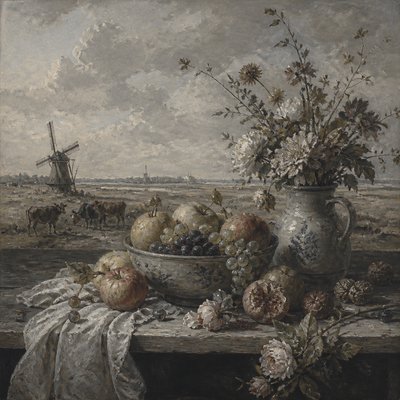
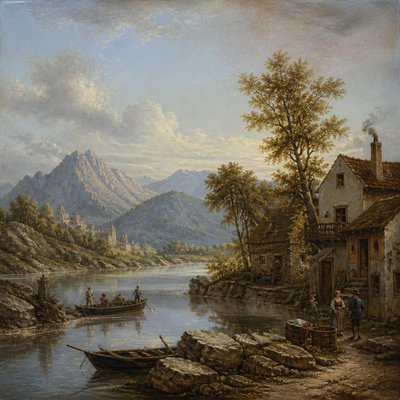
Separate veneer elements are cut and joined edge to edge to create recognizable subjects such as flowers, animals, landscapes, architectural views, and still lifes.
Geometric patterning
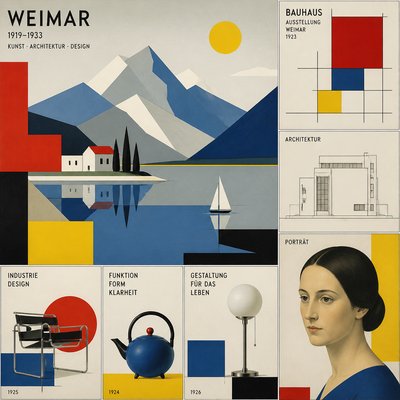
Repeated diamonds, radiating motifs, chevrons, cubes, stars, borders, and other measured forms are central to many decorative compositions. Symmetry and precise alignment often structure the entire surface.
Contrasting grain and color
Light and dark woods, straight and figured grain, and warm and cool tones provide visual separation between adjacent pieces. Grain direction can also describe volume, movement, or the orientation of an object.
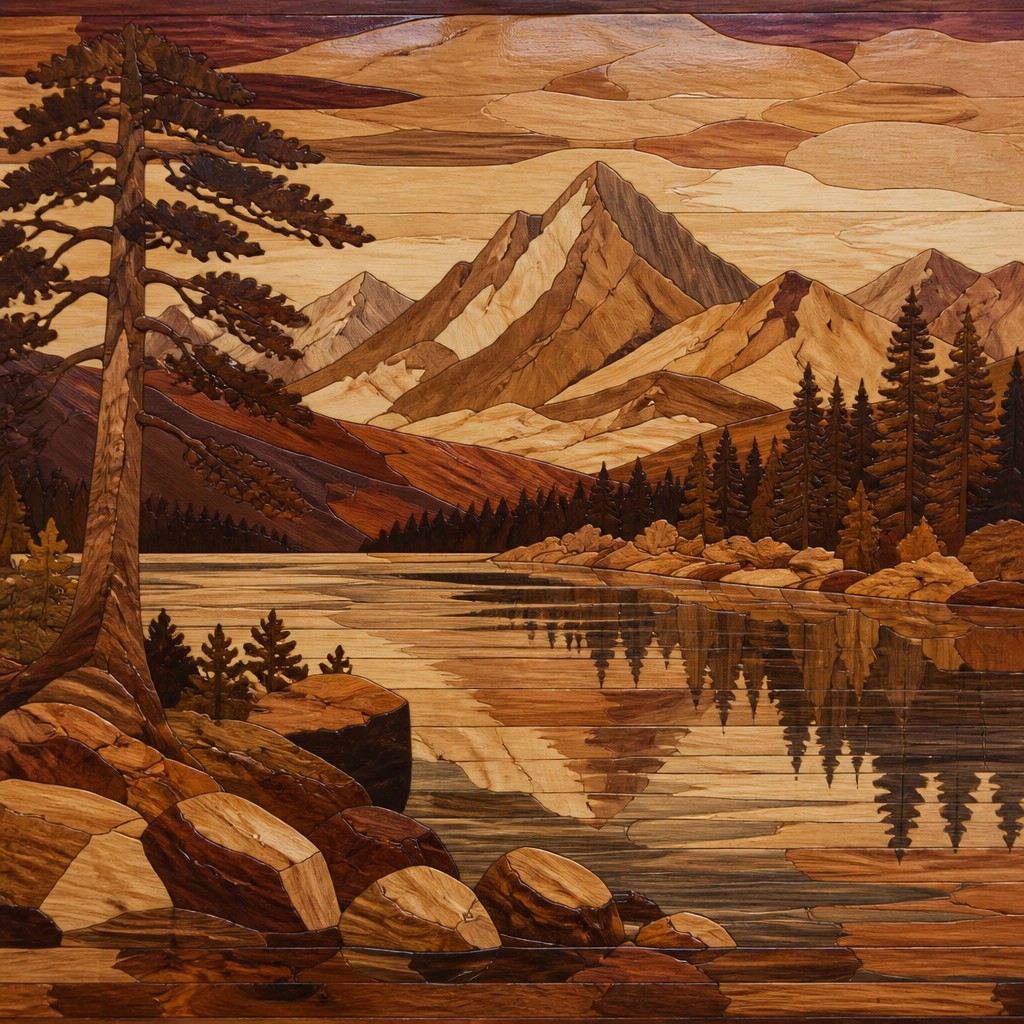
Fine seam lines
The boundaries between pieces remain perceptible as delicate, sawn contour lines. These seams function like drawing marks, outlining forms without the brushwork associated with painting.
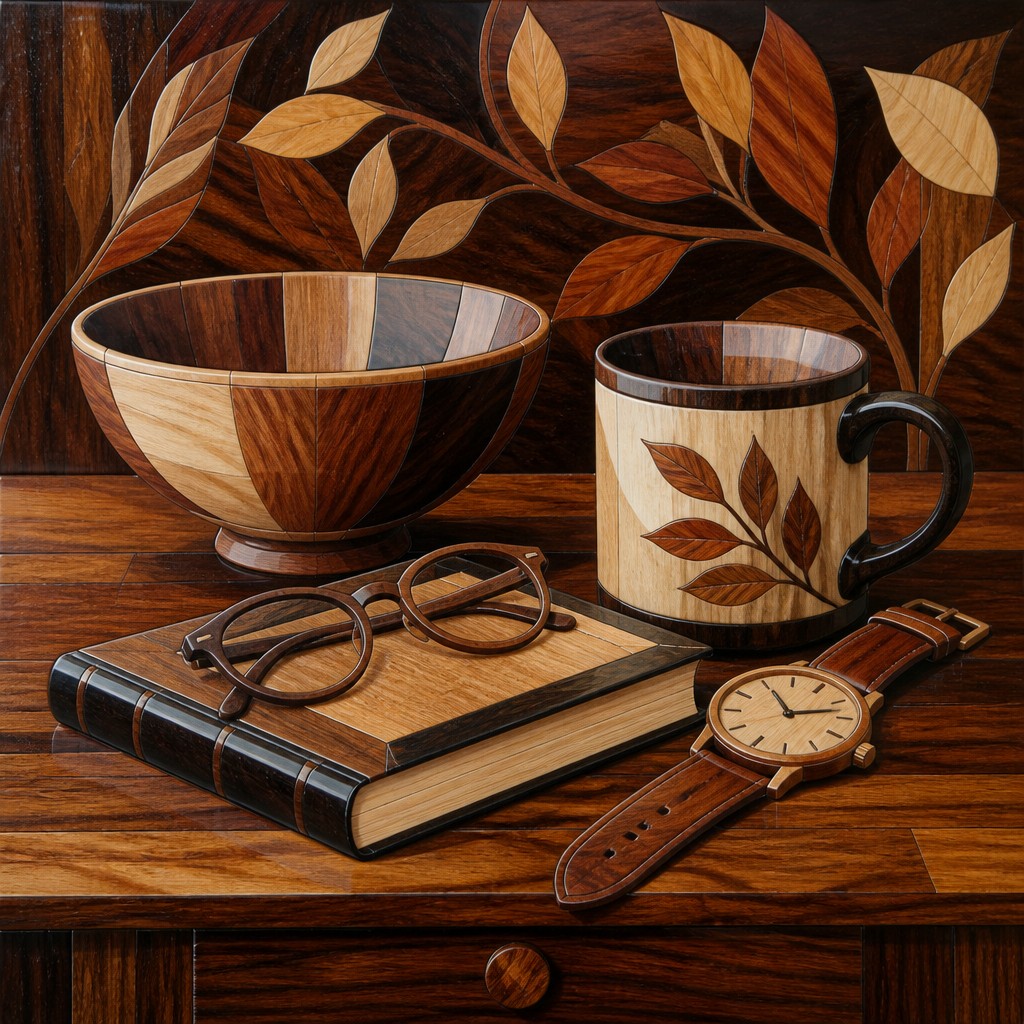
Polished reflective finish
Veneer surfaces are typically leveled, sealed, and polished, producing a smooth finish that deepens color and catches highlights. The result may range from softly satin to highly glossy.
Marquetry Prompt Ideas
Start from an idea — each one opens the generator with the style ready to go. See all 40 Marquetry prompts →
How to Create Marquetry Art
Master the craft step by step — or skip straight to creating. Read the full guide →
- 1
Plan the design as interlocking shapes
Begin with a clear line drawing and divide it into pieces that can be cut and assembled efficiently. Use borders, repeated modules, and grain direction to control the composition.
- 2
Choose veneer for optical properties
Select woods according to tone, figure, porosity, and grain rather than relying on color alone. Rotate or mirror grain strategically to suggest foliage, water, fabric, skies, or polished architectural surfaces.
- 3
Cut and fit accurately
Traditional work uses a fretsaw, knife, or veneer saw to produce clean edges, followed by careful dry fitting and pressing onto a substrate. Small gaps, inconsistent thickness, and uncontrolled grain direction can weaken the illusion of a seamless image.
- 4
Build depth through tonal grouping
Organize veneers into clear light, middle, and dark values before assembly. Subtle effects such as scorching, sand shading, dyed veneer, or selective inlay can add modeling without making the surface look painted.
- 5
Finish the surface with restraint
Level the assembled veneer, fill or stabilize joints where necessary, and apply a compatible oil, lacquer, shellac, or modern clear finish. A controlled sheen preserves the tactile character of the wood while protecting the pattern.
- 6
Describe material logic in digital prompts
For digital or prompt-based creation, specify thin wood veneers, fitted seams, contrasting grain, precise geometric or pictorial construction, and a polished furniture or panel surface. For image-to-image work, preserve the subject’s silhouette while asking for veneer segmentation and natural wood texture rather than painted brushstrokes.
The Story
History & Origins of Marquetry
Marquetry developed from older inlay and intarsia traditions, including highly developed wood-inlay practices in Renaissance Italy. The technique became especially prominent in European furniture production during the late sixteenth and seventeenth centuries, when cabinetmakers used exotic veneers and carefully matched grain to create elaborate decorative surfaces. French, Dutch, German, and Italian workshops each developed distinctive approaches to pictorial, floral, architectural, and geometric compositions.
During the eighteenth century, marquetry became closely associated with courtly furniture and refined interior decoration, while later nineteenth-century revival styles revisited Renaissance, Baroque, and Rococo motifs. The twentieth century introduced streamlined geometric compositions through Art Deco and related modern design movements. Contemporary makers continue to combine traditional hand-cutting with laser cutting, digitally planned patterns, reclaimed wood, and experimental materials.
Influences: Marquetry draws on Renaissance intarsia, cabinetmaking traditions, architectural inlay, ornamental furniture design, and the geometric order of Art Deco. It also relates to parquetry, which emphasizes repeated geometric wood flooring patterns, but marquetry more often includes pictorial imagery and varied veneer colors. Contemporary examples absorb influences from graphic design, illustration, minimalism, sustainable craft, and digitally fabricated pattern systems.
Frequently Asked Questions
What defines marquetry art?
Marquetry is defined by an image or pattern assembled from thin pieces of veneer fitted together on a supporting surface. Natural wood grain, piece boundaries, tonal contrast, and a finished polished surface are central to its appearance.
What is the difference between marquetry and intarsia?
The terms overlap historically, but marquetry generally refers to thin veneers applied to a substrate, while intarsia traditionally involves pieces set into a thicker surface or carved recesses. Usage varies by region and period, so the distinction is practical rather than absolute.
Is marquetry painted or made from real wood?
Traditional marquetry is primarily made from natural wood veneers, sometimes supplemented with dyed wood, metal, shell, or other inlay materials. Makers may add limited shading or color, but the design is intended to depend on the material properties of the assembled pieces.
How do artists create shading in marquetry?
Shading can come from choosing veneers with different values and grain patterns, changing grain direction, and using techniques such as sand shading or controlled scorching. Digital interpretations can simulate these effects through layered tonal wood textures and directional grain.
Where is marquetry commonly used?
It appears on furniture, cabinets, doors, tables, musical instruments, boxes, architectural panels, wall pieces, and decorative objects. Its durability and refined surface make it especially suitable for interior design and functional craft.
Can a photograph be transformed into marquetry?
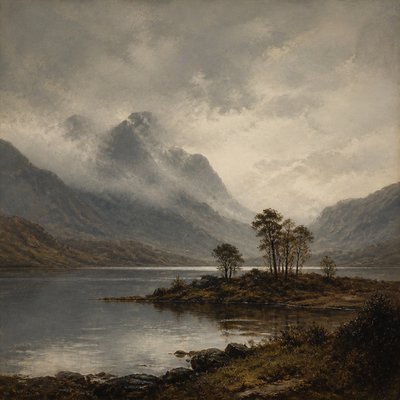
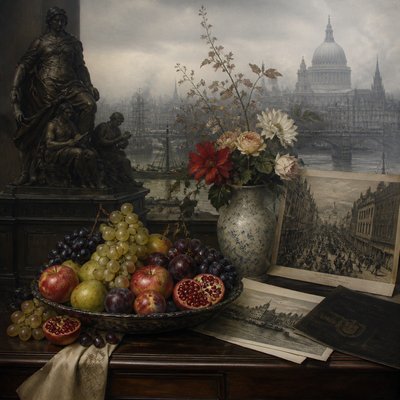
Yes. A photograph can be simplified into broad tonal regions and then rendered as fitted veneer pieces with visible grain and seam lines. Clear silhouettes and strong value contrasts usually produce more convincing results than highly detailed, low-contrast images.
Create your first Marquetry artwork
Describe anything — or upload a photo — and see it in Marquetry Art Style in seconds.
Related Styles
Discover similar art styles