Liberian Art Style
Explore Liberian art style: serene carved wood masks, Grebo-inspired geometry, forest tones, raffia, cowries, and ceremonial sculptural stillness.
Instantly rendered in Liberian — or transform a photo
Liberian Gallery
Tap any artwork to explore it
What is Liberian Art Style?
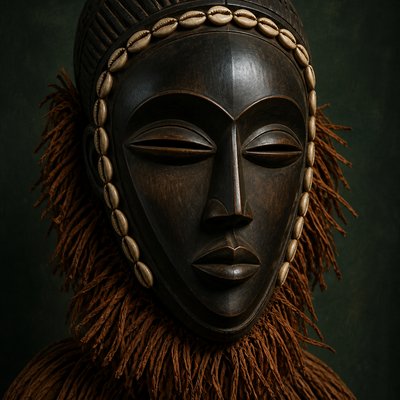
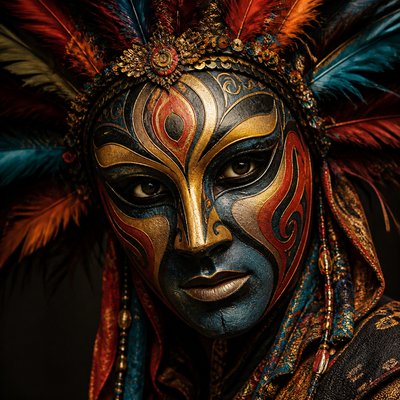
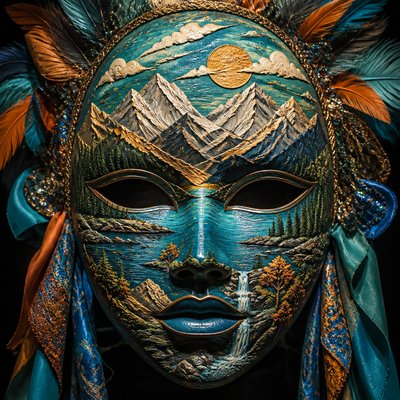
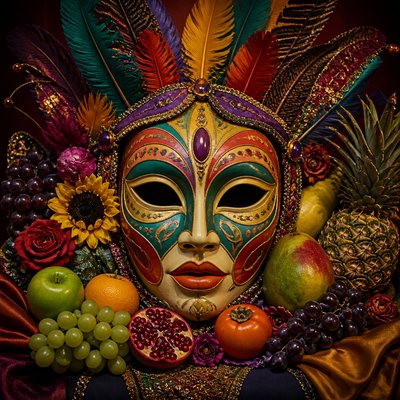
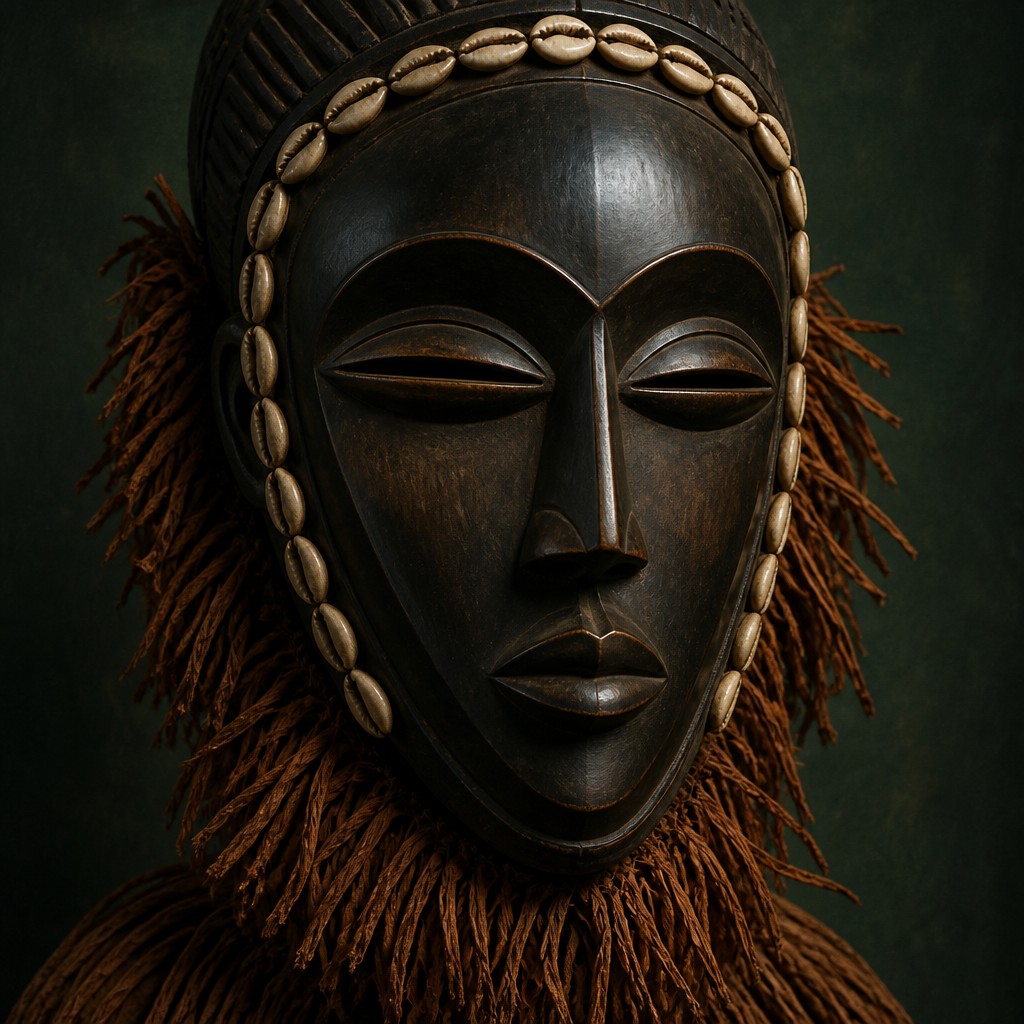
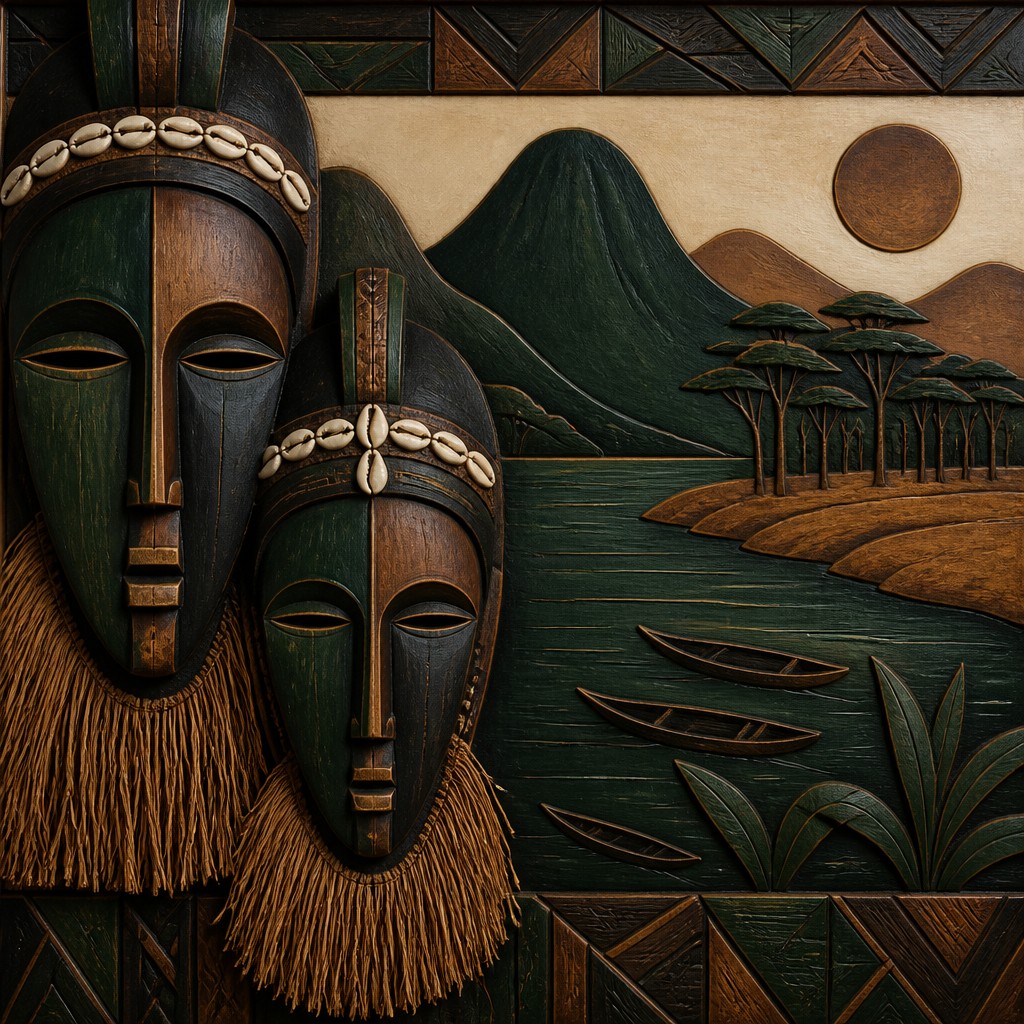
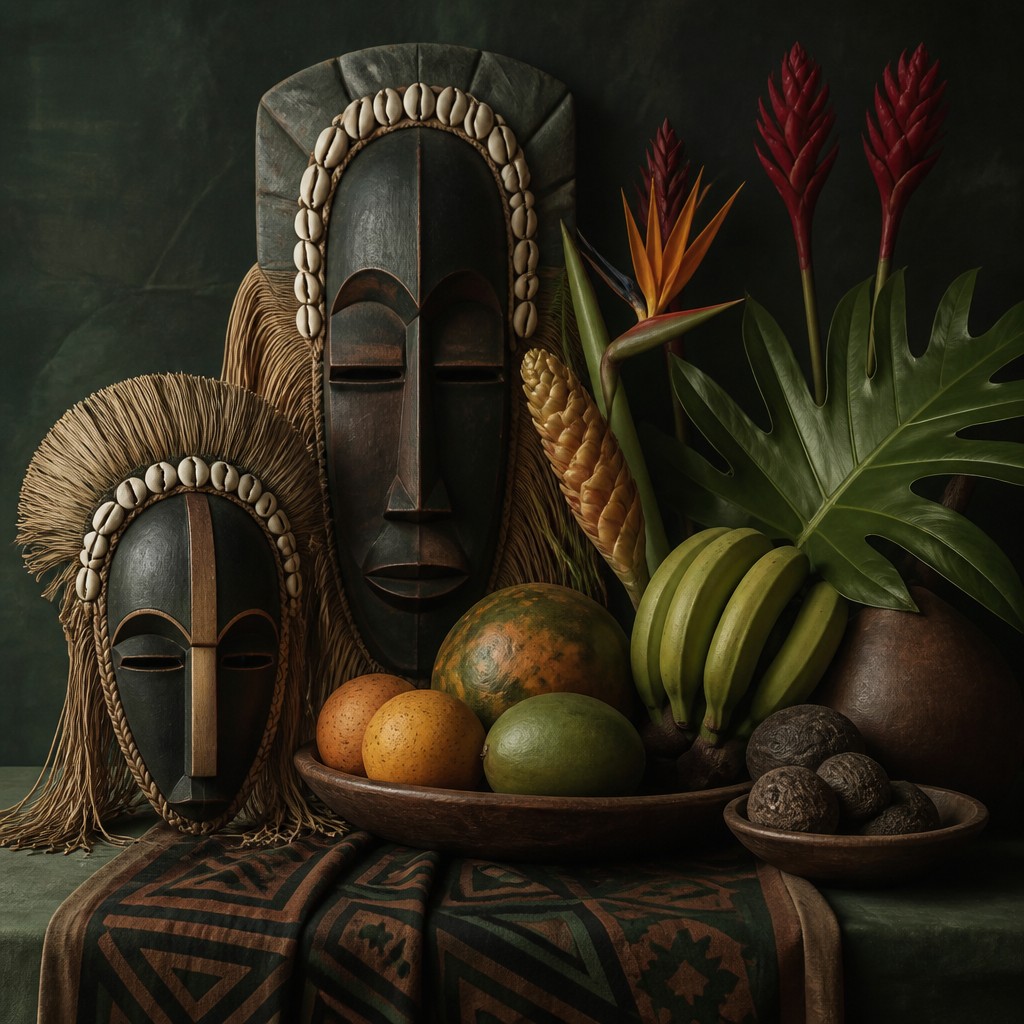
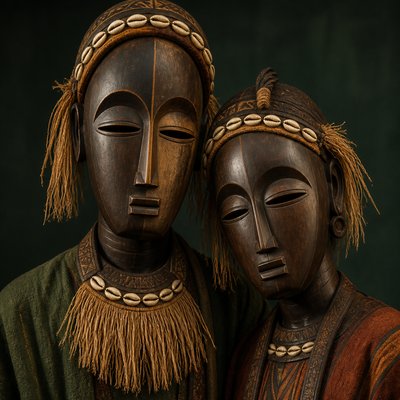
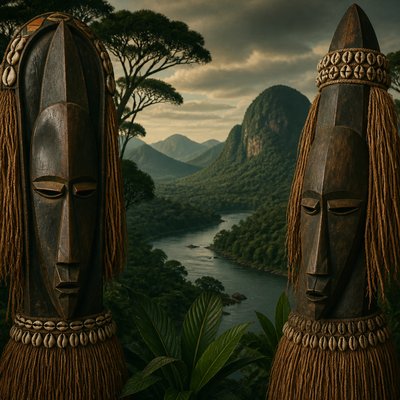
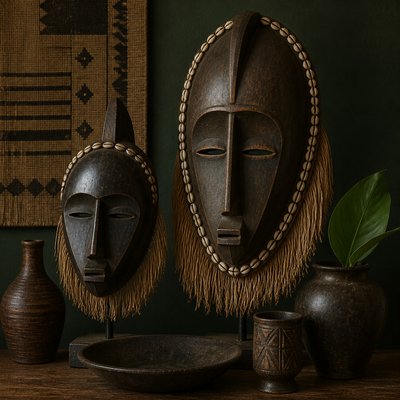
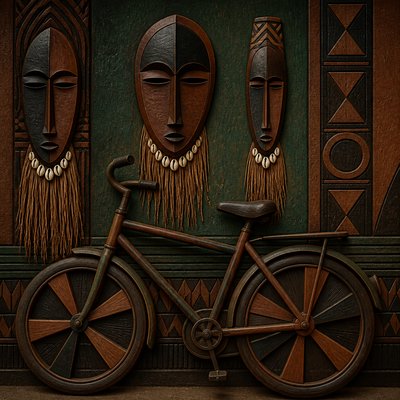
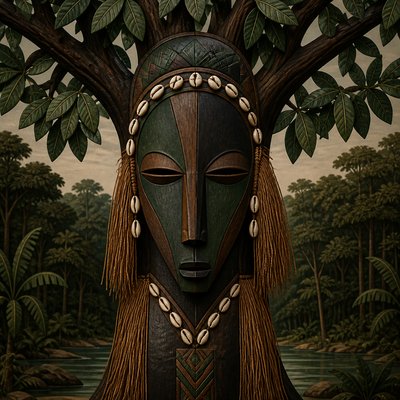
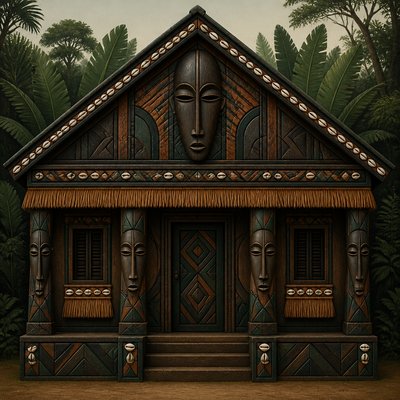
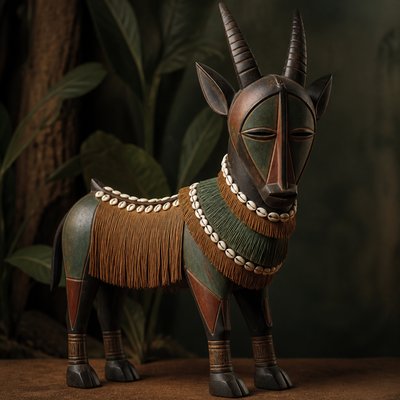
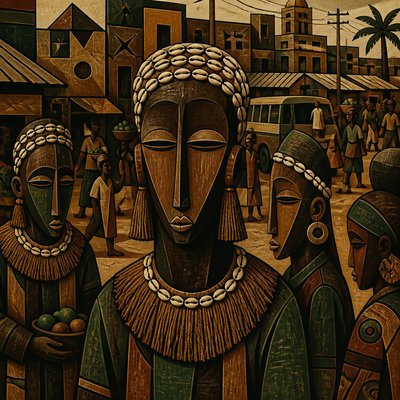
Liberian art style is a contemporary descriptive label for imagery inspired by the forest-region sculptural traditions of Liberia, especially the geometric mask forms associated with Grebo and related West African carving practices. It is characterized by serene carved faces, simplified planes, linear abstraction, slit or inset eyes, dark hand-rubbed wood, raffia elements, and restrained ceremonial ornament. The style is best understood as an aesthetic synthesis rather than a single historically unified Liberian movement.
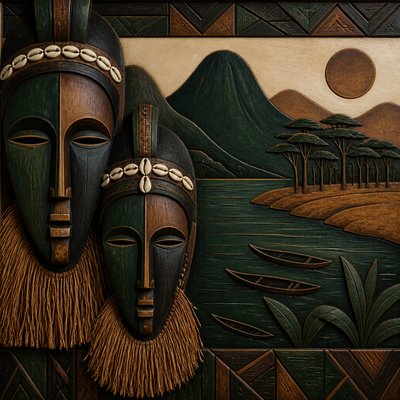
Its visual identity depends on the tension between reduction and material richness. Facial features are organized into strong verticals, horizontal bands, incised lines, and shallow relief, while deep forest green, burnt umber, blackened brown, and muted earth colors suggest aged hardwood and forest environments. The resulting mood is quiet, solemn, and contemplative, with the mask treated as a sculptural presence rather than a naturalistic portrait.
Try It On Your Photos
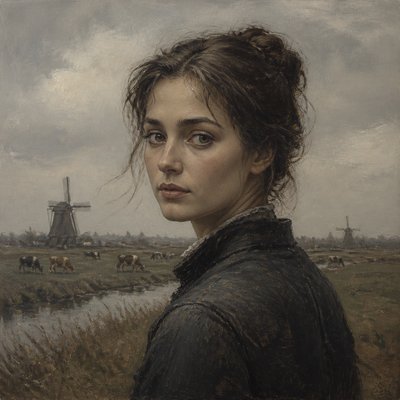
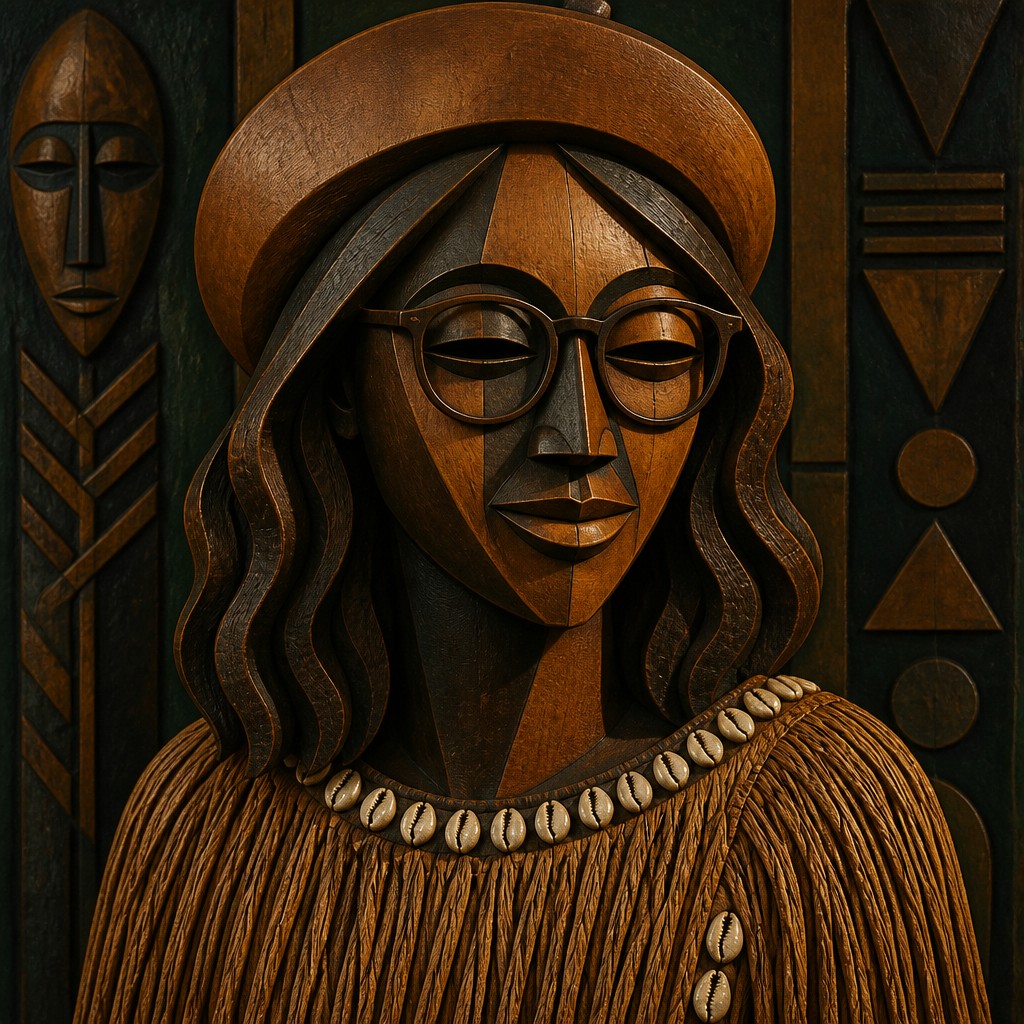
Upload any photo and convert it into Liberian Art Style — drag the sliders to compare before and after.

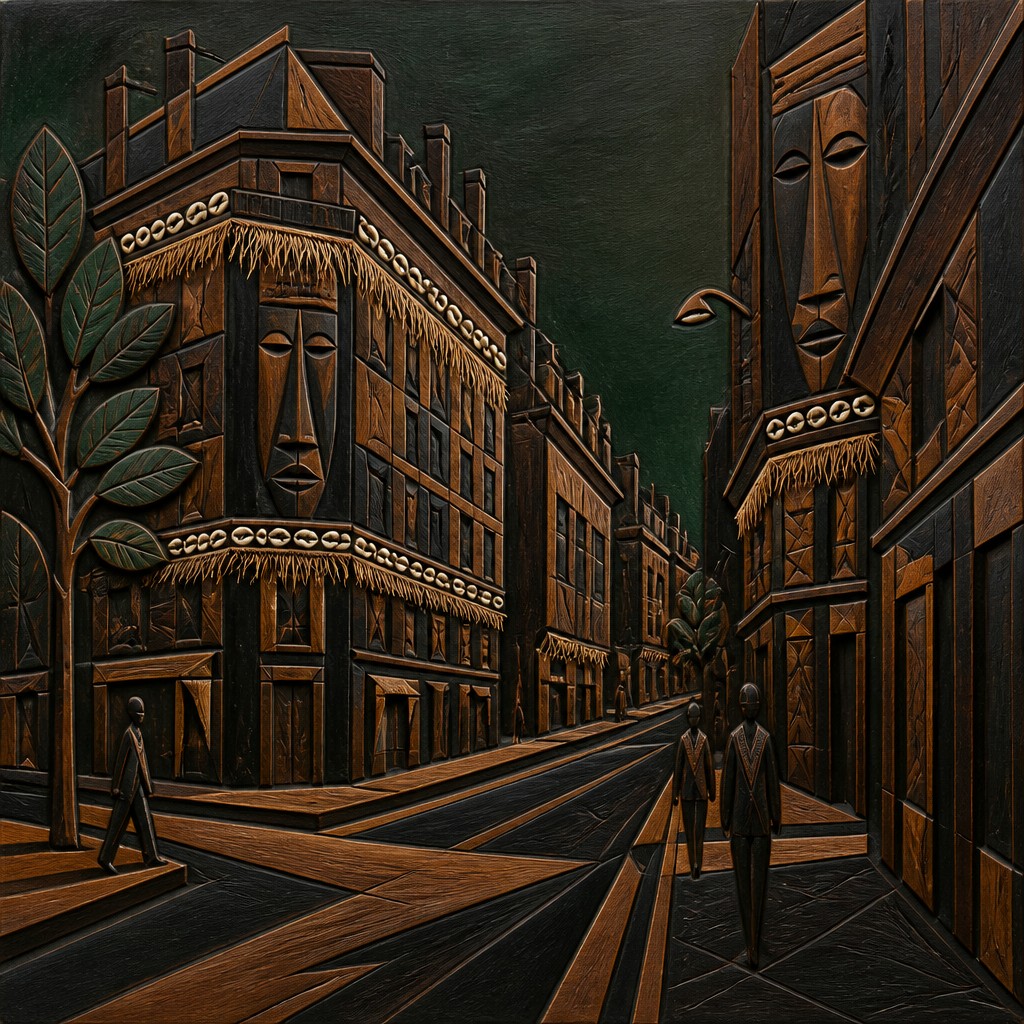

What Defines Liberian Art Style
The signature details, up close
Geometric carved planes
Faces and bodies are reduced into planar surfaces, stepped contours, incised bands, and measured symmetry. The carving appears deliberate and tactile rather than softly modeled or anatomically realistic.
Grebo-inspired linear abstraction
Long facial proportions, repeated horizontal elements, slit-like eyes, and strong linear divisions recall selected features associated with Grebo mask traditions. These references should be treated as an influence, not as a complete definition of Grebo art.
Dark wood patina
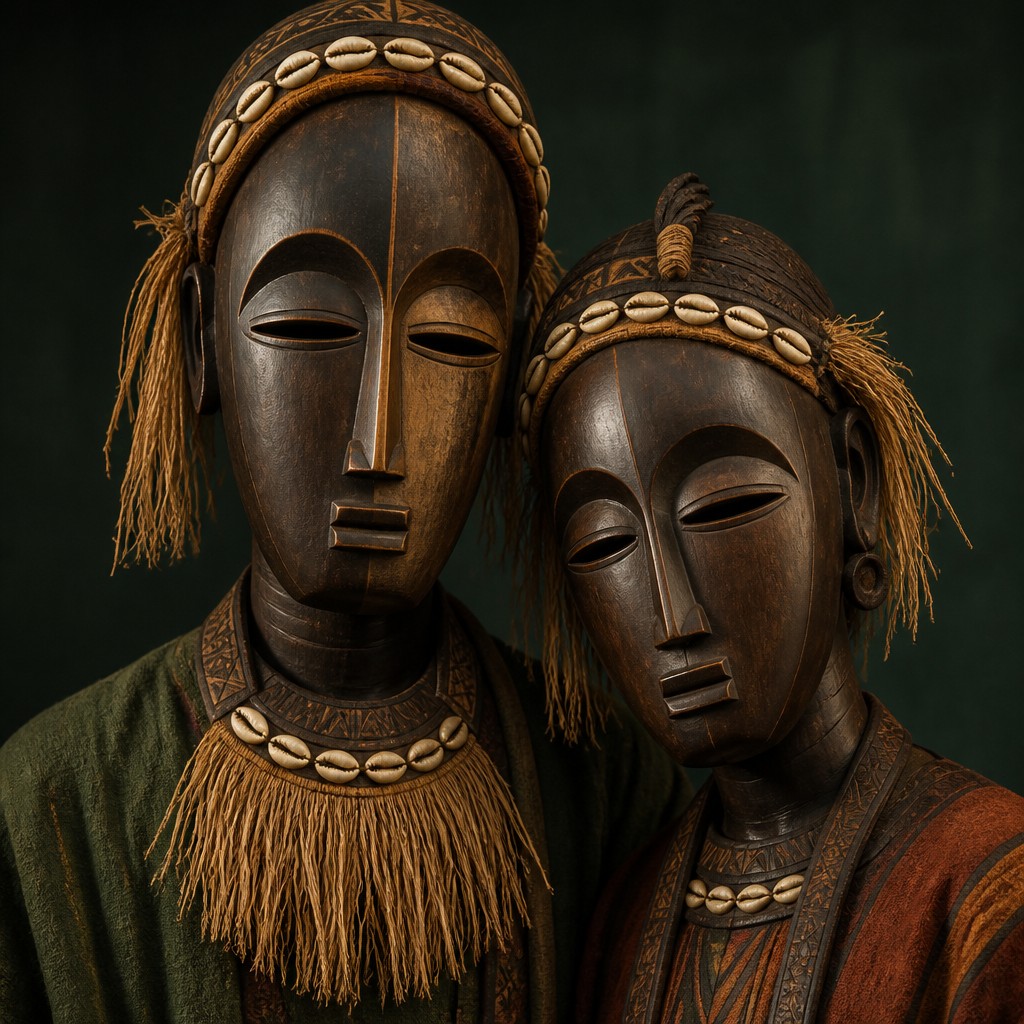
Burnt umber, black-brown, and deep reddish wood tones suggest hardwood that has been polished, smoked, stained, or darkened through handling. Visible grain, softened edges, and hand-rubbed irregularity reinforce the carved material quality.
Ceremonial stillness
Compositions favor frontal presentation, stable poses, centered silhouettes, and calm expressions. The emotional register is dignified and contemplative rather than theatrical or aggressively expressive.
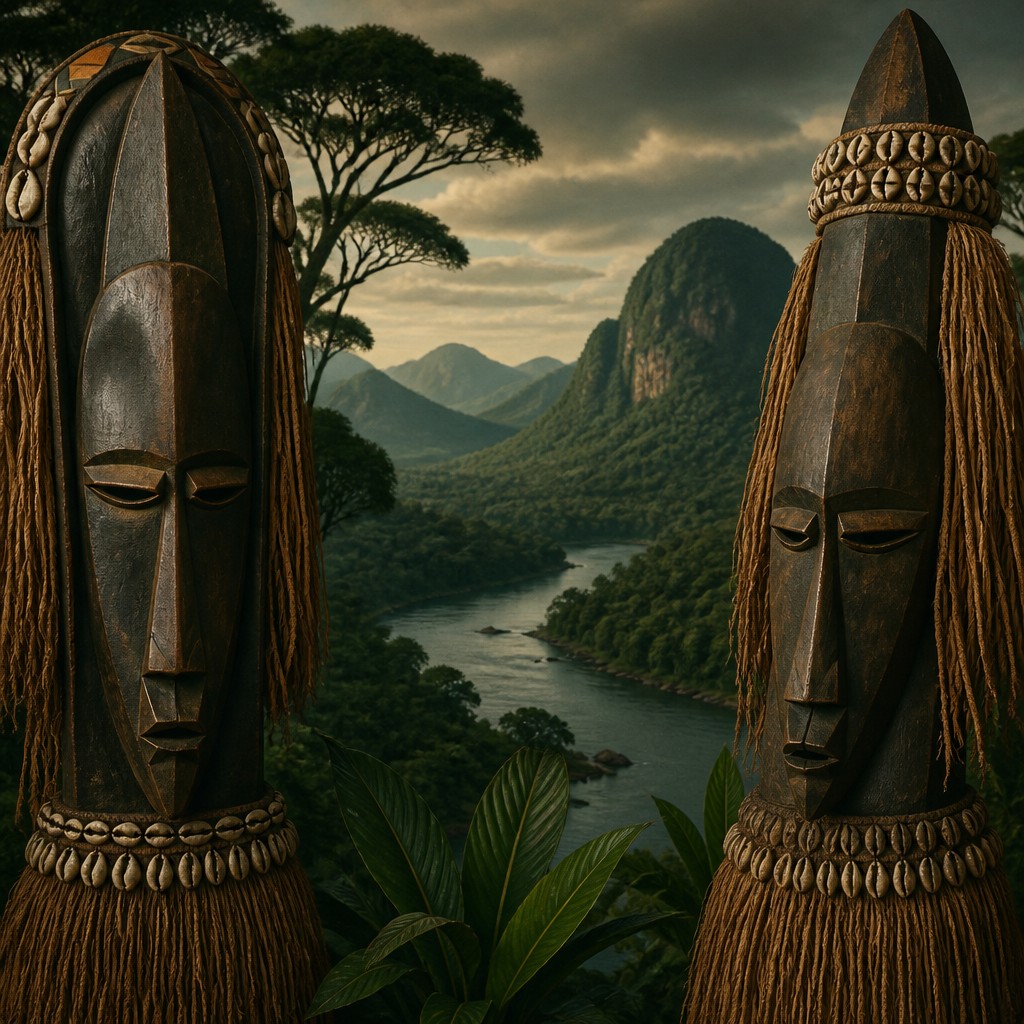
Raffia and fiber ornament
Raffia fringe, woven fibers, and hanging strands introduce movement around otherwise rigid carved forms. They can frame a mask, obscure part of the lower face, or create a textured border.
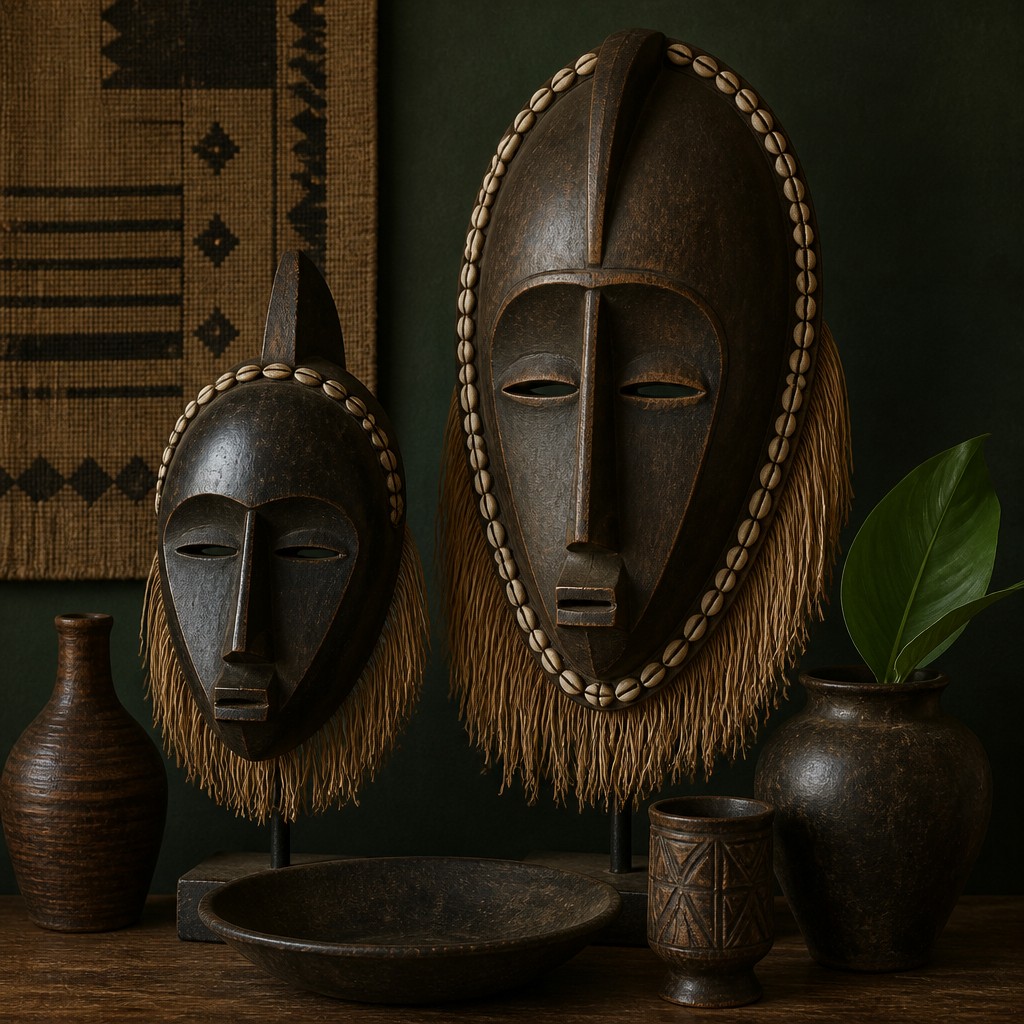
Cowrie-shell detailing
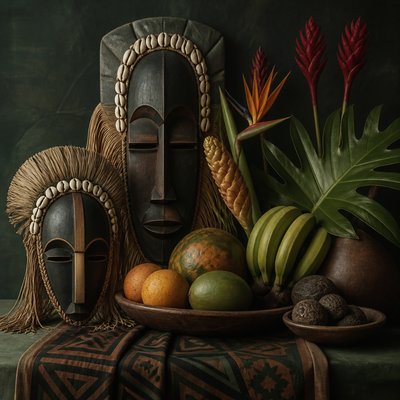
Cowrie shells may appear as trim, necklaces, clustered accents, or small symbolic embellishments. They provide pale, glossy contrast against dark wood and matte vegetal fibers.
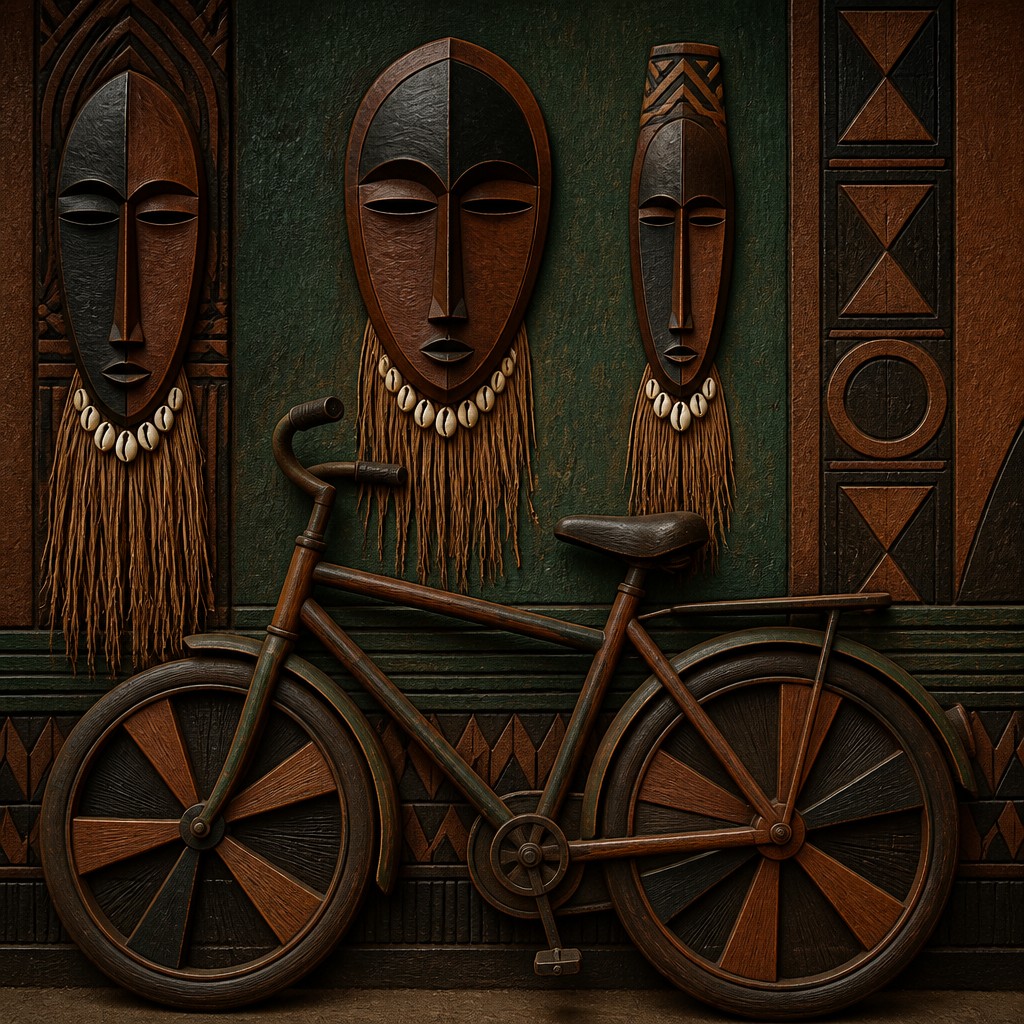
Forest-earth palette
Deep forest green, burnt umber, charcoal, muted ochre, and warm black create a restrained palette connected to wooded environments and natural materials. Highlights are usually sparse and placed on polished planes or shells.
Liberian Prompt Ideas
Start from an idea — each one opens the generator with the style ready to go. See all 40 Liberian prompts →
How to Create Liberian Art
Master the craft step by step — or skip straight to creating. Read the full guide →
- 1
Build the form from a block
For physical work, begin with a simplified wooden or clay maquette and establish the frontal silhouette before cutting facial details. Use broad planes first, then add incisions, eye openings, surface polishing, and selective irregularities.
- 2
Control the surface finish
Layer dark stains, wax, charcoal, or earth-colored pigments to produce a hand-rubbed patina while leaving some grain or tool marks visible. Avoid uniform plastic gloss; the surface should feel porous, handled, and materially specific.
- 3
Use structured symmetry
Organize the face around a central axis, then introduce measured repetition through bands, slits, ridges, or stepped planes. Small asymmetries can make the object feel carved by hand without weakening its formal stability.
- 4
Add fibers selectively
Attach raffia, sisal, woven cord, or natural-fiber fringe around the neck, brow, or lower edge. Keep these elements subordinate to the carved geometry and use cowrie-like accents sparingly for contrast.
- 5
Compose with restrained light
Use directional, low-contrast light to reveal planes and incisions without flattening the mask. A dark green, umber, or near-black background can intensify the sense of quiet ceremonial presence.
- 6
Write precise digital prompts
Specify the subject, carved material, facial geometry, patina, palette, fiber ornament, frontal pose, and lighting separately. For image-to-image work, preserve the source subject's silhouette while requesting simplified wood planes, subdued earth colors, and carefully controlled ceremonial details.
The Story
History & Origins of Liberian
There is no single historical movement formally known as the Liberian art style. The term is a modern interpretive category drawing from Liberia's diverse masking and woodcarving traditions, including Grebo sculptural vocabulary and broader artistic practices from the country's forest-region communities. These traditions have served social, ceremonial, initiatory, protective, and representational purposes, with forms and meanings varying substantially between communities.
The digital aesthetic described by this label combines selected historical visual features with contemporary composition, subdued color grading, and decorative styling. Its use should therefore distinguish documented cultural traditions from an invented cross-cultural visual shorthand, avoiding the assumption that all Liberian masks share one appearance or function.
Influences: The aesthetic draws from Grebo mask traditions and other forest-region carving practices in Liberia and neighboring parts of West Africa, while also borrowing the visual logic of Africanist modernism, ethnographic museum display, minimalist sculpture, and contemporary material-based photography. Its emphasis on frontal symmetry and simplified planes can also resemble Art Deco geometry and modernist reduction, but its surface vocabulary remains rooted in carved wood, fiber, shell, and ceremonial object-making rather than industrial design.
Frequently Asked Questions
Is Liberian art style a documented historical art movement?
No. The phrase is generally a contemporary descriptive label rather than the name of one unified historical movement. It refers to a selective visual synthesis inspired by several Liberian and West African sculptural traditions, including Grebo-related forms.
What defines the look of this style?
The defining features are geometric carved planes, elongated or abstract facial structures, dark wood patina, frontal stillness, raffia or fiber ornament, cowrie-shell accents, and a forest-earth palette. The style favors tactile material presence over naturalistic anatomy.
How is it different from generic African mask imagery?
A careful interpretation should identify its specific material and formal references rather than treating African art as a single category. Liberian art style emphasizes forest-region woodcarving, Grebo-inspired linear abstraction, dark hardwood surfaces, and restrained ceremonial composition, while acknowledging that Liberian communities have distinct traditions.
Can I make this style with digital tools?
Yes. Use a frontal composition, strong geometric construction, visible wood grain, dark hand-rubbed patina, raffia, cowries, and controlled green-and-umber lighting. Image-to-image methods work well when the source silhouette is retained and the surface is transformed into carved planes rather than merely adding a mask-like texture.
What materials are associated with the visual tradition?
Wood is central to the carved-mask vocabulary, often supplemented visually by raffia and other fibers, shells, pigments, stains, and woven elements. In a digital rendering, these materials should be described through grain, pores, tool marks, matte fibers, and selective shell highlights.
Where is this aesthetic commonly used?
It appears in contemporary illustration, sculpture studies, editorial imagery, cultural design, fashion concepts, interior objects, and digital worldbuilding. When used commercially or publicly, it is important to distinguish an inspired contemporary composition from an authentic ceremonial object and to avoid assigning invented meanings to specific forms.
Create your first Liberian artwork
Describe anything — or upload a photo — and see it in Liberian Art Style in seconds.
Related Styles
Discover similar art styles