Lesotho Art Style
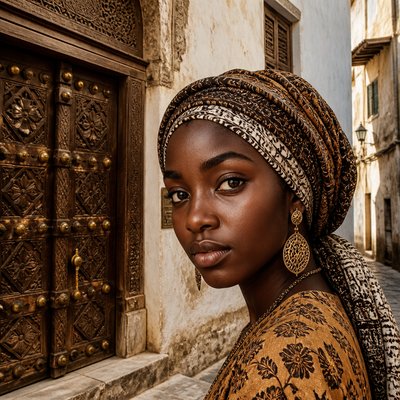
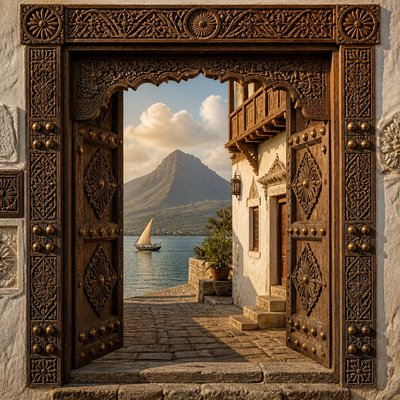
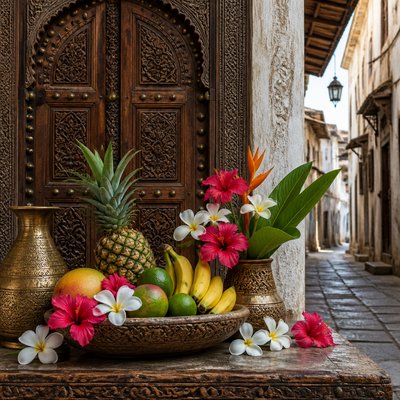
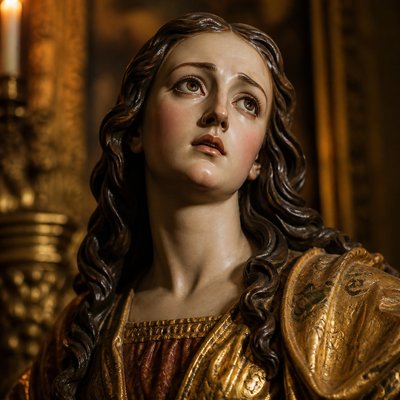
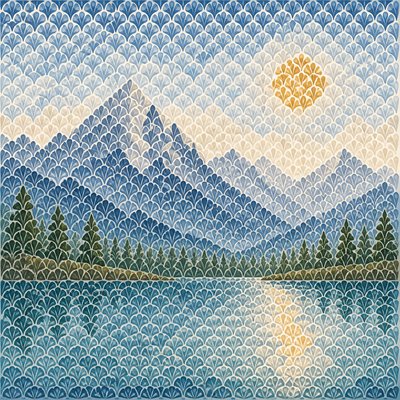
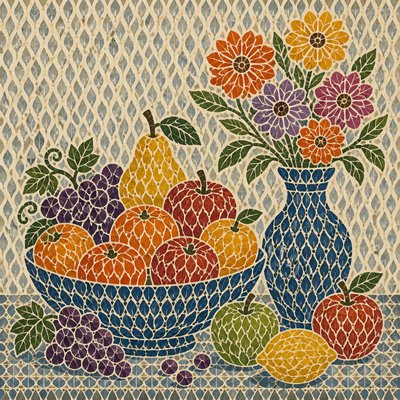
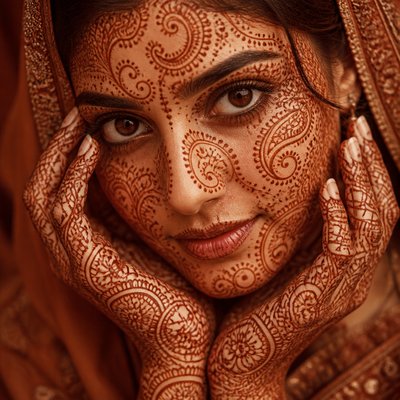
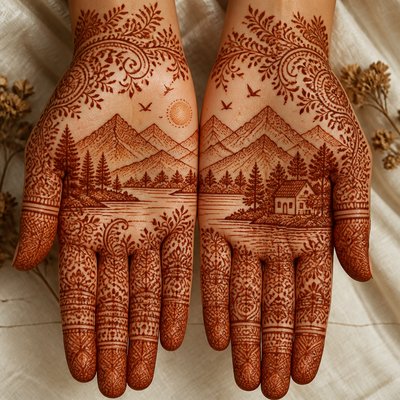
Explore Lesotho Art Style: litema wall geometry, Basotho mohair patterns, rock-art silhouettes, and dramatic Maloti mountain color.
Instantly rendered in Lesotho — or transform a photo
Lesotho Gallery
Tap any artwork to explore it
What is Lesotho Art Style?
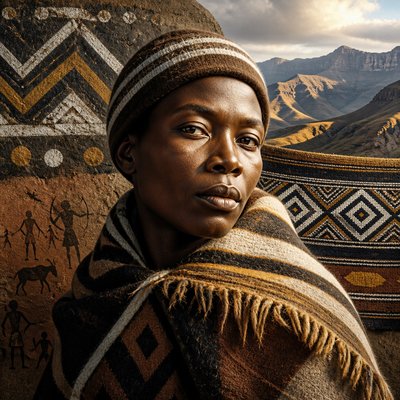
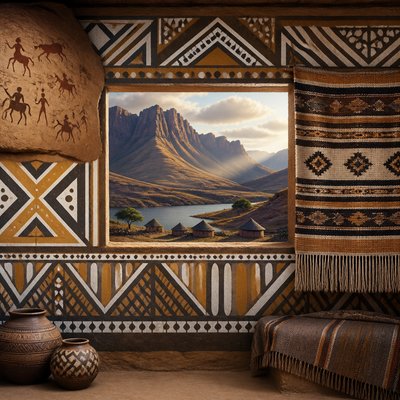
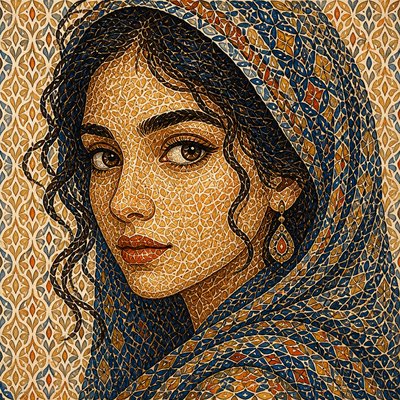
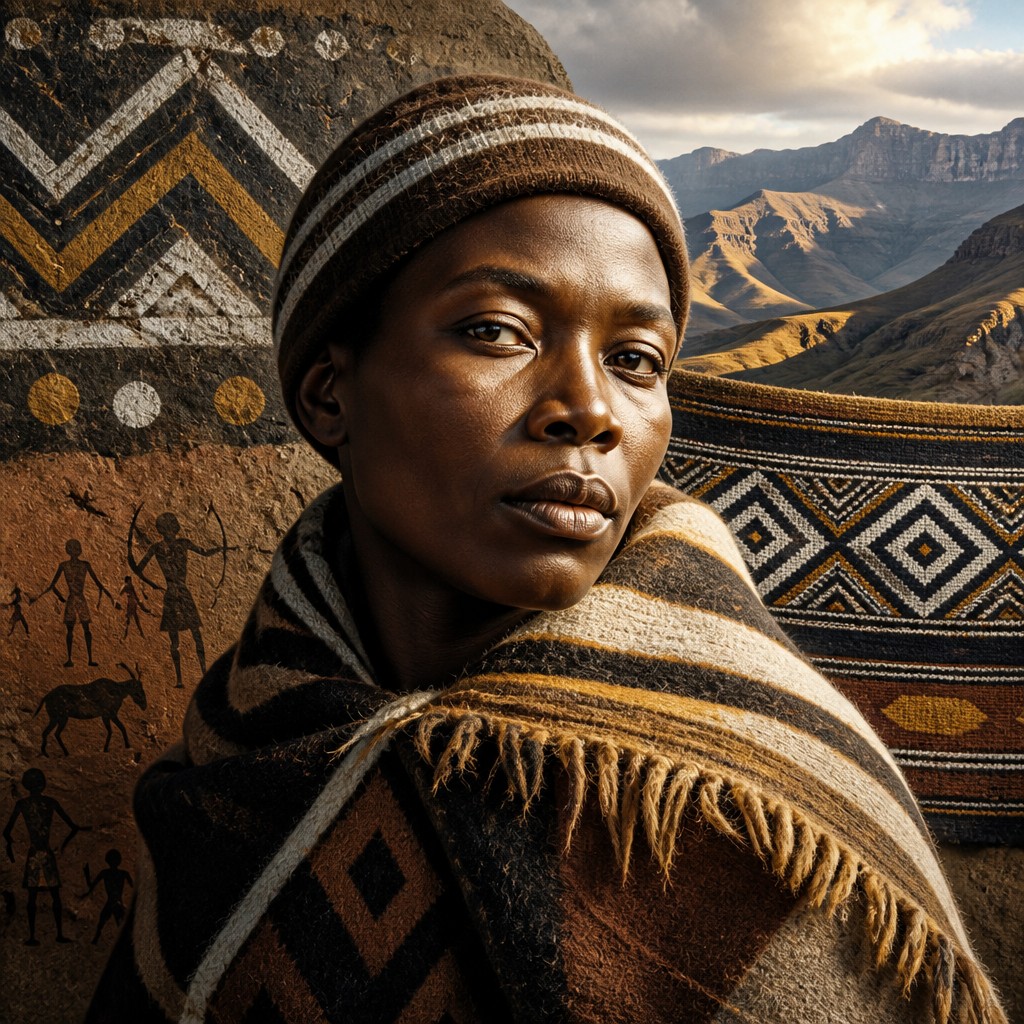
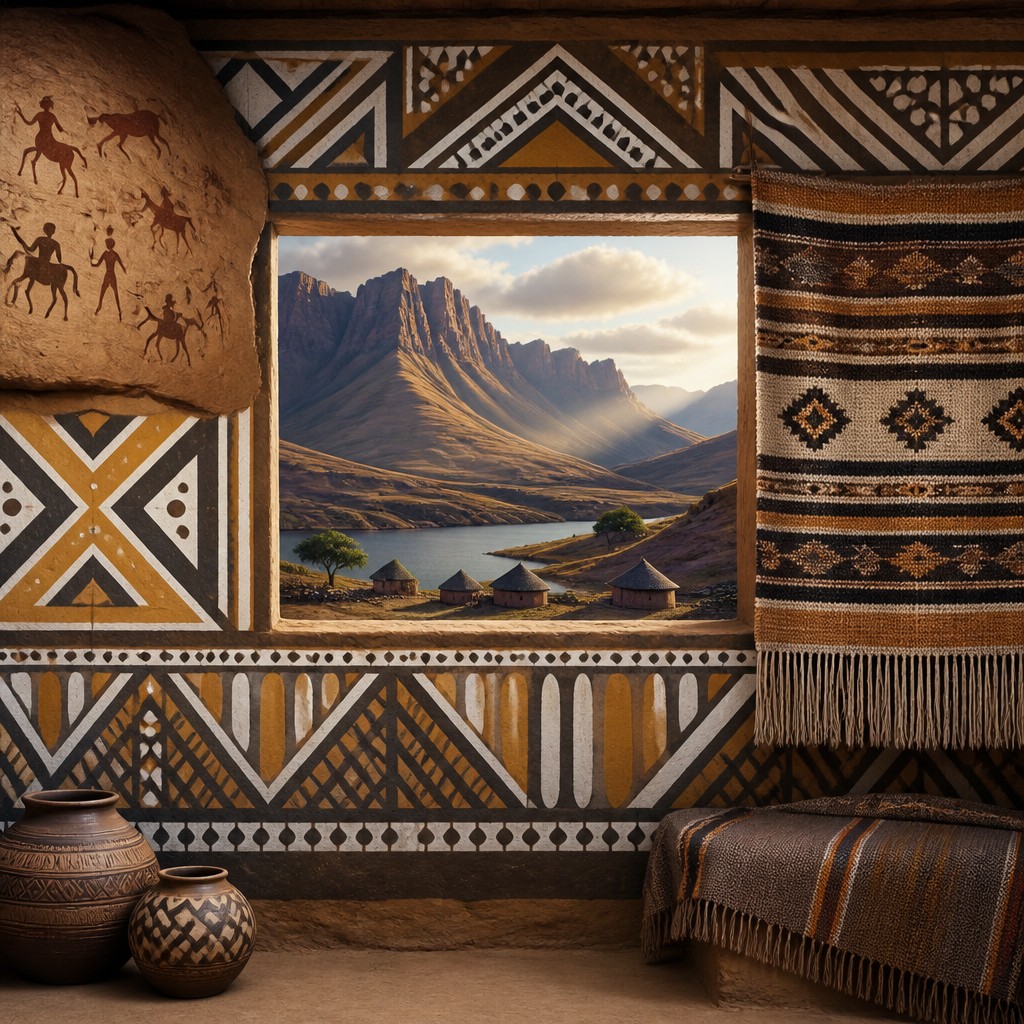
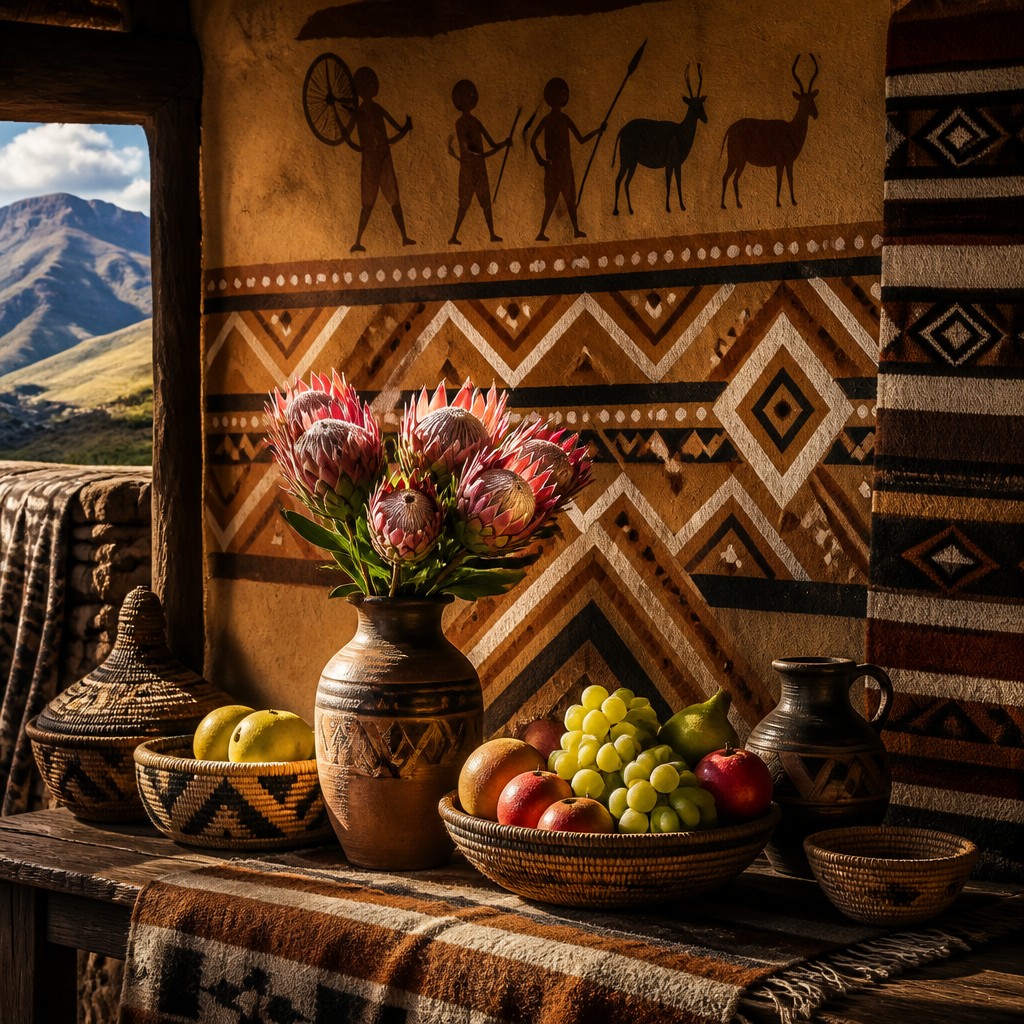
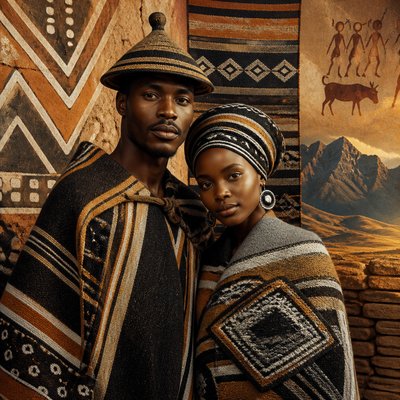
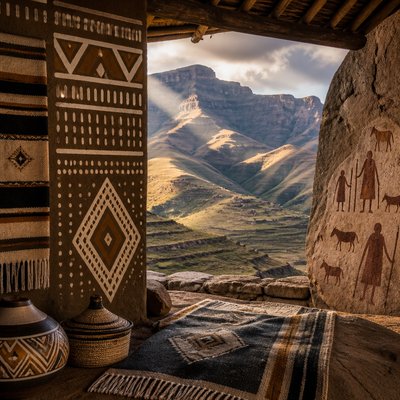
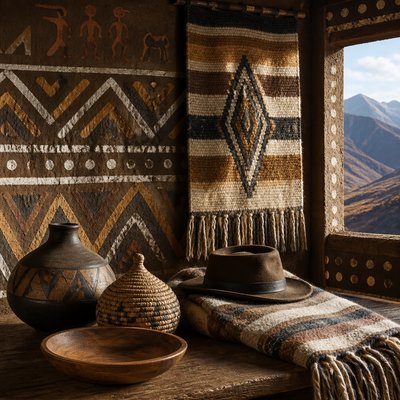
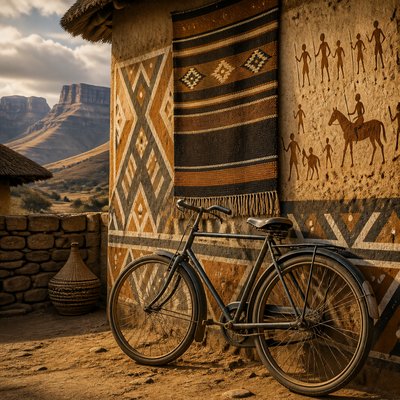
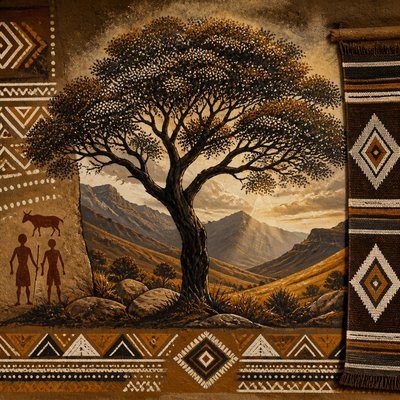
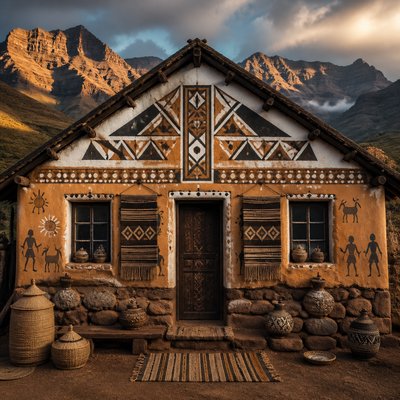
Lesotho Art Style is a contemporary, synthesized visual language rooted in the geometric wall decoration known as litema, the woven pattern vocabulary of Basotho mohair textiles, southern African rock-shelter imagery, and the highland landscape of the Maloti Mountains. Its compositions favor bold bands, stepped forms, diamonds, dots, raked lines, and simplified silhouettes rather than naturalistic detail. A characteristic palette combines ochre, clay red, chalk white, charcoal, muted brown, and woolly earth tones, with occasional deep blue or green drawn from mountain light and vegetation.
The style looks tactile and architectural because its references come from surfaces shaped by hand: mud-plastered walls, pigment-bearing rock, and woven cloth. Repetition creates rhythm across a scene, while strong contouring and compressed space give figures, animals, dwellings, and peaks a symbolic clarity. The result can feel both grounded and monumental, balancing domestic decoration with the severe scale of Lesotho's highland environment.
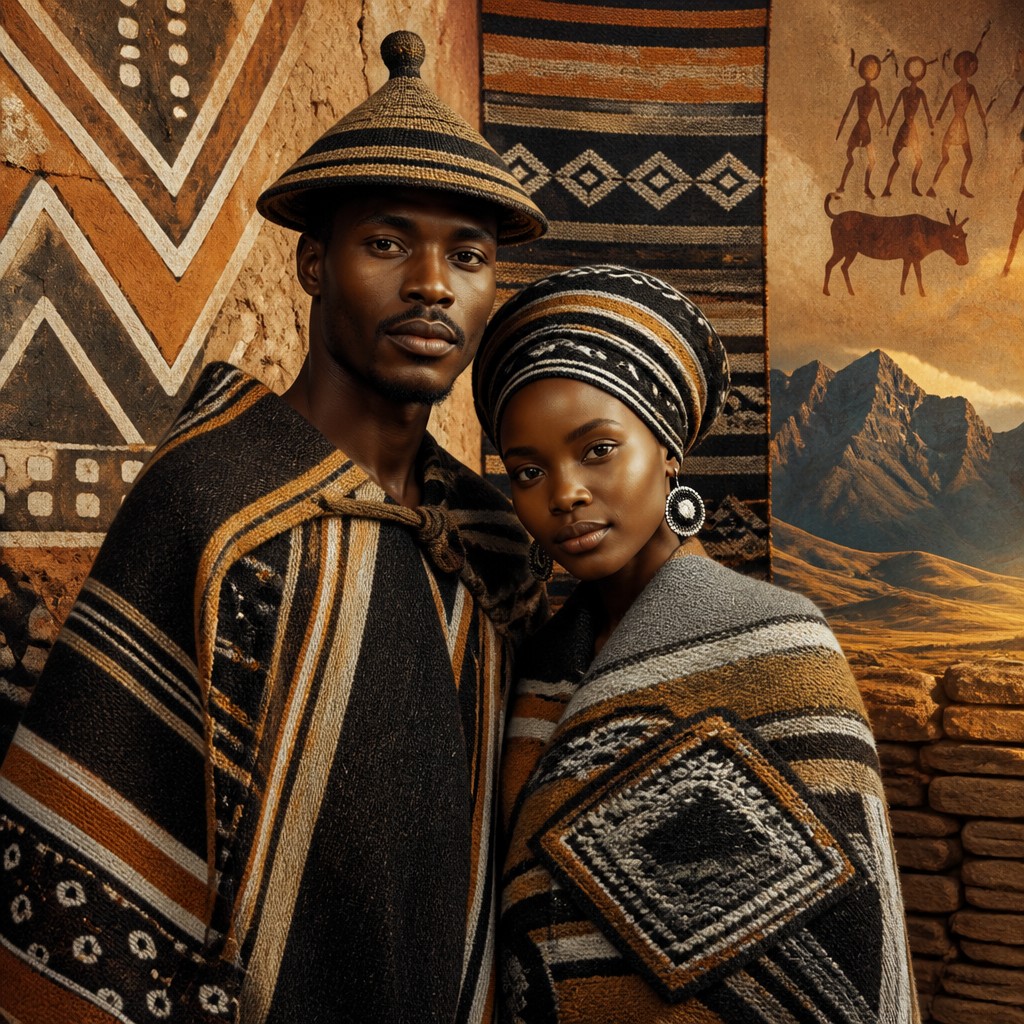
Try It On Your Photos
Upload any photo and convert it into Lesotho Art Style — drag the sliders to compare before and after.


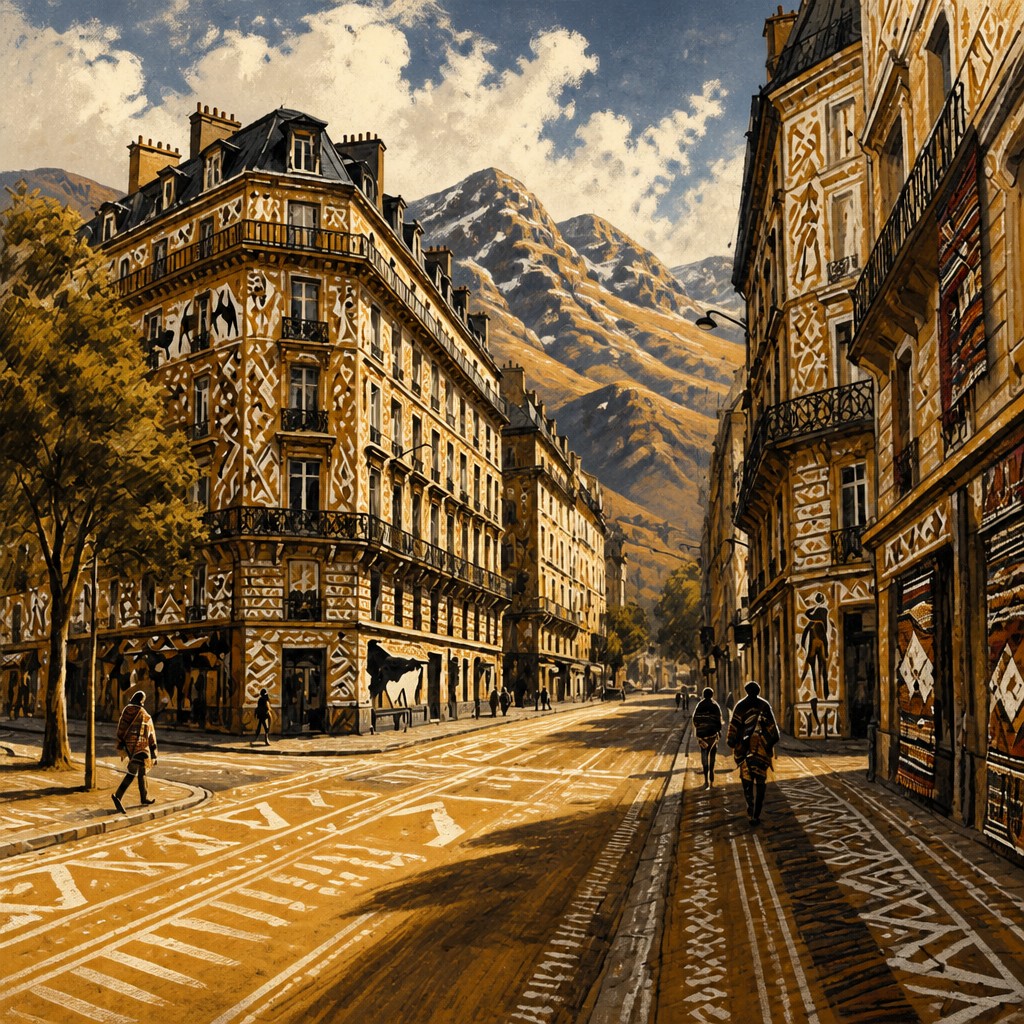

What Defines Lesotho Art Style
The signature details, up close
Litema geometry
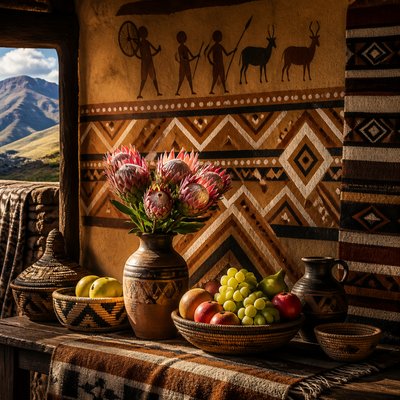
Raked parallel lines, chevrons, grids, stepped forms, diamonds, and dots organize the image into rhythmic fields. Patterns may frame a subject, cover a wall-like background, or become the primary subject themselves.
Earthen surface
Mud-plaster associations encourage matte finishes, irregular edges, grain, shallow relief, and visible hand application. Digital work benefits from subtle clay, dust, and plaster texture rather than a glossy surface.
Basotho textile structure
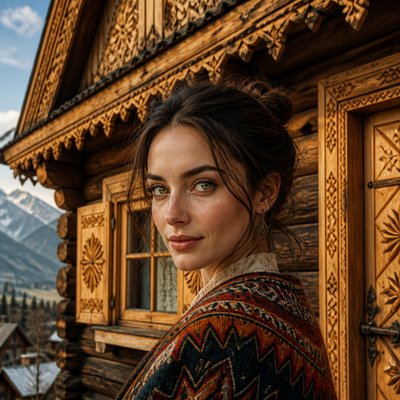
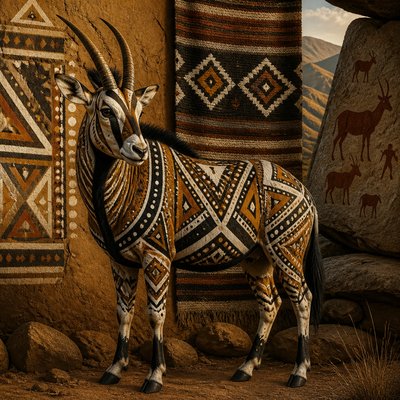
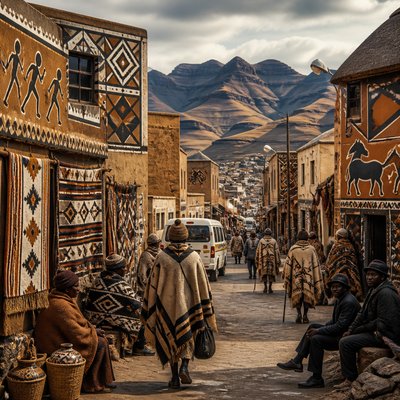
Mohair and woven-cloth references appear as thick fibers, earthy stripes, repeated diamonds, checks, and broad horizontal bands. Textile motifs can function as clothing, blankets, architectural panels, or abstract compositional blocks.
Restrained mineral palette
Ochre, terracotta, chalk white, charcoal, umber, and weathered gray establish the core palette. Controlled contrasts are more characteristic than a broad spectrum of highly saturated colors.
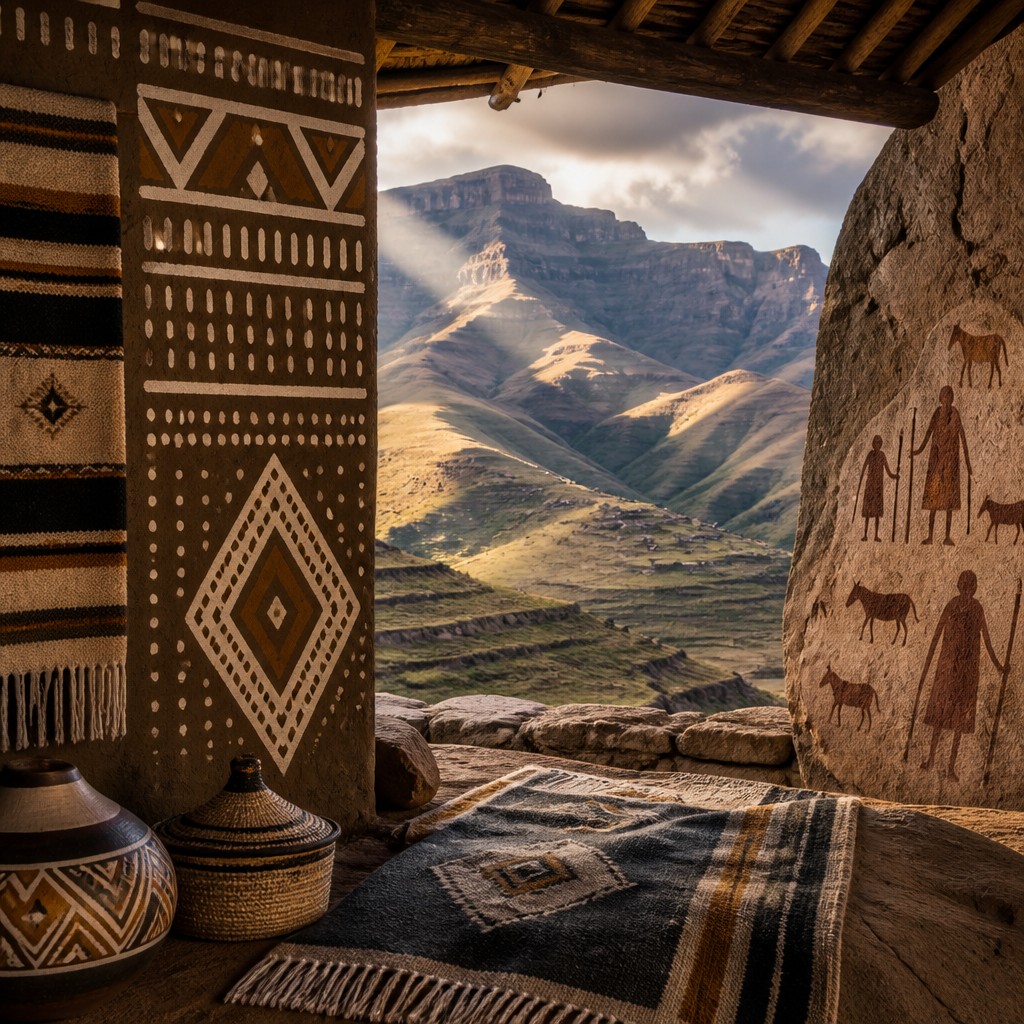
Symbolic silhouettes
People, livestock, dwellings, and wildlife are reduced to sturdy, readable outlines inspired by pigment silhouettes and graphic mural forms. Anatomical detail is secondary to gesture, grouping, and contour.
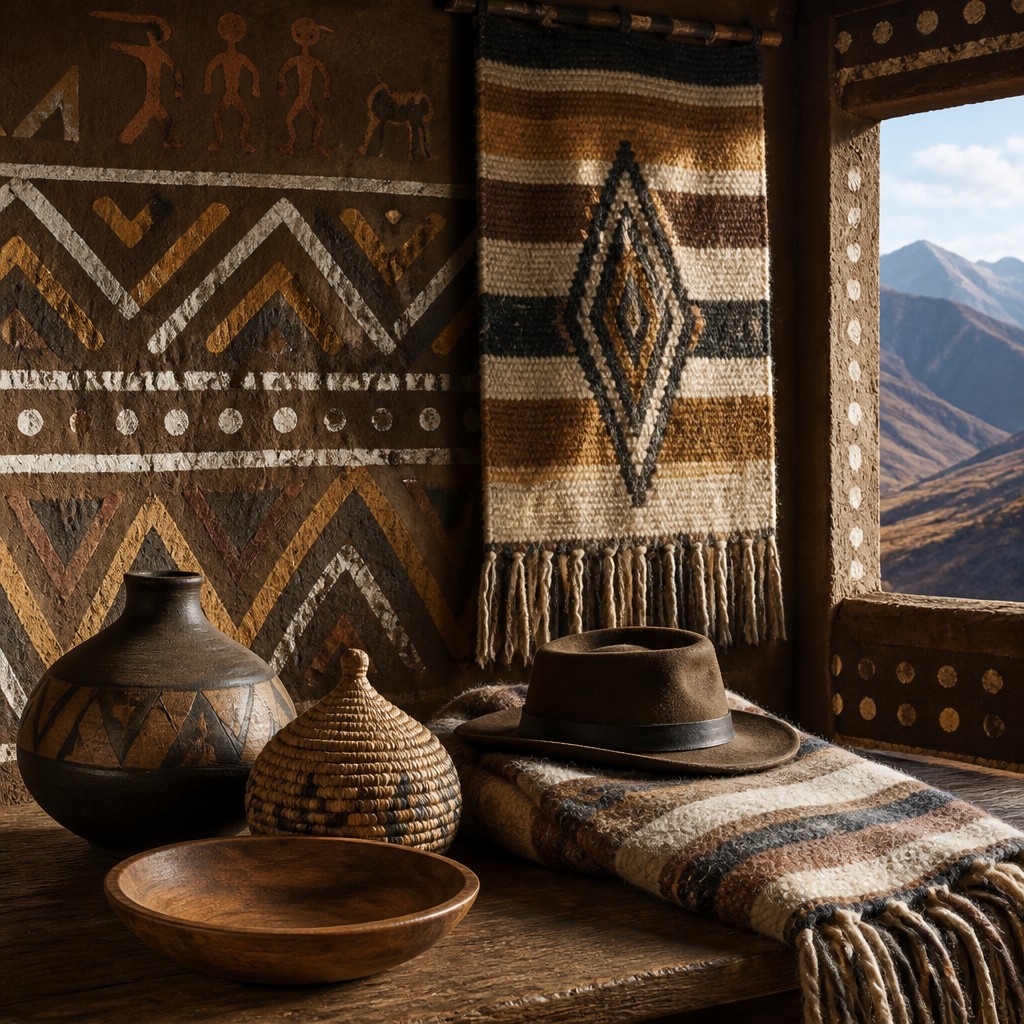
Maloti atmosphere
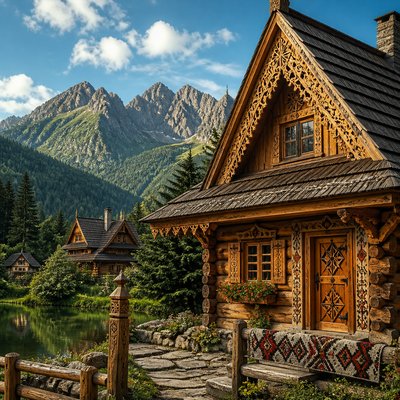
Mountain ridges, highland skies, strong sunlight, and long shadows provide the environmental setting. Layered peaks and dramatic illumination add depth while preserving the style's flattened decorative structure.
Lesotho Prompt Ideas
Start from an idea — each one opens the generator with the style ready to go. See all 40 Lesotho prompts →
How to Create Lesotho Art
Master the craft step by step — or skip straight to creating. Read the full guide →
- 1
Build a geometric ground
Begin with a wall, cloth, or paper-like field and lay out repeated lines, diamonds, chevrons, and dots before adding the main subject. Keep spacing deliberate but allow small irregularities that suggest hand-worked litema.
- 2
Use mineral and fiber textures
For traditional work, test earth pigments, chalk, charcoal, casein, or matte paint on a textured ground, and study woven mohair samples for stripe and diamond rhythms. Digitally, combine rough plaster grain, dry-brush edges, and directional fiber texture.
- 3
Flatten forms without losing depth
Reduce figures and buildings to bold silhouettes, then create depth through overlapping bands, scale changes, and mountain layers rather than realistic modeling. Reserve sharp highlights and dark contours for important structural edges.
- 4
Compose around repetition
Use a limited motif family throughout the image so the pattern feels intentional rather than decorative noise. Alternate dense and quiet zones to give the eye a route through the composition.
- 5
Direct digital or AI generation precisely
Specify litema-inspired raked geometry, Basotho mohair stripes and diamonds, earthen plaster, mineral colors, simplified silhouettes, and Maloti mountain light. Add exclusions such as glossy surfaces, photorealistic anatomy, neon colors, and random ornamental clutter when a more authentic graphic result is needed.
- 6
Respect cultural context
When using identifiable Basotho motifs, research their context, credit source traditions, and avoid presenting a generalized mixture of southern African symbols as a specific historical artifact. Acknowledge when the result is a contemporary interpretation rather than a traditional litema work.
The Story
History & Origins of Lesotho
Lesotho Art Style is an invented contemporary category rather than a named historical movement. Its primary aesthetic lineage is Basotho litema, a tradition of patterned exterior and interior wall decoration associated with earthen-plastered homes and seasonal renewal. Litema designs use arranged furrows, grids, chevrons, dots, and other geometric motifs, with their appearance varying according to local practice, materials, and occasion.
The style also draws on the long visual record of southern African rock art, without claiming that modern litema patterns are direct copies of rock-shelter imagery. Basotho blanket and mohair weaving contribute striped, diamond, and banded structures, while the Maloti landscape supplies its distinctive sense of scale, atmospheric light, and rugged warmth. Together these sources form a modern cross-media aesthetic suitable for murals, textiles, illustration, photography, and digital compositions.
Influences: Related influences include Basotho litema mural decoration, southern African rock-art traditions, regional earthen architecture, handwoven mohair and wool textiles, vernacular geometric pattern, and modern mural illustration. It also shares qualities with folk-art abstraction, material-driven painting, textile design, and landscape modernism, but its identity depends on the specific combination of highland light, Basotho pattern references, earthen surfaces, and repeated geometry.
Frequently Asked Questions
What defines the Lesotho Art Style?
It is defined by litema-inspired geometric wall patterns, Basotho mohair and textile motifs, mineral earth colors, simplified silhouettes, and the dramatic highland setting of the Maloti Mountains. The style emphasizes rhythm, texture, and symbolic shape over photographic realism.
Is Lesotho Art Style a historical art movement?
No. The label describes a contemporary synthesized aesthetic, not a documented historical movement with a fixed period or membership. It draws from real Basotho and southern African visual traditions while combining them for modern illustration, painting, textile, and digital use.
What is litema?
Litema refers to a Basotho tradition of geometric decoration applied to earthen-plastered house surfaces and related domestic contexts. Designs commonly use repeated furrows, lines, dots, chevrons, and other arranged motifs, although exact patterns and meanings can vary by community and circumstance.
How is this style different from generic African pattern art?
Its visual focus is specifically on Basotho litema, highland materials, mohair and wool structures, and the landscape of Lesotho. Broadly combining unrelated regional symbols can erase important cultural distinctions, so a convincing interpretation should use a coherent Basotho-centered vocabulary.
Can I create this style with photography or image-to-image techniques?
Yes. Photograph plaster walls, woven textiles, mountain ridges, or rural architecture and emphasize matte texture, limited color, strong silhouettes, and repeated geometry during editing. For transformations, preserve the original subject's recognizable structure while applying pattern fields and mineral surface treatment selectively.
Where can this style be used?
It suits murals, editorial illustration, posters, book covers, textile concepts, packaging, architectural surfaces, landscape studies, and atmospheric portraiture. Designs should be adapted to the medium: broad motifs read well on walls and fabric, while fine plaster and fiber textures are better suited to close-up images.
Create your first Lesotho artwork
Describe anything — or upload a photo — and see it in Lesotho Art Style in seconds.
Related Styles
Discover similar art styles