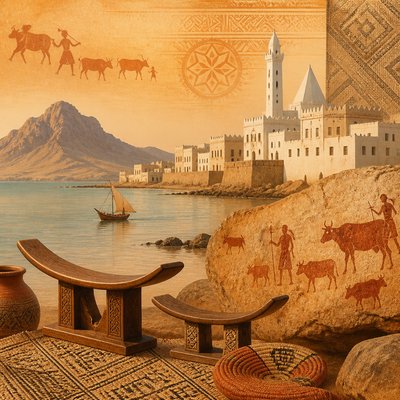
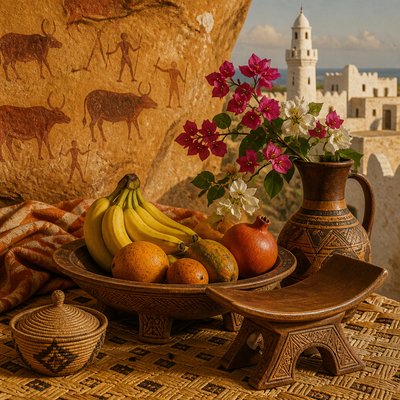
Lao Art Style
Explore Lao art style: luminous temple mosaics, golden stupas, Lao silk patterns, and Mekong-valley color shaped by Buddhist visual traditions.
Instantly rendered in Lao — or transform a photo
Lao Gallery
Tap any artwork to explore it
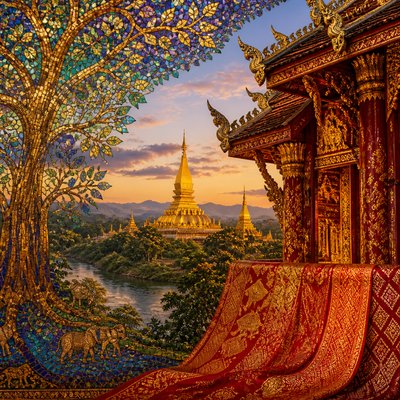
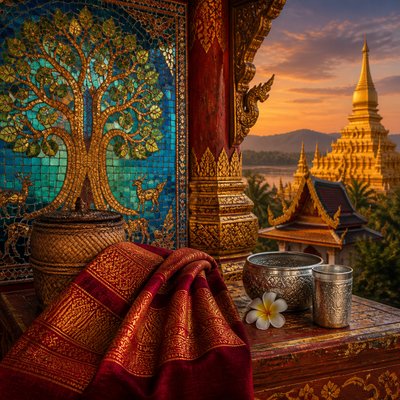
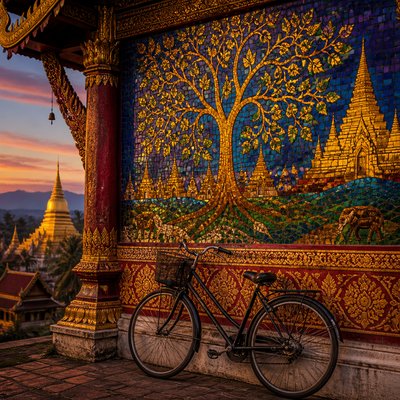
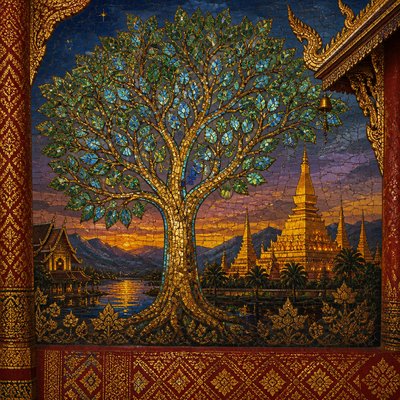
What is Lao Art Style?
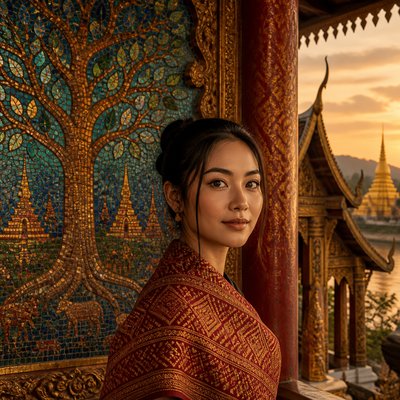
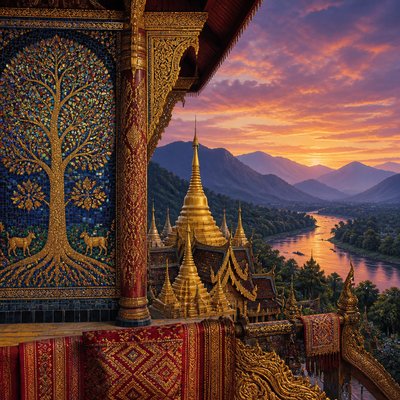
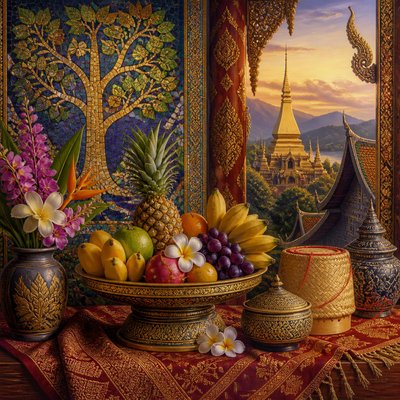
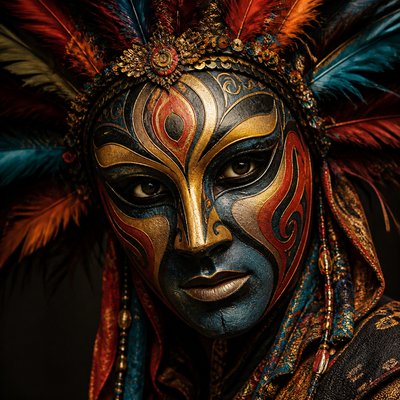
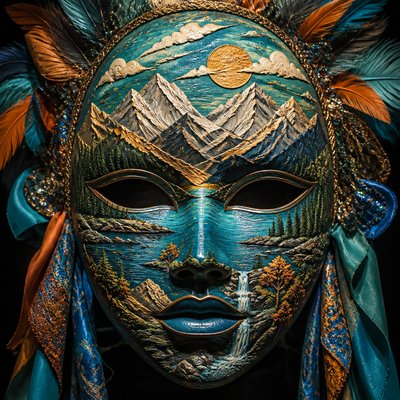
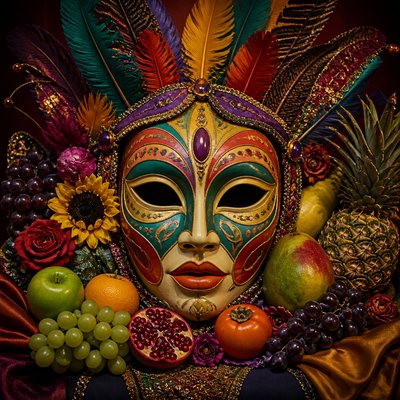
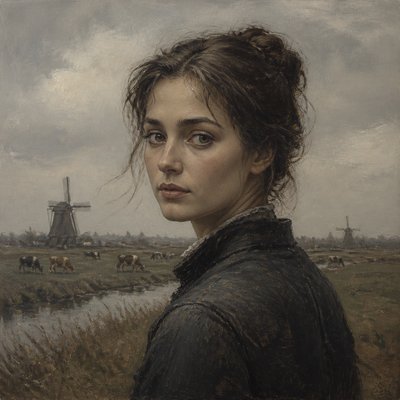
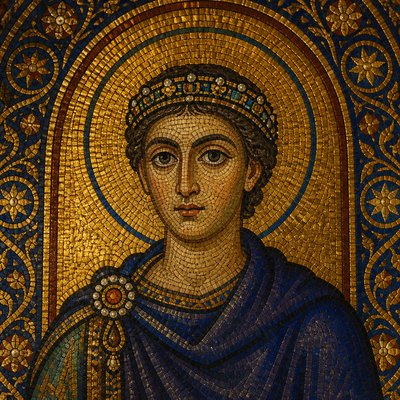
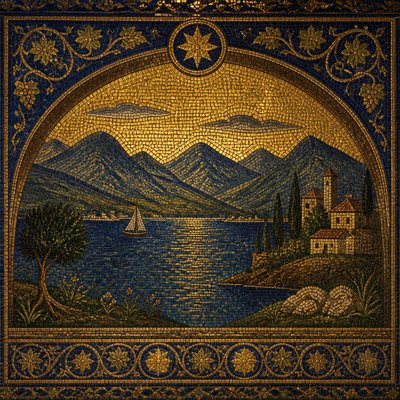
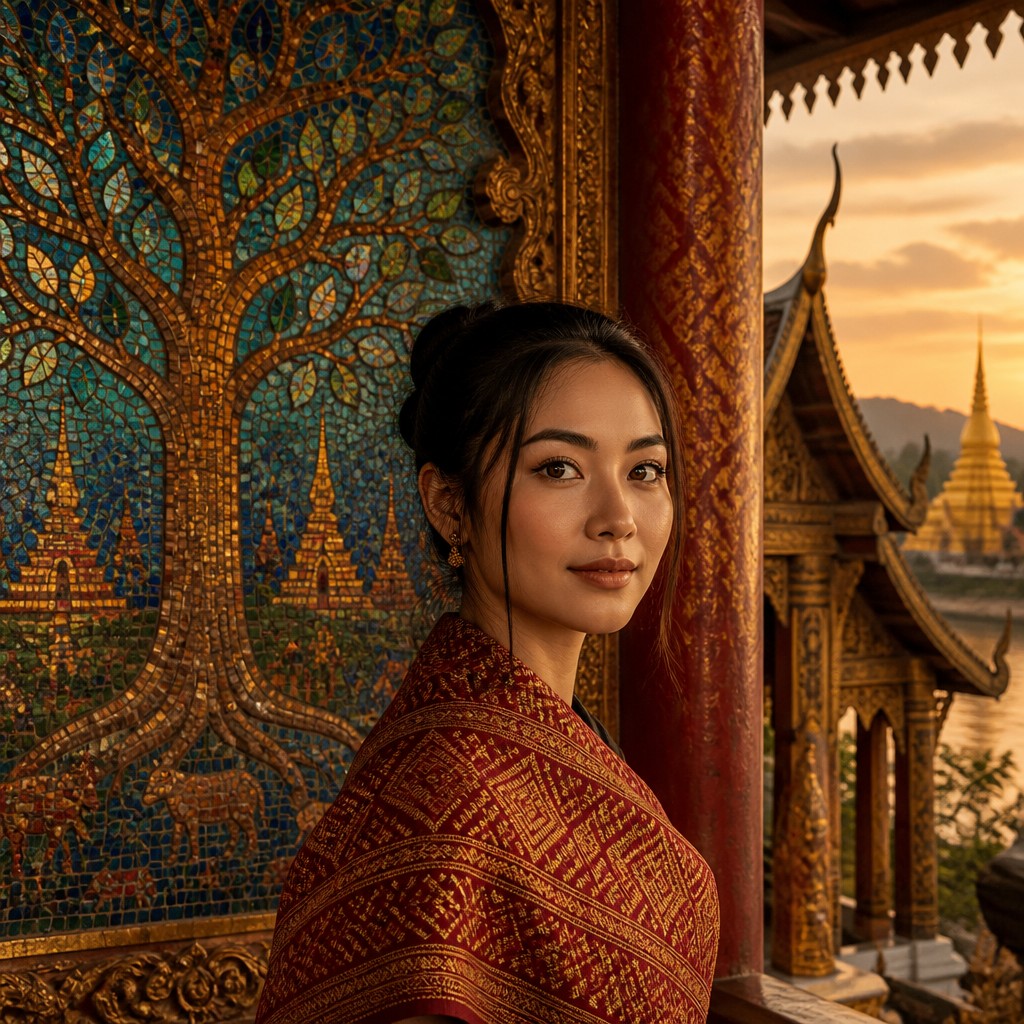
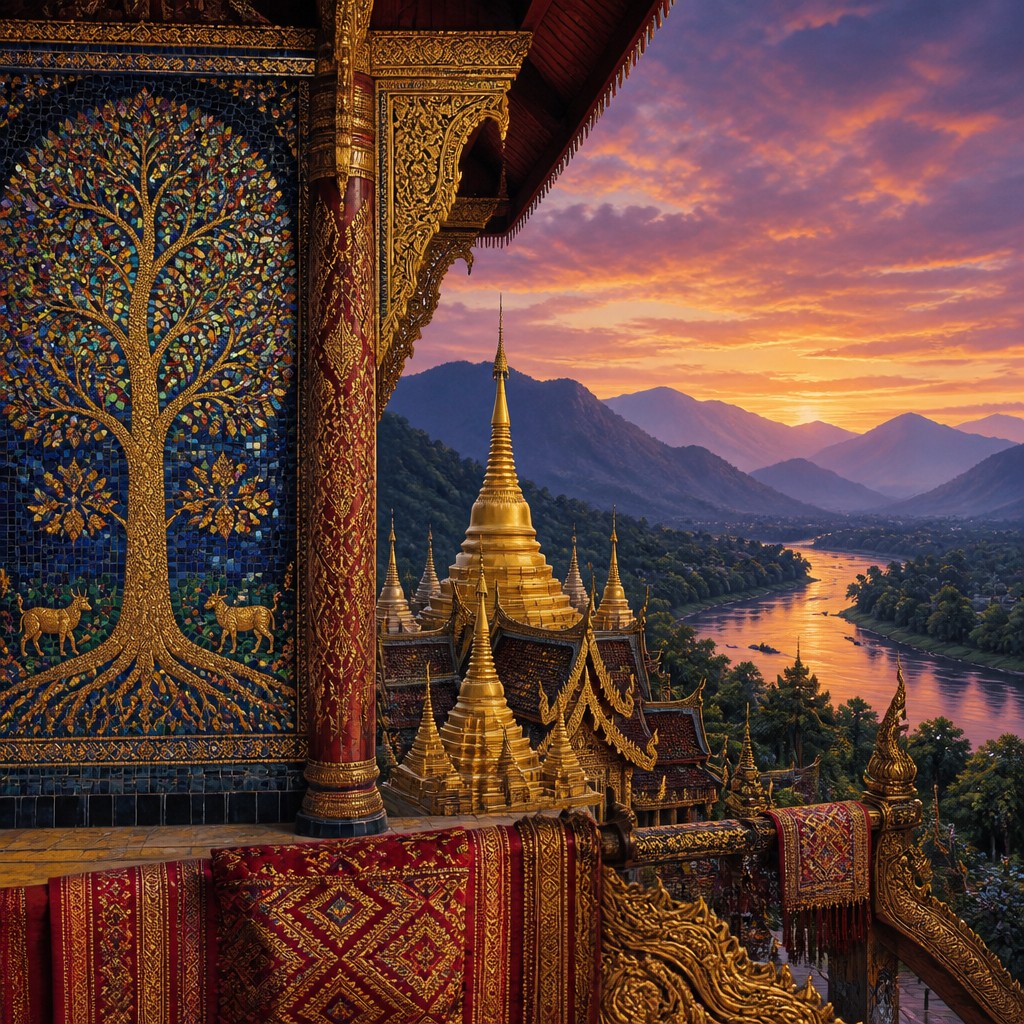
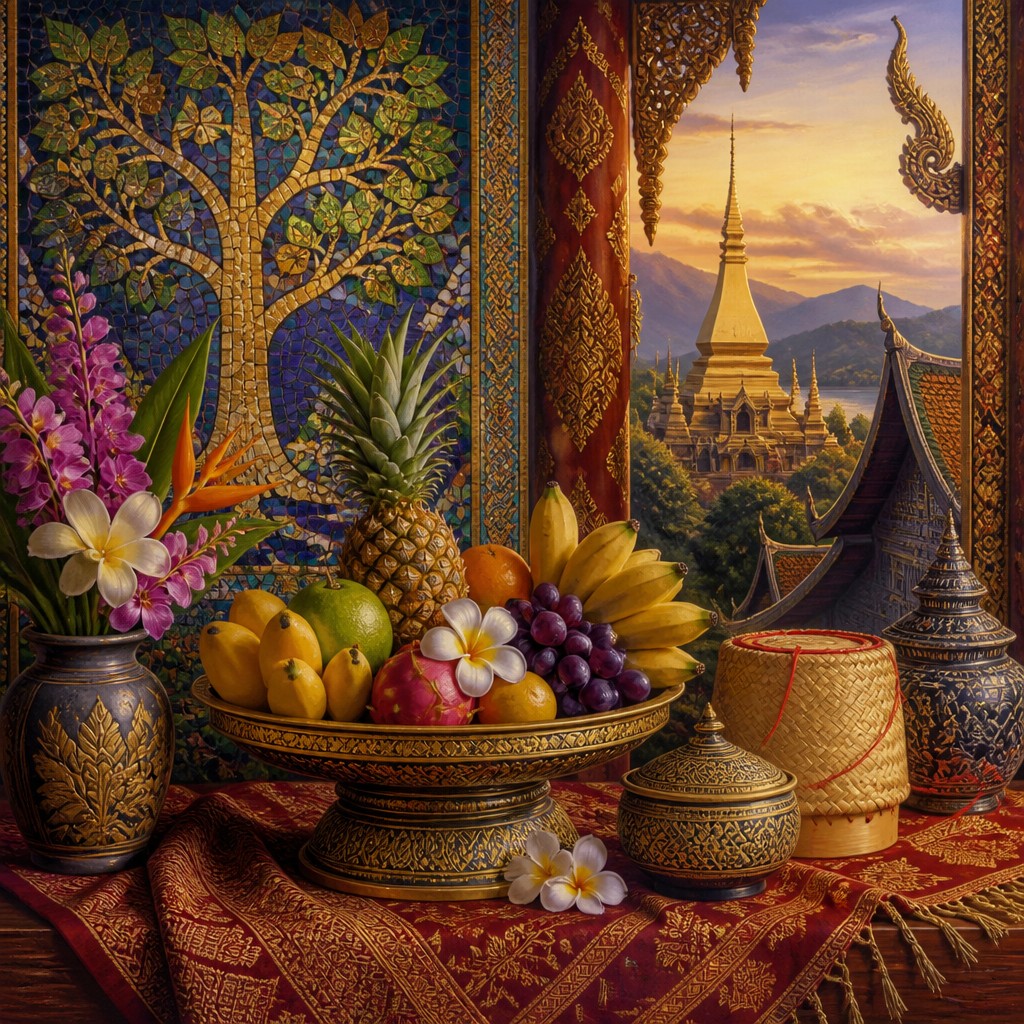
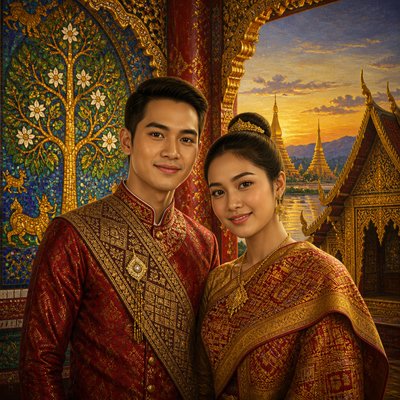
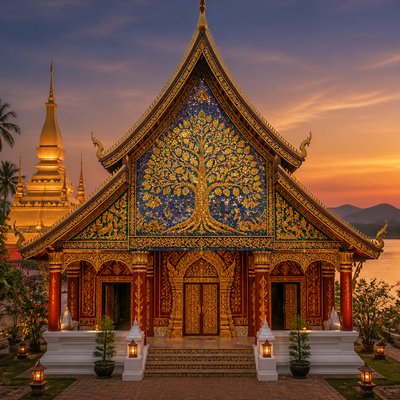
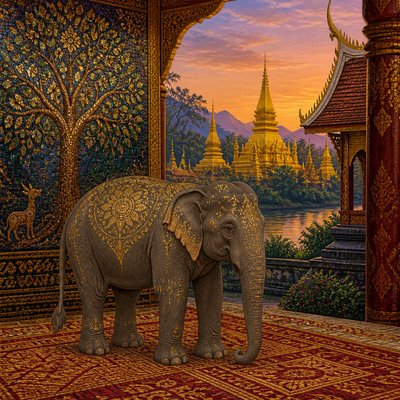
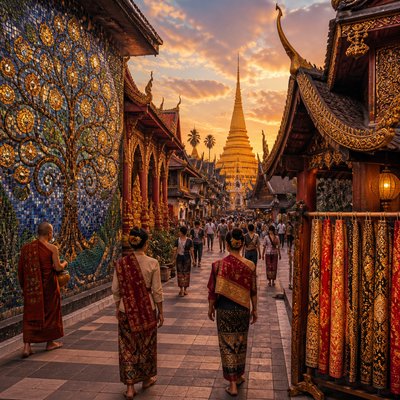
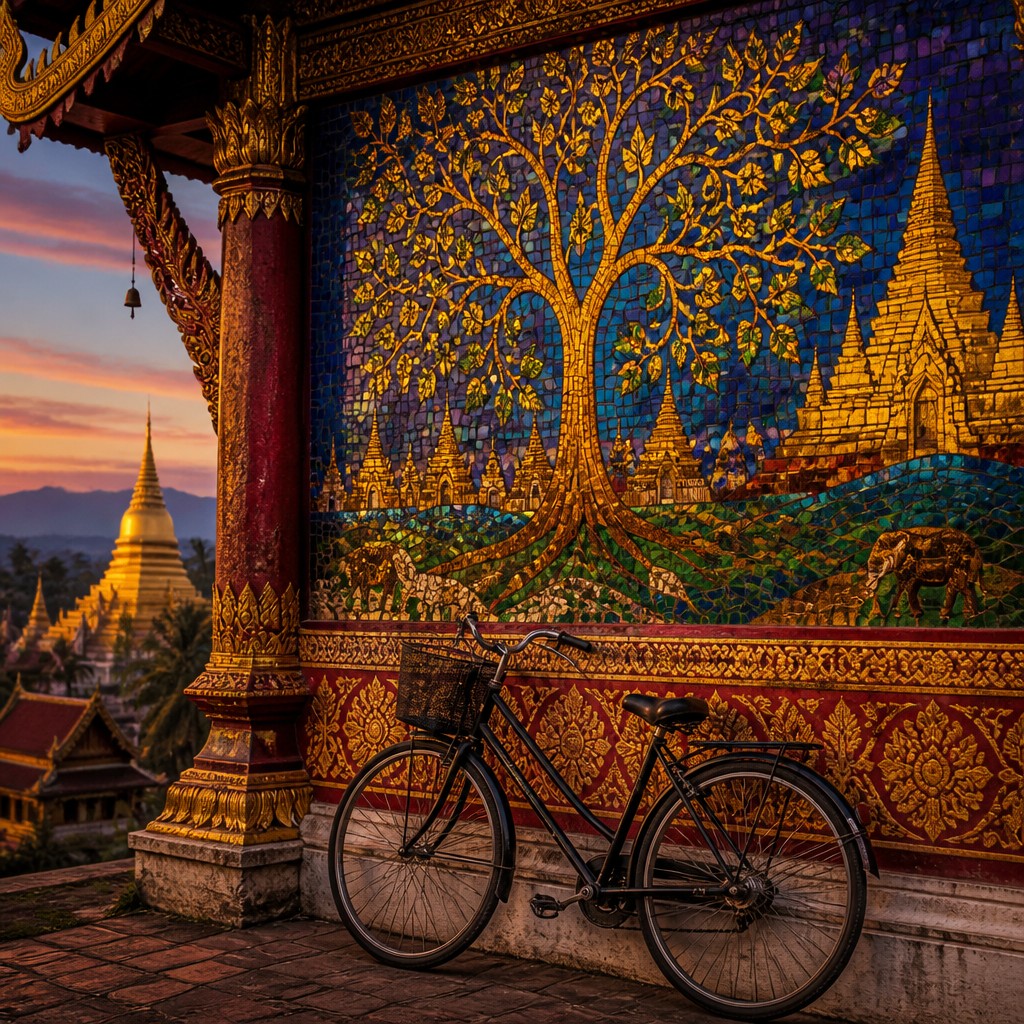
Lao Art Style is a contemporary, image-making interpretation of the visual traditions of Laos, especially Theravada Buddhist temple decoration, Luang Prabang architectural ornament, Lao silk weaving, lacquered woodwork, and Mekong-region color. Its signature imagery combines shimmering mosaic-glass tree-of-life murals, richly patterned crimson-and-gold textiles, carved gilt ornament, and glowing tiered stupas beneath warm dusk skies.
The style looks luminous because it translates temple surfaces into a unified decorative language. Small glass tesserae suggest radiance and spiritual vitality; gold evokes sanctity, royal patronage, and the reflective surfaces of monastery interiors; curving rooflines and layered stupas create a calm vertical rhythm. Rather than representing one historically fixed school, it is best understood as a respectful contemporary synthesis of Lao cultural motifs and decorative techniques.
Try It On Your Photos
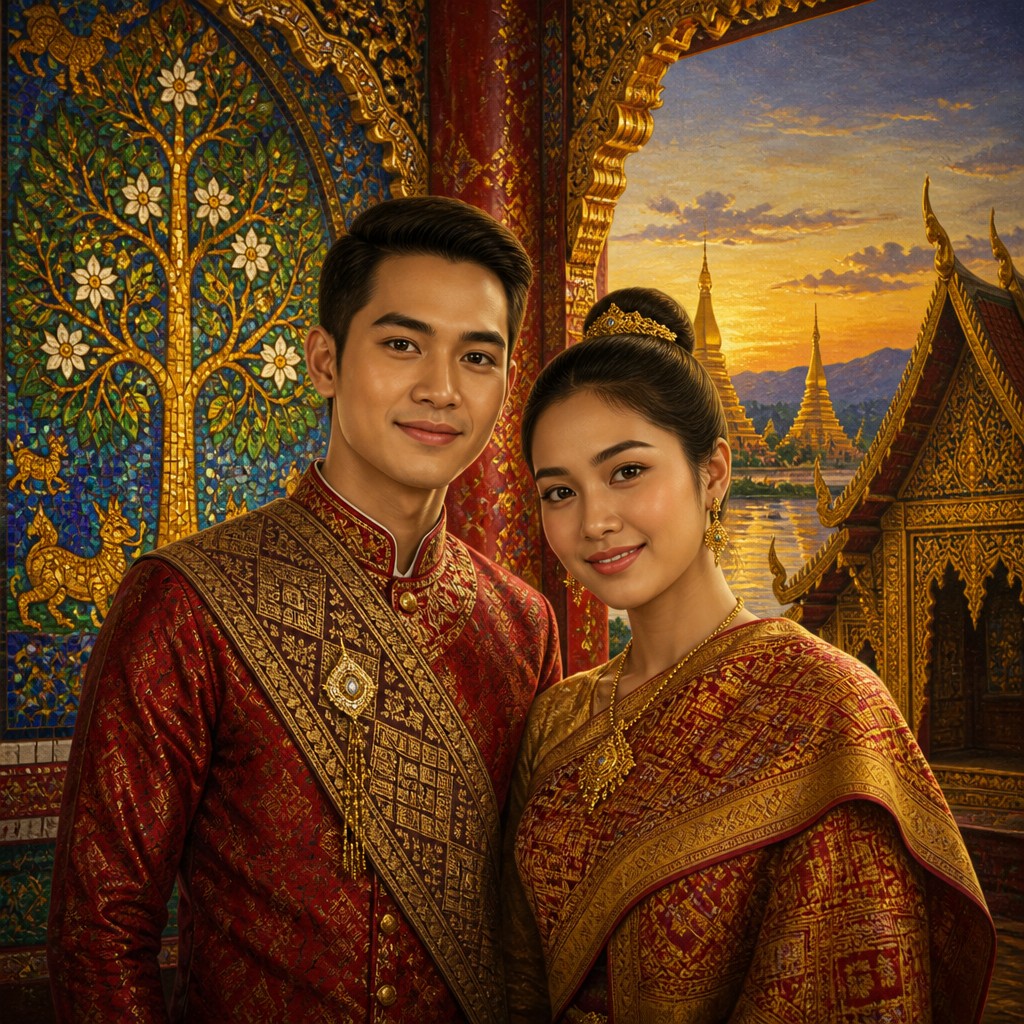
Upload any photo and convert it into Lao Art Style — drag the sliders to compare before and after.
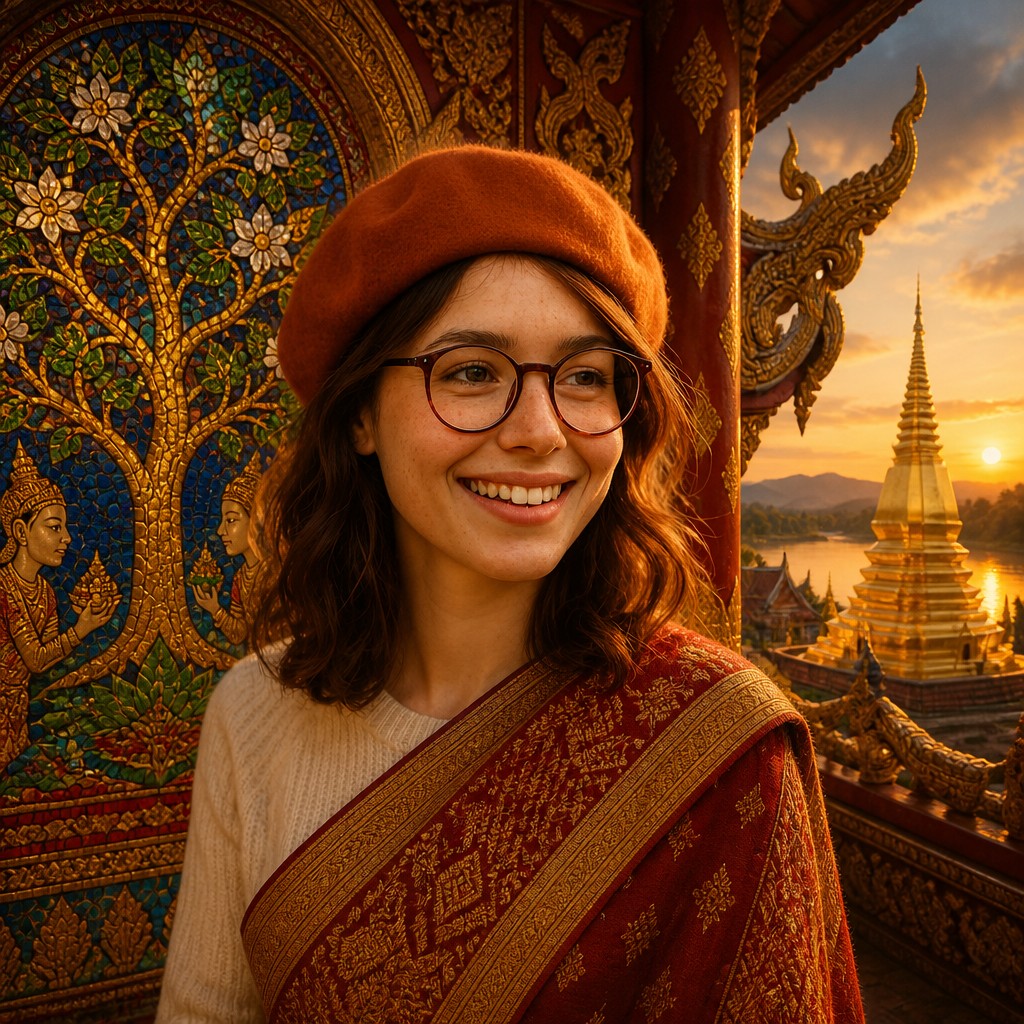

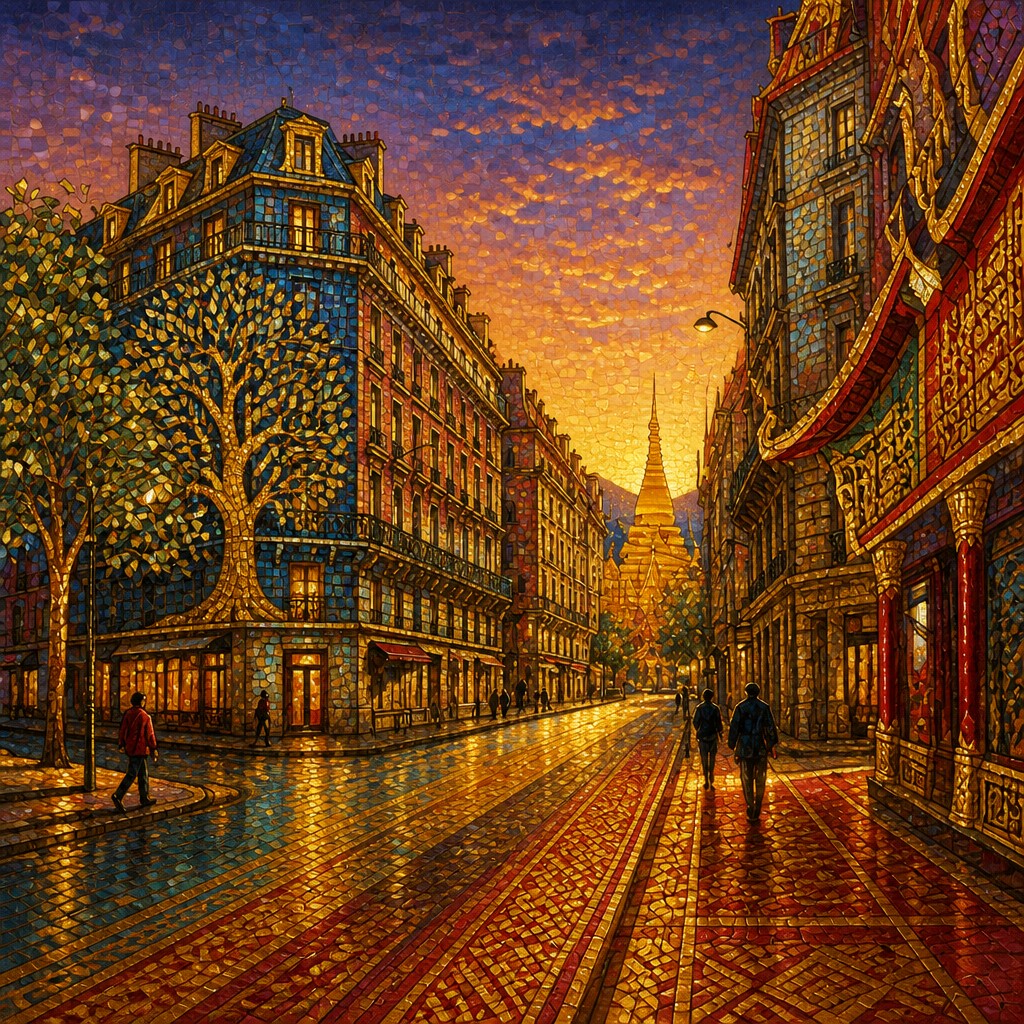

Or use the free Lao photo filter
What Defines Lao Art Style
The signature details, up close
Mosaic-glass radiance
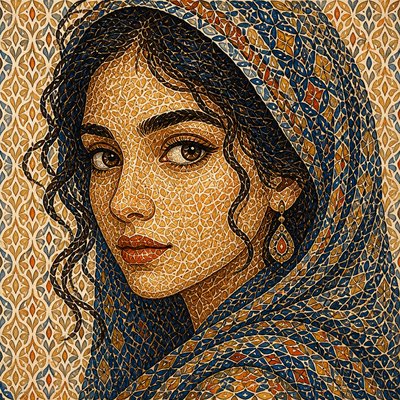
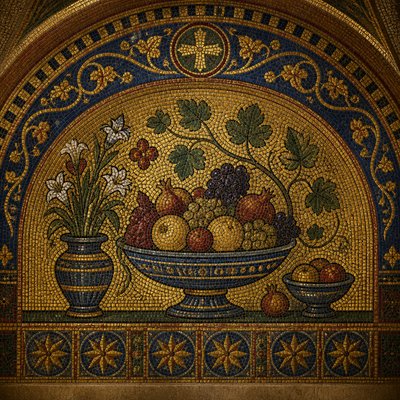
Tree-of-life forms and ornamental fields are built from jewel-toned tesserae in ruby, sapphire, emerald, amber, and turquoise. Irregular pieces and reflective highlights create a surface that appears to glow from within.
Golden stupa silhouettes
Tiered stupas, spires, and reliquary forms provide a strong vertical motif, often rendered in warm gold against violet, indigo, or copper-colored skies. Their simplified silhouettes convey stillness and sacred presence.
Lao silk geometry
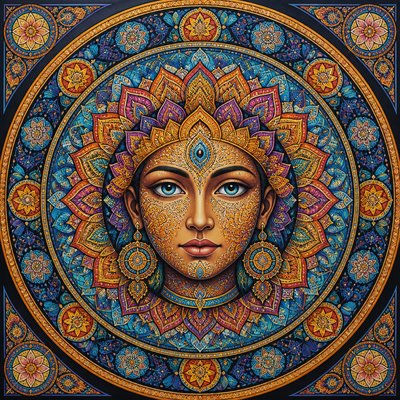
Crimson, saffron, black, ivory, and gold textile patterns introduce diamonds, stepped forms, bands, and repeated vegetal motifs. These woven structures add rhythm and cultural specificity to otherwise atmospheric scenes.
Gilded and lacquered ornament
Carved wood details, red lacquer pillars, gilded moldings, and dark timber surfaces suggest monastery interiors and ceremonial architecture. Fine ornamental edges are balanced by broad areas of shadow.
Curving temple rooflines
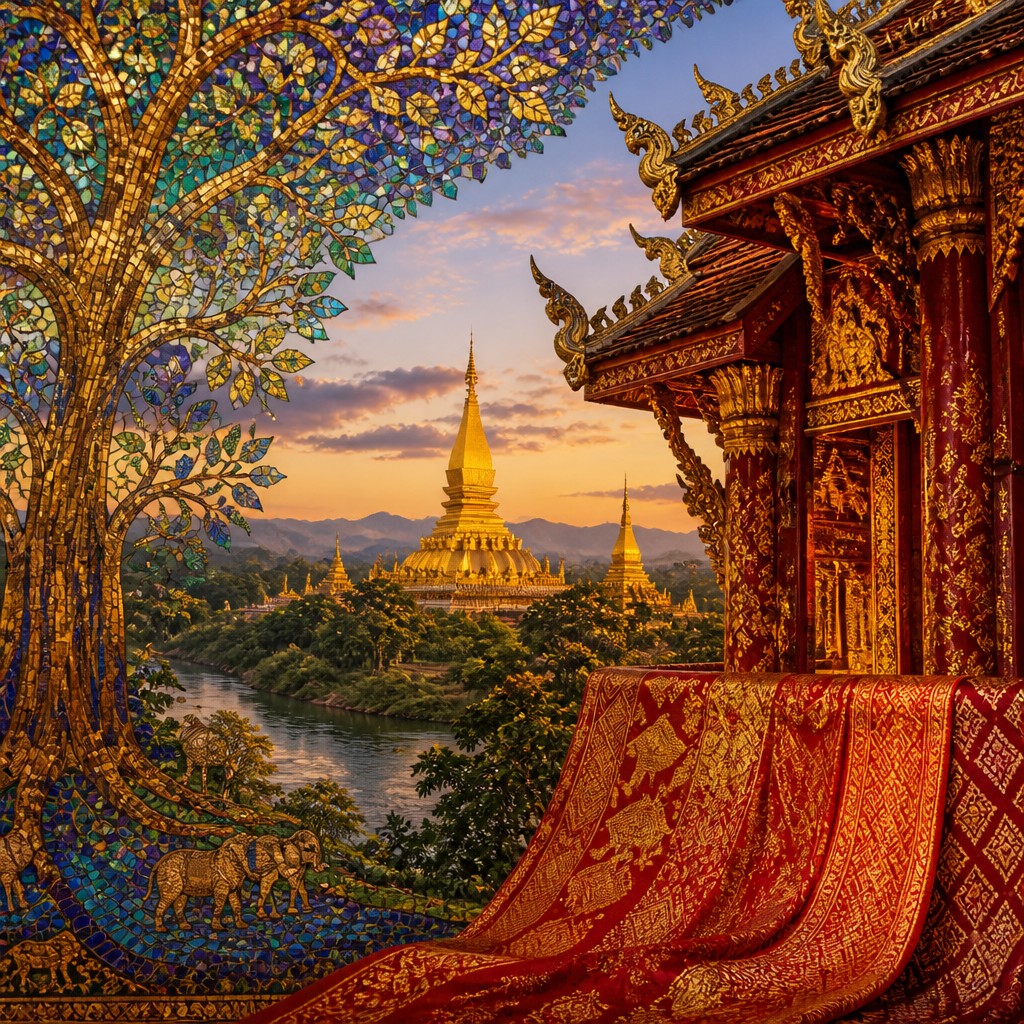
Layered roof tiers with gently sweeping edges frame the composition and establish a distinctive architectural silhouette. Repeated eaves and finials create an ordered, upward-moving rhythm.
Mekong-valley atmosphere
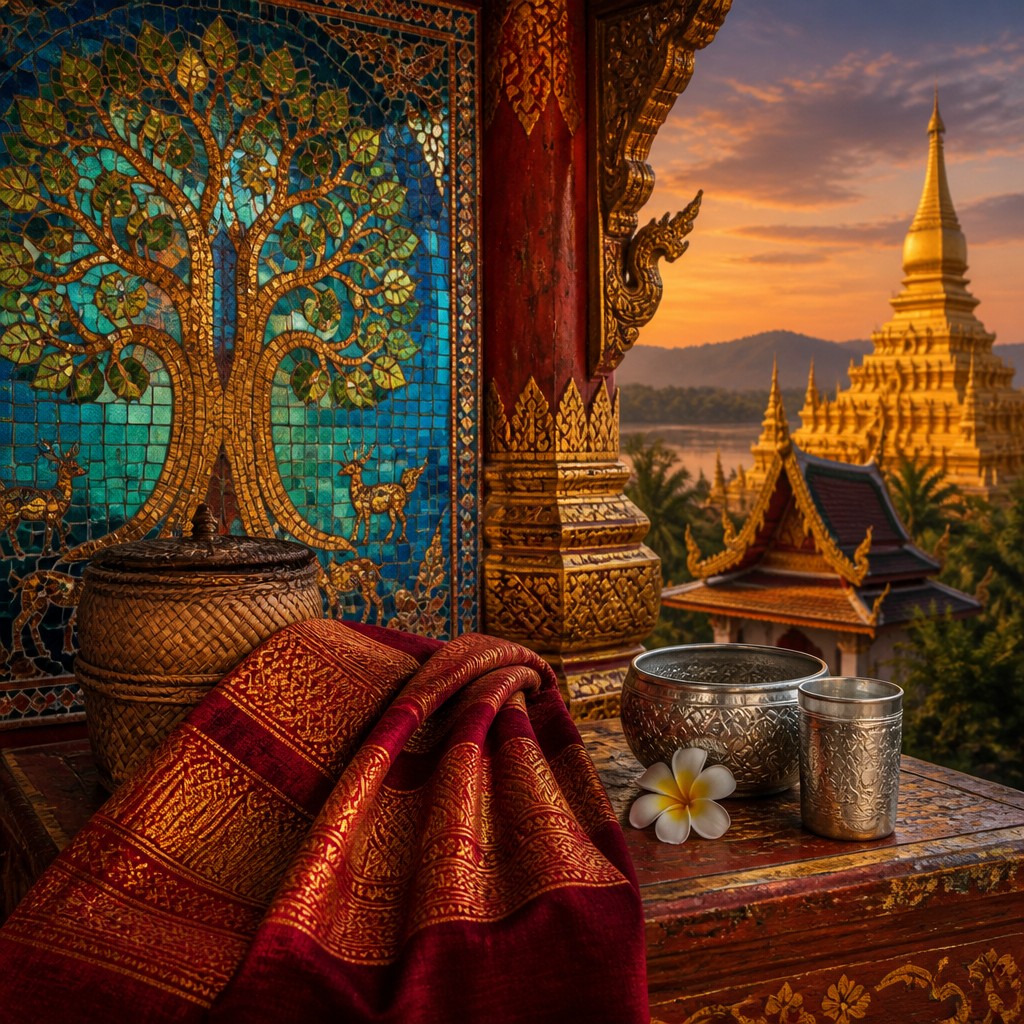
The palette favors humid dusk light, river haze, deep green vegetation, indigo distance, and amber reflections. Calm spatial transitions and softened contrast support a contemplative mood.
Decorative yet legible composition
Flat ornamental patterning coexists with recognizable buildings, trees, figures, or landscapes. The image is designed to read as both a narrative scene and a richly surfaced decorative panel.
Lao Prompt Ideas
Start from an idea — each one opens the generator with the style ready to go. See all 40 Lao prompts →
How to Create Lao Art
Master the craft step by step — or skip straight to creating. Read the full guide →
- 1
Build a layered palette
Start with lacquer red, saffron, antique gold, deep indigo, jade, and warm ivory, then reserve the brightest highlights for glass and gilded details. Use atmospheric blue-violet or copper shadows to keep the luminous colors from becoming flat.
- 2
Construct the architecture
Block in a tiered stupa or monastery with clear vertical symmetry, layered eaves, and curved roof edges before adding ornament. Keep the main silhouette simple enough to remain readable beneath the decorative surface.
- 3
Simulate mosaic and textile surfaces
For traditional work, apply small painted or collaged units with varied angles and spacing rather than a perfectly uniform grid. Digitally, use clipped tessera shapes, subtle bevels, controlled specular highlights, and repeating textile patterns.
- 4
Balance detail with quiet space
Concentrate the richest ornament around the temple, tree of life, or principal figure, while allowing sky, water, and distant foliage to remain more open. This contrast preserves the meditative quality associated with devotional environments.
- 5
Use culturally specific references carefully
Research Lao monastery architecture, regional textiles, stupa forms, and Buddhist iconography rather than combining unrelated Southeast Asian motifs indiscriminately. Avoid presenting sacred objects as casual props or inventing ceremonial details without context.
- 6
Write precise generation prompts
Name the subject, Lao architectural or textile references, materials, palette, lighting, and composition in that order. Add terms such as glass tesserae, carved gilt wood, lacquered red pillars, tiered rooflines, and dusk haze, while specifying what should remain uncluttered.
The Story
History & Origins of Lao
The aesthetic lineage reaches back to the art and architecture of the Lan Xang kingdom, founded in the fourteenth century, and to the continuing traditions of Lao Buddhist monasteries. Across centuries, temples developed distinctive roof profiles, carved and gilded wood ornament, mural programs, lacquer work, stucco relief, and glass mosaics. Lao textiles, including richly patterned silk weaving, provided an equally important visual vocabulary of repeated geometry, symbolic motifs, and saturated color.
The specific combination described here is an interpretive modern style rather than a named historical movement. It brings together motifs associated with northern Lao temple decoration, especially the luminous mosaic and tree-of-life imagery found in monastery settings, with generalized golden stupa forms, silk patterns, and digital atmospheric effects. It should not be treated as a uniform definition of all Lao art or as a substitute for the regional diversity of Lao artistic traditions.
Influences: The style draws on Lao Buddhist temple art, Lan Xang architectural traditions, Luang Prabang decorative forms, Lao silk weaving, lacquer and gilded woodwork, glass mosaic ornament, and the broader Theravada visual culture of mainland Southeast Asia. It also shares compositional strategies with Southeast Asian devotional mural painting, ornamental illustration, textile design, and contemporary digital decorative art, while retaining a specifically Lao emphasis on monastery silhouettes, Mekong atmosphere, and woven pattern.
Frequently Asked Questions
What defines Lao Art Style?
It is defined by the combination of Lao Buddhist architectural motifs, golden stupas, curved temple roofs, lacquered and gilded wood, silk-inspired patterns, and luminous mosaic-glass surfaces. Warm dusk light and a calm Mekong-region atmosphere are also central to its visual identity.
Is Lao Art Style a historical art movement?
No. This label describes a contemporary synthesis rather than a single historical movement with a fixed period or manifesto. Its imagery is informed by several real Lao traditions, including monastery decoration, textile weaving, and Lan Xang architectural heritage.
How is it different from Thai or Khmer temple-inspired art?
The traditions overlap because Laos shares historical and religious connections with neighboring regions, but this style emphasizes Lao roofline silhouettes, northern Lao monastery ornament, Lao textile geometry, and Mekong-valley atmosphere. Careful references are preferable to treating all mainland Southeast Asian temple art as interchangeable.
Can this style be created with traditional materials?
Yes. Suitable approaches include painted or collaged tesserae, gold leaf or metallic pigment, lacquer-like layered surfaces, relief carving, stencil work, and hand-drawn textile patterns. A mixed-media panel can combine a painted architectural ground with applied reflective pieces and patterned borders.
How can I prompt an image in this style?
Describe the subject first, then specify Lao temple architecture, mosaic glass, gilded wood, lacquered red pillars, silk patterns, palette, lighting, and composition. Mention whether the result should resemble a mural, decorative panel, architectural scene, or atmospheric landscape, and request restrained detail in the background.
Where is this visual style useful?
It works well for temple and cultural scenes, travel illustration, heritage-focused editorial art, decorative posters, fantasy landscapes with Southeast Asian references, textile concepts, and architectural visualization. Sensitive projects should identify the cultural sources accurately and avoid using sacred imagery as generic exotic decoration.
Create your first Lao artwork
Describe anything — or upload a photo — and see it in Lao Art Style in seconds.
Related Styles
Discover similar art styles