Kyrgyz Art Style
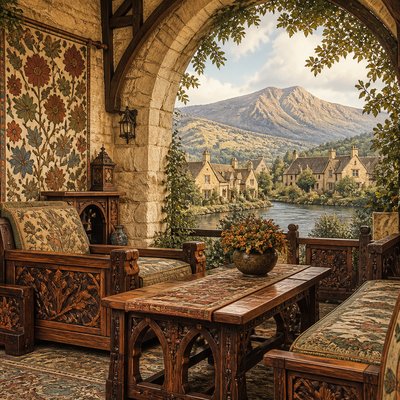
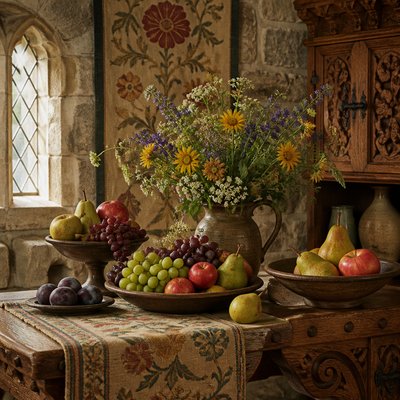
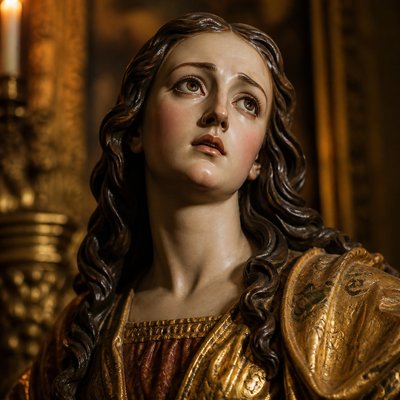
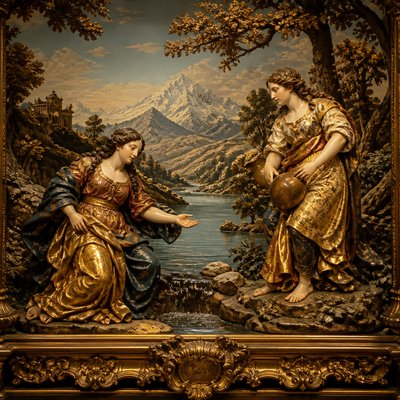
Explore Kyrgyz art style through shyrdak felt mosaics, ram-horn motifs, tush kiyiz embroidery, petroglyph lines, and alpine nomadic color.
Instantly rendered in Kyrgyz — or transform a photo
Kyrgyz Gallery
Tap any artwork to explore it
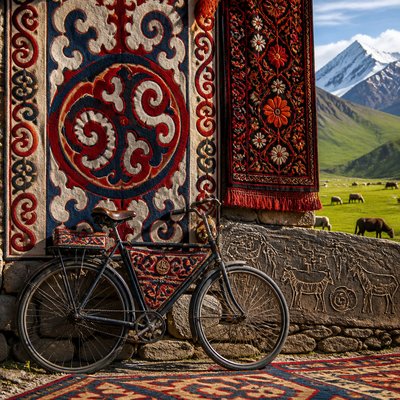
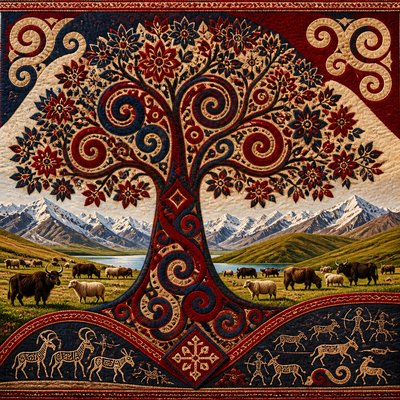
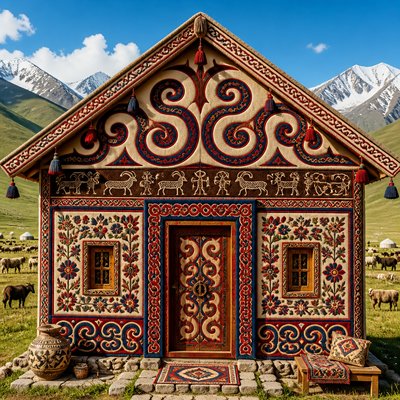
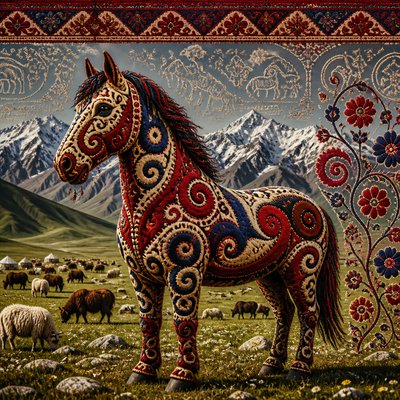
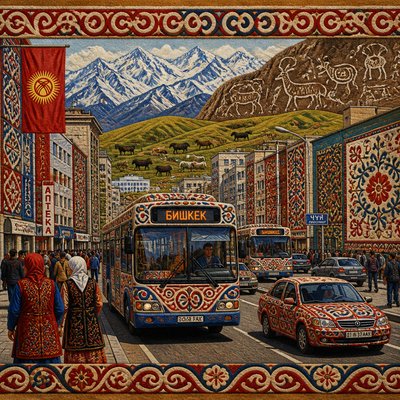
What is Kyrgyz Art Style?
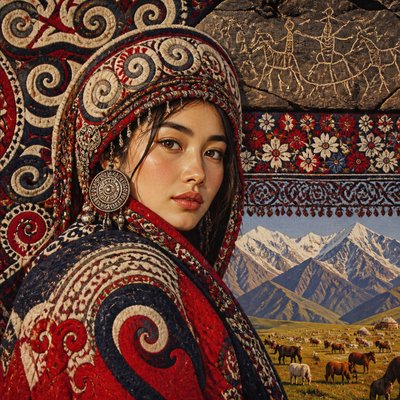
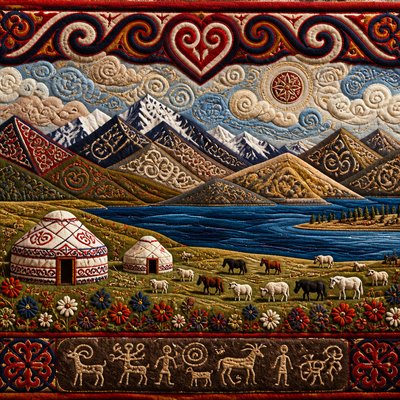
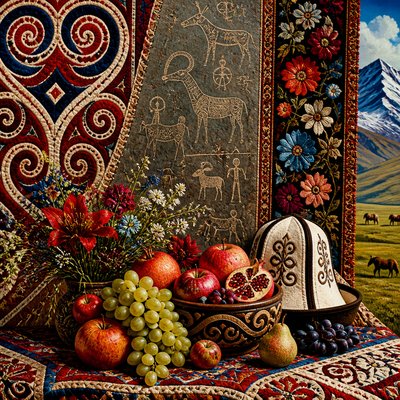
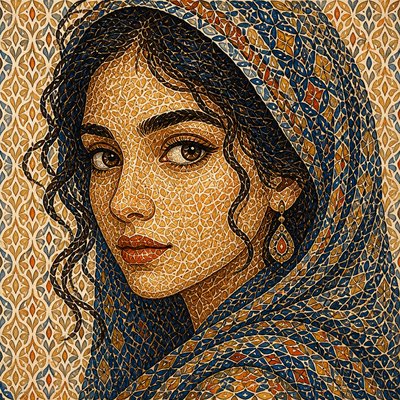
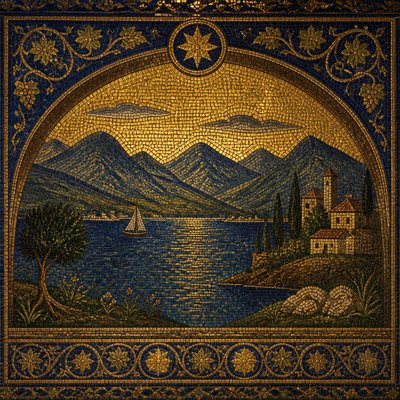
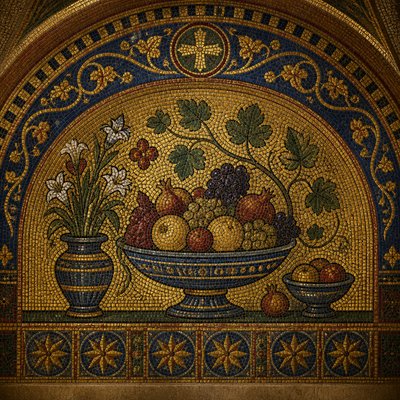
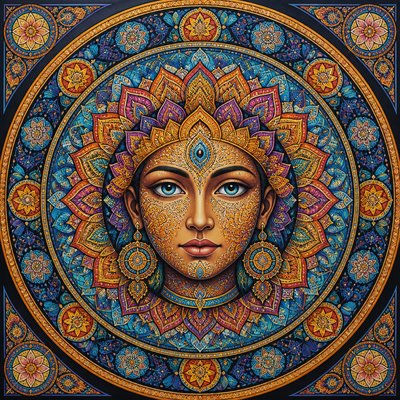
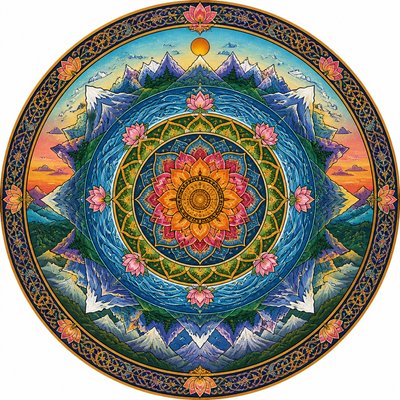
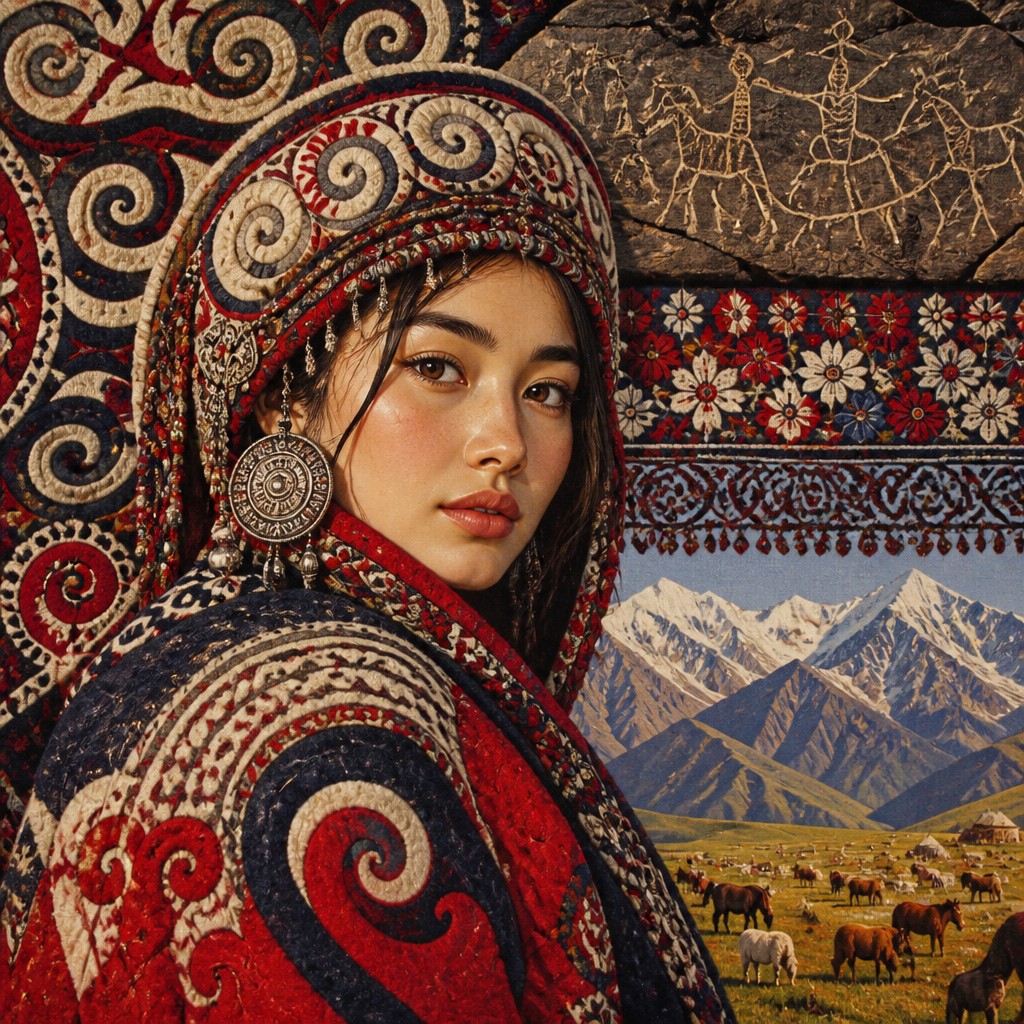
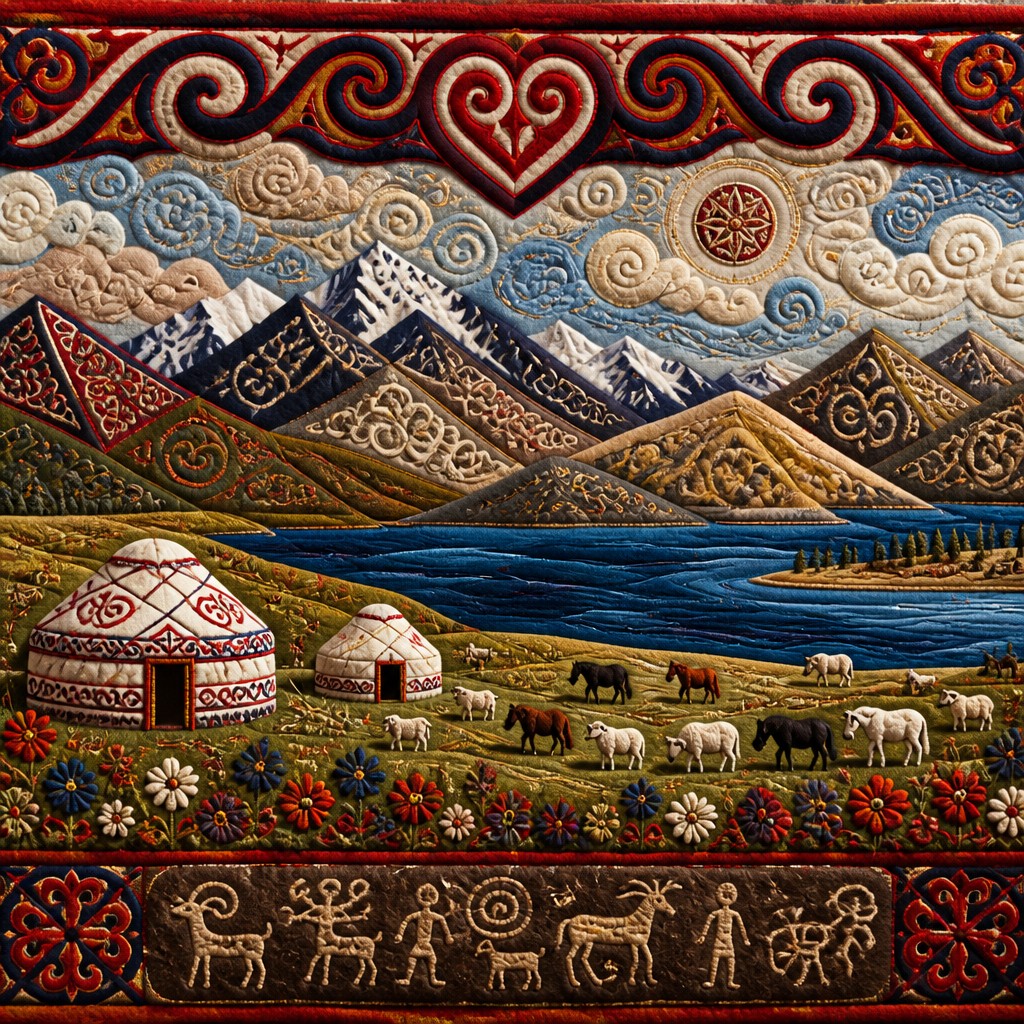
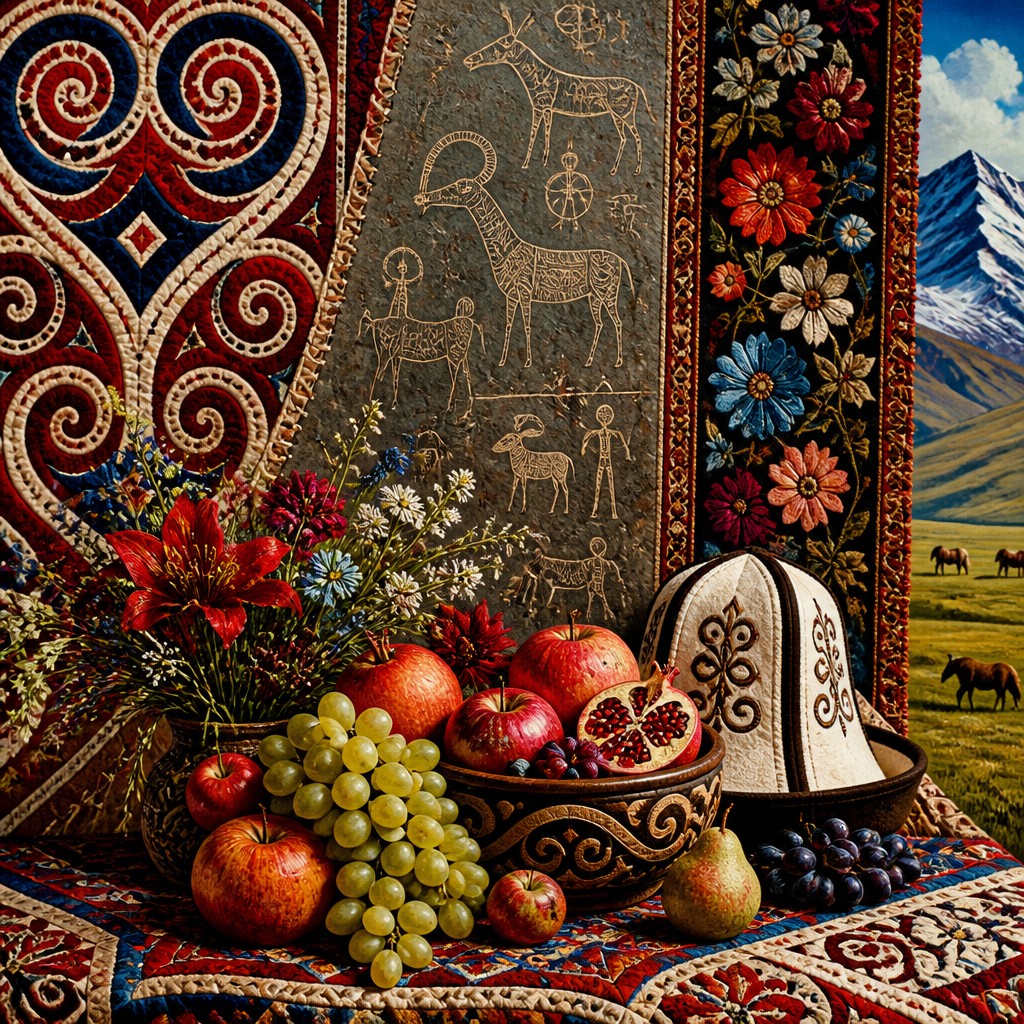
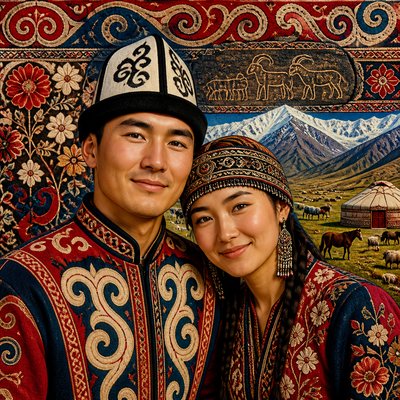
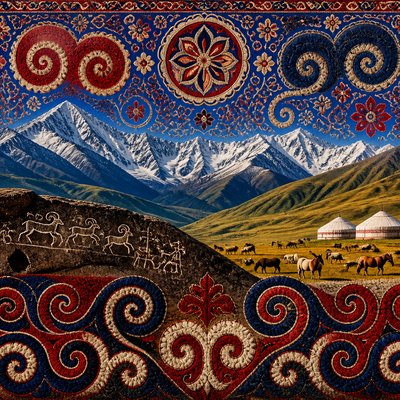
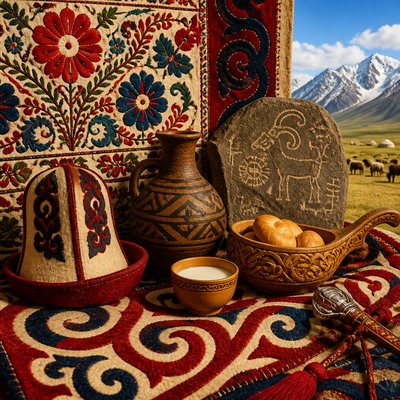
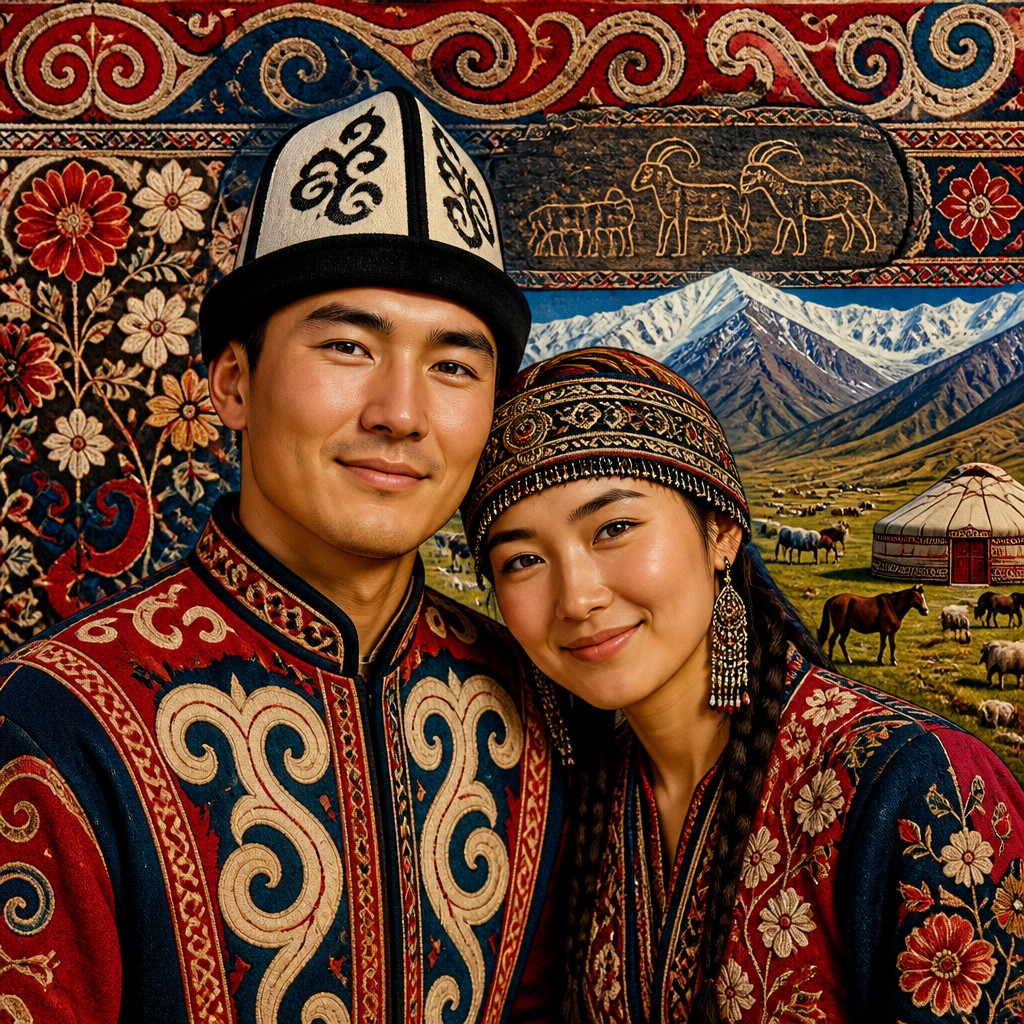
Kyrgyz art style is a contemporary visual synthesis inspired by Kyrgyzstan’s nomadic textile traditions, yurt interiors, ornamental design, and ancient rock art. Its defining language combines bold shyrdak felt-mosaic spirals, ram-horn motifs, crimson, indigo, cream, and ochre color fields, embroidered floral patterns from tush kiyiz wall hangings, and simplified petroglyph-like outlines.
The style looks highly structured because traditional Kyrgyz crafts are built from repeated motifs, mirrored compositions, appliqué, stitching, and strong color contrasts. Alpine pastures, grazing horses and sheep, yurts, mountains, and traveling herders often appear within this decorative framework, where landscape and narrative imagery are organized with the rhythm and warmth of woven or felted textiles.
Try It On Your Photos
Upload any photo and convert it into Kyrgyz Art Style — drag the sliders to compare before and after.
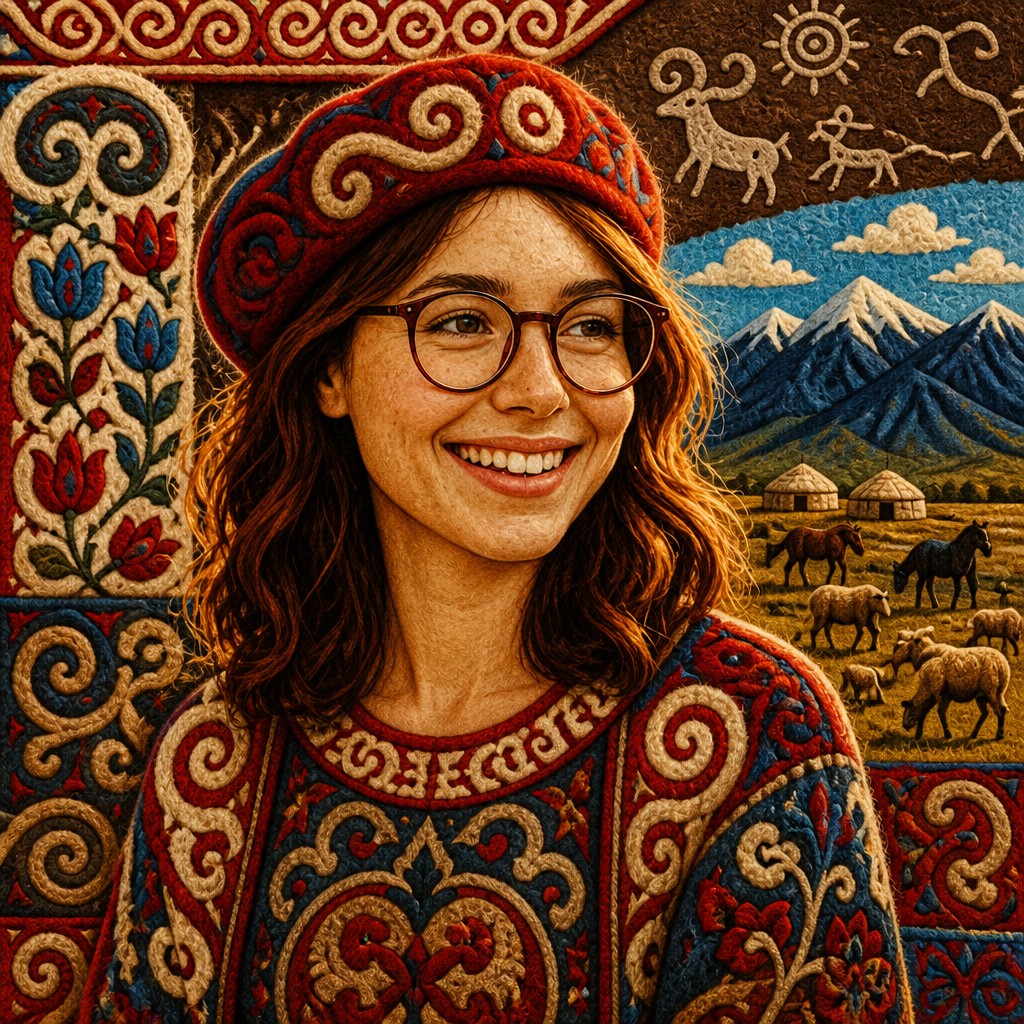

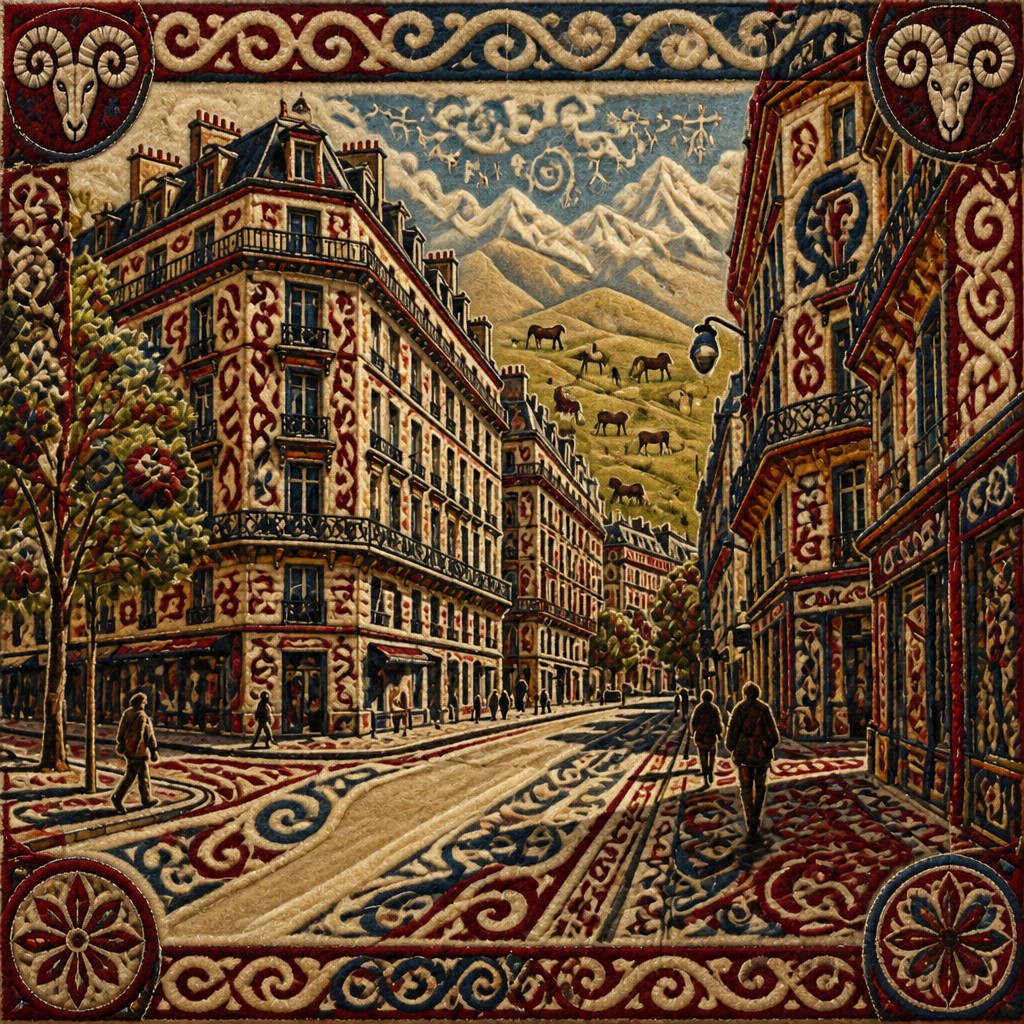

What Defines Kyrgyz Art Style
The signature details, up close
Shyrdak felt-mosaic geometry
Interlocking curves, hooked forms, mirrored panels, and sharply cut appliqué shapes suggest the construction of traditional felt rugs. The composition often feels assembled from colored pieces rather than modeled with smooth shading.
Ram-horn ornament
Stylized ram-horn spirals are among the most recognizable decorative forms, appearing as borders, central emblems, or repeating all-over patterns. Their curling geometry gives the style both symbolic resonance and strong visual movement.
Tush kiyiz floral embroidery
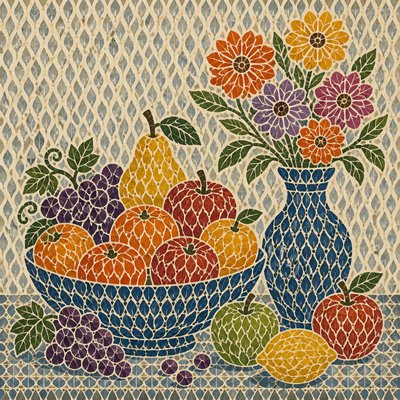
Large flowers, vines, leaves, and branching ornaments evoke embroidered wall hangings traditionally used inside yurts. These motifs are usually dense, symmetrical, and outlined clearly so that each element remains legible.
Crimson, indigo, and cream palette
Deep red, blue, ivory, black, gold, and earthy brown create a rich but disciplined color system. High contrast separates motifs while small warm accents prevent the surfaces from feeling cold or mechanical.
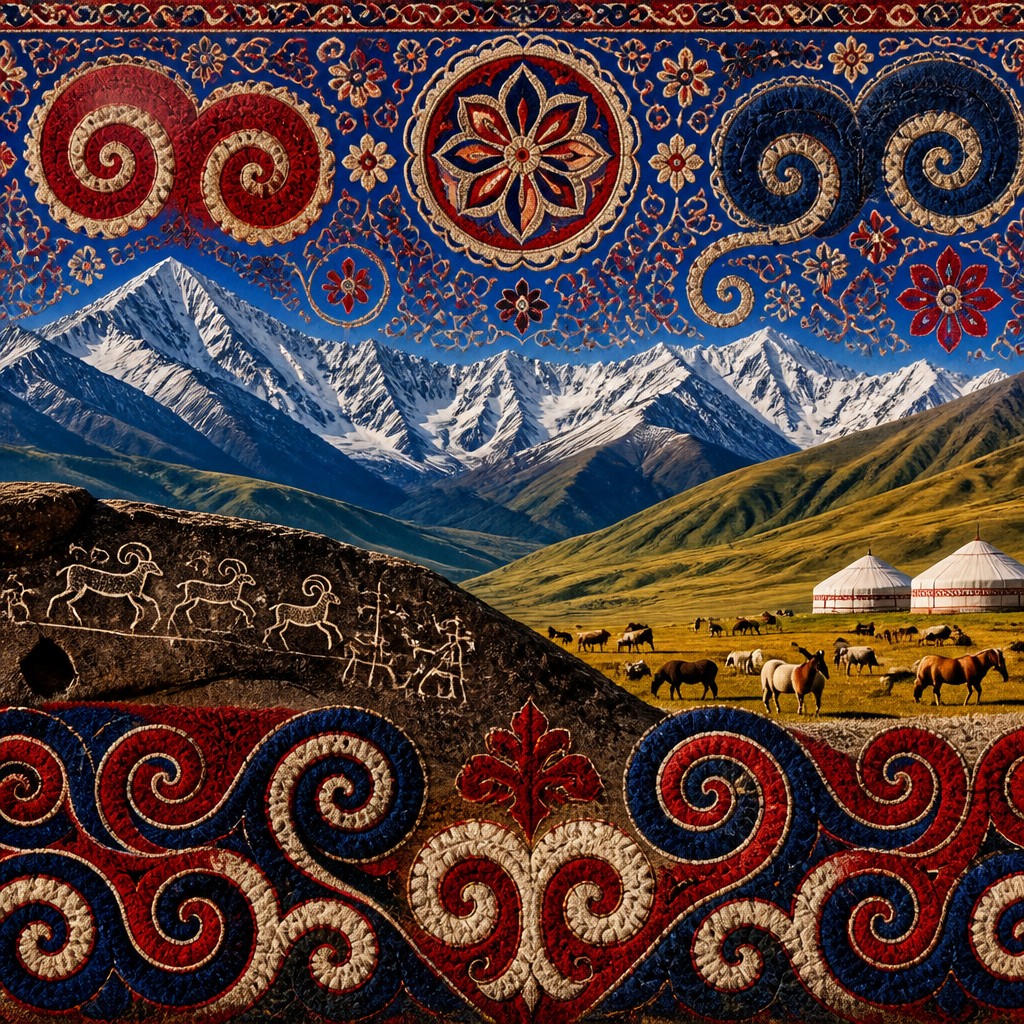
Petroglyph-like line work
Simplified figures of animals, riders, hunting scenes, and celestial forms may be drawn with spare, incised-looking lines inspired by Central Asian rock art. These marks provide an archaeological and narrative counterpoint to the plush density of textile ornament.
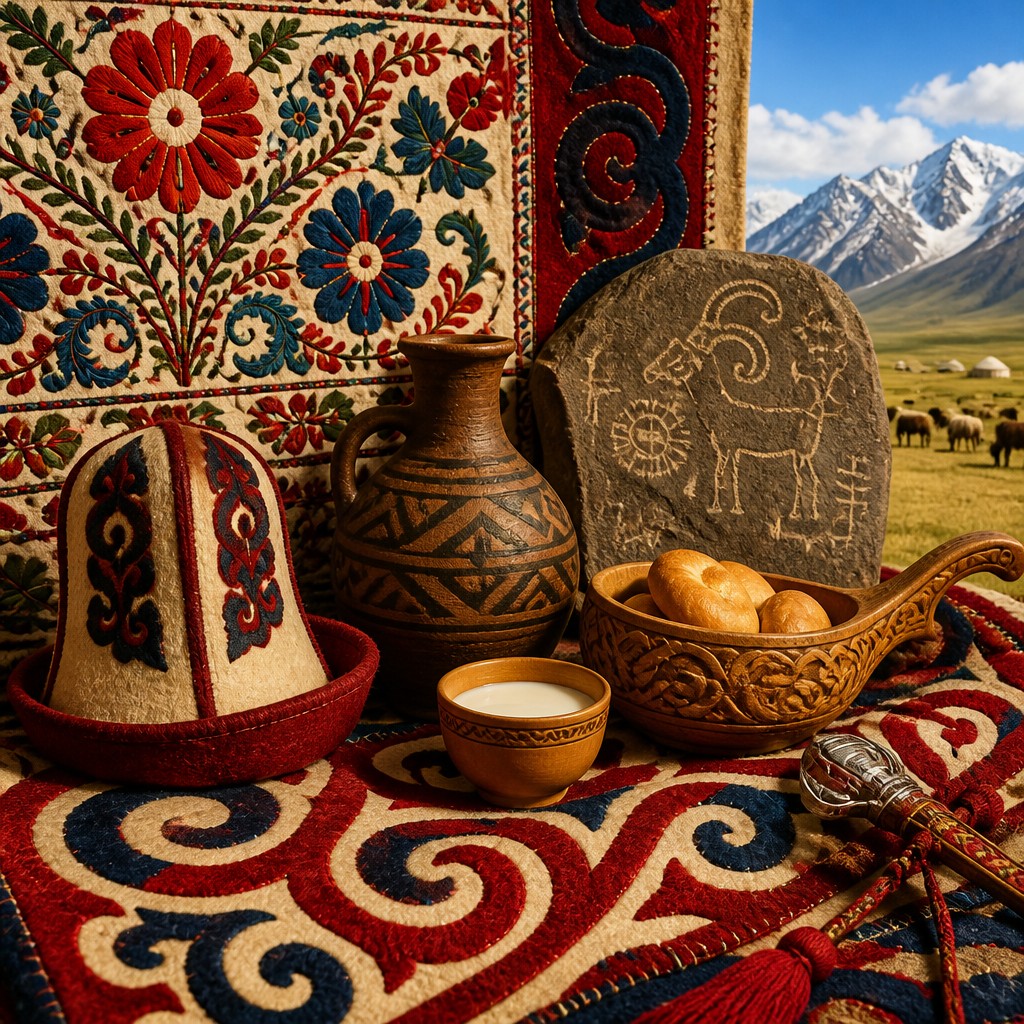
Nomadic landscape imagery
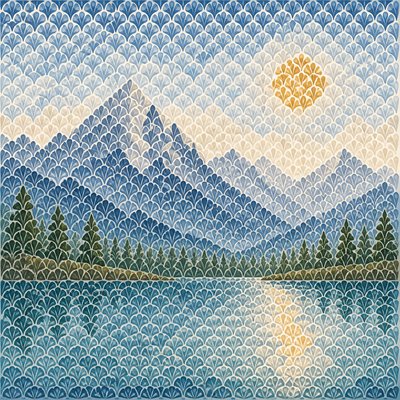
Snowy ranges, open jailoo pastures, yurts, horses, sheep, eagles, and traveling groups are common subjects. Alpine light and broad horizons are frequently balanced against compact decorative borders or patterned foregrounds.
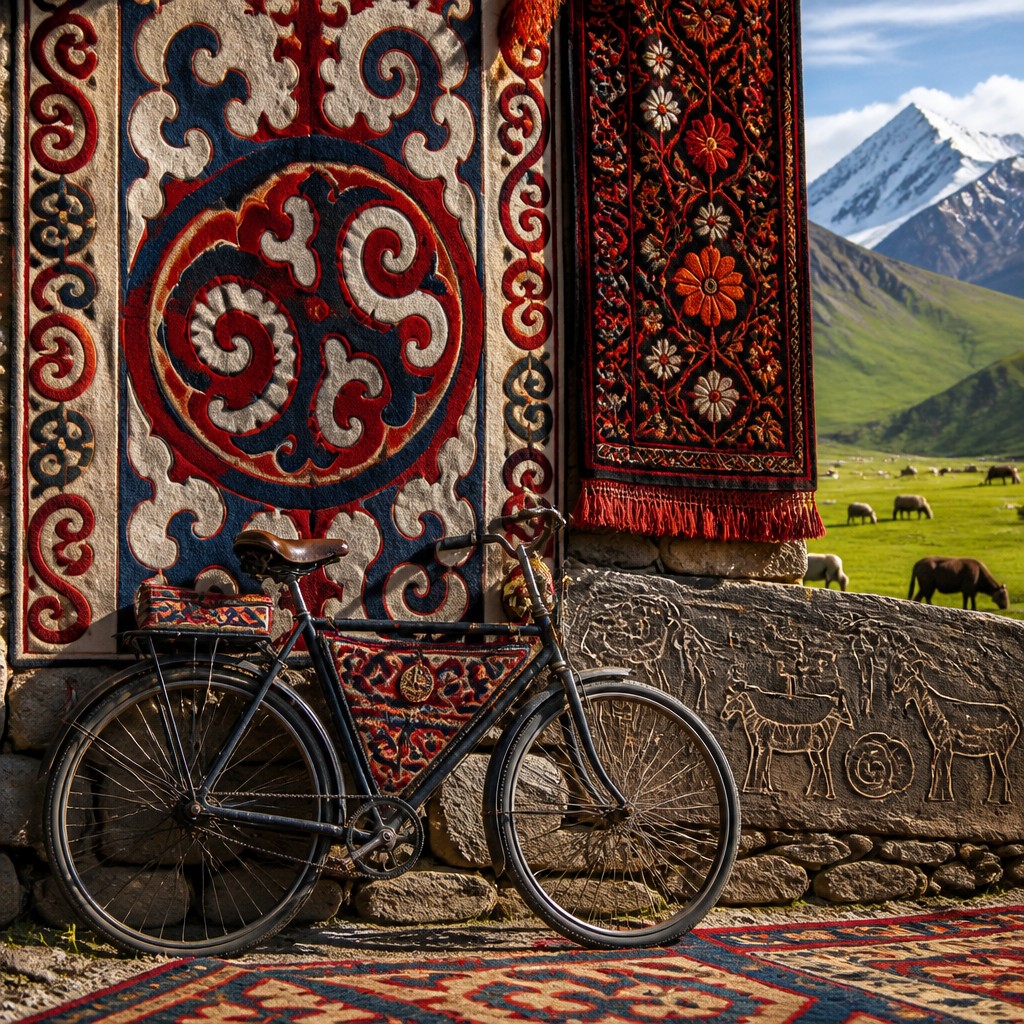
Flat, rhythmic composition
Depth is often compressed in favor of stacked bands, frontal forms, symmetrical layouts, and repeated motifs. Even when a scene includes realistic mountains or animals, it generally retains a tactile, decorative textile rhythm.
Kyrgyz Prompt Ideas
Start from an idea — each one opens the generator with the style ready to go. See all 40 Kyrgyz prompts →
How to Create Kyrgyz Art
Master the craft step by step — or skip straight to creating. Read the full guide →
- 1
Build a limited motif vocabulary
Start with a few clearly related forms: ram-horn spirals, stepped diamonds, mirrored leaves, rosettes, and simple animal silhouettes. Repeat and rotate them to create unity instead of introducing unrelated ornament.
- 2
Use appliqué and embroidery logic
For traditional work, cut contrasting felt shapes, layer them cleanly, and reinforce edges with blanket stitch or dense embroidery. In digital work, imitate this construction with crisp vector-like contours, subtle fiber texture, and visible seam or stitch lines.
- 3
Control the palette
Choose two or three dominant colors such as crimson, indigo, and cream, then add restrained black, ochre, or turquoise accents. Strong value contrast makes small ornamental shapes readable without requiring realistic shading.
- 4
Combine ornament with a clear subject
Place a horse, yurt, mountain pass, or herding scene inside a framed textile composition. Keep the subject’s silhouette simple and recognizable, then let borders, ground patterns, and clothing carry the decorative complexity.
- 5
Prompt for materials and structure
Specify felt appliqué, embroidered wall hanging, mirrored ram-horn motifs, petroglyph line work, flat composition, and a limited palette in the prompt. For image-to-image work, preserve the source subject’s pose while requesting textile edges, ornamental patterning, and reduced photographic depth.
The Story
History & Origins of Kyrgyz
Kyrgyz art style is not a single historical movement or a formally defined school. It is best understood as a modern, image-making interpretation of longstanding Kyrgyz material culture, including shyrdak and ala kiyiz felt rugs, embroidered tush kiyiz textiles, yurt ornament, jewelry, carved objects, and regional decorative patterns.
Its broader aesthetic lineage also reaches back to Central Asian nomadic visual traditions and the ancient petroglyphs of sites such as Saimaluu-Tash. Contemporary illustrations and digital compositions often combine these sources with poster-like simplification, flattened pattern, and carefully controlled palettes, creating a recognizable style without claiming that all of its elements belonged to one historical period.
Influences: The style draws on Kyrgyz felt-making and embroidery, Central Asian nomadic ornament, yurt-based interior decoration, and the linear imagery of ancient petroglyphs. It also relates to folk art, textile design, flat decorative painting, geometric pattern, and contemporary cultural illustration. Its emphasis on symmetry, repetition, appliqué-like edges, and symbolic animals distinguishes it from purely naturalistic landscape painting while connecting it to wider Eurasian traditions of ornamental craft.
Frequently Asked Questions
What defines Kyrgyz art style?
It is defined by a decorative synthesis of shyrdak felt patterns, tush kiyiz embroidery, ram-horn motifs, vivid red-and-blue palettes, and petroglyph-inspired line work. Yurts, horses, sheep, mountains, and open pastures are frequent subjects, but the underlying structure is ornamental rather than strictly realistic.
Is Kyrgyz art style a historical art movement?
No. The term describes a contemporary visual category inspired by several Kyrgyz artistic and craft traditions, not a single historical movement with a fixed period or manifesto. Individual elements have distinct histories, while their combination in illustration and digital imagery is a modern synthesis.
What are shyrdak and tush kiyiz?
A shyrdak is a Kyrgyz felt rug made from contrasting pieces that are cut, mirrored, appliquéd, and stitched into bold patterns. A tush kiyiz is an embroidered textile wall hanging traditionally associated with the interior of a yurt, often featuring elaborate floral and ornamental designs.
How is this style different from general Central Asian folk art?
It focuses specifically on visual cues associated with Kyrgyzstan, especially felt-mosaic construction, ram-horn ornament, yurt interiors, alpine pasture imagery, and the linear vocabulary of Kyrgyzstan’s petroglyph sites. Central Asian folk art is a broader category that also includes many distinct regional traditions.
How can I make an image in this style?
Begin with a simple subject and describe the material logic: felt appliqué, embroidered textile, mirrored motifs, crisp outlines, and a limited crimson-indigo-cream palette. For drawing or painting, establish the large symmetrical shapes first; for digital creation, add controlled textile grain and stitch details without obscuring the silhouettes.
Where is this visual style used?
It can be used for cultural illustration, posters, book covers, textile-inspired surface design, editorial art, murals, educational materials, and decorative portraits. It is especially effective when the subject benefits from a strong sense of place, pattern, craft, and nomadic landscape.
Create your first Kyrgyz artwork
Describe anything — or upload a photo — and see it in Kyrgyz Art Style in seconds.
Related Styles
Discover similar art styles