Kiribati Art Style
Explore Kiribati Art Style: woven coconut armor, porcupinefish helmets, shark-tooth weapons, and austere atoll light in a precise island aesthetic.
Instantly rendered in Kiribati — or transform a photo
Kiribati Gallery
Tap any artwork to explore it
What is Kiribati Art Style?
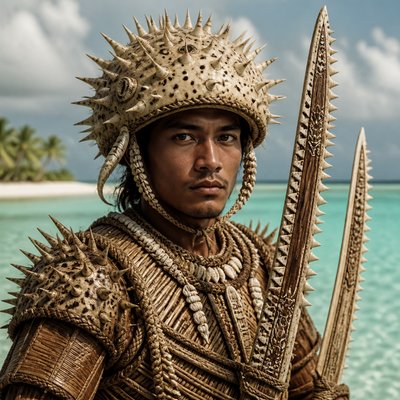
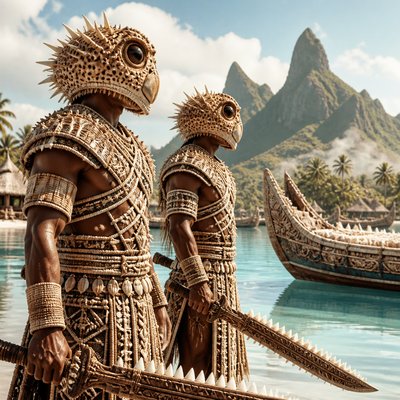
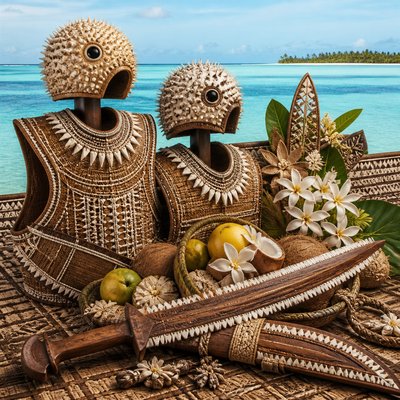
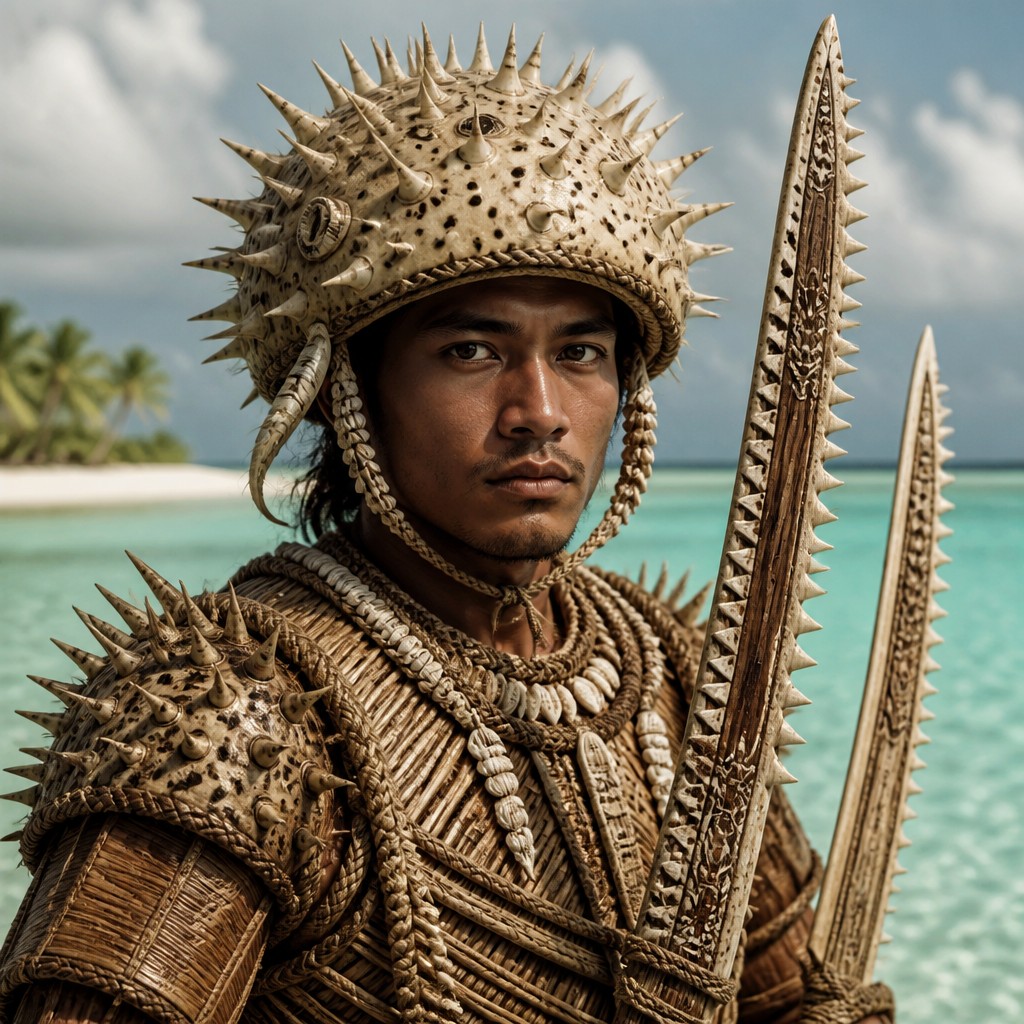
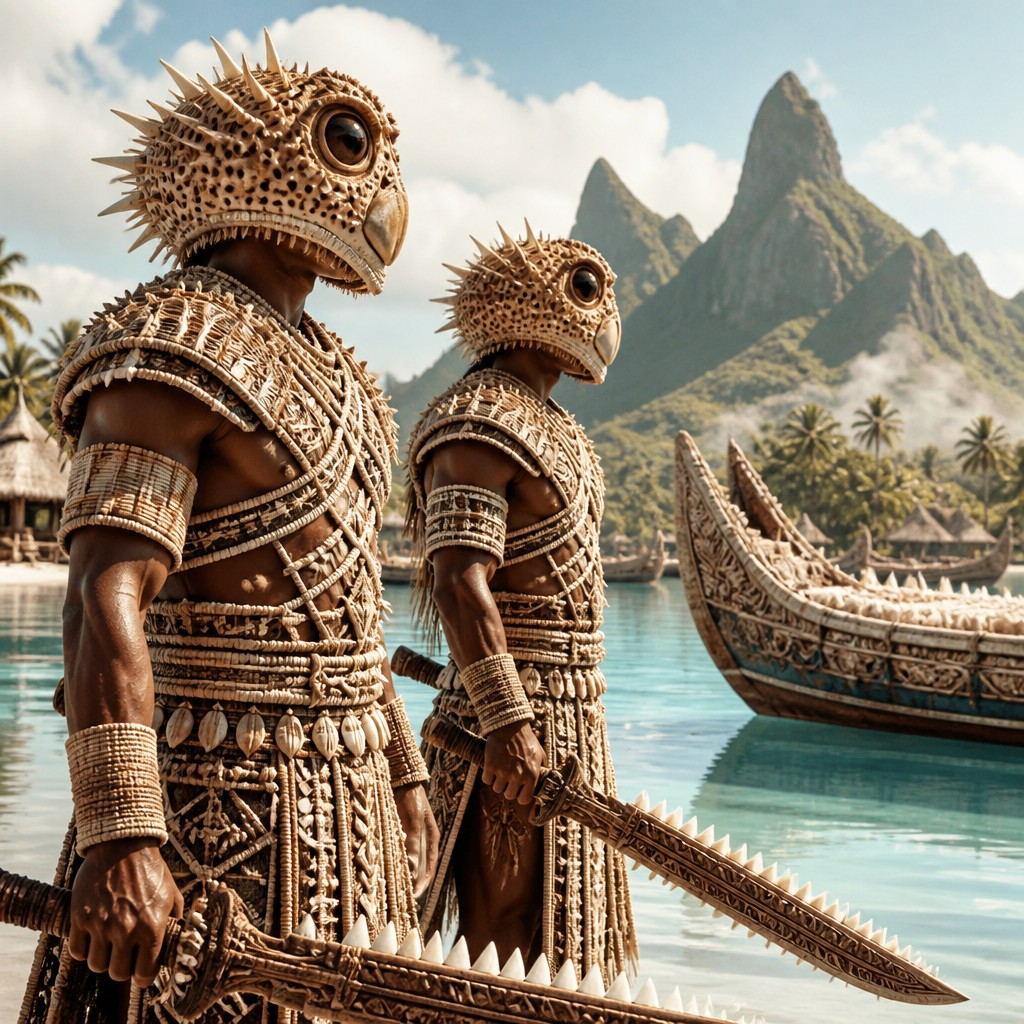
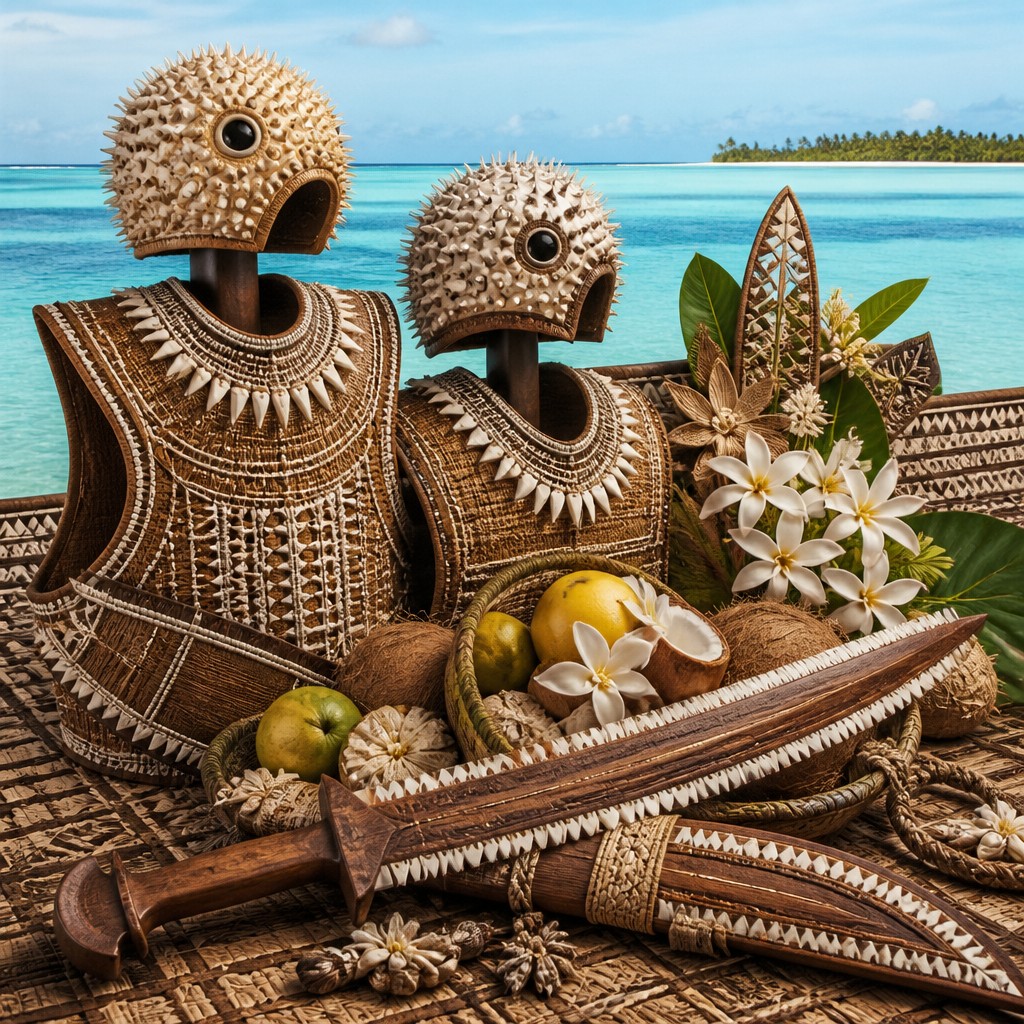
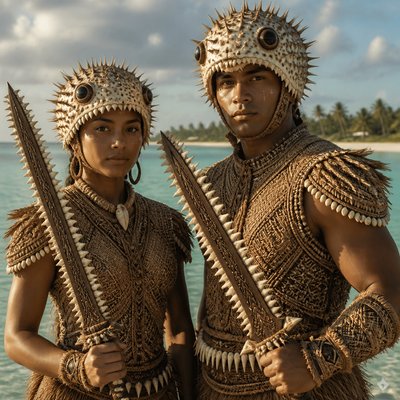
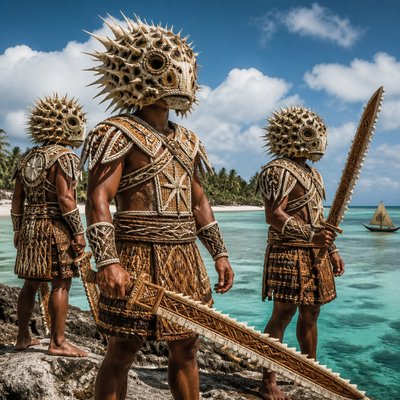
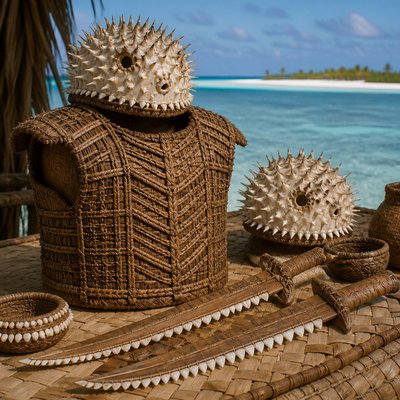
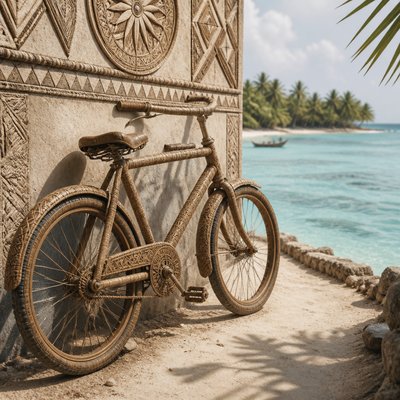
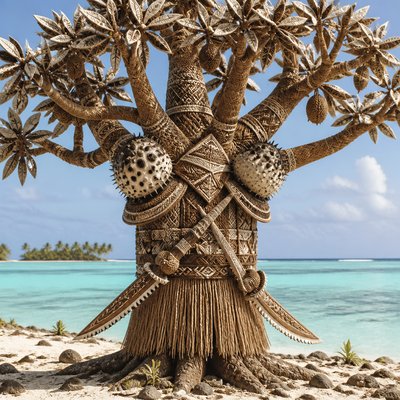
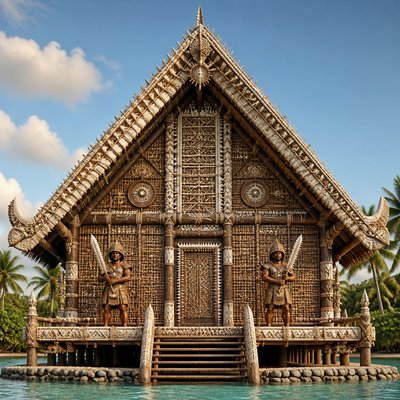
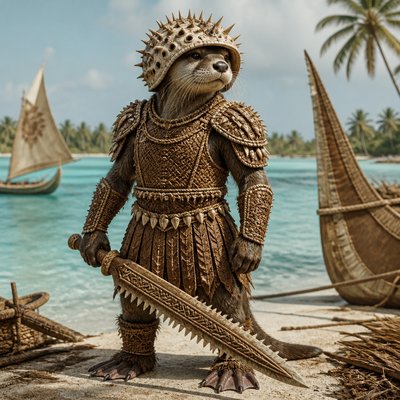
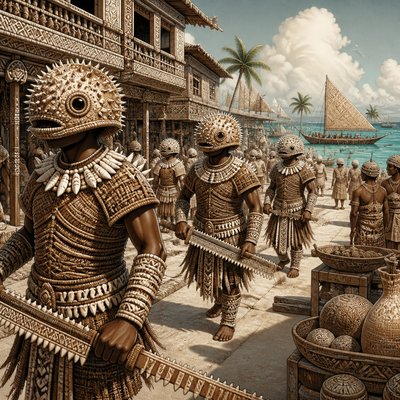
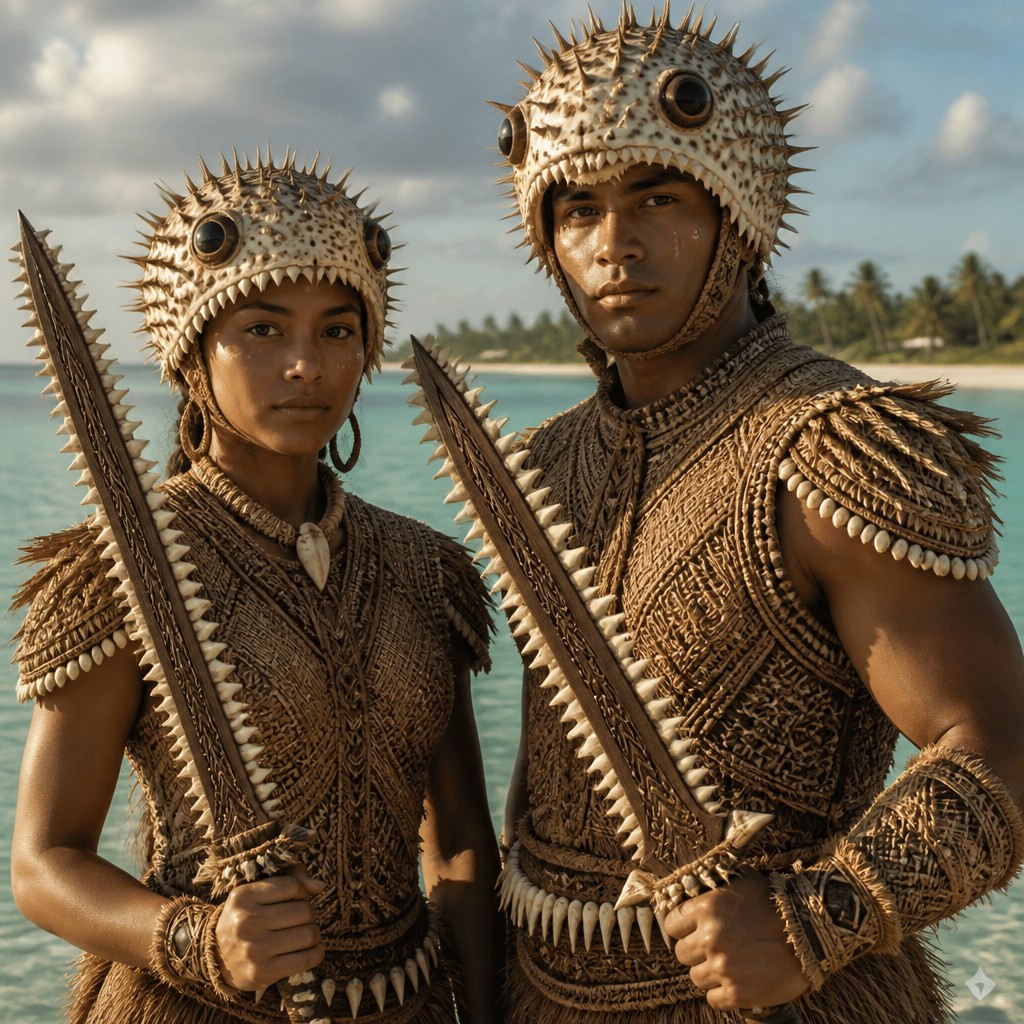
Kiribati Art Style is a contemporary, historically informed visual concept built around the material culture of the Gilbert Islands and the stark visual conditions of an atoll environment. Its signature imagery combines dense coconut-fibre armor, spiky porcupinefish helmets, shark-tooth-edged wooden blades, turquoise lagoon water, and hard sun filtered through pale coastal air. The effect is disciplined rather than ornamental: protective objects are presented as carefully engineered structures with repeated knots, cords, serrations, and woven grids.
The palette centers on warm coconut brown, weathered wood, bone white, charcoal, muted sand, and clear lagoon blue. Surfaces should feel dry, fibrous, salt-worn, and tactile, while lighting remains calm and nearly shadowless. The style works as a cultural-fantasy language when it distinguishes documented Pacific material traditions from speculative combinations and avoids treating sacred or community-specific objects as generic costume decoration.
Try It On Your Photos
Upload any photo and convert it into Kiribati Art Style — drag the sliders to compare before and after.

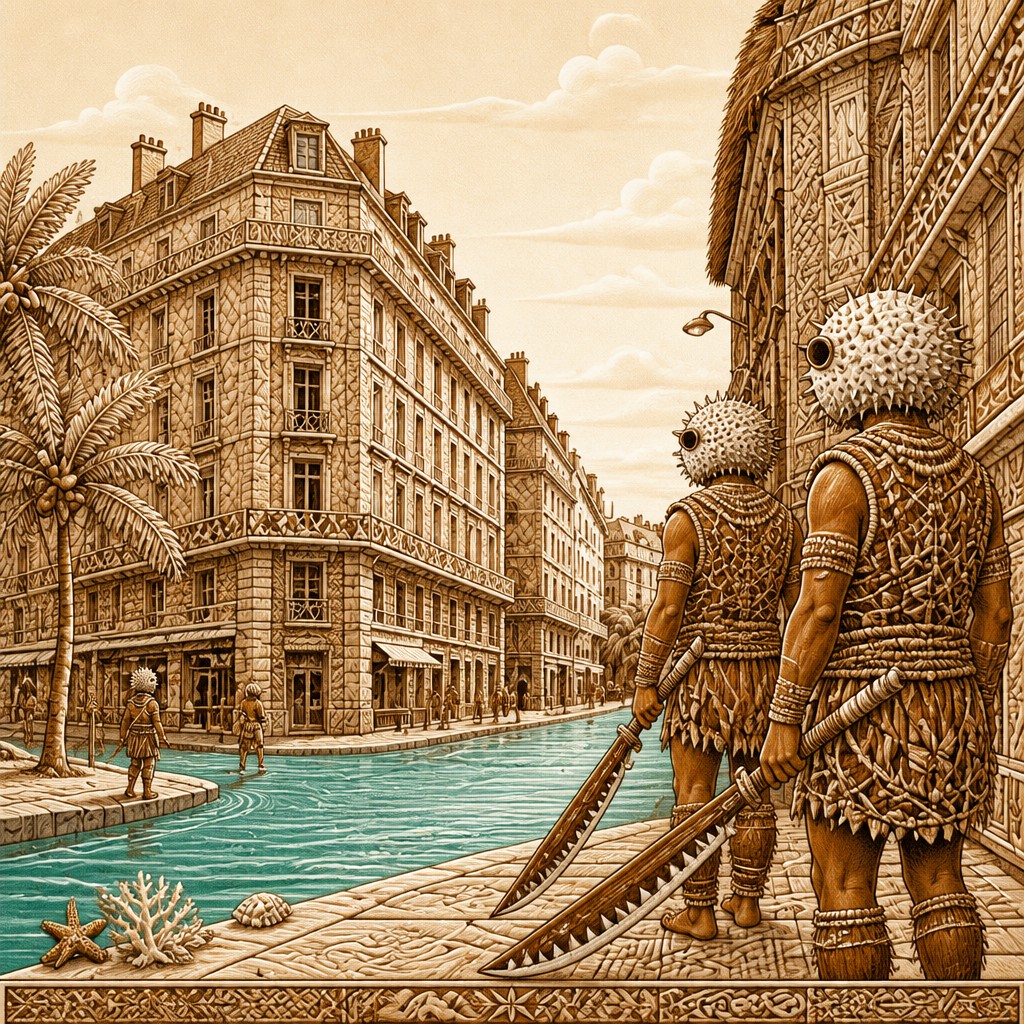

What Defines Kiribati Art Style
The signature details, up close
Coconut-fibre armor
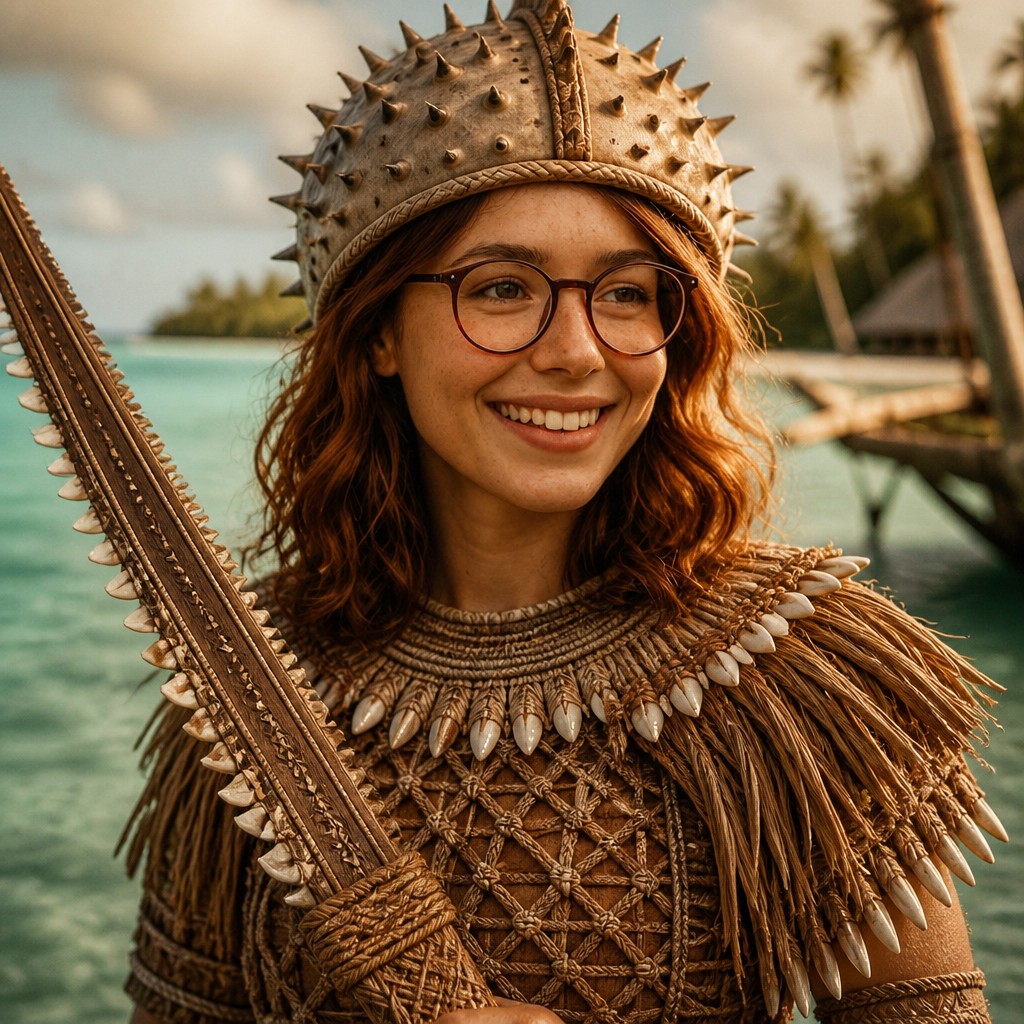
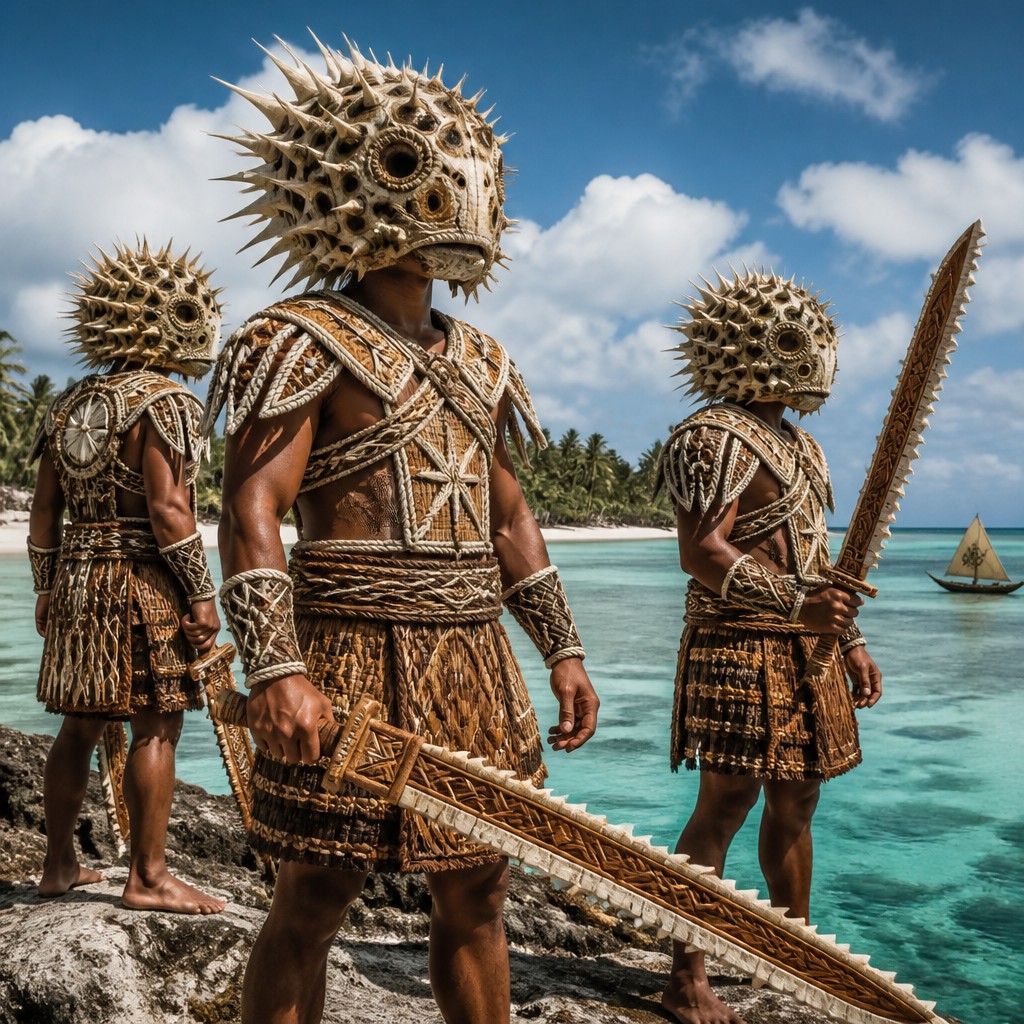
Armor is built from tightly bundled and interlaced coconut fibre, with visible cords, knots, braids, and layered panels. Repeated linear patterns communicate labor, structure, and protection rather than luxury.
Porcupinefish helmets
Spiny fish forms create rounded, defensive helmets with an immediately recognizable silhouette. Their pale, rough surfaces contrast with the darker, flexible fibre body covering.
Shark-tooth blades
Wooden swords and clubs carry fine serrated edges made from repeated shark teeth or tooth-like inlay. The teeth should read as individually attached components, not as a smooth metallic saw.
Atoll illumination
Lighting is bright, low-haze, and sun-bleached, with restrained shadows and reflective highlights from shallow turquoise water. The atmosphere suggests open horizon, salt air, coral sand, and intense equatorial daylight.
Earth-and-bone palette
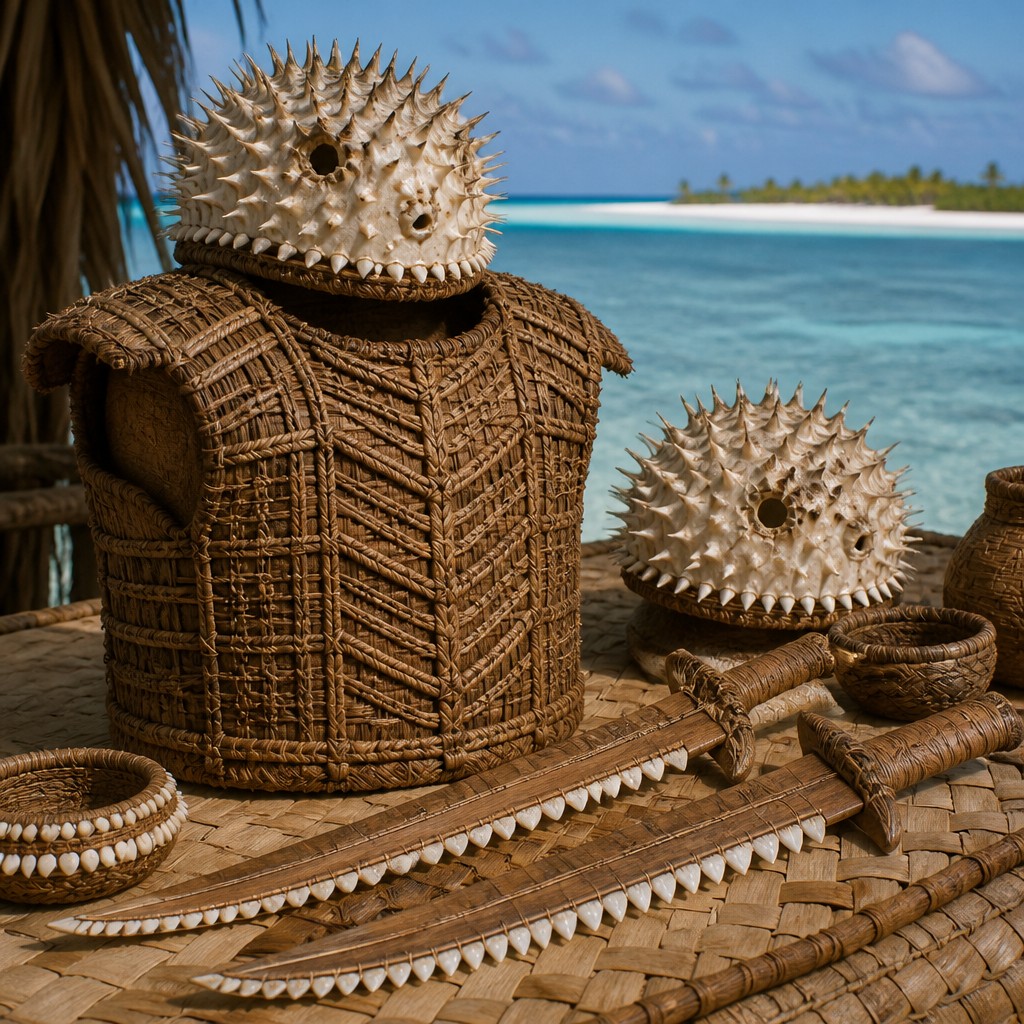
Warm coconut brown, faded timber, bone white, sand beige, charcoal, and lagoon blue form the dominant color range. Saturation is concentrated in the water and sky while armor remains subdued and weathered.
Austere craftsmanship
Compositions emphasize precision, balance, and functional construction through clean silhouettes and ordered texture. Decorative complexity comes from weaving, knots, serrations, and material variation rather than excessive embellishment.
Kiribati Prompt Ideas
Start from an idea — each one opens the generator with the style ready to go. See all 40 Kiribati prompts →
How to Create Kiribati Art
Master the craft step by step — or skip straight to creating. Read the full guide →
- 1
Build the material structure first
Sketch the armor as overlapping fibre bundles and woven grids before adding surface detail. Vary strand thickness, tension, fraying, and shadow so the object feels handmade rather than digitally patterned.
- 2
Use a controlled island palette
Begin with coconut brown, bone white, weathered wood, sand, and turquoise, then reserve stronger color for lagoon reflections or small environmental accents. Avoid broad metallic effects, neon colors, and glossy synthetic surfaces.
- 3
Design silhouettes for function
Give helmets, shields, and blades clear protective or cutting geometries, with believable attachment points and weight. Repeated teeth and cords should follow the curve of the object instead of appearing randomly scattered.
- 4
Light for open exposure
Use a high, warm sun with soft but distinct contact shadows and pale reflected light from sand or water. In digital painting or 3D work, roughness maps and fibre-normal detail help preserve the dry, salt-worn tactile quality.
- 5
Compose around the lagoon horizon
Place a figure or artifact against a sparse atoll environment, using shallow water, coral sand, palms, and a wide sky to create scale. Keep the background uncluttered so the woven construction remains legible.
- 6
Write precise generation prompts
Specify the subject, materials, construction details, lighting, palette, and setting in that order; for example, request dense coconut-fibre weave, individually set tooth inlay, sun-bleached lagoon light, and restrained documentary composition. Add negative instructions such as no polished metal, no medieval plate armor, and no cluttered fantasy ornament when needed.
The Story
History & Origins of Kiribati
This is an invented, AI-native style rather than a named historical movement from Kiribati. Its aesthetic lineage draws on material traditions of the Gilbert Islands, including the practical use of coconut fibre, pandanus, wood, shell, and other marine resources, as well as wider Micronesian traditions of bodily protection, canoe craft, fishing technology, and geometric weaving. The atoll setting supplies its characteristic visual logic: scarce terrestrial materials, intense sunlight, salt exposure, and close dependence on the lagoon and reef.
The porcupinefish helmet and shark-tooth blade function as stylized synthesis rather than claims that one standardized historical costume represents all Kiribati communities or periods. Contemporary artists should treat the imagery as respectful speculative worldbuilding, research local context where possible, and avoid presenting reconstructed fantasy objects as museum-authenticated artifacts.
Influences: The style relates to Micronesian material culture, Pacific fibre and pandanus weaving, maritime craft traditions, reef and lagoon environments, ethnographic object studies, and modern speculative worldbuilding. It also borrows the disciplined silhouettes and restricted palettes of minimalist design, the tactile attention of still-life painting, and the environmental clarity of documentary photography. Its fantasy dimension should remain materially grounded rather than merging indiscriminately with European medieval armor or generic tropical exoticism.
Frequently Asked Questions
What defines the Kiribati Art Style?
Its core features are woven coconut-fibre armor, spiky porcupinefish helmets, shark-tooth-edged wooden weapons, bright atoll light, and a warm brown, bone, sand, and turquoise palette. The visual language emphasizes construction, utility, repetition, and weathered natural materials.
Is Kiribati Art Style a historical art movement?
No. It is a contemporary speculative style assembled from visual references to Kiribati and wider Micronesian material traditions. The porcupinefish helmet and complete armored ensemble should be treated as an imaginative synthesis, not as a single universally documented Kiribati costume.
How does it differ from generic Polynesian or tribal fantasy art?
It is more geographically specific and materially focused, centering atoll ecology, coconut-fibre construction, lagoon light, and marine-derived components. It should avoid vague labels, anonymous “tribal” ornament, and the indiscriminate mixing of objects from unrelated Pacific cultures.
Can this style be used for portraits and landscapes as well as armor?
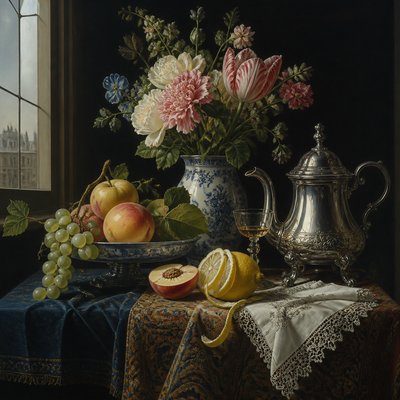
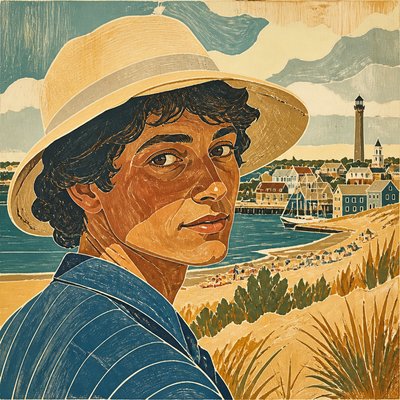
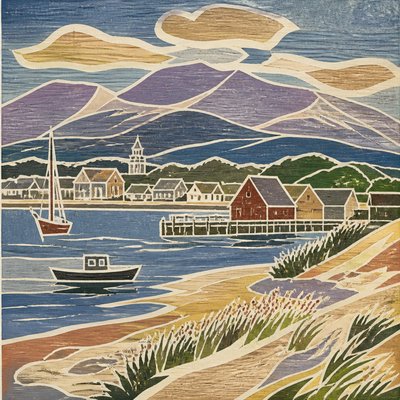
Yes. Portraits can emphasize fibre texture, helmet silhouette, and calm expression, while landscapes can focus on coral sand, palms, shallow water, and a wide horizon. Still lifes and workshop scenes are especially effective because they make the construction details central.
How can artists make the materials look convincing?
Show the direction and tension of individual fibres, irregular knots, frayed ends, tooth sockets, wood grain, shell fasteners, and salt wear. Use rough, matte surfaces with small variations in value rather than smooth plastic, polished metal, or uniformly repeated textures.
How should creators approach cultural accuracy and respect?
Research Kiribati history, language, communities, and museum collections instead of treating the region as a generalized tropical backdrop. Clearly label speculative designs, avoid claiming invented objects are authentic artifacts, and do not reproduce restricted or sacred imagery without appropriate context and permission.
Create your first Kiribati artwork
Describe anything — or upload a photo — and see it in Kiribati Art Style in seconds.
Related Styles
Discover similar art styles