Kenyan Art Style
Explore Kenyan art style through Kisii soapstone, Lamu doors, Maasai beadwork, Gedi ruins, and warm coast-to-highland color.
Instantly rendered in Kenyan — or transform a photo
Kenyan Gallery
Tap any artwork to explore it
What is Kenyan Art Style?
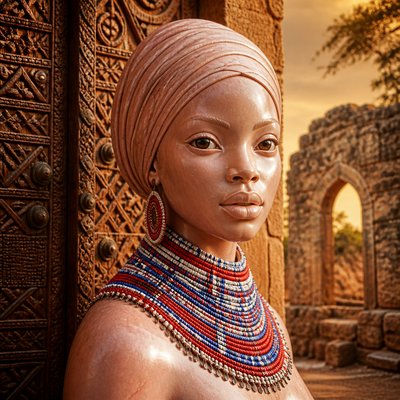
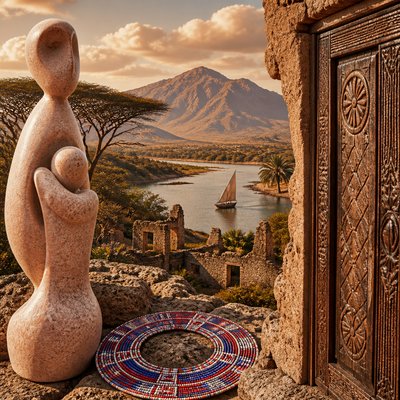
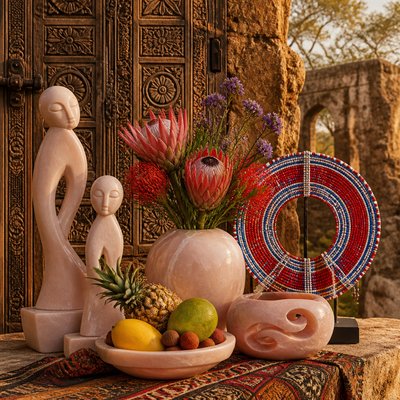
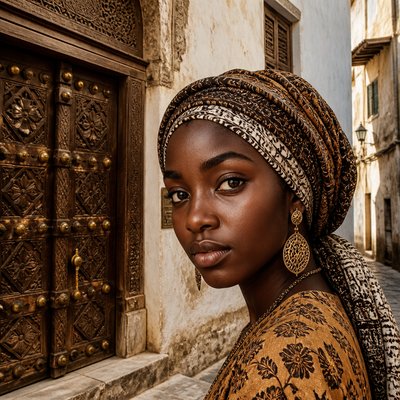
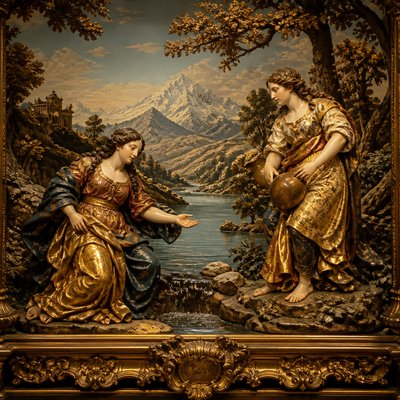
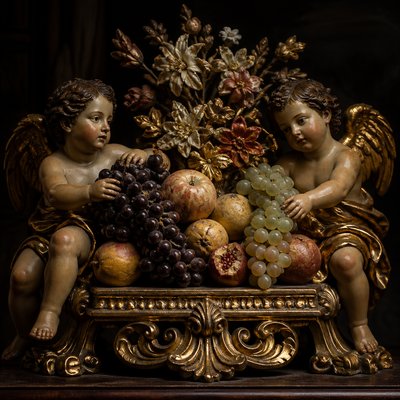
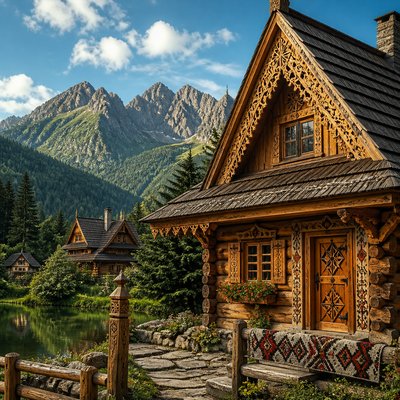
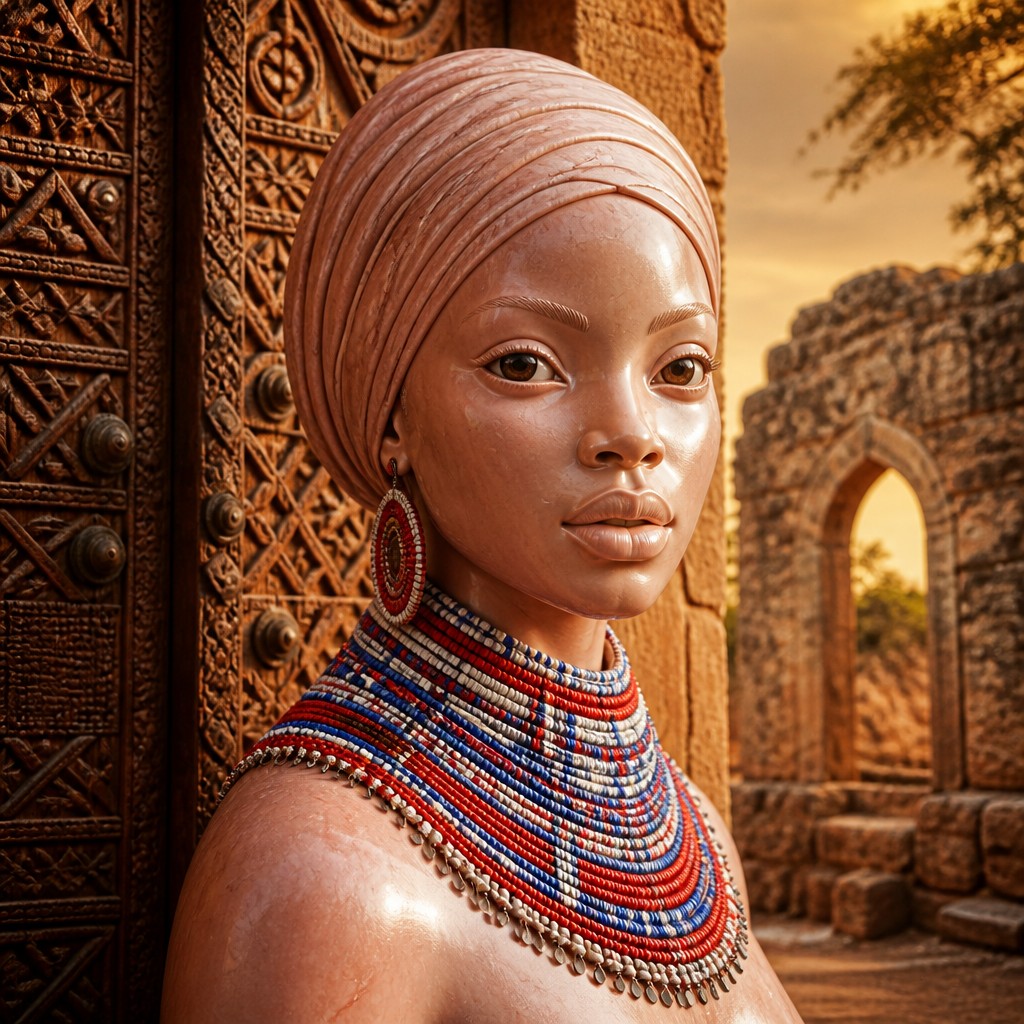
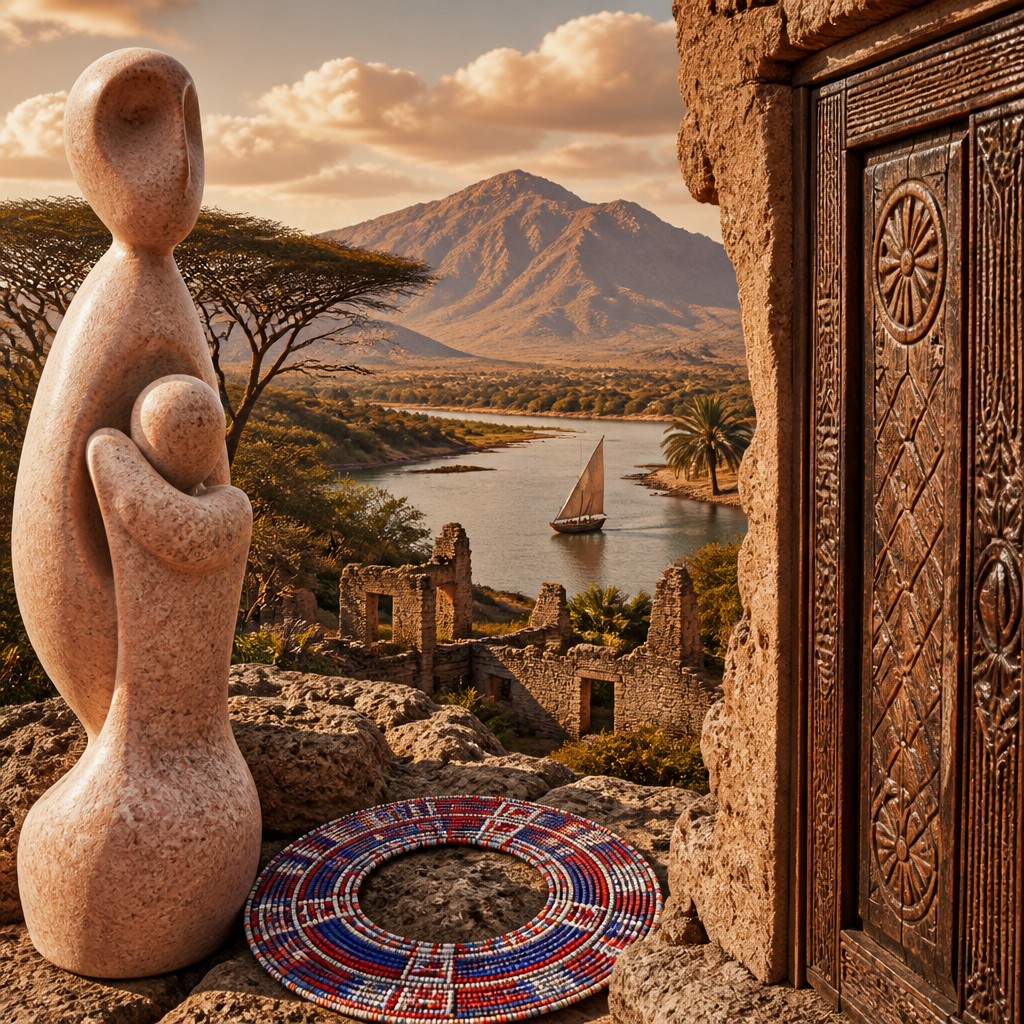
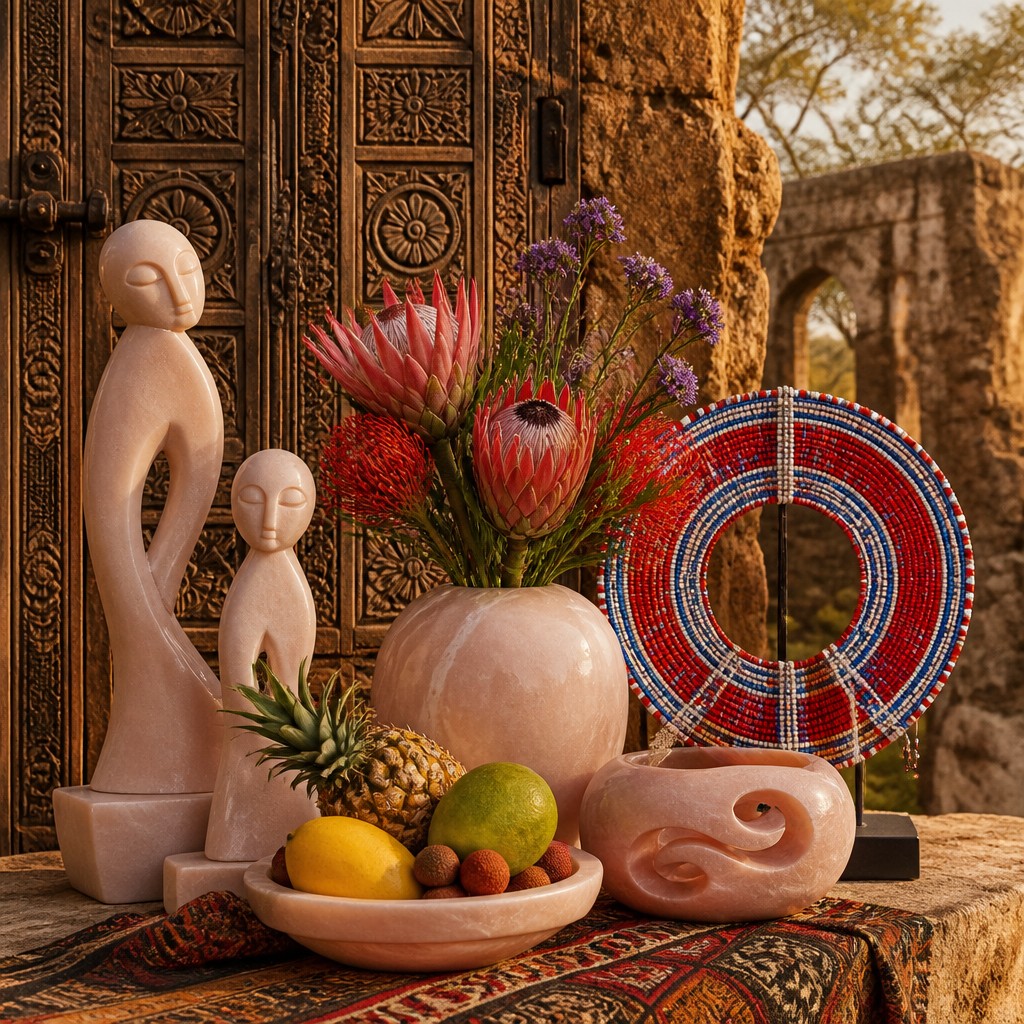
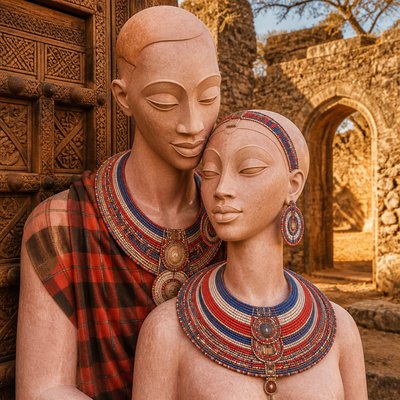
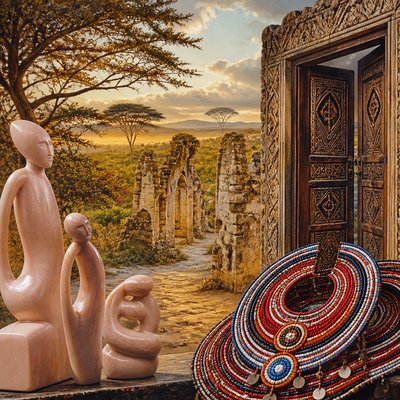
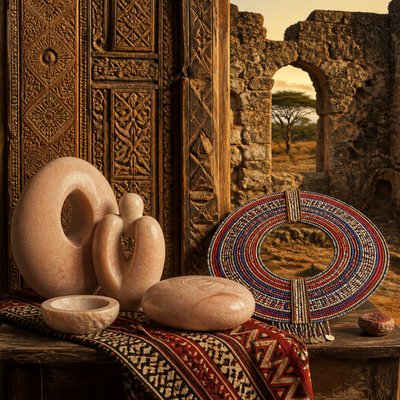
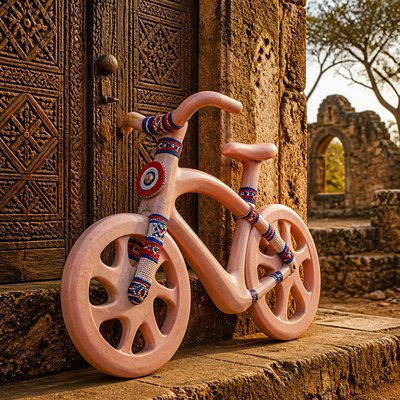
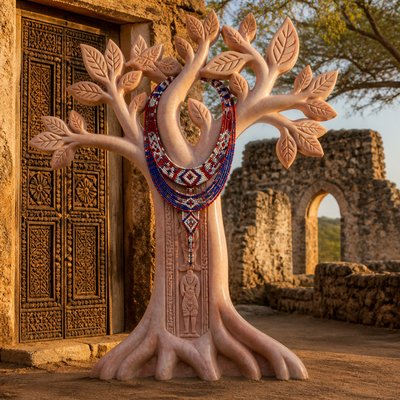
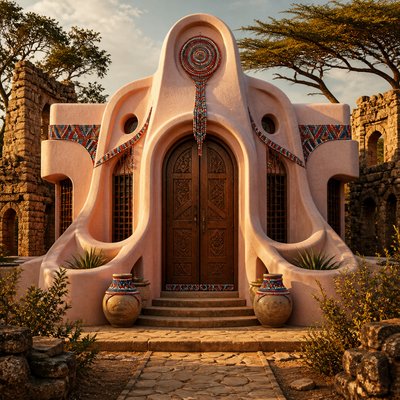
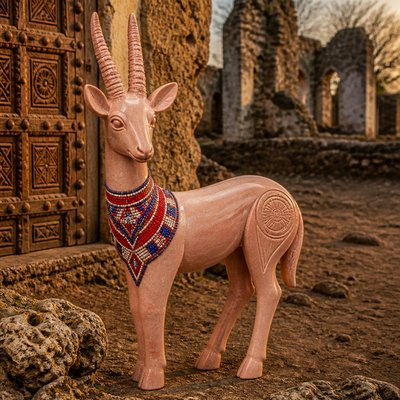
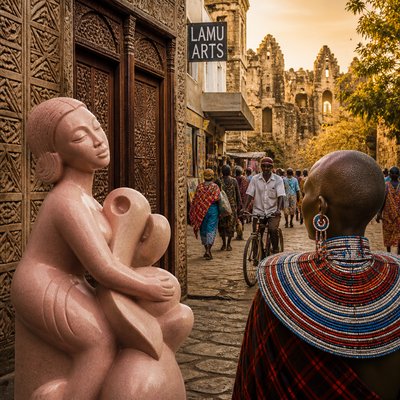
Kenyan Art Style is a contemporary, composite visual language inspired by Kenya's regional crafts, architecture, archaeological heritage, and landscapes. Its imagery often combines smooth pale-pink Kisii soapstone forms, carved Lamu Swahili doors, vivid Maasai beadwork colors, weathered coral-stone ruins, and the warm light of the savanna and highlands.
The style is defined by tactile surfaces, rhythmic geometry, earthy color, and a strong contrast between polished craft objects and aged architectural textures. It should be understood as an interpretive synthesis rather than a single historic Kenyan school: Kisii soapstone carving, Swahili coastal architecture, Maasai bead traditions, and Gedi's ruins each have distinct histories, communities, and visual conventions.
Try It On Your Photos
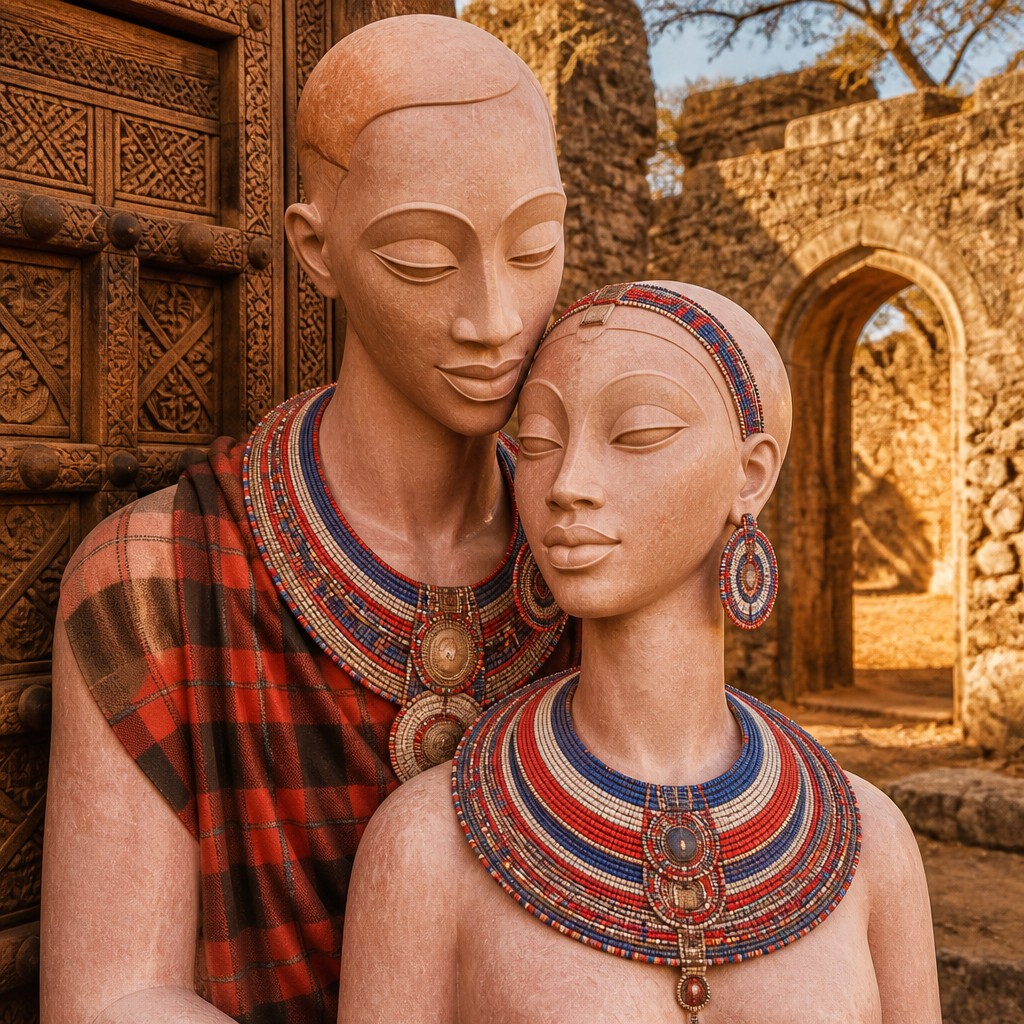
Upload any photo and convert it into Kenyan Art Style — drag the sliders to compare before and after.

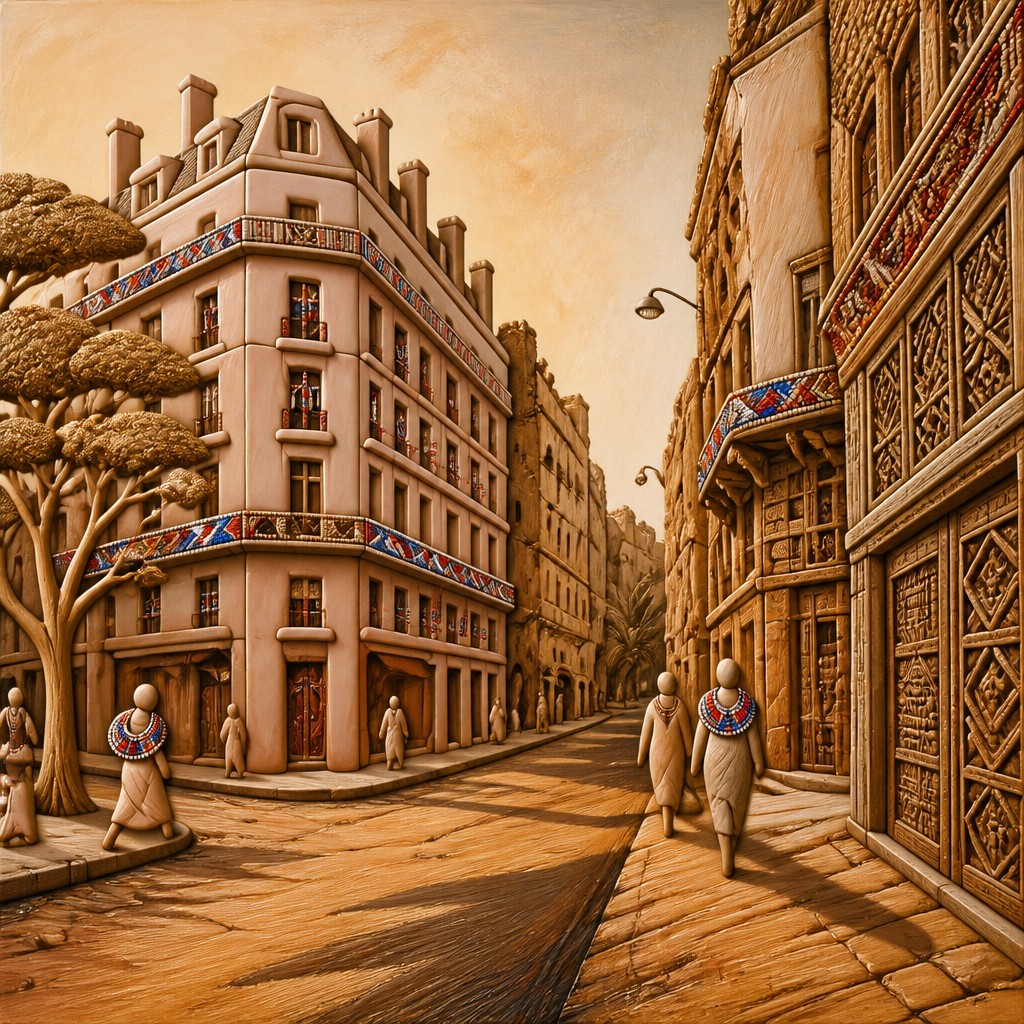

What Defines Kenyan Art Style
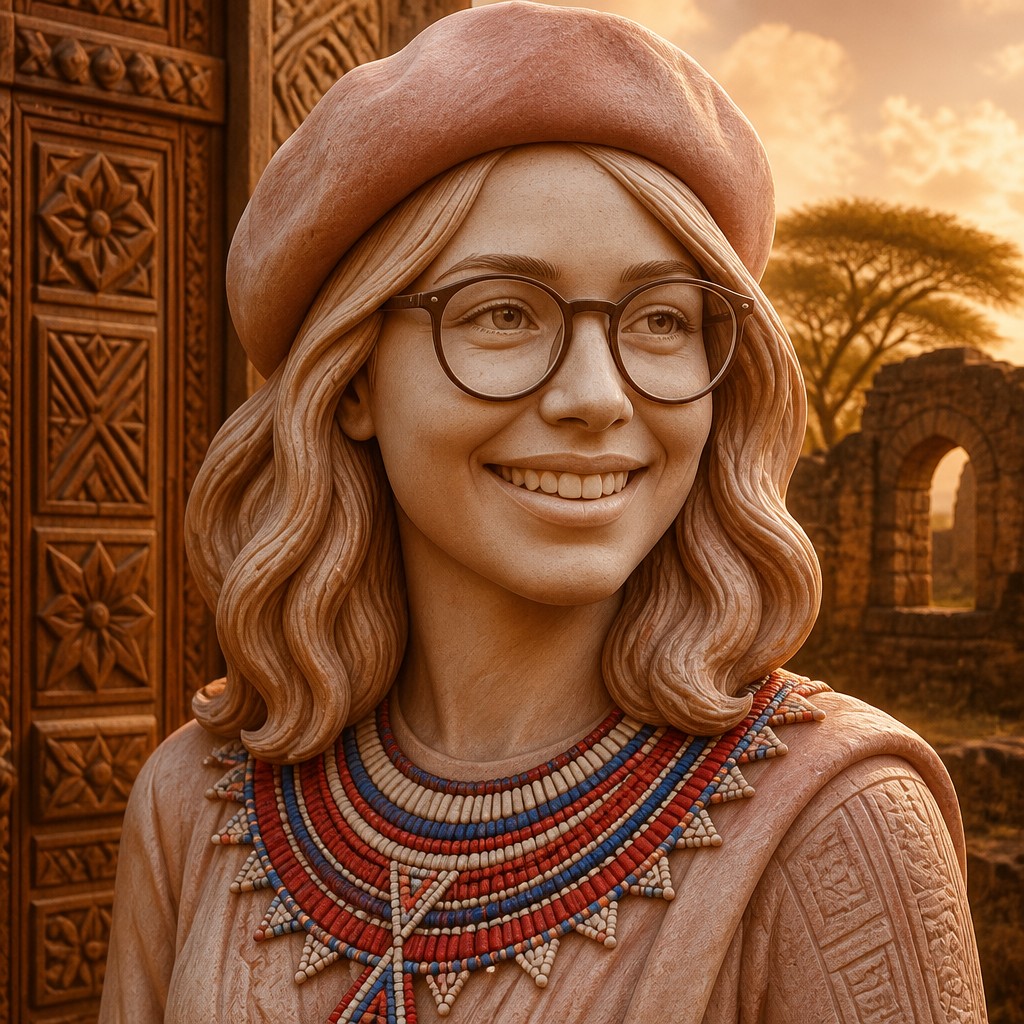
The signature details, up close
Pale soapstone sculpture
Rounded, simplified forms suggest Kisii soapstone through a soft pink, cream, or blush mineral palette. Smooth polishing may be contrasted with shallow incisions, drilled details, or subtly rough edges.
Swahili geometric carving
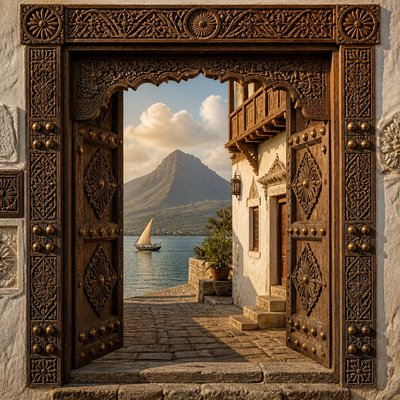
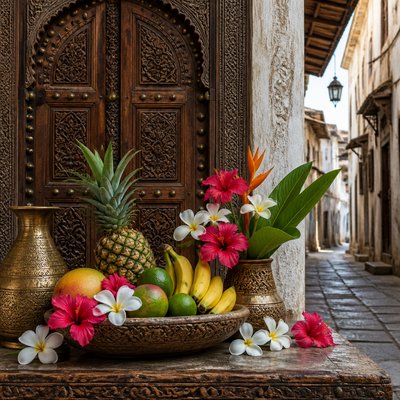
Lamu-inspired doors and panels contribute dense geometric relief, framed rectangles, floral abstractions, and carefully balanced symmetry. Carving should appear hand-worked rather than mechanically uniform.
Maasai beadwork color
Collars, bands, and patterned surfaces use vivid red, blue, and white alongside black, yellow, or green accents. Repeated bead units create concentric rings, stripes, diamonds, and strong visual rhythm.
Coral-stone weathering
Aged walls and ruins evoke coastal coral masonry through porous surfaces, chipped corners, irregular joints, and muted sand, limestone, and ochre tones. Patina gives the architecture a sense of time without making it gloomy.
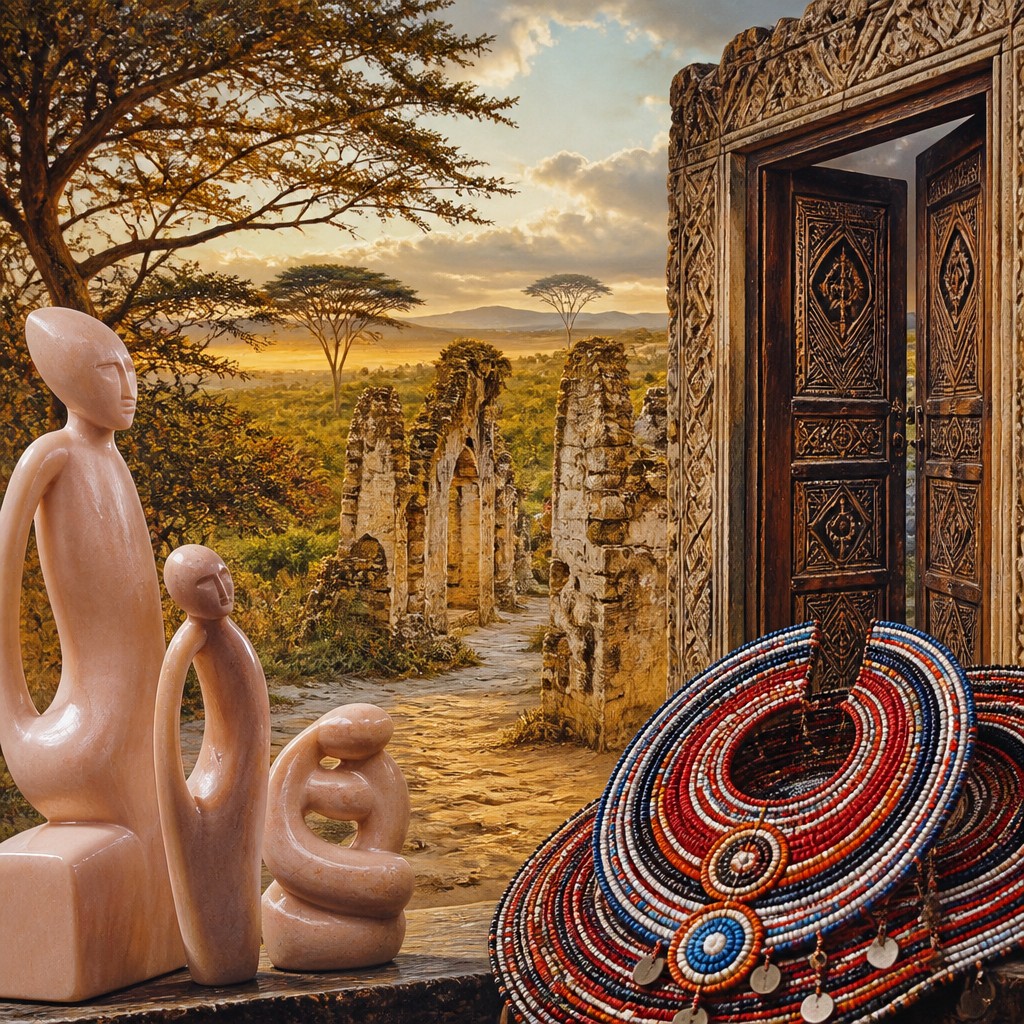
Warm regional light
Golden savanna illumination, sunlit dust, and long soft shadows unify the composition. Highland browns, terracotta, dry grass, and subdued greens balance the brighter beadwork.
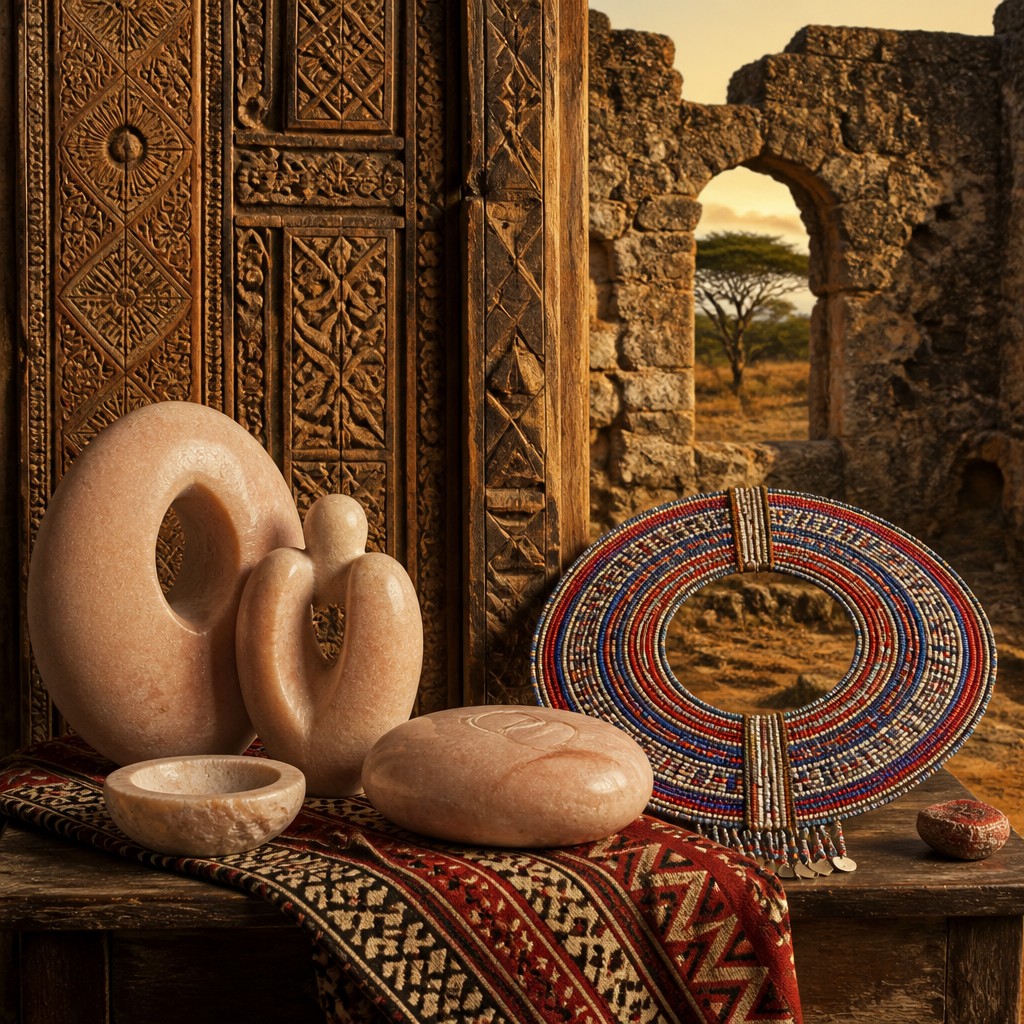
Patterned material contrast
The style relies on contrasts between polished stone, glossy beads, carved timber, porous masonry, woven fibers, and dry vegetation. Close attention to material texture is as important as the subject itself.
Kenyan Prompt Ideas
Start from an idea — each one opens the generator with the style ready to go. See all 40 Kenyan prompts →
How to Create Kenyan Art
Master the craft step by step — or skip straight to creating. Read the full guide →
- 1
Build from distinct references
Choose a primary regional subject, such as a soapstone figure, a Swahili doorway, or beadwork, then add supporting environmental details. Identify the cultural source of each element instead of blending unrelated motifs indiscriminately.
- 2
Establish a tactile palette
Start with blush stone, coral beige, terracotta, ochre, charcoal, and savanna green, then reserve saturated red, blue, and white for beadwork or focal accents. In digital work, use layered roughness, grain, and bump or displacement effects to separate materials.
- 3
Use structured composition
Frame the scene with doorway geometry, concentric bead patterns, or sculptural silhouettes. Balance repeated patterns with open areas of sunlit wall, sky, or dry landscape so the image remains legible.
- 4
Model age and handwork
For traditional or mixed-media work, combine carving, clay, wood, pigment, textile, or bead applications with restrained abrasion and irregularity. Digitally, vary edge sharpness, introduce small asymmetries, and avoid perfectly repeated textures.
- 5
Write precise generation prompts
Specify the subject, material, regional reference, lighting, palette, and surface treatment separately—for example, a carved coastal doorway, pale soapstone relief, geometric bead collar, weathered coral masonry, and golden savanna light. Add terms such as tactile, hand-carved, porous, polished, or shallow relief to guide material rendering.
The Story
History & Origins of Kenyan
This style has no single historical origin or formal movement. It draws on several established Kenyan traditions: soapstone carving associated particularly with Kisii craft communities; Swahili architectural ornament and carved doors along the coast, especially in Lamu; Maasai beadwork and adornment; and the coral-stone architecture and archaeological remains of Gedi. These traditions developed in different places and periods, shaped by local materials, trade networks, social identity, religious life, and the environment.
As a contemporary image-making category, the style brings these references together for illustrative, decorative, sculptural, and digital work. Its development reflects wider interest in African material culture, heritage architecture, craft revival, and place-based visual storytelling, while responsible use requires identifying sources accurately and avoiding the suggestion that all Kenyan communities share one aesthetic.
Influences: The aesthetic lineage includes East African craft traditions, Swahili coastal architecture, Maasai beadwork and adornment, Kisii soapstone carving, archaeological landscape imagery, vernacular architecture, contemporary African design, and material-focused sculpture. It also shares methods with folk art, cultural illustration, heritage documentation, and mixed-media assemblage, particularly in its use of repeated pattern, hand-worked surfaces, symbolic color, and place-specific materials.
Frequently Asked Questions
What defines Kenyan Art Style?
It is a composite aesthetic built from Kenyan material and architectural references rather than a single historical movement. Common features include pale Kisii soapstone forms, Swahili geometric carving, Maasai-inspired bead colors, coral-stone ruins, and warm savanna or highland light.
Is Kenyan Art Style a traditional art movement?
No. The label is a contemporary umbrella for combining visual elements from several distinct Kenyan traditions. Kisii carving, Swahili architecture, Maasai beadwork, and Gedi's archaeological heritage should be recognized as separate cultural contexts.
How does it differ from generic African art?
It is more geographically and materially specific, emphasizing Kenyan references and regional contrasts between coast, highlands, and savanna. Using concrete materials, motifs, and locations produces a more informed result than relying on generalized tribal patterns or undifferentiated earthy colors.
What colors work best for this style?
Use pale pink, cream, coral beige, ochre, terracotta, dry brown, charcoal, and muted greens as the foundation. Vivid red, blue, and white are especially effective as accents in beadwork, collars, borders, and repeated geometric patterns.
Can this style be made with traditional materials?
Yes. Soapstone, clay, wood, beads, textile, natural-fiber weaving, and mineral or earth pigments can reproduce its tactile qualities. Artists should research the specific craft tradition, use appropriate techniques, and credit or collaborate with source communities when presenting culturally specific work.
Where is Kenyan Art Style used?
It can suit cultural illustration, editorial art, sculpture, architectural visualization, heritage interpretation, textile and jewelry concepts, interiors, photography treatments, and digital environments. The strongest applications use it to communicate a specific Kenyan place or material culture rather than as a generic decorative overlay.
Create your first Kenyan artwork
Describe anything — or upload a photo — and see it in Kenyan Art Style in seconds.
Related Styles
Discover similar art styles