Jamaican Art Style
Explore Jamaican art style: intuitive folk color, Taíno-inspired stone symbols, Georgian verandas, lush hills, and brilliant Caribbean light.
Instantly rendered in Jamaican — or transform a photo
Jamaican Gallery
Tap any artwork to explore it
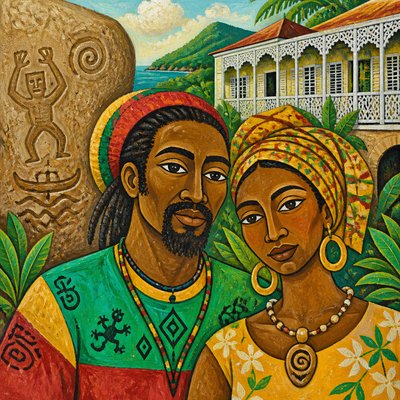
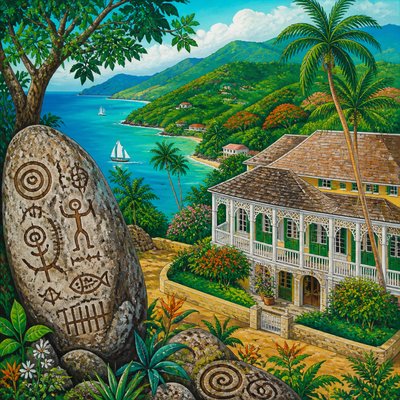
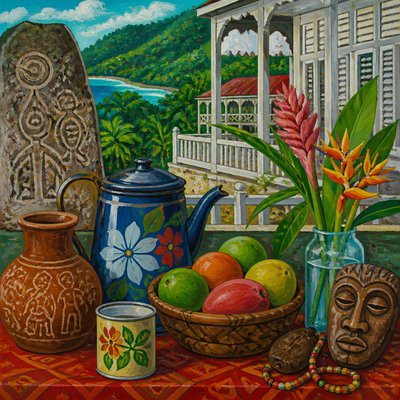
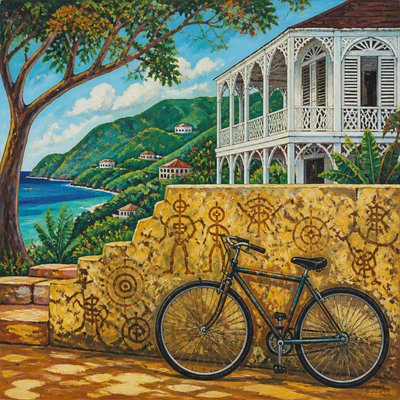
What is Jamaican Art Style?
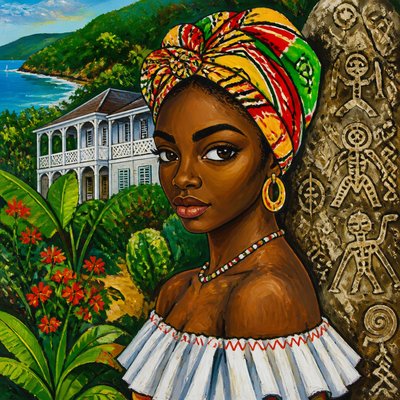
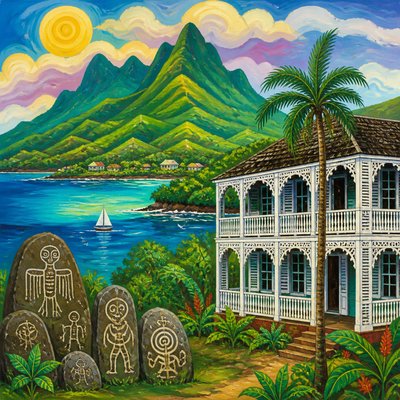
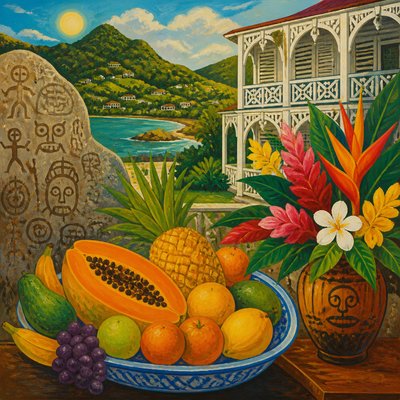
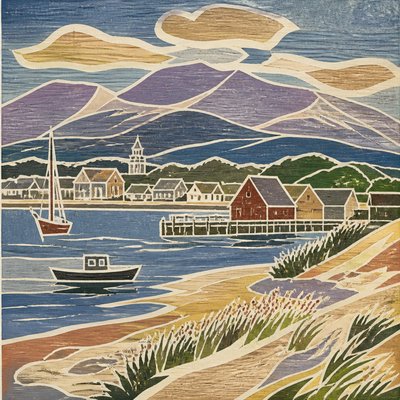
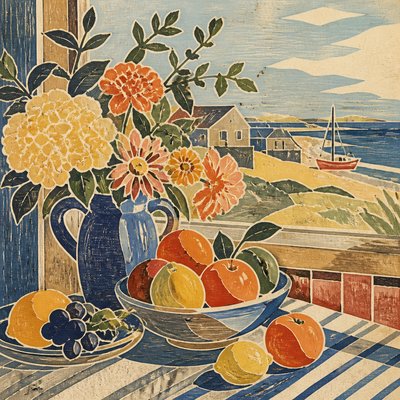
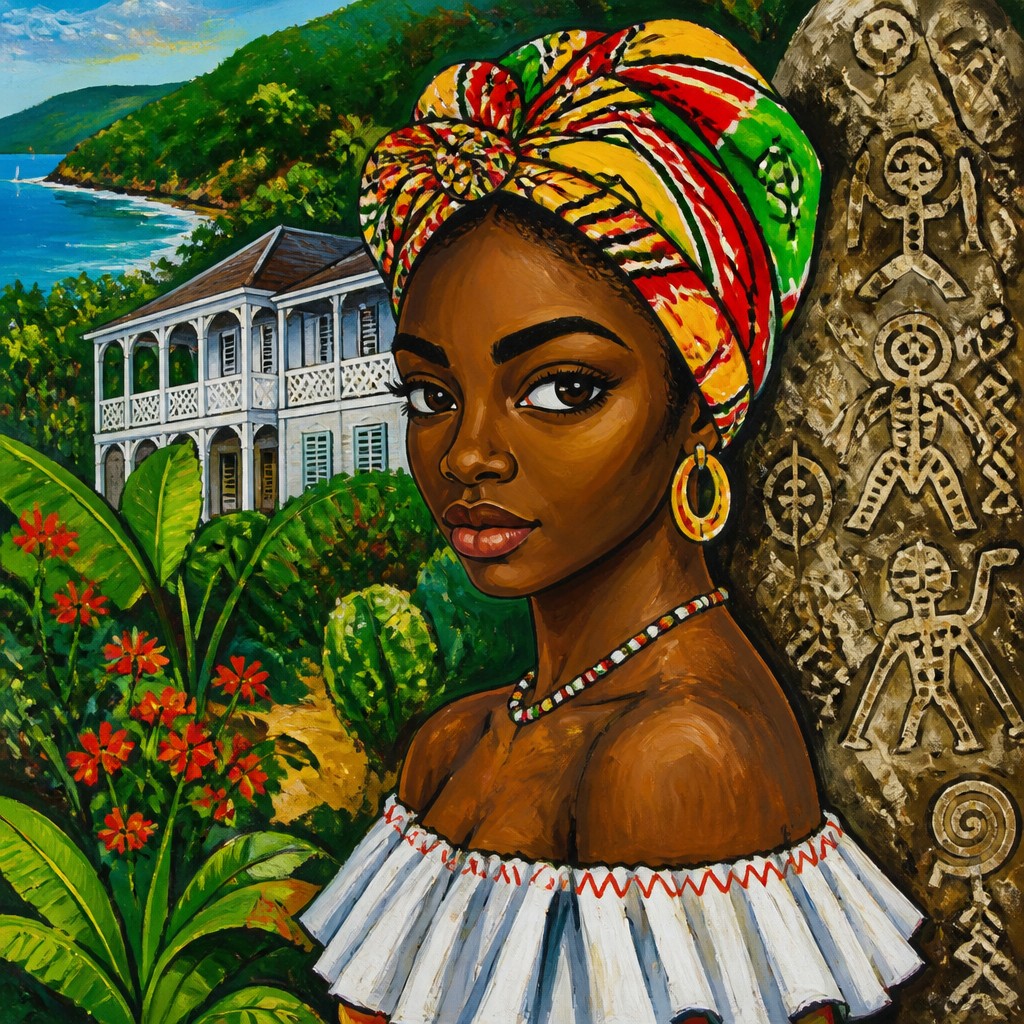
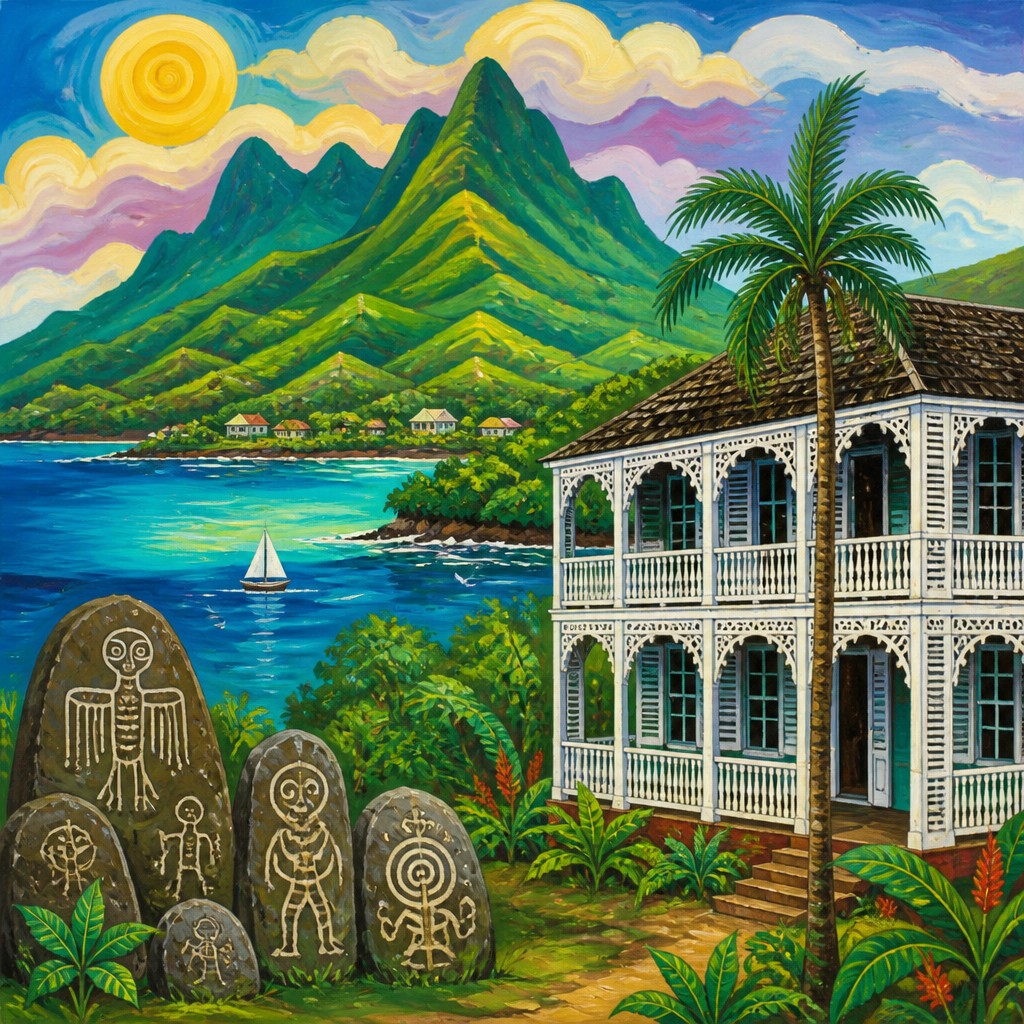
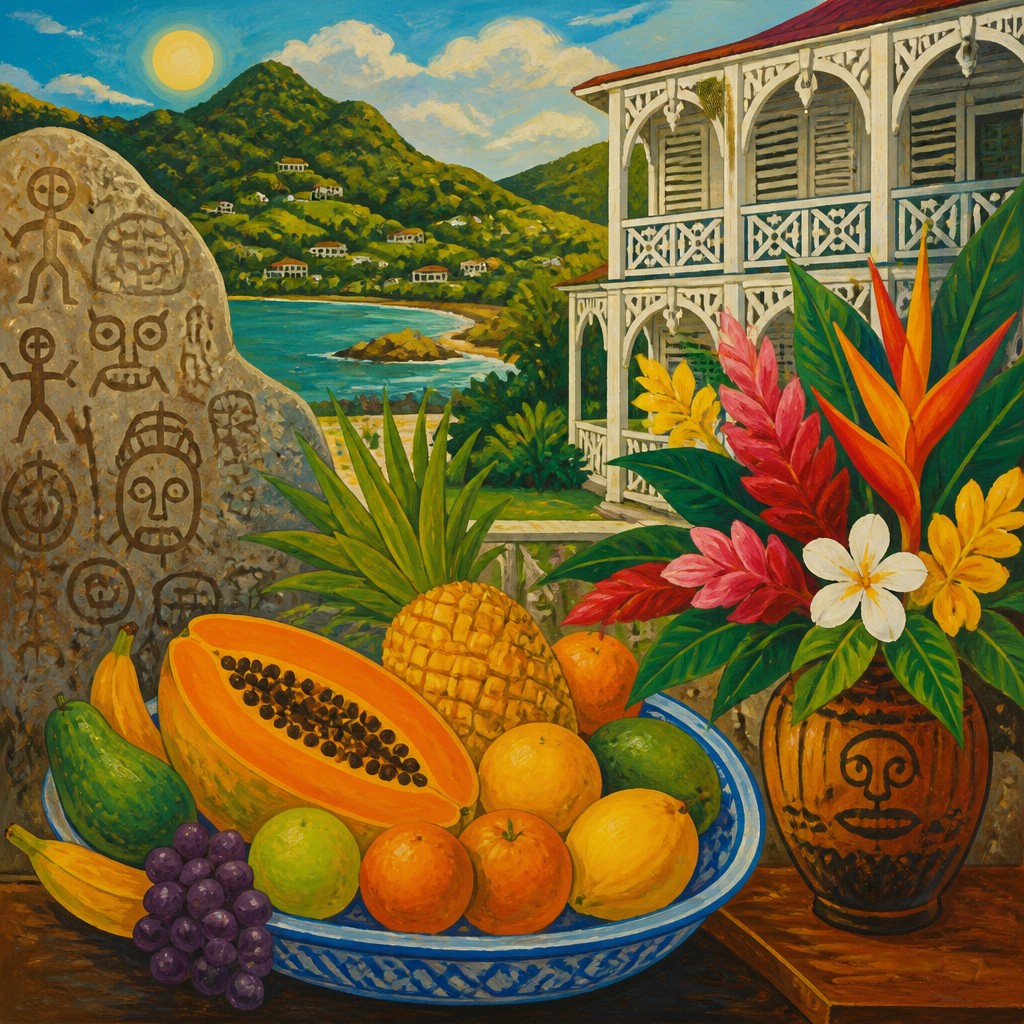
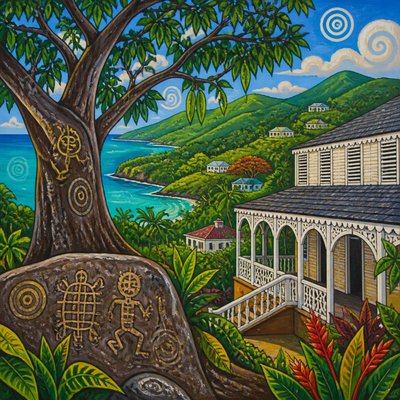
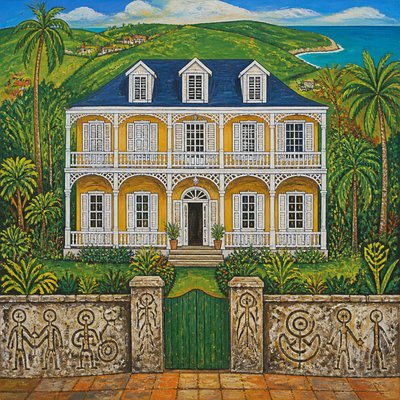
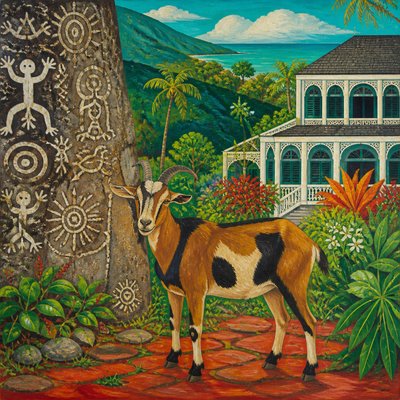
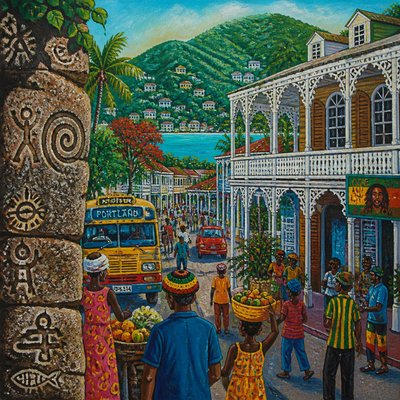
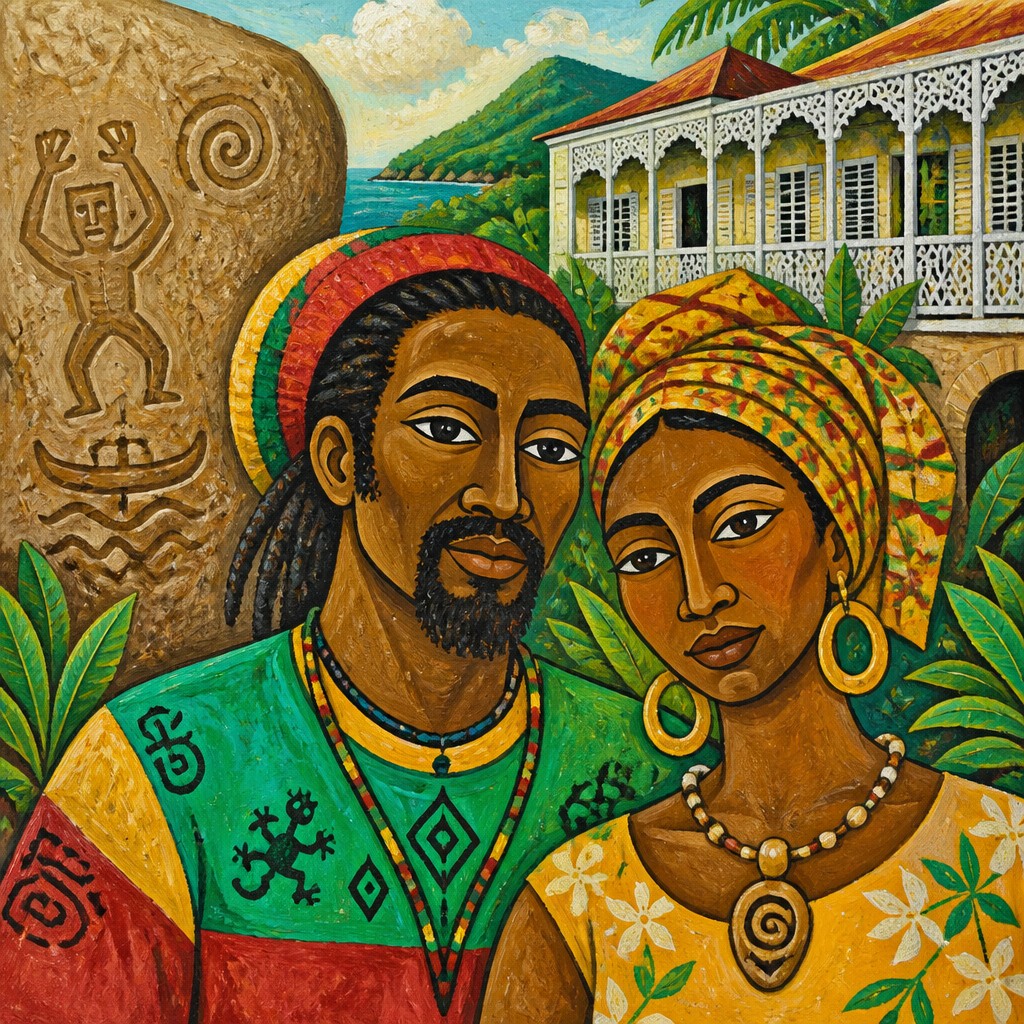
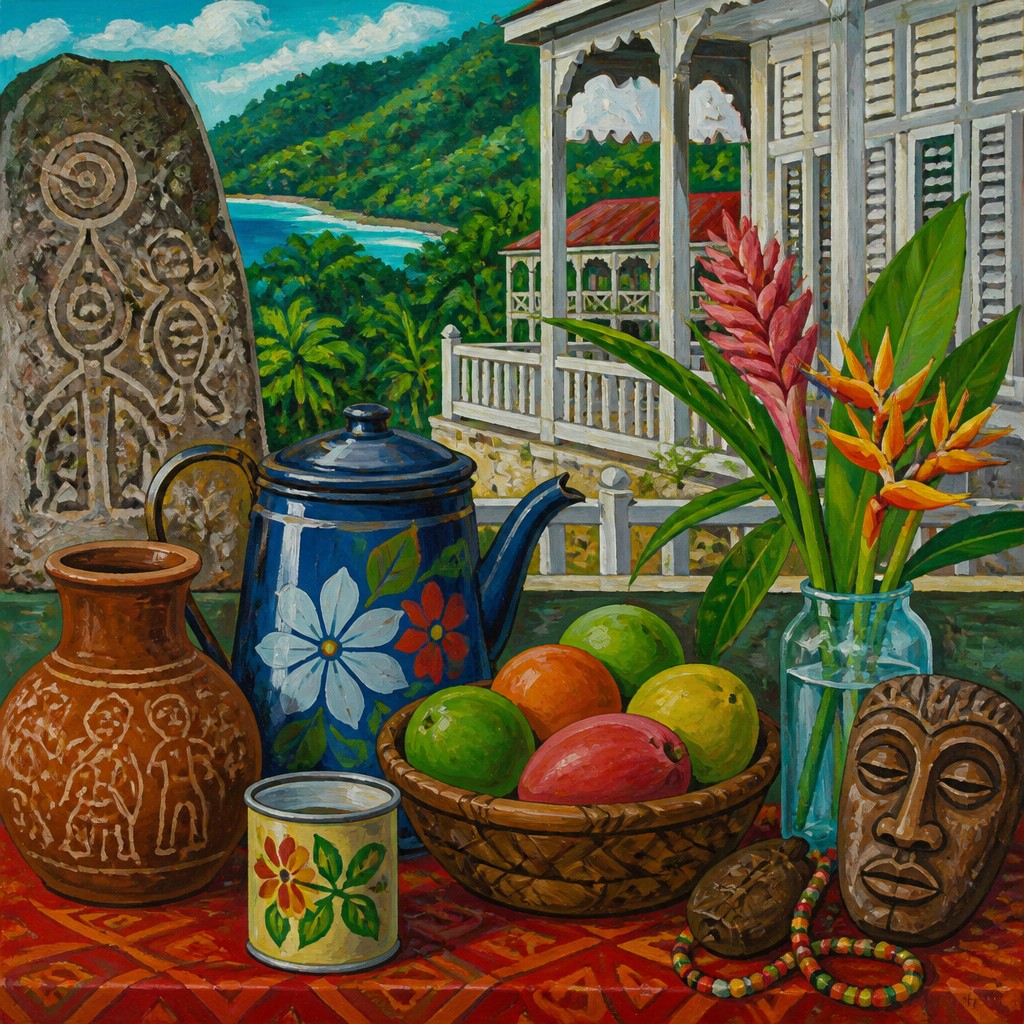
Jamaican art style is a contemporary, cross-cultural aesthetic rather than a formally defined historical movement. It combines the flattened, intensely colored forms of Jamaican intuitive painting with references to Taíno rock imagery, Georgian great-house architecture, tropical vegetation, and the luminous contrasts of the Caribbean landscape.
Its visual identity depends on deliberate simplification: hills, buildings, figures, plants, and coastlines are arranged as clear blocks of color instead of being modeled through conventional perspective. Weathered stone markings and petroglyph-like symbols introduce an archaeological, symbolic layer, while white verandas, louvered fretwork, and broad eaves provide architectural structure. The result is warm, visionary, and folkloric, with a balance between historical memory and imaginative island life.
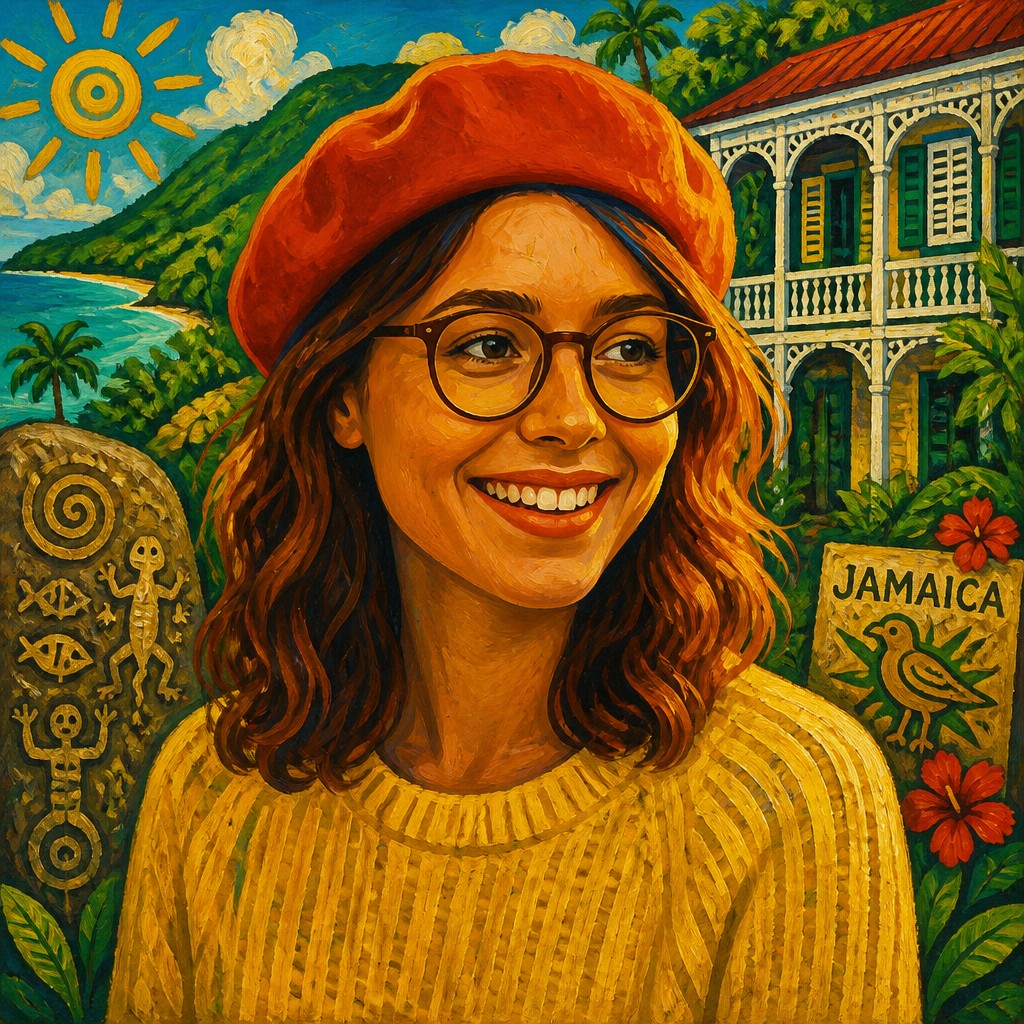
Try It On Your Photos
Upload any photo and convert it into Jamaican Art Style — drag the sliders to compare before and after.


What Defines Jamaican Art Style
The signature details, up close
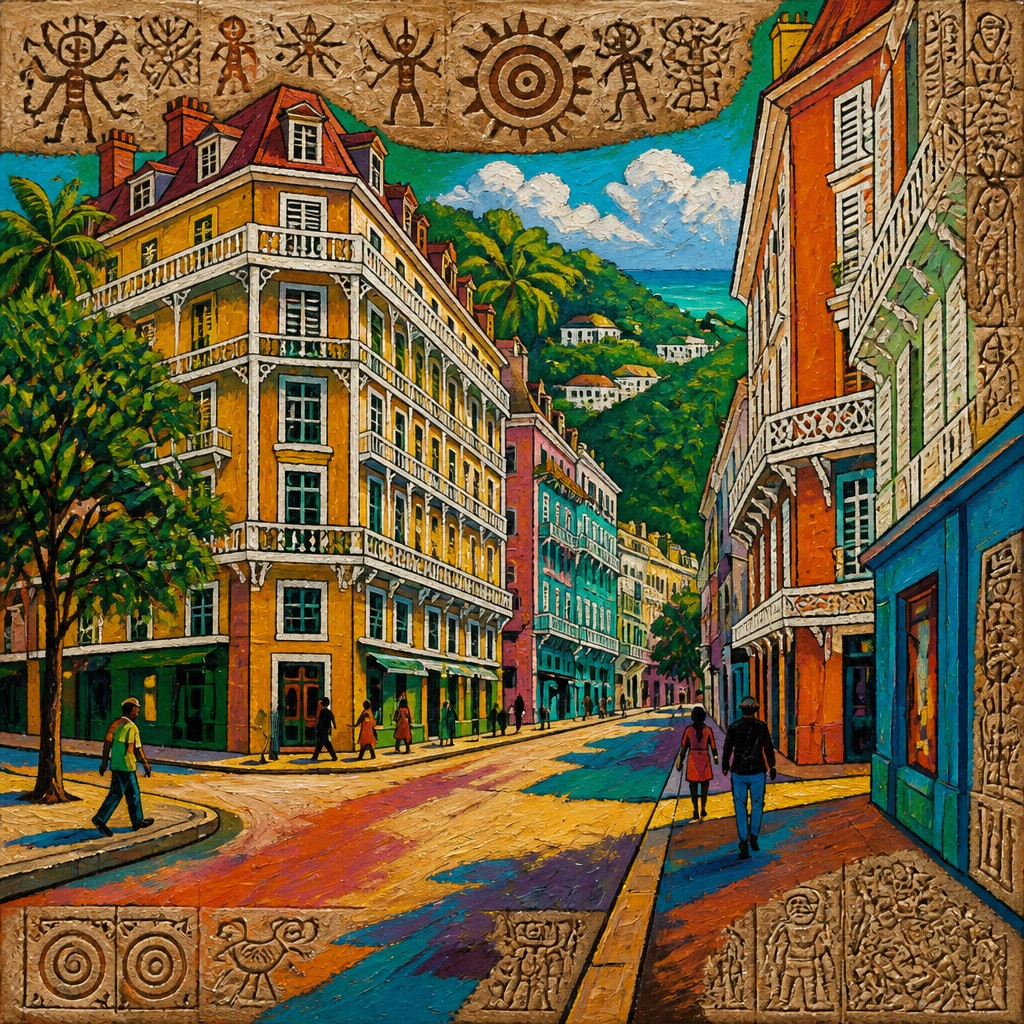
Flattened vivid color
Large areas of emerald, turquoise, coral, yellow, white, and indigo are applied with limited shading. Color carries emotional and symbolic weight more than strict optical realism.
Intuitive folk handling
Forms are simplified, outlined, enlarged, or slightly distorted in the manner of self-taught and visionary painting. Uneven contours and visible brushwork preserve a handmade sense of discovery.
Taíno-inspired stone imagery
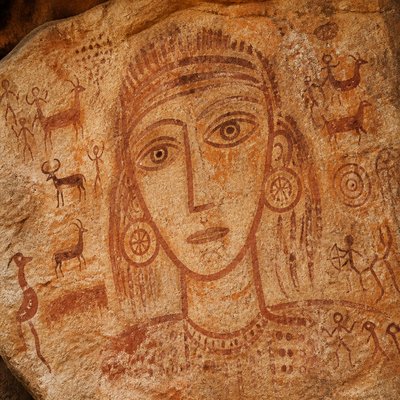
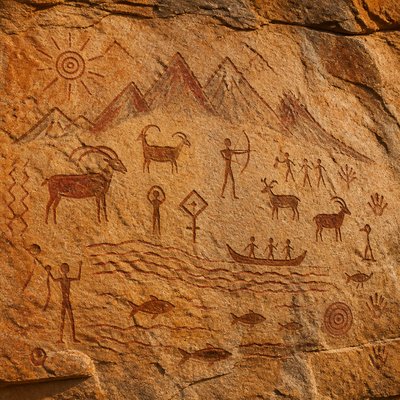
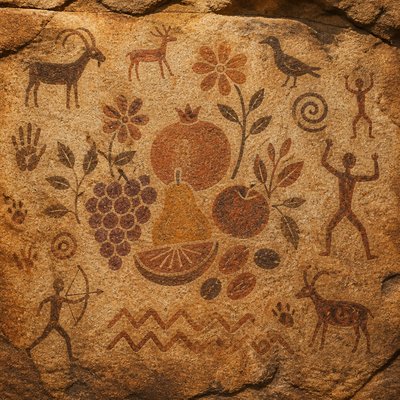
Weathered rocks, cave surfaces, and restrained petroglyph-like motifs can suggest Jamaica's Indigenous archaeological heritage. The marks work best as contextual visual references, not as fabricated translations or invented ceremonial symbols.
Georgian veranda architecture
White timber galleries, columns, broad roofs, louvered shutters, fretwork, and symmetrical great-house façades create a recognizable architectural framework. Their order contrasts with the organic irregularity of the landscape.
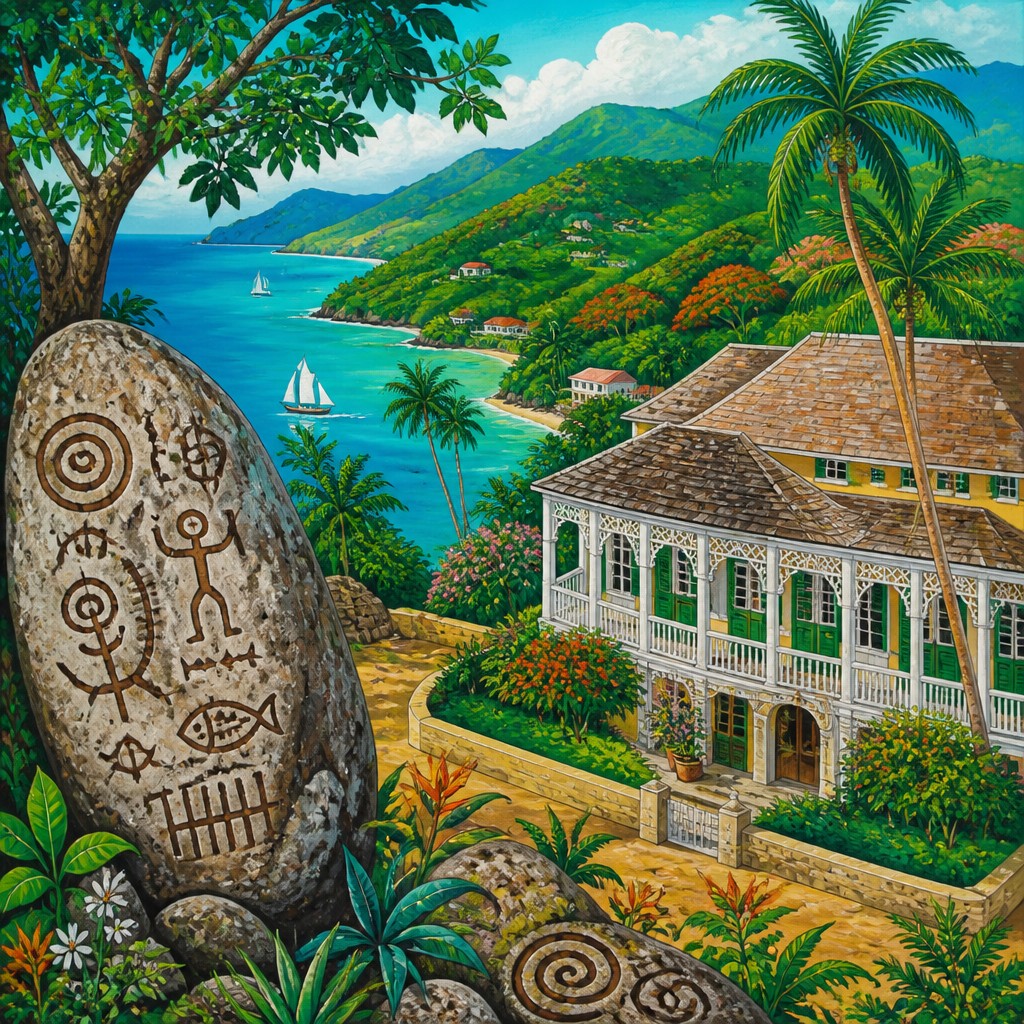
Tropical island light
Strong sunlight, clear atmospheric distance, reflective water, and saturated shadows shape the palette. Hillsides and coastlines often appear luminous rather than hazy or muted.
Layered historical atmosphere
The style places Indigenous traces, colonial structures, African-diasporic folk sensibility, and contemporary Caribbean nature in the same visual field. This layering gives otherwise simple scenes a sense of memory and place.
Jamaican Prompt Ideas
Start from an idea — each one opens the generator with the style ready to go. See all 40 Jamaican prompts →
How to Create Jamaican Art
Master the craft step by step — or skip straight to creating. Read the full guide →
- 1
Block in the composition
Begin with broad, flat shapes for sky, sea, hills, architecture, and foreground vegetation before adding details. Use a high horizon or stepped layers to make the landscape feel emblematic rather than conventionally photographic.
- 2
Build a Caribbean palette
Work with saturated turquoise, leaf green, sunlit yellow, coral, terracotta, deep blue, and chalky white. Reserve darker tones for anchoring verandas, rocks, foliage, and symbolic marks instead of modeling every surface gradually.
- 3
Keep the mark-making handmade
In paint, use broad brushes, dry-brush texture, irregular outlines, and selectively visible underpainting. Digitally, emulate these qualities with textured brushes, imperfect masks, slight contour variation, and layered pigment grain.
- 4
Balance architecture and nature
Place a clearly designed Georgian veranda or great-house façade against freely shaped hills, palms, stone, and water. Repeat architectural rhythms such as columns and shutters, then break the surrounding forms into intuitive, asymmetrical shapes.
- 5
Use symbols with cultural care
Reference documented Taíno petroglyph forms as archaeological texture and avoid presenting invented symbols as authentic writing or spiritual knowledge. In a prompt, specify weathered stone markings, respectful historical reference, and no fantasy glyphs if accuracy matters.
- 6
Describe the visual hierarchy in prompts
For digital or AI creation, state the subject first, then request flattened vivid color, intuitive folk painting, Taíno-inspired weathered stone imagery, Georgian veranda details, tropical hills, and strong coastal light. Add exclusions such as photorealism, muted colors, glossy 3D rendering, or excessive perspective when needed.
The Story
History & Origins of Jamaican
This style has no single founding date or canonical school. Its lineage draws on Jamaica's intuitive art traditions, in which self-taught and community-based artists have often used direct color, symbolic imagery, simplified forms, and spiritual or visionary subjects rather than academic naturalism. It also references the island's layered cultural history, including Indigenous Taíno heritage, African diasporic traditions, European colonial architecture, and modern Caribbean visual culture.
The combination described here is best understood as a contemporary synthesis. Taíno petroglyphs belong to an Indigenous archaeological record and should not be treated as a freely interchangeable decorative alphabet; when used in new work, they are most responsibly approached as historical visual references rather than assigned invented meanings. Georgian verandas similarly evoke Jamaica's colonial built environment, while tropical hills and turquoise water connect the composition to present-day landscape experience.
Influences: The style relates to Jamaican intuitive art, Caribbean folk and visionary painting, African-diasporic color traditions, Indigenous Taíno archaeological imagery, and the decorative architecture of Georgian-era Caribbean estates. It also shares qualities with naive painting, outsider art, tropical landscape painting, symbolic primitivism, and contemporary heritage illustration, while remaining distinct from strict historical reenactment or documentary realism.
Frequently Asked Questions
Is Jamaican art style a recognized historical art movement?
No. In this context, Jamaican art style describes a contemporary synthesis rather than a formally established movement with a fixed manifesto or period. It draws particularly on Jamaican intuitive art, Caribbean landscape imagery, Taíno archaeological references, and Georgian colonial architecture.
What defines the visual identity of this style?
Its key features are flattened vivid color, simplified folk-like forms, tropical light, emerald hills, turquoise water, and white Georgian verandas. Weathered stone and restrained petroglyph-inspired marks add a symbolic and historical dimension.
How is it different from Jamaican intuitive art?
Jamaican intuitive art is a broader and historically grounded field associated with self-taught, community-based, and visionary practices in Jamaica. This style adapts some of that directness and symbolism while deliberately combining it with architectural and archaeological references that are not required in every intuitive artwork.
How can I make a painting in this style by hand?
Start with a simplified landscape and a limited set of saturated colors, then add a veranda or great-house structure as a strong geometric anchor. Use broad brushstrokes, uneven contours, visible texture, and symbolic stone details instead of detailed academic modeling.
Can Taíno symbols be used decoratively in this style?
They can be referenced thoughtfully as part of Jamaica's Indigenous archaeological heritage, but they should not be presented as invented translations, sacred formulas, or a generic decorative alphabet. Use documented imagery where possible, preserve its historical context, and distinguish contemporary interpretation from cultural authority.
Where is this aesthetic useful?
It suits landscape paintings, cultural illustration, travel imagery, heritage interpretation, editorial art, murals, posters, and architectural concepts with a Caribbean setting. It is most effective when the scene communicates place, memory, and color rather than aiming for photographic accuracy.
Create your first Jamaican artwork
Describe anything — or upload a photo — and see it in Jamaican Art Style in seconds.
Related Styles
Discover similar art styles