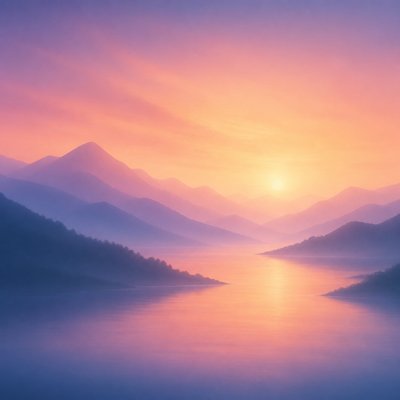
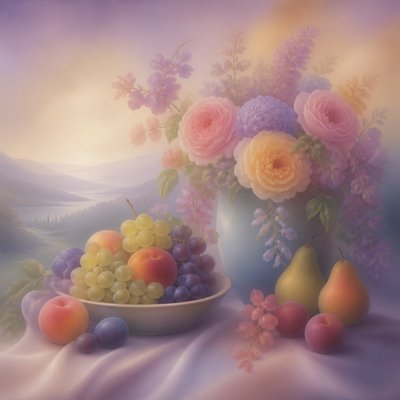
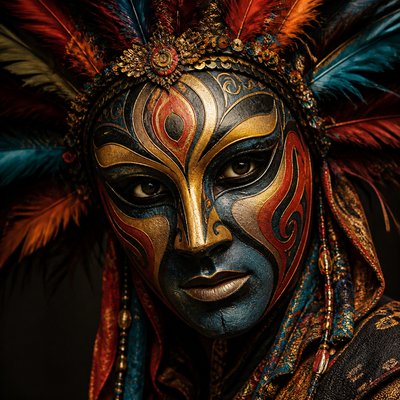
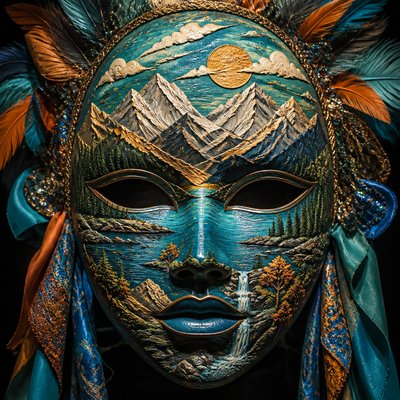
Jaipur Art Style
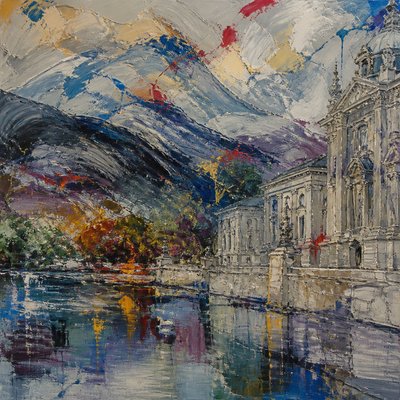
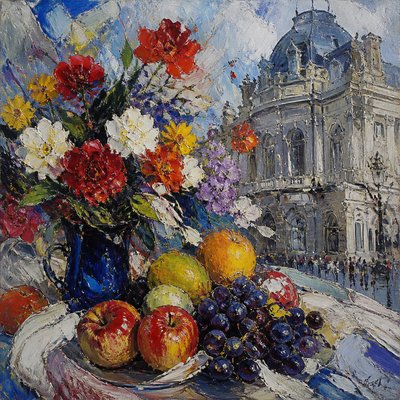
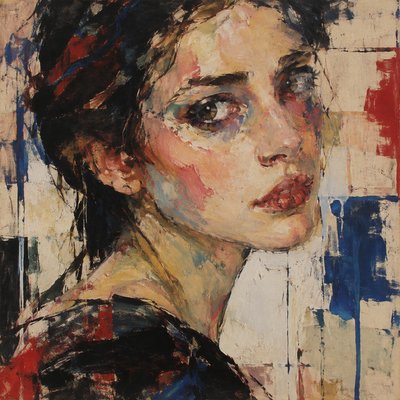
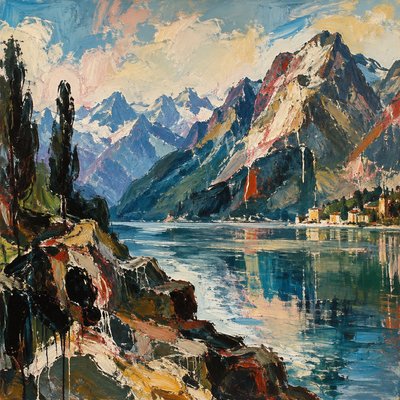
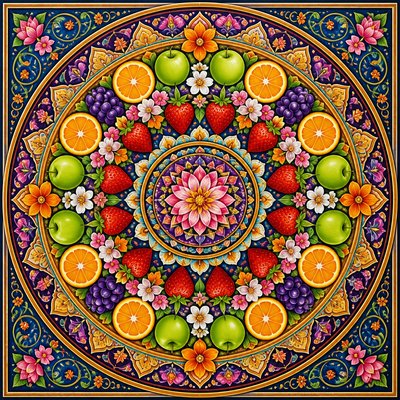
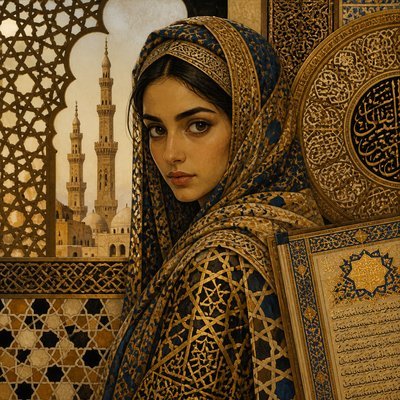
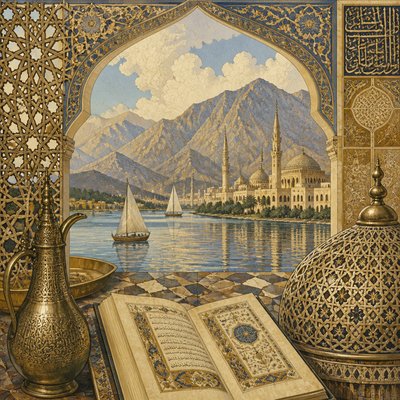
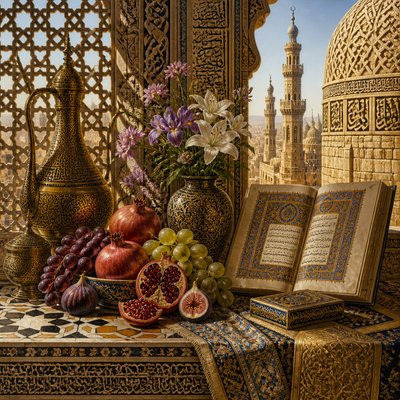
Explore Jaipur art style: Rajput miniature detail, pink sandstone architecture, jewel-toned meenakari enamel, and radiant gold ornament.
Instantly rendered in Jaipur — or transform a photo
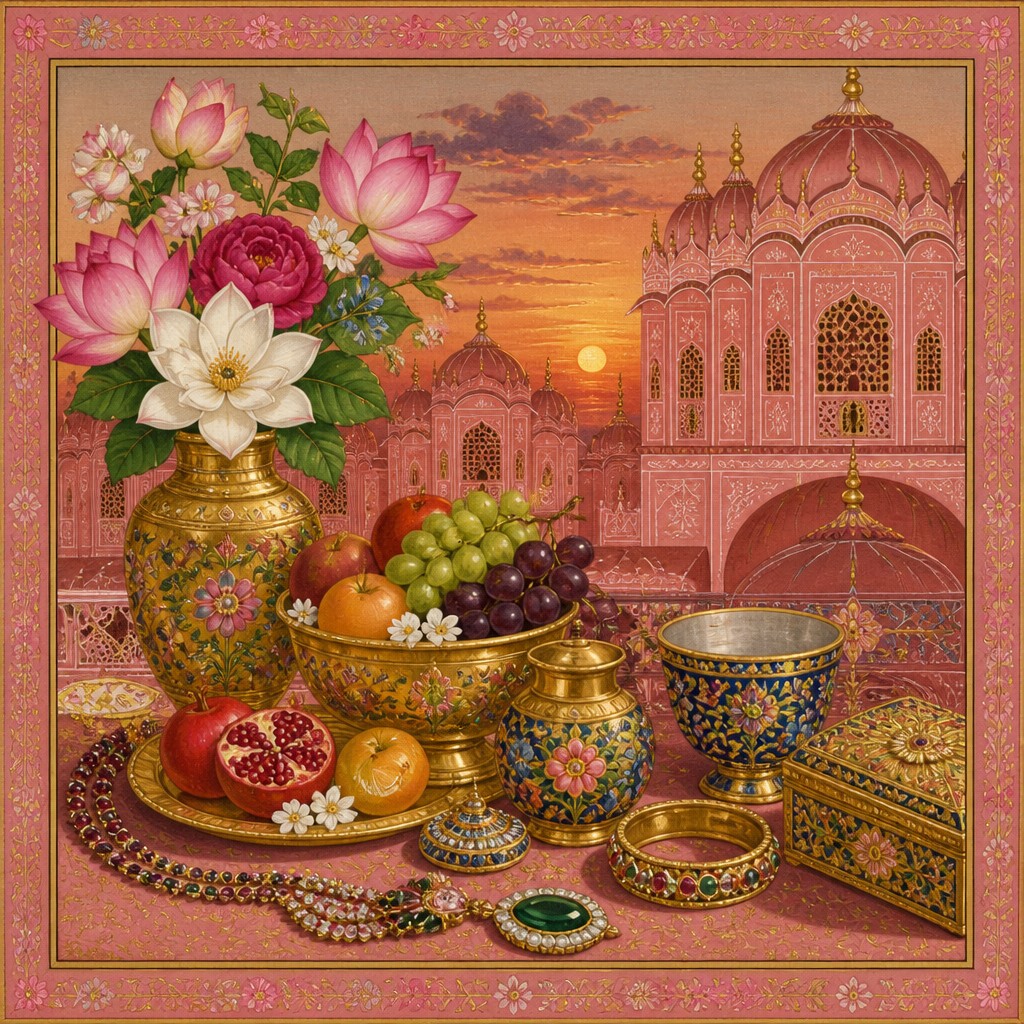
Jaipur Gallery
Tap any artwork to explore it
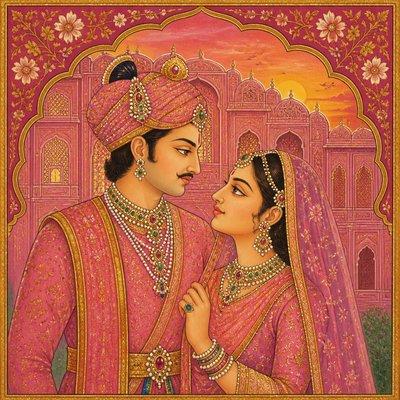
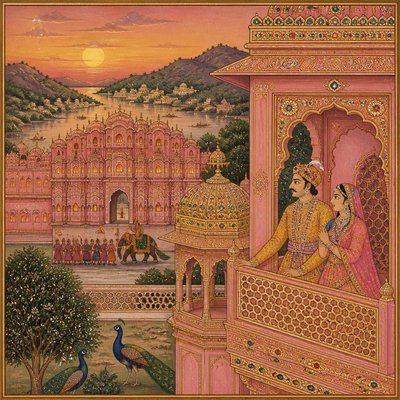
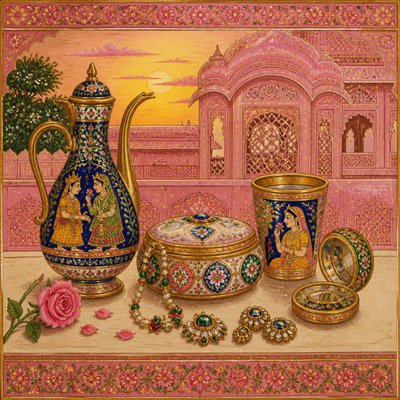
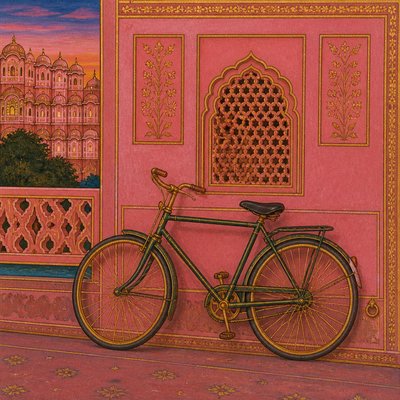
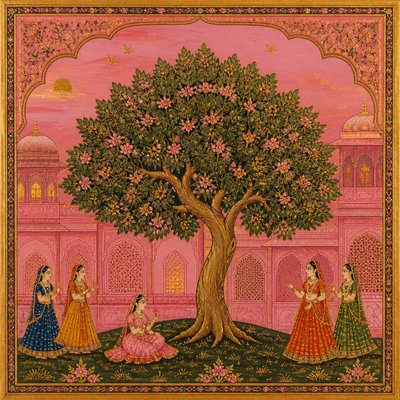
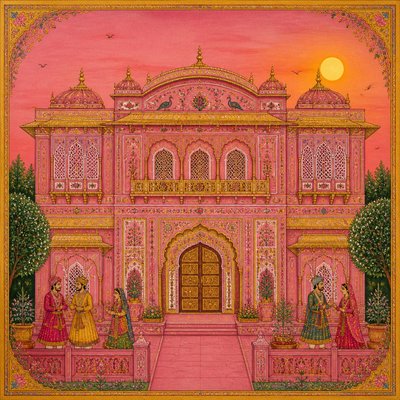
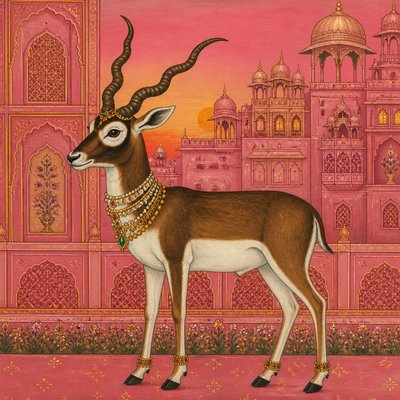
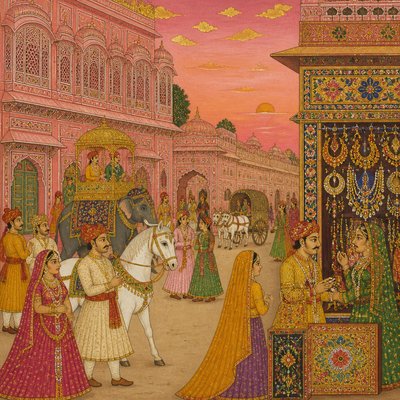
What is Jaipur Art Style?
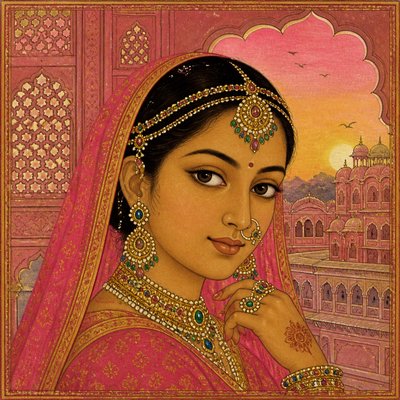
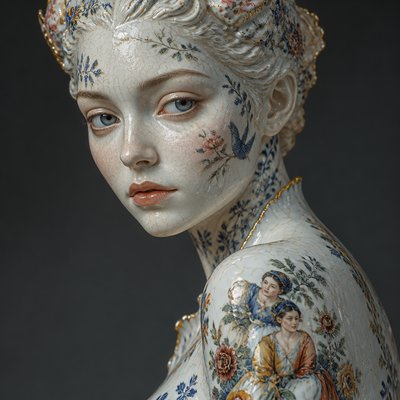
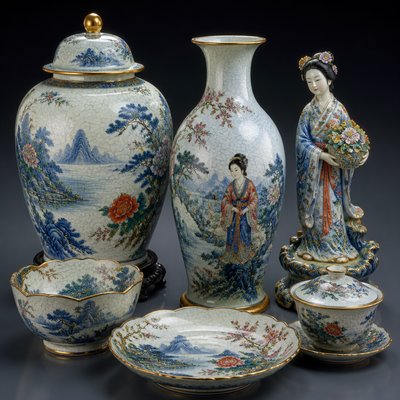
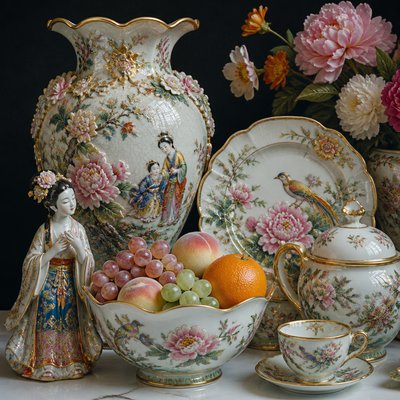
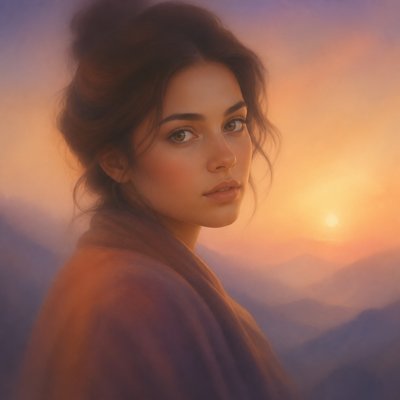
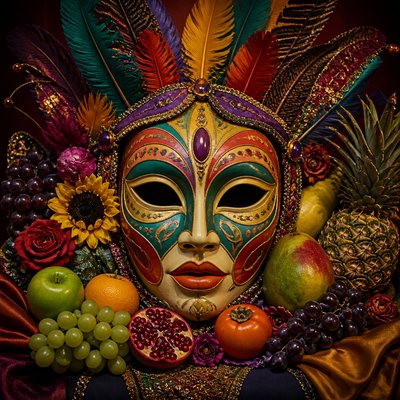
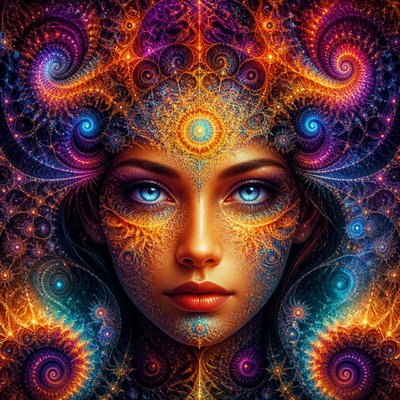
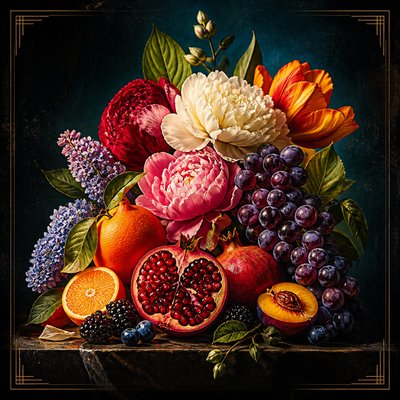
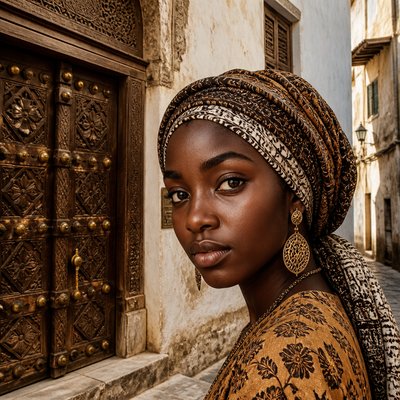
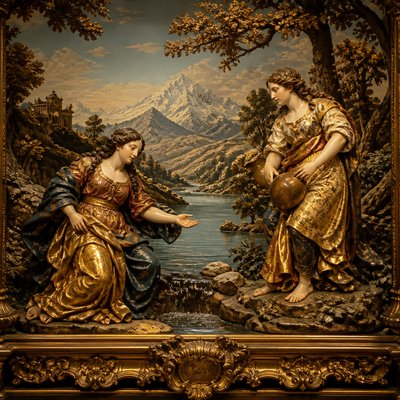
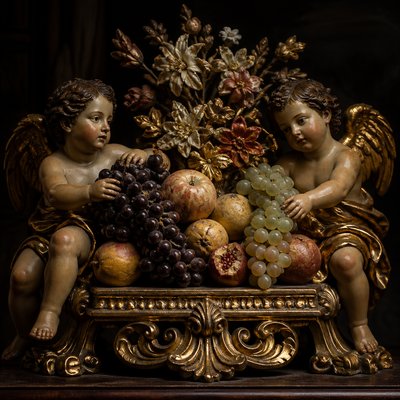
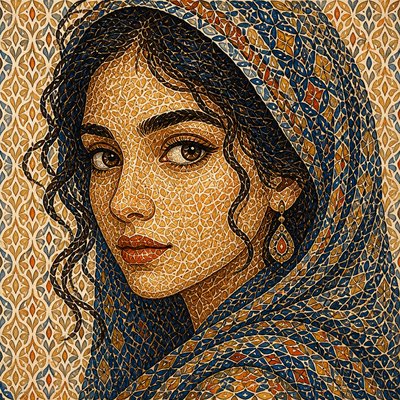
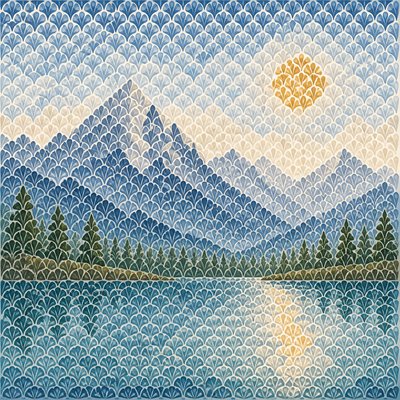
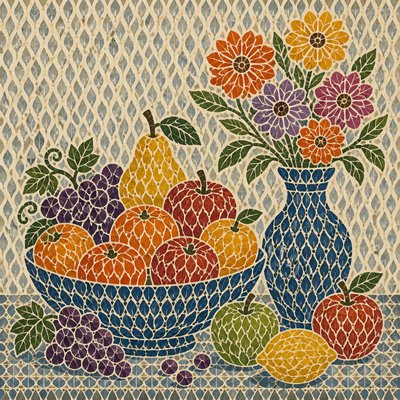
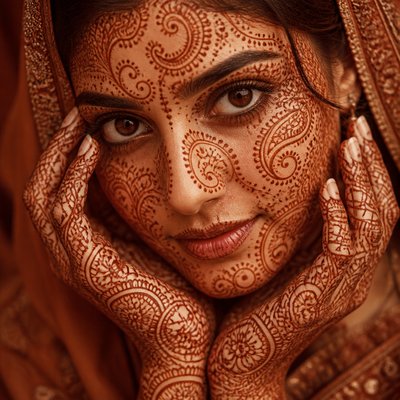
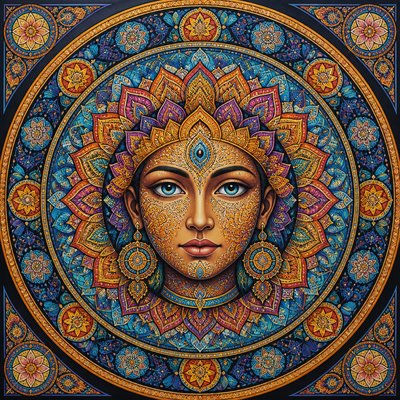
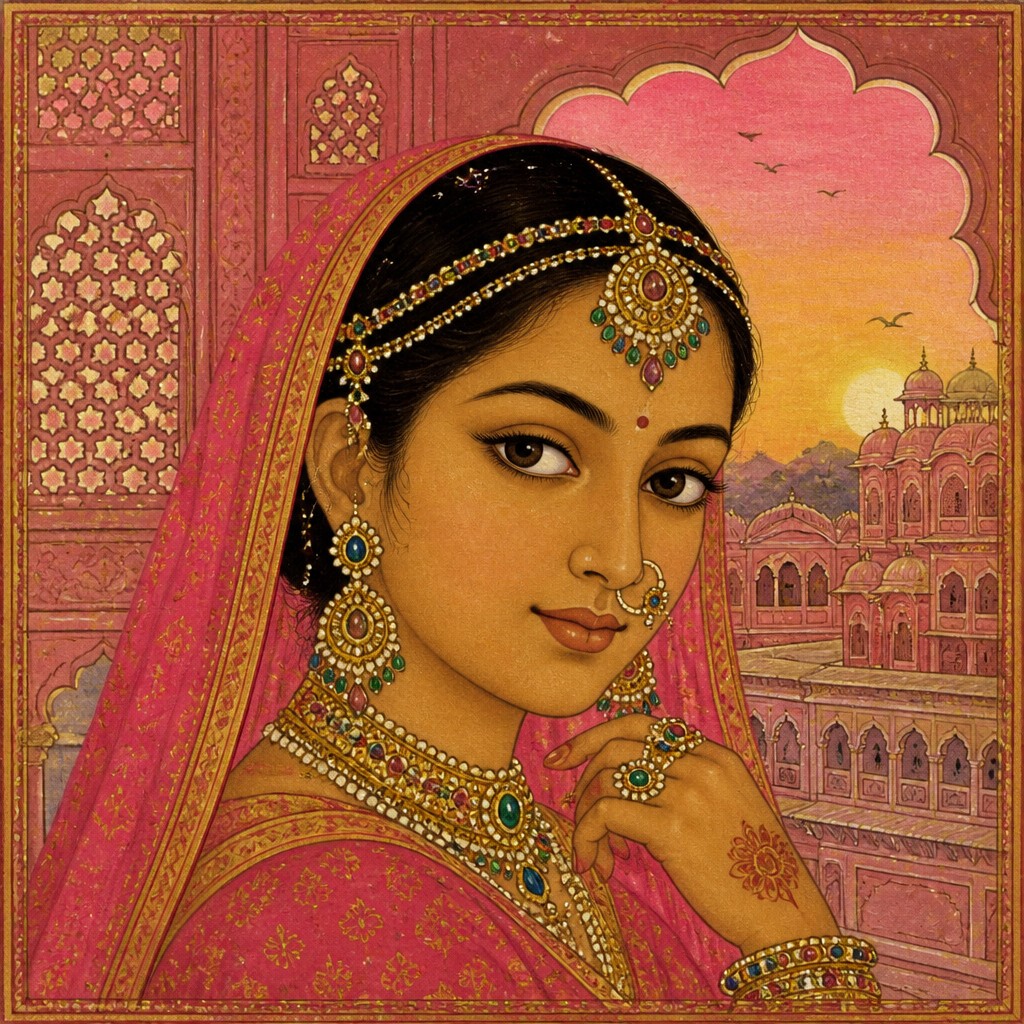
Jaipur art style is a contemporary visual synthesis rooted in the courtly traditions of Rajasthan. It combines the precise linework and compact storytelling of Rajput miniature painting with Jaipur's rose-pink architectural setting, ornate metalwork, saturated pigments, and the jewel-like surfaces of meenakari enamel. Figures, animals, palaces, gardens, and ceremonial objects are arranged with deliberate clarity rather than illusionistic depth.
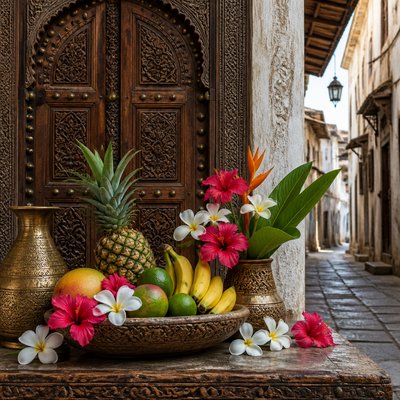
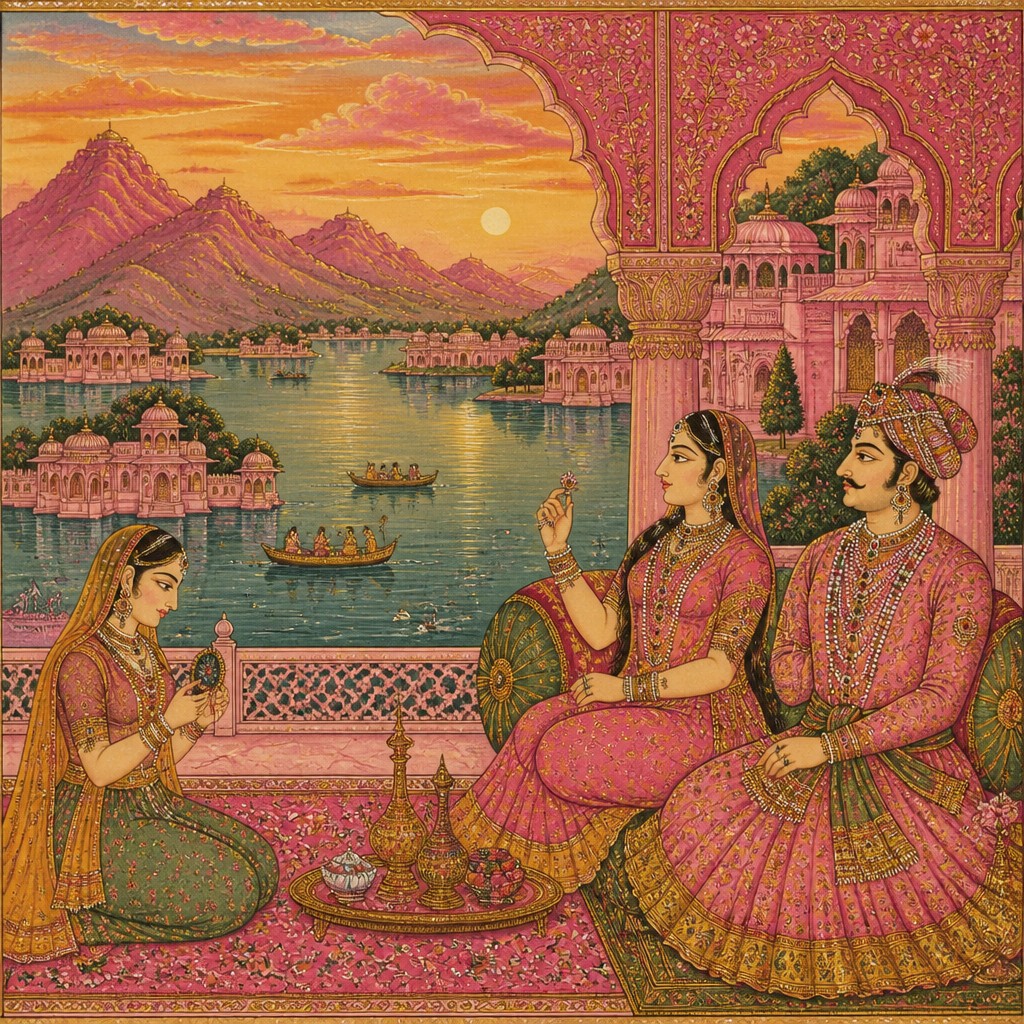
Its visual identity depends on controlled ornament. Flat or shallow decorative backdrops, patterned textiles, lattice screens, gold accents, and outlined silhouettes create a richly detailed surface, while pink sandstone, vermilion, turquoise, emerald, sapphire, and warm metallic tones establish a distinctive palette. The style looks simultaneously architectural, ceremonial, and intimate, translating the sensory richness of Jaipur's courtly arts into a unified image language.
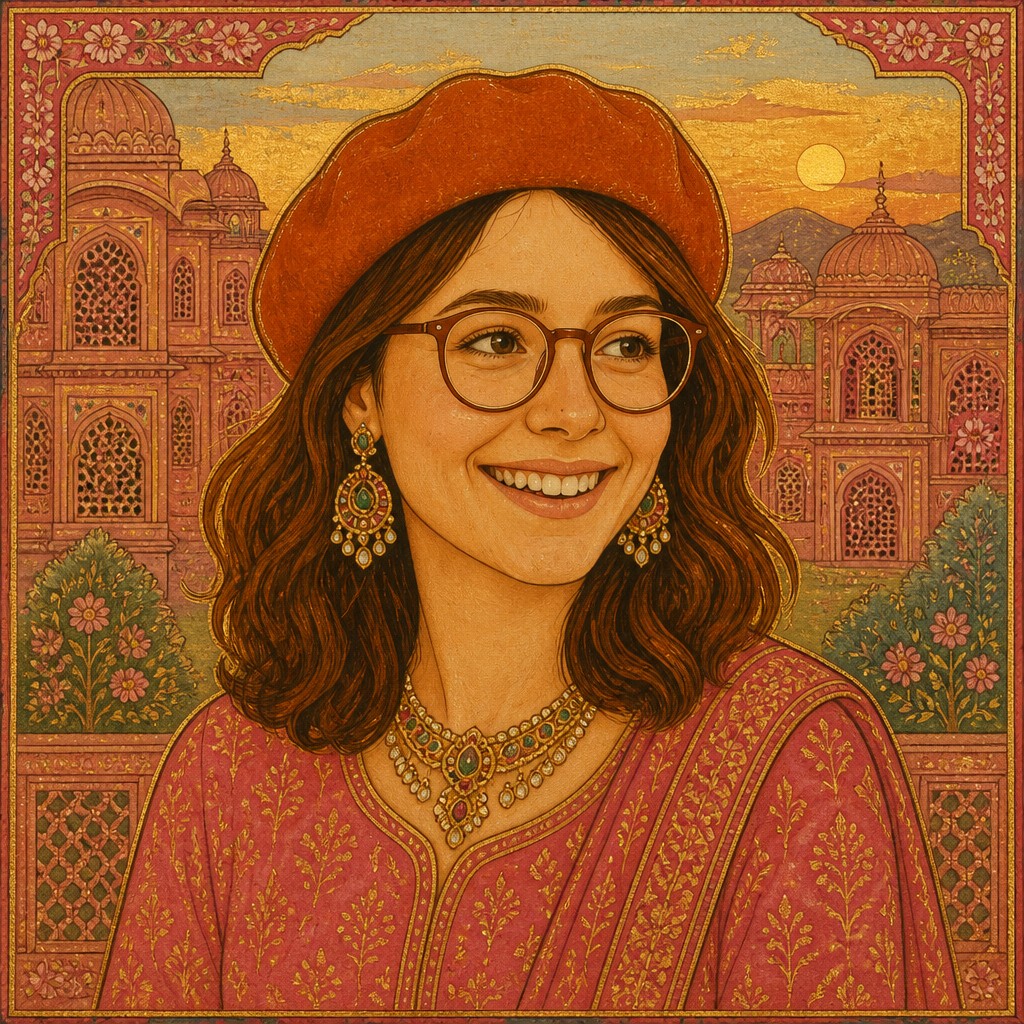
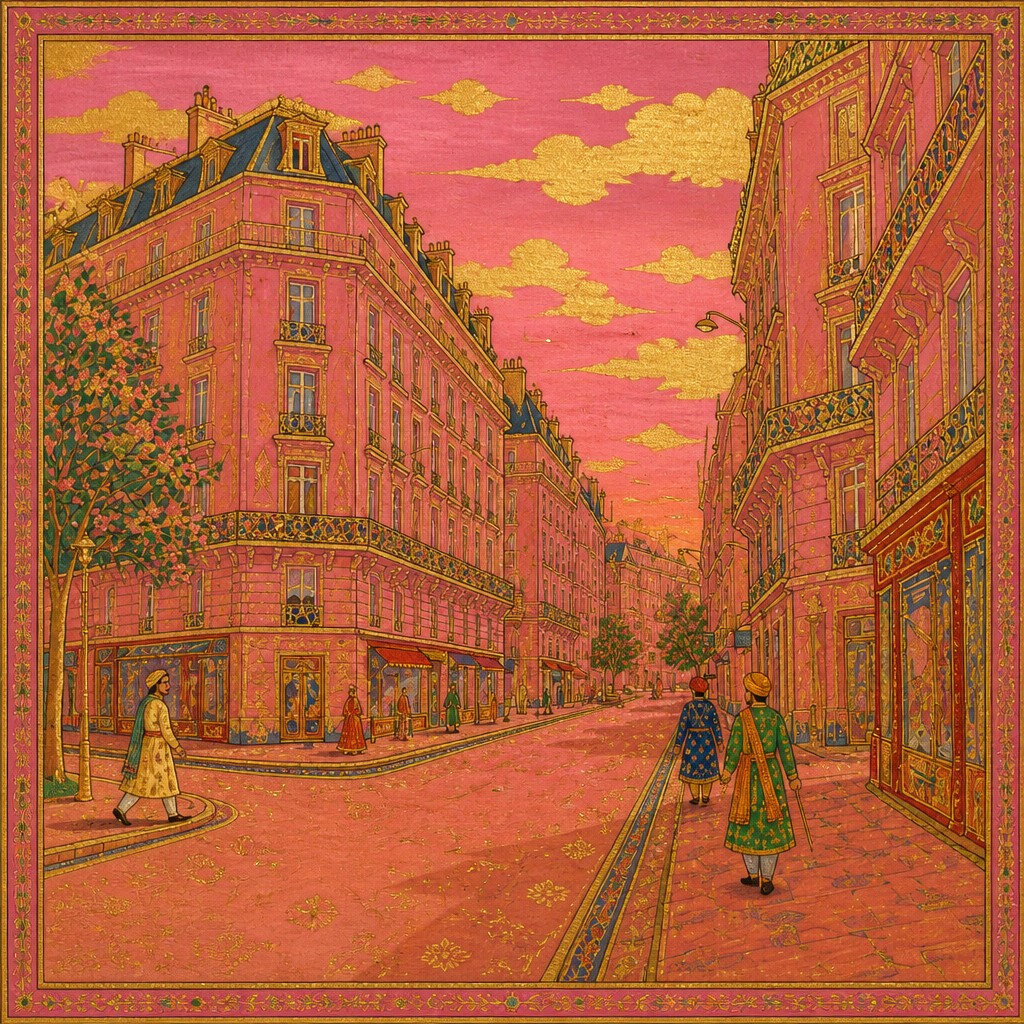
Try It On Your Photos
Upload any photo and convert it into Jaipur Art Style — drag the sliders to compare before and after.


What Defines Jaipur Art Style
The signature details, up close
Rajput miniature linework
Figures, animals, foliage, and architectural details are defined by delicate, confident outlines and carefully controlled silhouettes. Small-scale details carry narrative and decorative meaning.
Pink sandstone architecture
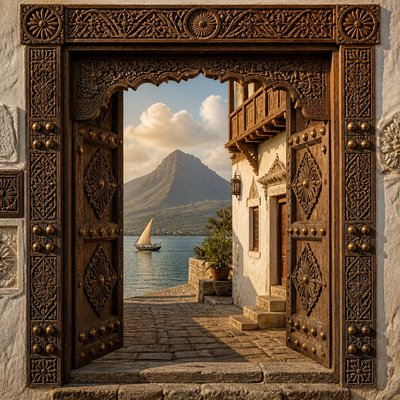
Arched gateways, palace courtyards, jali screens, balconies, and carved facades provide a warm rose, salmon, or terracotta structural setting. Repeated geometry gives the composition rhythm.
Flat decorative space
Scenes favor stacked planes, patterned grounds, and shallow depth over naturalistic perspective. Borders, textile motifs, and ornamental framing often function as active parts of the composition.
Jewel-toned palette
Saturated turquoise, emerald, ruby, sapphire, coral, saffron, and magenta contrast with pink stone and luminous gold. Color is chosen for symbolic and decorative intensity rather than strict optical realism.
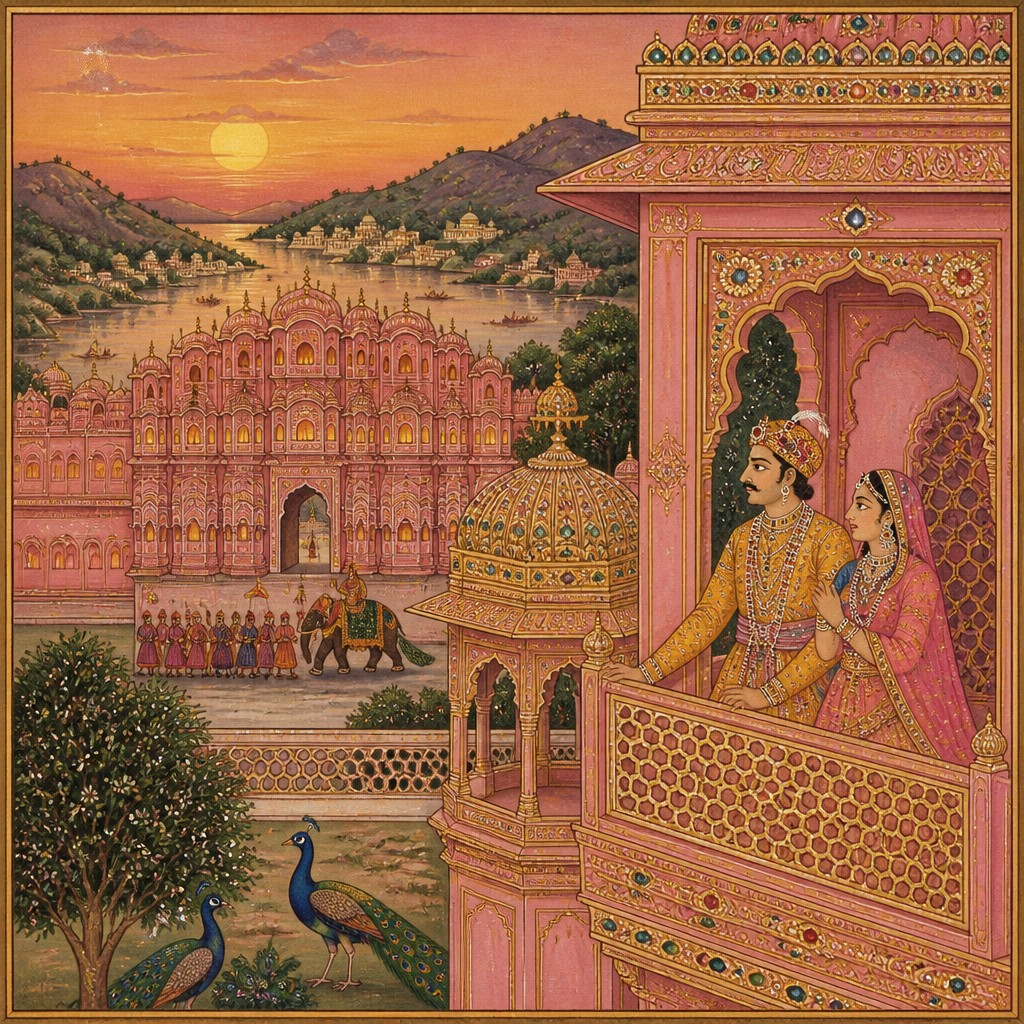
Meenakari and gem-work surfaces
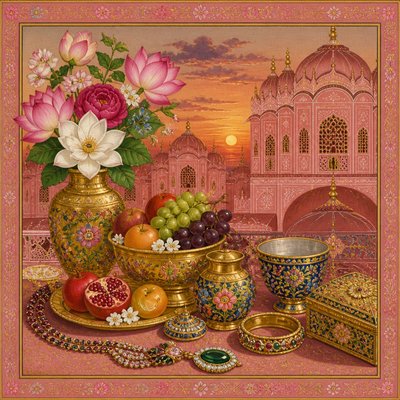
Enamel-like color fields, polished metal, engraved details, and inset stones suggest the tactile richness of Jaipur jewelry. Highlights should appear concentrated and deliberate, as if catching warm sunlight.
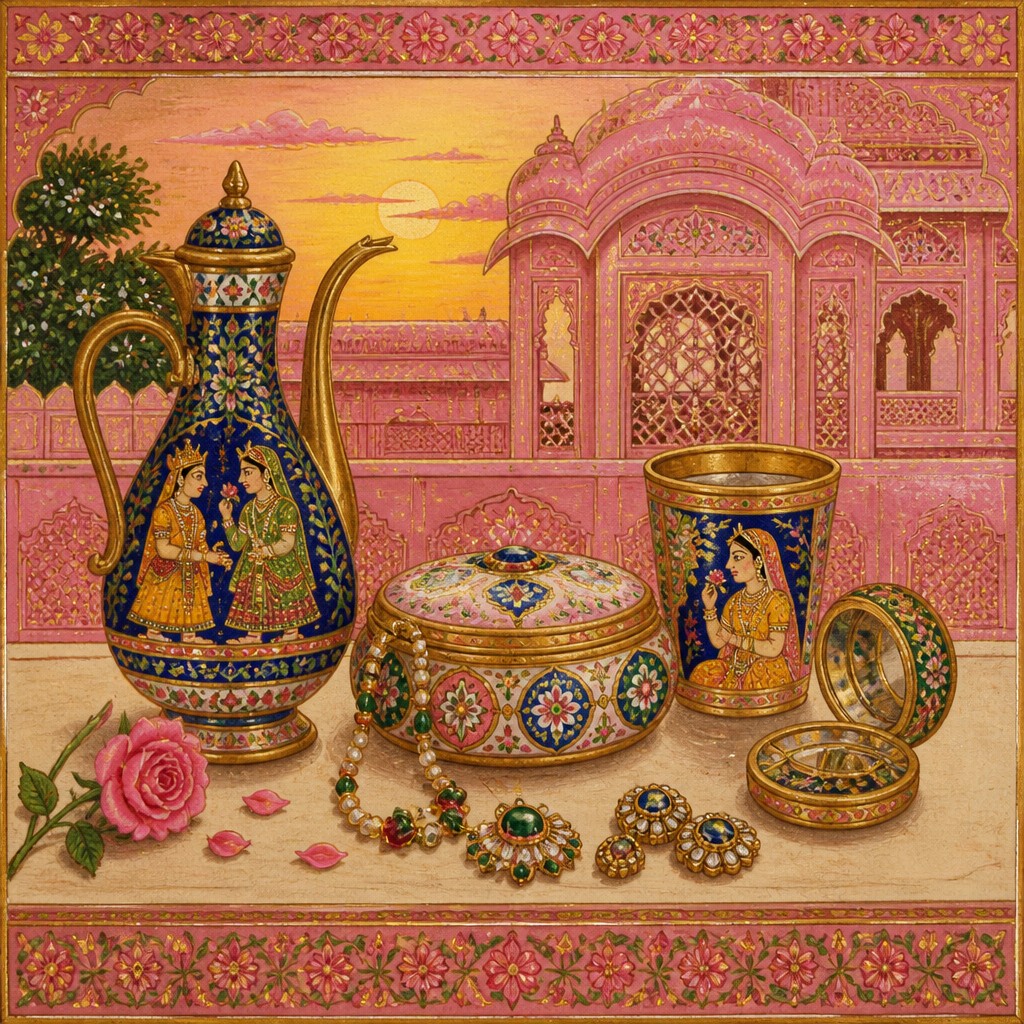
Courtly and ceremonial subjects
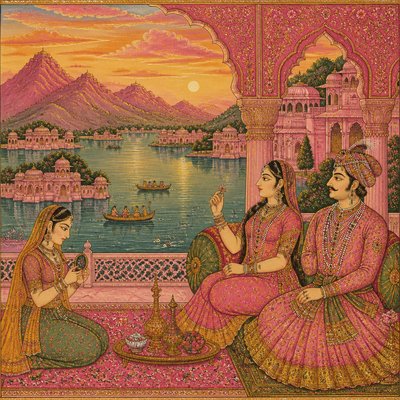
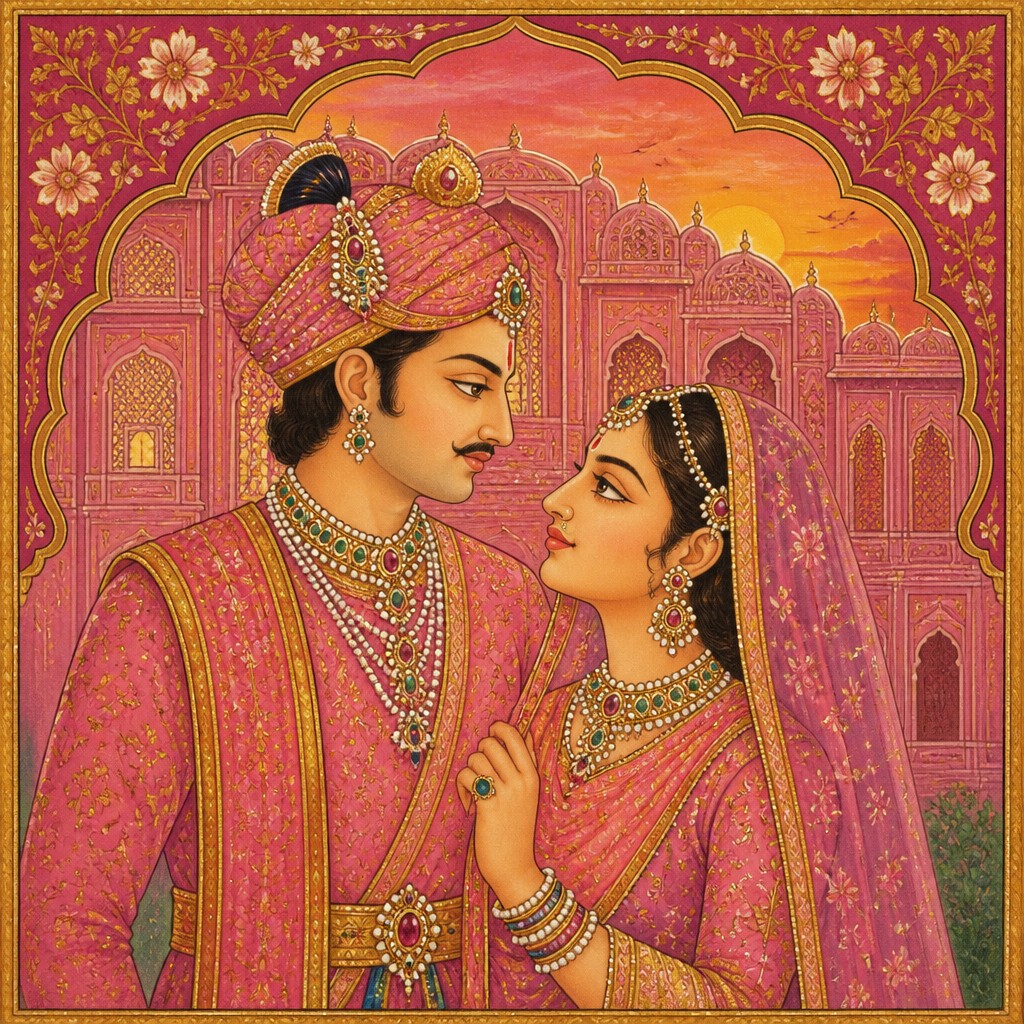
Palace gatherings, musicians, dancers, processions, royal gardens, elephants, horses, and finely dressed figures suit the style. Even ordinary subjects can be elevated through formal posture and ornamental staging.
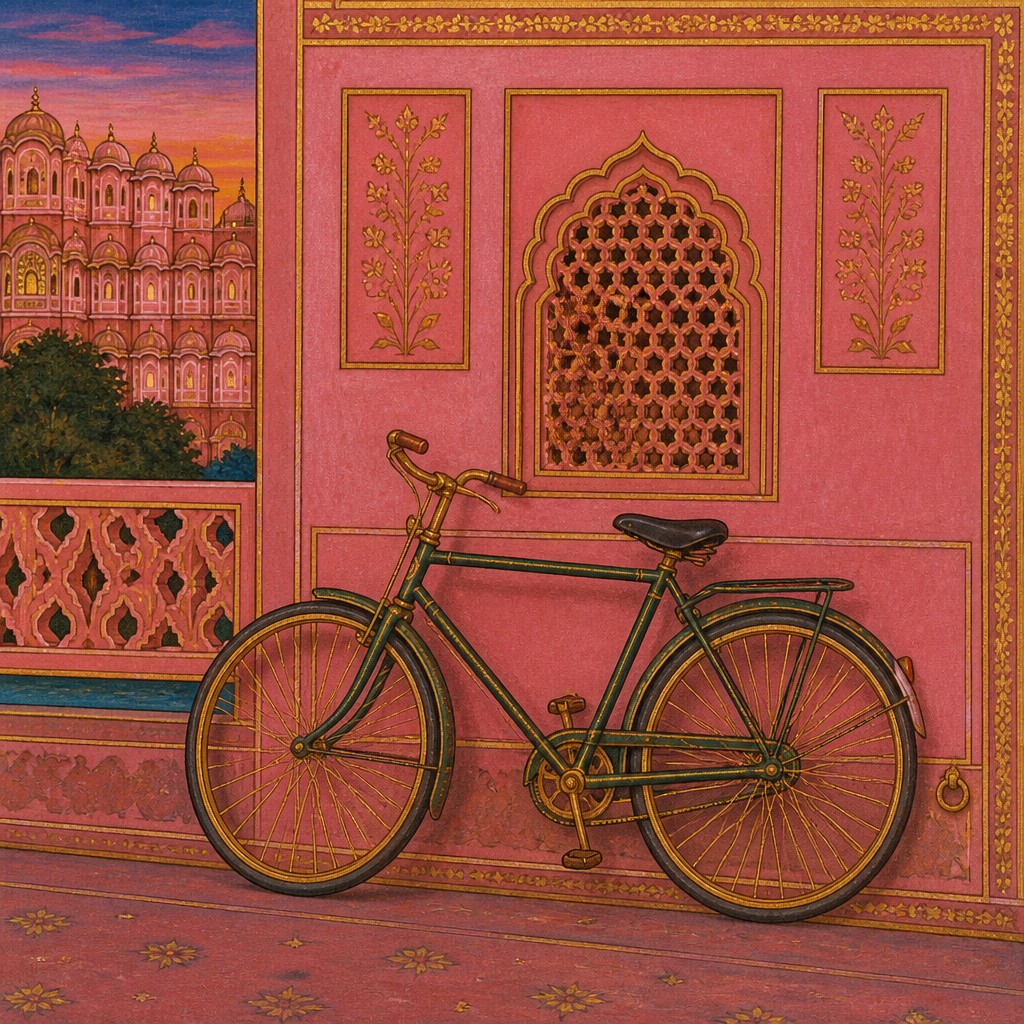
Gold-accented finish
Thin gold borders, jewelry highlights, garment trim, and architectural details unify the image. Gold works best as a precise accent against matte pigment fields, not as an indiscriminate metallic wash.
Jaipur Prompt Ideas
Start from an idea — each one opens the generator with the style ready to go. See all 40 Jaipur prompts →
How to Create Jaipur Art
Master the craft step by step — or skip straight to creating. Read the full guide →
- 1
Build a miniature-style composition
Begin with a clear central subject, a shallow layered setting, and a strong border or framing device. Use flattened forms and deliberate spacing before adding small decorative details.
- 2
Use traditional pigment logic
For physical work, combine opaque gouache or watercolor with fine brushes, prepared paper, and carefully burnished surfaces; reserve metallic paint or leaf for selected accents. In digital work, imitate this with matte color blocks, crisp contour lines, and restrained texture.
- 3
Design the palette around stone and jewels
Set rose-pink, coral, or terracotta against a compact group of turquoise, green, red, blue, saffron, and gold. Keep the colors saturated but organized so the image remains legible.
- 4
Add architectural pattern
Use arches, lattice screens, carved columns, domes, balconies, and repeating floral or geometric motifs to establish a Jaipur-associated environment. Maintain consistent symmetry and scale across the structure.
- 5
Suggest enamel and metal
Render meenakari-inspired objects with clean jewel-colored insets enclosed by dark or gold outlines, then add small specular highlights. Avoid excessive blur, which weakens the handcrafted enamel effect.
- 6
Write focused generation prompts
Name the subject, pose, setting, palette, materials, and composition, then request fine outlines, flat decorative planes, pink sandstone, enamel color, and selective gold detail. For photo transformations, preserve the subject's pose and identity while specifying miniature-like linework and ornamental simplification.
The Story
History & Origins of Jaipur
Jaipur art style is best understood as an invented or hybrid contemporary label rather than a single historically codified movement. Its principal lineage comes from the Rajput miniature traditions of northwestern India, including the Jaipur courtly painting tradition that developed from the eighteenth century onward through regional practice and sustained exchange with Mughal painting. These works commonly used opaque mineral and organic pigments, fine brushes, burnished paper, ornamental borders, and carefully organized scenes of court life, devotion, nature, and literature.
The architectural and craft references draw on Jaipur, founded in 1727, whose planned cityscape became associated with painted pink facades and carved or perforated stonework. The city's specialist jewelry culture also includes meenakari, a technique of fusing colored glass enamel to metal, alongside gem setting and repoussé ornament. The modern style combines these distinct traditions into a decorative visual vocabulary rather than claiming that all of them historically appeared together in one school.
Influences: The style draws primarily from Rajput and Mughal miniature painting, especially their compact compositions, refined contouring, opaque pigments, ornamental borders, and courtly subject matter. It also incorporates the planned architecture and painted facades of Jaipur, North Indian jali carving, Rajasthani textile pattern, meenakari enamelwork, gemstone setting, and broader Indian decorative arts. Its use of flat space and saturated color can also recall manuscript illumination and other highly patterned narrative painting traditions, but its defining combination of pink architecture and Jaipur jewelry craft is a modern synthesis.
Frequently Asked Questions
What defines Jaipur art style?
It is defined by the combination of Rajput miniature-inspired linework, pink sandstone architecture, jewel-toned pigments, gold ornament, and meenakari-like enamel surfaces. Courtly figures, palace scenes, animals, and decorative borders are common subjects.
Is Jaipur art style a historical art movement?
Not in the strict sense. The label describes a contemporary hybrid aesthetic assembled from historically distinct Jaipur and Rajasthani traditions, including miniature painting, architecture, jewelry, and enamel craft.
How is it different from general Indian miniature painting?
Indian miniature painting covers many regional schools and subjects, while this style emphasizes Jaipur-specific visual associations: rose-pink buildings, lattice architecture, ceremonial court scenes, and vivid enamel and gemstone ornament. It is a selective synthesis rather than a complete account of miniature traditions.
What colors work best for this style?
A foundation of rose pink, coral, terracotta, cream, or warm red works well with emerald, turquoise, sapphire, ruby, saffron, and gold. Use a limited palette with strong contrast so the jewel tones remain decorative instead of chaotic.
How can I make an image in this style?
Start with a clear subject and specify a shallow, patterned composition, fine contour lines, pink sandstone architecture, saturated jewel colors, enamel-like surfaces, and selective gold detail. Traditional artists can use opaque watercolor or gouache and fine brushes, while digital artists can recreate the look with crisp masks, textured pigment layers, and controlled ornament.
Where is Jaipur art style commonly used?
It suits illustrated travel scenes, cultural posters, book and editorial art, invitations, packaging, textile concepts, jewelry presentations, and decorative portraits. It works especially well when architecture, ceremonial dress, or crafted objects are central to the image.
Create your first Jaipur artwork
Describe anything — or upload a photo — and see it in Jaipur Art Style in seconds.
Related Styles
Discover similar art styles