Indonesian Art Style
Explore Indonesian art style: batik parang and kawung motifs, wayang silhouettes, temple detail, and indigo, soga brown, and cream.
Instantly rendered in Indonesian — or transform a photo
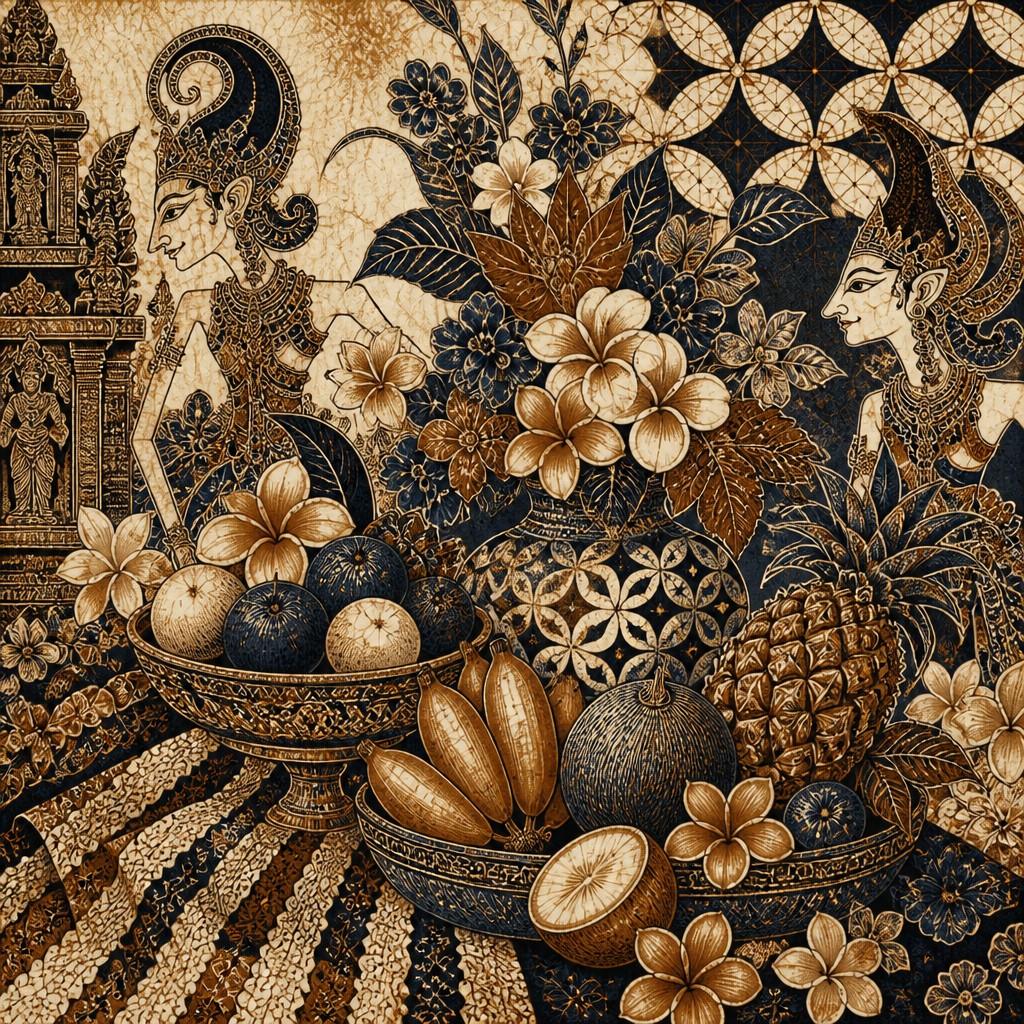
Indonesian Gallery
Tap any artwork to explore it
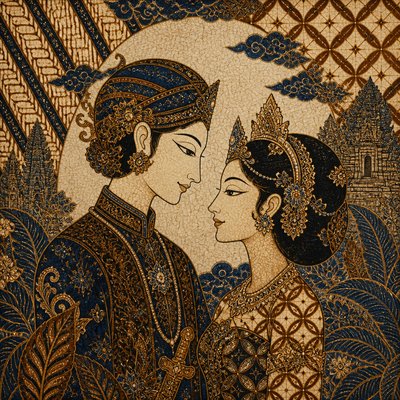
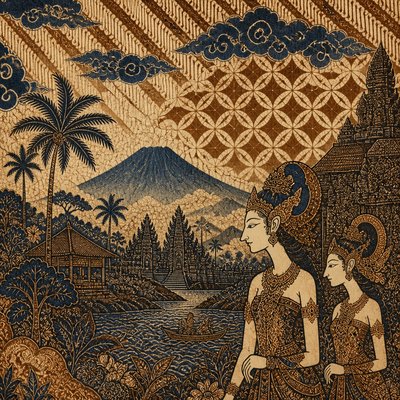
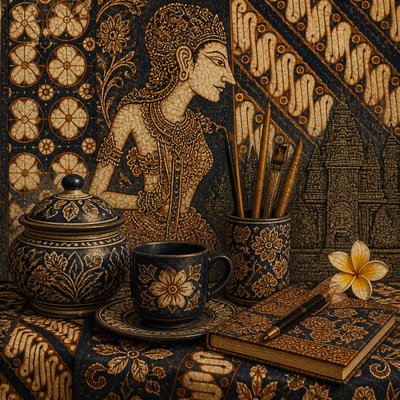
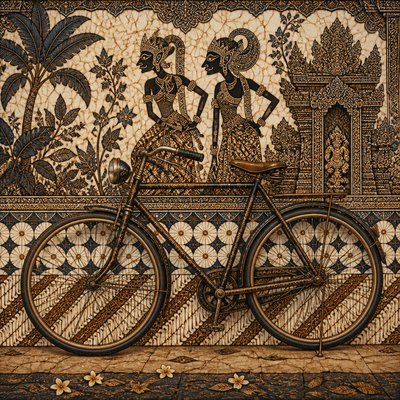
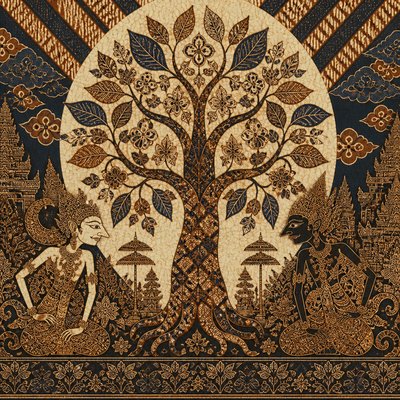
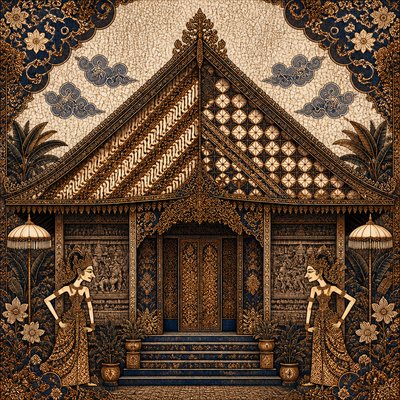
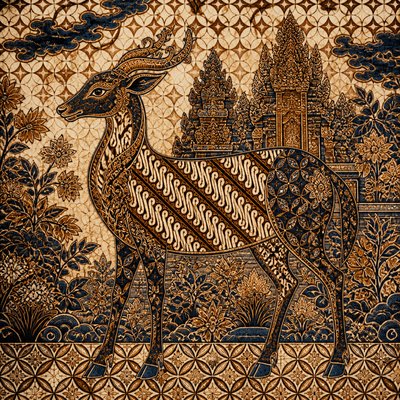
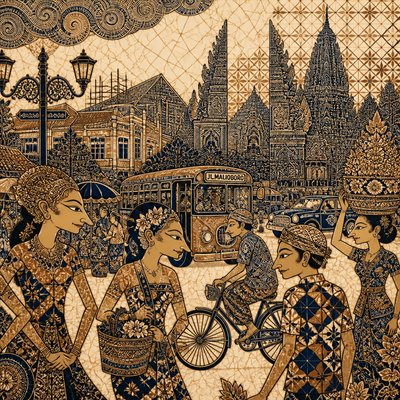
What is Indonesian Art Style?
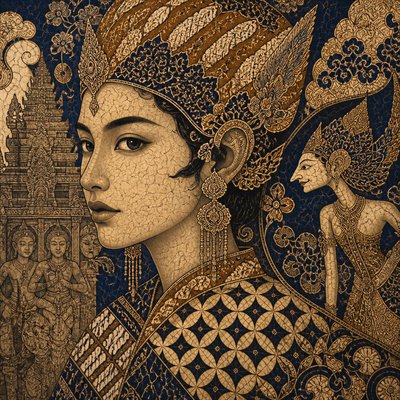
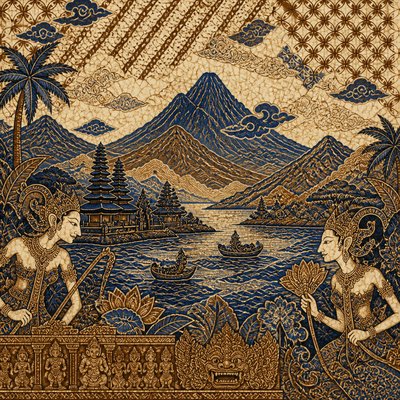
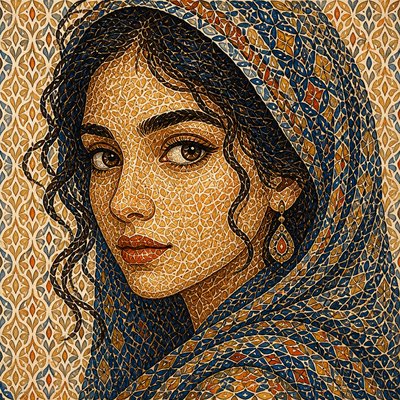
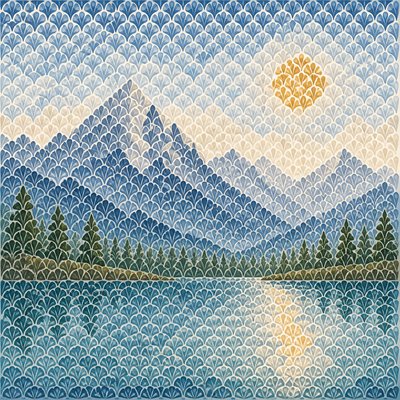
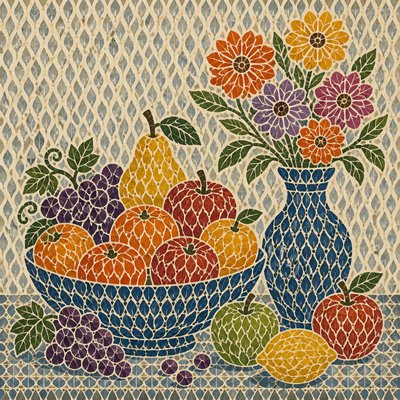
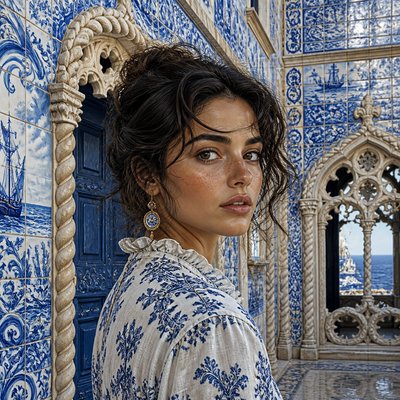
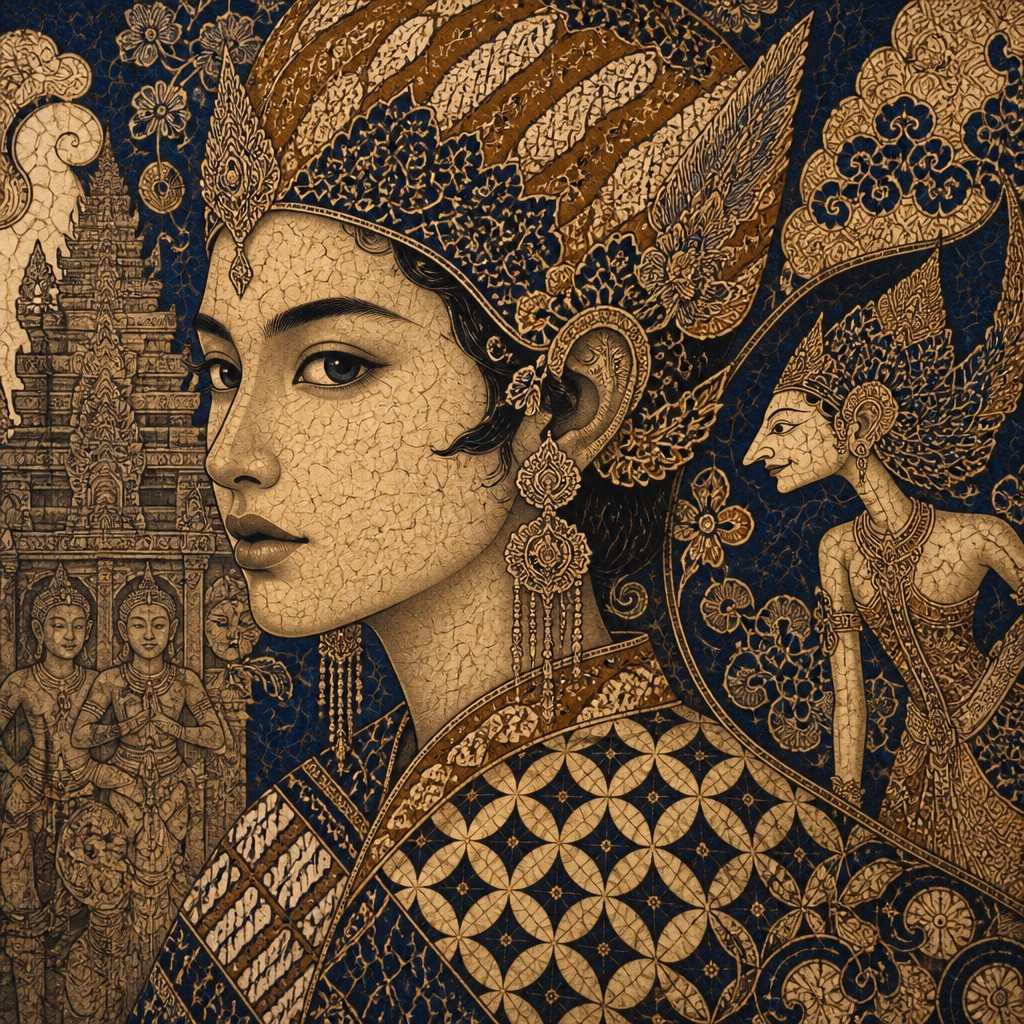
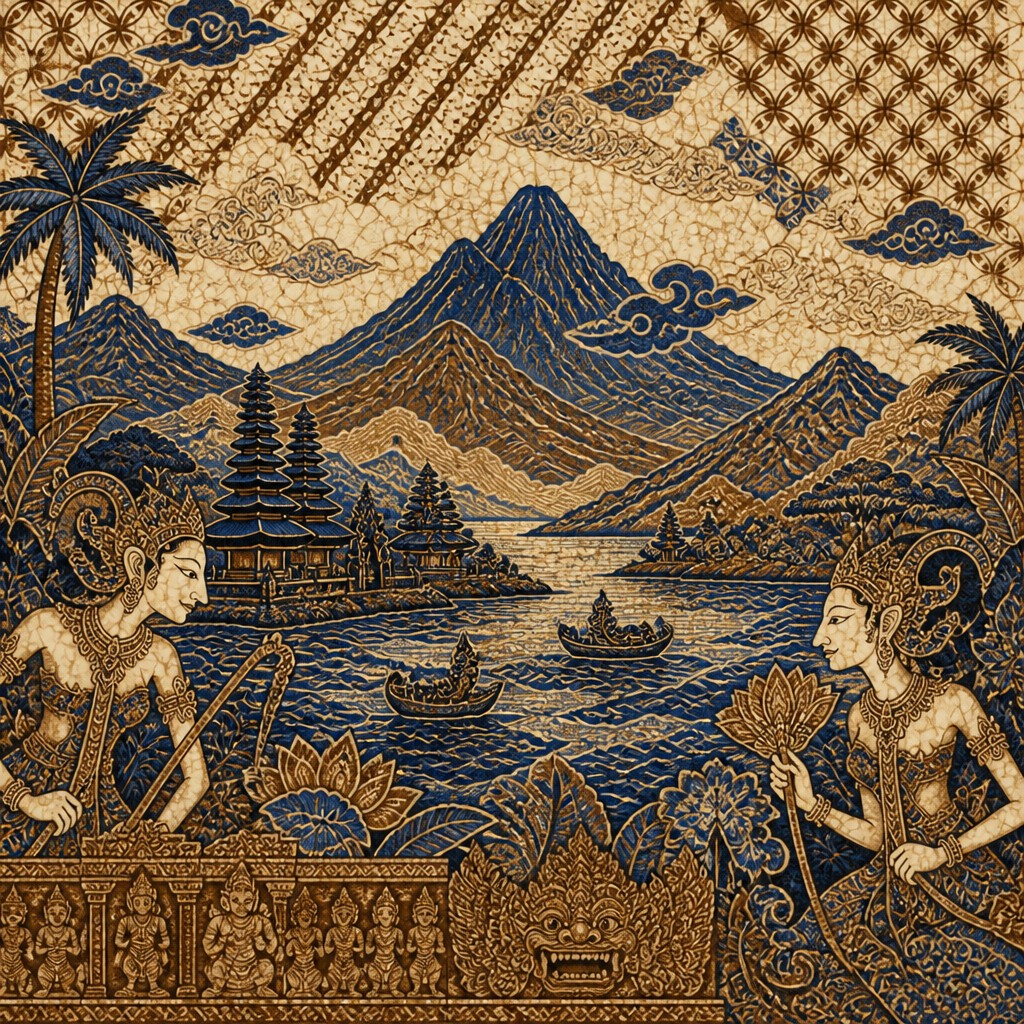
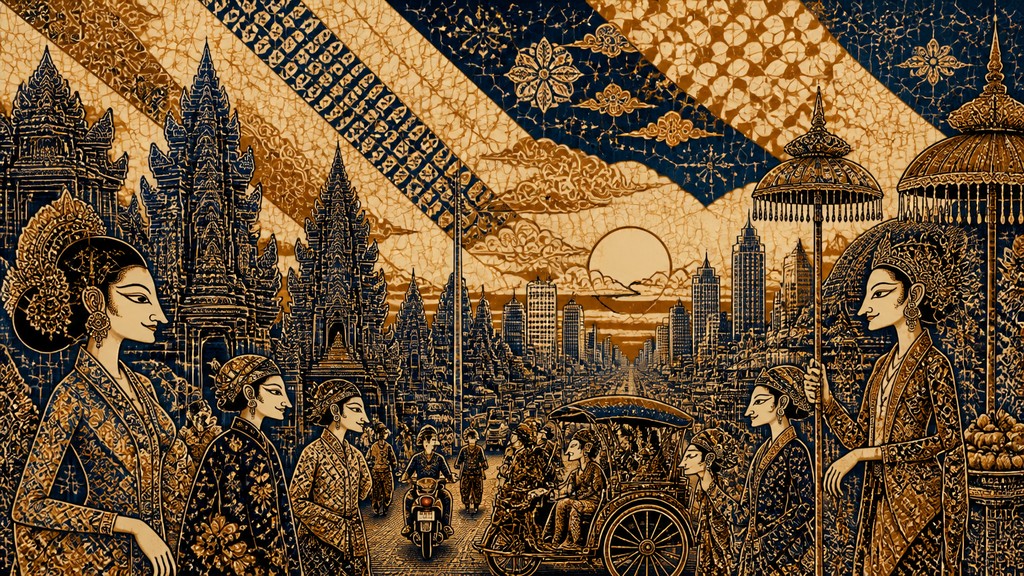
Indonesian art style is a contemporary visual synthesis rooted in the archipelago’s batik, wayang, ornamental, and temple-relief traditions. Its signature imagery combines rhythmic parang and kawung patterns, wax-resist crackle, elegant profile silhouettes, floral filigree, and densely layered decorative detail. Indigo, soga brown, cream, black, and muted earth tones create a palette associated with dyed cloth, carved wood, shadow theater, and tropical ceremonial objects.
Rather than a single historical movement, the style functions as an adaptable design language. It may depict figures, animals, landscapes, architecture, or modern subjects while retaining the visual logic of repeated pattern, controlled contour, symbolic ornament, and frontal or profile presentation. The balance between flat decorative fields and finely articulated relief-like detail gives the work a calm, ceremonial, and highly tactile character.
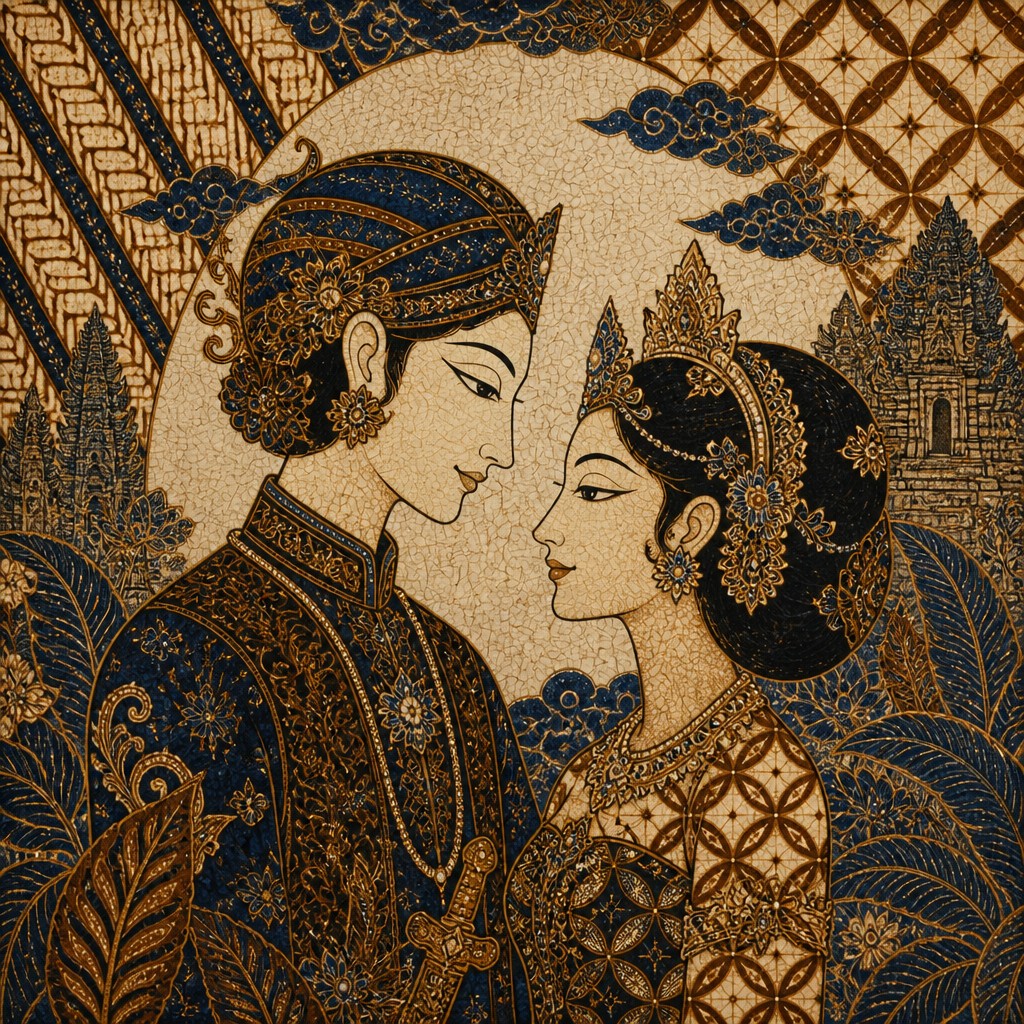
Try It On Your Photos
Upload any photo and convert it into Indonesian Art Style — drag the sliders to compare before and after.
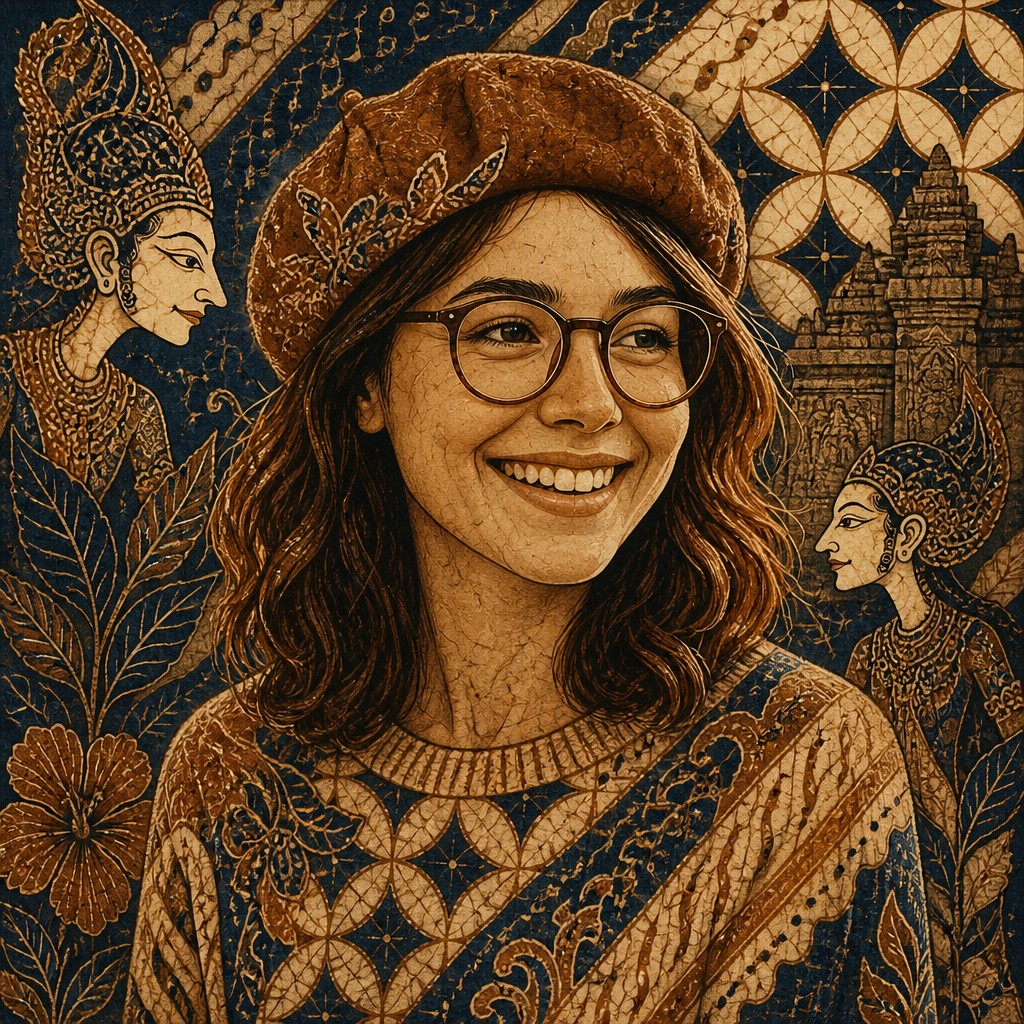

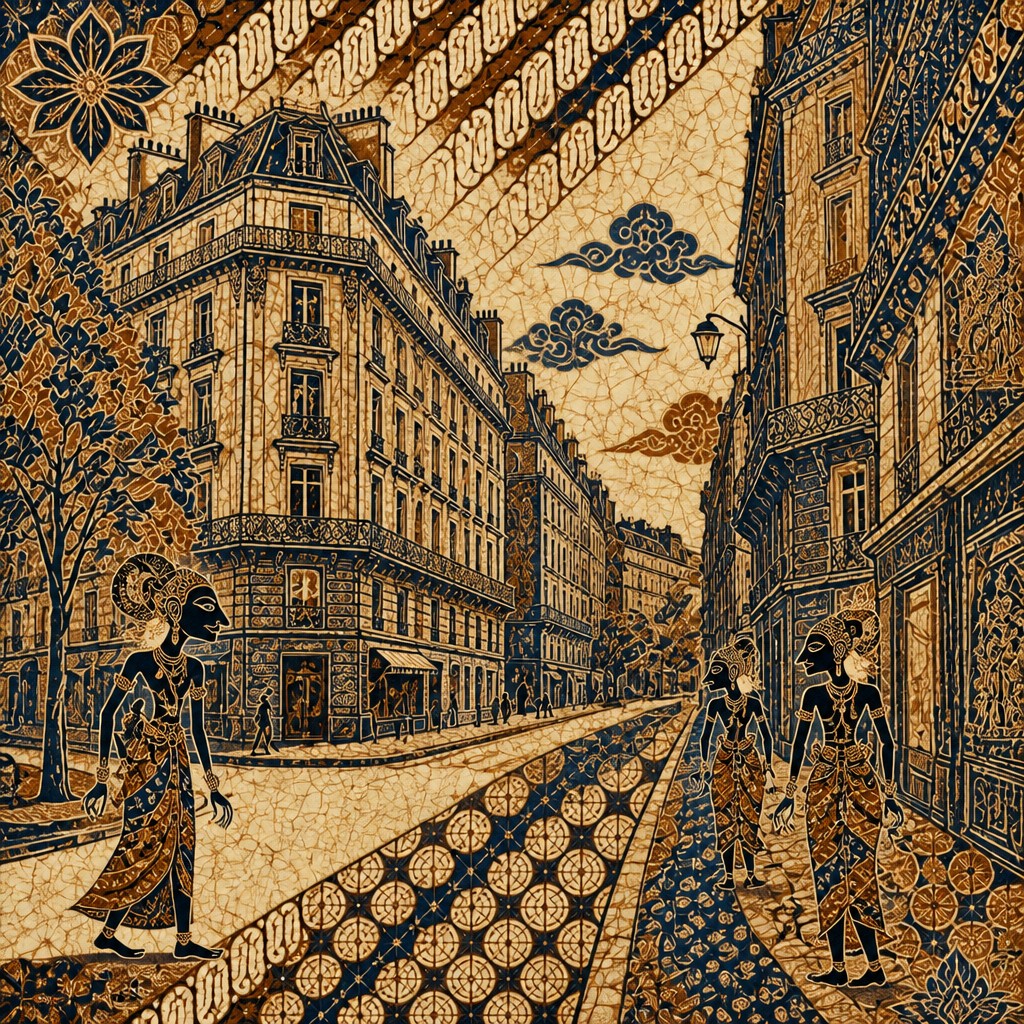

What Defines Indonesian Art Style
The signature details, up close
Batik pattern structure
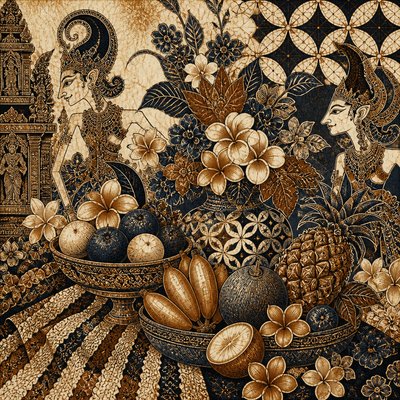
Repeating parang diagonals, kawung ovals, dots, and botanical motifs organize the surface into rhythmic ornamental fields. Pattern may function as a border, background, garment design, or complete visual texture.
Wax-resist surface
Fine crackle lines, irregular pooling, and slightly uneven edges imitate the tactile evidence of wax application and layered dyeing. These marks add age, material depth, and handmade character.
Wayang profile silhouettes
Figures are often shown in elegant side profile with elongated noses, controlled gestures, elaborate headdresses, and sharply defined contours. Their identity is communicated through pose, costume, and ornament as much as facial expression.
Indigo, soga, and cream palette
Deep indigo, warm reddish brown, parchment cream, charcoal, and restrained gold create a grounded ceremonial range. Small accents of red, green, or turquoise can be used without displacing the dominant earth-toned harmony.
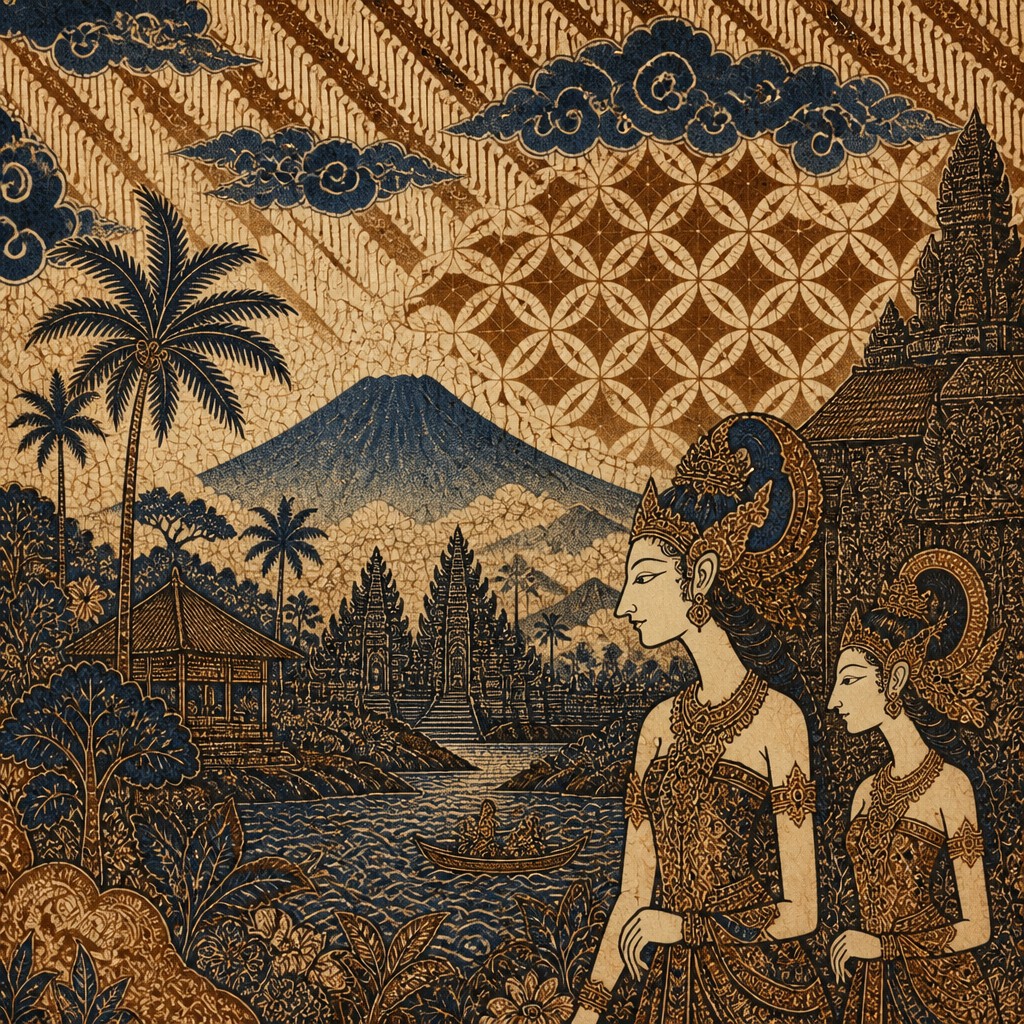
Filigree and relief-like detail
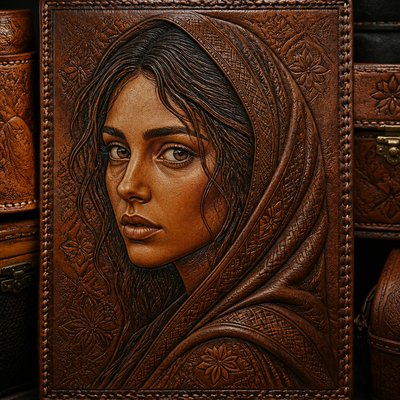
Dense curls, leaves, tendrils, jewelry, and architectural ornament recall carved wood, metalwork, and temple reliefs. Detail is concentrated around figures, borders, and focal symbols rather than distributed randomly.
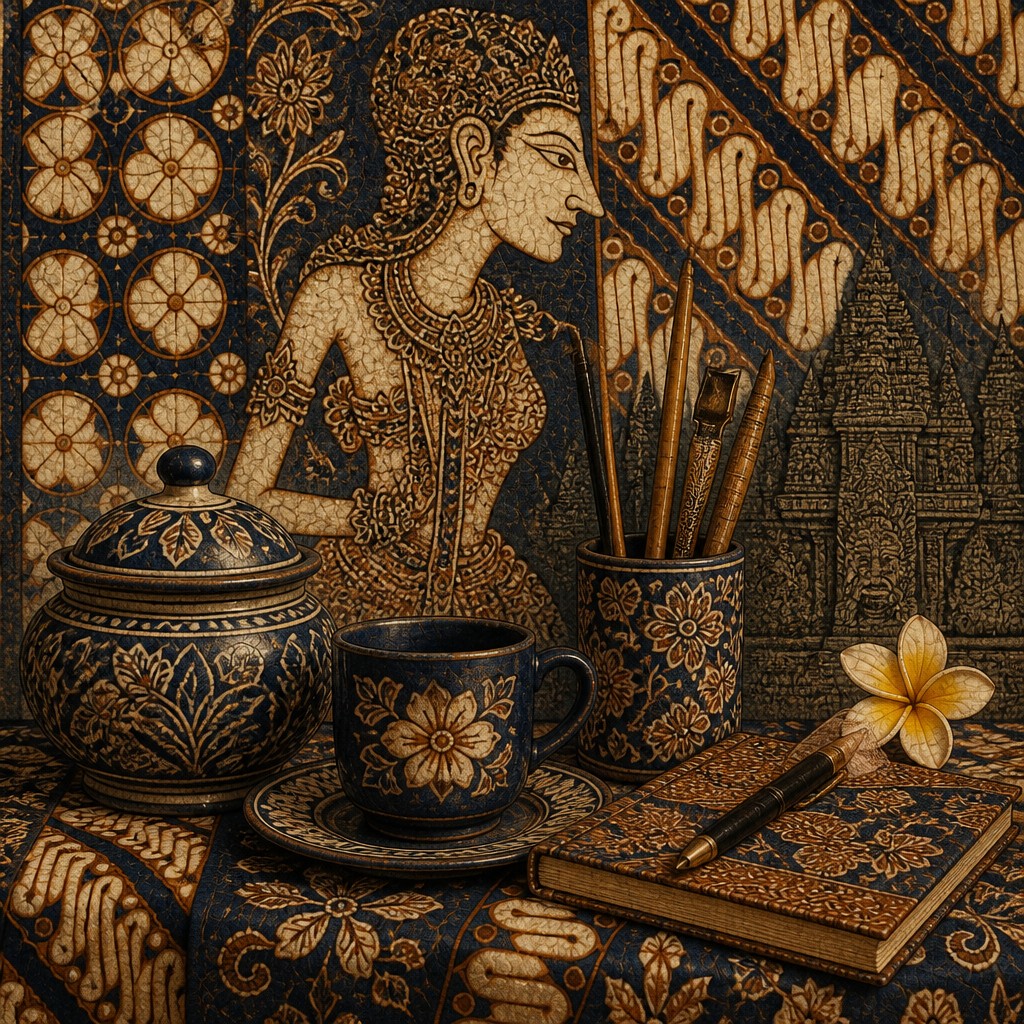
Flatness with layered depth
The style favors flattened silhouettes and decorative planes, but overlays them with translucent dye effects, shadowed recesses, and textured surfaces. This creates depth without abandoning the clarity of textile and shadow-theater design.
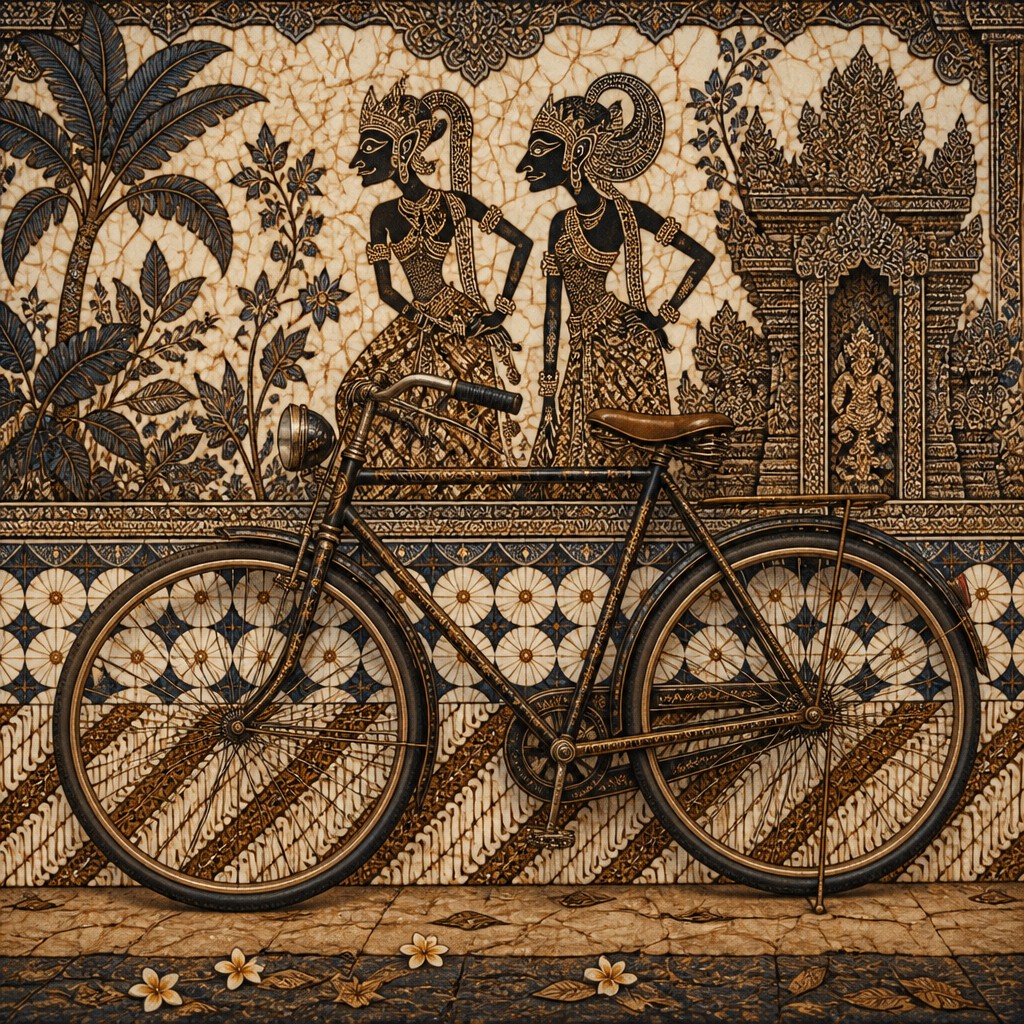
Ceremonial and tropical motifs
Palms, birds, flowers, mythical creatures, offerings, textiles, and processional scenes support a sense of ritual and place. Tropical abundance is usually stylized into ordered pattern rather than rendered as naturalistic scenery.
Try It
Create Videos in Indonesian Art Style
Styles aren't just for stills — describe a scene or animate an image and get a short video rendered in Indonesian. Press play to see this pond come to life.
Make a VideoIndonesian Prompt Ideas
Start from an idea — each one opens the generator with the style ready to go. See all 40 Indonesian prompts →
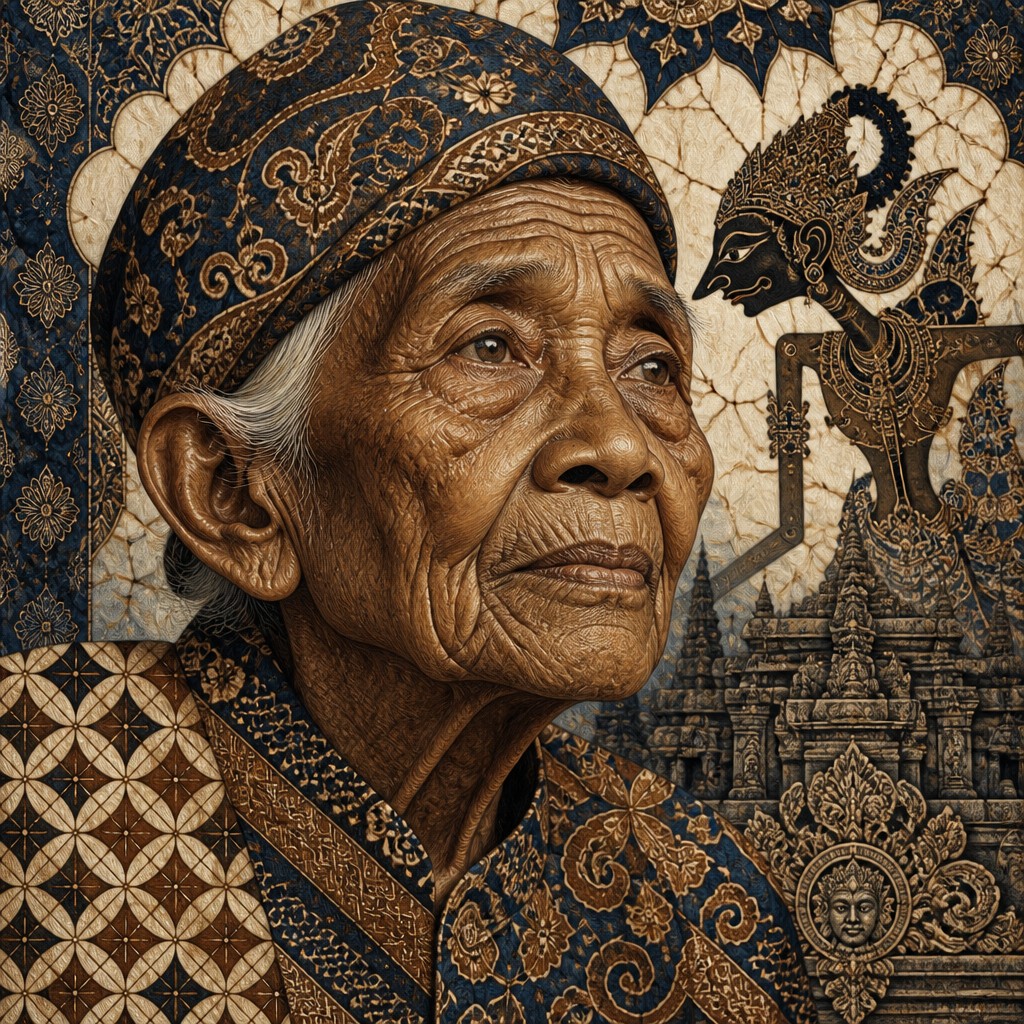
“close-up portrait of an elderly person with expressive weathered features”
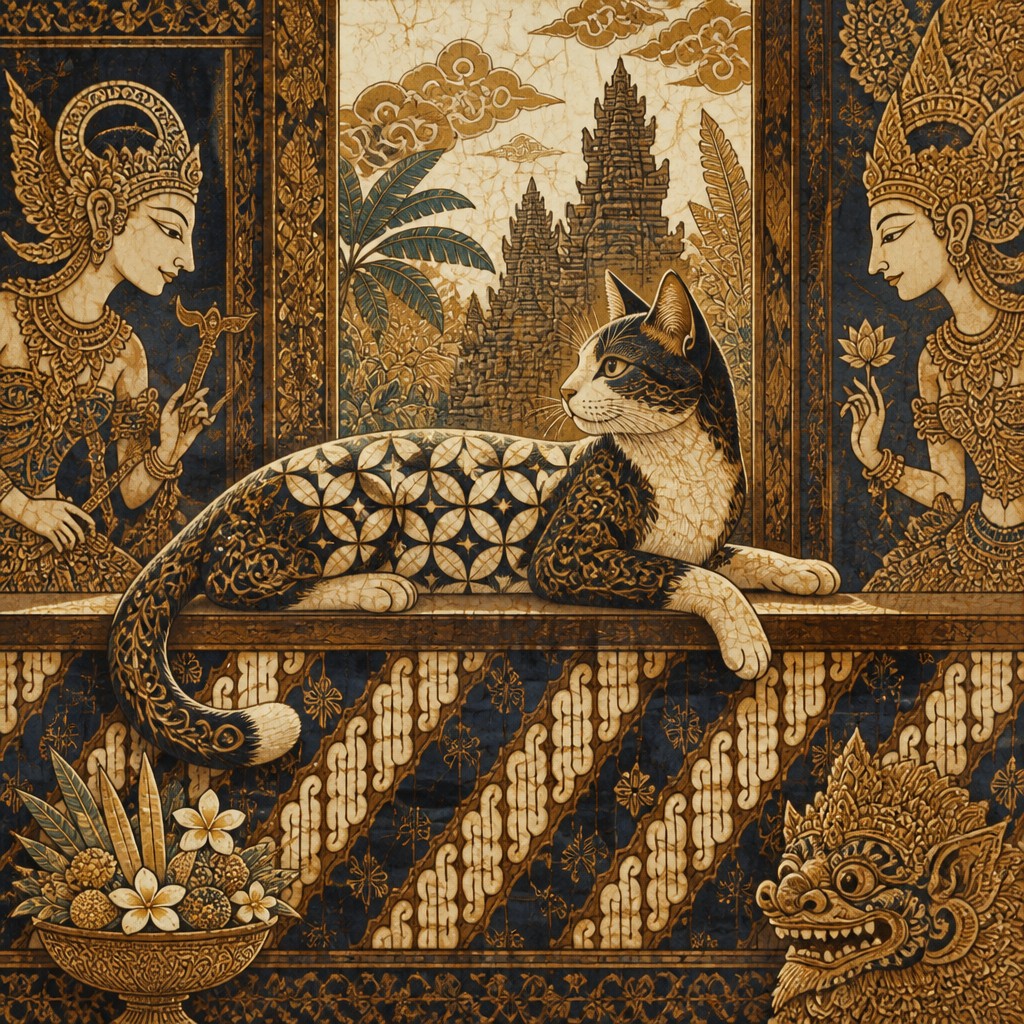
“a cat lounging in a sunlit window”
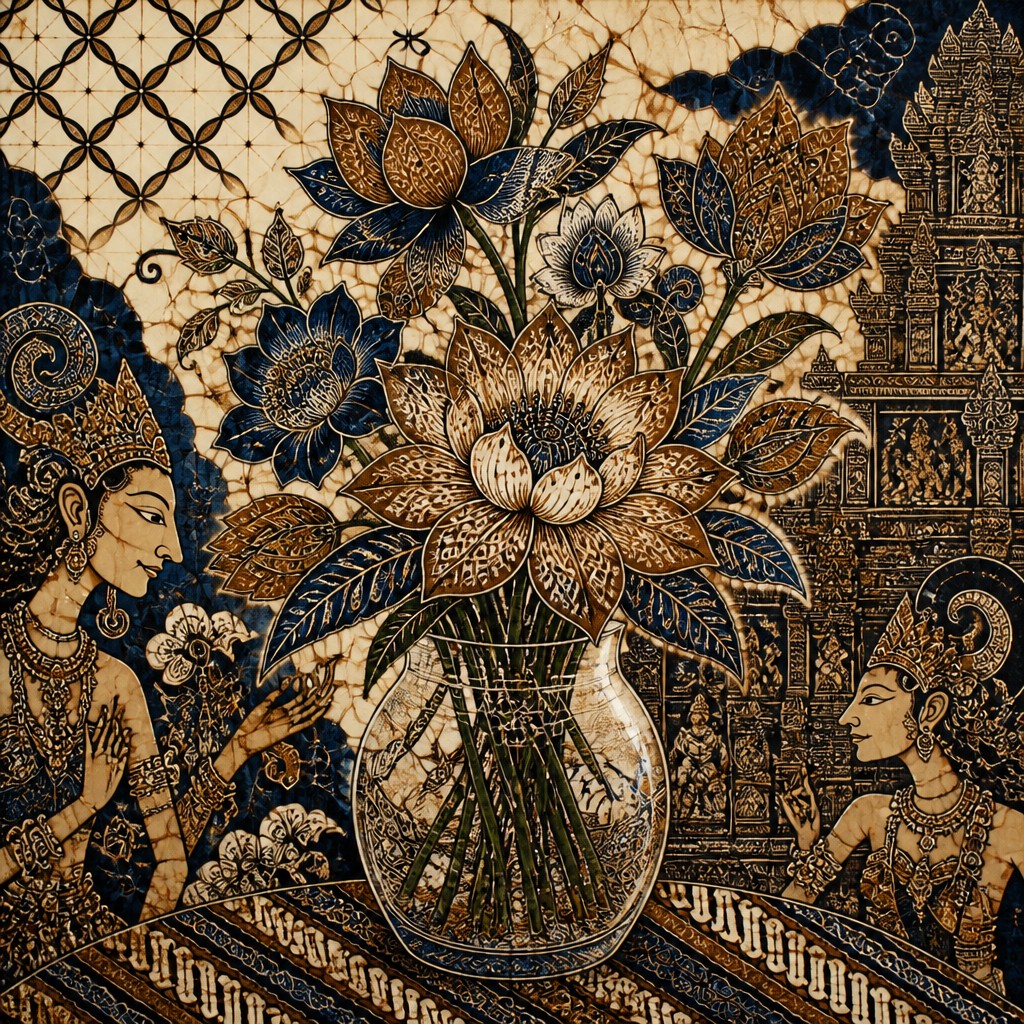
“bouquet of flowers in a glass vase”
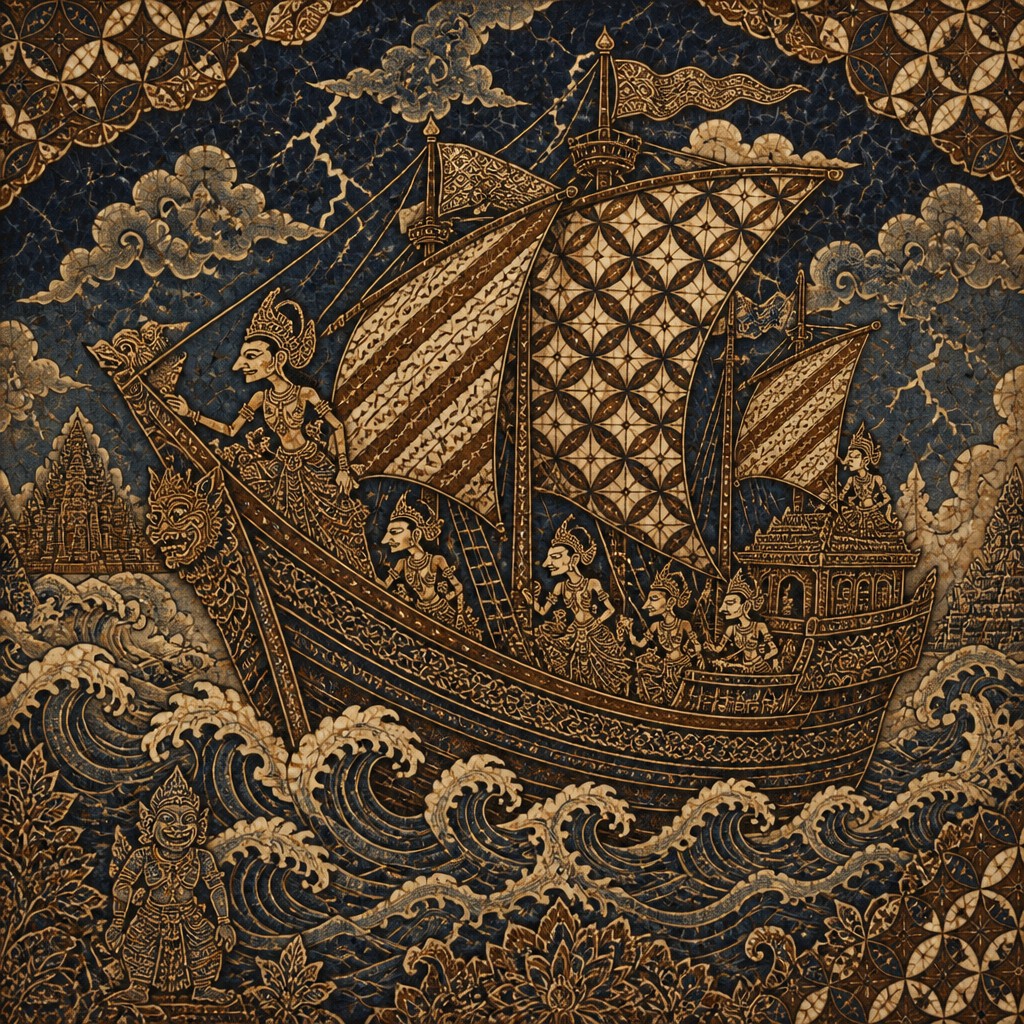
“sailing ship on a stormy sea”
How to Create Indonesian Art
Master the craft step by step — or skip straight to creating. Read the full guide →
- 1
Build a limited palette
Start with indigo, soga brown, cream, black, and one restrained accent color. For digital work, use slightly varied values and low-opacity overlays so the palette feels dyed rather than mechanically flat.
- 2
Construct the pattern first
Create repeated diagonal bands, four-lobed kawung forms, dots, or floral units on a separate layer before adding the subject. Keep the repeat legible and use scale changes to distinguish background, clothing, and borders.
- 3
Imitate wax resist
On paper, apply wax, dye in stages, and remove the wax to reveal reserved lines and layered color. Digitally, combine a fine crackle texture, irregular masks, softened pigment edges, and slight tonal variation instead of using a perfectly uniform filter.
- 4
Design the silhouette
Use a strong side profile, elongated gesture, ornate headdress, and clearly separated costume shapes for a wayang-inspired figure. Avoid overcrowding the contour; the outer shape should remain recognizable at thumbnail size.
- 5
Add relief and filigree detail
Place curls, foliage, jewelry, and architectural ornament around the focal subject, then reserve the highest contrast for important edges. In a prompt, specify profile figures, carved-relief detail, batik borders, and a tactile wax-crackle surface.
- 6
Adapt photographs or generate compositions
For image-to-image work, preserve the original pose or architecture while replacing surfaces with batik pattern, controlled silhouettes, and the limited palette; use moderate transformation strength to retain identity. For text-based creation, describe the subject first, then specify the pattern, material, palette, profile treatment, and level of ornamental detail.
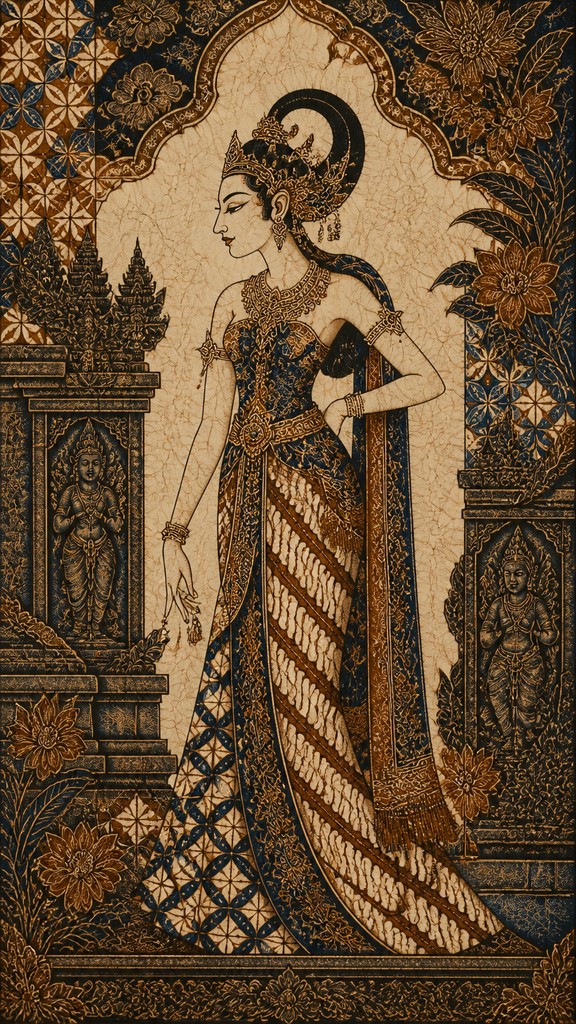
The Story
History & Origins of Indonesian
This style draws primarily from Indonesian batik traditions, especially Javanese cloth design, in which hot wax is used to reserve areas before repeated dyeing. Parang consists of recurring diagonal bands, while kawung is based on four-lobed, fruit-like forms arranged around a center. The rich brown known as soga, along with indigo and cream, recalls long-established natural-dye palettes, although contemporary makers may use synthetic pigments or digital equivalents.
Its figurative language also draws from wayang kulit and related wayang performance traditions, where articulated leather figures are recognized through profile silhouettes, gestures, costumes, and symbolic attributes. Additional influence comes from ornamental carving, textile decoration, and relief sculpture associated with historical Javanese and Balinese settings. The combined form seen today is best understood as a modern cross-media aesthetic lineage rather than an ancient style with a single name or fixed period.
Influences: Related visual traditions include Javanese and other Indonesian batik practices, wayang kulit silhouette design, Balinese ornamental painting and carving, Southeast Asian textile pattern, and the relief ornament of historical Javanese temple architecture. It also connects with folk-art patterning, shadow theater, decorative illustration, textile design, and contemporary digital collage. Its strongest distinction is the deliberate fusion of surface pattern, profile symbolism, and ceremonial ornament within a restrained dyed-cloth palette.

Frequently Asked Questions
What defines Indonesian art style?
It is defined by a synthesis of batik patterning, wayang-inspired profile figures, wax-resist texture, temple-like ornament, and an indigo, soga brown, and cream palette. Repetition, symbolic silhouettes, and controlled decorative density are more important than realistic modeling.
Is Indonesian art style a historical art movement?
No. The label generally describes a contemporary or commercial umbrella aesthetic rather than a single historical movement. It draws from several distinct Indonesian traditions, including batik, wayang, carving, textile design, and relief sculpture.
How is it different from traditional batik?
Traditional batik is a specific wax-resist textile process with regional techniques, motifs, meanings, and production methods. This broader style may imitate batik surfaces in painting, illustration, fashion, photography, or digital images while combining them with silhouettes and architectural ornament.
How can I make an image in this style without losing the subject?
Describe the subject and composition clearly before adding stylistic instructions. Use a moderate pattern density, maintain a readable outer silhouette, and apply crackle and ornament mainly to surfaces, clothing, borders, and backgrounds.
What colors work best for this aesthetic?
Indigo, soga brown, cream, black, and subdued gold provide the most recognizable foundation. A small accent of vermilion, turquoise, or moss green can add life, but excessive neon color usually weakens the dyed-textile character.
Where is this style commonly used?
It suits posters, editorial illustration, book covers, textiles, apparel graphics, packaging, murals, decorative portraiture, animation backgrounds, and ceremonial or cultural event imagery. It can also translate well to photo transformations when the original composition has a clear subject and strong contours.
Create your first Indonesian artwork
Describe anything — or upload a photo — and see it in Indonesian Art Style in seconds.
Related Styles
Discover similar art styles