Haitian Art Style
Explore Haitian art style: vivid naïf market scenes, tropical color, sequined ceremonial flags, and intricate recycled-metal sculpture.
Instantly rendered in Haitian — or transform a photo
Haitian Gallery
Tap any artwork to explore it
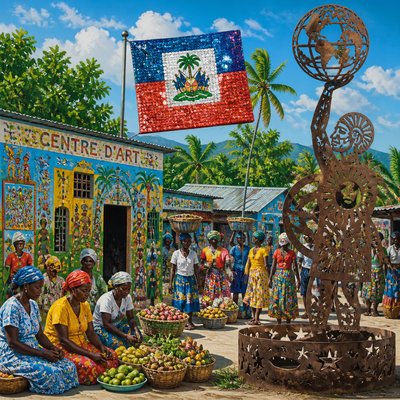
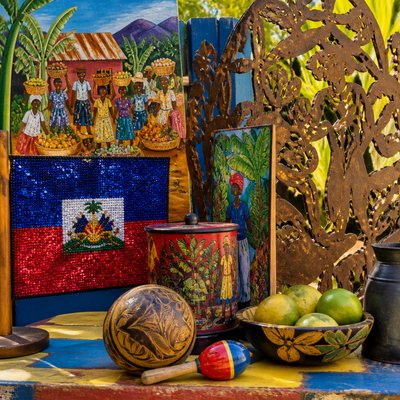
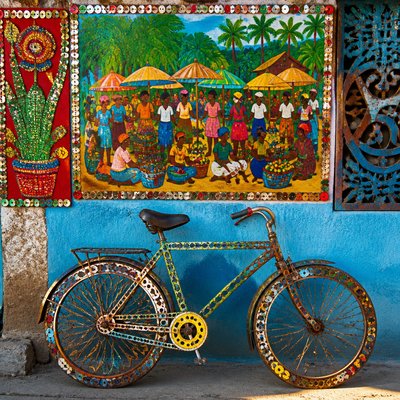
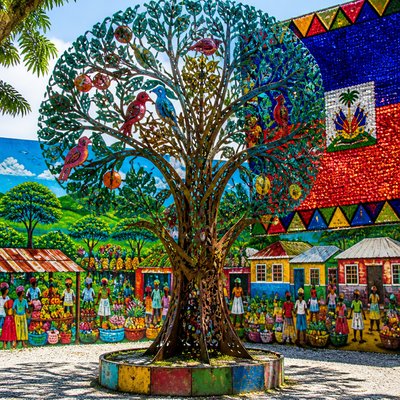
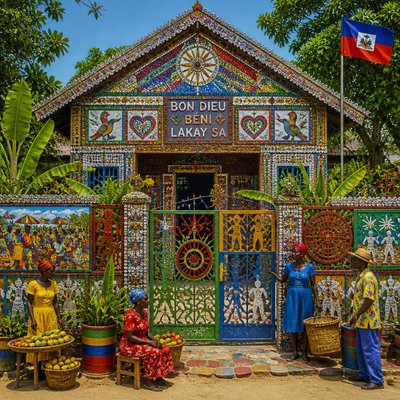
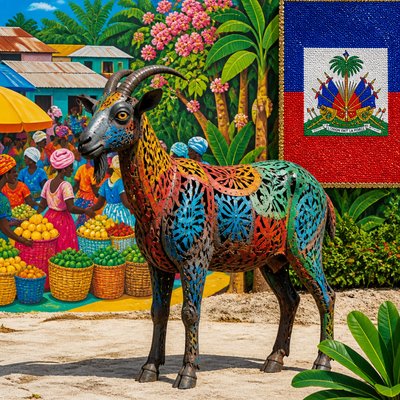
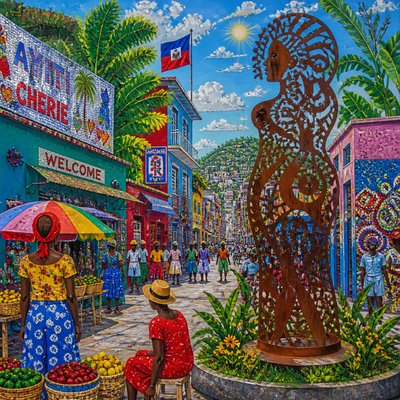
What is Haitian Art Style?
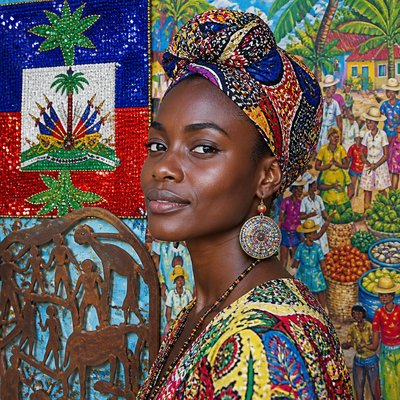
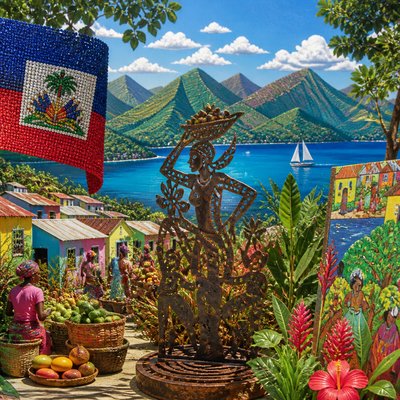
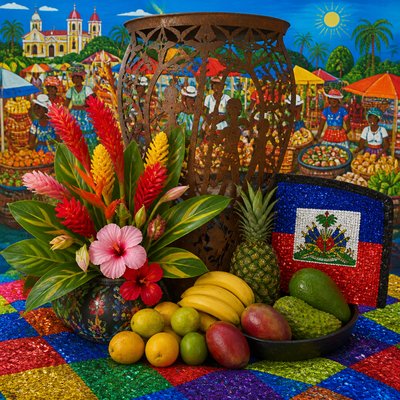
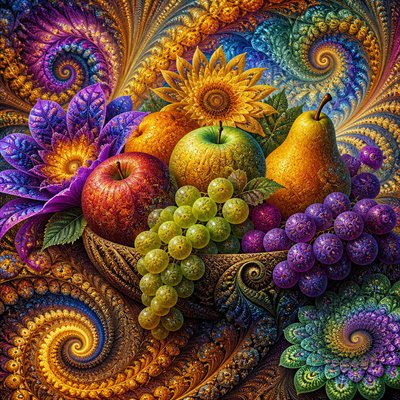
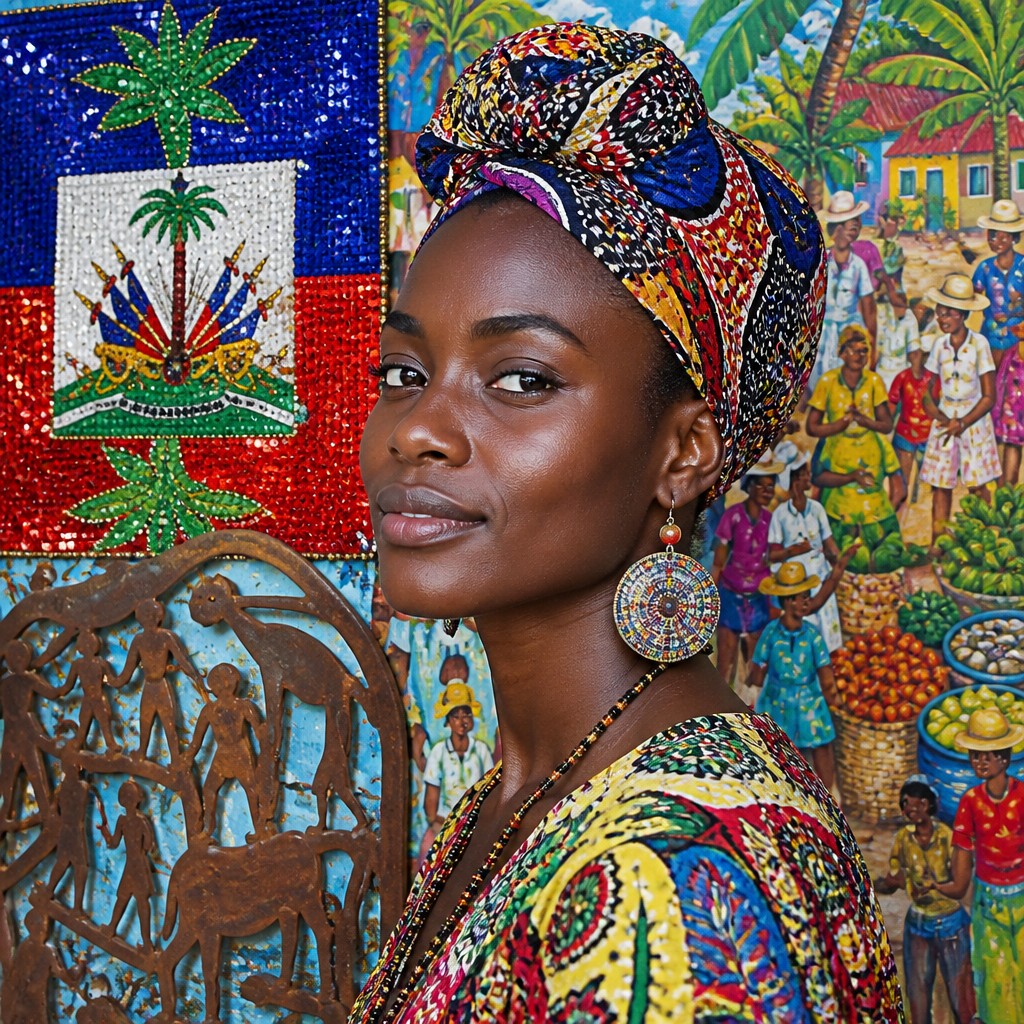
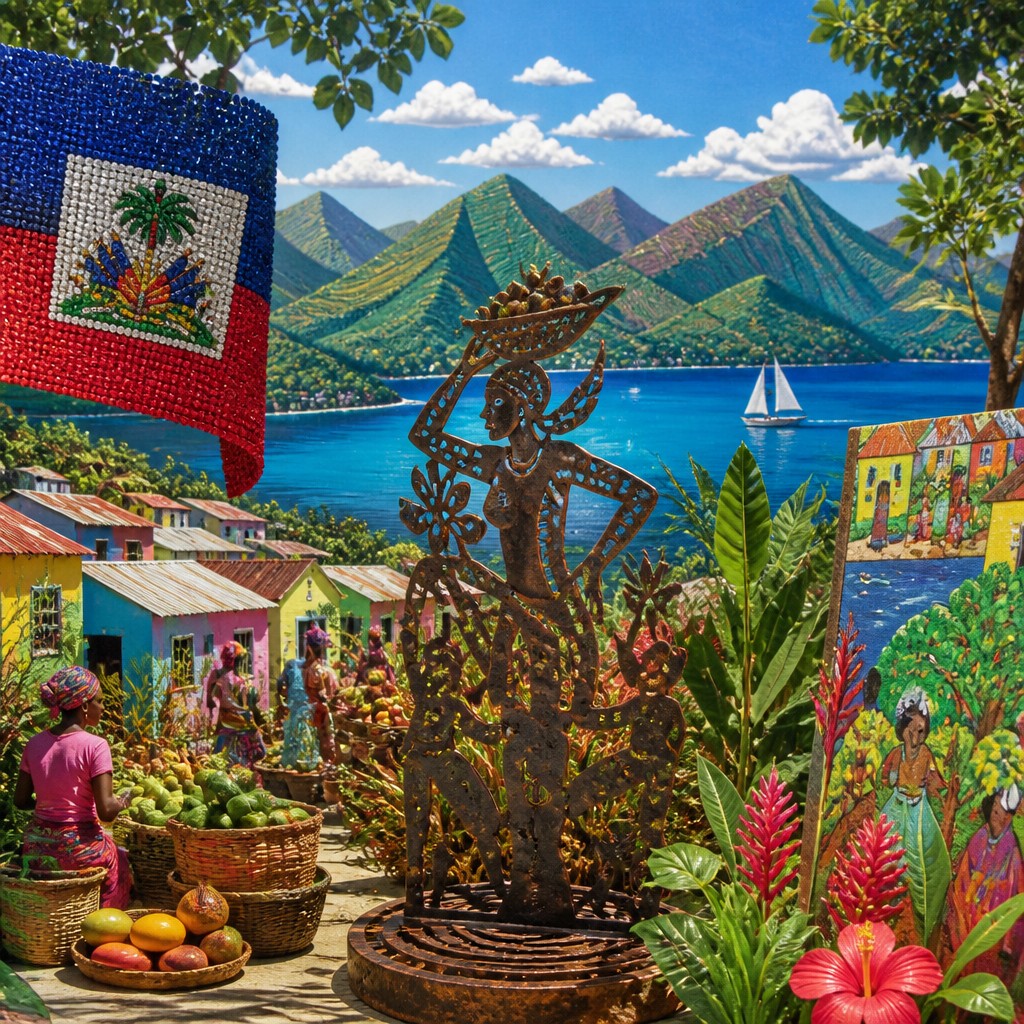
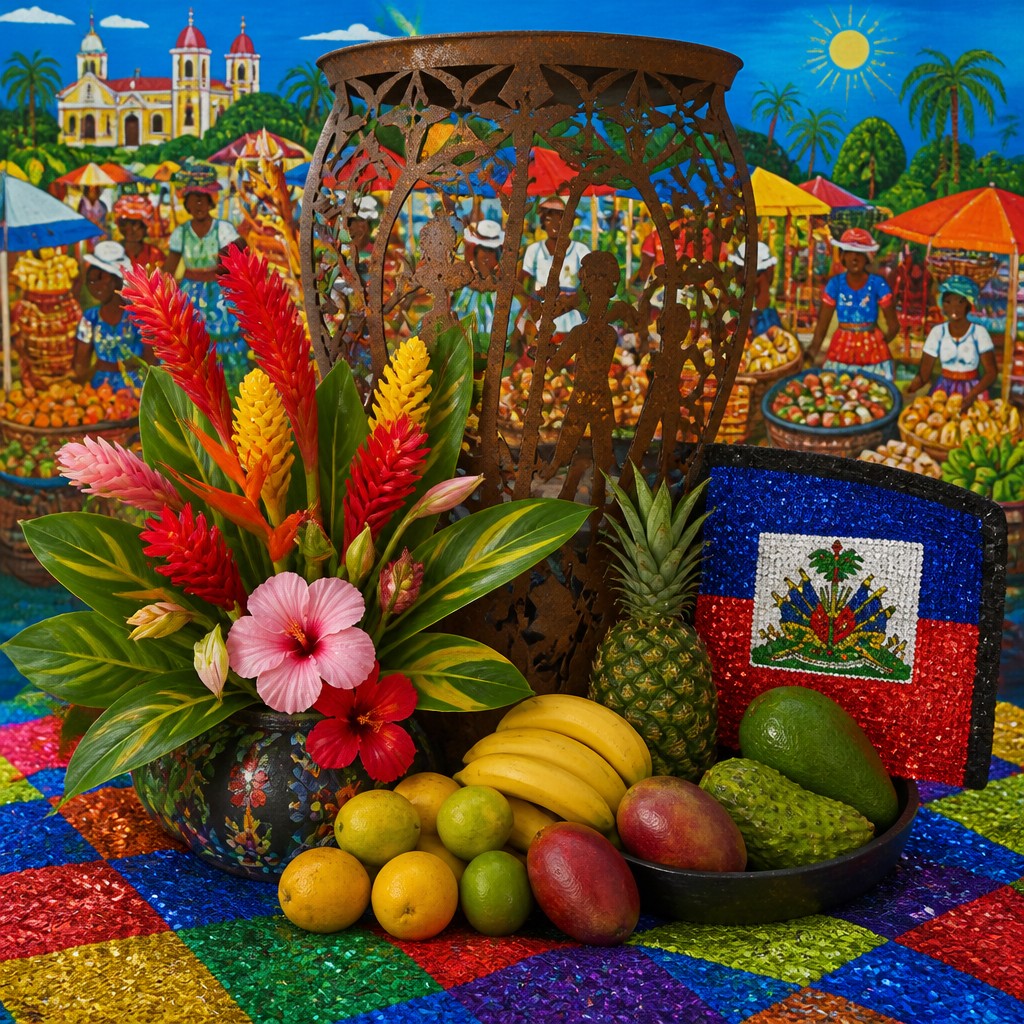
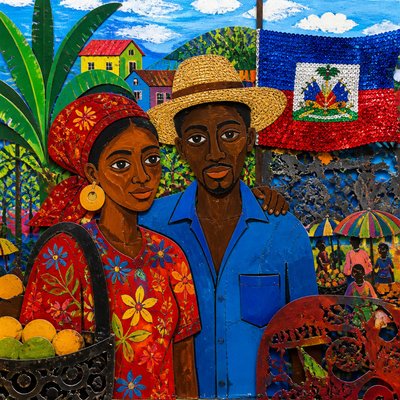
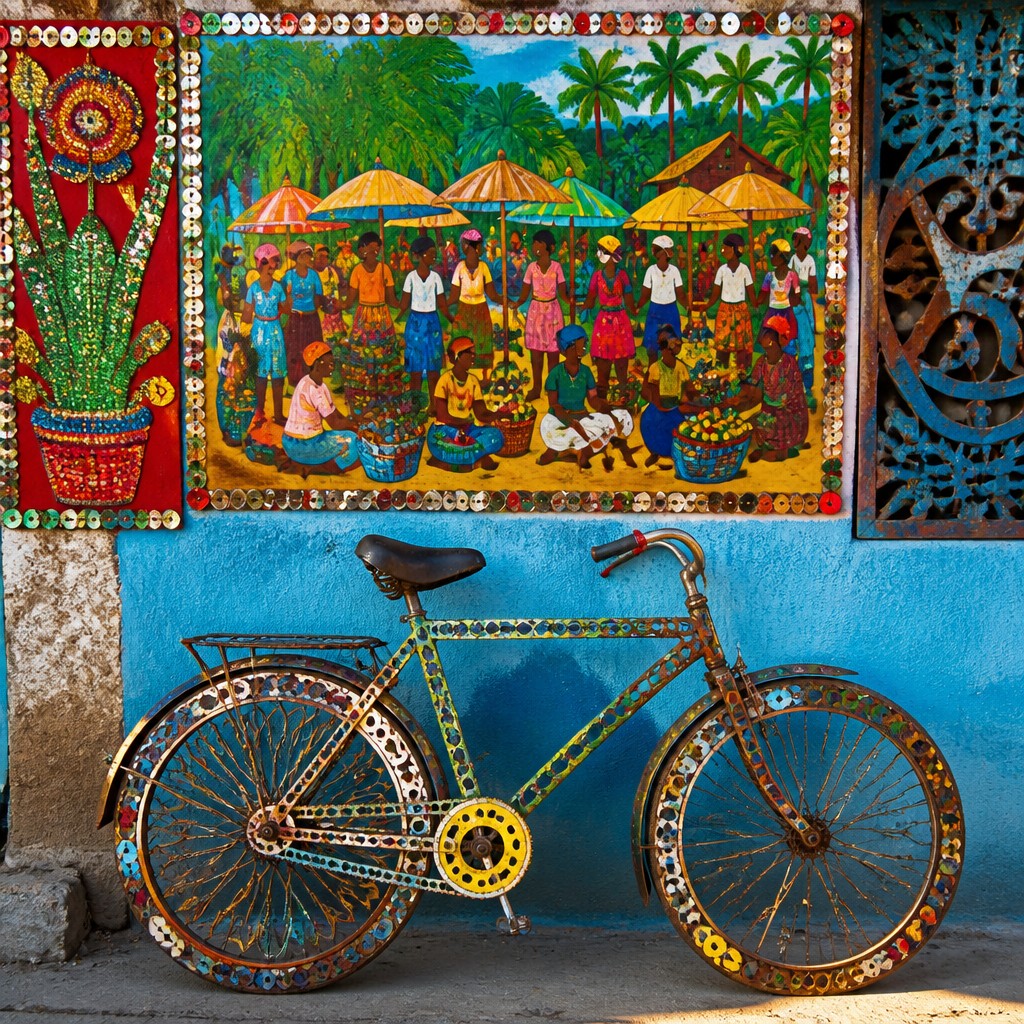
Haitian art style is a broad, contemporary synthesis of vivid naïf painting, ceremonial sequin-and-bead appliqué, and cut-metal sculpture. Its characteristic imagery includes crowded markets, village life, tropical foliage, animals, religious or symbolic figures, and brightly patterned architecture, rendered in flat, saturated color under intense Caribbean light.
The style’s visual energy comes from combining distinct Haitian traditions rather than reproducing a single historical school. Simplified forms and compressed spatial depth recall the Centre d’Art tradition and popular painting, while glittering geometric surfaces evoke drapo, the beaded and sequined flags used in Haitian Vodou ceremonial contexts. Recycled steel, often cut from oil drums or similar sheet metal, adds a strong silhouette-based sculptural language.
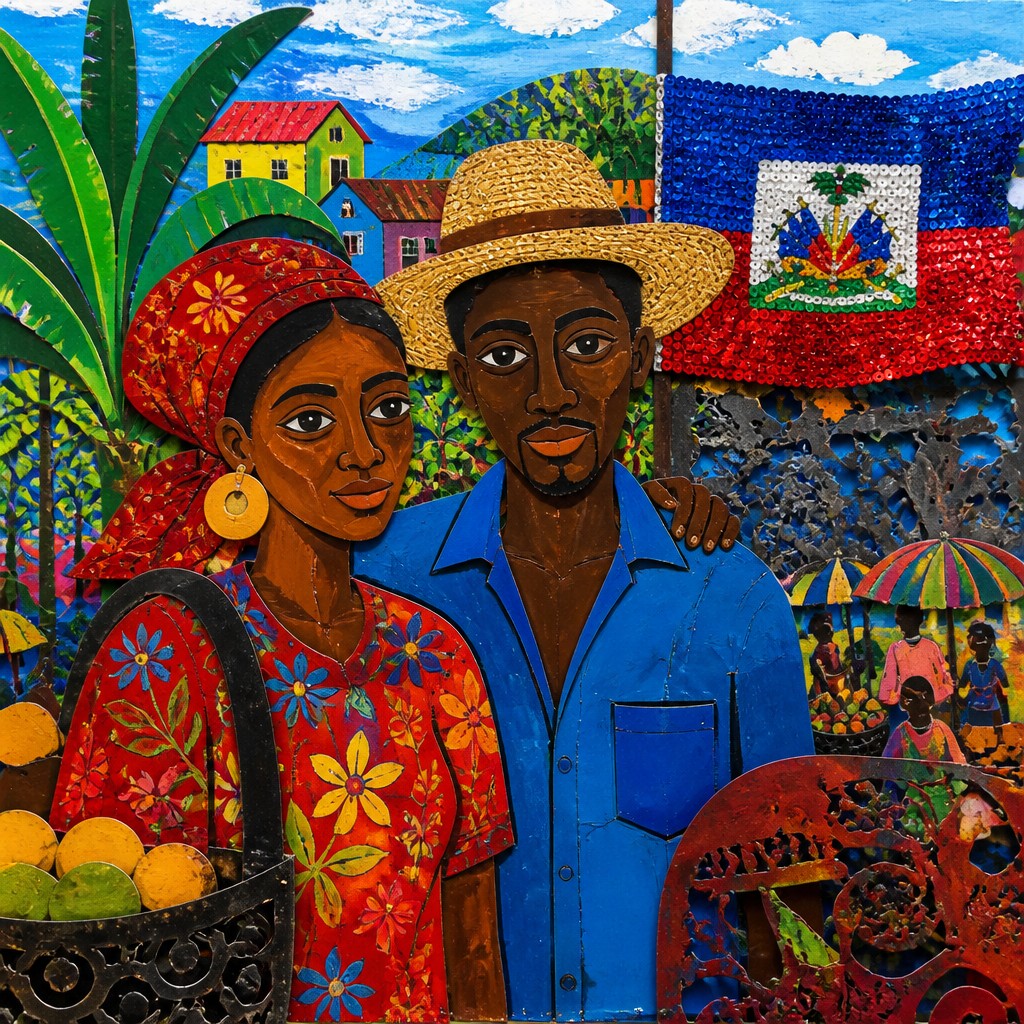
Try It On Your Photos
Upload any photo and convert it into Haitian Art Style — drag the sliders to compare before and after.
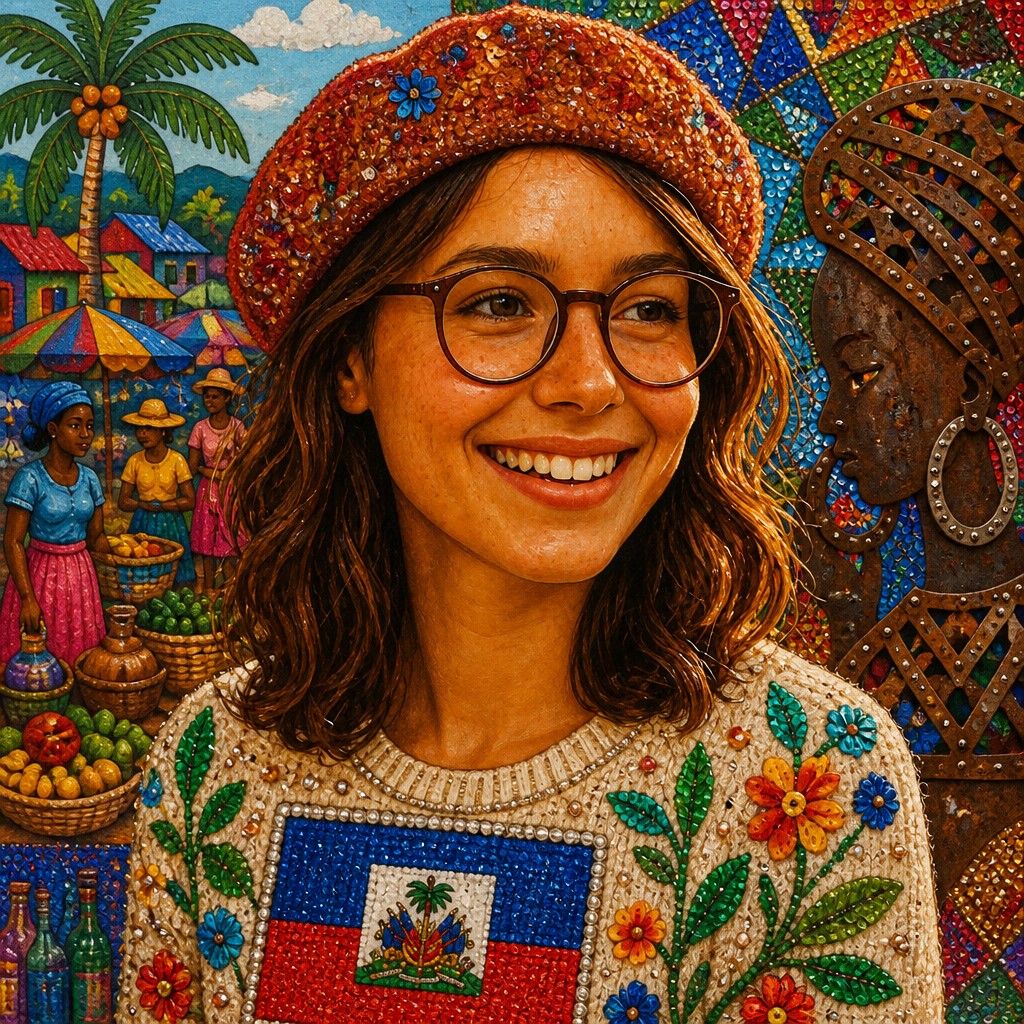

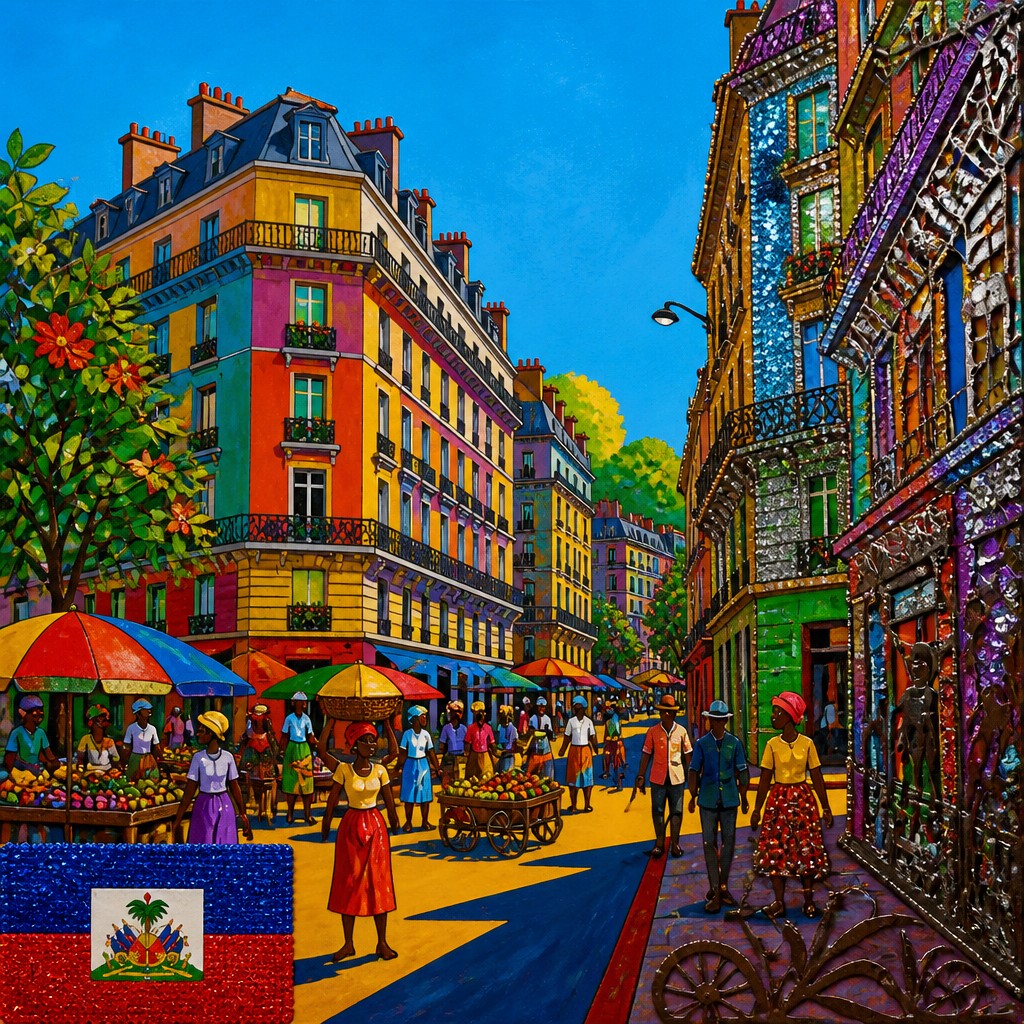

What Defines Haitian Art Style
The signature details, up close
Flat saturated color
Brilliant reds, turquoise, yellow, cobalt, green, orange, and magenta are placed in broad areas with limited tonal modeling. Color functions decoratively and symbolically as much as it does descriptively.
Naïf spatial design
Figures, buildings, trees, and market goods are simplified into readable shapes, often with compressed perspective and overlapping planes. The result is an immediate, storytelling-oriented image rather than an illusionistic one.
Market and community scenes
Open-air stalls, vendors, musicians, processions, courtyards, and village streets provide recurring subjects. Dense arrangements of people and objects create rhythm and social activity across the picture plane.
Lush tropical foliage
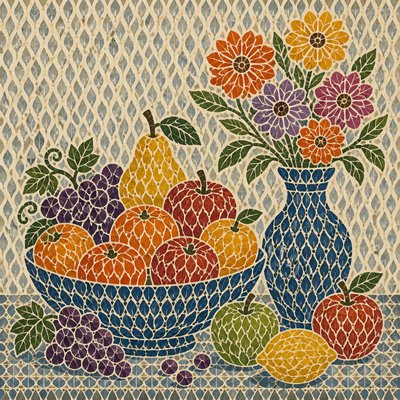
Palm leaves, flowering plants, mountains, fruit, and broad canopies fill backgrounds and margins. Repeated leaf shapes and strong outlines turn vegetation into an ornamental pattern.
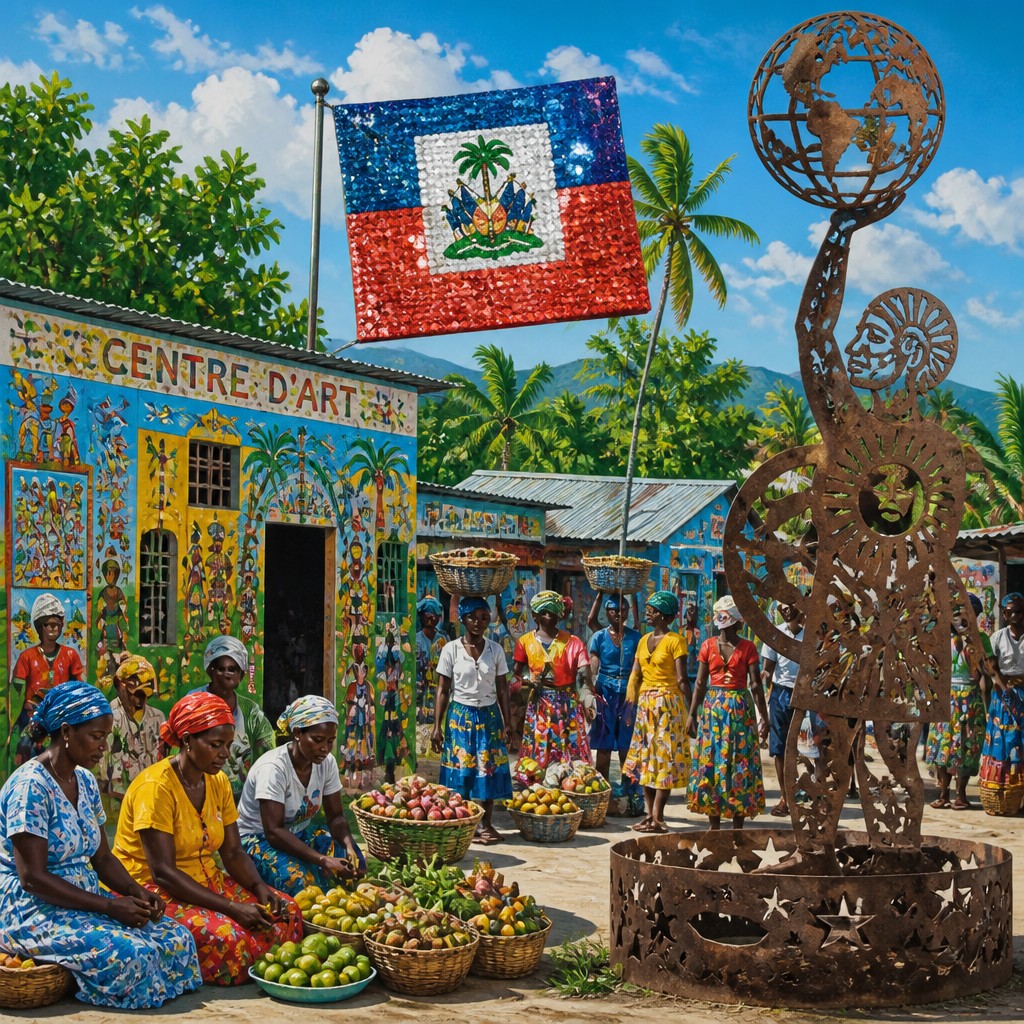
Sequined and beaded shimmer
Geometric fields of sequins, beads, mirrors, and metallic thread create reflective surfaces associated with Haitian ceremonial flags. Borders, radiant motifs, lettering, and symbolic figures are often organized with deliberate symmetry.
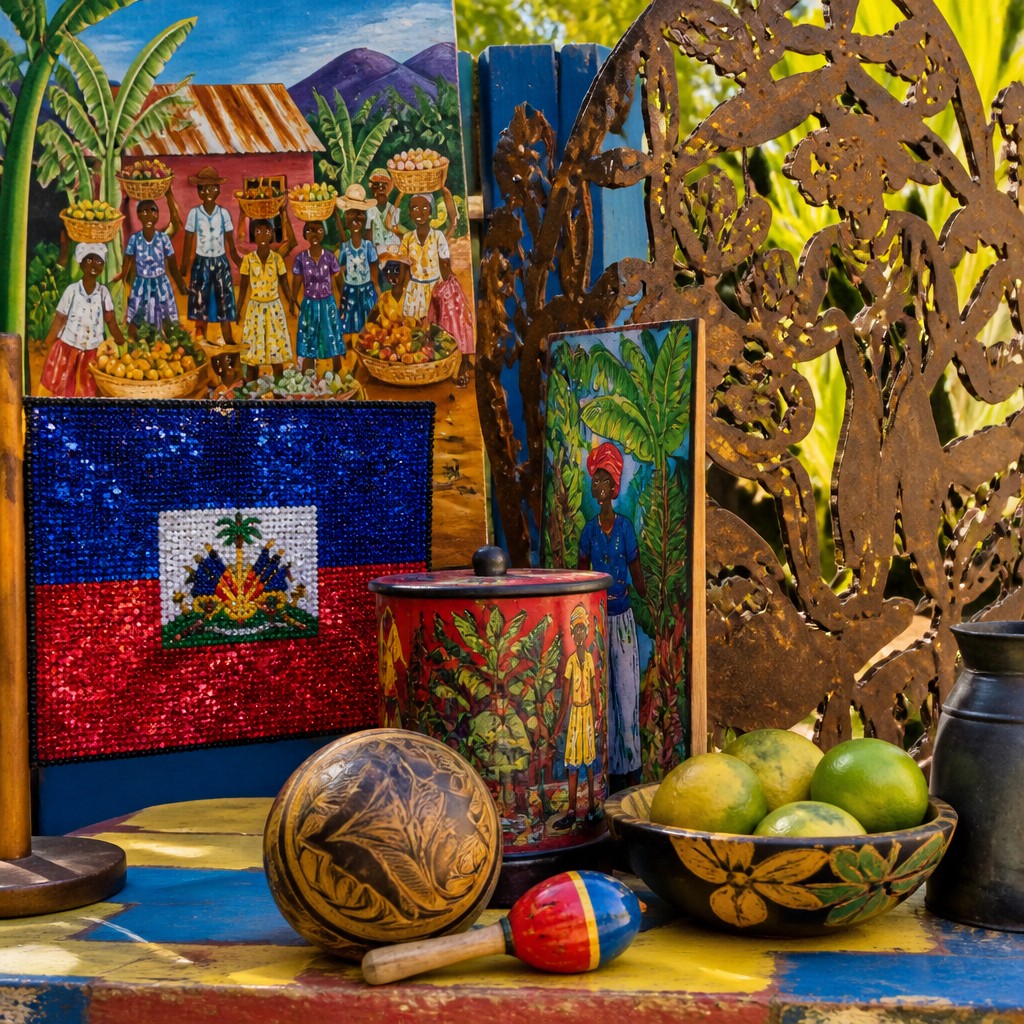
Cut and pierced metal
Reclaimed steel is cut, punched, embossed, and sometimes painted to form intricate silhouettes and relief patterns. Openwork allows light and shadow to become part of the design.
Joyful visual density
Layered motifs, strong contours, ornamental repetition, and high contrast produce a festive, tactile image. Even when the subject is solemn or devotional, the composition often remains direct and materially expressive.
Haitian Prompt Ideas
Start from an idea — each one opens the generator with the style ready to go. See all 40 Haitian prompts →
How to Create Haitian Art
Master the craft step by step — or skip straight to creating. Read the full guide →
- 1
Build a flattened composition
Sketch the scene as overlapping silhouettes instead of relying on realistic perspective. Arrange the largest figures, stalls, trees, and architectural forms in clear, interlocking bands.
- 2
Use a concentrated tropical palette
Choose a small group of highly saturated colors and repeat them throughout the image for visual unity. Add only limited shadow modeling, reserving the strongest contrast for outlines and focal motifs.
- 3
Add textile-like geometry
Introduce borders, radiating symbols, stars, lettering, beads, and sequins as organized patterns rather than random glitter. In traditional work, fabric, metallic thread, beads, and sequins can be layered and stitched by hand.
- 4
Translate the design into metal
For sculpture, transfer a bold drawing to cleaned sheet steel, then cut, pierce, hammer, and bend it into relief or openwork. Preserve irregular edges and visible tool marks when a handmade recycled-metal character is desired.
- 5
Control digital texture
In digital painting, combine hard-edged color blocks with selective texture layers for fabric, reflective sequins, and weathered metal. Keep the underlying silhouettes simple so surface detail does not erase the naïf readability.
- 6
Write specific generation prompts
Name the subject, tropical setting, flat saturated palette, compressed perspective, sequined geometric details, or cut-metal construction you want. Specify whether the result should look like a painting, ceremonial textile, or openwork sculpture, and avoid asking for generic photorealism.
The Story
History & Origins of Haitian
The lineage of this style reaches into Haiti’s long traditions of religious imagery, textile ornament, craft, and popular visual storytelling. The Centre d’Art, established in Port-au-Prince in 1944, helped bring international attention to Haitian modern and naïf painting, particularly its direct color, flattened perspective, and scenes of everyday life. Haitian painting has never been a single uniform movement, however, and includes sophisticated modernist, realist, abstract, and religious practices alongside naïf approaches.
Sequined ceremonial flags developed through Haitian Vodou communities and draw on broader Caribbean and African diasporic traditions of textile symbolism and devotional display. Cut-metalwork traditions expanded through the reuse of discarded oil drums and other industrial materials, producing intricate reliefs, signs, figures, and freestanding sculptures. The combined look described here is therefore an aesthetic synthesis of established Haitian visual traditions, not a separate historical movement with a fixed founding date.
Influences: The style draws on Haitian naïf and popular painting, the Centre d’Art tradition, Vodou ceremonial drapo, African diasporic textile and devotional practices, Caribbean folk color, and recycled-metal craft. It also has affinities with folk art, outsider art, flattened modernist composition, paper-cut silhouette work, relief sculpture, and decorative pattern traditions, while remaining specifically grounded in Haitian materials, subjects, and cultural contexts.
Frequently Asked Questions
What defines Haitian art style?
It is defined here by the combination of vivid naïf painting, flattened perspective, tropical and community subjects, sequined or beaded ceremonial ornament, and recycled cut-metal craft. The term describes a visual synthesis rather than one officially codified historical movement.
Is Haitian art style the same as Haitian naïf painting?
No. Haitian naïf painting is one important component, associated with simplified forms, direct color, and scenes of everyday life. This broader style also incorporates drapo-inspired textile shimmer and Haitian metalwork, traditions that use different materials and functions.
What are Haitian sequined flags used for?
Drapo are ceremonial flags associated with Haitian Vodou communities and religious societies. They may feature symbolic figures, lettering, geometric borders, and elaborate sequin and bead work; they should be understood as devotional objects, not merely decorative wall art.
How can I make an image in this style without making it look generic?
Choose a specific subject rooted in daily life, such as a market, procession, courtyard, or tropical landscape. Then combine a limited saturated palette, compressed spatial arrangement, strong silhouettes, and one clearly described material language such as sequins, beads, painted canvas, or pierced steel.
What materials are associated with Haitian metal sculpture?
Artists commonly reuse discarded steel, including oil drums and other sheet-metal containers. The material can be cut, punched, embossed, welded, painted, or left with visible weathering, allowing patterned reliefs and open silhouettes to emerge.
Where is this style commonly used?
Its visual languages appear in paintings, ceremonial textiles, metal reliefs, freestanding sculpture, murals, illustrations, and decorative objects. Contemporary adaptations may also appear in editorial art, posters, digital illustration, and textile-inspired design, provided cultural symbols are treated respectfully.
Create your first Haitian artwork
Describe anything — or upload a photo — and see it in Haitian Art Style in seconds.
Related Styles
Discover similar art styles