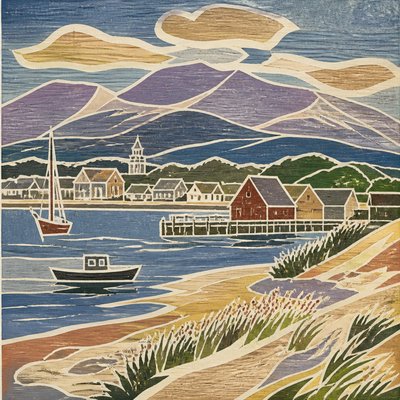
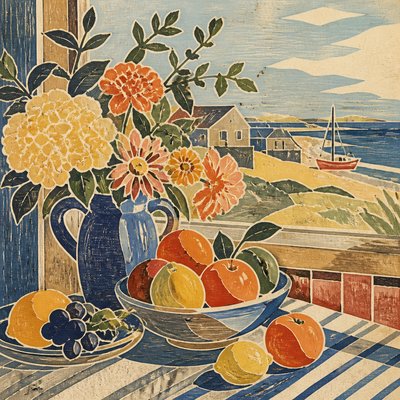
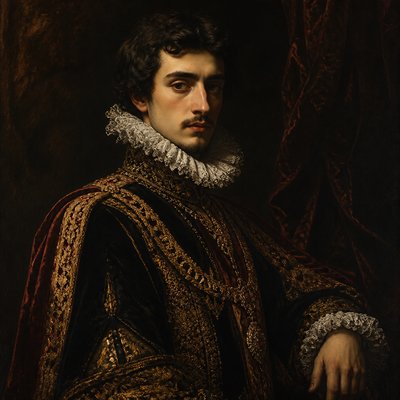
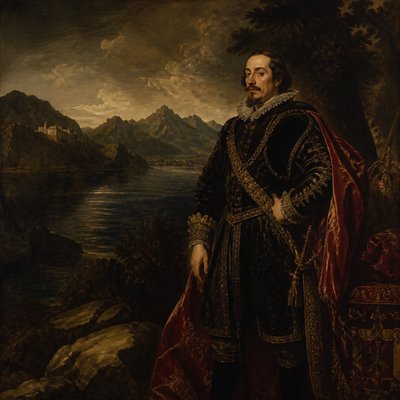
Guyanese Art Style
Explore the Guyanese art style: Timehri rock motifs, balata carving, woven basketry, rainforest color, river light, and colonial timber forms.
Instantly rendered in Guyanese — or transform a photo
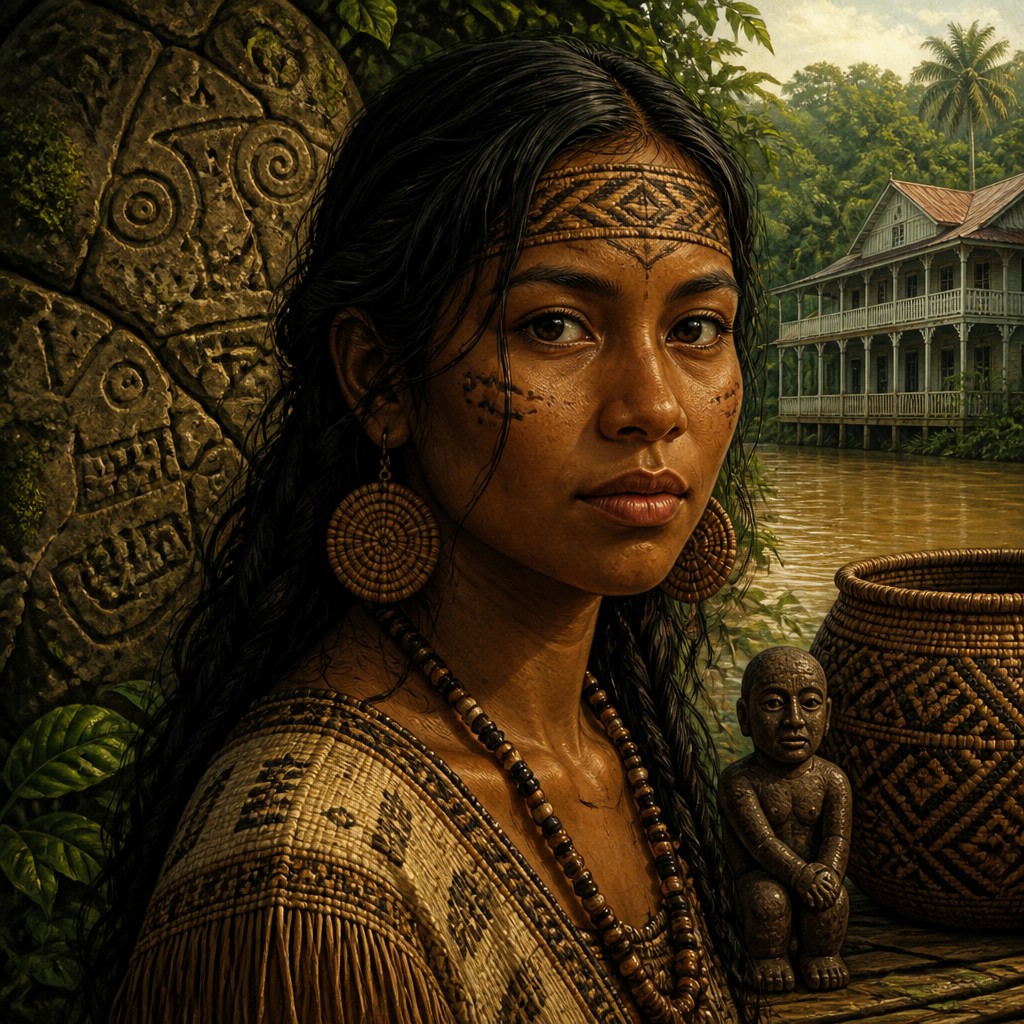
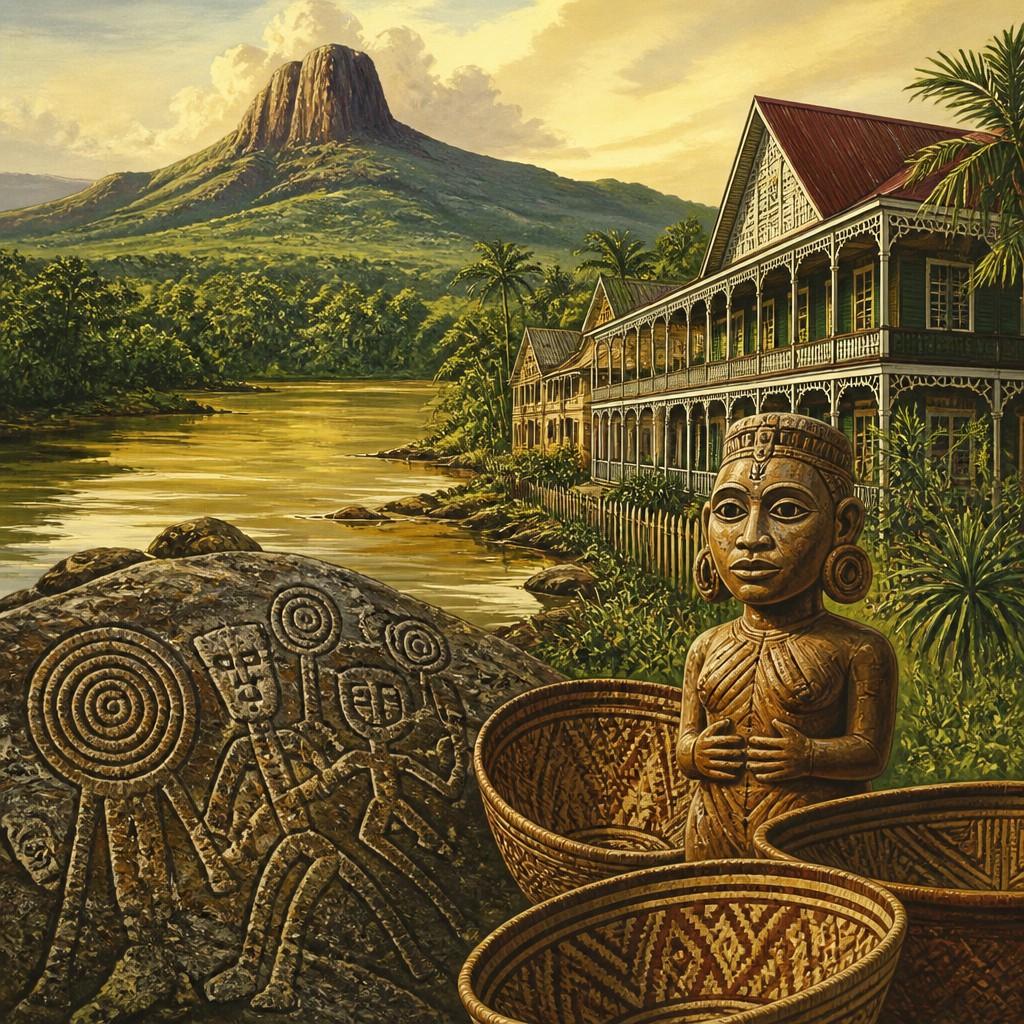
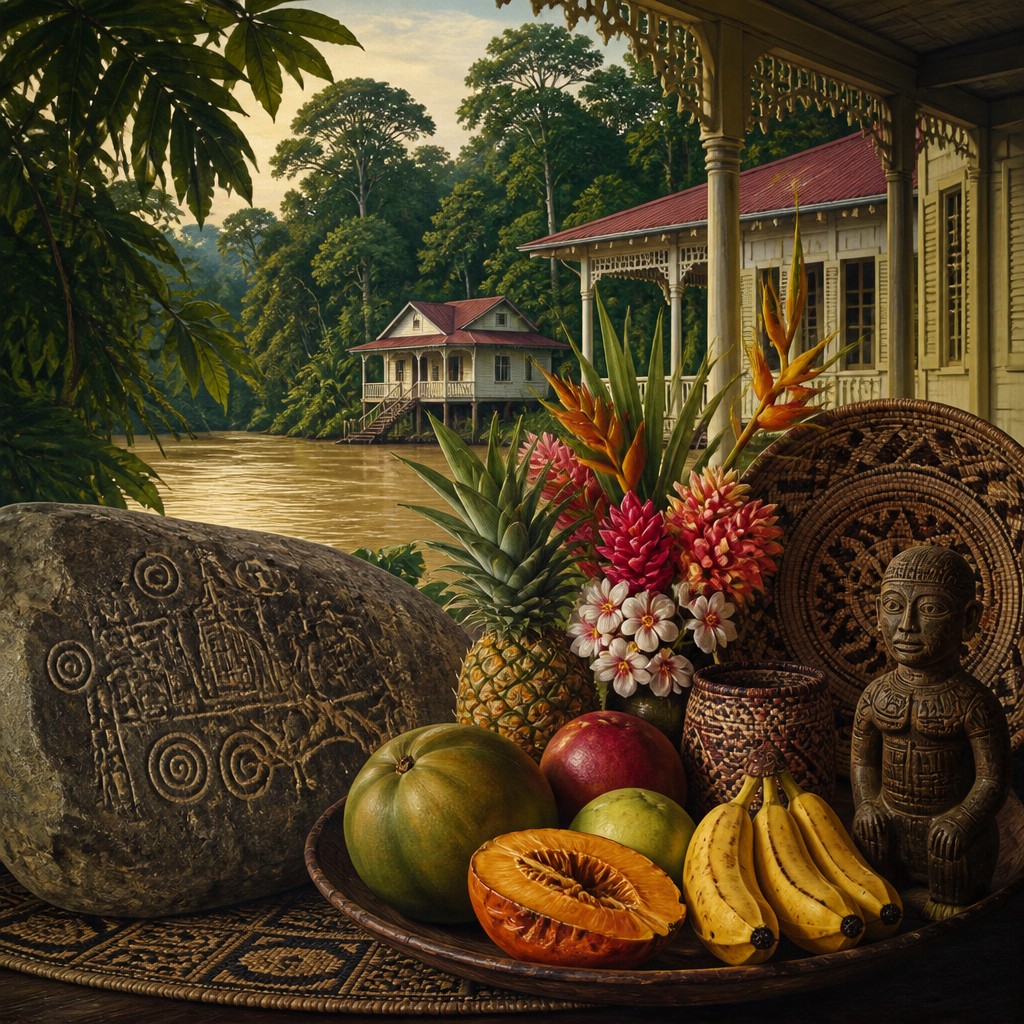
Guyanese Gallery
Tap any artwork to explore it
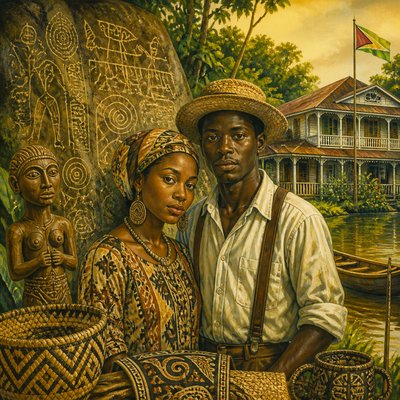
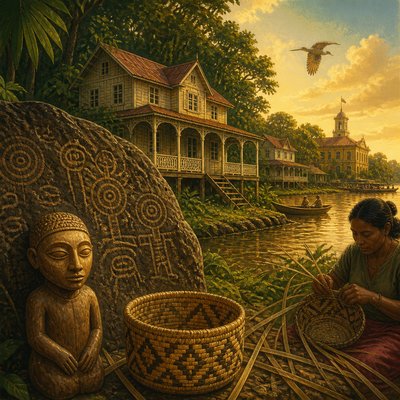
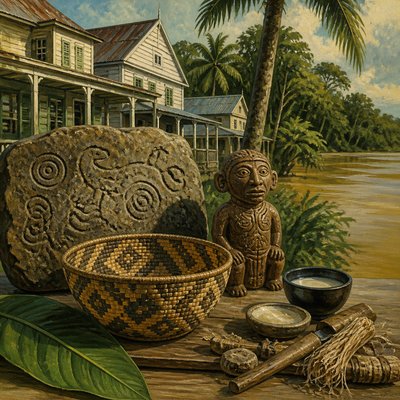
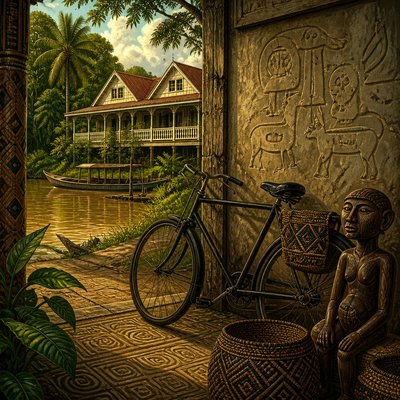
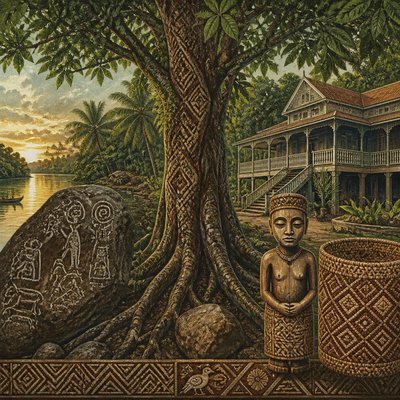
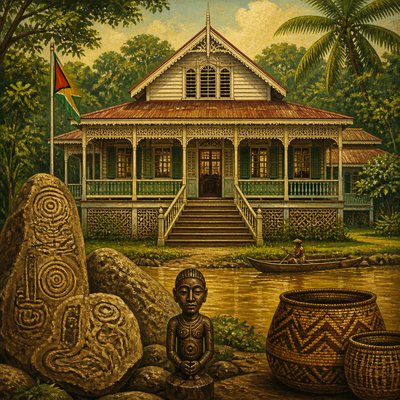
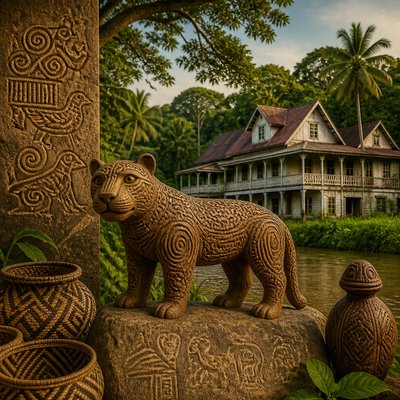
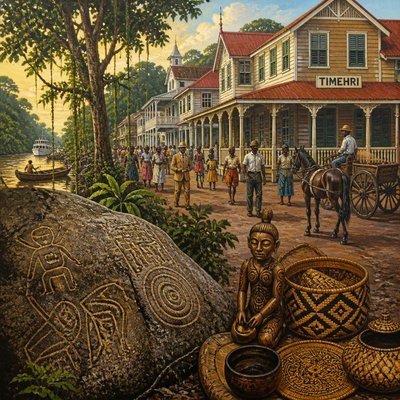
What is Guyanese Art Style?
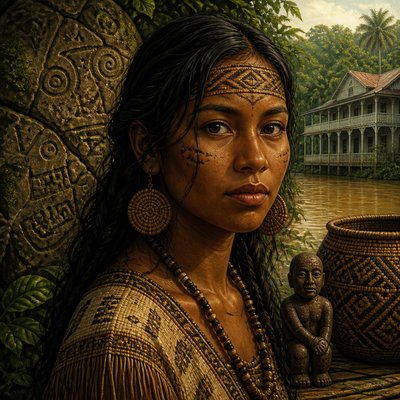
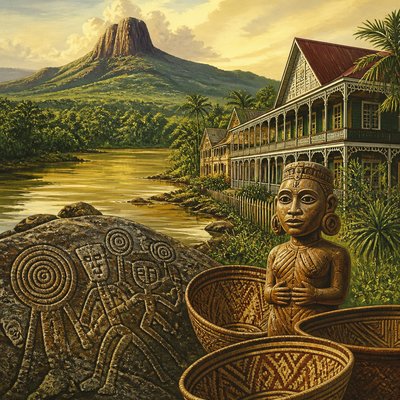
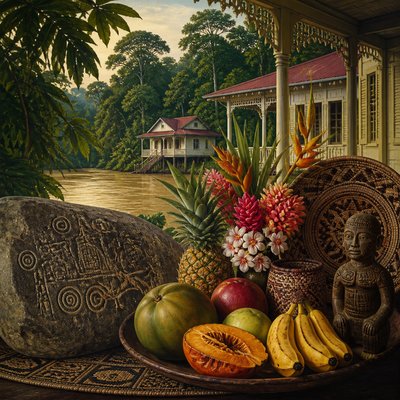
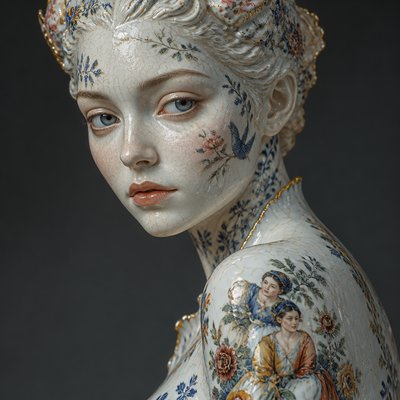
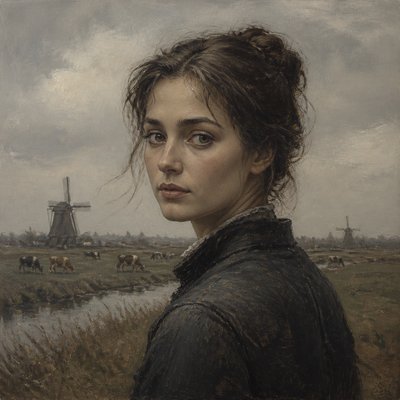
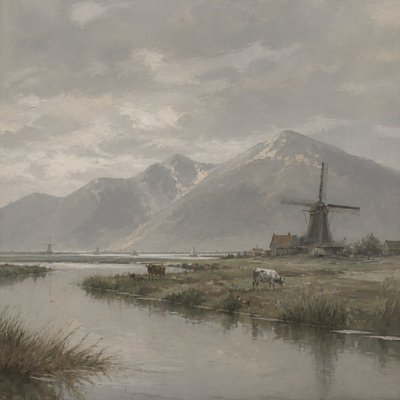
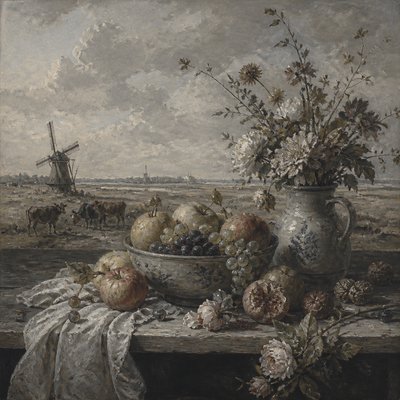
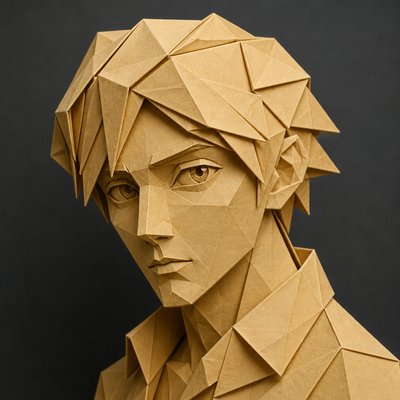
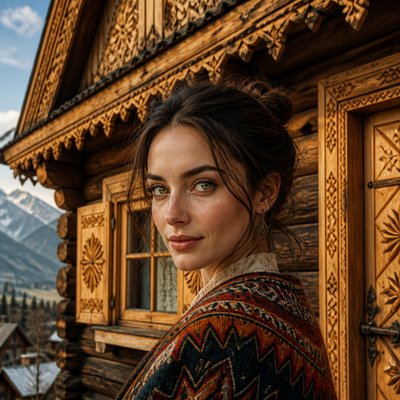
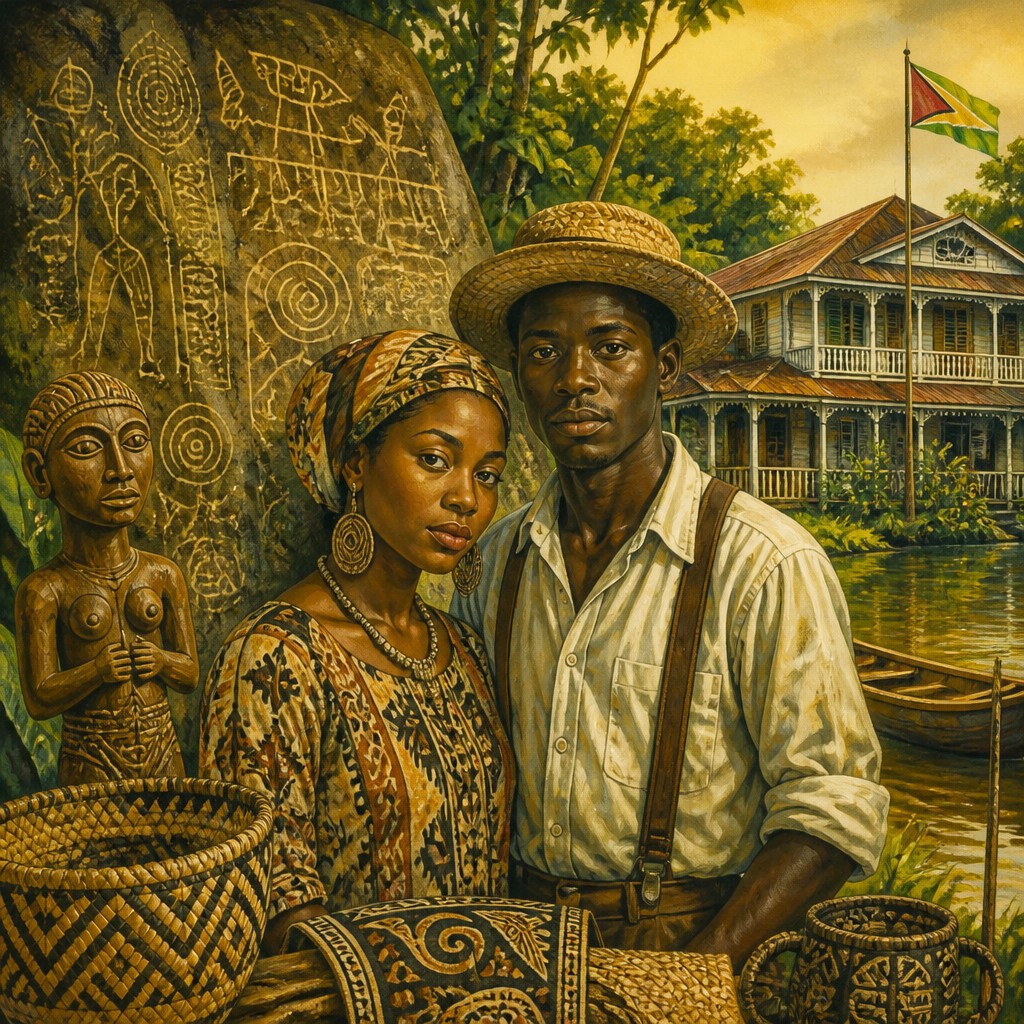
Guyanese art style is an interpretive visual language built from Guyana’s Indigenous material traditions, rainforest environments, river landscapes, and Dutch- and British-influenced timber architecture. It brings together weathered Timehri rock-art motifs, the tactile character of balata-rubber figurines, finely patterned basketry, broad colonial verandas, and the subdued colors of forest and muddy river water.
The style is defined less by a single historical school than by a careful synthesis of place-based references. Its visual atmosphere is humid, handmade, and contemplative: carved marks appear softened by weather, woven patterns structure surfaces, and golden-brown light filters through dense green vegetation. Architecture and craft are treated as part of the same environment, with riverside homes, canoes, stone, wood, fiber, and rainforest forming a continuous visual vocabulary.
Try It On Your Photos
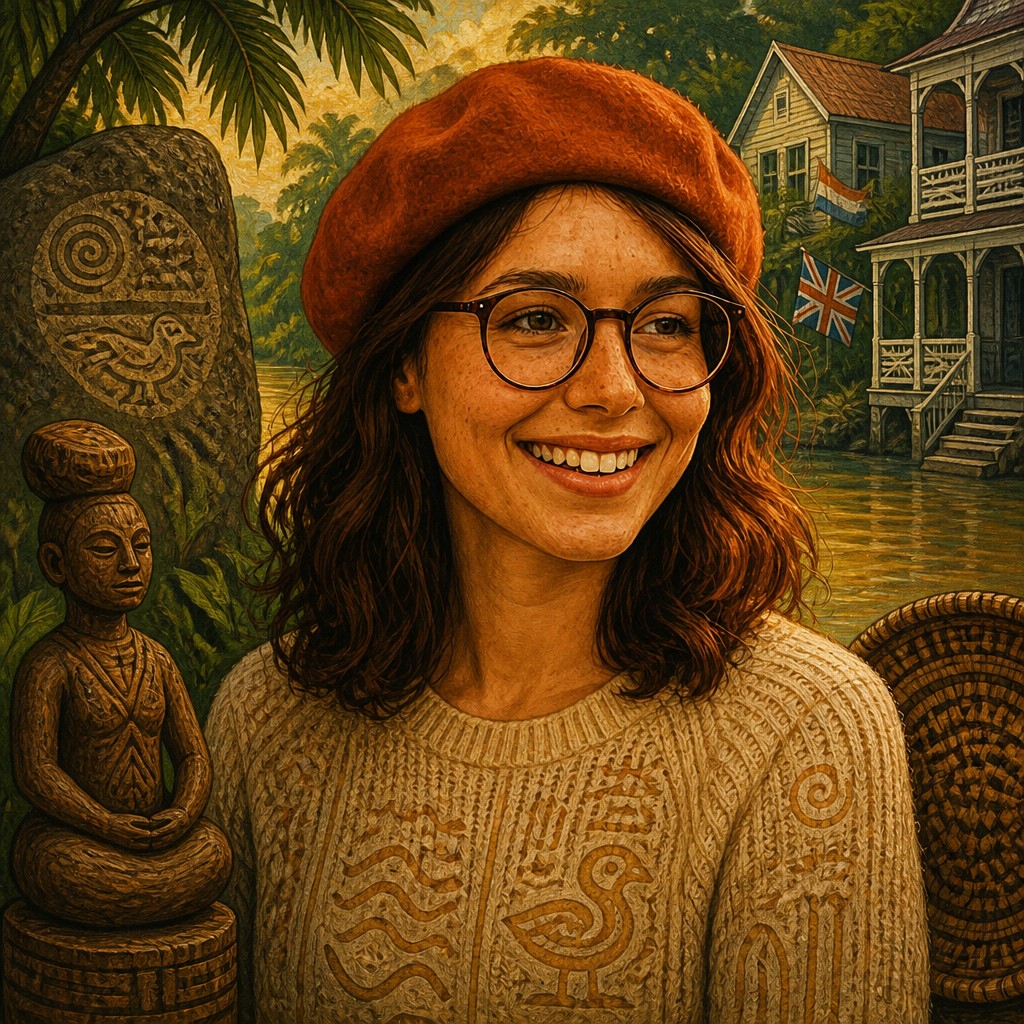
Upload any photo and convert it into Guyanese Art Style — drag the sliders to compare before and after.


What Defines Guyanese Art Style
The signature details, up close
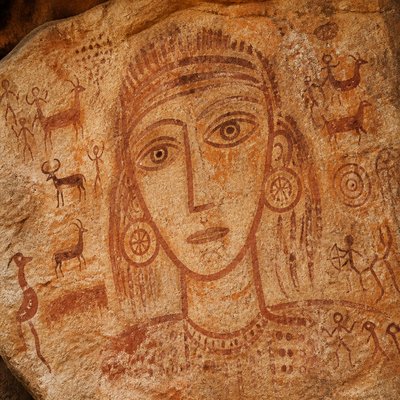
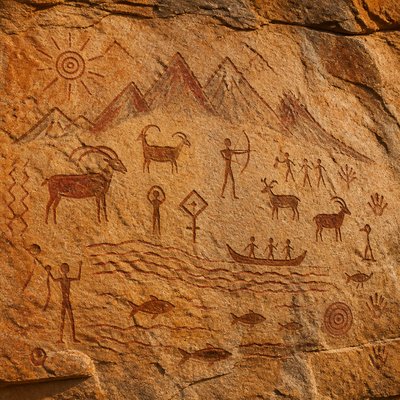
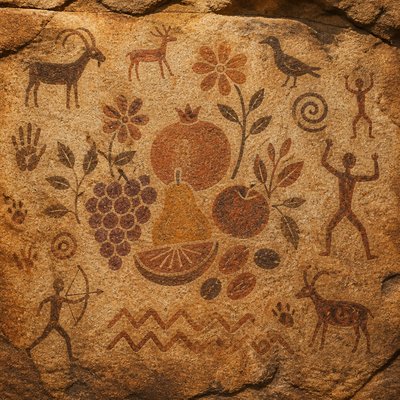
Weathered Timehri-inspired marks
Rock surfaces carry simplified human, animal, and symbolic forms with softened edges, mineral staining, and irregular erosion. These references should be used with cultural care, especially when a motif may have ceremonial or community-specific significance.
Balata-like tactile carving
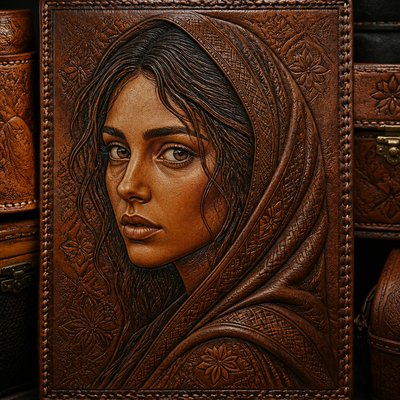
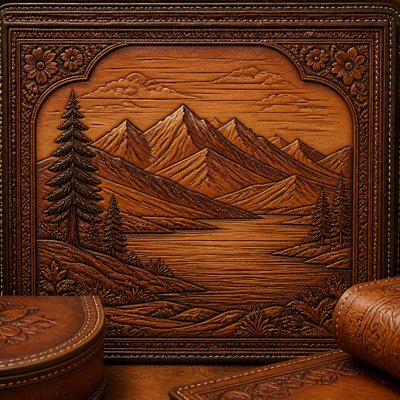
Small figures and animals have a warm, slightly matte, hand-worked appearance associated with carved balata rubber. Rounded silhouettes, tool marks, shallow grooves, and compact proportions convey the intimacy of a folk object.
Woven geometric pattern
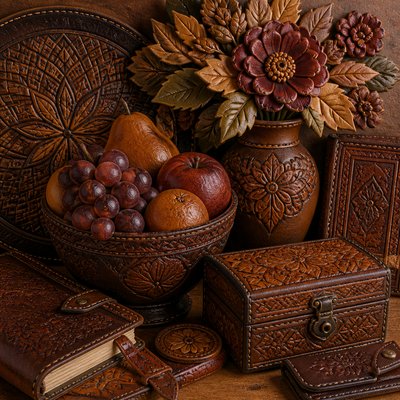
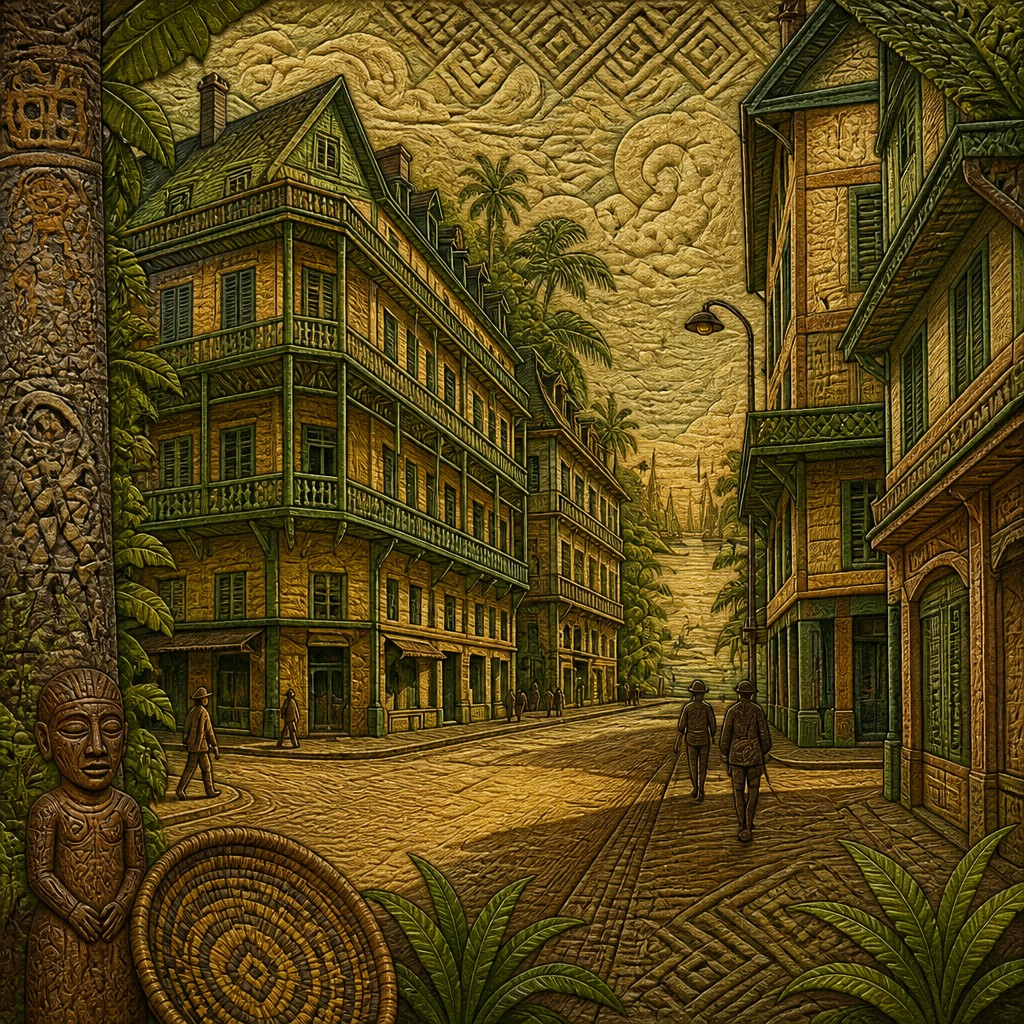
Basketry-inspired bands, chevrons, diamonds, and stepped forms organize borders, walls, clothing, and containers. The patterns are strongest when they remain visibly woven rather than becoming perfectly mechanical ornament.
Rainforest palette
Deep leaf green, moss, charcoal stone, clay brown, muted ochre, and river gold form the dominant palette. Small accents of painted wood, woven fiber, or tropical color can provide contrast without overpowering the humid atmosphere.
Riverine light and moisture
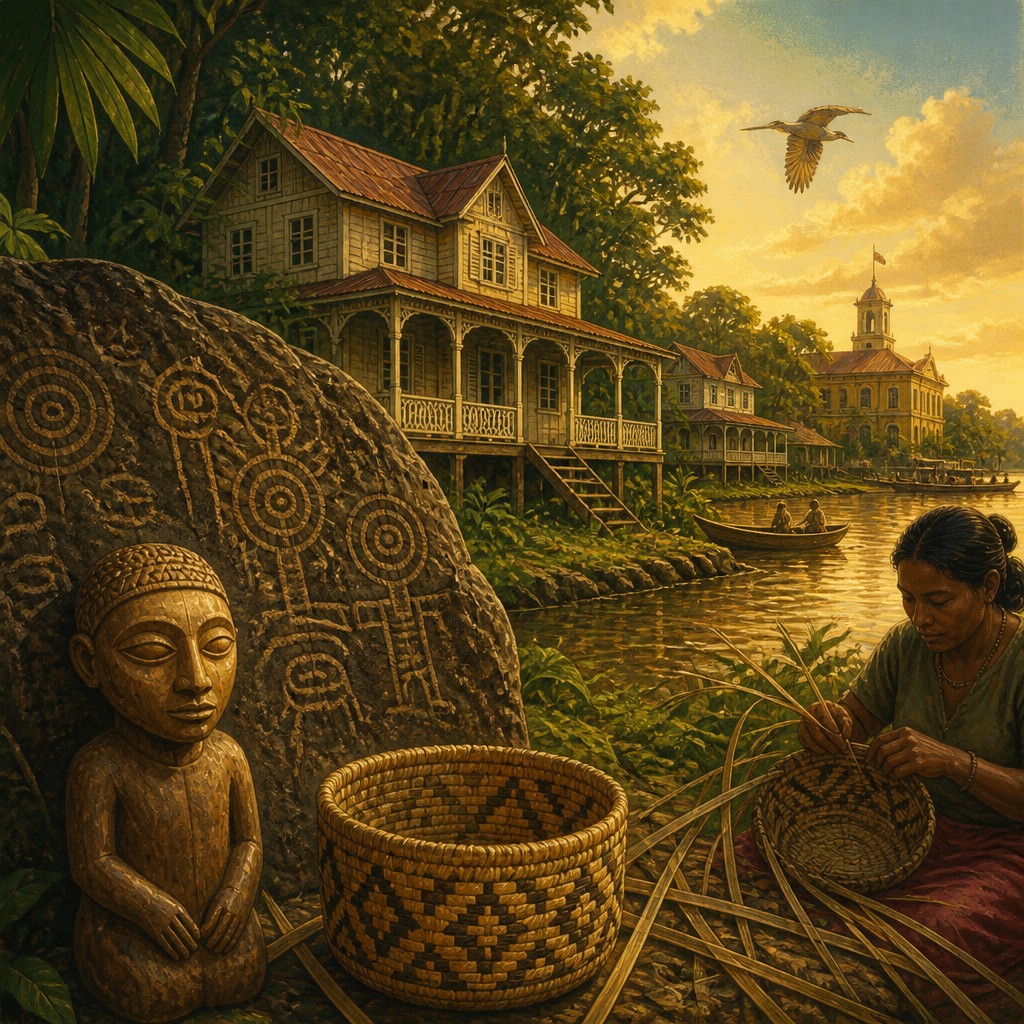
Light is diffuse, warm, and reflective, often bouncing from muddy water or damp timber. Mist, wet stone, soft shadows, and filtered sun create depth while maintaining a quiet, low-contrast mood.
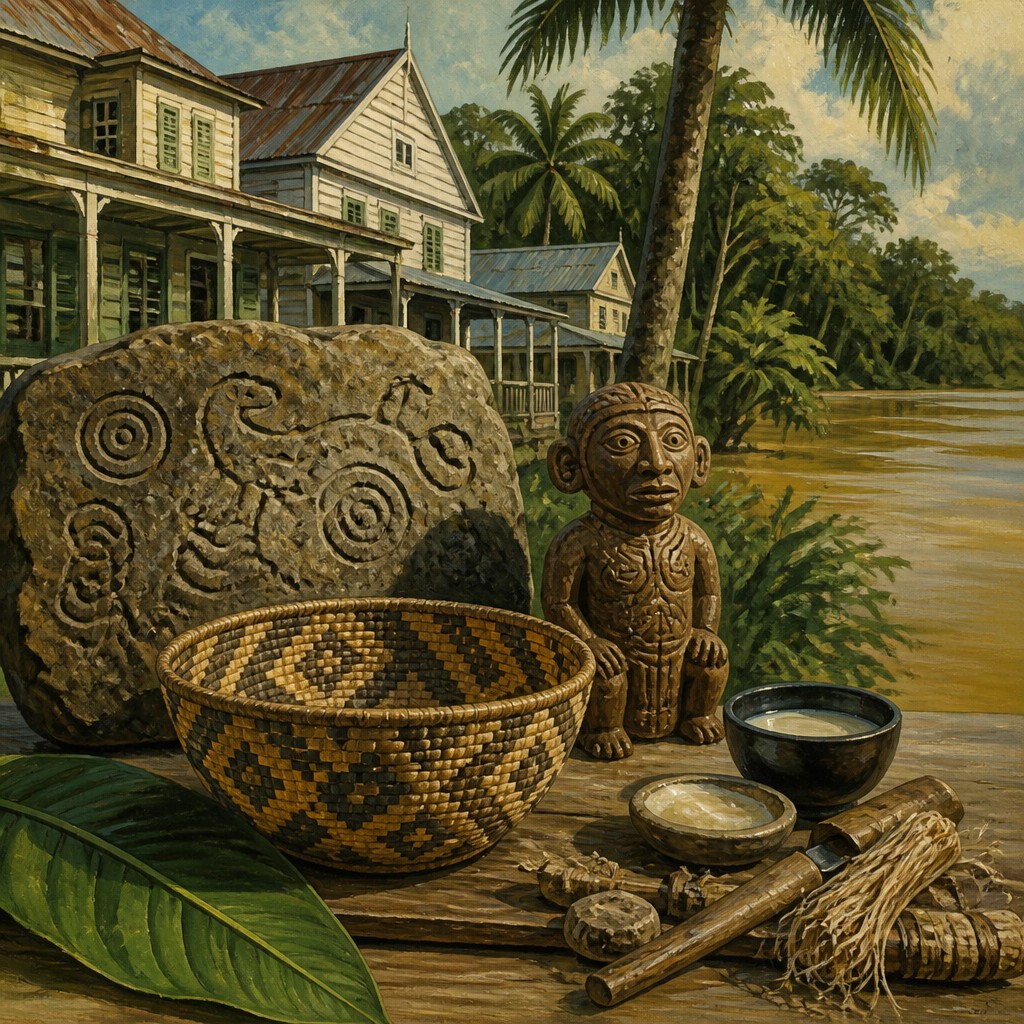
Colonial timber architecture
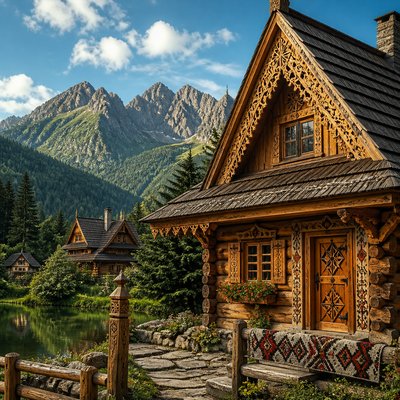
Raised wooden houses, wide verandas, louvered shutters, gabled roofs, stairs, and open balustrades provide architectural structure. These forms are best shown as lived-in vernacular spaces, with weathering, repairs, and tropical adaptation visible.
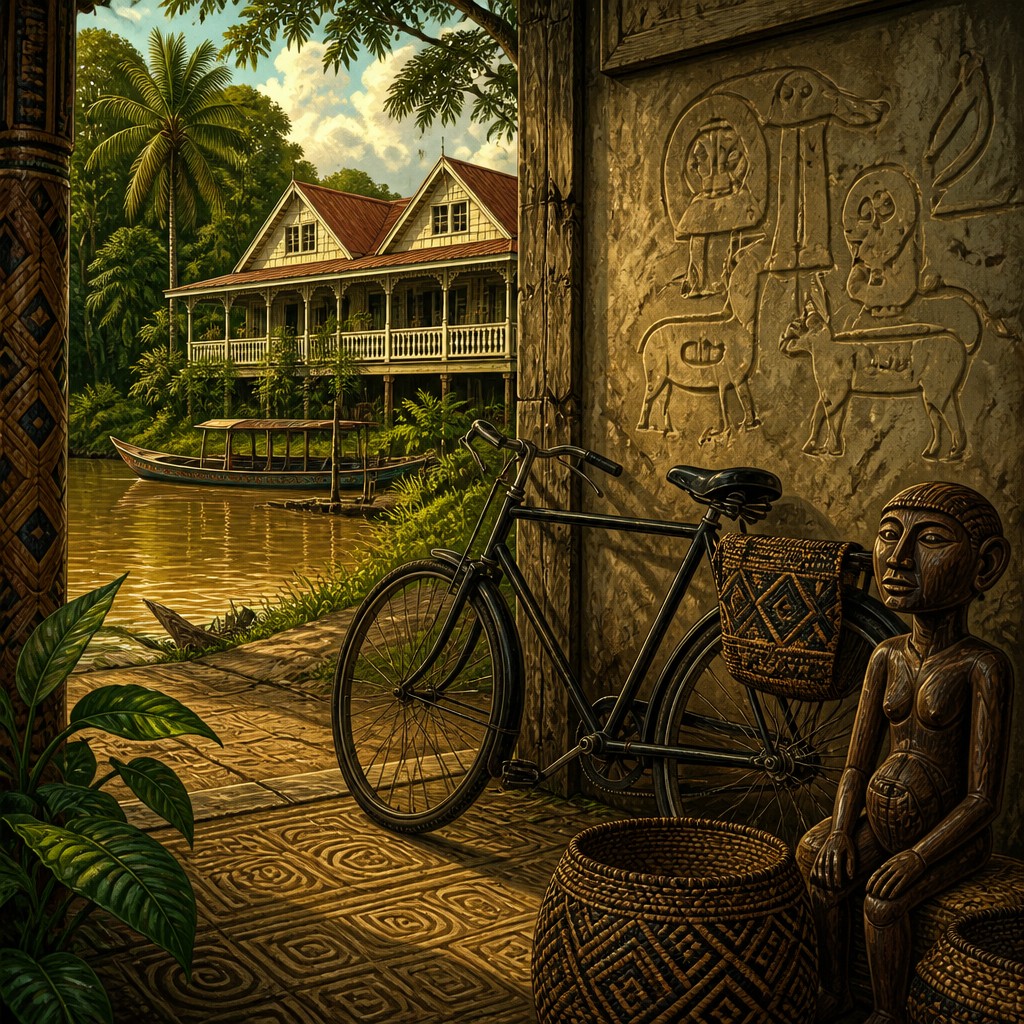
Handmade visual rhythm
Irregular carving, visible fiber, uneven pigment, and repeated artisanal forms prevent the image from feeling industrial. The composition often balances detailed craft surfaces with broad areas of foliage, sky, or water.
Guyanese Prompt Ideas
Start from an idea — each one opens the generator with the style ready to go. See all 40 Guyanese prompts →
How to Create Guyanese Art
Master the craft step by step — or skip straight to creating. Read the full guide →
- 1
Establish the material vocabulary
Combine a few convincing materials—damp riverside stone, dark timber, balata-like rubber, palm fiber, and woven cane—rather than adding every reference at once. Vary texture according to use: polished on handled objects, rough on walls and rock, and softened by humidity outdoors.
- 2
Build a river-and-forest light scheme
Start with a restrained green, brown, and ochre ground, then add reflected gold from the river beneath foliage. In digital painting, use low-opacity glazing and softened edges for humid distance while reserving sharper detail for foreground carvings and woven objects.
- 3
Compose architecture as context
Use a veranda, raised house, riverside landing, or gabled timber structure to frame the scene rather than making colonial architecture the entire subject. Include practical details such as stairs, shutters, drainage, weathering, and vegetation reclaiming the building.
- 4
Treat motifs with cultural care
Research the Indigenous source and context of any rock-art or basketry reference before reproducing it. For an original work, favor broad material and structural qualities when the meaning of a particular symbol is uncertain, and avoid presenting sacred imagery as generic pattern.
- 5
Use physical craft processes
For traditional work, experiment with carved or modeled forms, natural-fiber collage, earth pigments, wood grain, and layered washes. Photograph or scan handmade surfaces at raking light so tool marks, fibers, and relief remain legible in a finished image.
- 6
Write precise generation prompts
Specify the subject first, then materials, architecture, lighting, palette, and atmosphere—for example, “raised timber house beside a broad muddy river, woven basket hanging on the veranda, weathered carved stone, filtered rainforest light.” Add constraints such as “handmade texture, restrained palette, no glossy plastic, culturally respectful motifs” when needed.
The Story
History & Origins of Guyanese
This is a contemporary, descriptive style rather than a formally recognized historical movement. Its aesthetic lineage draws on Indigenous rock imagery associated with the Guiana Shield, Amerindian basketry and carving traditions, the use of balata rubber for figurative craft in Guyana, and vernacular timber buildings shaped by Dutch and British colonial periods.
The style develops by placing these distinct traditions in visual conversation rather than claiming they originated as one unified art school. A responsible interpretation preserves the specificity of Indigenous motifs and acknowledges the colonial history of the architecture, using both as contextual elements within a Guyanese landscape rather than as interchangeable decoration.
Influences: The style relates to Indigenous Guiana Shield rock art, Amerindian basketry and carving, Guyanese balata craft, tropical vernacular architecture, colonial timber building traditions, folk sculpture, and rainforest landscape painting. It also shares qualities with material-focused craft documentation and contemporary place-based art, but it should not be confused with a single established historical movement or with generalized tropical imagery.
Frequently Asked Questions
Is Guyanese art style a formal historical art movement?
No. The term describes a contemporary aesthetic synthesis rather than a documented movement with a fixed period, manifesto, or centralized school. It combines several real Guyanese and regional traditions, so descriptions should distinguish Indigenous craft, colonial architecture, and modern reinterpretation.
What visual elements define this style?
Its core elements are weathered rock-art references, balata-like carved figurines, woven geometric patterns, rainforest greens, muddy river-gold light, and raised timber architecture with broad verandas. The overall effect is tactile, humid, handmade, and closely tied to riverine landscapes.
How is it different from generic tropical or rainforest art?
Generic tropical art may rely mainly on lush foliage and bright color. This style is more specific: it emphasizes Guyanese materials, river environments, Indigenous craft references, and Dutch- and British-influenced timber forms, with a restrained palette and visible handmade texture.
How can I make an image in this style without misusing Indigenous imagery?
Research the source and meaning of any Timehri or basketry motif, and avoid copying symbols whose cultural context is unknown. You can evoke the aesthetic through weathered stone, woven construction, carved material, rainforest light, and river architecture without treating sacred or community-specific signs as ornamental filler.
What media work well for this aesthetic?
Relief printmaking, gouache, acrylic, watercolor, digital painting, clay or wood sculpture, fiber collage, and mixed-media photography all suit the style. Techniques that preserve grain, tool marks, fibers, staining, and uneven edges are especially effective.
What subjects are commonly suited to Guyanese art style?
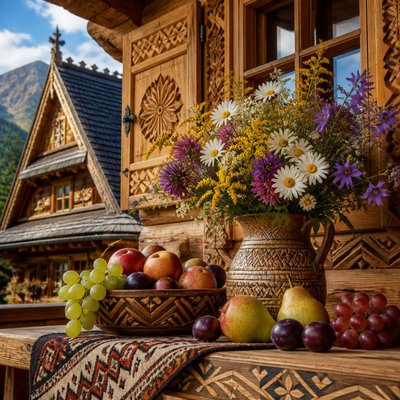
Strong subjects include riverside houses, canoes, forest paths, carved animals, basketry, veranda still lifes, market scenes, and wetland landscapes. A focused composition with one or two material details usually feels more convincing than an image crowded with unrelated cultural references.
Create your first Guyanese artwork
Describe anything — or upload a photo — and see it in Guyanese Art Style in seconds.
Related Styles
Discover similar art styles