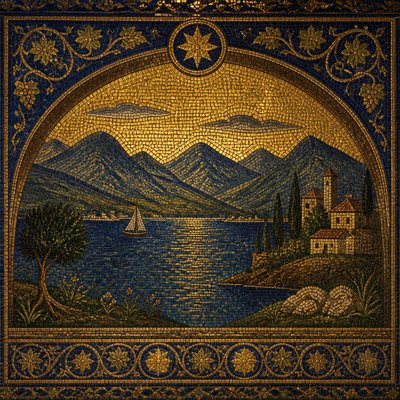
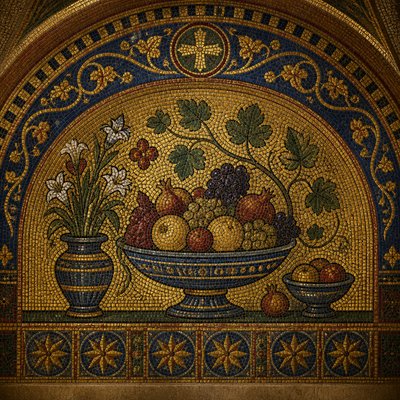
Granada Art Style
Explore Granada Art Style: Alhambra-inspired geometry, muqarnas, horseshoe arches, glazed tilework, and dense Nasrid arabesque ornament.
Instantly rendered in Granada — or transform a photo
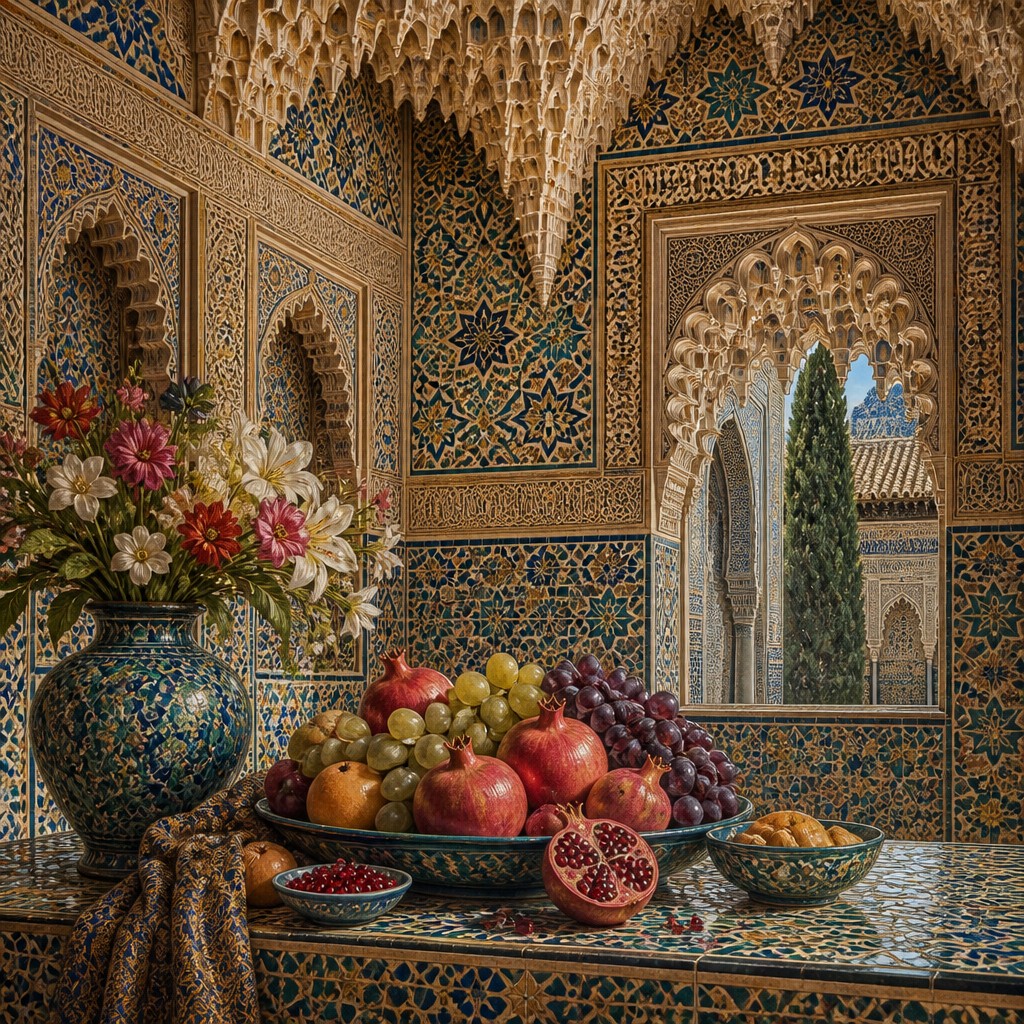
Granada Gallery
Tap any artwork to explore it
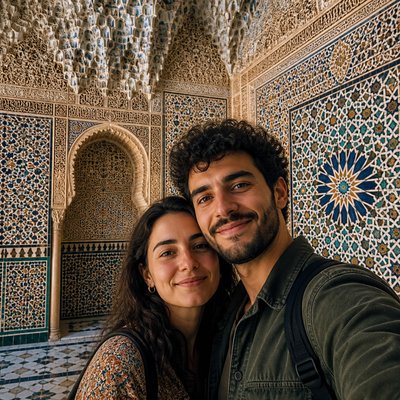
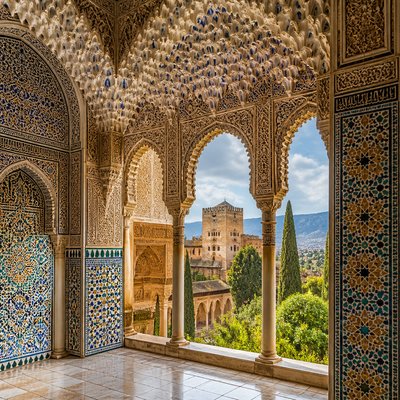
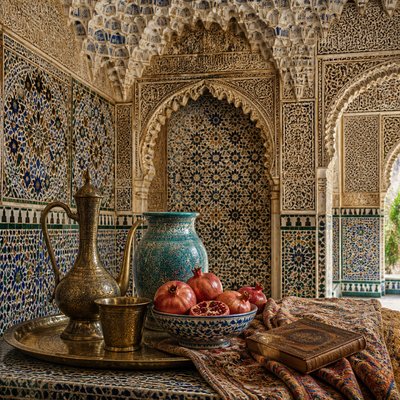
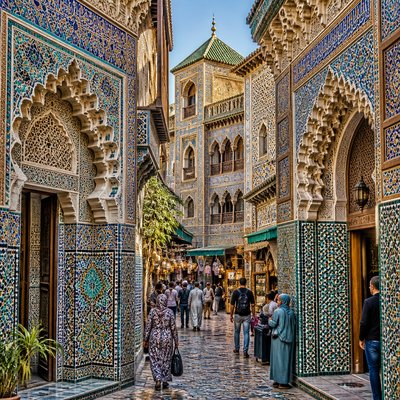
What is Granada Art Style?
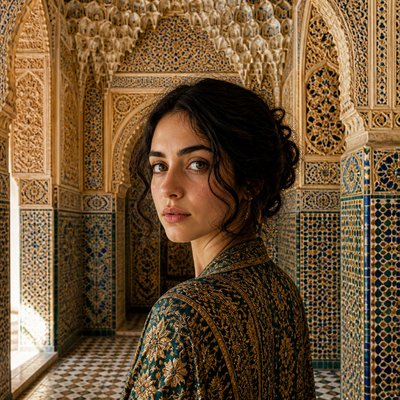
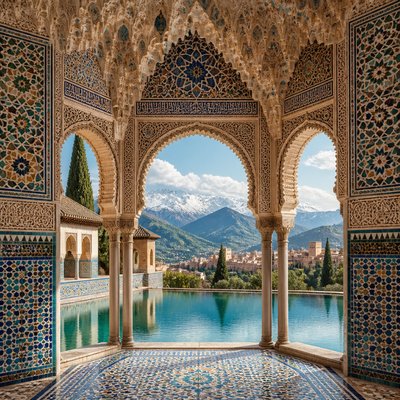
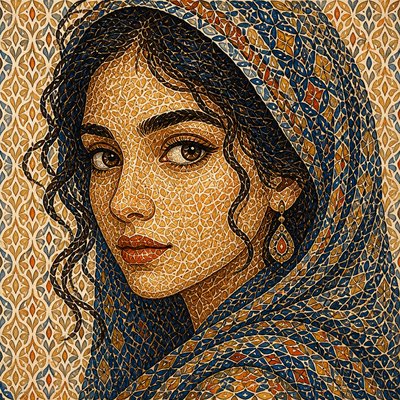
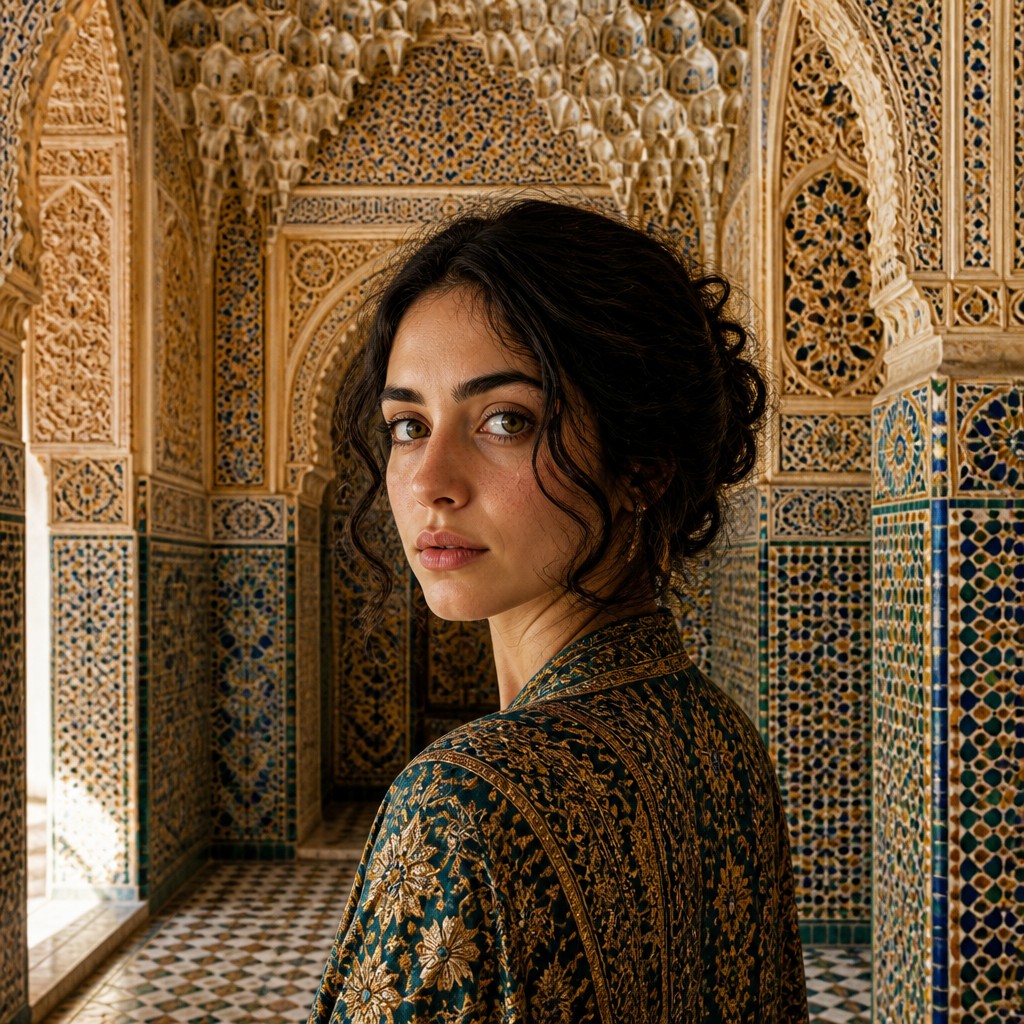
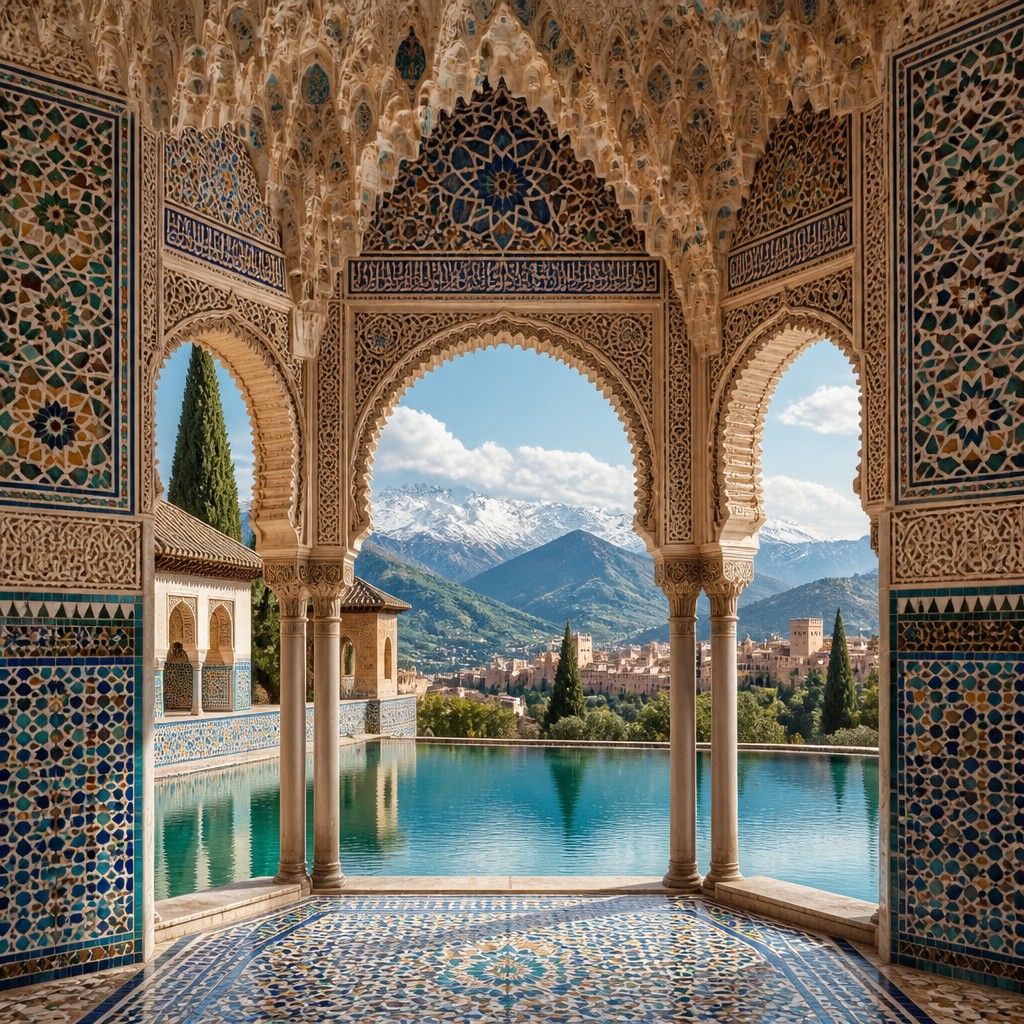
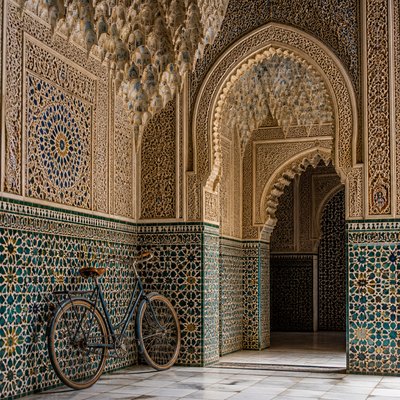
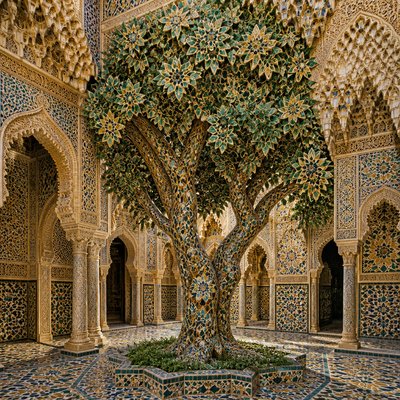
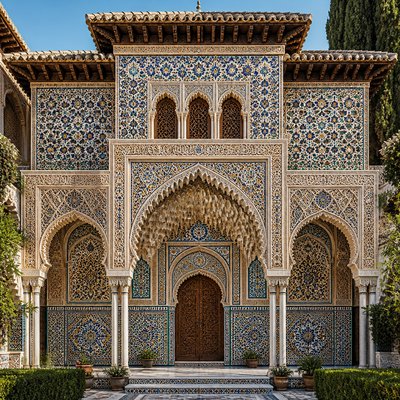
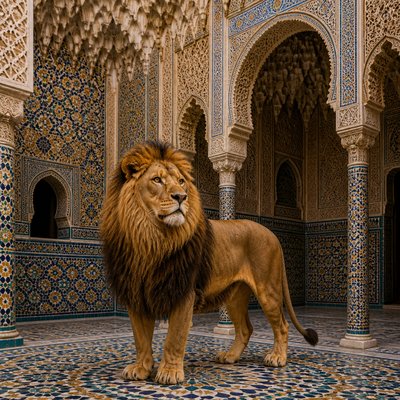
Granada Art Style is an ornamental architectural aesthetic inspired by the Nasrid palaces of the Alhambra in Granada, Spain. Its visual identity combines repeating geometric star patterns, glazed ceramic mosaics, carved stucco, honeycomb muqarnas vaults, horseshoe arches, and densely interlaced arabesque decoration. The effect is immersive and architectural: surfaces appear to continue without interruption across walls, ceilings, floors, and framed openings.
The style looks highly ordered because it is built from modular systems of symmetry, proportion, repetition, and tessellation. Cool blue and teal tiles may be set against white plaster, warm ochre, terracotta, deep red, or metallic gold accents, while carved surfaces create a contrast between crisp geometry and soft, lace-like relief. In contemporary art and digital imagery, these elements are often extended into decorative interiors, fantasy architecture, patterned objects, and richly framed scenes.
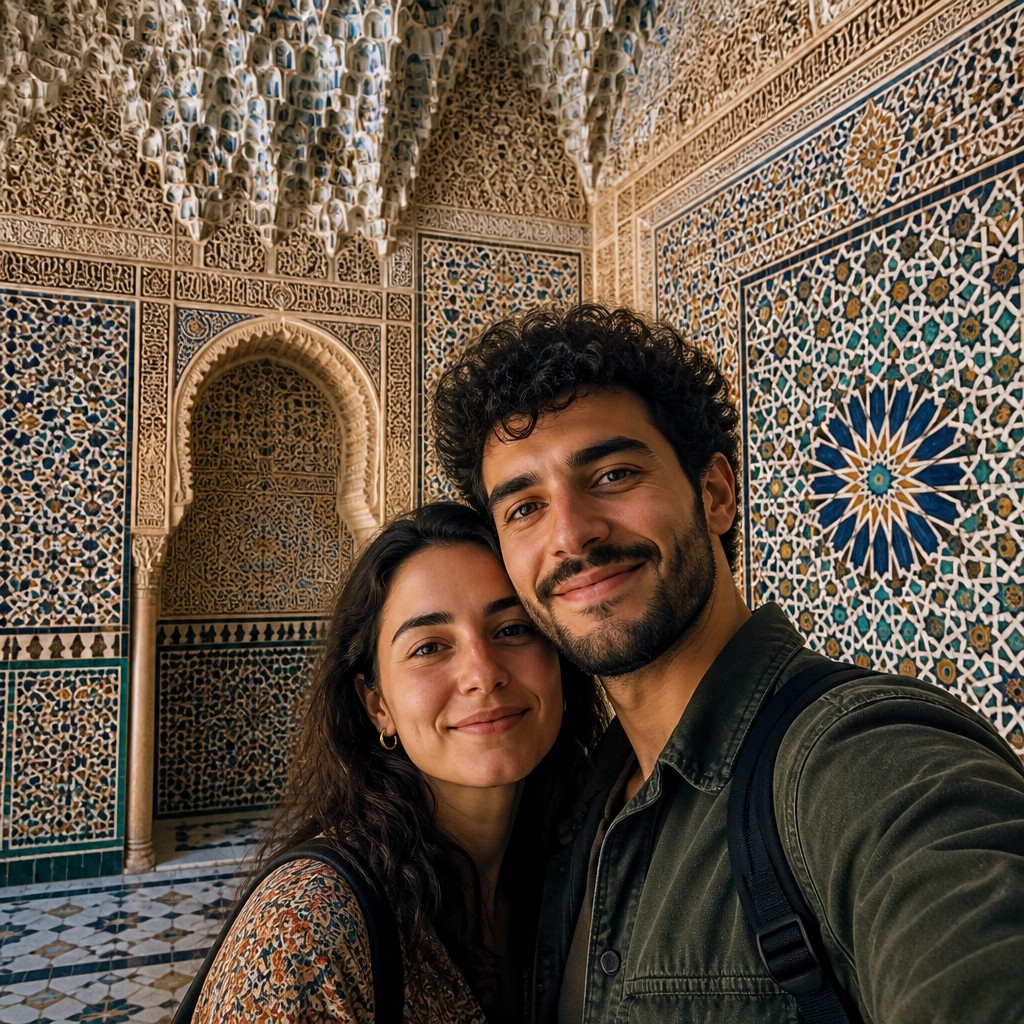
Try It On Your Photos
Upload any photo and convert it into Granada Art Style — drag the sliders to compare before and after.
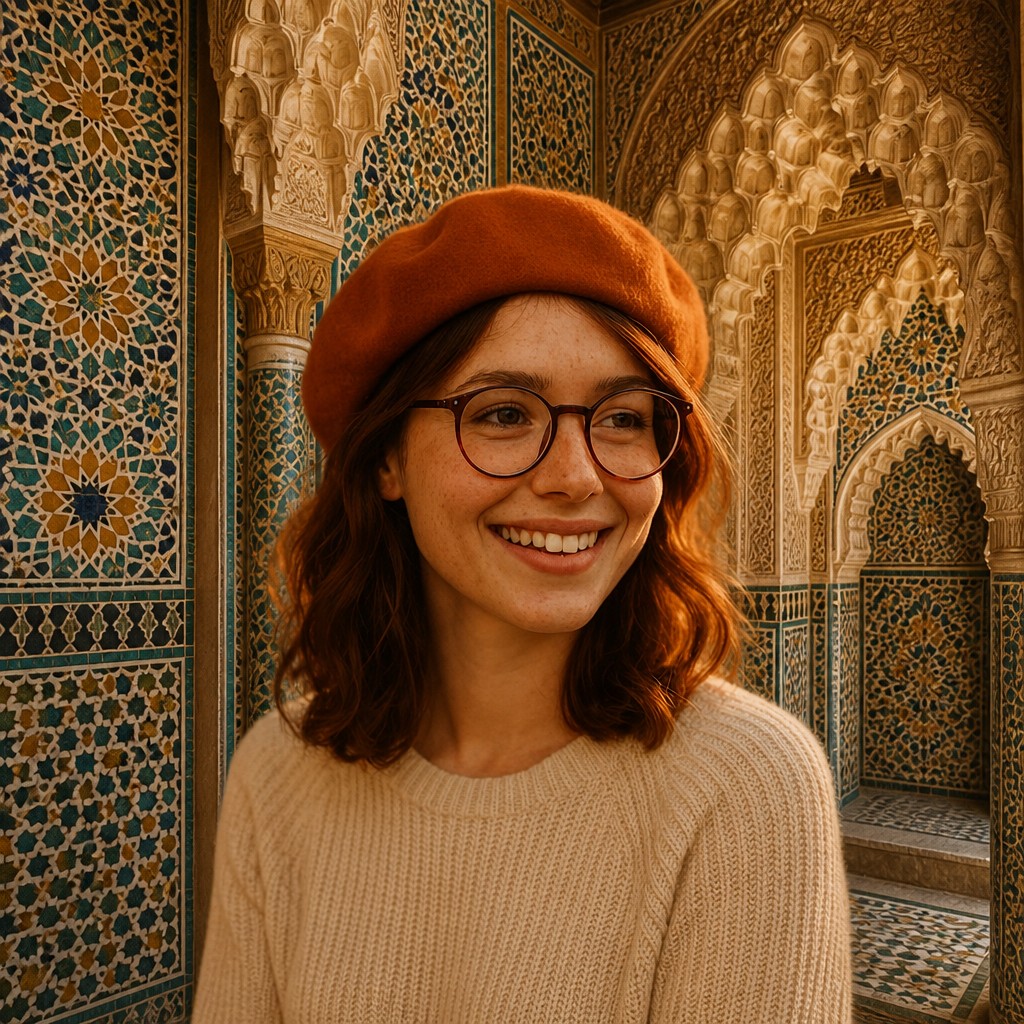

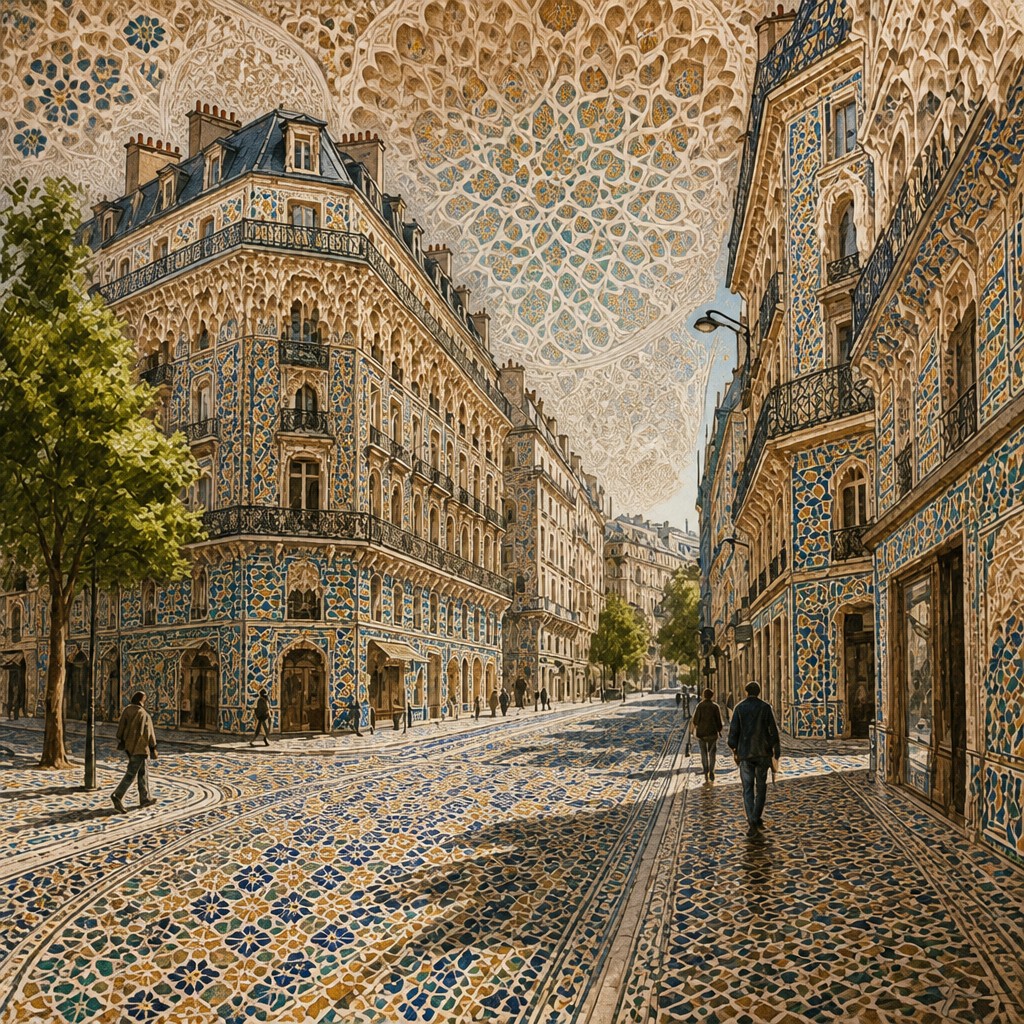

What Defines Granada Art Style
The signature details, up close
Tessellated geometric pattern
Eight-pointed stars, polygons, interlacing bands, and repeated radial constructions form continuous surfaces. The geometry creates visual rhythm while suggesting mathematical order and infinity.
Muqarnas relief
Tiered, honeycomb-like vaulting breaks architectural transitions into faceted cells. In images, muqarnas can appear as cascading ceilings, domed niches, cornices, or three-dimensional ornamental clouds.
Horseshoe arches
Rounded arches with a pronounced inward curve frame doorways, windows, arcades, and garden views. Their outlines are often enriched with layered molding or fine perforated tracery.
Glazed ceramic mosaics
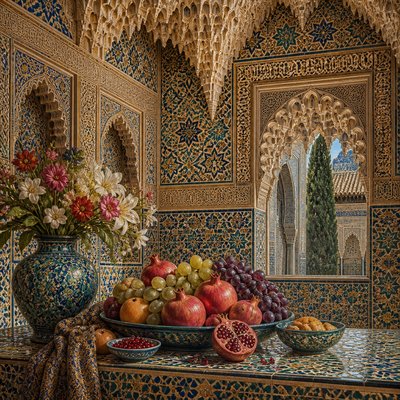
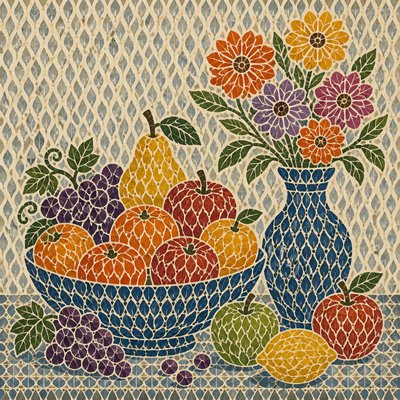
Small, sharply bounded tiles create colorful panels and dadoes with reflective surfaces. Blue, teal, turquoise, green, white, ochre, and gold-toned accents are common in contemporary interpretations.
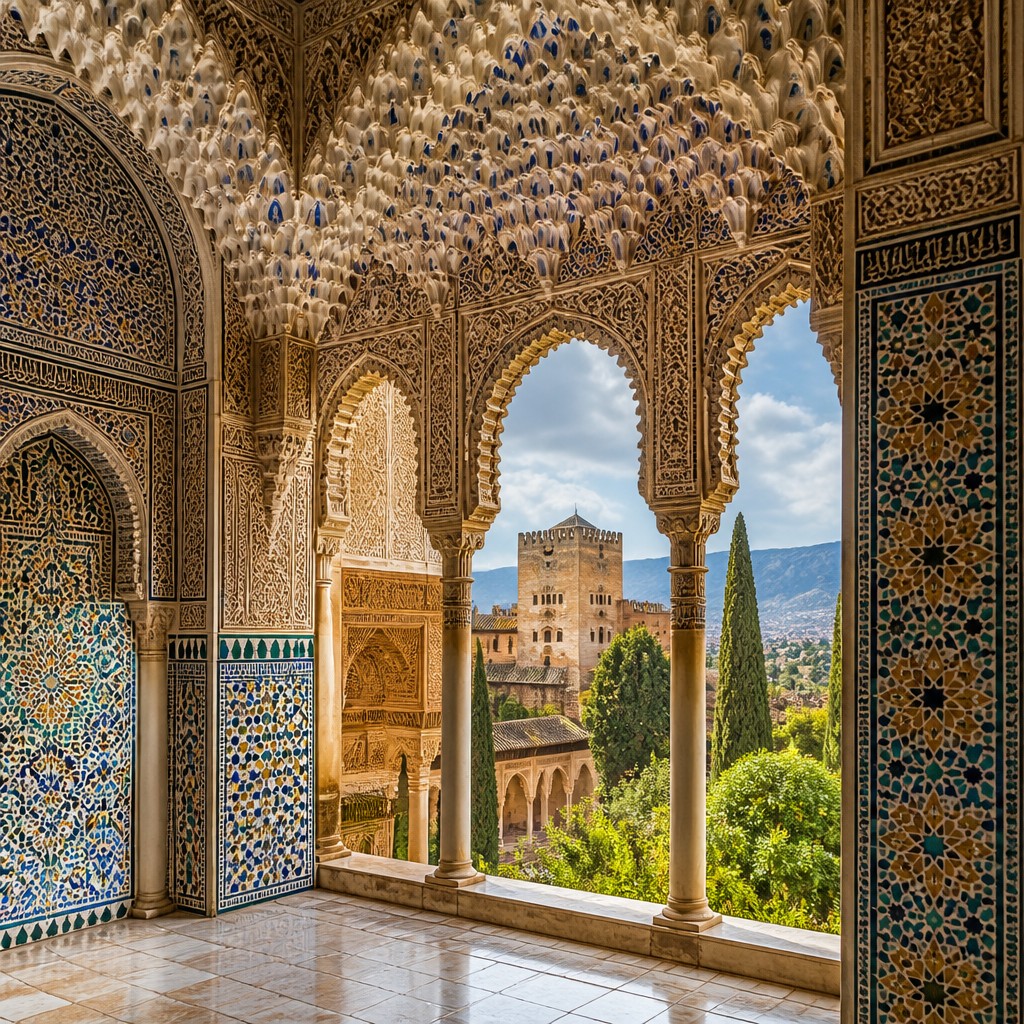
Carved stucco and arabesque
Flat walls are transformed by low-relief vegetal scrolls, interlacing foliage, inscriptions, and lace-like plaster carving. Dense ornament is balanced by repeated borders and carefully controlled symmetry.
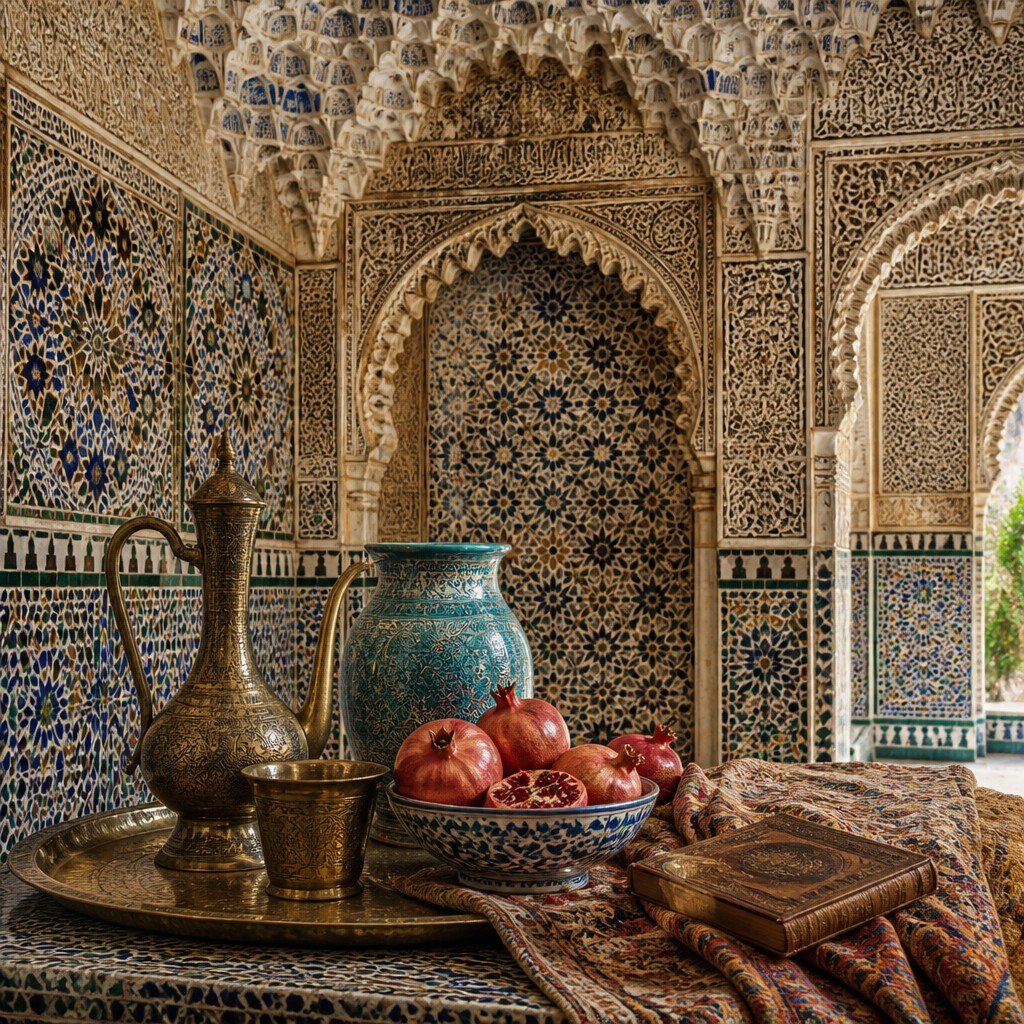
Layered thresholds and courtyards
The style favors sequences of arches, portals, galleries, fountains, reflecting pools, and garden spaces. Receding frames create depth and make ornament function as both surface decoration and spatial structure.
Granada Prompt Ideas
Start from an idea — each one opens the generator with the style ready to go. See all 40 Granada prompts →
How to Create Granada Art
Master the craft step by step — or skip straight to creating. Read the full guide →
- 1
Build a modular geometric grid
Start with a square or radial grid and construct stars, polygons, and interlacing bands before adding color. Repeat the unit accurately across the surface, then vary scale at borders, panels, and architectural transitions.
- 2
Separate relief from flat decoration
Use layered values or modeling to distinguish carved stucco, projecting muqarnas, and flat tilework. In digital work, combine displacement, bump, or normal maps with controlled shadows so the ornament reads as material rather than a printed pattern.
- 3
Design an architectural frame
Compose the image around horseshoe arches, arcades, niches, courtyards, or a central fountain. Use repeated thresholds and a visible perspective axis to make the decoration feel integrated with the building.
- 4
Control color and reflectivity
Pair cool glazed blues and teals with warm plaster, terracotta, cream, or restrained gold. Add subtle highlights and irregular reflections to ceramic surfaces, while keeping stucco more matte and tactile.
- 5
Use digital pattern and 3D workflows
Create tile modules as vector patterns or procedural textures, then map them onto walls and floors in a 3D scene. Sculpt or procedurally generate cellular vaults, and use ambient occlusion to clarify small recesses.
- 6
Write precise generation prompts
Specify the subject, architectural setting, materials, pattern density, lighting, camera angle, and degree of historical or fantastical interpretation. For a coherent result, request a limited palette and name separate surfaces such as glazed tile walls, carved stucco ceilings, and matte plaster columns.
The Story
History & Origins of Granada
Granada Art Style is not a formally established historical movement; it is a contemporary label for an aesthetic lineage drawn primarily from Nasrid architecture and decorative arts in medieval Granada. The Alhambra complex developed under the Nasrid emirate from the thirteenth through the fifteenth centuries, combining courtyards, gardens, tilework, carved stucco, wooden ceilings, inscriptions, and complex vaulting. Its ornament reflects broader Islamic traditions of geometric design, vegetal arabesque, calligraphic decoration, and architectural modulation.
The style also draws on the later reception of Andalusi and Moorish architecture in historicist architecture, interior decoration, illustration, and fantasy design. Modern interpretations frequently simplify or intensify the original vocabulary, using saturated color, seamless pattern repetition, and digitally generated architectural environments rather than reproducing a specific palace or period faithfully.
Influences: The style is related to Nasrid and broader Andalusi Islamic architecture, Moroccan and Maghrebi tile traditions, Islamic geometric ornament, arabesque carving, Persianate decorative design, and historicist Moorish Revival interiors. It also overlaps with ornamental illustration, fantasy architecture, architectural visualization, pattern design, and digital environment art. Unlike a strictly documentary reconstruction, it commonly combines historically recognizable elements with heightened color, seamless surfaces, and imaginative spatial scale.
Frequently Asked Questions
What defines Granada Art Style?
It is defined by Alhambra-inspired architectural ornament: geometric star tessellations, muqarnas, horseshoe arches, carved stucco, glazed tile mosaics, and dense arabesque patterning. The style emphasizes immersive surfaces, symmetry, and richly layered thresholds rather than isolated decoration.
Is Granada Art Style a historical art movement?
No. The name is best understood as a contemporary descriptive label rather than a recognized medieval or modern movement. It draws its strongest historical lineage from Nasrid architecture and decorative arts in Granada, while allowing modern, digital, and fantasy-based interpretation.
How is it different from Moorish Revival architecture?
Moorish Revival is a nineteenth- and early twentieth-century historicist architectural tendency that reinterpreted Islamic and North African forms in new contexts. Granada Art Style focuses more specifically on the Nasrid-Alhambra vocabulary and often presents it as a concentrated ornamental image language rather than as a complete architectural movement.
What materials are associated with the style?
Common material references include glazed ceramic tile, carved stucco, plaster, stone, wood, marble, metal, and reflecting water. Tile is usually glossy and color-rich, while plaster and stone provide matte, pale, or finely shadowed relief.
Can this style be used for subjects other than buildings?
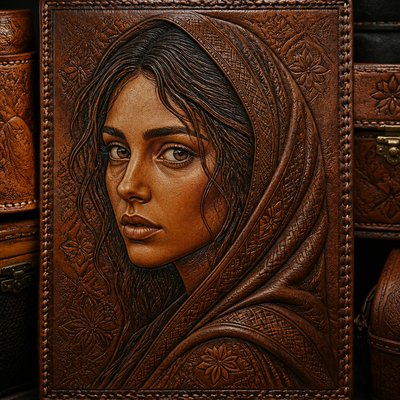
Yes. Its pattern systems can decorate furniture, clothing, ceramics, jewelry, book covers, posters, vehicles, and portrait backgrounds. For nonarchitectural subjects, retain the characteristic geometry, arch framing, tile palette, and carved or embossed surface treatment.
How can I make an image feel historically grounded?
Use accurate references to Nasrid architectural features, restrained structural proportions, handmade tile variation, carved plaster relief, and courtyard-based composition. Avoid mixing every Islamic architectural vocabulary indiscriminately, and distinguish documentary reconstruction from a deliberately fantastical interpretation.
Create your first Granada artwork
Describe anything — or upload a photo — and see it in Granada Art Style in seconds.
Related Styles
Discover similar art styles