Giverny Art Style
Explore the Giverny art style: luminous water gardens, broken Impressionist brushwork, reflective ponds, and shimmering violet, green, and pink.
Instantly rendered in Giverny — or transform a photo
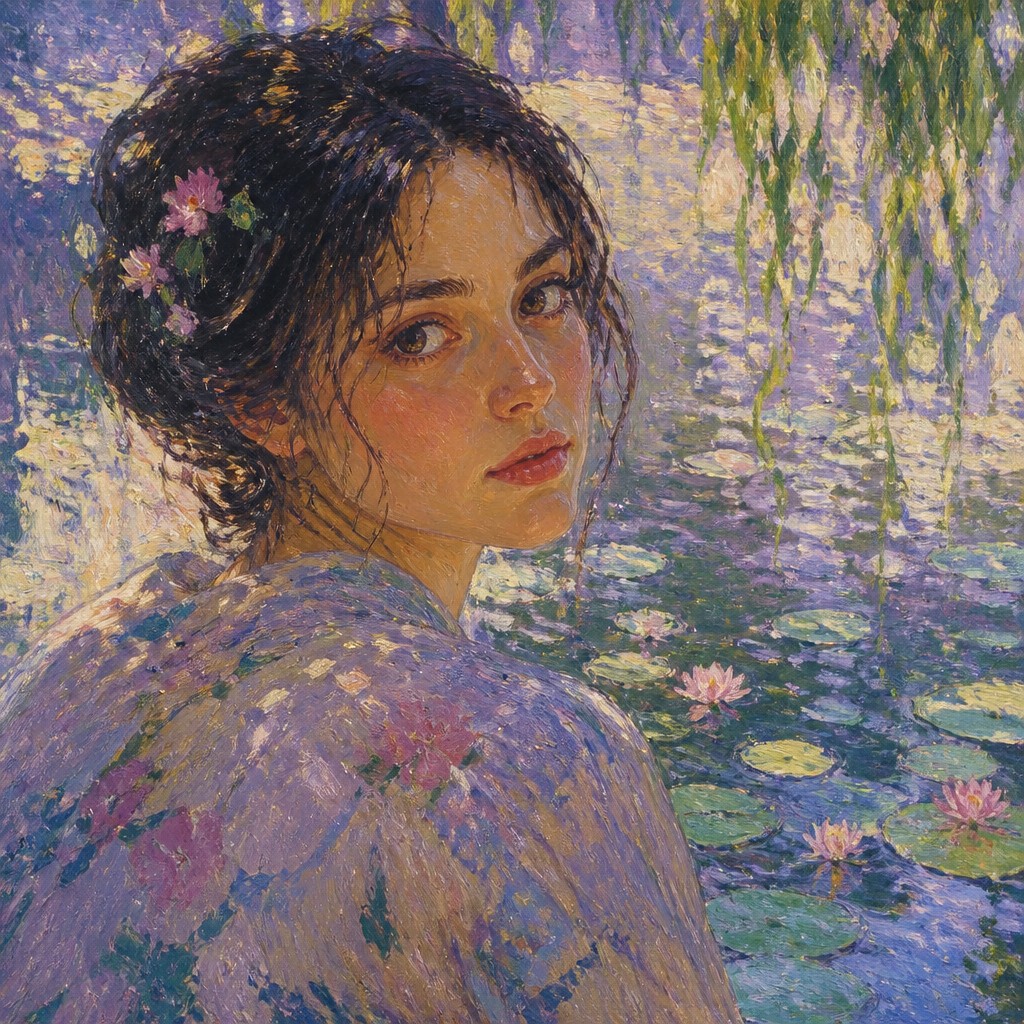
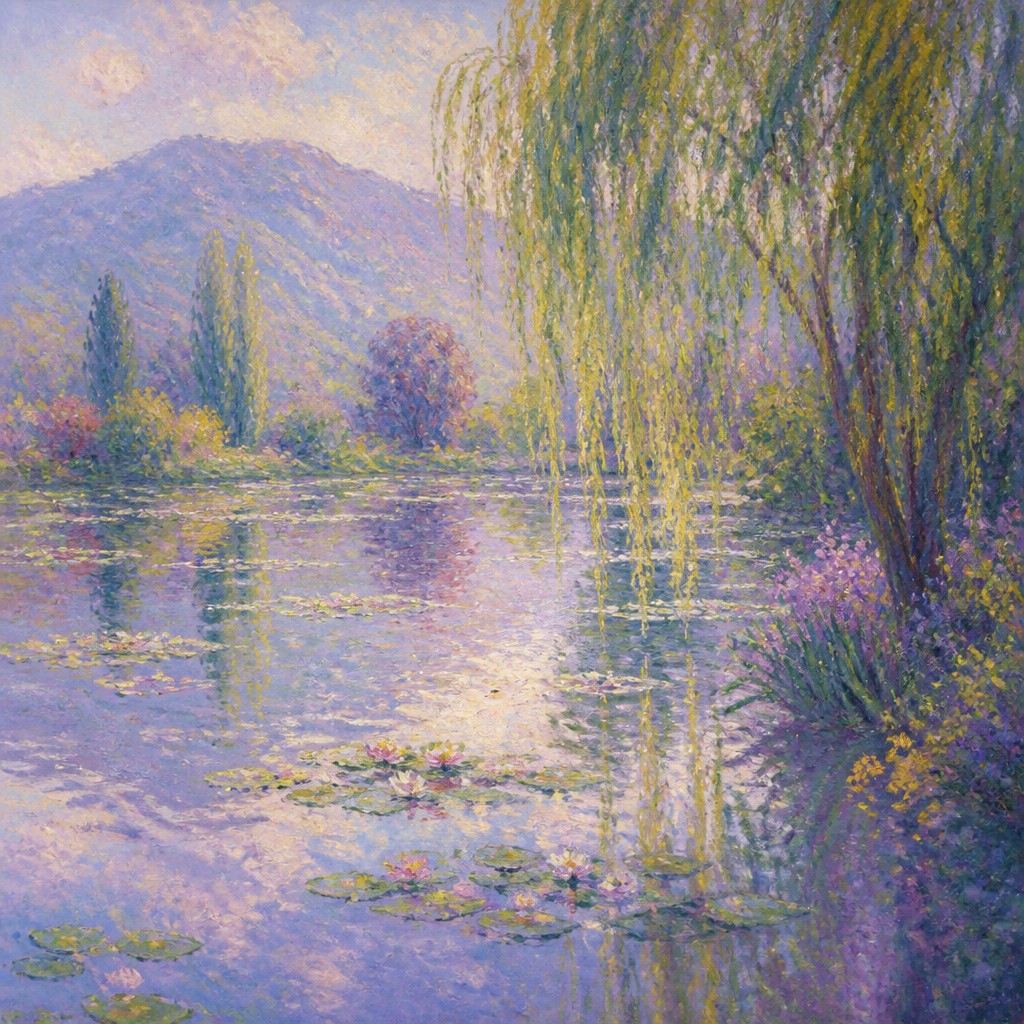
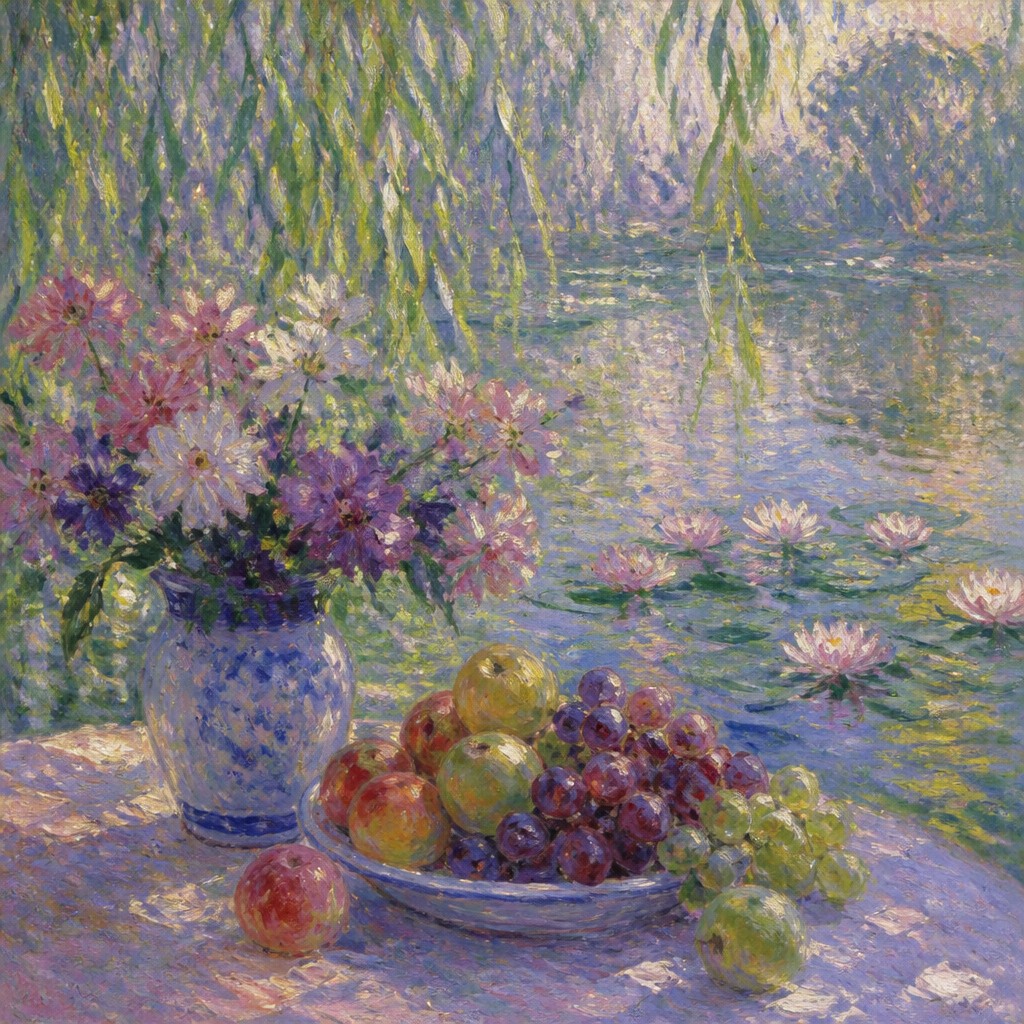
Giverny Gallery
Tap any artwork to explore it
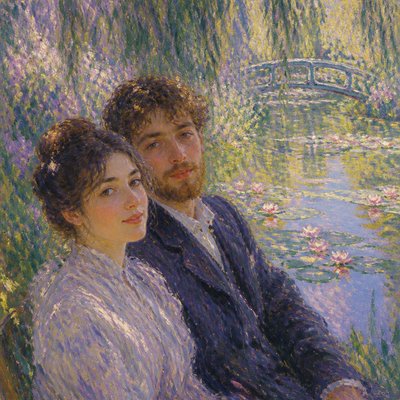
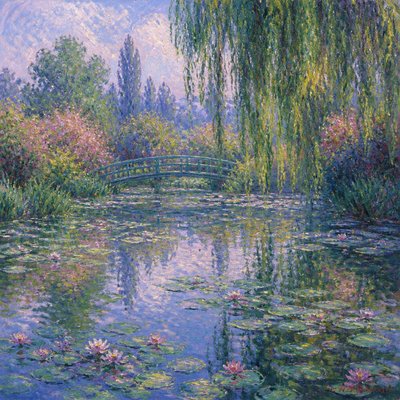
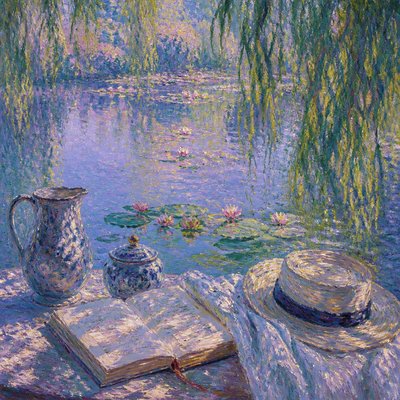
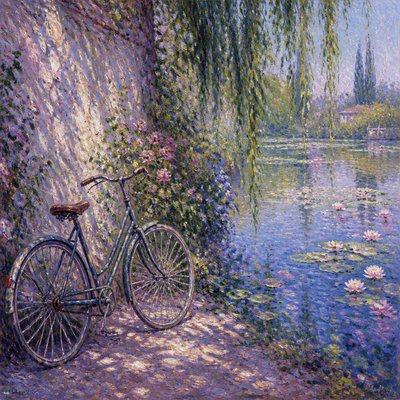
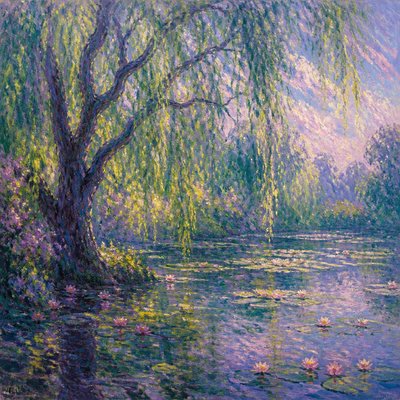
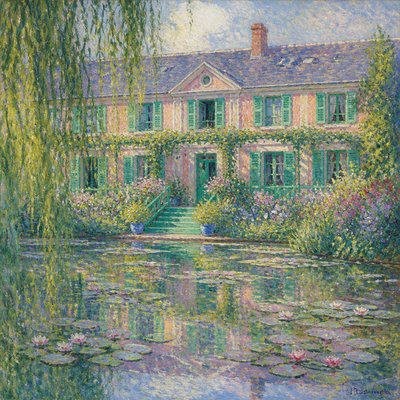
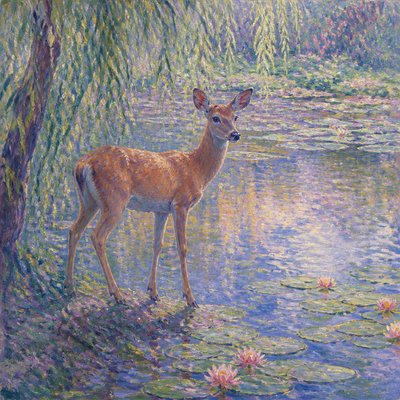
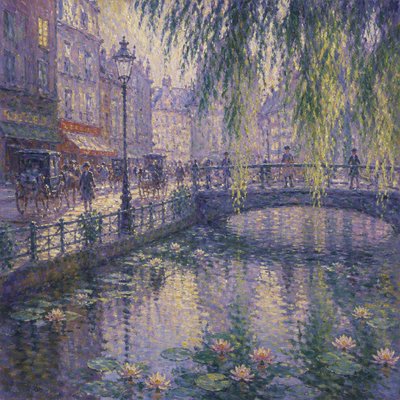
What is Giverny Art Style?
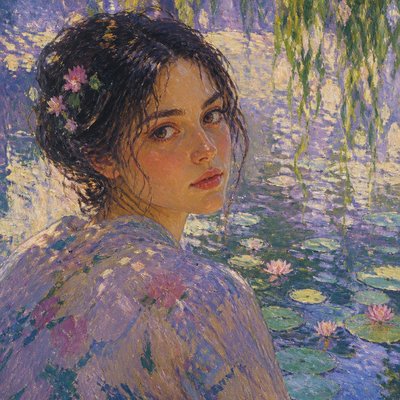
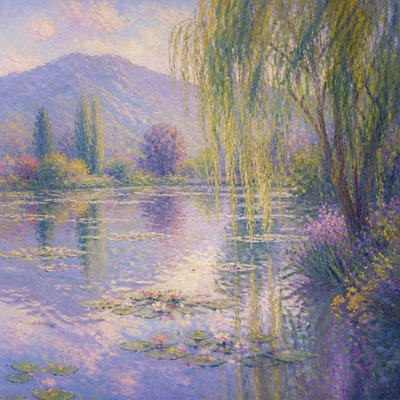
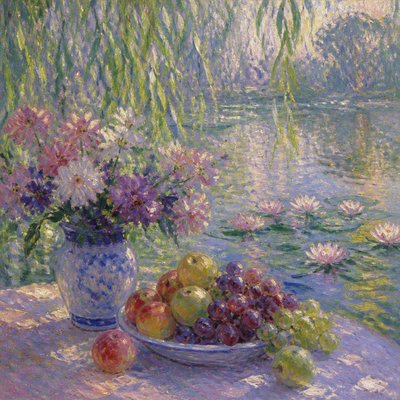
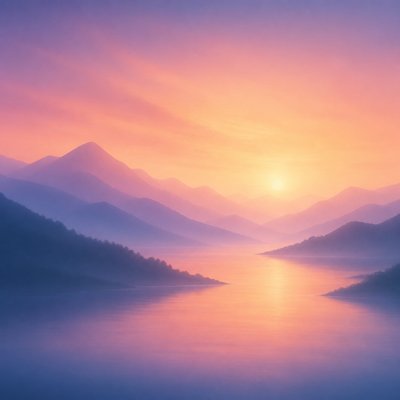
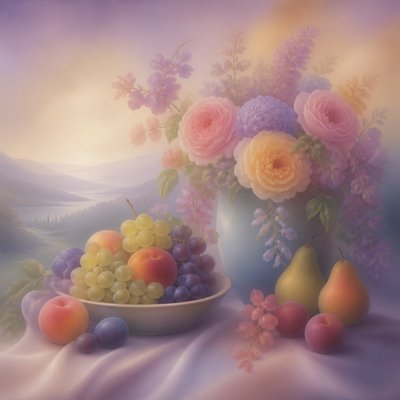
Giverny Art Style is a contemporary descriptive aesthetic centered on the atmosphere of an Impressionist water garden. It transforms ponds, lilies, willow branches, and dense foliage into a field of vibrating color, using violet, green, pink, blue, and warm highlights rather than sharply separated local tones. Forms remain recognizable but appear to dissolve into reflected light.
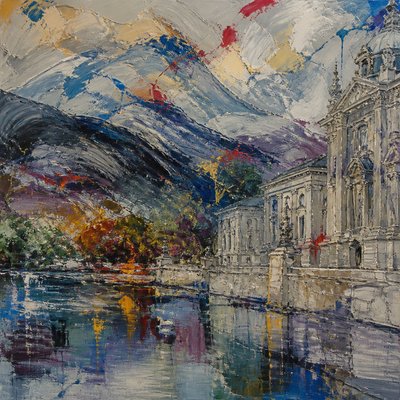
Its visual identity depends on the meeting of loose brushwork and still water. Broken marks suggest leaves, petals, ripples, and sunlight without outlining every object, while soft reflections blur the boundary between sky, garden, and pond. The result is tranquil yet optically active: a scene experienced as shifting light and color rather than as a precisely described landscape.
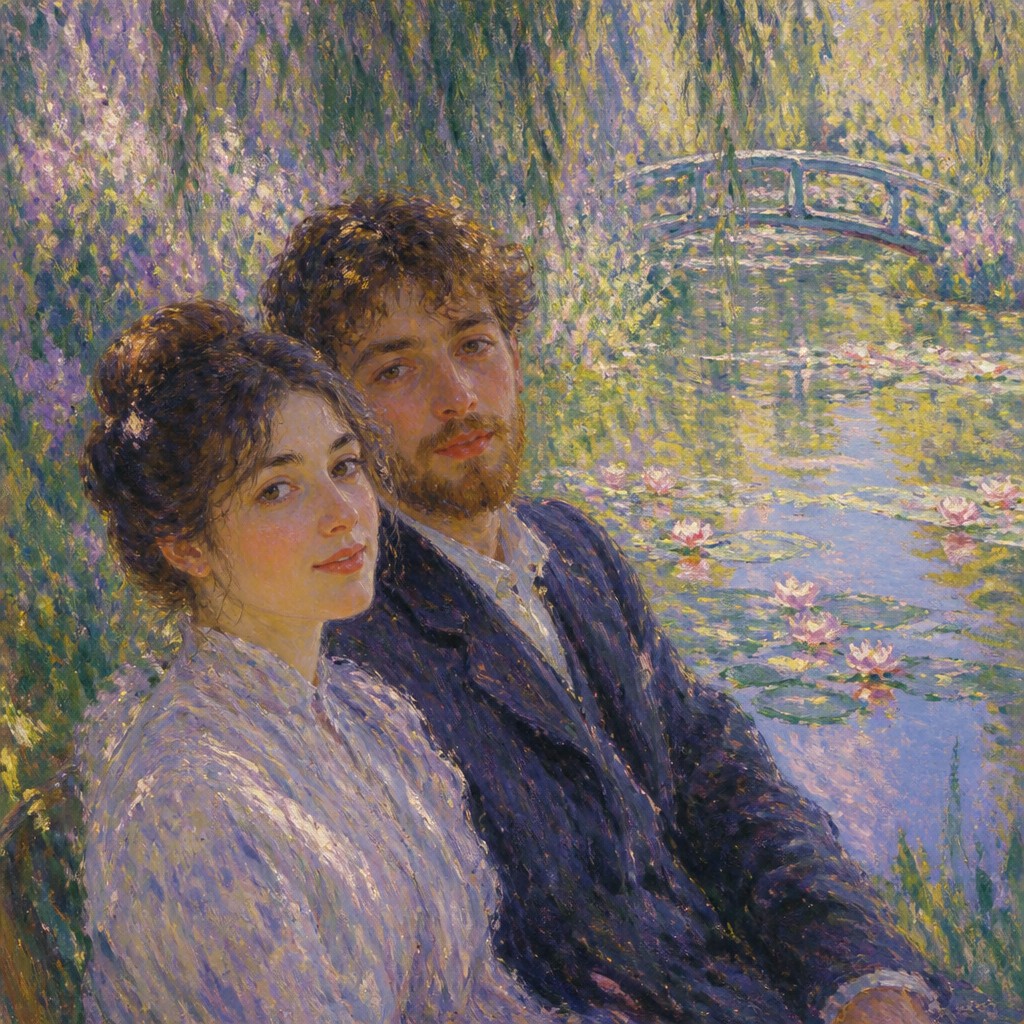
Try It On Your Photos
Upload any photo and convert it into Giverny Art Style — drag the sliders to compare before and after.
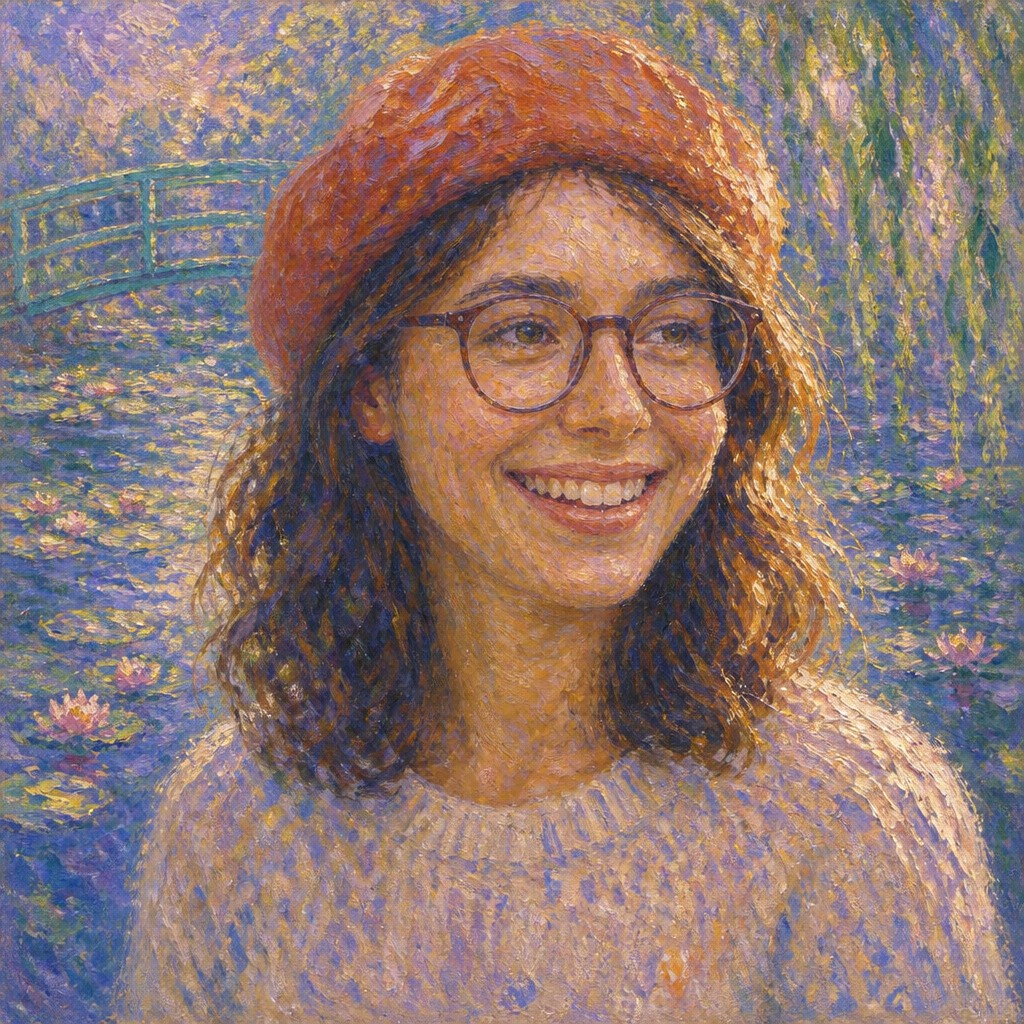

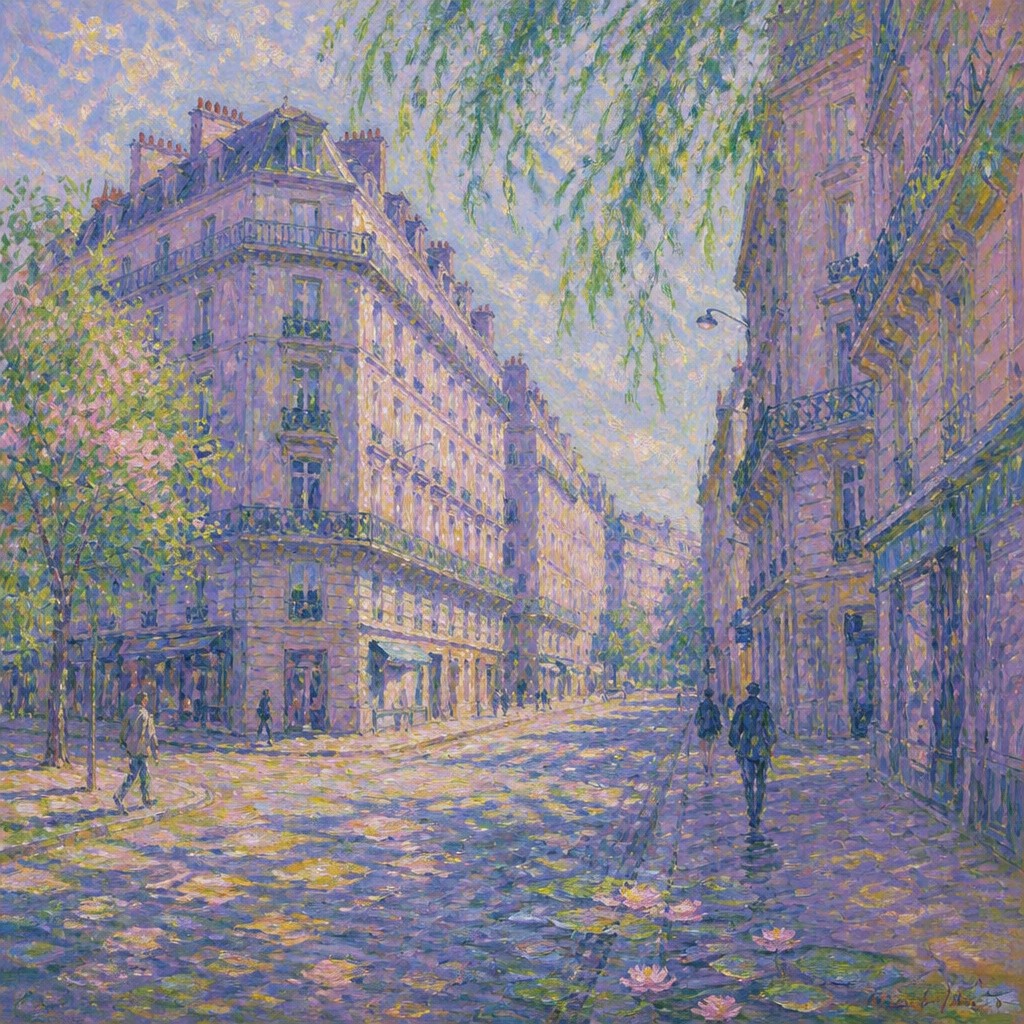

What Defines Giverny Art Style
The signature details, up close
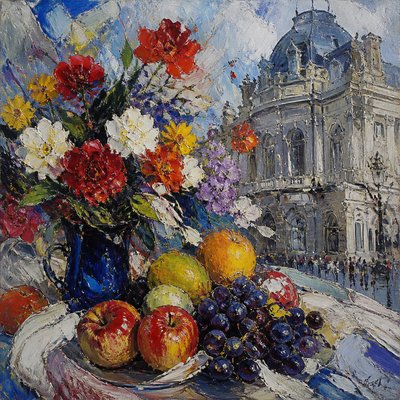
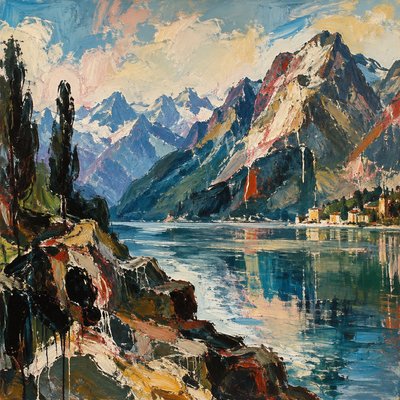
Broken shimmering brushwork
Short, visible marks are placed side by side instead of blended into uniform gradients. This creates optical vibration and lets the eye combine separate flecks into foliage, water, and light.
Water lilies dissolving into color
Lilies and floating plants are suggested through clusters of pale petals, rounded shapes, and reflected accents rather than hard contours. Their edges often merge with the pond.
Dappled natural light
Sunlight filters through branches in scattered patches, producing irregular highlights across leaves and water. Illumination is treated as a changing visual subject, not merely as neutral lighting.
Violet, green, and pink palette
Cool violets and blue-greens are balanced with pink, rose, cream, and occasional warm yellow. Pigment remains lively and relatively unmuddied, preserving a luminous surface.
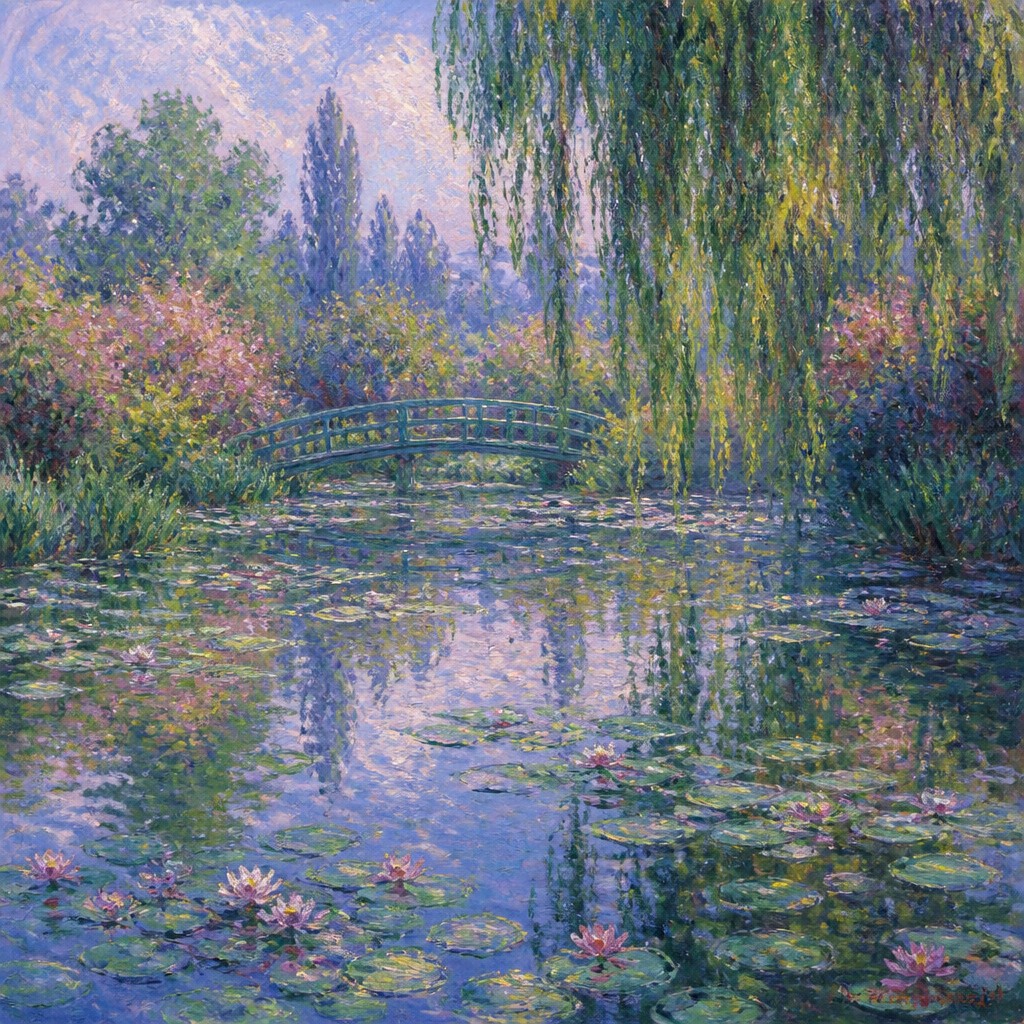
Reflective ambiguity
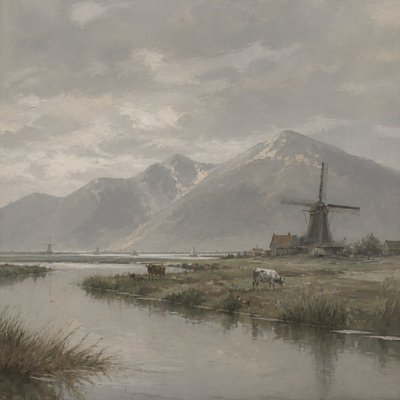
The pond mirrors sky, branches, flowers, and distant vegetation in overlapping layers. Reflections intentionally weaken spatial boundaries and can make the water read as both surface and depth.
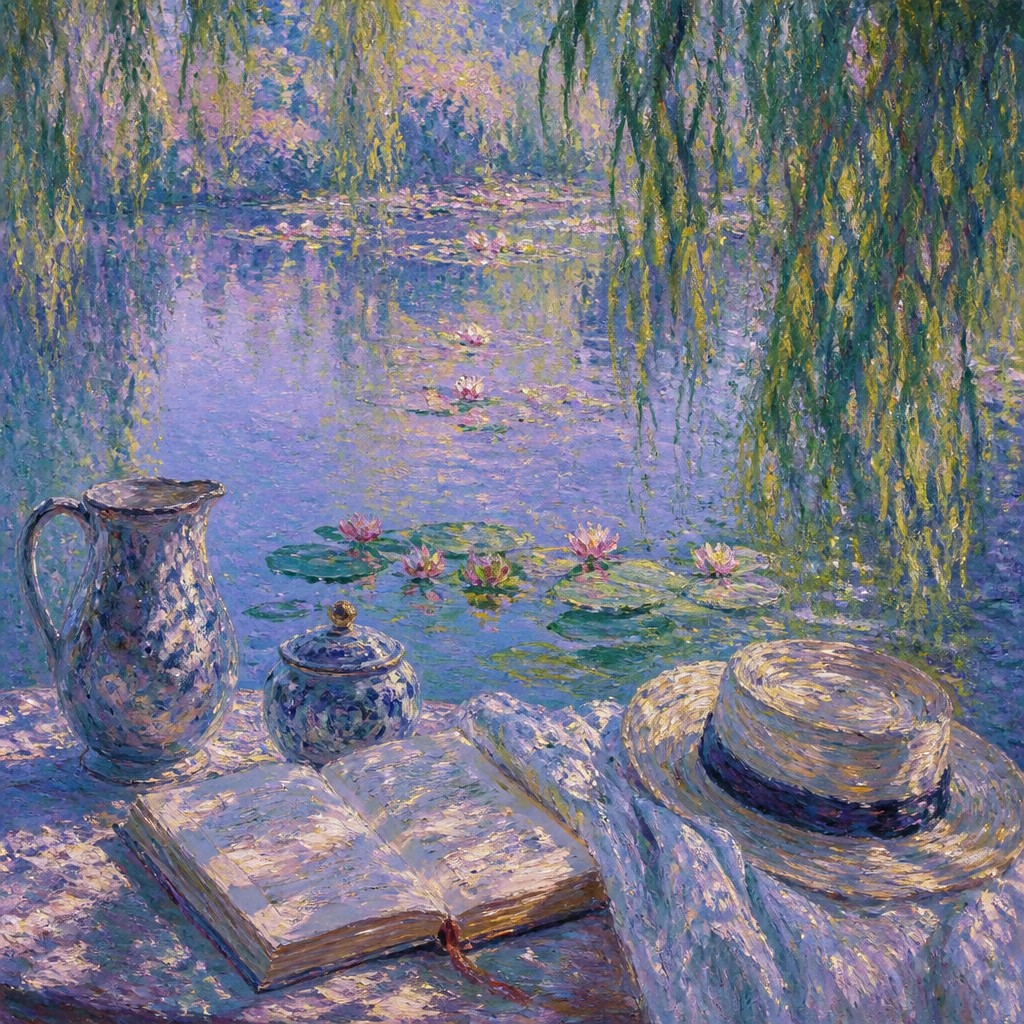
Feathery garden foliage
Willows, reeds, grasses, and shrubs are rendered with airy, tapering marks. Dense vegetation is organized as rhythmic masses instead of individually catalogued leaves.
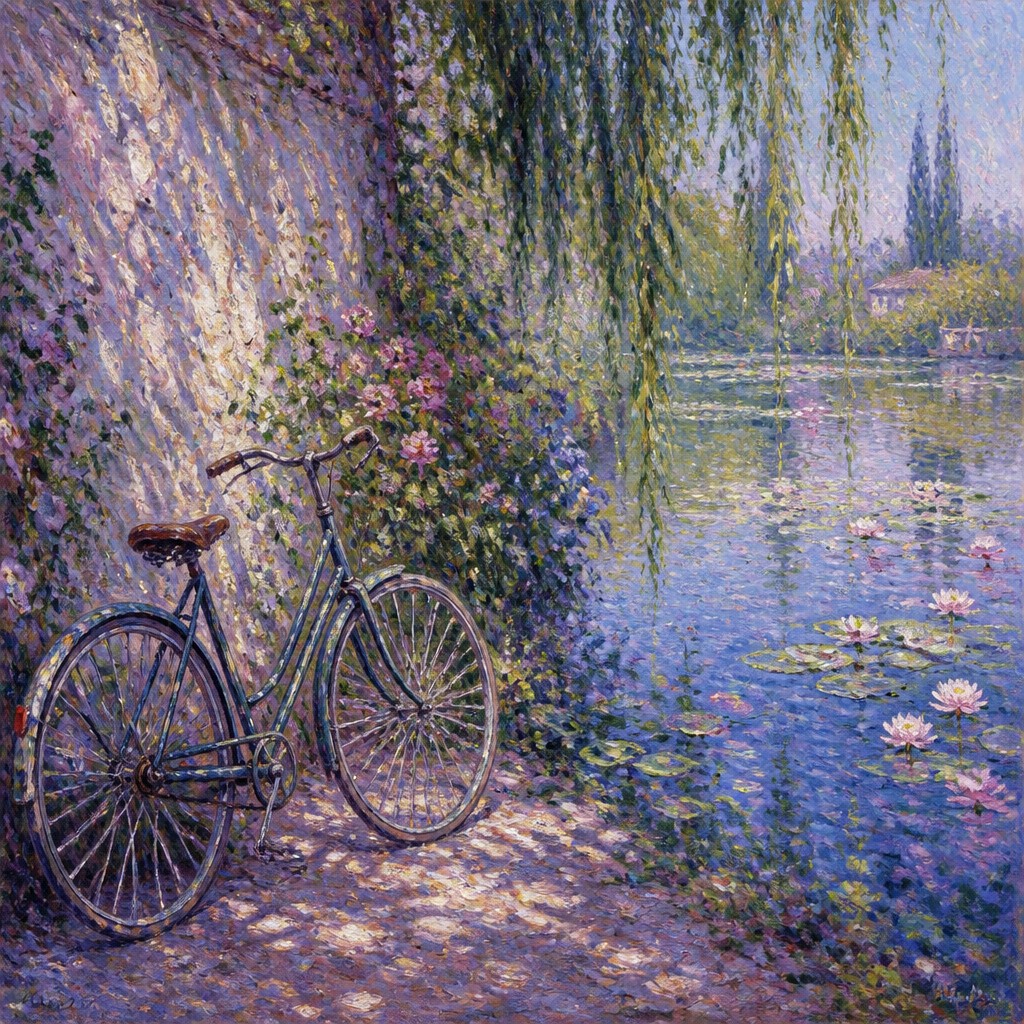
Soft atmospheric edges
Objects fade into neighboring color fields, especially at the horizon and along pond margins. The style favors mood, optical sensation, and seasonal atmosphere over hard architectural precision.
Giverny Prompt Ideas
Start from an idea — each one opens the generator with the style ready to go. See all 40 Giverny prompts →
How to Create Giverny Art
Master the craft step by step — or skip straight to creating. Read the full guide →
- 1
Establish the large color masses
Begin with broad shapes for sky, water, distant foliage, and foreground vegetation. Keep the initial values close enough that later brush marks can create unity rather than isolated objects.
- 2
Use unmixed or lightly mixed color
Place adjacent strokes of violet, blue-green, pink, cream, and yellow directly on the surface. Let optical blending occur through proximity, while reserving darker mixed tones for depth and structure.
- 3
Build reflections in horizontal rhythms
Use broken horizontal marks for the pond, then interrupt them with vertical or diagonal suggestions of branches and lilies. Repeat selected colors from the garden in the water to connect the two spaces.
- 4
Soften without flattening
Blur or feather only selected edges, especially reflections and distant foliage, while keeping a few foreground marks crisp. This preserves depth and prevents the image from becoming an indistinct color wash.
- 5
Adapt the method digitally
Work with textured brushes, layered opacity, scattered leaf marks, and separate reflection layers; vary scale and direction rather than applying a single global filter. For image generation, describe the subject, lighting, broken brushwork, unmixed palette, reflective pond, and softened boundaries explicitly.
- 6
Control the composition
Place a clear anchor such as a lily cluster, arched branch, footbridge, or pond edge, then allow surrounding marks to dissolve outward. Prompt-based workflows benefit from specifying a calm water garden, dappled sunlight, visible painterly strokes, and no sharp photorealistic outlines.
The Story
History & Origins of Giverny
Giverny Art Style is not a formally defined historical movement or a documented school. The name refers to an aesthetic lineage associated with late nineteenth- and early twentieth-century Impressionist garden painting, particularly the visual culture of water gardens in Giverny, France, and has been broadened into a contemporary style label for luminous pond imagery.
Its development draws on Impressionist experiments with plein-air observation, broken color, changing daylight, and reflective surfaces. Contemporary artists and digital image-makers extend those principles with softer abstraction, layered translucency, and intensified palettes, treating the garden as a color environment rather than a botanically exact setting.
Influences: The style is closely related to Impressionism, especially plein-air landscape painting, broken color, transient daylight, and the study of reflections. It also draws from Post-Impressionist color organization, garden painting, botanical observation, decorative landscape composition, and contemporary digital painterly rendering. Its emphasis on atmosphere and perceptual ambiguity connects it to lyrical landscape traditions and softly abstract approaches to nature.
Frequently Asked Questions
What defines the Giverny Art Style?
It is defined by luminous water gardens, broken shimmering brushwork, reflective ponds, and a palette built around violet, green, pink, blue, and warm highlights. Natural forms remain legible but soften into interconnected fields of color and light.
Is Giverny Art Style a historical art movement?
No. It is a contemporary descriptive style label rather than a formally established movement with a specific manifesto or membership. Its imagery derives primarily from Impressionist water-garden painting and related approaches to atmosphere, color, and reflection.
How does it differ from general Impressionism?
Impressionism encompasses many subjects, periods, and national contexts, including urban scenes, portraits, seascapes, and rural landscapes. Giverny Art Style narrows that broader legacy to a specific water-garden mood, with intensified reflective surfaces and a stronger tendency toward floral and atmospheric dissolution.
What materials work well for this style?
Oil and acrylic paint are effective because they support layered, visible strokes and luminous color contrasts. Gouache, pastel, watercolor with dry-brush accents, and textured digital brushes can also recreate its broken marks and softened reflections.
How can I make a photograph look like this style?
Choose an image with water, foliage, filtered light, or a strong reflection, then emphasize color separation and painterly texture rather than applying a uniform blur. Reduce hard outlines, introduce violet and rose accents into shadows and reflections, and preserve a few clear compositional anchors.
Where is this style commonly used?
It suits landscape paintings, wall art, editorial imagery, book covers, calming interiors, stationery, and digital backgrounds. It is especially effective when the intended mood is contemplative, botanical, luminous, or quietly immersive.
Create your first Giverny artwork
Describe anything — or upload a photo — and see it in Giverny Art Style in seconds.
Related Styles
Discover similar art styles