Ghent Art Style
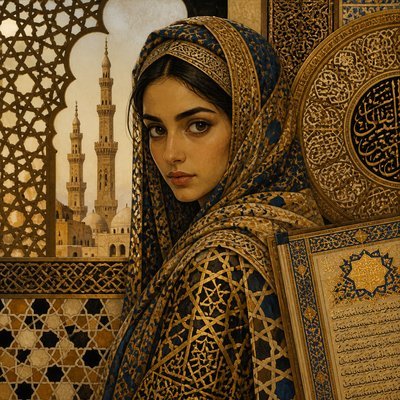
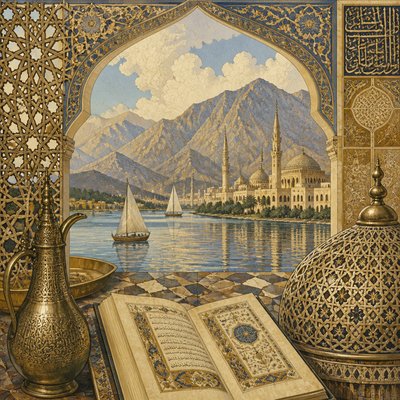
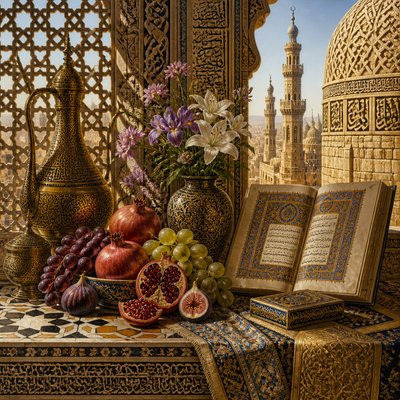
Explore Ghent Art Style: luminous Flemish oil panels, radiant gold, jewel-toned glazes, Gothic architecture, and manuscript-detail ornament.
Instantly rendered in Ghent — or transform a photo
Ghent Gallery
Tap any artwork to explore it
What is Ghent Art Style?
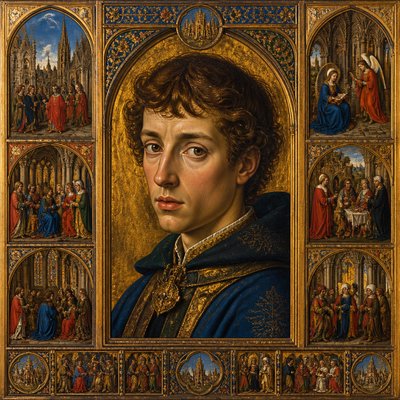
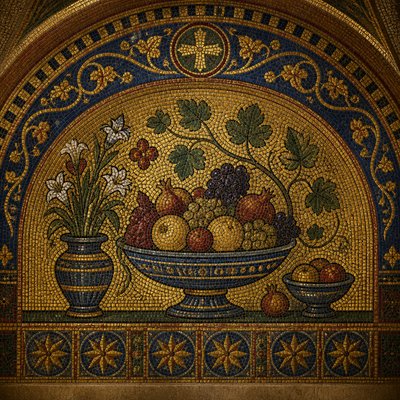
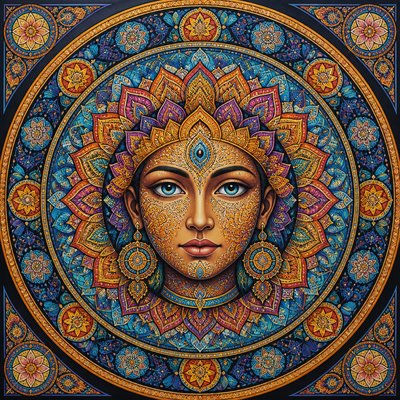
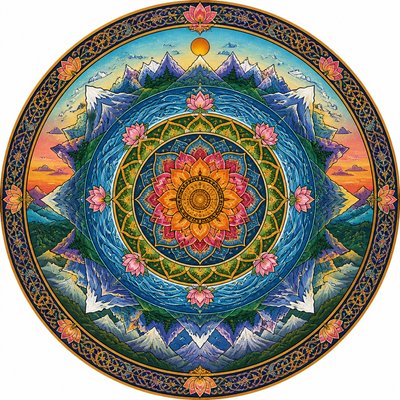
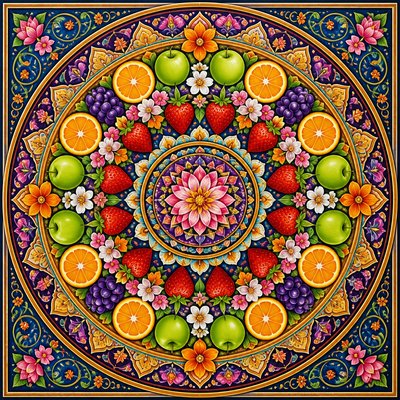
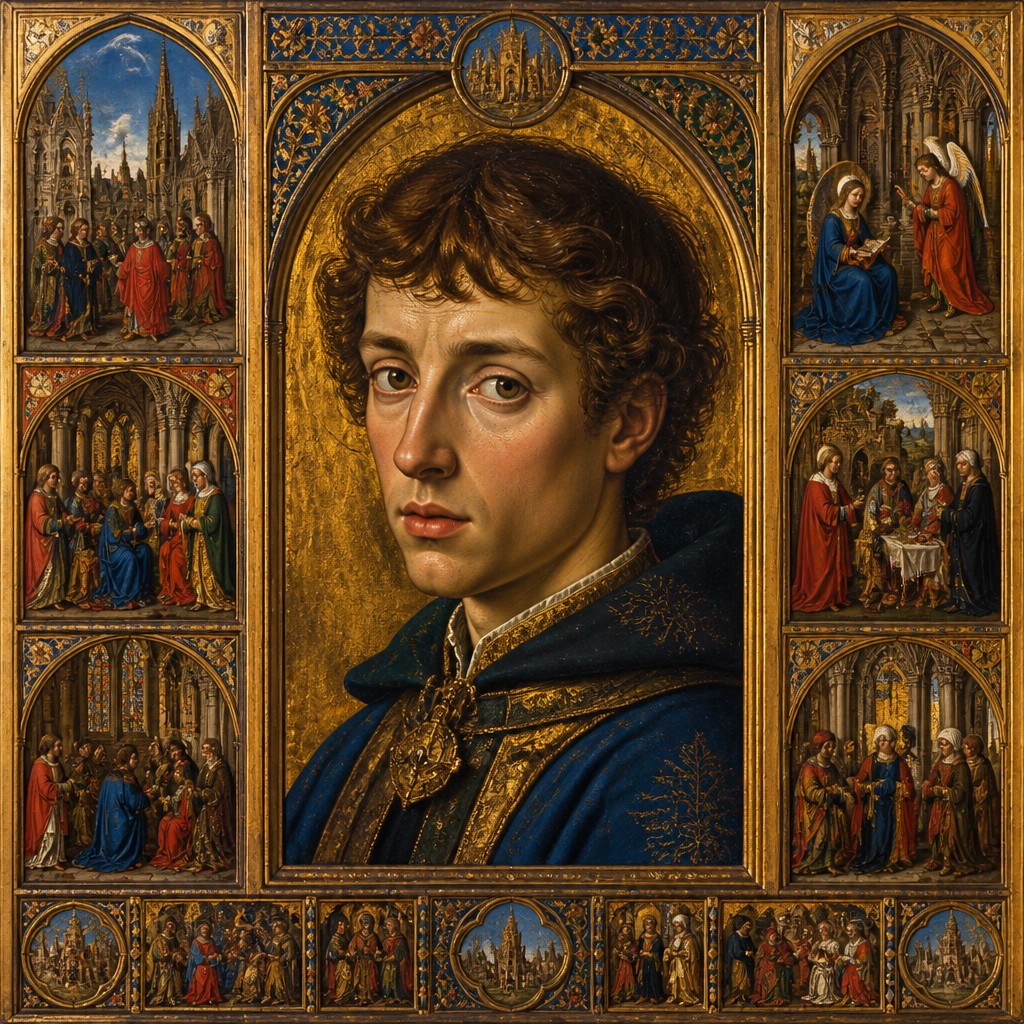
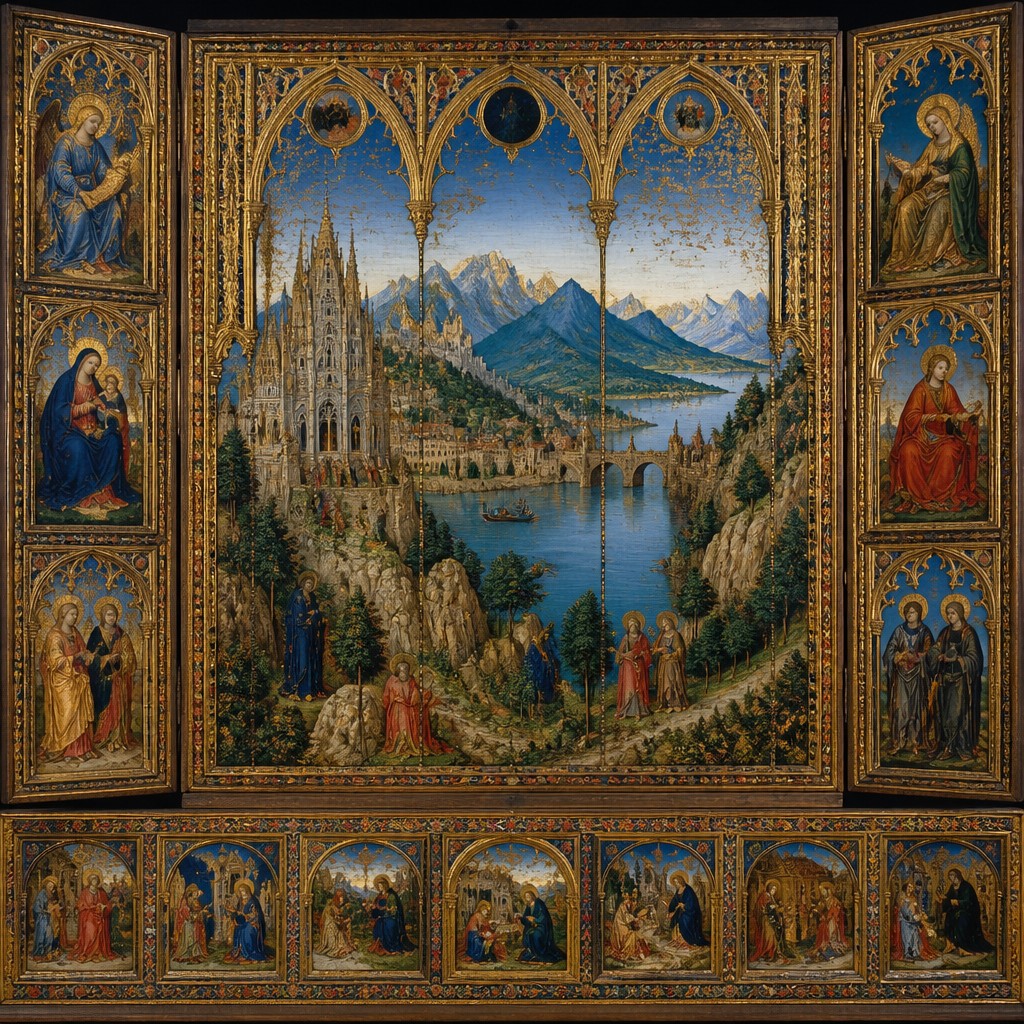
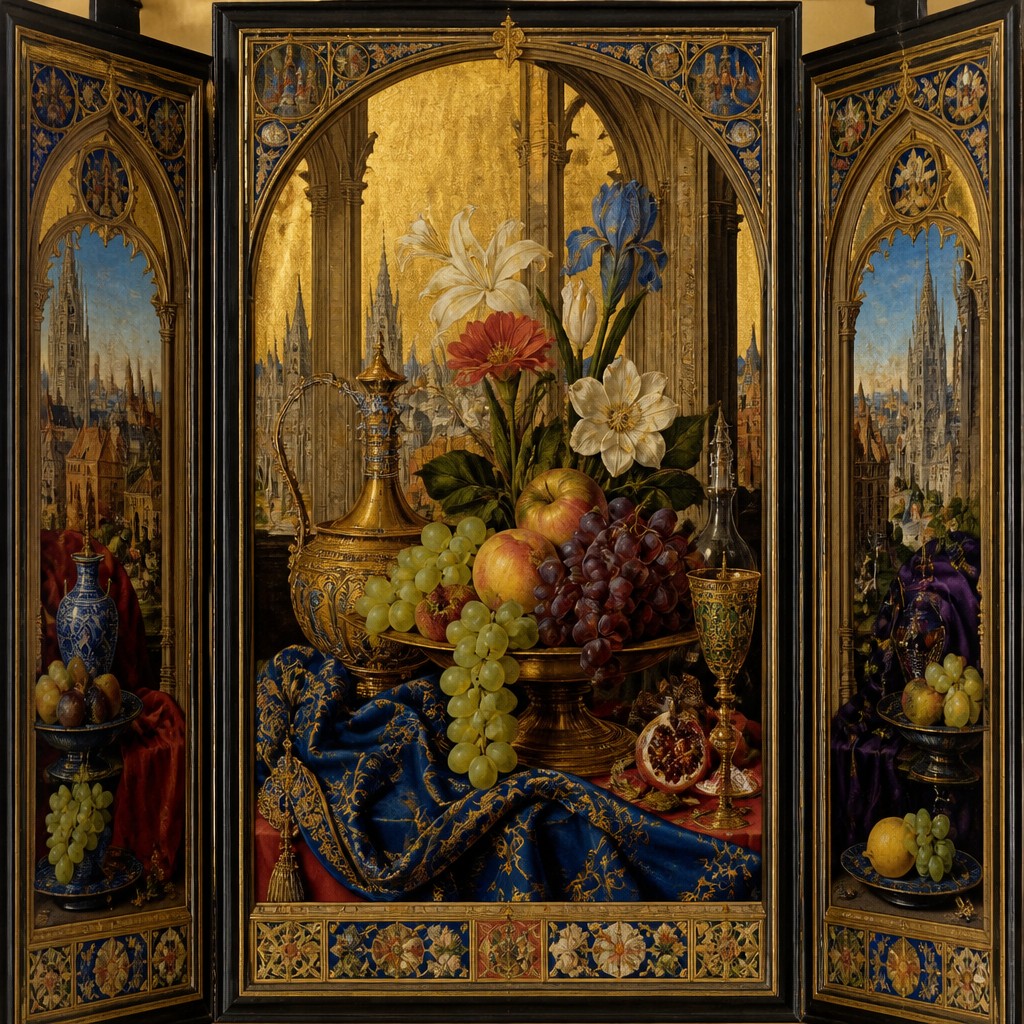
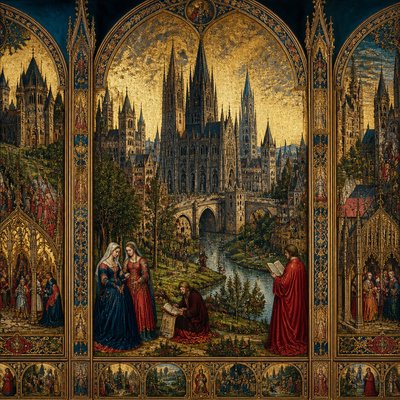
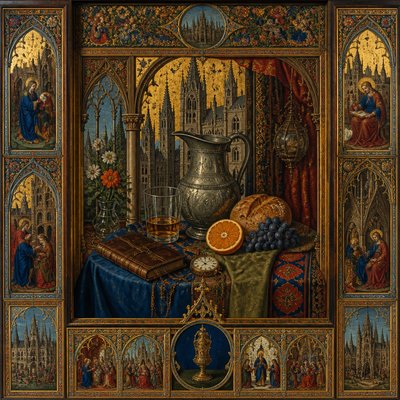
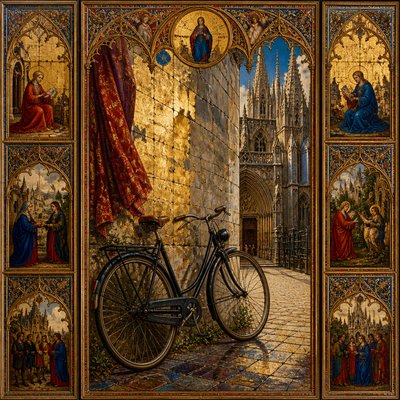
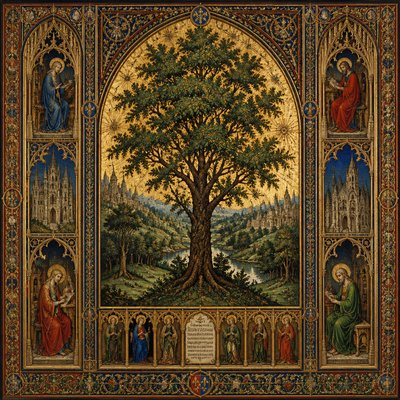
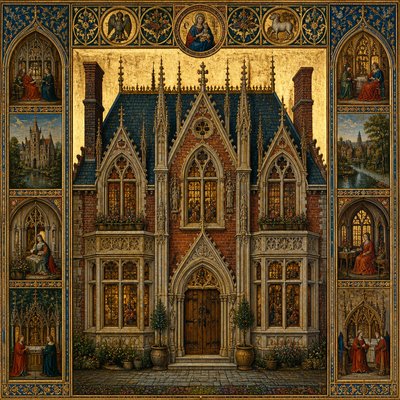
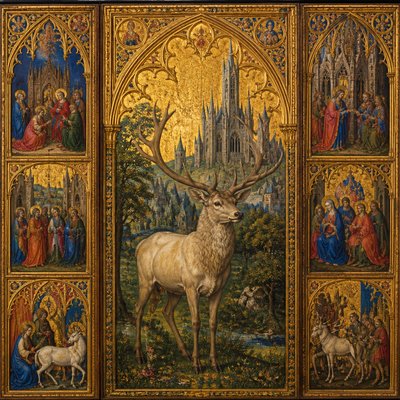
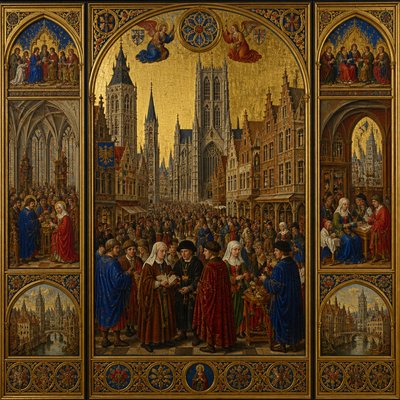
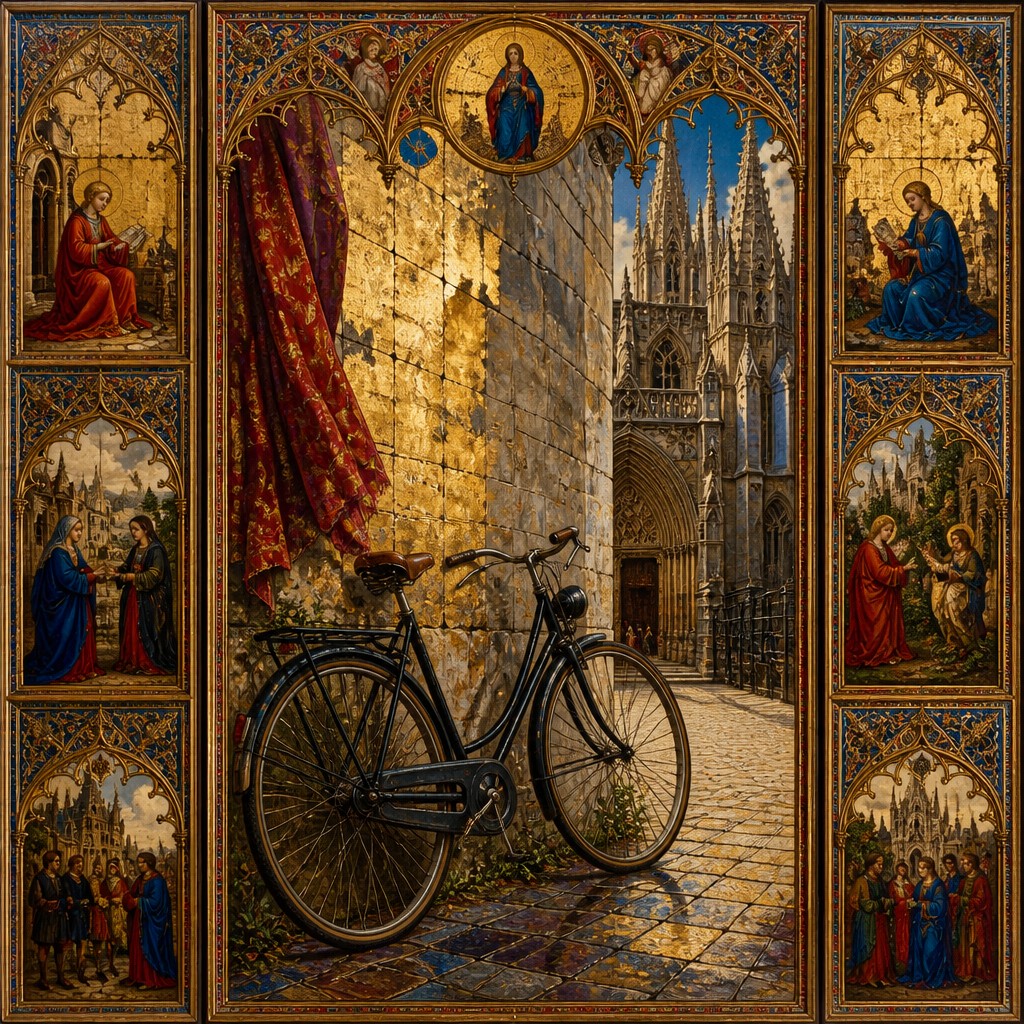
Ghent Art Style is a contemporary descriptive label for an image-making aesthetic based on the radiant, highly finished appearance of Flemish altarpiece painting. It combines luminous oil-panel surfaces, radiant gold-leaf accents, jewel-like color, Gothic architectural settings, elaborate drapery, and borders inspired by illuminated manuscripts.
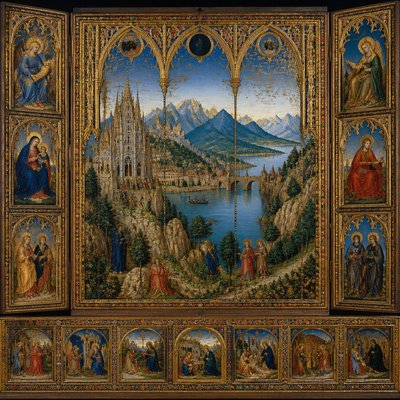
The style looks exceptionally detailed because it layers several kinds of visual richness at once: translucent glazes deepen saturated pigments, sharply described stonework supplies structural clarity, and tiny ornamental motifs create a devotional, jewel-box effect. Compositions often resemble polyptychs, with carefully divided scenes, vertical architecture, symbolic objects, and a strong sense of sacred theatricality.
Try It On Your Photos
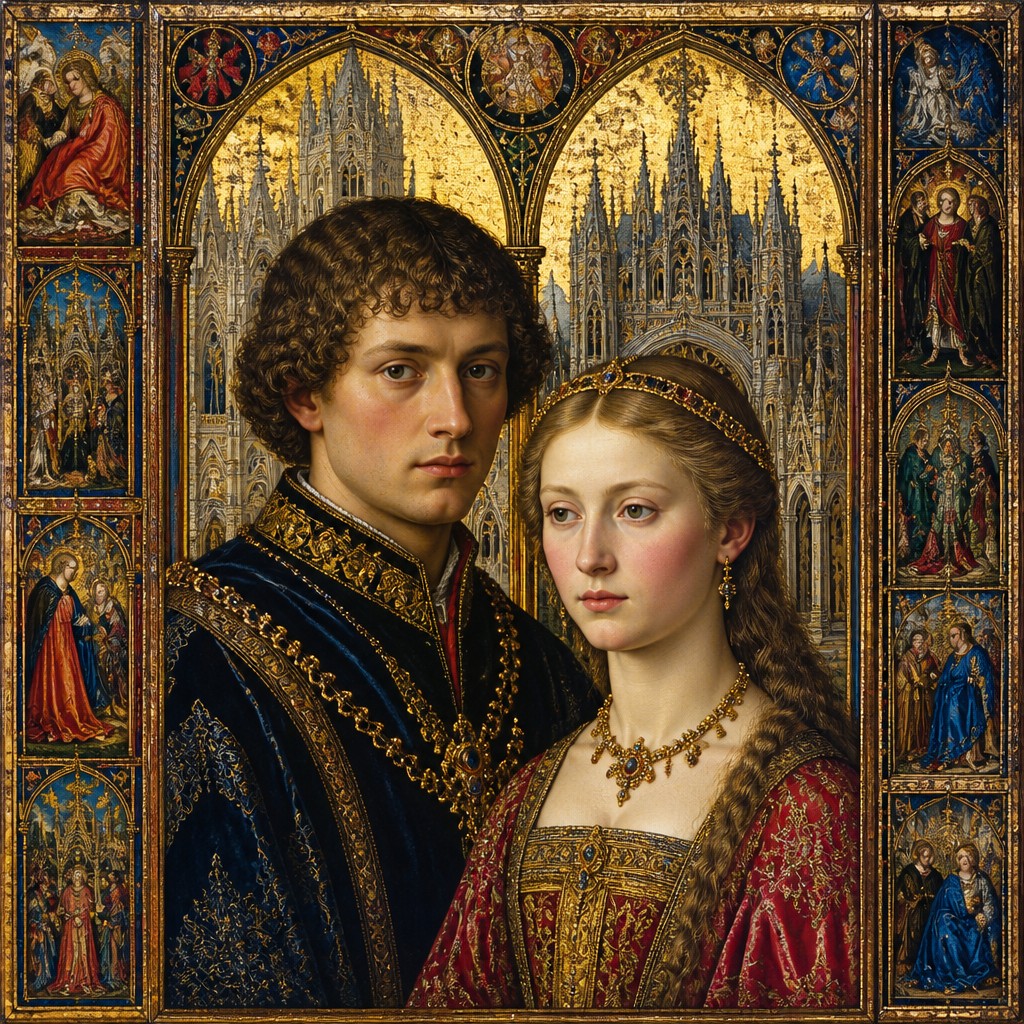
Upload any photo and convert it into Ghent Art Style — drag the sliders to compare before and after.
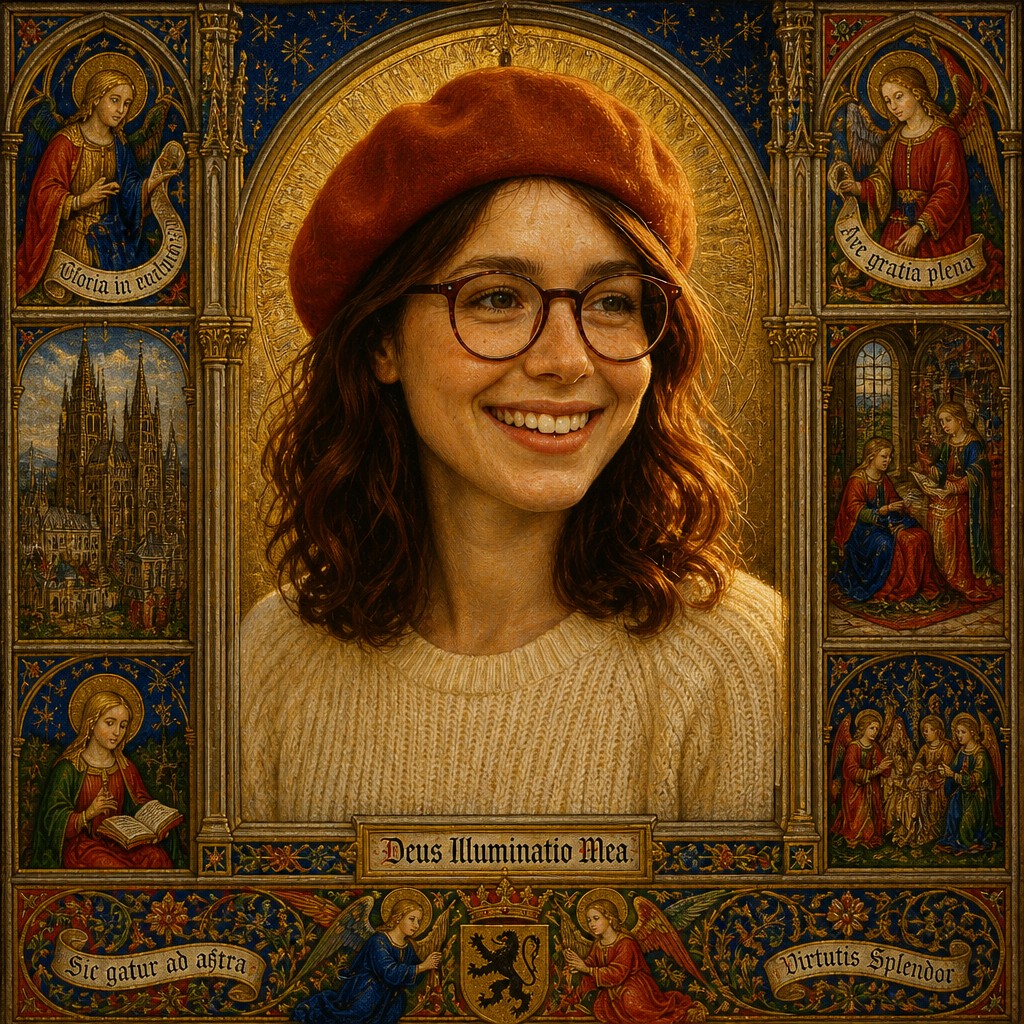

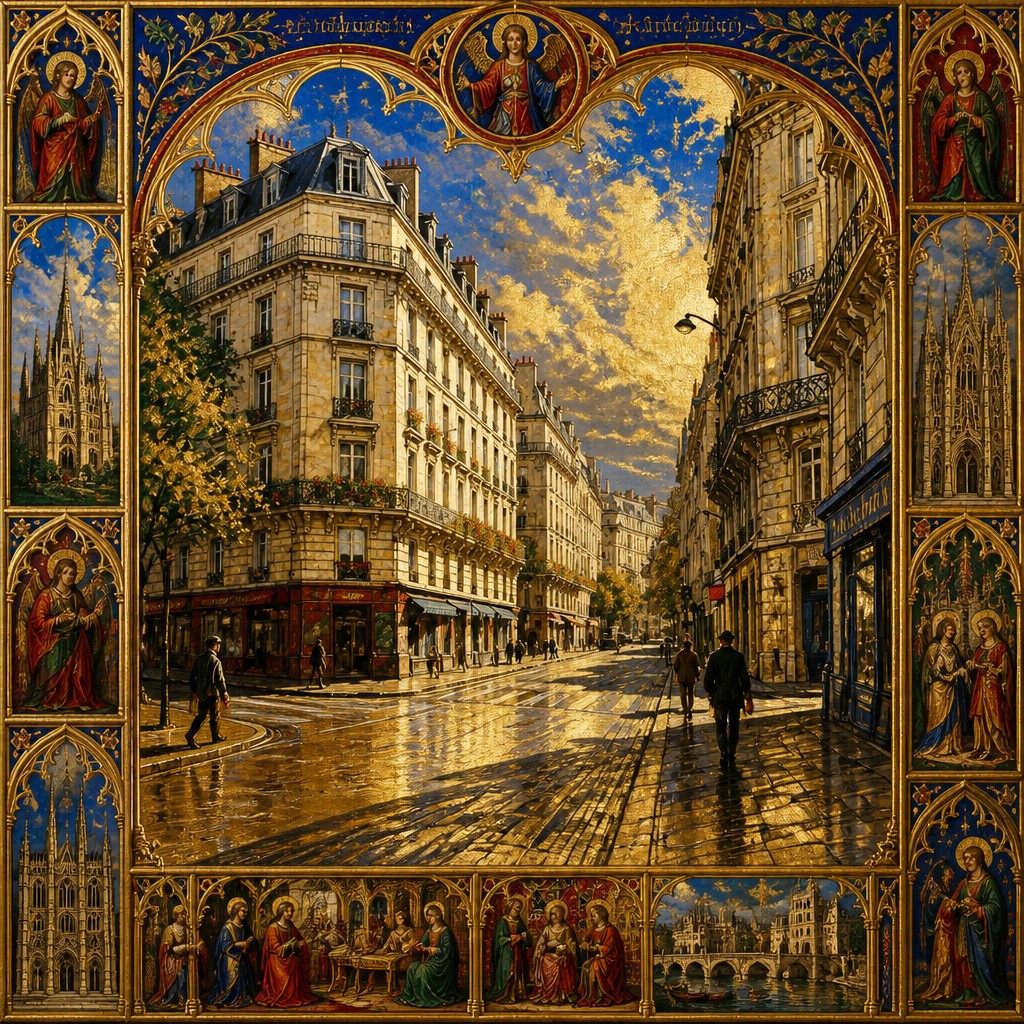

What Defines Ghent Art Style
The signature details, up close
Radiant gold accents
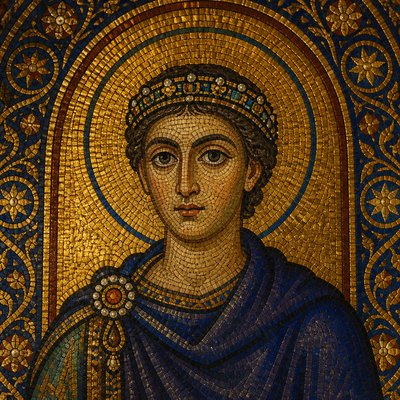
Gold-leaf effects appear in halos, borders, crowns, sacred objects, architectural details, and patterned surfaces. The gold should glow selectively rather than flatten the entire image into a uniform metallic field.
Luminous oil-panel finish
Surfaces suggest carefully built oil paint, with translucent glazes, controlled highlights, and smooth transitions between color layers. Faces, fabrics, and reflective objects receive especially precise modeling.
Jewel-toned color
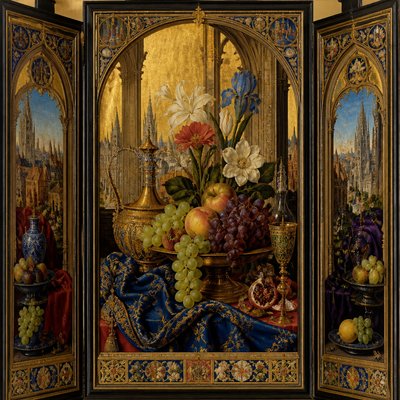
Saturated reds, ultramarine blues, emerald greens, amber, and violet are deepened with transparent layers. Strong color relationships create a ceremonial and devotional atmosphere.
Polyptych composition
Scenes may be organized as hinged altarpiece panels, nested compartments, or visually distinct architectural sections. Symmetry, vertical divisions, and centered focal figures help convey formal gravity.
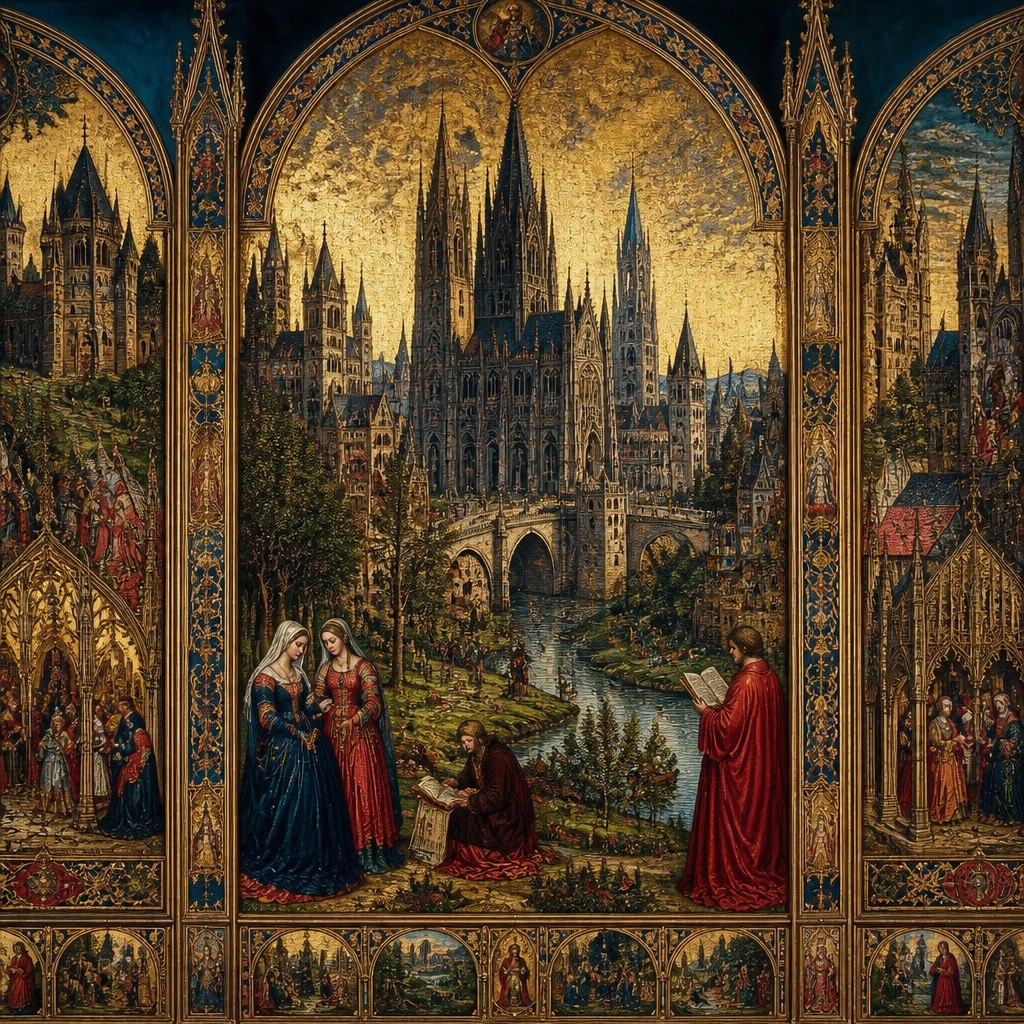
Gothic architectural detail
Cathedral stonework, pointed arches, tracery, columns, vaulted interiors, and distant urban views are rendered with crystalline precision. Architecture often frames the subject as both setting and symbolic structure.
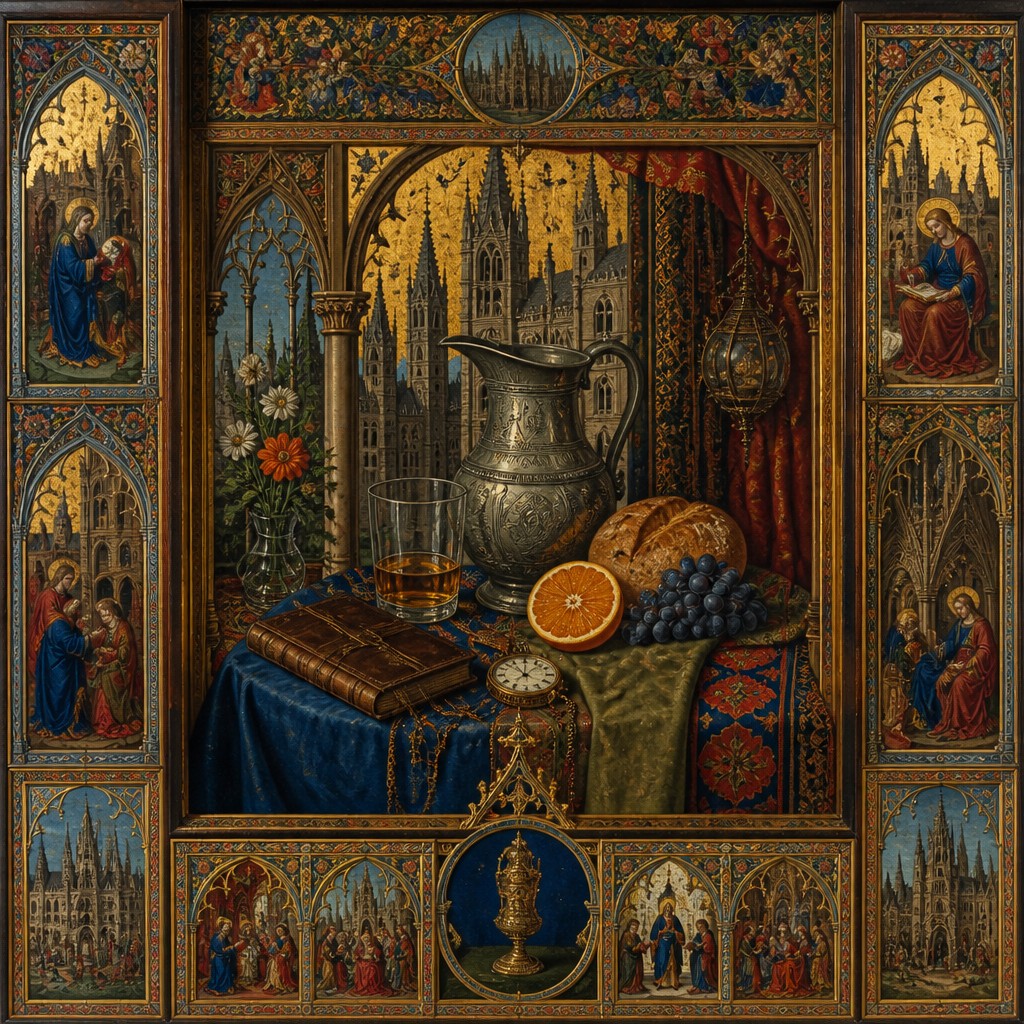
Manuscript-inspired ornament
Decorative borders can contain vines, flowers, tiny creatures, geometric patterns, heraldic devices, and miniature narrative details. Ornament is integrated around the image rather than used as a separate modern graphic frame.
Meticulous symbolic objects
Books, vessels, textiles, plants, jewels, instruments, and animals are depicted with descriptive clarity. Such details can suggest status, ritual, nature, or spiritual meaning without requiring overt text.
Ghent Prompt Ideas
Start from an idea — each one opens the generator with the style ready to go. See all 40 Ghent prompts →
How to Create Ghent Art
Master the craft step by step — or skip straight to creating. Read the full guide →
- 1
Build the composition in panels
Begin with a central subject and supporting side scenes, using vertical divisions, arches, or hinged-panel logic. Keep the main silhouette readable before adding ornamental detail.
- 2
Layer transparent color
In traditional painting, establish a controlled underdrawing and opaque base, then deepen the image with thin oil glazes and selective opaque highlights. Digitally, use multiply, color, and glaze-like layers with restrained opacity.
- 3
Use gold as a focal material
Apply metallic texture to halos, borders, jewelry, and architectural accents, varying it with burnished highlights and darker recesses. Avoid placing equal brightness everywhere, since contrast makes the gold appear luminous.
- 4
Design the architecture and border together
Treat Gothic stonework, drapery patterns, and manuscript ornament as an integrated visual system. Repeat motifs across the frame and setting to create the ordered richness associated with devotional art.
- 5
Control detail with depth
Reserve the sharpest edges and smallest motifs for the focal plane, while slightly simplifying distant architecture and secondary figures. This preserves clarity when the image contains many competing textures.
- 6
Write prompts by material and structure
For digital or AI-assisted creation, specify oil-panel luminosity, translucent glazes, gold-leaf highlights, polyptych organization, Gothic architecture, jewel colors, and illuminated borders. Add the subject, lighting direction, palette, and desired level of historical ornament.
The Story
History & Origins of Ghent
Ghent Art Style is not a formally documented historical movement or period label. It is best understood as a contemporary synthesis drawing on Early Netherlandish and Flemish oil-panel painting, especially the visual culture of late medieval and early Renaissance altarpieces associated with the city of Ghent and the Low Countries.
Its lineage also includes Gothic cathedral architecture, medieval manuscript illumination, gold-ground devotional imagery, heraldic ornament, and the painstaking surface finish enabled by oil glazing. Modern digital image-making extends these traditions by combining panel-like detail, illuminated borders, and architectural richness within a single generated or digitally composed scene.
Influences: The style draws primarily from Early Netherlandish and Flemish oil-panel painting, late medieval Gothic altarpieces, manuscript illumination, gold-ground devotional imagery, and Gothic cathedral architecture. Related visual traditions include Northern Renaissance surface realism, medieval heraldic design, sacred polyptych composition, stained-glass color, and the decorative density of reliquaries and liturgical objects.
Frequently Asked Questions
Is Ghent Art Style a historical art movement?
No. The term is best used as a contemporary style label rather than the name of a documented historical movement. It describes a modern synthesis of Flemish altarpiece painting, Gothic architecture, manuscript illumination, and digitally reproducible ornamental detail.
What defines the Ghent Art Style?
Its defining features are luminous oil-panel surfaces, radiant gold accents, saturated jewel colors, translucent glazes, Gothic architectural precision, polyptych-like organization, and intricate manuscript-inspired borders. The overall effect is devotional, richly symbolic, and meticulously finished.
How does it differ from general Renaissance or medieval art?
It concentrates specifically on the dense surface finish and northern European devotional atmosphere associated with Flemish panel painting and Gothic visual culture. Unlike a broad Renaissance category, it emphasizes gold, manuscript ornament, sharply described materials, and altarpiece-style structure.
Can this style be made with traditional materials?
Yes. Work on a rigid panel or smooth surface, establish a detailed underdrawing, build opaque forms carefully, and add transparent oil glazes for depth. Gold leaf, shell gold, or convincing painted metallic effects can be reserved for halos, borders, jewelry, and sacred objects.
How should I describe it in an image prompt?
Name the subject first, then specify luminous oil-panel technique, translucent glazes, radiant gold-leaf highlights, jewel colors, Gothic architecture, polyptych composition, and illuminated manuscript borders. Mention focal lighting and controlled detail if you want the result to remain readable.
Where is this aesthetic commonly used?
It suits fantasy worldbuilding, historical or devotional scenes, editorial illustration, book covers, ceremonial portraits, game concept art, and ornate architectural visualizations. It works best when the subject can support symbolic objects, elaborate materials, and a carefully framed composition.
Create your first Ghent artwork
Describe anything — or upload a photo — and see it in Ghent Art Style in seconds.
Related Styles
Discover similar art styles