Ghanaian Art Style
Explore Ghanaian art style through Kente color blocks, Adinkra symbolism, Akan goldweights, carved stools, and vibrant West African design.
Instantly rendered in Ghanaian — or transform a photo
Ghanaian Gallery
Tap any artwork to explore it
What is Ghanaian Art Style?
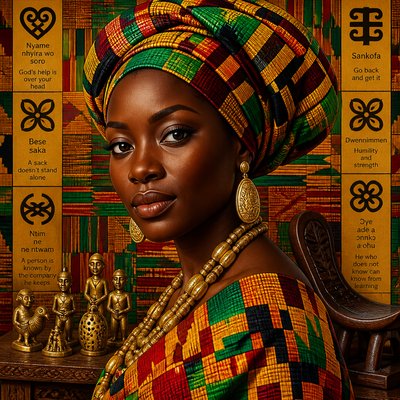
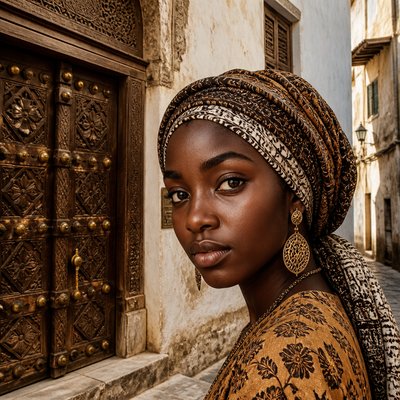
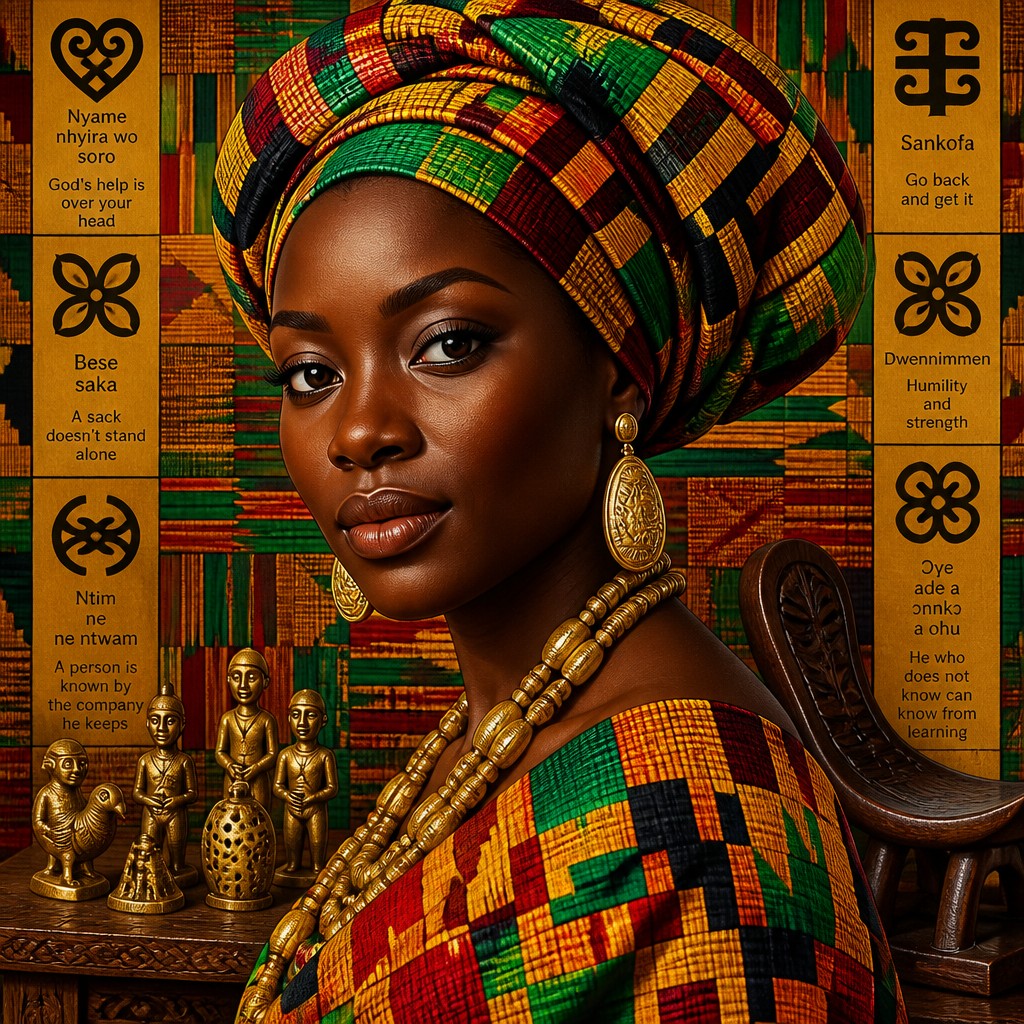
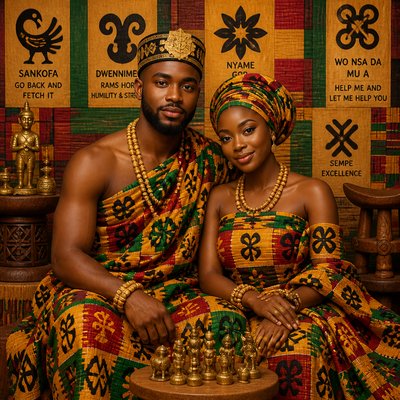
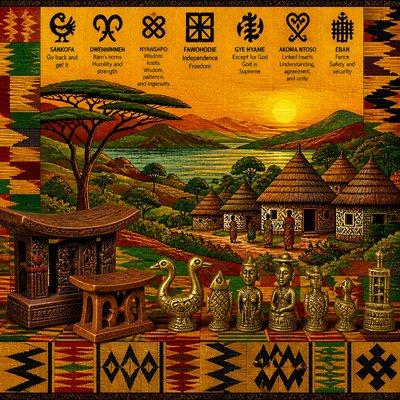
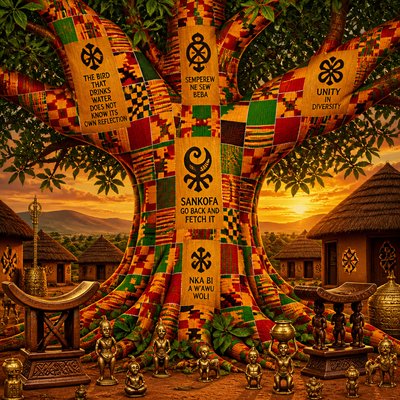
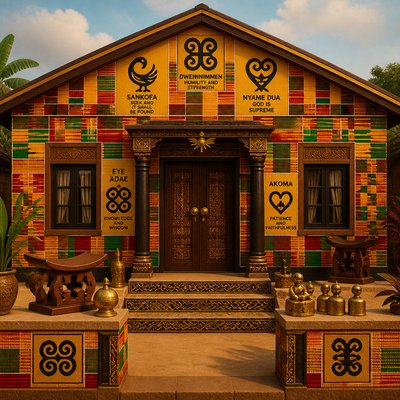
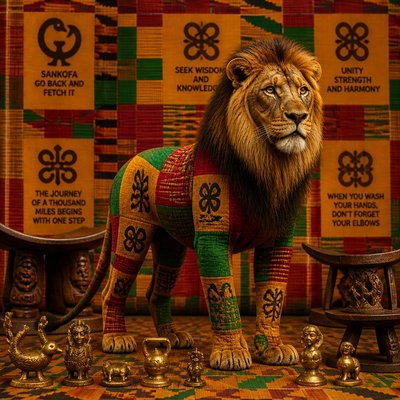
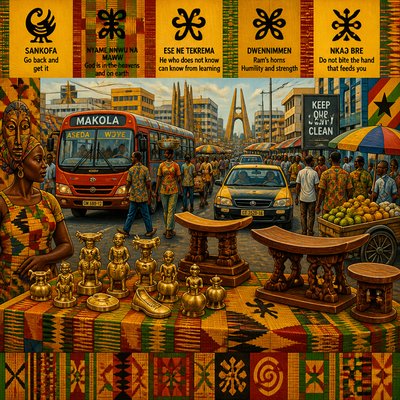
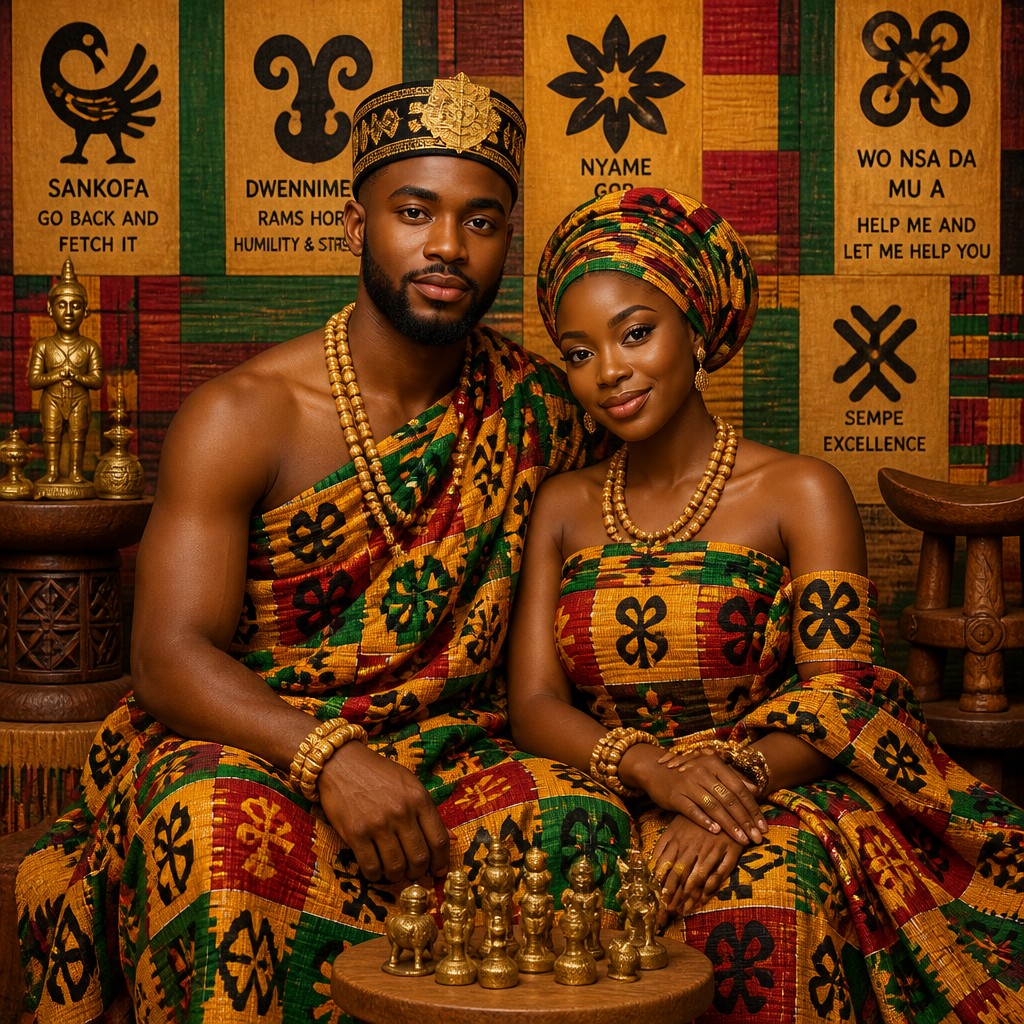
Ghanaian art style is a contemporary visual synthesis rooted in the artistic traditions of Ghana, particularly Akan textile design, Adinkra cloth, goldweight casting, and carved royal regalia. Its recognizable identity comes from vivid Kente-inspired bands in gold, red, green, and blue; strong geometric structure; black stamped symbols; and compact figurative motifs derived from Akan brass objects and woodcarving.
The style looks both decorative and communicative. Color, pattern, and symbol are arranged to convey ideas about authority, ancestry, community, prosperity, protection, and moral conduct rather than serving as surface ornament alone. In contemporary illustration and digital art, these traditions are often combined into confident flat compositions with warm color, rhythmic repetition, and carefully framed central subjects.
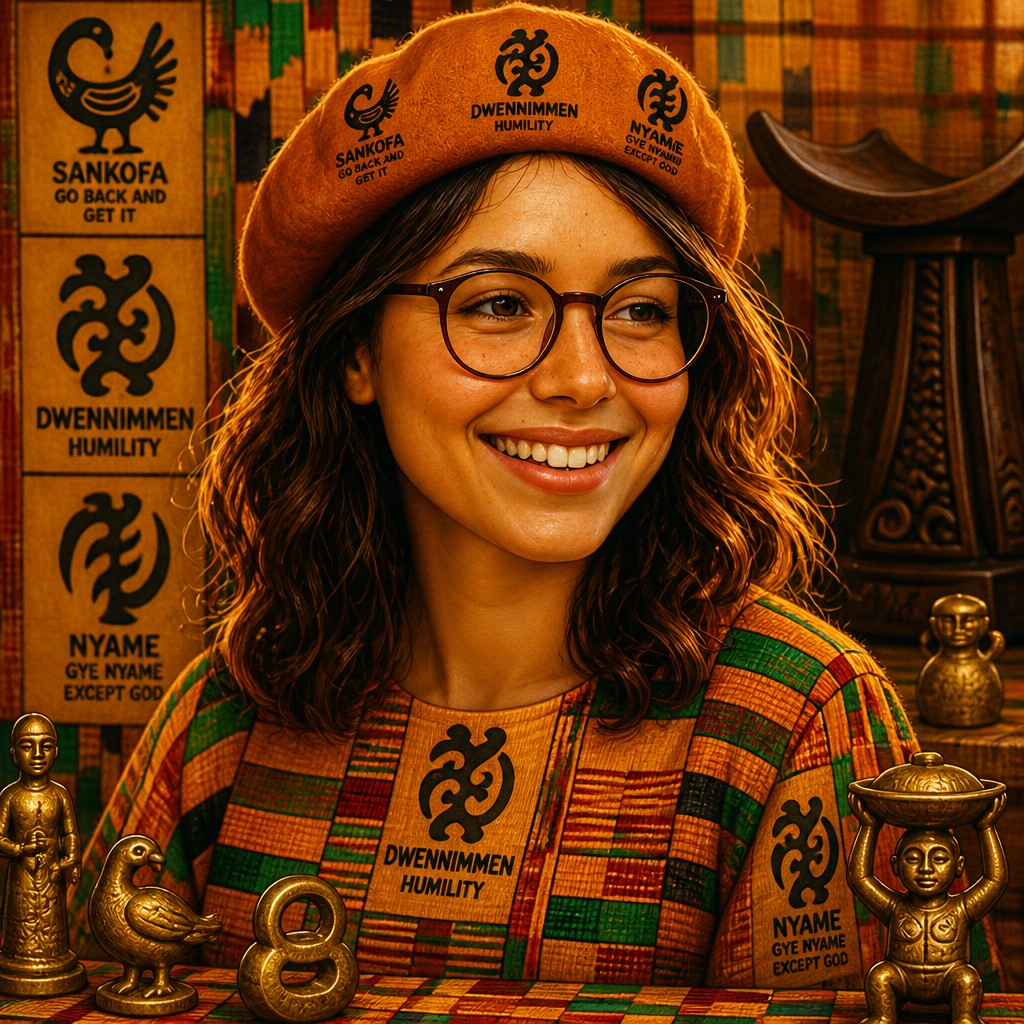
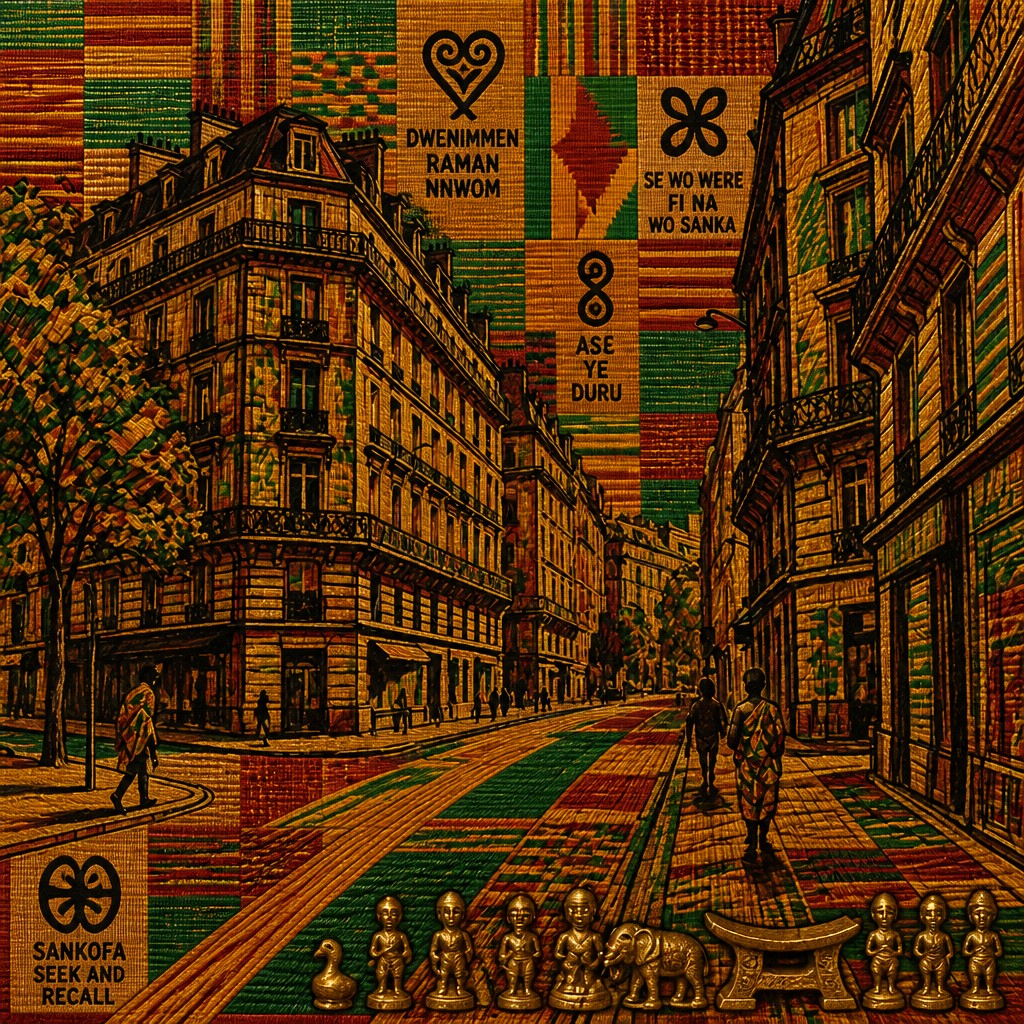
Try It On Your Photos
Upload any photo and convert it into Ghanaian Art Style — drag the sliders to compare before and after.


What Defines Ghanaian Art Style
The signature details, up close
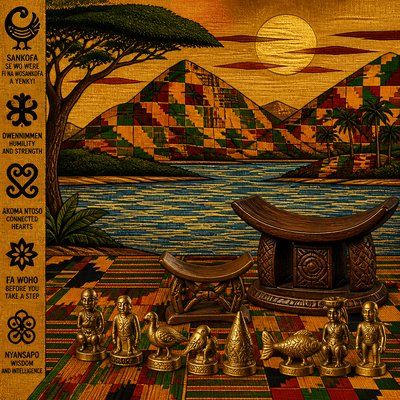
Kente-inspired color blocking
Broad interlocking bands and woven-looking grids use saturated gold, red, green, blue, and black. Repetition and carefully balanced color blocks create a strong rhythmic structure.
Adinkra symbolism
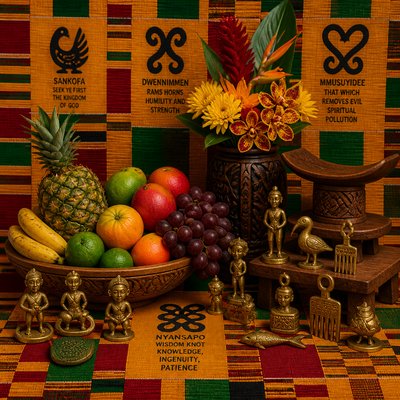
Stamped or printed black symbols introduce compact visual signs associated with proverbs, values, history, and social knowledge. Their meanings are culturally specific, so recognizable symbols should be used with attention to context.
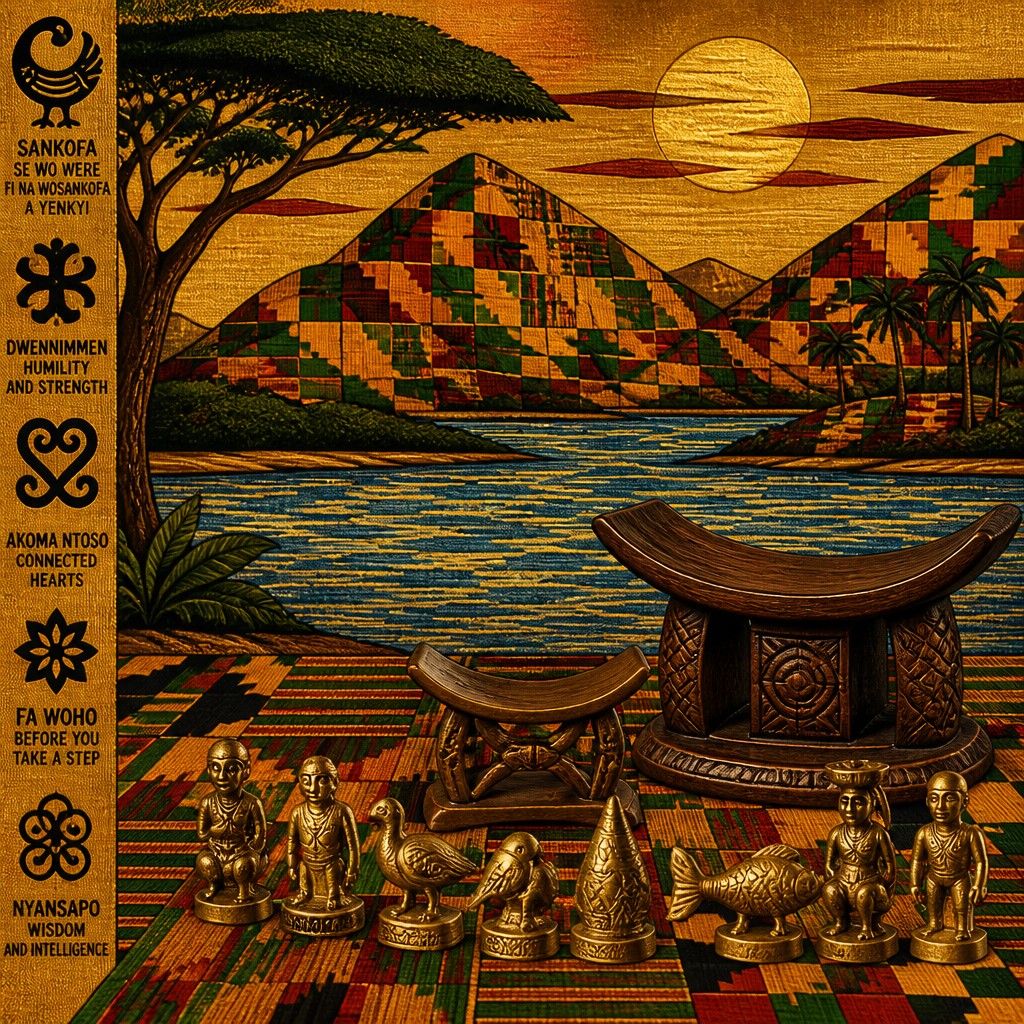
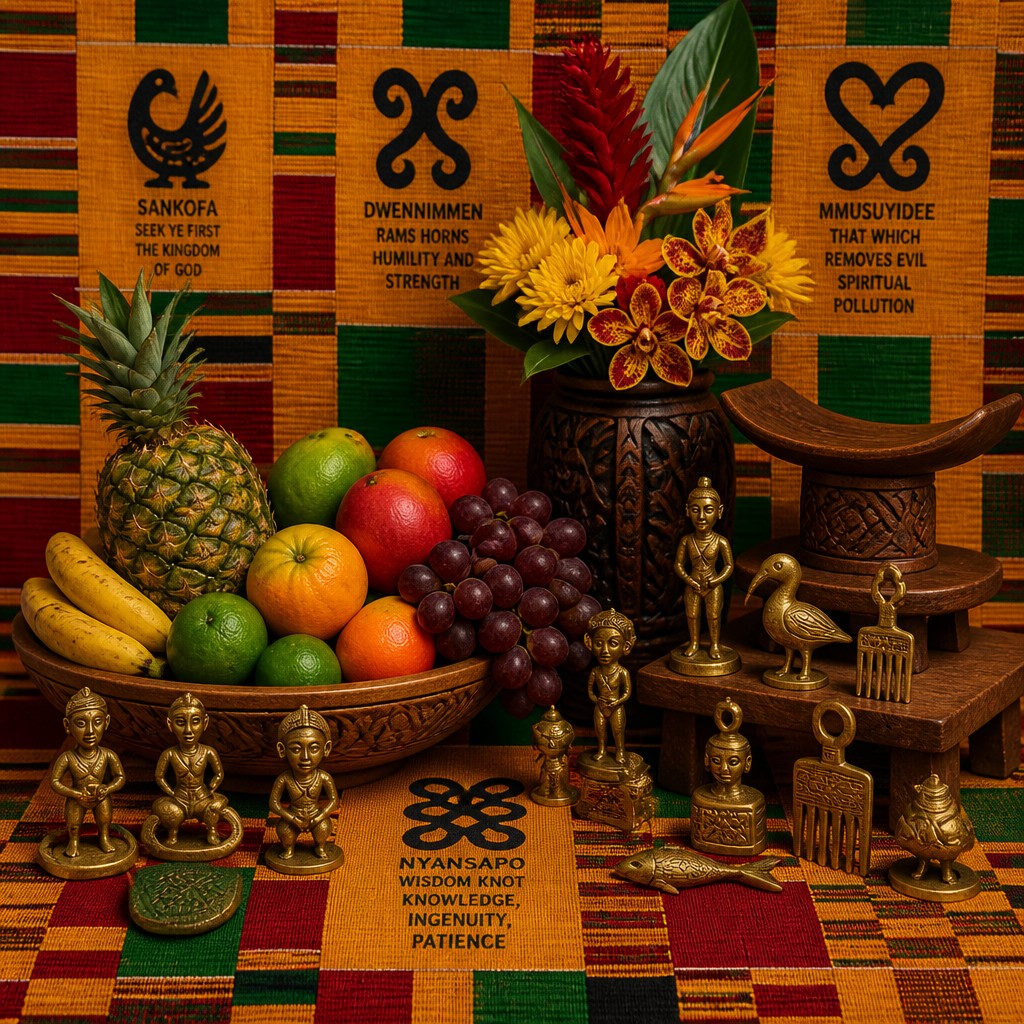
Akan brass goldweights
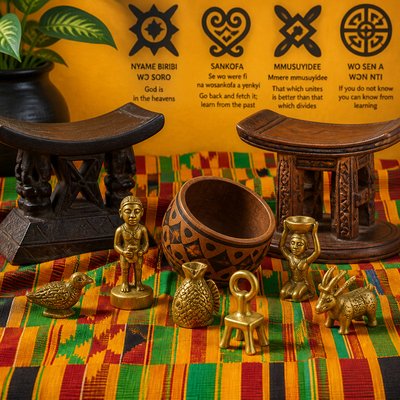
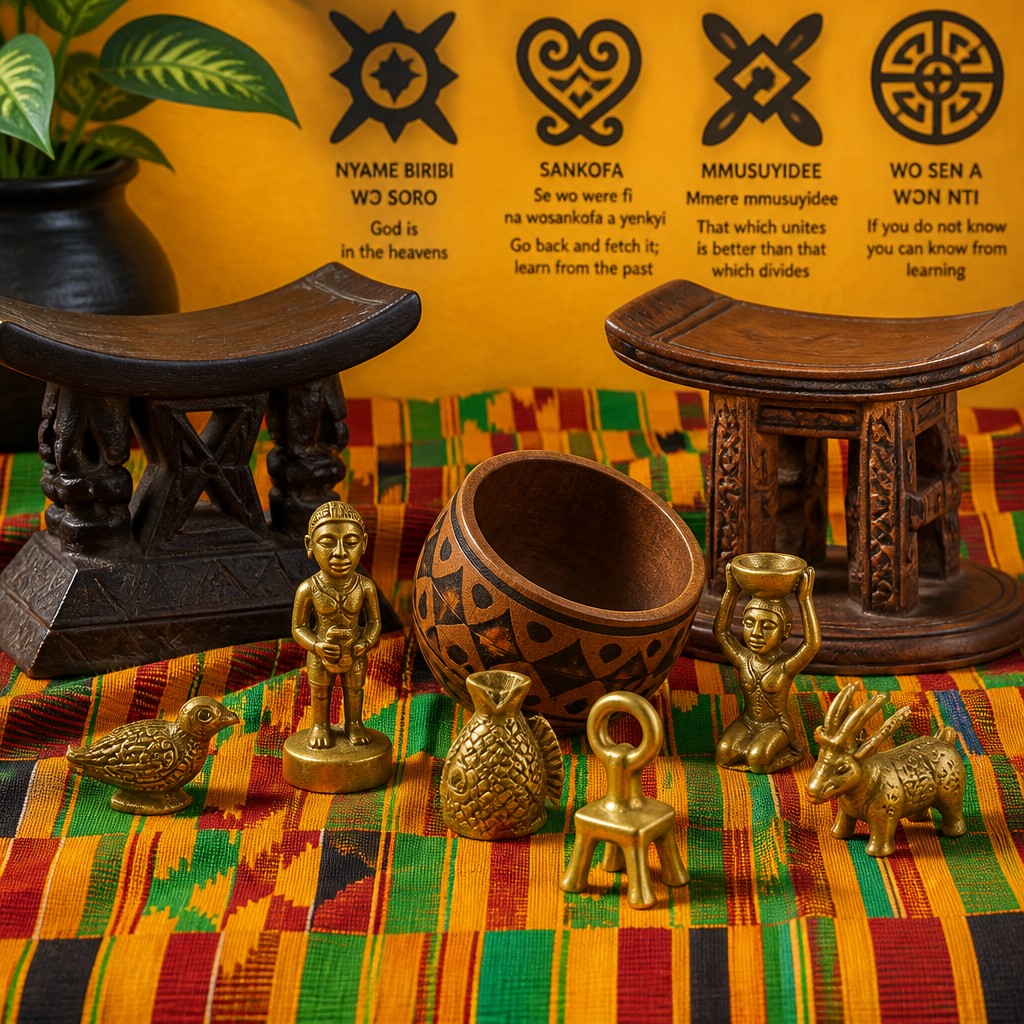
Small cast-brass figures, animals, tools, and abstract forms inspire miniature narrative details. Their dense silhouettes and warm metallic surfaces add a sense of craft, trade, and proverbial storytelling.
Carved royal stools
Low wooden stools and stool-like forms evoke authority, lineage, spirituality, and public office in Akan visual culture. Simplified legs, curved seats, and dark polished wood often function as anchoring motifs.
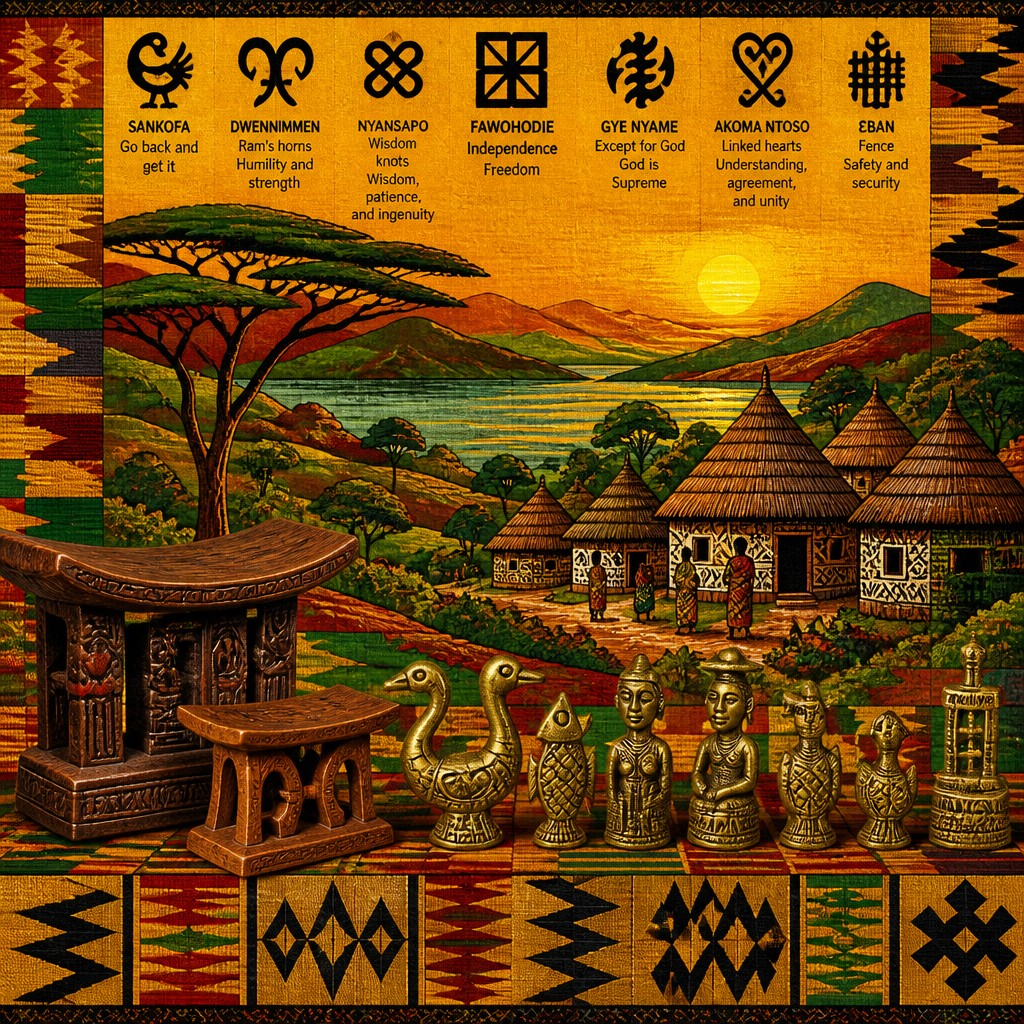
Flat, confident composition
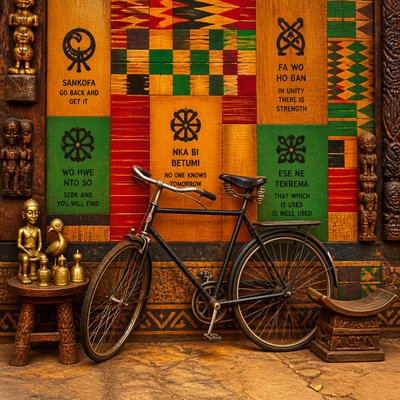
Subjects are frequently presented frontally or in profile against patterned fields, with limited atmospheric depth. Clear outlines, stacked planes, and framed arrangements make the image legible at a glance.
Warm West African palette
Earthy wood brown, brass yellow, terracotta, deep black, leaf green, and vivid red or blue produce visual warmth. Metallic highlights and high contrast give the work energy without requiring photorealistic shading.
Textile and stamped surfaces
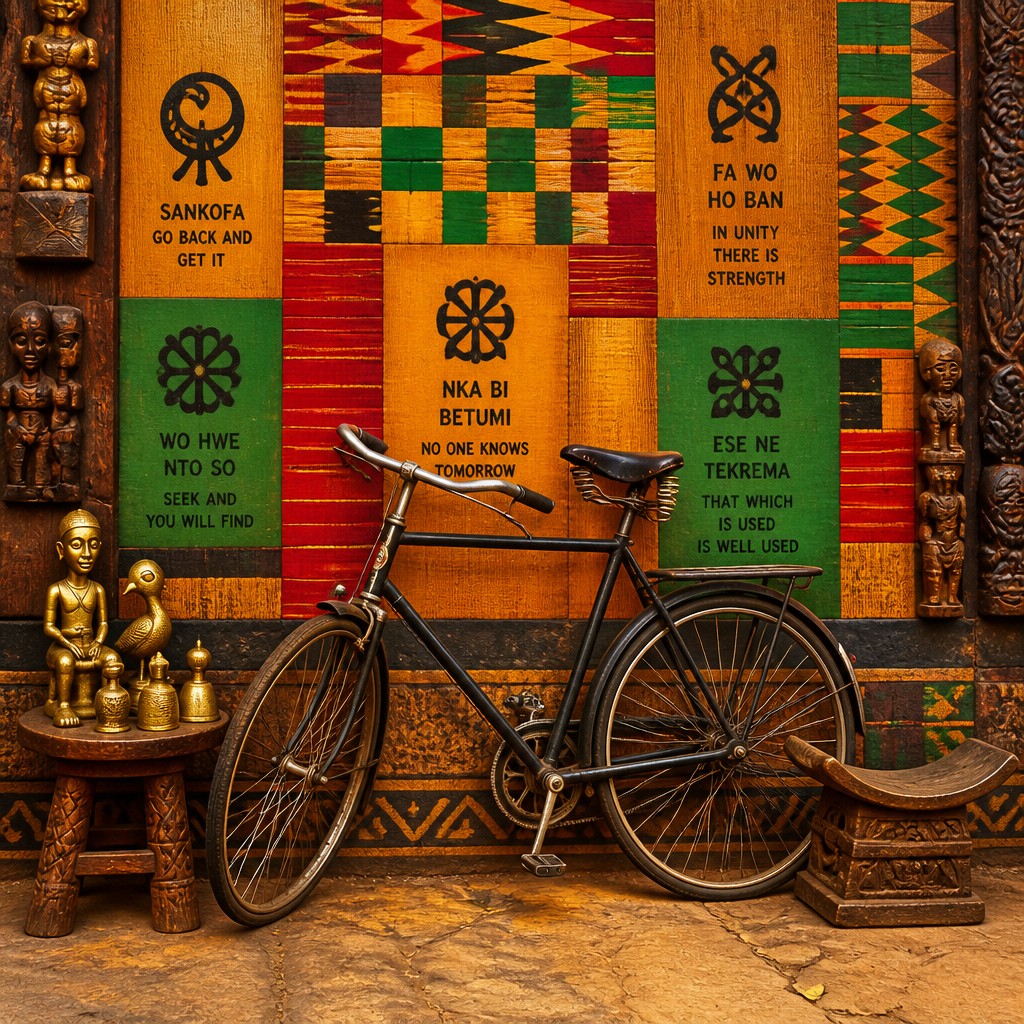
Visible weave lines, block-print irregularities, ink impressions, and repeated borders suggest handmade cloth and carved or stamped processes. These tactile cues help distinguish the style from generic geometric patterning.
Ghanaian Prompt Ideas
Start from an idea — each one opens the generator with the style ready to go. See all 40 Ghanaian prompts →
How to Create Ghanaian Art
Master the craft step by step — or skip straight to creating. Read the full guide →
- 1
Build a woven structure first
Start with narrow horizontal or vertical strips, then interlock them into a disciplined grid of repeating blocks. Vary scale sparingly so the pattern supports rather than overwhelms the subject.
- 2
Use symbols deliberately
Research the meaning and appropriate context of any Adinkra symbol before incorporating it. For a respectful abstract interpretation, use a small number of clearly separated motifs instead of covering every surface with unrelated signs.
- 3
Add crafted focal objects
Introduce one or two specific forms such as a cast brass animal, a proverb-bearing object, or a carved stool. Render them with simplified silhouettes, warm metallic accents, and visible hand-work rather than generic decoration.
- 4
Control depth and texture
Favor flat planes, bold contours, and selective shadows over fully naturalistic perspective. Add cloth grain, stamped edges, wood pores, and restrained brass patina to suggest material history.
- 5
Compose around a central subject
Place a person, animal, vessel, or architectural form against a structured textile field, using borders and repeated motifs to frame it. Keep the palette limited enough that the symbolic pattern remains coherent.
- 6
Describe materials in a digital prompt
For prompt-based generation, specify Kente-inspired color bands, researched Adinkra motifs, stamped black ink, Akan brass goldweights, carved wood, flat graphic planes, and warm natural color. Add the intended subject and composition, and request culturally respectful, non-generic symbolism.
The Story
History & Origins of Ghanaian
This is not a single historical movement but a modern interpretive style drawing on several Ghanaian traditions. Kente weaving developed among Akan communities, especially within Asante court culture, from established strip-weaving practices into a highly prestigious textile language. Adinkra cloth and its stamped visual vocabulary also emerged from Akan contexts, while brass goldweights were used in precolonial systems of trade and measurement and frequently took figurative or proverbial forms. Carved stools held important political, spiritual, and ancestral significance in Akan society.
During the twentieth and twenty-first centuries, Ghanaian visual culture circulated through textiles, publishing, fashion, posters, national identity, contemporary art, and popular design. The style described here brings these sources together into a unified image language; it should therefore be understood as an inspired synthesis rather than an exact representation of one community, period, or ceremonial object.
Influences: The style relates to Akan and broader Ghanaian textile, metalworking, woodcarving, and regalia traditions, especially Kente weaving and Adinkra stamping. It also intersects with West African poster design, contemporary African illustration, textile-based abstraction, folk graphic language, symbolic craft traditions, and modern pattern design. Its flat color fields may resemble graphic art, but its symbols and objects retain meanings shaped by specific Ghanaian cultural contexts.
Frequently Asked Questions
What defines Ghanaian art style?
It is defined here by Kente-inspired color blocking, Adinkra-derived symbolism, Akan brass goldweight forms, carved wooden stools, and a warm, structured West African palette. The composition is usually bold and graphic, with repeated patterns carrying cultural or proverbial associations.
Is Ghanaian art style a single historical art movement?
No. The phrase generally describes either Ghanaian visual traditions broadly or a contemporary synthesis inspired by them. The version used in digital illustration combines several distinct Akan and Ghanaian art forms rather than representing one historical school.
What do Adinkra symbols mean?
Adinkra symbols are visual signs associated with proverbs, ethical ideas, social values, history, and spiritual concepts. Meanings vary by symbol and context, so they should not be treated as interchangeable decorative icons.
How is this different from generic African patterns?
A thoughtful Ghanaian-inspired image identifies particular sources, such as Kente strip weaving, Adinkra stamping, Akan goldweights, or carved stools. Generic patterns often flatten many African cultures into one visual category and omit the specific materials, histories, and meanings behind the motifs.
What colors are commonly associated with the style?
Gold, red, green, black, blue, and earthy brown are common, especially when the image draws on Kente and brasswork. Color choices should remain flexible because Ghanaian textiles and regional traditions include many palettes beyond the familiar red, gold, and green combination.
Where is this style used today?
Its visual language appears in textiles, fashion, illustration, murals, posters, packaging, jewelry, interiors, contemporary art, and digital imagery. In each setting, the strongest results combine clear cultural references with respect for the meaning and ownership of particular symbols.
Create your first Ghanaian artwork
Describe anything — or upload a photo — and see it in Ghanaian Art Style in seconds.
Related Styles
Discover similar art styles