Gabonese Art Style
Explore Gabonese Art Style: Kota-inspired reliquary forms, Punu mask stillness, rainforest color, metallic surfaces, and ceremonial sculptural calm.
Instantly rendered in Gabonese — or transform a photo
Gabonese Gallery
Tap any artwork to explore it
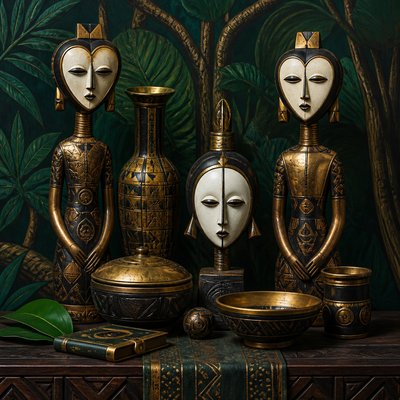
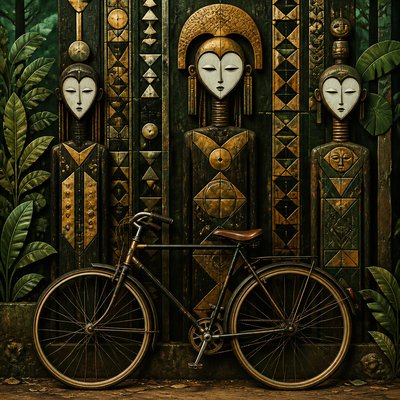
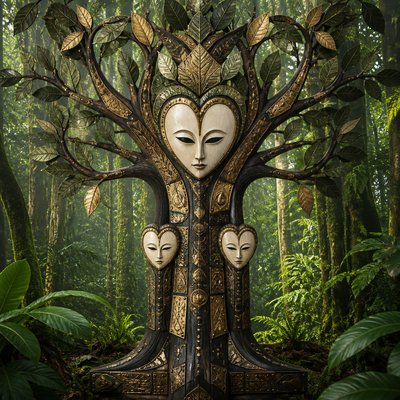
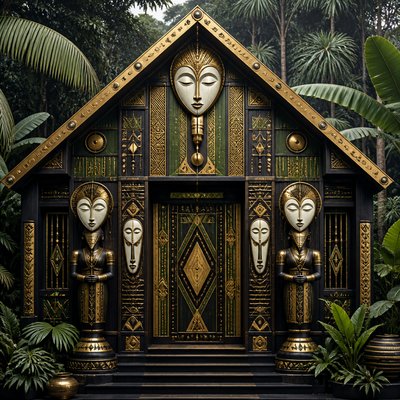
What is Gabonese Art Style?
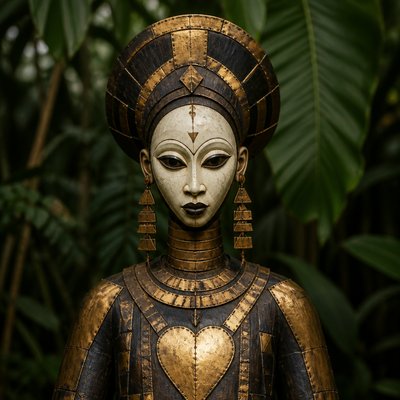
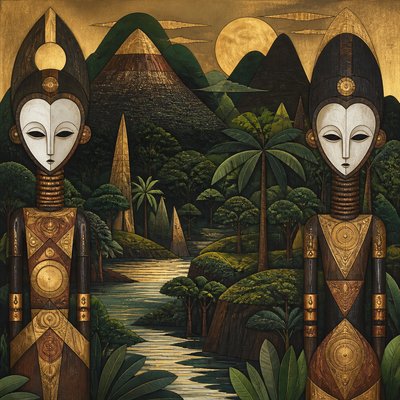
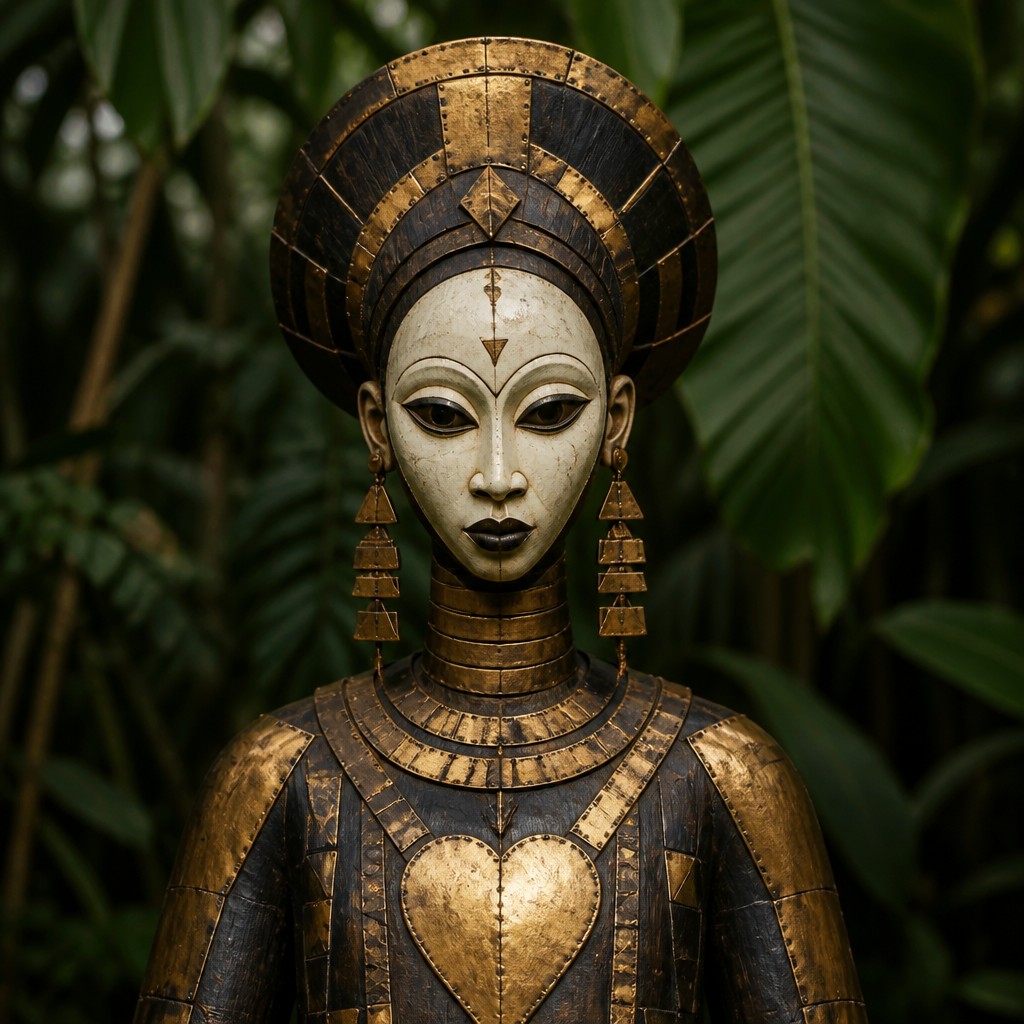
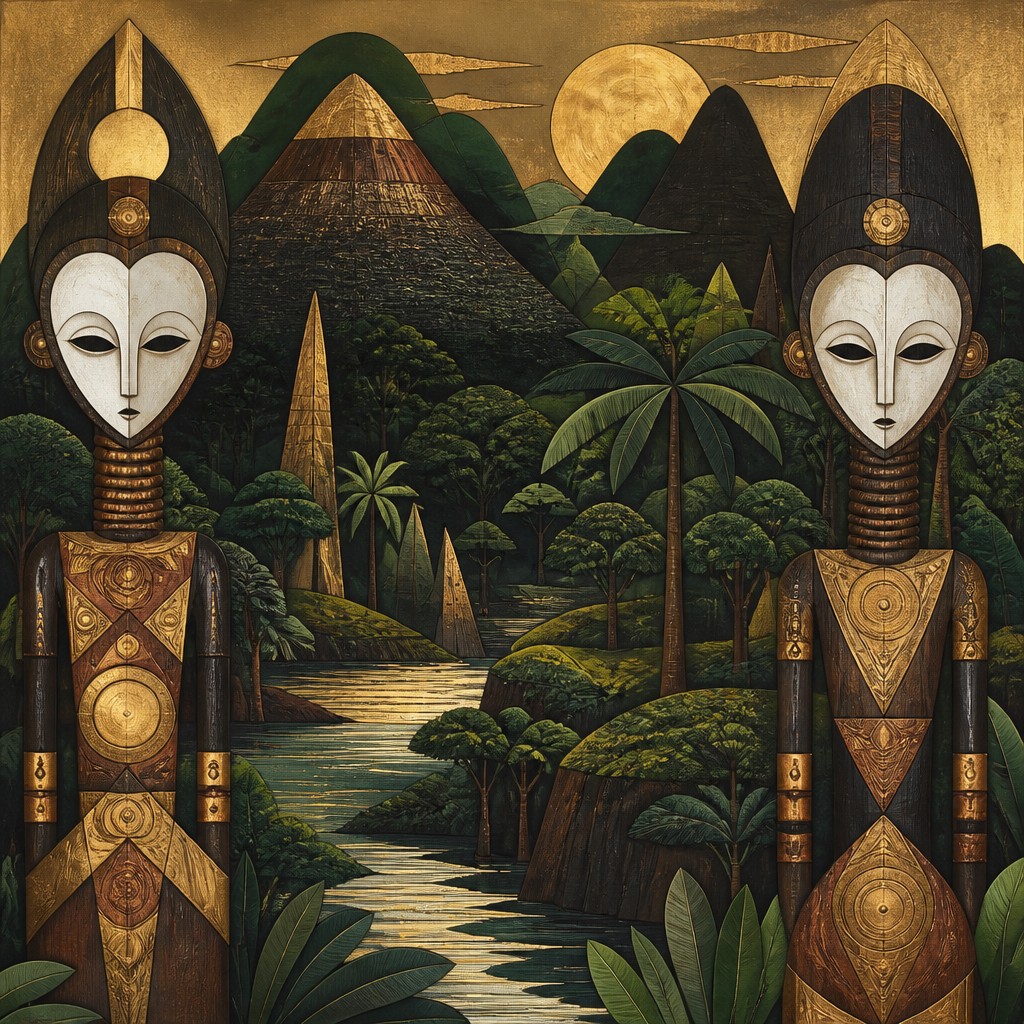
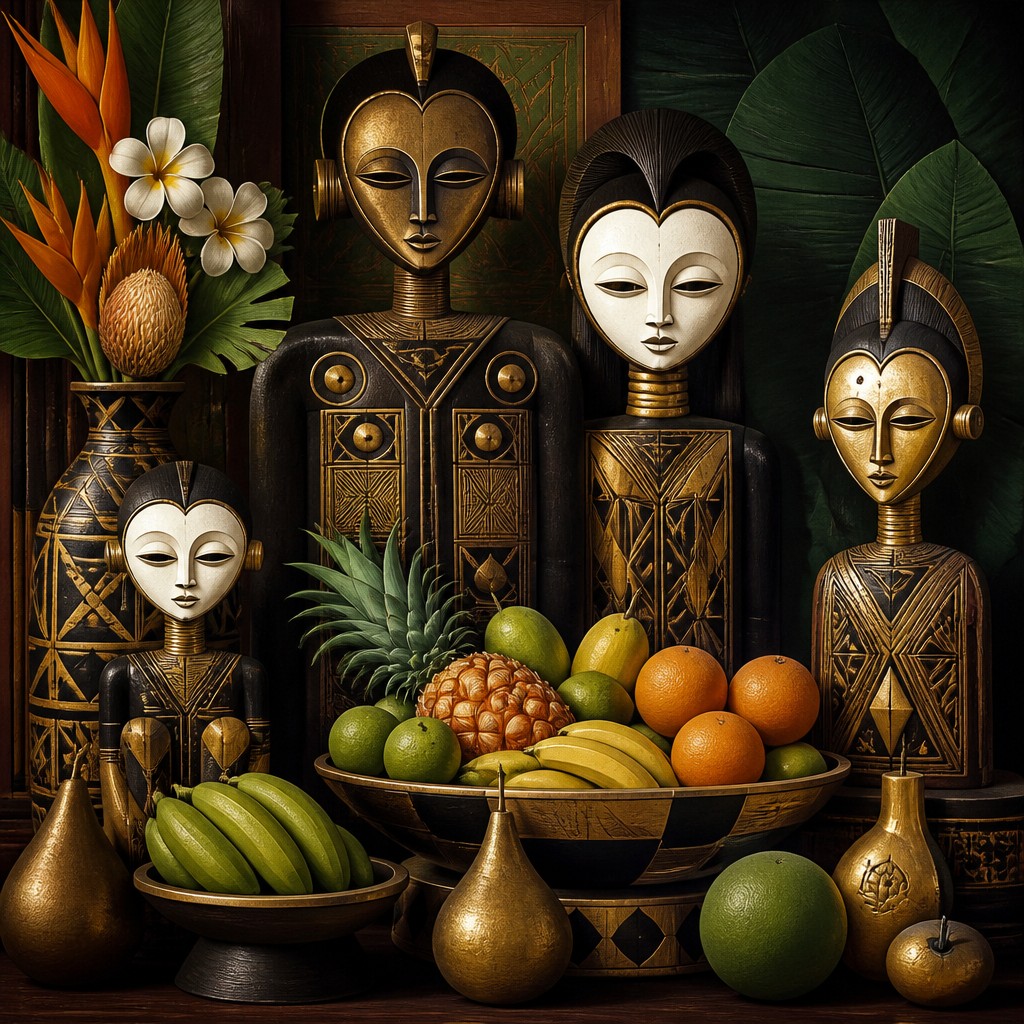
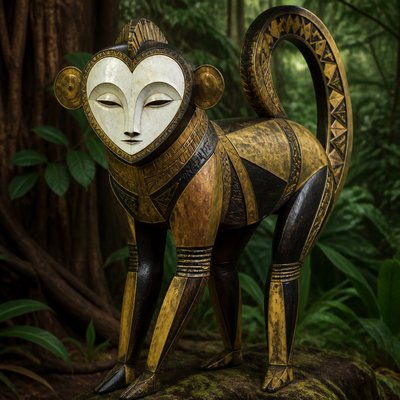
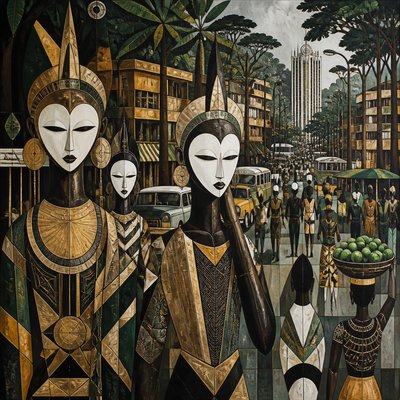
Gabonese Art Style is a contemporary descriptive label for an image language inspired by sculptural and mask traditions from Gabon, especially Kota reliquary guardians and Punu ceremonial masks. It is not a single historical movement or a uniform national style. Its characteristic synthesis combines frontal, geometric figures; serene heart-shaped or oval faces; pale kaolin-like surfaces; dark almond eyes; polished brass and copper effects; and the deep greens of the equatorial rainforest.
The style looks powerful through restraint rather than dramatic action. Symmetry, compressed anatomy, stillness, and carefully limited ornament suggest objects made for ritual presence and protective guardianship. In digital imagery, metallic sheet overlays may be rendered alongside ebony-like wood grain, while rainforest foliage supplies a dense environmental counterpoint to the figure's quiet, mask-like composure.
Try It On Your Photos
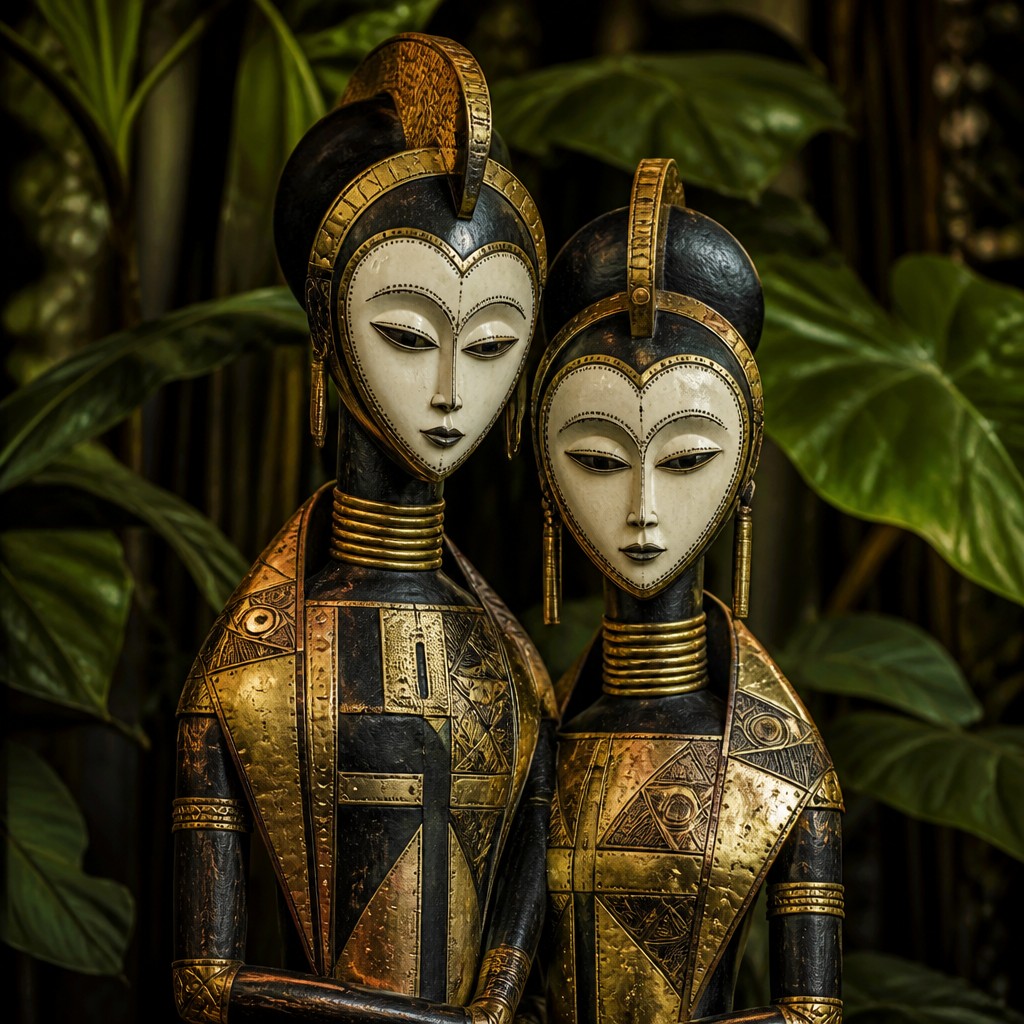
Upload any photo and convert it into Gabonese Art Style — drag the sliders to compare before and after.

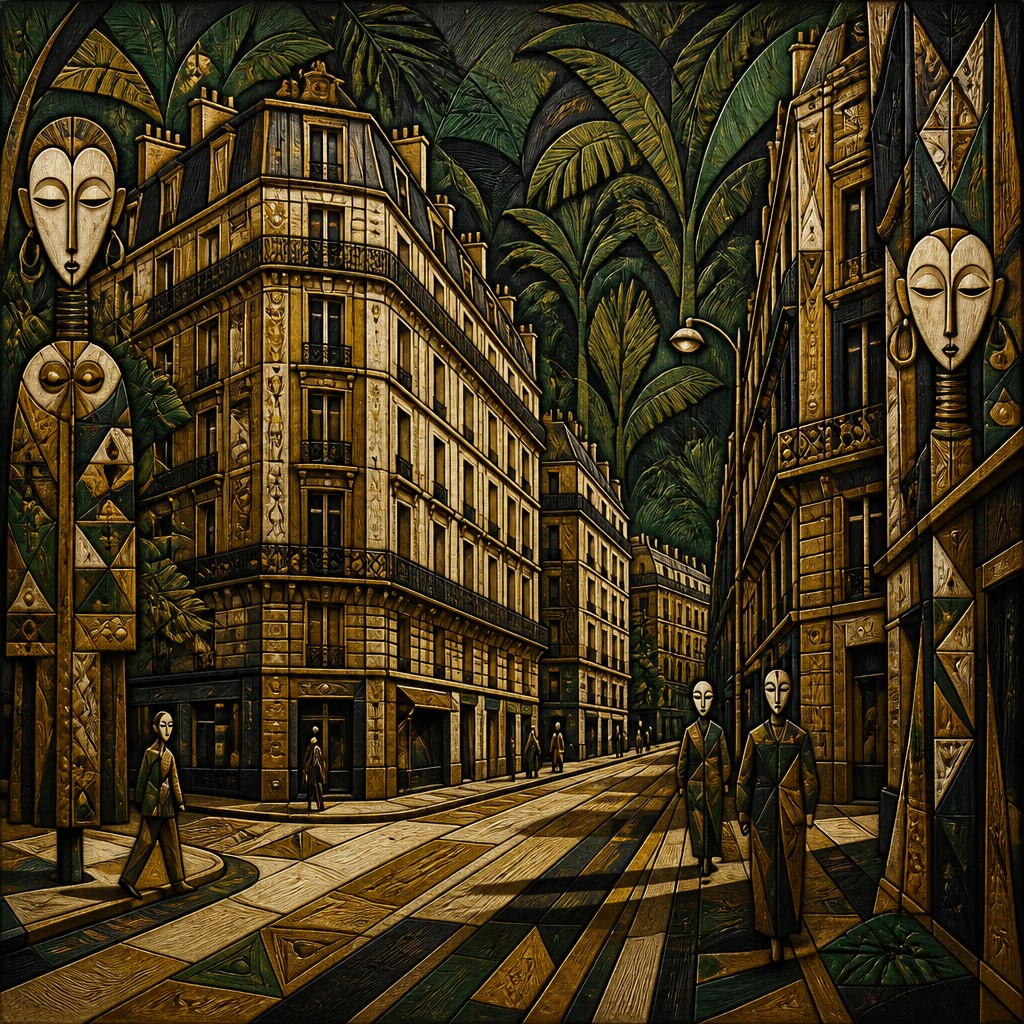

What Defines Gabonese Art Style
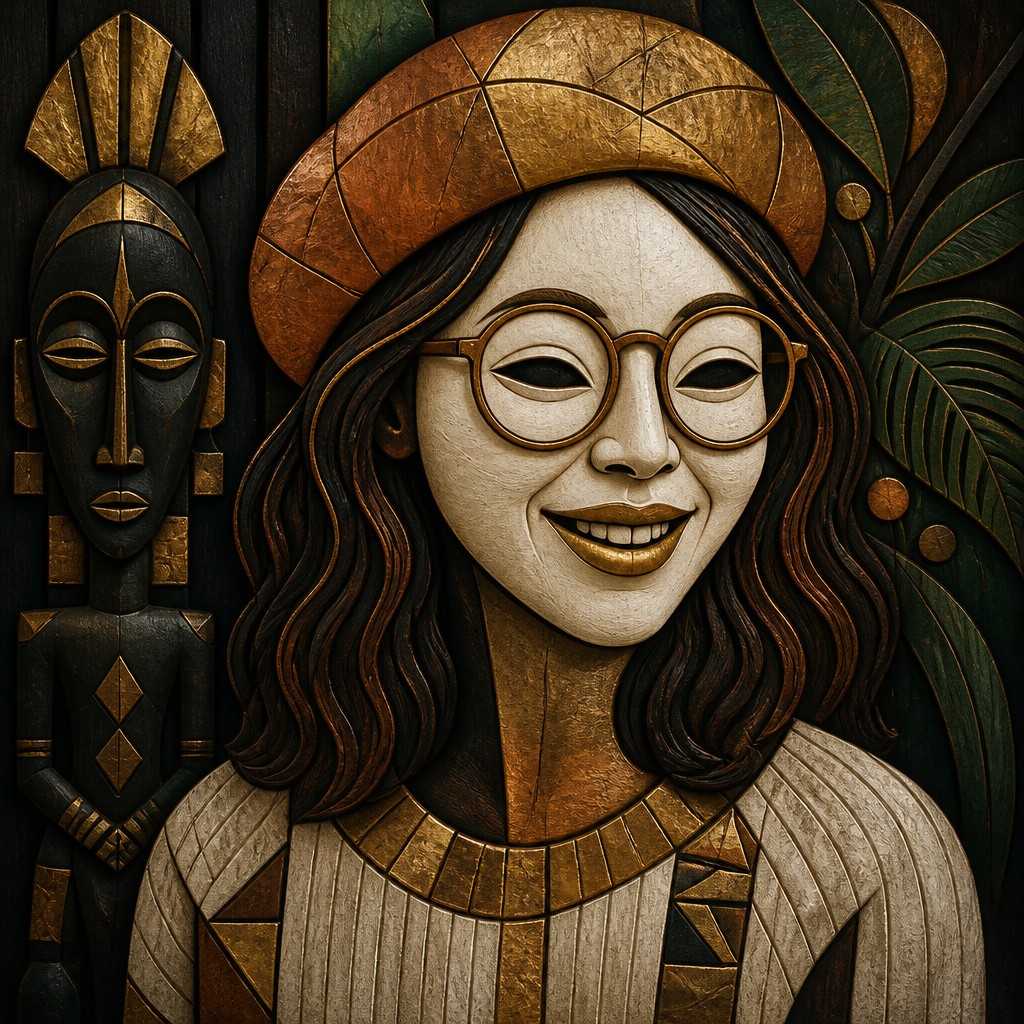
The signature details, up close
Frontal guardian geometry
Figures are usually presented frontally with a strong vertical axis, simplified anatomy, and a stable, icon-like silhouette. Angular planes and balanced proportions create an impression of protection and permanence.
Serene mask-like faces
Faces tend toward heart-shaped, oval, or shield-like contours with minimal expression. Dark almond-shaped eyes and a calm mouth emphasize stillness rather than portrait realism.
Kaolin-white surfaces
Pale mineral or kaolin-like facial surfaces contrast with darker wood, hair, and background tones. The matte whiteness can suggest ceremonial masking without reproducing a specific historical object.
Metallic reliquary effects
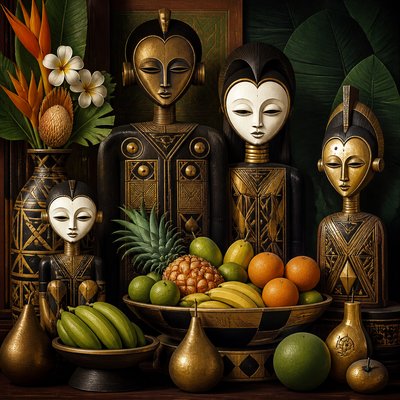
Warm gold, brass, and copper planes appear as thin overlays, segmented plates, or reflective accents across a carved form. Subtle oxidation, seams, and irregular reflectivity keep the surface from looking like seamless polished chrome.
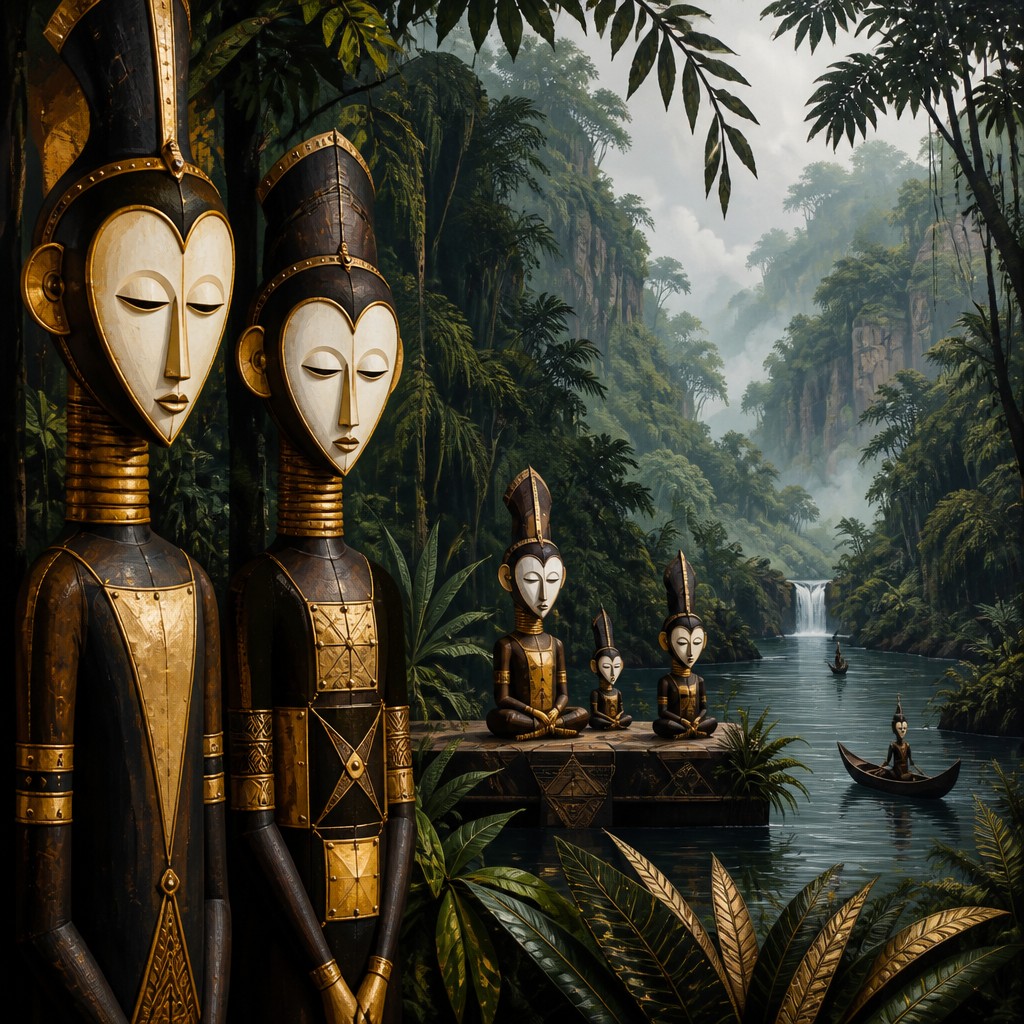
Ebony and carved wood texture
Dark brown-black wood grain, incised lines, and restrained tool marks give the figure a tactile sculptural foundation. Texture is concentrated on structural edges and broad planes rather than scattered randomly.
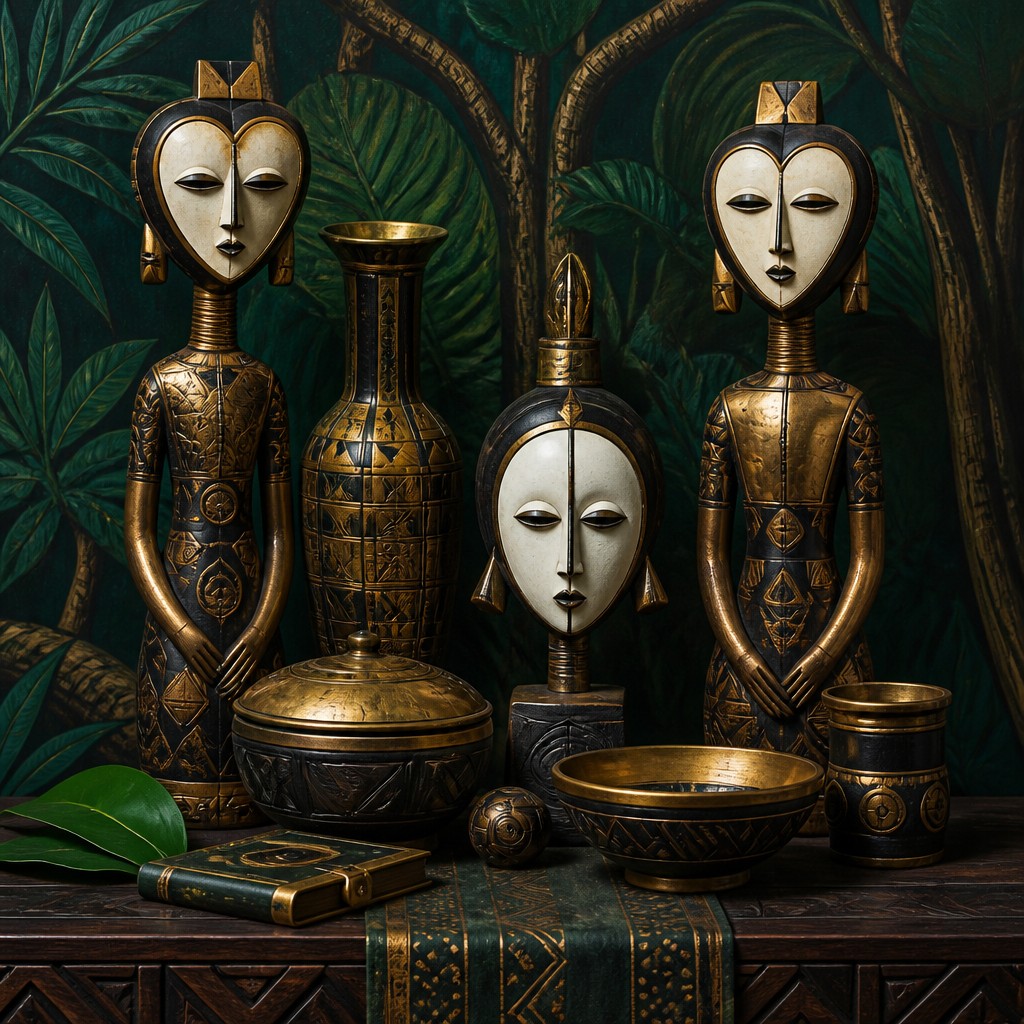
Equatorial rainforest palette
Dense greens, humid shadows, moss, broad leaves, and filtered light establish a Gabonese rainforest atmosphere. Bronze, ivory, black, and muted earth colors provide controlled accents within the foliage.
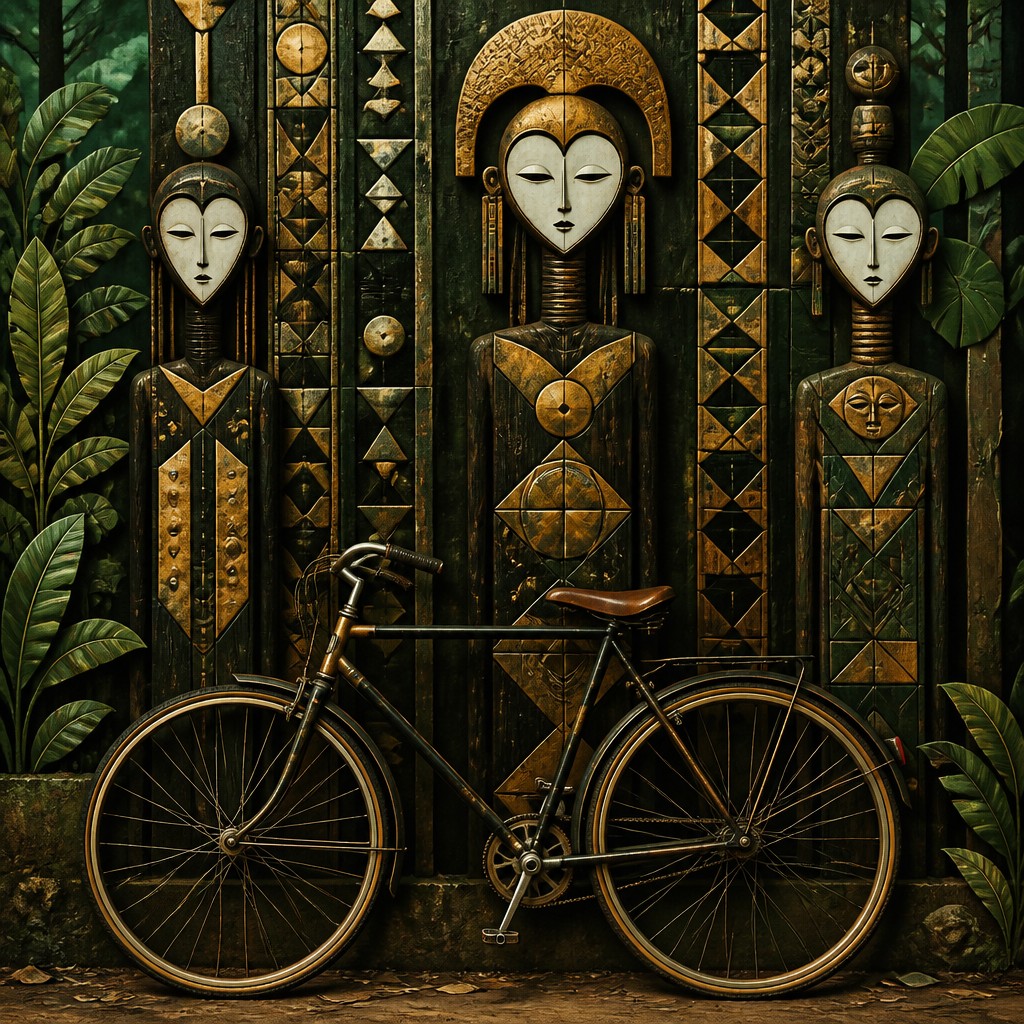
Ceremonial stillness
Compositions favor poised bodies, frontal lighting, quiet negative space, and a sense of guarded presence. Motion, theatrical gesture, and excessive decoration are generally secondary to dignity and visual balance.
Gabonese Prompt Ideas
Start from an idea — each one opens the generator with the style ready to go. See all 40 Gabonese prompts →
How to Create Gabonese Art
Master the craft step by step — or skip straight to creating. Read the full guide →
- 1
Build the silhouette first
Begin with a symmetrical frontal guardian form and reduce the body to clear geometric masses before adding facial or surface detail. In 3D, use low-complexity planes and controlled bevels to preserve a carved, object-like presence.
- 2
Separate material zones
Assign distinct surfaces for dark wood, pale mineral coating, and brass or copper overlay. Use roughness variation, fine seams, oxidation, and uneven reflectivity so the materials read as carved and assembled rather than generically metallic.
- 3
Control the face
Keep the expression neutral, the eyes dark and almond-shaped, and the facial planes balanced. Avoid hyperreal skin pores or exaggerated emotion, which can undermine the mask-like stillness.
- 4
Use rainforest atmosphere selectively
Frame the figure with layered foliage, deep green values, humid haze, and filtered shafts of light, while preserving a readable silhouette. A restrained background often gives the guardian more authority than a crowded scene.
- 5
Work traditionally through carving and surface study
For physical work, study wood carving, relief construction, mineral-pigment application, and metal-leaf or sheet-metal techniques, while treating cultural references with contextual care. Research the specific traditions being referenced instead of combining sacred forms indiscriminately.
- 6
Write precise digital prompts
Specify the subject, frontal geometry, heart-shaped serene face, kaolin pallor, dark almond eyes, brass or copper overlay, ebony grain, rainforest palette, and quiet ceremonial lighting. Add exclusions such as plastic, cartoon exaggeration, glossy chrome, and busy ornament when the result becomes too generic.
The Story
History & Origins of Gabonese
This label describes an invented contemporary synthesis rather than a documented historical movement called "Gabonese Art Style." Its main aesthetic lineage comes from Kota reliquary figures, including guardian forms associated with ancestral memorial objects, and from Punu mask traditions recognized for pale surfaces, balanced facial structures, and composed expressions. These traditions belong to distinct cultural contexts and should not be treated as interchangeable or as a single pan-Gabonese design language.
The digital style develops those references through a modern, hybrid visual vocabulary: metallic overlays evoke the reflective surfaces of some reliquary figures, while kaolin pallor, dark eyes, and rainforest settings create a unified atmospheric scene. Responsible use distinguishes historical objects and communities from this contemporary reinterpretation and avoids presenting the synthesis as an authentic ceremonial artifact.
Influences: The style relates most directly to Kota reliquary sculpture and Punu mask traditions of Gabon, while also drawing on broader Central African wood carving, ancestral memorial imagery, metal-sheet ornament, and contemporary digital material rendering. Its frontal symmetry and simplified planes may also recall modernist interest in African sculpture, but that history should be distinguished from the specific cultural meanings of the source traditions. Rainforest color, museum display aesthetics, and fantasy concept art further shape the contemporary synthesis.
Frequently Asked Questions
Is Gabonese Art Style a historical art movement?
No. The term is best understood as a contemporary descriptive or AI-native synthesis, not as a unified historical movement recognized by Gabonese communities. It draws selectively from distinct Gabonese traditions, particularly Kota reliquary forms and Punu masks.
What defines this visual style?
Its core features are frontal geometric guardian figures, calm mask-like faces, pale kaolin-inspired surfaces, dark carved wood, warm brass or copper overlays, and dense rainforest greens. Symmetry and ceremonial stillness are as important as the materials and colors.
How is it different from generic African-inspired art?
It points to specific visual lineages from Gabon rather than treating the continent as a single aesthetic source. A careful interpretation identifies Kota and Punu references, avoids pan-African shorthand, and does not claim that a modern hybrid image is an authentic ritual object.
Can I make this style with photography or an existing portrait?
Yes, a portrait or sculpture photograph can be transformed by emphasizing frontal symmetry, pale mask-like surface treatment, carved wood texture, metallic overlays, and rainforest lighting. Preserve the subject's pose and proportions if likeness matters, and avoid adding sacred-looking objects without understanding their context.
What materials suit a physical version of this style?
Dark hardwoods or wood-like composites, clay, plaster, mineral pigments, brass or copper sheet, and controlled patination are suitable material directions. Techniques should be learned from reputable craft and cultural sources, especially when working with forms connected to memorial or ceremonial practice.
Where is this style commonly used?
As a contemporary visual synthesis, it is suited to conceptual sculpture, editorial illustration, game environments, album or book imagery, museum-inspired studies, and portrait transformations. It should not be presented as documentation of a specific Gabonese ceremony or community without appropriate research and permission.
Create your first Gabonese artwork
Describe anything — or upload a photo — and see it in Gabonese Art Style in seconds.
Related Styles
Discover similar art styles