Fontainebleau Art Style
Explore Fontainebleau art: French court Mannerism with elongated figures, gilded stucco strapwork, mythological scenes, and refined ornament.
Instantly rendered in Fontainebleau — or transform a photo
Fontainebleau Gallery
Tap any artwork to explore it
What is Fontainebleau Art Style?
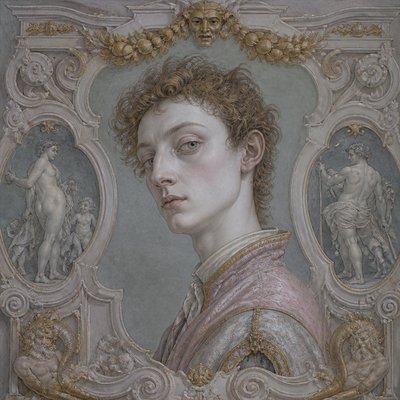
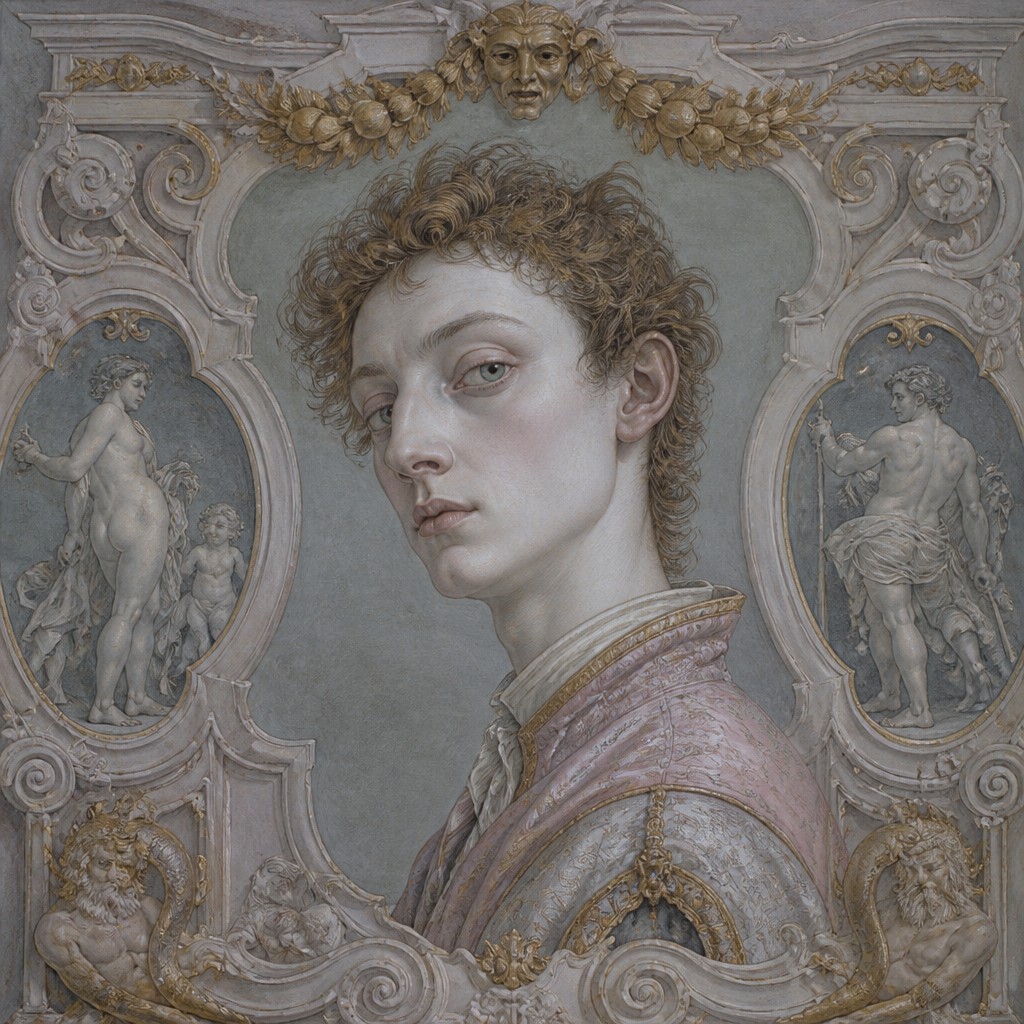
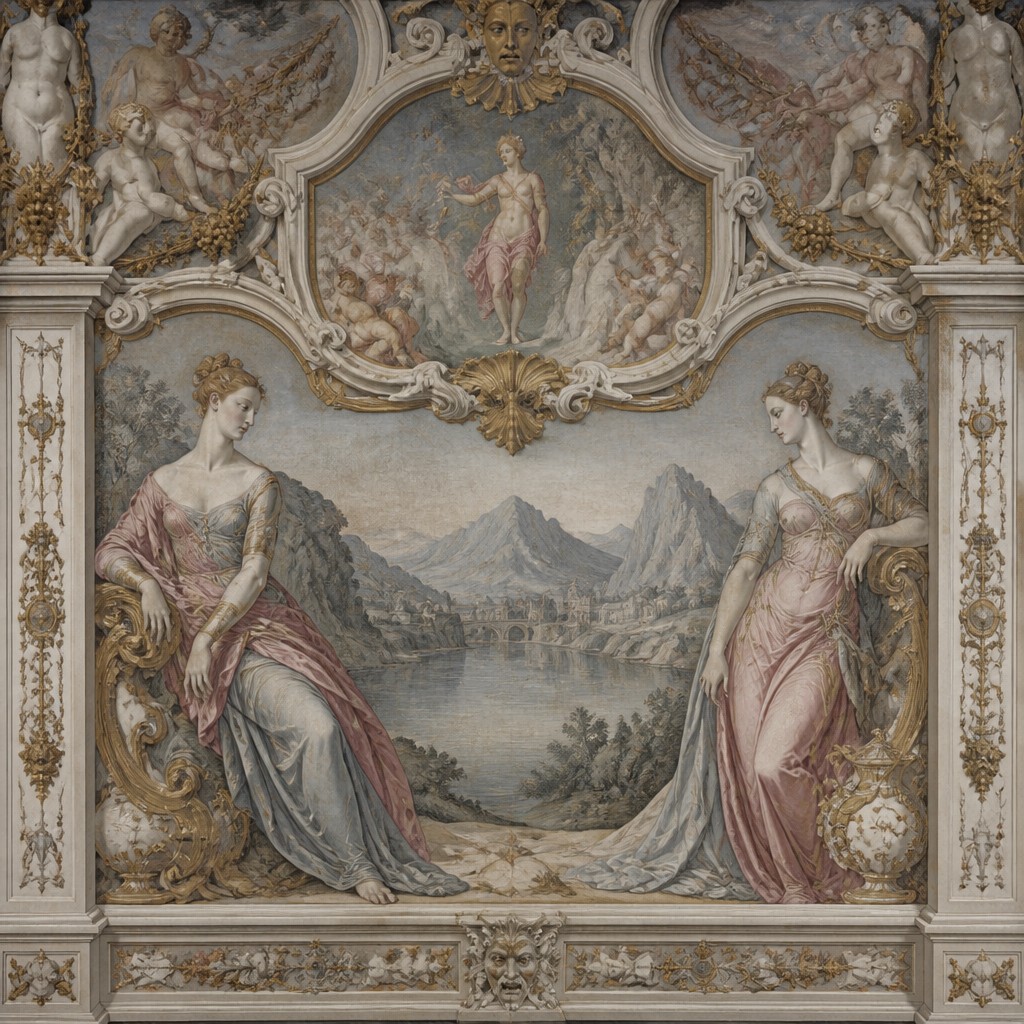
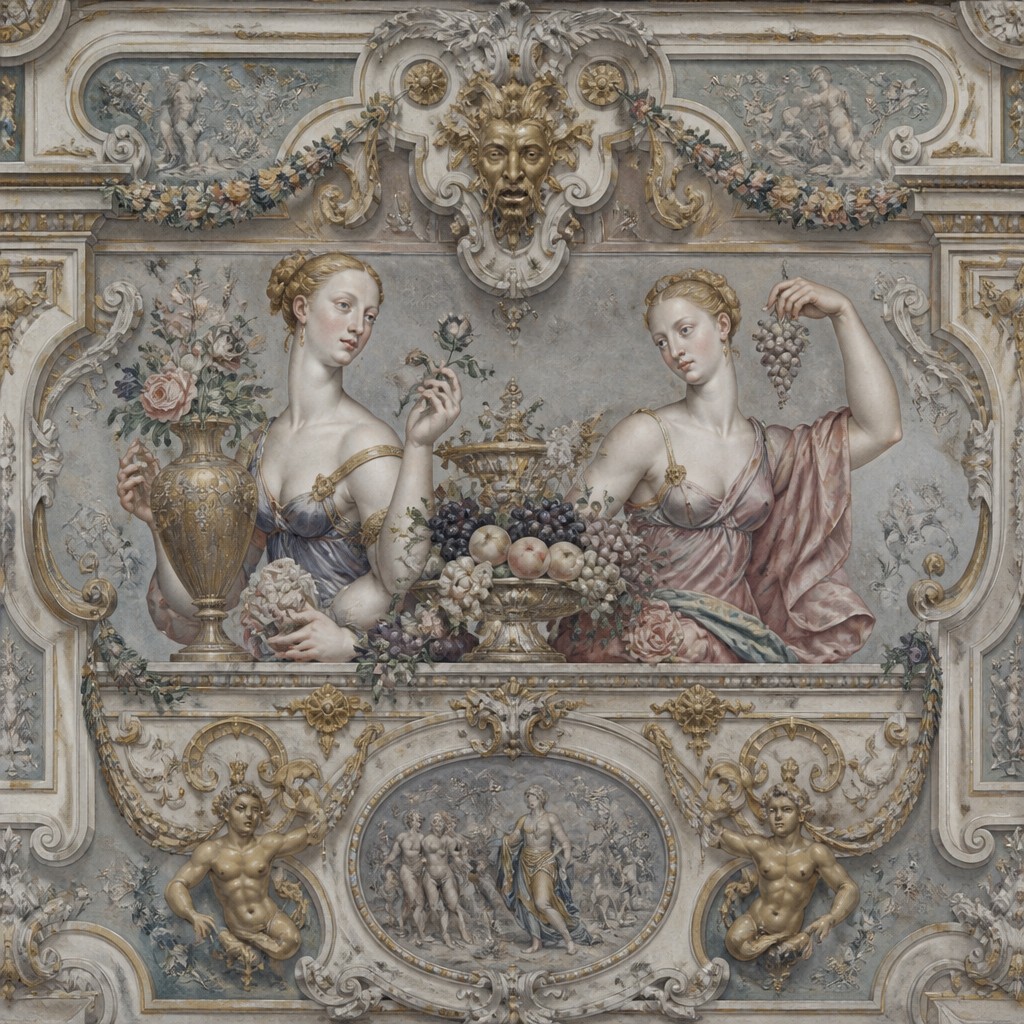
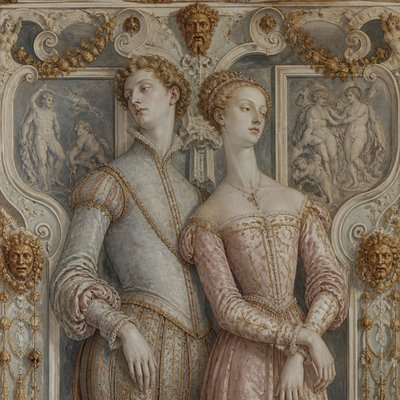
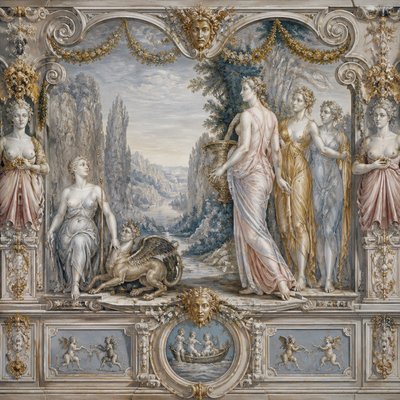
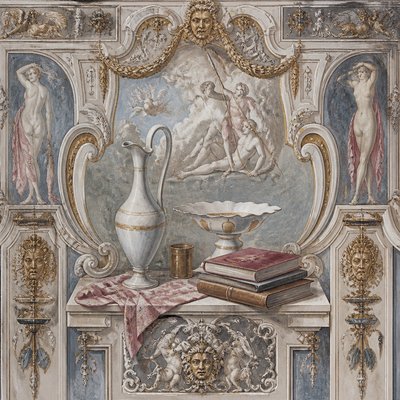
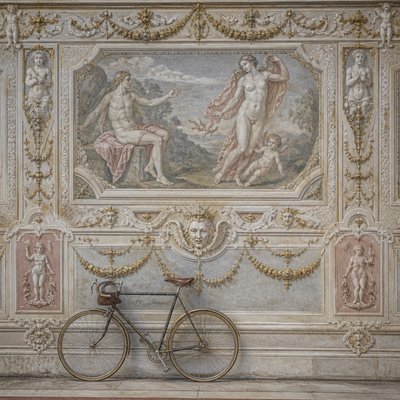
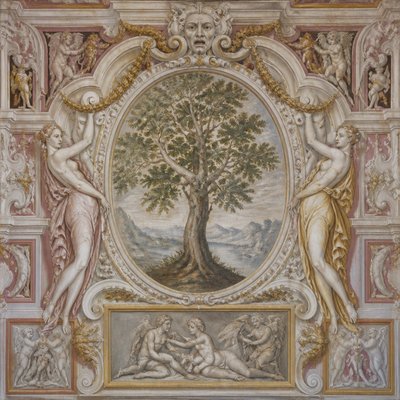
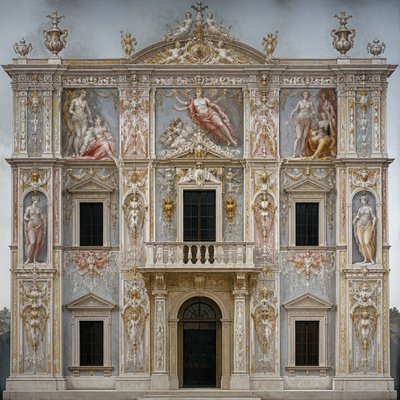
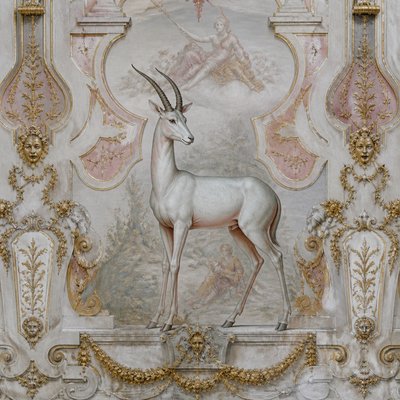
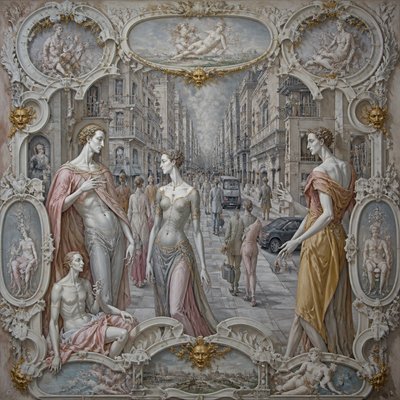
Fontainebleau art is a refined form of 16th-century French court Mannerism associated with the royal château at Fontainebleau. Its visual language combines elongated, elegantly posed figures with mythological and allegorical subjects, intricate grotesque ornament, painted architectural panels, and sculptural stucco decoration. The result is an intentionally artificial, aristocratic style in which painting, relief, architecture, and ornament appear to form a single decorative environment.
The style is recognized by its cool, polished surfaces, slender anatomies, complex poses, pale tonal harmonies, and lavish frames of strapwork, garlands, masks, scrolls, and fantastic creatures. Gilding, subdued rose and blue-gray hues, and illusionistic panel divisions create a sophisticated atmosphere suited to palace interiors rather than intimate naturalistic observation.
Try It On Your Photos
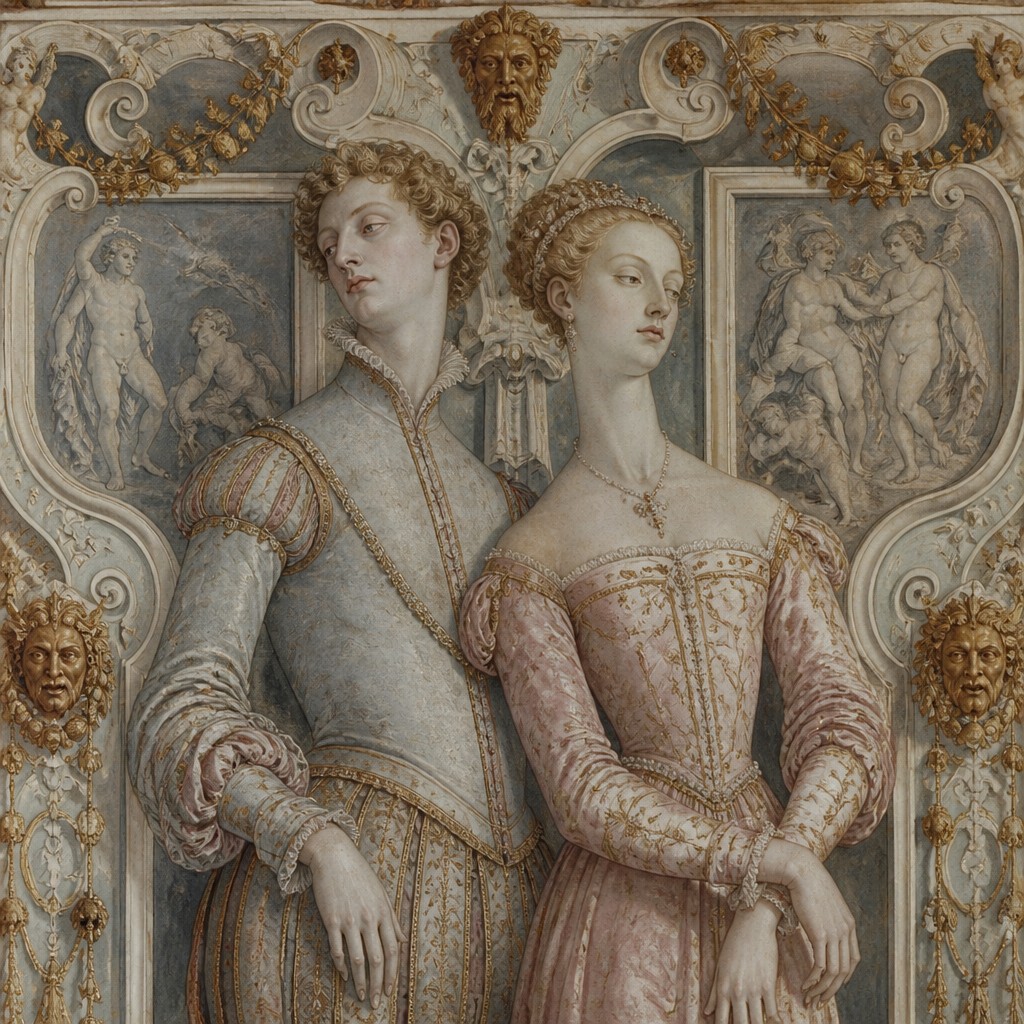
Upload any photo and convert it into Fontainebleau Art Style — drag the sliders to compare before and after.


What Defines Fontainebleau Art Style
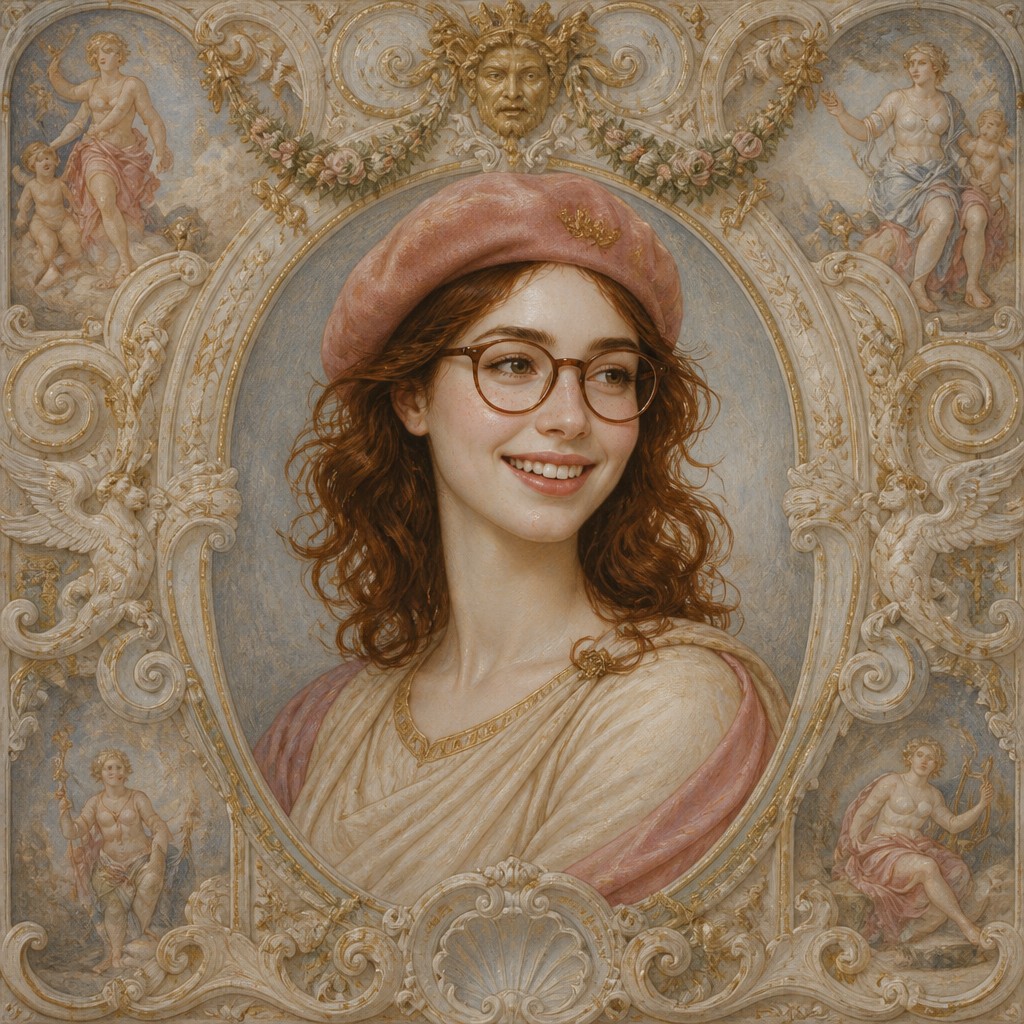
The signature details, up close
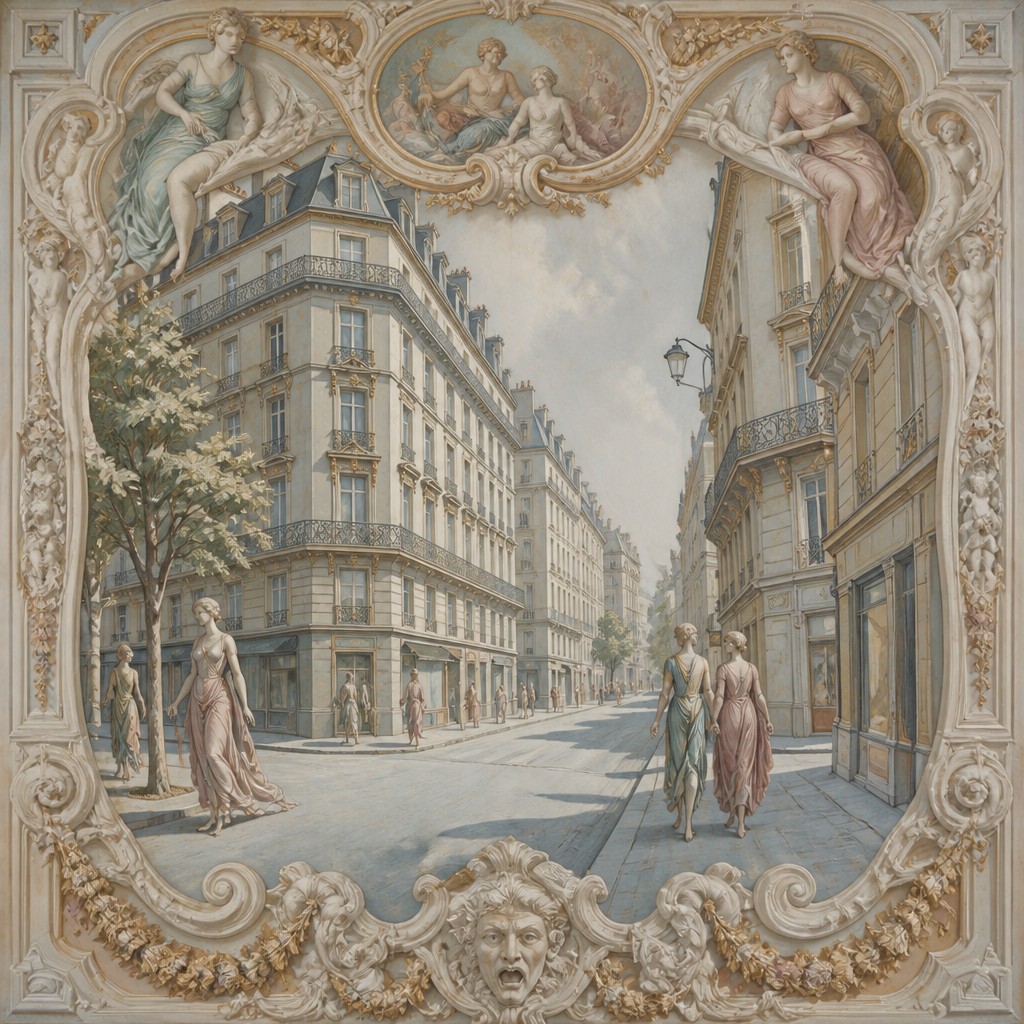
Elongated Mannerist figures
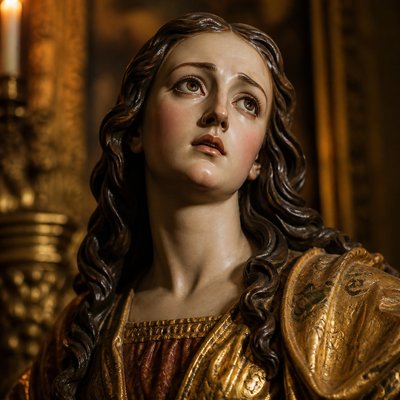
Human bodies are slender, graceful, and often extended beyond natural proportion. Complex contrapposto poses, elegant gestures, and porcelain-like polished skin emphasize artifice and courtly refinement.
Stucco strapwork
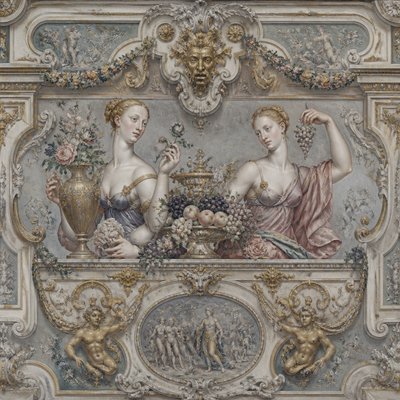
Flattened bands, scrolls, cartouches, and interlacing ornaments frame painted scenes like elaborate architectural or metalwork structures. These raised forms blur the boundary between wall decoration and sculpture.
Mythological and allegorical subjects
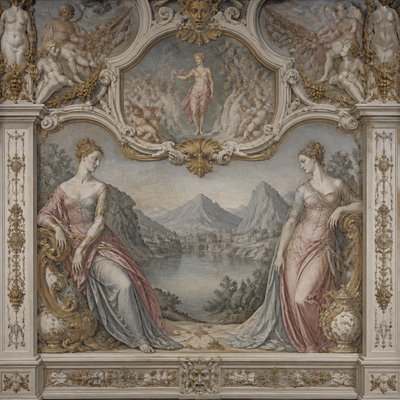
Classical deities, heroic episodes, symbolic figures, and scenes of transformation provide the narrative foundation. Stories are often arranged as decorative panels rather than presented as a single continuous scene.
Grotesque ornament
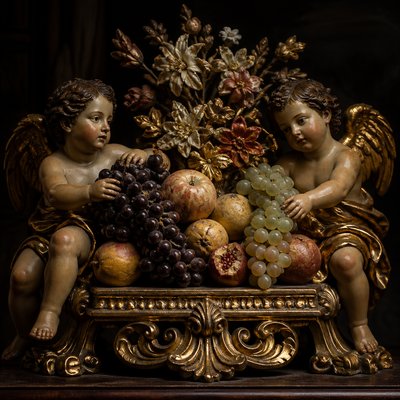
Masks, hybrid creatures, foliage, garlands, trophies, putti, and fanciful animals fill the spaces around the main compositions. The ornament is inventive, symmetrical, and deliberately more decorative than naturalistic.
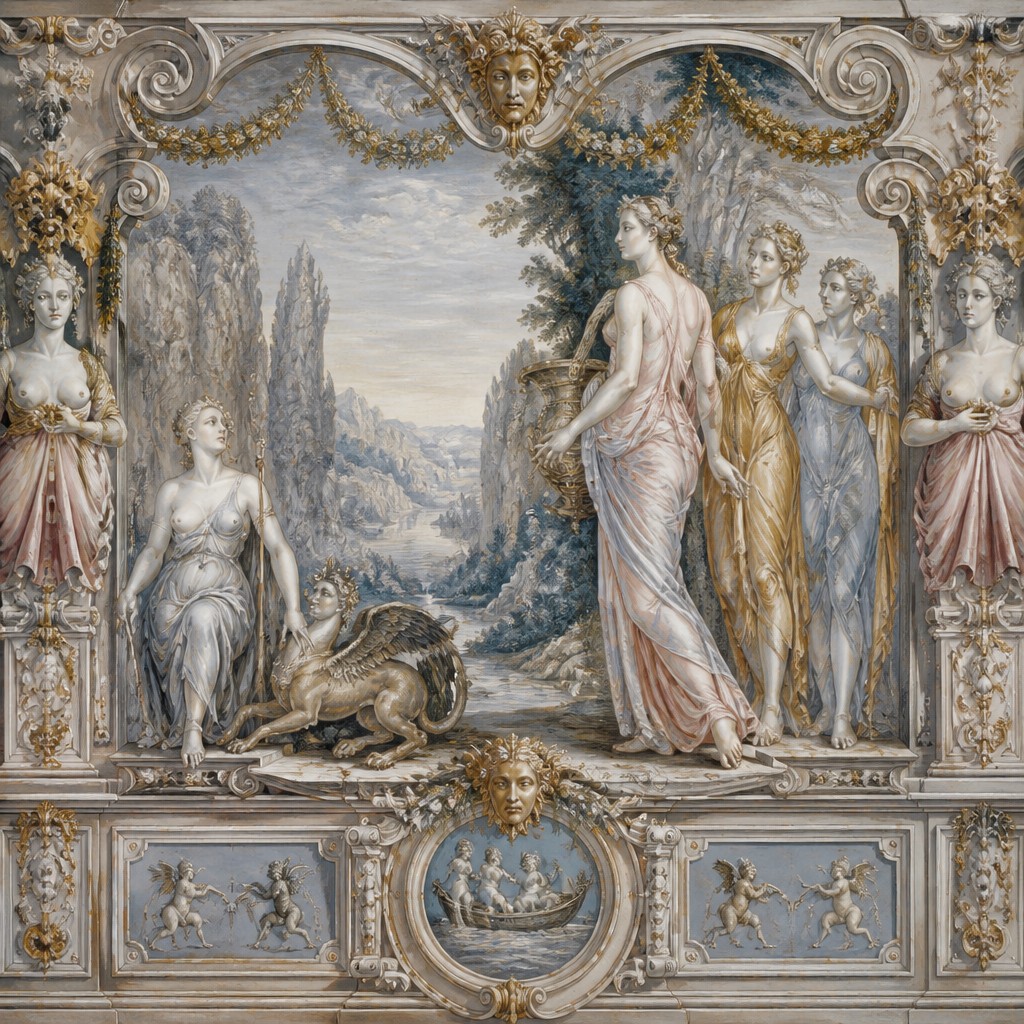
Gilded relief and painted illusion
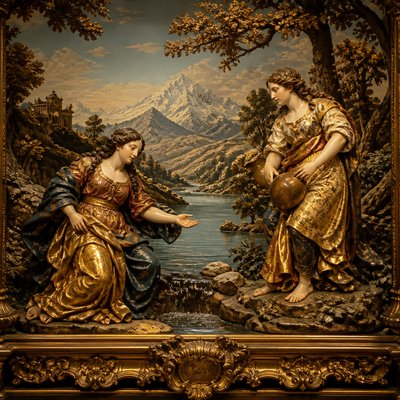
Gold accents and low-relief stucco catch the light against frescoed or painted surfaces. Frames, moldings, and scenes are designed to interlock so that real relief and illusionistic architecture appear continuous.
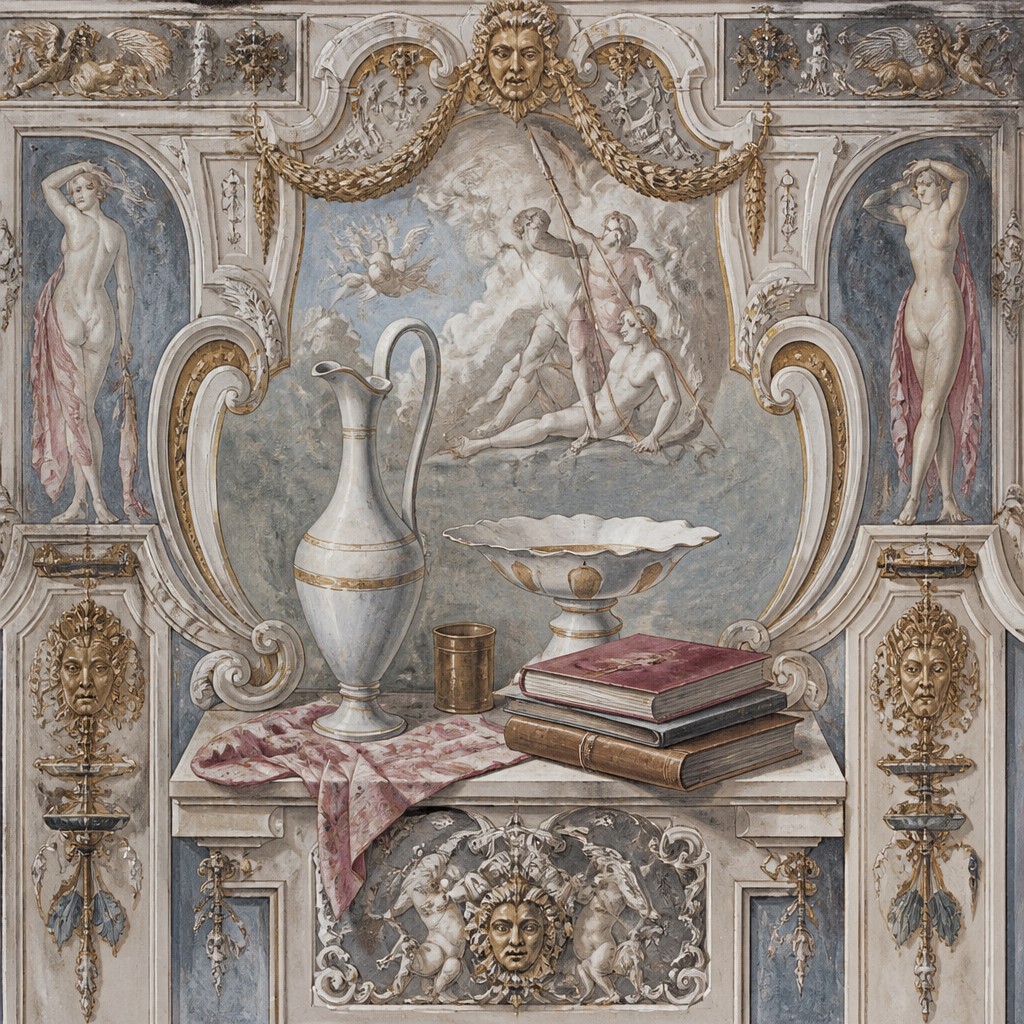
Cool, aristocratic palette
Silvery whites, pale blue-gray, muted green, soft rose, cream, and restrained gold create a polished courtly atmosphere. Stronger colors may be reserved for garments, symbolic details, or focal figures.
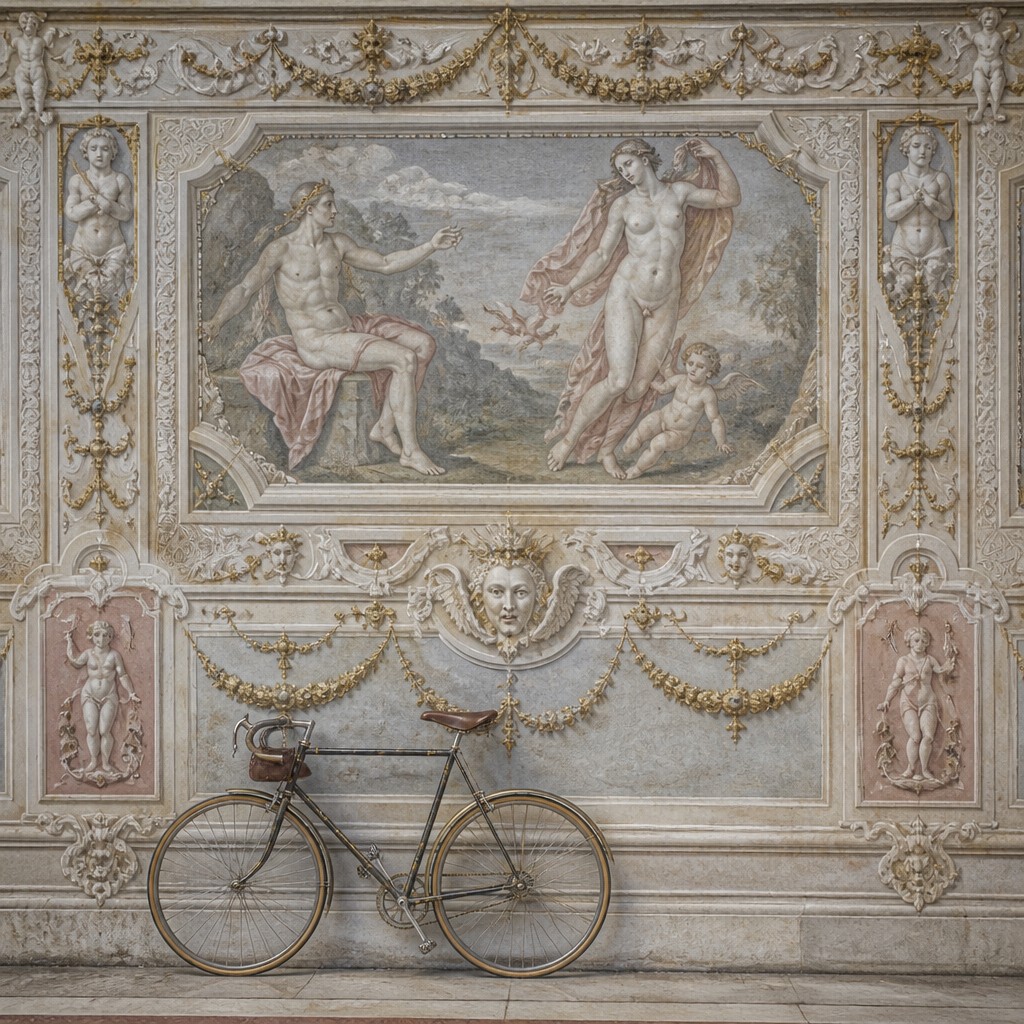
Decorative panel composition
Scenes are organized within ovals, rectangles, lunettes, cartouches, and other framed compartments. The overall design prioritizes rhythm, symmetry, and the relationship between separate panels.
Fontainebleau Prompt Ideas
Start from an idea — each one opens the generator with the style ready to go. See all 40 Fontainebleau prompts →
How to Create Fontainebleau Art
Master the craft step by step — or skip straight to creating. Read the full guide →
- 1
Build an ornamental framework
Begin with a wall-like layout of panels, cartouches, strapwork, garlands, and architectural divisions before placing the main subject. In digital work, use layered masks, relief textures, and separate highlight passes to make the frame feel sculptural.
- 2
Stretch and stylize the anatomy
Use elongated limbs, narrow waists, small heads, graceful necks, and controlled serpentine poses rather than realistic proportions. Keep the gesture elegant and balanced, avoiding exaggerated cartoon distortion.
- 3
Unify painting and relief
Combine a fresco or tempera-like painted surface with convincing low-relief edges, cast shadows, gilded highlights, and architectural moldings. Traditional artists can layer ground, paint, and gilded stucco; digital artists can simulate these with displacement, normal, and ambient-occlusion effects.
- 4
Control the palette and finish
Favor pale silvery tones, muted rose, cream, cool gray, and selective antique gold. Use smooth transitions and restrained texture to suggest a polished palace interior rather than a rough modern mural.
- 5
Compose a mythic central scene
Choose one legible mythological, allegorical, or ceremonial action and surround it with secondary ornaments. Maintain clear hierarchy so the figures remain readable within the dense decorative structure.
- 6
Write a precise generation prompt
Specify elongated Mannerist anatomy, French court interior decoration, painted mythological panels, gilded stucco strapwork, grotesque masks, a pale silvery palette, and seamless integration of fresco with low relief. Add lighting and material terms such as soft raking light, aged plaster, burnished gold, and shallow sculptural depth.
The Story
History & Origins of Fontainebleau
Fontainebleau art developed in France during the 1530s and 1540s through the decoration of the royal château at Fontainebleau. French court patronage brought together Italian Mannerist traditions, Northern European ornamental design, and local decorative practices, producing a hybrid style for galleries, apartments, ceilings, fireplaces, and ceremonial rooms. Mythological imagery, allegory, and dynastic symbolism were commonly integrated into elaborate interior schemes.
The style continued through later 16th-century French court culture and influenced the development of decorative Mannerism, ornamental painting, and early Baroque interiors. Its defining innovations were not limited to easel painting: painted scenes were conceived alongside stucco relief, carved frames, metalwork-like strapwork, and architectural structure.
Influences: Fontainebleau art draws primarily on Italian Mannerism, especially its elongated anatomy, artificial elegance, complex poses, and preference for sophisticated allegory. It also incorporates Renaissance grotesque ornament, Northern European pattern design, French court decoration, classical mythology, stucco relief, fresco, and the integrated interior schemes of palace architecture. Its legacy can be seen in decorative Mannerism, ornamental Baroque interiors, historicist mural programs, and contemporary fantasy imagery that combines painted scenes with sculptural frames.
Frequently Asked Questions
What defines the Fontainebleau art style?
It is defined by French court Mannerism expressed through elongated figures, mythological imagery, elaborate strapwork, grotesque ornament, and the fusion of painting with stucco relief. Its polished, aristocratic appearance depends as much on the surrounding decorative framework as on the central scene.
When and where did Fontainebleau art develop?
The style developed in France during the 1530s and 1540s around the royal château at Fontainebleau. It remained influential in French court culture through the later 16th century and helped shape subsequent decorative interior art.
How is Fontainebleau art different from Renaissance art?
Renaissance art generally values balanced proportion, spatial clarity, and naturalistic observation, while Fontainebleau Mannerism favors deliberate elongation, artificial elegance, intricate poses, and dense ornament. It is a later, more stylized development of Renaissance classicism rather than a rejection of it.
How is it different from Baroque art?
Fontainebleau art is typically cooler, more controlled, and more decorative than Baroque art. Baroque compositions often emphasize dramatic movement, strong light-dark contrasts, and emotional intensity, whereas Fontainebleau interiors emphasize graceful line, refined surfaces, and ornamental integration.
What materials and techniques are associated with the style?
Historic examples combine fresco or mural painting with molded and gilded stucco, carved architectural elements, painted frames, and decorative surface treatments. Modern interpretations can reproduce the effect with layered digital painting, texture maps, simulated relief, metallic highlights, and architectural composition.
What subjects work best for a Fontainebleau-inspired image?
Mythological episodes, allegories, personifications, courtly ceremonies, heroic encounters, and scenes involving classical deities suit the style particularly well. Subjects should allow for elegant figures and a surrounding system of panels, masks, garlands, and strapwork.
Create your first Fontainebleau artwork
Describe anything — or upload a photo — and see it in Fontainebleau Art Style in seconds.
Related Styles
Discover similar art styles