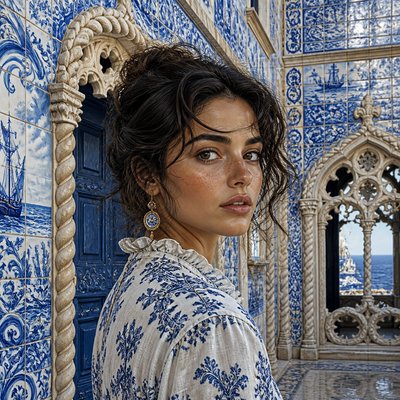
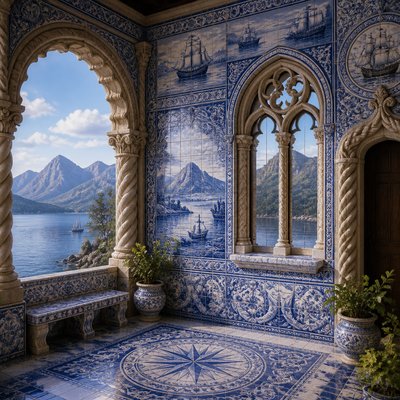
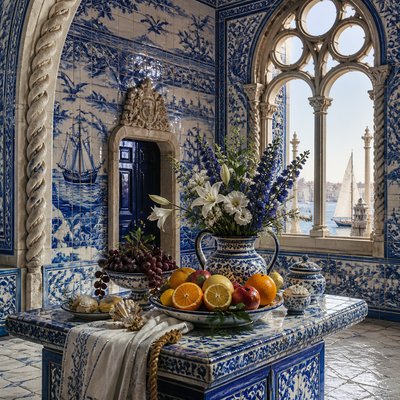
Fez Art Style
Explore Fez art style: Moroccan zellige mosaics, carved plaster, brass lanterns, leather craft, and Marinid-era geometric ornament.
Instantly rendered in Fez — or transform a photo
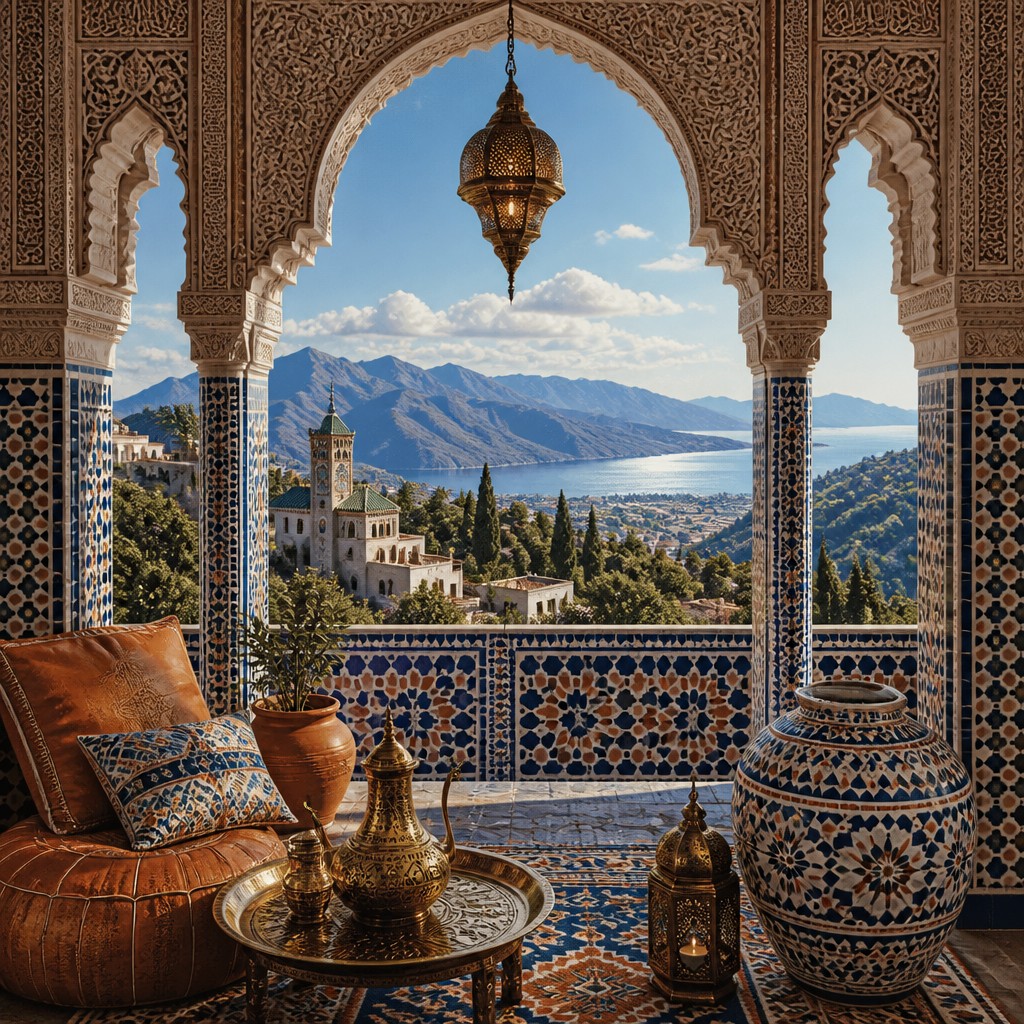
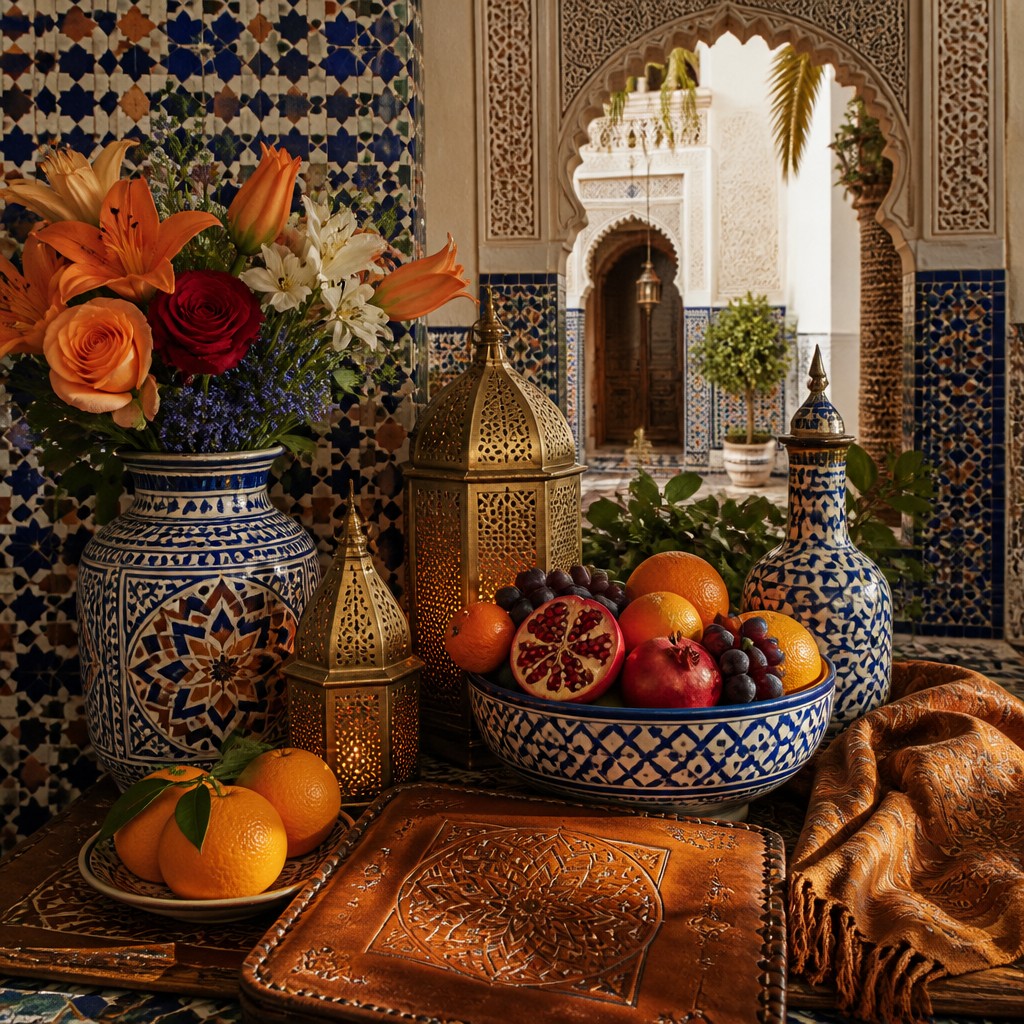
Fez Gallery
Tap any artwork to explore it
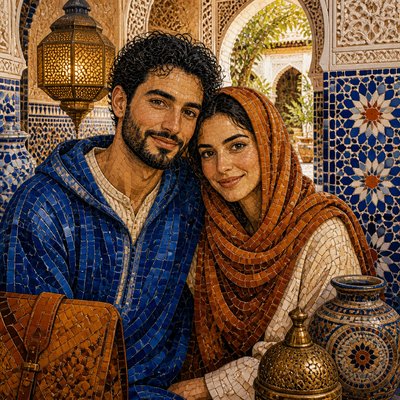
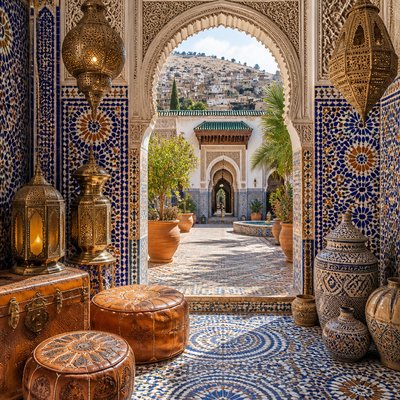
What is Fez Art Style?
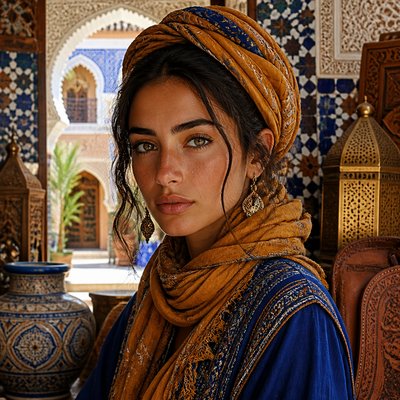
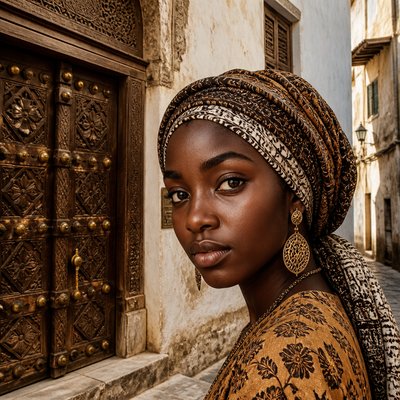
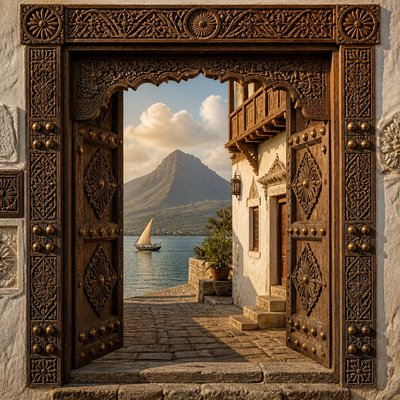
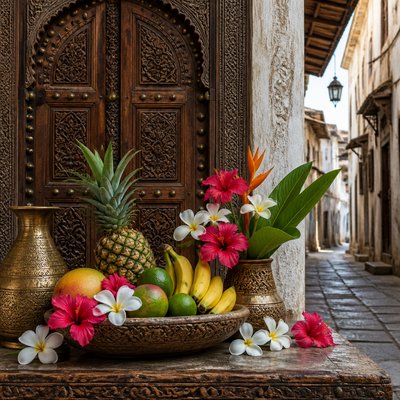
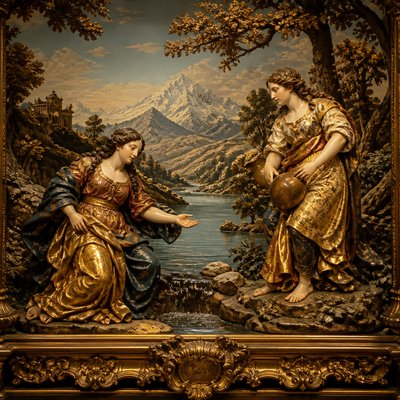
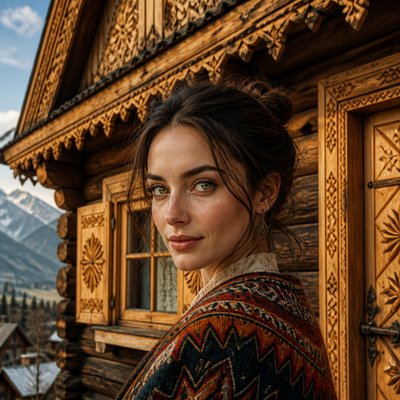
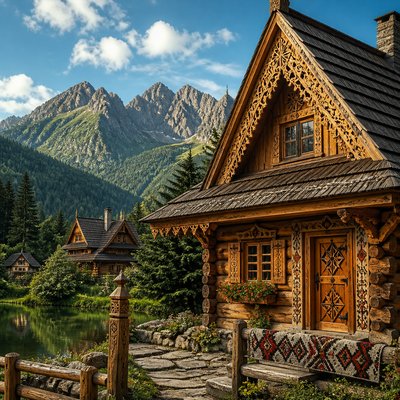
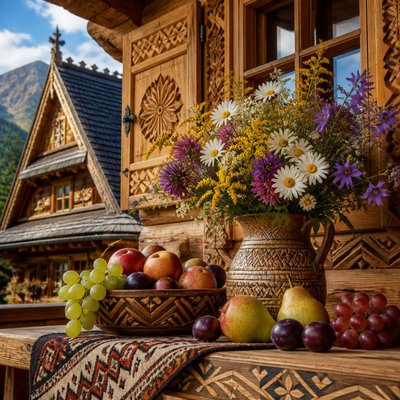
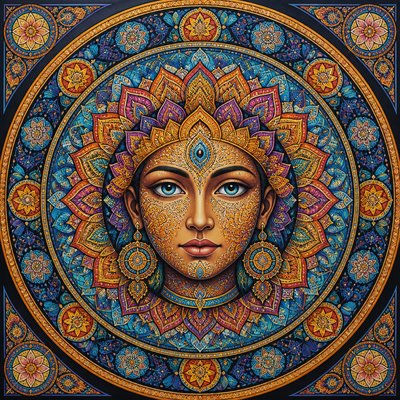
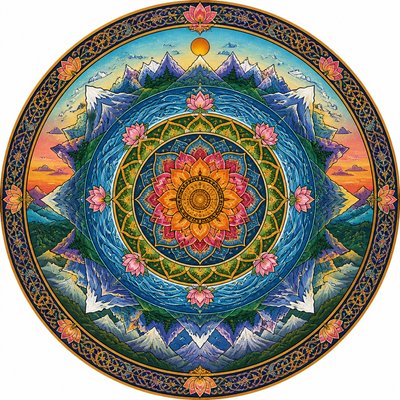
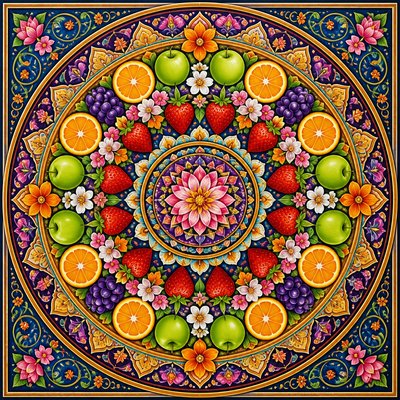
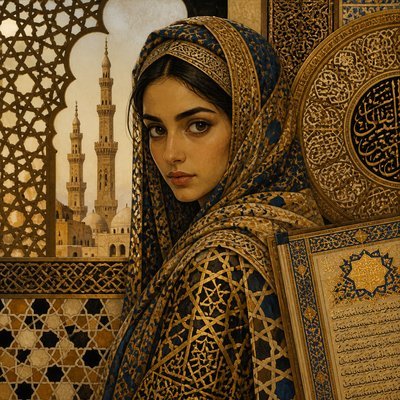
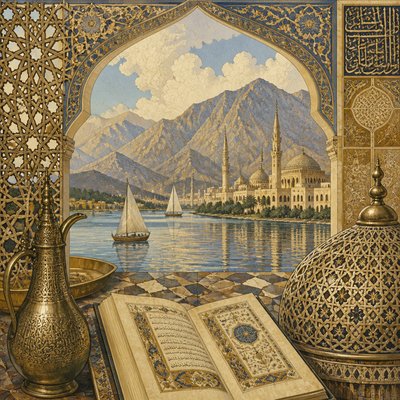
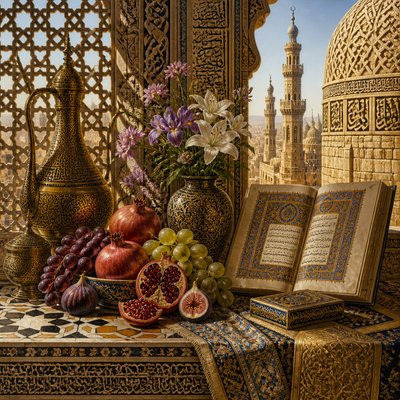
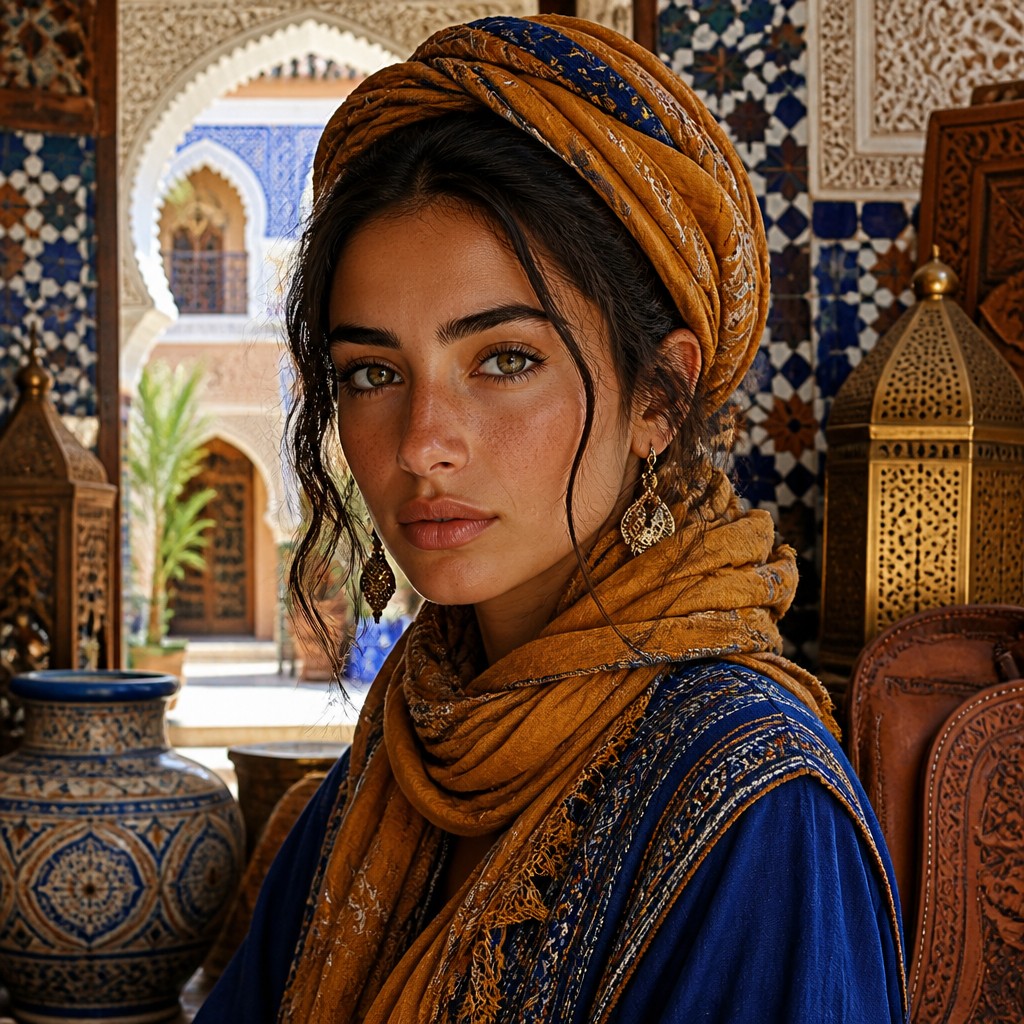
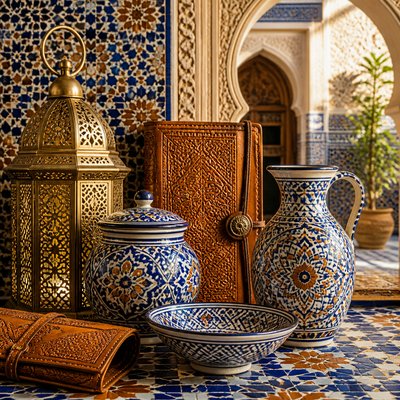
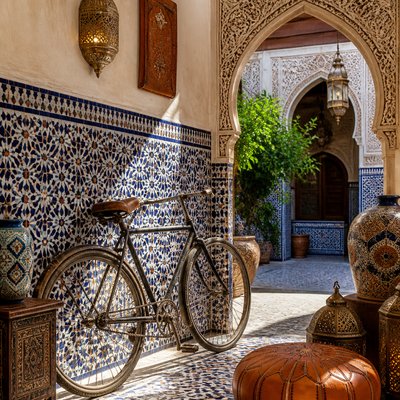
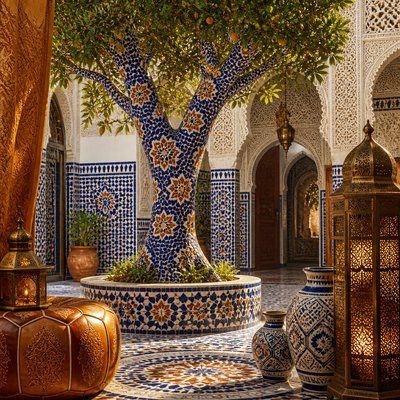
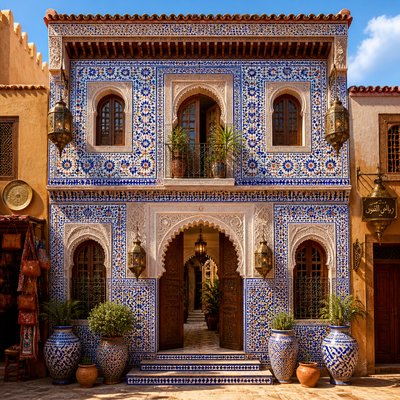
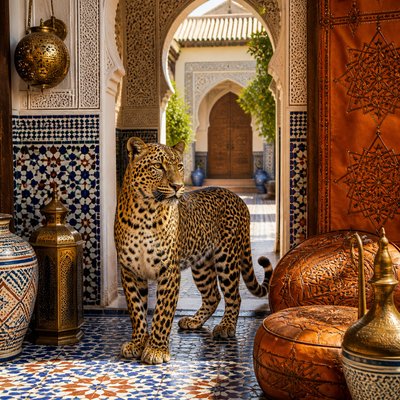
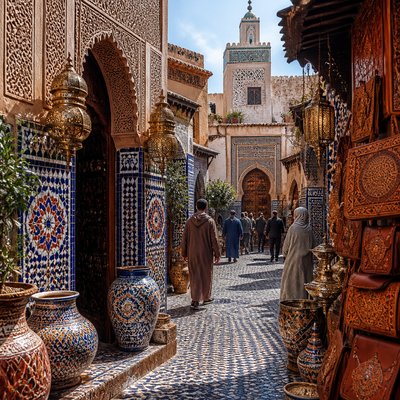
Fez art style is a contemporary descriptive aesthetic rooted in the architectural and decorative traditions of Fez, Morocco. It brings together dense zellige mosaics, geometric ornament, carved plaster, hand-tooled leather, glazed ceramics, and pierced brasswork into richly layered compositions. Typical colors include cobalt blue, white, terracotta, ochre, deep green, and warm metallic gold.
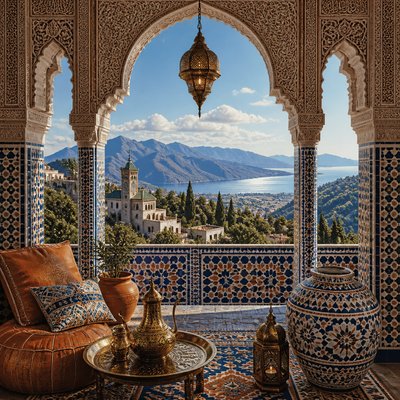
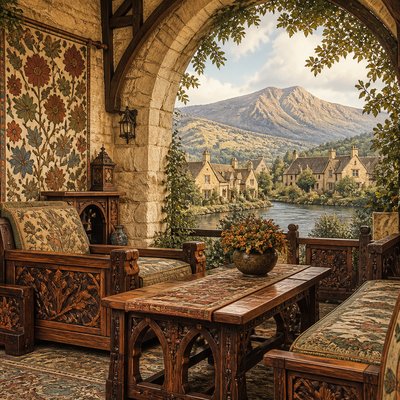
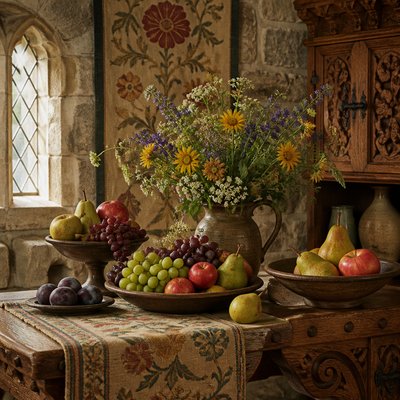
The style is defined by craftsmanship, repetition, and architectural framing. Star polygons, interlaced bands, tiled surfaces, horseshoe or pointed arches, courtyard light, and lace-like lantern shadows create a visual language that feels both precise and tactile. In image-making, these elements can surround a building, object, portrait, landscape, or fantasy scene while preserving the material character of Moroccan craft.
Try It On Your Photos
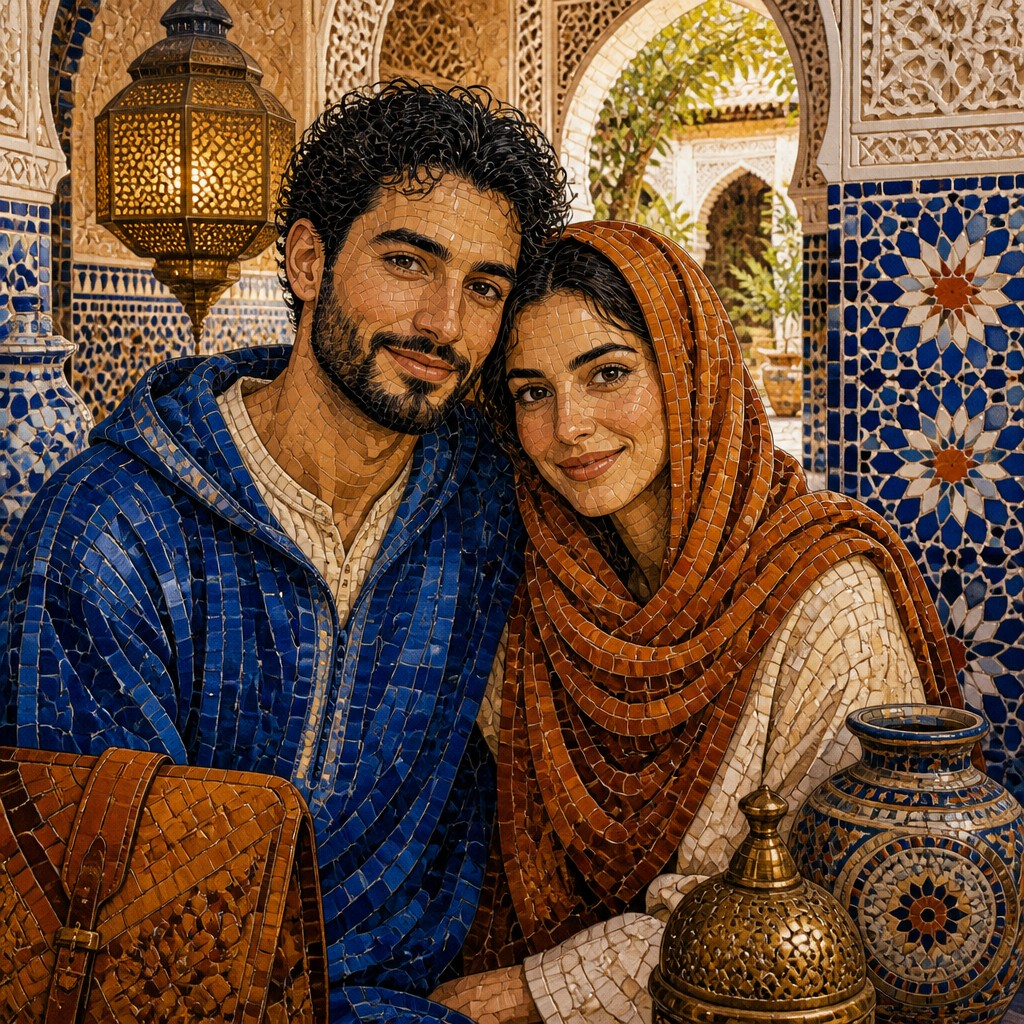
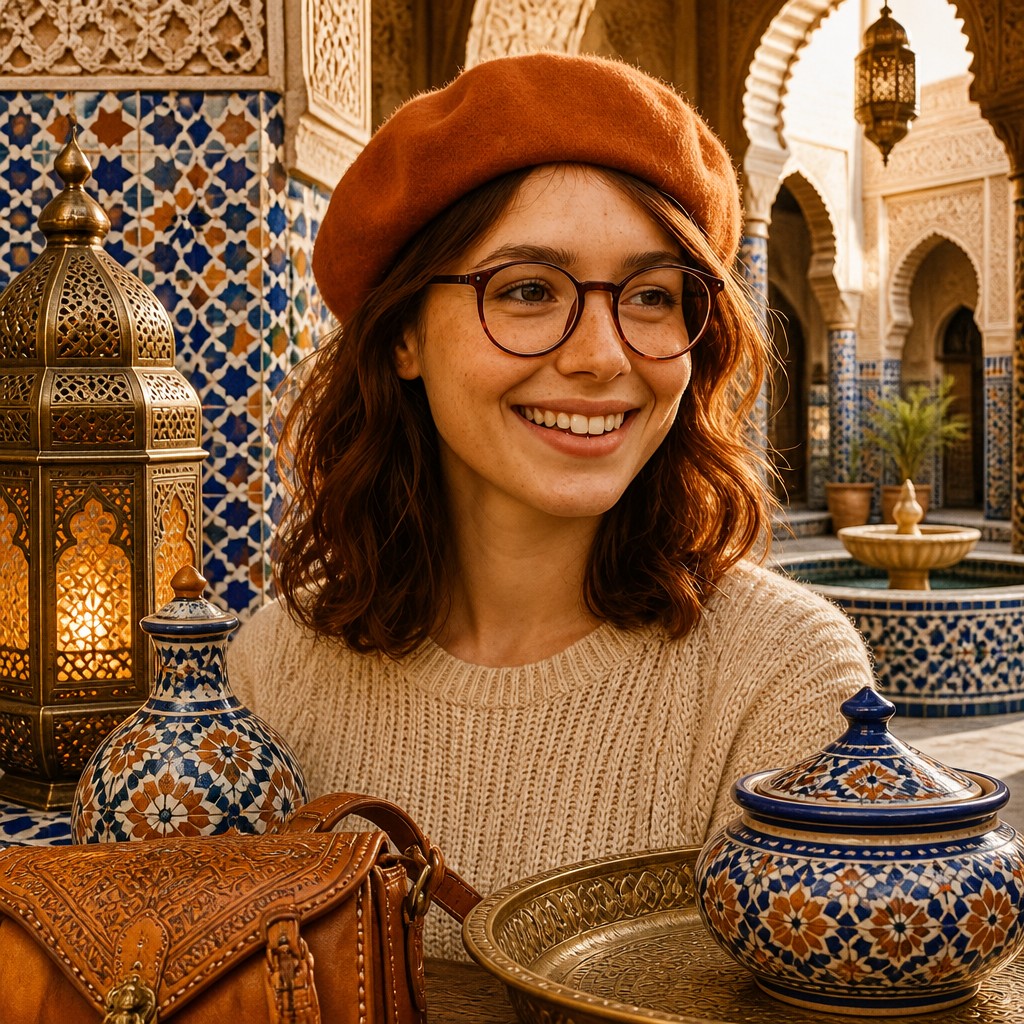
Upload any photo and convert it into Fez Art Style — drag the sliders to compare before and after.

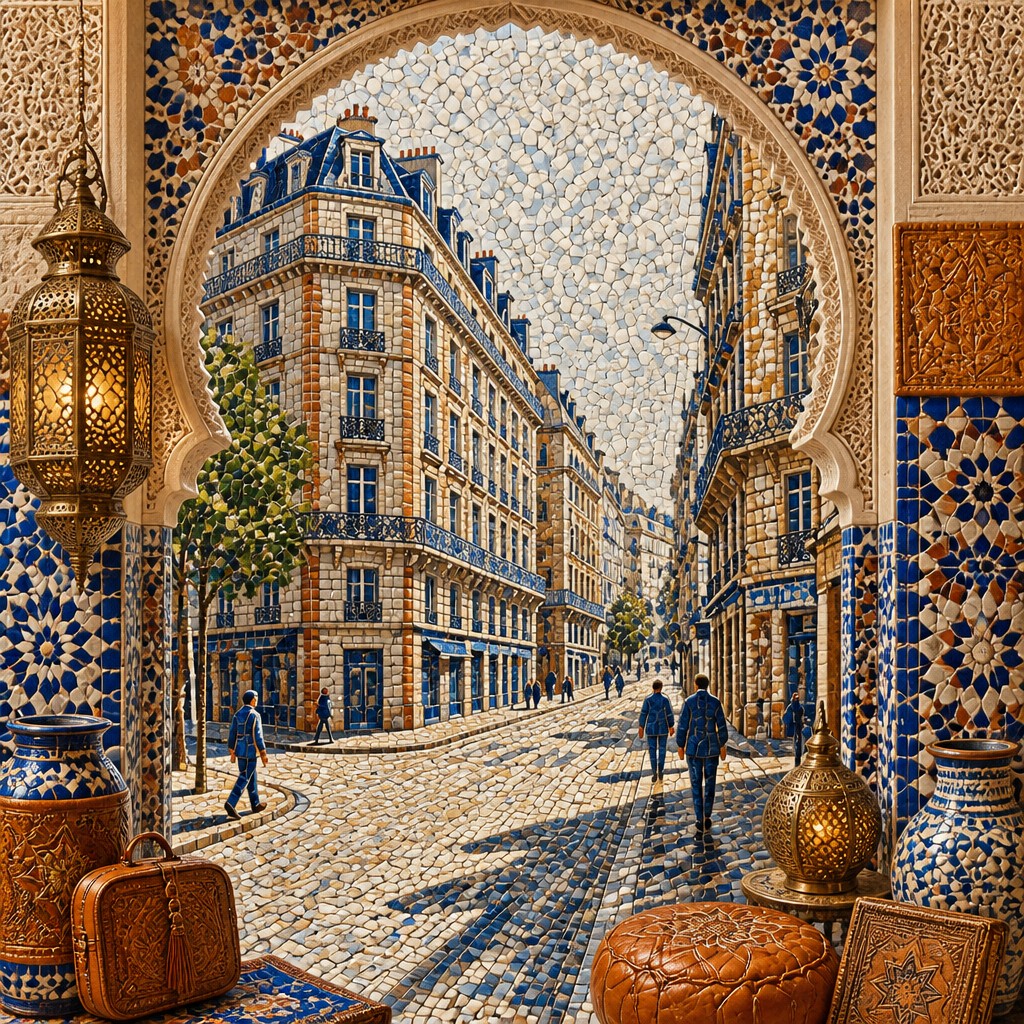

Or use the free Fez photo filter
What Defines Fez Art Style
The signature details, up close
Zellige mosaic geometry
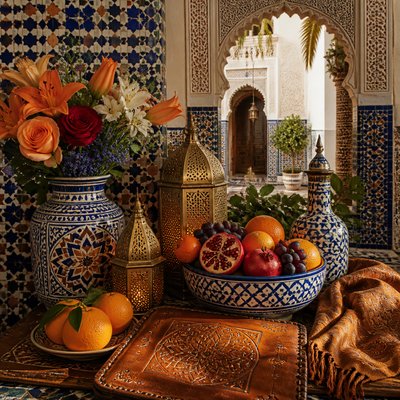
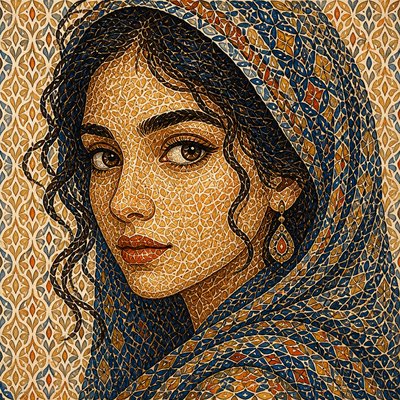
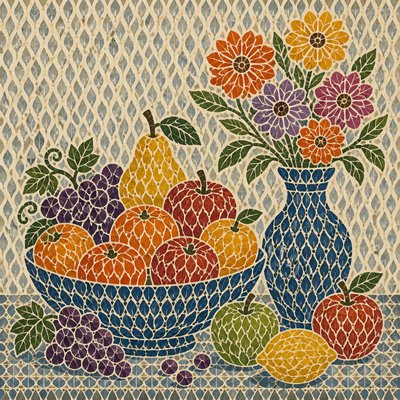
Small glazed tiles form tightly fitted stars, polygons, rosettes, and interlaced bands in cobalt, white, green, yellow, and terracotta. The irregular handmade quality of individual pieces can add subtle variation to otherwise rigorous patterns.
Carved plaster and architectural framing
Deeply incised plaster appears in arches, friezes, niches, and courtyard walls, often using vegetal scrolls, geometric grids, and calligraphic-style bands. Arched openings give compositions a strong sense of structure and depth.
Marinid-era ornamental lineage
The visual vocabulary recalls the refined geometric and architectural decoration developed in Moroccan buildings during and after the Marinid period. It emphasizes proportion, repetition, symmetry, and the integration of surface ornament with architecture.
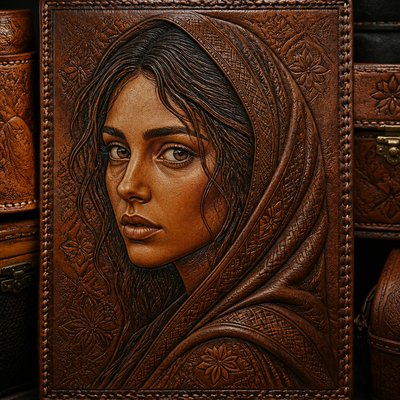
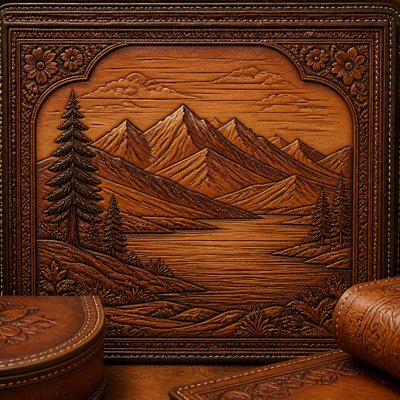
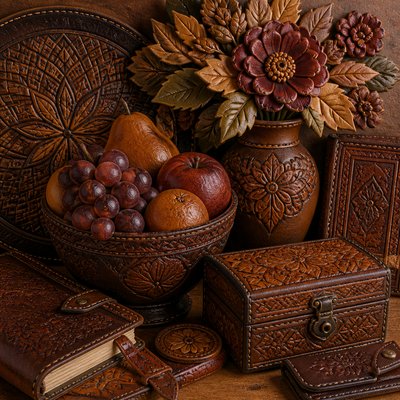
Hand-tooled leather
Rich ochre, russet, and saddle-brown leather introduces a warm, tactile counterpoint to cool tilework. Embossed borders, stitched panels, stamped motifs, and worn edges suggest the presence of skilled handcraft.
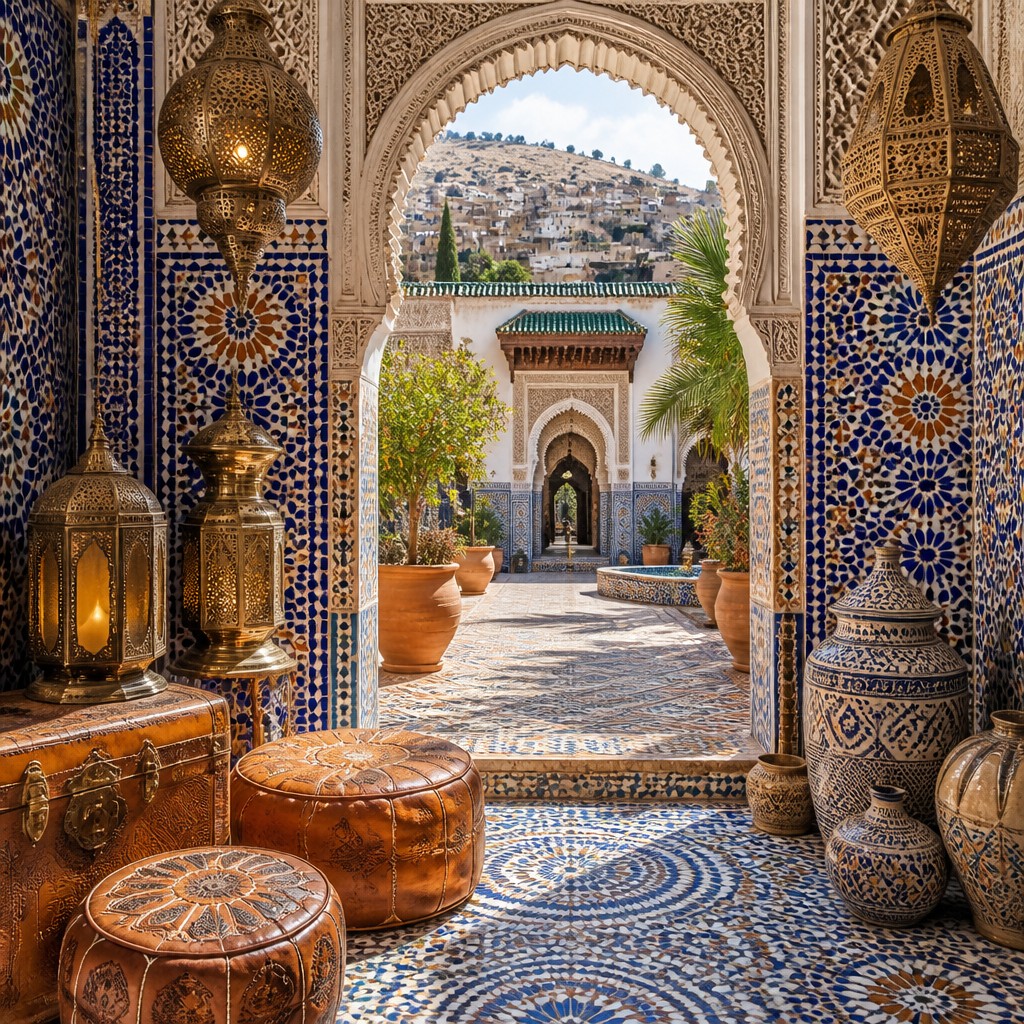
Pierced brass lanterns
Hammered brass or bronze fixtures use perforated patterns to cast intricate pools of light and shadow. Their warm metallic surfaces often contrast with blue tile, pale plaster, and dim interior spaces.
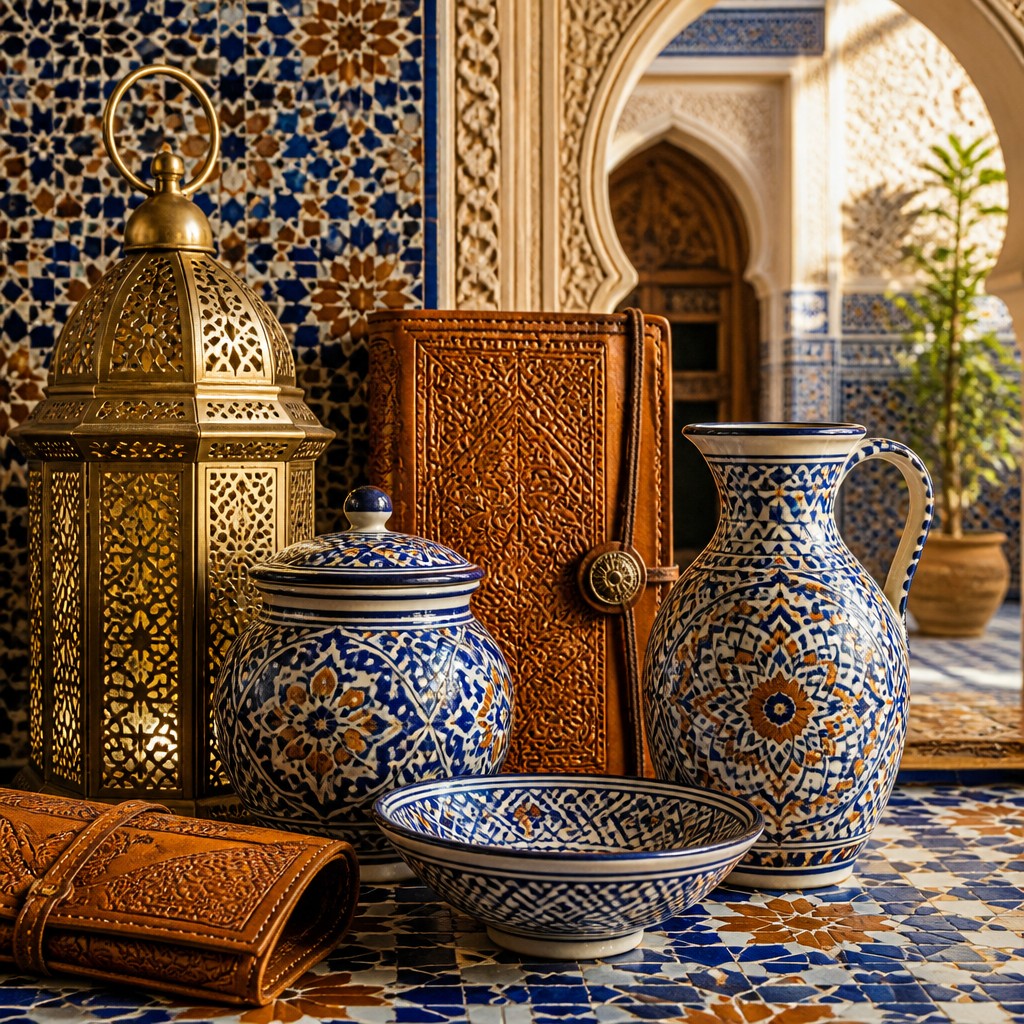
Glazed ceramics
Bowls, vases, fountains, and architectural vessels feature glossy surfaces decorated with geometric medallions, bands, and radial motifs. Controlled highlights help distinguish ceramic glaze from matte plaster and porous leather.
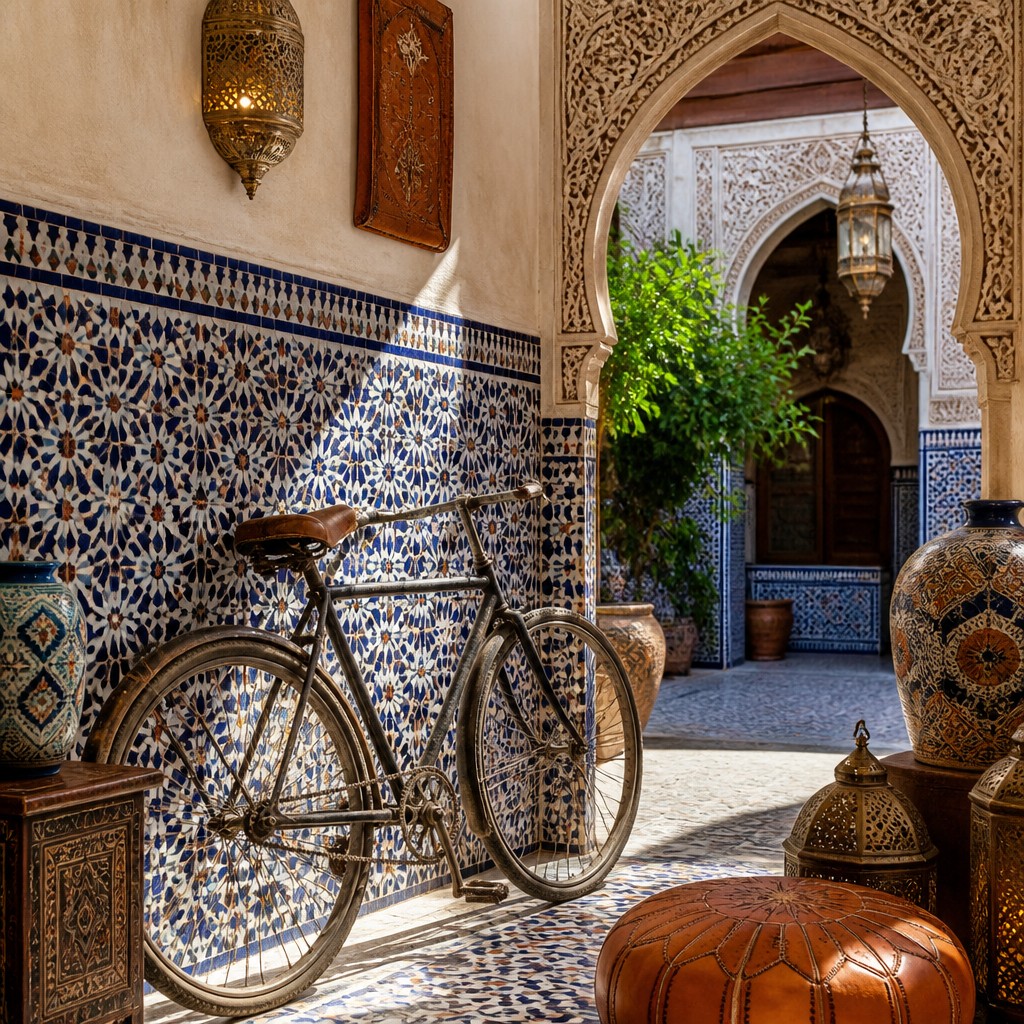
Courtyard light and layered texture
Sunlit riads, tiled fountains, shaded arcades, and patterned shadows provide the characteristic atmosphere. The style depends on the contrast between luminous open courtyards and richly detailed surfaces in partial shade.
Fez Prompt Ideas
Start from an idea — each one opens the generator with the style ready to go. See all 40 Fez prompts →
How to Create Fez Art
Master the craft step by step — or skip straight to creating. Read the full guide →
- 1
Build a geometric foundation
Begin with a repeated grid based on stars, polygons, rosettes, or interlaced bands, then use it to organize walls, floors, borders, or clothing. Keep the underlying geometry consistent even when adding handmade irregularities.
- 2
Separate materials clearly
Render zellige with hard glazed highlights and visible grout, plaster with soft incised relief, leather with pores and tooling marks, and brass with warm reflective edges. Distinct material cues prevent the composition from becoming a generic pattern collage.
- 3
Use architectural depth
Frame the subject with a pointed or horseshoe arch, a tiled corridor, or a riad courtyard. Layer foreground lanterns, middle-ground arches, and distant sunlit openings to create depth without losing ornamental density.
- 4
Control the palette and light
Combine cobalt, white, terracotta, ochre, and muted green with restrained brass highlights. Use strong sunlight filtered through screens or lanterns so the patterns produce recognizable shadows.
- 5
Add evidence of handcraft
For traditional work, cut or paint repeated motifs by hand, vary tile edges slightly, and carve or stamp surfaces with deliberate tool marks. In digital work, use texture layers, displacement, subtle asymmetry, and directional wear rather than perfectly sterile repetition.
- 6
Write a focused generation prompt
Specify the subject first, then request zellige mosaics, carved plaster archways, hand-tooled ochre leather, pierced brass lanterns, geometric ceramics, and sunlit courtyard lighting. Include material and composition details, and state whether the result should look like a mural, photograph, architectural visualization, or illustrated scene.
The Story
History & Origins of Fez
Fez art style is not a formally recognized historical movement or single traditional school. It is a modern synthesis based primarily on the built environment and decorative arts of Fez, especially the zellige tilework, carved plaster, woodwork, metalwork, leatherwork, and ceramics associated with Moroccan architecture. Its strongest historical lineage reaches back to the Marinid period, from the thirteenth through fifteenth centuries, when Fez was a major center of scholarship, architecture, and artisanal production.
The aesthetic also reflects broader Maghrebi and Islamic traditions of geometric design, arabesque ornament, calligraphic composition, courtyard architecture, and controlled natural light. Contemporary illustration, interior design, photography, and digital art often reinterpret these sources by combining historically grounded materials with imaginative subjects and cinematic atmospheres.
Influences: The style draws on Moroccan zellige, Maghrebi courtyard architecture, Marinid-era architectural decoration, Islamic geometric ornament, arabesque surface design, Moroccan leatherworking, glazed ceramic traditions, and pierced metal lantern craft. It also relates to Moorish Revival interiors, ornamental illustration, architectural photography, and contemporary digital collage that translate tactile craft traditions into new subjects.
Frequently Asked Questions
What defines the Fez art style?
It is defined by the combination of dense zellige mosaics, carved plaster, arched architectural spaces, hand-tooled leather, pierced brass, and glazed ceramics. Repeated geometry, tactile materials, and strong courtyard light are more important than any single subject.
Is Fez art style a historical art movement?
No. The term is best understood as a contemporary descriptive or AI-era style label rather than the name of a formally established historical movement. It draws on genuine Moroccan craft and architectural traditions, especially those associated with Fez and the Marinid period.
How does it differ from Moorish or Islamic art styles?
Those terms cover broad and historically complex traditions across many regions and centuries. Fez art style is narrower and more place-specific, emphasizing Moroccan materials and settings such as zellige tile, carved plaster, riad courtyards, leatherwork, and brass lanterns.
Can Fez art style be used for subjects other than architecture?
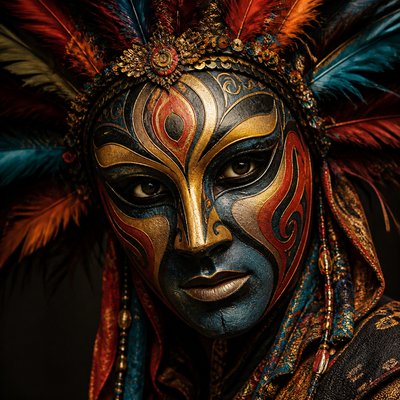
Yes. Portraits, animals, still lifes, fashion, fantasy scenes, and landscapes can all use the style. The key is to apply its material and compositional language through mosaic framing, ornamental backgrounds, warm lantern light, or carefully chosen Moroccan craft details.
How can I make an image look less generic?
Name specific materials, tile colors, architectural forms, and lighting conditions rather than asking only for Moroccan ornament. Request visible grout, carved relief, leather tooling, brass perforations, glazed highlights, and slight handmade irregularities to produce a more convincing surface vocabulary.
Where is this aesthetic commonly used?
It appears in architectural visualization, interior and hospitality design, editorial illustration, decorative arts, product imagery, travel photography treatments, fashion concepts, and digital environments. It is especially effective for scenes built around surfaces, thresholds, patterned light, and crafted objects.
Create your first Fez artwork
Describe anything — or upload a photo — and see it in Fez Art Style in seconds.
Related Styles
Discover similar art styles