Emirati Art Style
Explore Emirati art style: barjeel silhouettes, coral-stone courtyards, sadu geometry, pearl heritage, silver adornment, and Gulf color.
Instantly rendered in Emirati — or transform a photo
Emirati Gallery
Tap any artwork to explore it
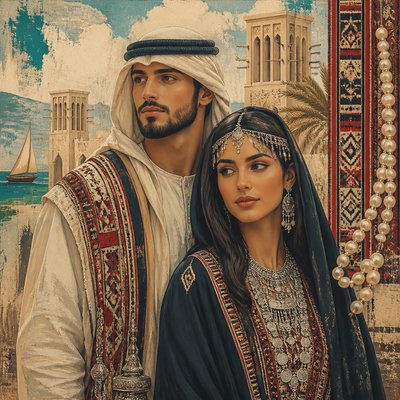
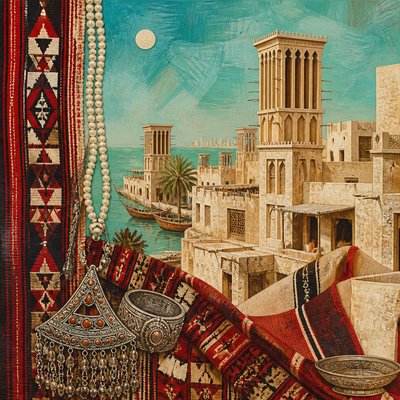
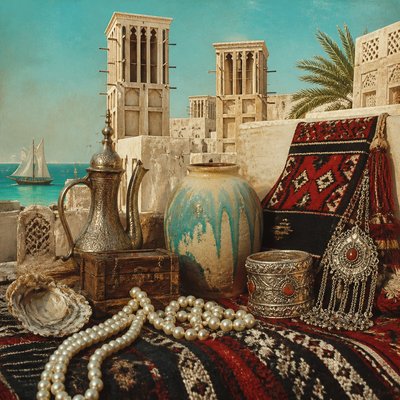
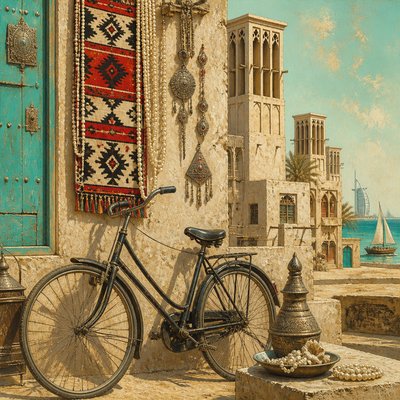
What is Emirati Art Style?
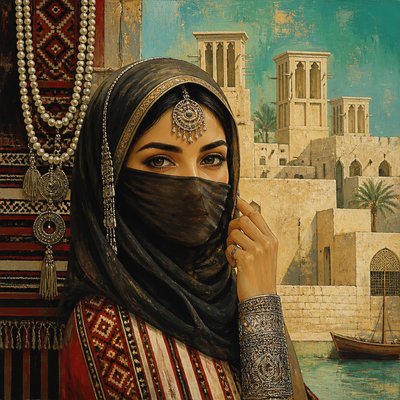
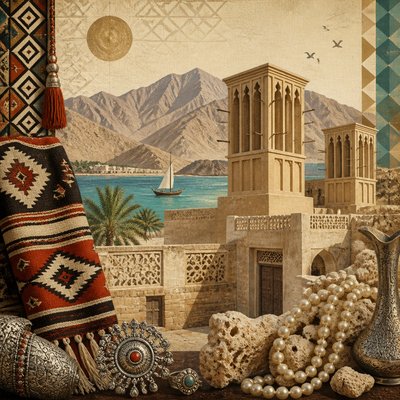
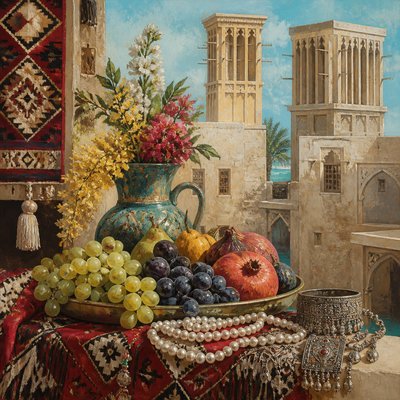
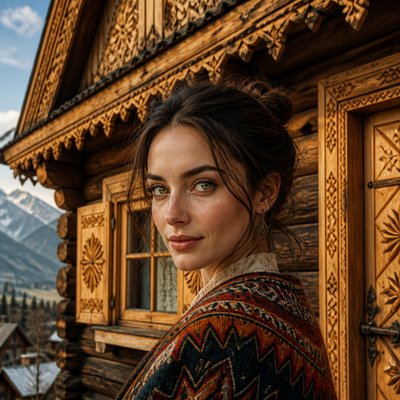
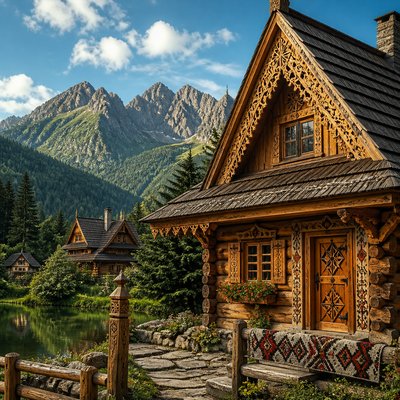
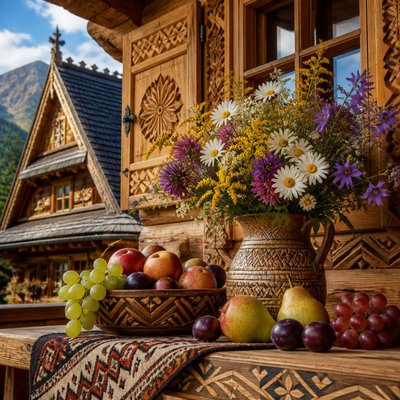
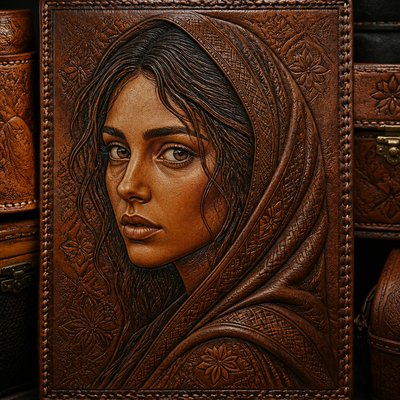
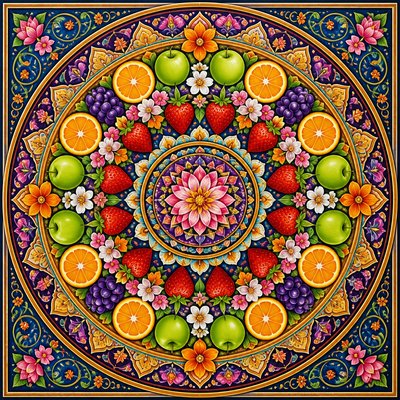
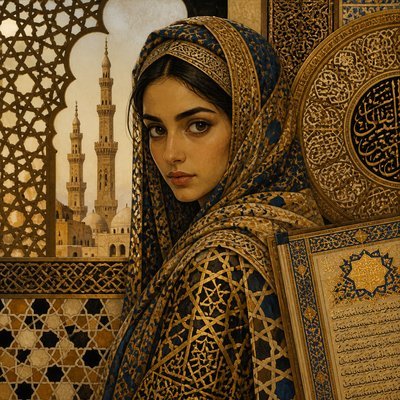
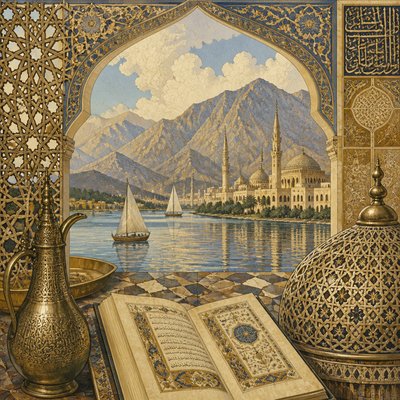
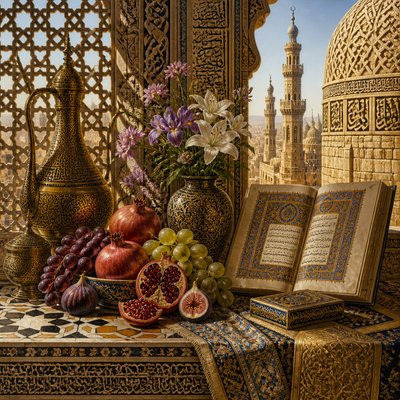
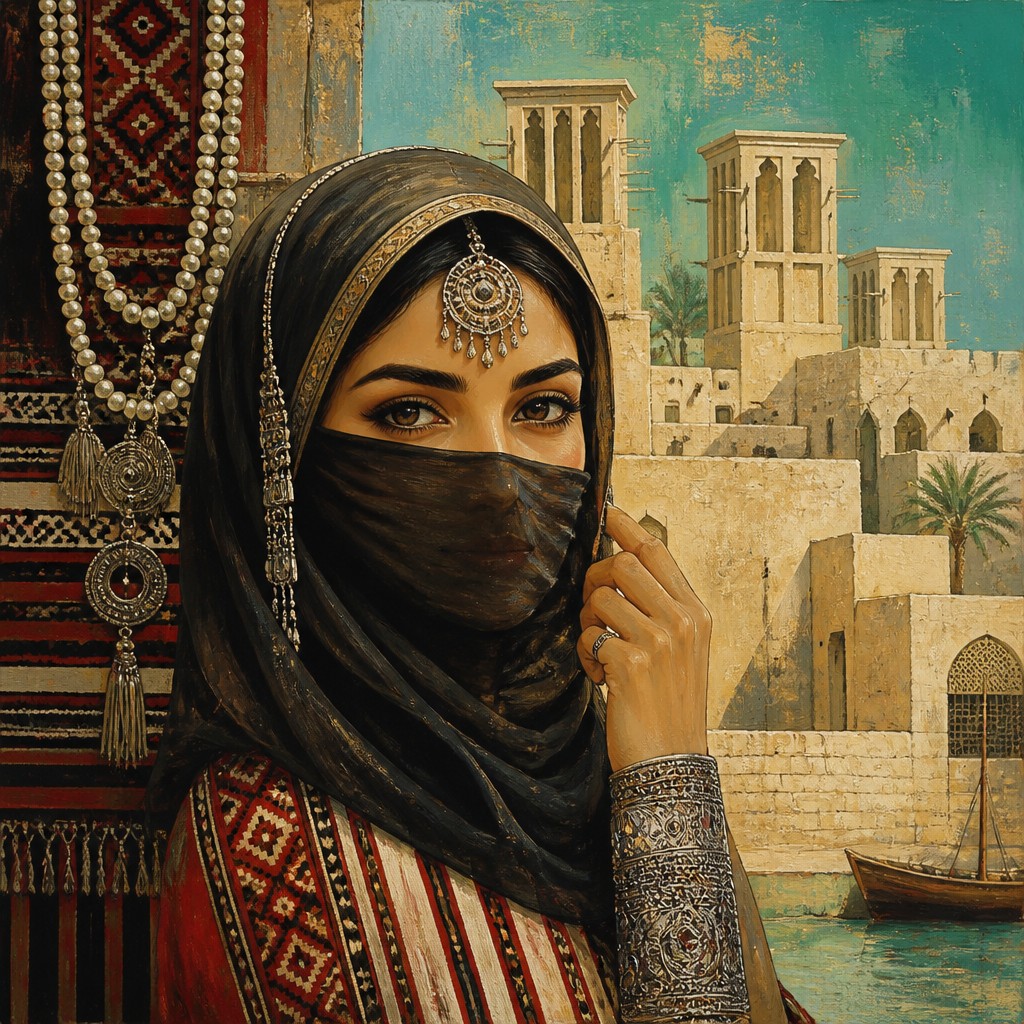
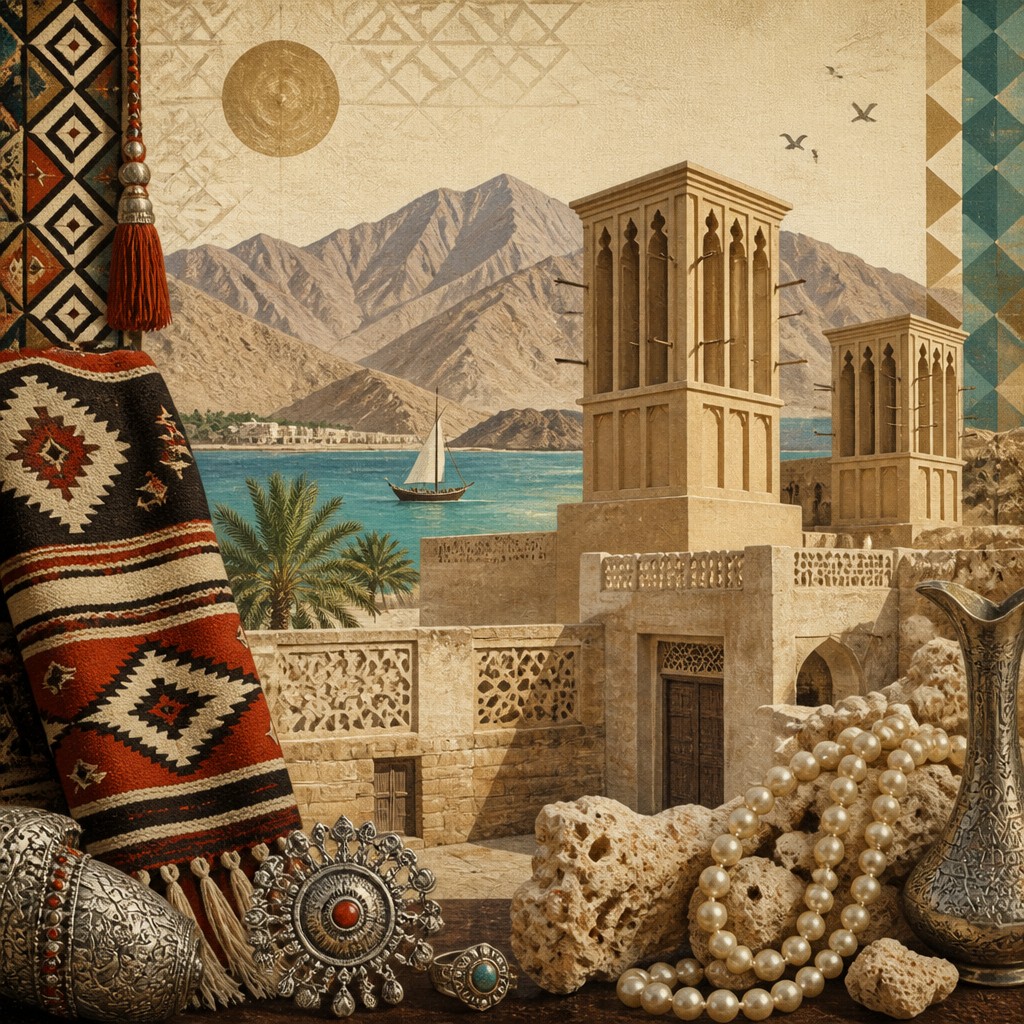
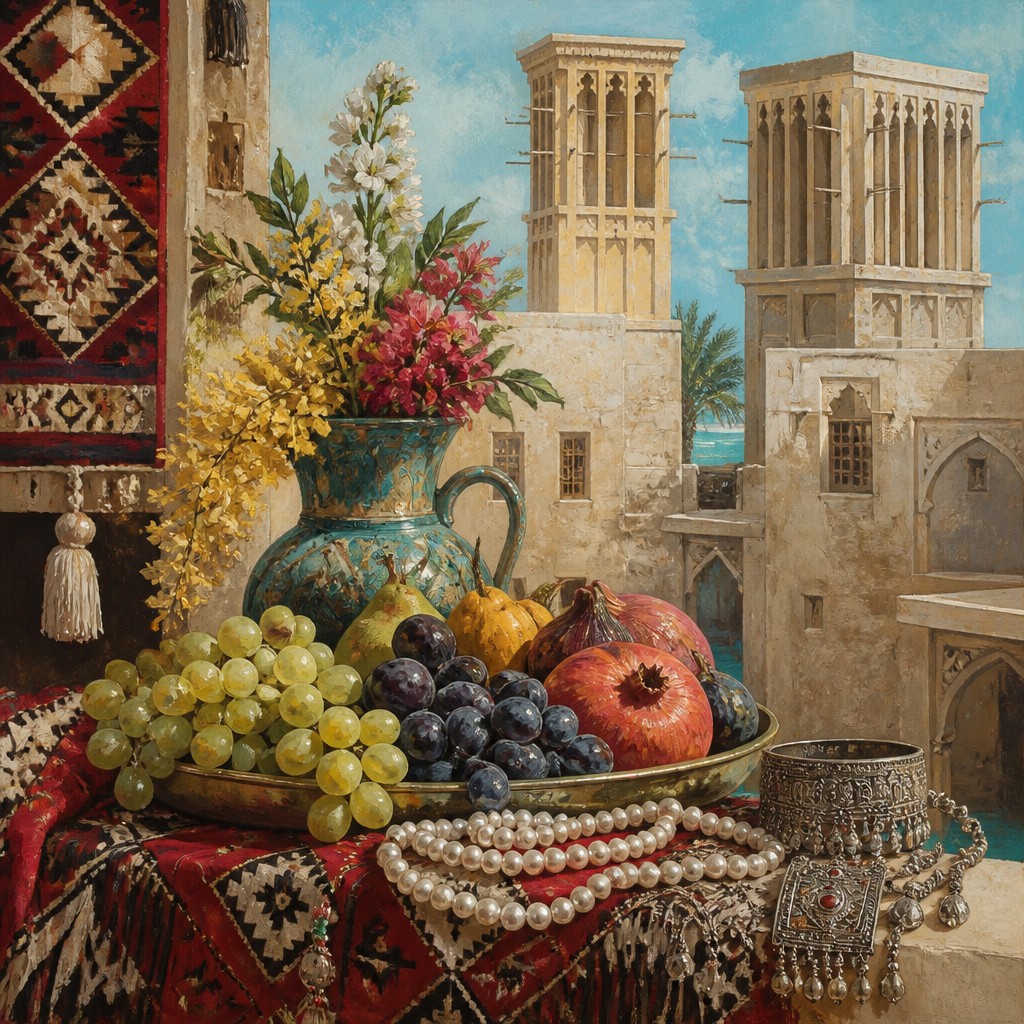
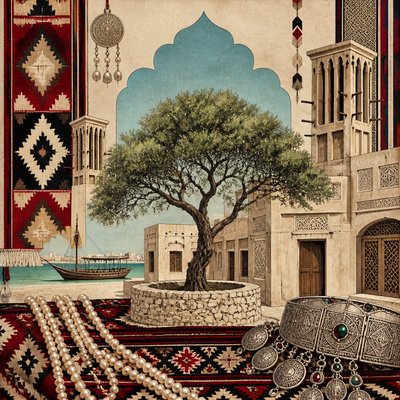
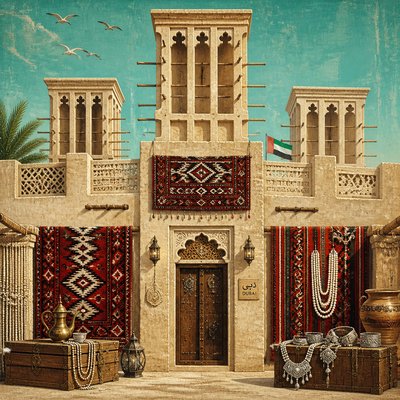
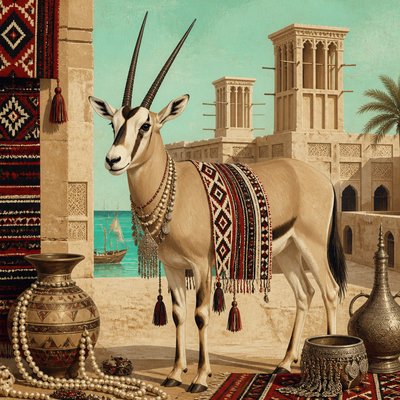
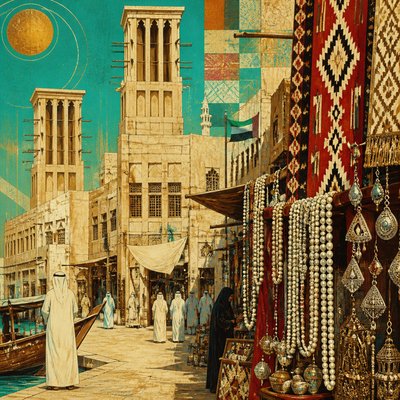
Emirati Art Style is a contemporary visual synthesis inspired by the material culture, architecture, crafts, and coastal landscapes of the United Arab Emirates. Its signature imagery combines the vertical silhouettes of barjeel wind towers, old coral-stone courtyards, sadu weaving patterns, pearl-diving references, Bedouin silver ornament, and a palette of sun-bleached sand, deep crimson, black, cream, and turquoise Gulf blue.
The style is defined less by a single historical school than by the deliberate layering of regional symbols. Architectural forms provide structure; sadu geometry supplies rhythm and surface pattern; pearl strands and silver jewelry introduce fine detail and tactile sparkle. The result may appear as a painting, illustration, poster, textile-inspired design, architectural visualization, or digitally composed image, provided that its references remain visually coherent and culturally attentive.
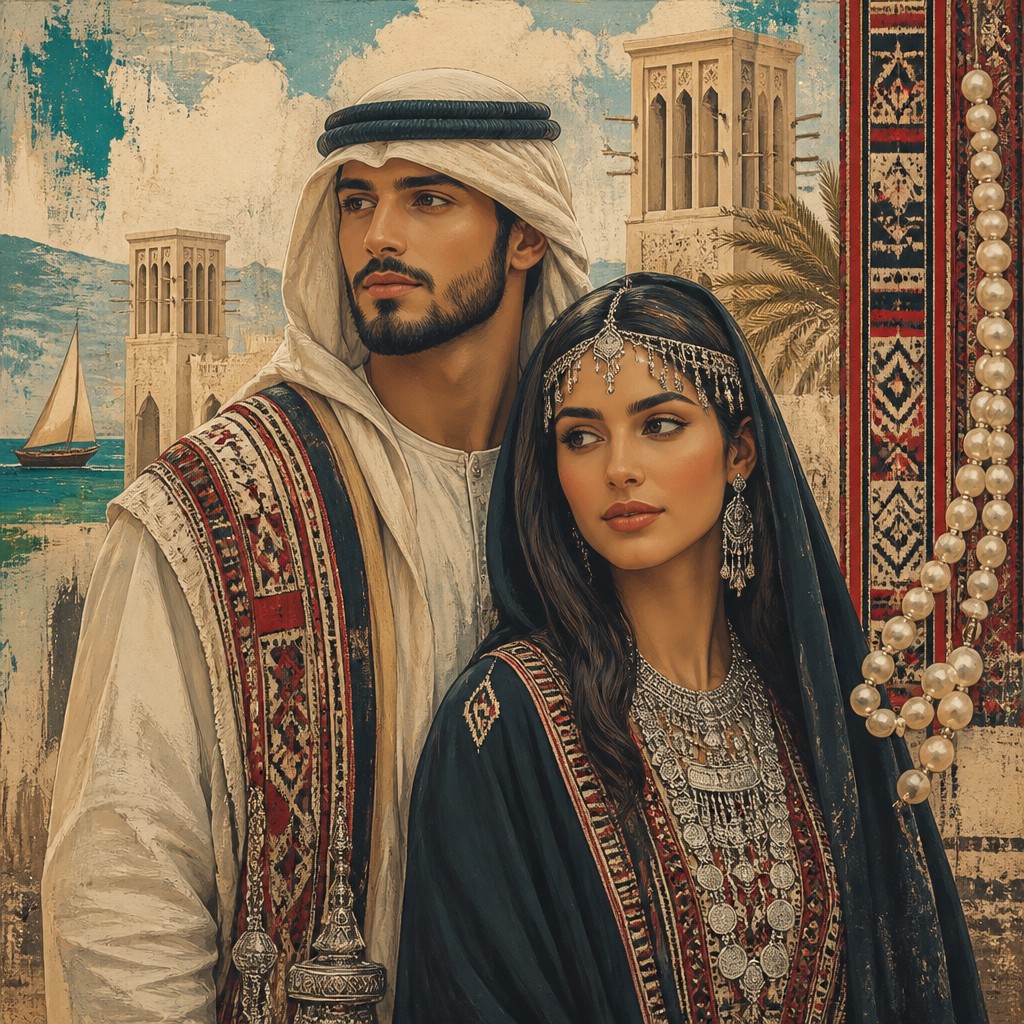
Try It On Your Photos
Upload any photo and convert it into Emirati Art Style — drag the sliders to compare before and after.
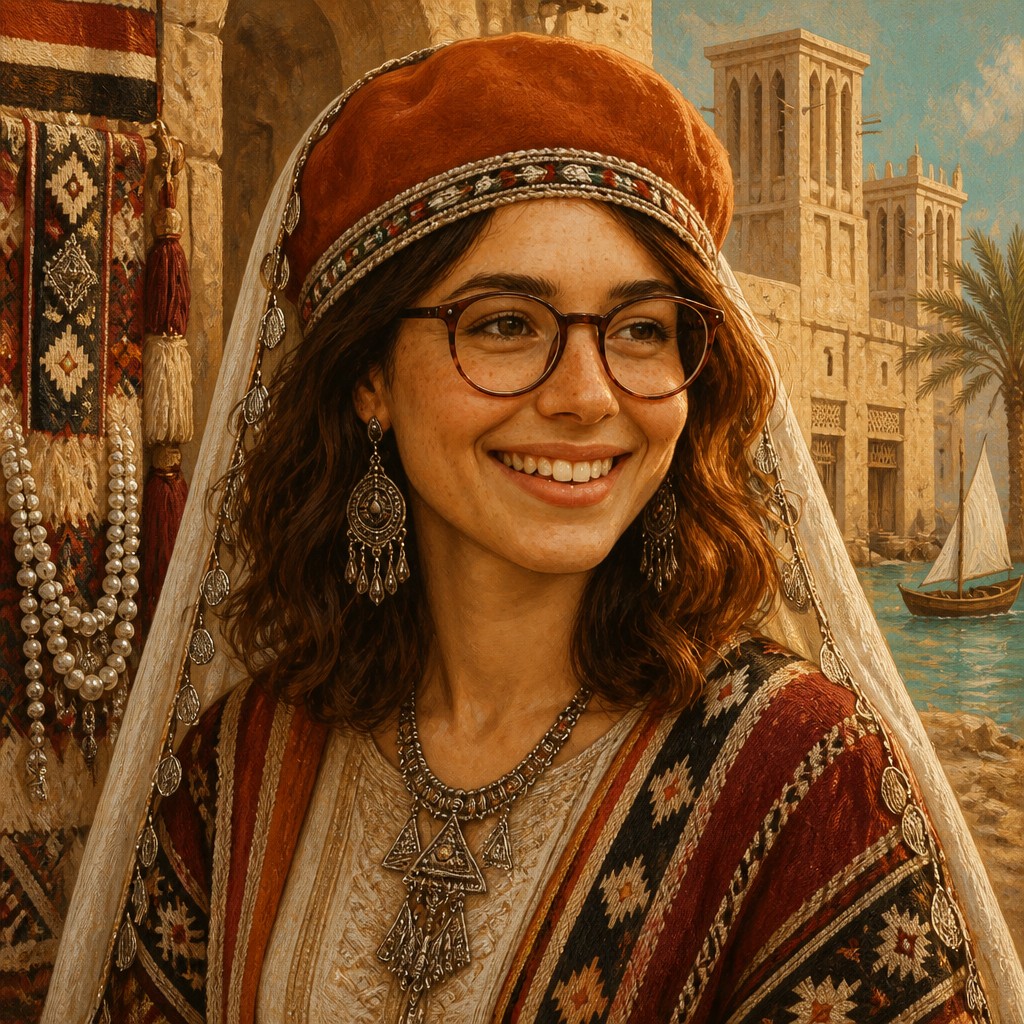

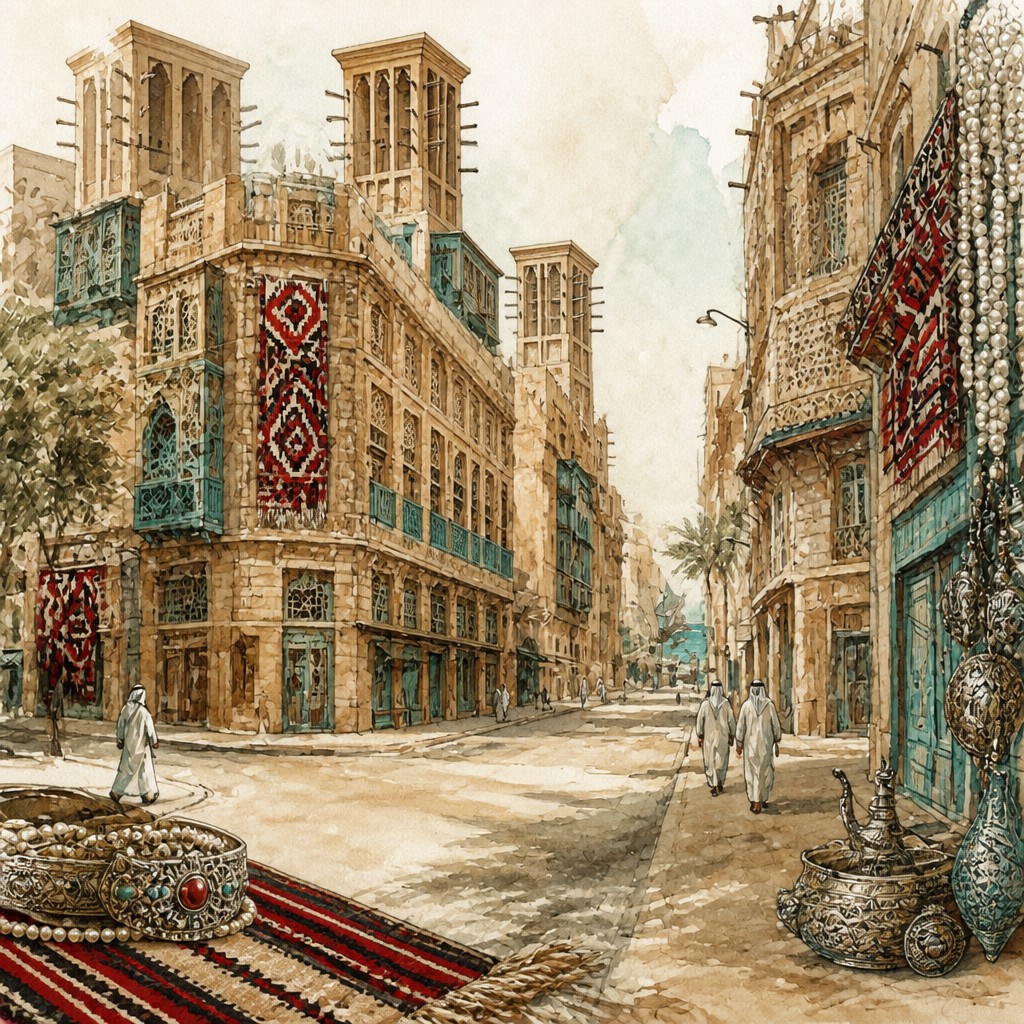

What Defines Emirati Art Style
The signature details, up close
Barjeel silhouettes
Tall wind-tower forms create a strong vertical profile and immediately suggest historic Gulf urban architecture. They are often rendered as dark geometric silhouettes against a bright sky or turquoise horizon.
Coral-stone courtyards
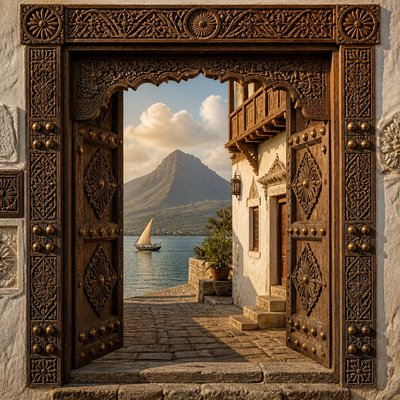
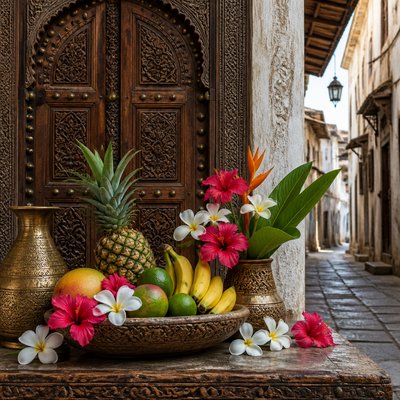
Pale, rough masonry, shaded arcades, wooden doors, and enclosed courtyards evoke older coastal settlements. Surfaces may be simplified into warm blocks of texture rather than rendered as polished modern buildings.
Sadu geometry
Repeated diamonds, zigzags, stepped forms, and horizontal bands reference traditional woven textiles associated with Bedouin communities. Crimson, black, cream, and earthy red are especially effective for borders, garments, walls, and graphic overlays.
Pearl-diving symbolism
Pearls, strands, shells, diving vessels, and glints of nacre connect the imagery to the historic Gulf maritime economy. These details work best as restrained accents rather than indiscriminate ornament.
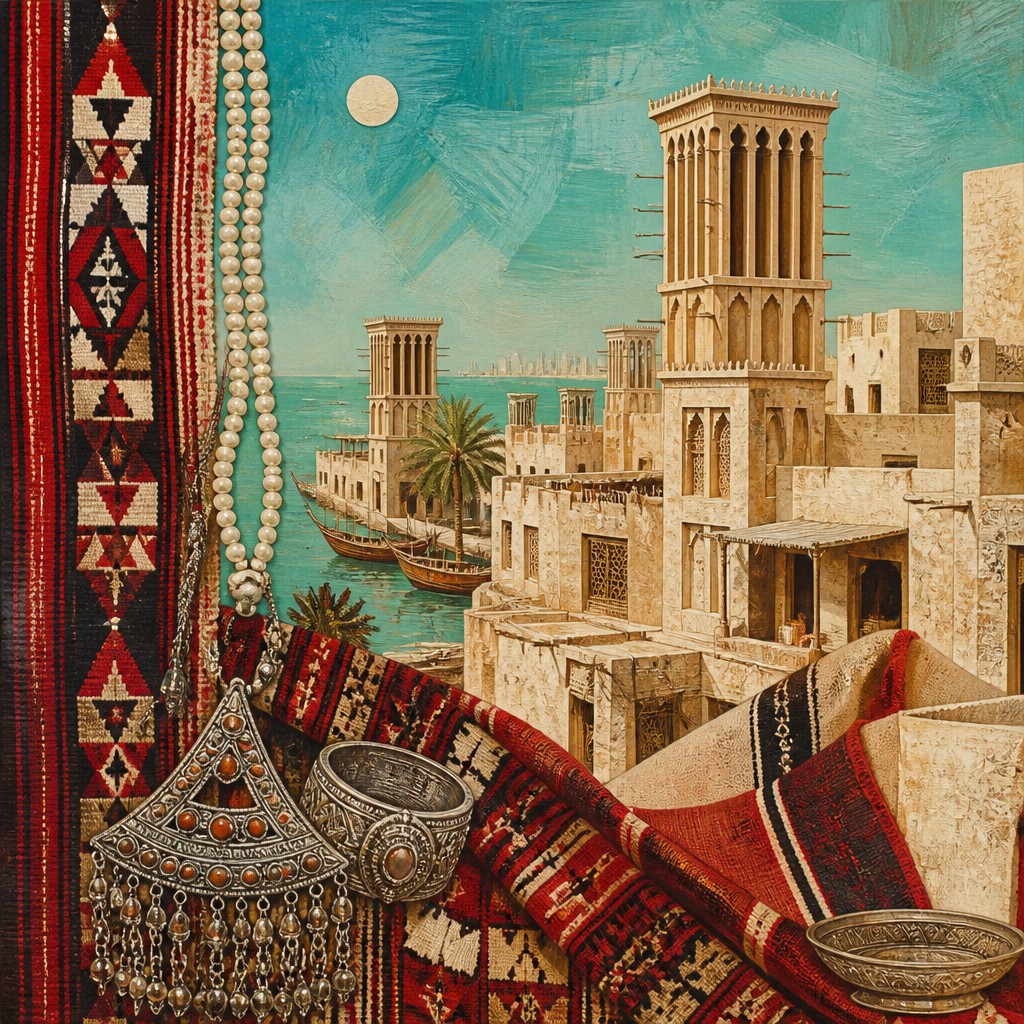
Silver adornment
Large pendants, chains, amulets, rings, and engraved metal surfaces introduce intricate highlights and a sense of ceremonial richness. Use oxidized gray, brushed silver, and selective reflections to keep the jewelry tactile.
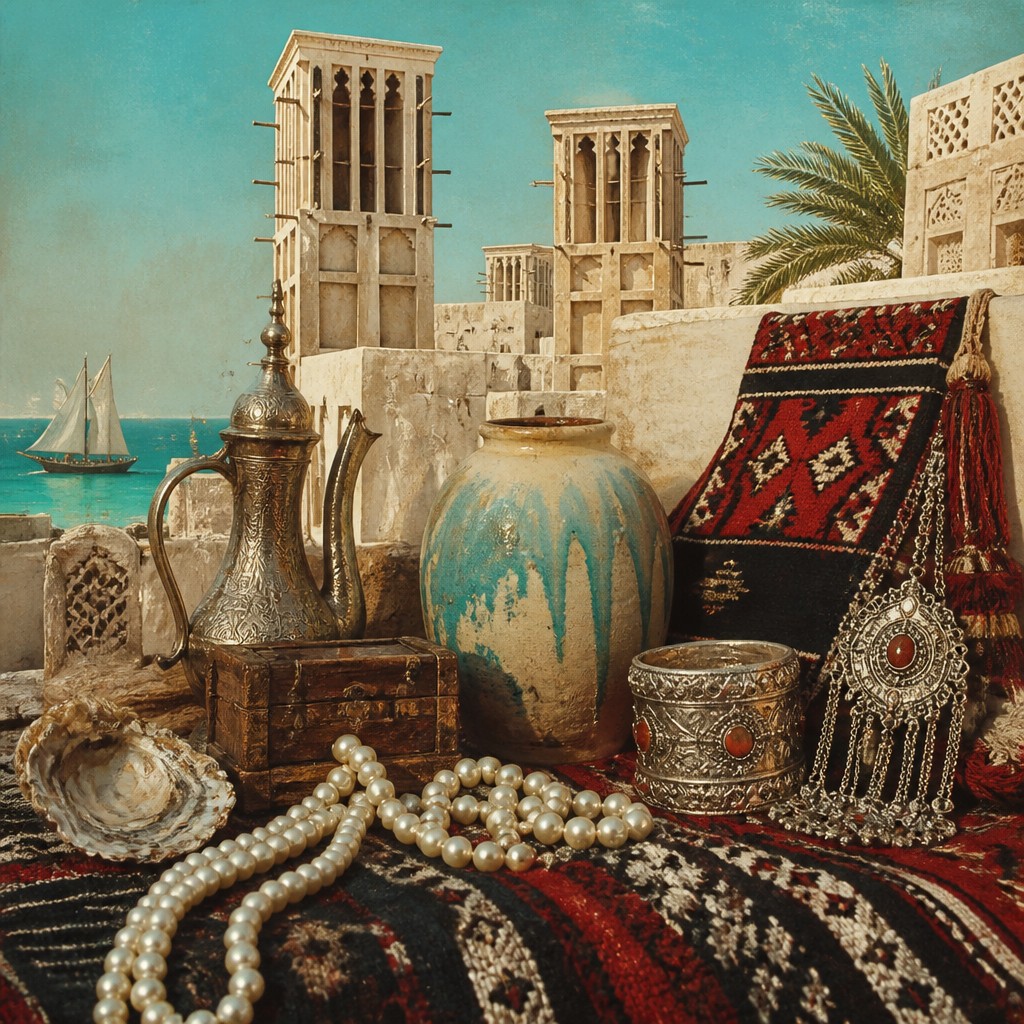
Desert and Gulf palette
The core palette contrasts bleached sand, limestone, and coral tones with turquoise water and sky. Crimson, charcoal, cream, and metallic silver add graphic definition without overwhelming the environmental atmosphere.
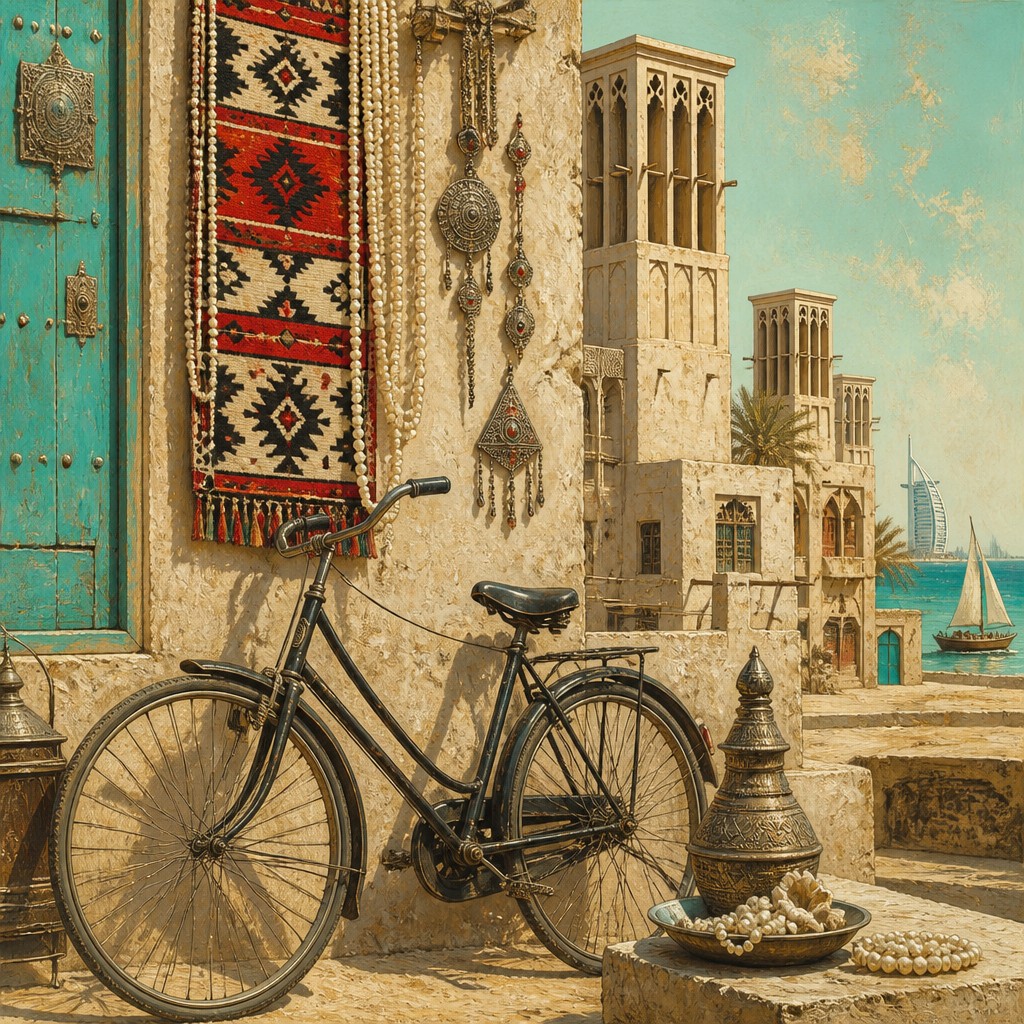
Sun-shaped composition
Hard daylight, long shadows, atmospheric haze, and low-angle horizons convey the intensity of the Gulf climate. Balanced symmetry, layered silhouettes, and open negative space often give the work a poster-like clarity.
Emirati Prompt Ideas
Start from an idea — each one opens the generator with the style ready to go. See all 40 Emirati prompts →
How to Create Emirati Art
Master the craft step by step — or skip straight to creating. Read the full guide →
- 1
Build a clear architectural structure
Begin with one dominant barjeel, courtyard, doorway, or coastal skyline and establish its silhouette before adding decoration. In traditional media, use opaque blocks of gouache, acrylic, ink, or pigment to preserve the style's graphic strength.
- 2
Treat sadu as a visual rhythm
Develop a limited repeat of diamonds, zigzags, and stepped bands rather than scattering unrelated motifs. For digital work, create the pattern as a tile, mask, or vector layer so its scale and alignment remain controlled.
- 3
Use material contrast
Place rough coral masonry, matte wool, luminous pearl, and reflective silver beside one another to create tactile variety. Subtle grain, woven texture, dry-brush marks, and restrained highlights can distinguish each material.
- 4
Limit and balance the palette
Start with sand, cream, charcoal, and turquoise, then reserve crimson and silver for focal details. Strong value separation between sunlit surfaces and deep shade will make architectural forms legible.
- 5
Compose with cultural specificity
Research the object or motif before depicting it, and distinguish Emirati references from generalized desert imagery. Avoid combining every heritage symbol in one scene; a focused arrangement usually feels more authentic and readable.
- 6
Write focused generation prompts
Describe the subject, setting, materials, palette, lighting, and composition in sequence—for example, a coral-stone courtyard, a tall wind tower, sadu bands, pearl accents, and hard Gulf sunlight. Add terms such as graphic silhouette, woven texture, limited palette, or architectural poster to guide the visual treatment.
The Story
History & Origins of Emirati
Emirati Art Style is not a formally codified historical movement with a fixed period or founding group. It is a contemporary, image-making vocabulary drawn from Emirati and wider Gulf heritage, especially traditional barjeel architecture, coral-stone construction, desert and coastal environments, sadu weaving, pearl diving, and regional adornment.
Its visual lineage brings together vernacular architecture, textile design, decorative craft, folklore illustration, heritage documentation, and modern digital composition. Contemporary interpretations often simplify historic forms into bold silhouettes and graphic patterns, translating locally recognizable materials and motifs for editorial art, posters, identity systems, fashion imagery, interiors, and image-based experimentation.
Influences: The style draws from Gulf vernacular architecture, Emirati heritage crafts, sadu textile traditions, pearl-diving culture, desert landscape painting, maritime folklore, decorative arts, architectural illustration, and contemporary poster design. It also shares methods with geometric abstraction, collage, textile art, and editorial digital illustration, while retaining a distinctly regional vocabulary of wind towers, courtyards, woven bands, pearls, and silver ornament.
Frequently Asked Questions
What defines Emirati Art Style?
It is defined by the combination of barjeel wind towers, coral-stone architecture, sadu-inspired geometry, pearl-diving references, silver adornment, and a sand-and-turquoise Gulf palette. The style usually favors strong silhouettes, patterned surfaces, and intense sunlight.
Is Emirati Art Style a historical art movement?
No. The term describes a contemporary aesthetic synthesis rather than a formally recognized historical movement. It draws on authentic Emirati architectural and craft traditions while adapting them to illustration, design, photography, painting, and digital image-making.
How is it different from generic Middle Eastern or desert art?
Its identity comes from specific Emirati and Gulf references rather than a broad desert atmosphere alone. Barjeel architecture, coral-stone coastal buildings, sadu geometry, pearl heritage, and regional silver jewelry provide a more localized visual vocabulary.
Can this style be used for portraits?
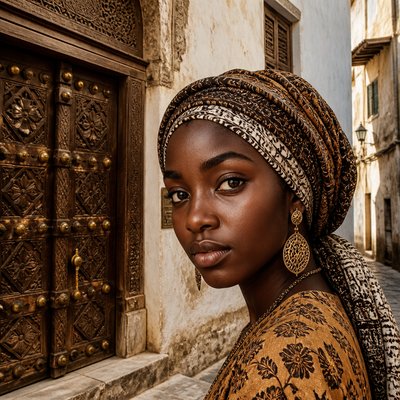
Yes, especially when portraits incorporate carefully researched clothing, sadu-patterned textiles, silver adornment, or a historically appropriate architectural setting. Keep the person as the subject and use cultural motifs as contextual details rather than costume-like decoration.
What materials work well for creating it?
Gouache, acrylic, ink, collage, textile applications, and digital painting all suit its graphic shapes and layered surfaces. Combining matte painted areas with woven textures, pearl-like highlights, and metallic silver effects can reinforce the material contrasts.
How should I prompt an image in this style?
Specify a focused subject first, then name the Emirati architectural or craft references, palette, lighting, texture, and composition. Prompts are usually more consistent when they request one or two dominant motifs instead of an overcrowded collection of heritage symbols.
Create your first Emirati artwork
Describe anything — or upload a photo — and see it in Emirati Art Style in seconds.
Related Styles
Discover similar art styles