Düsseldorf School Art Style
Explore the Düsseldorf School: grand 19th-century landscapes shaped by theatrical light, polished detail, stormy skies, and sublime drama.
Instantly rendered in Düsseldorf School — or transform a photo
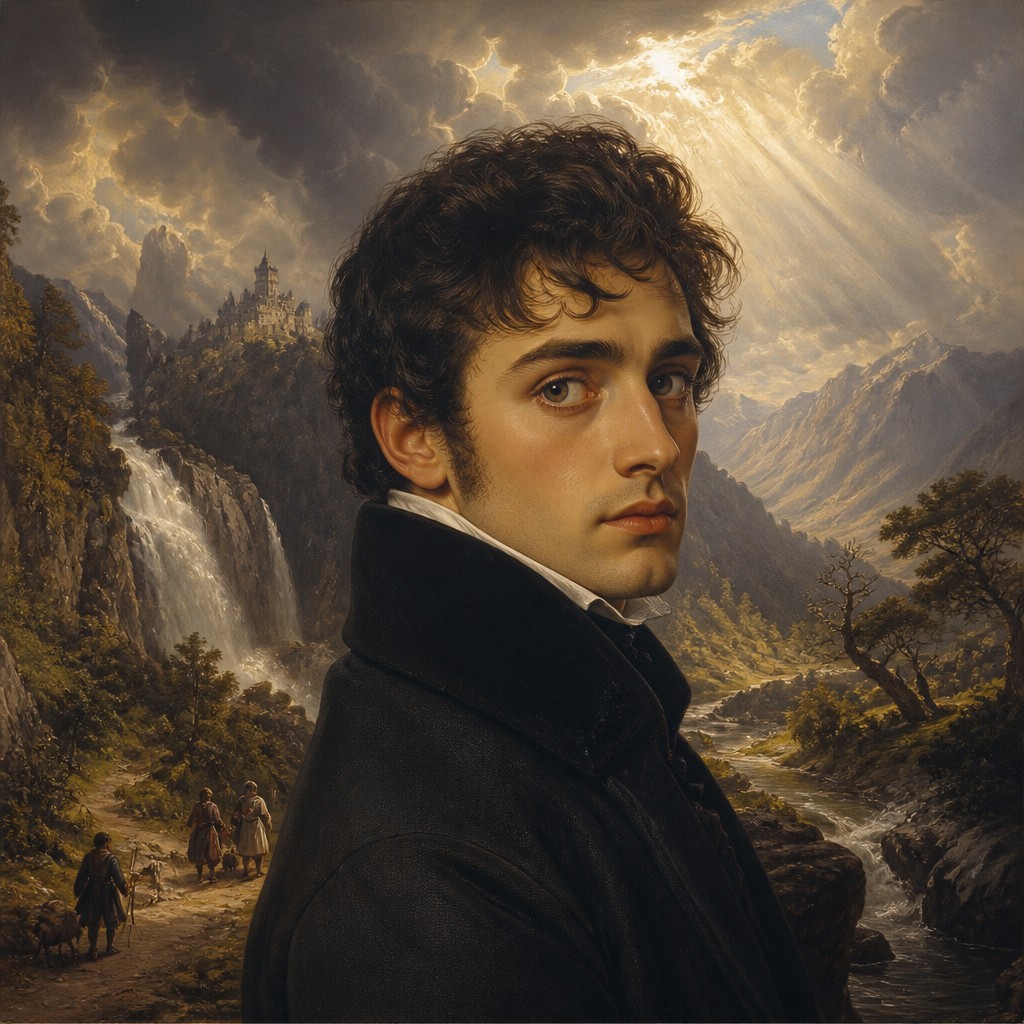
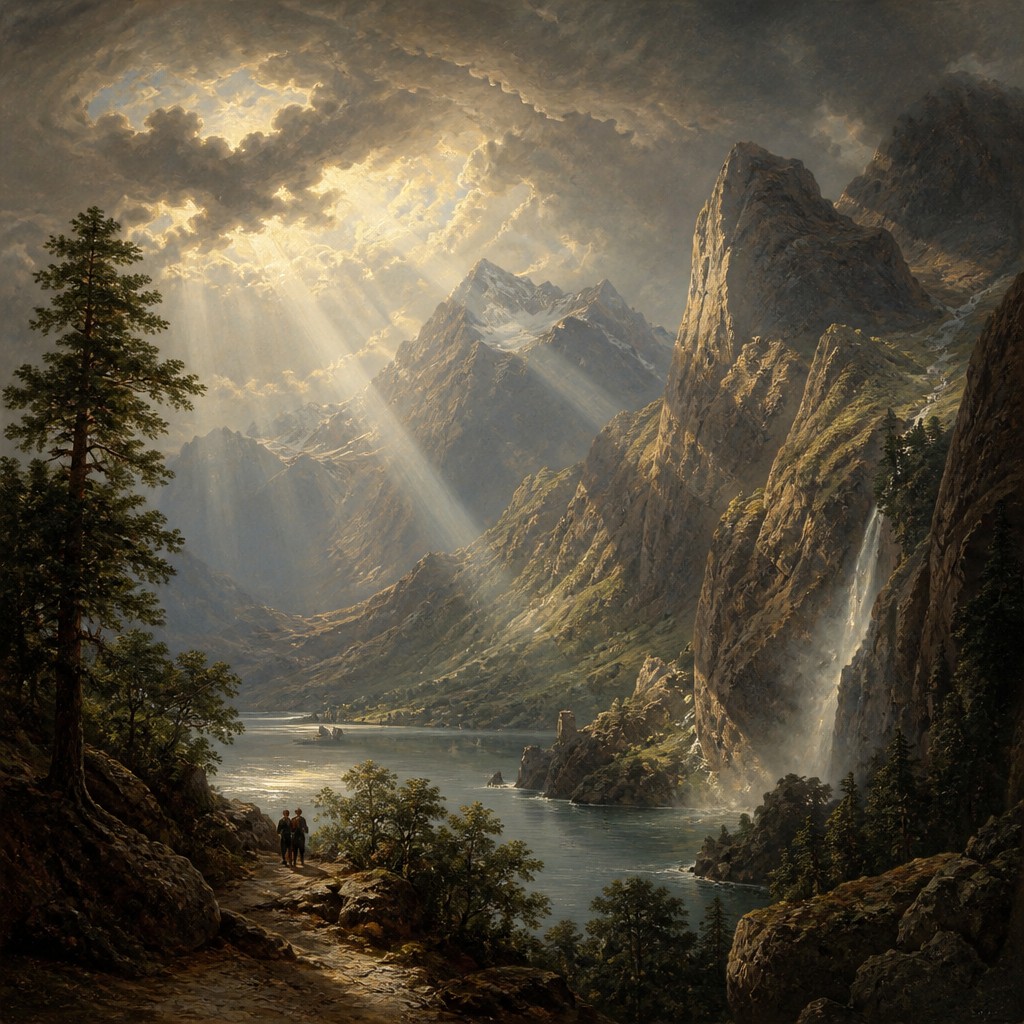
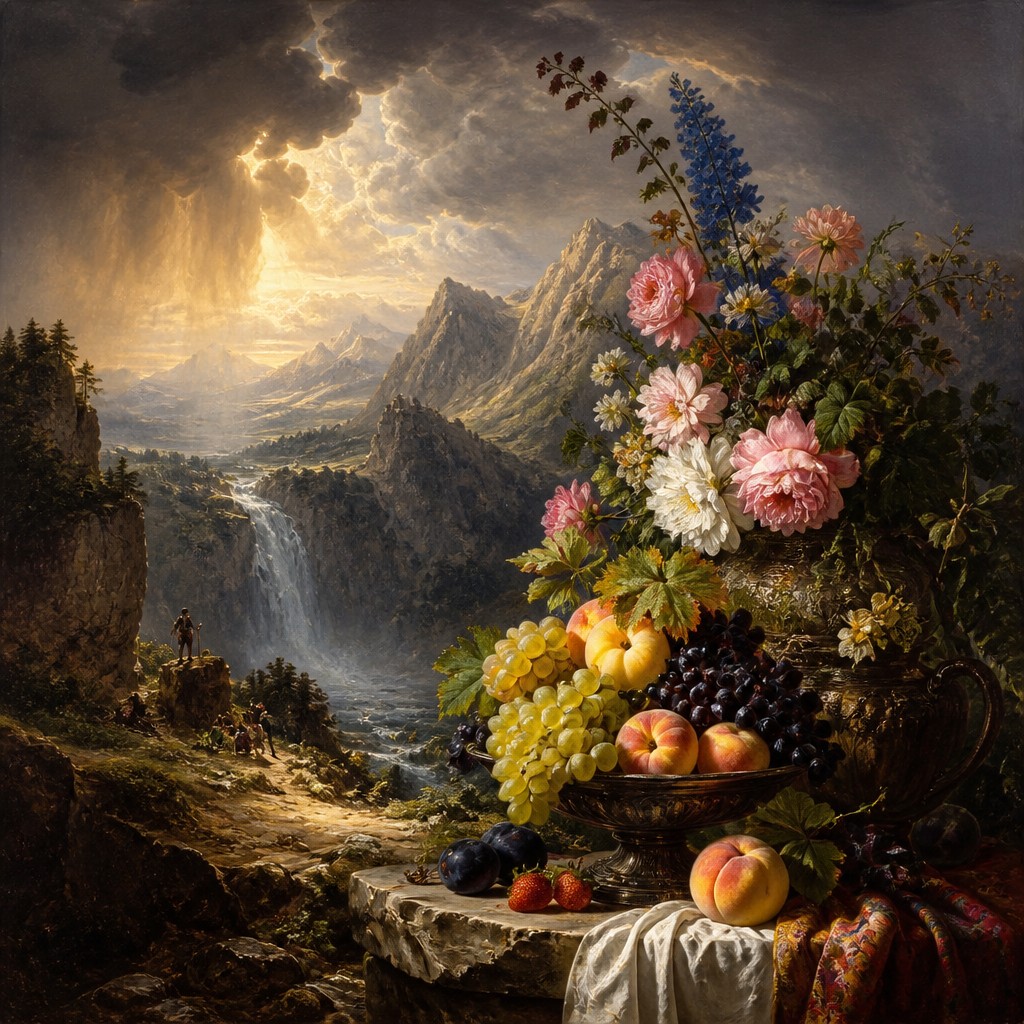
Düsseldorf School Gallery
Tap any artwork to explore it
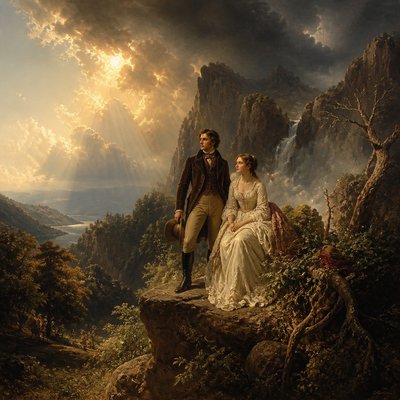
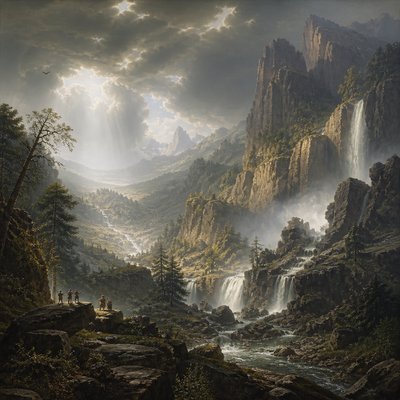
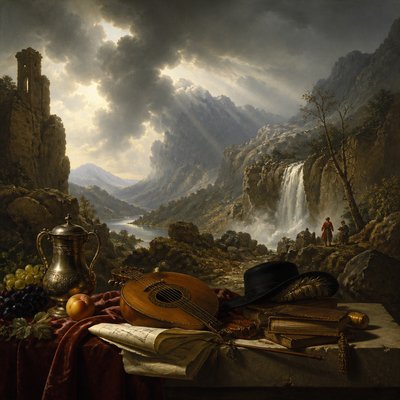
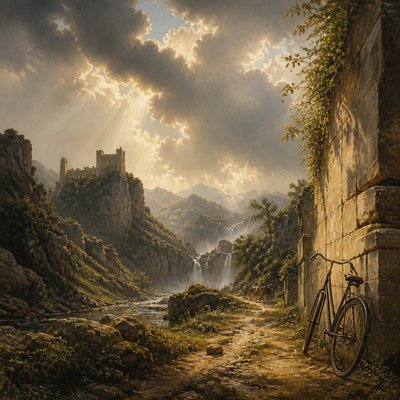
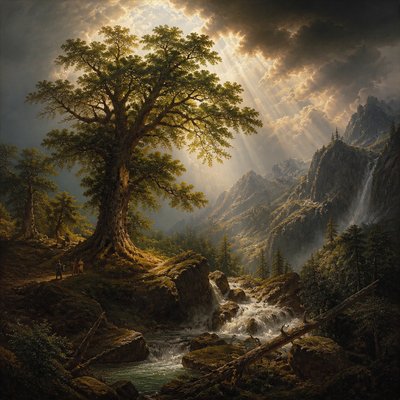
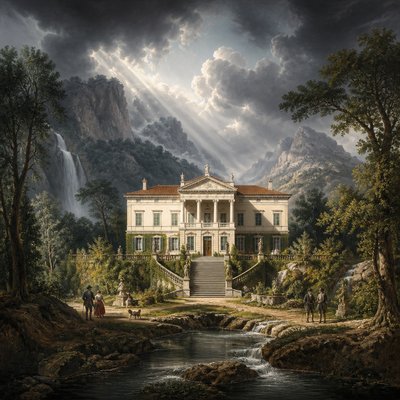
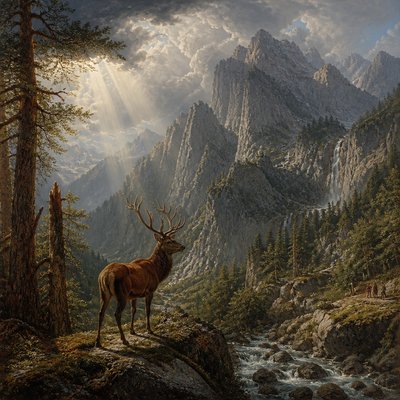
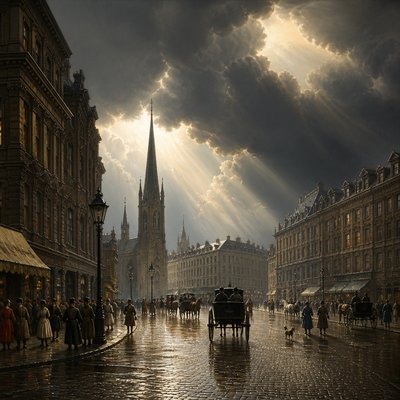
What is Düsseldorf School Art Style?
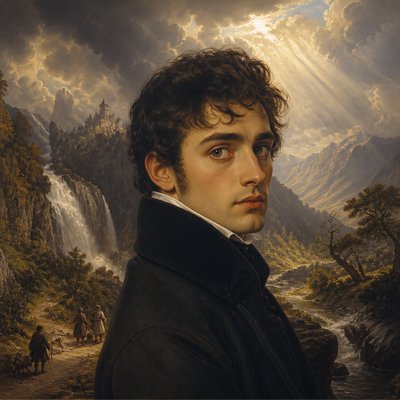
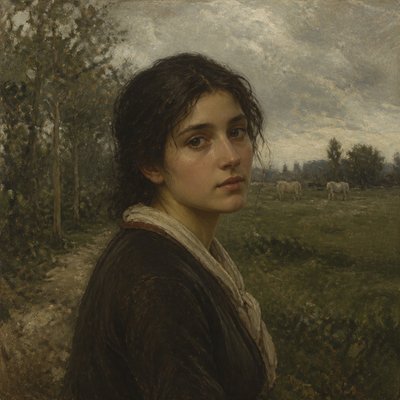
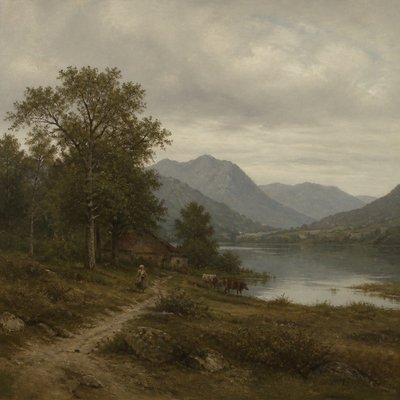
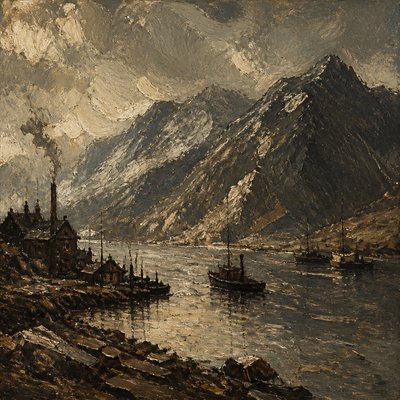
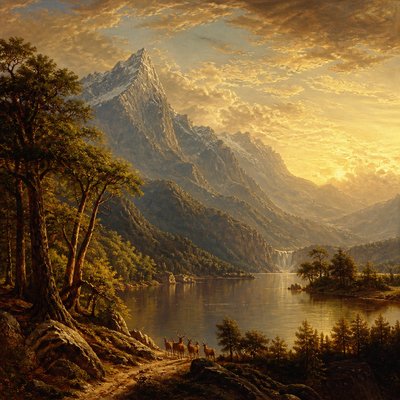
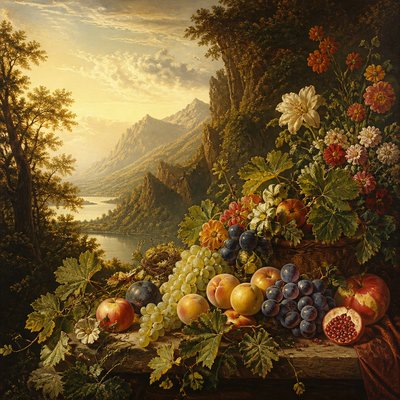
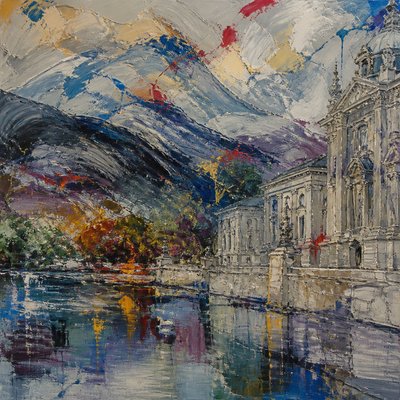
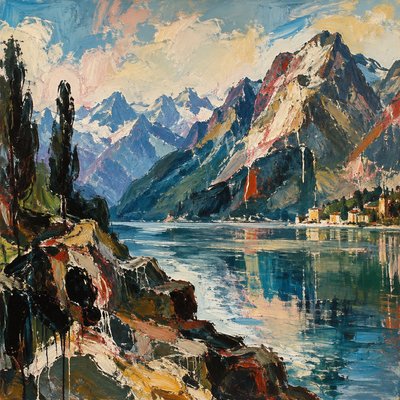
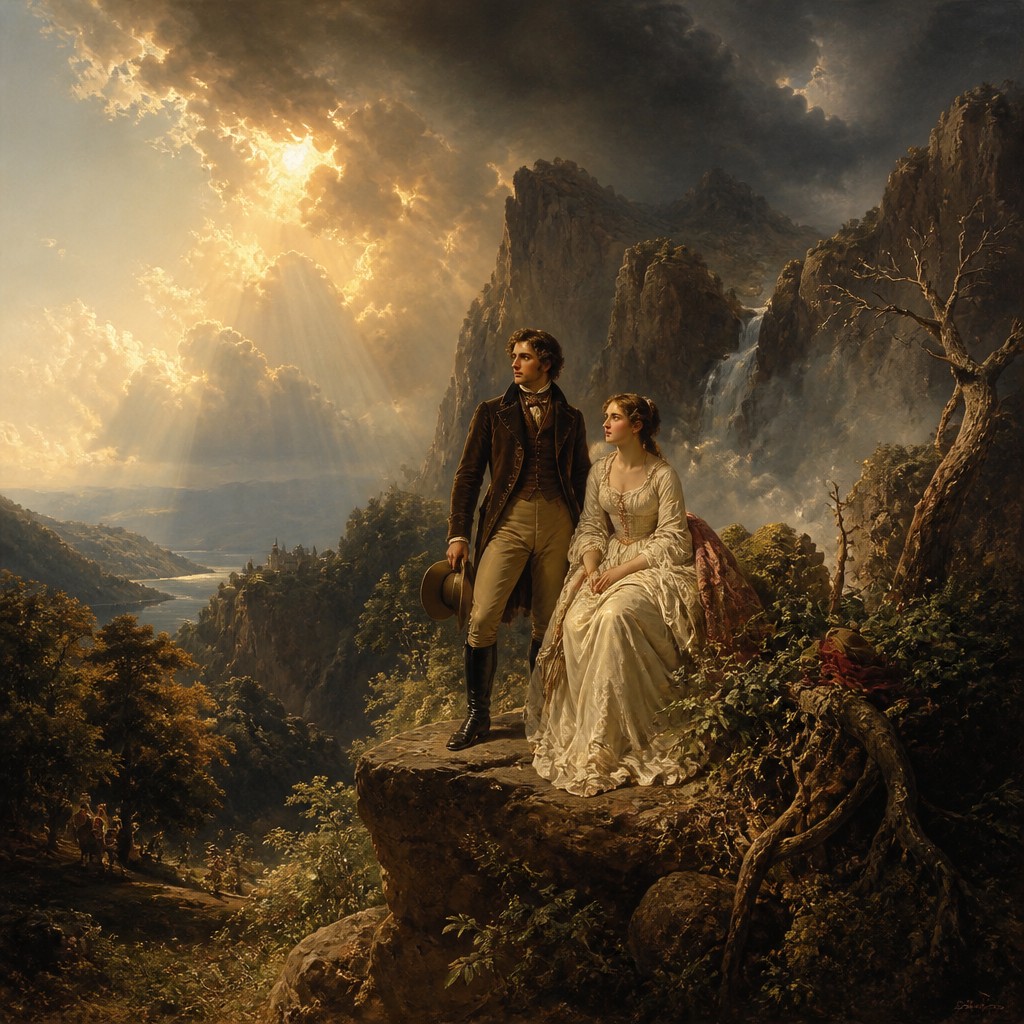
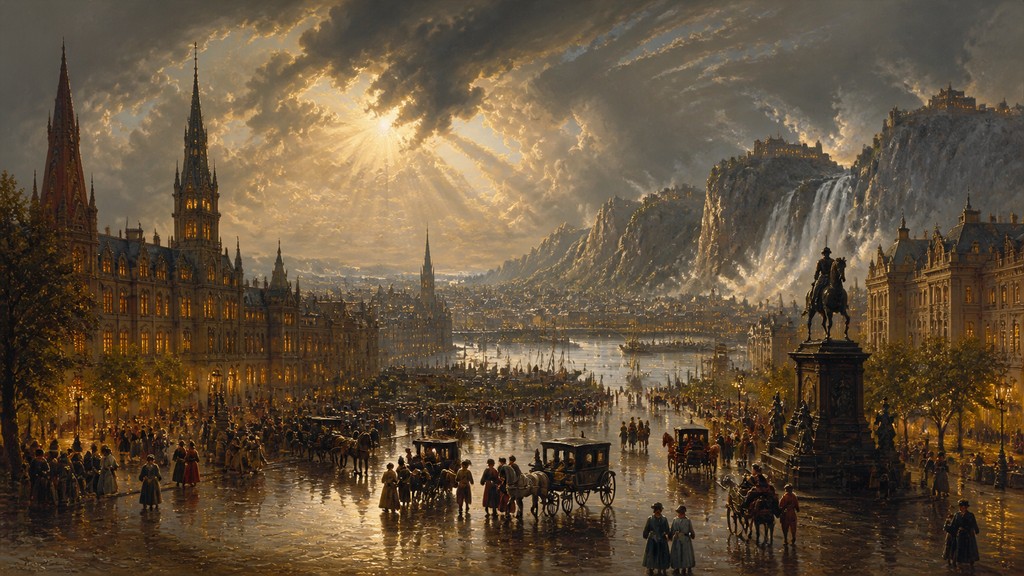
The Düsseldorf School is a 19th-century landscape-painting tradition associated with the Düsseldorf Academy in western Germany. It is recognized for expansive compositions, carefully observed terrain, controlled tonal transitions, and dramatic natural events presented with the clarity and finish of a staged historical scene. Mountains, waterfalls, forests, coastlines, and storm fronts often become settings for small figures whose scale emphasizes the immensity of the world around them.
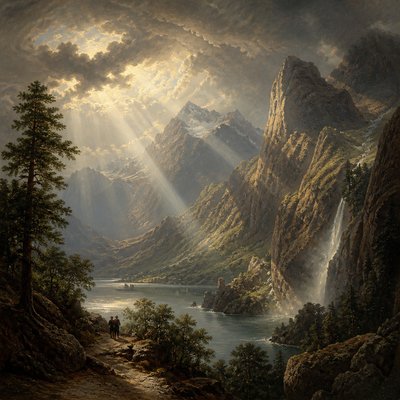
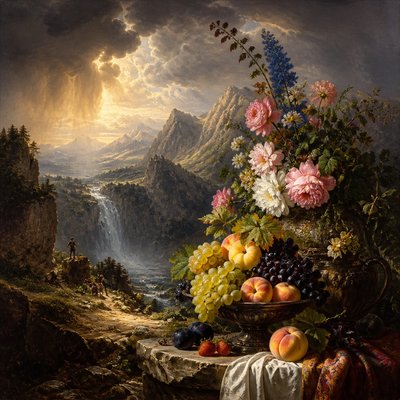
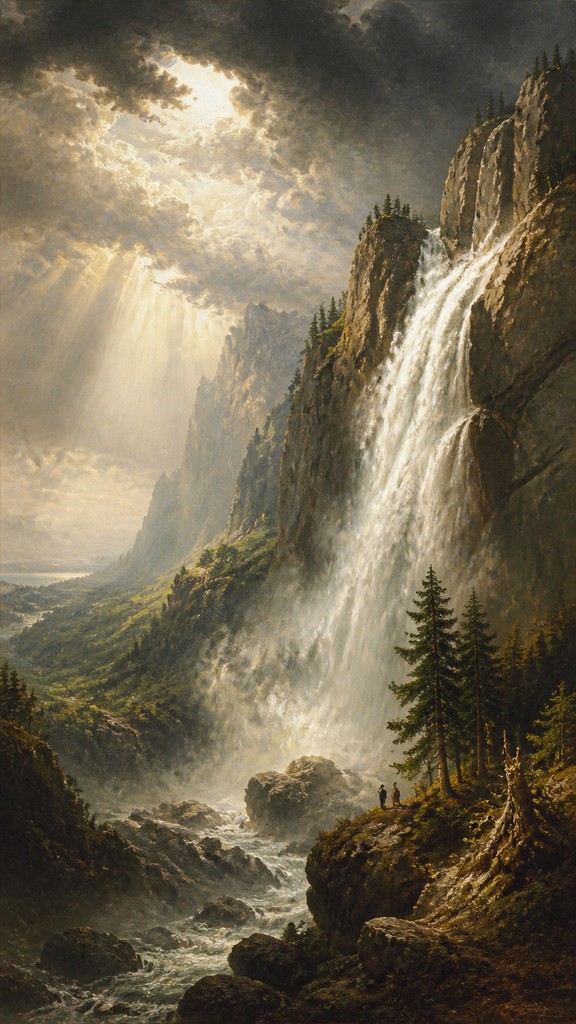
Its visual identity combines Romantic ideas of the sublime with academic discipline. Light is arranged theatrically: a break in the clouds may illuminate a distant valley, a waterfall, or a group of travelers while surrounding forms remain in shadow. The resulting image feels both believable and deliberately composed, balancing topographical observation with emotional drama and narrative suggestion.
Try It On Your Photos
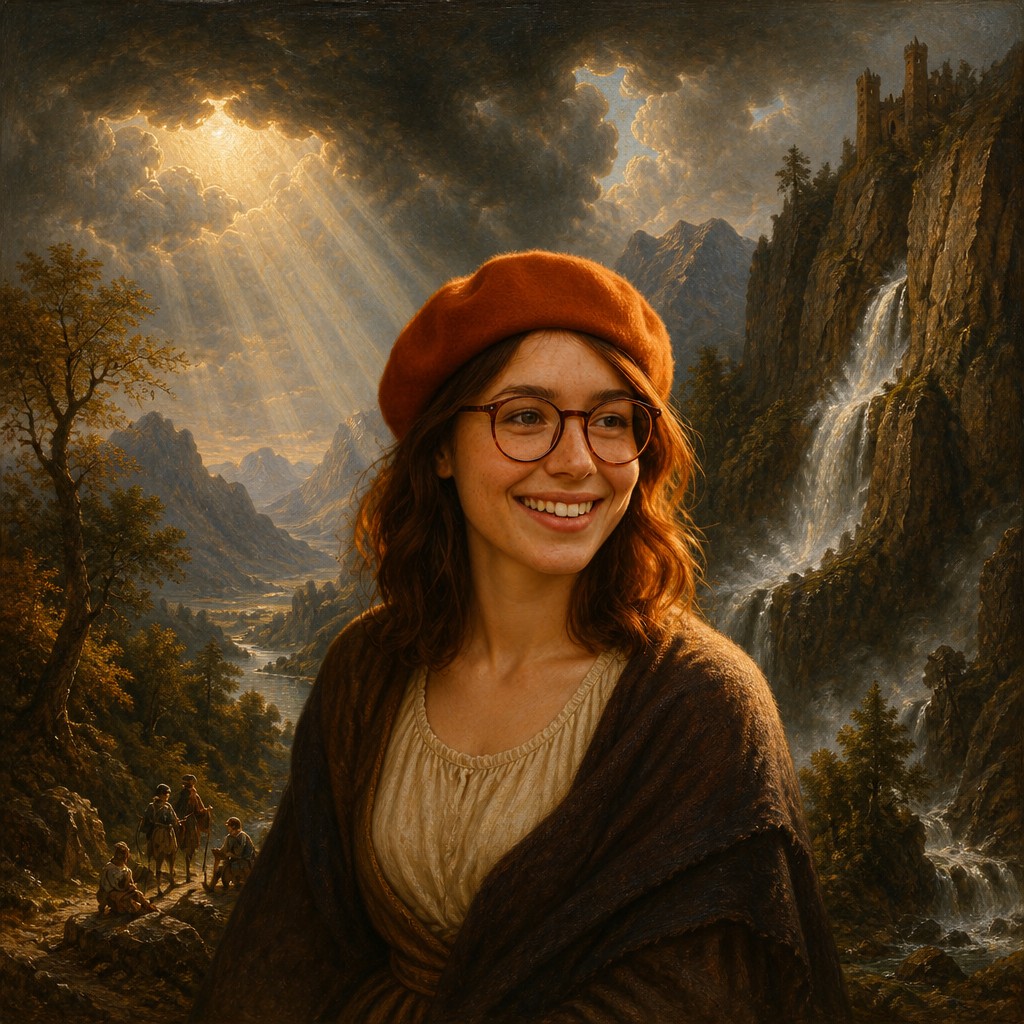
Upload any photo and convert it into Düsseldorf School Art Style — drag the sliders to compare before and after.


What Defines Düsseldorf School Art Style
The signature details, up close
Monumental composition
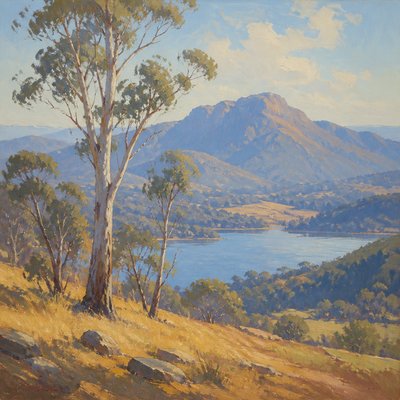
Landscapes are organized around broad vistas, towering cliffs, deep valleys, or imposing waterfalls. Strong foreground, middle-ground, and distance divisions create a sense of scale and spatial depth.
Theatrical illumination
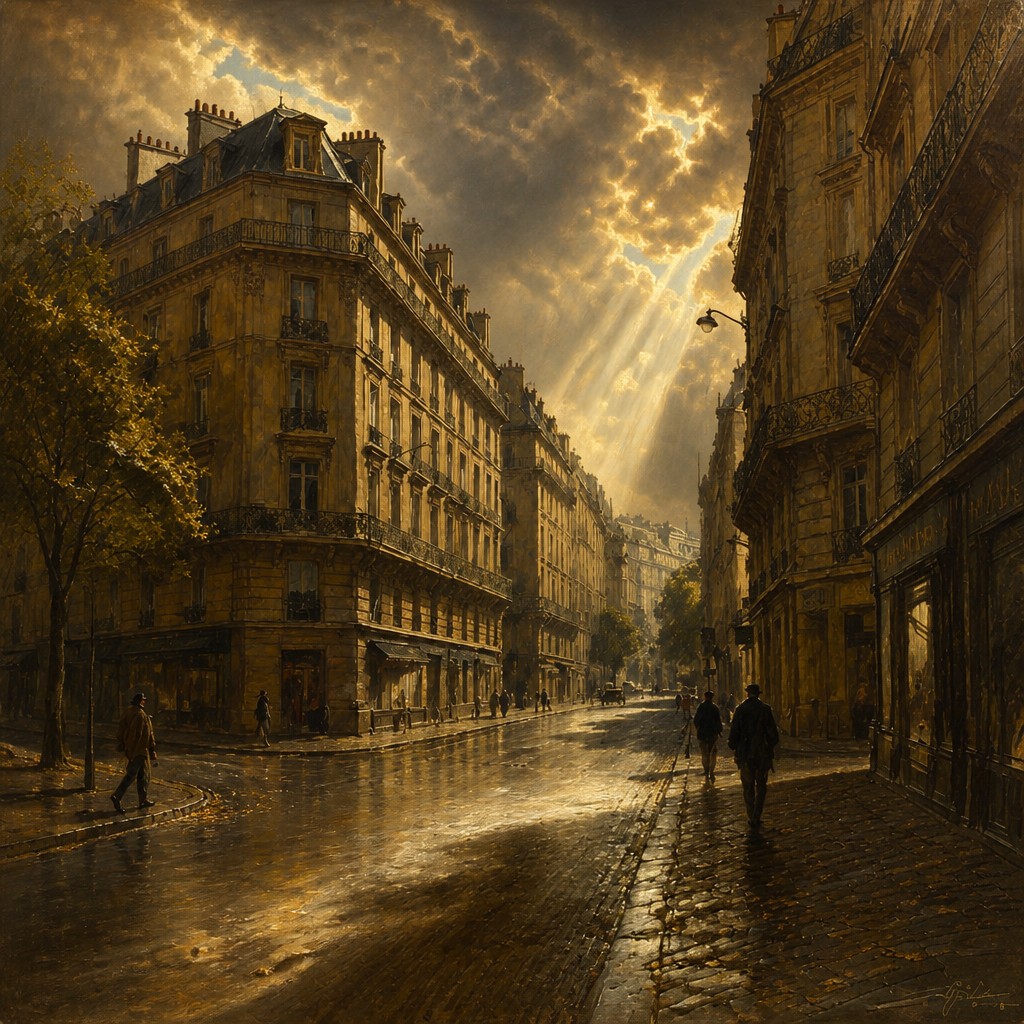
Directed beams of sunlight break through cloud or mist to isolate selected areas of the scene. Light functions as both a natural phenomenon and a compositional spotlight.
Storm-broken skies
Dense clouds, clearing weather, and rapidly changing atmospheric conditions provide visual tension. Sky and weather often occupy a large portion of the composition.
Polished surface and precise detail
Rock, foliage, water, architecture, and distant terrain are rendered with controlled edges and painstaking observation. The finish is cohesive rather than sketch-like, even when the subject is wild or turbulent.
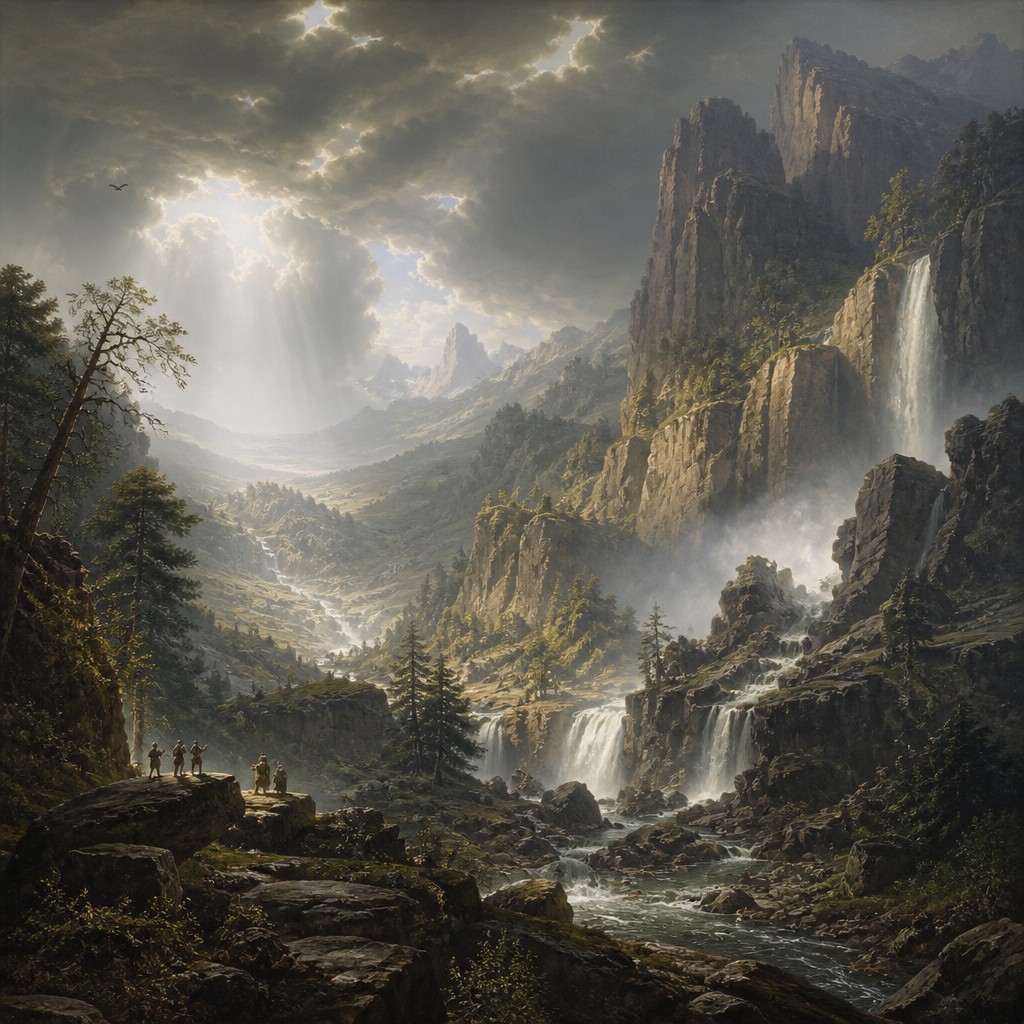
The sublime in nature
Extreme height, darkness, geological force, and human vulnerability evoke awe mixed with apprehension. Nature is presented as larger and more powerful than the individual.
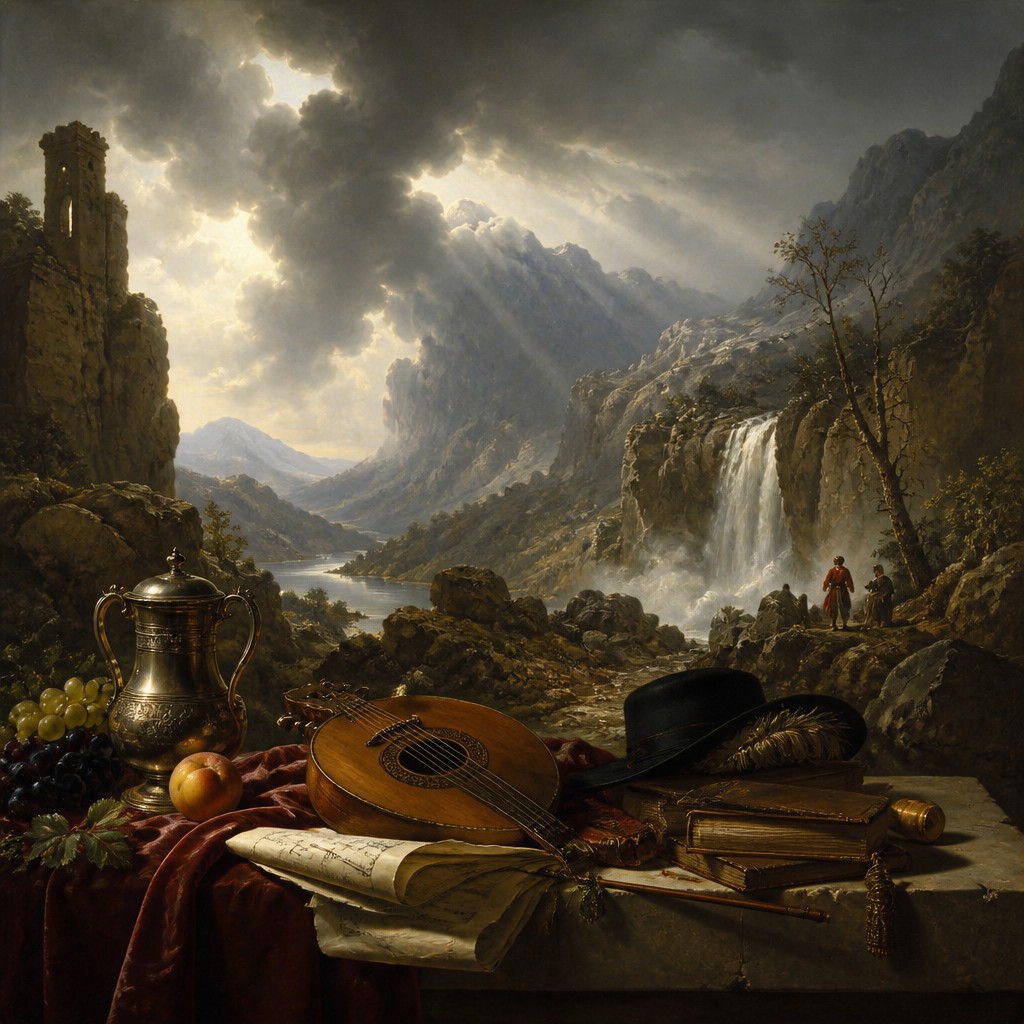
Tiny narrative figures
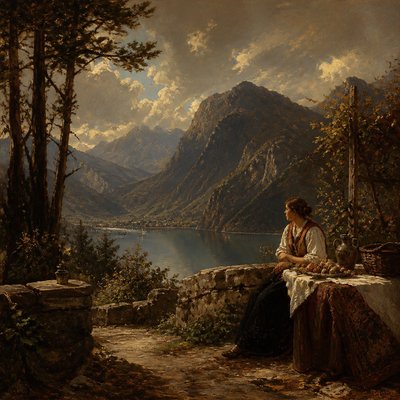
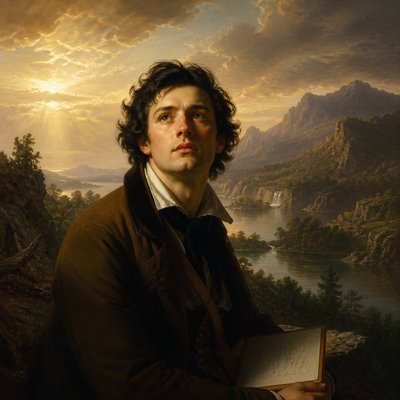
Travelers, shepherds, climbers, hunters, or solitary observers appear at a small scale. Their presence supplies a human story while reinforcing the immensity of the setting.
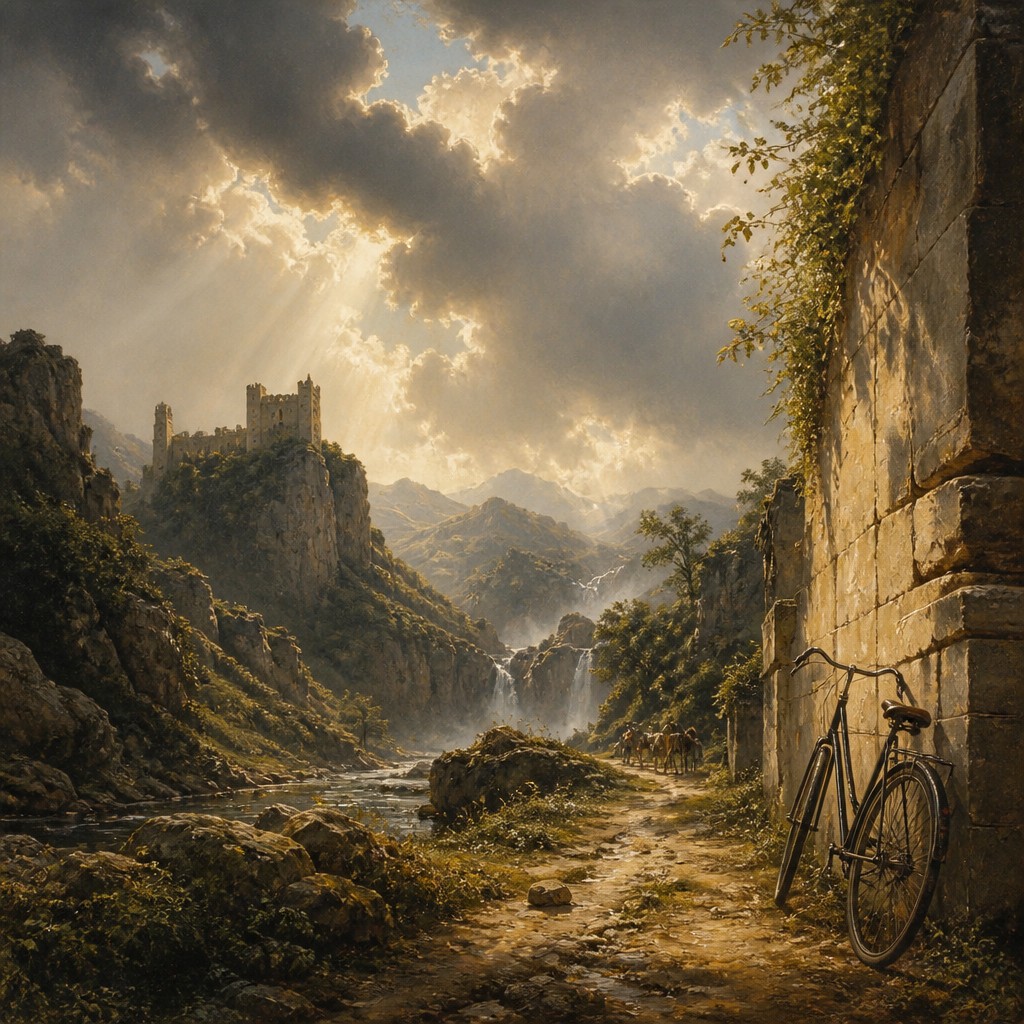
Staged naturalism
The scenery may be based on real places or observed studies, but its elements are arranged for maximum clarity and emotional impact. Plausible geography is combined with an intentionally dramatic visual sequence.
Try It
Create Videos in Düsseldorf School Art Style
Styles aren't just for stills — describe a scene or animate an image and get a short video rendered in Düsseldorf School. Press play to see this pond come to life.
Make a VideoDüsseldorf School Prompt Ideas
Start from an idea — each one opens the generator with the style ready to go. See all 40 Düsseldorf School prompts →
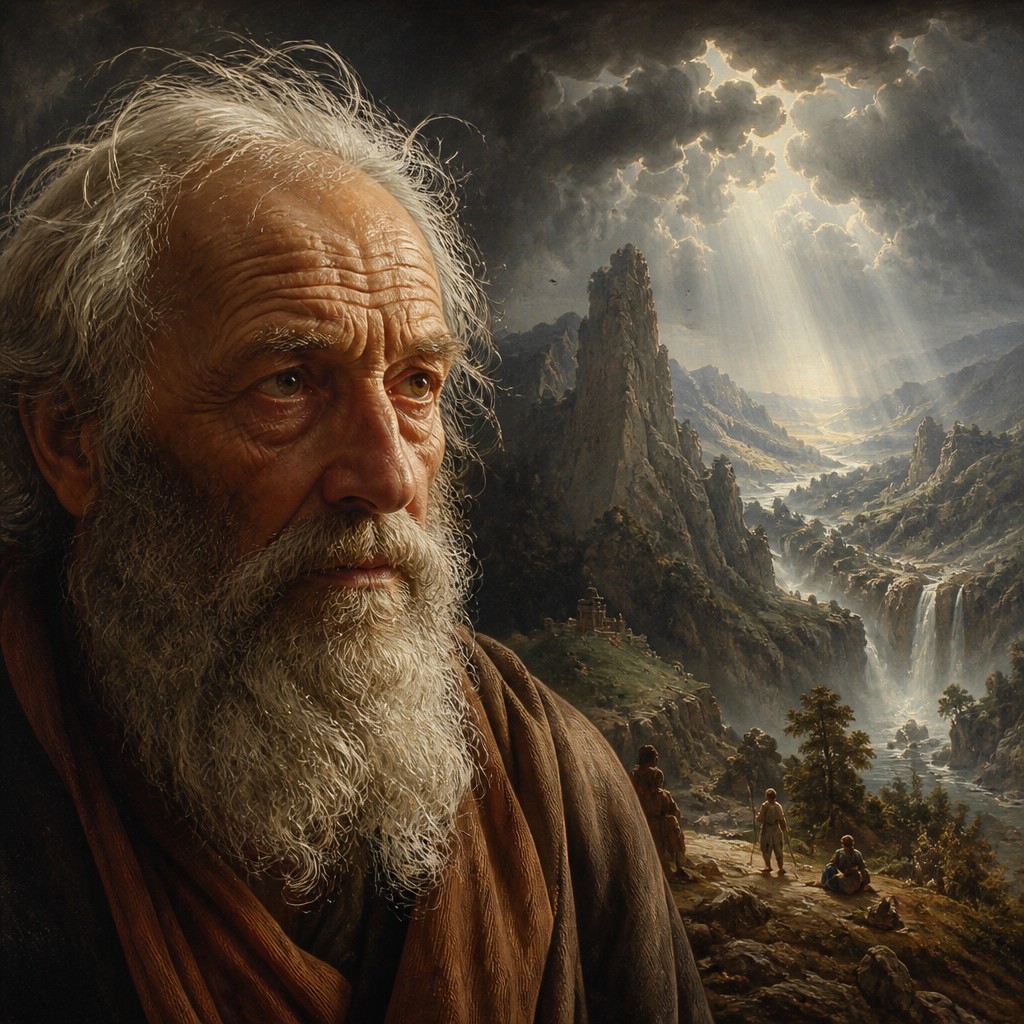
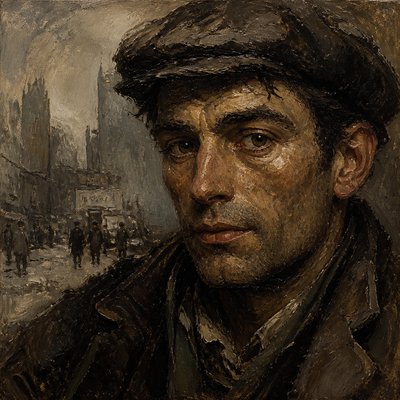
“close-up portrait of an elderly person with expressive weathered features”
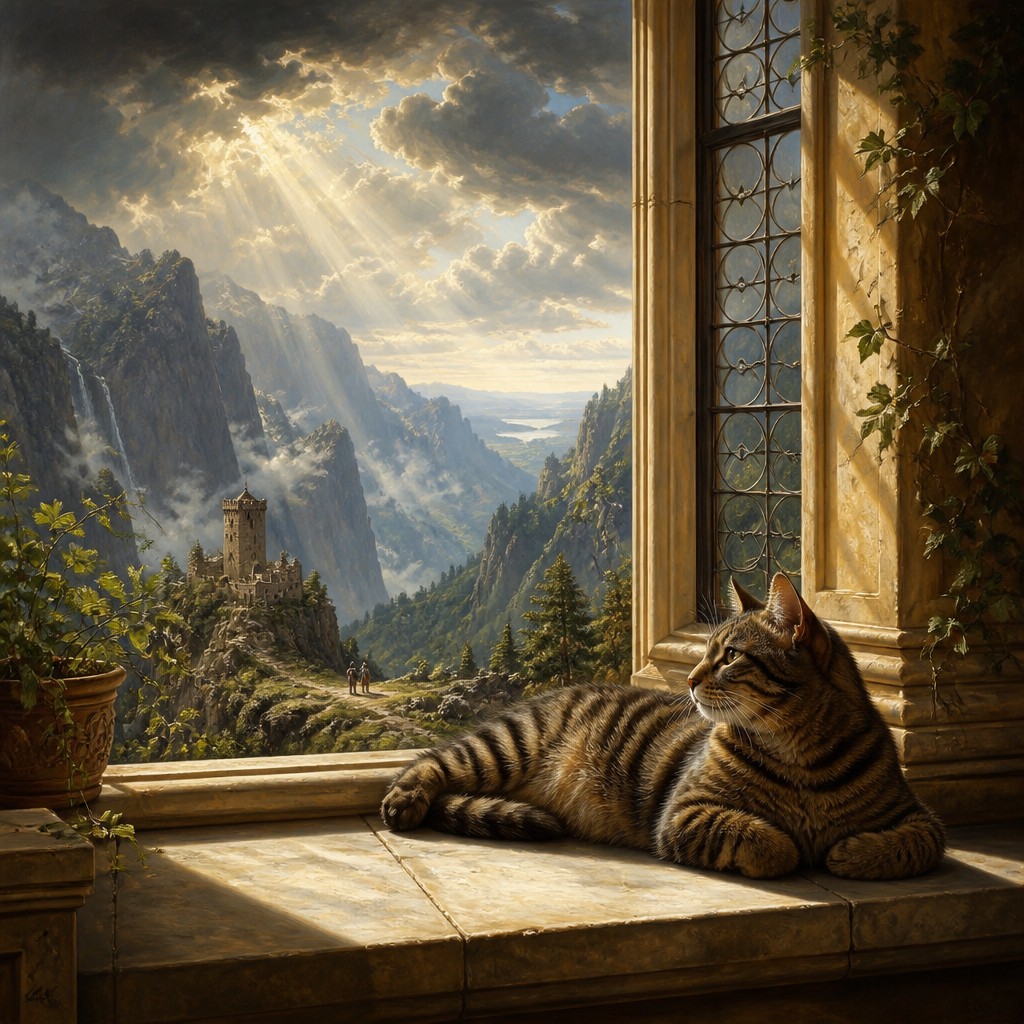
“a cat lounging in a sunlit window”
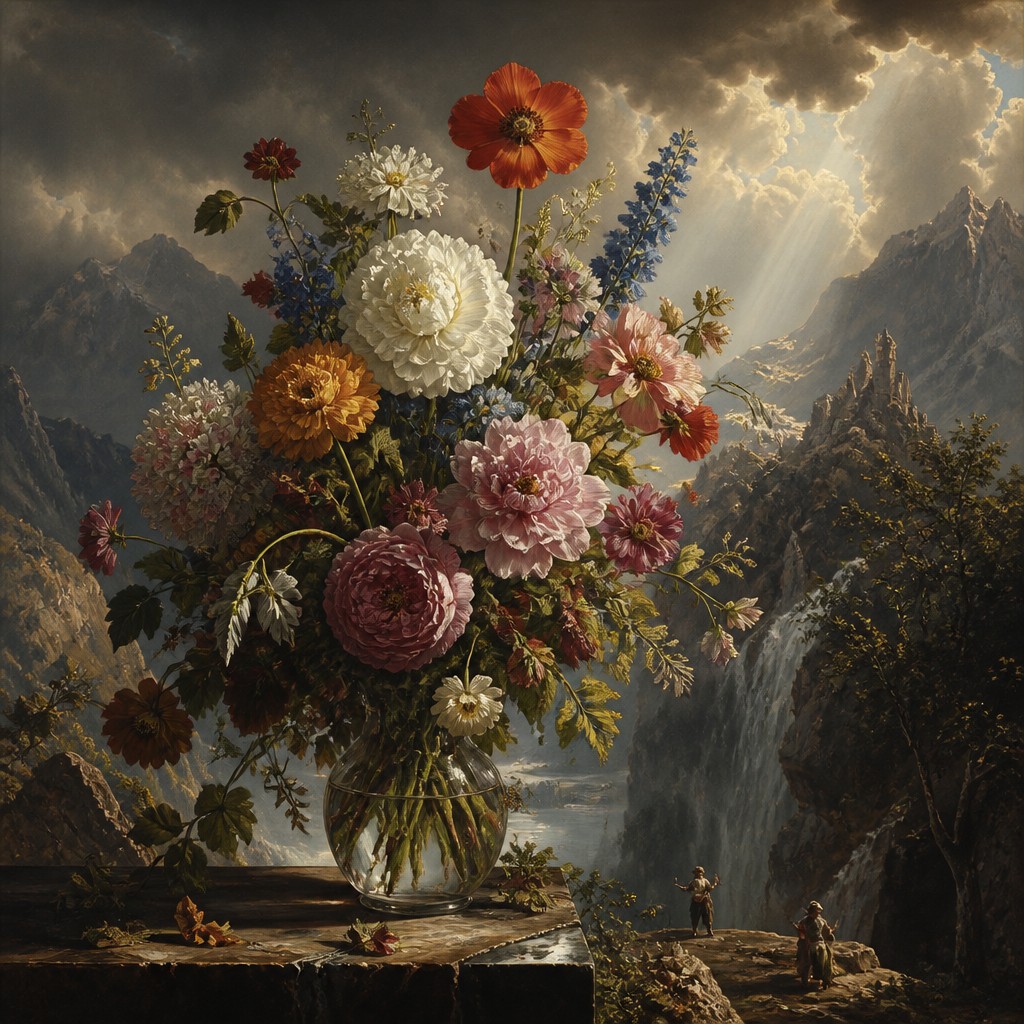
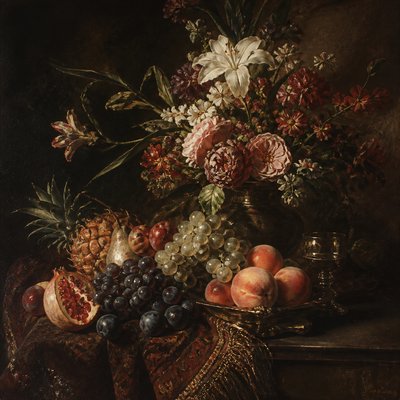
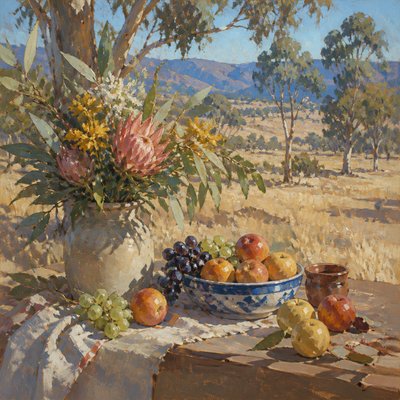
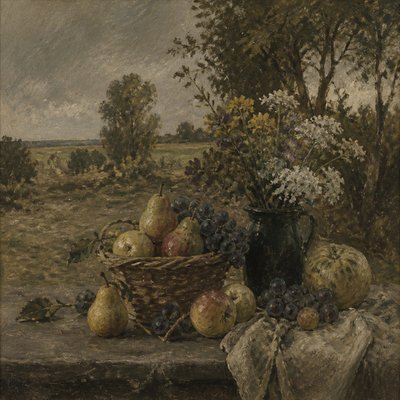
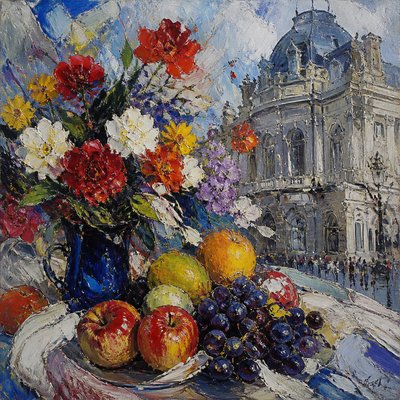
“bouquet of flowers in a glass vase”
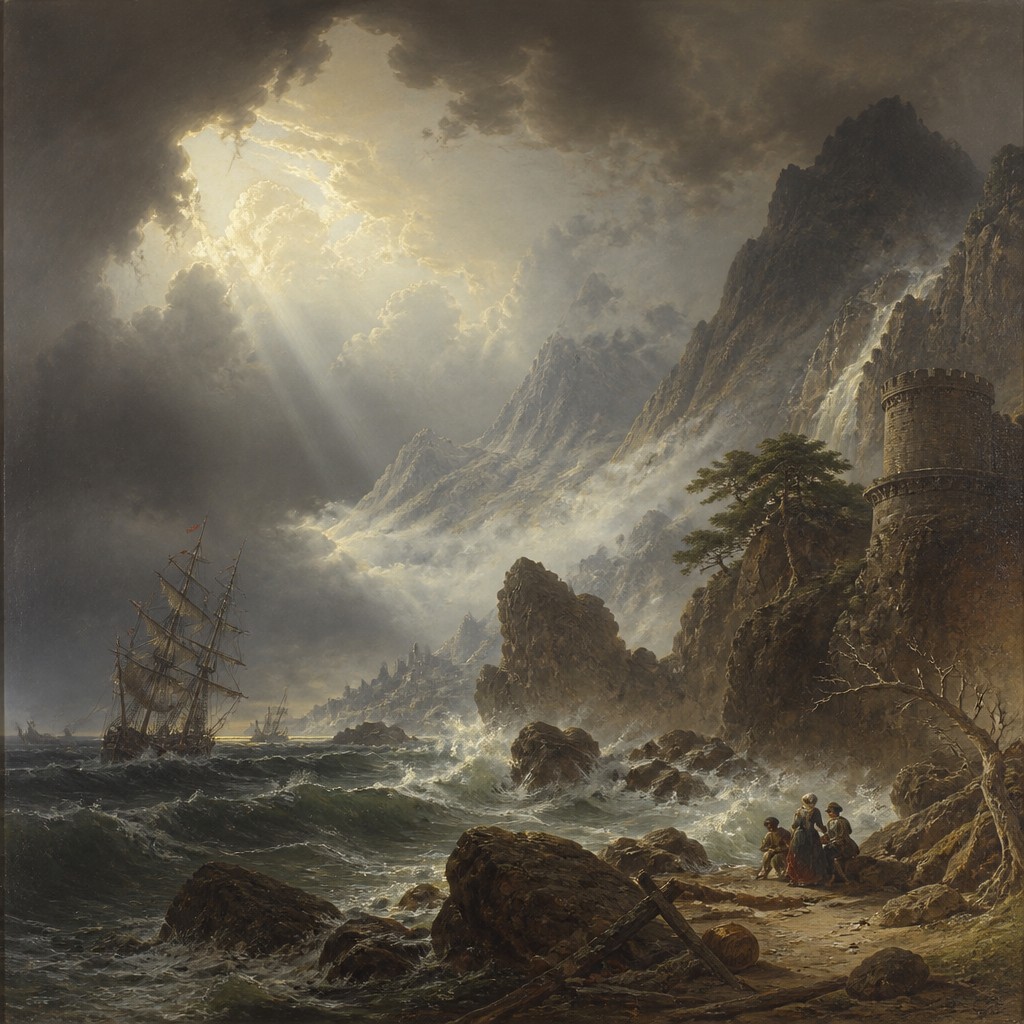
“sailing ship on a stormy sea”
How to Create Düsseldorf School Art
Master the craft step by step — or skip straight to creating. Read the full guide →
- 1
Build a deep landscape structure
Plan a strong foreground anchor, a readable middle ground, and a distant atmospheric zone before refining details. Use overlapping forms, diminishing contrast, and scale cues to make the space feel monumental.
- 2
Design the light as a focal device
Reserve the brightest values for one or two important areas, such as a waterfall, clearing, or ridge. Surround them with cooler shadow and broken cloud so the illumination feels selective rather than evenly distributed.
- 3
Combine observation with studio composition
Gather studies of rocks, trees, water, and weather, then assemble them into a coherent scene rather than copying one view mechanically. In digital painting, use separate atmospheric, terrain, and light layers to control the finish.
- 4
Use figures for scale and narrative
Place one or several small figures near a path, precipice, ruin, or river crossing. Keep them subordinate to the landscape, but give their posture enough clarity to suggest travel, discovery, danger, or contemplation.
- 5
Refine edges selectively
Keep foreground textures and important silhouettes crisp while softening distant forms with haze. This preserves the polished academic appearance without making every part of the image equally sharp.
- 6
Write prompts with hierarchy and atmosphere
For prompt-based generation, specify the landscape subject, monumental viewpoint, storm conditions, selective sunbeams, tiny figures, and finely finished oil-paint surface. Add constraints such as balanced foreground-to-distance depth and restrained, natural colors to avoid chaotic fantasy scenery.

The Story
History & Origins of Düsseldorf School
The style developed during the first half of the 19th century around the Düsseldorf Academy, which became an important center for landscape instruction and attracted students from across Europe and North America. Its foundations lay in German Romantic landscape painting, academic composition, and the tradition of elevating nature into a vehicle for spiritual or philosophical meaning. The movement flourished particularly from the 1830s through the 1860s, when its teaching methods and exhibition culture spread internationally.
Düsseldorf landscape painters commonly worked from drawings, studies, and direct observations of local or foreign scenery, but finished paintings were often assembled and refined in the studio. The style later lost ground to more immediate forms of realism, plein-air painting, and modernism, although its grand compositions and atmospheric staging continued to influence historical landscape illustration, cinematic world-building, and contemporary digital imagery.
Influences: The Düsseldorf School draws primarily on German Romantic landscape painting, European academic history painting, and the sublime tradition of presenting nature as vast, mysterious, and emotionally charged. It also relates to the detailed landscape practices of 19th-century topographical painting, panoramic travel imagery, and the atmospheric effects of luminist traditions. In contemporary visual culture, its staged scale and directed light connect naturally with matte painting, fantasy environment design, cinematic concept art, and carefully composed landscape photography.
Frequently Asked Questions
What defines the Düsseldorf School art style?
It is defined by grand, carefully structured landscapes with polished detail, dramatic weather, and selective theatrical light. Small figures often provide narrative interest and emphasize the overwhelming scale of mountains, waterfalls, forests, or coastlines.
When and where did the Düsseldorf School develop?
It developed around the Düsseldorf Academy in Germany during the first half of the 19th century. The tradition was especially influential from the 1830s through the 1860s and spread through the academy's international students and exhibition networks.
Is the Düsseldorf School the same as the later Düsseldorf School of Photography?
No. The historical Düsseldorf School described here is a 19th-century academic landscape-painting tradition. The later Düsseldorf School of Photography refers to a separate 20th-century photographic movement associated with systematic, often typological observation.
How does it differ from Impressionist landscape painting?
Düsseldorf School landscapes generally favor finished surfaces, controlled edges, planned compositions, and symbolic or theatrical lighting. Impressionist painting more often emphasizes immediate optical sensation, visible brushwork, changing daylight, and scenes observed directly outdoors.
How can I make a landscape look like this style?
Start with a monumental viewpoint and clear spatial layers, then introduce storm clouds, a focused break in the light, and a few tiny figures. Refine geological and botanical details carefully while keeping distant forms softer and less contrasted.
What subjects work well in this style?
Mountain passes, waterfalls, forests, ravines, coastal cliffs, ruins, and remote valleys are especially suitable. Human activity should remain relatively small and purposeful, serving as a scale reference or a quiet narrative within the larger natural scene.
Create your first Düsseldorf School artwork
Describe anything — or upload a photo — and see it in Düsseldorf School Art Style in seconds.
Related Styles
Discover similar art styles