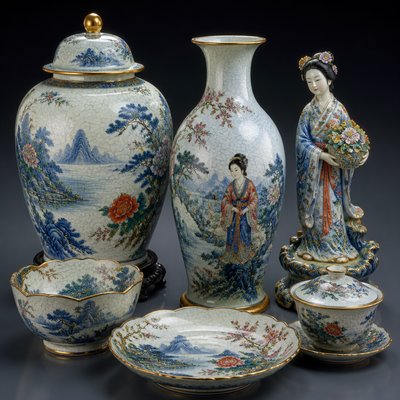
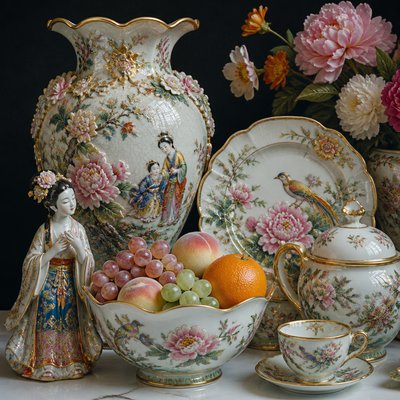
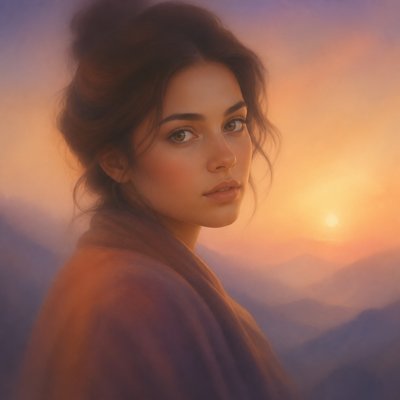
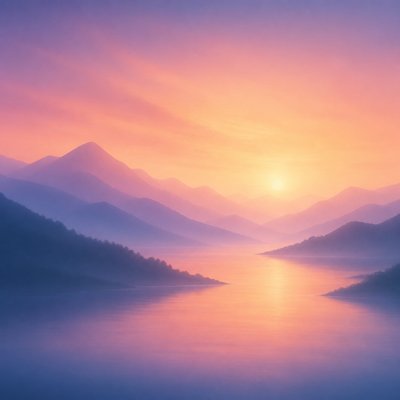
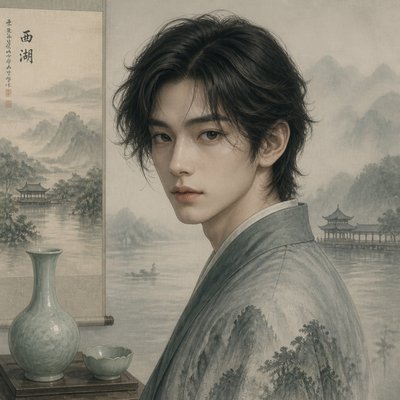
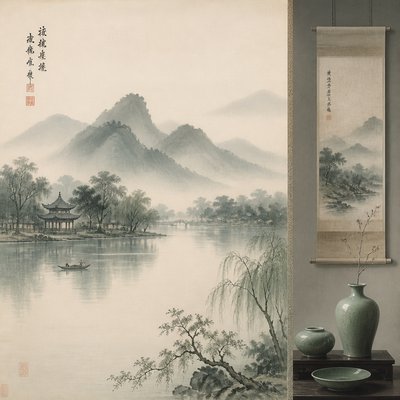
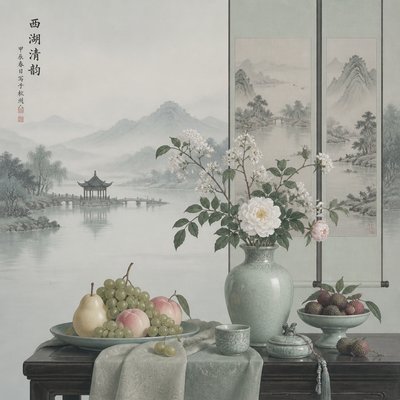
Dunhuang Art Style
Explore Dunhuang art: Silk Road Buddhist cave murals, mineral pigments, flowing figures, lotus ceilings, silk banners, and desert-aged color.
Instantly rendered in Dunhuang — or transform a photo
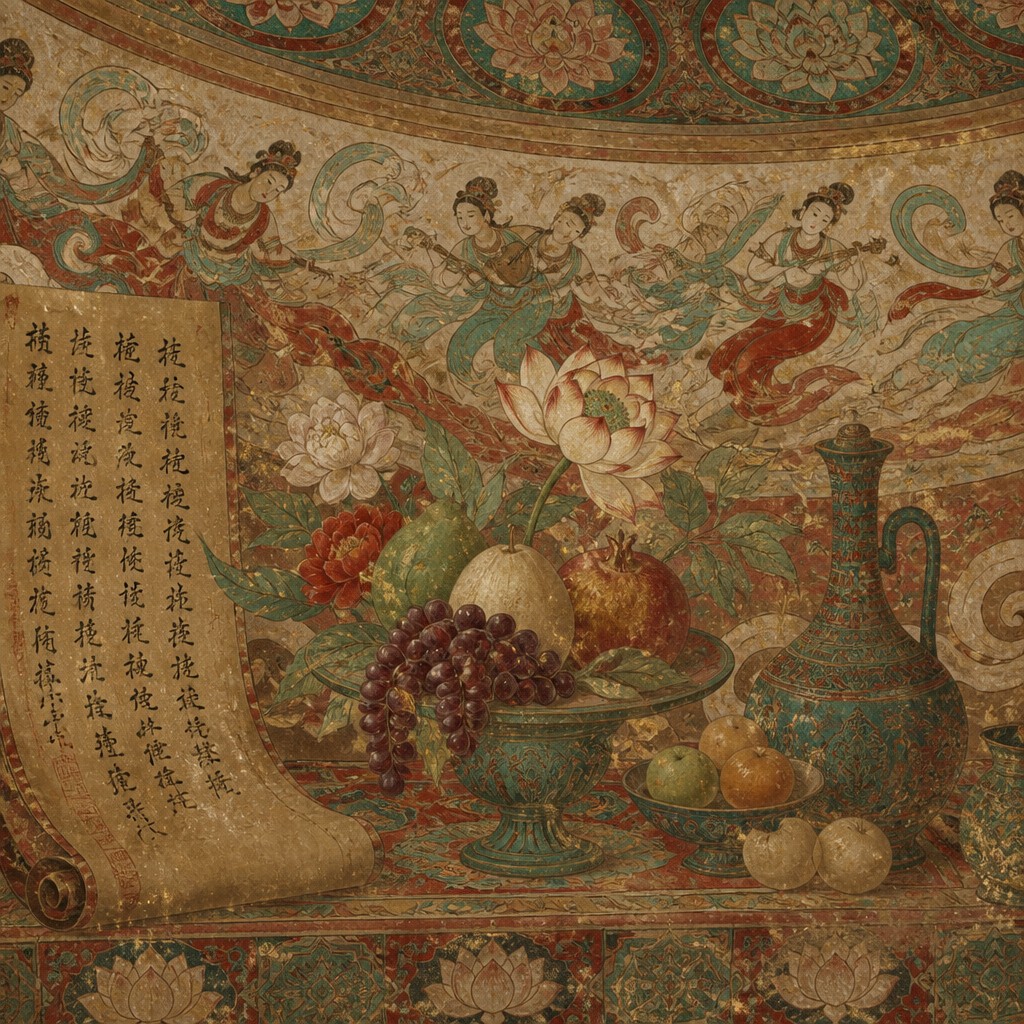
Dunhuang Gallery
Tap any artwork to explore it
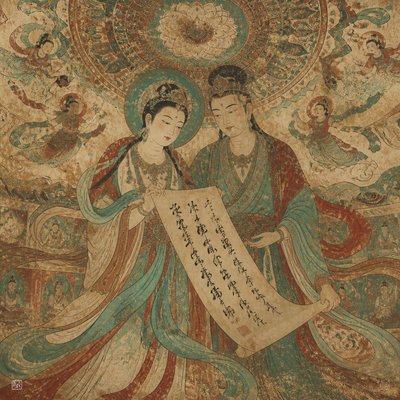
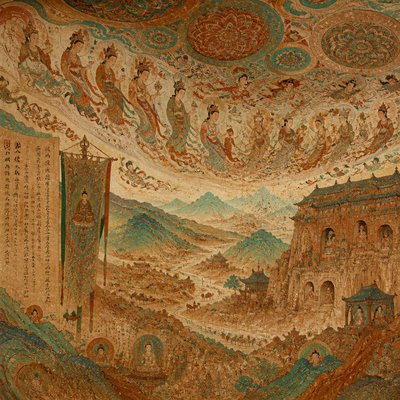
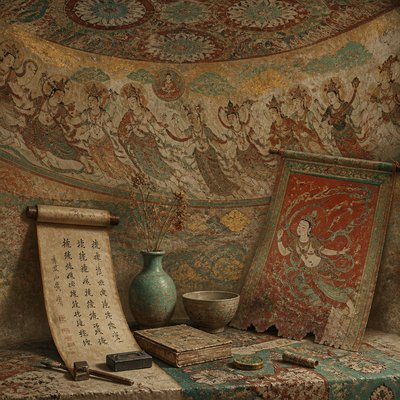
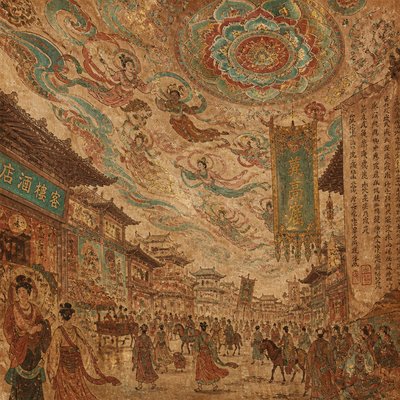
What is Dunhuang Art Style?
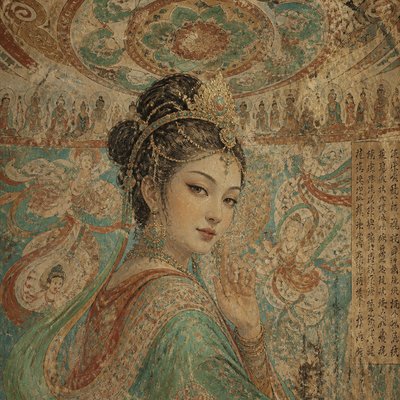
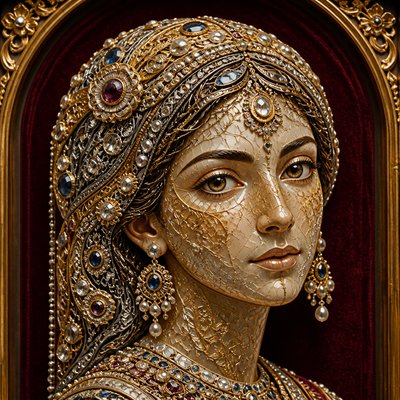
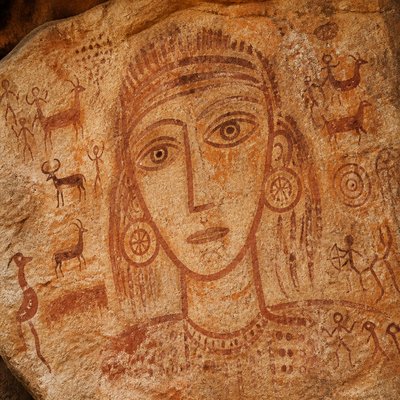
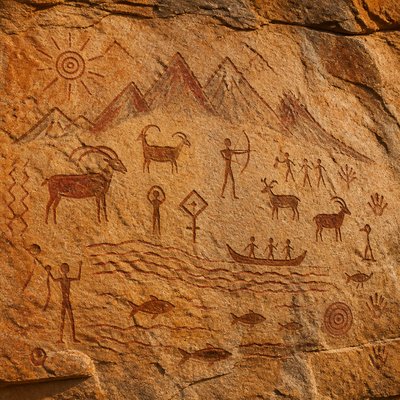
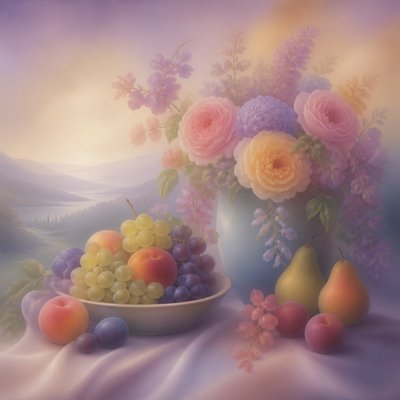
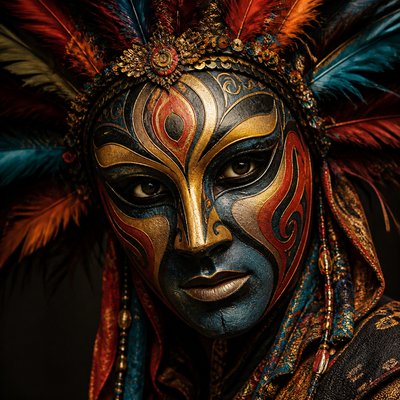
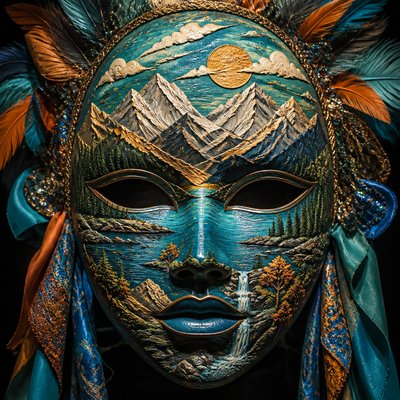
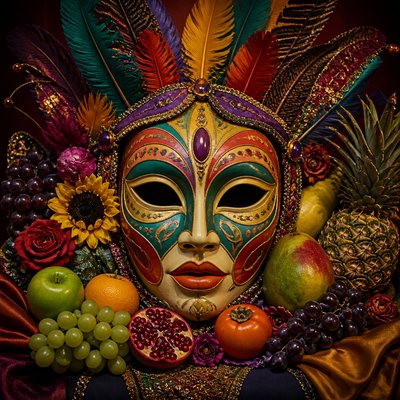
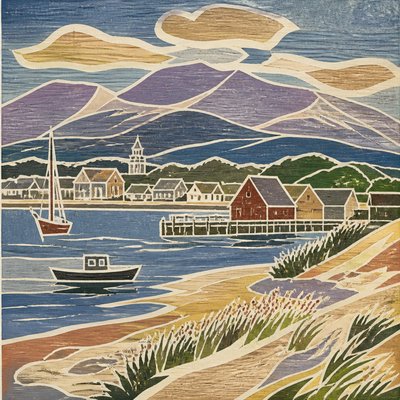
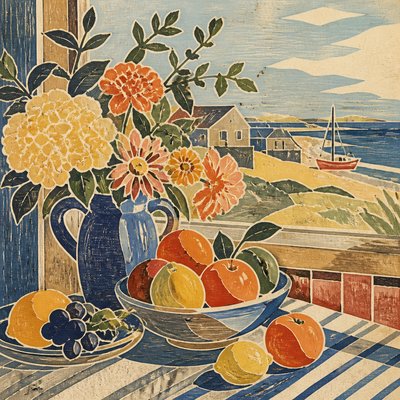
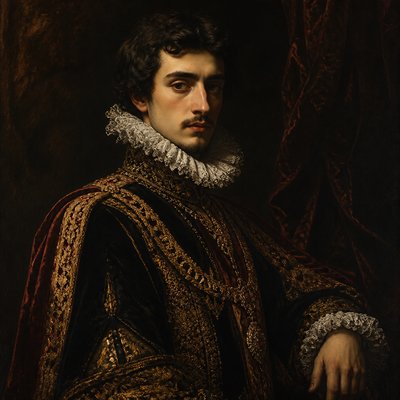
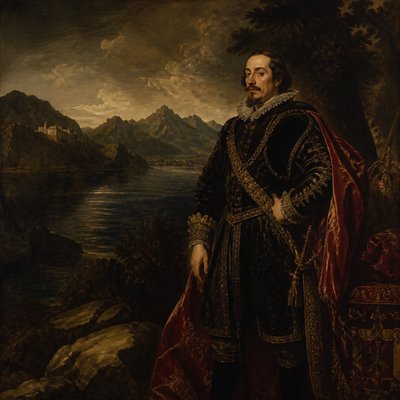
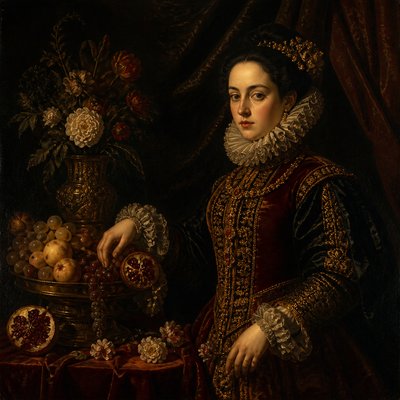
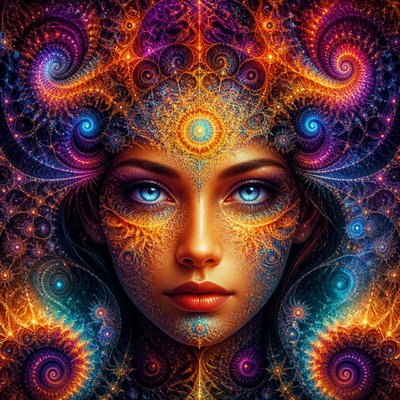
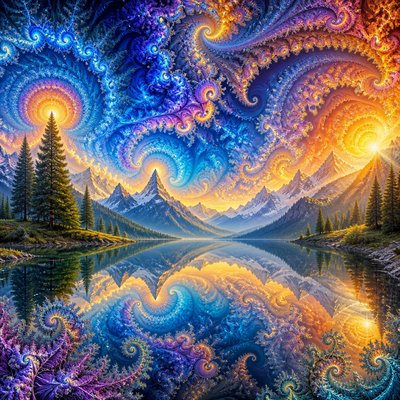
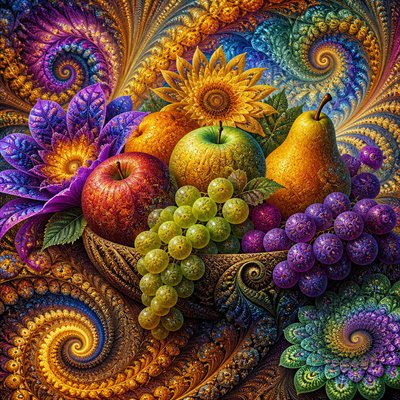
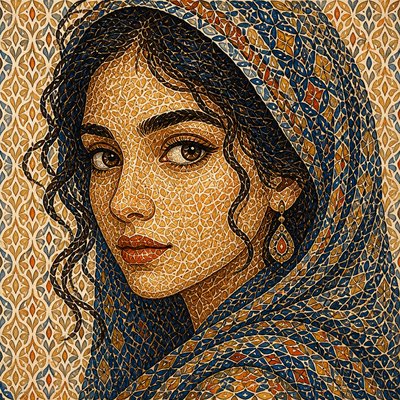
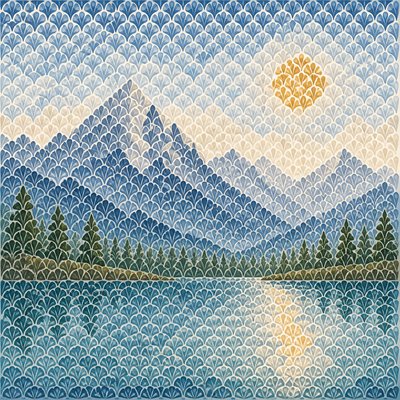
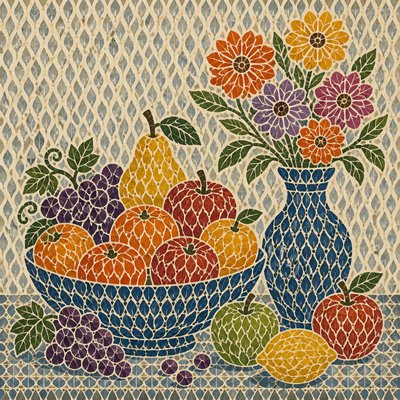
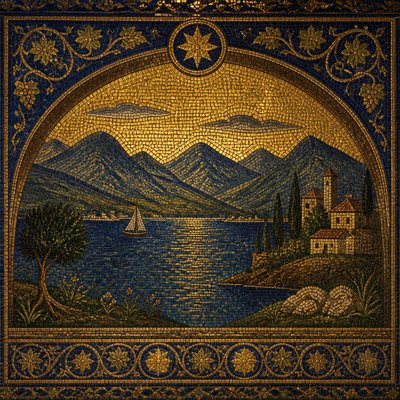
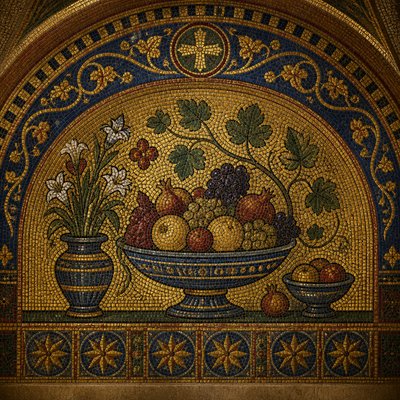
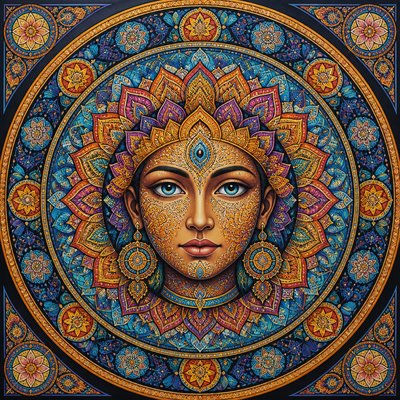
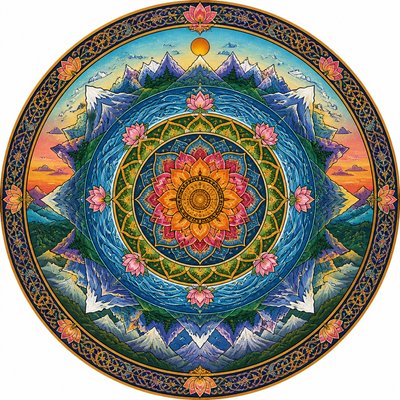
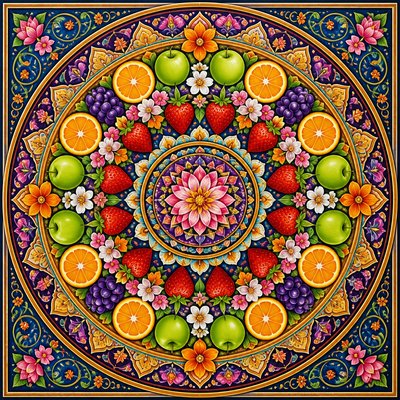
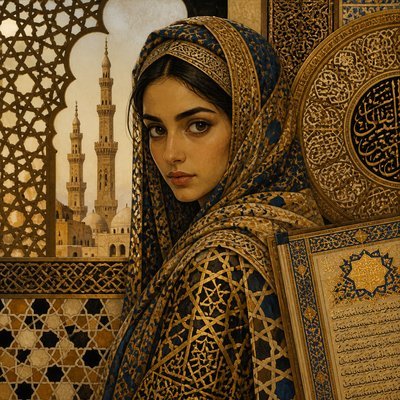
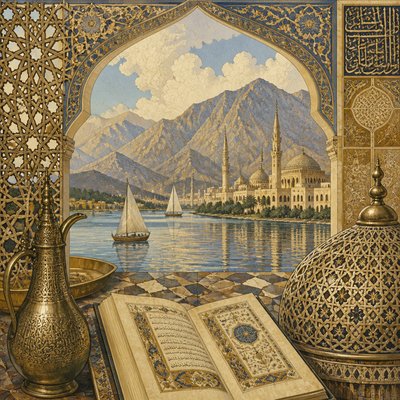
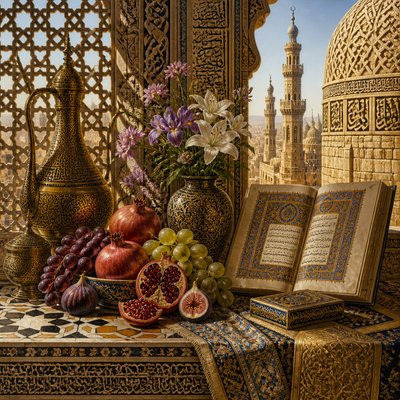
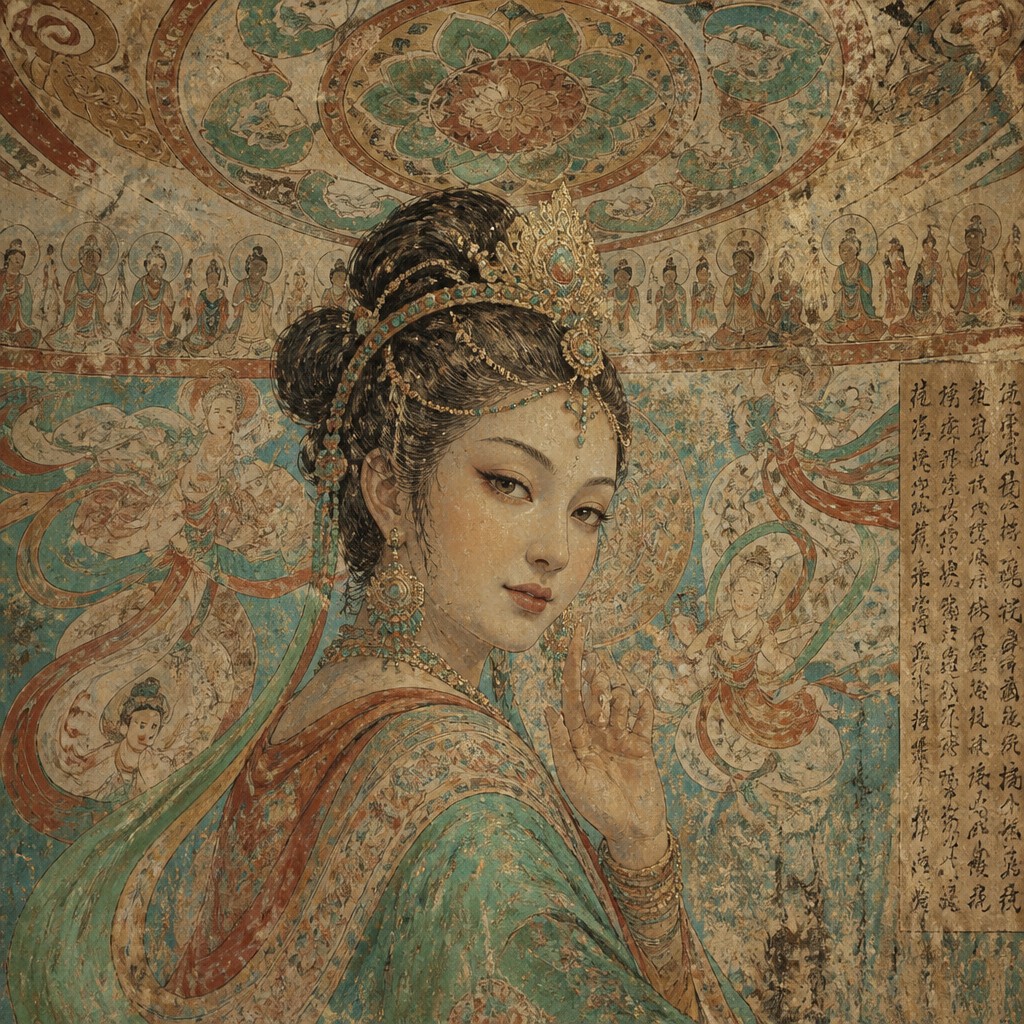
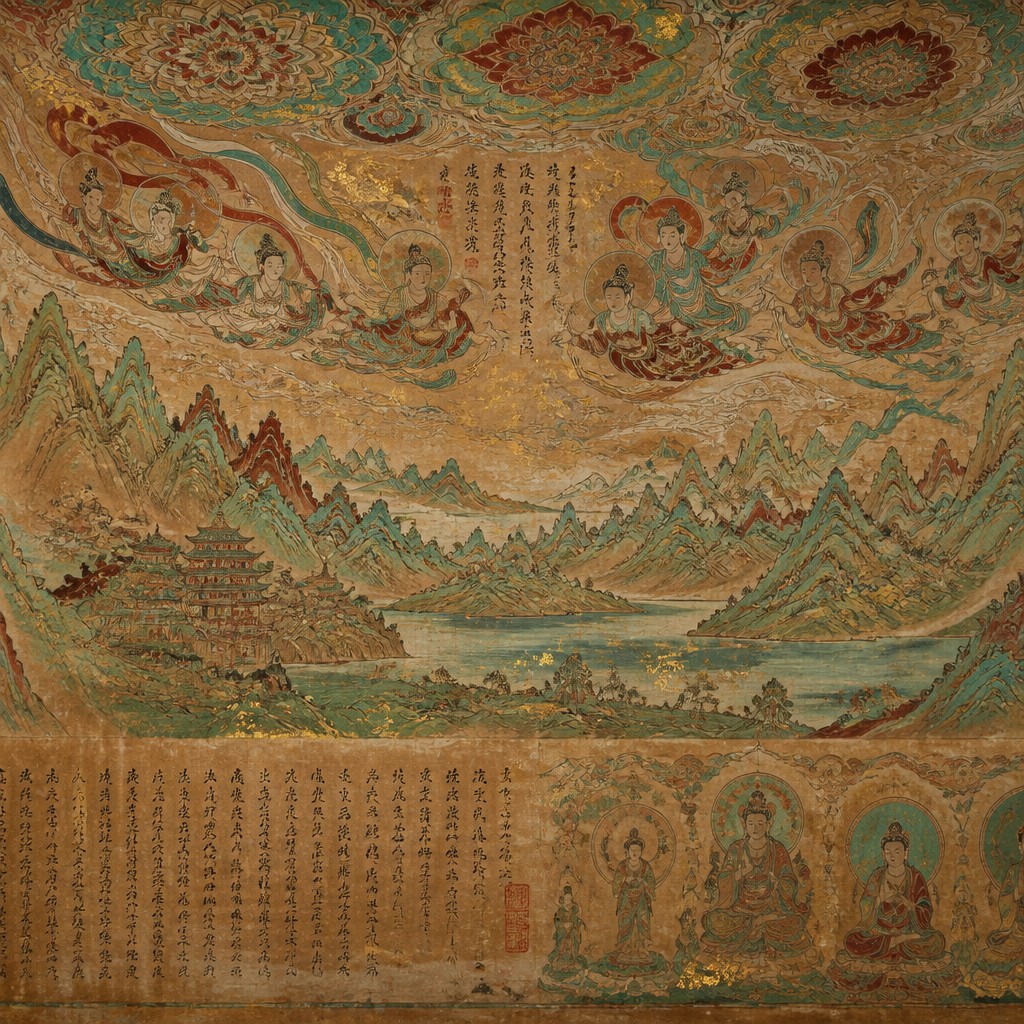
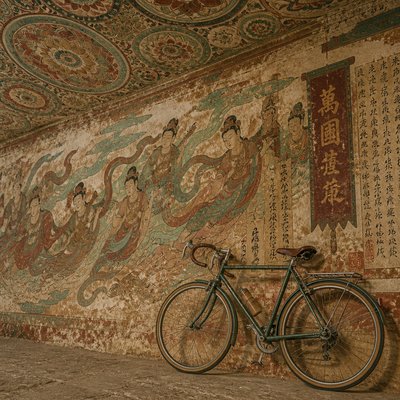
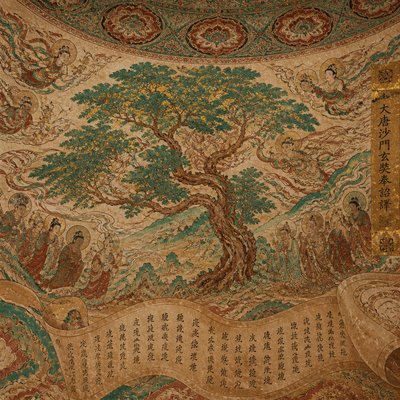
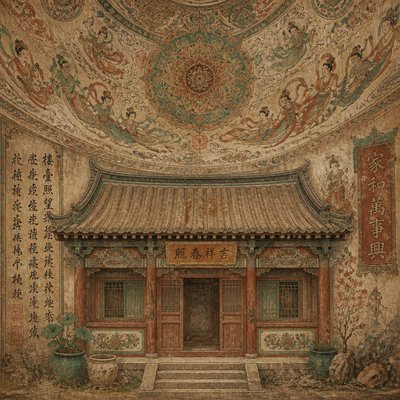
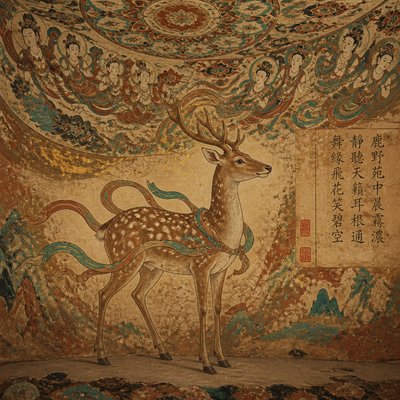
The style is defined by mineral-based color, precise contour drawing, symbolic imagery, and highly organized composition. Malachite greens, azurite blues, cinnabar reds, ochres, carbon black, and pale mineral tones were layered over prepared plaster or silk; metallic accents and accumulated age can produce a restrained gold shimmer. Repeating lotus medallions, geometric ceiling designs, curling scarves, and airborne figures create a sense of movement suited to curved cave architecture.
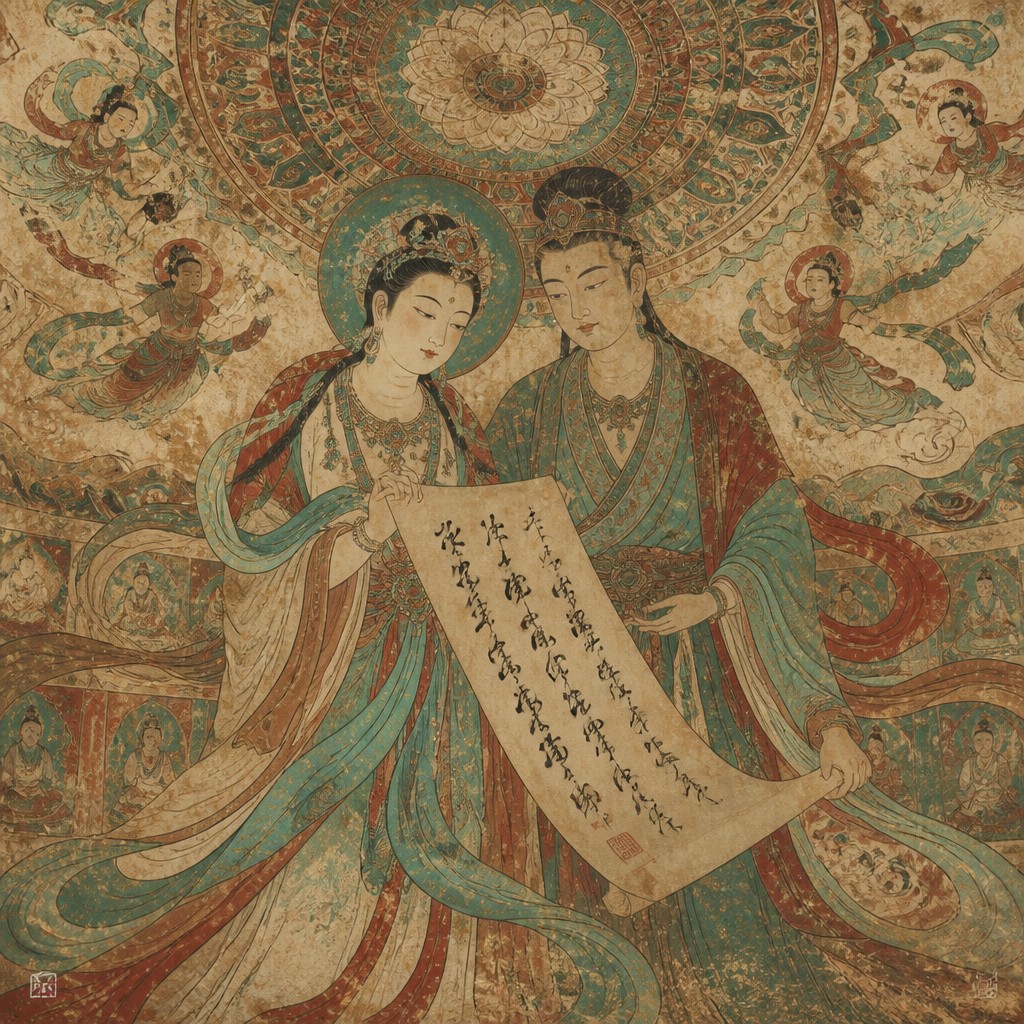
Try It On Your Photos
Upload any photo and convert it into Dunhuang Art Style — drag the sliders to compare before and after.
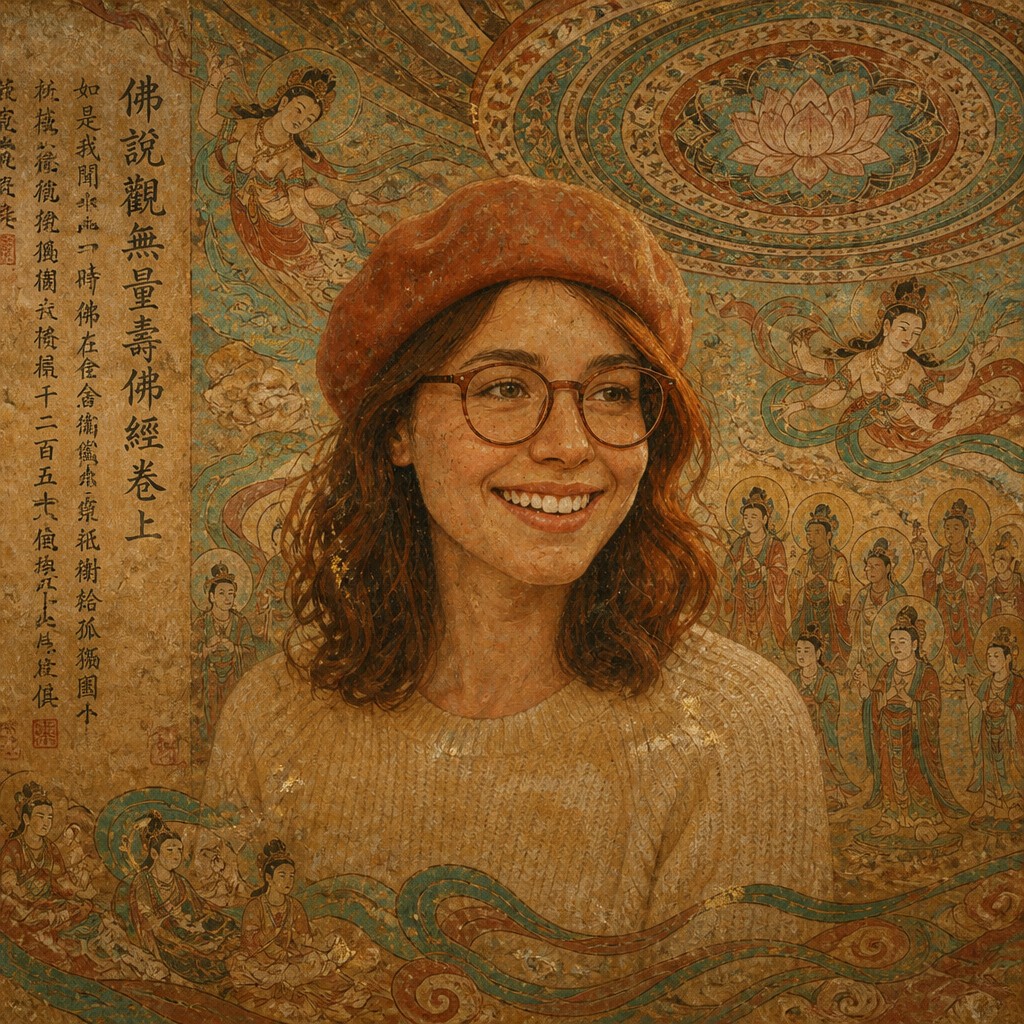

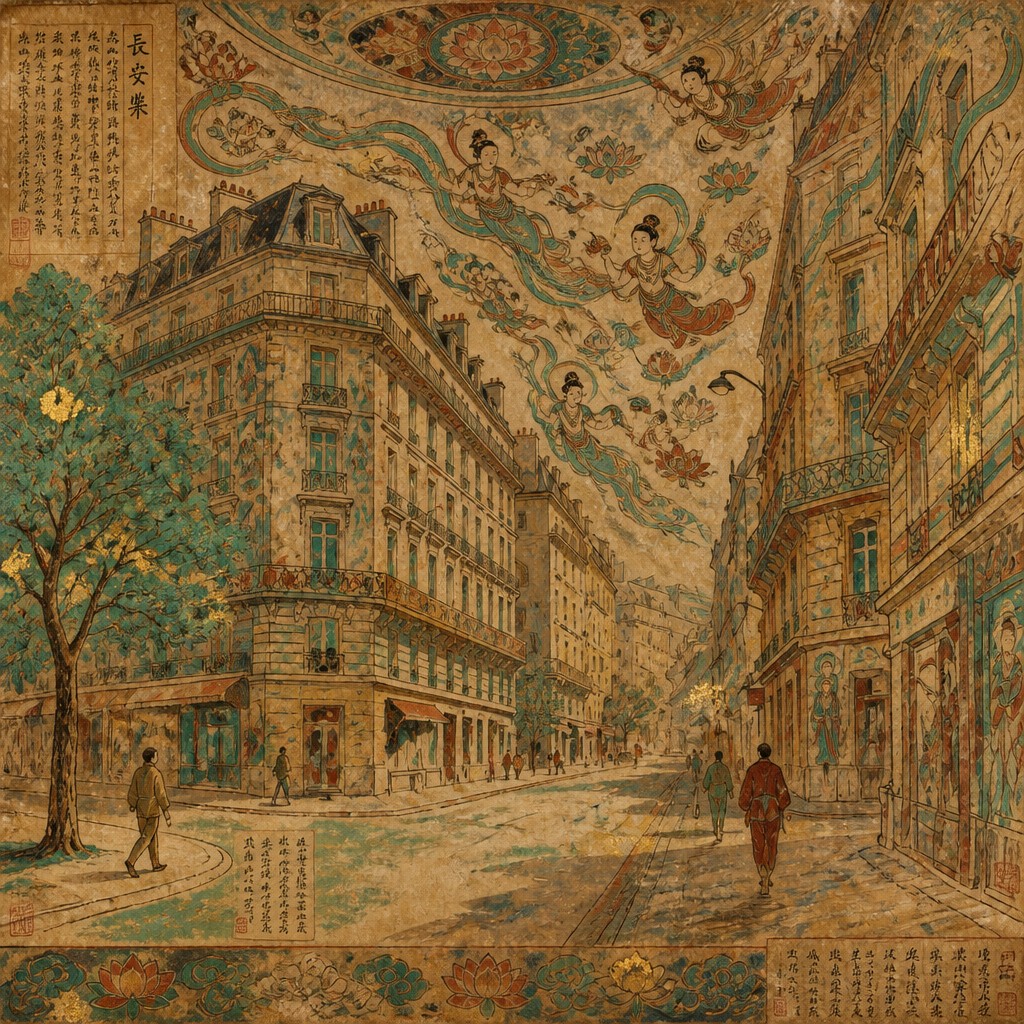

What Defines Dunhuang Art Style
The signature details, up close
Mineral pigment palette
Malachite, azurite, cinnabar, ochre, mineral white, and carbon black create dense, matte color fields. Aging, flaking, and desert dust often soften the original intensity into a weathered palette.
Controlled contour drawing
Figures and ornamental forms are structured by confident ink or pigment outlines. Layered robes, ribbons, clouds, and floral motifs depend on economical lines that clarify gesture and volume.
Flowing processions
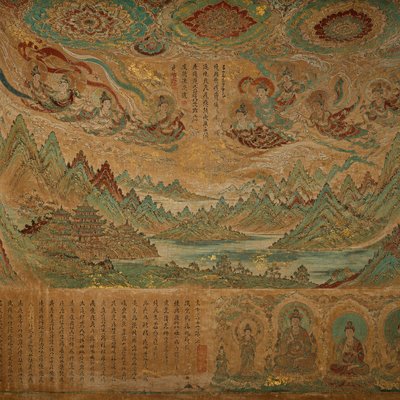
Buddhas, bodhisattvas, attendants, musicians, donors, and celestial beings are arranged in rhythmic groups. Curving bodies, scarves, banners, and cloud forms lead the eye around walls and ceilings.
Lotus and geometric ornament
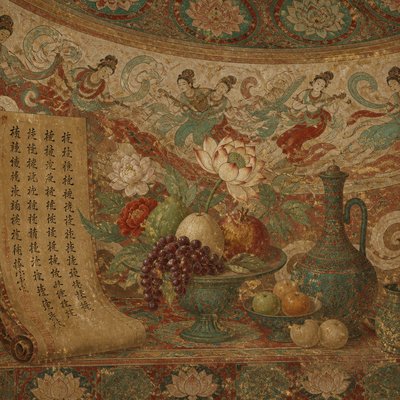
Lotus medallions, rosettes, floral scrolls, checkerboards, diamonds, and repeating architectural patterns organize cave ceilings and borders. Symmetry and repetition provide a framework for the more animated figures.
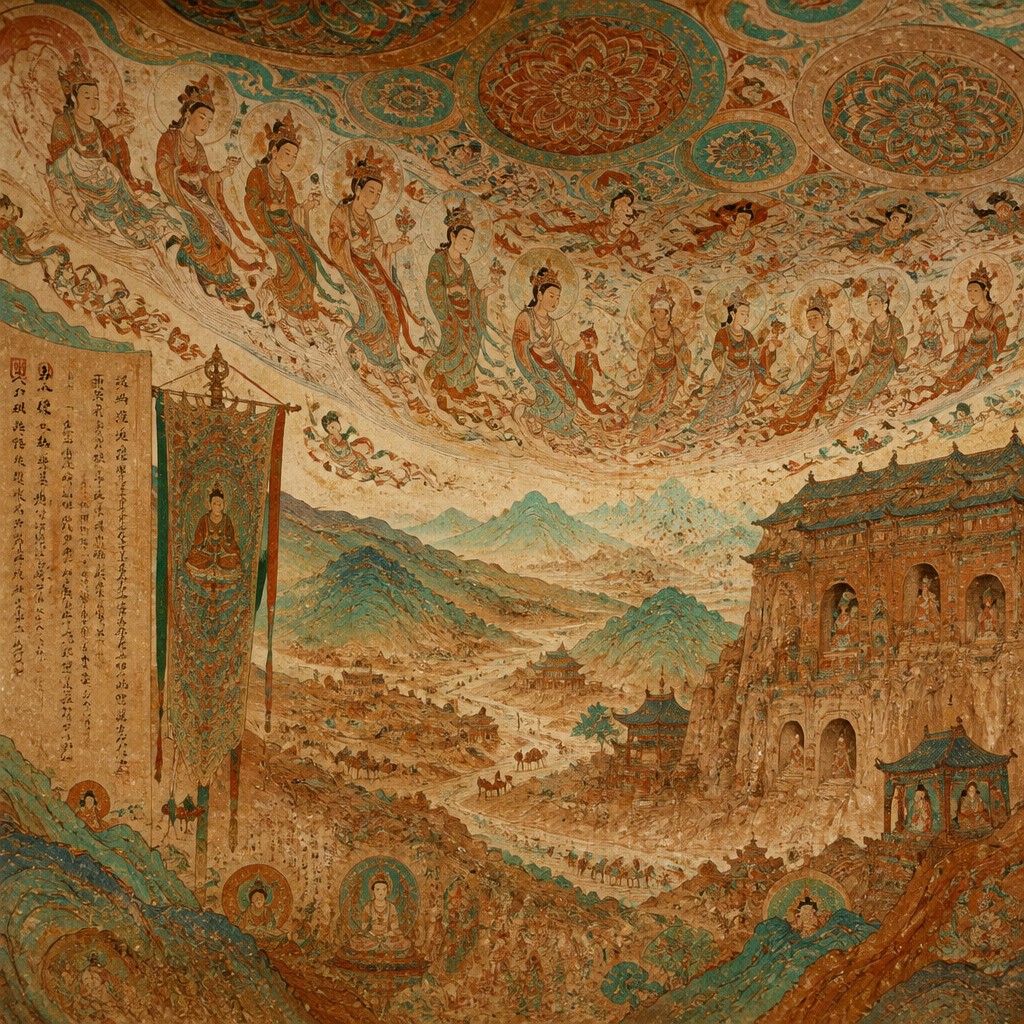
Buddhist narrative imagery
Scenes may depict Buddhist parables, devotional assemblies, paradises, protective deities, ritual performers, and acts of generosity. Symbolic hierarchy and iconographic attributes are more important than naturalistic realism.
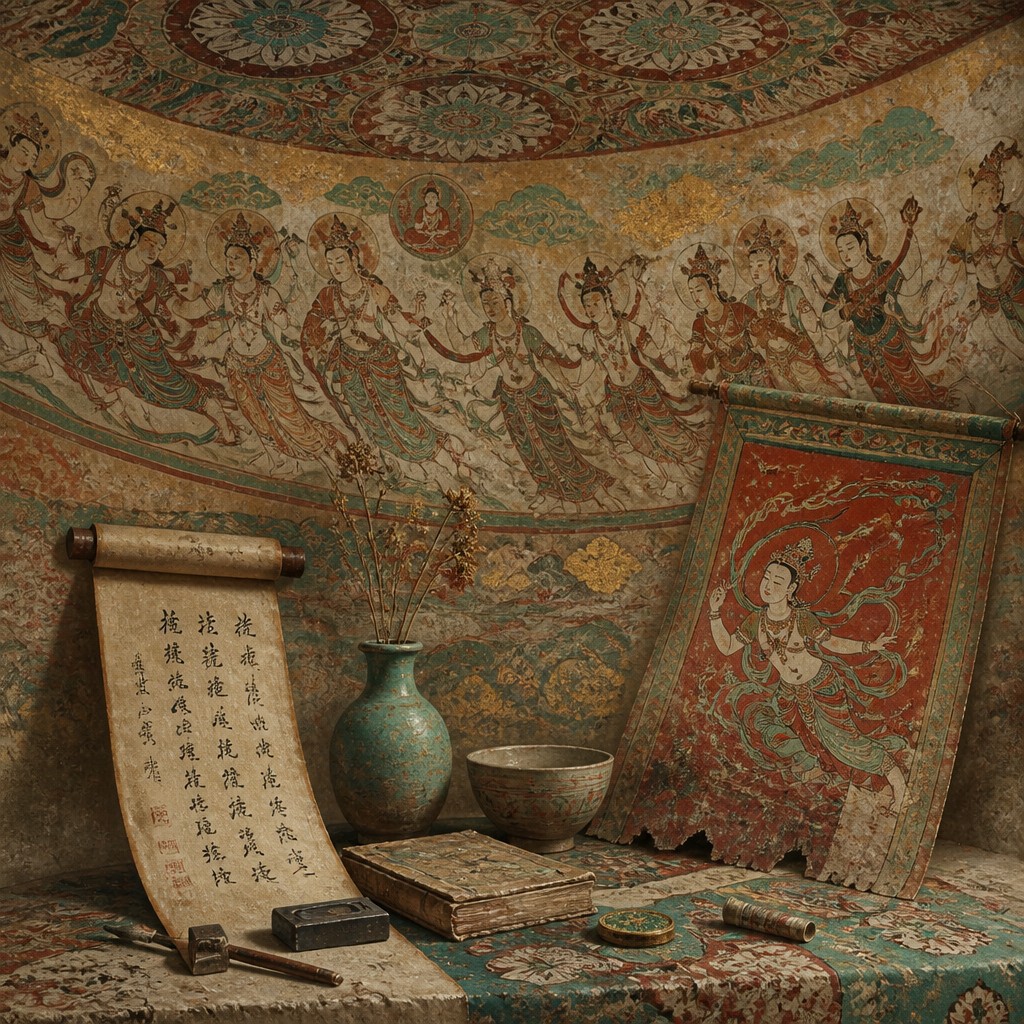
Silk banners and manuscript aesthetics
Painted banners and devotional textiles extend the visual language beyond plaster walls, combining linear figures, decorative borders, calligraphy, and occasional metallic accents. Aged silk introduces folds, frayed edges, and irregular pigment absorption.
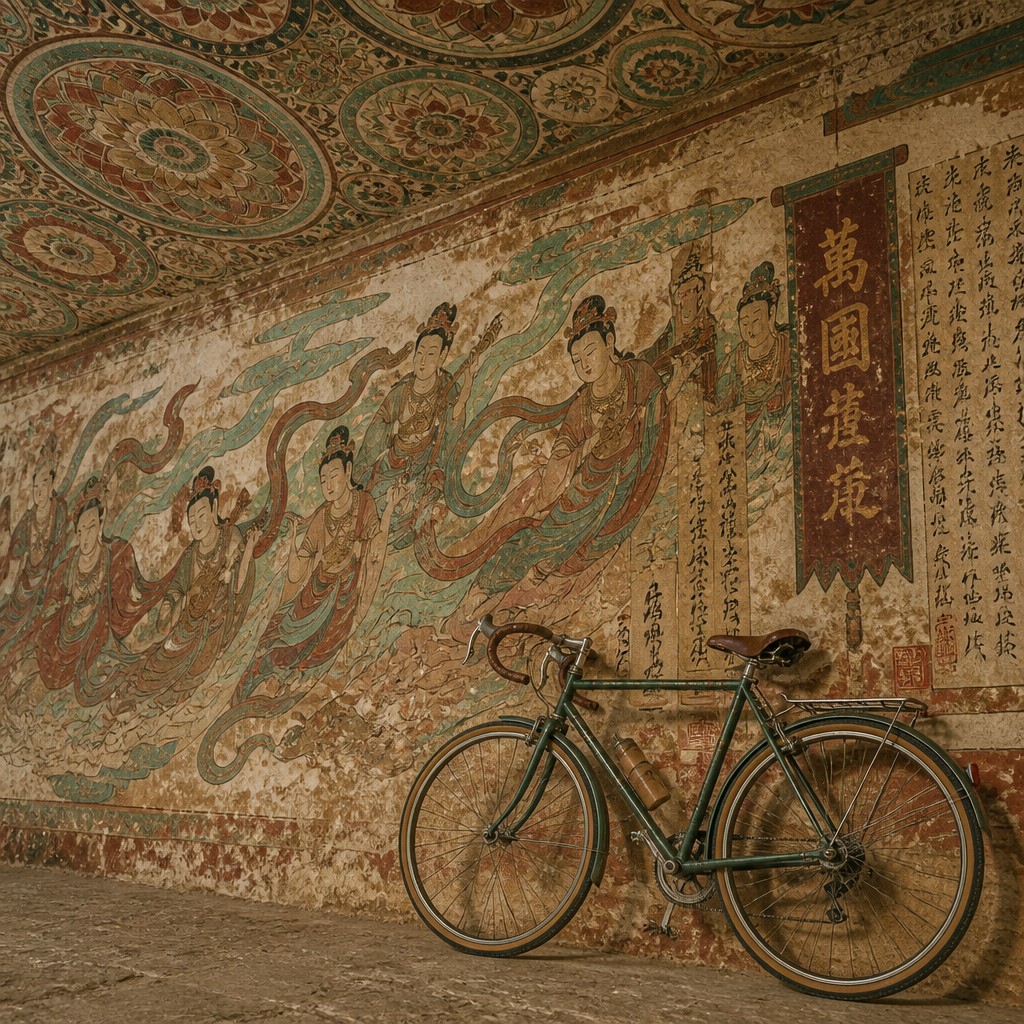
Architectural integration
The imagery responds to the shape and function of the cave, with ceiling patterns, wall registers, niches, and illusionistic architectural frames. Compositions often feel enveloping rather than confined to a rectangular picture plane.
Dunhuang Prompt Ideas
Start from an idea — each one opens the generator with the style ready to go. See all 40 Dunhuang prompts →
How to Create Dunhuang Art
Master the craft step by step — or skip straight to creating. Read the full guide →
- 1
Build a mineral pigment ground
For traditional work, prepare a plaster, gesso, or absorbent textile ground and use opaque earth and mineral pigments in thin layers. Digitally, simulate granular pigment, matte coverage, slight color separation, and uneven absorption rather than smooth synthetic gradients.
- 2
Start with rhythmic line
Sketch the main procession, gesture lines, robes, ribbons, and architectural divisions before adding color. Keep contours deliberate and varied in pressure, with simplified anatomy guided by pose and symbolic clarity.
- 3
Organize the composition in registers
Divide the image into tiers, borders, niches, or ceiling panels, then balance large sacred figures with smaller attendants and repeating ornament. A curved flow across the surface is more characteristic than a single isolated central figure.
- 4
Use symbolic color and pattern
Reserve cinnabar, malachite, azurite, ochre, and black for clearly separated forms, and add lotus, cloud, textile, and geometric motifs as structural accents. Avoid excessive photorealistic shading or uncontrolled color variety.
- 5
Add age without obscuring design
Introduce faded edges, plaster abrasion, pigment loss, silk creases, dust, and restrained gold flecks after the underlying drawing is complete. Weathering should reveal the history of the surface while preserving the legibility of figures and patterns.
- 6
Write prompts with material and layout cues
For digital or AI creation, specify the subject, cave-wall or silk support, mineral pigments, contour drawing, procession, lotus geometry, and aged desert patina. Include exclusions such as glossy 3D rendering, photographic lighting, or modern typography when a historically grounded result is desired.
The Story
History & Origins of Dunhuang
Early murals show strong Central and Inner Asian influences in costume, facial types, composition, and ornament, while later periods increasingly incorporate Chinese landscape painting, architectural settings, calligraphic aesthetics, and courtly fashion. The surviving caves, sculptures, manuscripts, and silk paintings are not the product of one uniform style; rather, “Dunhuang art” is a broad historical field spanning many centuries, workshops, materials, and regional influences.
Influences: Dunhuang art draws on Indian Buddhist iconography, Central Asian and Inner Asian visual traditions, Chinese court and religious painting, Silk Road textile design, manuscript illumination, and the linear discipline of calligraphy. It is also related to Chinese mural painting, Buddhist mandala and paradise imagery, decorative architectural pattern, and the broader tradition of painting on silk and prepared plaster. Contemporary interpretations often combine these sources with conservation photography, historical illustration, and digitally simulated pigment texture.
Frequently Asked Questions
What defines the Dunhuang art style?
It is defined by Buddhist mural imagery, mineral pigments, strong contour drawing, rhythmic processions, lotus and geometric ornament, and compositions integrated with cave architecture. Painted silk banners and manuscript-like calligraphic details are also important related forms.
When and where did Dunhuang art develop?
It developed around Dunhuang in present-day Gansu Province, China, along the Silk Road. The main period of cave decoration extended from approximately the fourth through the fourteenth century, with major changes across successive historical periods.
Is Dunhuang art the same as Chinese Buddhist art?
No. Dunhuang art is a regional and historical concentration within the wider field of Chinese Buddhist art. Its imagery incorporates Chinese traditions but also preserves substantial Central Asian, South Asian, and other Silk Road influences.
What materials were used in Dunhuang murals?
Artists worked on prepared cave surfaces using earth and mineral pigments, including malachite, azurite, cinnabar, ochres, mineral whites, and carbon black. Silk banners and manuscripts used ink, mineral color, textile supports, and in some cases metallic decoration.
How can I make an image in this style?
Begin with a clear contour drawing and a composition divided into registers or flowing groups. Use a limited mineral palette, symbolic patterns, lotus ornaments, layered robes, and a matte plaster or silk texture; digitally, add pigment granulation and restrained surface aging.
Where is Dunhuang art commonly used today?
Its visual language appears in museum interpretation, historical illustration, cultural education, textile and surface design, animation, game environments, editorial art, and contemporary painting. Responsible use should distinguish historical references from generic exotic or fantasy imagery.
Create your first Dunhuang artwork
Describe anything — or upload a photo — and see it in Dunhuang Art Style in seconds.
Related Styles
Discover similar art styles