Dresden Romantic Art Style
Explore Dresden Romantic Art: misty moonlit landscapes, solitary figures, Gothic ruins, and the spiritual grandeur of the northern sublime.
Instantly rendered in Dresden Romantic — or transform a photo
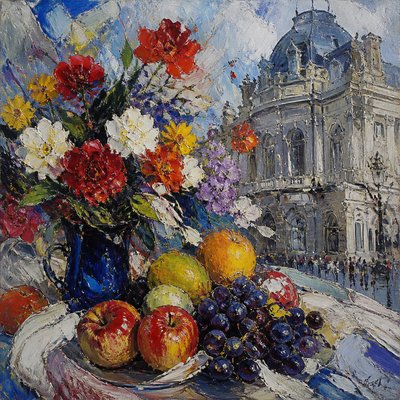
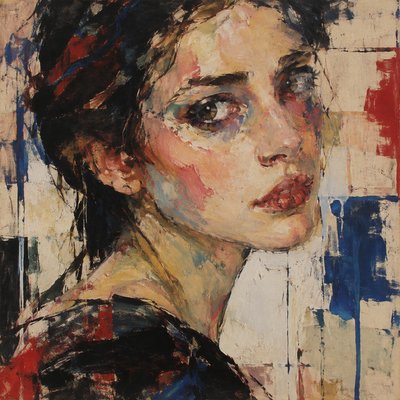
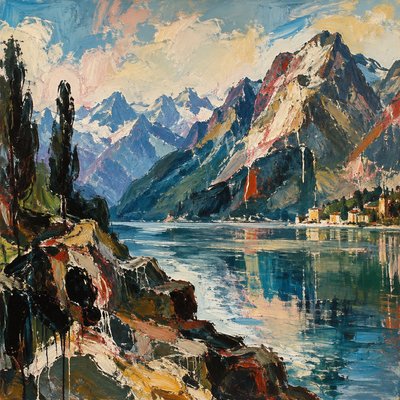
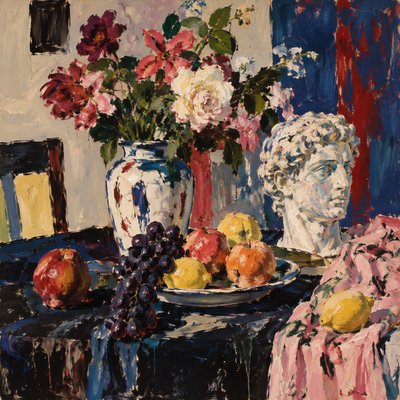
Dresden Romantic Gallery
Tap any artwork to explore it
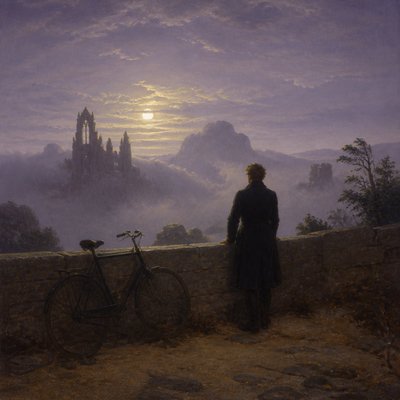
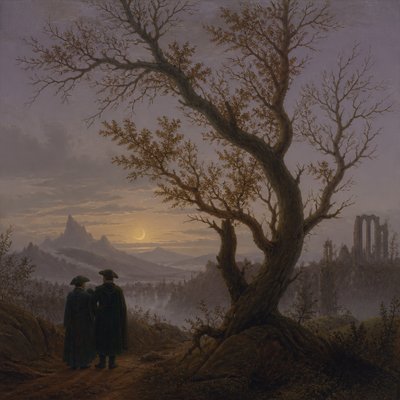
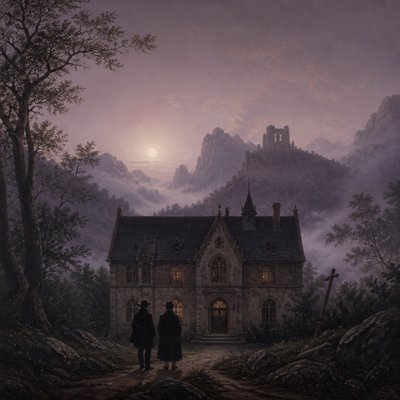
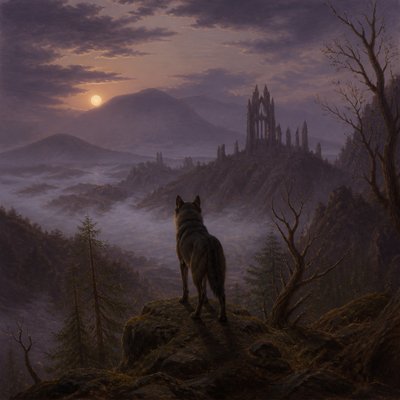
What is Dresden Romantic Art Style?
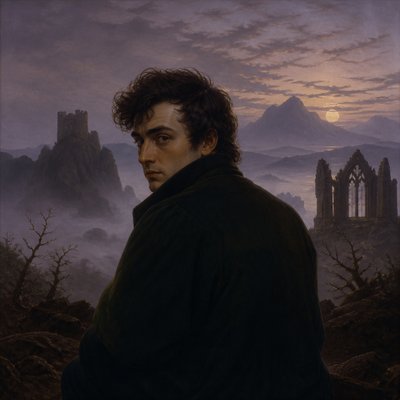
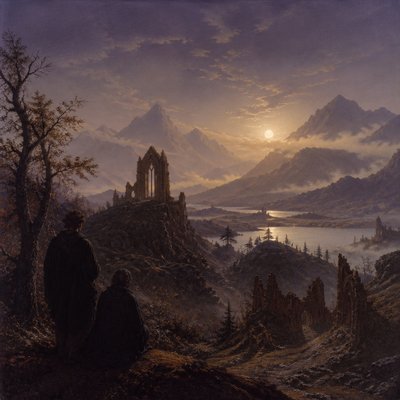
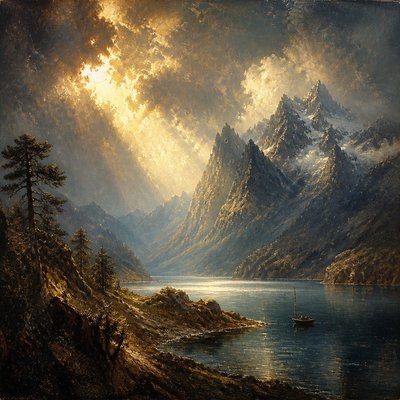
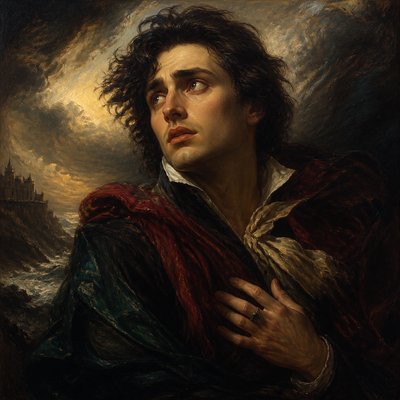
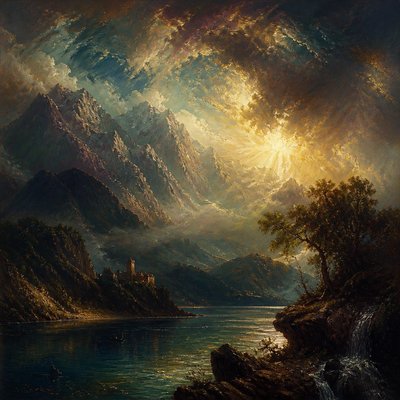
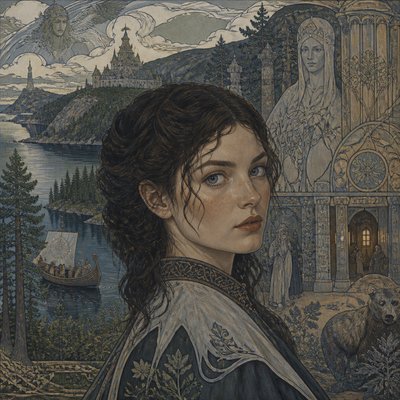
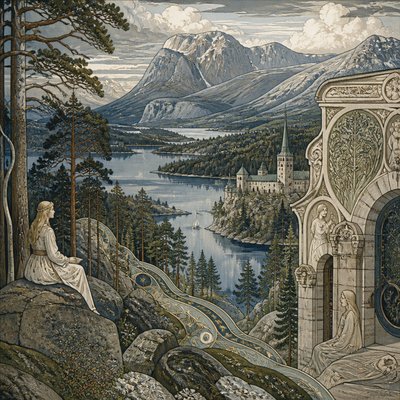
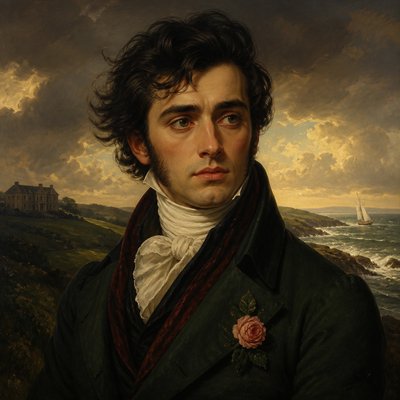
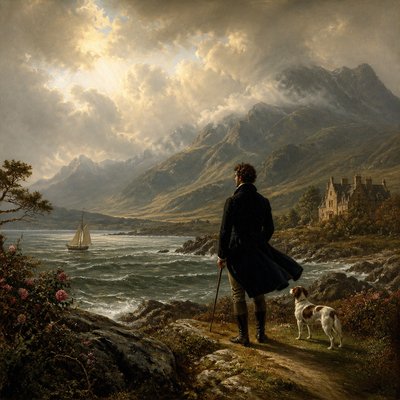
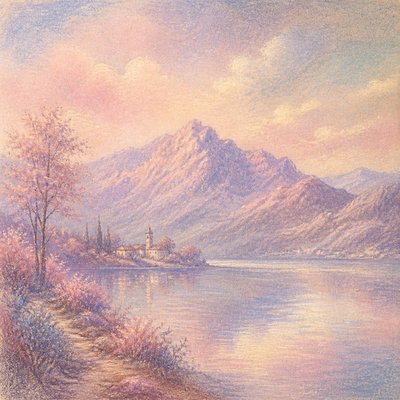
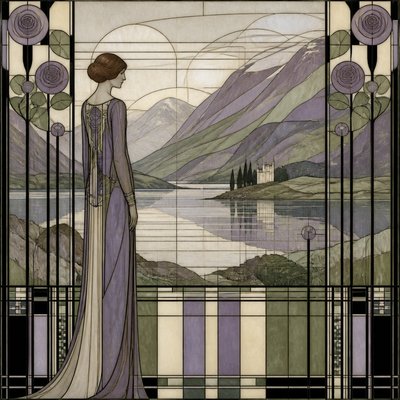
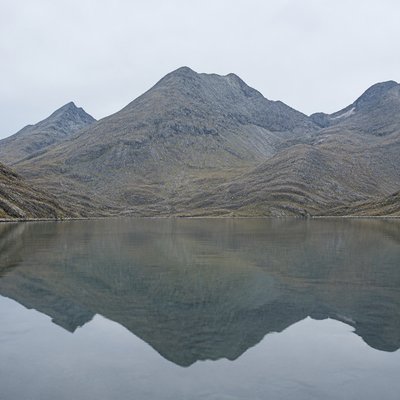
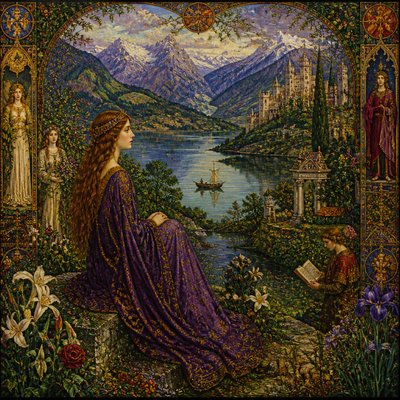
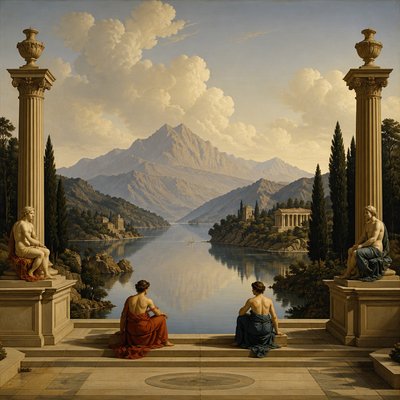
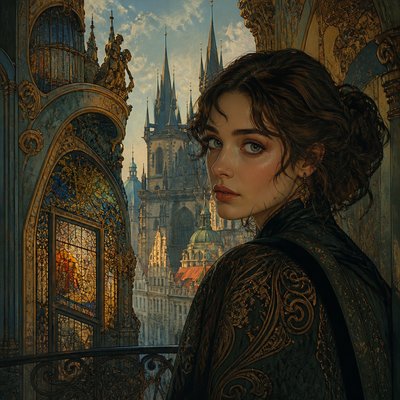
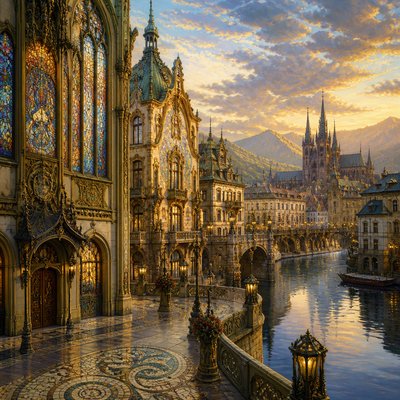
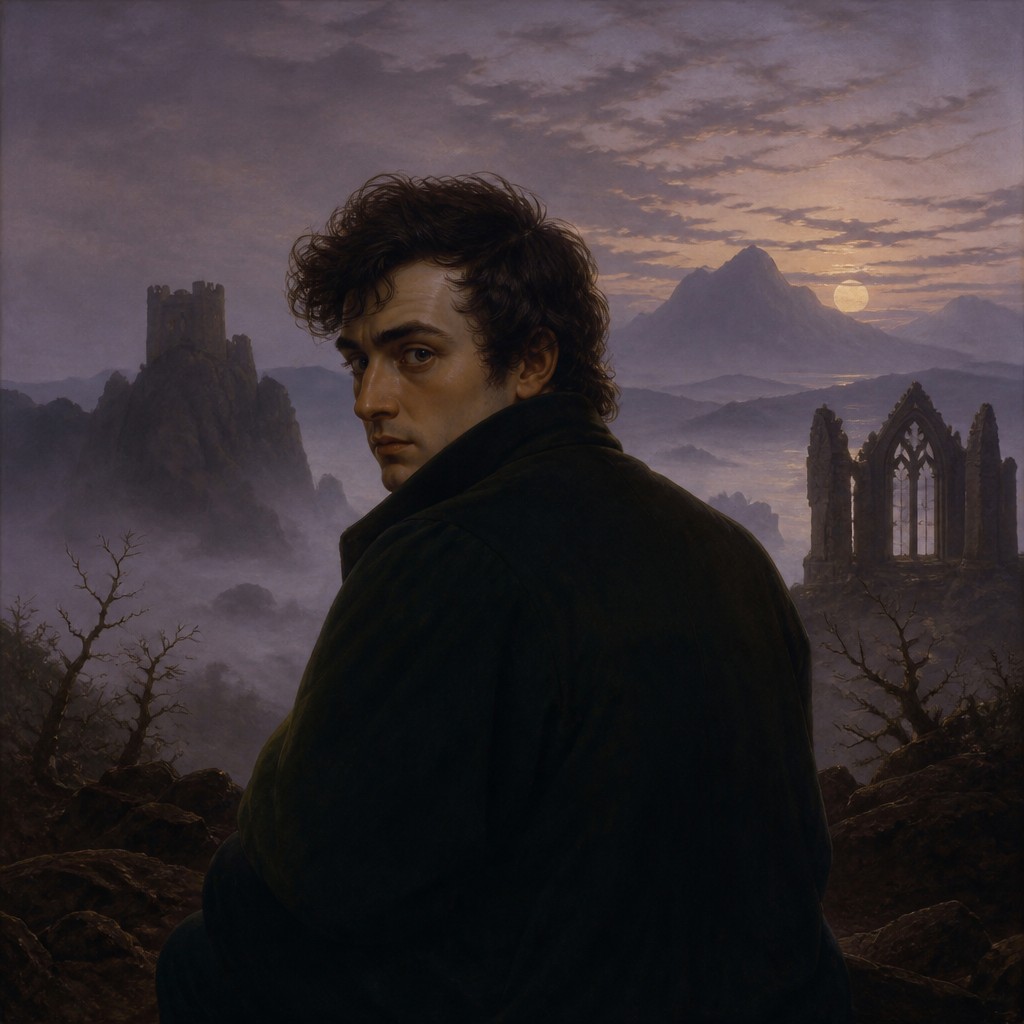
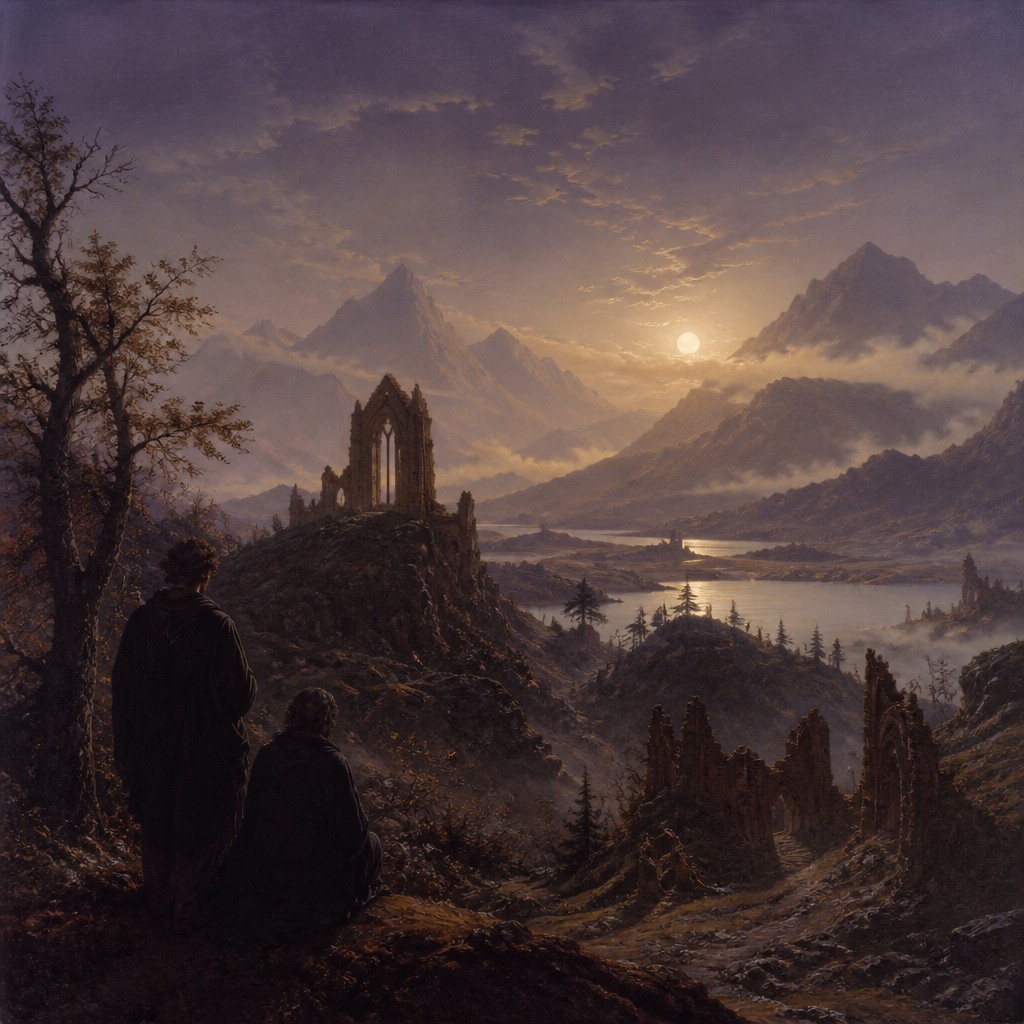
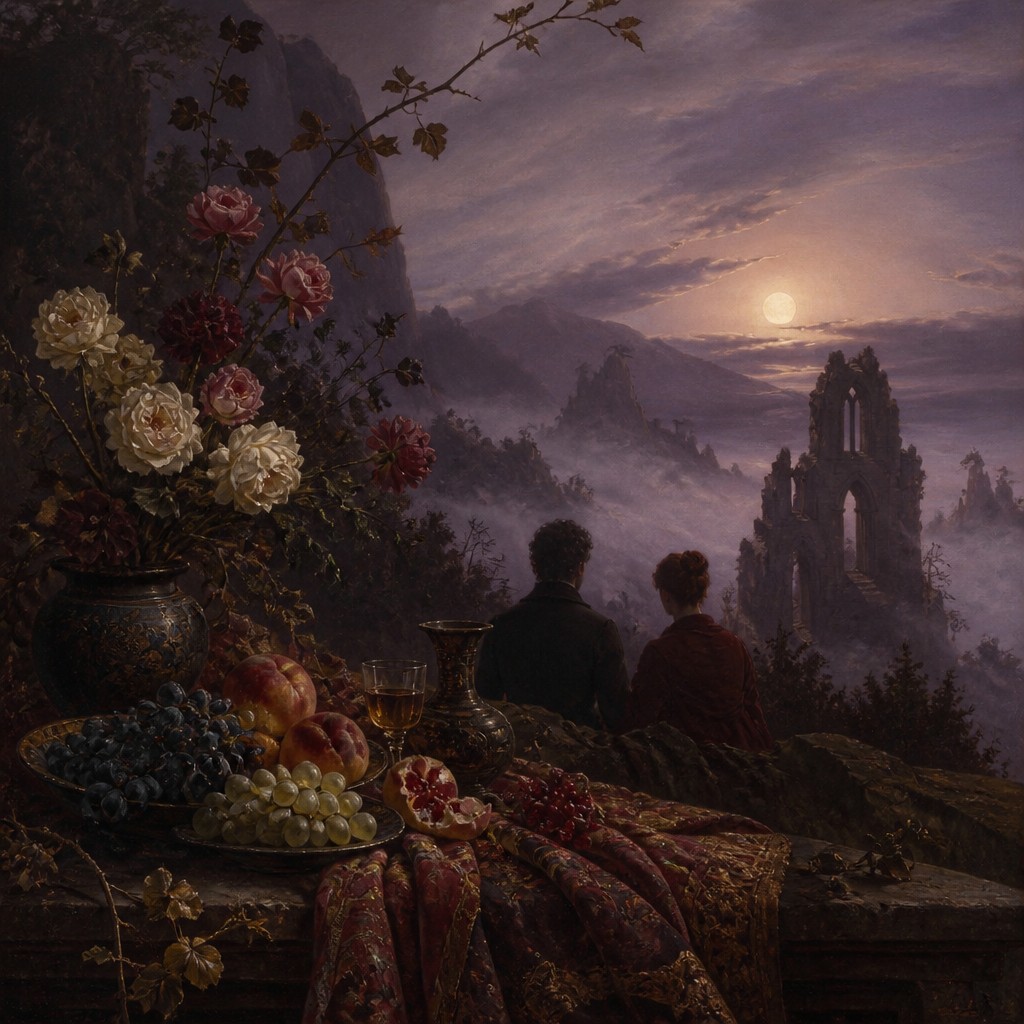
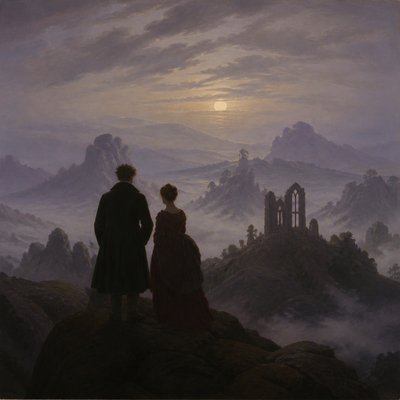
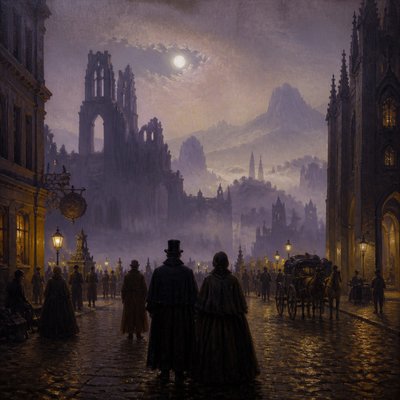
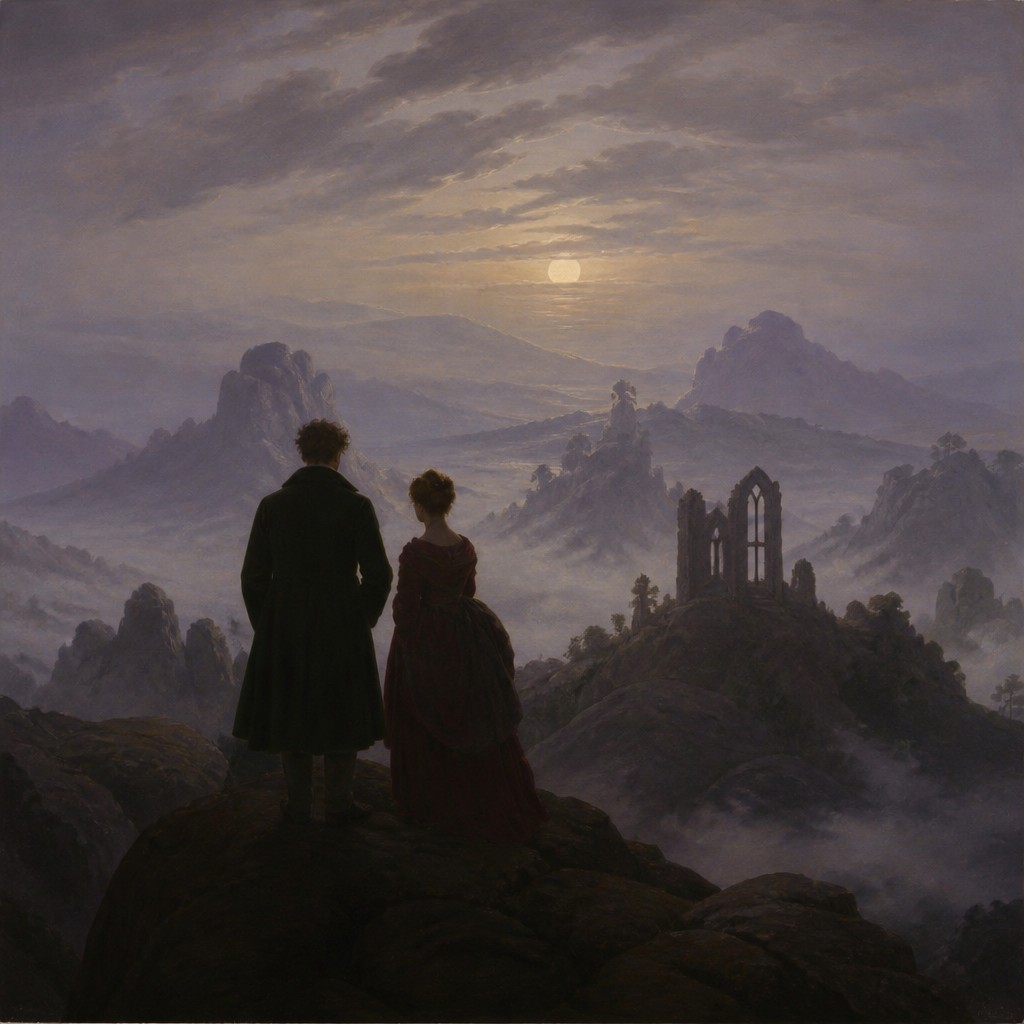
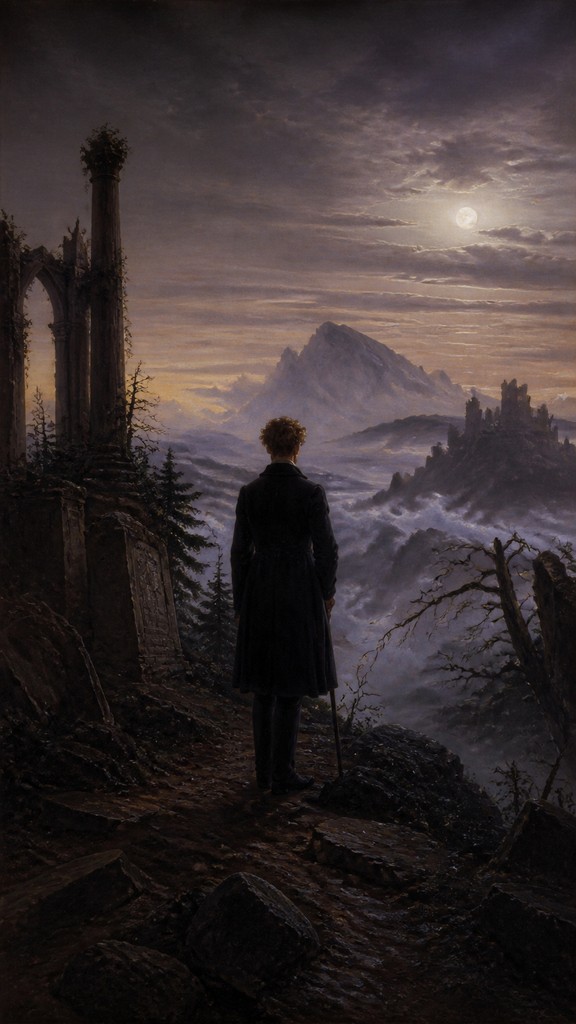
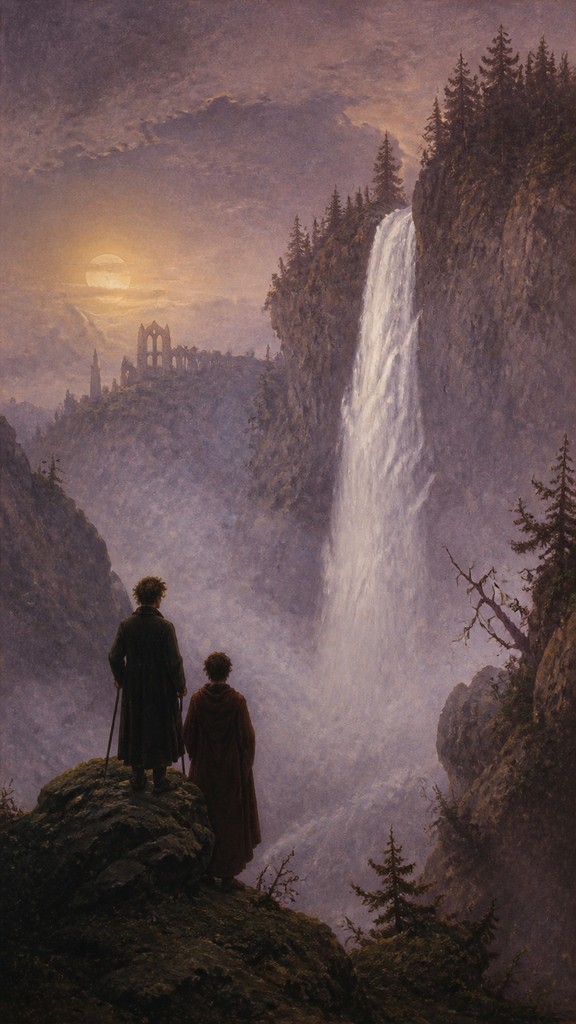
Dresden Romantic Art Style is a contemporary descriptive label for an image language shaped by German Romantic landscape painting and the northern sublime. Its signature scene places a solitary, contemplative figure—usually viewed from behind—before an immense landscape of mist, mountains, moonlight, ruined architecture, or distant water. The human presence is small, quiet, and psychologically open, acting as a point of entry into the vastness beyond.
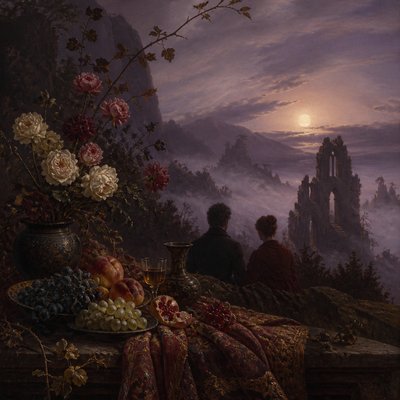
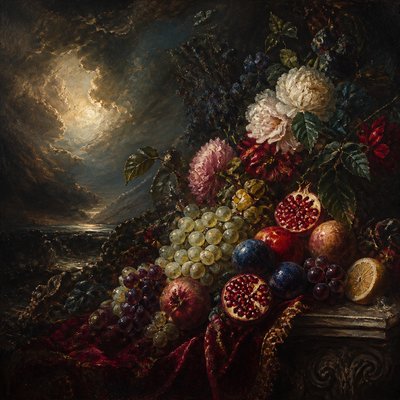
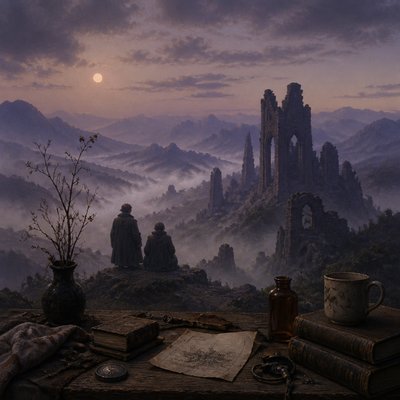
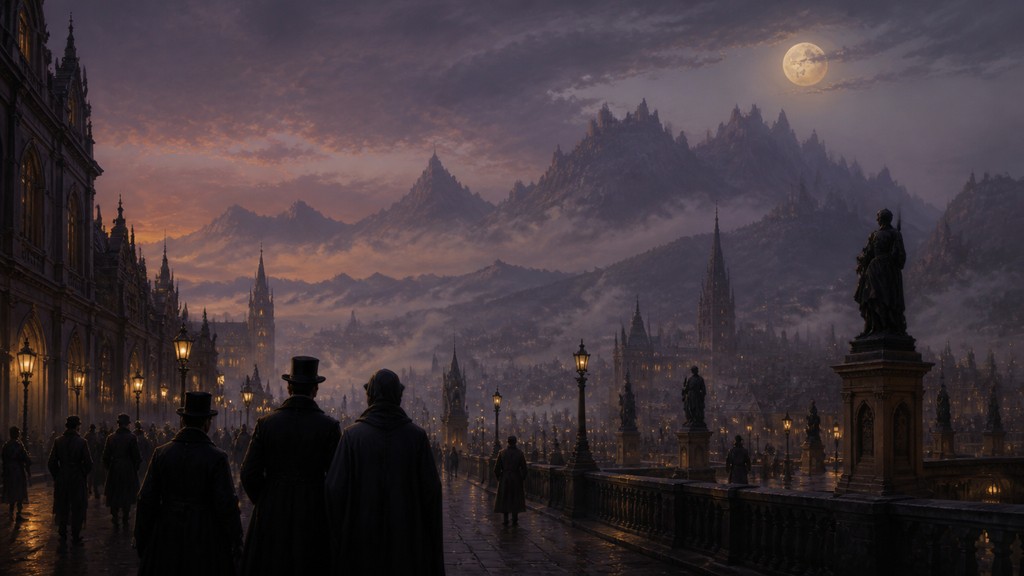
The style relies on restrained composition, atmospheric depth, and a subdued palette of violet-grey, blue-black, stone, and muted amber. Backlighting turns people, trees, cliffs, and Gothic structures into silhouettes, while fog obscures precise boundaries and gives the landscape a spiritual or metaphysical charge. The result is less a literal location than a visual meditation on solitude, mortality, faith, and the sublime.
Try It On Your Photos
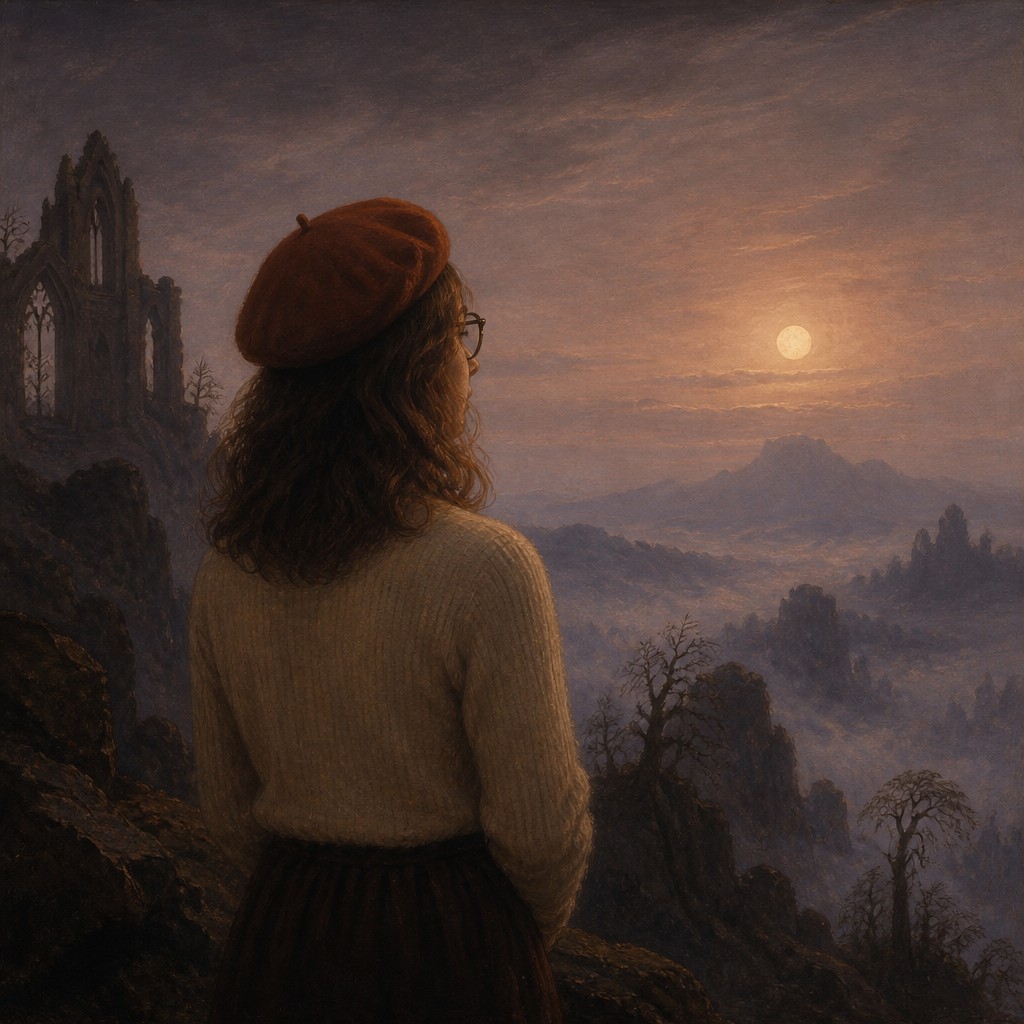
Upload any photo and convert it into Dresden Romantic Art Style — drag the sliders to compare before and after.


What Defines Dresden Romantic Art Style
The signature details, up close
Contemplative figures from behind
A lone person, pair, or small group is commonly shown with their back to the viewer. This anonymous viewpoint encourages identification with the figure and keeps attention on the surrounding world.
Vast misty vistas
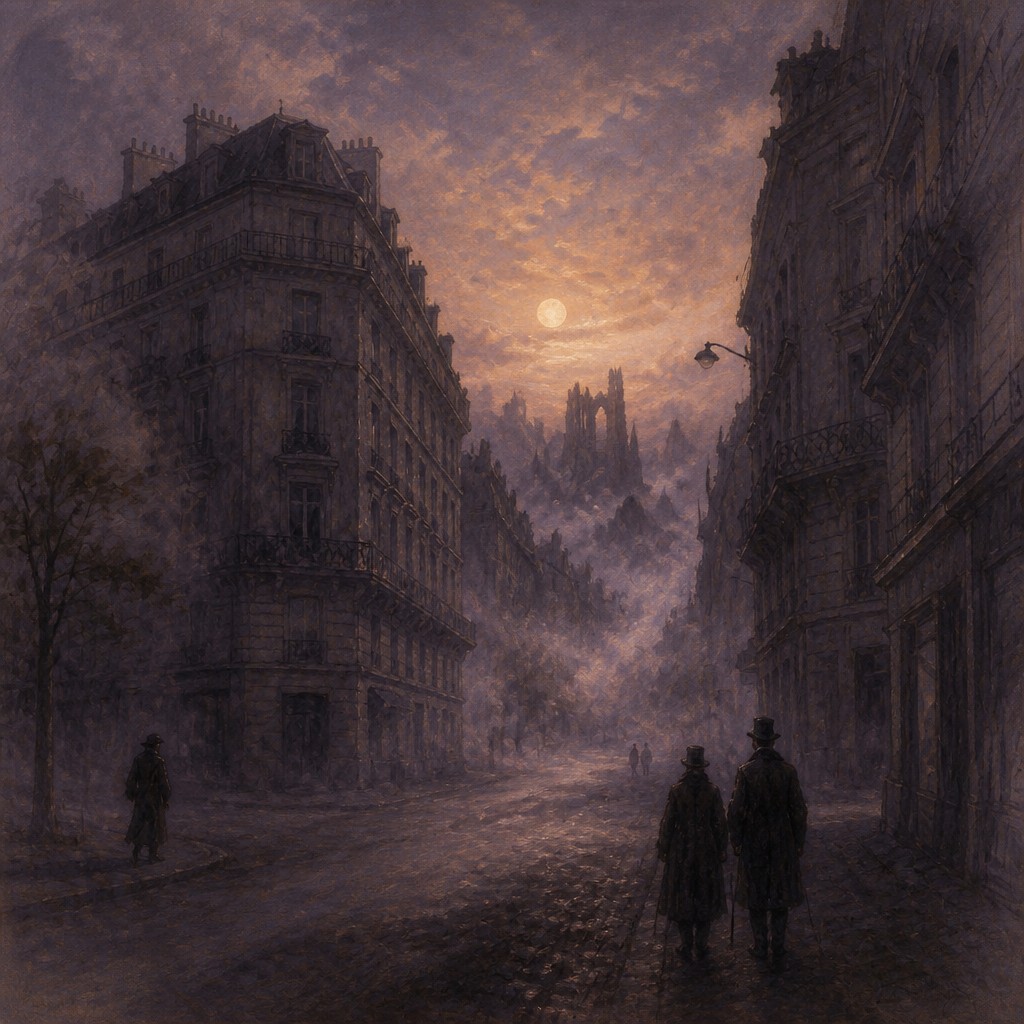
Fog, haze, cloud banks, and distant ridges create layered depth while concealing parts of the scene. Atmospheric uncertainty is as important as physical detail.
Moonrise and low illumination
Moonlight, twilight, and narrow breaks of amber illumination organize the composition. Strong backlighting produces quiet silhouettes rather than theatrical highlights.
Gothic ruins and northern architecture
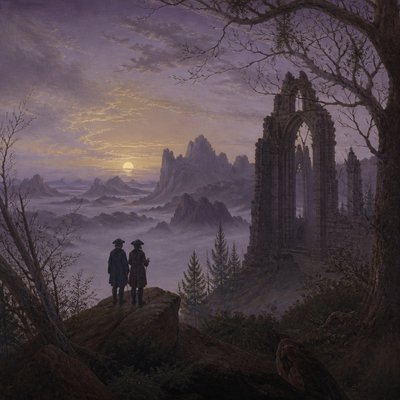
Crumbling abbeys, arched windows, watchtowers, bridges, and remote chapels suggest historical memory and spiritual questioning. Architecture is typically subordinate to the landscape.
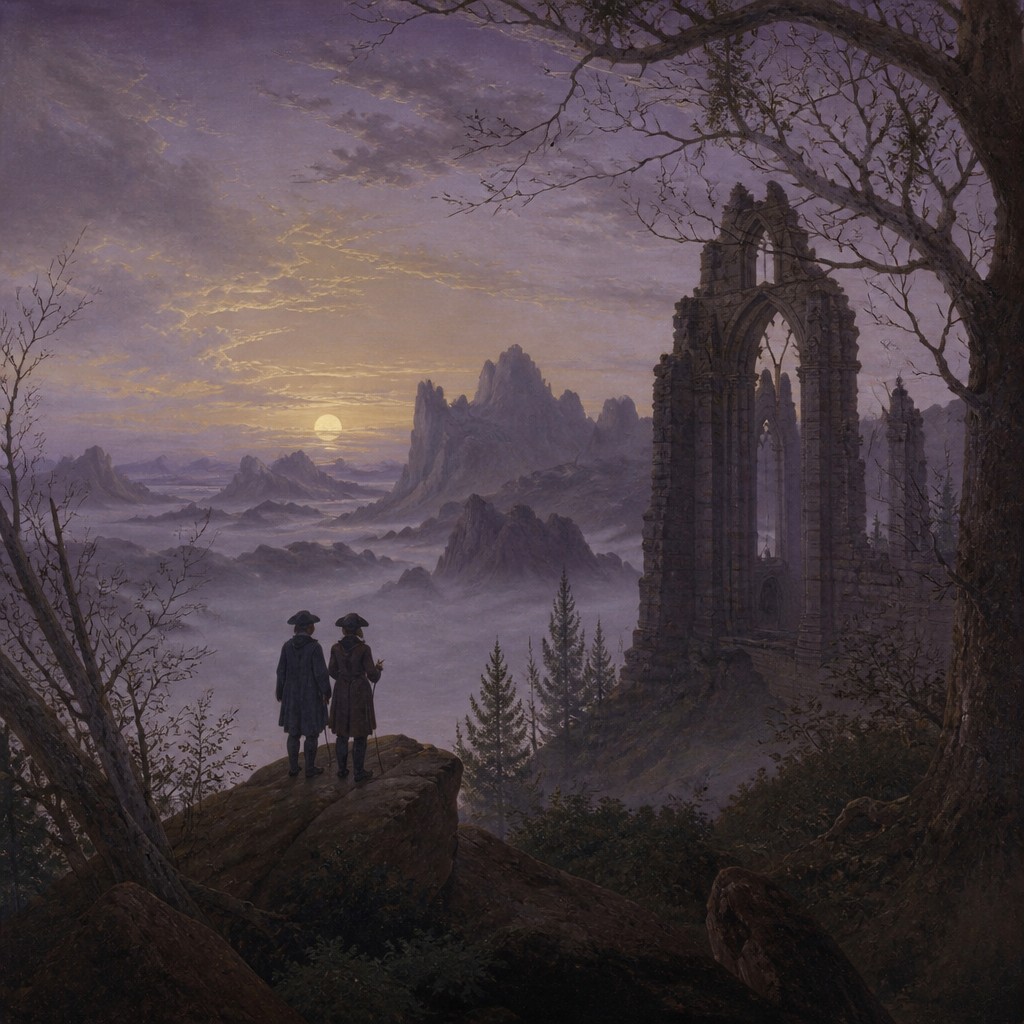
Cool, muted color
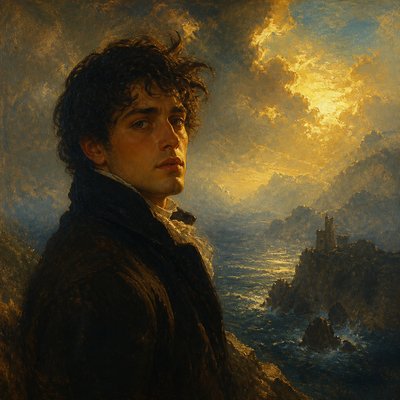
Violet-grey, desaturated blue, charcoal, moss, stone, and restrained gold form the dominant palette. Saturated color is used sparingly as an emotional accent.
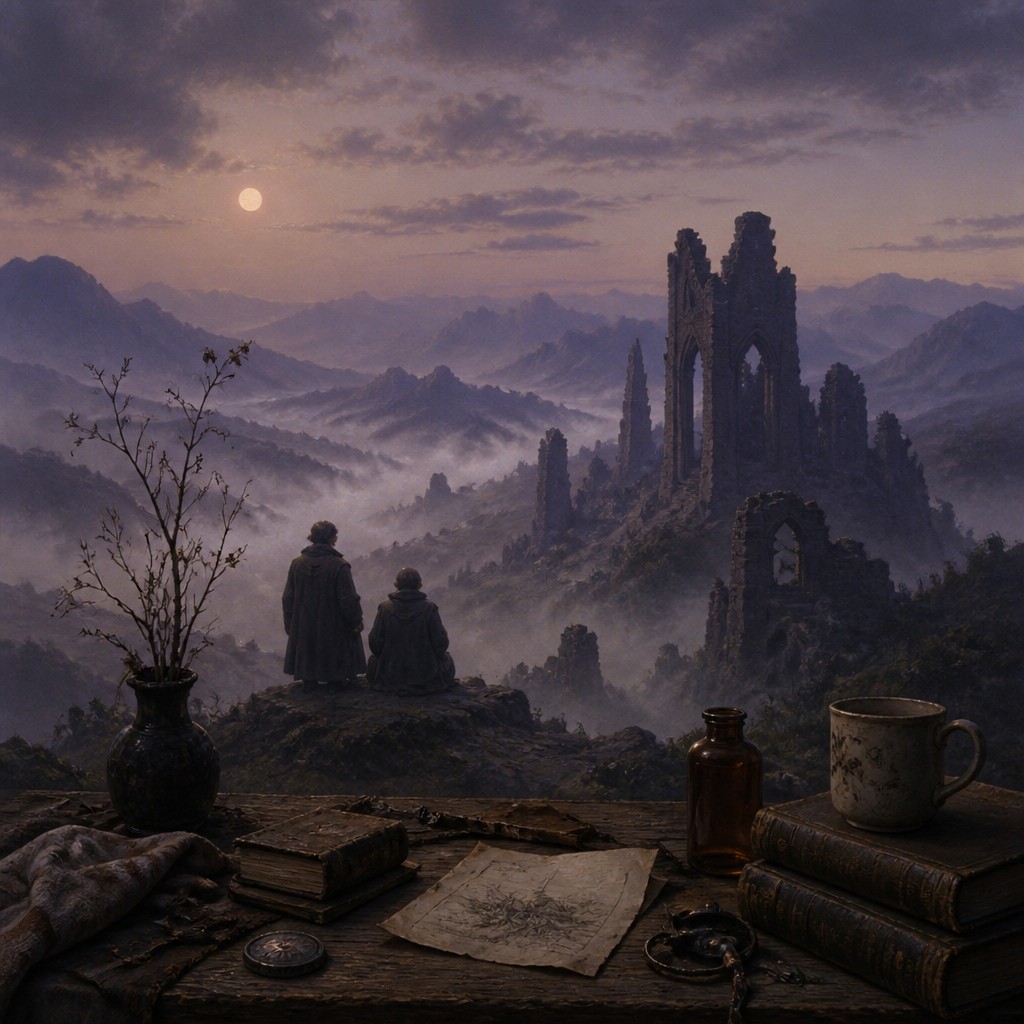
Sublime scale
Tiny human figures are contrasted with cliffs, mountains, storm systems, forests, or open water. This disproportion conveys awe, vulnerability, and the limits of human control.
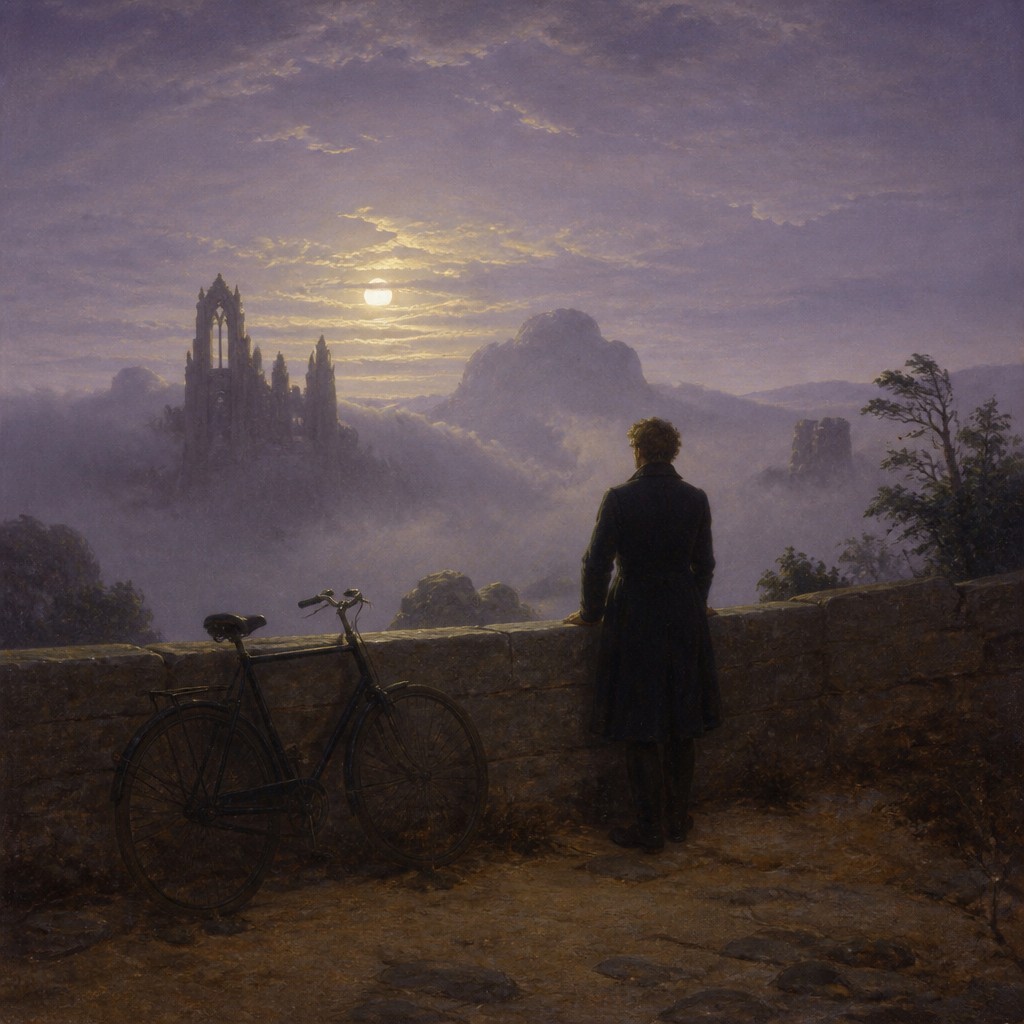
Stillness and inward drama
The mood is hushed rather than action-driven, with broad intervals of empty space and carefully balanced forms. Emotional intensity comes from contemplation, not spectacle.
Try It
Create Videos in Dresden Romantic Art Style
Styles aren't just for stills — describe a scene or animate an image and get a short video rendered in Dresden Romantic. Press play to see this pond come to life.
Make a VideoDresden Romantic Prompt Ideas
Start from an idea — each one opens the generator with the style ready to go. See all 40 Dresden Romantic prompts →
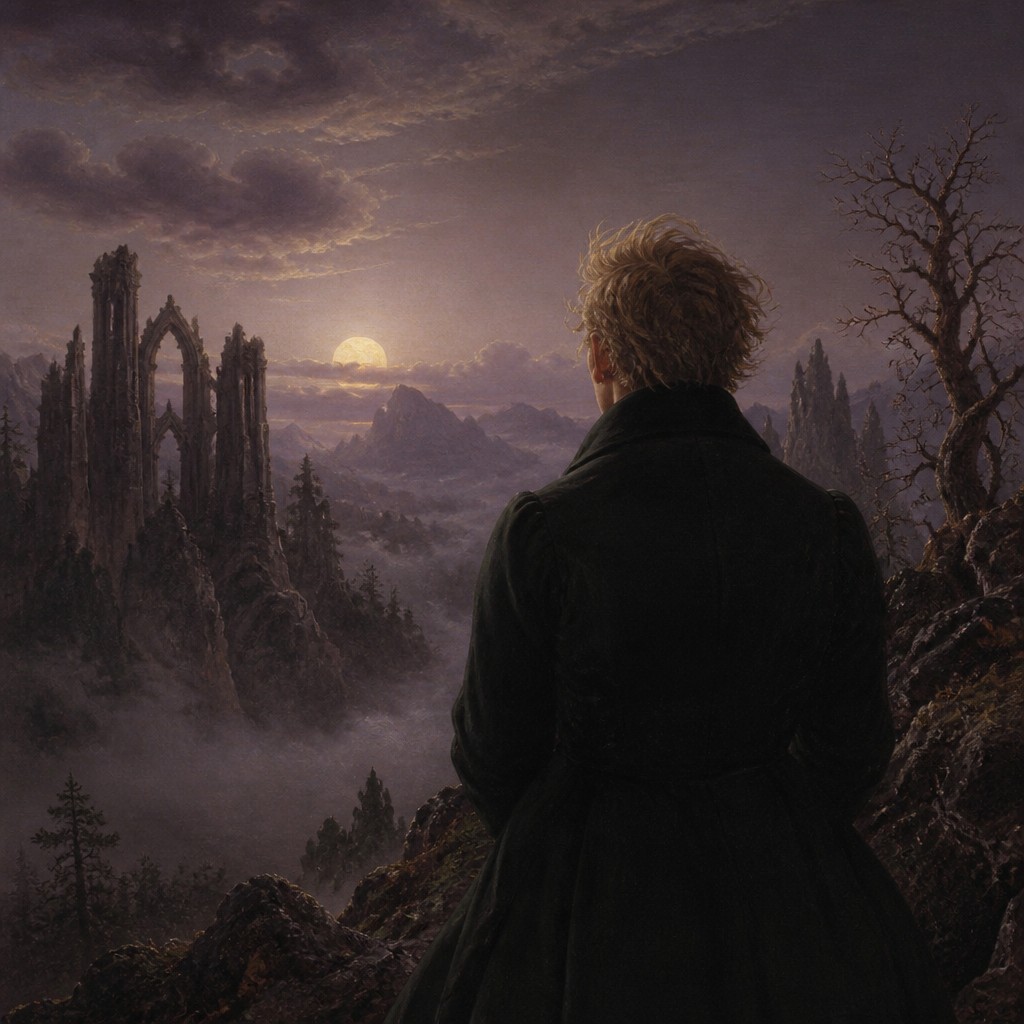
“close-up portrait of an elderly person with expressive weathered features”
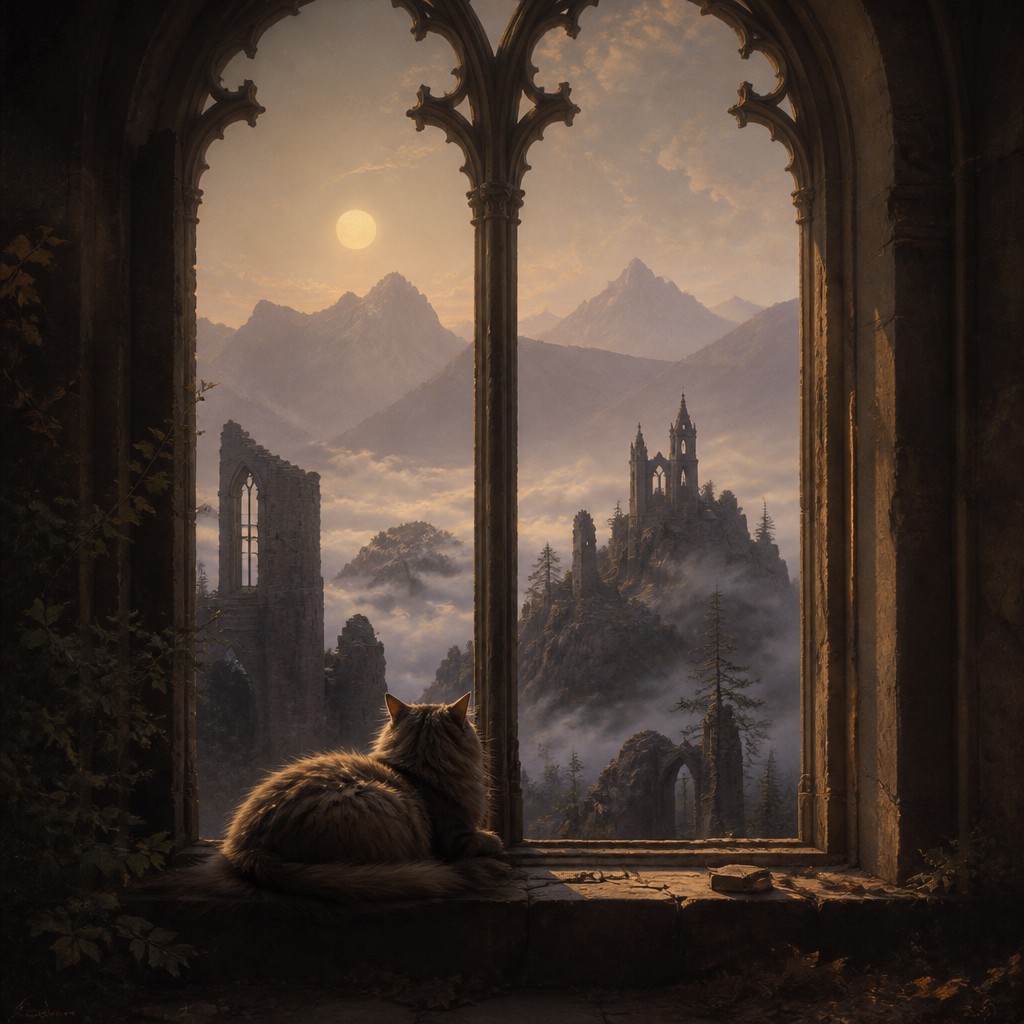
“a cat lounging in a sunlit window”
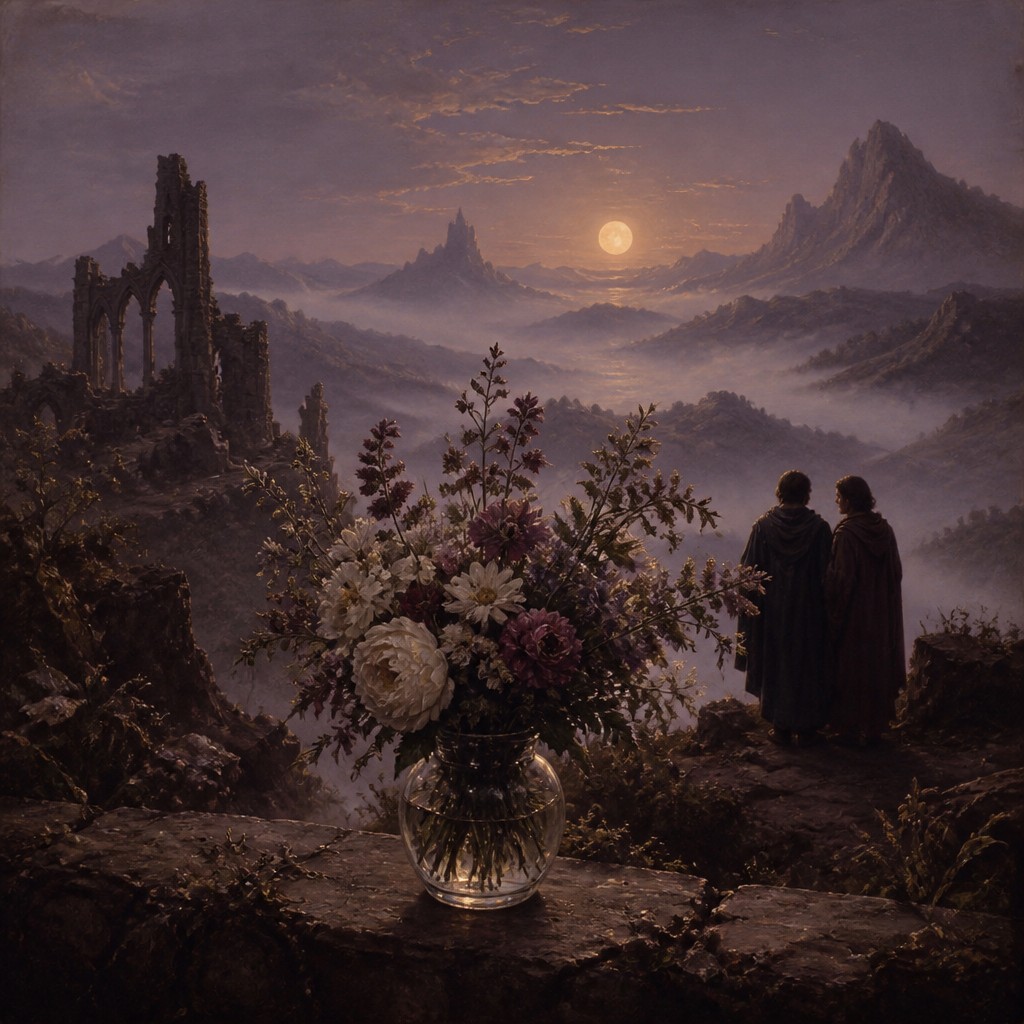
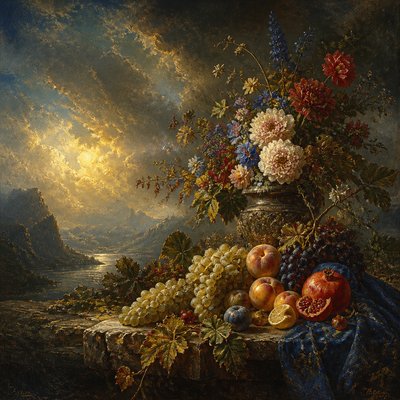
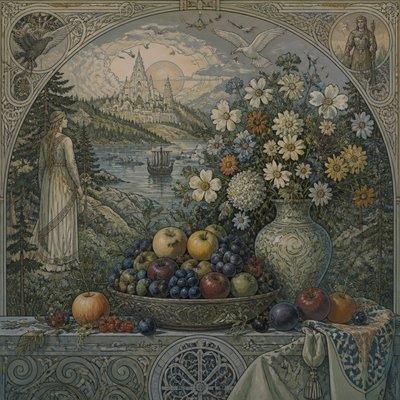
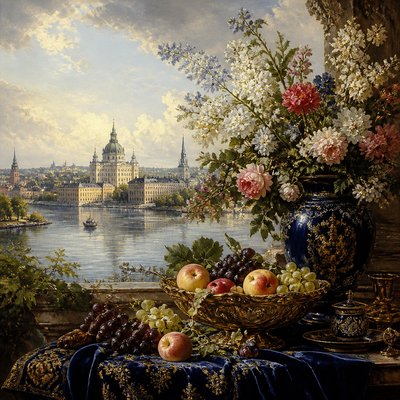
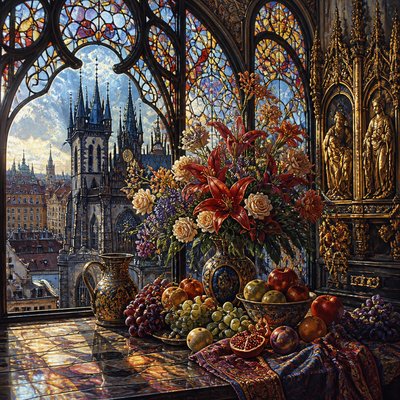
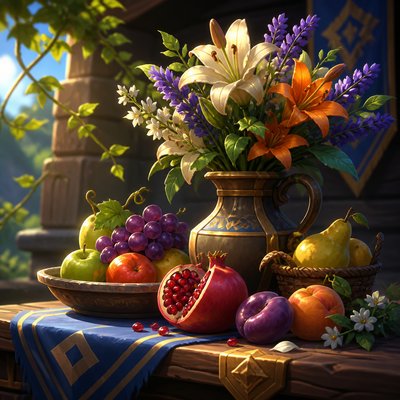
“bouquet of flowers in a glass vase”
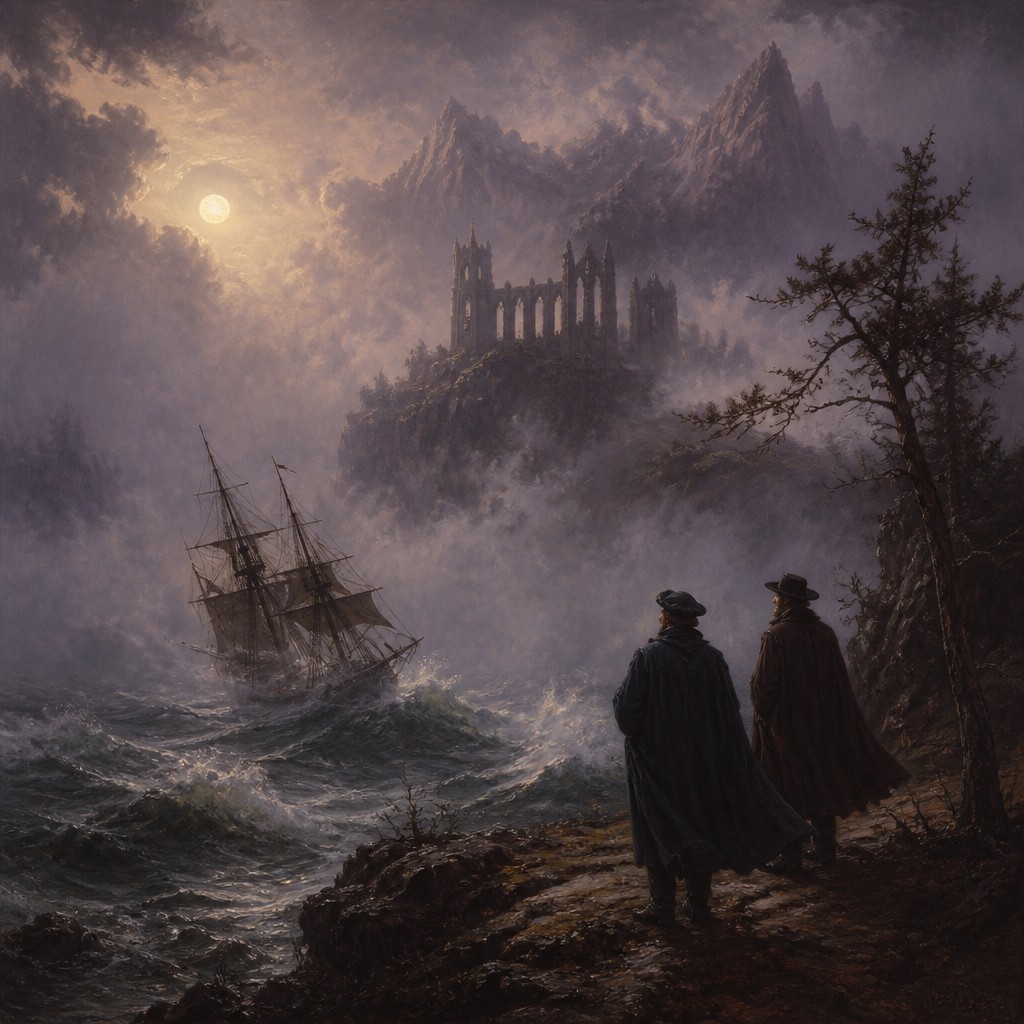
“sailing ship on a stormy sea”
How to Create Dresden Romantic Art
Master the craft step by step — or skip straight to creating. Read the full guide →
- 1
Build a deep recession
Arrange a dark foreground, a middle ground containing the figure or ruin, and several hazy background planes. Reduce contrast and detail progressively with distance to make fog convincing.
- 2
Use backlighting deliberately
Place the moon or a low amber opening behind the subject and reserve the brightest values for the sky or distant atmosphere. Keep the foreground figure readable through a clear outer contour rather than interior detail.
- 3
Control the palette
Begin with a limited range of blue-grey, violet, umber, charcoal, and pale gold. In traditional painting, thin glazing and scumbling can soften transitions; digitally, low-opacity atmospheric layers and selective color grading achieve a similar effect.
- 4
Compose for contemplation
Use a low horizon, a vertical ruin, or a winding path to guide the eye toward the distance. Keep the human subject small and avoid clutter that competes with the main atmospheric interval.
- 5
Direct image generation precisely
Describe the subject, viewpoint, weather, light direction, scale relationship, palette, and emotional register in that order. Useful terms include rear-view solitary figure, moonlit fog, Gothic ruin, layered atmospheric perspective, muted violet-grey, and restrained amber light.
The Story
History & Origins of Dresden Romantic
Dresden Romantic Art Style is not a formally recognized historical movement with a fixed membership or period. It is a modern aesthetic formulation that draws especially on the German Romantic landscape tradition associated with Dresden in the early nineteenth century, when landscape painting became a vehicle for philosophical reflection, religious feeling, and encounters with nature's apparent infinity.
Its visual vocabulary also develops from Romantic treatments of ruins, moonlight, pilgrimage, mountain scenery, and the contemplative figure seen from behind. Contemporary versions extend these ideas through cinematic composition, digital matte-painting techniques, atmospheric photography, and text-directed image making, while retaining the period's emphasis on inward attention and the northern landscape.
Influences: The style is closely related to early nineteenth-century German Romantic landscape painting, particularly its interest in the sublime, spiritualized nature, ruins, moonlight, and the Rückenfigur, or rear-facing contemplative figure. It also draws on Gothic revival architecture, northern European landscape traditions, atmospheric landscape painting, Symbolist mood, cinematic matte painting, and contemporary environmental photography. Its synthesis favors emotional and philosophical resonance over topographical accuracy.
Frequently Asked Questions
Is Dresden Romantic Art Style a recognized historical art movement?
No. The name is best understood as a contemporary descriptive style rather than a documented movement with an official manifesto or membership. It refers to a Dresden-associated, German Romantic-inspired visual language centered on mist, solitude, ruins, and the sublime.
What defines the style most clearly?
The most recognizable features are a small contemplative figure seen from behind, a vast atmospheric landscape, Gothic or historical remnants, and moonlit or amber backlighting. A restrained violet-grey palette and strong sense of silence complete the look.
How does it differ from general Romantic landscape painting?
It narrows the broad Romantic tradition into a specific recurring image formula: the rear-facing witness before a misty northern vista. Its palette, cinematic framing, and emphasis on Gothic ruins and moonrise also make it more immediately atmospheric than many other Romantic landscape approaches.
Can this style be made with traditional materials?
Yes. Oil, gouache, watercolor, charcoal, and mixed media can all support the style. Thin glazes, softened edges, scumbled fog, and careful value control are especially useful for creating distance and subdued illumination.
How should I write a prompt for this aesthetic?
Specify the subject and rear-facing viewpoint first, then describe the scale of the landscape, weather, architecture, light source, palette, and mood. Terms such as atmospheric perspective, moonrise silhouette, Gothic ruin, mountain fog, muted violet-grey, and spiritual stillness provide useful direction.
Where is Dresden Romantic Art Style commonly used?
It suits landscape illustration, book and album artwork, editorial imagery, fantasy environments, reflective portrait concepts, posters, and cinematic establishing scenes. It is particularly effective when the image needs to communicate solitude, mystery, historical memory, or reverence for nature.
Create your first Dresden Romantic artwork
Describe anything — or upload a photo — and see it in Dresden Romantic Art Style in seconds.
Related Styles
Discover similar art styles