Glasgow Style Art Nouveau
Explore Glasgow Style Art Nouveau: elongated lines, stylized roses, stained-glass geometry, and austere romantic elegance.
Instantly rendered in Glasgow Style Art Nouveau — or transform a photo
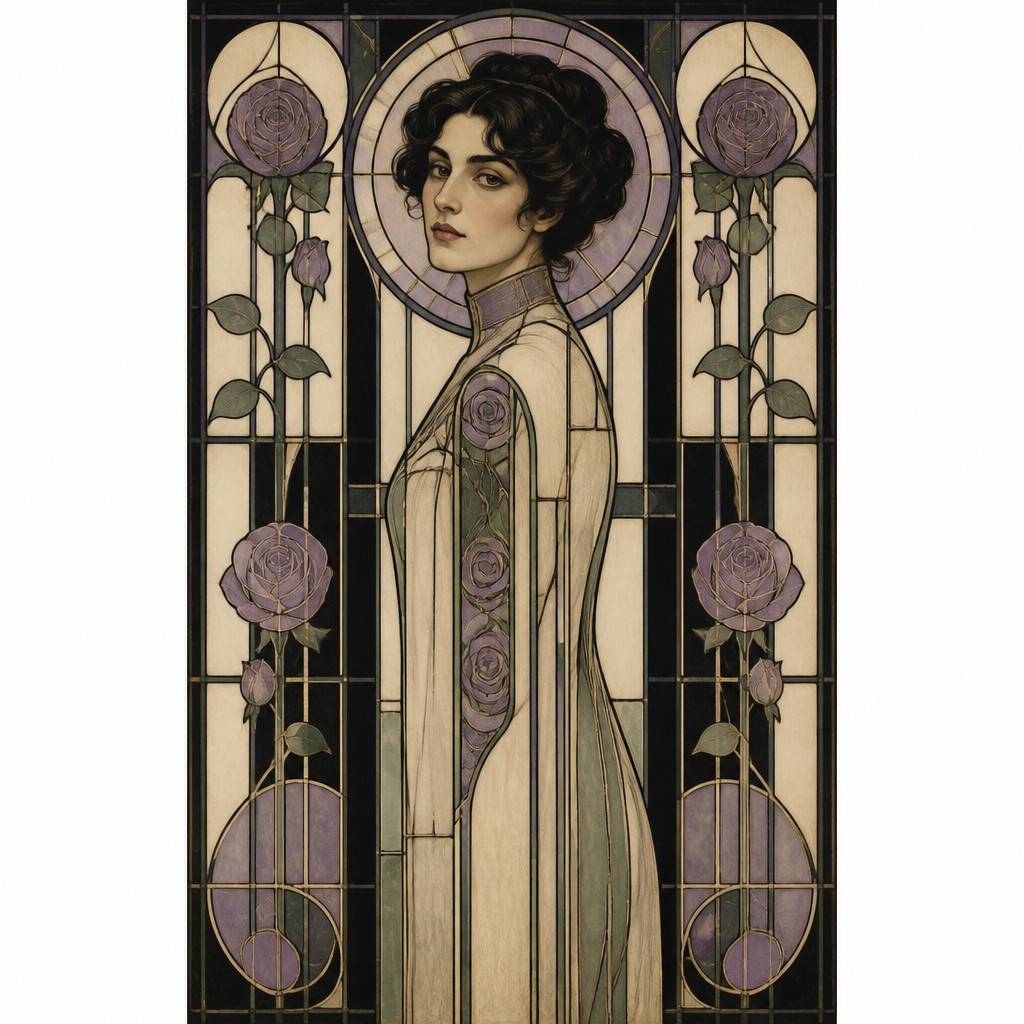
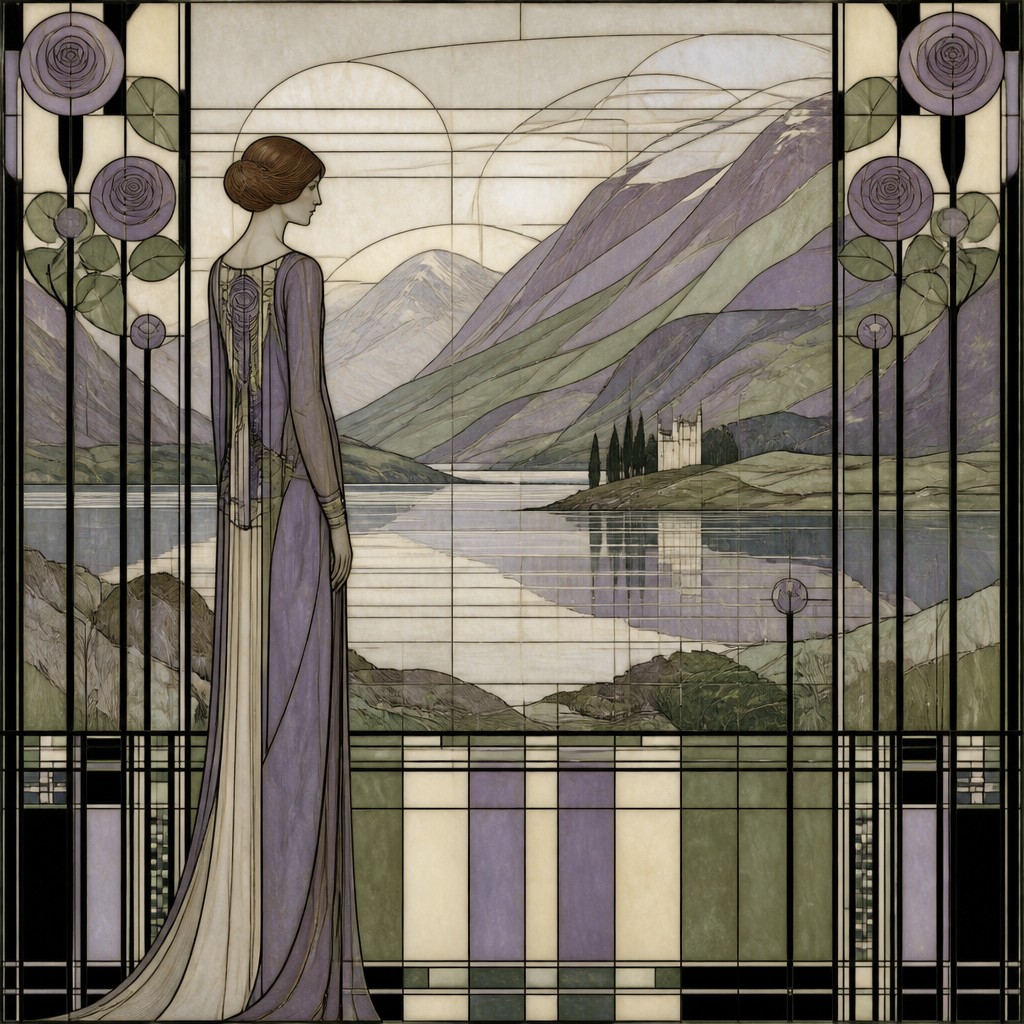
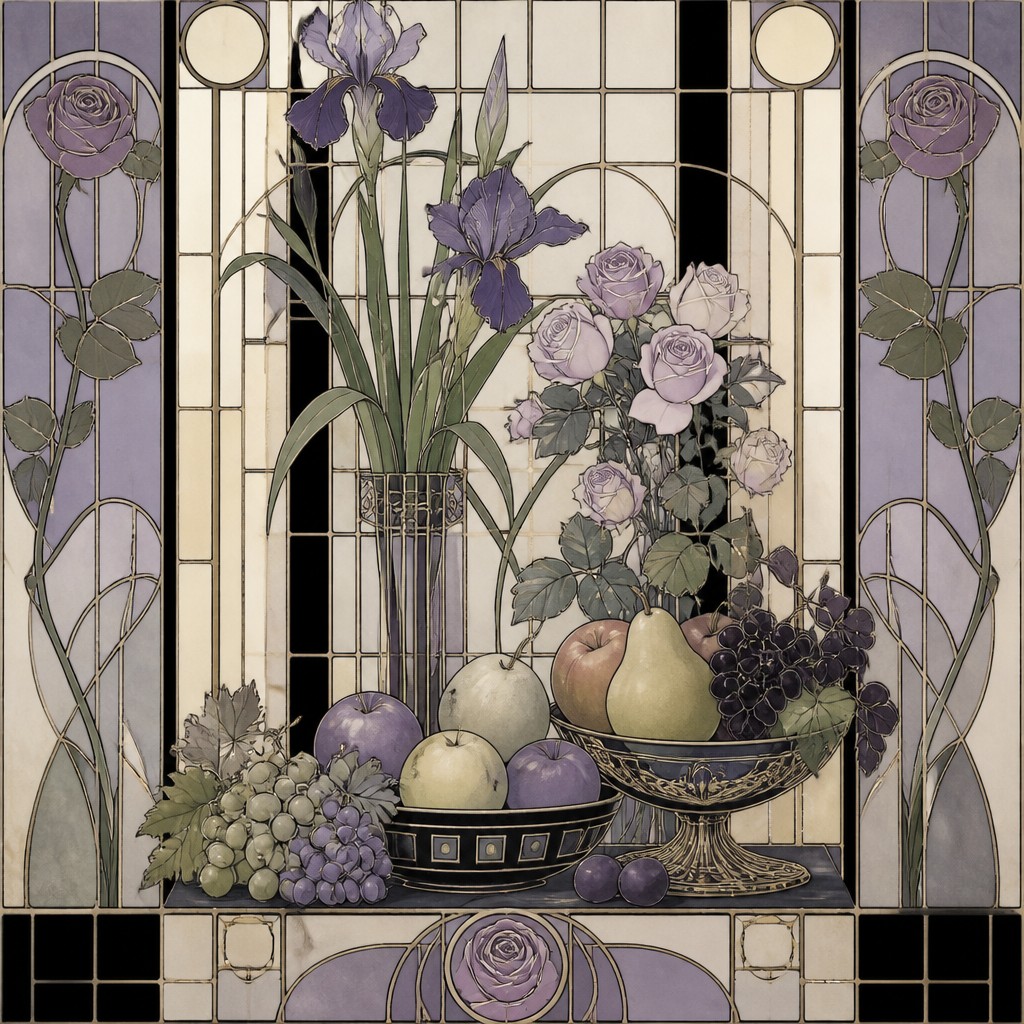
Glasgow Style Art Nouveau Gallery
Tap any artwork to explore it
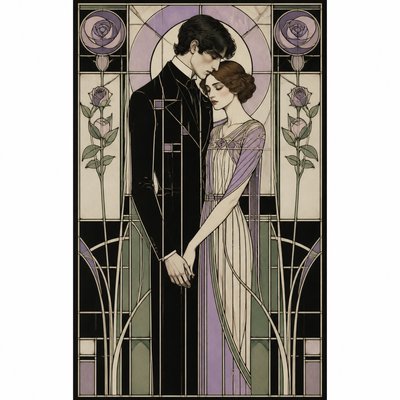
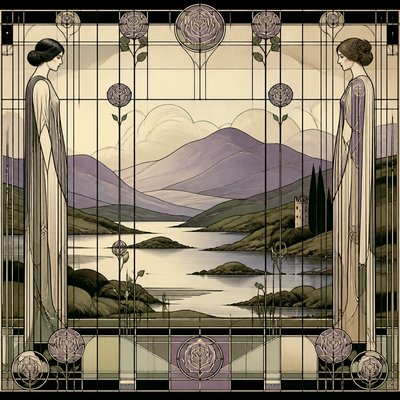
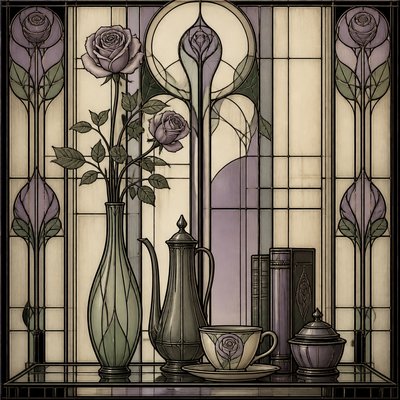
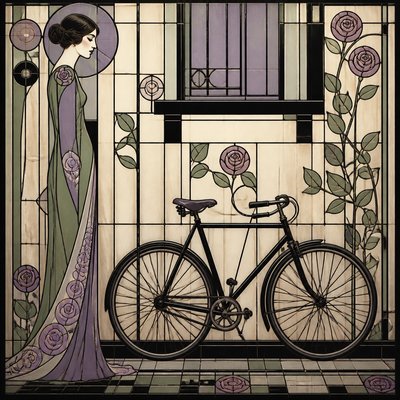
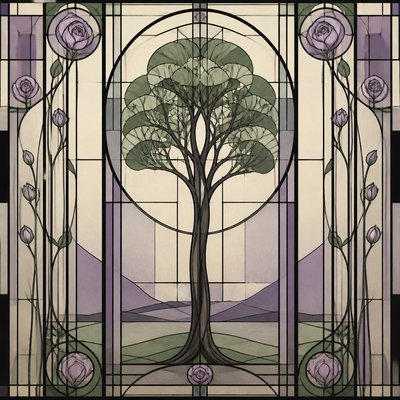
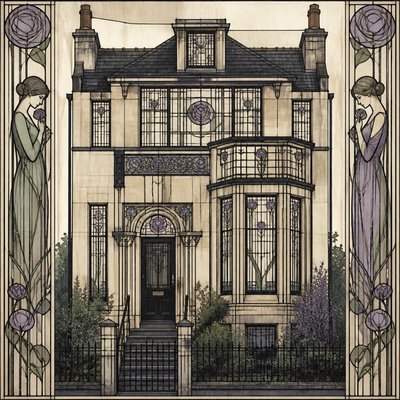
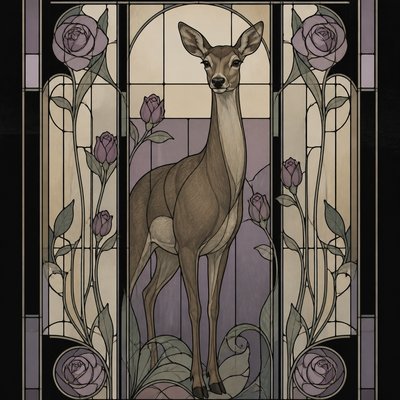
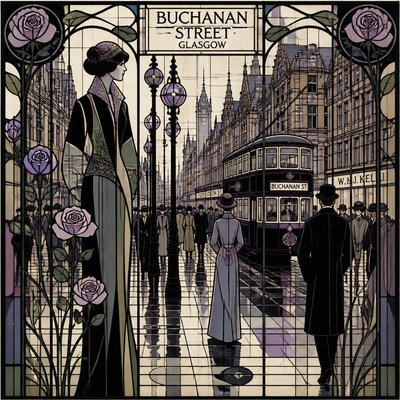
What is Glasgow Style Art Nouveau?
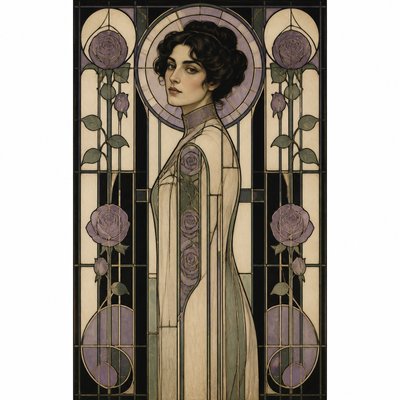
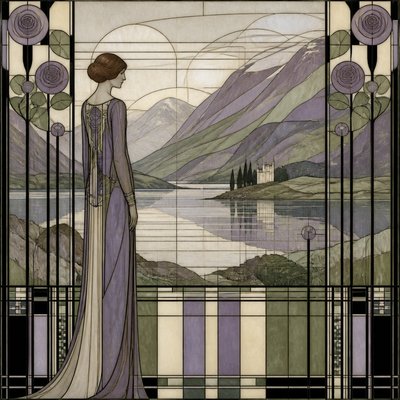
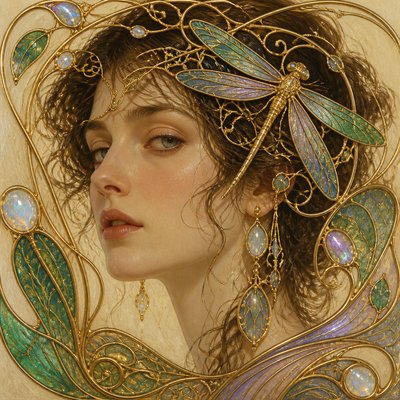
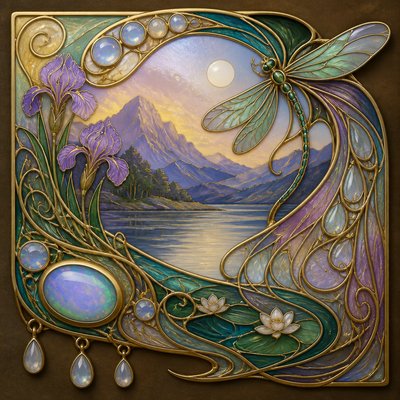
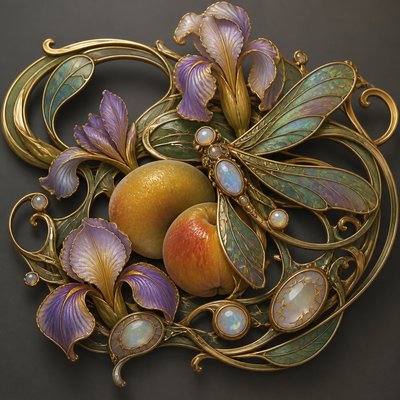
Unlike more exuberant forms of Art Nouveau, the Glasgow style often favors spare surfaces, frontal compositions, simplified silhouettes, and carefully controlled asymmetry. Floral forms are reduced to signs or emblems, while dark outlines and leading lines recall the structure of stained glass, metalwork, and architectural panels. The result is an austere yet romantic style suited to posters, interiors, furniture, textiles, illustrations, and buildings.
Try It On Your Photos
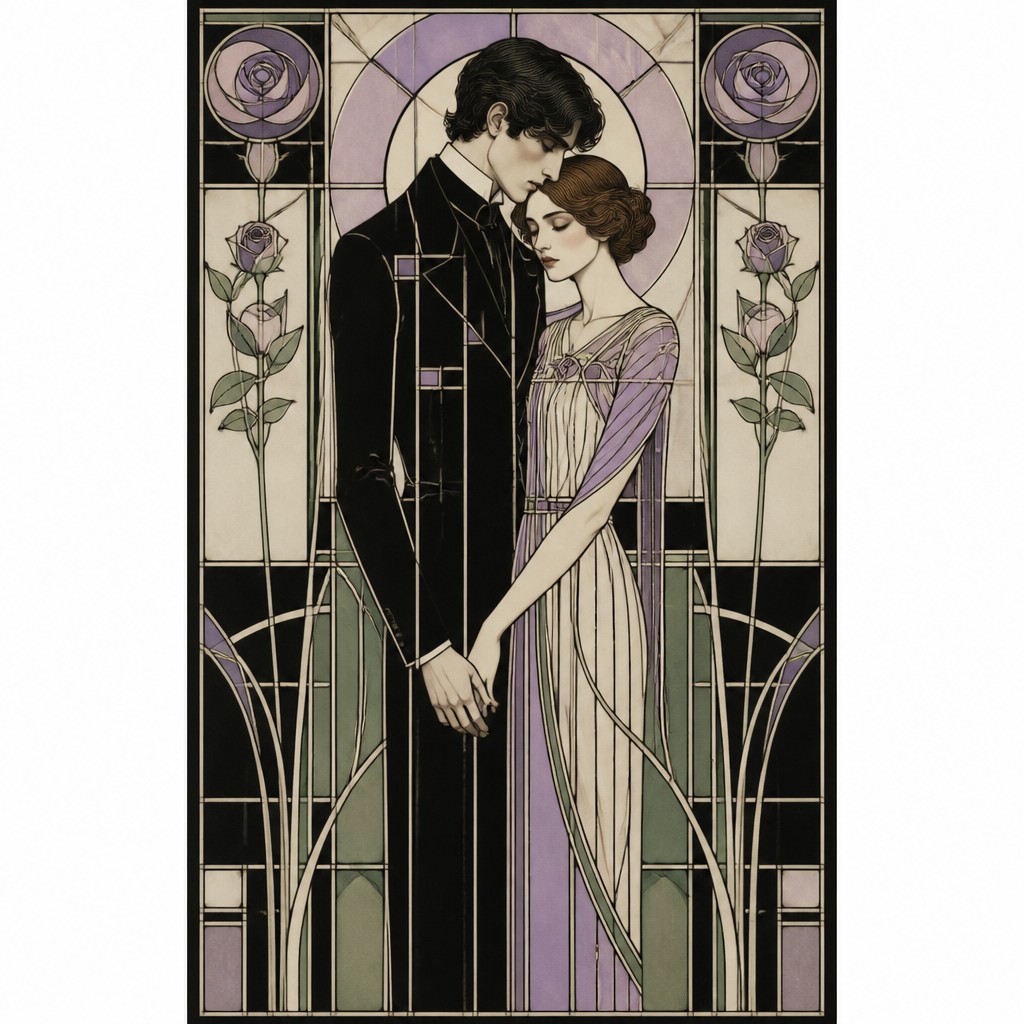
Upload any photo and convert it into Glasgow Style Art Nouveau — drag the sliders to compare before and after.


What Defines Glasgow Style Art Nouveau
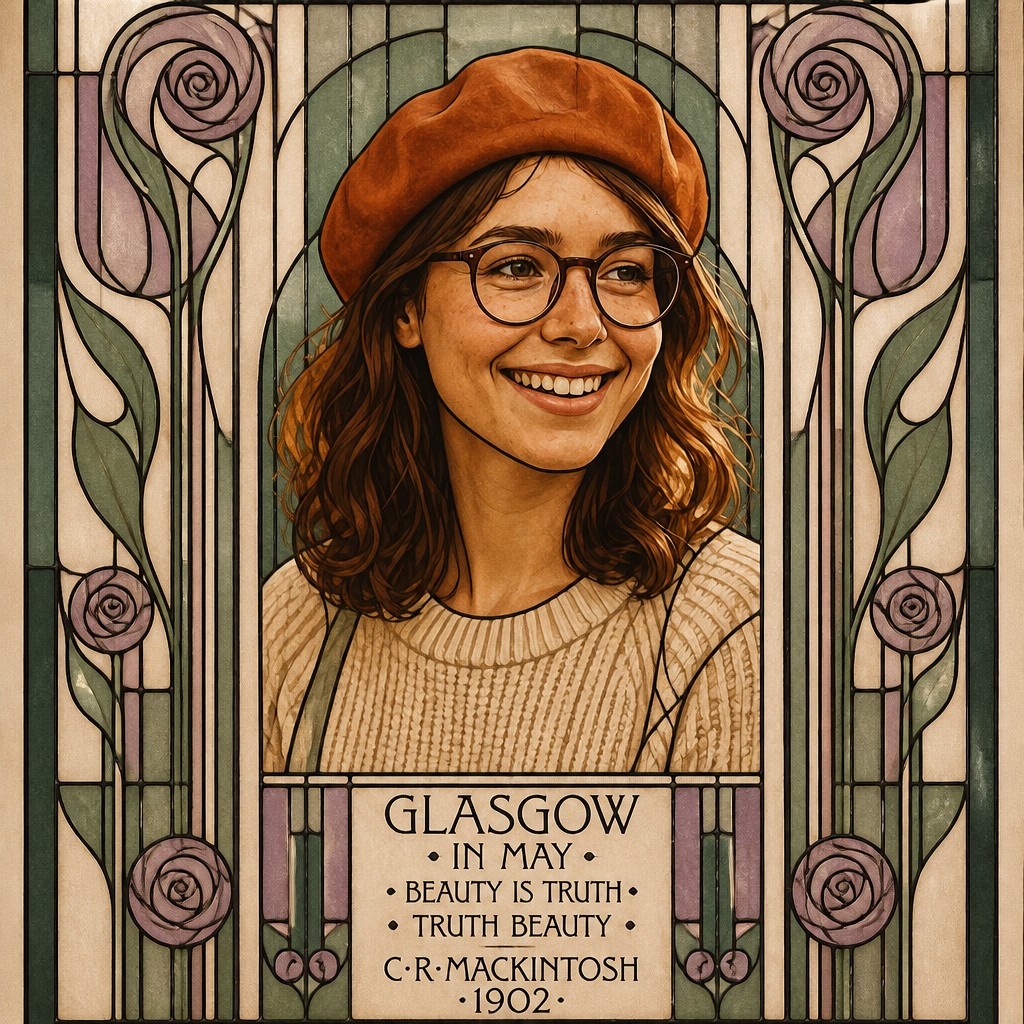
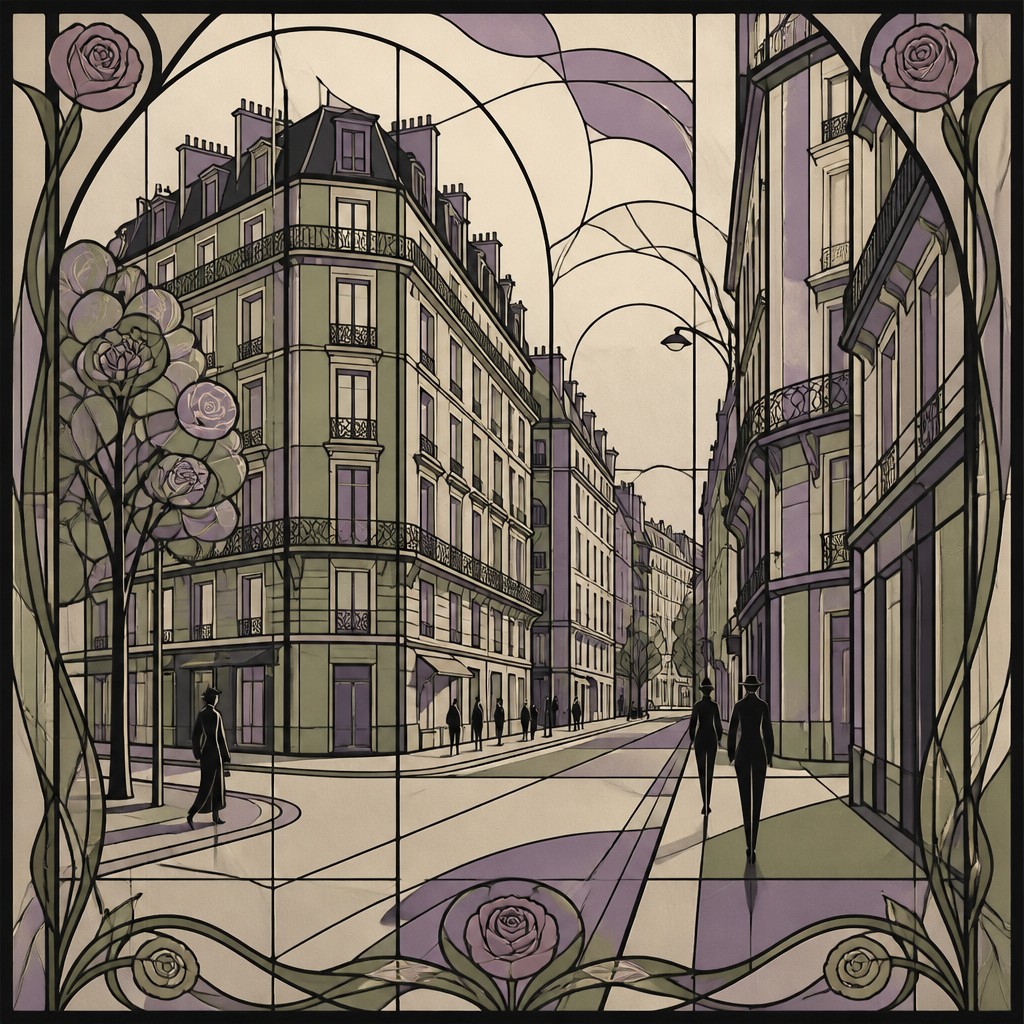
The signature details, up close
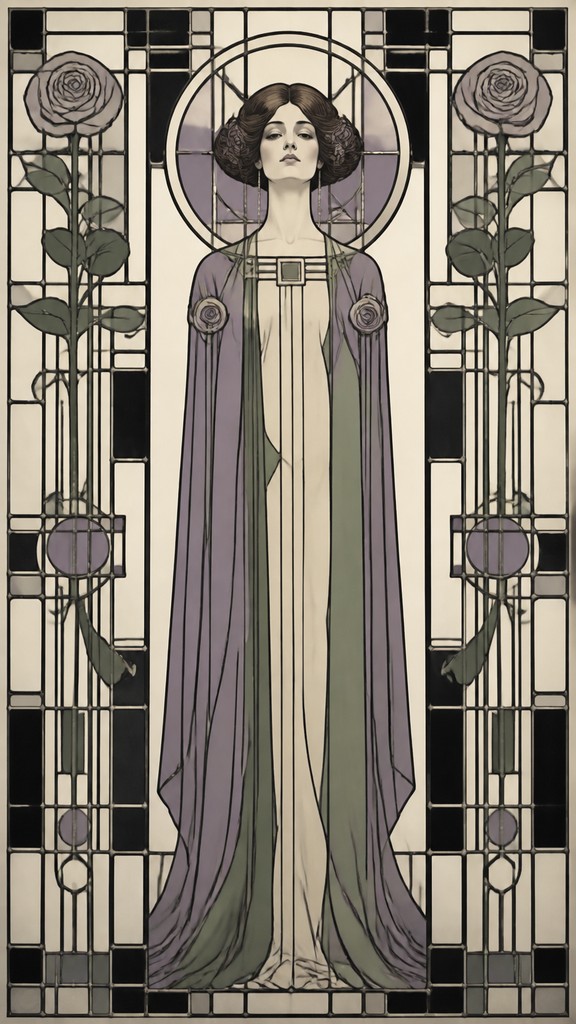
Elongated vertical forms
Figures, stems, panels, and architectural elements are stretched into slender, upright proportions. This creates an elegant sense of height and reinforces the style's affinity with interiors and façades.
Stylized rose motifs
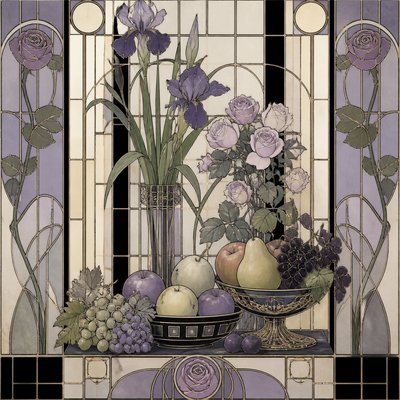
Roses appear as simplified circular blooms, repeated emblems, or compact botanical signs rather than naturalistic flowers. Their rounded forms provide a soft counterpoint to the surrounding linear structure.
Gridded geometry
Squares, rectangles, lattices, and orderly panel divisions organize the composition. Geometric frameworks contain organic motifs without eliminating their decorative movement.
Stained-glass linework
Strong dark contours and segmented leading lines suggest the construction of stained glass. These outlines separate color fields and give flat images an architectural clarity.
Muted, high-contrast palette
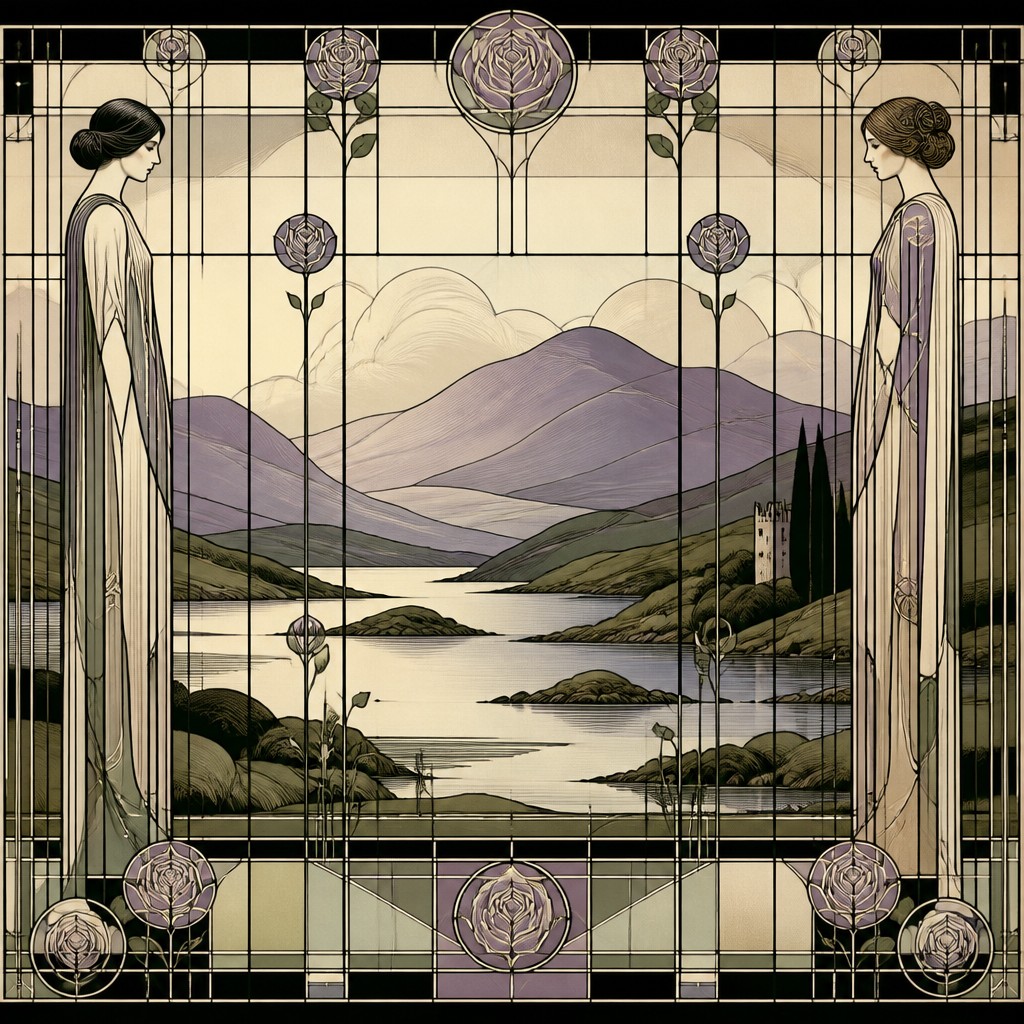
Black and ivory are commonly paired with subdued lilac, sage, dusty rose, gray, or pale blue. The restrained colors preserve an atmosphere of quiet sophistication rather than exuberant decoration.
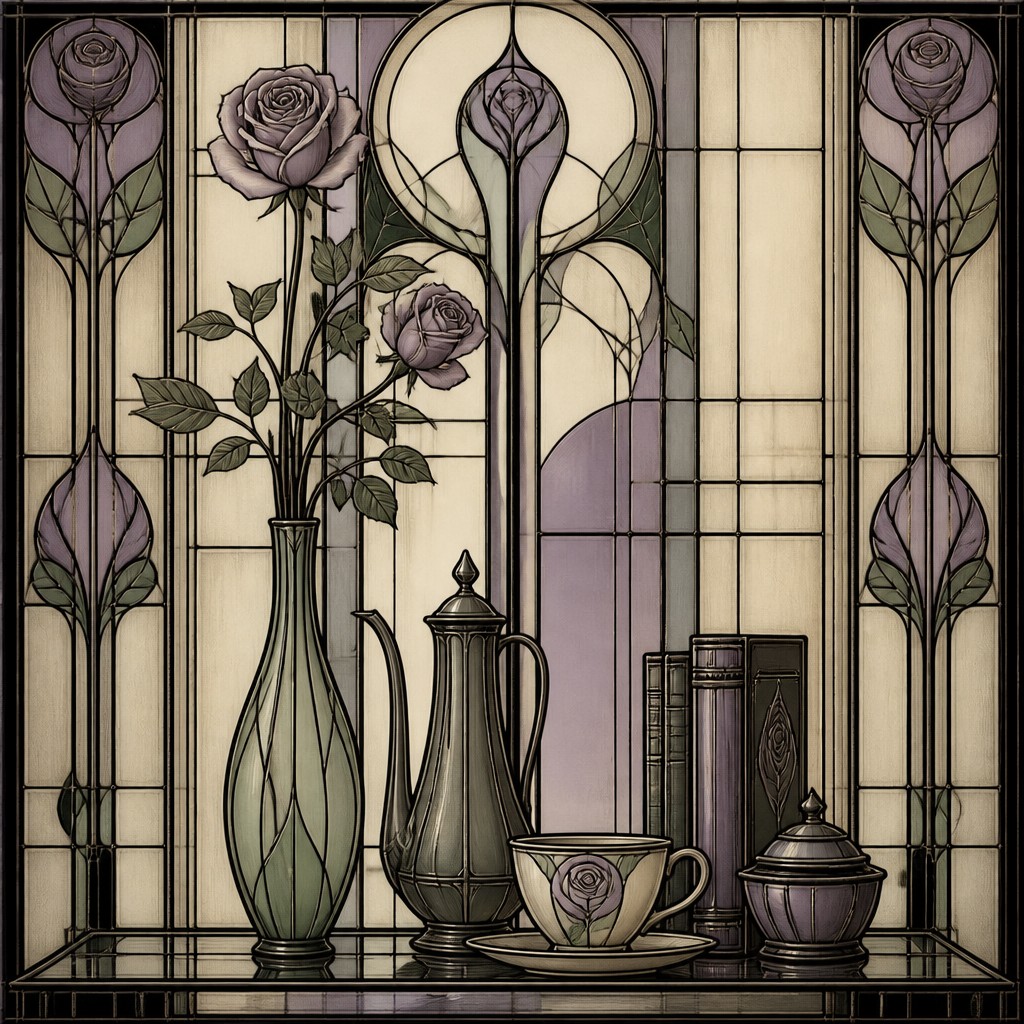
Flat decorative surfaces
Forms are often simplified and compressed, with limited modeling, shallow space, and pattern-like repetition. The image reads as an integrated ornamental surface instead of a deep pictorial scene.
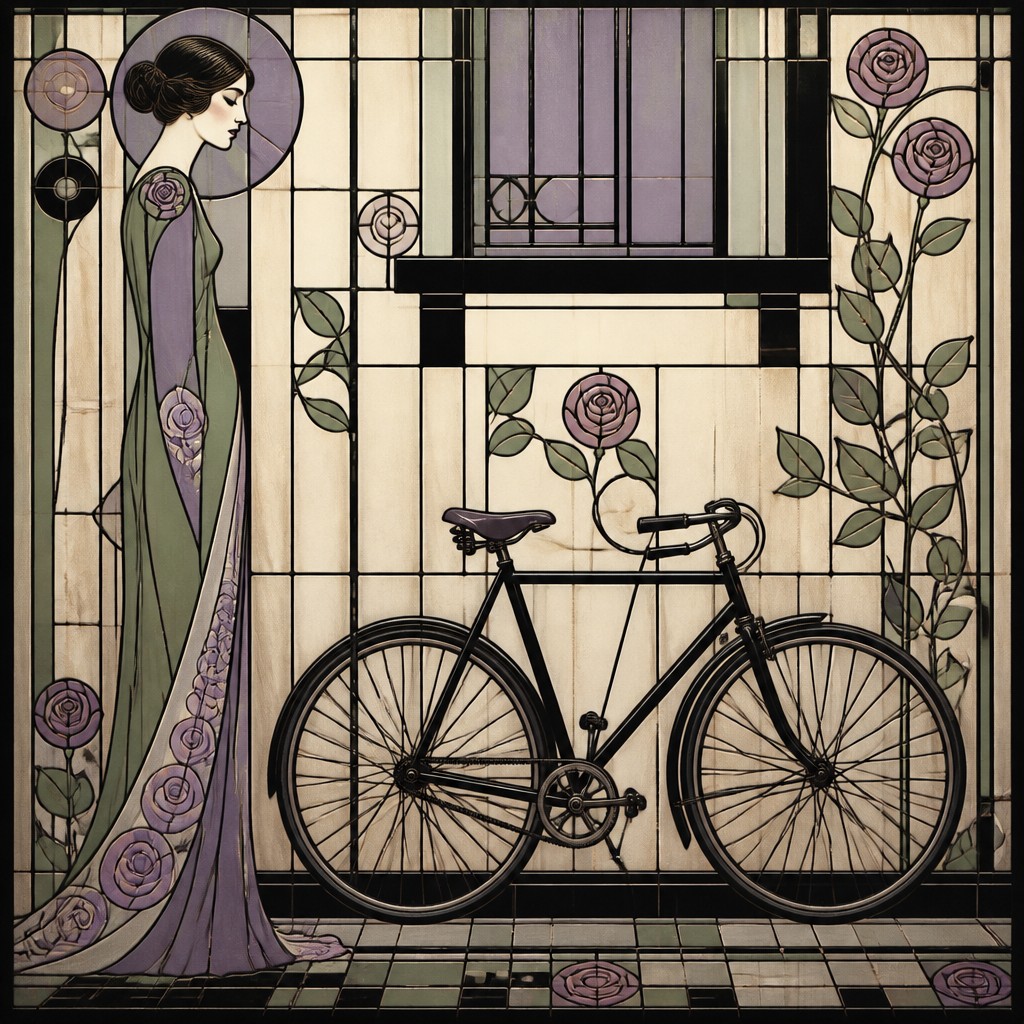
Austere romantic mood
The style combines emotional, poetic subjects with disciplined composition and minimal ornament. Its mood is contemplative, refined, slightly melancholic, and symbolically charged.
Try It
Create Videos in Glasgow Style Art Nouveau
Styles aren't just for stills — describe a scene or animate an image and get a short video rendered in Glasgow Style Art Nouveau. Press play to see this pond come to life.
Make a VideoGlasgow Style Art Nouveau Prompt Ideas
Start from an idea — each one opens the generator with the style ready to go. See all 40 Glasgow Style Art Nouveau prompts →
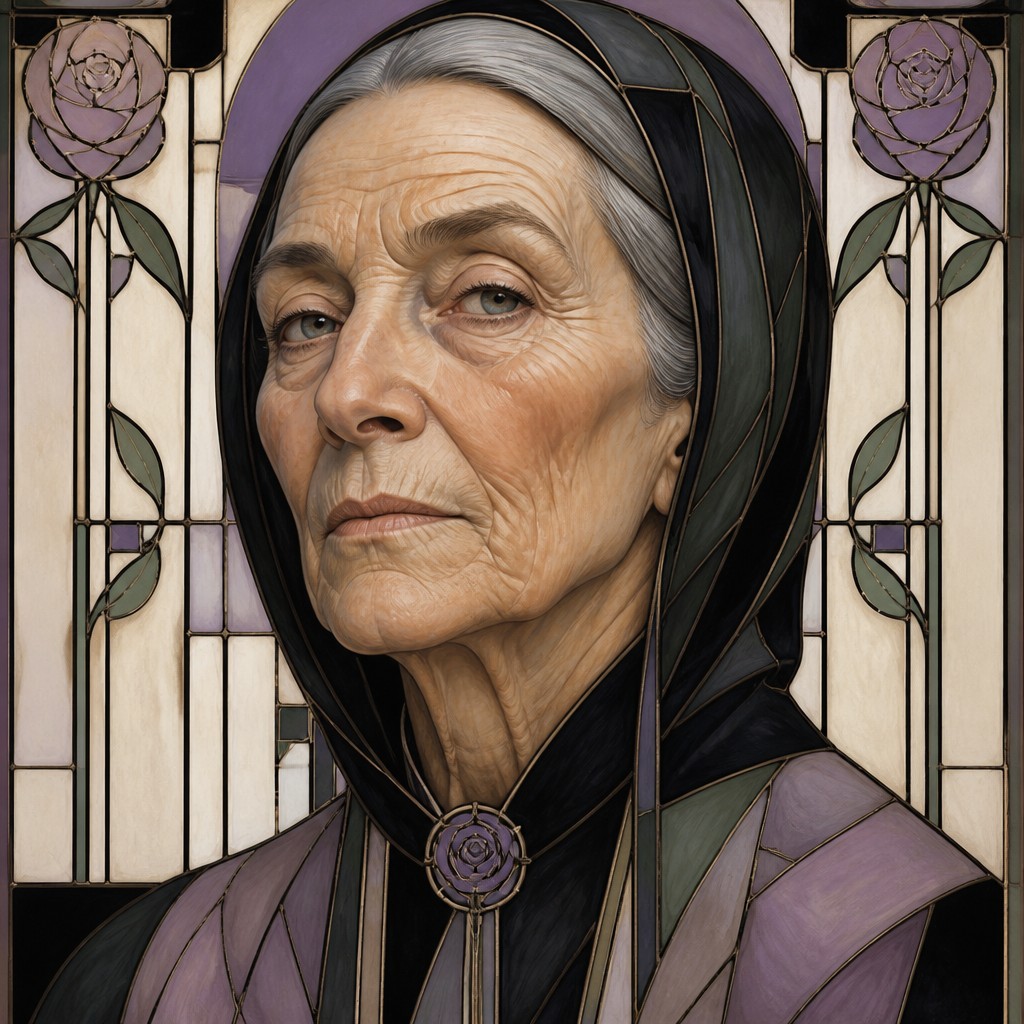
“close-up portrait of an elderly person with expressive weathered features”
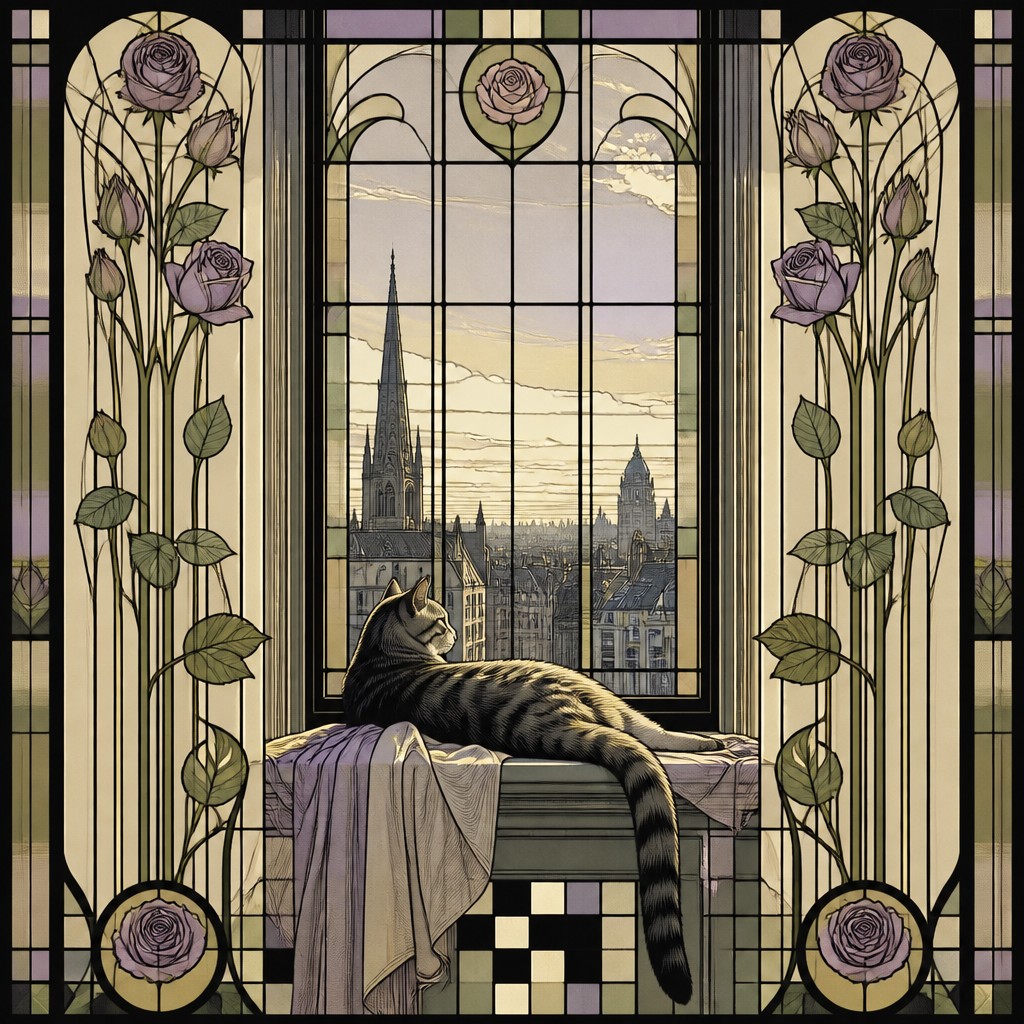
“a cat lounging in a sunlit window”
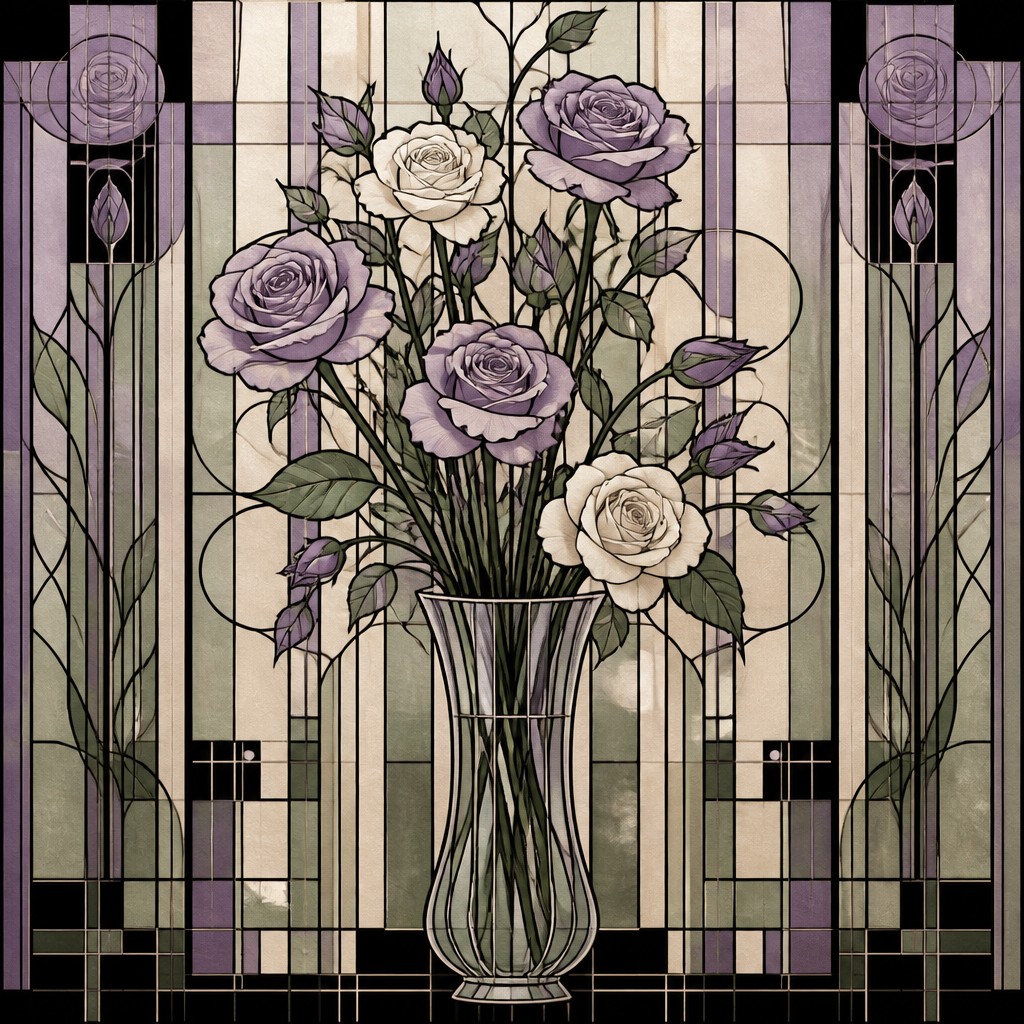
“bouquet of flowers in a glass vase”
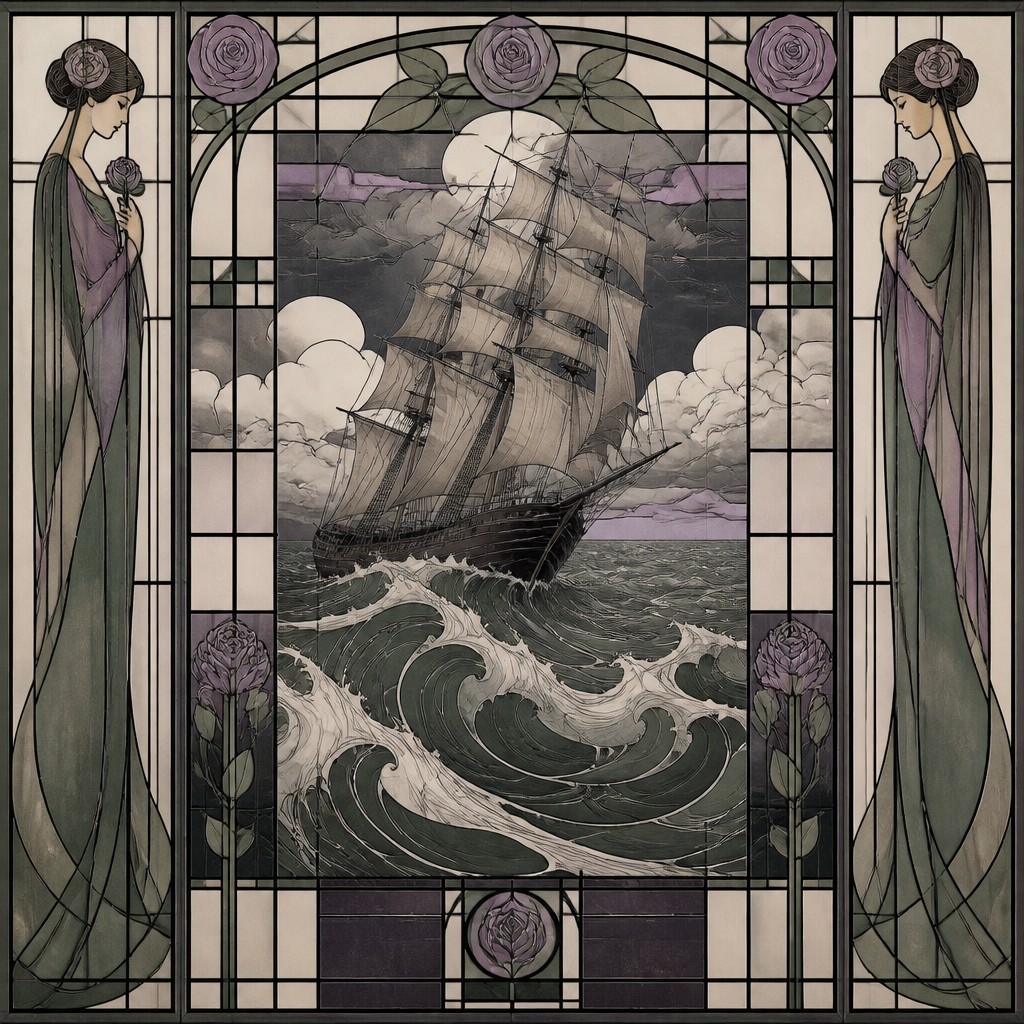
“sailing ship on a stormy sea”
How to Create Glasgow Style Art Nouveau Art
Master the craft step by step — or skip straight to creating. Read the full guide →
- 1
Build a vertical structure
Start with a tall format, narrow figures, and upright botanical stems. Divide the image into panels or a subtle grid before placing the main subject.
- 2
Reduce flowers to symbols
Draw roses as compact disks, clustered petals, or repeated medallions rather than detailed botanical studies. Keep their contours clear enough to function as graphic motifs.
- 3
Use strong leading lines
Outline major forms with dark, even contours and connect them with angular or gently curving divisions. For traditional work, ink over simplified pencil shapes; digitally, use vector paths or controlled line-art layers.
- 4
Control the palette
Limit the colors to black, ivory, sage, lilac, muted rose, and related gray-green tones. Use contrast in the linework and panel structure instead of relying on saturated color or dramatic shading.
- 5
Flatten and pattern the surface
Minimize realistic perspective and model the subject as a poster, textile, stained-glass panel, or decorative illustration. Repeat roses, stems, squares, and border elements to unify the composition.
- 6
Write precise generation directions
In a text-to-image prompt, specify the subject, elongated vertical proportions, stylized roses, black-and-ivory grid, muted lilac and sage palette, stained-glass contours, and flat decorative finish. For image transformation, preserve the source subject while requesting simplified silhouettes, geometric framing, and restrained ornamental linework.
The Story
History & Origins of Glasgow Style Art Nouveau
Glasgow Style Art Nouveau combined the flowing plant vocabulary of Art Nouveau with geometric simplification, vertical emphasis, Japanese-inspired flatness, and local interest in symbolic ornament. Its distinctive linear designs circulated through exhibitions, publications, furnishings, metalwork, stained glass, and architectural schemes, contributing to the wider development of modernist graphic and decorative design.
Influences: Glasgow Style Art Nouveau belongs to the wider Art Nouveau network but is especially connected to the Glasgow School, British Arts and Crafts design, Japanese woodblock print composition, Celtic-inflected linear ornament, stained glass, architectural paneling, and emerging twentieth-century geometric modernism. It shares Art Nouveau's botanical vocabulary while anticipating later preferences for simplification, abstraction, and functional structure.

Frequently Asked Questions
What defines Glasgow Style Art Nouveau?
Its defining features are elongated vertical forms, stylized roses, strong linear outlines, gridded geometry, flat decorative surfaces, and a restrained palette. The style balances organic motifs with architectural order and often produces a quiet, austere romantic mood.
When did Glasgow Style Art Nouveau develop?
It developed in Glasgow during the 1890s and remained influential into the early twentieth century. It formed part of the broader Art Nouveau movement while retaining a particularly geometric and disciplined Scottish character.
How does it differ from other Art Nouveau styles?
Many Art Nouveau designs emphasize luxuriant curves, dense botanical growth, and sensuous movement. The Glasgow style is generally more spare, vertical, symmetrical or grid-based, and restrained, with simplified roses and strong architectural divisions.
What colors work best for this style?
Black and ivory provide the structural foundation, while muted lilac, sage, dusty rose, gray-green, pale blue, and soft gray add atmosphere. Saturated colors can weaken the style's subdued, graphic character unless used very selectively.
What subjects suit Glasgow Style Art Nouveau?
Portraits, roses, gardens, birds, women in elongated silhouettes, architectural façades, interiors, textiles, posters, and symbolic still lifes work especially well. Subjects benefit from vertical framing and opportunities for repeated botanical or geometric motifs.
How can I make an image in this style digitally?
Use vector-like outlines, flat color layers, narrow proportions, geometric borders, and a limited palette. When writing a prompt, describe the subject first, then specify elongated forms, stylized roses, gridded black-and-ivory geometry, stained-glass linework, and muted lilac and sage accents.
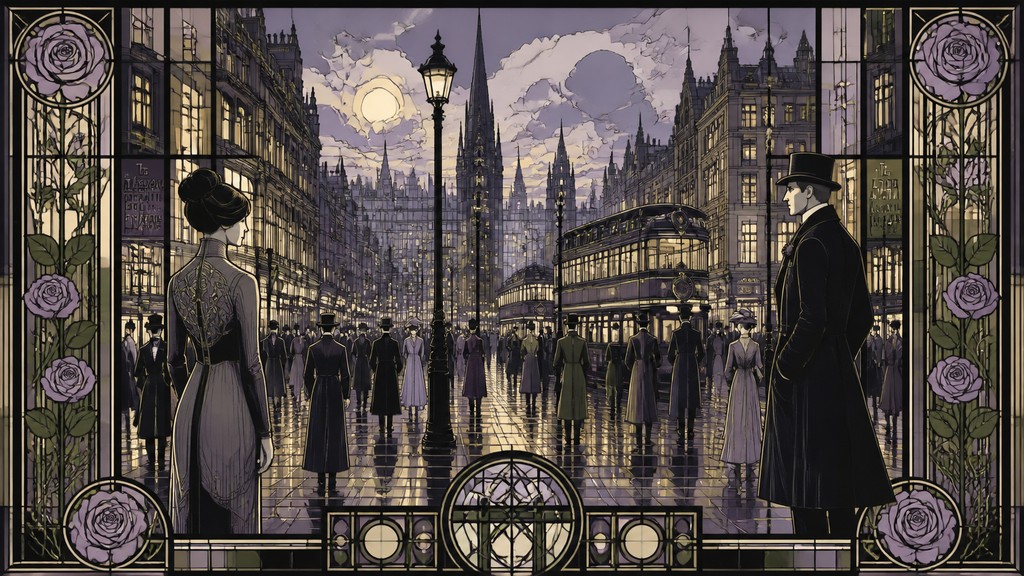
Create your first Glasgow Style Art Nouveau artwork
Describe anything — or upload a photo — and see it in Glasgow Style Art Nouveau in seconds.
Related Styles
Discover similar art styles