Dominican Art Style
Explore Dominican Art Style: Taíno-inspired stone geometry, Zona Colonial coral limestone, carnival masks, and luminous Caribbean color.
Instantly rendered in Dominican — or transform a photo
Dominican Gallery
Tap any artwork to explore it
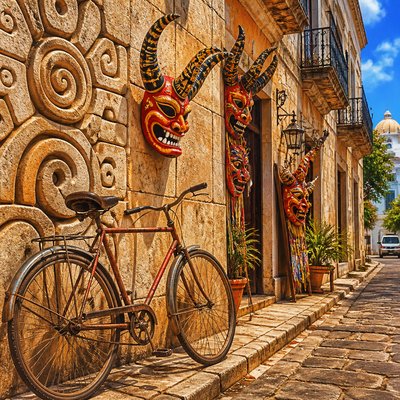
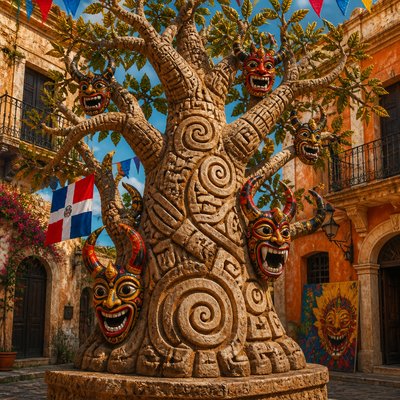
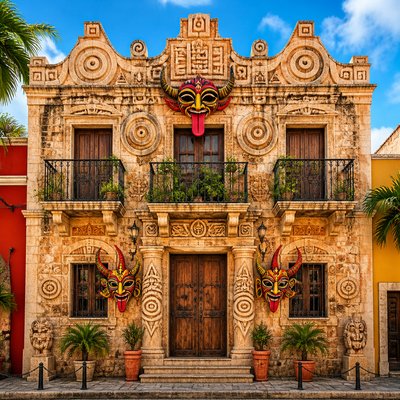
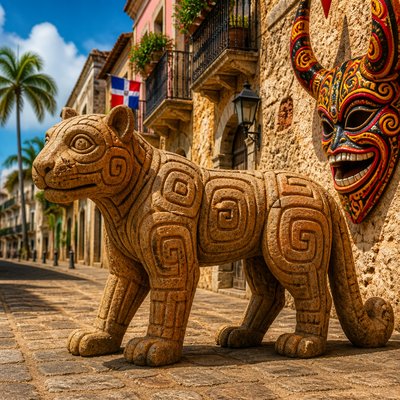
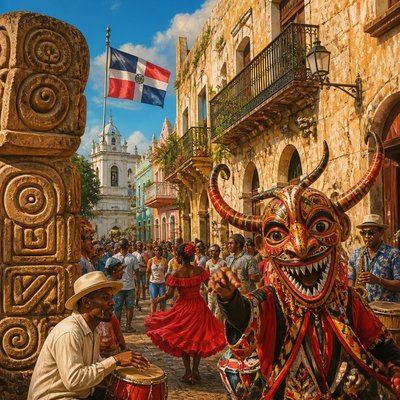
What is Dominican Art Style?
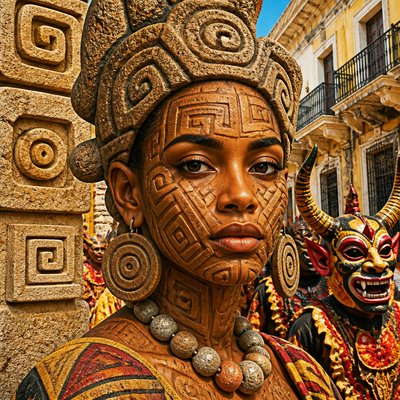
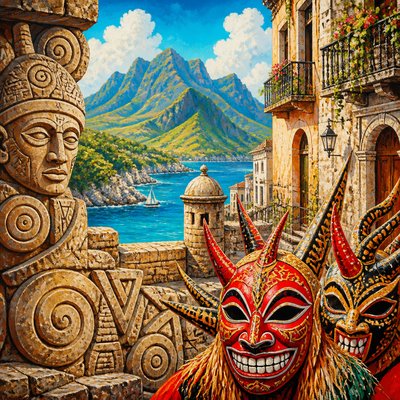
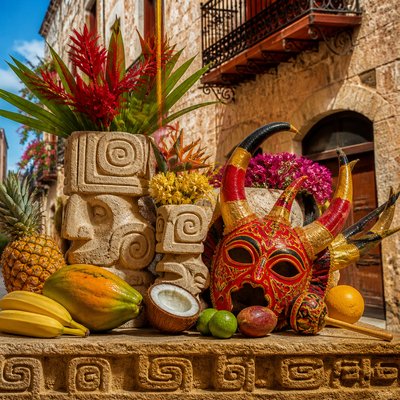
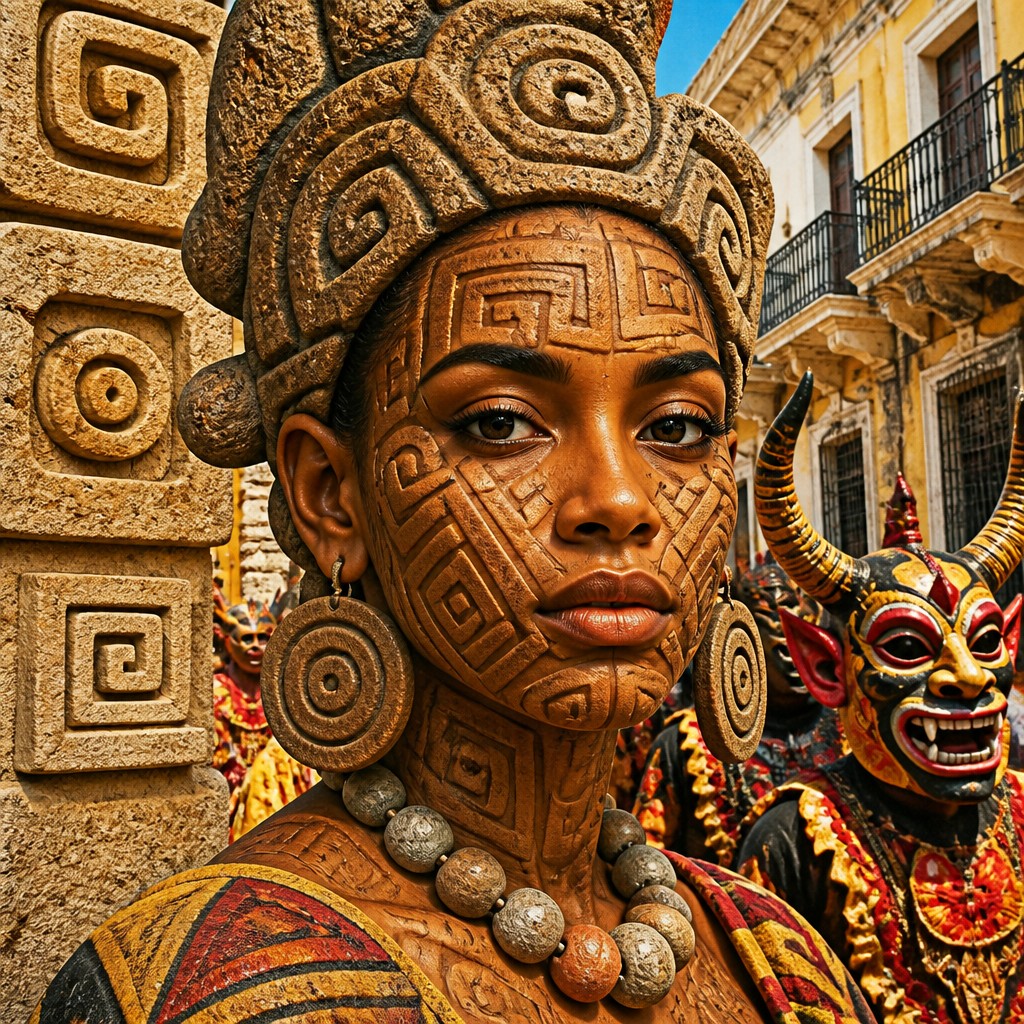
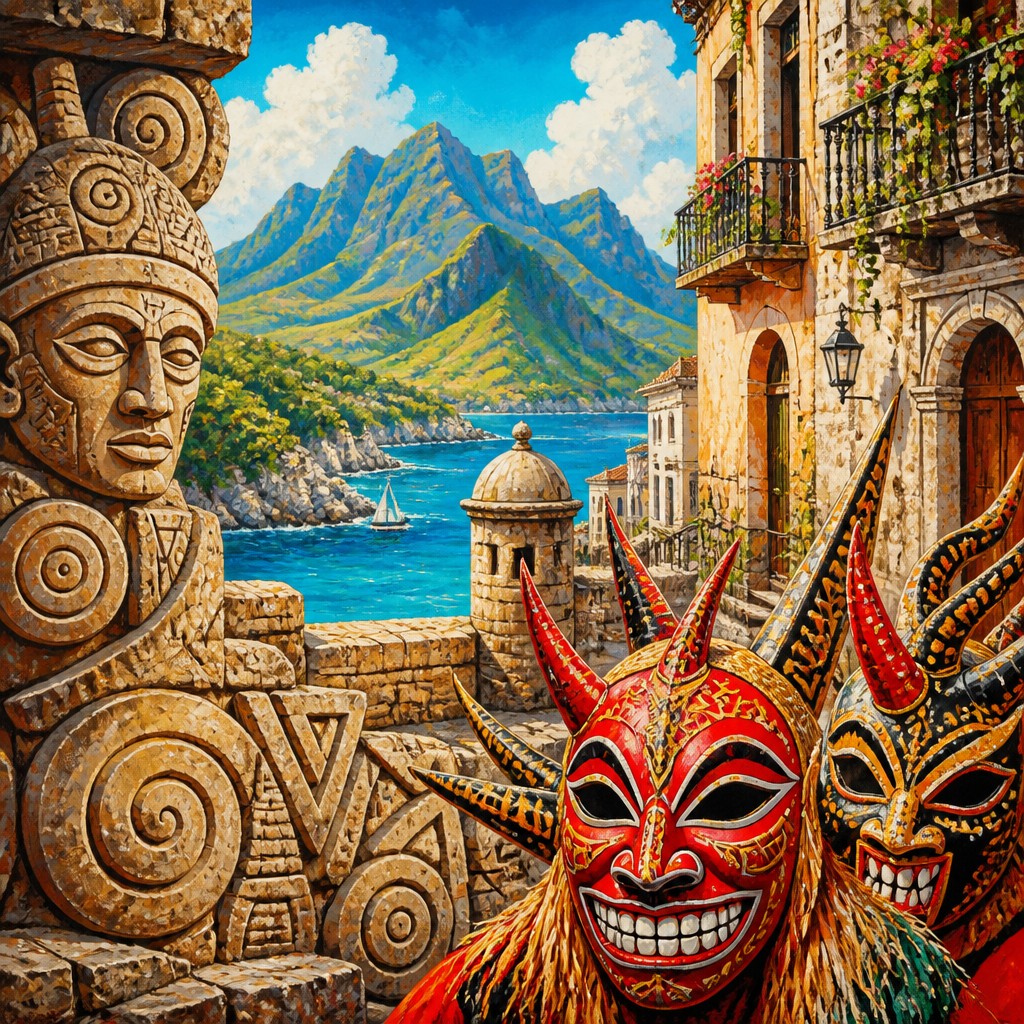
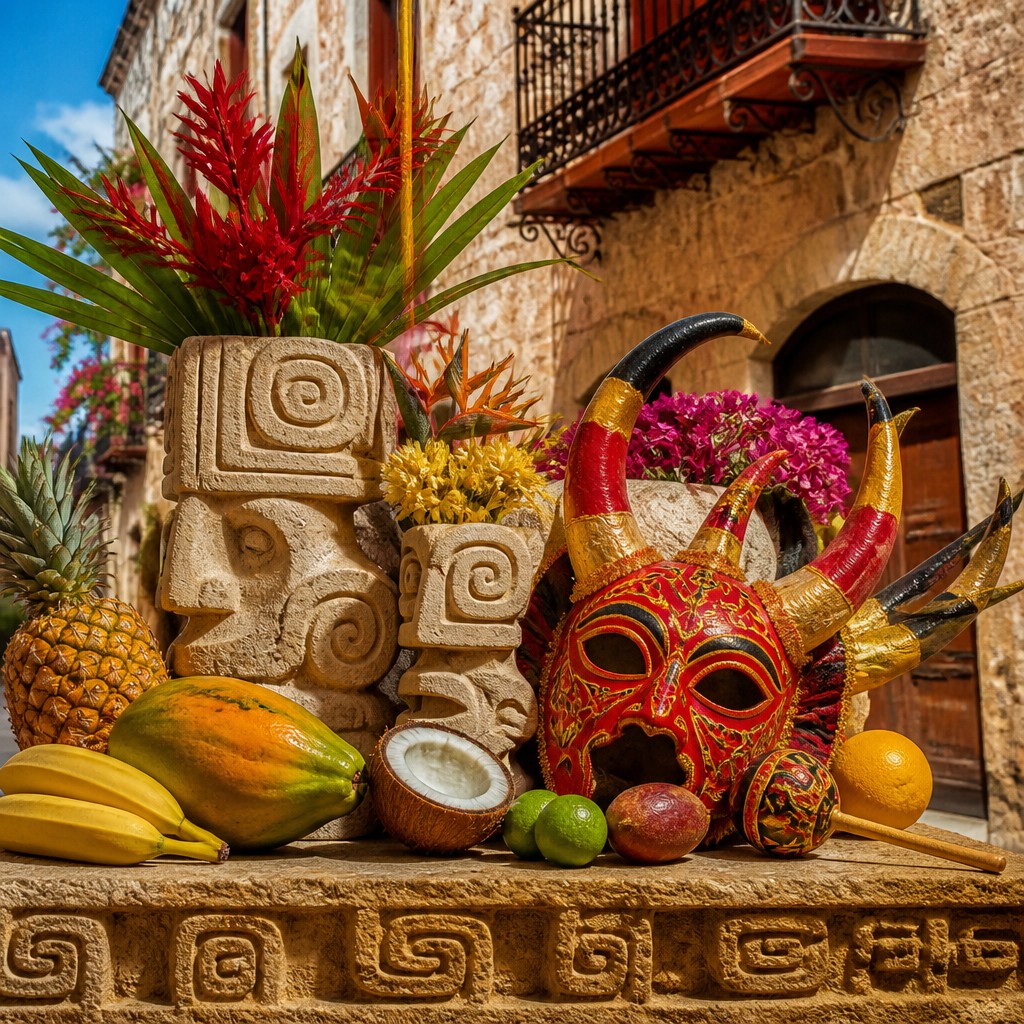
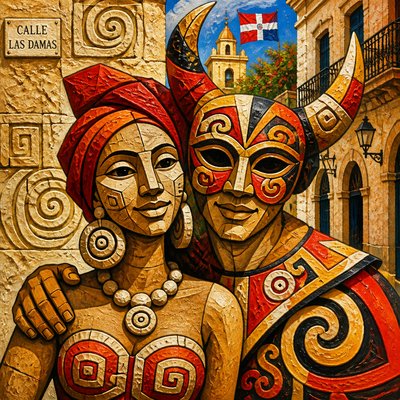
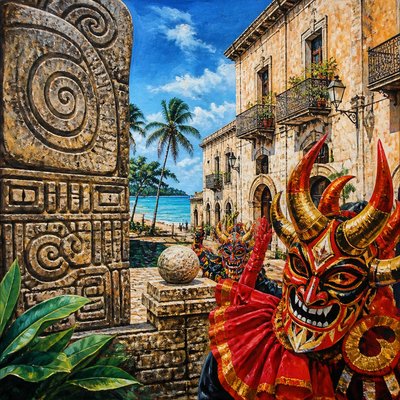
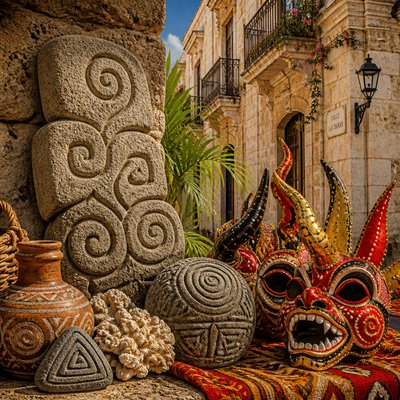
Dominican Art Style is an invented contemporary synthesis built from Taíno-inspired carving, the weathered coral-limestone architecture of Santo Domingo’s Zona Colonial, and the color, spectacle, and mask traditions of Caribbean carnival. Its visual identity combines archaeological-looking stone forms with bright red, gold, and black accents, wrought-iron balconies, carved spirals, and the intense illumination of the Caribbean sun.
The style looks both ancient and festive. Rough mineral surfaces and simplified geometric motifs suggest enduring island material culture, while ornate masks, rhythmic patterns, and saturated color introduce movement and celebration. Warm coral stone, ochre light, deep shadow, and decorative ironwork provide a distinctly Dominican architectural atmosphere, while horned carnival-mask imagery creates a broader cross-Caribbean accent.
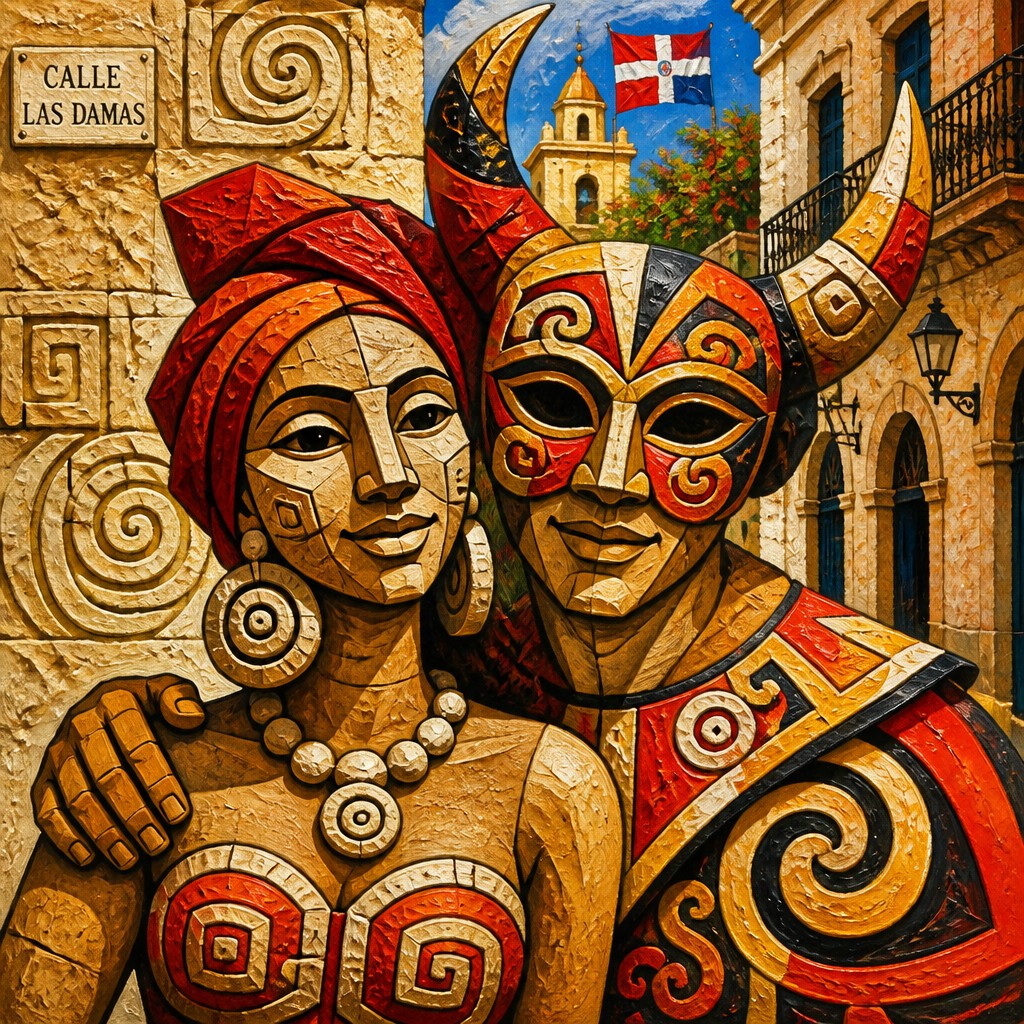
Try It On Your Photos
Upload any photo and convert it into Dominican Art Style — drag the sliders to compare before and after.
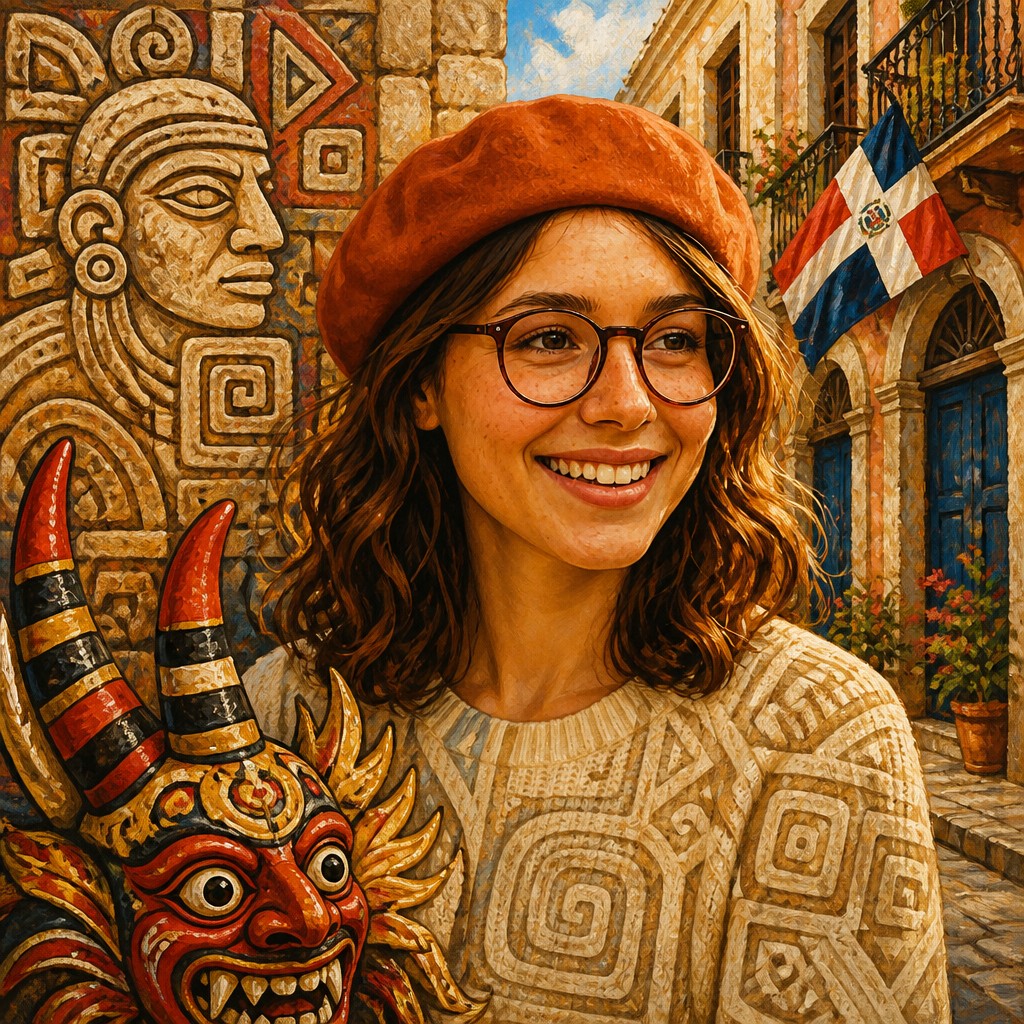

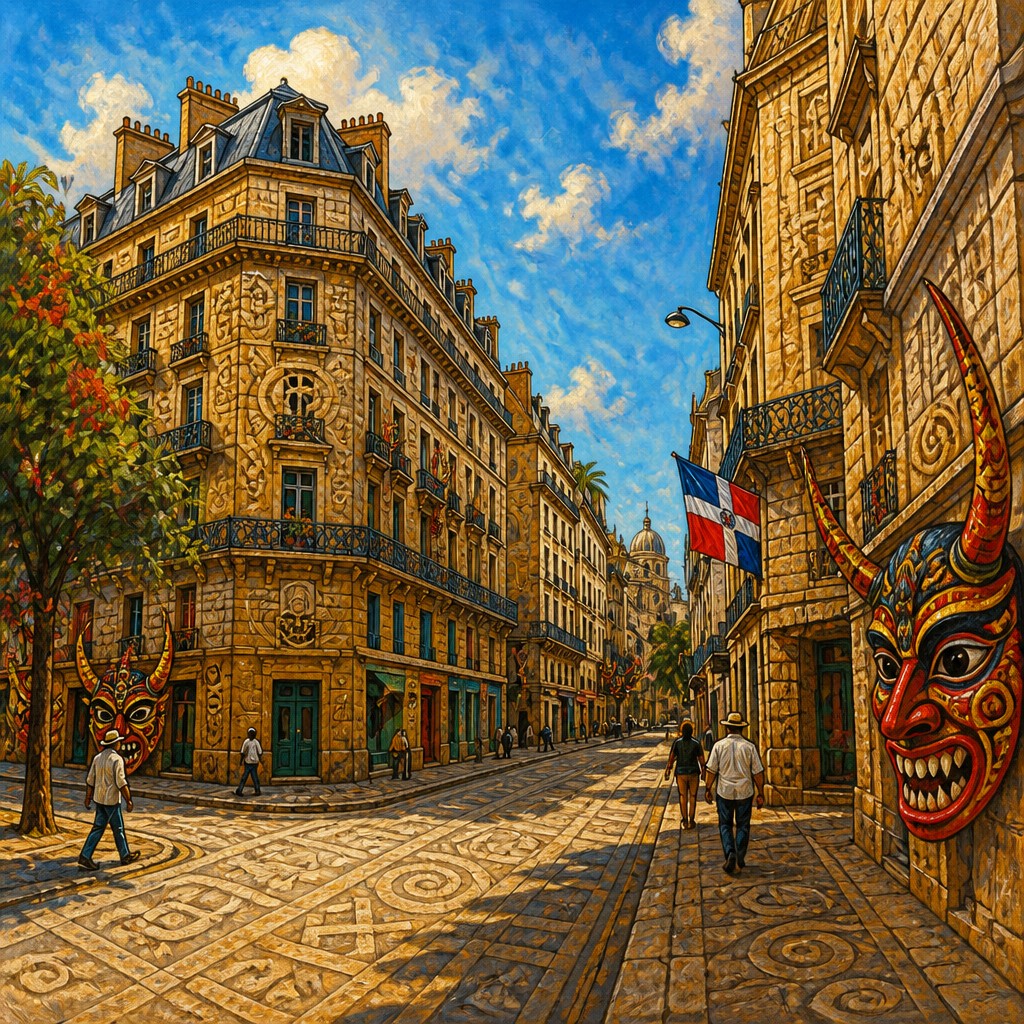

What Defines Dominican Art Style
The signature details, up close
Taíno-inspired geometry
Spirals, stepped forms, concentric circles, and simplified animal or human symbols appear as carved, incised, or relief-like motifs. The geometry is often abstracted rather than presented as literal archaeological reconstruction.
Weathered coral limestone
Surfaces resemble porous, sun-warmed coral stone with chipped edges, mineral variation, softened corners, and ochre or pinkish patina. This material language evokes the masonry of Santo Domingo’s historic colonial district.
Colonial architectural details
Arched openings, thick masonry walls, courtyard facades, carved portals, tiled roofs, and wrought-iron balconies establish a recognizable Zona Colonial atmosphere. Architectural elements may function as a backdrop, frame, or sculptural pattern.
Carnival mask symbolism
Horned papier-mâché masks, exaggerated eyes, ridges, teeth, and curling flourishes provide theatrical focal points. Red, black, brass, and gold create a dramatic carnival vocabulary while allowing room for cross-Caribbean interpretation.
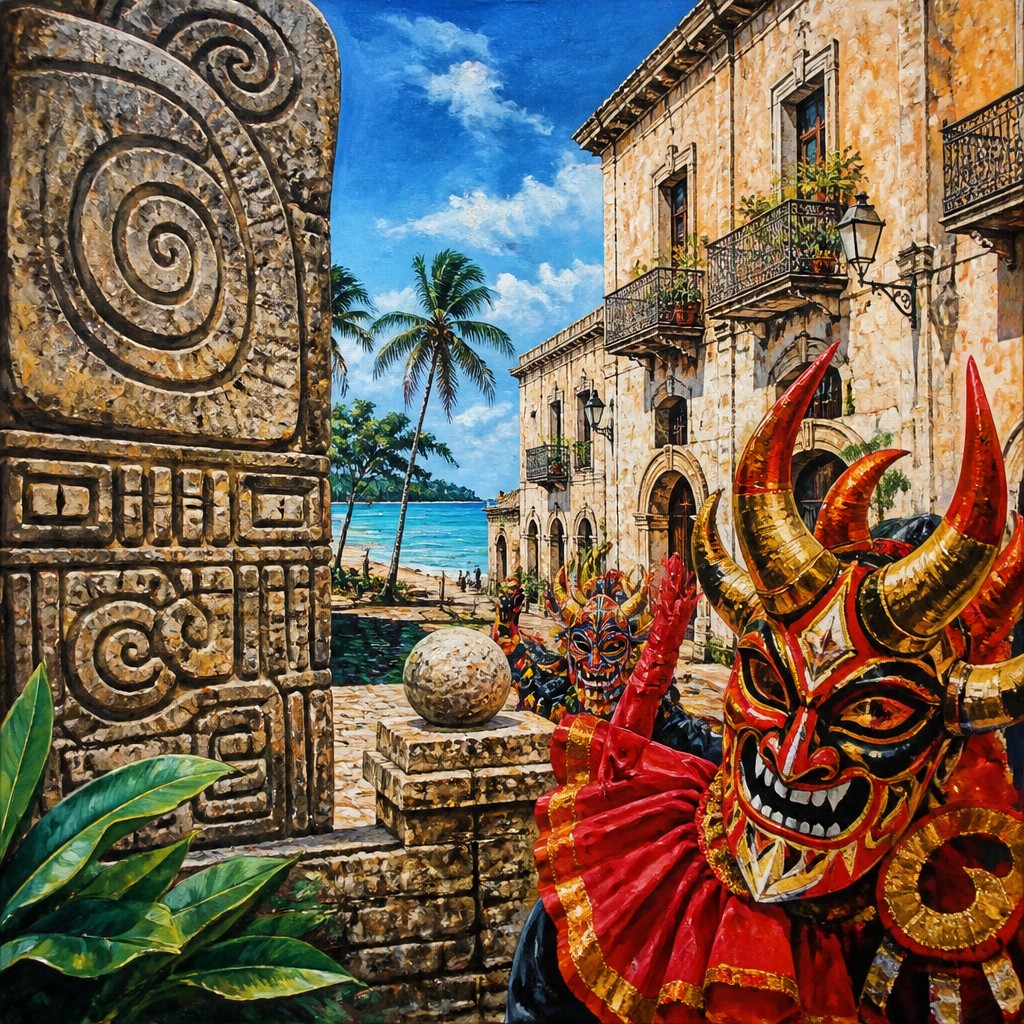
Caribbean gold light
Hard sunlight produces luminous highlights on stone and metal, with compact shadows and warm reflections. A palette of coral, terracotta, ochre, turquoise, crimson, black, and metallic gold keeps the imagery vivid without losing its mineral foundation.
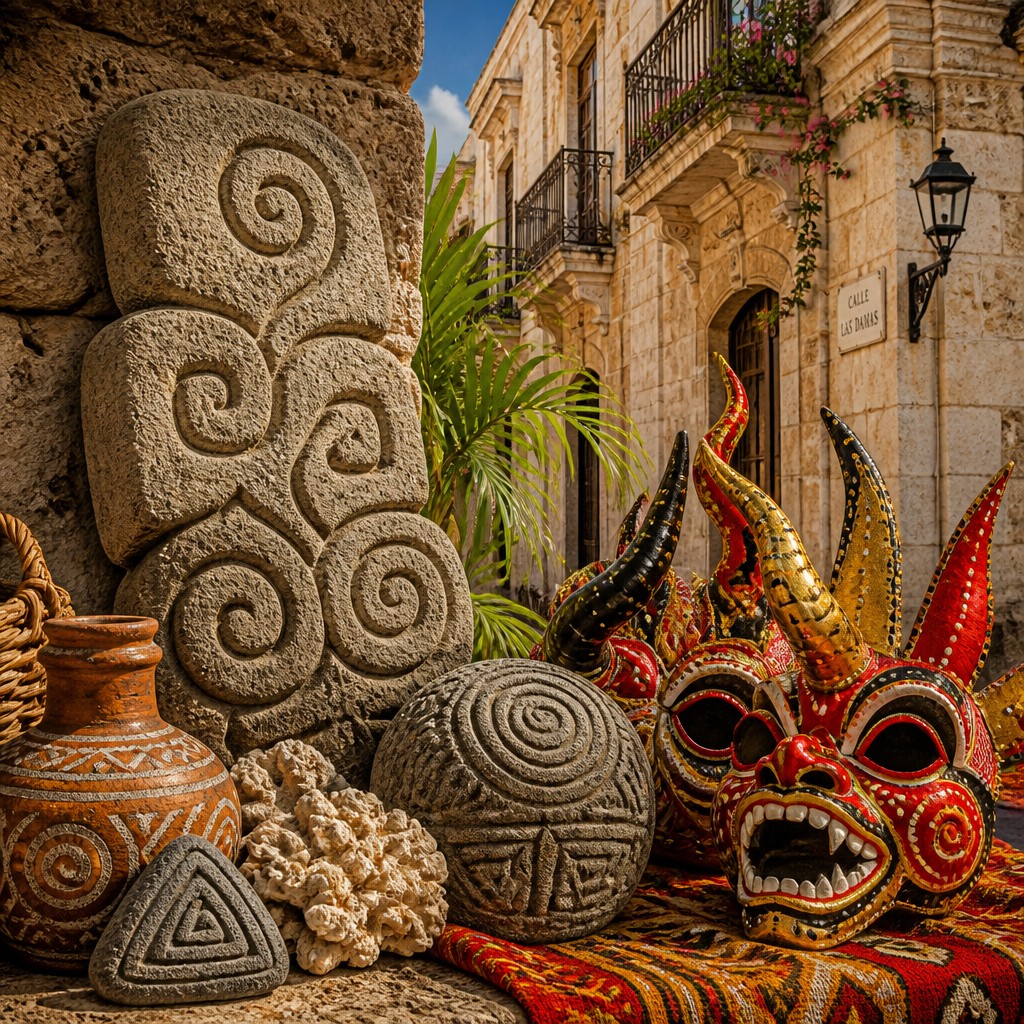
Relief and tactile depth
The style favors the visual logic of carving, bas-relief, masonry, and textured plaster. Even flat illustrations benefit from grain, chisel marks, erosion, layered pigment, and subtle three-dimensional modeling.
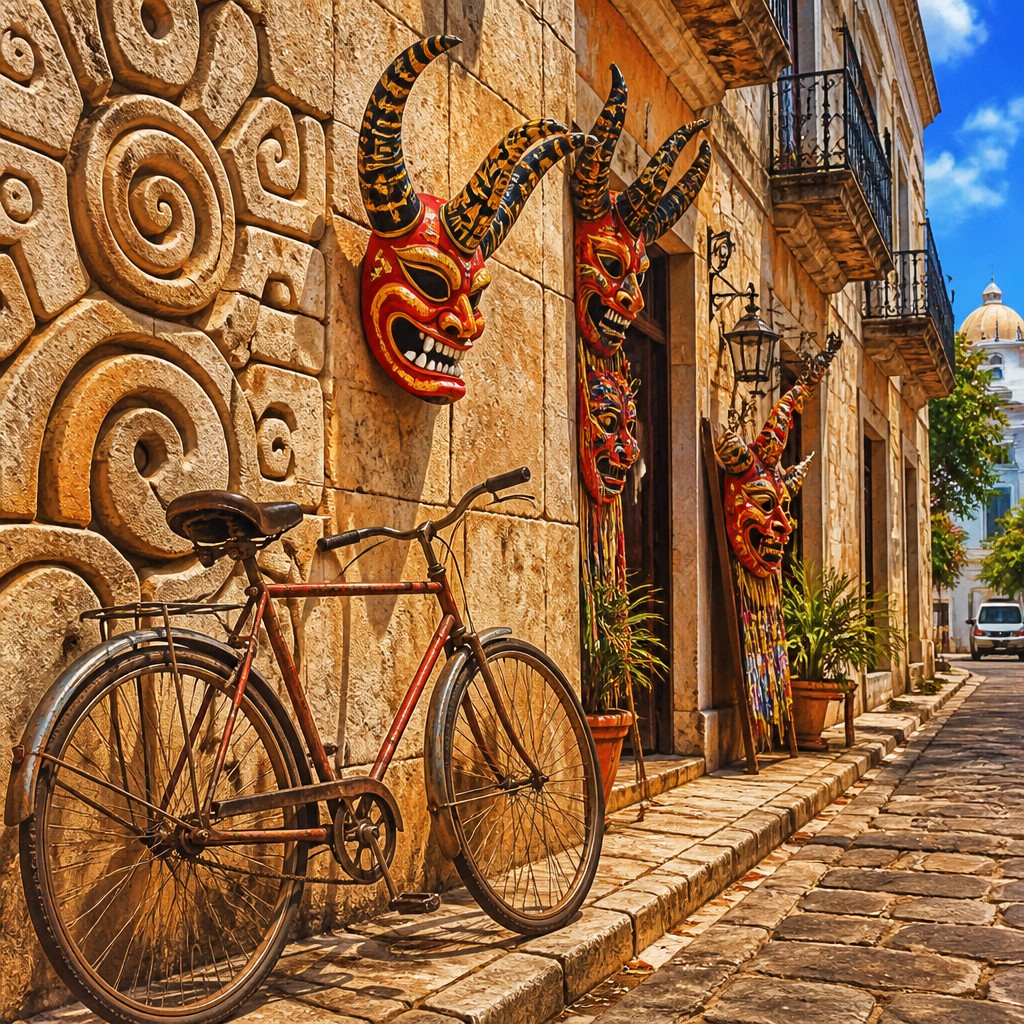
Festive rhythmic composition
Repeating spirals, mask contours, balcony rails, tile patterns, and bands of color create visual rhythm. Diagonal arrangements, processional groupings, and decorative framing suggest music, movement, and public celebration.
Dominican Prompt Ideas
Start from an idea — each one opens the generator with the style ready to go. See all 40 Dominican prompts →
How to Create Dominican Art
Master the craft step by step — or skip straight to creating. Read the full guide →
- 1
Build a warm material base
Begin with coral limestone, aged plaster, terracotta, or rough paper, then layer porous texture, chips, stains, and shallow relief. Keep the surface irregular so the image feels made or weathered rather than digitally polished.
- 2
Use a restricted Caribbean palette
Anchor the composition in coral, sand, ochre, and dark charcoal, then add controlled accents of crimson, turquoise, black, and metallic gold. Place the brightest colors on masks, textiles, painted doors, or ceremonial details.
- 3
Organize motifs as carved ornament
Repeat spirals, stepped geometry, animal abstractions, iron balcony patterns, and mask contours across borders or architectural planes. Vary scale and depth to distinguish genuine-looking relief from printed decoration.
- 4
Light for strong tropical contrast
Use a high, warm sun angle with crisp shadows and bright highlights on stone, iron, and glossy papier-mâché. A slight haze or atmospheric glow can suggest humid Caribbean air without flattening the structure.
- 5
Combine hand and digital processes
For traditional work, incise motifs into clay, plaster, wood, or cardboard and finish them with mineral-like washes and dry-brushed highlights. Digitally, combine displacement maps, stone textures, painted masks, and controlled grain while preserving visible imperfections.
- 6
Write prompts with material and place cues
Specify the subject first, then describe Taíno-inspired geometric relief, Zona Colonial coral limestone, wrought iron, horned carnival-mask forms, warm Caribbean sunlight, and a coral-red, gold, and black palette. Add terms such as carved, weathered, bas-relief, porous, festive, and high-contrast to guide surface and lighting.
The Story
History & Origins of Dominican
Dominican Art Style has no established historical movement or single founding school; it is best understood as a modern, AI-native and design-oriented aesthetic lineage. It draws on Taíno archaeological forms from Hispaniola and the wider Caribbean, especially abstract spirals, animal symbolism, polished or weathered stone, and incised geometric ornament.
Its architectural foundation comes from the colonial streets, forts, churches, courtyards, and coral-limestone masonry of Santo Domingo’s Zona Colonial. Carnival imagery adds a contemporary festive layer. Vejigante masks are most strongly associated with Puerto Rican carnival traditions, so their inclusion represents a deliberate cross-Caribbean fusion rather than a uniquely Dominican historical emblem; Dominican carnival has its own regional masks, characters, and procession traditions.
Influences: The style relates to Taíno material culture and Caribbean archaeological design, colonial Caribbean architecture, vernacular masonry, wrought-iron ornament, papier-mâché carnival traditions, folk sculpture, mural painting, relief carving, and contemporary cultural illustration. It also shares with Latin American magical realism and tropical modernism an interest in saturated color, layered history, and the meeting of everyday architecture with symbolic or ceremonial imagery, while remaining a synthetic rather than historically codified movement.
Frequently Asked Questions
What defines the Dominican Art Style?
It is defined by a fusion of Taíno-inspired geometric carving, the coral-limestone architecture of Santo Domingo’s Zona Colonial, and vivid Caribbean carnival imagery. Warm sunlight, porous stone, wrought iron, red and gold accents, and rhythmic decorative patterns are central to its appearance.
Is Dominican Art Style a historical art movement?
No. The term describes a contemporary, invented aesthetic synthesis rather than a documented movement with a fixed period or membership. Its historical references should be treated as visual sources, not as evidence of a unified traditional Dominican school.
Are Vejigante masks specifically Dominican?
Vejigante masks are most strongly associated with carnival traditions in Puerto Rico. Using horned Vejigante-like forms in this style creates a cross-Caribbean fusion; artists seeking stronger Dominican specificity can instead draw on regional Dominican carnival masks and characters.
How can I make an image in this style?
Start with a clear subject such as a colonial facade, carved guardian, mask, or procession. Add material cues like coral limestone, incised spirals, chipped plaster, wrought iron, and papier-mâché, then specify warm Caribbean sunlight and a controlled coral, red, black, turquoise, and gold palette.
How is this different from generic Caribbean folk art?
The style narrows the broader Caribbean reference into a particular combination of Santo Domingo’s colonial architecture, Taíno-inspired stone geometry, and carnival spectacle. Its characteristic contrast between archaeological-looking surfaces and brilliant festive color gives it a more defined visual structure.
Where can this aesthetic be used?
It suits editorial illustration, posters, murals, cultural exhibition graphics, architectural visualization, album artwork, game environments, decorative objects, and portrait backgrounds. It works especially well when the subject can support tactile surfaces, symbolic motifs, or a sense of public celebration.
Create your first Dominican artwork
Describe anything — or upload a photo — and see it in Dominican Art Style in seconds.
Related Styles
Discover similar art styles