Congolese Art Style
Explore Congolese art style through Kuba raffia geometry, caryatid stools, carved masks, nail-studded sculpture, and an earthy ebony palette.
Instantly rendered in Congolese — or transform a photo
Congolese Gallery
Tap any artwork to explore it
What is Congolese Art Style?
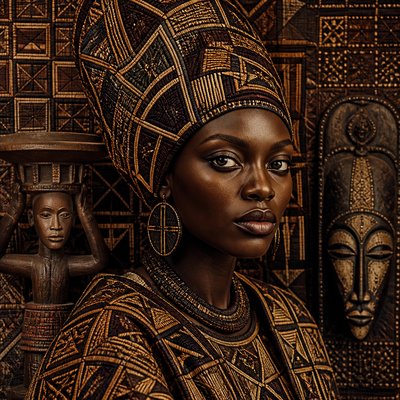
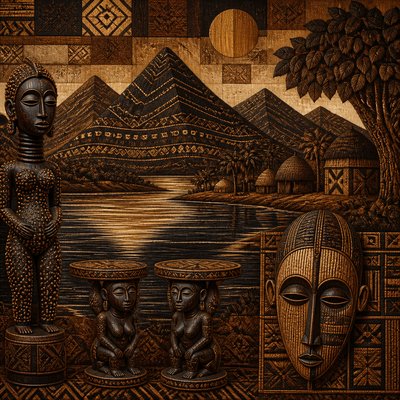
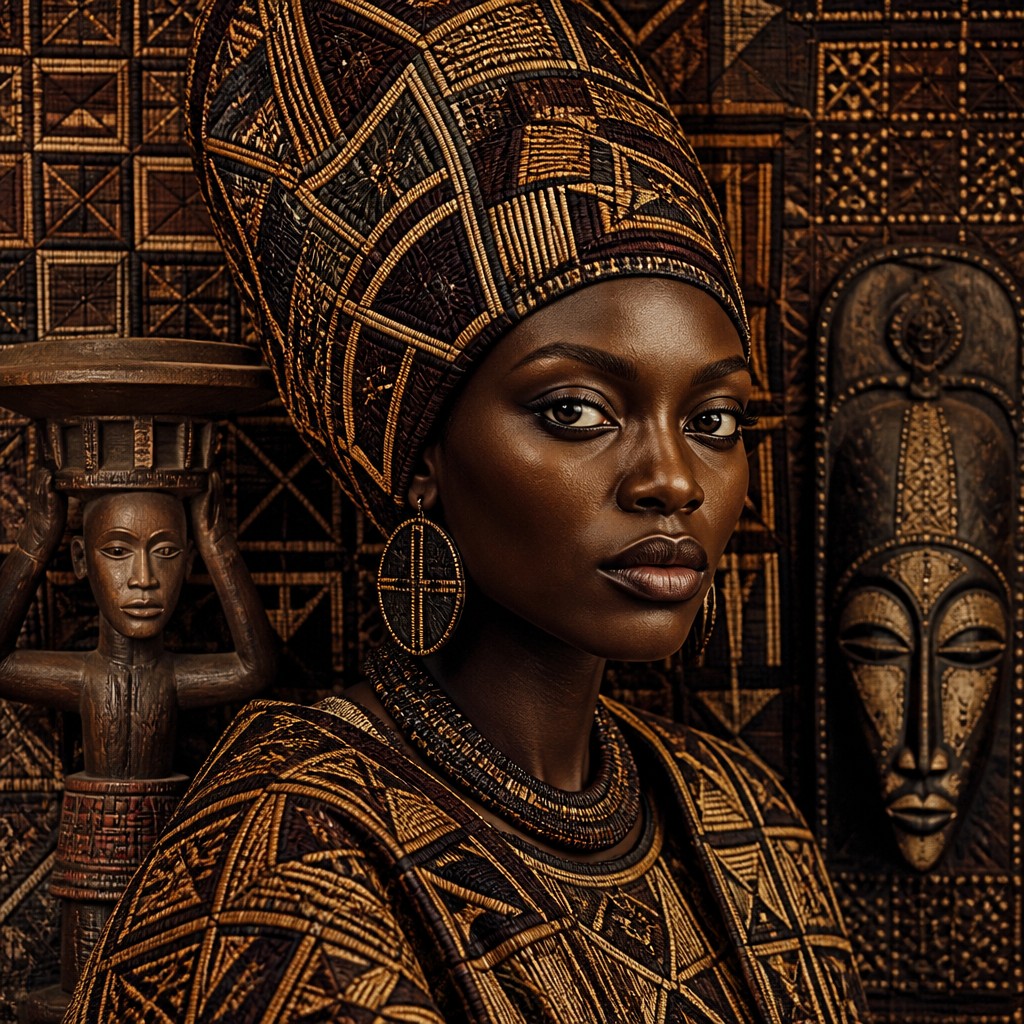
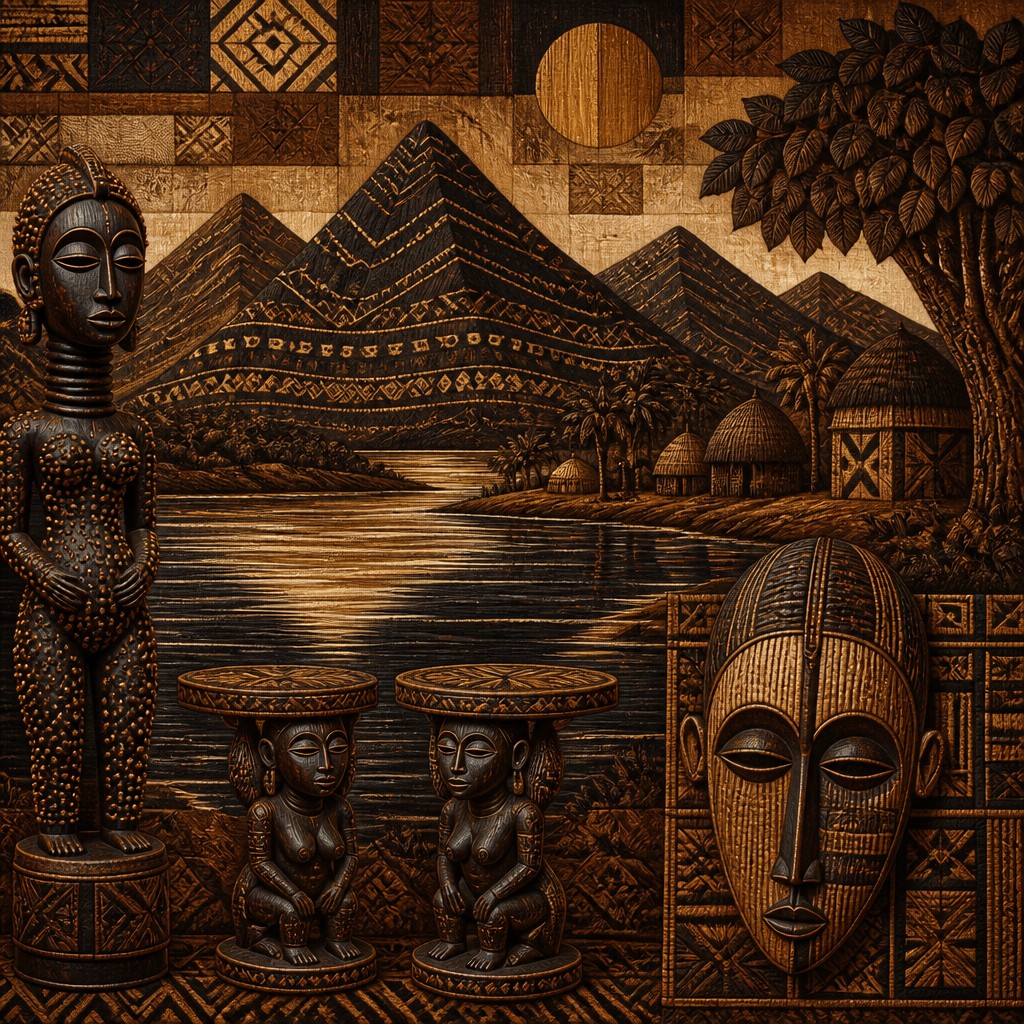
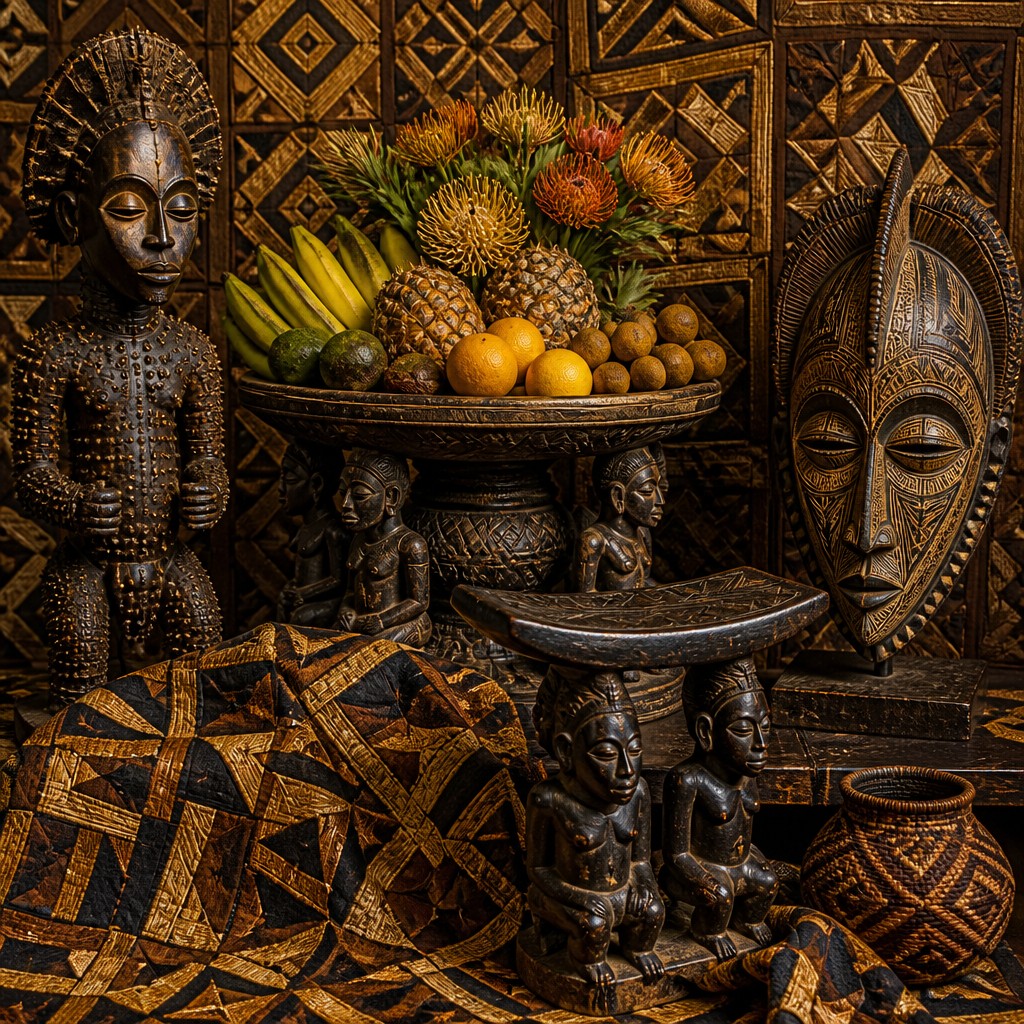
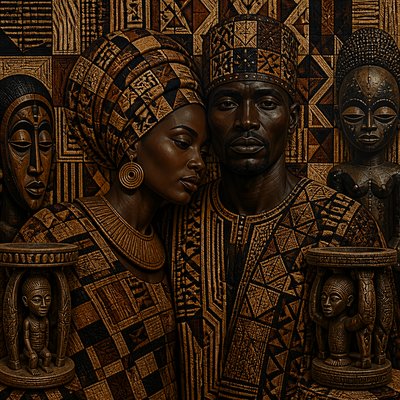
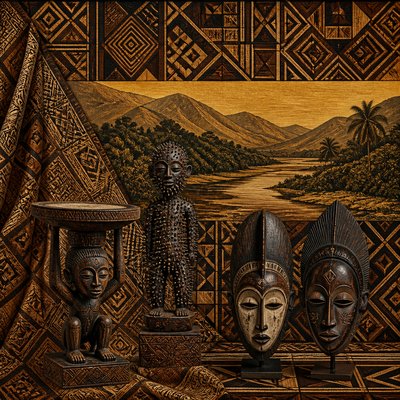
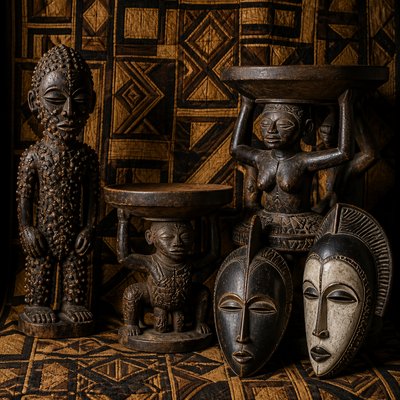
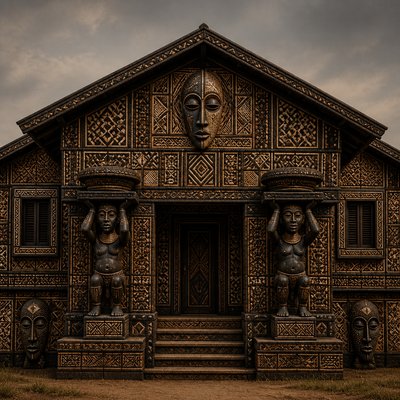
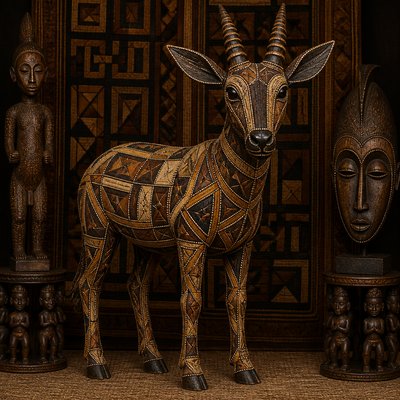
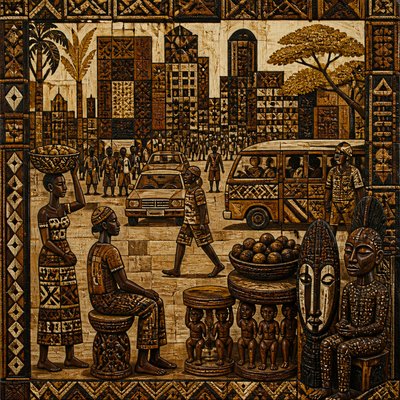
Congolese art style is a contemporary, cross-cultural visual synthesis inspired by artistic traditions from the Congo region. Its visual identity combines the dense geometric language of Kuba raffia textiles with the sculptural presence of carved caryatid stools, figurative wood sculpture, and refined mask forms associated with Chokwe and Pende traditions. Deep umber, raffia-gold, black, and weathered wood tones give the style a grounded, tactile character.
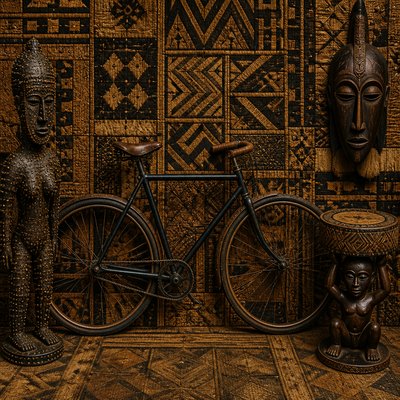
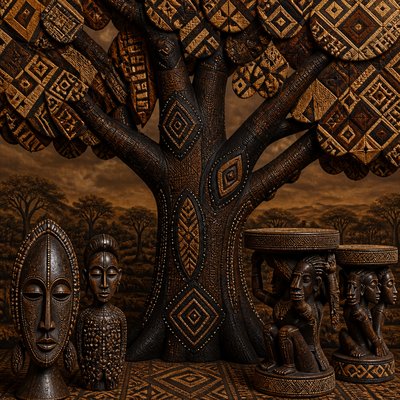
The style looks richly dimensional because it treats surface, structure, and pattern as equally important. Repeated lines, stepped motifs, diamonds, zigzags, and appliqué-like blocks suggest woven fibers, while carved bodies, projecting facial planes, studs, and incised details create strong relief. In a contemporary image, these elements may appear as furniture, architecture, portraiture, costume, or symbolic objects rather than as a literal reproduction of a single regional tradition.
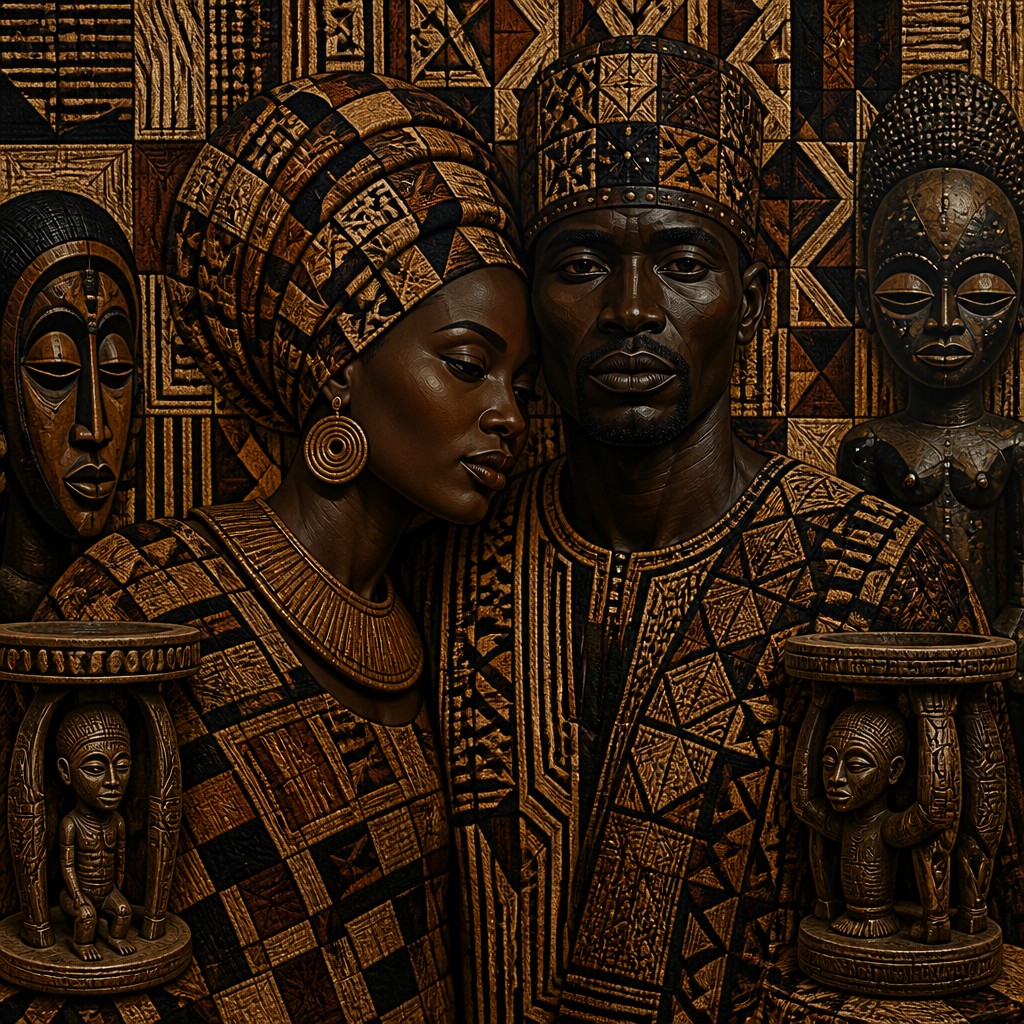
Try It On Your Photos
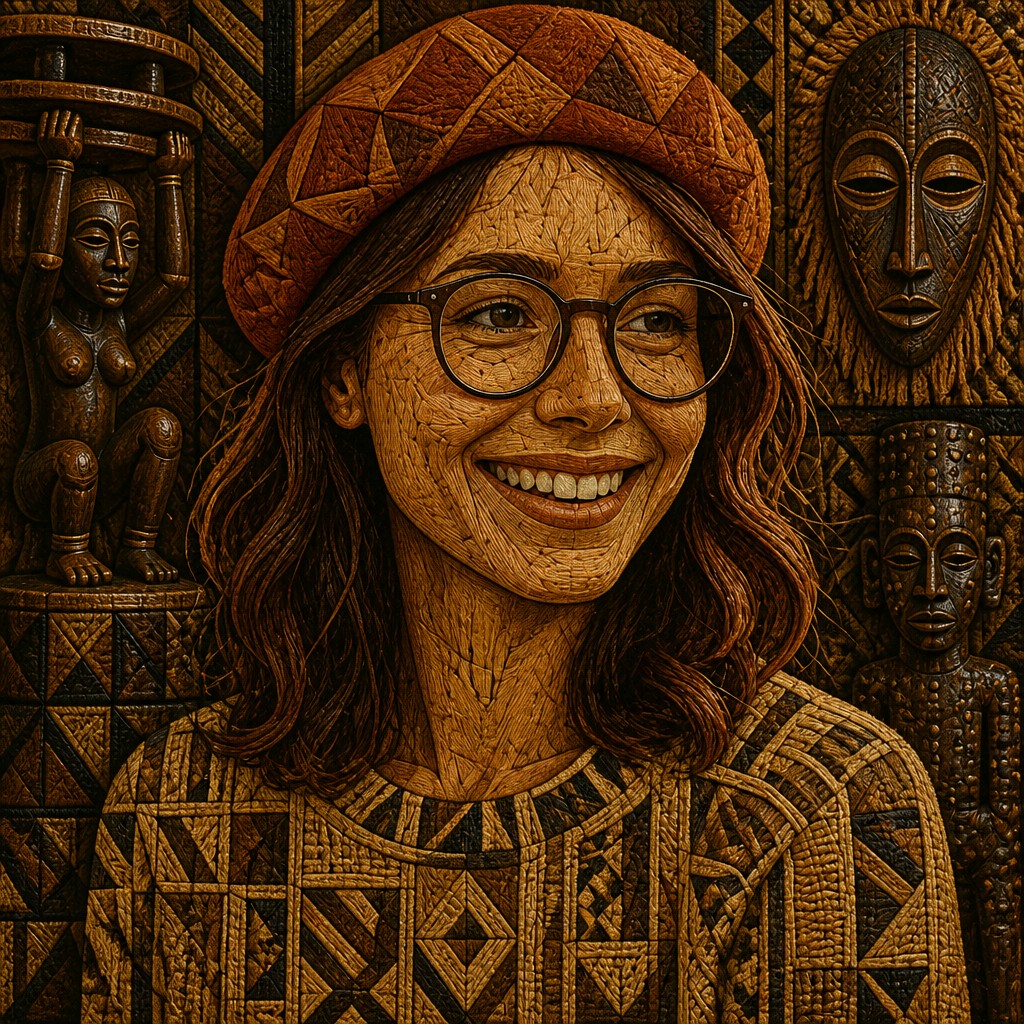
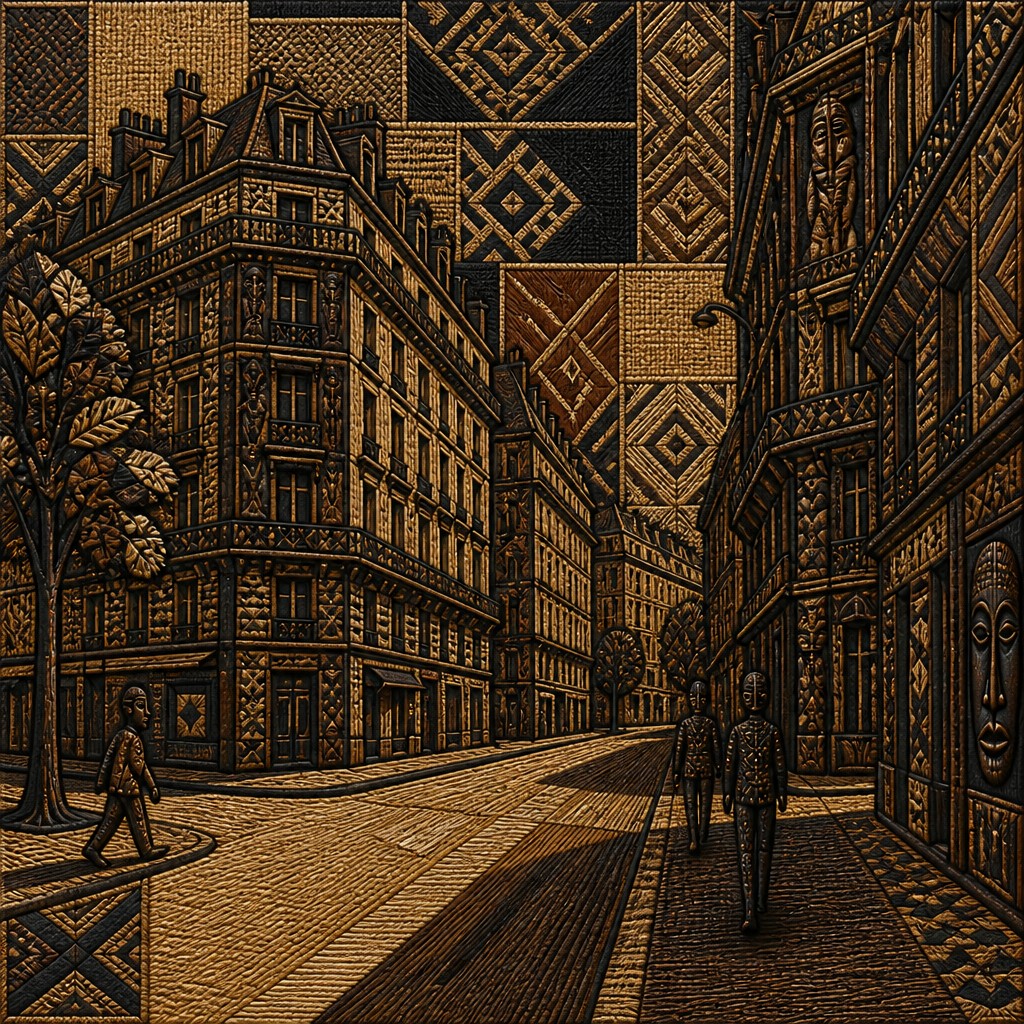
Upload any photo and convert it into Congolese Art Style — drag the sliders to compare before and after.


What Defines Congolese Art Style
The signature details, up close
Dense Kuba-inspired geometry
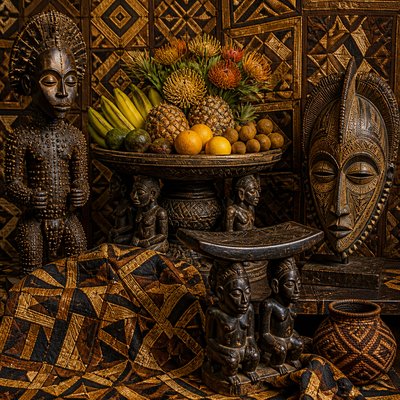
Interlocking diamonds, stepped forms, zigzags, bands, and asymmetrical patchwork suggest the layered construction of Kuba raffia textiles. Pattern is often distributed across clothing, walls, furniture, and backgrounds.
Caryatid stool forms
Low carved stools supported by crouching, kneeling, or standing figures provide a strong sculptural motif. Their balanced structure links practical furniture with authority, ancestry, and social status.
Carved figurative relief
Human figures are rendered with simplified anatomy, deliberate symmetry, projecting facial planes, and deeply cut contours. The emphasis is on presence and symbolic legibility rather than naturalistic anatomy.
Mask-derived features
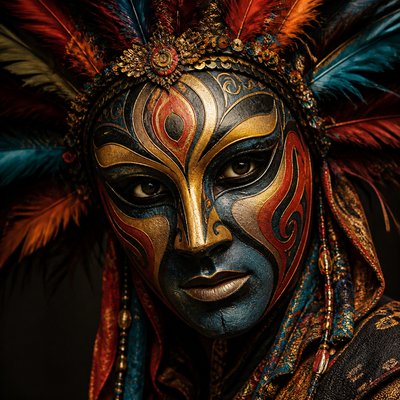
Refined mask carving may appear through elongated faces, strong brows, almond or slit-like eyes, patterned hair, and carefully controlled geometric planes. These references should be treated as formal inspiration rather than as generic interchangeable symbols.
Nail-studded and incised surfaces
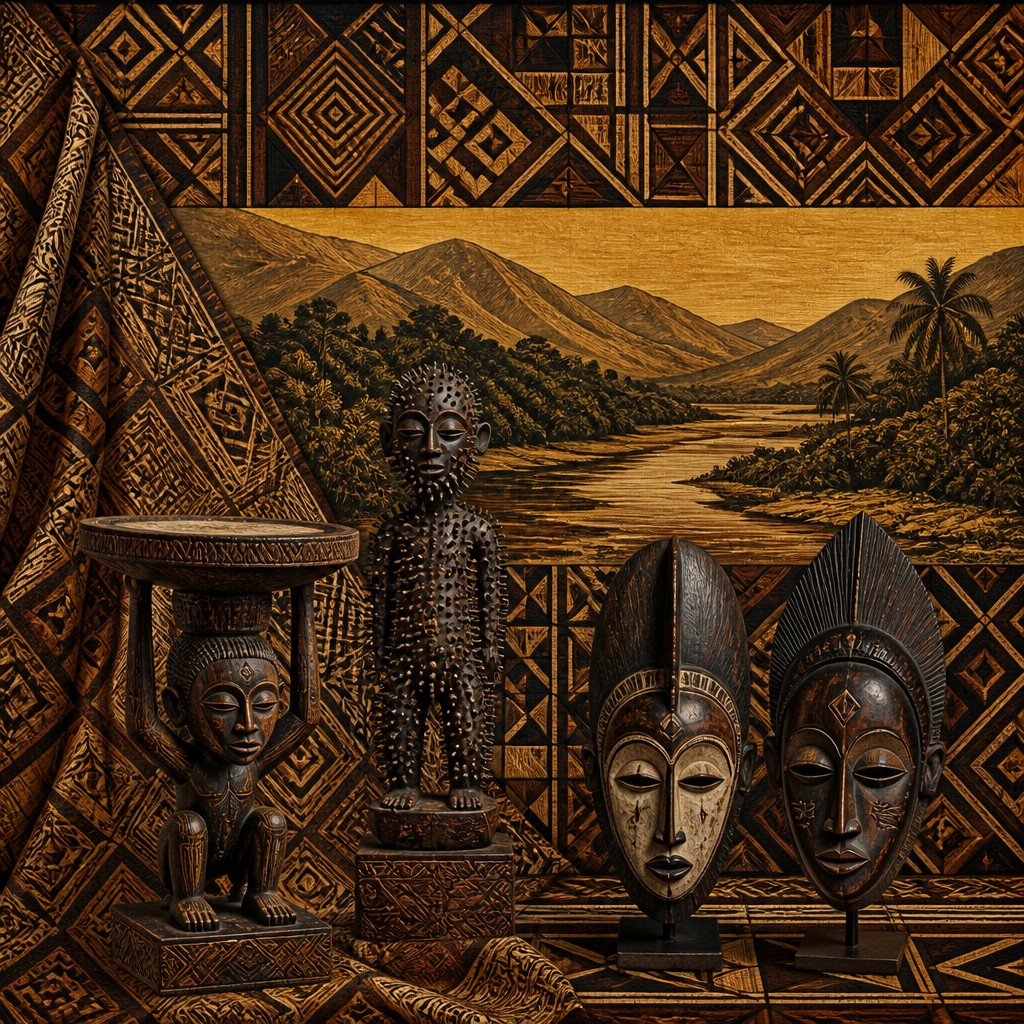
Small metal studs, pegs, scratches, and incised lines create a tactile, weathered surface on dark wood. In historically informed work, ritual sculpture and its ceremonial function should be distinguished from purely decorative imagery.
Earth and fiber palette
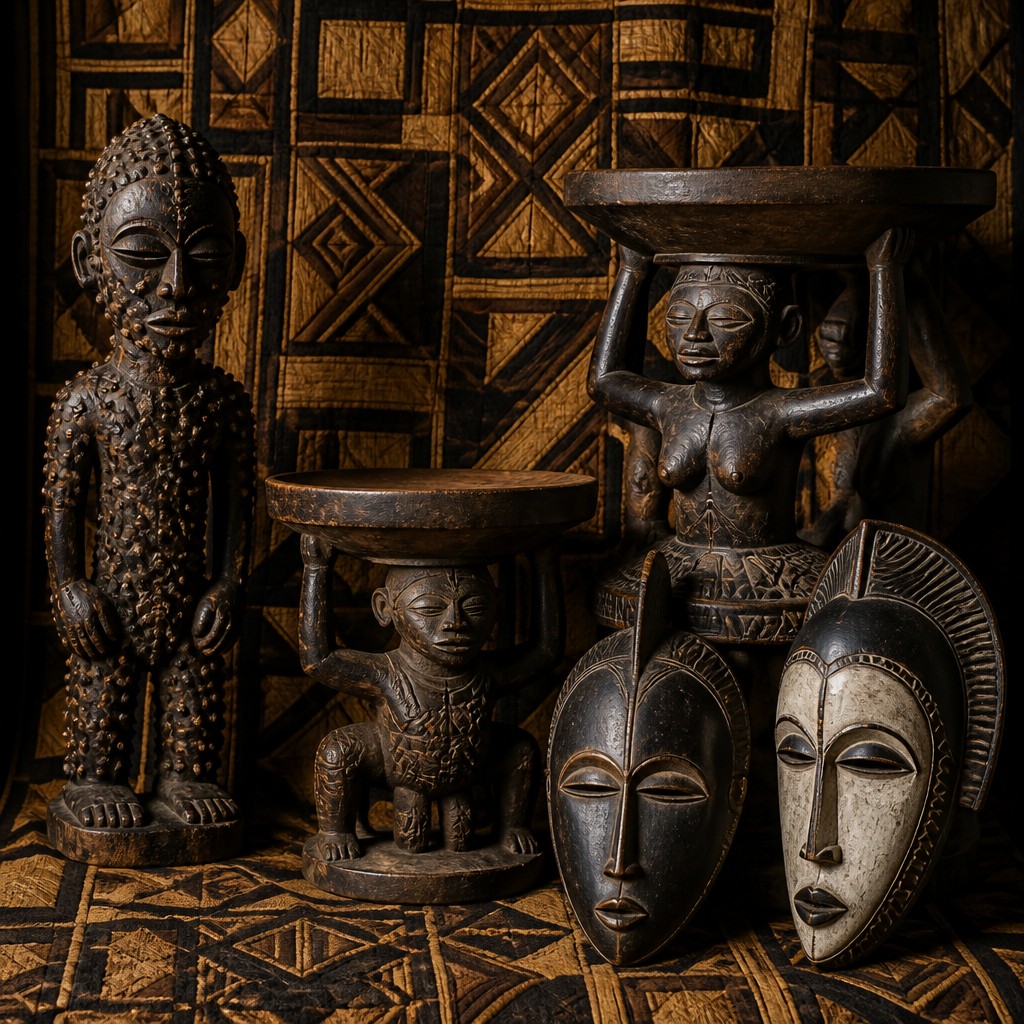
Deep umber, ebony, charcoal, muted red-brown, raffia gold, and natural tan dominate the palette. Subtle variation in fiber, grain, dust, and worn polish prevents the dark colors from appearing flat.
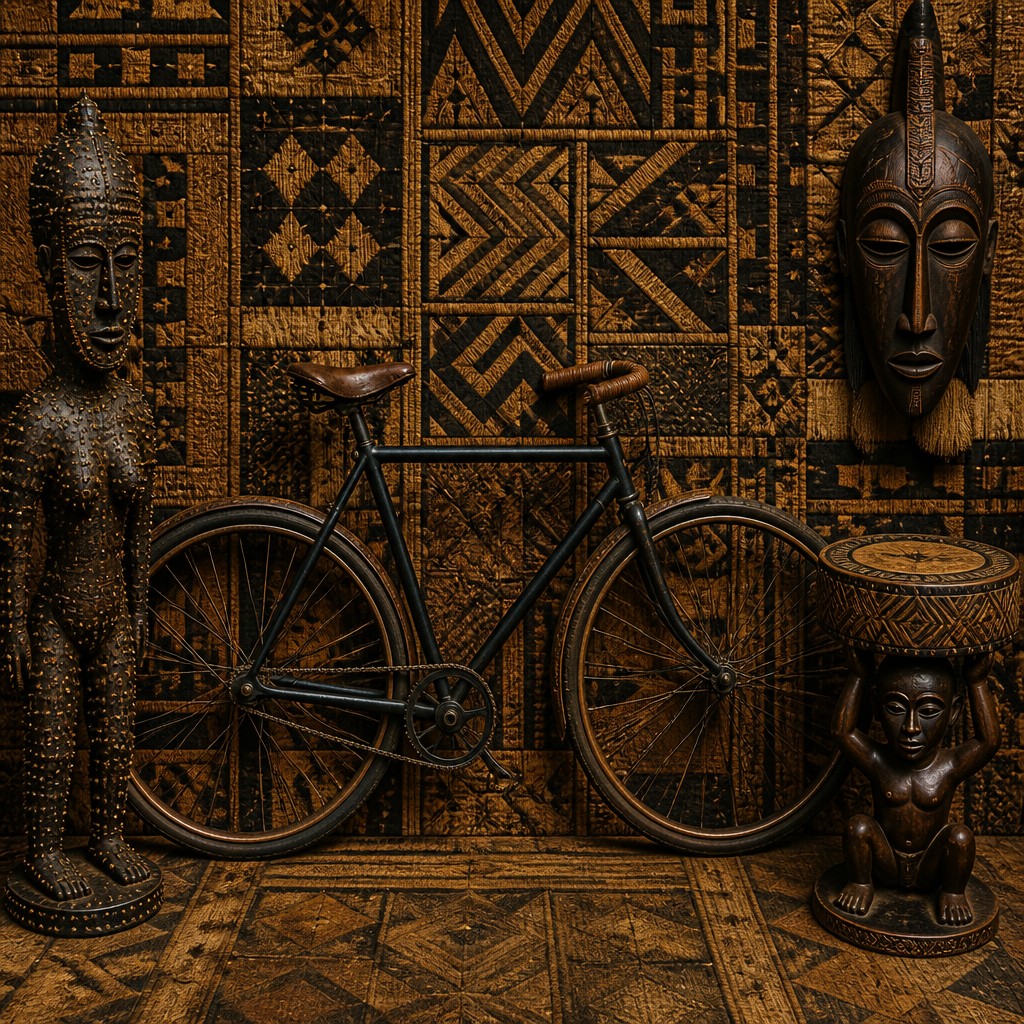
Frontal monumentality
Figures and objects commonly face the viewer with a calm, centered, weighty stance. Strong silhouettes, shallow relief, and compressed spatial depth make the subject feel like a ceremonial artifact or carved architectural element.
Congolese Prompt Ideas
Start from an idea — each one opens the generator with the style ready to go. See all 40 Congolese prompts →
How to Create Congolese Art
Master the craft step by step — or skip straight to creating. Read the full guide →
- 1
Build a material hierarchy
Combine woven raffia or fiber textures with carved hardwood, matte clay, and restrained metal accents. Use directional lighting to reveal grain, raised appliqué, incisions, and studs without making the surface look glossy.
- 2
Organize pattern before detail
Start with a few large geometric bands or patchwork zones, then add smaller motifs inside them. Keep the figure or central object legible so dense pattern supports the composition rather than overwhelming it.
- 3
Use a sculptural silhouette
Pose figures frontally or in balanced crouching and kneeling arrangements, with simplified anatomy and clearly carved planes. For digital work, block the form in three dimensions before applying textile or wood textures.
- 4
Control the palette and light
Limit the color range to ebony, umber, raffia gold, muted earth red, and natural fiber tones. Use warm side light or diffuse museum-like illumination to emphasize relief and material contrast.
- 5
Distinguish cultural references
Identify whether a reference is Kuba textile design, Kongo sculpture, or Chokwe or Pende mask carving instead of merging all Congolese traditions into one undifferentiated motif. Avoid copying sacred insignia or presenting ritual objects as generic exotic decoration.
- 6
Write precise generation prompts
Specify the subject, frontal composition, woven geometric appliqué, carved hardwood, caryatid support, restrained palette, and tactile lighting. For image transformation, preserve the source subject while requesting selective changes to surface, costume, geometry, and sculptural depth.
The Story
History & Origins of Congolese
There is no single historical movement called Congolese art style. This label describes an aesthetic lineage drawn from distinct artistic cultures in the present-day Democratic Republic of the Congo and the Republic of the Congo, including Kuba textile and court arts, Kongo sculptural traditions, and Chokwe and Pende mask and figure carving. These traditions developed in different communities, contexts, and periods, and should not be treated as interchangeable.
Kuba raffia textiles are known for labor-intensive woven surfaces, appliqué, embroidery, and sophisticated geometric patterning. Carved stools, prestige objects, masks, and figures carried social, ceremonial, political, or spiritual meanings; some nail-studded Kongo sculptures, for example, were activated ritual objects rather than decorative furnishings. The contemporary style borrows their formal qualities—pattern density, frontal presence, carved relief, and material richness—while translating them into an intentionally blended visual language.
Influences: The style relates most closely to Kuba raffia weaving and court arts, Kongo wood sculpture, Chokwe mask and figure carving, Pende mask traditions, and broader Central African practices of carving, weaving, appliqué, and prestige-object production. It also intersects with modernist sculpture through its simplified forms and frontal monumentality, with textile art through its repeated geometry, and with contemporary material-based design through its emphasis on grain, fiber, relief, and patina. These connections are formal and aesthetic; they do not imply that the referenced cultures share identical meanings or techniques.
Frequently Asked Questions
Is Congolese art style a single historical art movement?
No. The term is best understood as a contemporary umbrella label for an aesthetic synthesis inspired by several distinct artistic traditions from the Congo region. Kuba, Kongo, Chokwe, and Pende arts have different histories, functions, and visual systems.
What defines the look of this style?
Its defining features are dense geometric textile patterning, carved figurative forms, caryatid stools, mask-like facial planes, tactile wood surfaces, and an umber, ebony, and raffia-gold palette. The overall effect is frontal, material-rich, and sculptural.
How is it different from African tribal art as a general category?
It is more geographically specific and should not be treated as a synonym for all African art. A responsible interpretation identifies its particular references, such as Kuba raffia geometry or Kongo wood sculpture, while acknowledging that these traditions are culturally distinct.
What materials are associated with the visual language?
Raffia fiber, woven textiles, hardwood, pigments, clay, beads, and metal elements are especially useful references. In a digital image, these can be simulated through layered displacement, wood grain, fiber maps, roughness variation, and directional relief lighting.
Can I use this style for portraits or modern subjects?
Yes. Portraits, interiors, architecture, animals, and contemporary clothing can all use its geometry, surface treatment, and sculptural lighting. It is usually more convincing to adapt the visual principles than to place unrelated sacred or ceremonial objects around a subject without context.
How can I create an image in this style respectfully?
Name the specific traditions that inform the image, research their context, and avoid treating ritual objects as generic props. Keep the distinction between historical artifact, contemporary interpretation, and decorative design clear, especially when using masks, figures, or nail-studded sculpture.
Create your first Congolese artwork
Describe anything — or upload a photo — and see it in Congolese Art Style in seconds.
Related Styles
Discover similar art styles