Cameroonian Art Style
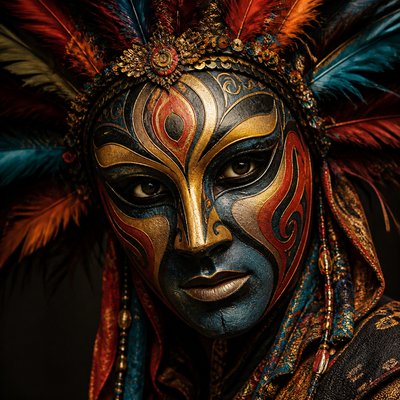
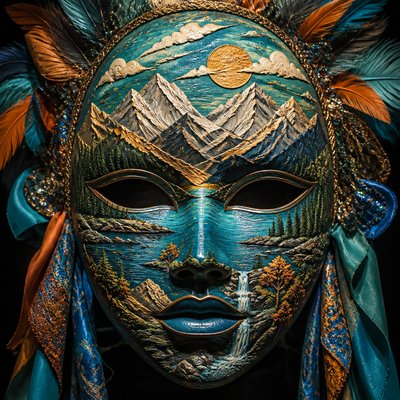
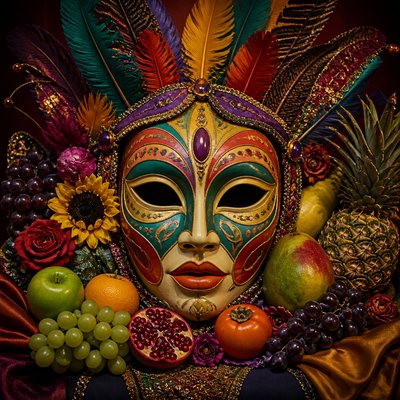
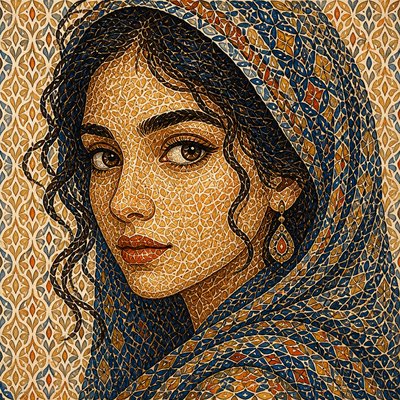
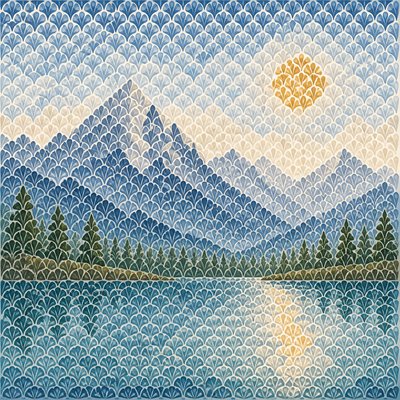
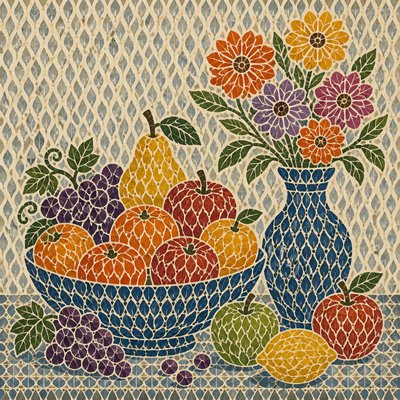
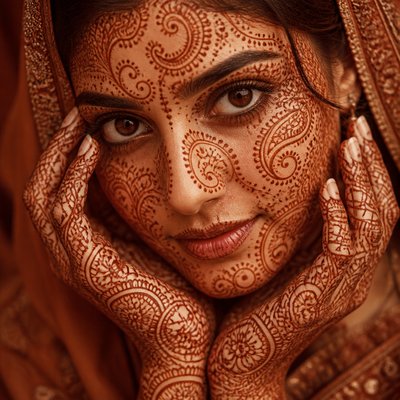
Explore Cameroonian art style through Grassfields beadwork, royal thrones, elephant motifs, terracotta portraits, and ceremonial color.
Instantly rendered in Cameroonian — or transform a photo
Cameroonian Gallery
Tap any artwork to explore it
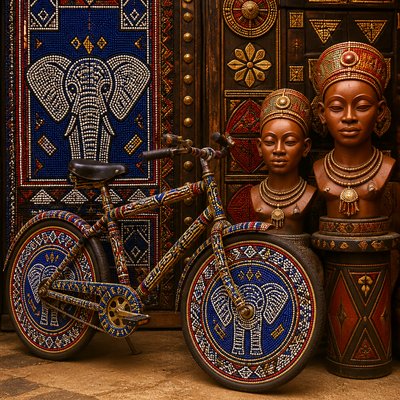
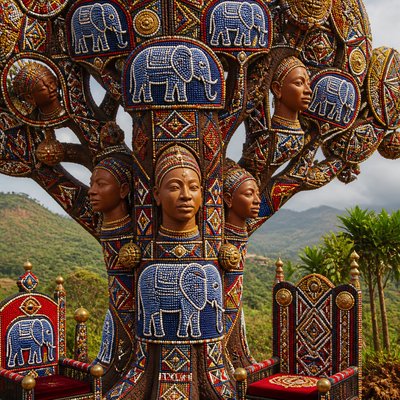
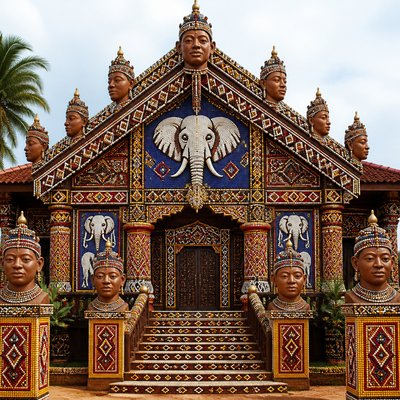
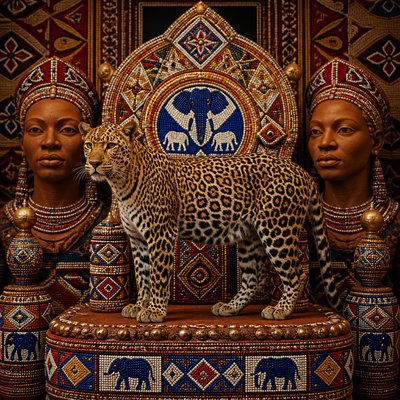
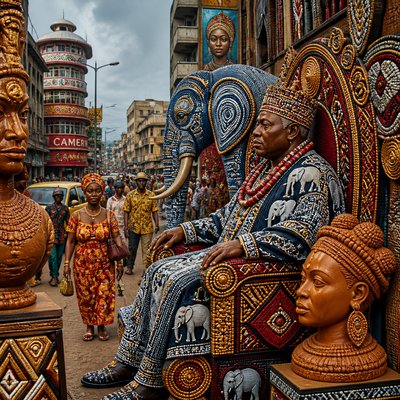
What is Cameroonian Art Style?
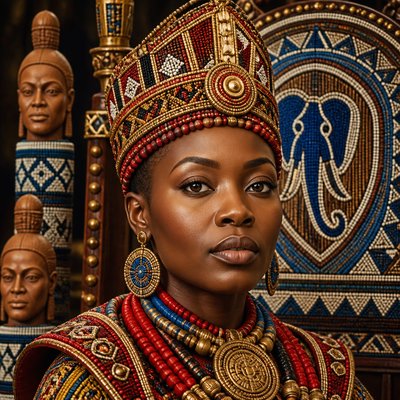
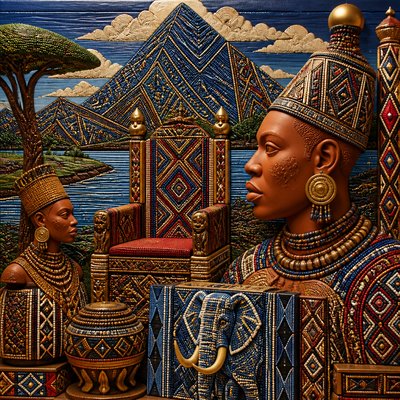
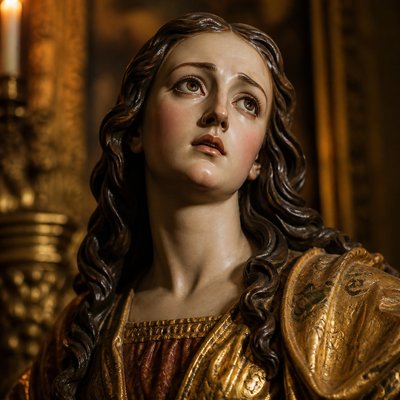
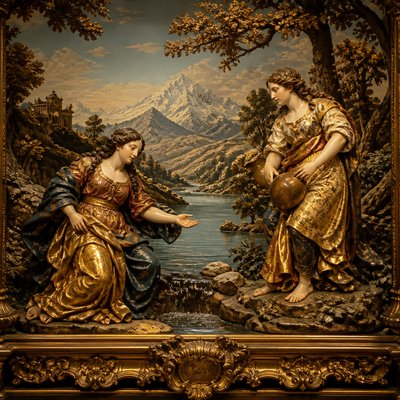
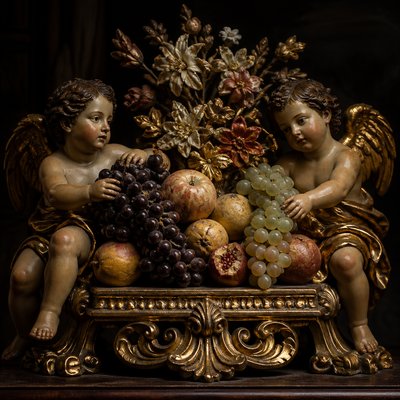
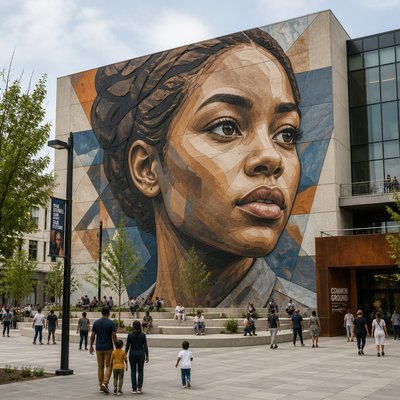
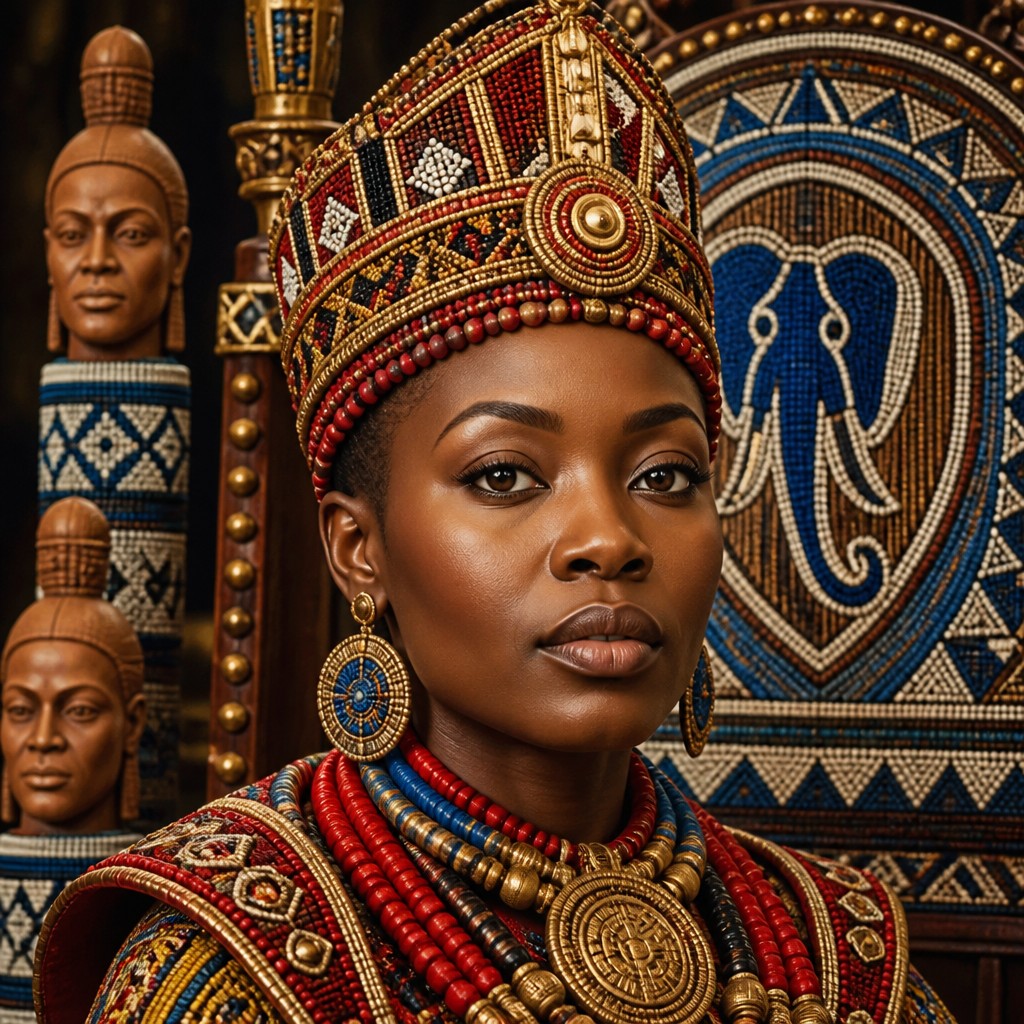
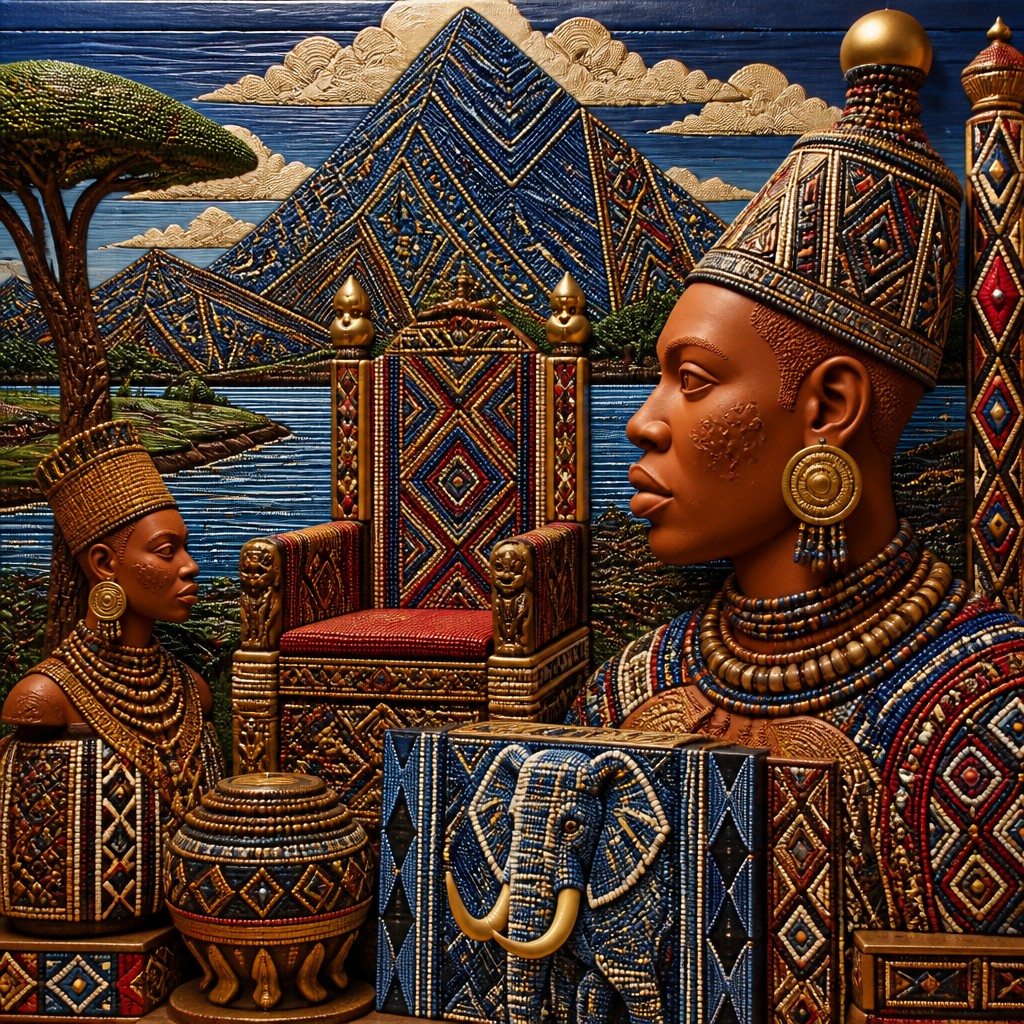
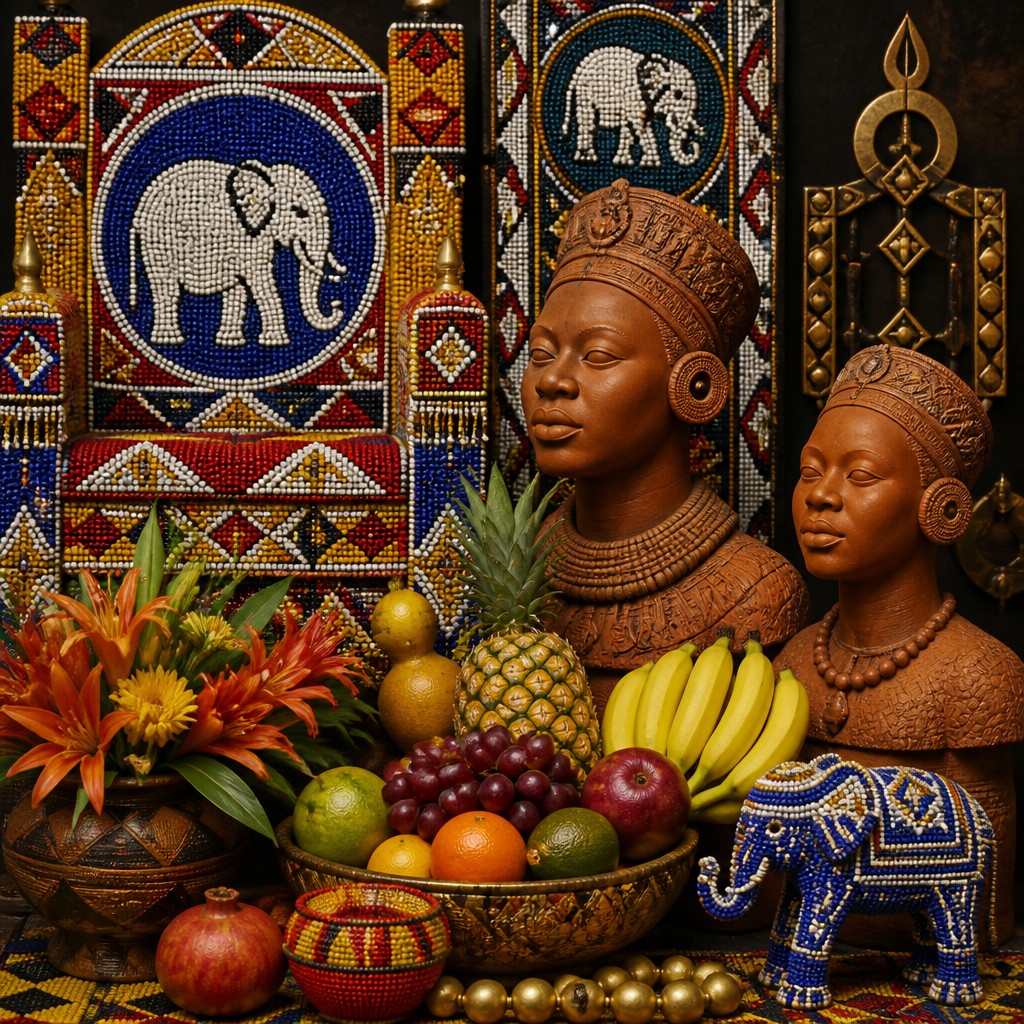
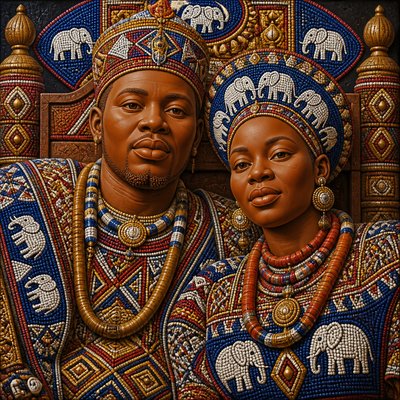
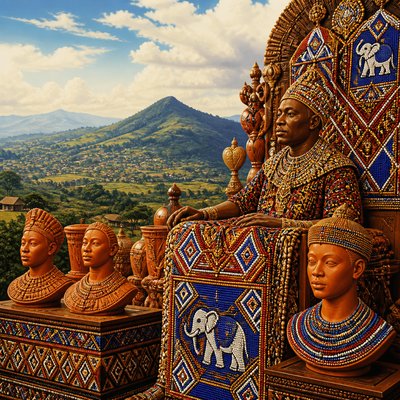
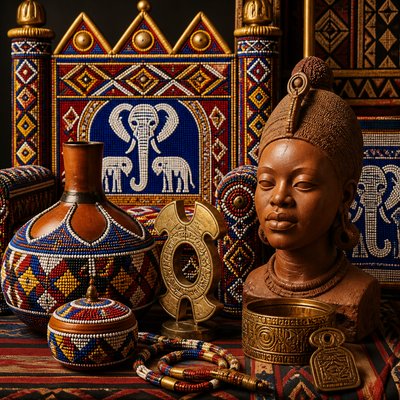
Cameroonian Art Style is a contemporary descriptive label for imagery inspired especially by the royal arts of the Bamileke and neighboring Grassfields kingdoms of western Cameroon. Its visual identity combines densely patterned beadwork, ceremonial thrones, carved wood, warm terracotta portrait forms, and saturated reds, blues, whites, and golds. Elephant imagery is particularly significant, often appearing as a sign of royal authority, strength, prestige, and dynastic power.
The style looks opulent because Grassfields court arts were designed for public ceremony, rank, and display. Beaded surfaces transform furniture and sculptural objects into radiant fields of geometric color, while rounded portrait heads and busts emphasize presence rather than strict anatomical realism. Deep wood grounds, symmetrical compositions, and layered ornament create an atmosphere of concentrated ceremonial richness.
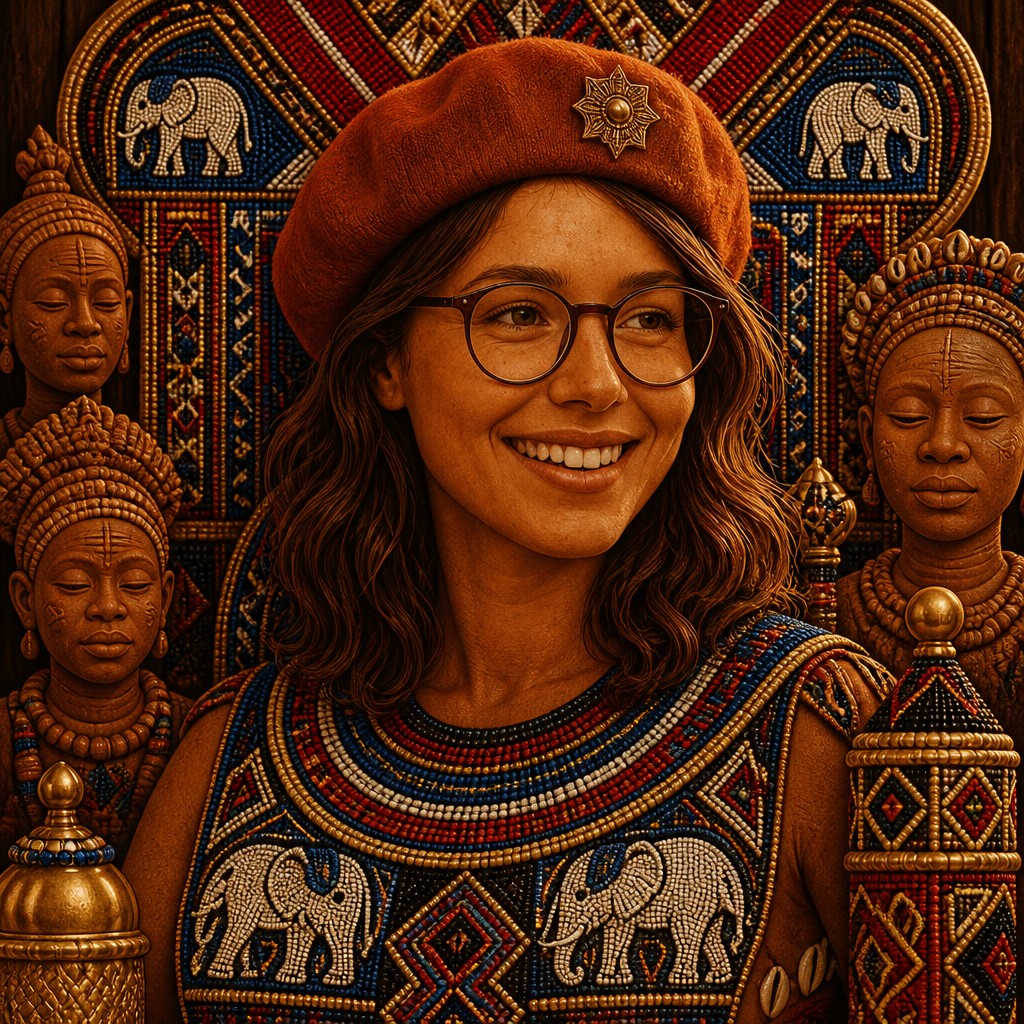
Try It On Your Photos
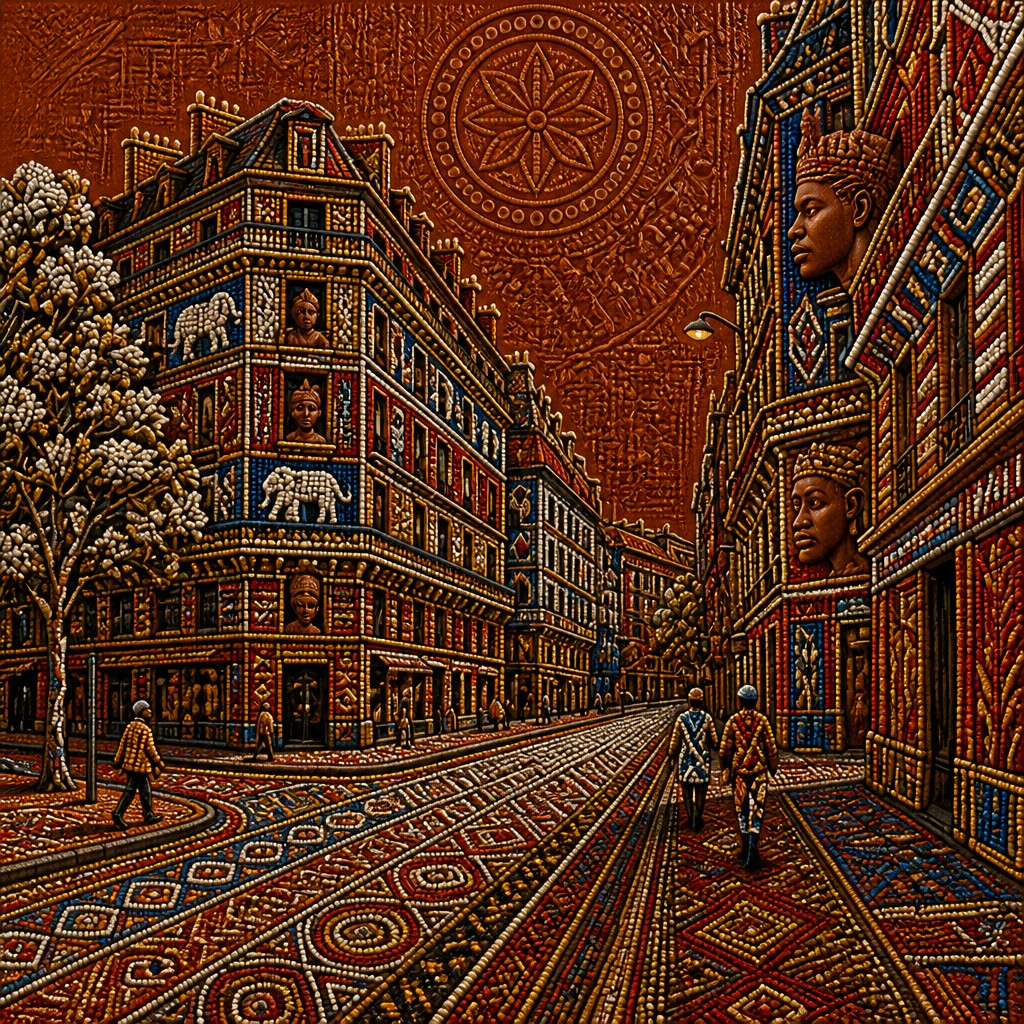
Upload any photo and convert it into Cameroonian Art Style — drag the sliders to compare before and after.


What Defines Cameroonian Art Style
The signature details, up close
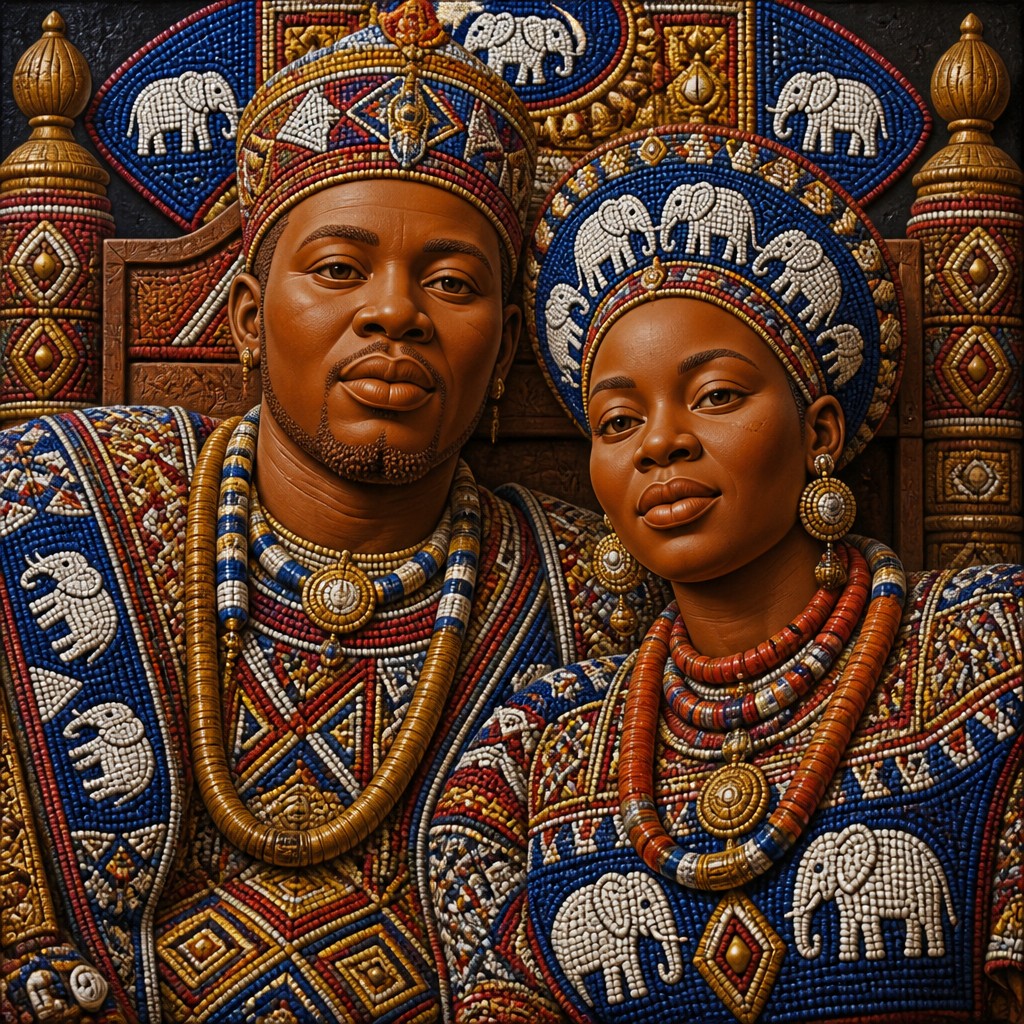
Dense geometric beadwork
Surfaces are covered with tightly arranged beads forming diamonds, chevrons, bands, grids, and repeating color fields. The beadwork should feel tactile and slightly raised rather than like a flat printed pattern.
Elephant symbolism
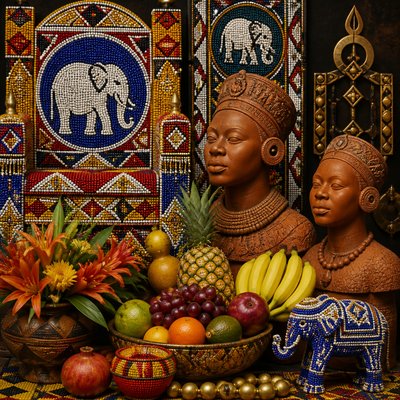
Stylized elephant heads, trunks, ears, or paired elephant motifs can structure throne backs and ceremonial compositions. Blue-and-white patterning is especially effective for a graphic, heraldic interpretation.
Royal throne forms
Low, substantial seats with broad backs, carved supports, and heavily ornamented surfaces suggest courtly authority. Symmetry and frontal presentation give the throne the visual weight of a ceremonial emblem.
Terracotta portrait sculpture
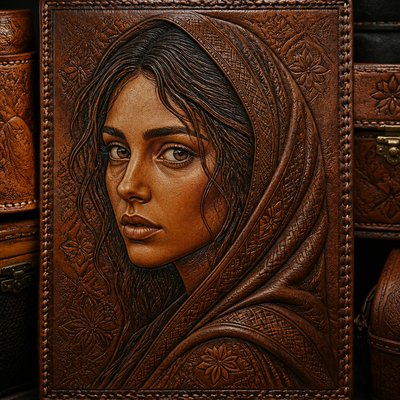
Warm fired-clay busts use rounded, naturalistic features, simplified planes, full cheeks, and calm expressions. Subtle asymmetry and visible modeling keep the figures sculptural instead of becoming generic masks.
Ceremonial color
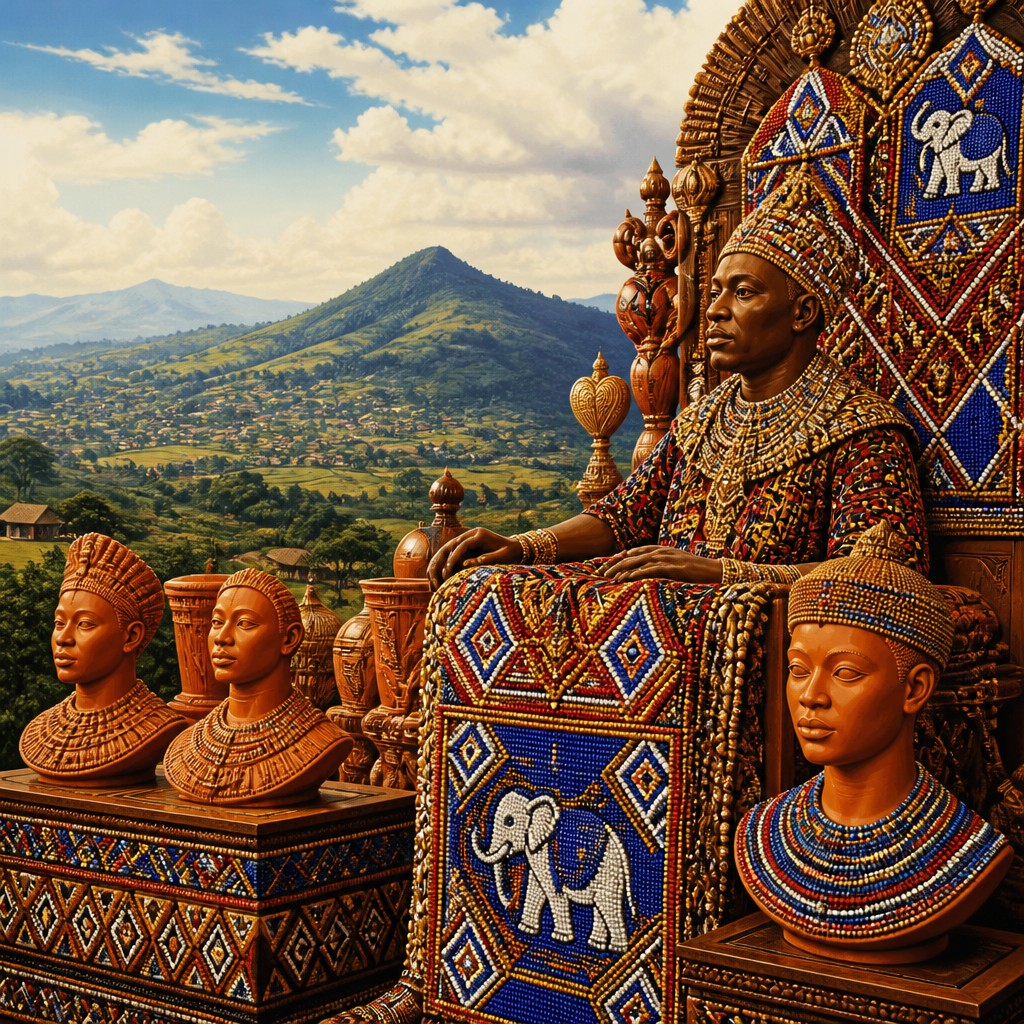
Rich reds, cobalt and powder blues, white, ochre, and metallic gold create a regal palette. Against dark brown or nearly black wood, these colors appear luminous and strongly separated.
Layered ornament
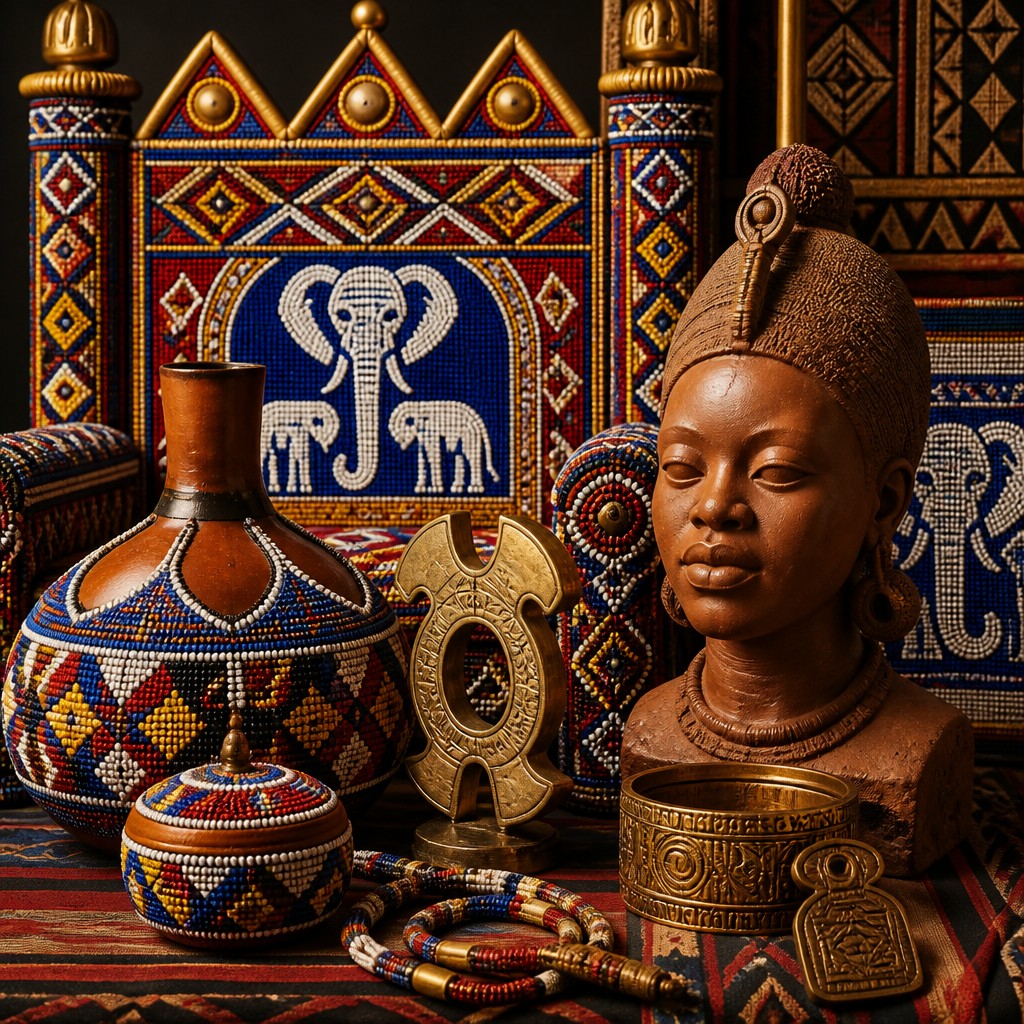
Beads, carved wood, woven elements, metal accents, and patterned textiles can be combined without losing a clear central silhouette. Ornament is concentrated around crowns, throne edges, collars, borders, and symbolic forms.
Frontal, iconic composition
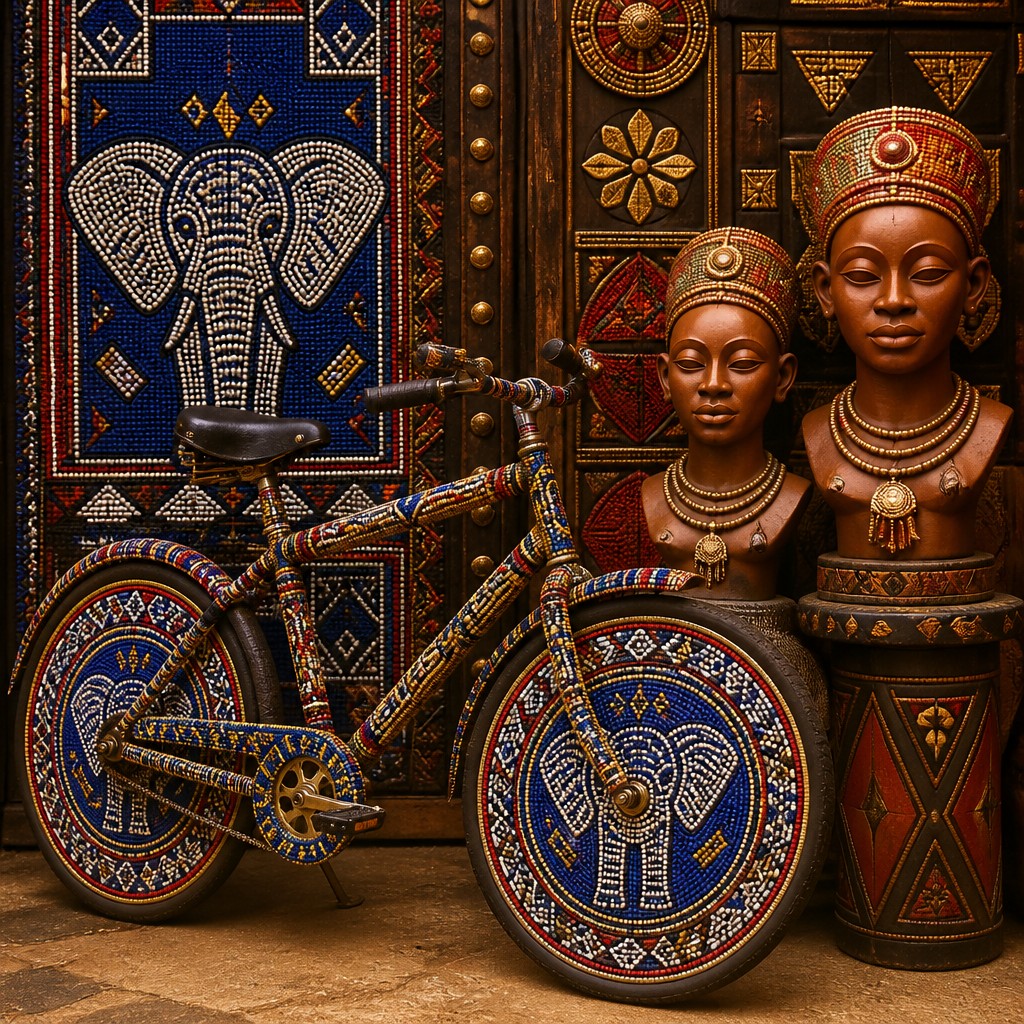
Subjects are commonly shown facing forward or arranged symmetrically, as if presented for ceremony or formal remembrance. Controlled repetition, centered framing, and a stable visual hierarchy reinforce the sense of status.
Cameroonian Prompt Ideas
Start from an idea — each one opens the generator with the style ready to go. See all 40 Cameroonian prompts →
How to Create Cameroonian Art
Master the craft step by step — or skip straight to creating. Read the full guide →
- 1
Build the structure first
Begin with a centered throne, bust, mask, or ceremonial figure before adding decoration. Establish a strong silhouette and symmetrical support structure so the beadwork does not obscure the subject.
- 2
Treat beads as material
In physical work, use glass beads, textile, wood, clay, and metallic pigment in separate layers, allowing small variations in spacing and reflectivity. In digital work, add individual bead highlights, seams, shadows, and edge thickness instead of applying a seamless texture.
- 3
Model terracotta with restraint
Use a warm earthen base, rounded anatomical masses, shallow incised details, and matte surface variation for the portrait elements. Avoid excessive gloss, hyperreal pores, or exaggerated facial distortion.
- 4
Use a disciplined palette
Anchor the image in deep wood brown and terracotta, then reserve vivid blue, white, red, and gold for symbolic or ornamental areas. Strong value contrast helps complex patterns remain legible.
- 5
Write specific generation prompts
Describe the subject, medium, regional reference, palette, composition, and material behavior separately; for example, request a frontal carved throne, raised blue-and-white beadwork, matte terracotta modeling, and a dark wood ground. Add exclusions such as plastic surfaces, random lettering, or generic fantasy armor when necessary.
- 6
Adapt photographs carefully
For image-to-image work, preserve the original pose and recognizable proportions while transforming clothing, surfaces, and background into beaded or terracotta materials. Keep cultural references focused and avoid adding invented ceremonial symbols indiscriminately.
The Story
History & Origins of Cameroonian
This is not a single historical movement or standardized national style. It is an interpretive synthesis based largely on the artistic traditions of the Grassfields region, where kingdoms such as those associated with Bamileke-speaking communities developed elaborate royal arts, including carved thrones, masks, regalia, beadwork, and prestige objects. Beadwork became an important medium for covering and embellishing courtly objects, while terracotta and other clay traditions in Cameroon produced figurative heads and vessels with varied regional functions and forms.
In contemporary illustration, sculpture, fashion, interior design, and digital image-making, these references are often combined into a unified visual language. Responsible use should distinguish between historical ceremonial objects, museum-derived motifs, and modern decorative interpretations rather than presenting all Cameroonian cultures as interchangeable.
Influences: The style draws on Grassfields royal arts, Bamileke beadwork and regalia, Central and West African sculptural traditions, African textile geometry, carved-wood ceremonial objects, and the material language of terracotta portraiture. It also intersects with contemporary museum-inspired illustration, decorative arts, assemblage, folk art, and digital maximalism. Its closest visual relatives are regional court art and beadwork traditions rather than a single modern art movement.
Frequently Asked Questions
What defines the Cameroonian Art Style?
It is defined by Grassfields-inspired royal imagery, dense beadwork, carved or dark wood, elephant symbolism, terracotta portrait forms, and a saturated ceremonial palette. Centered compositions and repeated geometric patterns are also important.
Is Cameroonian Art Style a historical art movement?
No. The phrase is best understood as a contemporary umbrella label or visual synthesis, not the name of one unified historical movement. It draws primarily from distinct artistic traditions of Cameroon, especially the royal arts of the western Grassfields.
What do elephant motifs mean in Grassfields royal art?
Elephants commonly communicate authority, strength, prestige, and royal power in Grassfields symbolism. Their exact meaning can vary by object, kingdom, and ceremonial context, so a modern artwork should avoid treating one motif as a universal code.
How can I make an image in this style without making it look generic?
Specify concrete materials and construction: raised beads, carved wood grain, matte fired clay, geometric borders, and a frontal ceremonial composition. Naming a subject such as a throne or portrait bust is more effective than relying on broad labels alone.
What colors work best for this aesthetic?
Deep wood brown and terracotta provide the foundation, while cobalt or royal blue, white, red, ochre, and gold create contrast. Use metallic gold and the brightest colors selectively so the composition remains structured rather than visually noisy.
Where is this style used today?
Its visual language appears in contemporary sculpture, illustration, fashion, interior objects, ceremonial-inspired design, museum education, and digital art. Modern uses should acknowledge the specific regional sources instead of presenting the imagery as a generic representation of all African art.
Create your first Cameroonian artwork
Describe anything — or upload a photo — and see it in Cameroonian Art Style in seconds.
Related Styles
Discover similar art styles