Cambodian Art Style
Explore Cambodian art style: Angkorian sandstone reliefs, apsara dancers, lotus borders, naga motifs, and weathered temple grandeur.
Instantly rendered in Cambodian — or transform a photo
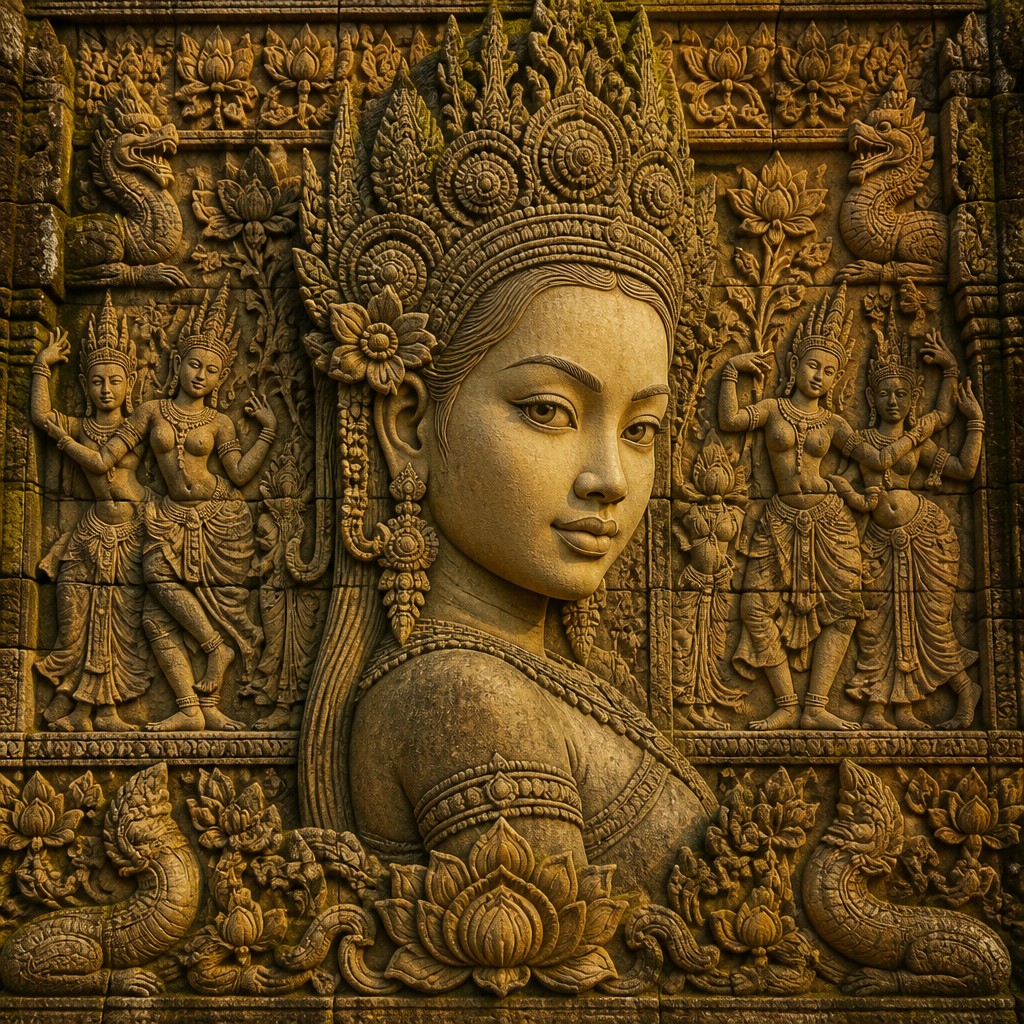
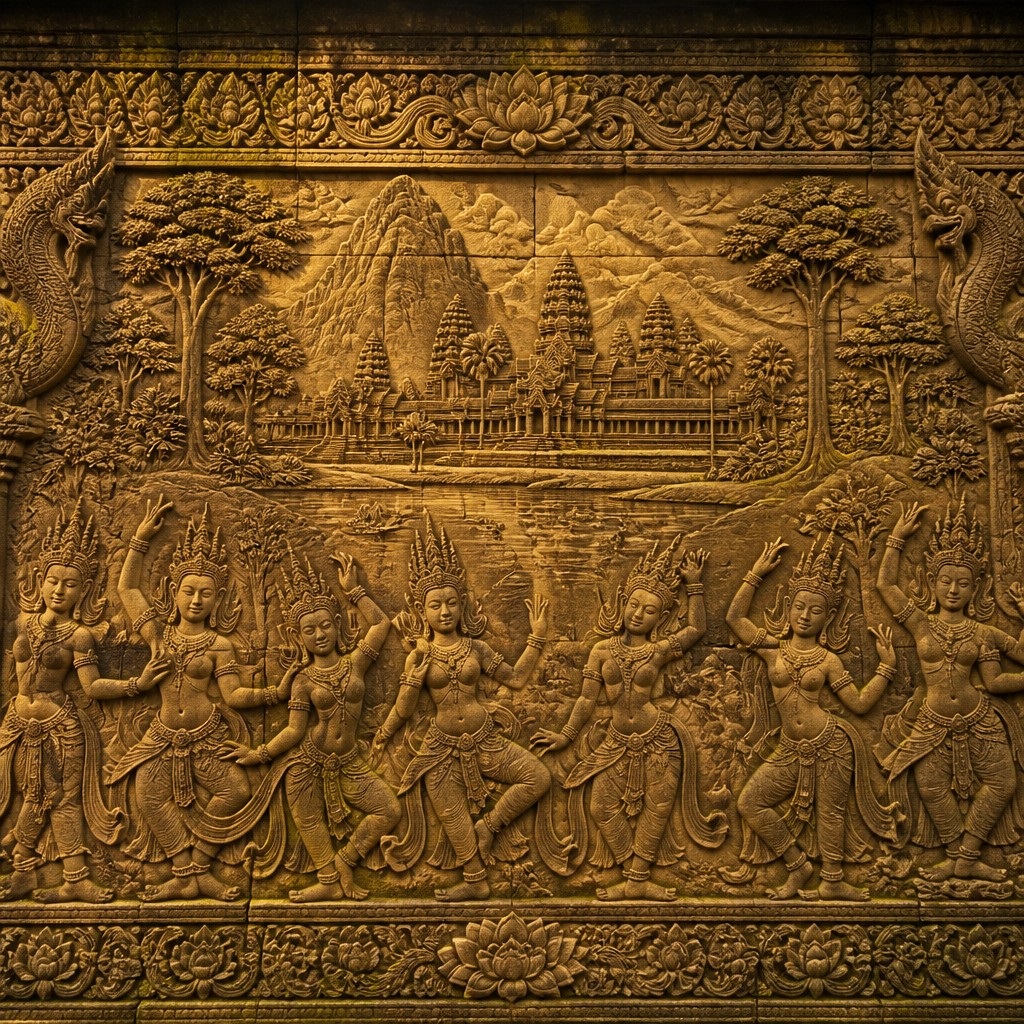
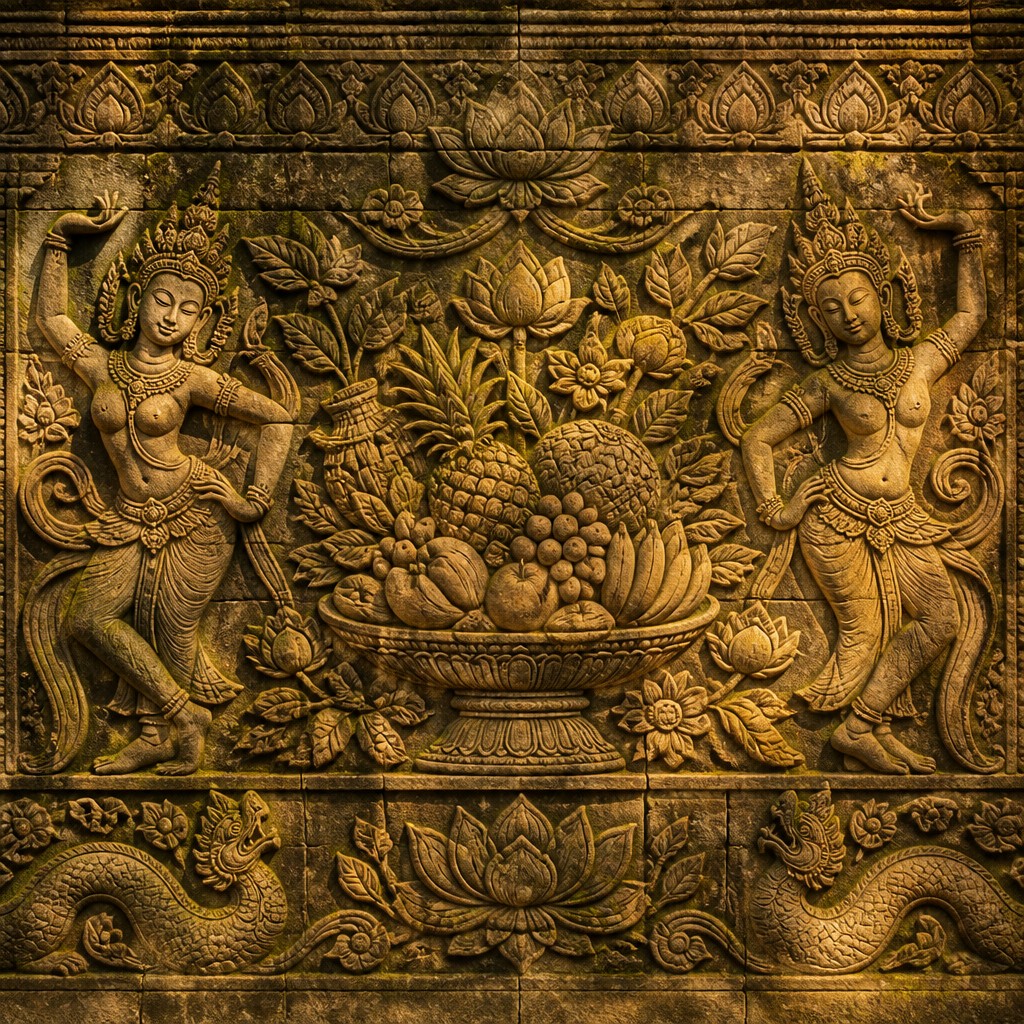
Cambodian Gallery
Tap any artwork to explore it
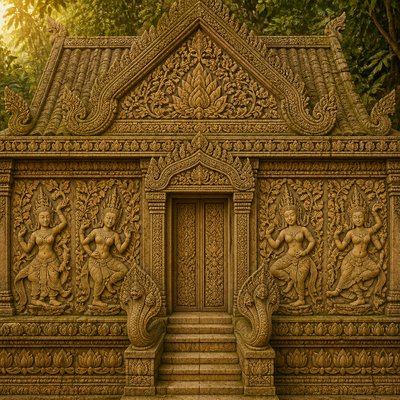
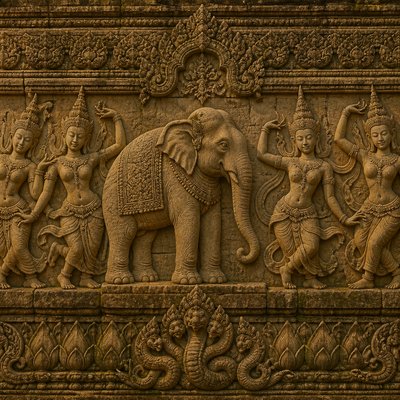
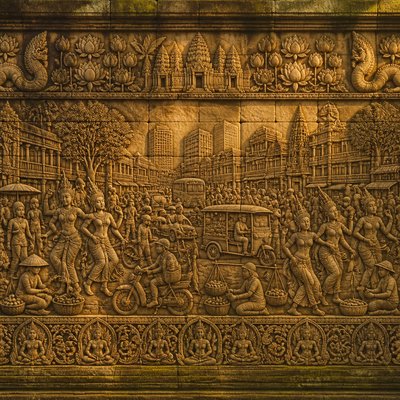
What is Cambodian Art Style?
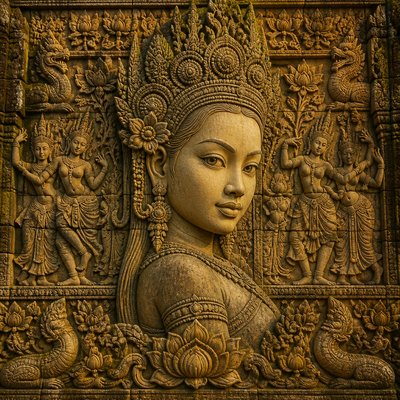
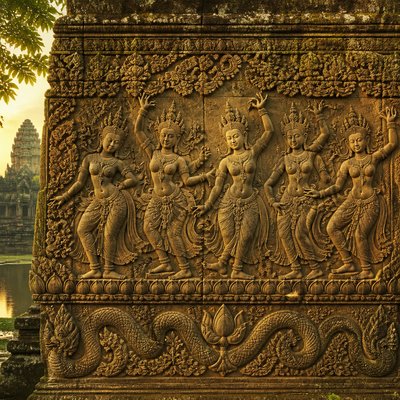
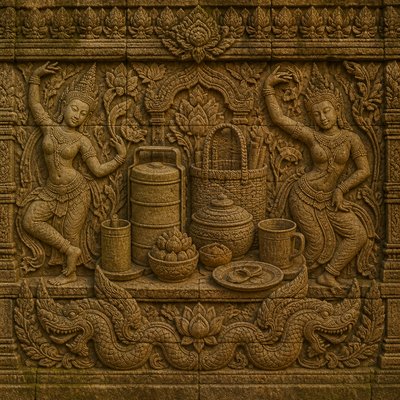
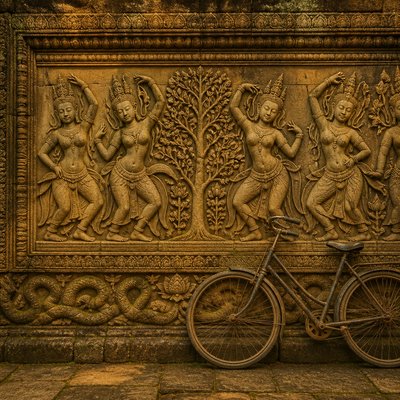
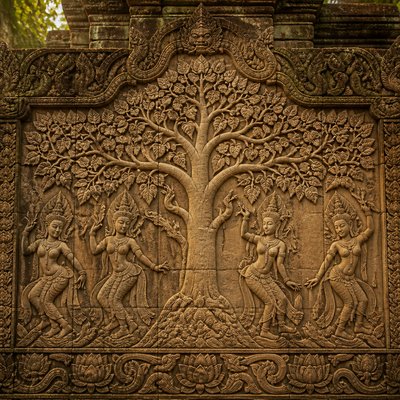
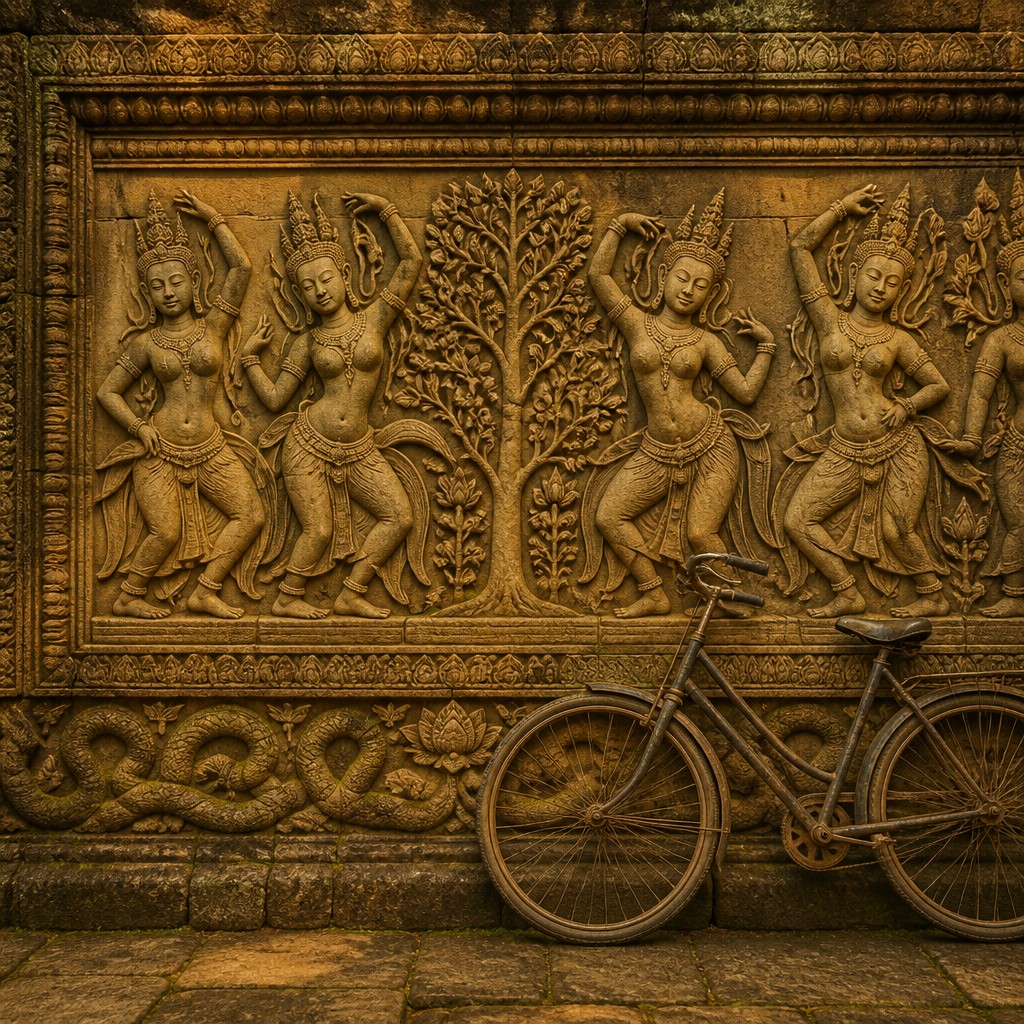
Cambodian art style is a visual tradition rooted in Khmer sculpture, temple architecture, and decorative relief carving. Its most recognizable form evokes the sandstone walls of Angkorian monuments: serene figures emerge in shallow relief, apsara dancers move through elaborate headdresses and drapery, and lotus, foliage, and naga ornaments organize the surface into rhythmic bands.
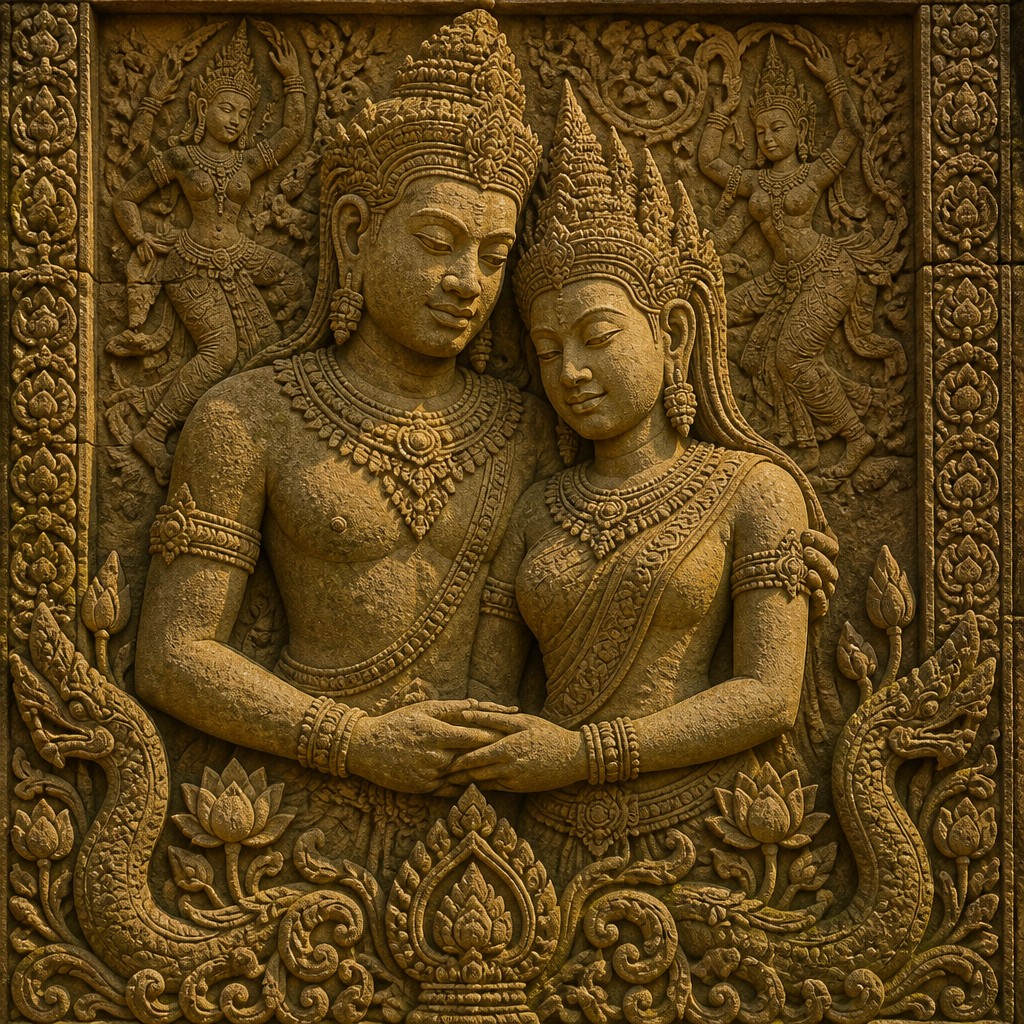
Try It On Your Photos
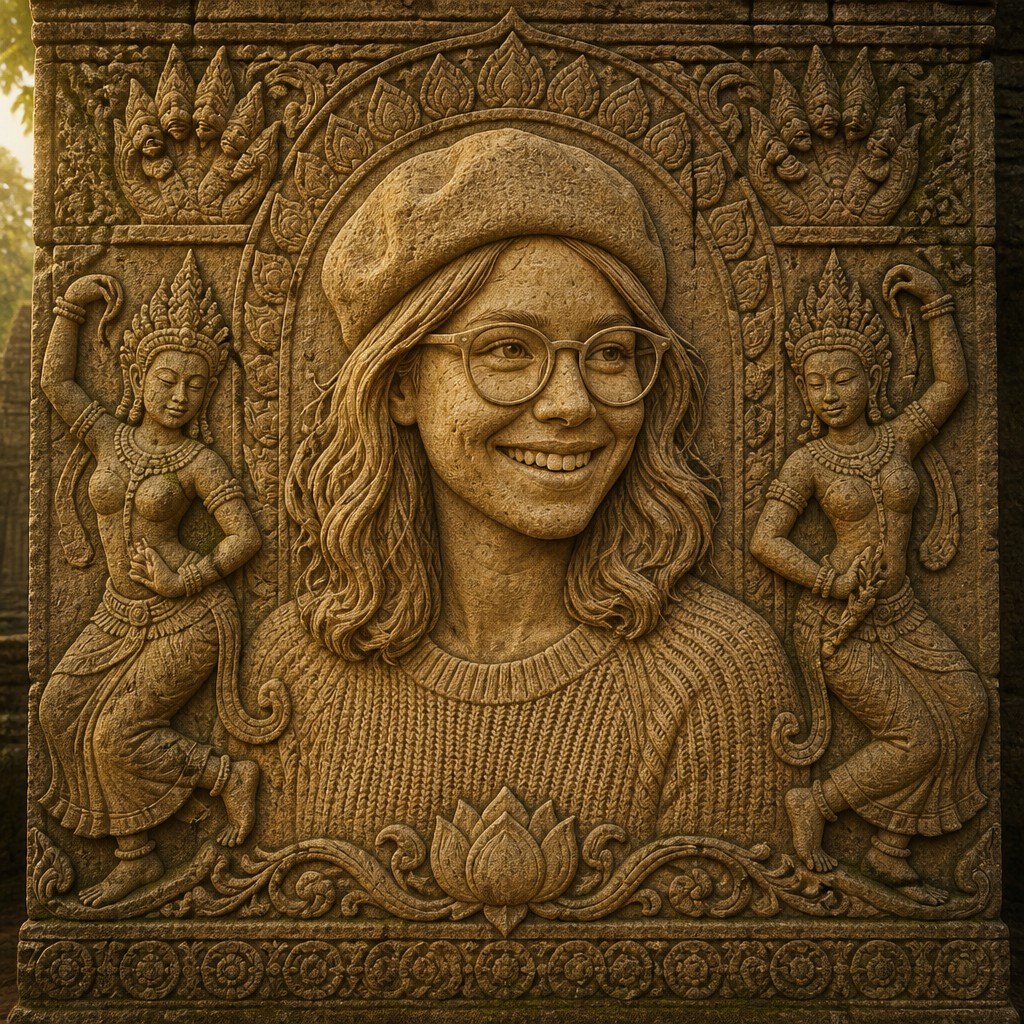
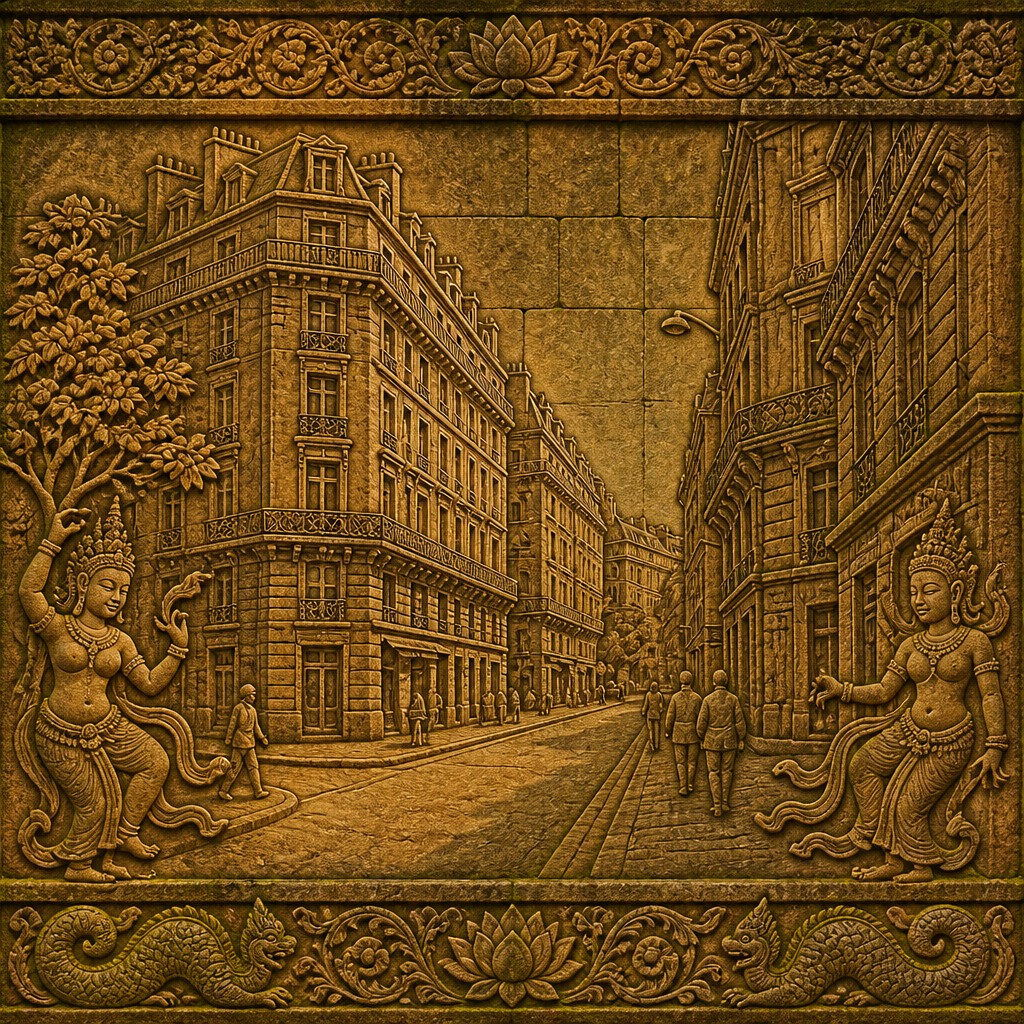
Upload any photo and convert it into Cambodian Art Style — drag the sliders to compare before and after.


What Defines Cambodian Art Style
The signature details, up close
Sandstone relief texture
Forms appear carved into warm, porous stone through shallow bas-relief, crisp incisions, and softened weathering. Ochre, beige, gray, and moss-green tones suggest age, humidity, and temple masonry.
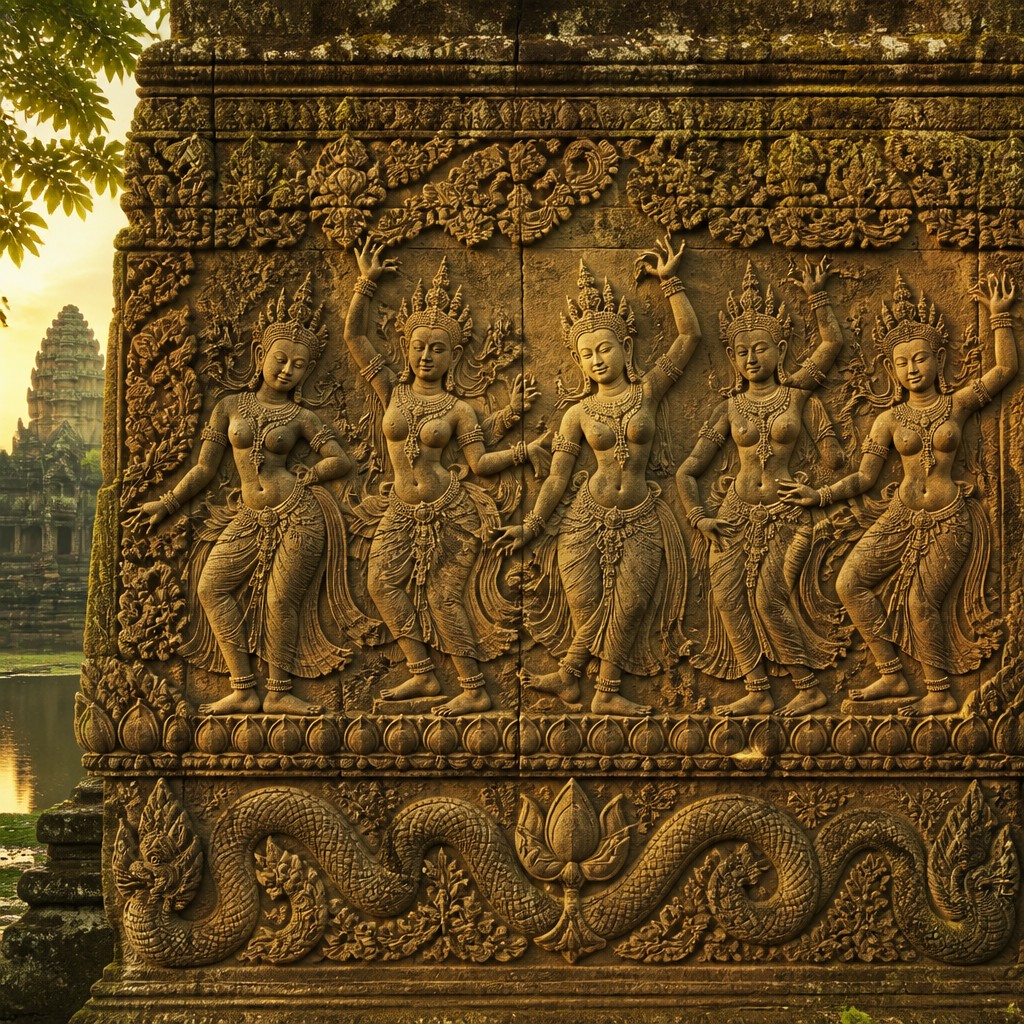
Apsara figures
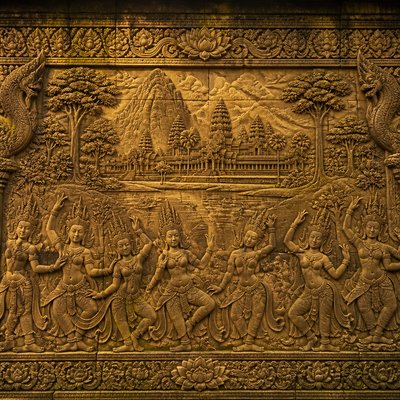
Celestial dancers are shown with poised torsos, elegant hand gestures, flowing skirts, and tall, structured headdresses. Their repeated silhouettes create a calm visual rhythm rather than a sense of abrupt motion.
Lotus and vegetal ornament
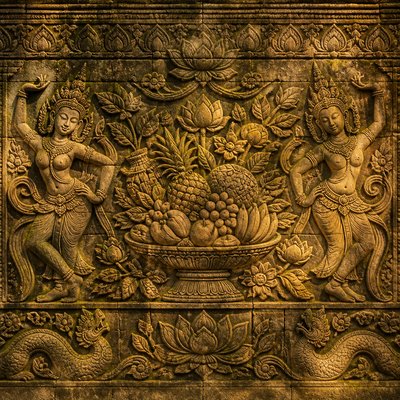
Lotus blossoms, curling vines, rosettes, and layered foliage fill borders and architectural fields. These motifs provide both symbolic associations with purity and a practical system for framing figures and scenes.
Naga and guardian imagery
Multi-headed serpents, mythical guardians, lions, elephants, and other protective beings add ceremonial and architectural weight. Naga forms often appear as balustrades, borders, or framing devices.
Frontal monumentality
Compositions favor a stable, wall-like presentation with horizontal registers, symmetrical arrangements, and figures adapted to architectural surfaces. Even narrative scenes tend to feel ceremonial and ordered.
Weathered sacred atmosphere
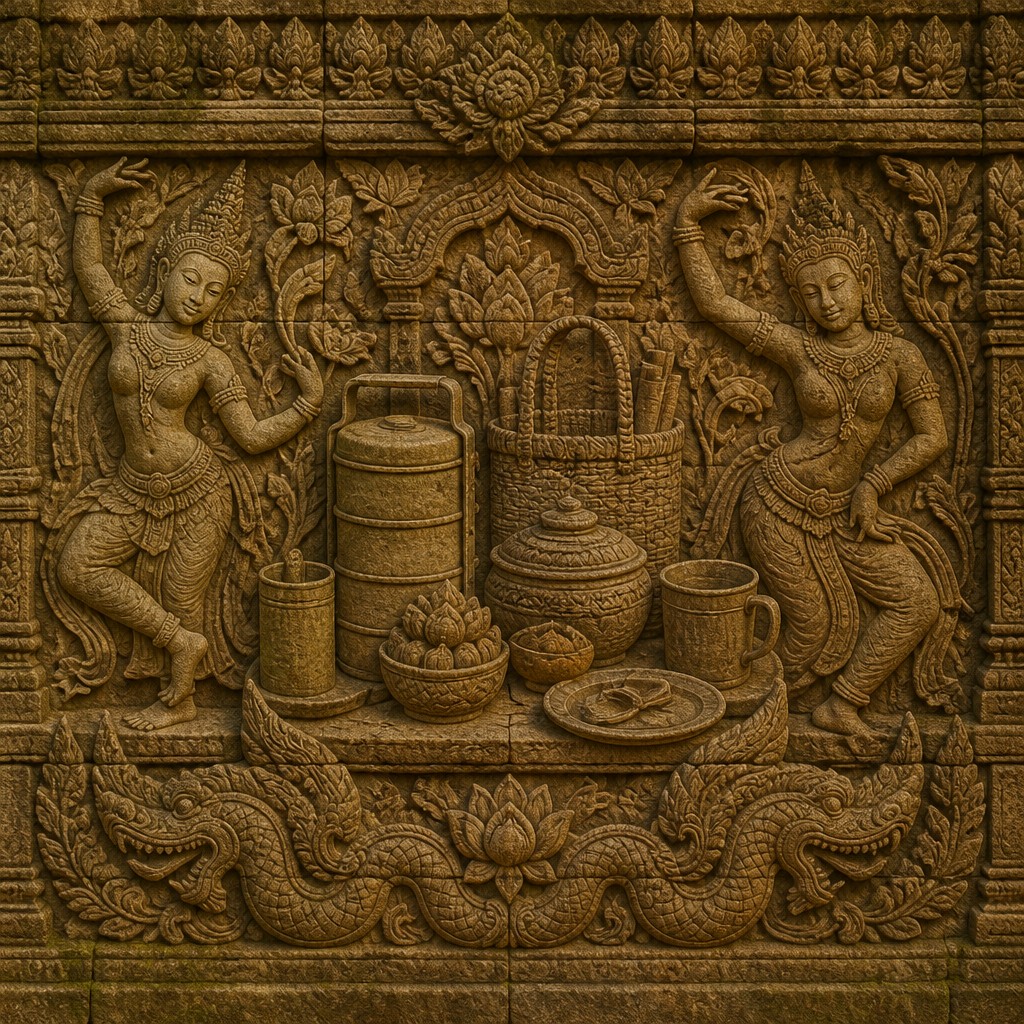
Golden light, jungle shadow, lichen, erosion, and softened edges convey the relationship between built structures and tropical landscapes. The mood is contemplative, ancient, and materially grounded.
Stylized anatomy and drapery
Bodies are elongated and composed through idealized proportions, controlled gestures, and carefully patterned textiles. Drapery is treated as a sequence of rhythmic folds and ornamental contours.
Cambodian Prompt Ideas
Start from an idea — each one opens the generator with the style ready to go. See all 40 Cambodian prompts →
How to Create Cambodian Art
Master the craft step by step — or skip straight to creating. Read the full guide →
- 1
Build the relief structure
Begin with a strong frontal composition and separate the subject into background, middle relief, and raised foreground layers. In physical work, model clay or carve a suitable relief material; digitally, use sculpting, displacement, or height maps to establish believable depth.
- 2
Use a restrained stone palette
Favor sandstone ochre, warm beige, muted gray, brown, and moss rather than bright synthetic color. Add darker recesses, edge wear, mineral staining, and subtle surface variation to make the carving feel embedded in an old temple wall.
- 3
Design ornamental borders
Frame the main subject with lotus petals, vines, naga forms, or repeating geometric bands. Keep the ornament rhythmically consistent so it supports the architecture instead of competing with the central figures.
- 4
Shape figures through gesture
Give dancers and deities balanced torsos, elegant hand positions, tall crowns, and carefully arranged drapery. Repetition with small variations works well for friezes, while a single figure can provide a more intimate sculptural study.
- 5
Control light and depth
Use low-angle golden light to reveal carving planes, with gentle shadow in recesses and foliage-filtered illumination around the monument. Avoid highly glossy surfaces, extreme perspective, or photographic lighting that obscures the relief.
- 6
Write focused generation prompts
Specify the subject, shallow sandstone bas-relief, apsara-like ceremonial figures, lotus and naga ornament, weathered ochre stone, and a temple-wall composition. For image-to-image work, preserve the source pose or architecture while requesting carved contours, reduced color, mineral texture, and warm jungle light.
The Story
History & Origins of Cambodian
This style is not a single historical movement with a fixed definition, but a contemporary descriptive label for visual languages associated with Cambodian and Khmer art. Its principal lineage comes from the Khmer architectural and sculptural traditions that flourished from roughly the ninth to the fifteenth centuries, especially during the Angkor period, when sandstone temples were covered with narrative reliefs, divine figures, guardians, floral ornament, and celestial dancers. Earlier artistic traditions in mainland Southeast Asia and later Cambodian religious and craft practices also contributed to its development.
Influences: The style draws primarily from Khmer temple sculpture and architecture, particularly Angkorian bas-relief, celestial dancer imagery, lotus ornament, naga symbolism, and monumental sandstone construction. It also relates to broader Southeast Asian religious art shaped by Hindu and Buddhist iconography, Indian-influenced temple design, traditional stone carving, architectural friezes, and contemporary archaeological or heritage illustration. Its weathered surfaces additionally borrow from ruin photography, historical reconstruction, and cinematic depictions of tropical sacred sites.
Frequently Asked Questions
What defines Cambodian art style?
It is defined by the appearance of carved sandstone relief, poised apsara dancers, lotus and naga ornament, monumental temple composition, and warm weathered stone color. The overall effect is architectural, ceremonial, and closely connected to Khmer cultural heritage.
Is Cambodian art style the same as Angkorian art?
Not exactly. Angkorian art is a specific historical body of Khmer art produced chiefly between the ninth and fifteenth centuries, while Cambodian art style is a broader modern label that often draws on Angkorian imagery alongside earlier and later Cambodian traditions.
How does it differ from Thai or Indian temple art?
These traditions share religious imagery and historical connections, but Khmer-influenced versions are especially associated with large sandstone temple complexes, architectural bas-relief, distinctive apsara representations, naga balustrades, and strongly integrated wall compositions. Individual motifs can overlap, so context and sculptural treatment matter.
Can this style be used for portraits or modern subjects?
Yes. A portrait, animal, landscape, or contemporary scene can be translated into a carved relief by simplifying forms, flattening perspective, adding ornamental borders, and using sandstone texture. The subject should still read as if it belongs on a monumental temple surface.
How can I make an image look like carved sandstone?
Describe shallow bas-relief, incised contours, chisel marks, porous stone, eroded edges, recessed shadows, and mineral staining. Restrict the palette to warm stone colors and use directional light that grazes the surface, revealing differences in relief depth.
Where is this visual style commonly used?
It is used for heritage interpretation, architectural visualization, educational illustration, fantasy environments, cultural design projects, murals, sculpture studies, and decorative graphics. When used for contemporary or commercial work, respectful cultural context and accurate labeling are important.
Create your first Cambodian artwork
Describe anything — or upload a photo — and see it in Cambodian Art Style in seconds.
Related Styles
Discover similar art styles