California Plein Air Art Style
Explore California plein air art: eucalyptus gold, Pacific haze, turquoise coves, and broken impressionist color in luminous outdoor landscapes.
Instantly rendered in California Plein Air — or transform a photo
California Plein Air Gallery
Tap any artwork to explore it
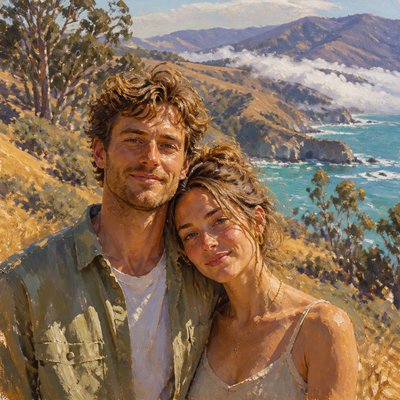
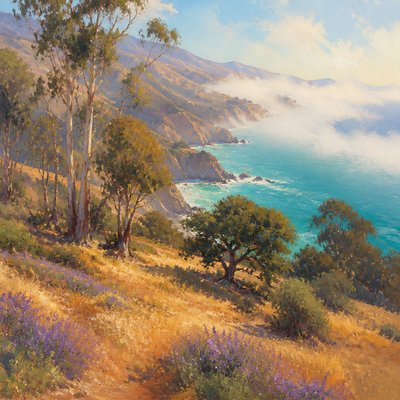
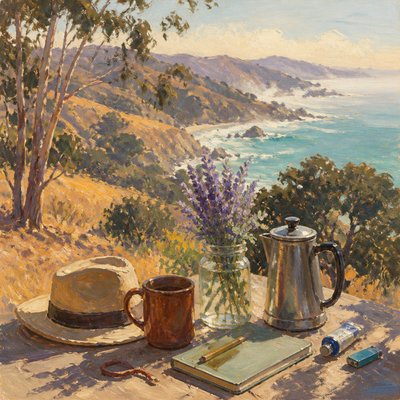
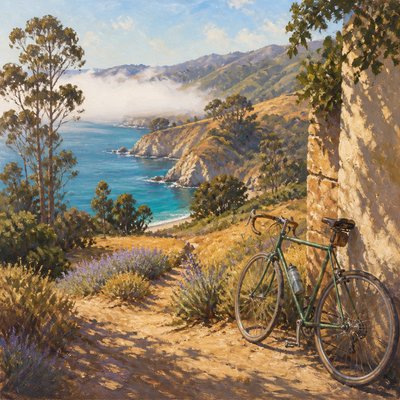
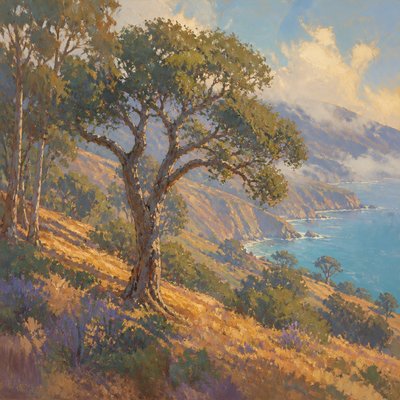
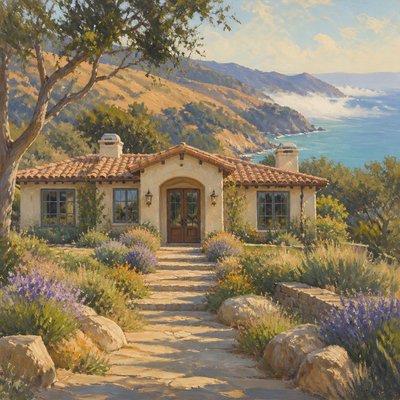
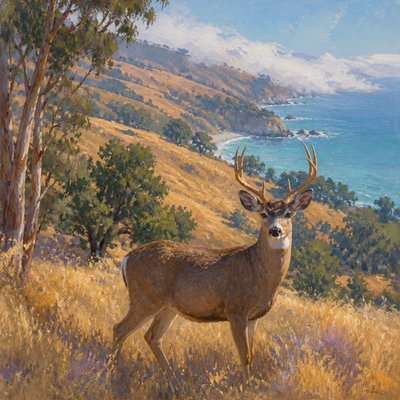
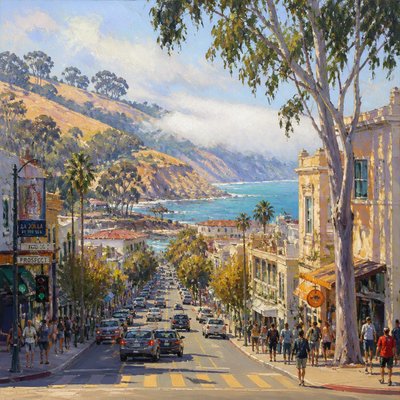
What is California Plein Air Art Style?
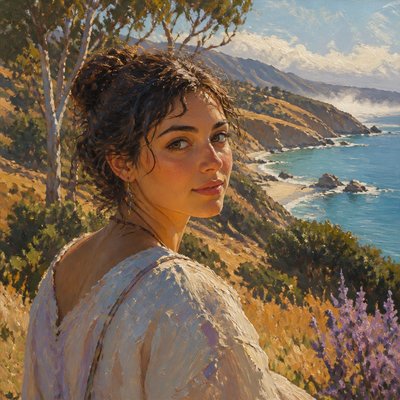
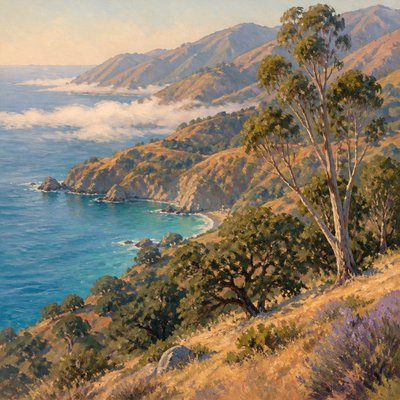
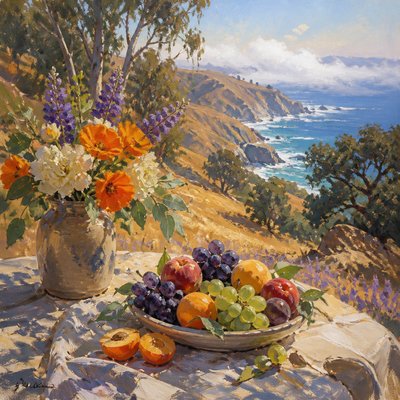
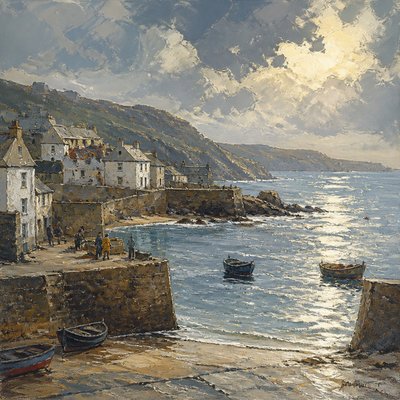
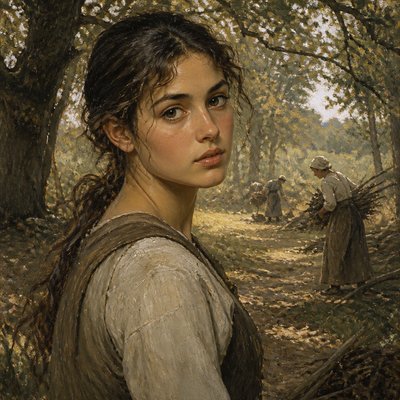
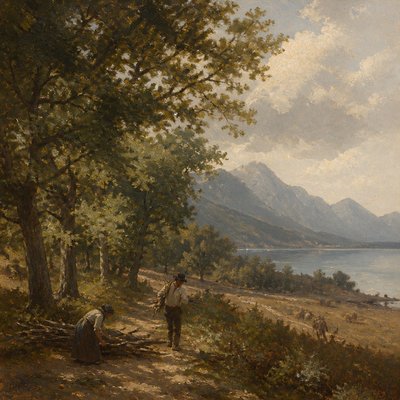
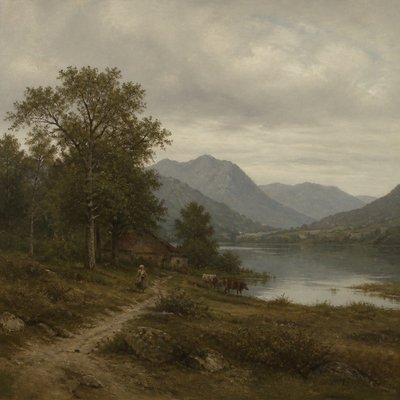
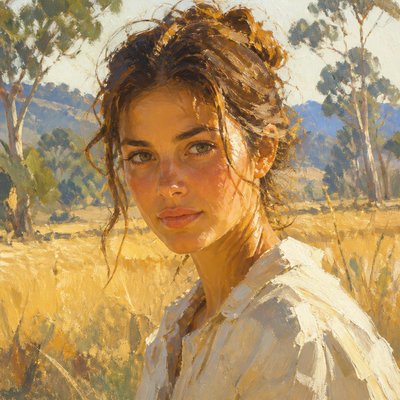
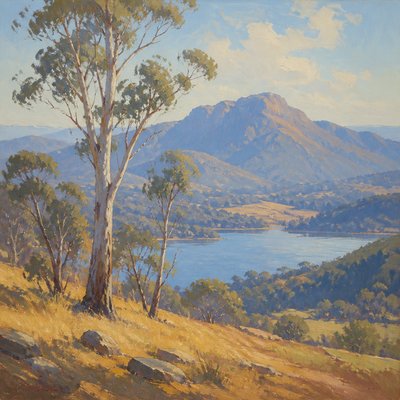
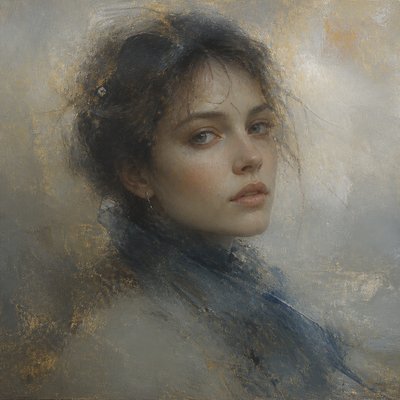
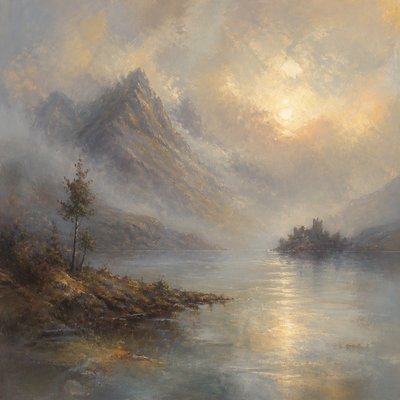
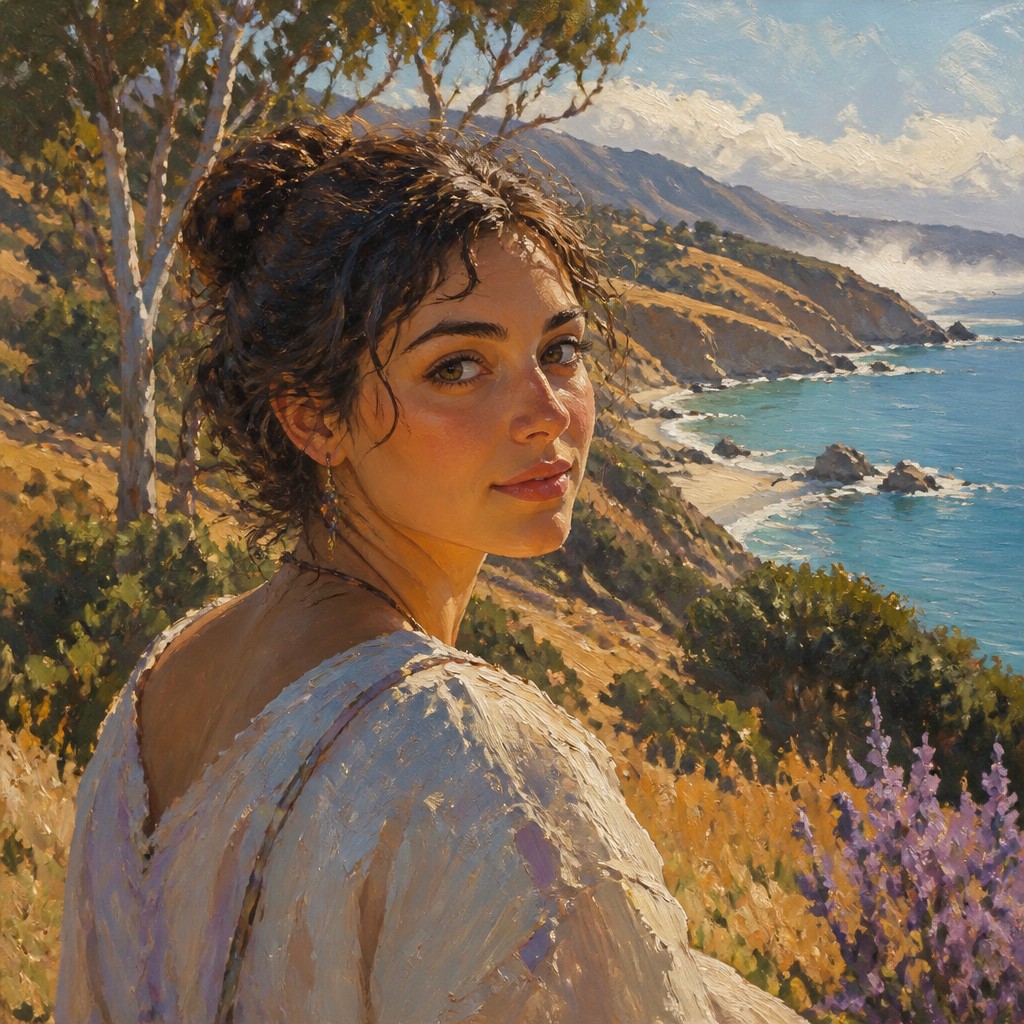
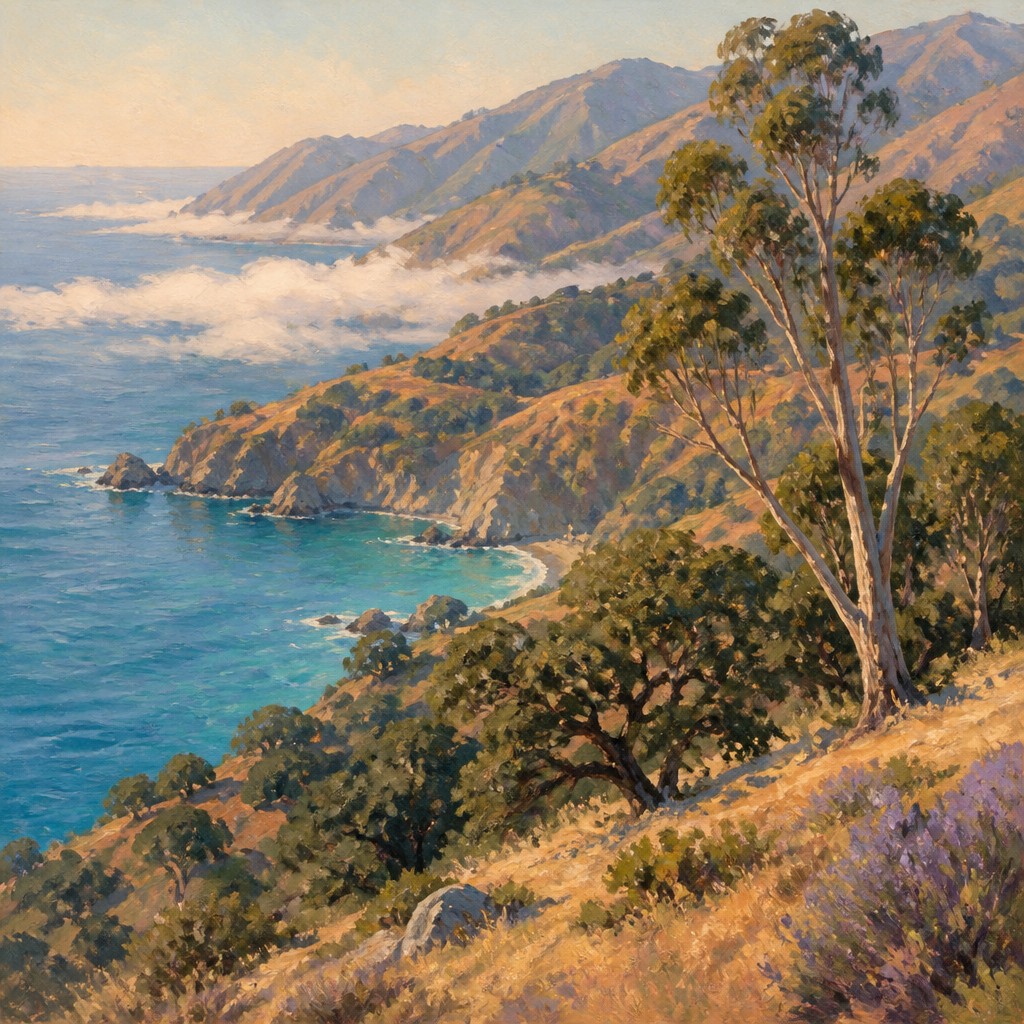
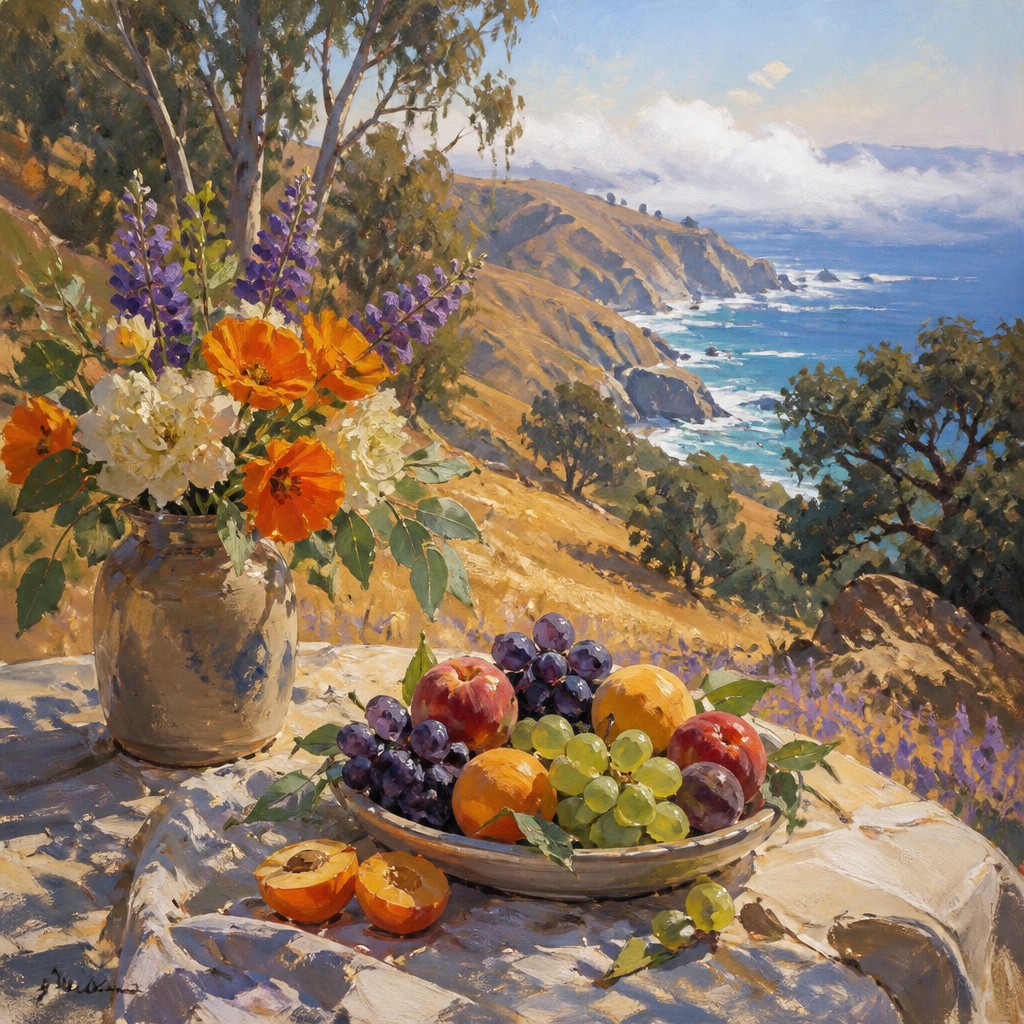
California Plein Air Art is a regional landscape aesthetic built around direct observation, generous sunlight, and the distinctive atmosphere of the Pacific Coast. Its scenes commonly feature golden hills, eucalyptus groves, live oaks, coastal chaparral, turquoise coves, ranch roads, and settlements softened by marine fog.
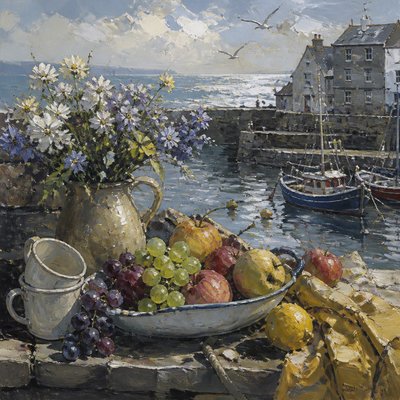
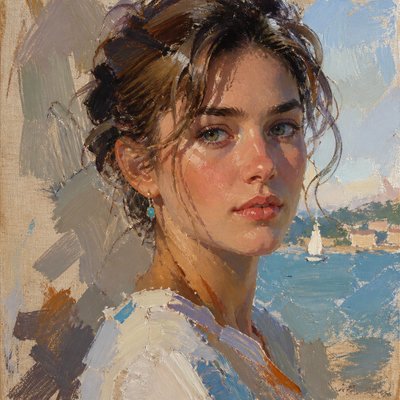
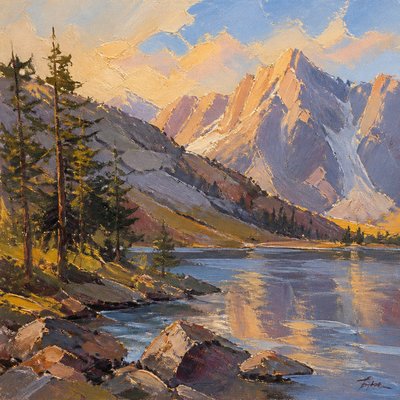
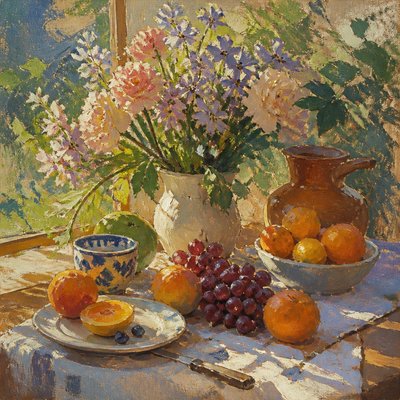
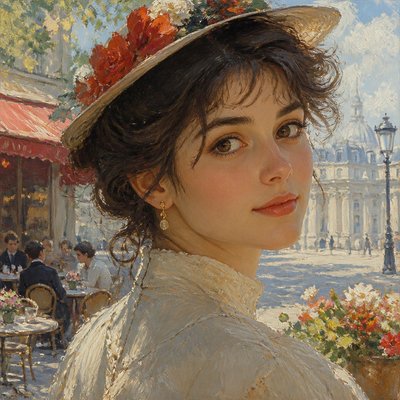
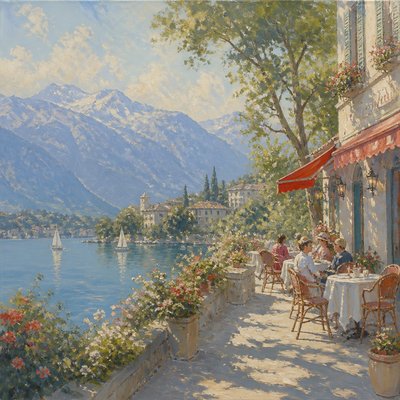
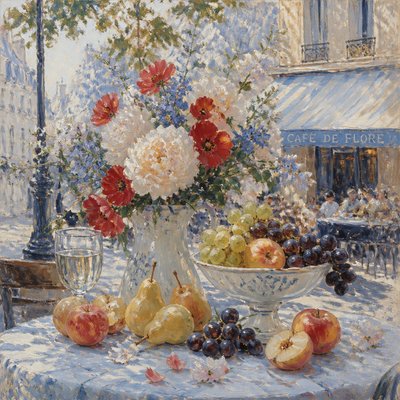
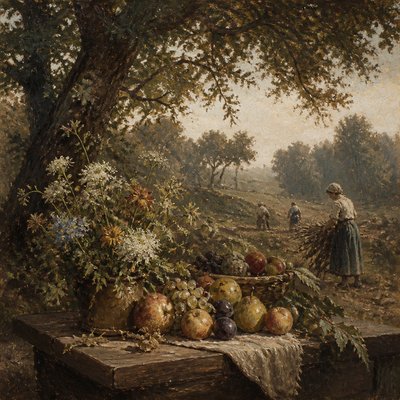
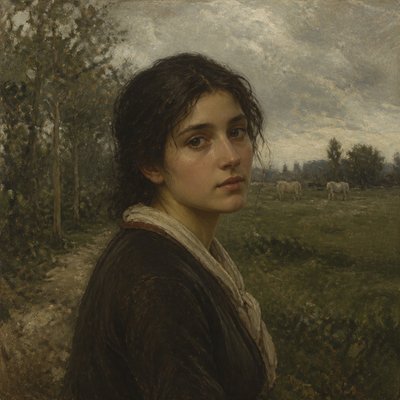
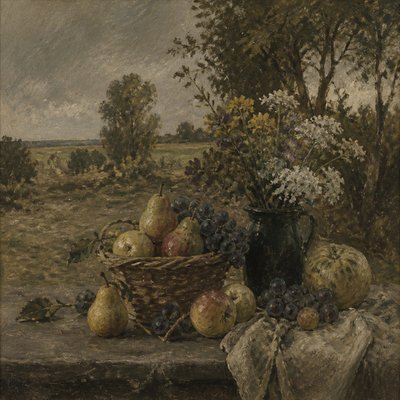
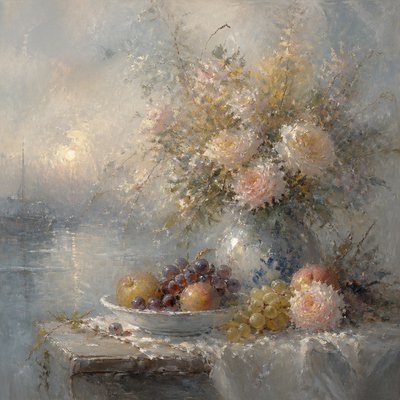
The style translates changing outdoor light into visible, broken strokes of apricot, ochre, sage, blue-green, and lupine violet. Rather than rendering every leaf or stone precisely, it groups forms into luminous color passages, balancing the dry warmth of inland California with the cool haze of the ocean. The result is immediate, spacious, and atmospheric without abandoning recognizable place.
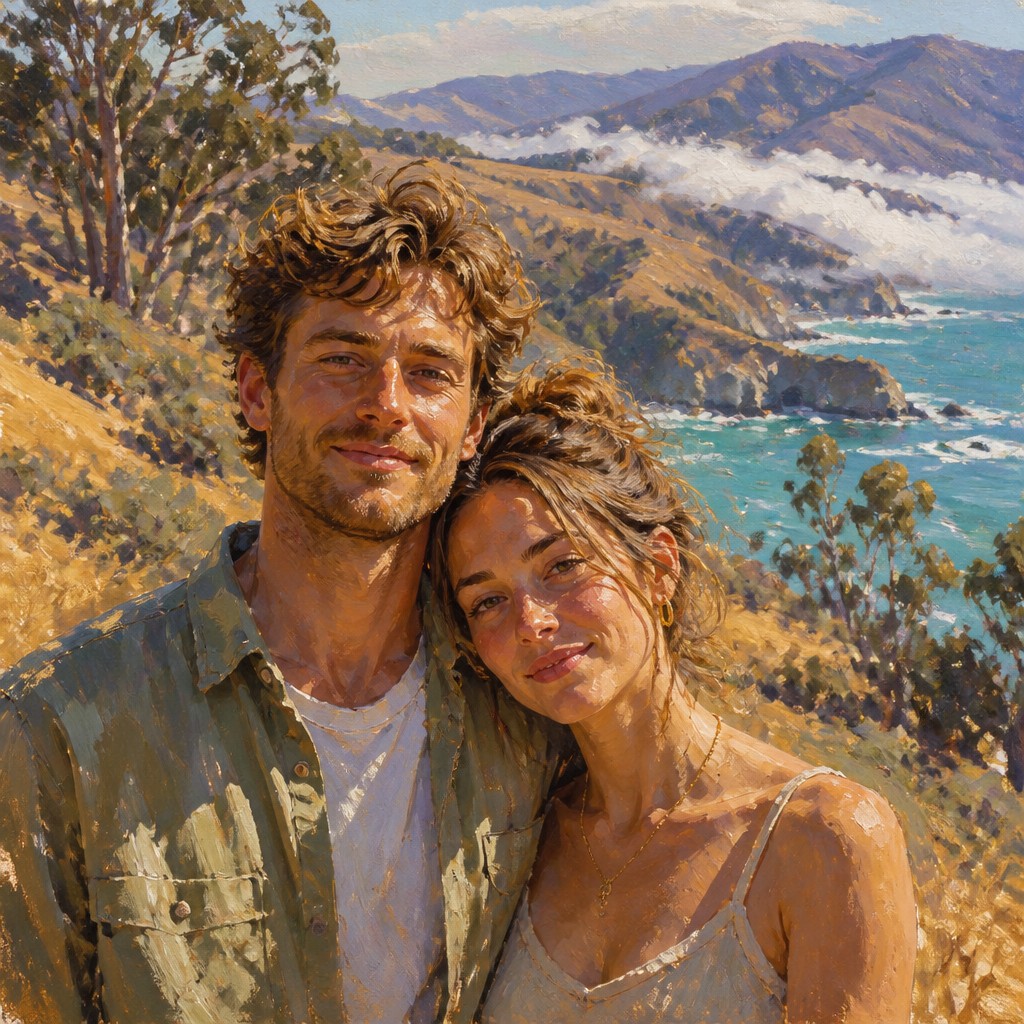
Try It On Your Photos
Upload any photo and convert it into California Plein Air Art Style — drag the sliders to compare before and after.
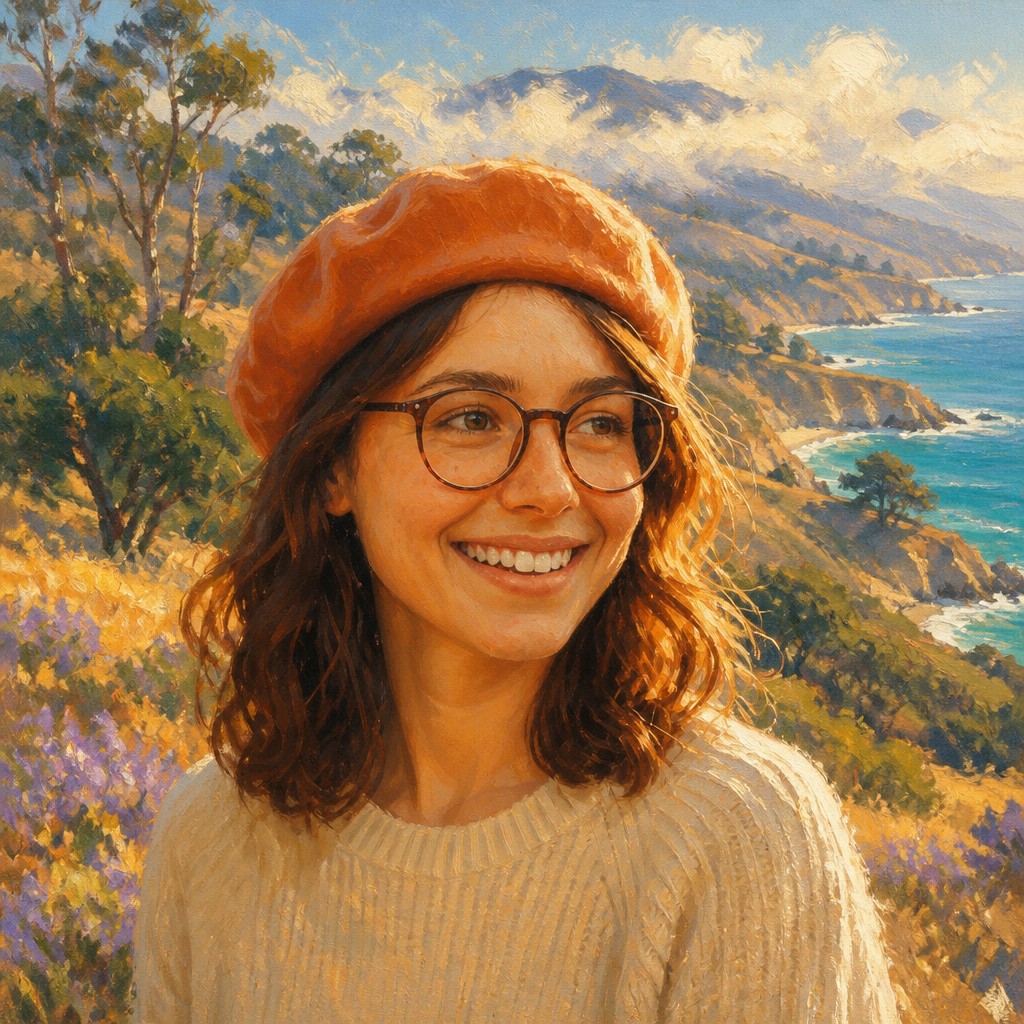

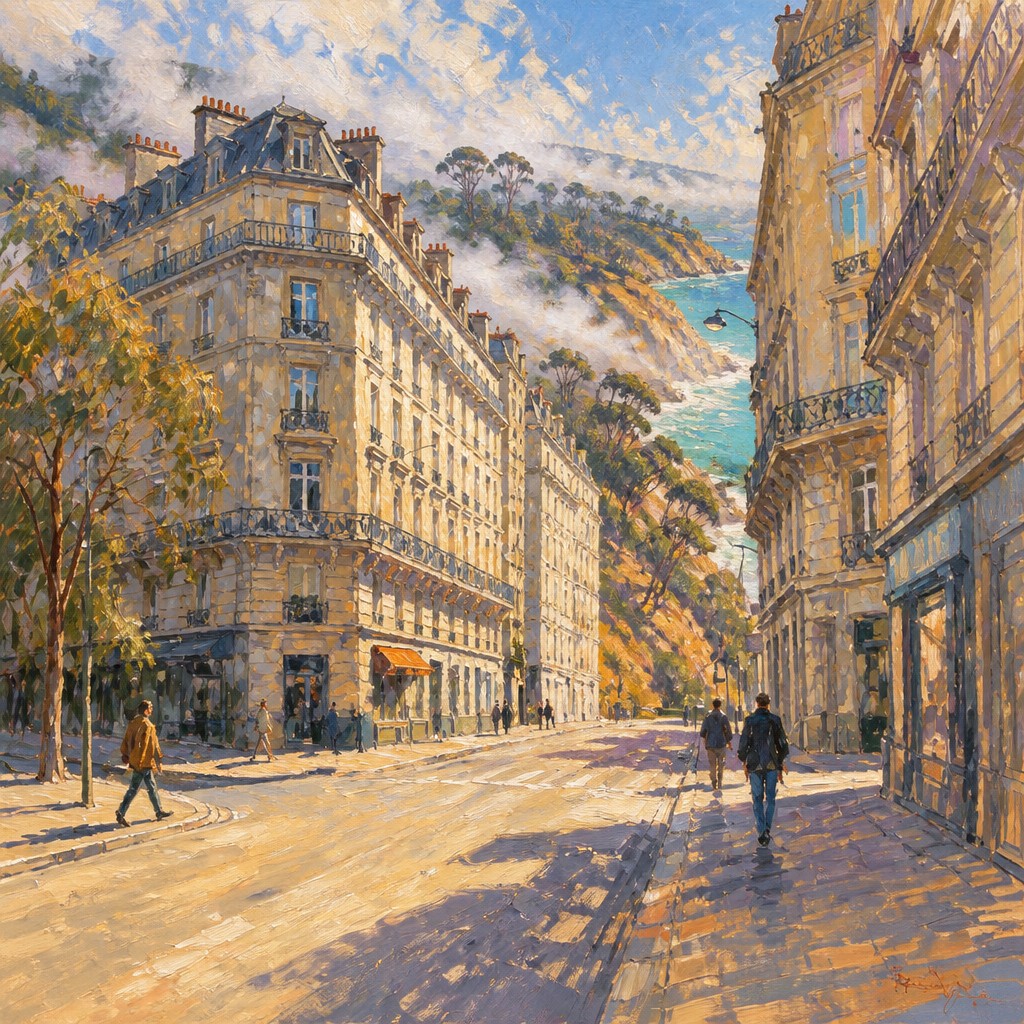

What Defines California Plein Air Art Style
The signature details, up close
Golden western light
Warm, low-angle illumination turns hillsides, grasses, and dry earth into fields of ochre, honey, apricot, and muted orange. Highlights are bright but generally softened by atmospheric distance.
Pacific haze and marine atmosphere
Fog, humidity, and distant ocean air veil the background and create cool transitions between land, sky, and water. Forms lose contrast as they recede, producing spacious atmospheric perspective.
California vegetation
Eucalyptus, live oak, chaparral, grasses, lupines, and coastal shrubs provide the characteristic structure. Their irregular silhouettes contrast with open hills, coves, and broad skies.
Broken impressionist color
Color is applied in adjacent strokes, patches, or flecks rather than blended into uniformly smooth passages. Warm and cool notes sit together to suggest reflected light and optical vibration.
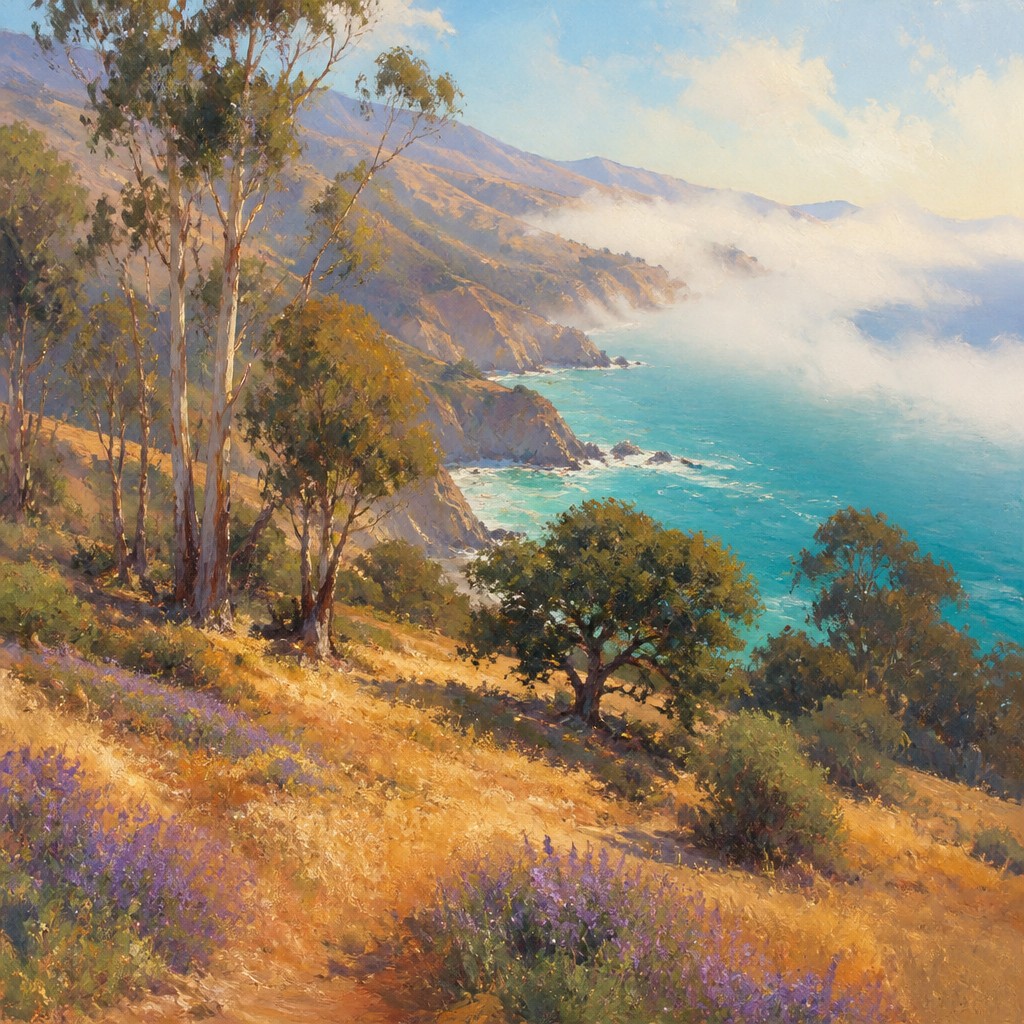
Clear but softened composition
Landforms, paths, shorelines, and tree masses remain legible, yet edges are selectively lost in glare, fog, or foliage. The composition often uses a low horizon and a strong foreground-to-distance progression.
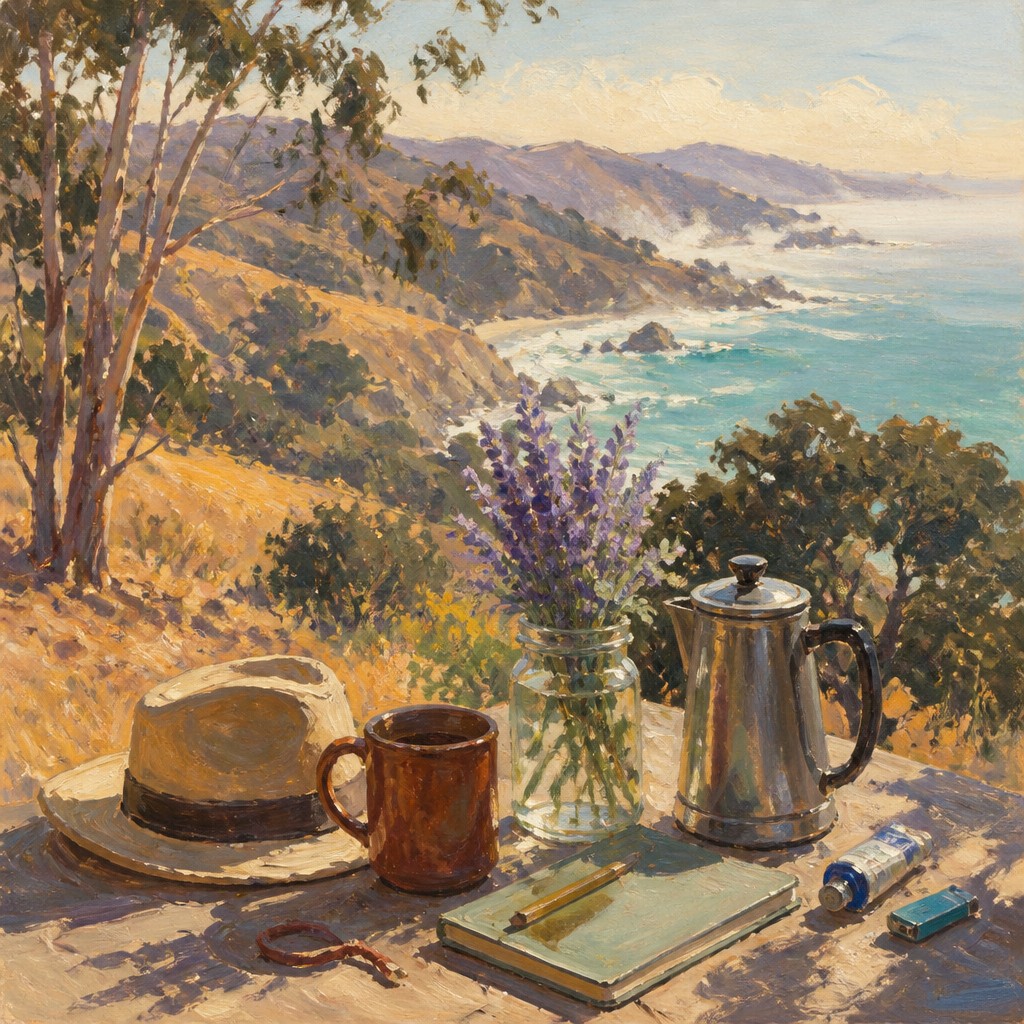
Generous western light
The overall image favors openness, sunlit air, and expansive tonal relationships. Shadows are colorful and transparent rather than simply black or gray.
Try It
Create Videos in California Plein Air Art Style
Styles aren't just for stills — describe a scene or animate an image and get a short video rendered in California Plein Air. Press play to see this pond come to life.
Make a VideoCalifornia Plein Air Prompt Ideas
Start from an idea — each one opens the generator with the style ready to go. See all 40 California Plein Air prompts →
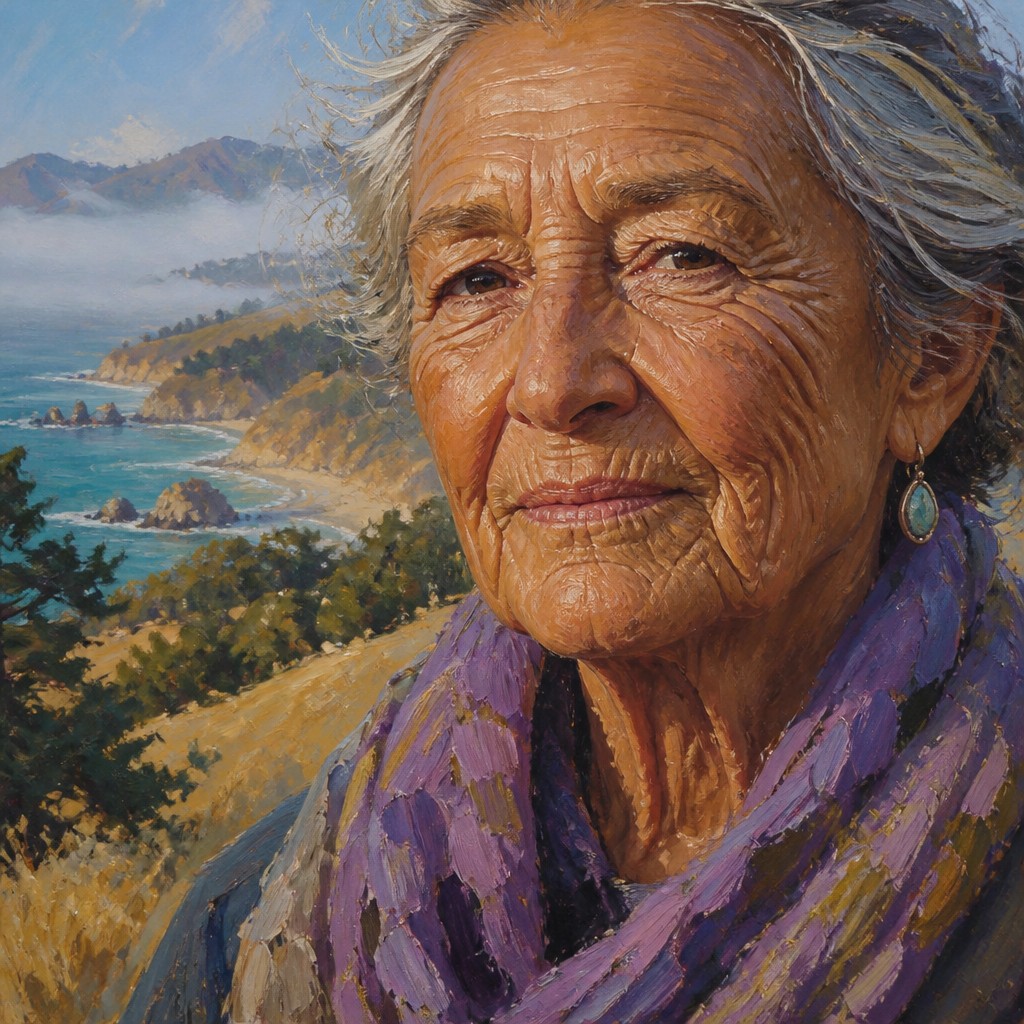
“close-up portrait of an elderly person with expressive weathered features”
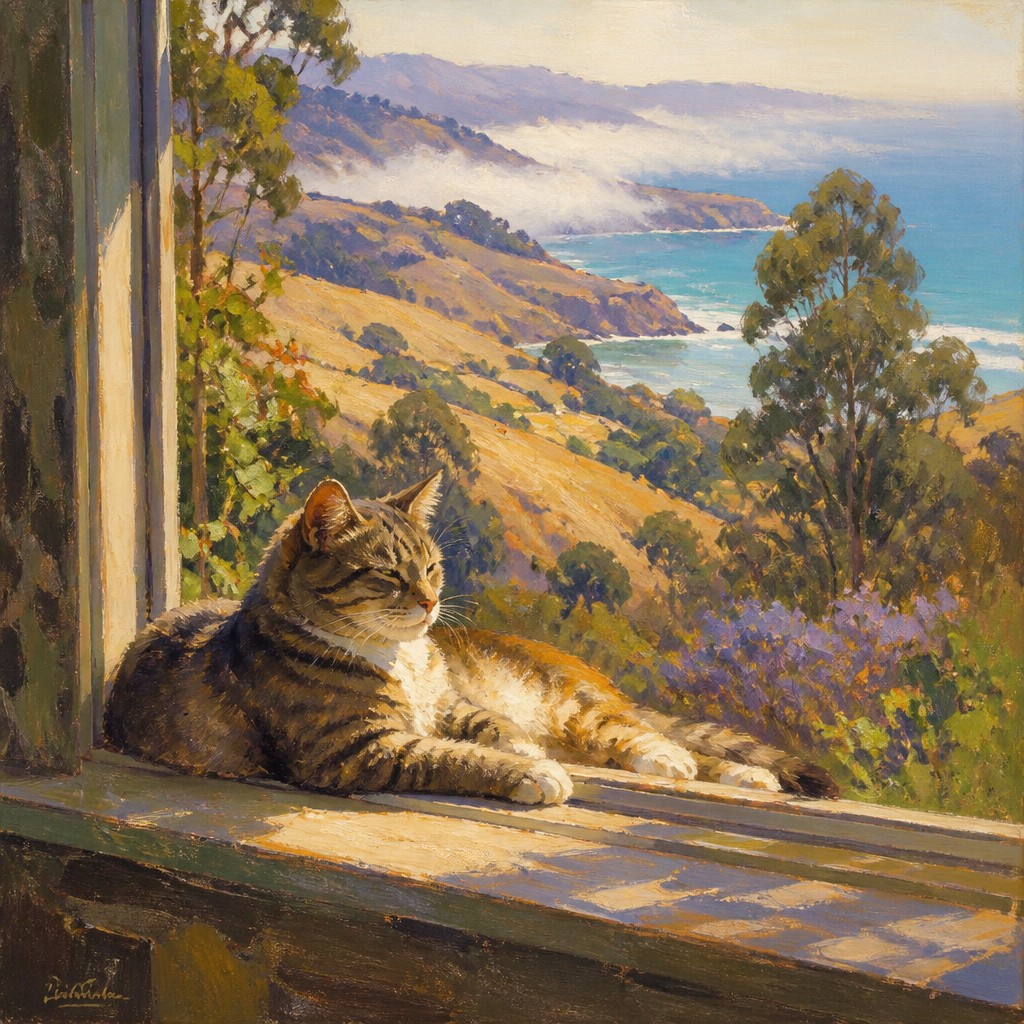
“a cat lounging in a sunlit window”
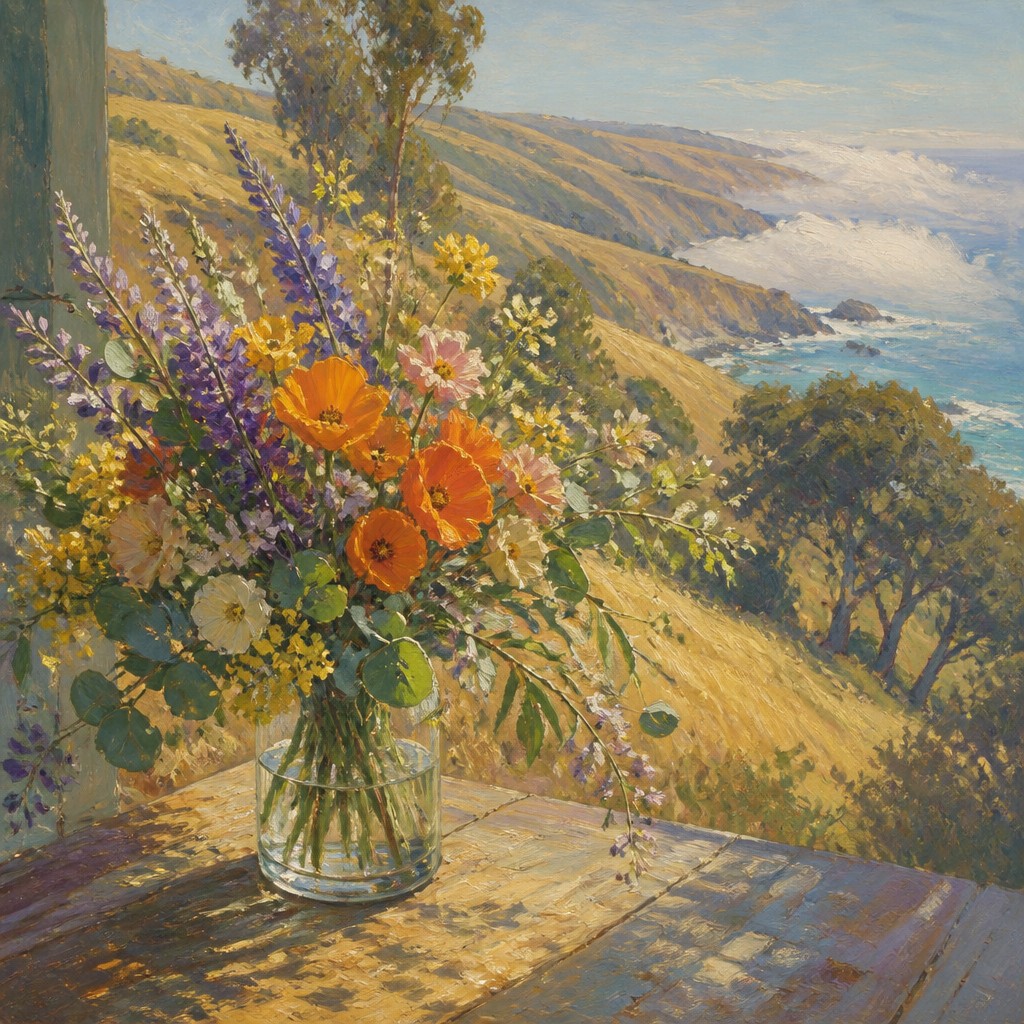
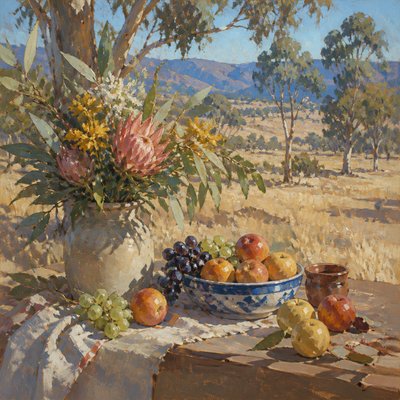
“bouquet of flowers in a glass vase”
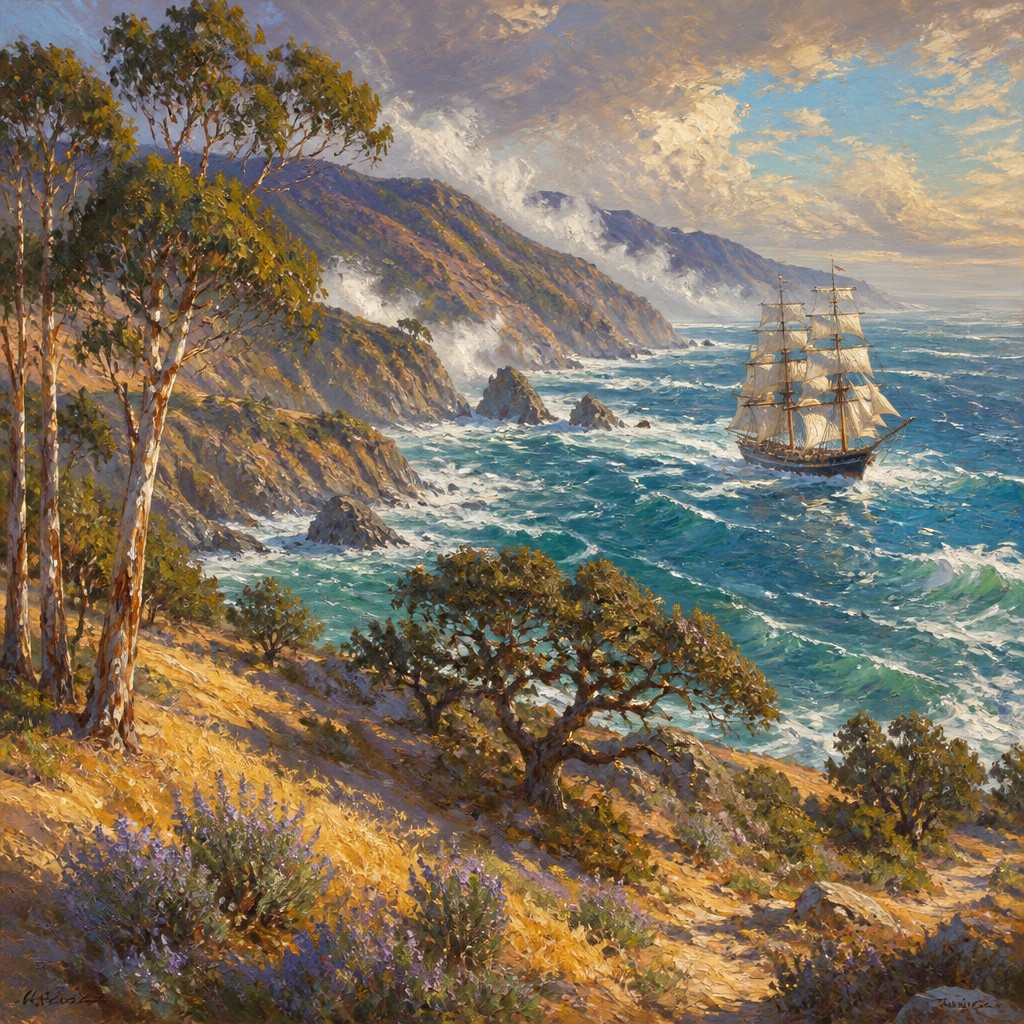
“sailing ship on a stormy sea”
How to Create California Plein Air Art
Master the craft step by step — or skip straight to creating. Read the full guide →
- 1
Begin with a quick outdoor study
Block in the horizon, largest tree masses, and main light direction before adding detail. Work rapidly enough to record the changing relationship between sunlight, fog, and shadow.
- 2
Use a warm-cool palette
Prepare ochre, sienna, apricot, sage, turquoise, blue-violet, and a restrained dark neutral. Keep warm colors in sunlit planes and introduce cool complements into shadows and distant forms.
- 3
Build with separate marks
Use short, directional brushstrokes or dry pastel touches that follow the slope of the land, the movement of foliage, or the shape of clouds. Avoid over-blending, especially in sunlit areas.
- 4
Control atmospheric depth
Reserve the strongest contrast and most detailed texture for the foreground. Reduce saturation, edge sharpness, and value range toward the ocean or distant hills.
- 5
Adapt the method digitally
In a digital painting, use textured brushes, layered color notes, and a final atmospheric glaze rather than a photorealistic filter. For image-to-image work, preserve the source composition while specifying eucalyptus, golden hills, marine haze, and broken color.
- 6
Write focused generation prompts
Name the subject, season, time of day, vegetation, weather, palette, and brush behavior. Phrases such as "visible broken strokes," "cool fog over turquoise water," and "warm western sunlight" help establish the visual logic.
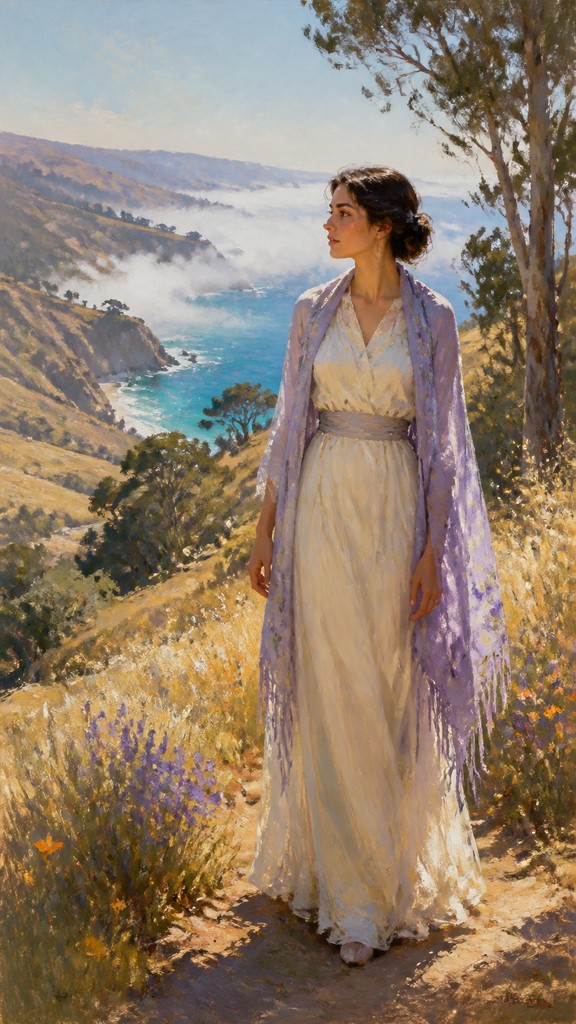
The Story
History & Origins of California Plein Air
California Plein Air Art is best understood as a regional visual idiom rather than a formally defined historical movement. Its lineage reaches back to late nineteenth- and early twentieth-century landscape painting on the Pacific Coast, when outdoor painting, American Impressionism, and Tonalist approaches encouraged artists to study local light directly in the landscape.
The aesthetic developed through the meeting of European plein air ideas with California's distinctive geography: Mediterranean vegetation, broad dry hills, coastal fog, strong western sunlight, and rapidly changing weather. Contemporary versions may use oil, watercolor, gouache, pastel, photography, or digital painting while retaining the central principles of observation, atmosphere, and color translated from lived outdoor experience.
Influences: The style draws from European plein air painting and Impressionism, especially their emphasis on transient light, optical color, and direct landscape observation. It also relates to American Impressionism, Tonalism, Pacific Coast regional landscape painting, watercolor field studies, and the atmospheric principles of nineteenth-century landscape art. California's Mediterranean ecology and coastal weather give these influences a distinct palette and sense of place.
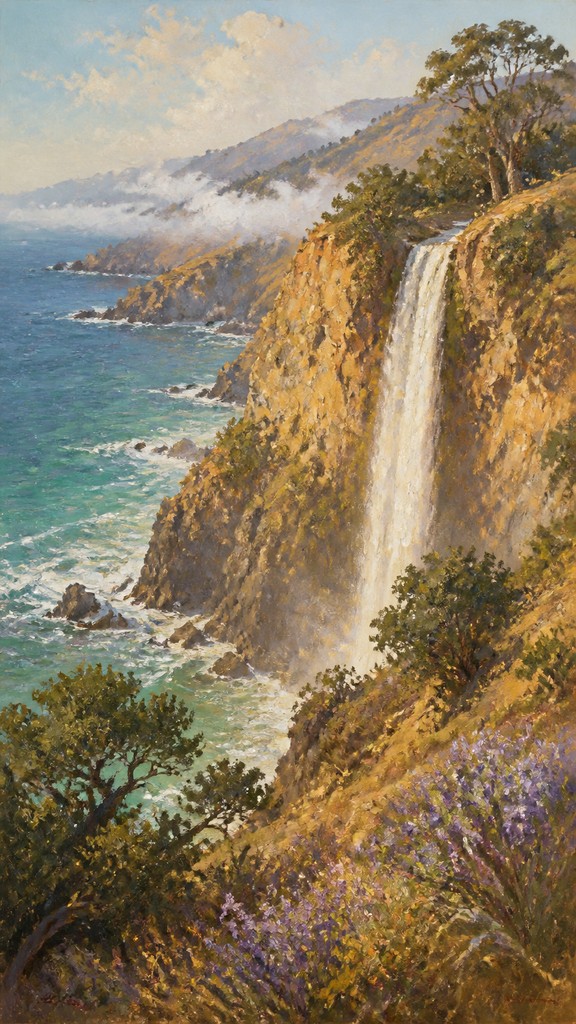
Frequently Asked Questions
What defines California Plein Air Art?
It is defined by outdoor landscape observation, strong western sunlight, Pacific atmospheric haze, and California vegetation such as eucalyptus, live oak, chaparral, and lupines. Its color is often broken and impressionistic, but the scenery remains grounded in recognizable coastal and inland geography.
Is California Plein Air Art a historical movement?
No, it is more accurately described as a regional style or contemporary aesthetic than as a formally bounded movement. It draws on historical plein air, Impressionist, Tonalist, and Pacific Coast landscape traditions without having a single founding date or strict manifesto.
How does it differ from general Impressionism?
Both approaches use visible color marks and an interest in changing light. California Plein Air Art is more specifically associated with dry golden hills, Pacific fog, eucalyptus, coastal water, and the high-contrast yet softened light of the western United States.
Can this style be created with watercolor or pastel?
Yes. Watercolor is effective for fog, transparent distance, and luminous skies, while pastel can produce granular grasses and broken color. Oil and gouache are useful when stronger opaque strokes and more substantial sunlit forms are desired.
How can I turn a photograph into this look?
Simplify small details into larger masses, warm the sunlit land, cool and reduce contrast in distant areas, and add selective textured marks. Keep important silhouettes such as oaks, ridges, and shorelines intact so the image remains place-based rather than becoming an arbitrary filter effect.
Where is this style commonly used?
It suits landscape paintings, travel imagery, editorial illustrations, wall art, scenic concept art, and digital transformations of coastal or countryside photographs. It is especially effective for scenes where weather and time of day are central to the mood.
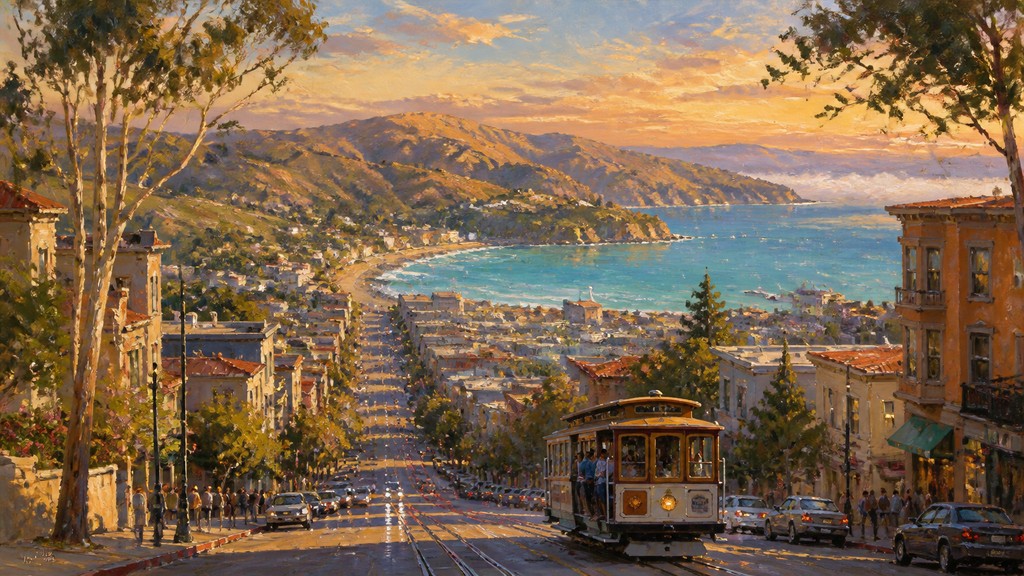
Create your first California Plein Air artwork
Describe anything — or upload a photo — and see it in California Plein Air Art Style in seconds.
Related Styles
Discover similar art styles