Bergen Art Style
Explore Bergen Art Style: weathered Hanseatic timber warehouses, fjord light, and vivid Norwegian rosemaling in a richly textured visual language.
Instantly rendered in Bergen — or transform a photo
Bergen Gallery
Tap any artwork to explore it
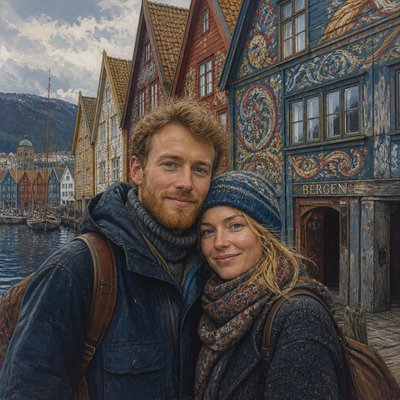
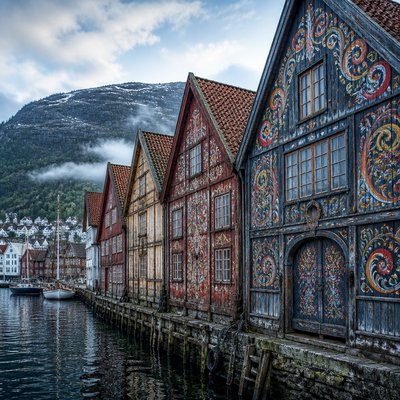
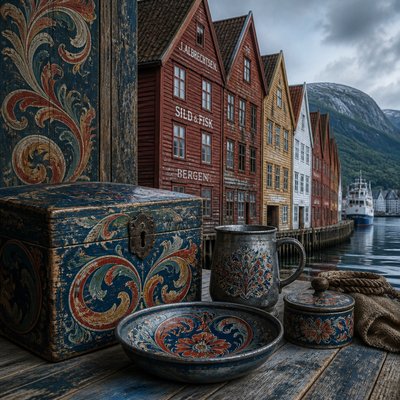
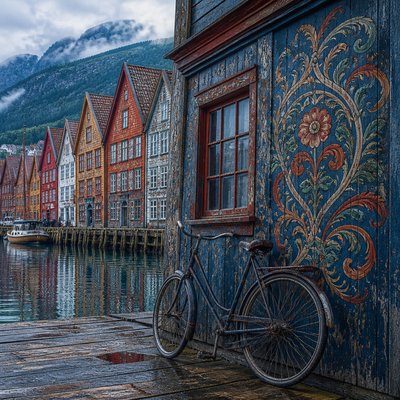
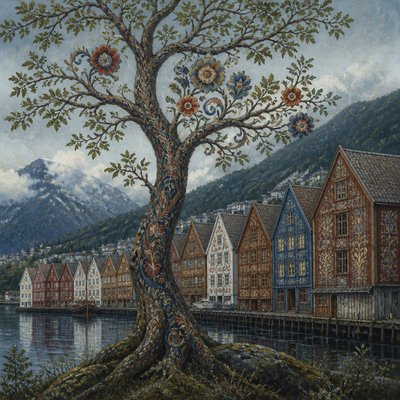
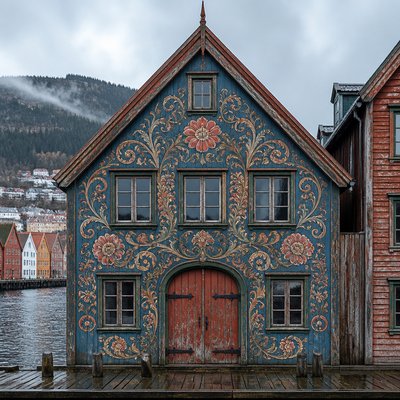
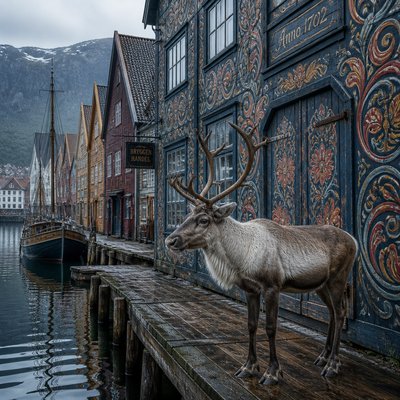
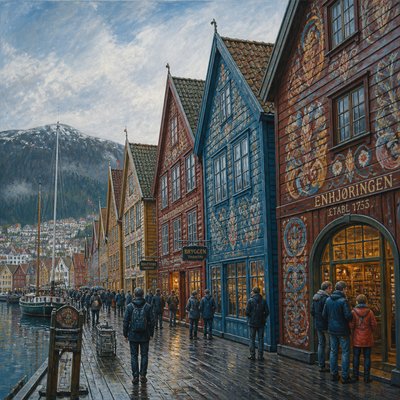
What is Bergen Art Style?
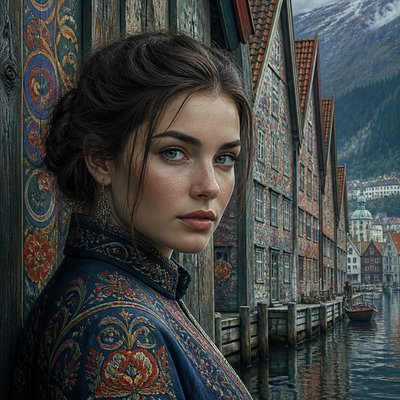
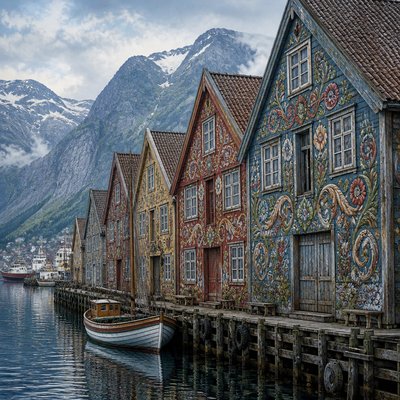
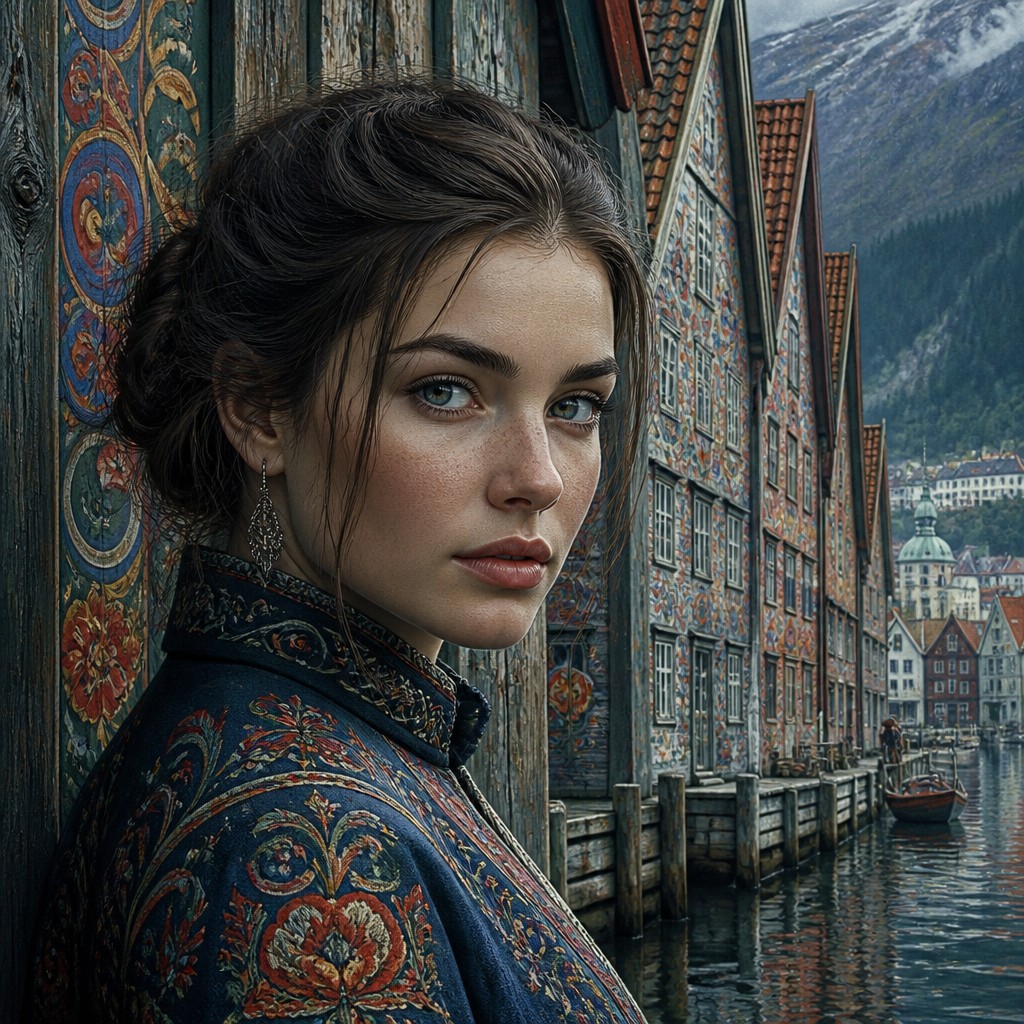
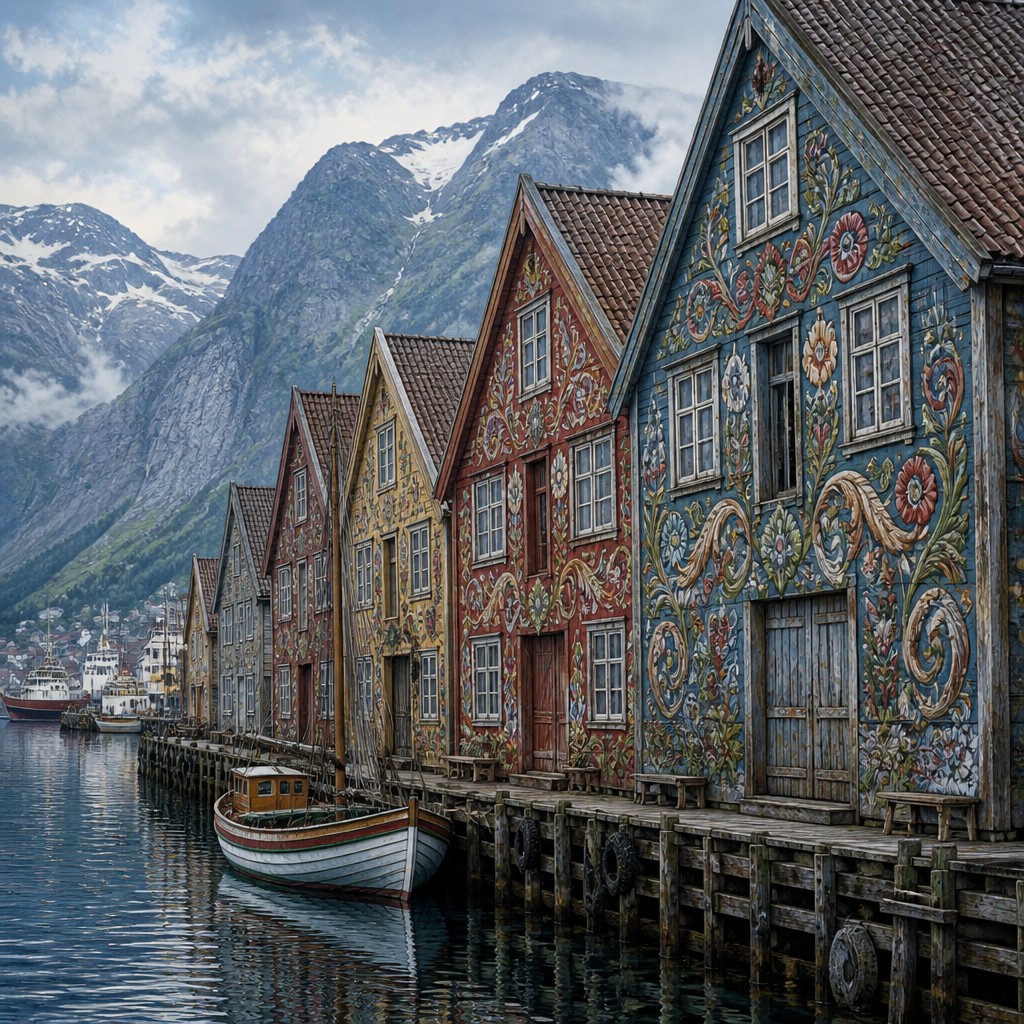
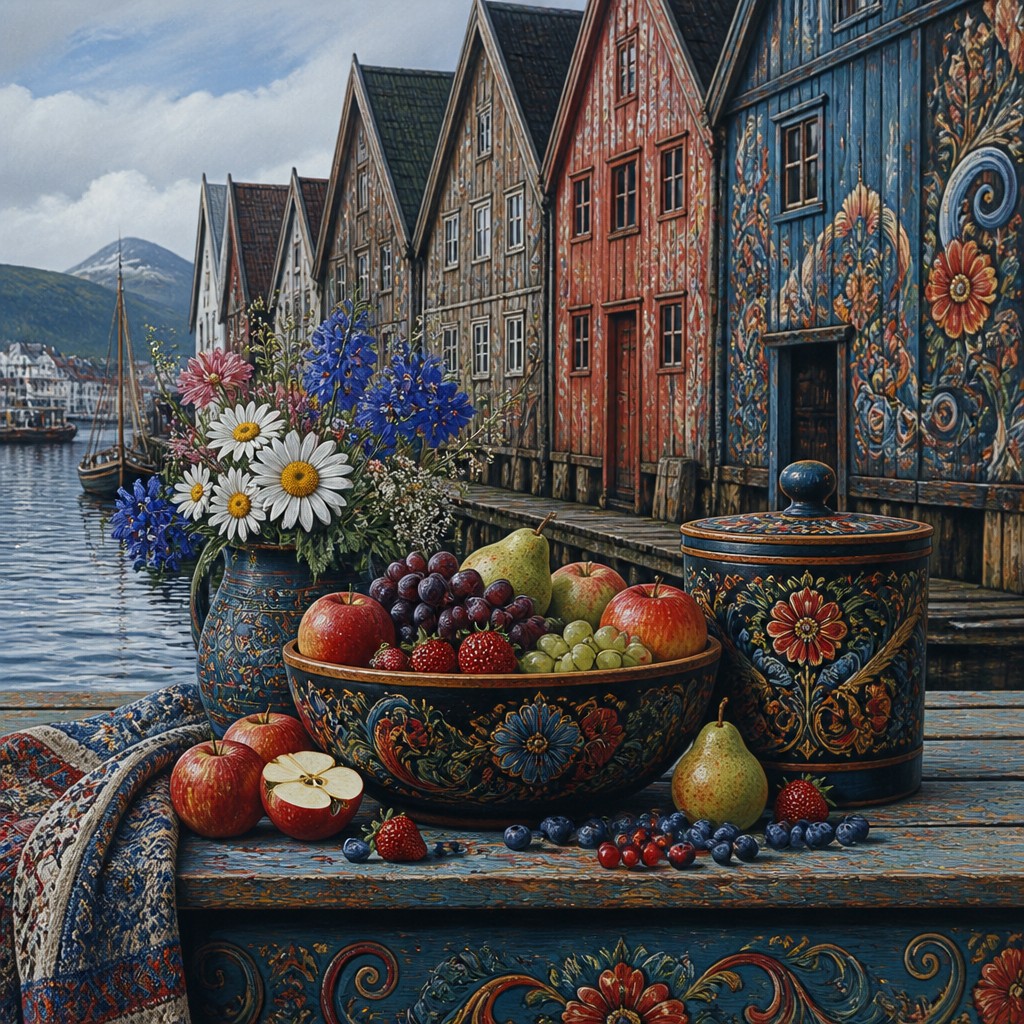
Bergen Art Style is a contemporary, synthetic aesthetic built around the visual character of Bergen’s historic harbor: tightly packed timber warehouses, leaning facades, steep gabled roofs, and salt-weathered wood set against cool fjord light. Its defining decorative element is Norwegian folk rosemaling, with curling floral forms, leaves, scrolls, and vivid painted accents spreading across architectural surfaces and image compositions.
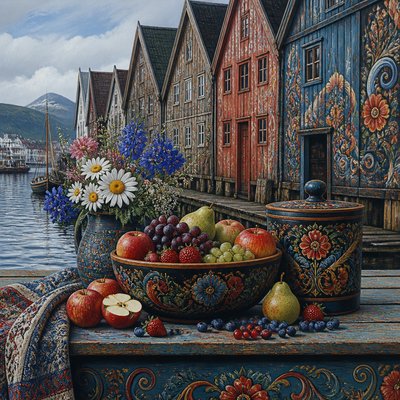
The style combines documentary architectural texture with ornamental folk painting. Muted blues, gray-greens, slate, ochre, red, and cream establish the northern maritime atmosphere, while saturated rosemaling introduces rhythm and contrast. The result can feel simultaneously rustic and ornate, historic and imaginative, with every surface contributing to a coherent coastal identity.
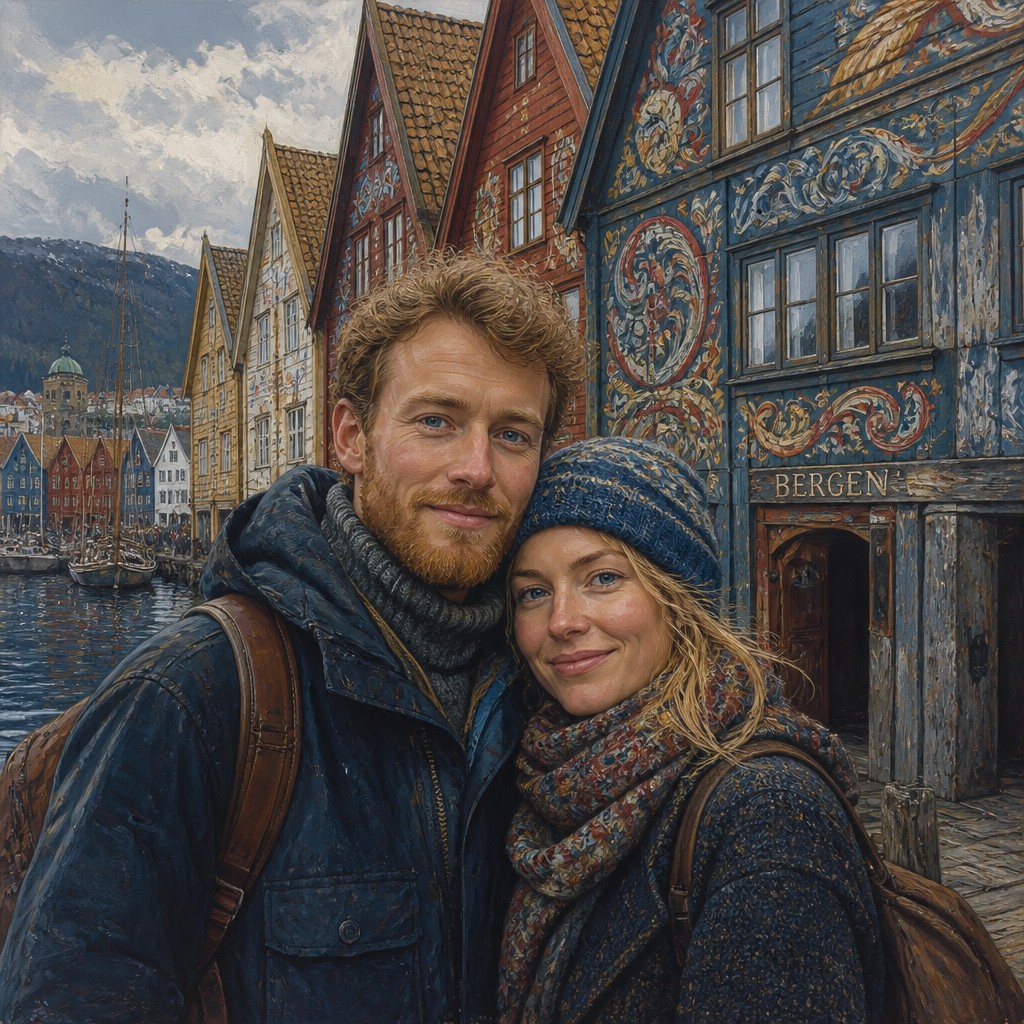
Try It On Your Photos
Upload any photo and convert it into Bergen Art Style — drag the sliders to compare before and after.
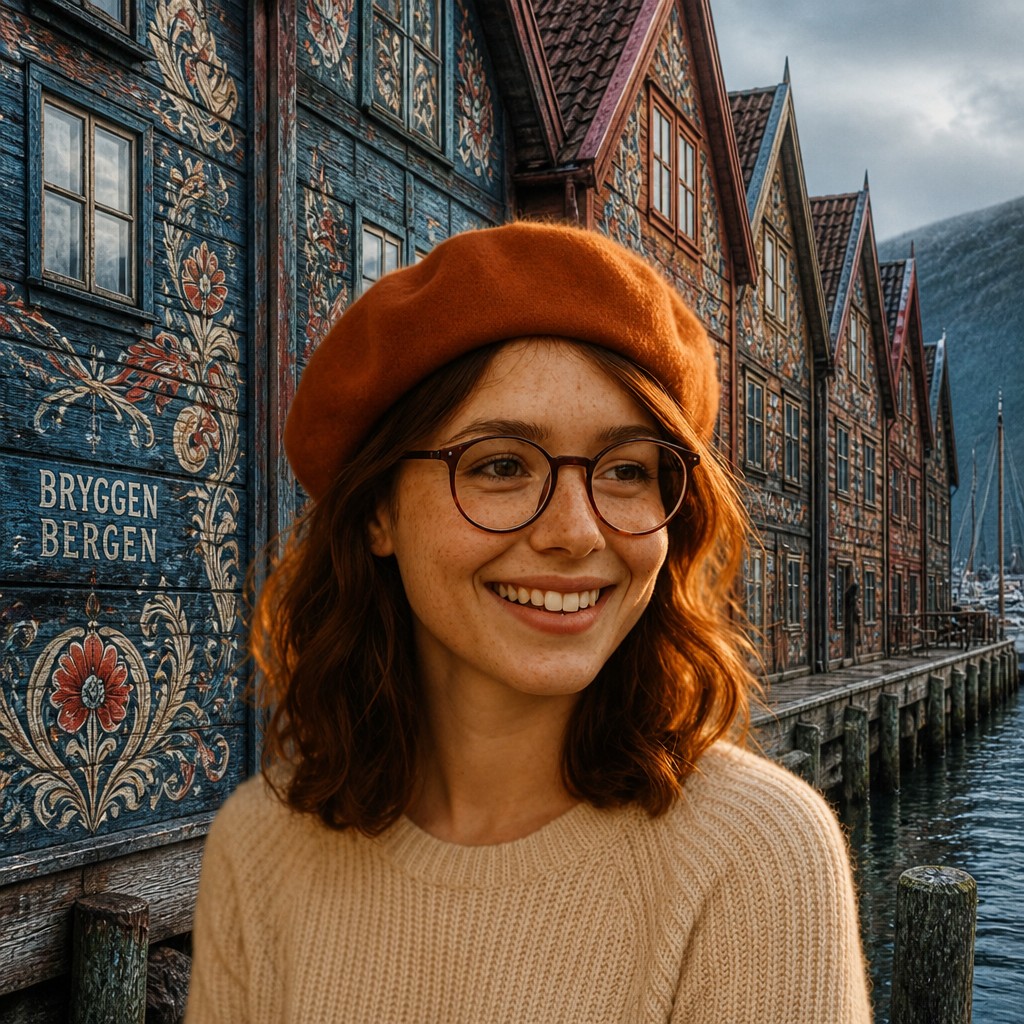

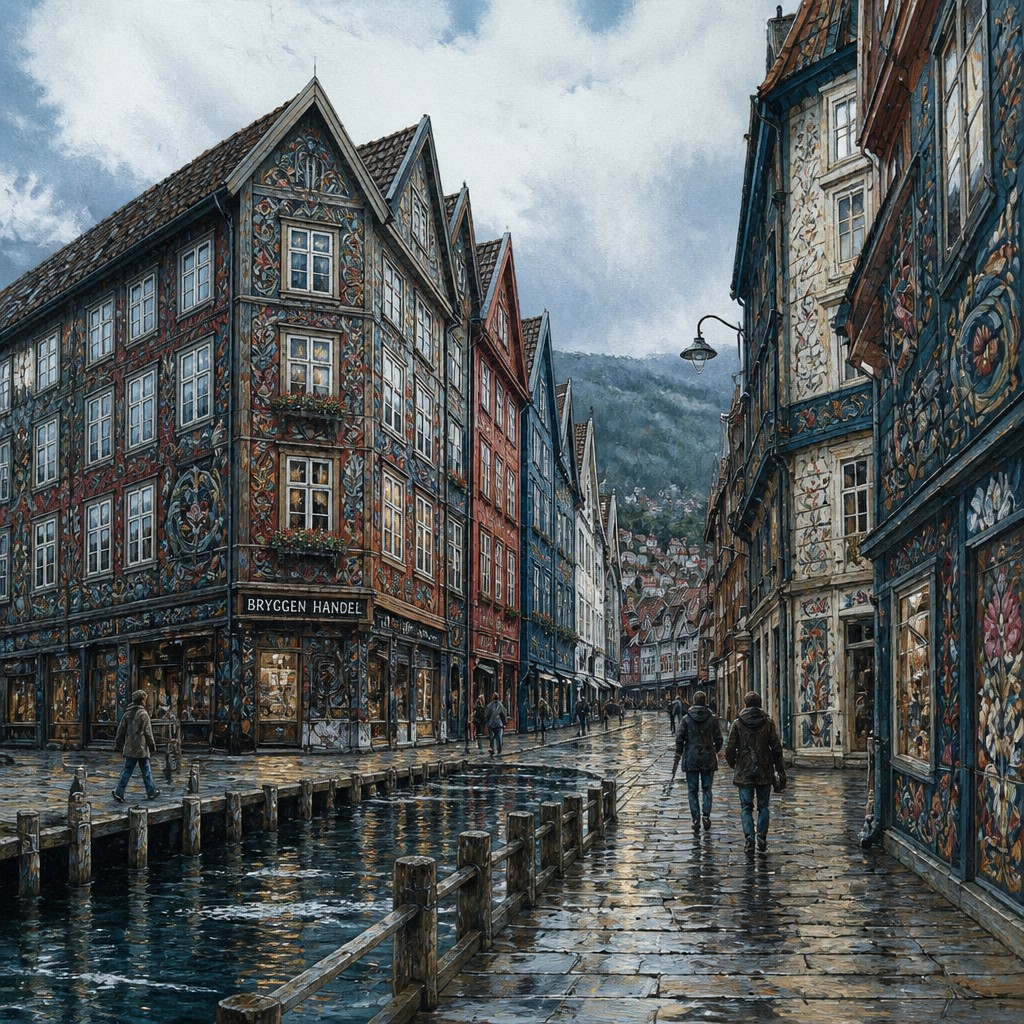

What Defines Bergen Art Style
The signature details, up close
Hanseatic timber architecture
Rows of narrow wooden warehouses, rough plank siding, projecting upper stories, and tightly spaced facades establish the primary structure. The buildings often appear slightly irregular, emphasizing age and continuous repair.
Steep gabled rooflines
Triangular gables and sharply pitched roofs create a repeated vertical rhythm along the harbor. Roofs may be rendered in dark slate, weathered wood, or subdued painted tones.
Weathered timber texture
Visible grain, peeling paint, salt stains, warped boards, lichen, and softened edges give surfaces a tactile maritime history. Texture should remain legible without overwhelming the decorative patterns.
Vivid Norwegian rosemaling
Stylized flowers, scrolling stems, teardrop leaves, and symmetrical curling forms appear on doors, shutters, beams, boats, or entire facades. Strong reds, blues, greens, yellows, and creams contrast with the restrained harbor palette.
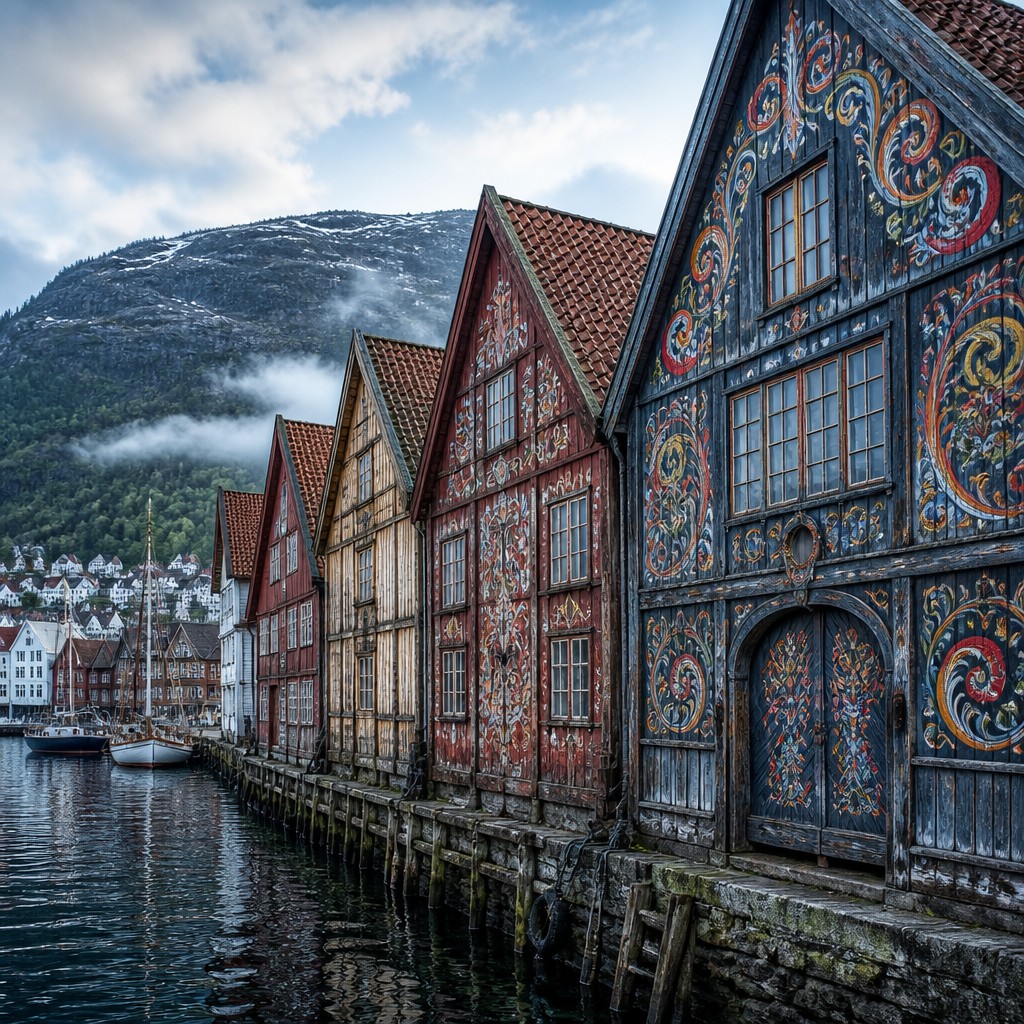
Cool fjord-light palette
Diffuse northern illumination favors blue-gray shadows, pale overcast skies, sea-green reflections, and soft silvery highlights. Warm ornament and occasional window light provide controlled visual accents.
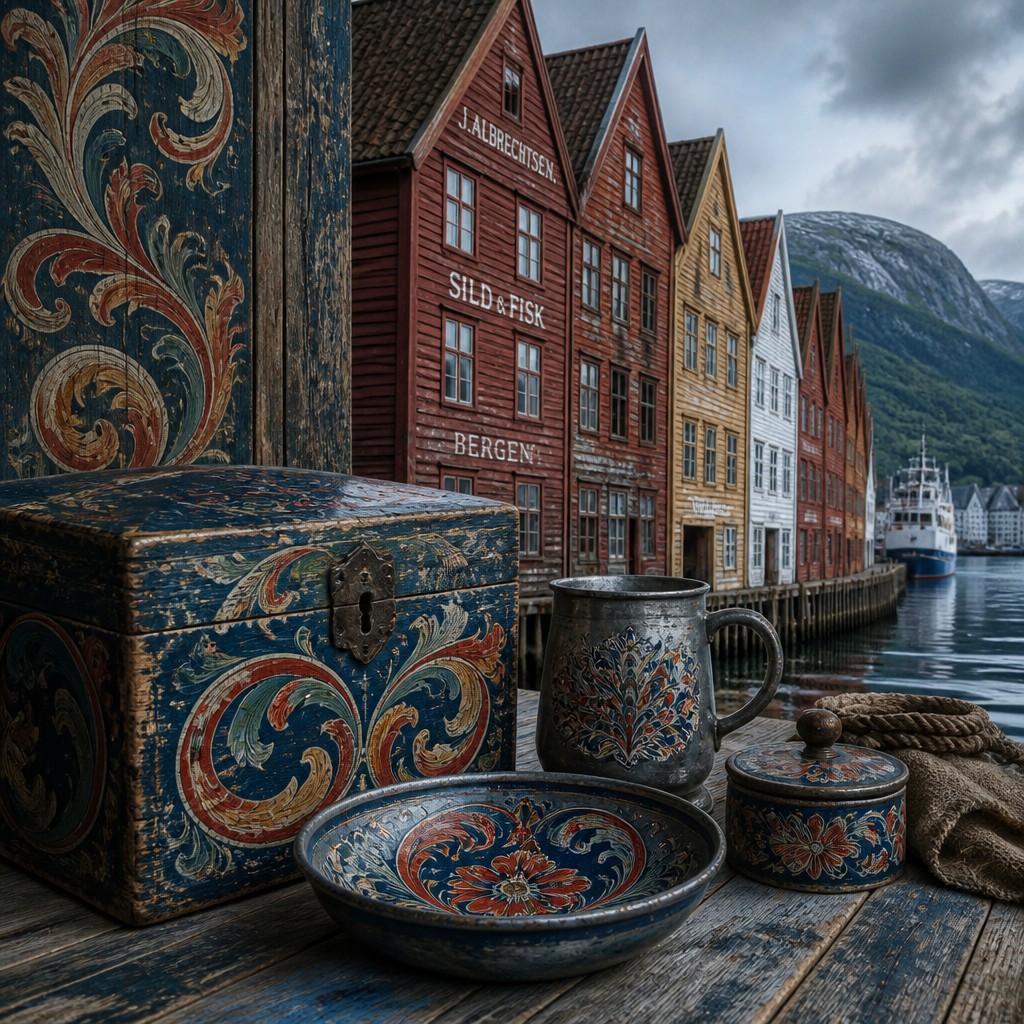
Layered maritime atmosphere
Harbor water, mist, rain-darkened wood, mooring ropes, fishing vessels, and distant mountain silhouettes reinforce the coastal setting. Atmospheric perspective keeps the background quieter than the decorated architecture.
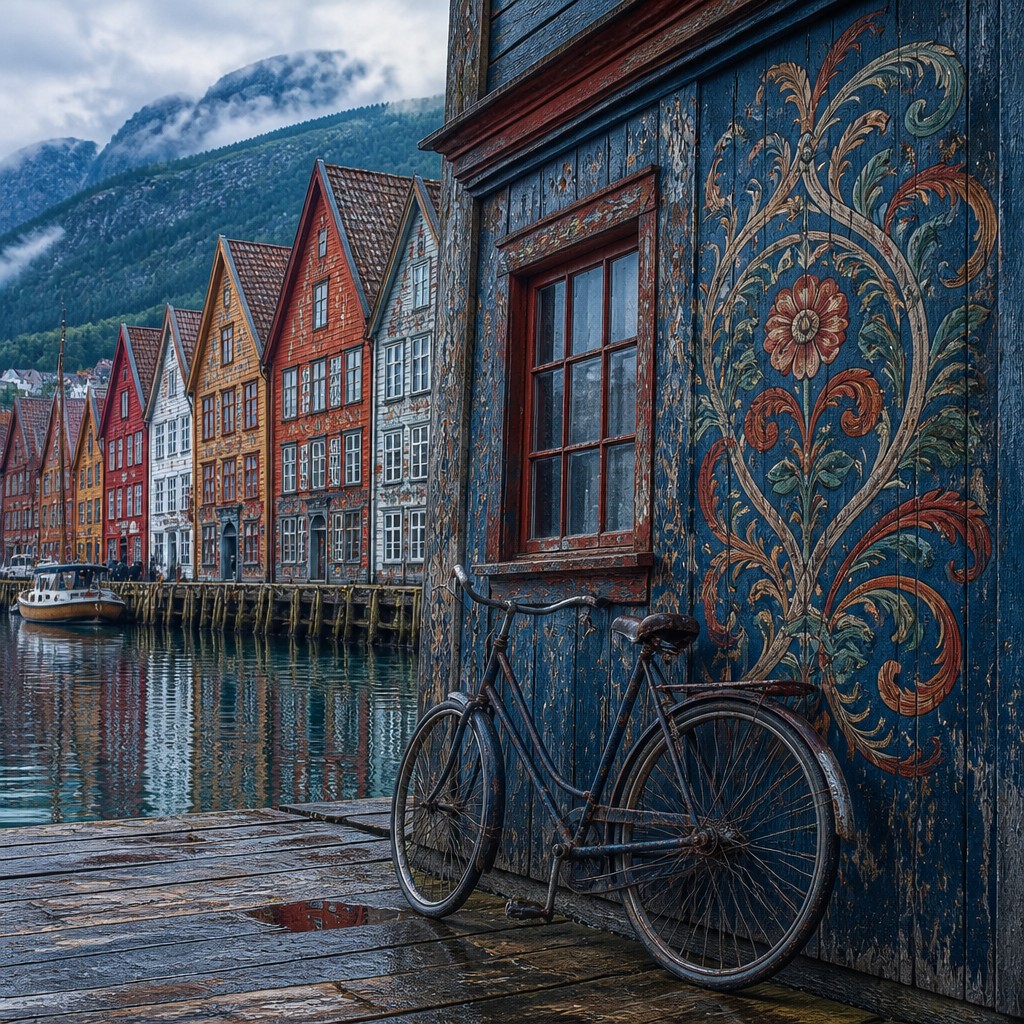
Ornamental surface rhythm
Rosemaling curves are distributed across walls and objects so that decoration guides the eye through the composition. Repetition, bilateral balance, and curling movement bring a graphic quality to otherwise documentary scenes.
Bergen Prompt Ideas
Start from an idea — each one opens the generator with the style ready to go. See all 40 Bergen prompts →
How to Create Bergen Art
Master the craft step by step — or skip straight to creating. Read the full guide →
- 1
Block in the harbor architecture
Begin with a compressed row of narrow timber buildings, strong vertical wall planes, and steep gables. Use slight asymmetry, uneven rooflines, and perspective variation to avoid a sterile architectural diagram.
- 2
Build believable timber surfaces
Layer directional wood grain, cracks, nail marks, faded paint, damp stains, and edge wear over the structural forms. Keep weathering concentrated around foundations, joints, roof edges, and areas exposed to spray.
- 3
Apply rosemaling selectively
Design flowing floral scrolls with clear stems, leaves, and rounded blossoms before placing them on doors, shutters, beams, or boats. Preserve the underlying wood grain and vary the scale so the ornament feels hand-painted rather than mechanically tiled.
- 4
Control the Nordic light
Use broad, soft illumination with cool blue-gray shadows and restrained highlights. Add warm reds, ochres, and creamy whites mainly in the painted decoration, windows, signage, or reflected harbor light.
- 5
Use traditional or digital media
For physical work, combine watercolor, gouache, oil, or acrylic with dry-brush texture and deliberate decorative linework. Digitally, use textured brushes, layered masks, perspective guides, and subtle grain to unite architectural realism with folk ornament.
- 6
Write precise generation prompts
Specify weathered Hanseatic timber warehouses, steep gables, Norwegian rosemaling, salt-worn wood, and cool fjord light, then add a clear subject and viewpoint. State where the ornament appears and request coherent architectural perspective to prevent random decoration.
The Story
History & Origins of Bergen
Bergen Art Style is not a documented historical movement or established period style. It is an invented visual synthesis drawing on the Hanseatic timber architecture associated with Bergen’s historic wharf, particularly the medieval and early modern trading environment, together with Norwegian rosemaling, a folk-painted decorative tradition that developed in rural interiors during the eighteenth and nineteenth centuries.
Its contemporary development comes from recombining architectural heritage, maritime weathering, Nordic landscape color, and ornamental folk motifs. Rather than reproducing a single historical building or regional rosemaling pattern exactly, it treats these sources as a flexible visual vocabulary for illustrations, paintings, photographs, interiors, and digitally generated scenes.
Influences: The style draws from Bergen’s Hanseatic harbor architecture, Norwegian rosemaling and other Scandinavian vernacular decorative traditions, Nordic maritime painting, folk-art pattern design, heritage architectural illustration, and weathered coastal photography. It also shares qualities with Arts and Crafts interest in handmade surfaces and regional materials, but its identity depends on the deliberate fusion of maritime timber structures with vivid floral ornament.
Frequently Asked Questions
What defines Bergen Art Style?
It is defined by weathered timber warehouse architecture, steep gabled rooflines, cool fjord light, and vivid Norwegian rosemaling. The style balances rustic structural texture with flowing, high-contrast folk ornament.
Is Bergen Art Style a historical art movement?
No. Bergen Art Style is a contemporary invented synthesis rather than a formally recognized historical movement. It uses authentic architectural and decorative traditions as source material without claiming to represent a single period or regional school.
What is the relationship between the style and Bergen?
The style takes its architectural identity from Bergen’s historic harbor and its Hanseatic timber warehouse environment. Its rosemaling component refers more broadly to Norwegian folk decoration, which developed across rural regions and is not exclusive to Bergen.
How does it differ from ordinary Scandinavian design?
Scandinavian design often emphasizes restrained forms, minimal ornament, and modern function. Bergen Art Style is more layered and historicist, combining rough maritime architecture with saturated painted patterns and visible signs of age.
Which media work well for this style?
Watercolor, gouache, acrylic, oil, ink, and textured digital painting all suit the style. Photography and architectural illustration work especially well when they preserve wood grain, damp surfaces, and the contrast between cool light and colorful ornament.
How can I create an image in this style with a text prompt?
Name the subject first, then describe timber warehouses, steep gables, salt-weathered boards, Norwegian rosemaling, and cool fjord illumination. Specify the placement and colors of the ornament, along with a viewpoint or atmosphere, to keep the result visually coherent.
Create your first Bergen artwork
Describe anything — or upload a photo — and see it in Bergen Art Style in seconds.
Related Styles
Discover similar art styles