Burundian Art Style
Explore Burundian art style: carved ceremonial drums, coiled baskets, burnished pottery, beadwork, and terraced highland color.
Instantly rendered in Burundian — or transform a photo
Burundian Gallery
Tap any artwork to explore it
What is Burundian Art Style?
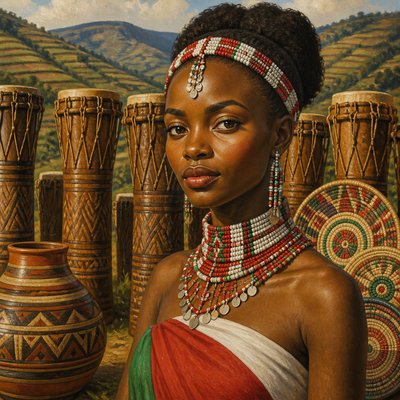
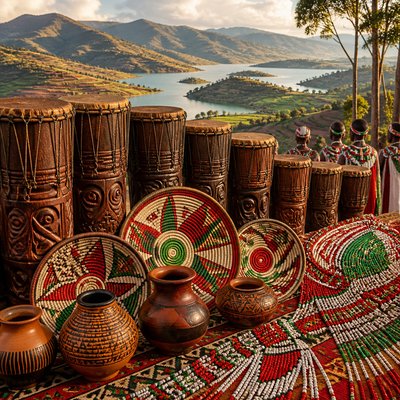
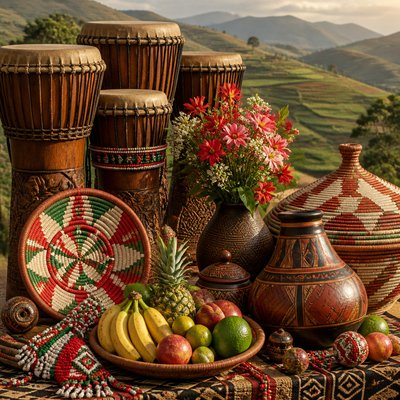
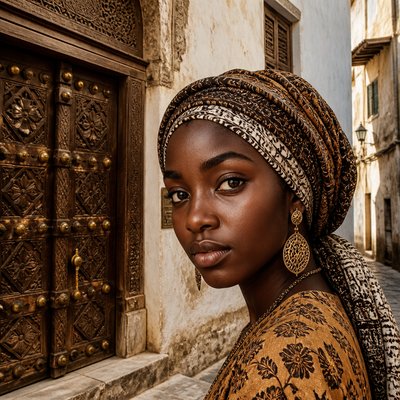
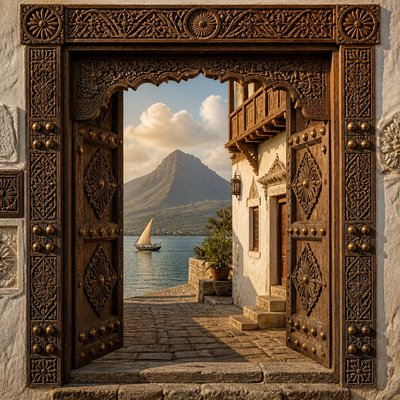
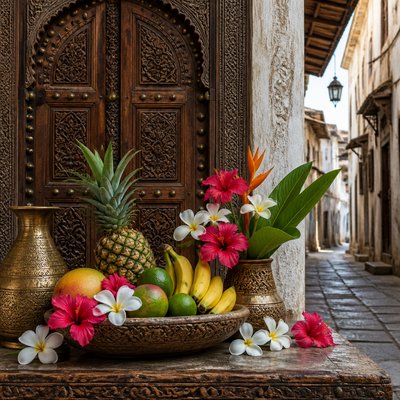
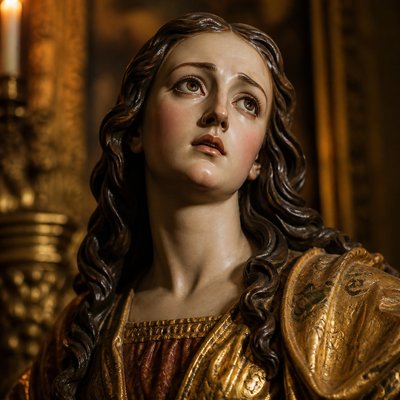
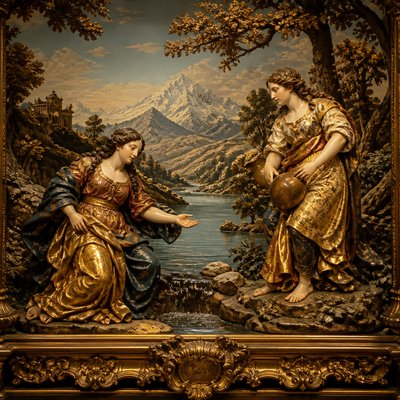
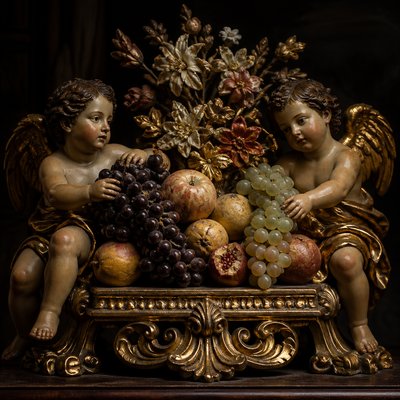
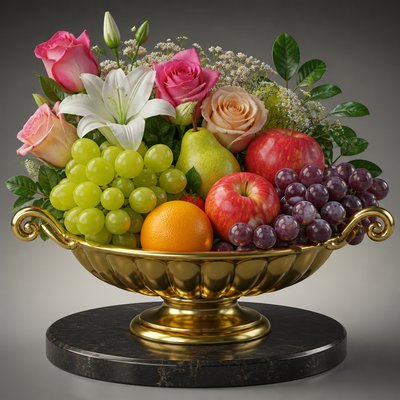
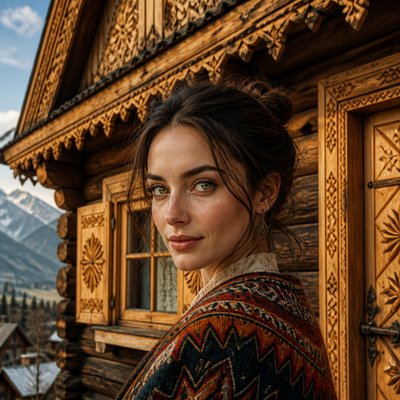
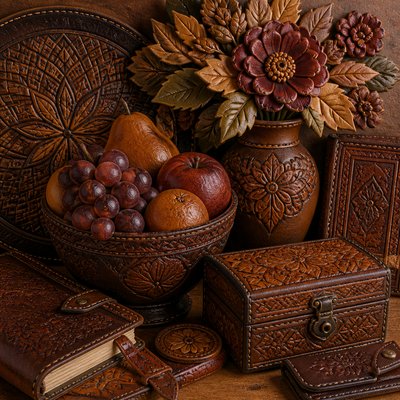
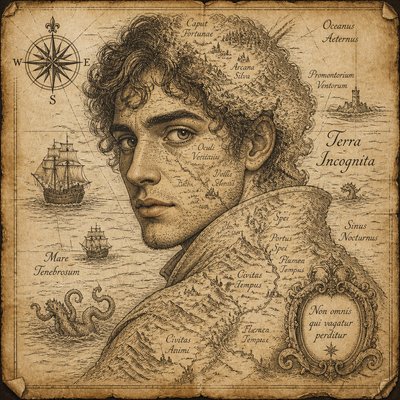
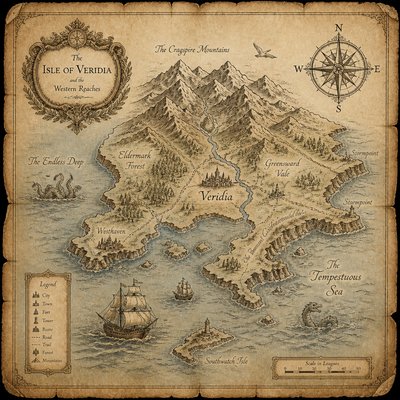
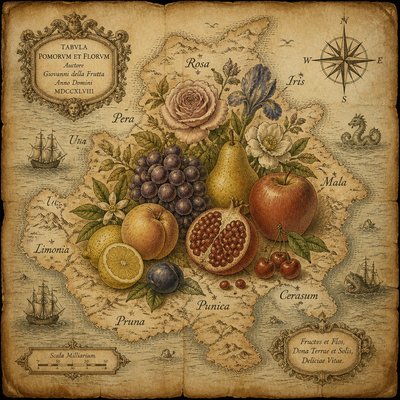
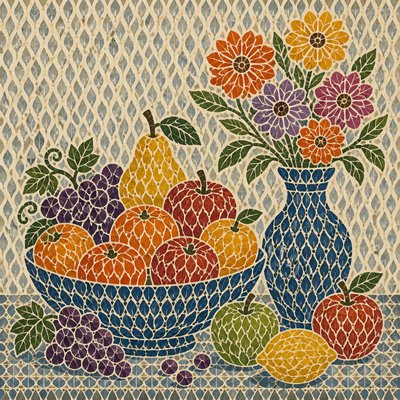
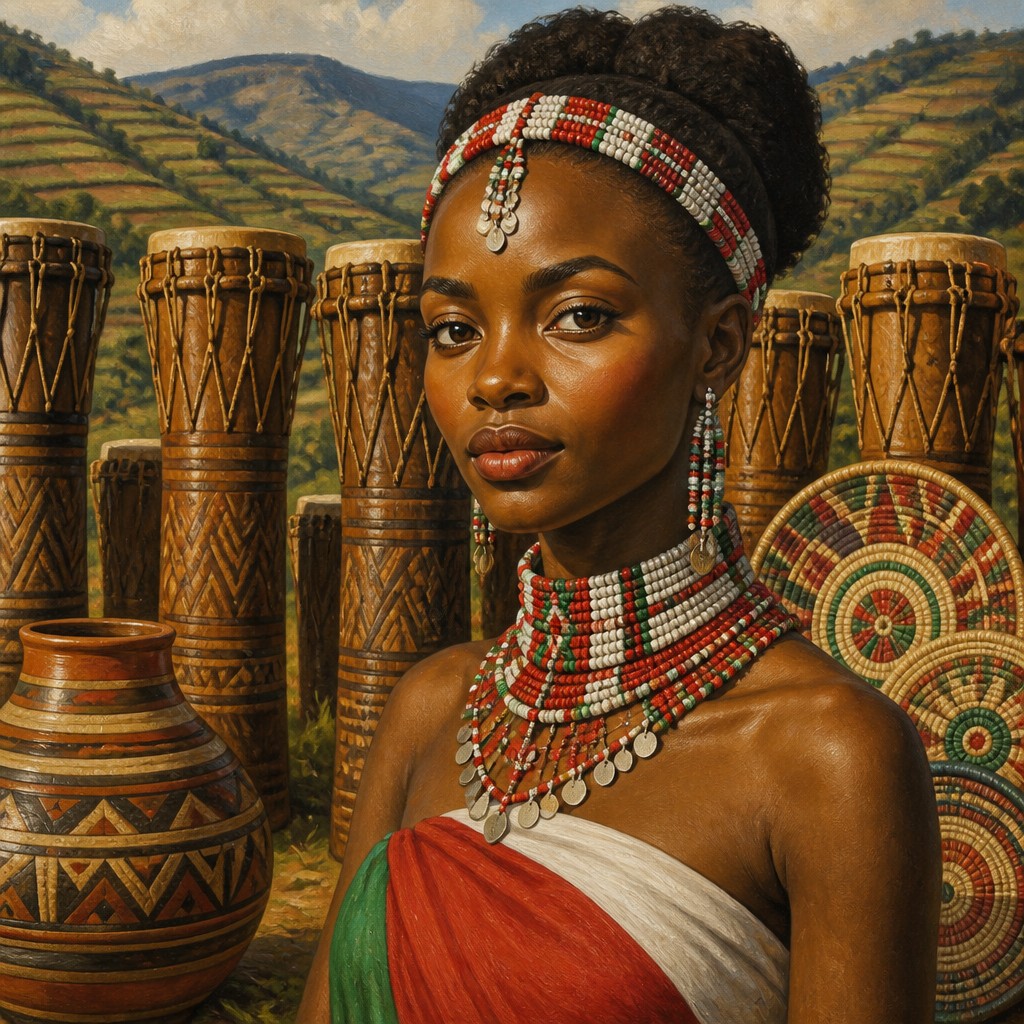
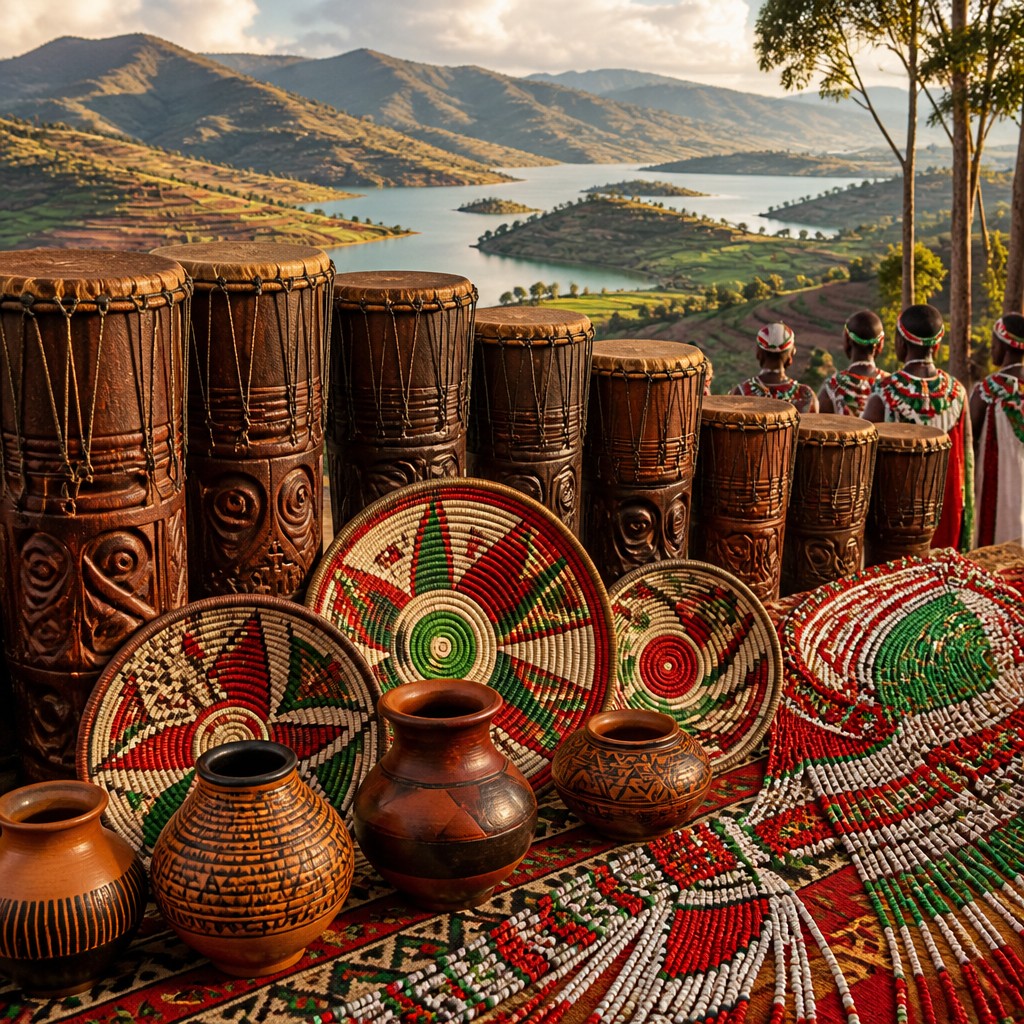
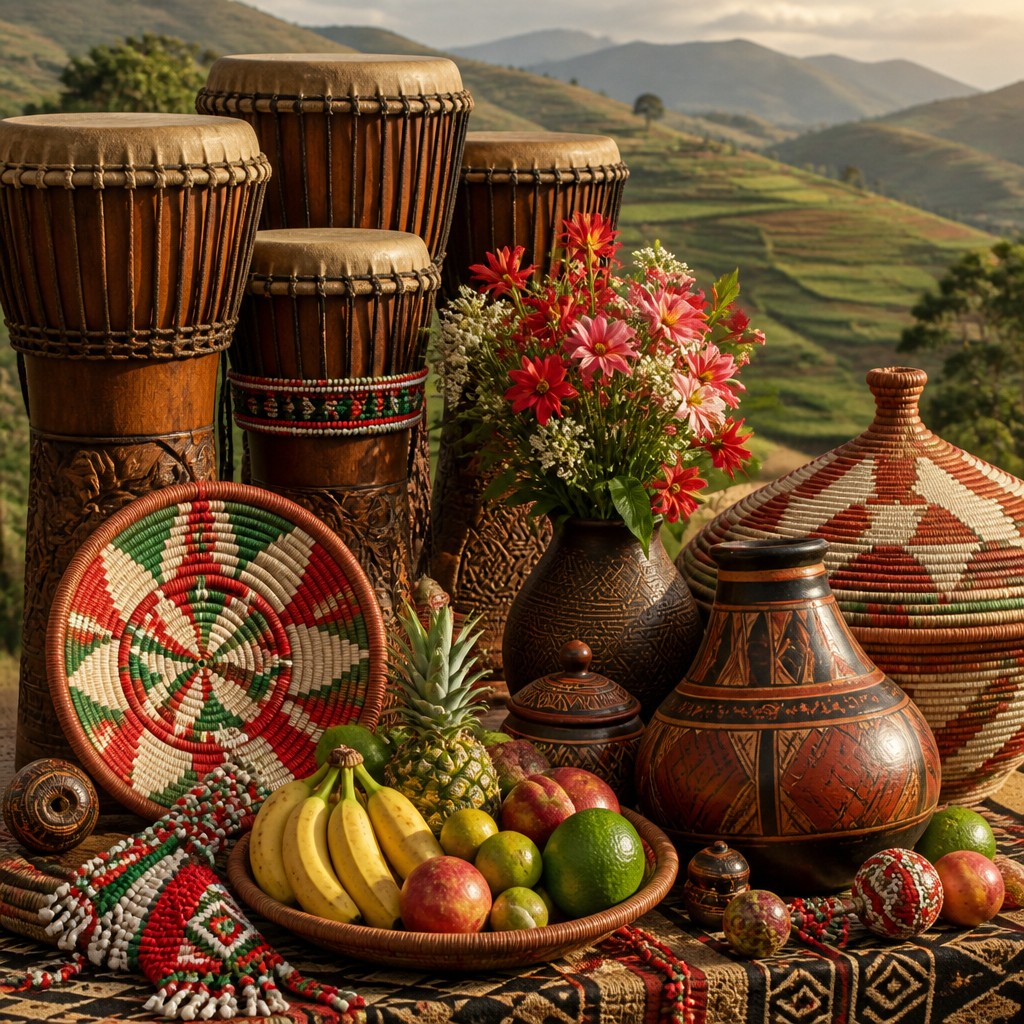
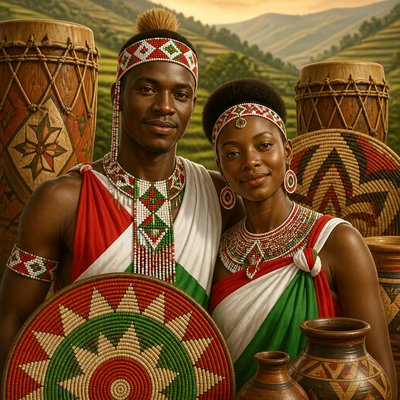
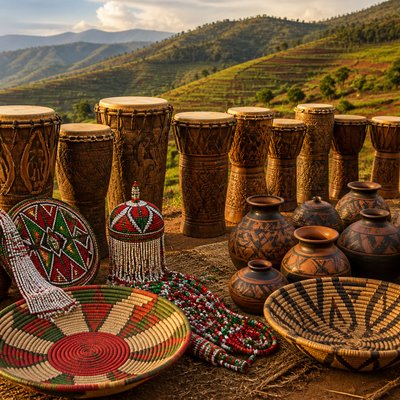
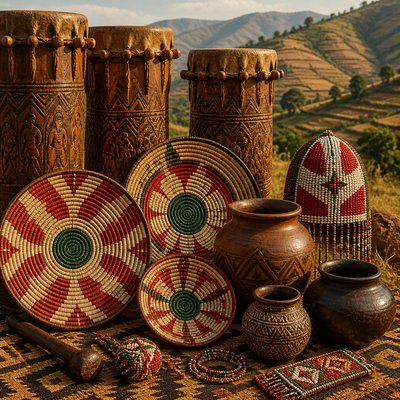
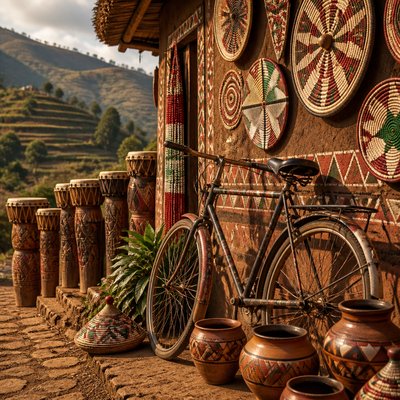
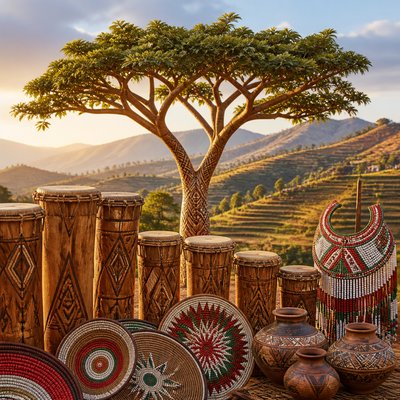
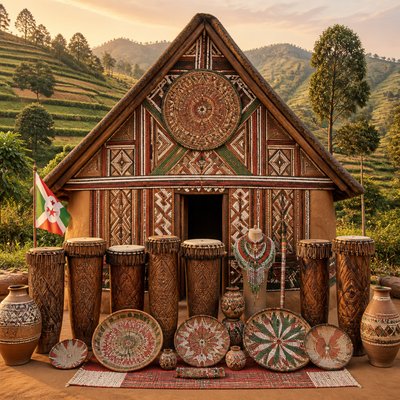
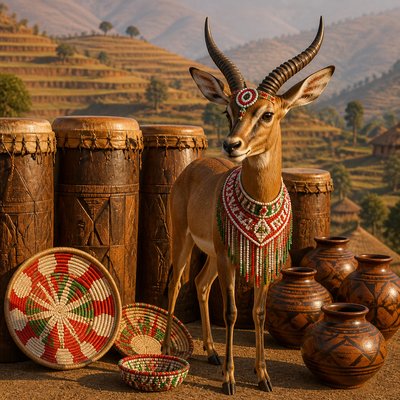
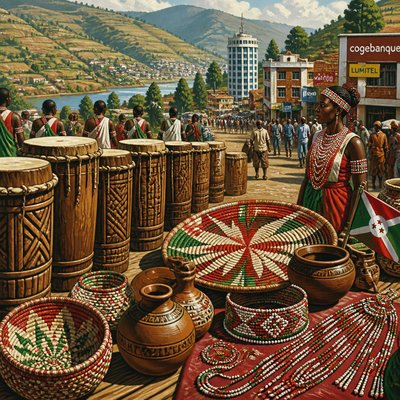
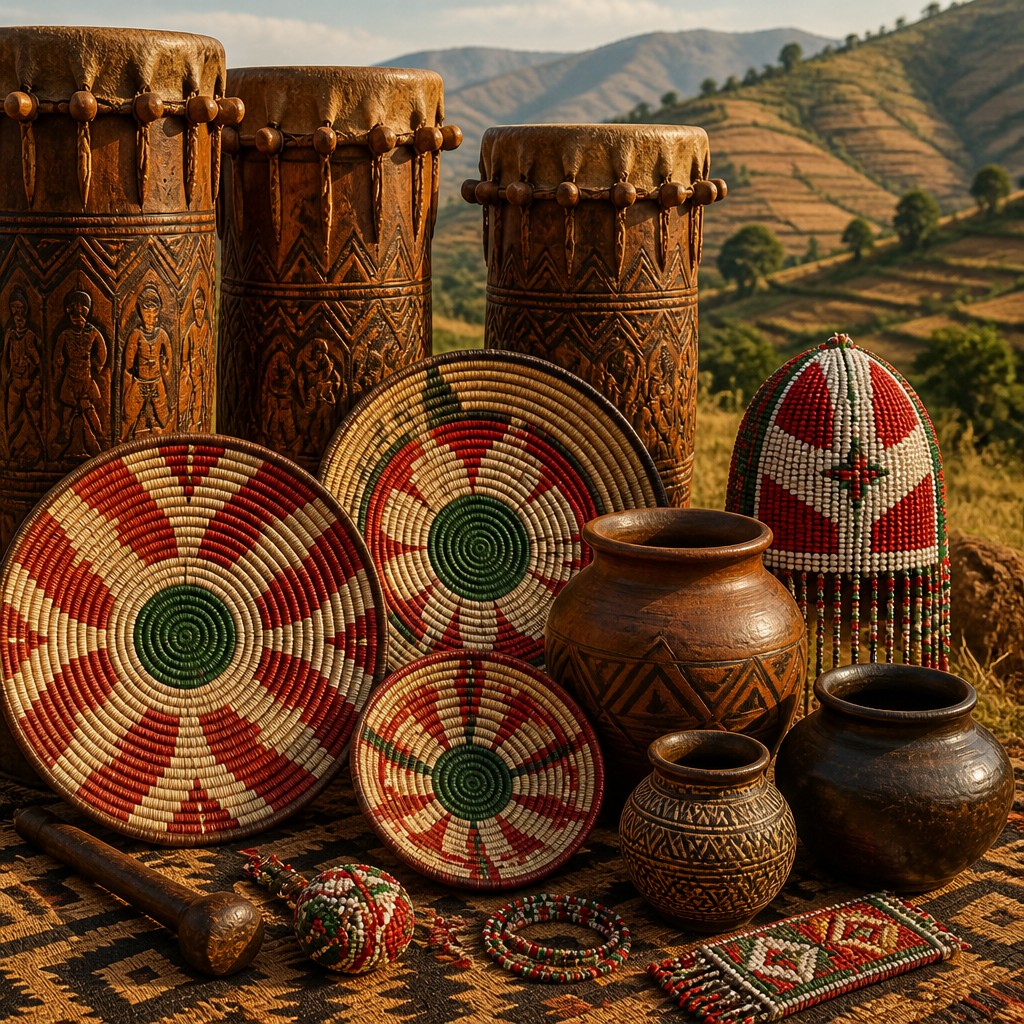
Burundian art style is a culturally inspired visual language centered on the country’s drum traditions, coiled basketry, hand-built pottery, beadwork, and highland environments. Its characteristic imagery combines tall carved wooden drums, taut hide surfaces, radiating basket patterns, warm earthen materials, and ceremonial accents in red, white, and green.
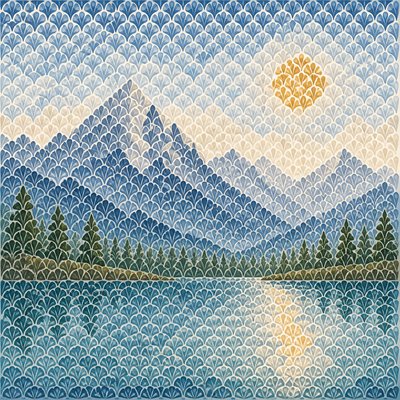
The style looks tactile, rhythmic, and materially grounded. Repetition in woven coils and drum rows creates visual cadence, while burnished clay, carved wood, leather, fiber, and beads provide contrasting textures. Terraced hillsides, warm sunlight, and carefully arranged objects often serve as a setting or compositional framework, linking crafted forms to Burundi’s landscape and community life.
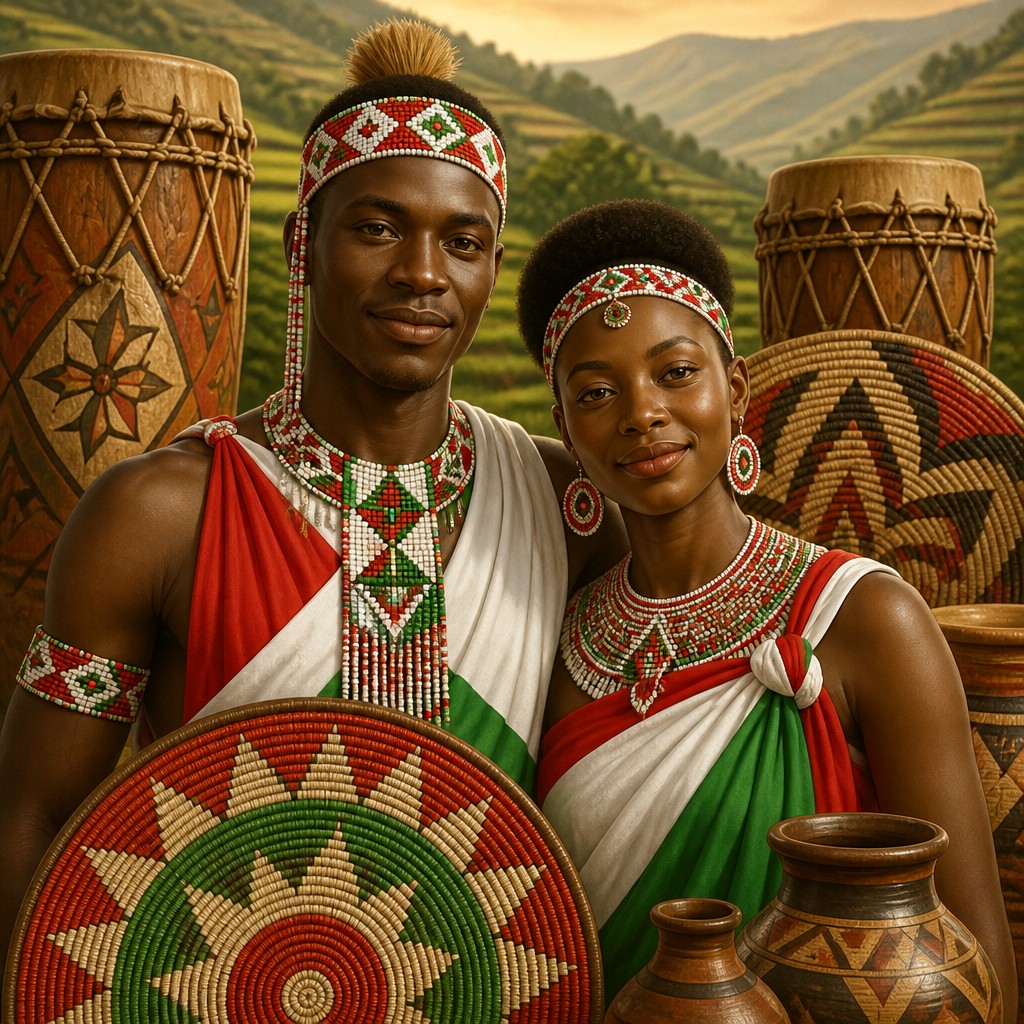
Try It On Your Photos
Upload any photo and convert it into Burundian Art Style — drag the sliders to compare before and after.
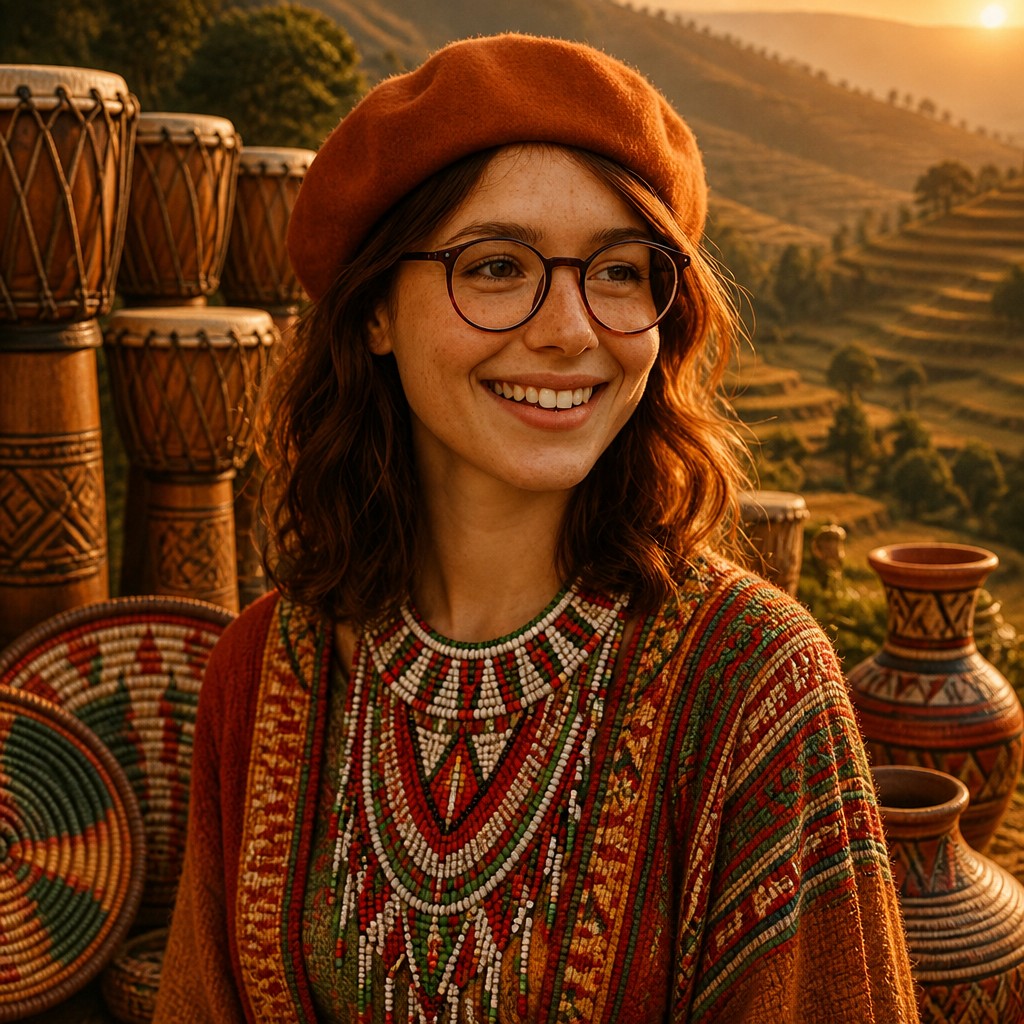

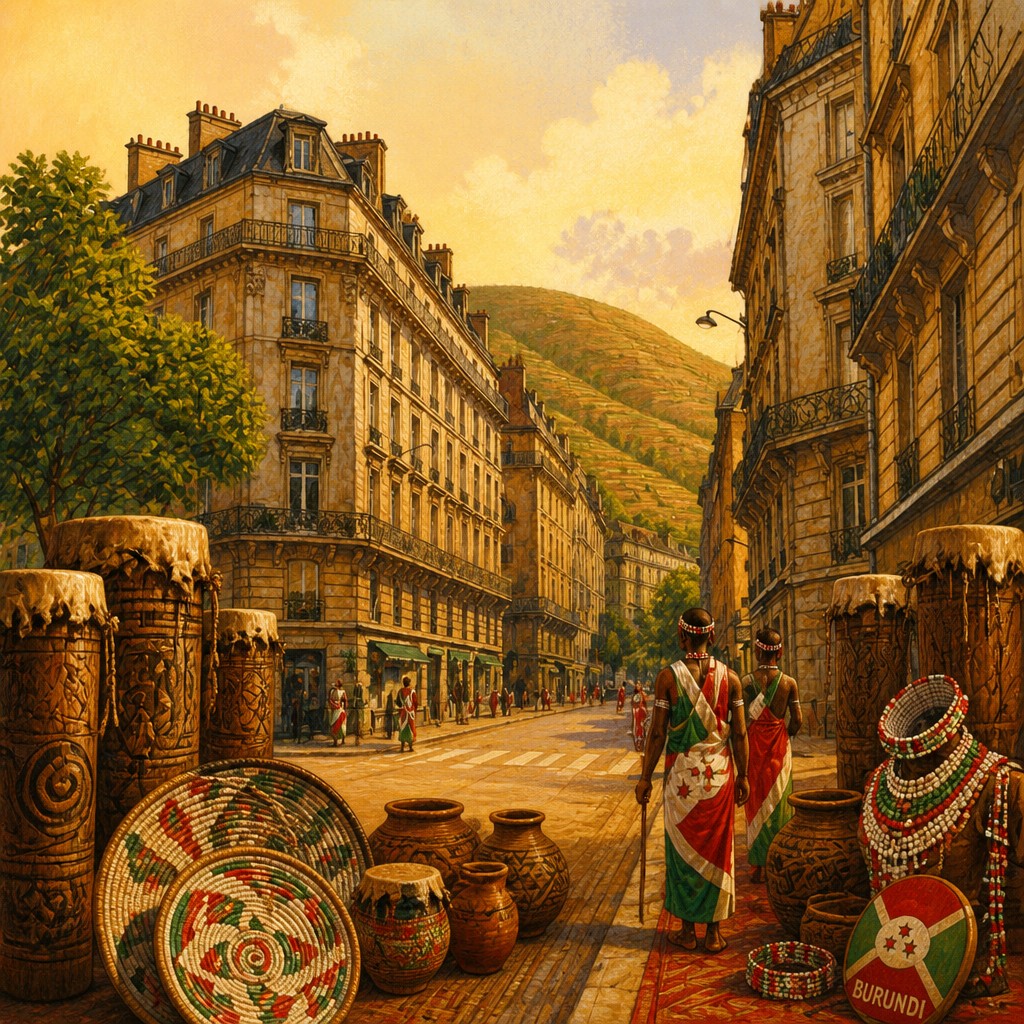

What Defines Burundian Art Style
The signature details, up close
Carved ceremonial drums
Tall wooden drums with carefully shaped bodies and taut hide heads provide the style’s strongest vertical and rhythmic motif. Their repeated arrangement can suggest procession, ceremony, collective music, or architectural order.
Coiled geometric basketry
Lidded and open baskets are built from tightly wound fibers arranged into spirals, chevrons, diamonds, bands, and radiating designs. Pattern should feel structural, following the curve and taper of each woven vessel.
Burnished earthenware
Hand-built pottery introduces rounded silhouettes, irregular handmade edges, and warm surfaces ranging from ochre and terracotta to deep umber. Subtle marks from smoothing, firing, and burnishing help preserve a sense of physical craft.
Red, white, and green accents
Beads, woven details, painted bands, and ceremonial regalia frequently use a restrained palette of red, white, and green alongside natural browns. These colors should support the materials rather than overwhelm their earthy tonal range.
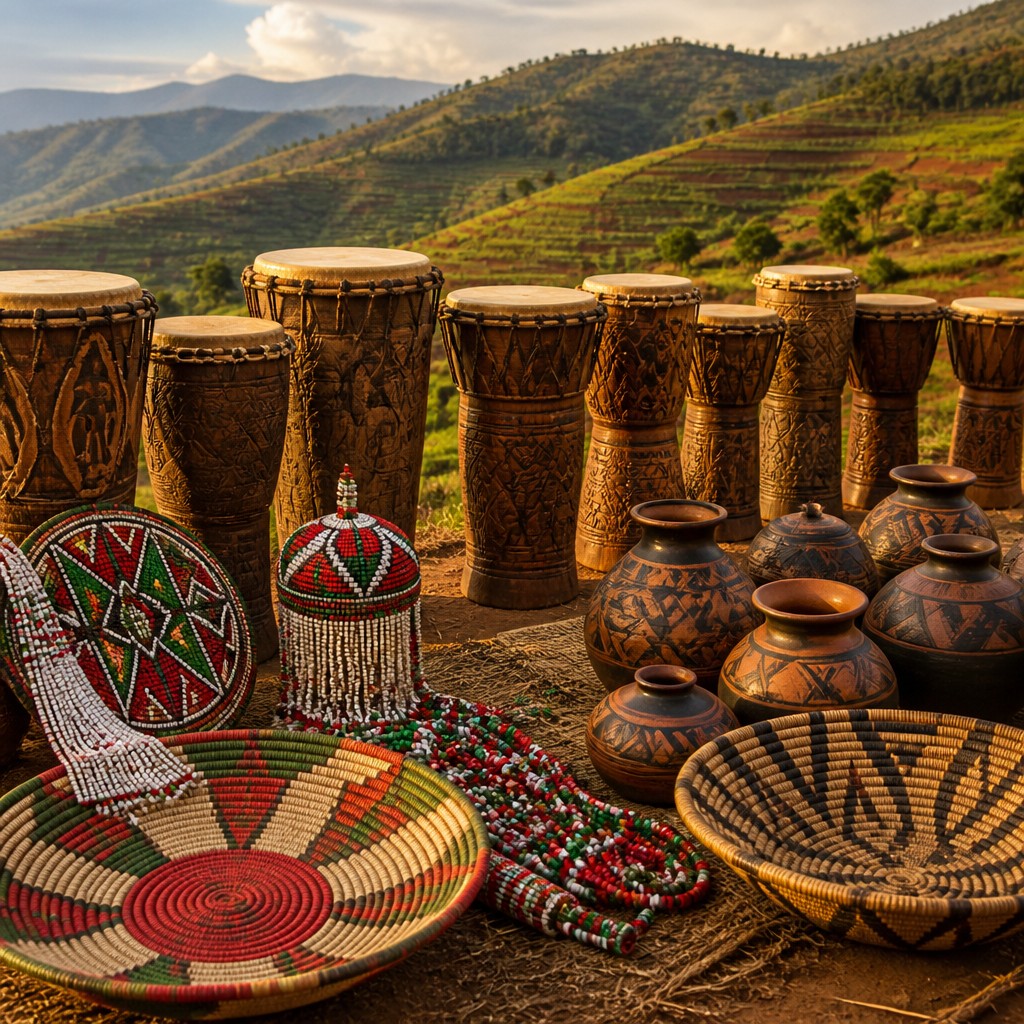
Tactile natural materials
Wood grain, leather, plant fiber, clay, bead surfaces, and woven strands are rendered with visible texture. The aesthetic favors handmade variation over perfectly uniform industrial surfaces.
Rhythmic arrangement and warm light
Repeated drums, baskets, or vessels create cadence through spacing, scale, and pattern. Low golden or hillside light emphasizes relief, weave, carving, and the warm relationship between crafted objects and landscape.
Burundian Prompt Ideas
Start from an idea — each one opens the generator with the style ready to go. See all 40 Burundian prompts →
How to Create Burundian Art
Master the craft step by step — or skip straight to creating. Read the full guide →
- 1
Build forms from real materials
For traditional work, shape drums from carved wood and hide, coil baskets from plant fibers, and hand-build pottery before burnishing and firing it. Preserve small variations in thickness, texture, and surface so the objects retain a handmade character.
- 2
Establish a rhythmic composition
Arrange repeated drums, baskets, or vessels in rows, arcs, or clustered groupings rather than scattering them randomly. Vary height and scale modestly while maintaining a clear visual beat.
- 3
Use a restrained material palette
Start with wood brown, clay red, fiber beige, charcoal, and muted earth tones, then add selective red, white, and green beadwork. Strong contrast is most effective when concentrated in ceremonial details.
- 4
Render texture before ornament
Define wood grain, hide tension, woven coils, clay pores, bead gloss, and carved recesses before adding decorative pattern. Directional warm light can reveal these surfaces more convincingly than excessive outlines.
- 5
Adapt the approach digitally
In digital painting or 3D work, use roughness maps, displacement, fiber brushes, and soft directional lighting to distinguish wood, leather, clay, and basketry. Keep pattern deformation aligned with each object’s curved geometry.
- 6
Write specific generation prompts
Describe the subject, materials, arrangement, lighting, setting, and color accents explicitly, such as carved drums in ceremonial rows beside coiled baskets on a terraced hillside. Add terms like handmade, burnished, woven, tactile, and warm natural light to guide surface quality.
The Story
History & Origins of Burundian
This style is best understood as a contemporary synthesis of Burundian artistic traditions rather than a single historical movement. Drums have long held important ceremonial, social, and political roles in Burundi, while basketry, pottery, decorative beadwork, and carved objects developed through local craft knowledge transmitted across generations. The exact forms, meanings, and techniques vary by region, community, material, and use.
Modern visual interpretations often bring these traditions together in one composition, pairing ceremonial drums with Great Lakes basketry patterns, earthenware, and hillside scenery. This unified aesthetic draws on historical craft practices while adapting them for illustration, design, photography, sculpture, and digital image-making.
Influences: The style draws from Great Lakes African craft traditions, especially ceremonial drum culture, coiled basketry, hand-built pottery, bead decoration, and vernacular material practices. It also relates to ethnographic still life, textile pattern design, carved-wood sculpture, craft revival aesthetics, and contemporary cultural illustration. Its visual language should be treated as a respectful synthesis rather than a claim that all Burundian communities share identical forms or meanings.
Frequently Asked Questions
What defines the Burundian art style?
Its defining elements are carved ceremonial drums, tightly coiled geometric baskets, burnished earthenware, beadwork in red, white, and green, and warm highland settings. The style emphasizes rhythm, tactile materials, handmade variation, and organized ceremonial presentation.
Is Burundian art style a single historical art movement?
No. This label describes a contemporary visual synthesis inspired by several Burundian and Great Lakes craft traditions. The traditions themselves have distinct regional histories, uses, techniques, and cultural meanings.
How is it different from a generic African art style?
It focuses on visual references associated specifically with Burundi, including drum-centered ceremonial imagery, Great Lakes basketry forms, terraced highland landscapes, and a warm earthen material palette. A broad continental label can obscure the regional differences that this style aims to acknowledge.
What materials are used in this style?
Common material references include carved wood, animal hide, plant fiber, clay, beads, natural dyes, and woven textiles. In digital work, these can be simulated through grain, roughness, displacement, fiber, and glaze textures.
How can I make an image in this style without making it look generic?
Specify concrete objects, construction methods, arrangement, lighting, and setting rather than using only a broad cultural label. Mention coiled geometric basketry, taut hide drums, hand-built burnished pottery, and terraced hills, while avoiding random mixtures of unrelated motifs.
Where is this aesthetic used?
It can inform cultural illustration, editorial imagery, textile and surface pattern, still life, sculpture, interior objects, documentary-inspired photography, and educational visual work. When depicting ceremonial or community contexts, identify the subject carefully and avoid presenting sacred practices as costume or decoration alone.
Create your first Burundian artwork
Describe anything — or upload a photo — and see it in Burundian Art Style in seconds.
Related Styles
Discover similar art styles