Barbadian Art Style
Explore Barbadian art style: pastel chattel houses, coral-stone churches, Georgian facades, and turquoise coasts in warm island light.
Instantly rendered in Barbadian — or transform a photo
Barbadian Gallery
Tap any artwork to explore it
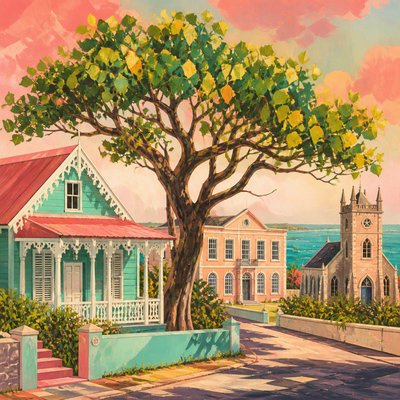
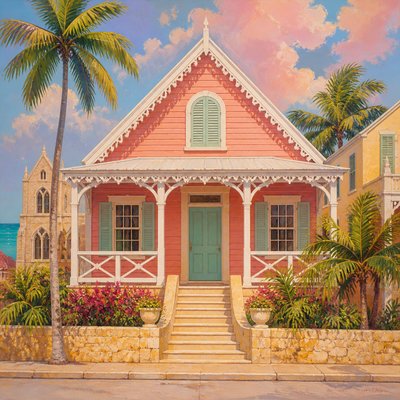
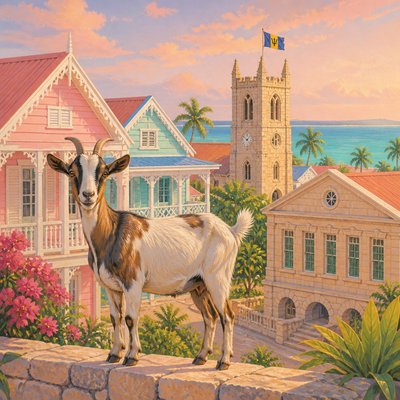
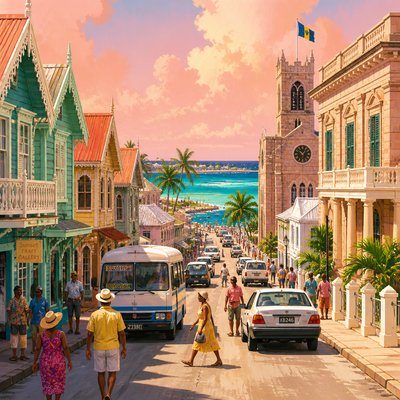
What is Barbadian Art Style?
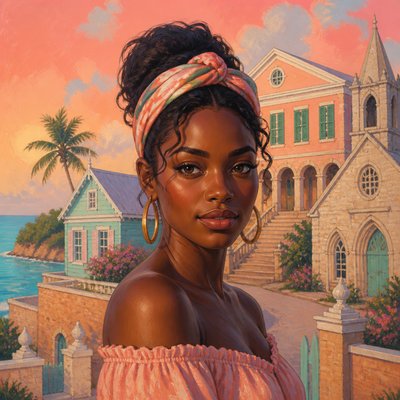
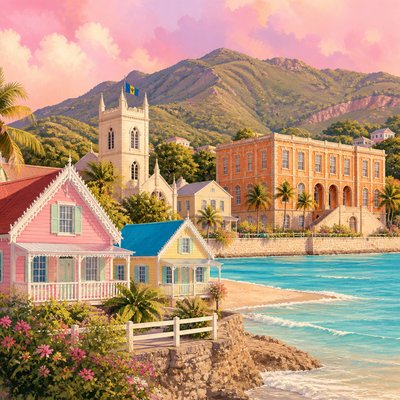
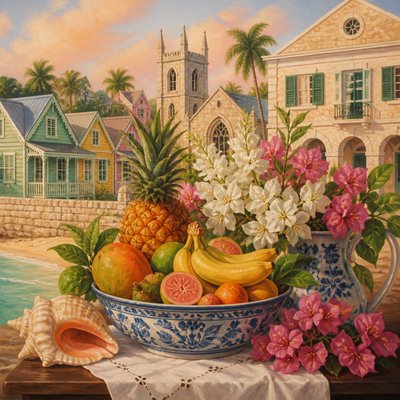
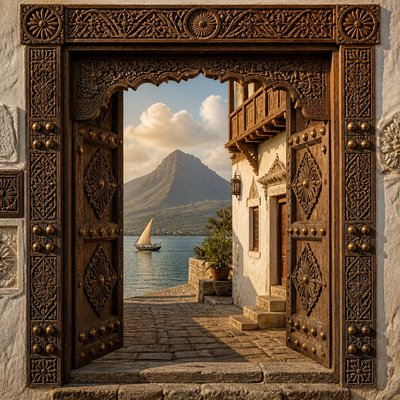
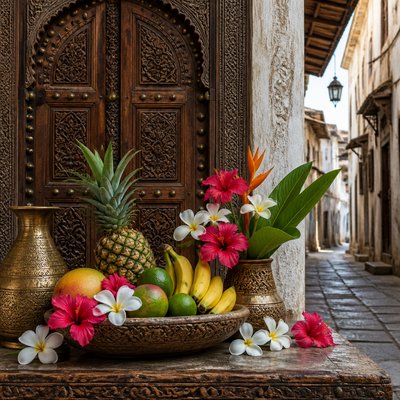
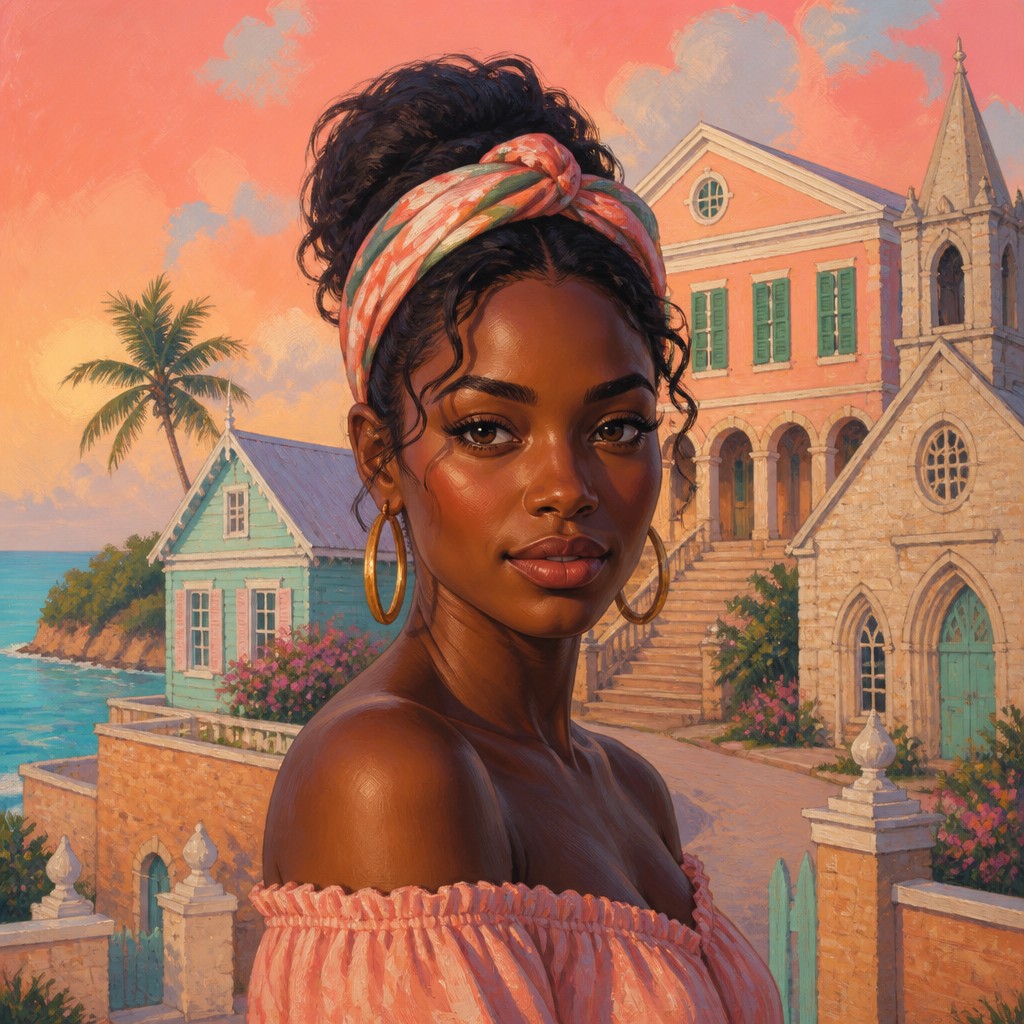
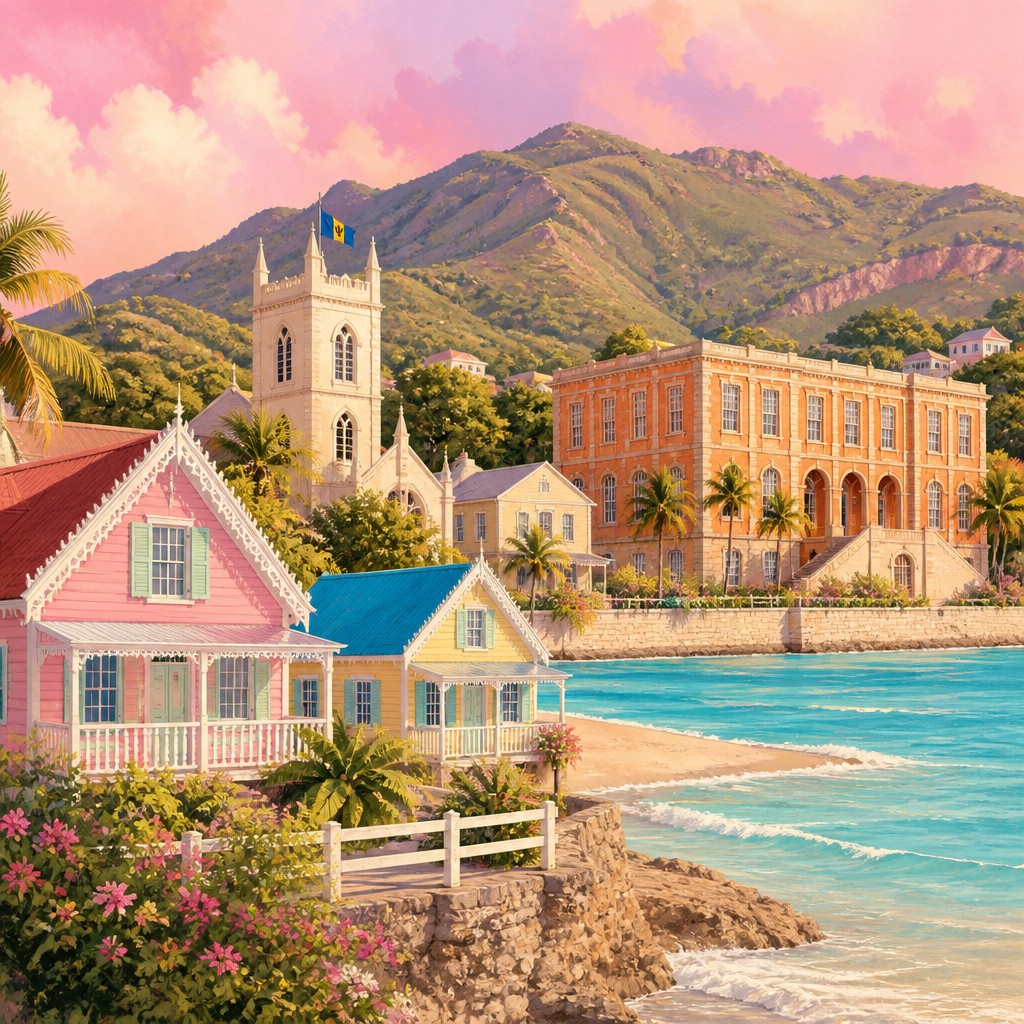
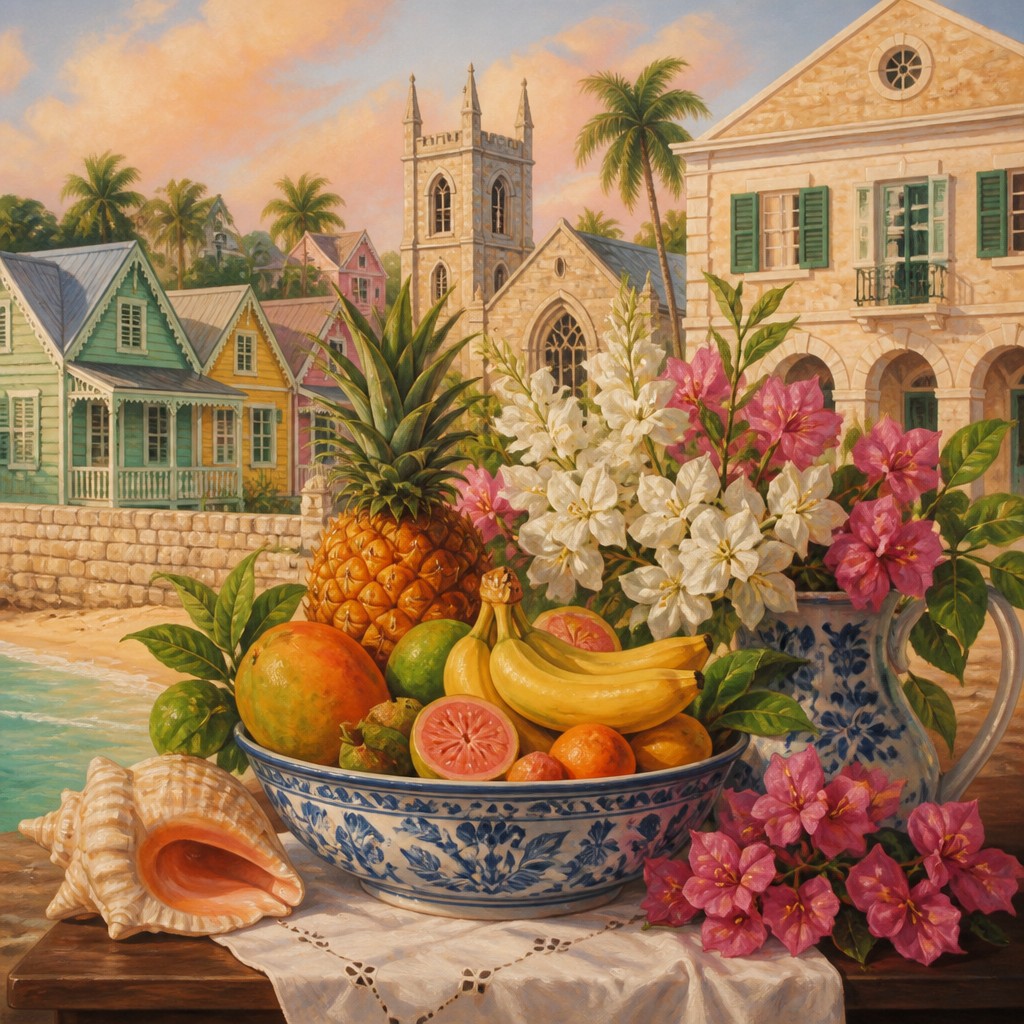
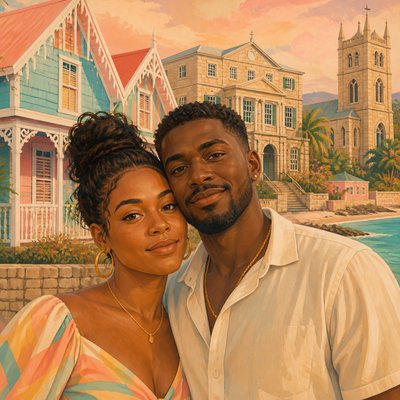
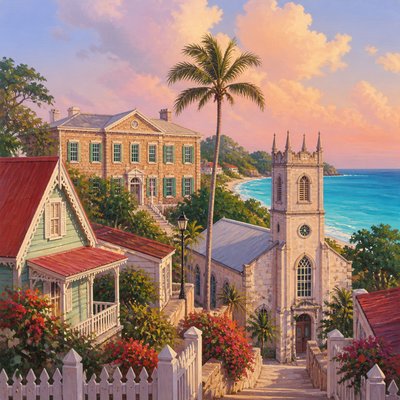
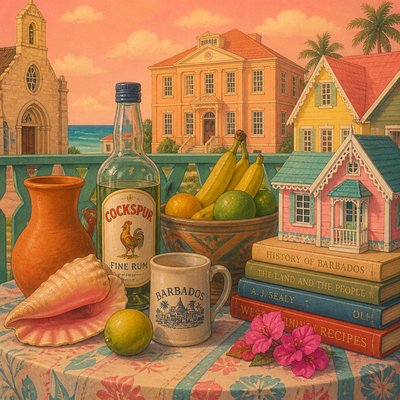
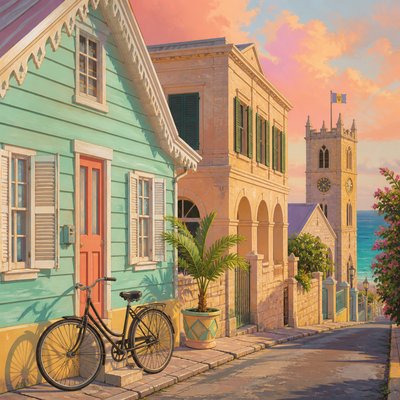
Barbadian Art Style is an architectural and landscape-based aesthetic centered on the visual character of Barbados. It combines brightly painted chattel houses, steep gabled roofs, decorative gingerbread trim, coral-limestone buildings, colonial church forms, and sunlit Caribbean shorelines. Its palette favors coral pink, sea turquoise, faded aqua, butter yellow, cream, terracotta, and soft tropical green.
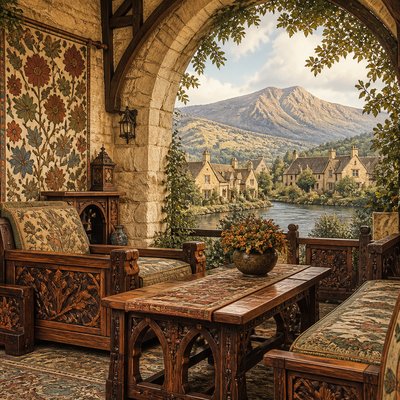
The style looks both orderly and atmospheric. Vernacular houses contribute rhythmic geometry through repeated fretwork, shutters, steps, and rooflines, while Georgian plantation-era facades and churches introduce symmetry, arches, columns, and masonry mass. Warm trade-wind light softens these structures, producing a cheerful, slightly sun-bleached appearance rather than a stark architectural illustration.
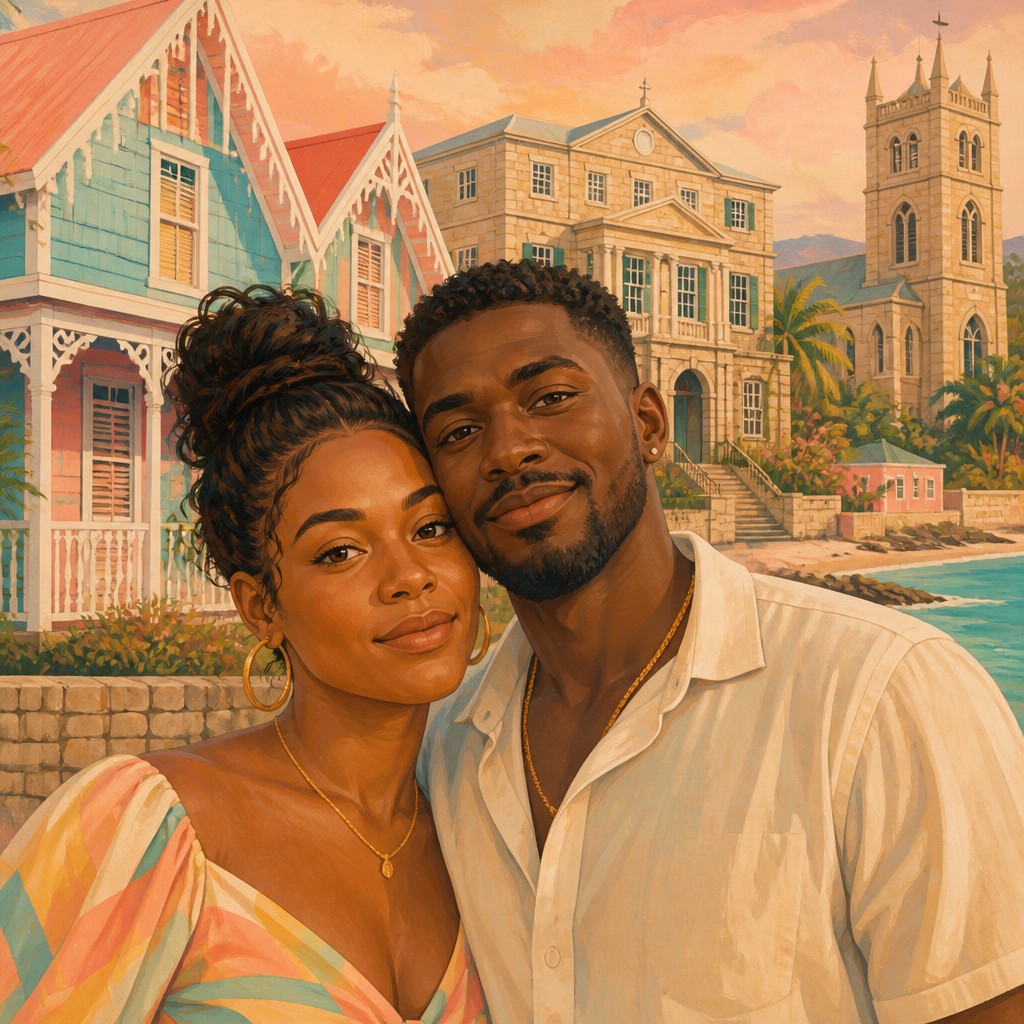
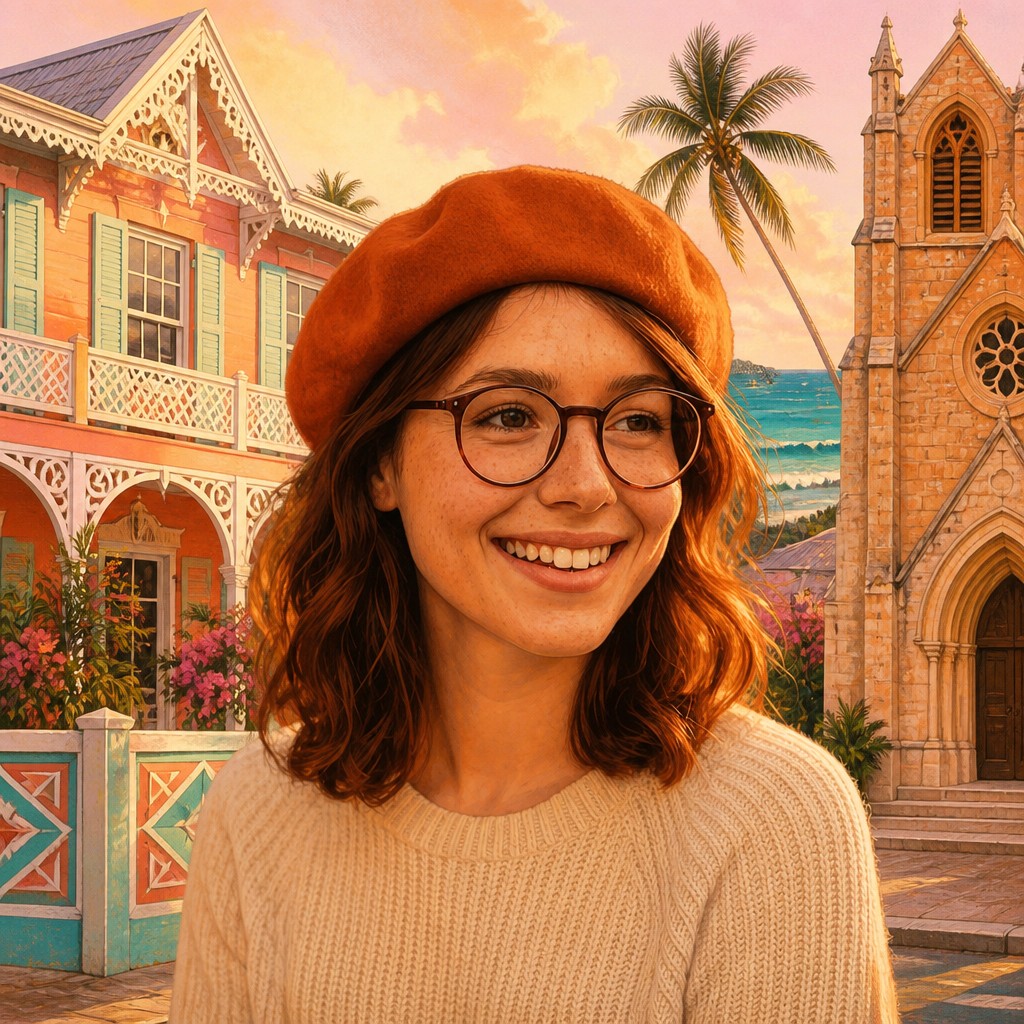
Try It On Your Photos
Upload any photo and convert it into Barbadian Art Style — drag the sliders to compare before and after.


What Defines Barbadian Art Style
The signature details, up close
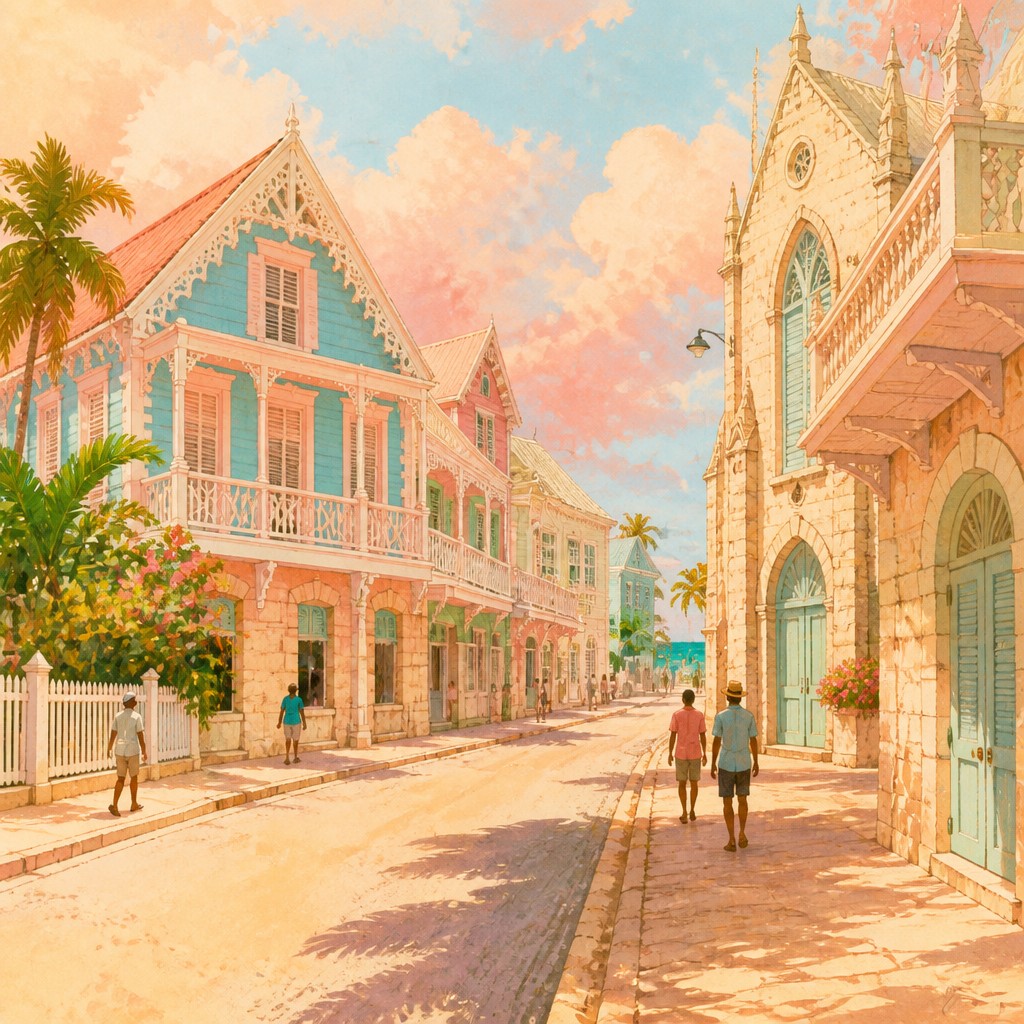
Pastel chattel houses
Small timber houses appear in mint, turquoise, coral, cream, yellow, and pink, often with steep roofs, front steps, shutters, and finely patterned gingerbread trim.
Coral-limestone masonry
Warm cream, buff, and coral stone gives churches, civic buildings, and plantation-era facades a porous, sun-weathered presence. Light often reveals the granular texture of the masonry.
Georgian symmetry
Balanced facades, evenly spaced windows, central entrances, columns, and restrained proportions provide a formal counterpoint to the more decorative vernacular houses.
Arched church architecture
Rounded or pointed openings, tower silhouettes, buttresses, and repeated masonry arches create a strong vertical rhythm associated with Barbados's historic churches.
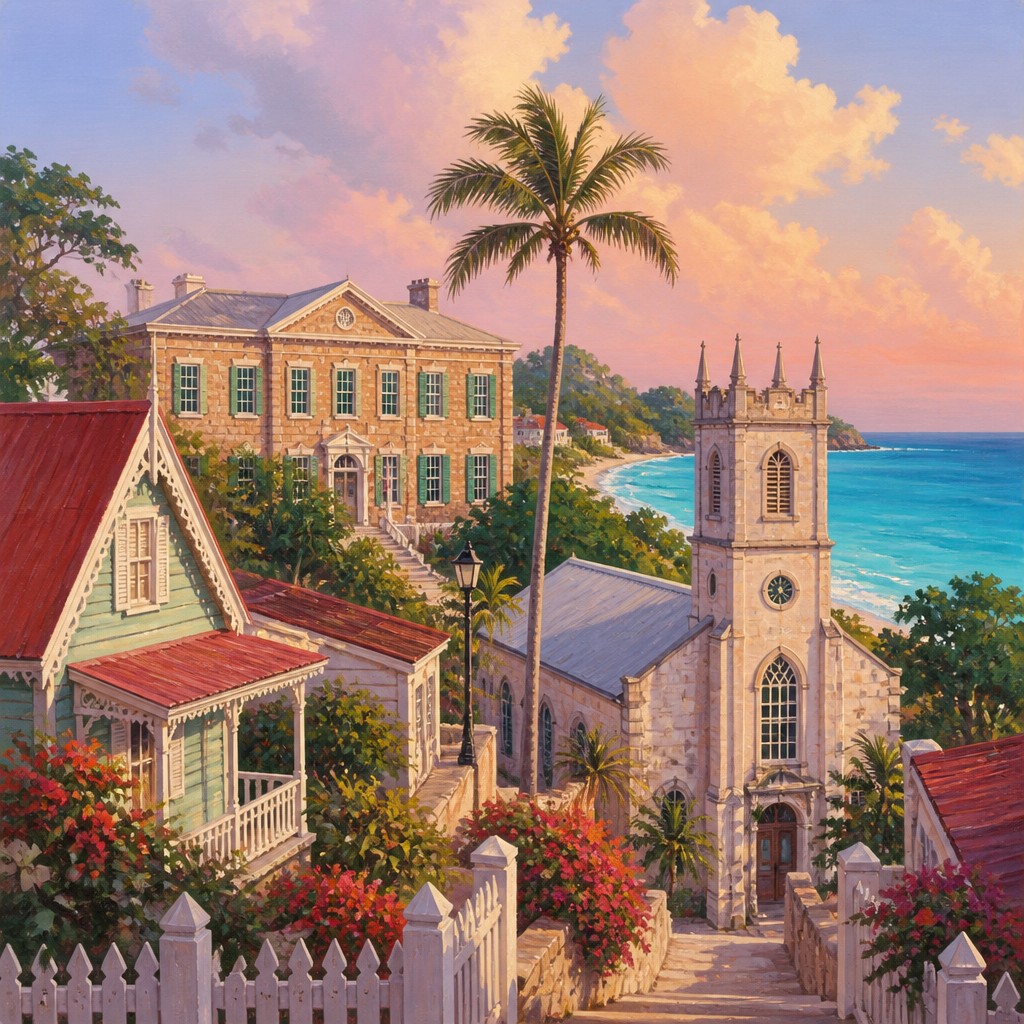
Trade-wind illumination
Soft warm sunlight, gentle atmospheric haze, and directional coastal breezes suggest an open island climate. Shadows are clear but rarely harsh, with coral-pink and golden undertones.
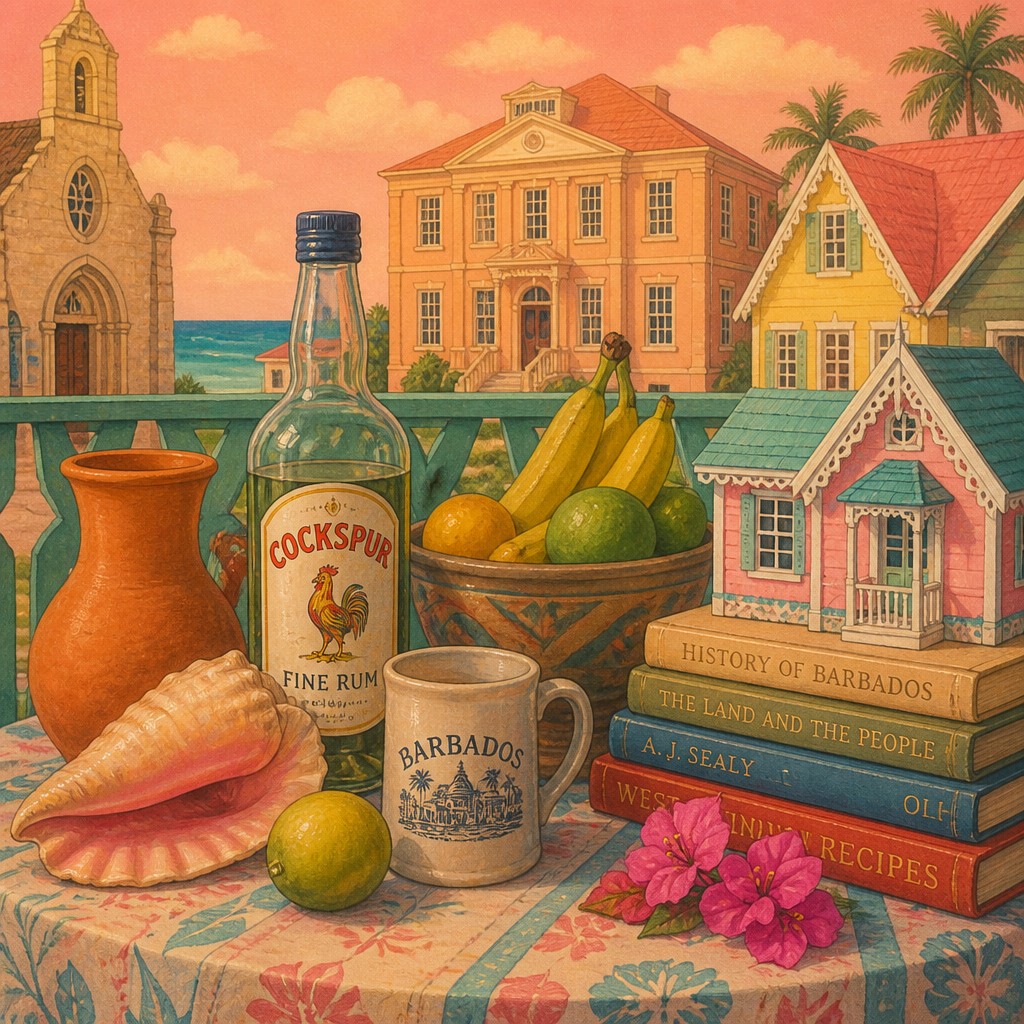
Turquoise coastal color
Sea-blue water, pale sand, reef tones, and distant horizons broaden the architectural palette and connect built forms to Barbados's maritime setting.
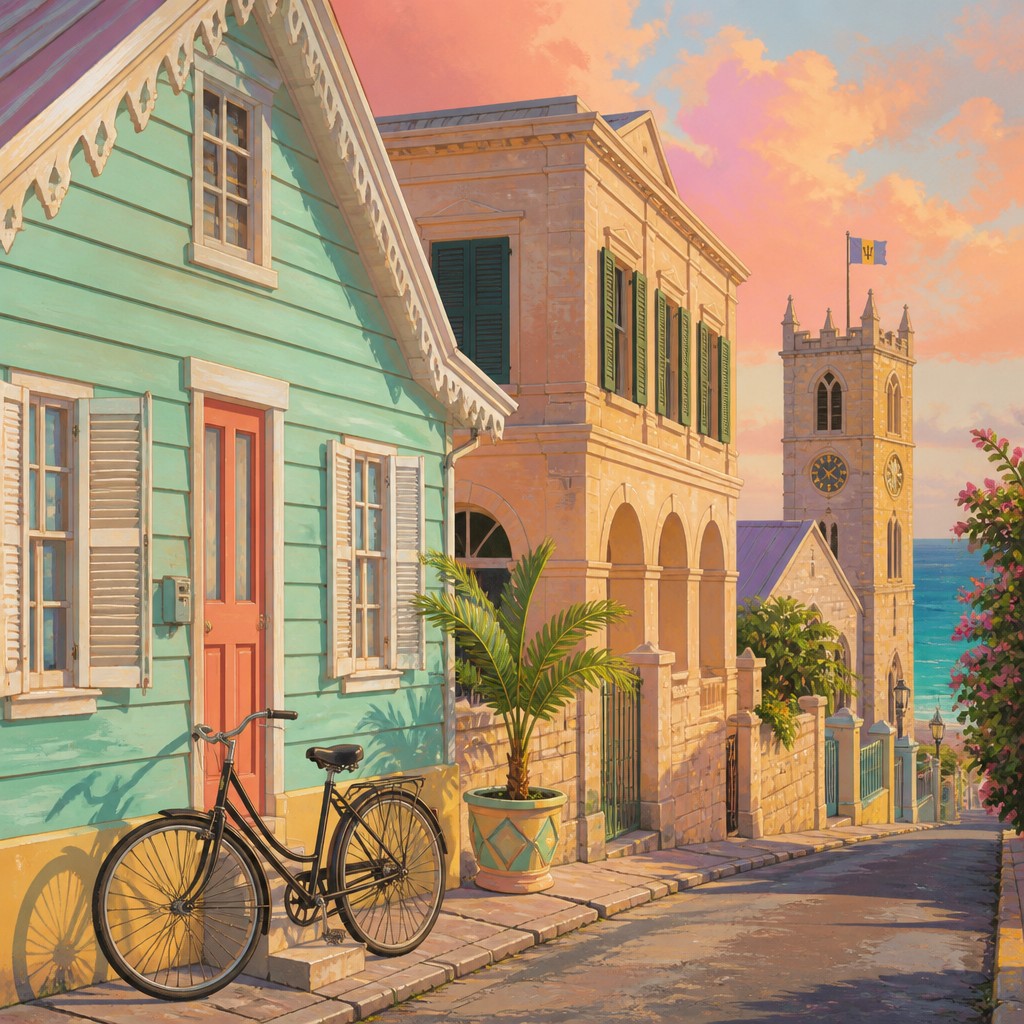
Cheerful vernacular geometry
Roof triangles, fretwork bands, verandas, shutters, fences, and repeated windows create lively patterns while retaining a sense of practical construction and domestic scale.
Barbadian Prompt Ideas
Start from an idea — each one opens the generator with the style ready to go. See all 40 Barbadian prompts →
How to Create Barbadian Art
Master the craft step by step — or skip straight to creating. Read the full guide →
- 1
Build the composition from architecture
Begin with a clear silhouette of a chattel house, church, or Georgian facade, then organize the image around rooflines, windows, steps, arches, and verandas. Keep perspective readable so decorative details support the structure.
- 2
Use a sun-washed island palette
Combine coral pink, limestone cream, faded turquoise, sea green, terracotta, and warm yellow. Lower saturation slightly in highlights and add subtle weathering so the colors feel exposed to salt air and sun.
- 3
Emphasize material contrast
Render timber with painted grain and softened edges, gingerbread trim with delicate cutout shadows, and coral stone with granular texture. Contrast these surfaces with smooth water, pale sand, and luminous sky.
- 4
Control light and atmosphere
Use warm side light or high tropical daylight with soft-edged shadows. A restrained haze near the horizon can evoke humid trade-wind conditions without obscuring architectural details.
- 5
Choose a suitable medium
Traditional watercolor, gouache, acrylic, colored pencil, and digitally textured painting all work well. Layer flat architectural color first, then add brush grain, dry-brush masonry, fine linework, and selective atmospheric washes.
- 6
Guide digital or AI creation precisely
Describe the subject, building type, roof form, materials, color palette, lighting, viewpoint, and level of detail before naming the Barbadian art style. For image transformation, preserve the source composition while requesting pastel architecture, coral-stone texture, Caribbean light, and restrained weathering.
The Story
History & Origins of Barbadian
This is a contemporary descriptive style rather than a formally named historical art movement. Its aesthetic lineage comes from Barbados's built environment and visual culture, especially the small timber chattel house tradition that developed among working communities after emancipation, the island's coral-stone construction, Georgian colonial architecture, Anglican and other church buildings, and maritime coastal scenery.
The style also draws on Caribbean plein-air painting, travel illustration, architectural documentation, and brightly colored vernacular design. In digital use, these references are synthesized into a coherent visual language rather than presented as a claim that a historical school called Barbadian Art Style existed as such.
Influences: The style relates to Caribbean vernacular architecture, post-emancipation chattel-house traditions, Georgian colonial architecture, coral-stone masonry, church architecture, tropical plein-air painting, watercolor travel illustration, and coastal landscape art. It also shares the bright flattened color fields of folk painting and the careful structural observation of architectural illustration, while adding a contemporary digital emphasis on harmonious palette and atmospheric light.
Frequently Asked Questions
What defines the Barbadian Art Style?
It is defined by pastel chattel houses, steep gabled roofs, gingerbread trim, coral-limestone buildings, arched churches, turquoise coasts, and warm trade-wind light. The style balances colorful vernacular detail with formal Georgian symmetry and clear architectural composition.
Is Barbadian Art Style a historical art movement?
No. The term is best understood as a contemporary aesthetic label rather than the name of a documented historical school. It synthesizes real Barbadian architectural and environmental traditions with Caribbean illustration and modern digital art practices.
How is it different from generic Caribbean art?
Its focus is especially architectural: chattel houses, coral-stone churches, Georgian facades, fretwork, shutters, and roof geometry are central motifs. Generic Caribbean art may emphasize broader themes such as music, markets, vegetation, or abstract color without this specific Barbadian built-environment vocabulary.
What colors work best for this style?
Use coral pink, limestone cream, faded turquoise, aqua, sea green, butter yellow, terracotta, and warm white. Slightly weathered or sun-softened versions of these colors usually feel more convincing than highly fluorescent hues.
What materials and techniques suit this aesthetic?
Watercolor and gouache are effective for luminous skies, translucent washes, and pastel facades, while acrylic and digital painting support sharper architectural edges. Add dry-brush texture for coral stone, fine linework for gingerbread trim, and layered tonal washes for humid coastal atmosphere.
Where can this style be used?
It suits architectural studies, travel posters, editorial illustration, landscape paintings, cultural heritage interpretation, postcards, interior prints, and digitally transformed photographs. It is particularly effective when the subject includes a recognizable building or relationship between architecture and coastline.
Create your first Barbadian artwork
Describe anything — or upload a photo — and see it in Barbadian Art Style in seconds.
Related Styles
Discover similar art styles