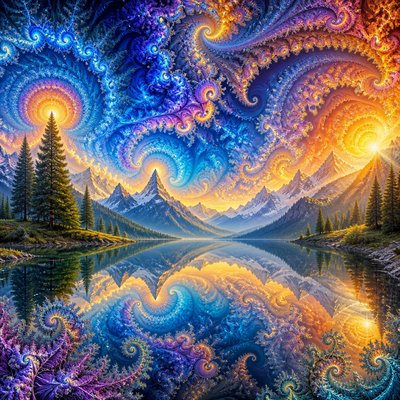
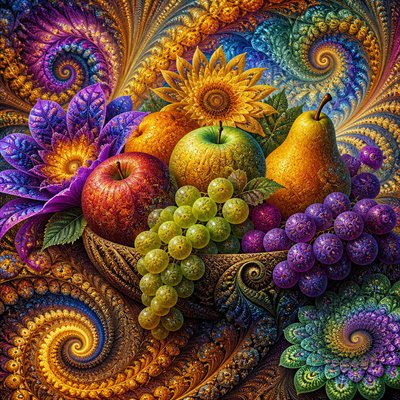
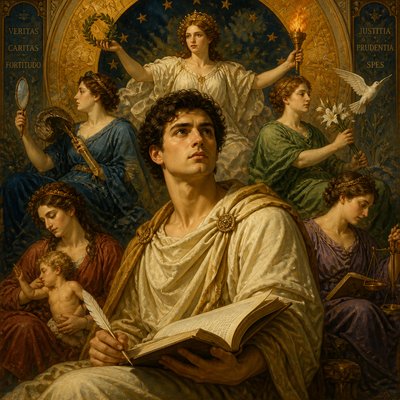
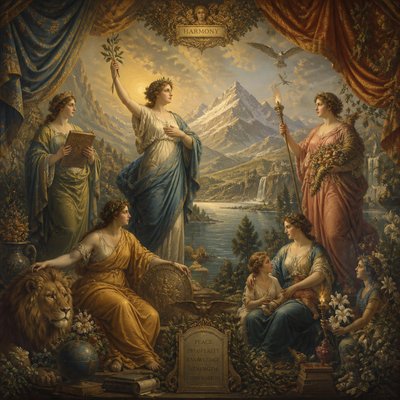
Bahamian Art Style
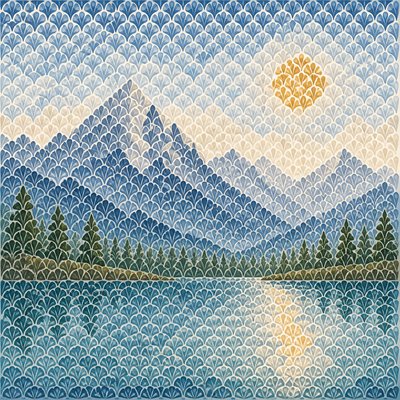
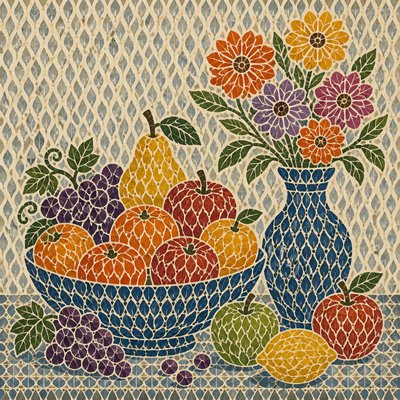
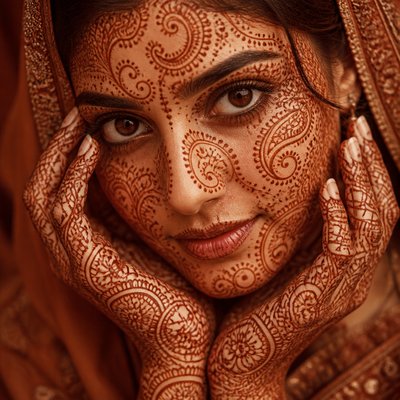
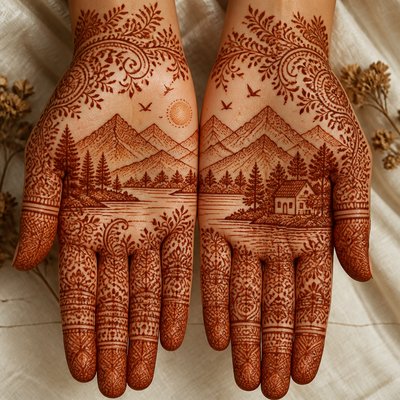
Explore Bahamian art style: Junkanoo color, plaited straw craft, Lucayan-inspired patterns, and luminous turquoise island light.
Instantly rendered in Bahamian — or transform a photo
Bahamian Gallery
Tap any artwork to explore it
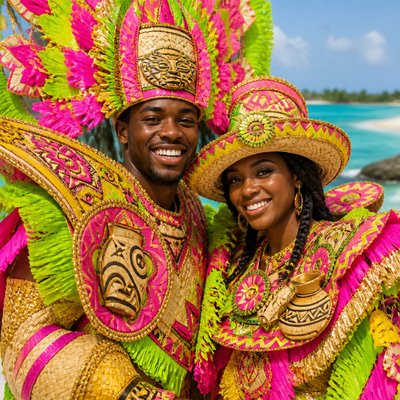
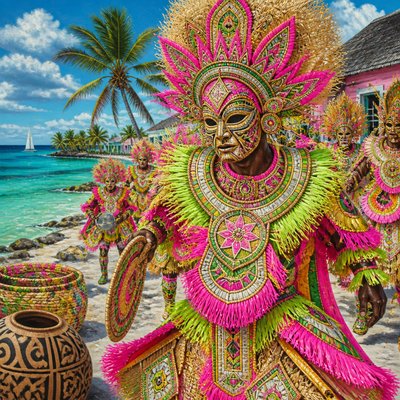
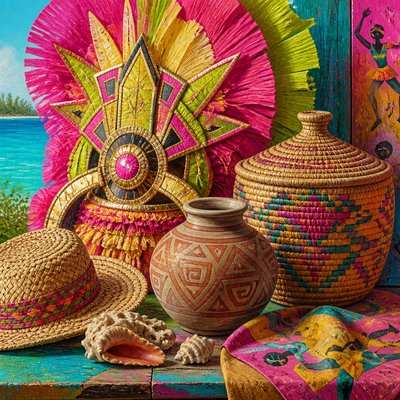
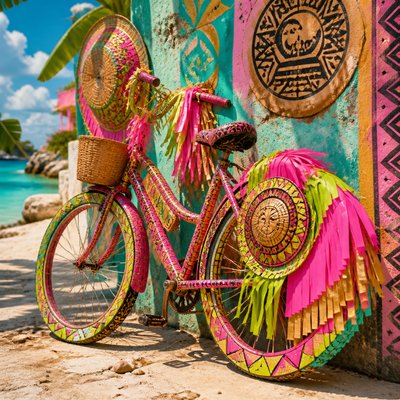
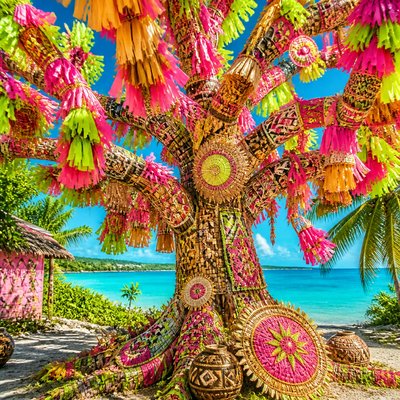
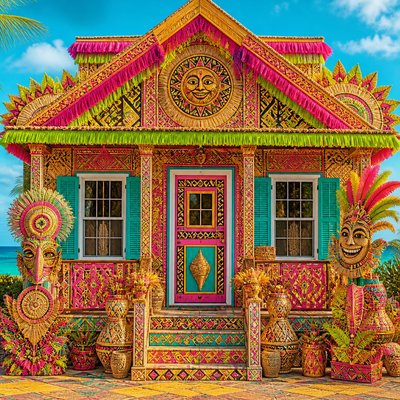
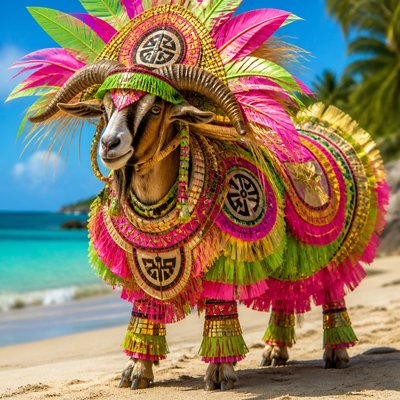
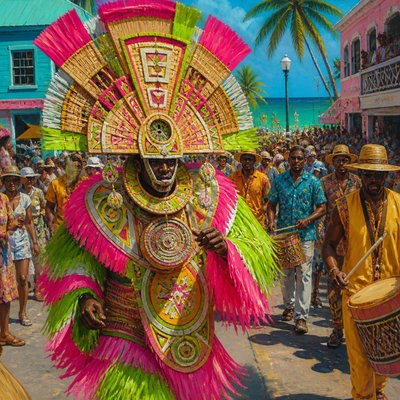
What is Bahamian Art Style?
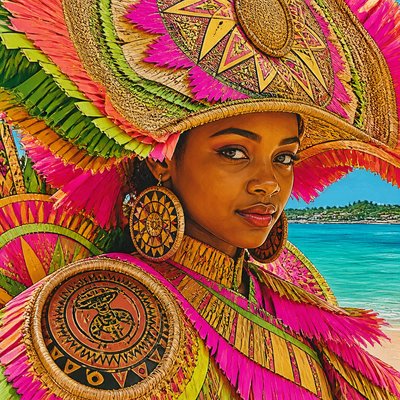
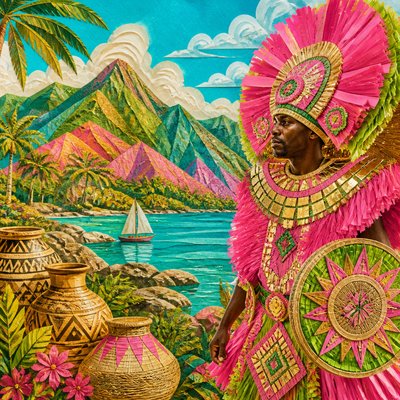
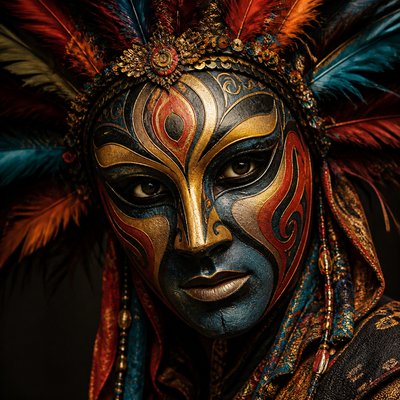
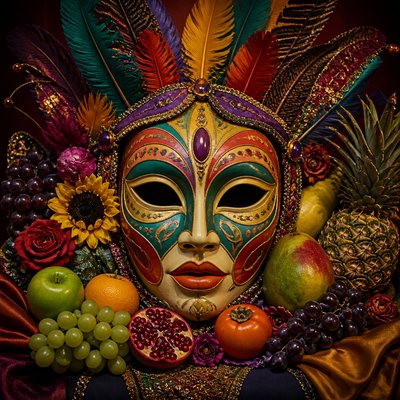
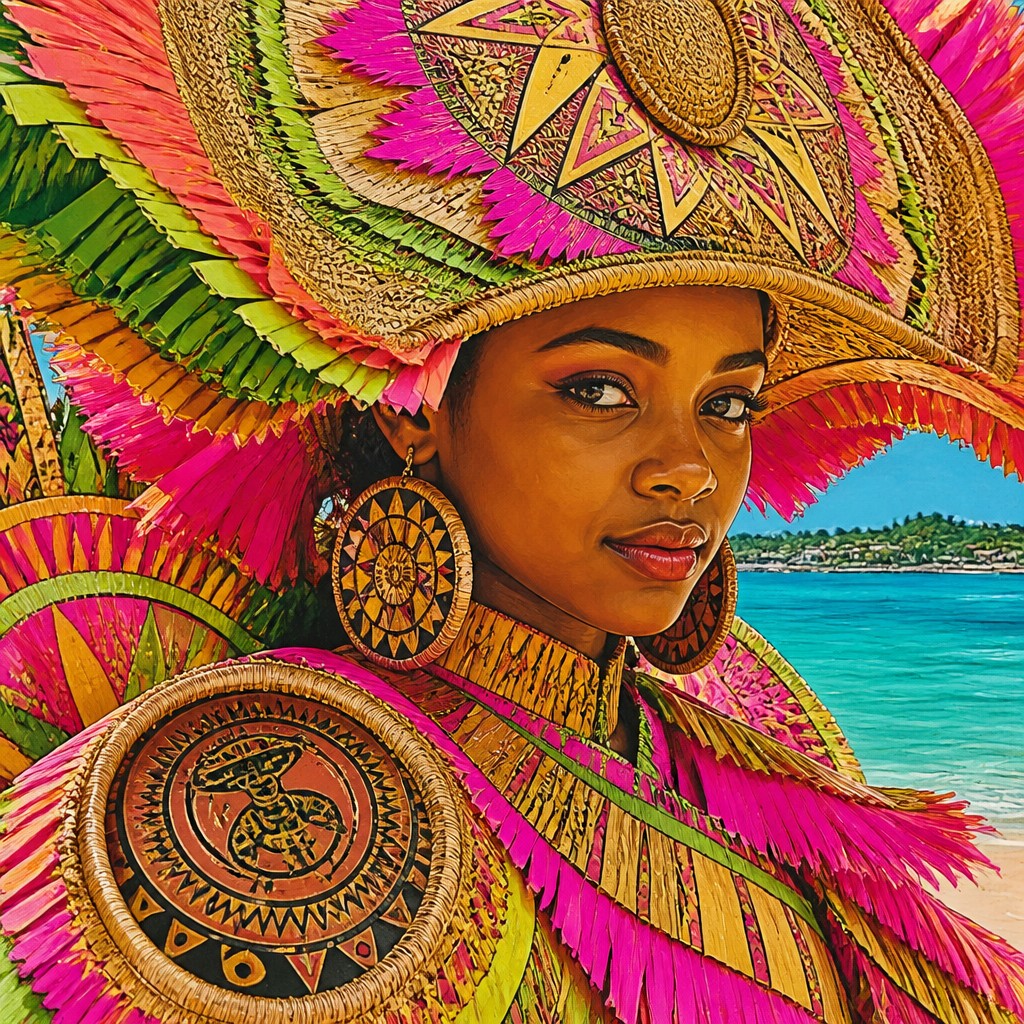
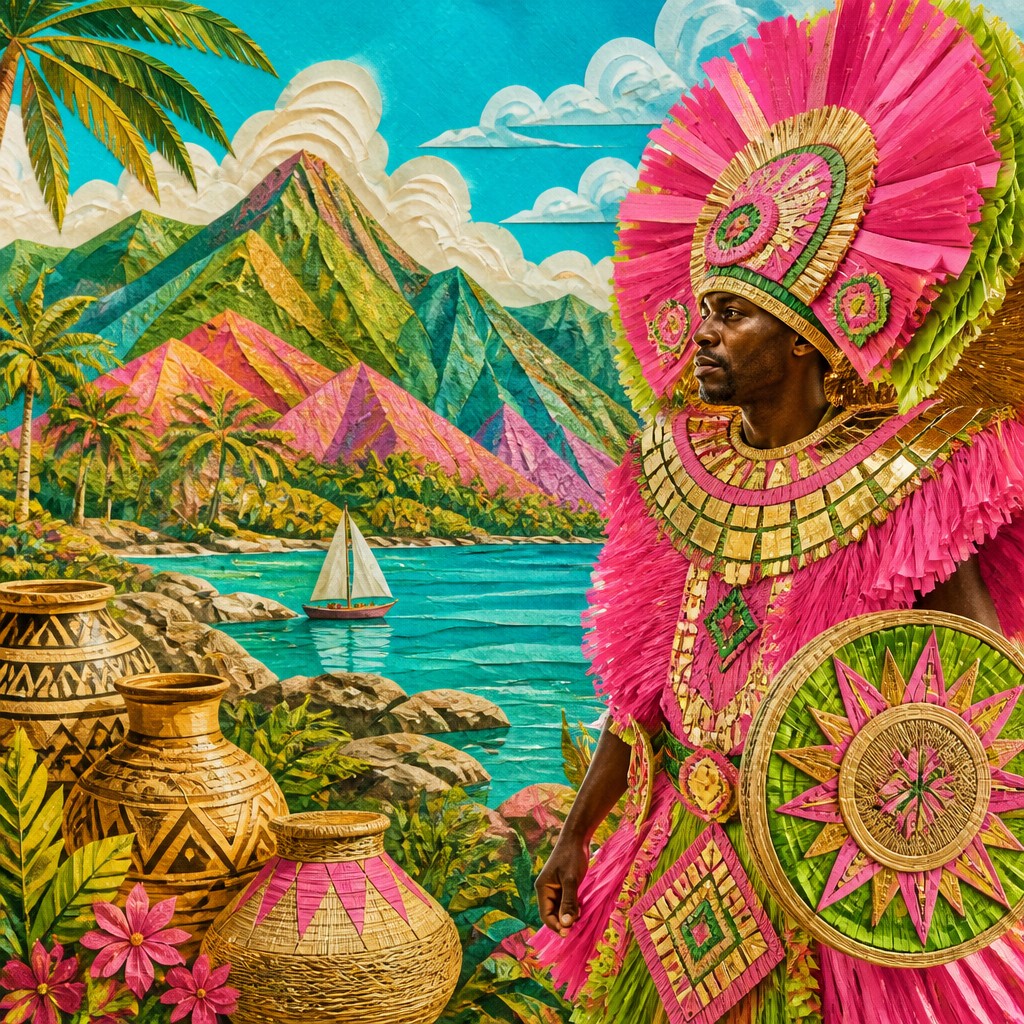
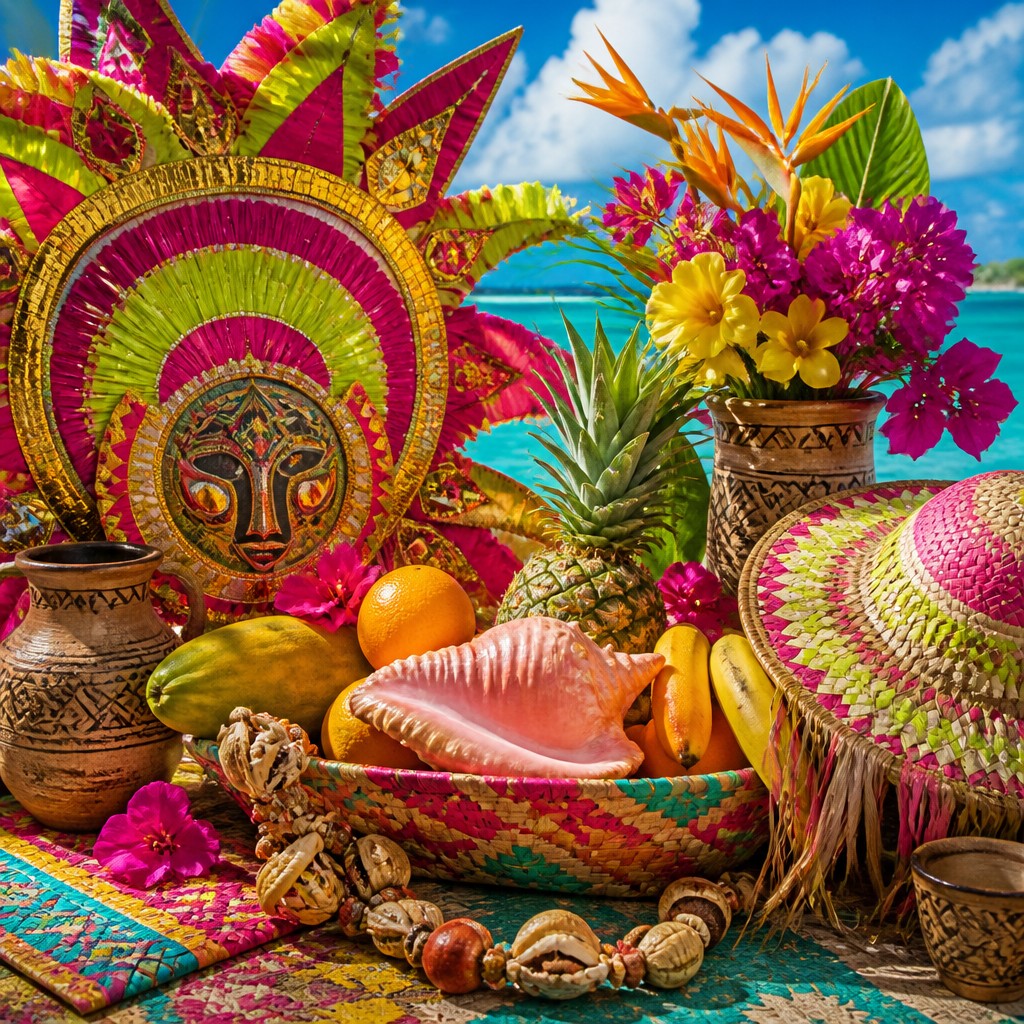
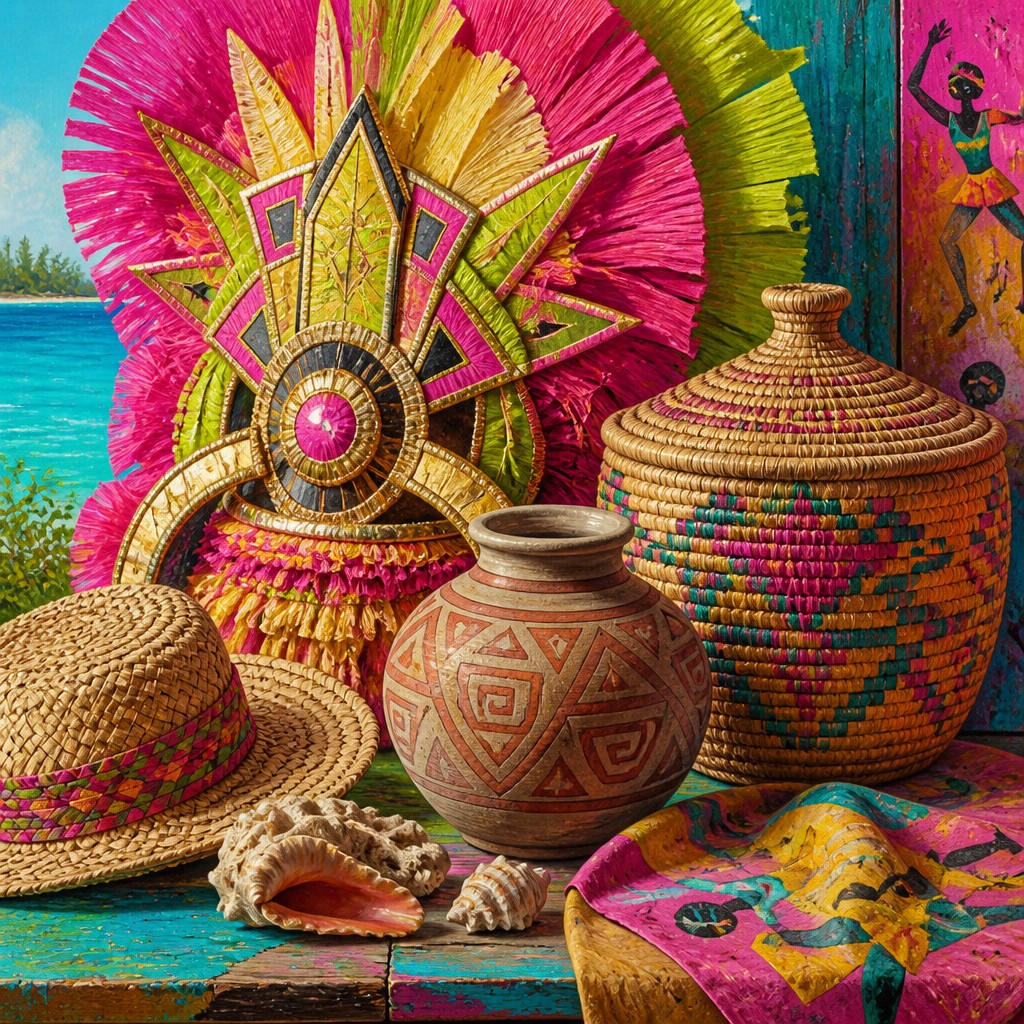
Bahamian art style is a contemporary decorative synthesis centered on the visual energy of Junkanoo, the Bahamas’ festival tradition of elaborately costumed parades, and the craftsmanship of plaited straw basketry and hats. Its imagery combines hot pink, lime, yellow, orange, turquoise, and gold with layered fringe, geometric paper shapes, woven textures, and the brilliant light of shallow tropical water.
The style is less a single historical art movement than an interpretive visual language inspired by Bahamian material culture and island environments. It looks exuberant because Junkanoo costumes are designed for movement, rhythm, spectacle, and collective celebration, while straw work contributes tactile structure, repeating weave patterns, and an earthy counterpoint to saturated color. References to ancient Lucayan Taíno pottery may appear as simplified geometric motifs rather than as claims of an unbroken craft tradition.
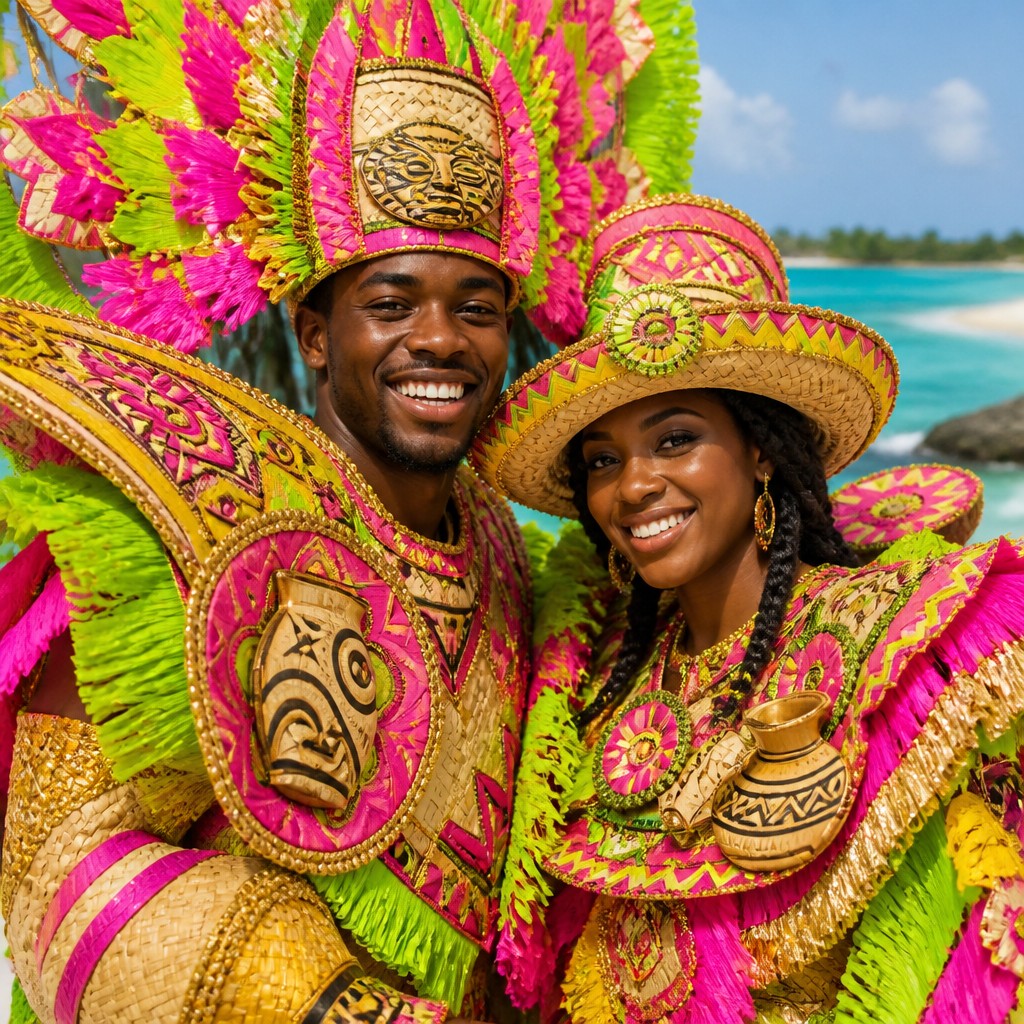
Try It On Your Photos
Upload any photo and convert it into Bahamian Art Style — drag the sliders to compare before and after.
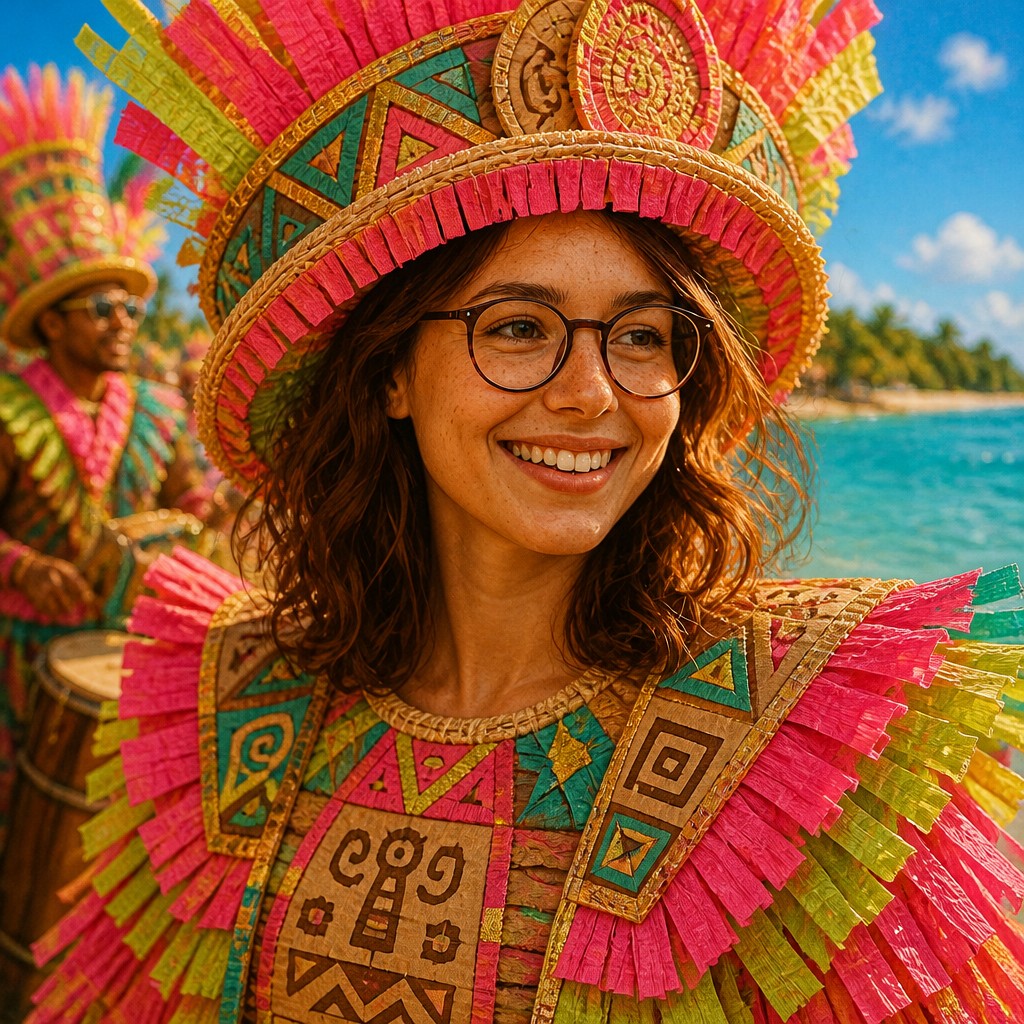

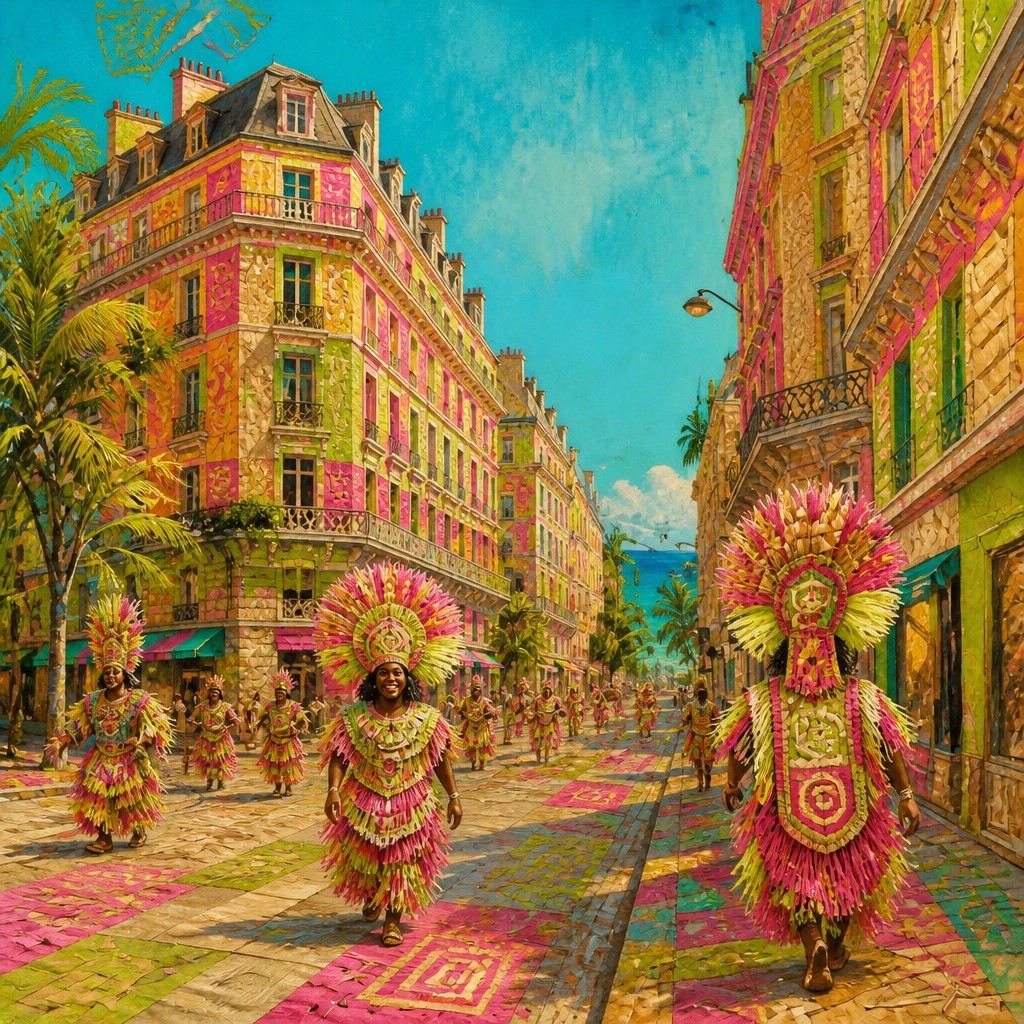

What Defines Bahamian Art Style
The signature details, up close
Junkanoo color intensity
Saturated hot pink, lime green, yellow, orange, turquoise, cobalt, and metallic gold are arranged in lively, high-contrast combinations. Color often carries the emotional force of the image before fine detail is considered.
Crepe-paper fringe and costume structure
Layered paper fringe, scalloped strips, feathers, sequins, and cardboard mosaic shapes suggest the handmade construction and kinetic surface of parade costumes. Repeated strips create a strong sense of rhythm and motion.
Plaited straw texture
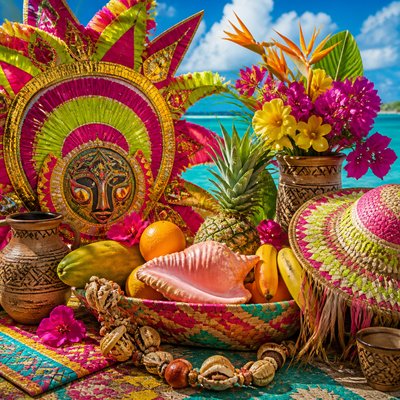
Basketry and hat weaving introduce natural tan, honey, and umber tones alongside colorful surfaces. Fine diagonal plaits, coils, checkerboards, and overlapping bands provide tactile pattern and visual order.
Geometric ceramic motifs
Simplified bands, stepped forms, dots, and repeating angular symbols can evoke the surface language of Lucayan Taíno pottery. These references are usually decorative and should not be presented as literal reconstructions of specific archaeological objects.
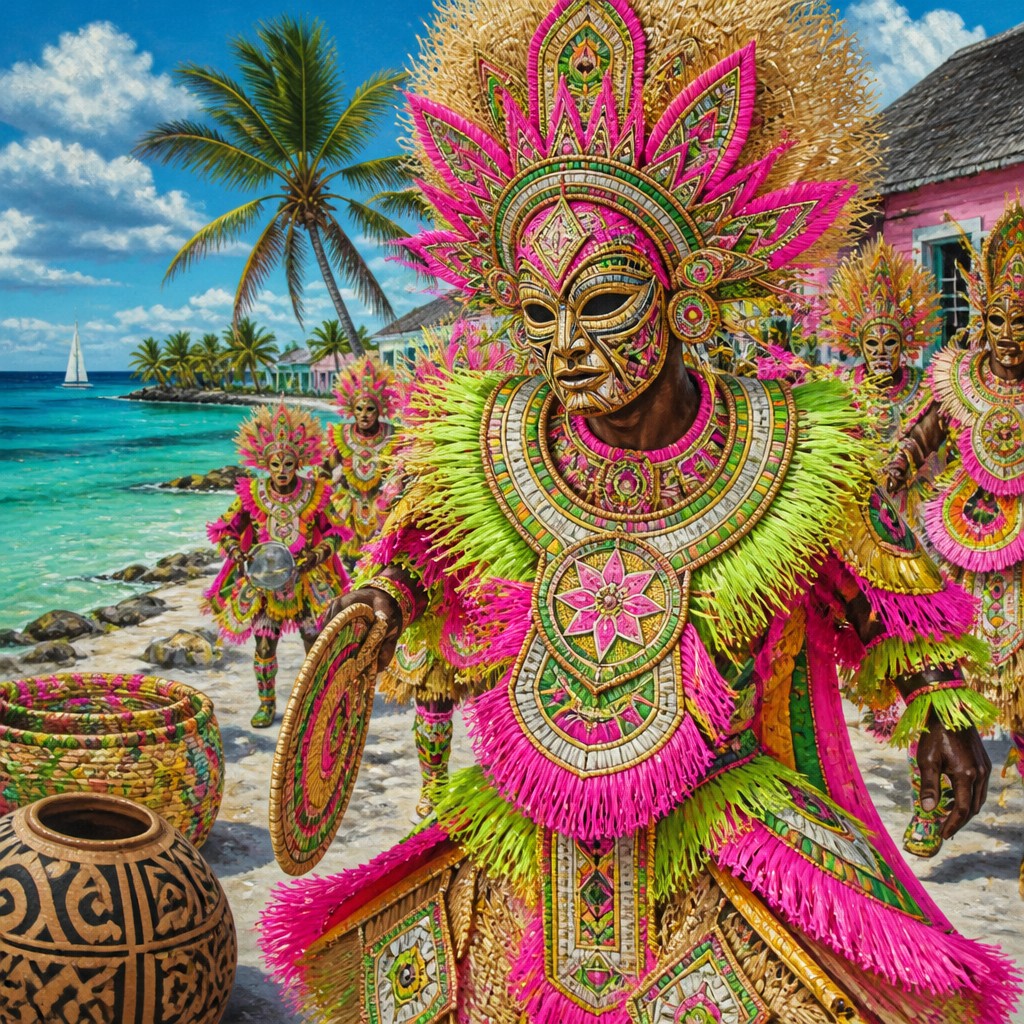
Turquoise coastal light
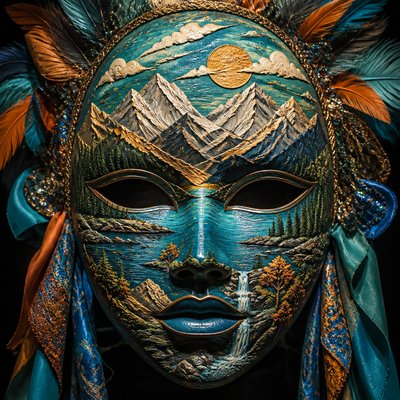
Clear cyan water, pale sand, sunlit haze, and sharp tropical reflections establish a bright Bahamian setting. Shadows are often colorful rather than gray, with blue, violet, and green reinforcing the island atmosphere.
Rhythmic maximalism
The composition favors abundance, repetition, layered silhouettes, and celebratory movement rather than restrained minimalism. Curving bodies, radiating patterns, and diagonal arrangements can imply drumming, dancing, and procession.
Bahamian Prompt Ideas
Start from an idea — each one opens the generator with the style ready to go. See all 40 Bahamian prompts →
How to Create Bahamian Art
Master the craft step by step — or skip straight to creating. Read the full guide →
- 1
Build a saturated palette
Start with turquoise, coral, hot pink, lime, yellow, and gold, then add natural straw neutrals to prevent the image from becoming visually flat. Reserve dark tones for selective outlines or deep recesses rather than broad shadows.
- 2
Layer handmade surfaces
For physical work, combine painted card, crepe paper, raffia, straw, fabric, and collage in overlapping layers. In digital work, use separate texture passes for fringe, woven fibers, paper edges, and reflective embellishments.
- 3
Use rhythm as structure
Organize repeated shapes in bands, fans, zigzags, or radiating bursts, and let costume elements overlap the subject or frame. Controlled repetition makes the composition feel connected to parade movement rather than randomly decorative.
- 4
Balance craft with place
Pair the dense costume or object detail with open turquoise water, bright sand, palms, or sunlit architecture. This contrast gives the image breathing room and anchors the decorative language in a Bahamian environment.
- 5
Write precise generation prompts
Specify the subject, Junkanoo-inspired fringe, finely plaited straw, geometric pottery-like bands, saturated island colors, and turquoise shoreline light. Add composition and material terms such as close-up, layered collage, woven texture, handmade edges, or full-body portrait to control the result.
The Story
History & Origins of Bahamian
This style draws primarily from Junkanoo, a Bahamian parade tradition shaped by African diasporic festival practices and developed through the islands’ colonial and post-emancipation history. Modern Junkanoo costumes commonly use cardboard frameworks, crepe paper, fabric, paint, and extensive fringe assembled by community groups for organized parades, especially during the Christmas and New Year season.
Its other major lineage is Bahamian straw craft, including coiled, plaited, and woven forms used for baskets, hats, bags, and decorative objects. Contemporary illustrations and digital artworks may also borrow restrained geometric motifs associated with archaeological examples of Lucayan Taíno pottery, combining them with Caribbean color, tourism-era seascape imagery, and graphic design. The resulting Bahamian art style is best understood as a present-day aesthetic interpretation, not a formally codified historical school.
Influences: The style relates to Junkanoo costume-making, Caribbean carnival and masquerade traditions, African diasporic festival aesthetics, Bahamian straw basketry, folk and vernacular craft, collage, textile design, and tropical poster illustration. It also draws selectively on the geometric vocabulary of Lucayan Taíno pottery and on the color clarity of modern Caribbean graphic art, while sharing the layered surface logic of assemblage and mixed-media contemporary art.
Frequently Asked Questions
What defines the Bahamian art style?
Its core features are Junkanoo-inspired color and movement, crepe-paper fringe, cardboard mosaic forms, finely plaited straw textures, tropical turquoise light, and repeating geometric motifs. The style is celebratory and materially expressive rather than subdued or strictly naturalistic.
Is Bahamian art style a formal historical art movement?
No. The term describes a contemporary visual synthesis rather than a recognized historical school with a fixed period or manifesto. It combines established Bahamian traditions and broader Caribbean, African diasporic, craft, collage, and graphic influences.
How is it different from generic Caribbean or tropical art?
Generic tropical art may focus mainly on palms, beaches, and bright scenery. Bahamian art style places greater emphasis on Junkanoo costume construction, straw weaving, rhythmic repetition, community festivity, and the specific clarity of Bahamian coastal light.
How can I make a physical artwork in this style?
Use a sturdy paper or board base, then add painted cardboard shapes, crepe-paper fringe, raffia or straw, collage, and selectively reflective details. Plan a limited set of repeating motifs before assembling layers so the exuberance remains visually organized.
Can photography be transformed into this aesthetic?
Yes. A portrait, street scene, or seascape can be reworked with saturated color grading, layered paper edges, woven overlays, fringe-like repetition, and geometric borders. Preserve important facial or architectural details while applying texture mainly to clothing, backgrounds, and framing elements.
How should cultural references be used respectfully?
Treat Junkanoo and Bahamian straw work as living traditions rather than anonymous decoration, and avoid presenting a digital approximation as an authentic ceremonial costume or archaeological reconstruction. When using Lucayan Taíno-inspired motifs, describe them as visual references and research their context rather than claiming direct historical continuity.
Create your first Bahamian artwork
Describe anything — or upload a photo — and see it in Bahamian Art Style in seconds.
Related Styles
Discover similar art styles