Albanian Art Style
Explore Albanian Art Style: Byzantine gold, egg tempera, Ottoman stone towns, Balkan mountains, and mosaic-inspired visual storytelling.
Instantly rendered in Albanian — or transform a photo
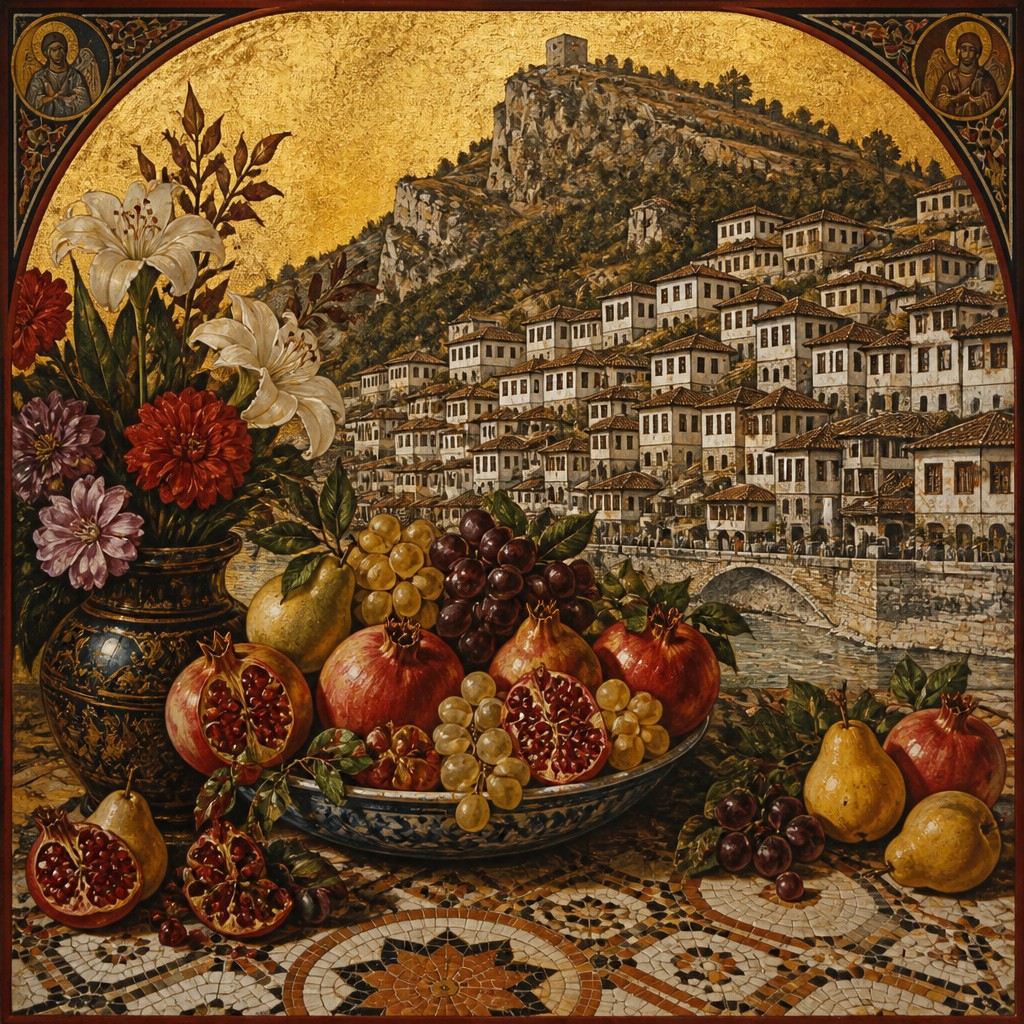
Albanian Gallery
Tap any artwork to explore it
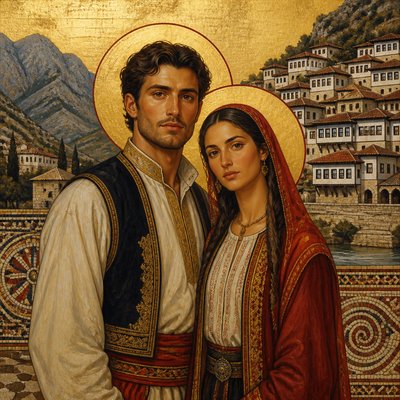
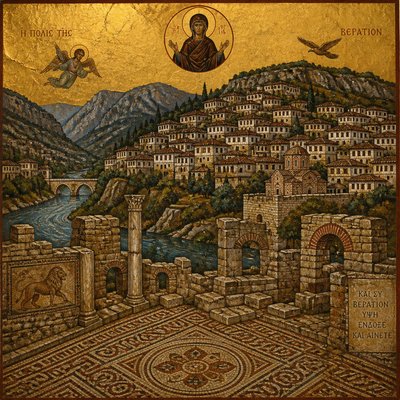
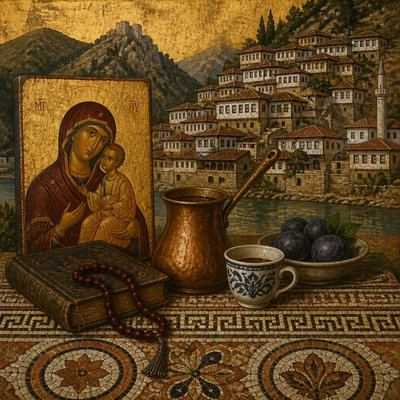
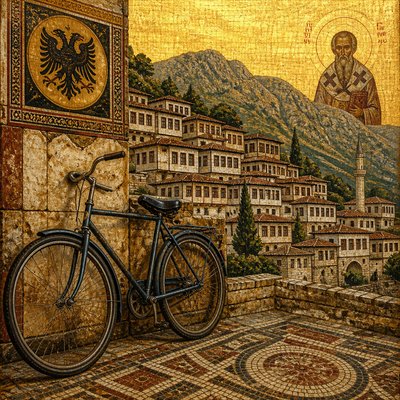
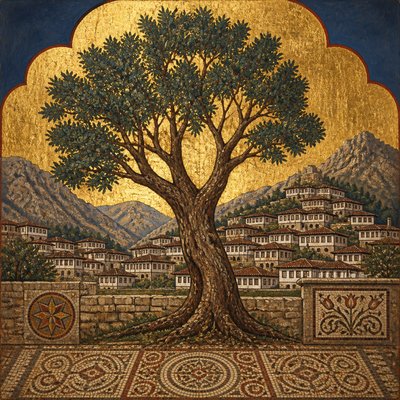
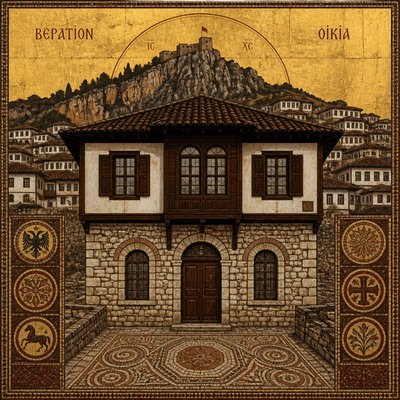
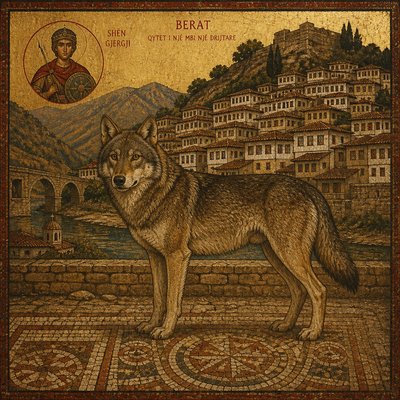
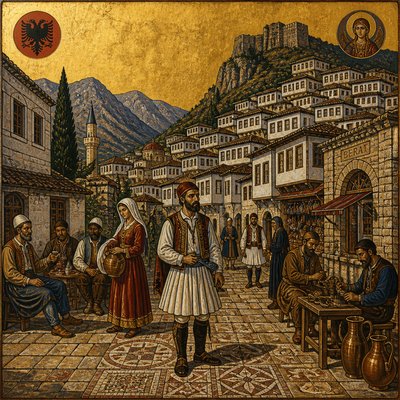
What is Albanian Art Style?
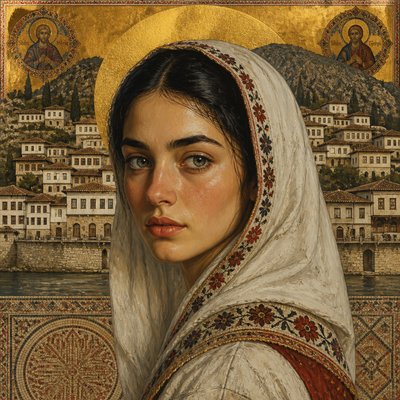
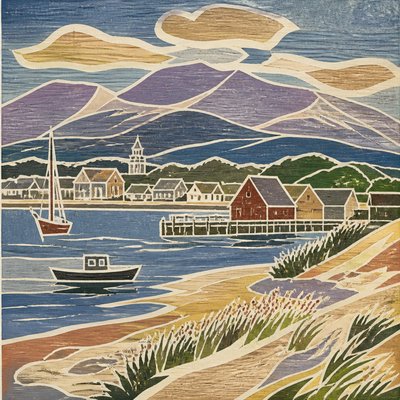
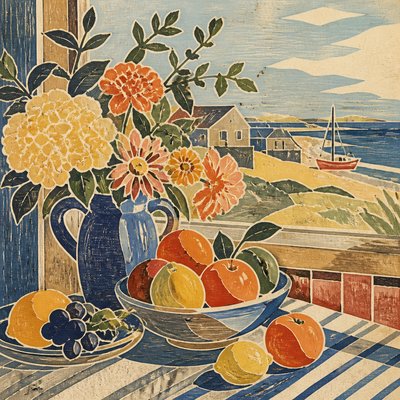
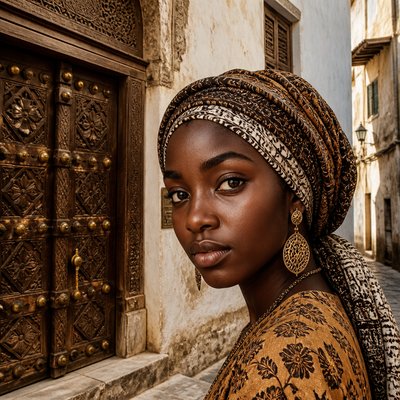
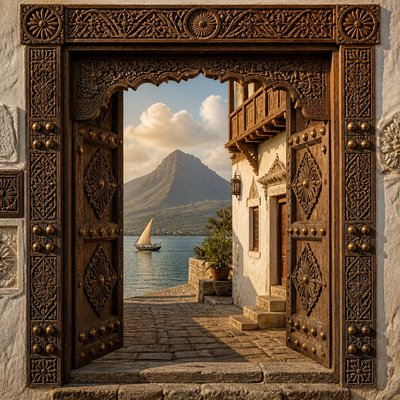
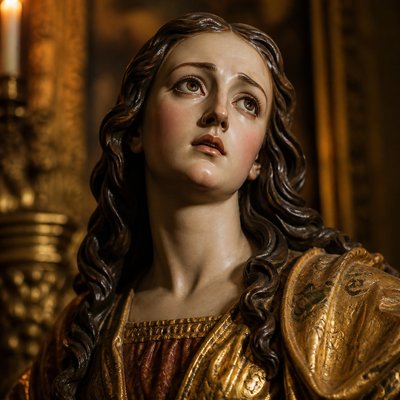
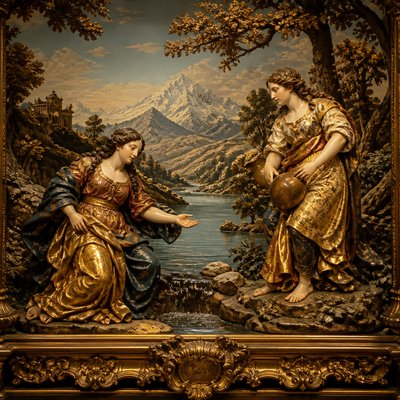
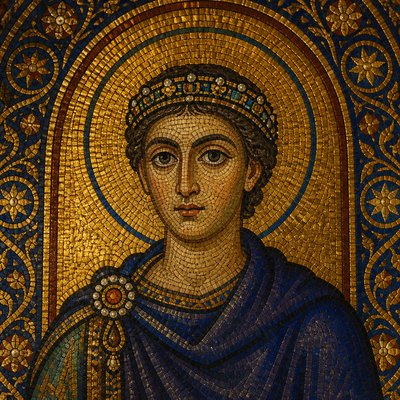
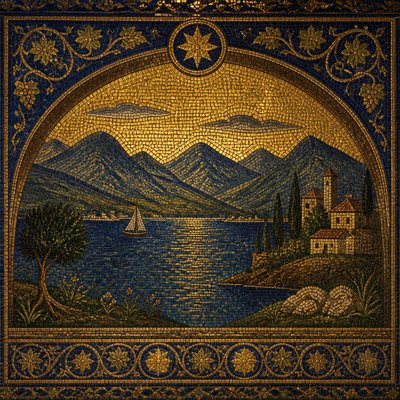
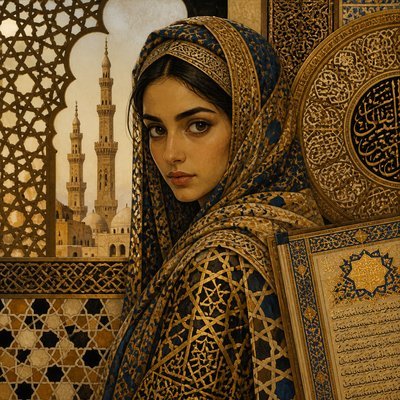
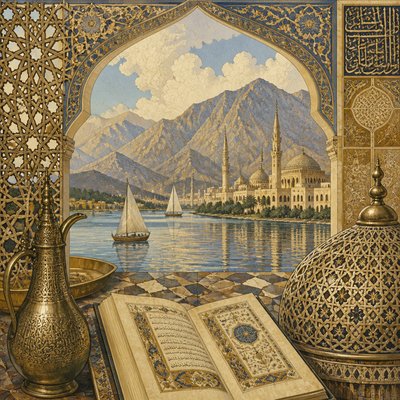
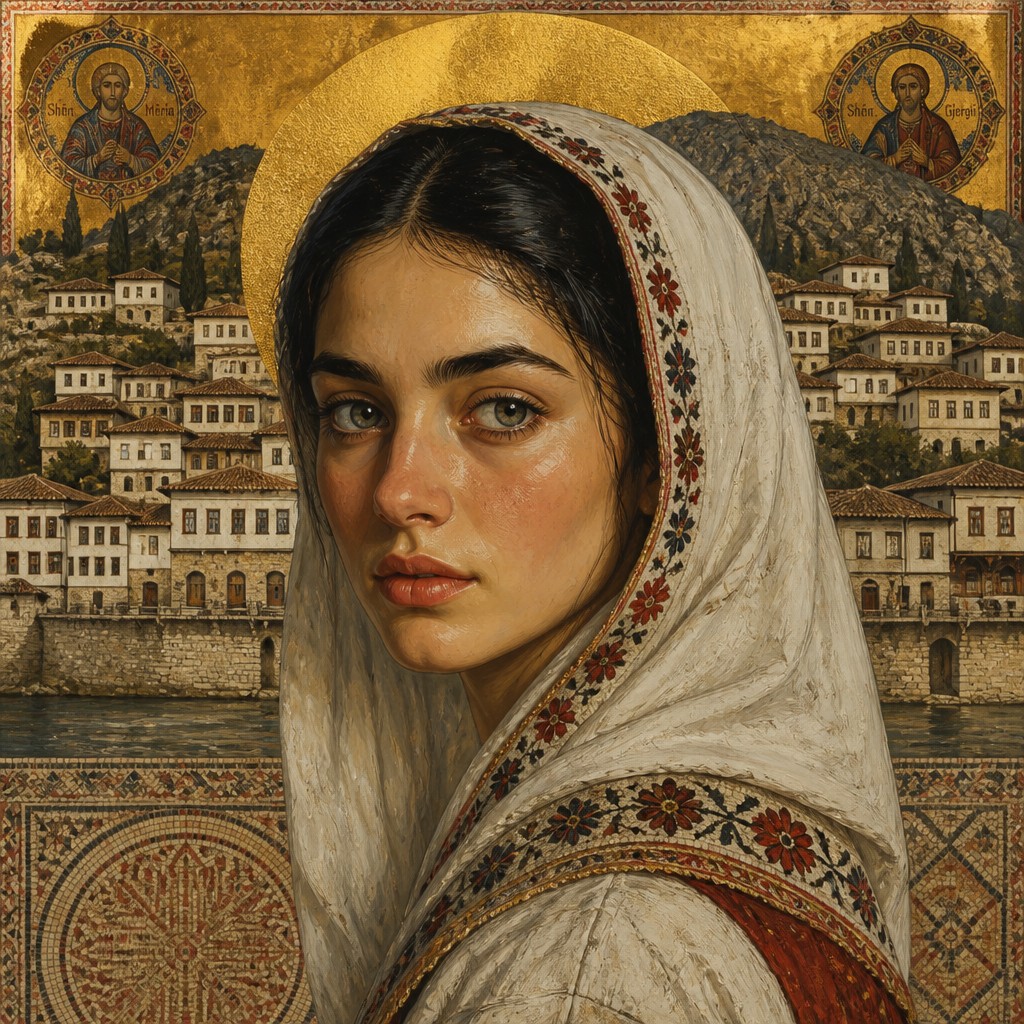
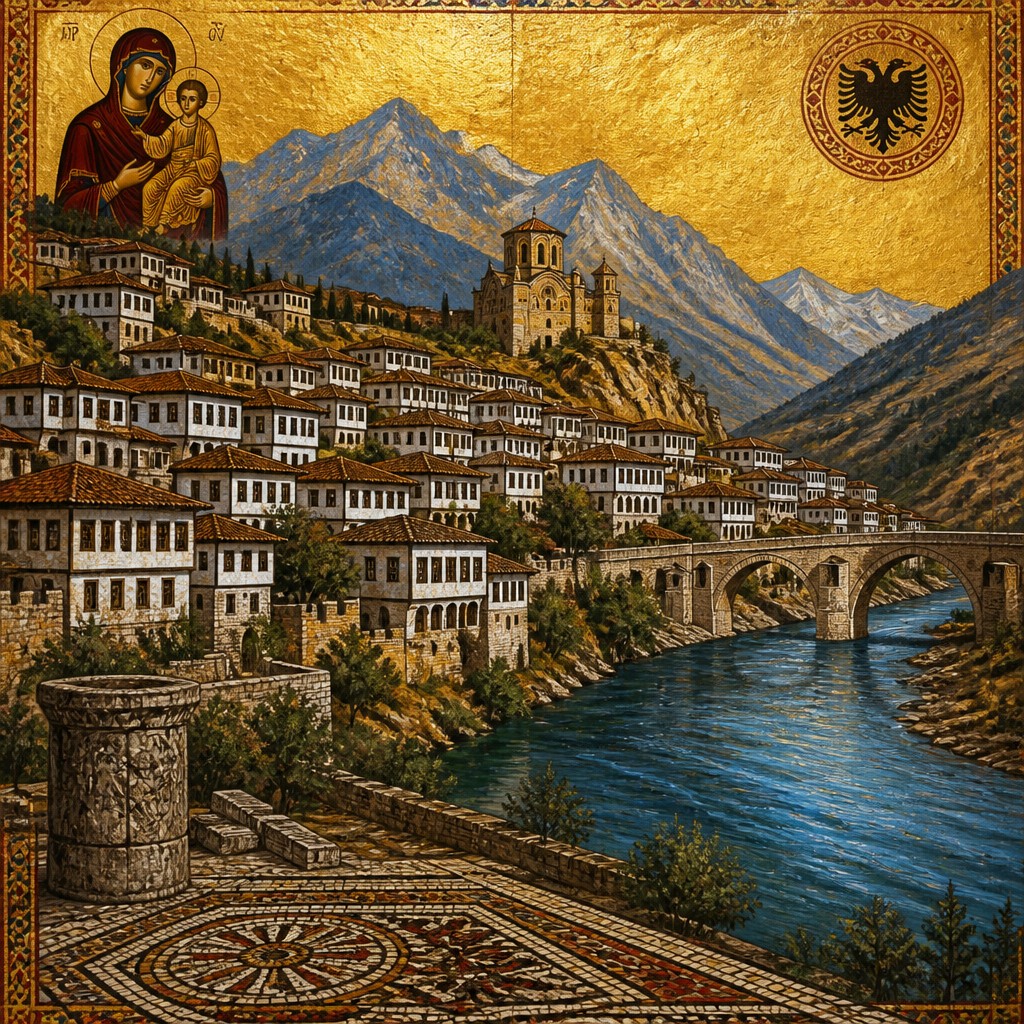
Albanian Art Style is a contemporary descriptive synthesis rather than a formally defined historical movement. It combines the luminous, frontal presence of post-Byzantine Orthodox icon painting with the stepped stone architecture of Ottoman-era Albanian towns, especially Berat, and the earthy geometry of Roman-Byzantine floor mosaics. The result is an image language of sacred gold, weathered masonry, mountain light, and layered historical memory.
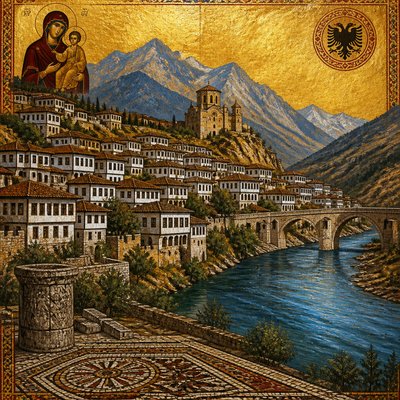
Its visual identity depends on contrast: flat or shallow icon-like space is set against densely tiered townscapes; radiant gold grounds meet muted terracotta and cream tesserae; and delicate devotional color is balanced by rugged Balkan terrain. The style often treats architecture and landscape as cultural witnesses, giving ordinary streets, rooftops, and mountain settlements a solemn, resilient atmosphere.
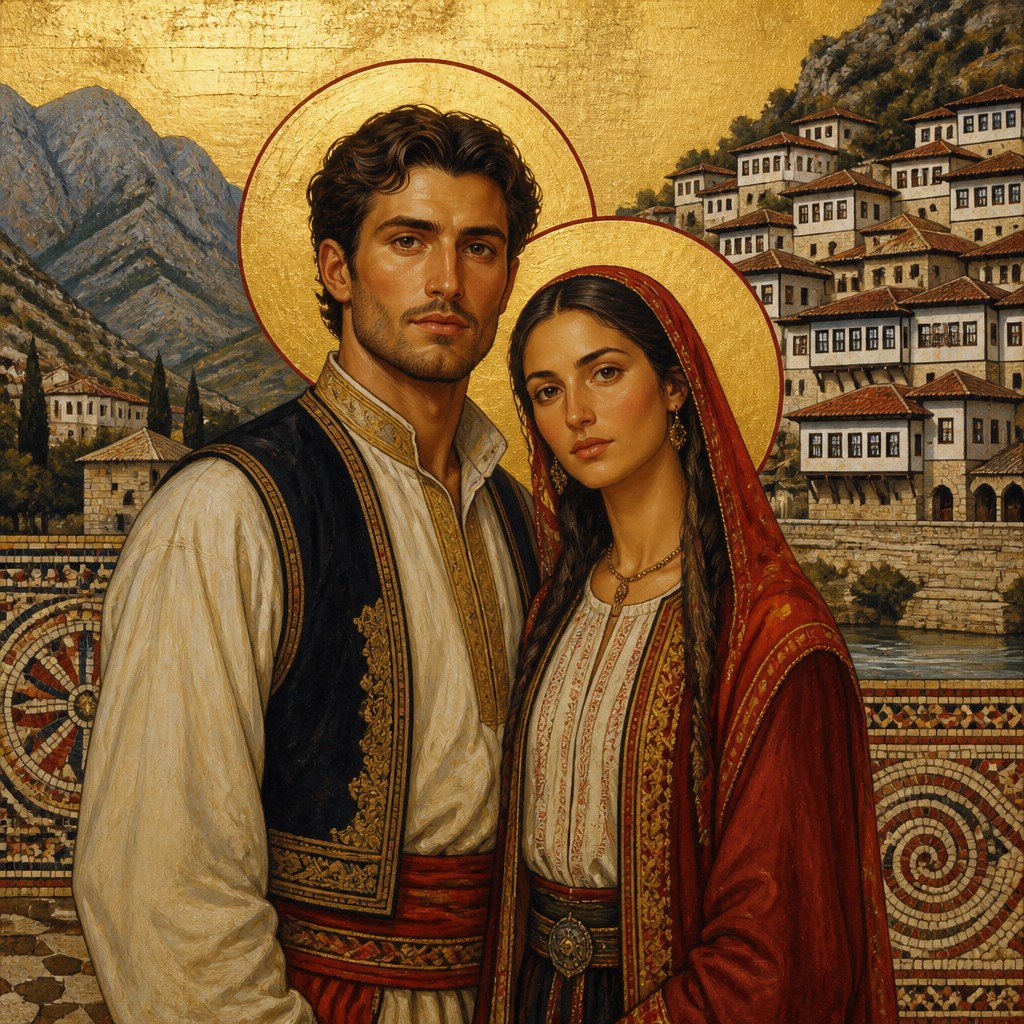
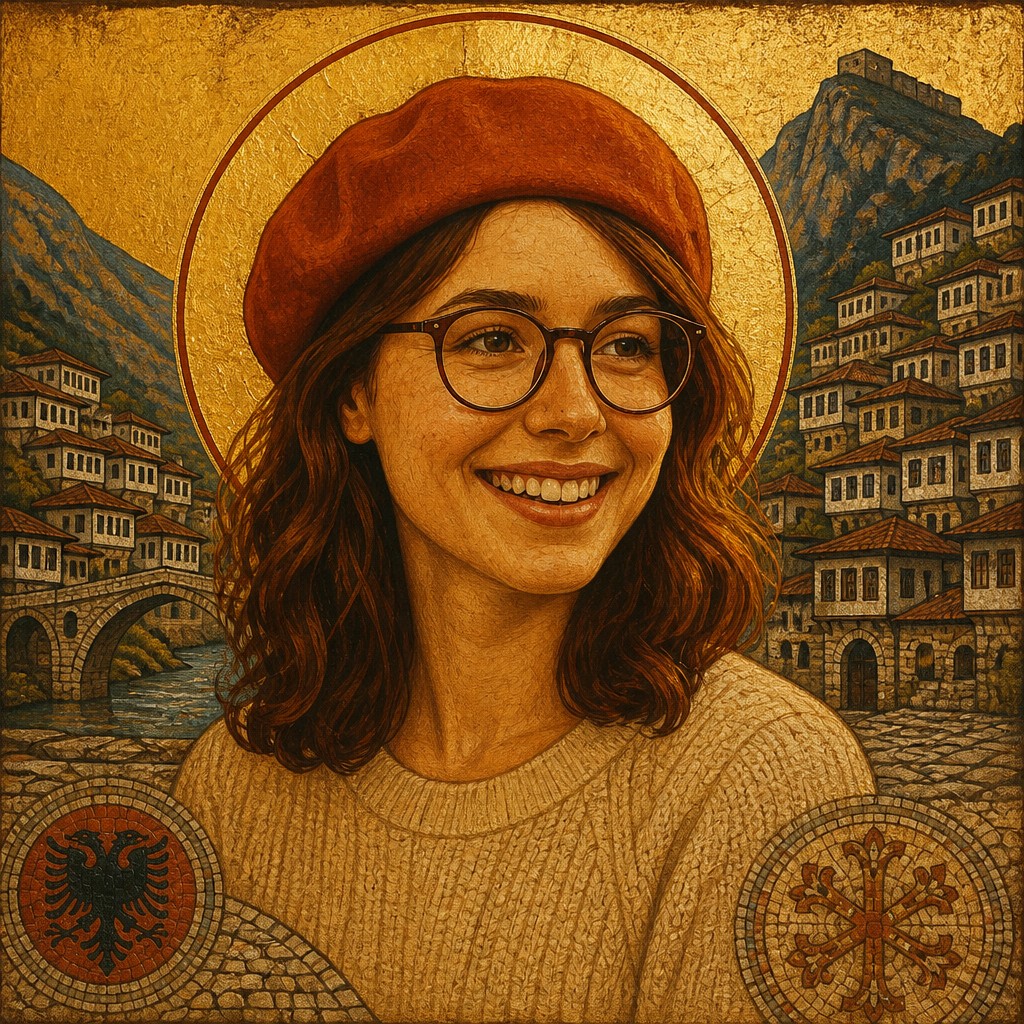
Try It On Your Photos
Upload any photo and convert it into Albanian Art Style — drag the sliders to compare before and after.

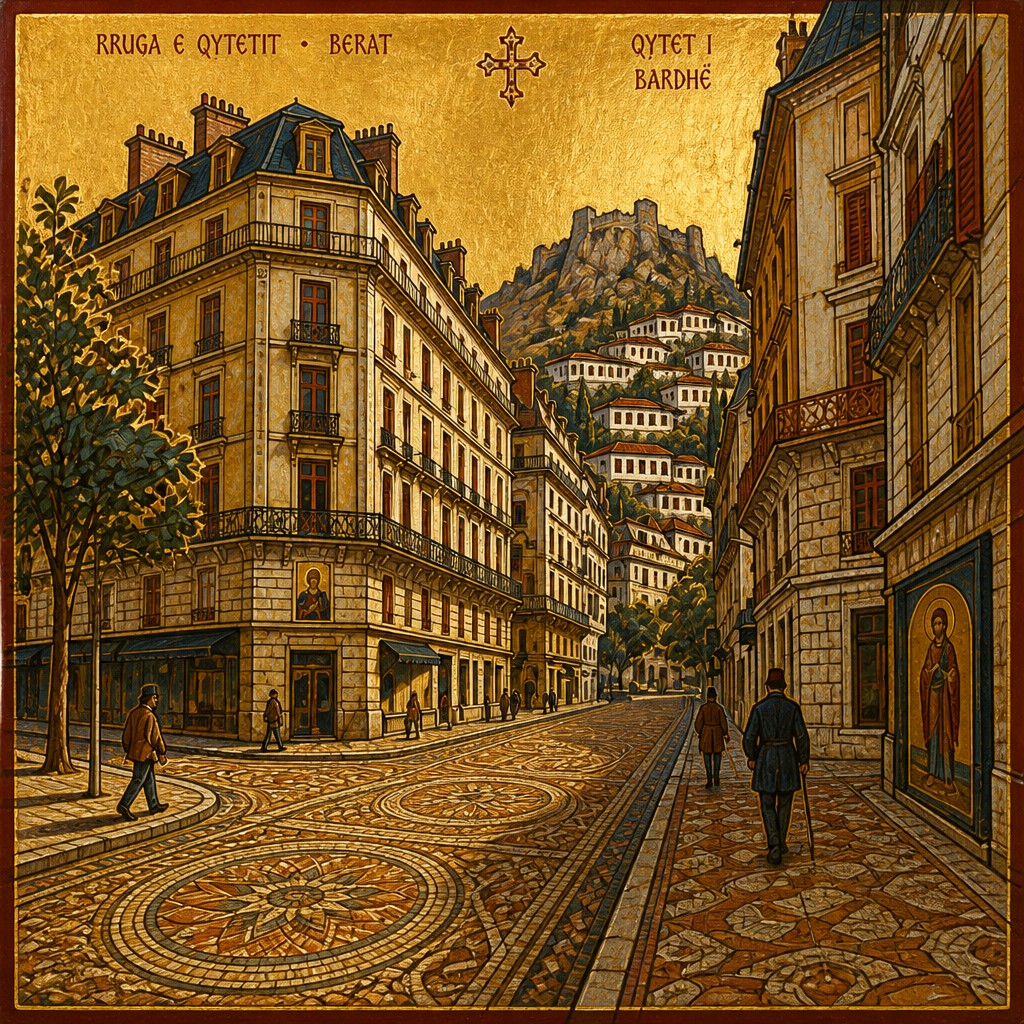

What Defines Albanian Art Style
The signature details, up close
Gold-leaf luminosity
Bright metallic gold or simulated gold grounds recall the radiant fields of Orthodox icons. Gold is used as a symbolic, non-naturalistic light rather than simply as surface decoration.
Egg-tempera color
Deep reds, ultramarine, ochre, green, and umber suggest the compact, matte richness of egg tempera. Layered brushwork, restrained highlights, and visible pigment density help avoid a glossy modern finish.
Tiered stone townscapes
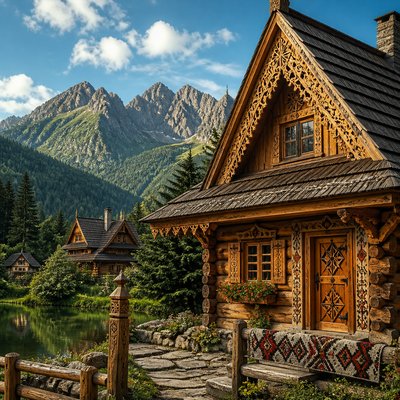
Hillside settlements are built from stacked masonry forms, red-tiled roofs, narrow streets, and rhythmic windows. Berat-inspired white houses and shutters create a distinctive pattern of light rectangles against stone and slope.
Mosaic geometry
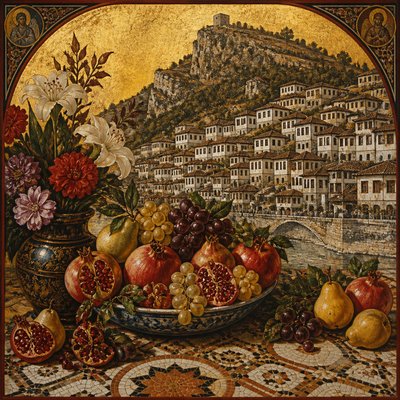
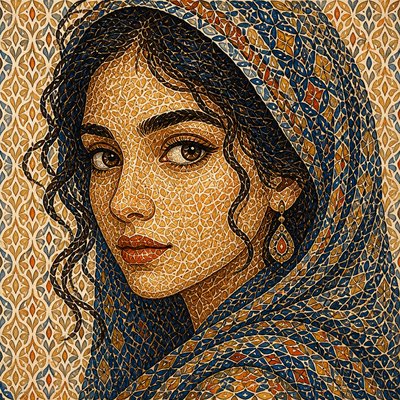
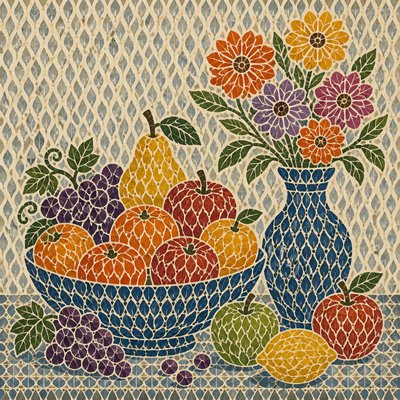
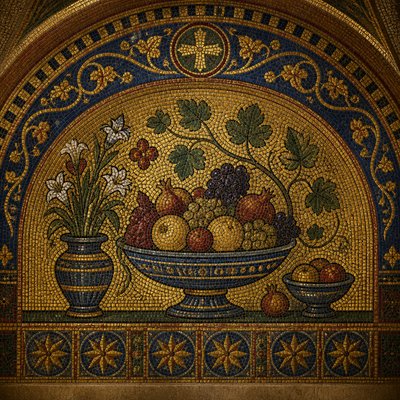
Terracotta, cream, charcoal, and muted blue tesserae introduce block-like contours and decorative surfaces. Mosaic borders, fragmented pavement, and simplified geometric motifs can frame or interrupt the main scene.
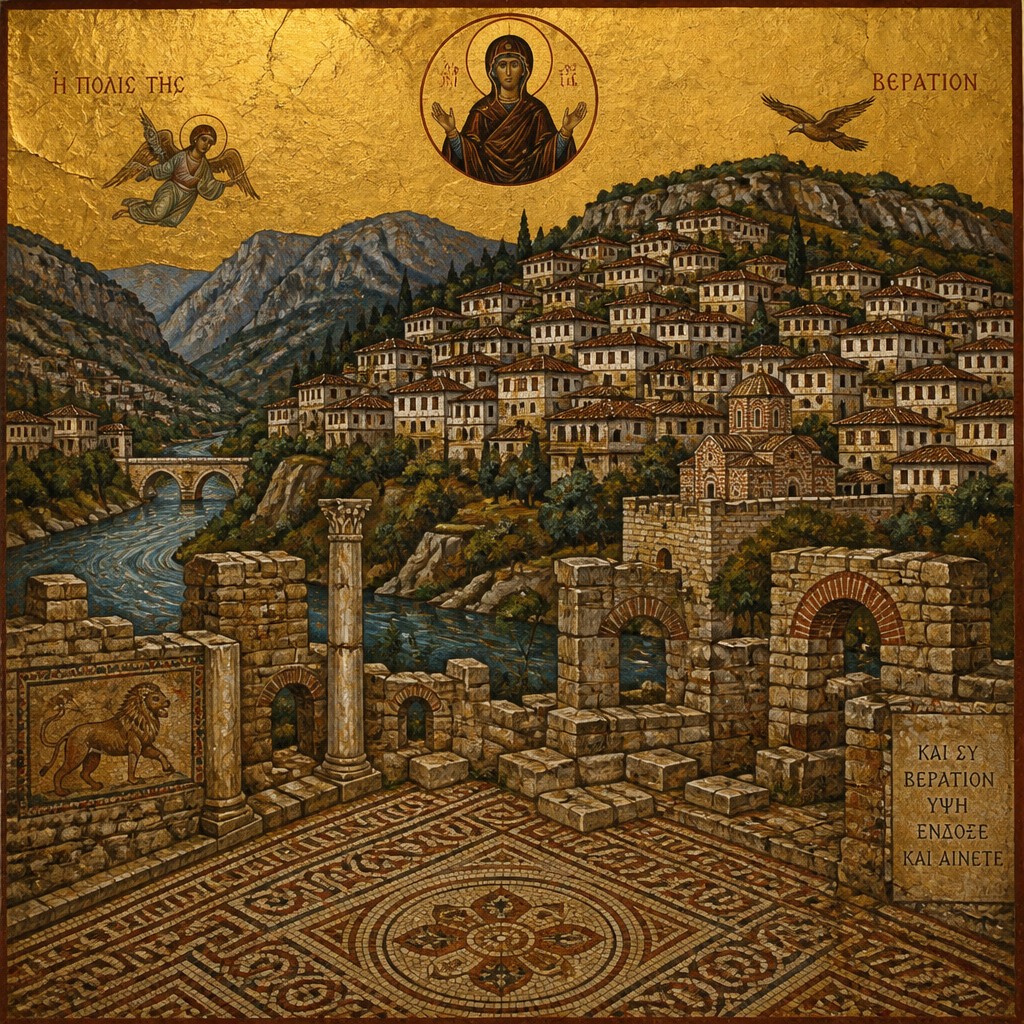
Sacred frontality
Figures and important buildings may face the viewer directly, with calm poses, symmetrical arrangements, and compressed perspective. This creates the contemplative authority associated with icon painting.
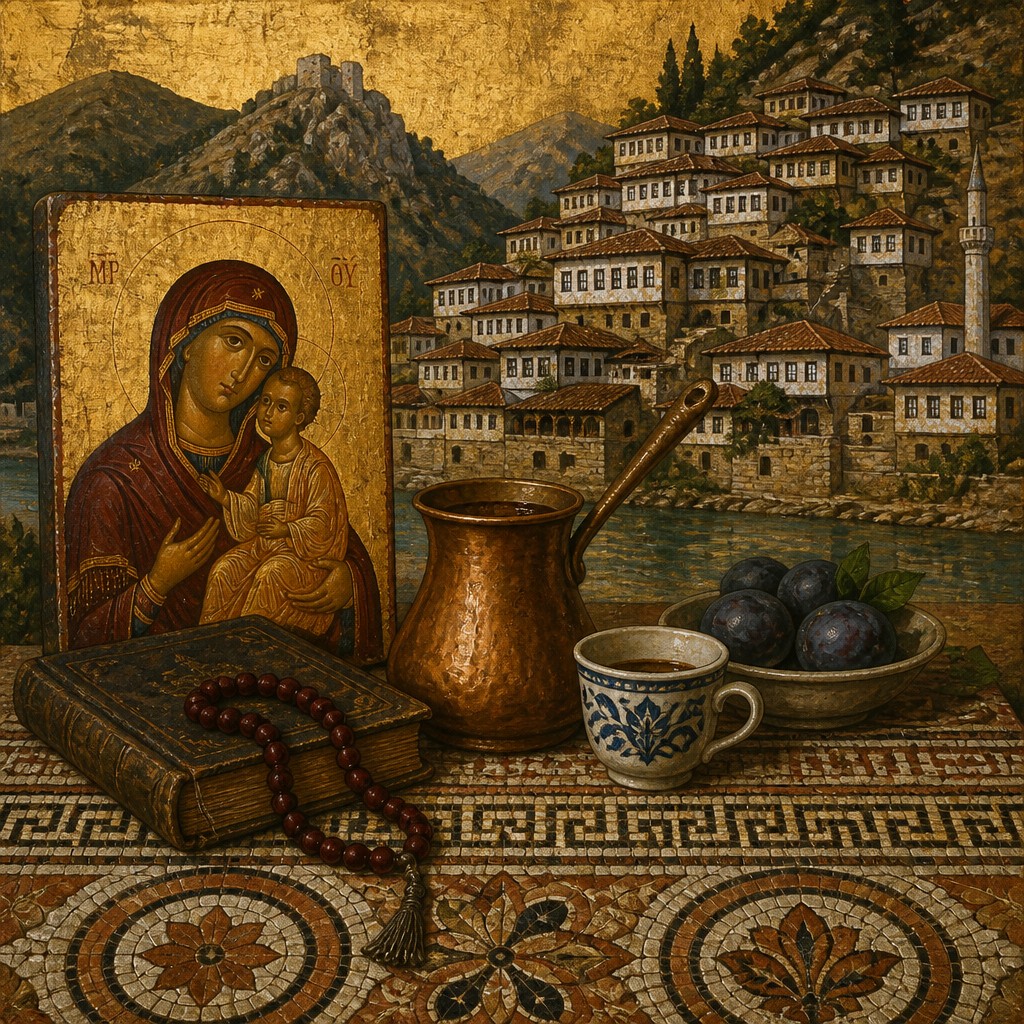
Balkan mountain light
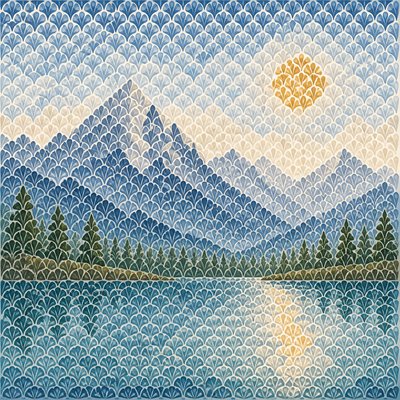
Hard, clear illumination reveals limestone, roof tiles, and dry vegetation while producing deep cool shadows. The atmosphere should feel elevated, weathered, and geographically specific rather than soft or tropical.
Albanian Prompt Ideas
Start from an idea — each one opens the generator with the style ready to go. See all 40 Albanian prompts →
How to Create Albanian Art
Master the craft step by step — or skip straight to creating. Read the full guide →
- 1
Build a layered composition
Begin with a broad gold or warm ochre ground, then place the focal subject centrally or slightly above center. Arrange the townscape in ascending horizontal tiers so the hillside reads clearly without relying on conventional realistic depth.
- 2
Use tempera-like materials
For traditional work, apply thin egg-tempera layers over a prepared panel and reserve metal leaf or metallic pigment for the background and key accents. In digital painting, use opaque textured brushes, low-gloss color, and separate layers for gold, masonry, figures, and mosaic details.
- 3
Control the palette
Favor muted cream, terracotta, ochre, umber, mineral blue, deep red, and weathered green, with gold as the brightest accent. Keep shadows cool and dense while allowing selected surfaces to catch sharp mountain light.
- 4
Combine icon and architectural space
Use frontal emphasis, simplified anatomy, and symbolic scale for people or sacred objects, but give roofs, shutters, stairs, and stone walls enough repeated detail to establish an Ottoman hillside settlement.
- 5
Specify the visual lineage in a prompt
For digital or AI creation, describe the subject first and then request post-Byzantine egg tempera, a gold-leaf ground, Berat-like stone houses, Roman-Byzantine mosaic tesserae, and rugged Balkan illumination. Add exclusions such as glossy 3D rendering, photorealistic plastic surfaces, or generic medieval fantasy if those qualities are unwanted.
The Story
History & Origins of Albanian
This is an invented, AI-native style label built from several real Albanian and regional traditions rather than a documented school with a fixed period or membership. Its strongest historical lineage is the post-Byzantine icon tradition practiced in Orthodox communities across the Balkans, where egg tempera, mineral pigments, gilded backgrounds, symbolic perspective, and devotional frontality remained important after the Byzantine period.
Its architectural references come from Ottoman-era stone settlements, including Berat's hillside houses, tiled roofs, narrow streets, and repeated white shutters. A further layer derives from Roman and Byzantine mosaic pavements found throughout the region, while the mountain setting evokes Albania's rugged geography and the visual record of centuries of cultural coexistence.
Influences: The style draws on post-Byzantine Orthodox icon painting, Byzantine and Roman mosaic traditions, Ottoman Balkan vernacular architecture, and the stone settlements of southern Albania. It also relates to medieval devotional art, folk architectural documentation, historicist illustration, and contemporary digital collage practices that merge sacred symbolism with place-based cultural memory.
Frequently Asked Questions
Is Albanian Art Style a recognized historical art movement?
No. The term is best understood as a contemporary descriptive or AI-native style label, not a documented movement with a formal founding date or unified group of artists. It synthesizes genuine Albanian and wider Balkan visual traditions.
What defines Albanian Art Style visually?
Its core features are post-Byzantine icon-like frontality, gold-leaf illumination, egg-tempera color, Ottoman-era stone townscapes, mosaic geometry, and rugged mountain light. The style is especially recognizable when these elements appear together rather than separately.
How does it differ from Byzantine icon painting?
Byzantine and post-Byzantine icon painting provide the devotional technique and symbolic visual logic, but this synthesis expands beyond sacred figures. It incorporates Albanian hillside architecture, Ottoman urban forms, regional landscapes, and mosaic fragments as equally important subjects.
How can I make a traditional painting in this style?
Work on a prepared panel with layered egg tempera, using a warm ground and metallic leaf or pigment for the luminous background. Simplify perspective, keep important subjects frontal, and build the townscape from repeated stone, shutter, roof, and stair forms.
Can photographs be transformed into this aesthetic?
Yes, particularly photographs of stone villages, mountain streets, monasteries, courtyards, and tiled roofs. Preserve the original architectural structure while adding a matte tempera surface, gilded accents, compressed perspective, and carefully controlled mosaic-like texture.
Where is this style most useful?
It suits cultural illustration, heritage interpretation, travel imagery, book covers, historical fiction, posters, and atmospheric architectural studies. It is most effective when the subject has a strong relationship to place, memory, faith, or layered history.
Create your first Albanian artwork
Describe anything — or upload a photo — and see it in Albanian Art Style in seconds.
Related Styles
Discover similar art styles