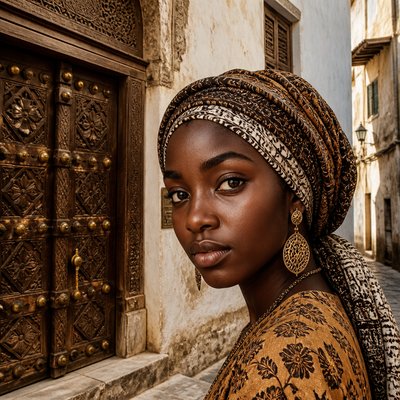
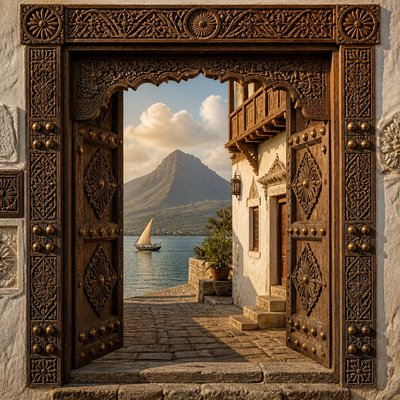
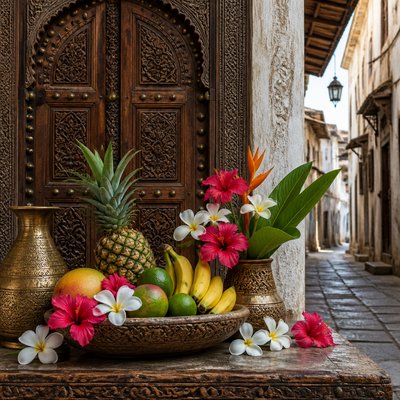
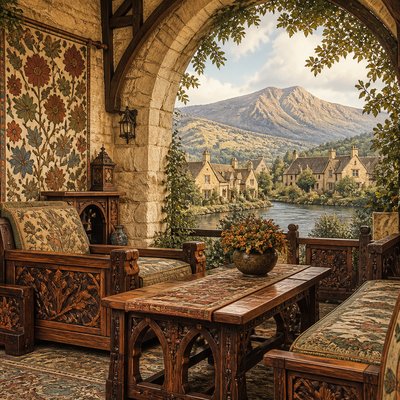
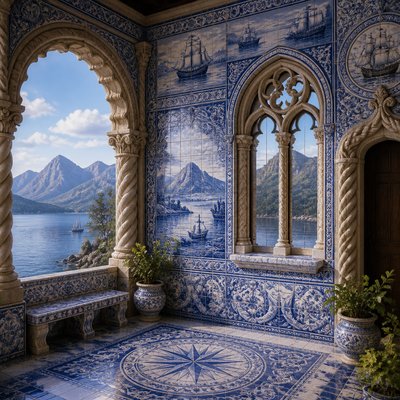
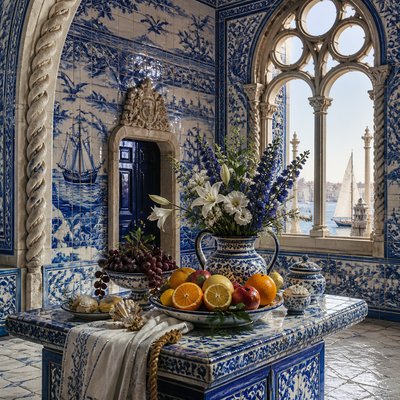
Abramtsevo Art Style
Explore the Abramtsevo art style: Russian Revival timber architecture, folk-tale majolica, carved wood, and birch-forest estate imagery.
Instantly rendered in Abramtsevo — or transform a photo
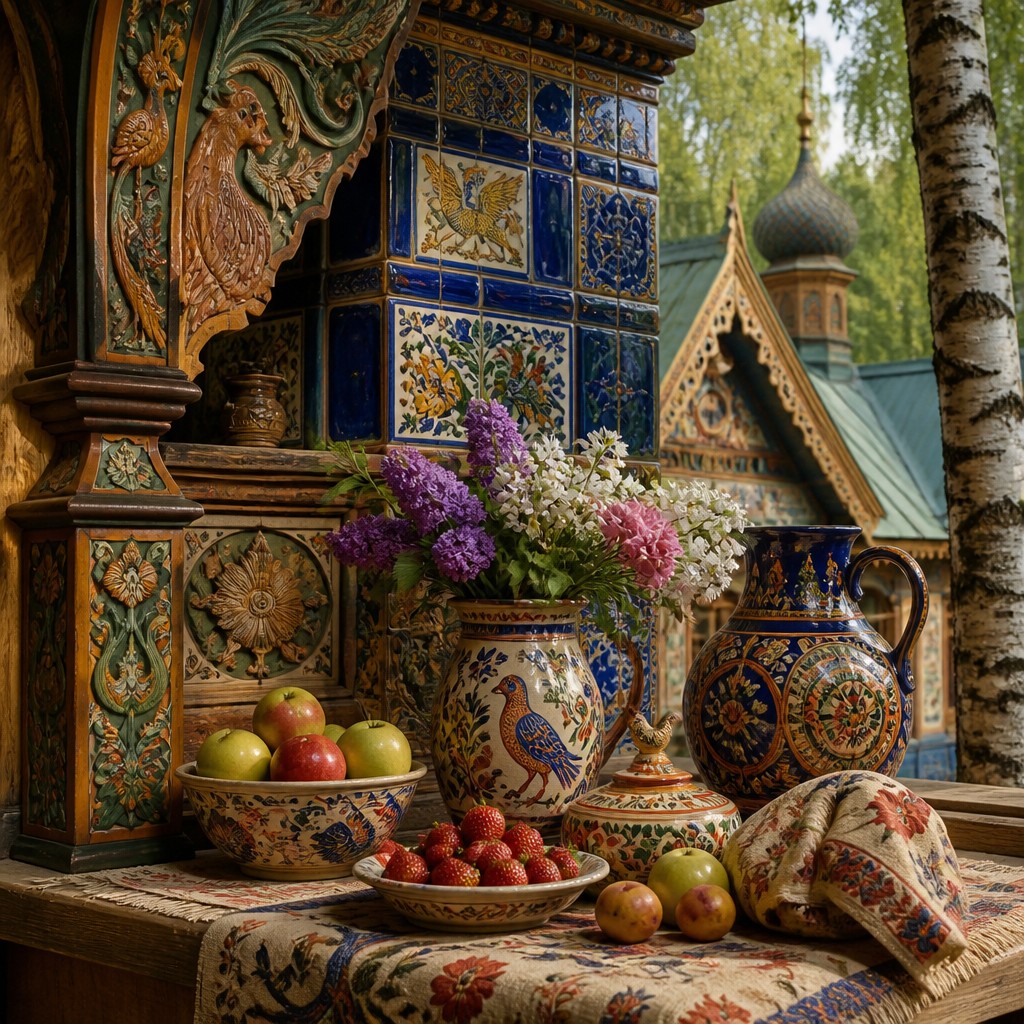
Abramtsevo Gallery
Tap any artwork to explore it
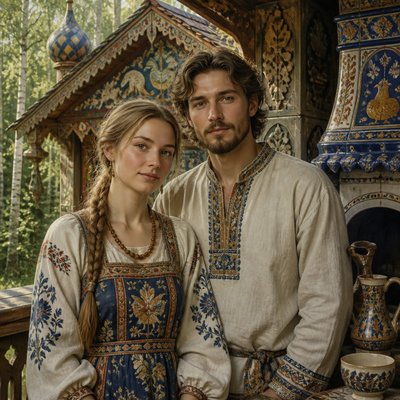
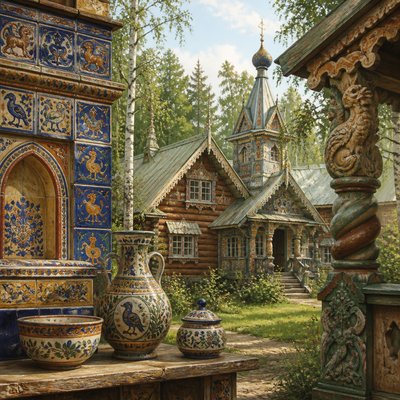
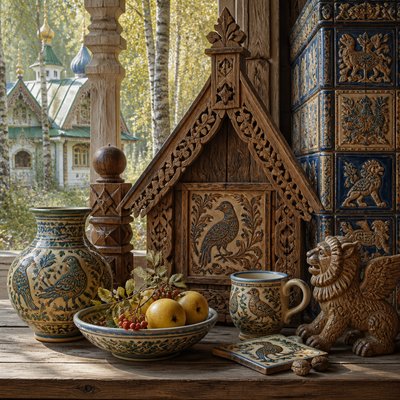
What is Abramtsevo Art Style?
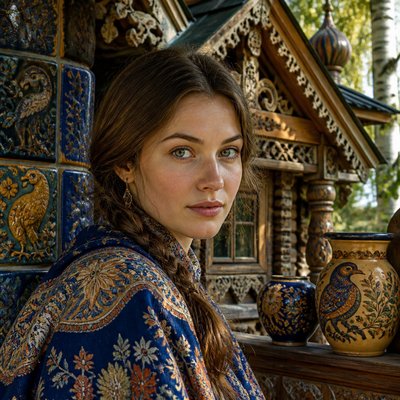
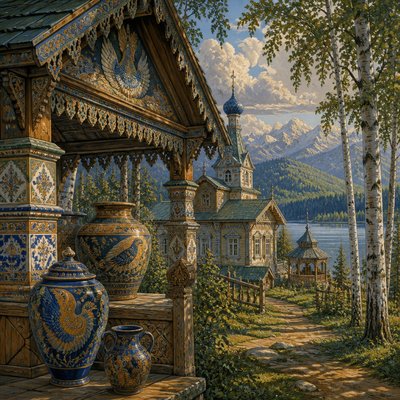
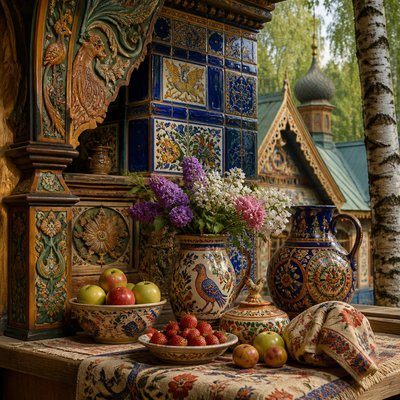
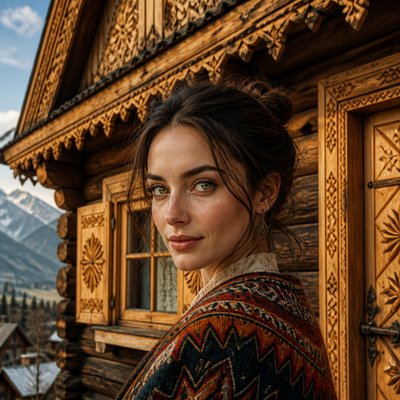
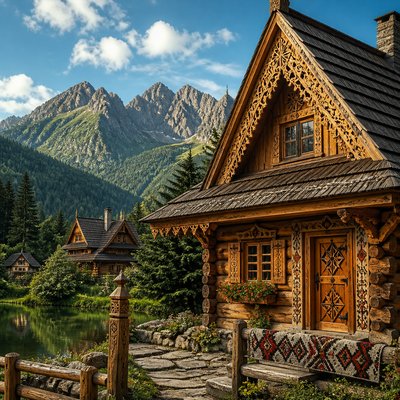
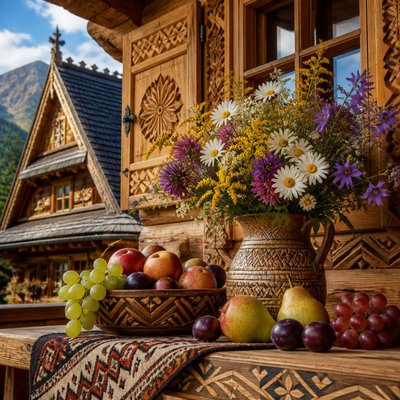
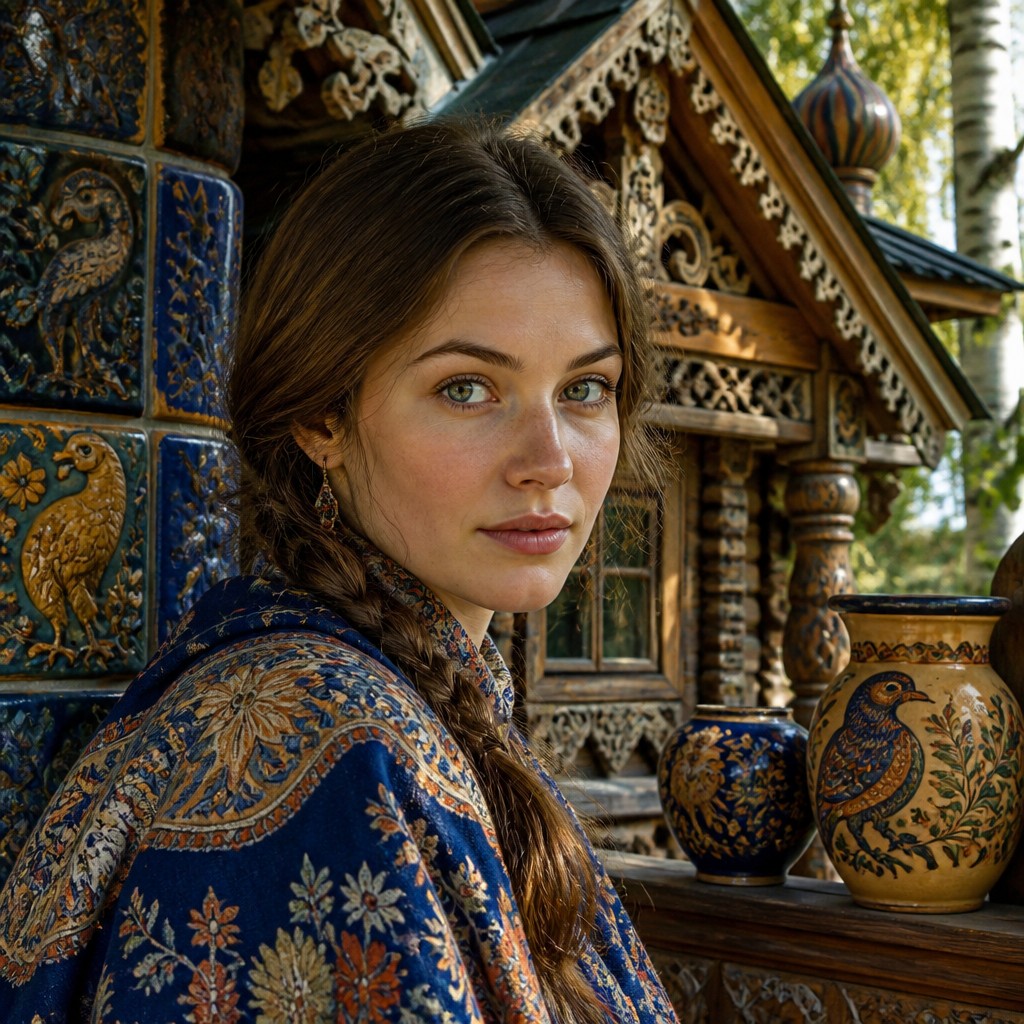
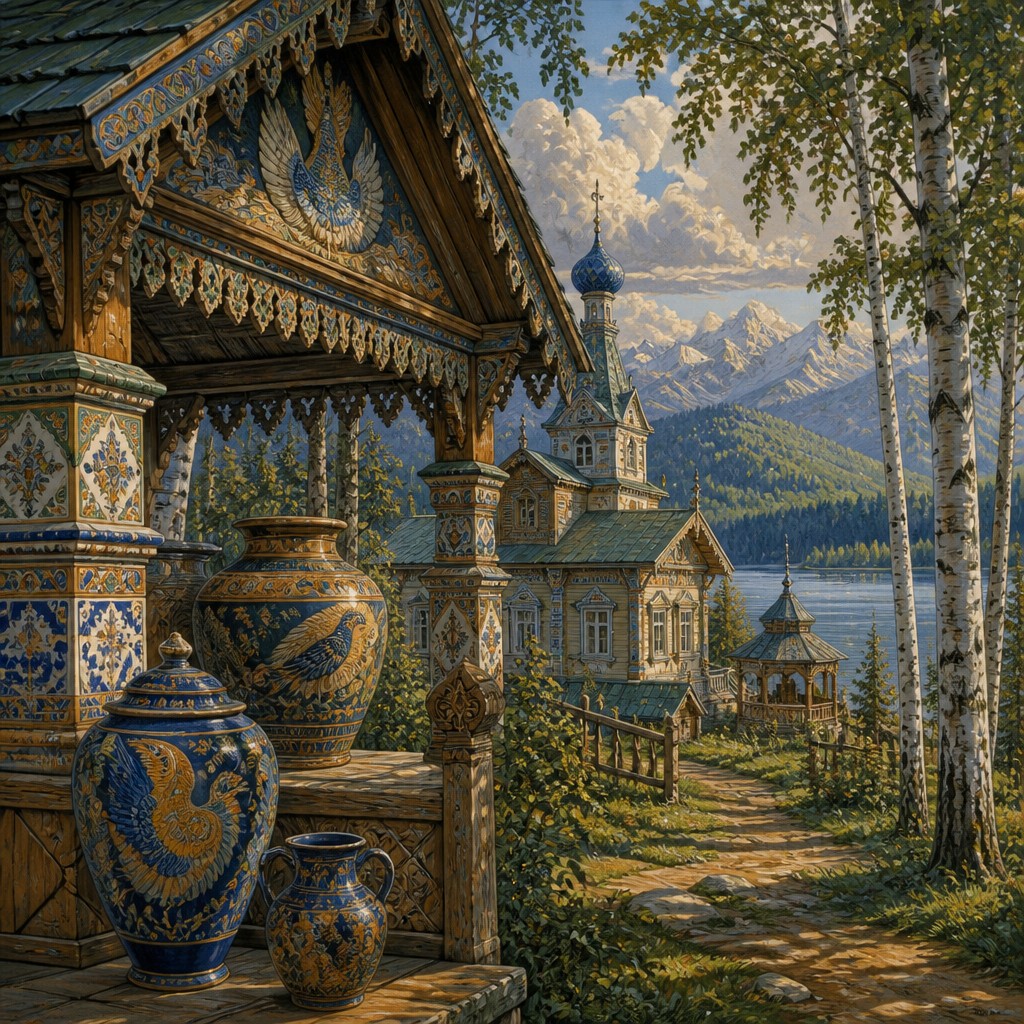
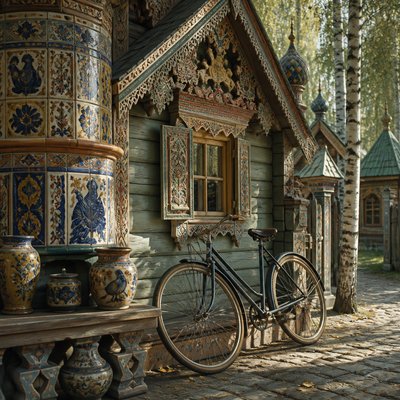
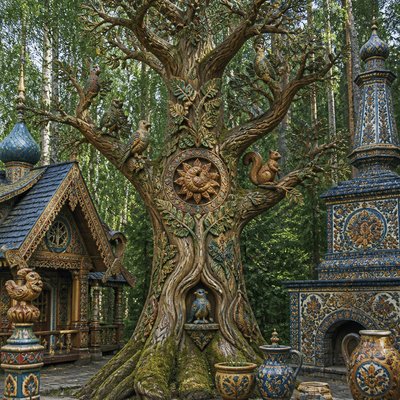
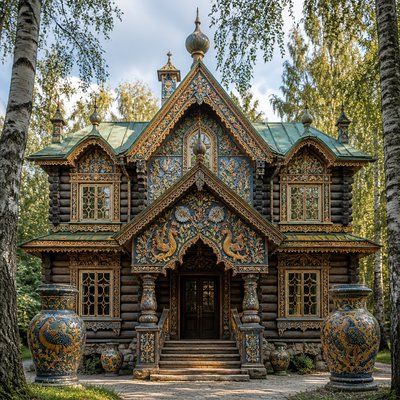
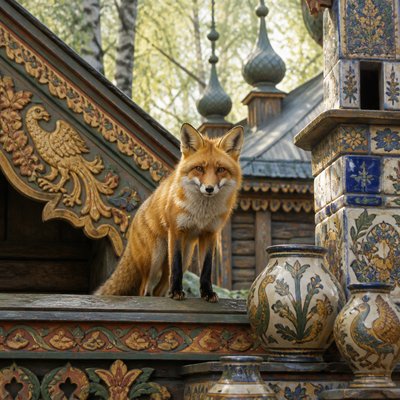
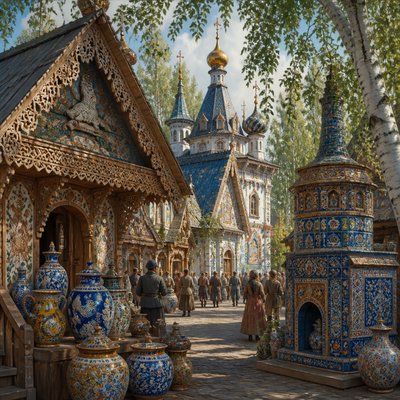
The Abramtsevo art style is a Russian Revival aesthetic associated with timber estates, handcrafted interiors, folk-art ornament, and ceramic decoration. Its characteristic imagery combines carved wooden gables, onion-shaped roof details, painted majolica stoves, rustic vessels, and motifs drawn from Russian fairy tales, birds, plants, and village craft traditions.
Visually, the style balances architectural mass and handmade detail. Dark or honey-colored timber provides a warm structural framework, while cobalt, ochre, green, white, and russet ceramics add concentrated areas of color. Birch forests, dappled light, irregular carving, and visible craft marks reinforce its connection to an idealized rural landscape and to the late-19th-century revival of national artistic traditions.
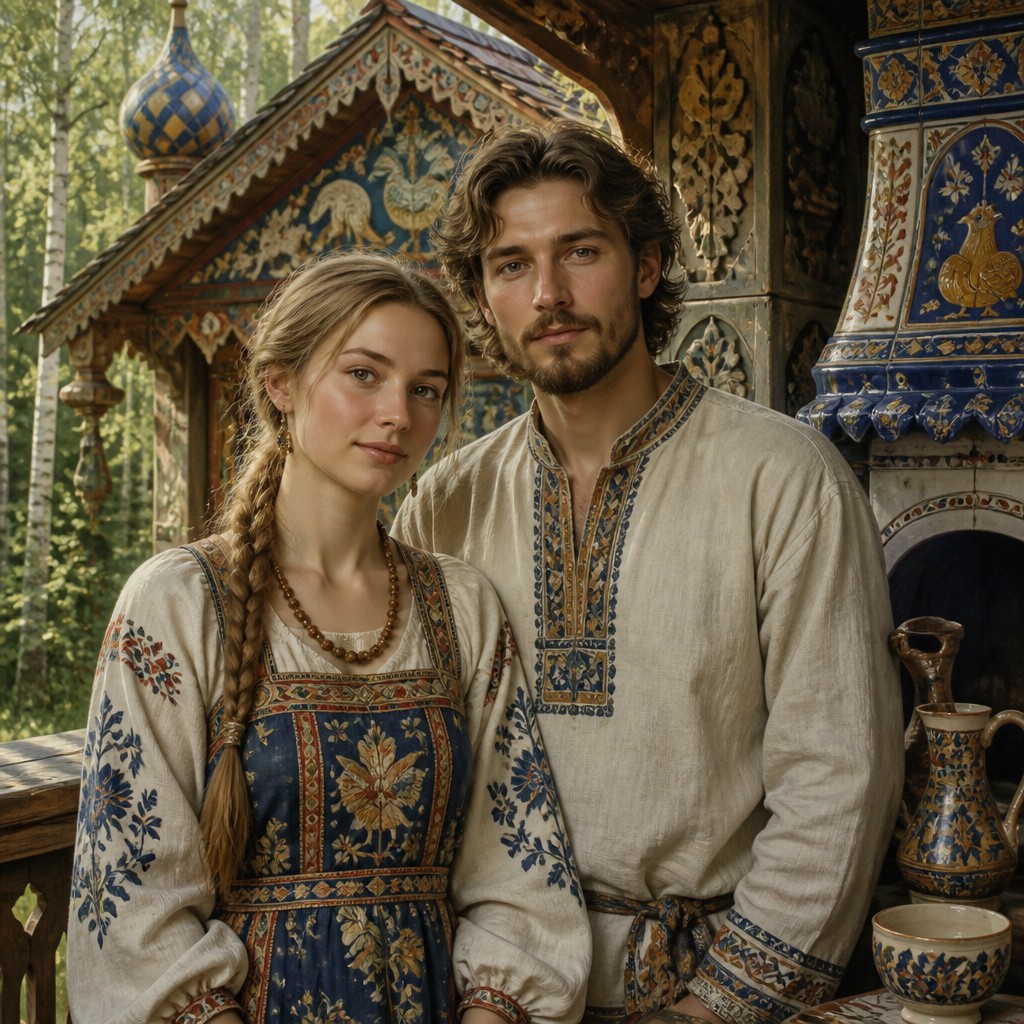
Try It On Your Photos
Upload any photo and convert it into Abramtsevo Art Style — drag the sliders to compare before and after.


What Defines Abramtsevo Art Style
The signature details, up close
Carved timber architecture
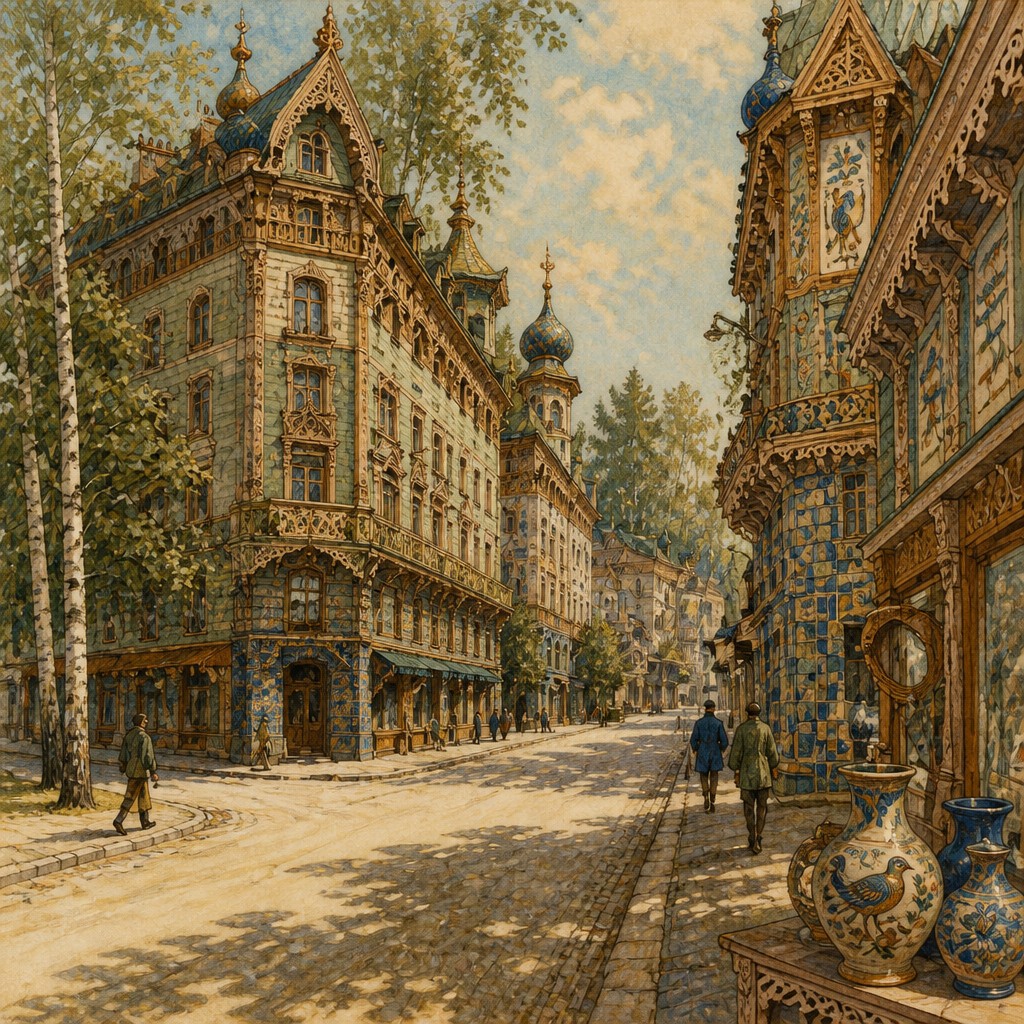
Heavy wooden walls, decorative gables, pierced bargeboards, and hand-cut trim create a tactile, vernacular appearance. The carving often follows plant forms, geometric borders, or folkloric symbols.
Russian Revival rooflines
Onion-shaped domes, steep roofs, clustered volumes, and ornamental roof accents give estate buildings a storybook silhouette. These forms reference Russian medieval and traditional architectural vocabulary.
Folk-tale ornament
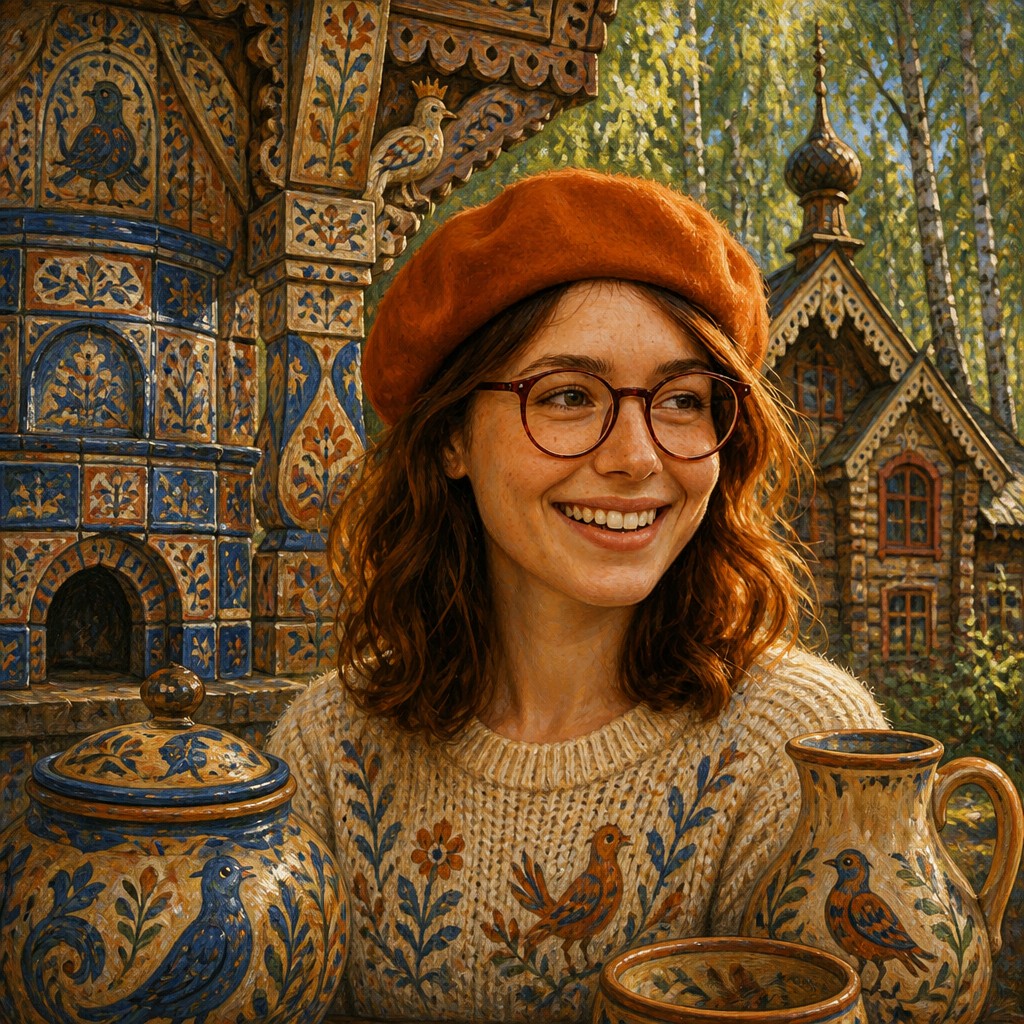
Stylized birds, woodland animals, legendary creatures, foliage, and narrative motifs appear across ceramics, woodwork, textiles, and painted surfaces. The imagery is decorative rather than strictly naturalistic.
Colorful majolica
Glossy ceramic tiles and vessels use deep cobalt, ochre, cream, green, russet, and turquoise. Uneven glaze pooling, modeled relief, and luminous surfaces emphasize the handmade character of the work.
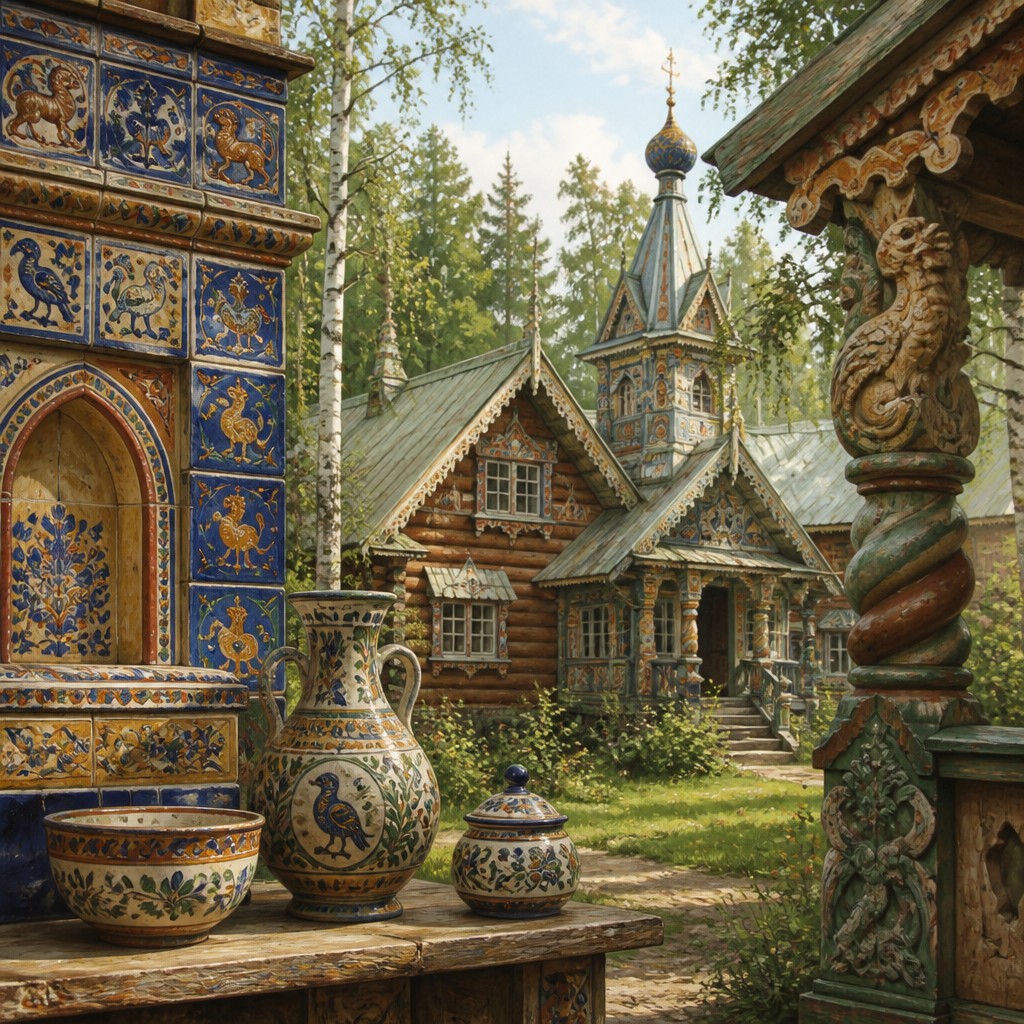
Craft-centered interiors
Tile stoves, carved furniture, ceramic vessels, woven textiles, and built-in woodwork form unified environments. Decoration is integrated into the architecture rather than applied as isolated ornament.
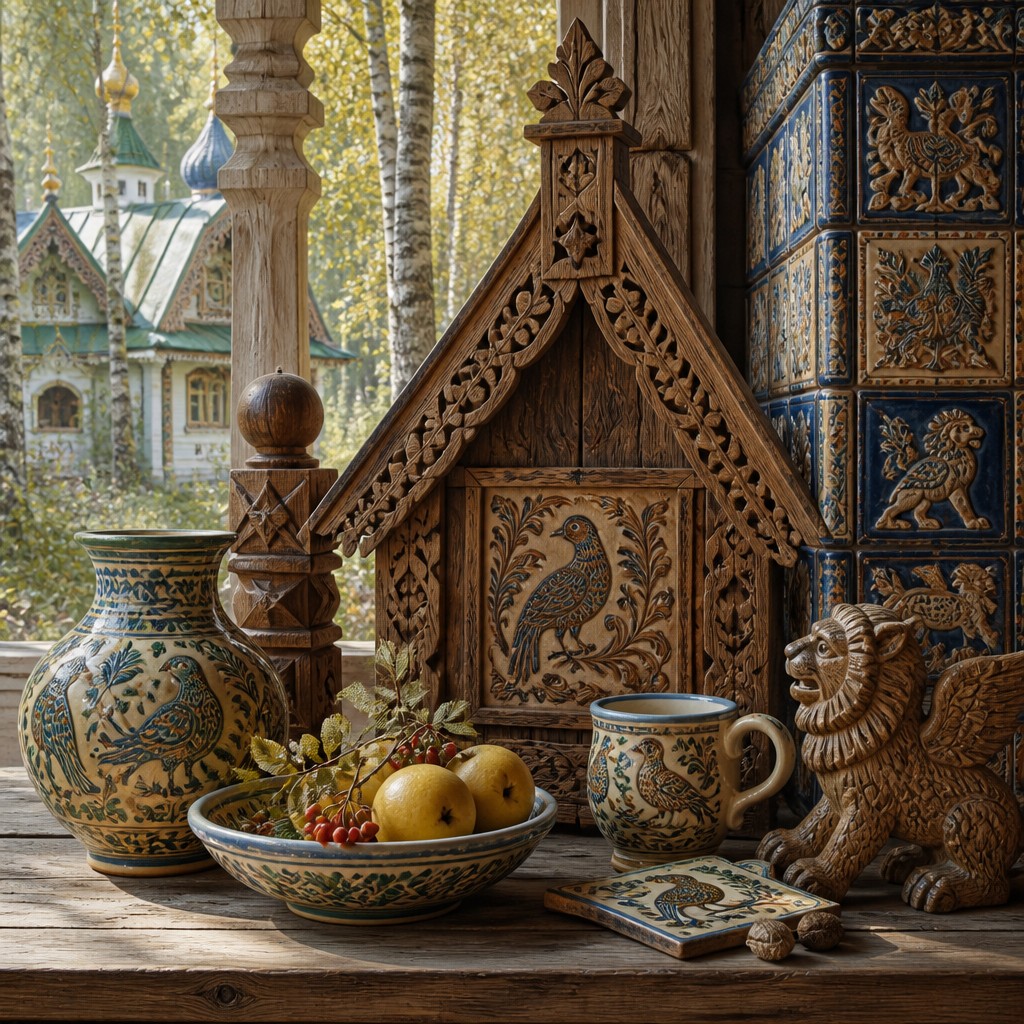
Birch and estate landscapes
Birch groves, mossy clearings, woodland paths, and dappled sunlight provide a recurring setting. Natural surroundings connect the architecture to the ideal of a creative rural retreat.
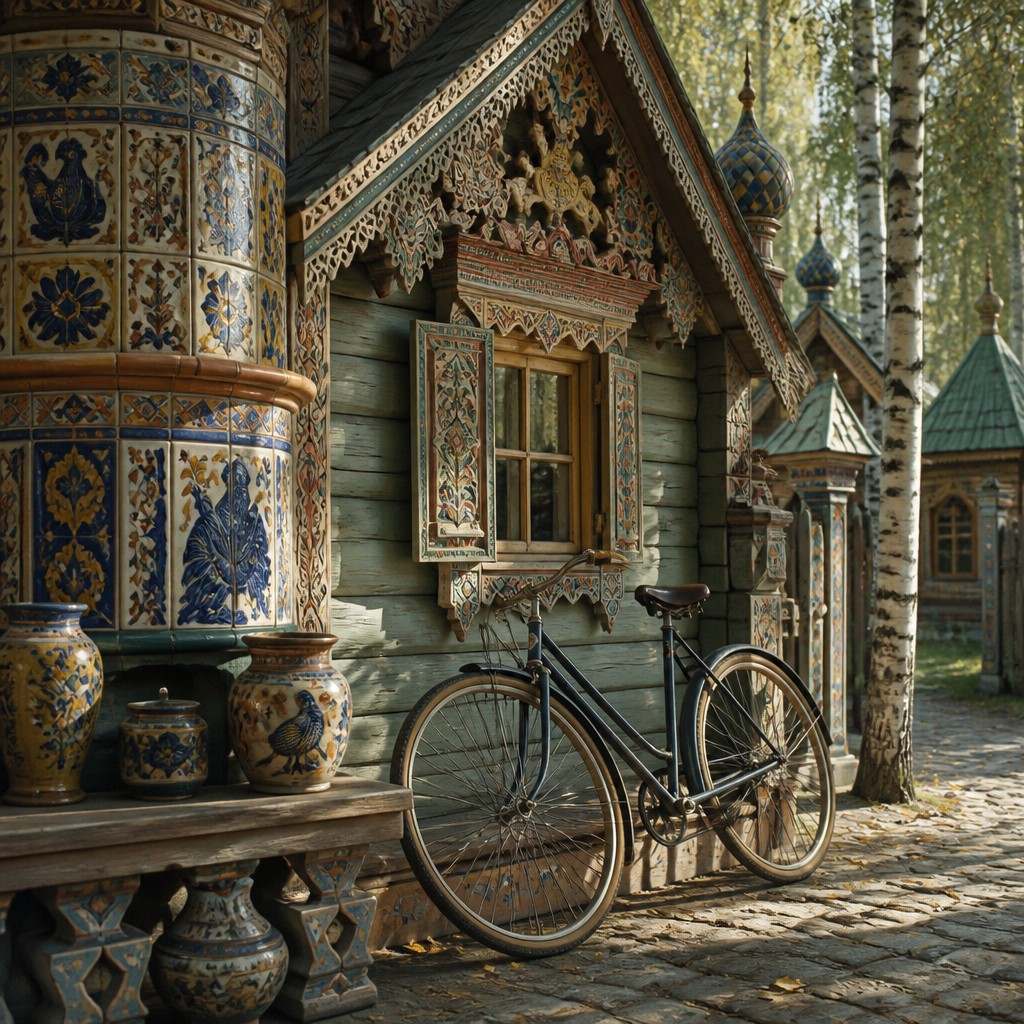
Irregular handmade surfaces
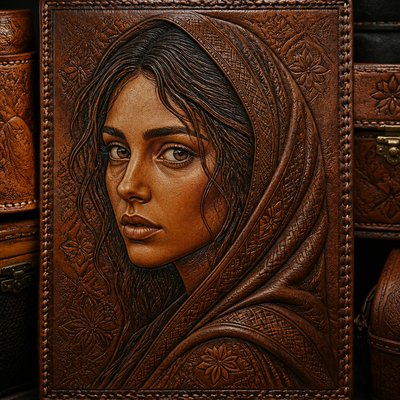
Visible tool marks, asymmetry, textured timber, brush variation, and subtly uneven glaze prevent the style from appearing mechanically uniform. These imperfections are central to its Arts and Crafts character.
Abramtsevo Prompt Ideas
Start from an idea — each one opens the generator with the style ready to go. See all 40 Abramtsevo prompts →
How to Create Abramtsevo Art
Master the craft step by step — or skip straight to creating. Read the full guide →
- 1
Build the architectural silhouette first
Begin with a compact timber estate, steep gables, porches, and an onion-shaped roof accent before adding ornament. Keep the structure readable so decorative carving does not overwhelm the building.
- 2
Use a restrained folk-art palette
Combine warm wood and earth tones with concentrated cobalt, ochre, cream, green, and russet ceramic accents. Glossy tiles should contrast with matte timber and the softer values of the surrounding forest.
- 3
Design motifs as repeated craft patterns
Create simplified birds, leaves, flowers, suns, and fairy-tale animals with strong outlines and rhythmic repetition. Apply them to gables, stove tiles, vessels, and furniture so the setting feels made as one environment.
- 4
Preserve handmade texture
In traditional work, use carved wood, modeled clay, slip painting, and layered glazes rather than perfectly smooth industrial finishes. Digitally, introduce irregular edges, brush variation, glaze pooling, wood grain, and small asymmetries.
- 5
Write prompts with material and light cues
For prompt-based creation, specify timber joinery, carved gables, relief majolica, stylized birds, birch woodland, and dappled forest light. Add terms such as handcrafted, folk-tale, glazed ceramic, textured wood, and Russian Revival when you want the lineage to remain clear.
The Story
History & Origins of Abramtsevo
Historically, the Abramtsevo tradition developed around an artists' and crafts community at an estate near Moscow during the late 19th and early 20th centuries, especially from the 1870s through the 1910s. Its practitioners sought alternatives to academic historicism by studying Russian medieval art, peasant ornament, vernacular buildings, oral tradition, and regional handicrafts. Workshops connected with the estate produced experiments in ceramics, woodcarving, furniture, embroidery, and architectural design.
The style belongs to the broader Russian Revival and overlaps with the emerging Arts and Crafts movement and Russian Art Nouveau. The specific visual formula used today—forest architecture, fairy-tale ornament, colorful majolica, and rustic ceramics—is a contemporary synthesis of these historical sources rather than a single standardized period style.
Influences: The style draws primarily from Russian Revival architecture, medieval Russian and Byzantine ornament, regional peasant building traditions, and the decorative arts of Russian folk culture. It also shares values with the British and European Arts and Crafts movements, particularly the integration of architecture, furniture, ceramics, and textiles. Its fairy-tale atmosphere may overlap with Symbolist and Russian Art Nouveau imagery, while its ceramic emphasis connects it to late-19th-century studio pottery and architectural majolica.
Frequently Asked Questions
What defines the Abramtsevo art style?
It is defined by Russian Revival timber architecture combined with handcrafted folk ornament, fairy-tale imagery, and colorful majolica ceramics. Carved wood, painted birds and foliage, onion-shaped roof details, and birch-forest settings are recurring features.
Is Abramtsevo an art movement or an architectural style?
It refers both to a historical artistic community and to the broader aesthetic associated with its workshops and buildings. In contemporary usage, the term often describes a cross-disciplinary Russian Revival look spanning architecture, ceramics, furniture, illustration, and interior design.
When did the Abramtsevo tradition develop?
Its most important period was the late 19th and early 20th centuries, particularly from the 1870s through the 1910s. It emerged during a renewed interest in Russian medieval art, village crafts, folklore, and national architectural traditions.
How is it different from generic Russian Revival architecture?
Russian Revival is a broad historical movement, while the Abramtsevo-associated aesthetic places unusual emphasis on collaborative craft, vernacular timber construction, ceramics, and integrated interiors. Its imagery is often more intimate, folkloric, and workshop-based than monumental revival architecture.
What materials are associated with this style?
Carved and stained wood, modeled and glazed ceramics, majolica tiles, painted plaster, woven textiles, and wrought or forged metal are especially appropriate. The combination of rough timber with glossy ceramic creates one of its clearest visual contrasts.
Where can this style be used today?
It works well for illustrated architecture, heritage interiors, ceramic design, fantasy environments, book covers, editorial art, game settings, and rustic hospitality spaces. The style is strongest when structural forms and decorative craft are treated as parts of the same visual world.
Create your first Abramtsevo artwork
Describe anything — or upload a photo — and see it in Abramtsevo Art Style in seconds.
Related Styles
Discover similar art styles