Mesopotamian Relief Art Style
Explore Mesopotamian relief art: profile figures, winged guardians, cuneiform borders, and monumental stone carving from the ancient Near East.
Instantly rendered in Mesopotamian Relief — or transform a photo
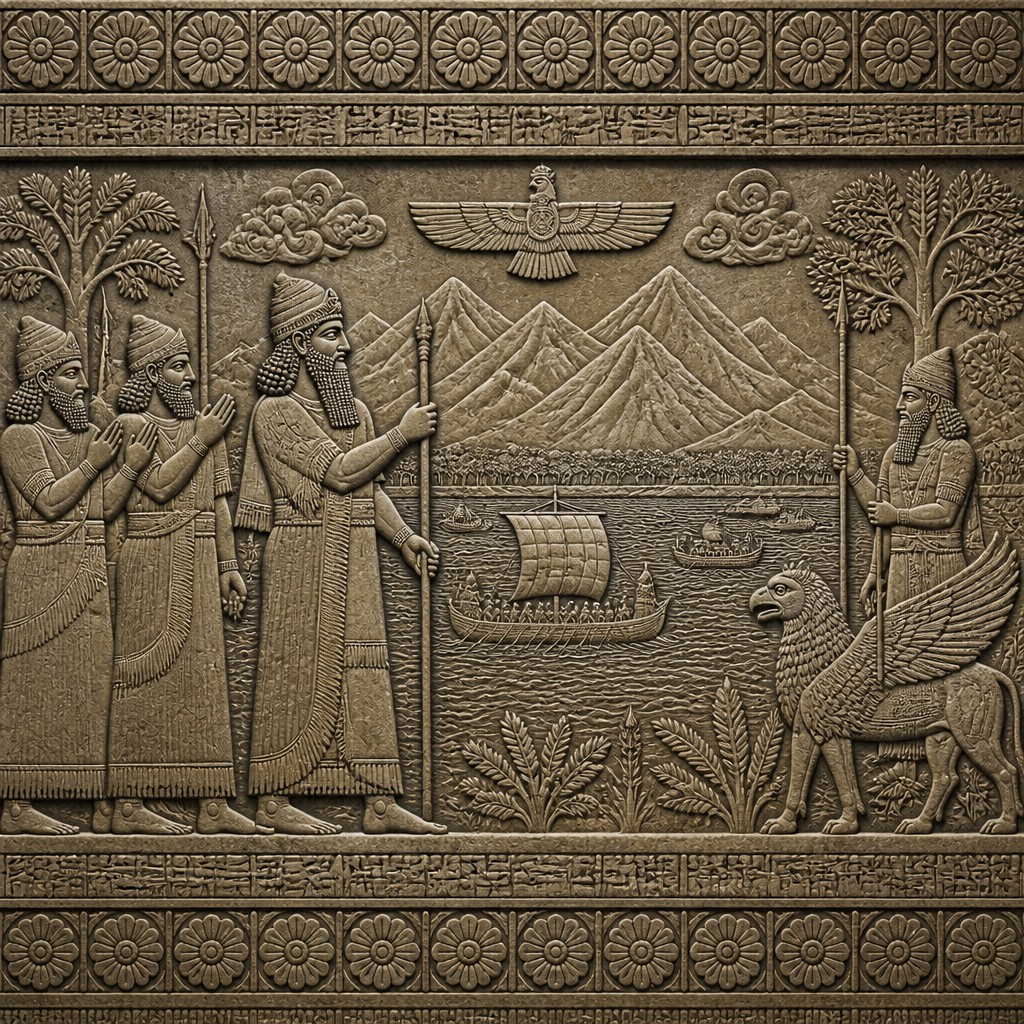
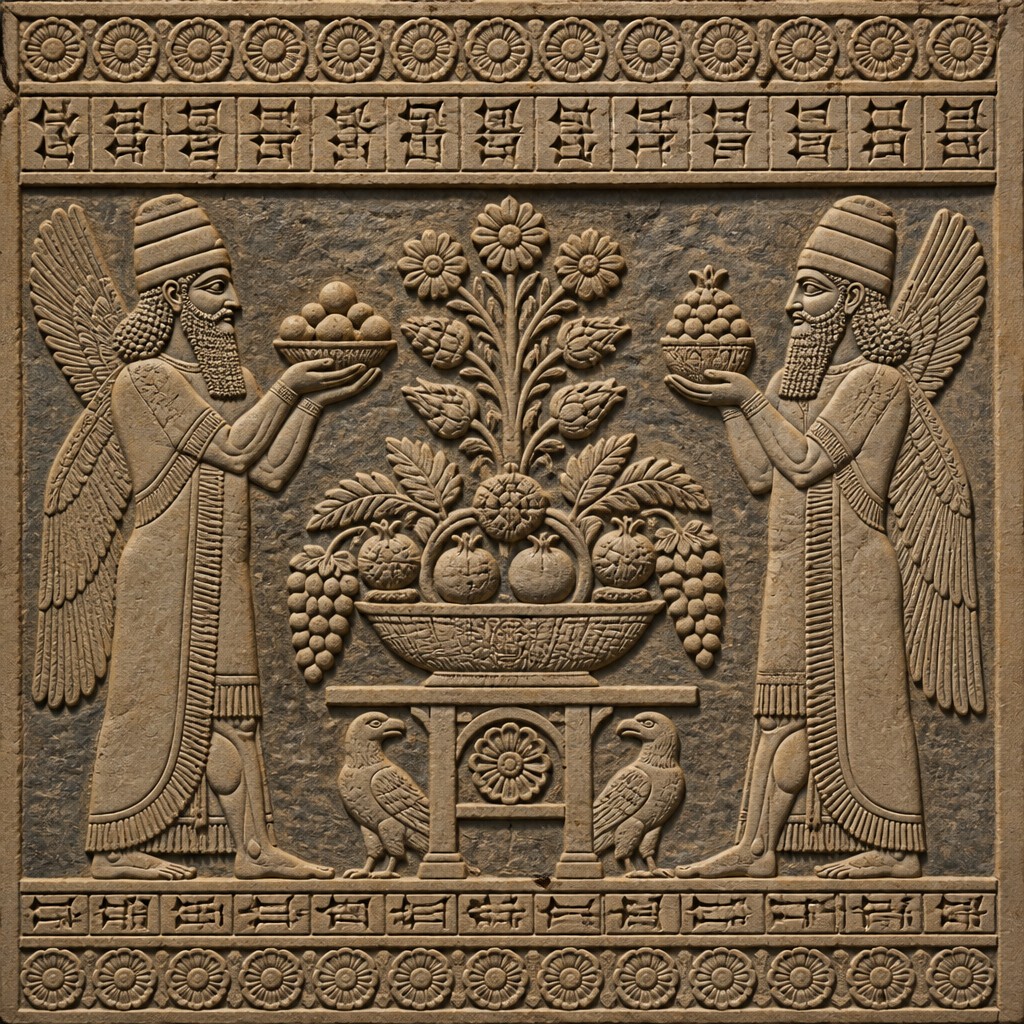
Mesopotamian Relief Gallery
Tap any artwork to explore it
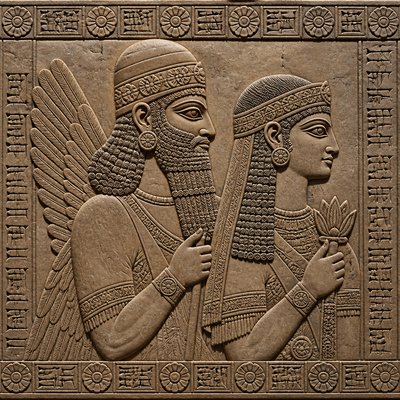
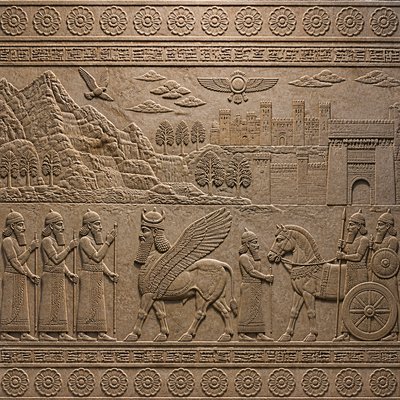
What is Mesopotamian Relief Art Style?
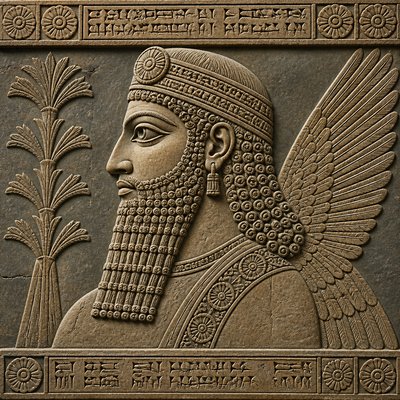
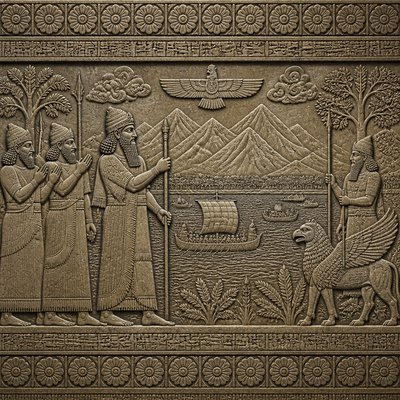
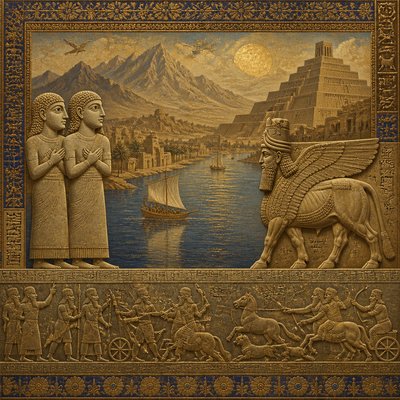
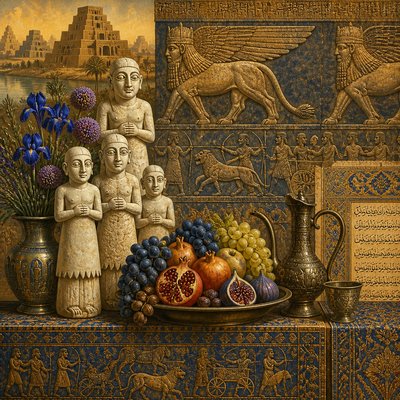
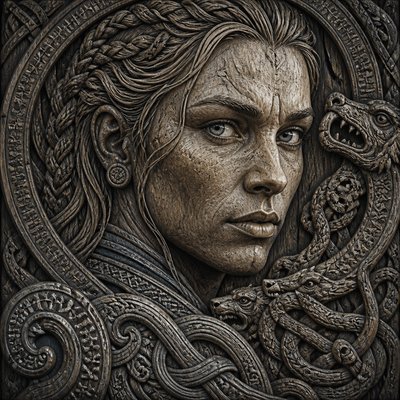
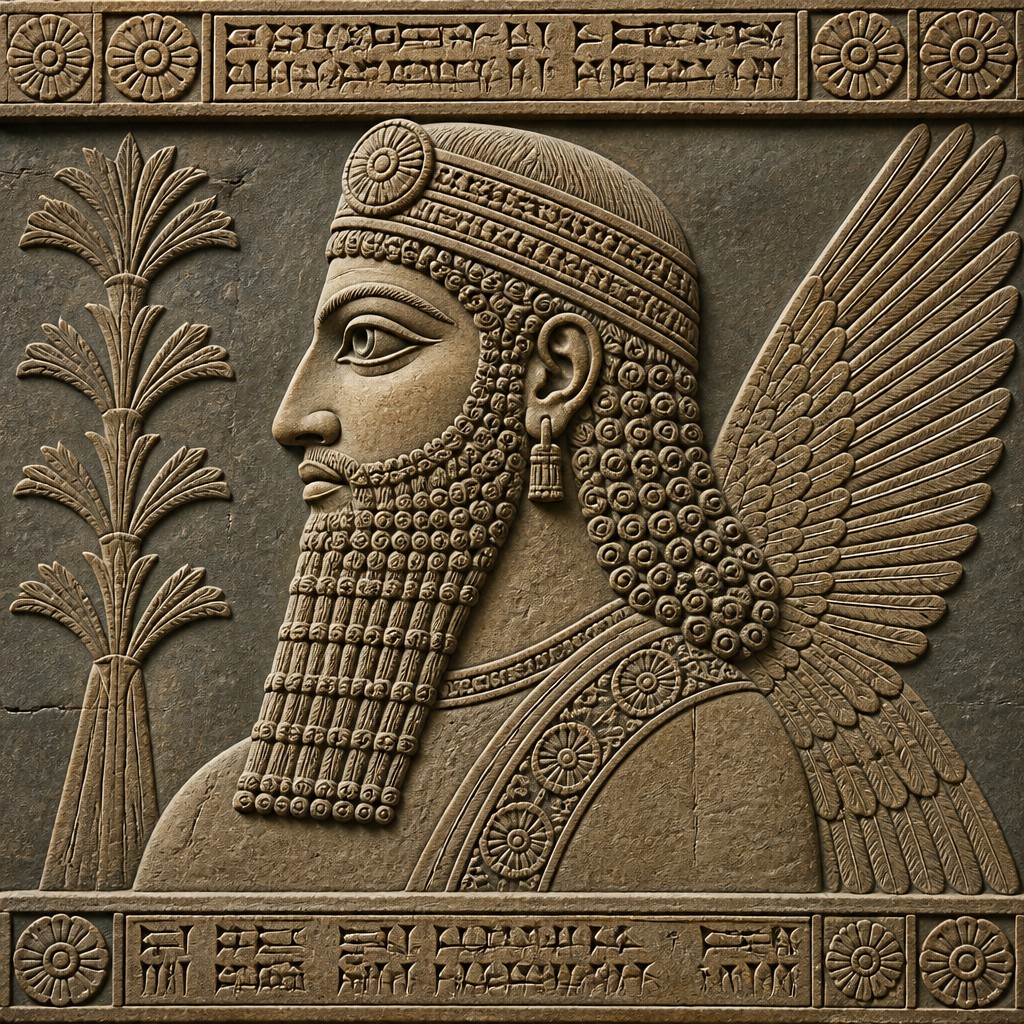
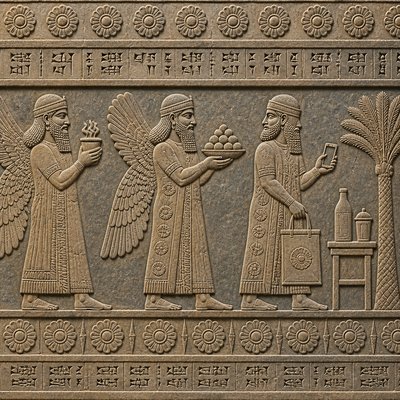
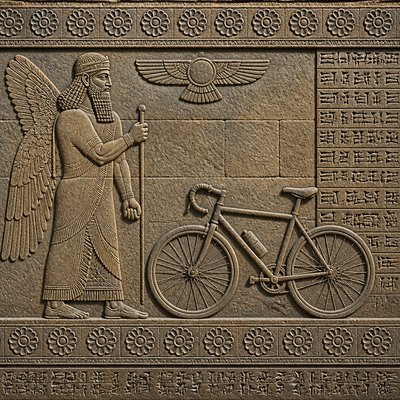
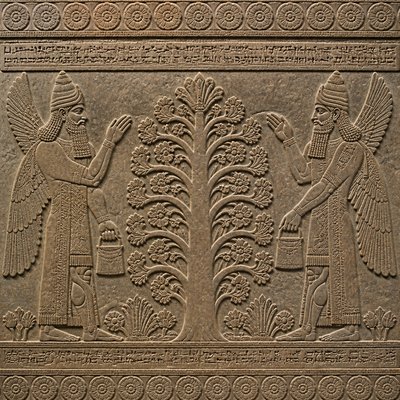
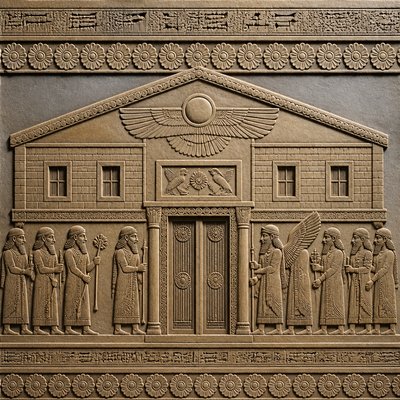
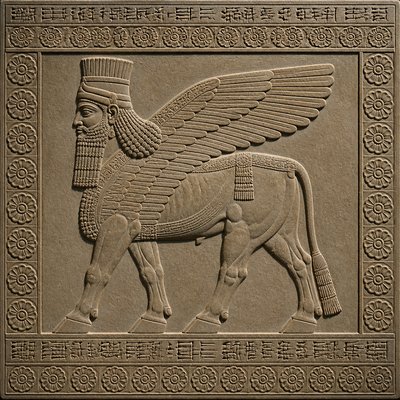
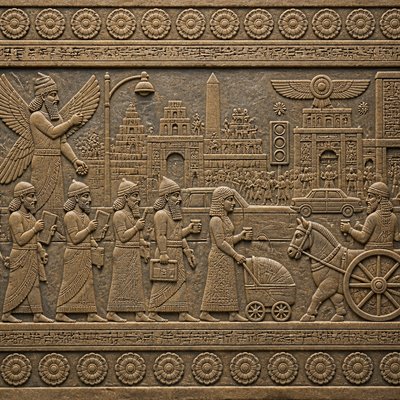
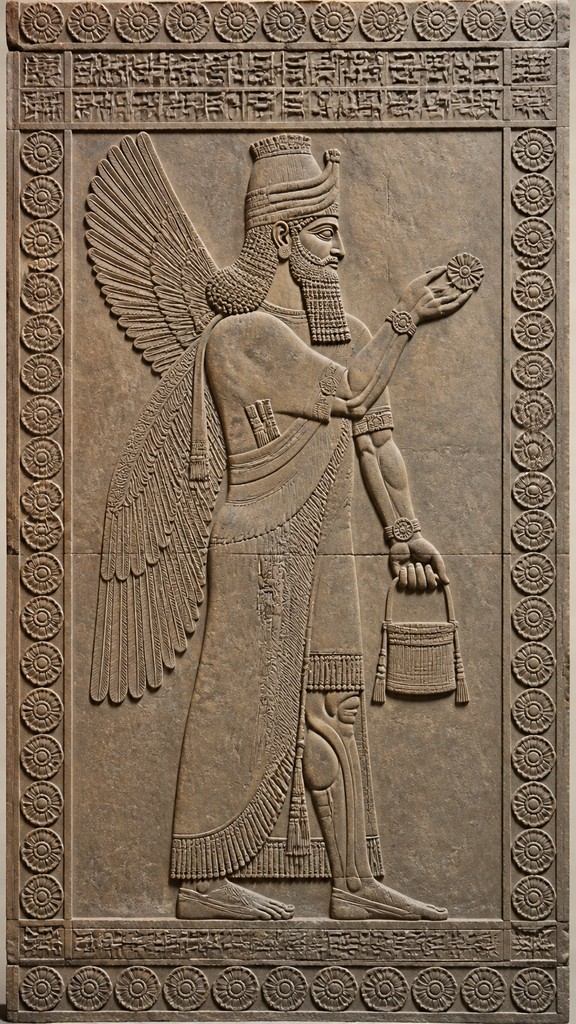
Mesopotamian relief art is a sculptural tradition associated with the ancient civilizations of the Tigris and Euphrates region. Images were carved into stone slabs, architectural surfaces, stelae, gates, and ceremonial objects, presenting rulers, deities, protective spirits, animals, soldiers, attendants, and ritual processions. Figures are often shown in strict profile or composed according to a formal hierarchy, with scale and placement communicating rank rather than naturalistic perspective.
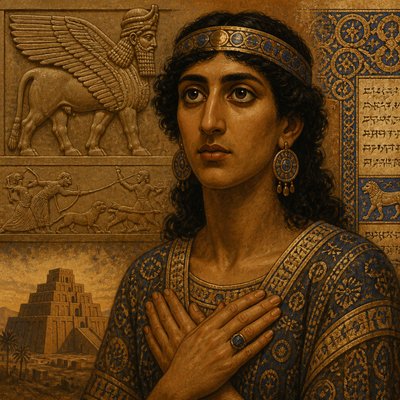
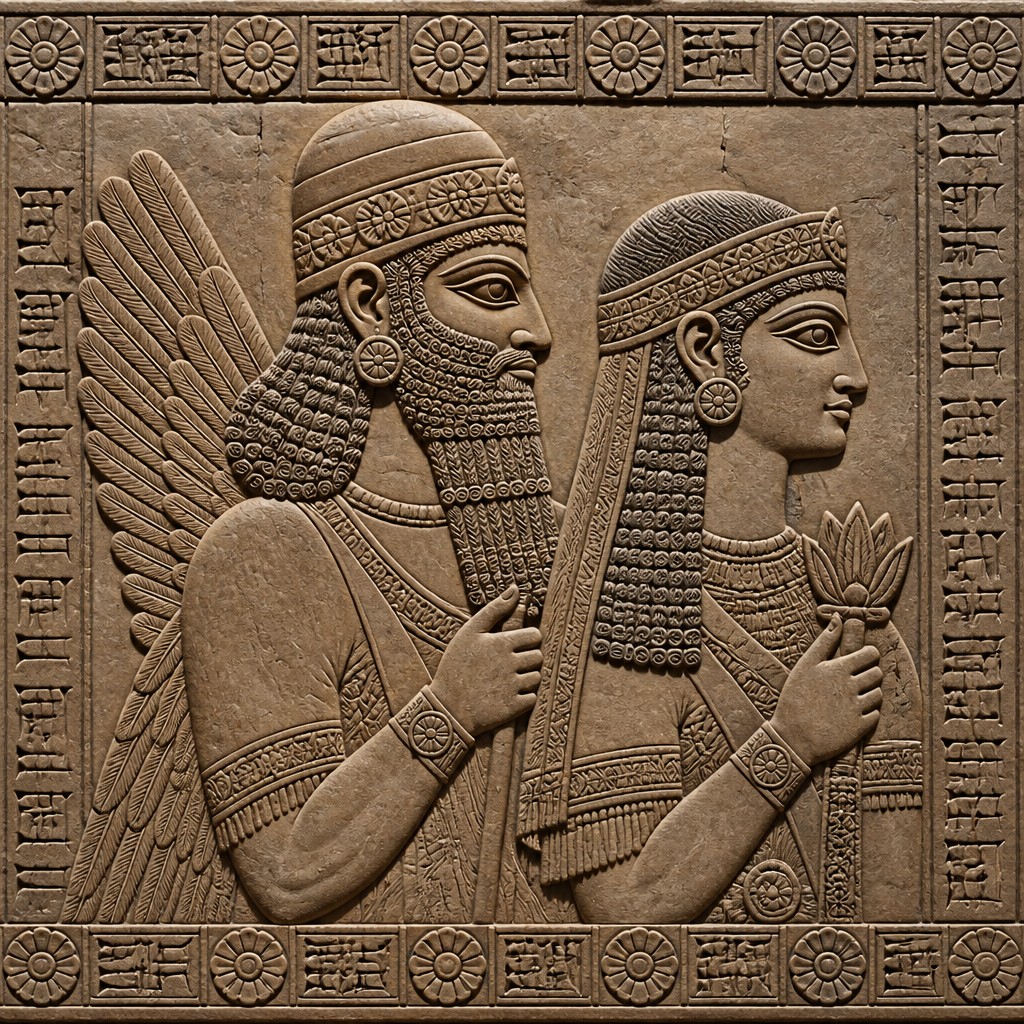
Its visual identity depends on shallow carving, disciplined contours, patterned surfaces, and a strong sense of order. Braided hair, curled beards, layered feathers, embroidered textiles, weapons, jewelry, and musculature are translated into repeated incised lines. Rosettes, cuneiform inscriptions, stylized trees, wing motifs, and border bands organize the image, while muted stone colors—such as warm limestone, gypsum-white, dark basalt, and slate gray—reinforce its architectural and ceremonial character.
Try It On Your Photos
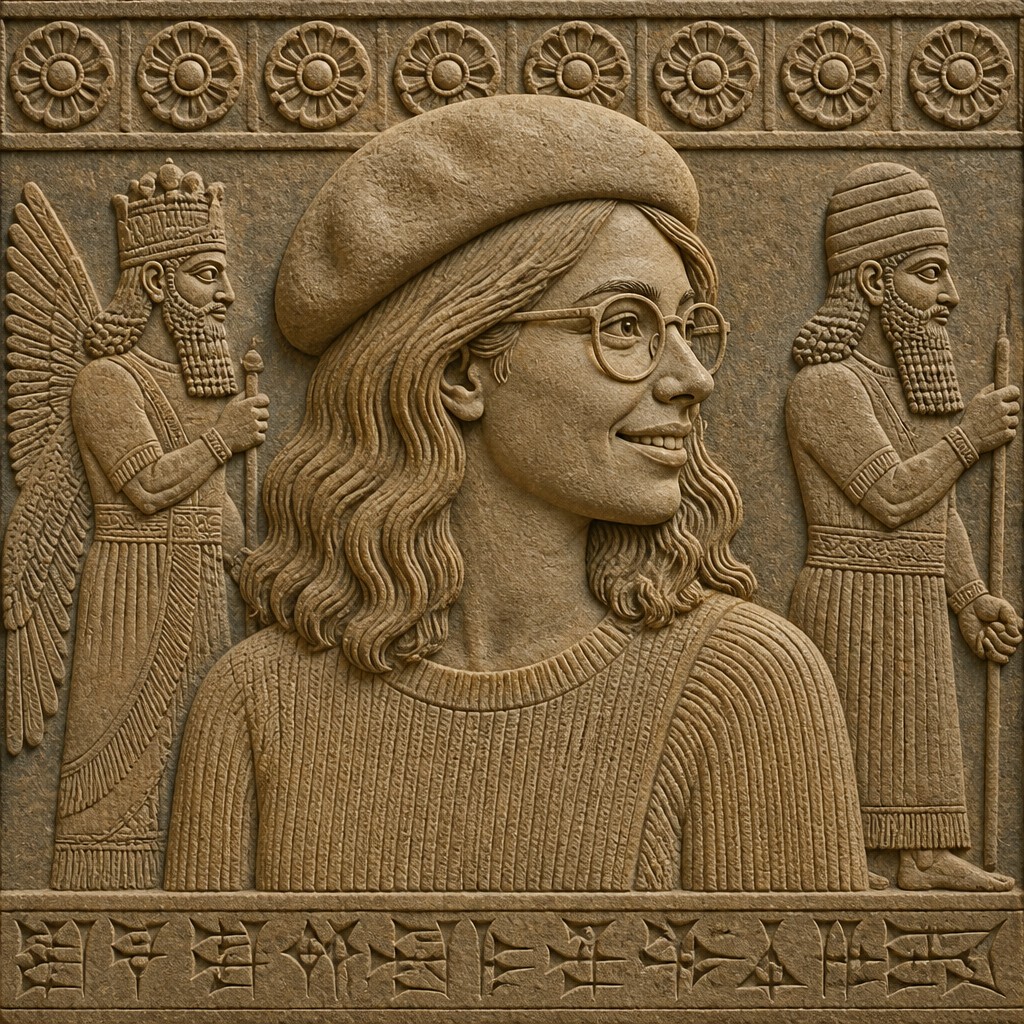
Upload any photo and convert it into Mesopotamian Relief Art Style — drag the sliders to compare before and after.

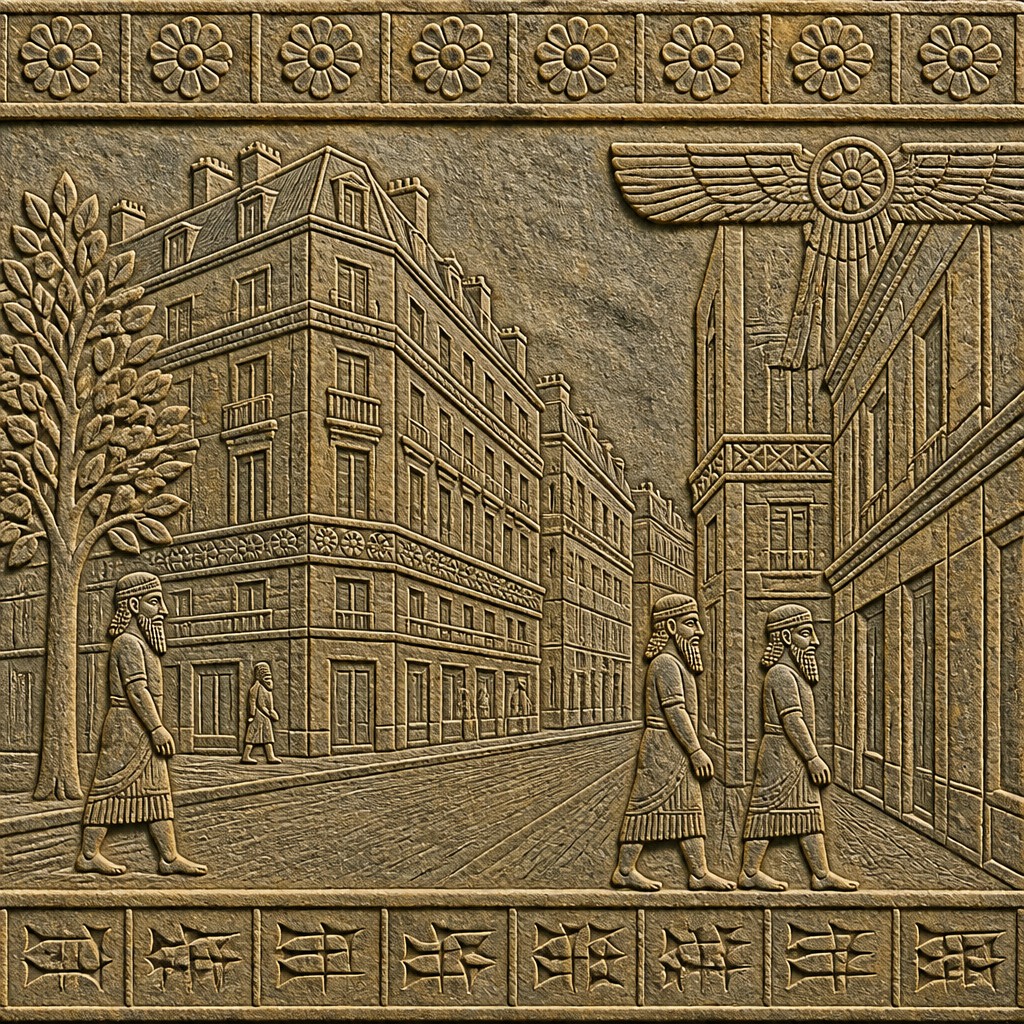

What Defines Mesopotamian Relief Art Style
The signature details, up close
Shallow bas-relief
Figures and symbols rise only slightly from the stone surface, producing controlled shadows rather than fully modeled sculpture. Broad planes and crisp edges make the imagery legible from a distance.
Hieratic profile figures
Bodies, faces, and processions are arranged according to formal conventions, often in strict profile with limited overlapping. Relative scale and position suggest social, divine, or military importance.
Winged guardians
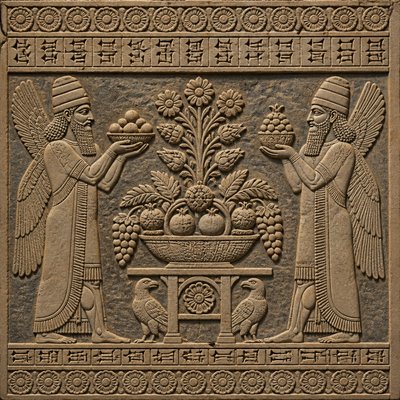
Protective hybrid beings combine human or animal features with broad, layered wings. Feathers are treated as rhythmic rows of incised marks, creating a highly ordered surface pattern.
Patterned hair, beards, and textiles
Braided beards, curled hair, fringed garments, belts, armor, and jewelry are described through repeated grooves and geometric detail. Ornament functions as both texture and a sign of status.
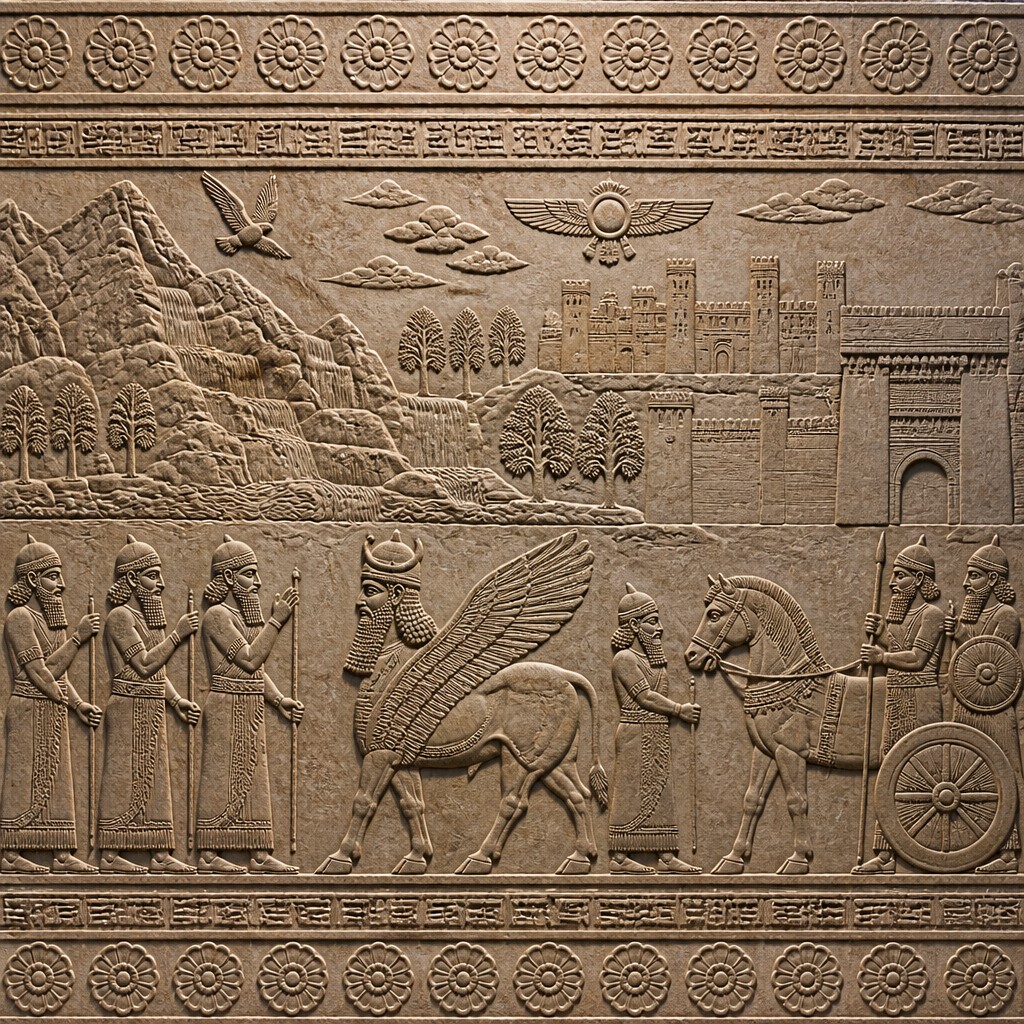
Cuneiform and ornamental borders
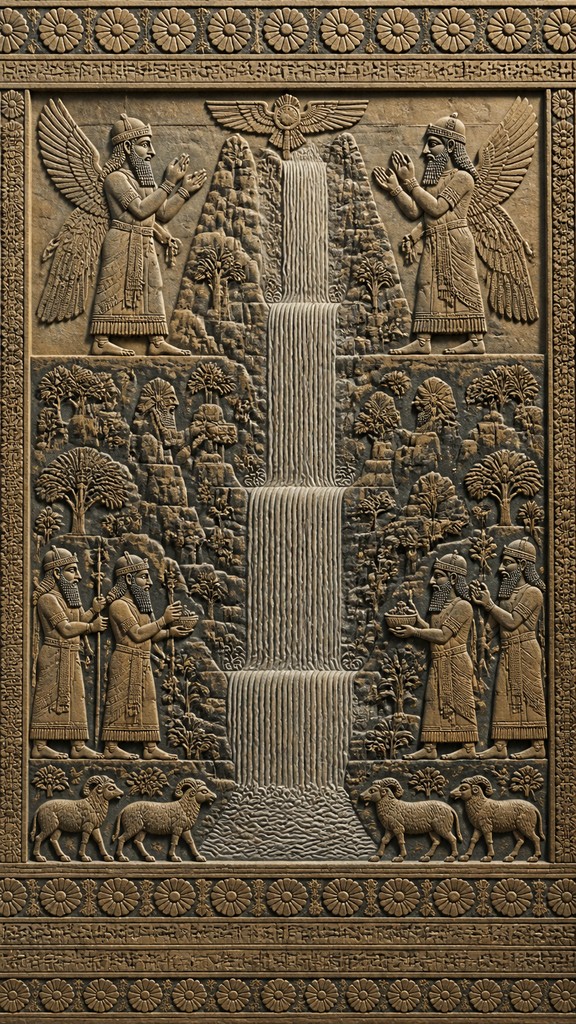
Wedge-shaped inscriptions, rosettes, bands, sacred trees, and repeating motifs frame or accompany the principal scene. These elements balance the composition and connect image-making with writing and administration.
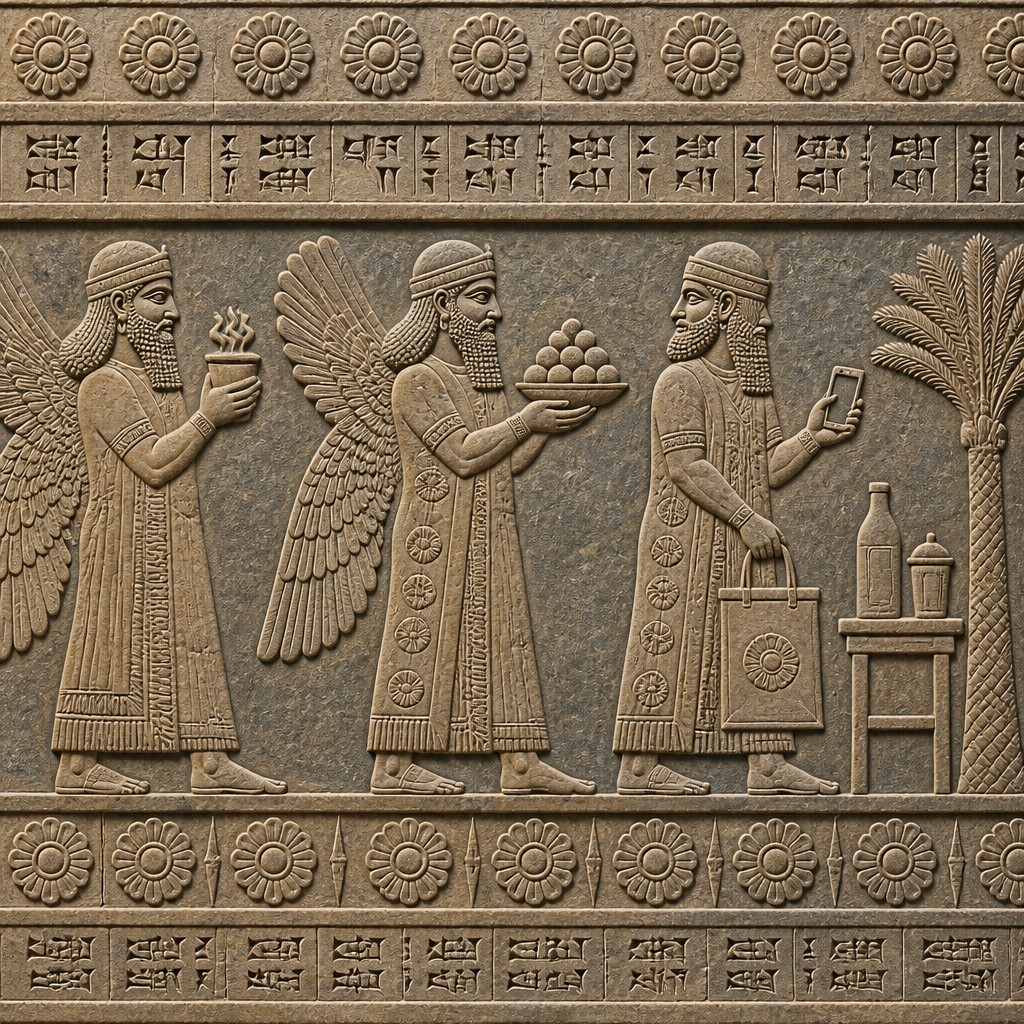
Earth-toned stone palette
Sand beige, ochre, chalky white, charcoal, and slate-gray tones evoke carved gypsum, limestone, and basalt. Color should remain restrained, with the emphasis on surface, relief, and directional light.
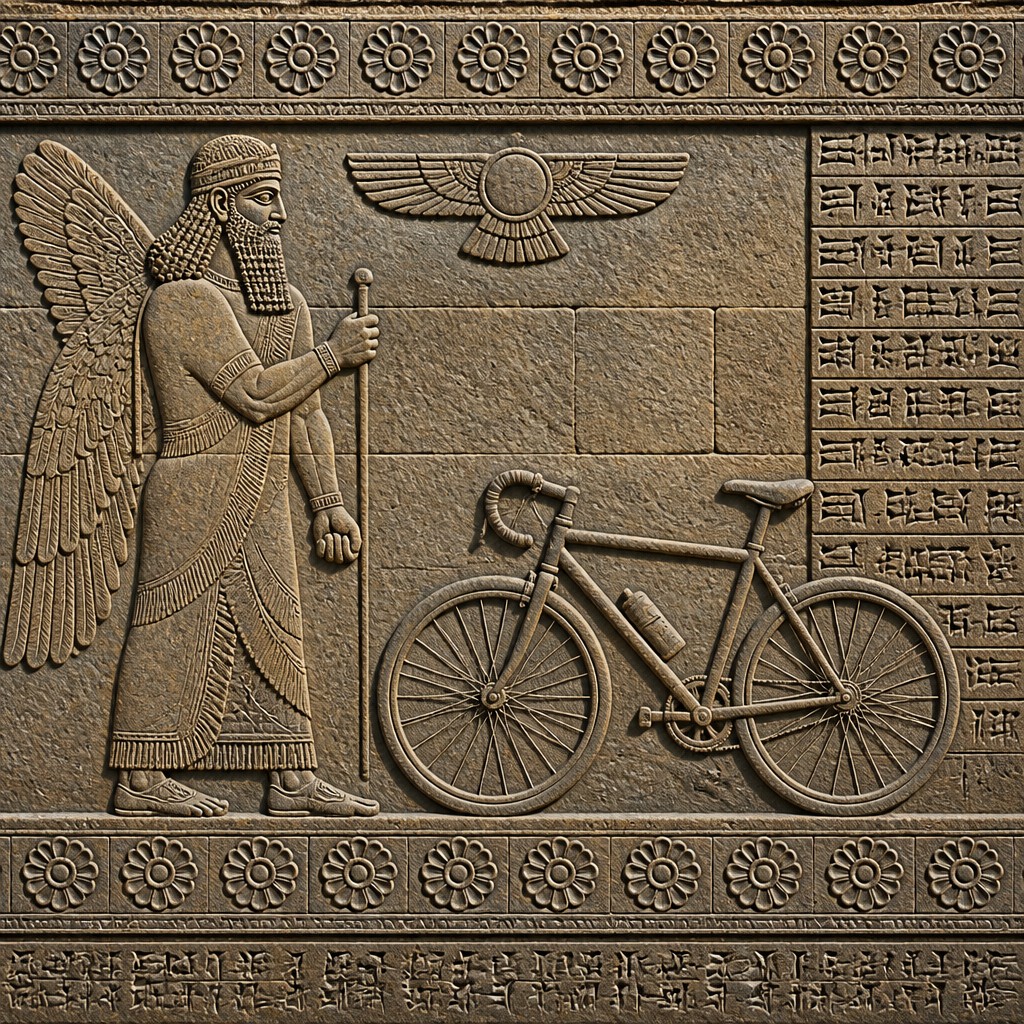
Monumental narrative composition
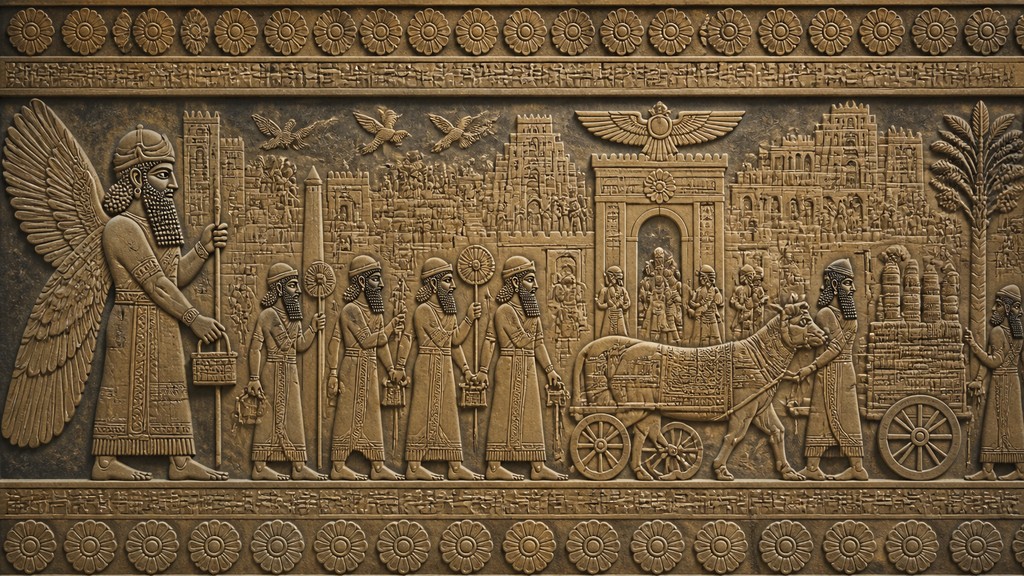
Scenes unfold in registers, processional lines, or extended friezes rather than in deep pictorial space. Repetition, symmetry, and frontal architectural framing create a ceremonial sense of permanence.
Try It
Create Videos in Mesopotamian Relief Art Style
Styles aren't just for stills — describe a scene or animate an image and get a short video rendered in Mesopotamian Relief. Press play to see this pond come to life.
Make a VideoMesopotamian Relief Prompt Ideas
Start from an idea — each one opens the generator with the style ready to go. See all 40 Mesopotamian Relief prompts →
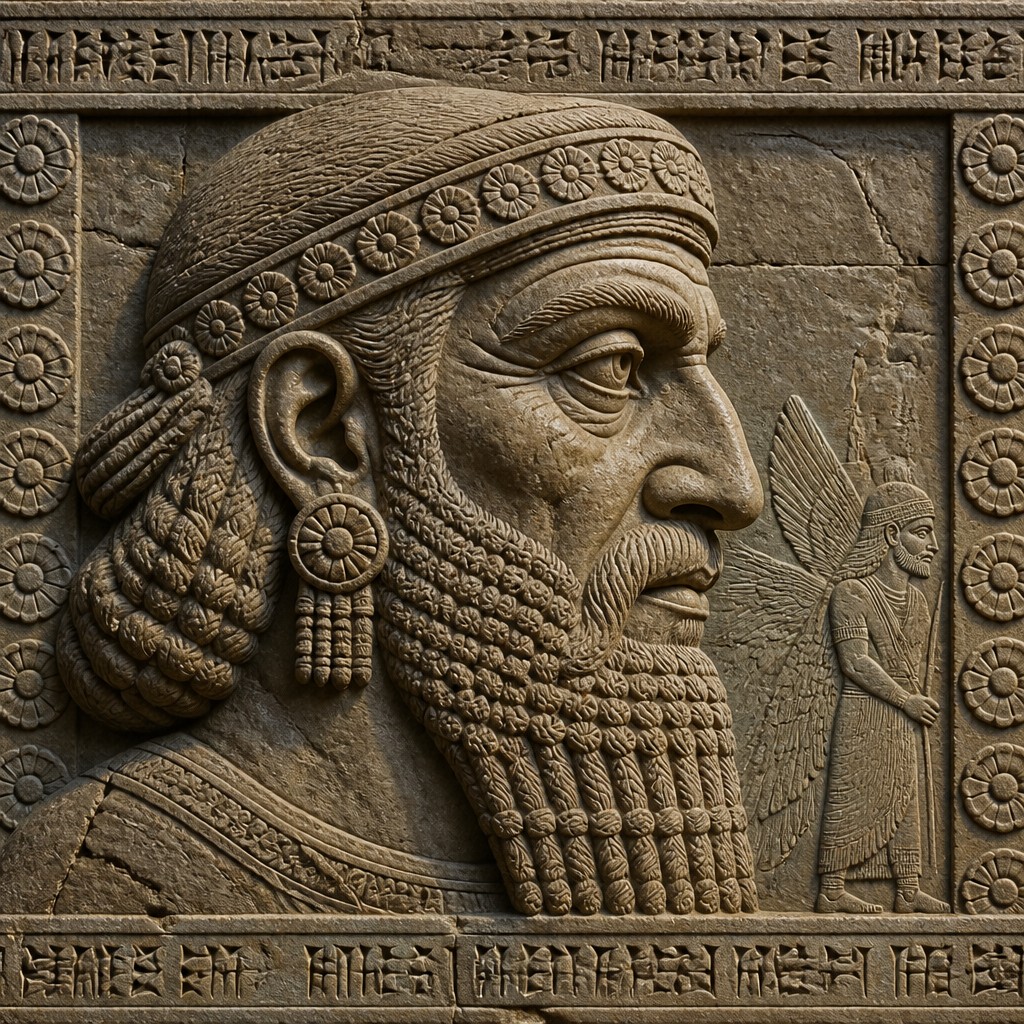
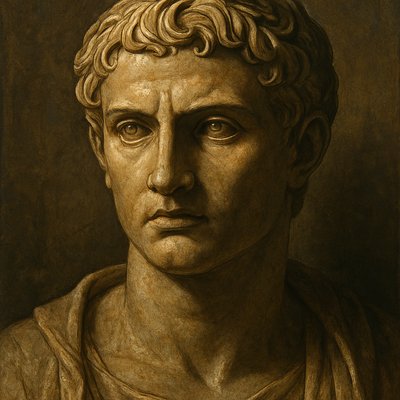
“close-up portrait of an elderly person with expressive weathered features”
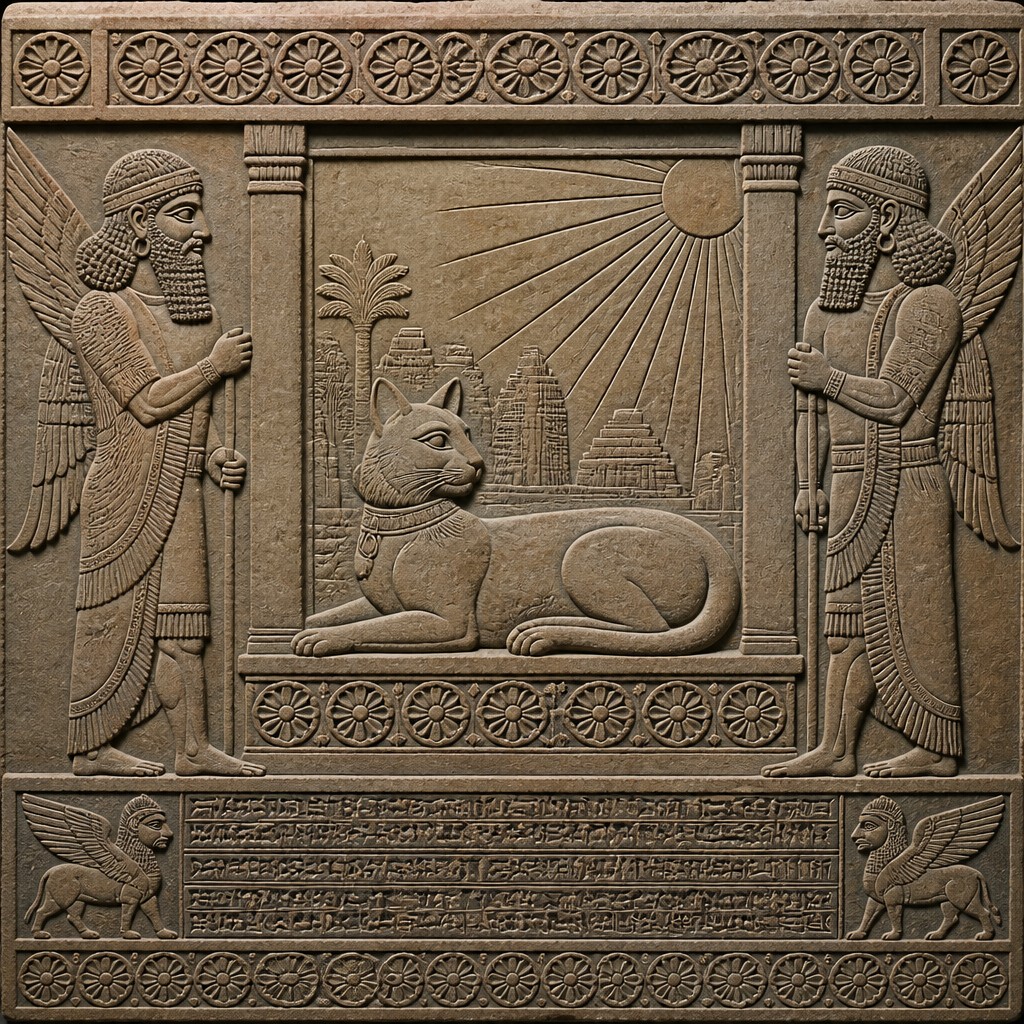
“a cat lounging in a sunlit window”
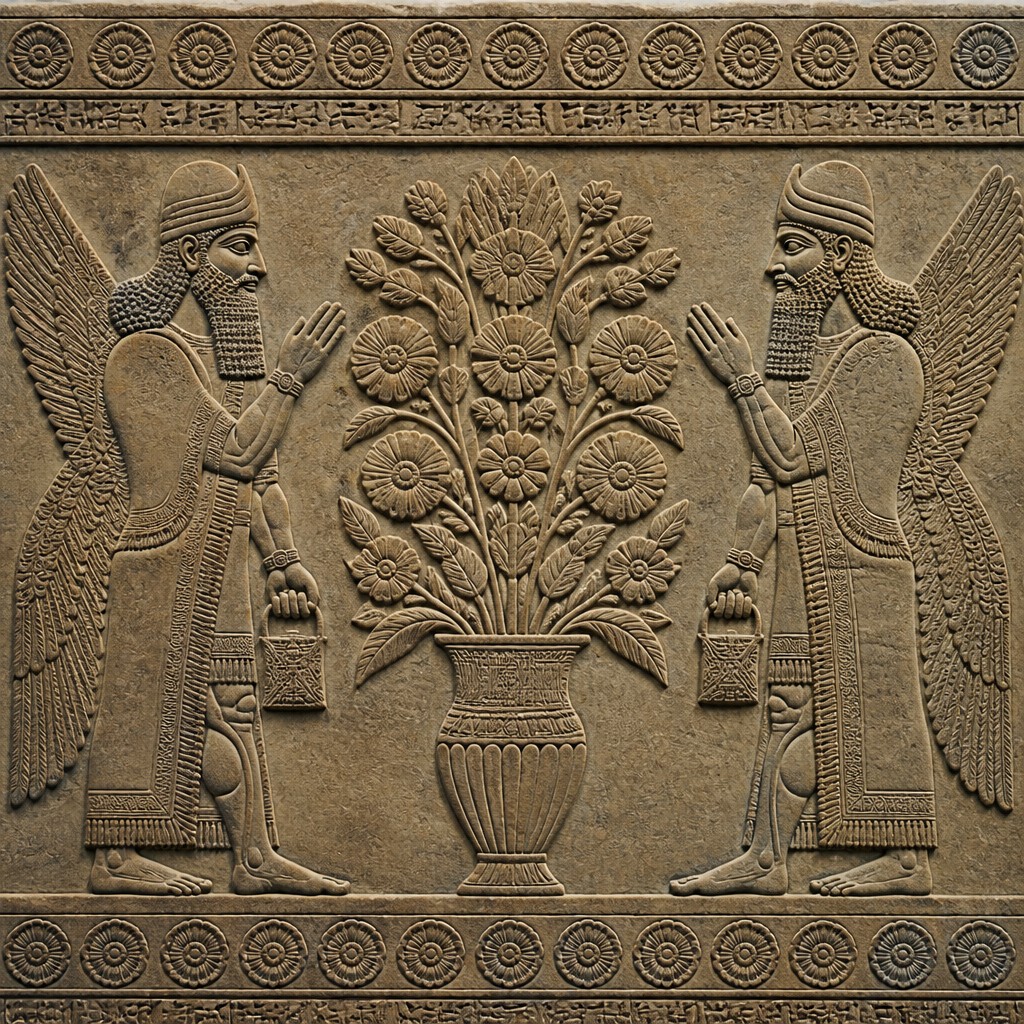
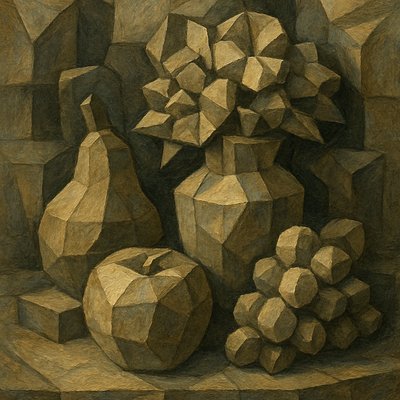
“bouquet of flowers in a glass vase”
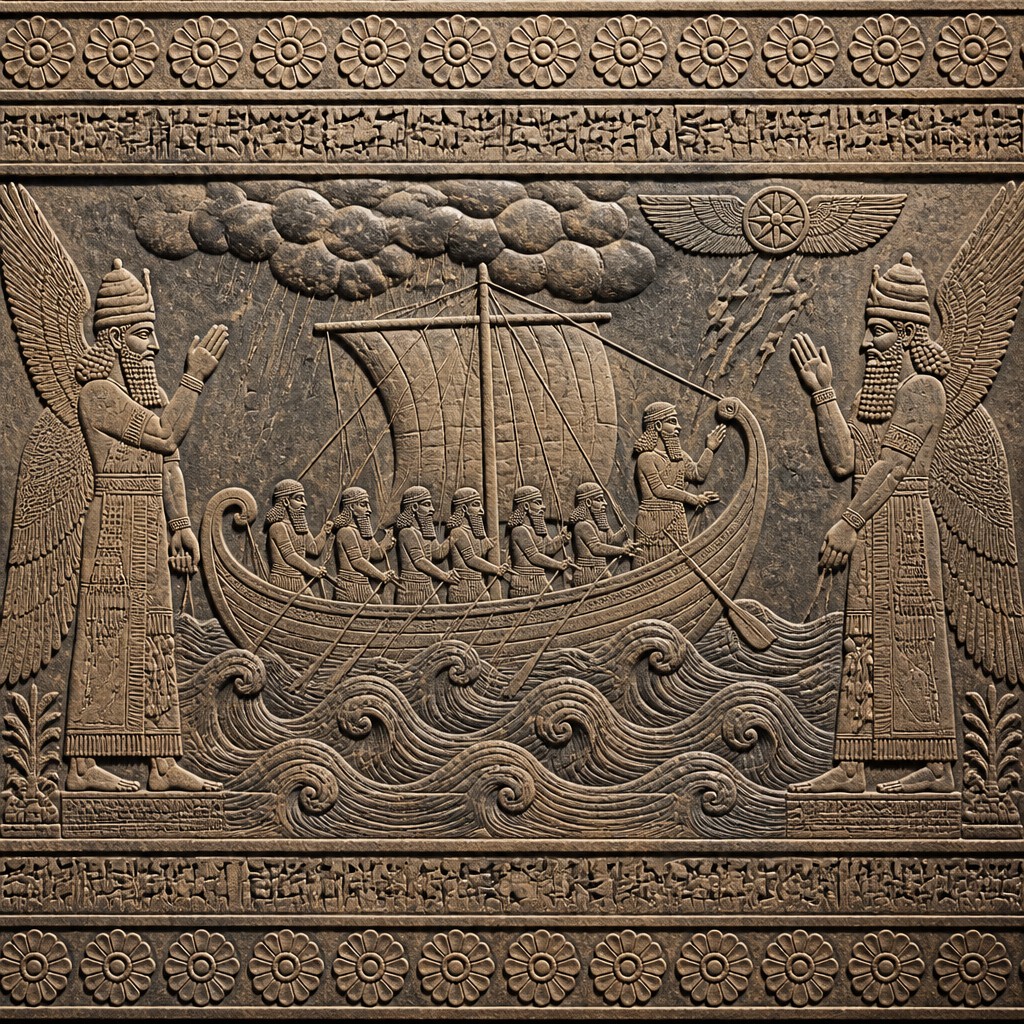
“sailing ship on a stormy sea”
How to Create Mesopotamian Relief Art
Master the craft step by step — or skip straight to creating. Read the full guide →
- 1
Build the composition in registers
Arrange figures, animals, inscriptions, or events in horizontal bands or a clear processional sequence. Keep the background shallow and architectural so the scene reads like a carved wall panel.
- 2
Design for low relief
Use broad, simplified planes for faces and bodies, then reserve fine lines for hair, feathers, textiles, and weapons. In digital work, a height map, sculpting pass, or restrained displacement effect can simulate shallow carving.
- 3
Use profile and hierarchy deliberately
Turn most figures into profile and vary their scale according to ceremonial importance. Avoid casual gestures, foreshortening, and deep atmospheric perspective unless intentionally mixing traditions.
- 4
Recreate stone and directional light
Choose a limited limestone, gypsum, basalt, or slate palette and add subtle pores, chips, tool marks, and edge wear. A raking museum-style light will reveal the relief without making the surface look glossy.
- 5
Add historically coherent ornament
Use rosettes, cuneiform-like inscription bands, braided beards, layered wings, sacred trees, and patterned garments as structural motifs rather than random decoration. For prompt-based generation, specify the subject, profile orientation, shallow relief, material, palette, and lighting.
The Story
History & Origins of Mesopotamian Relief
The tradition developed across Mesopotamia from the early city-states of Sumer through the Akkadian, Babylonian, and Assyrian periods, with related practices continuing in neighboring regions of the ancient Near East. Early reliefs commonly emphasized votive figures, divine symbols, ritual scenes, and commemorative monuments. Later palace programs expanded the scale and narrative complexity of carved stone imagery.
Neo-Assyrian palace reliefs are especially associated with long sequences of hunting, warfare, tribute, and court ceremony, as well as protective winged beings placed near entrances. Carvers worked in materials including gypsum alabaster, limestone, and basalt, using chisels and abrasives to establish low relief, sharp outlines, patterned textures, and inscriptions. The style described here is a synthesized visual interpretation of these traditions rather than a single period-specific school.
Influences: This style draws from the relief traditions of Sumerian city-states, Akkadian imperial monuments, Babylonian architectural decoration, and Neo-Assyrian palace sculpture. It also relates to ancient Near Eastern cylinder-seal imagery, cuneiform inscription practices, votive sculpture, architectural friezes, and the broader language of ceremonial and protective art. Modern interpretations may additionally borrow from archaeological reconstruction, museum display lighting, historical illustration, and digital sculptural texturing.
Frequently Asked Questions
What defines Mesopotamian relief art?
It is defined by shallow stone carving, formalized figures, profile views, hierarchical scale, patterned surfaces, and the integration of imagery with inscriptions and architecture. Processions, rulers, deities, animals, winged guardians, rosettes, and cuneiform bands are recurring subjects and motifs.
Is Mesopotamian relief art the same as Assyrian relief art?
No. Assyrian relief art is one important part of the larger Mesopotamian tradition, especially known for palace narratives of warfare, hunting, tribute, and guardian figures. Mesopotamian relief art also includes earlier Sumerian and Akkadian works, Babylonian monuments, and related regional practices.
What materials were used for ancient Mesopotamian reliefs?
Artists carved gypsum alabaster, limestone, basalt, and other locally available stones, depending on the period and location. Reliefs could be left in natural stone colors, painted, or combined with architectural finishes and inscriptions.
How can I make an image in this style?
Start with a clear ceremonial subject and specify shallow bas-relief, strict profile, horizontal registers, carved stone, incised detail, and a restrained earth-tone palette. Add historically suggestive motifs such as rosettes, winged guardians, braided beards, patterned garments, and cuneiform borders.
How does it differ from Egyptian relief art?
Both traditions use formal profiles, hierarchical composition, inscriptions, and shallow carving, but their conventions are not identical. Mesopotamian imagery often emphasizes processional palace narratives, protective hybrid beings, dense patterned beards and feathers, and cuneiform writing, while Egyptian relief follows its own canon of body proportions, symbols, and hieroglyphic composition.
Where was Mesopotamian relief art used?
It appeared on palace walls, temple complexes, city gates, commemorative stelae, foundation deposits, seals, and ceremonial objects. Reliefs could record historical events, glorify rulers, honor deities, or protect important architectural entrances.
Create your first Mesopotamian Relief artwork
Describe anything — or upload a photo — and see it in Mesopotamian Relief Art Style in seconds.
Related Styles
Discover similar art styles