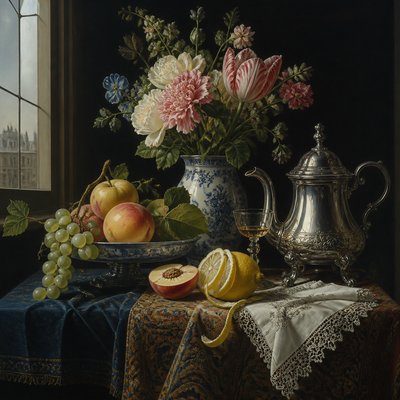
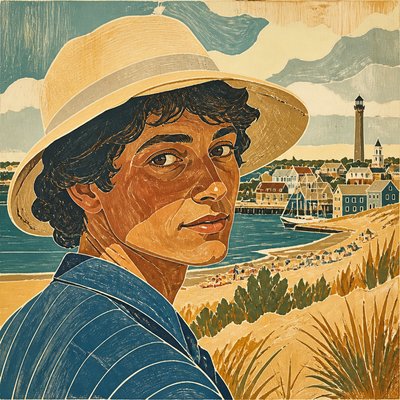
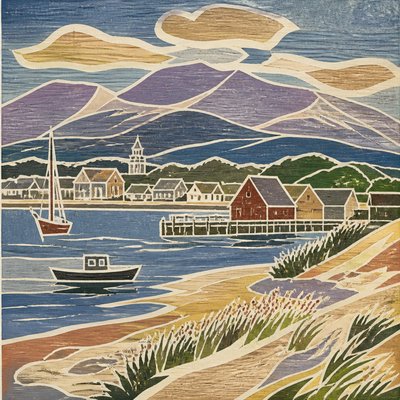
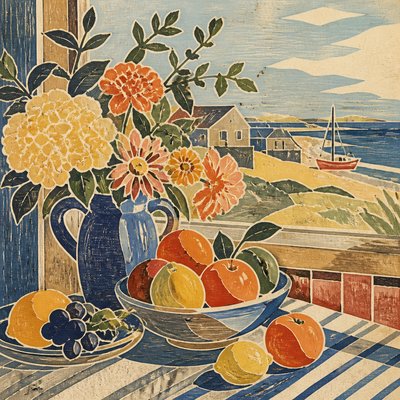
Lacquer Art Style
Explore lacquer art: glossy layered surfaces, gold leaf, mother-of-pearl inlay, and refined decorative techniques across Asian traditions.
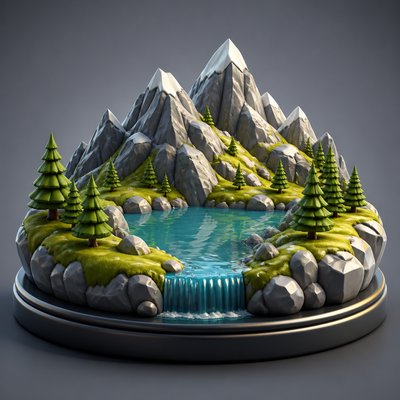
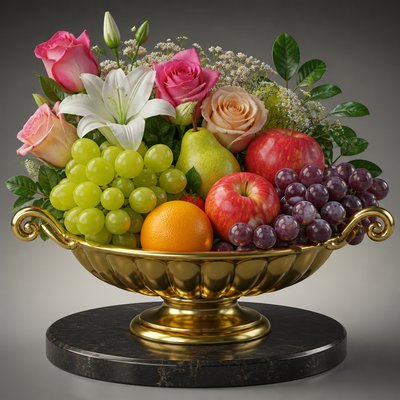
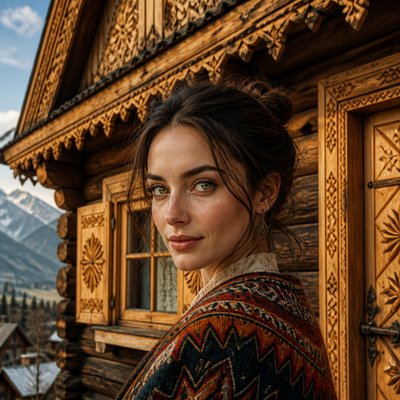
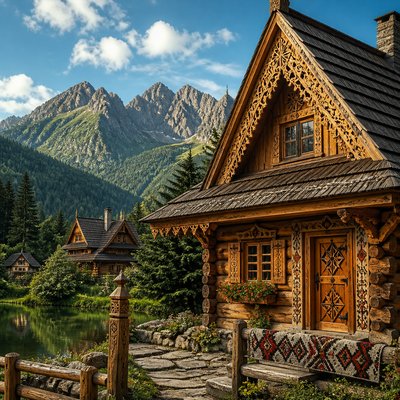
Instantly rendered in Lacquer — or transform a photo
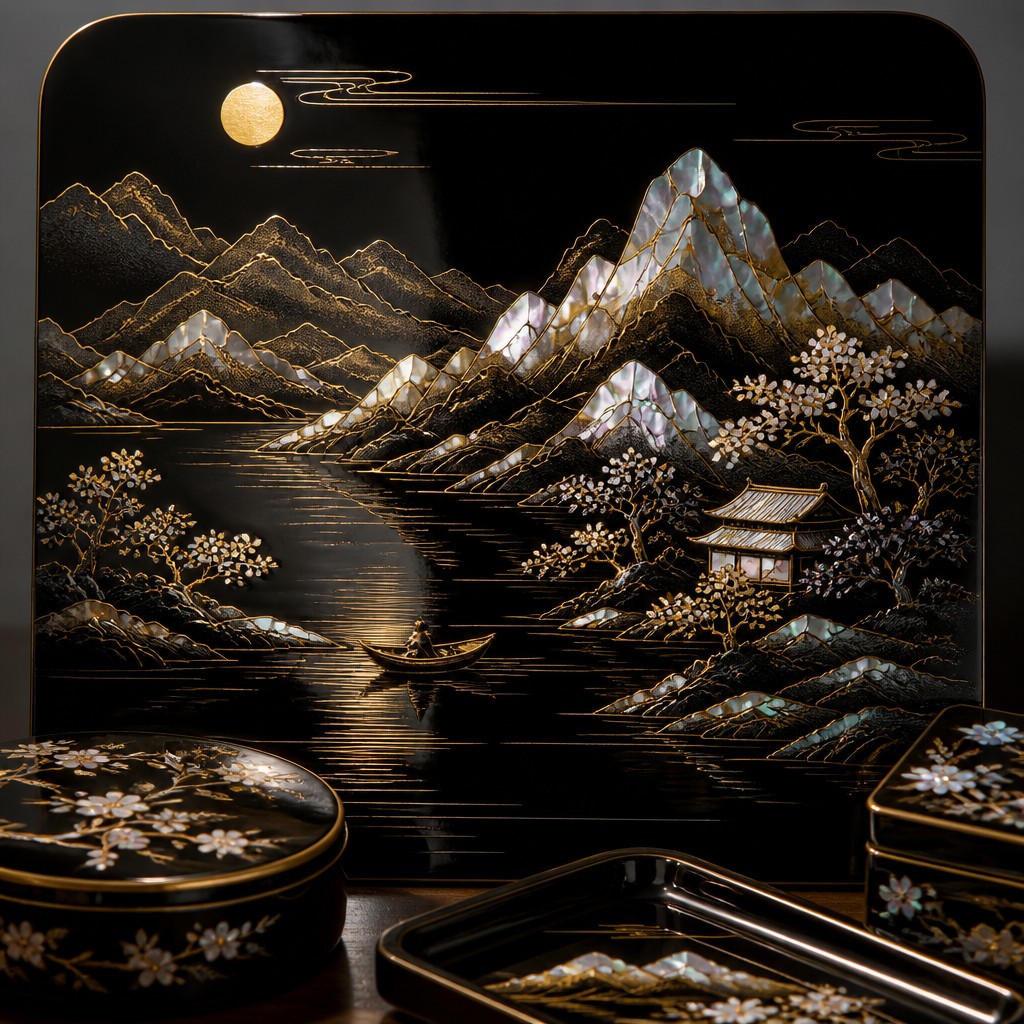
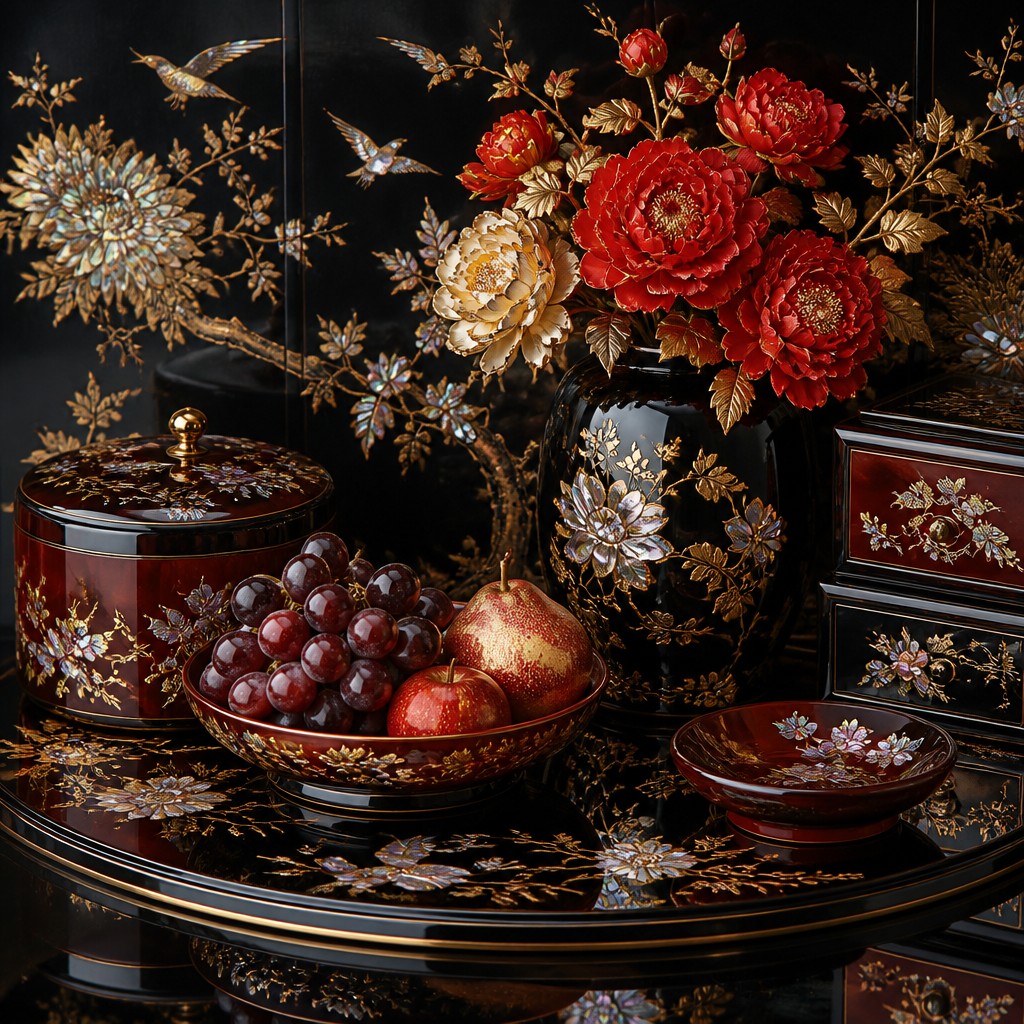
Lacquer Gallery
Tap any artwork to explore it
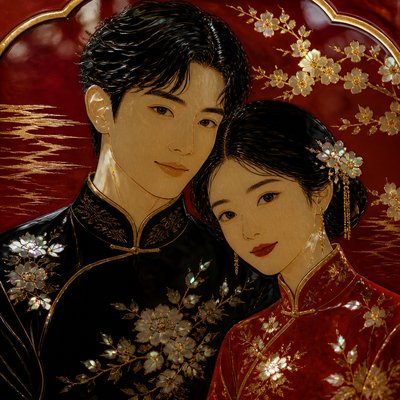
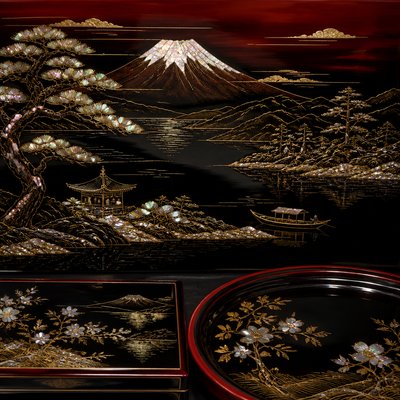
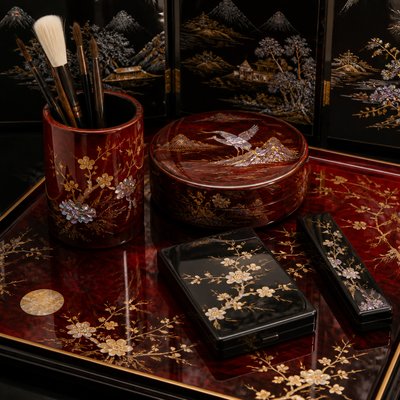
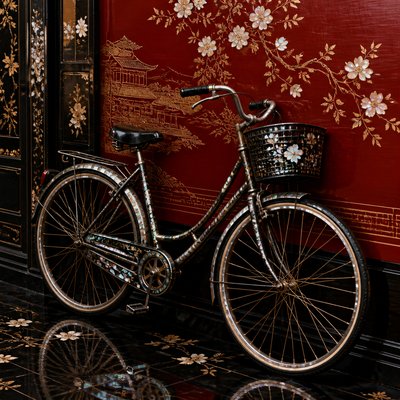
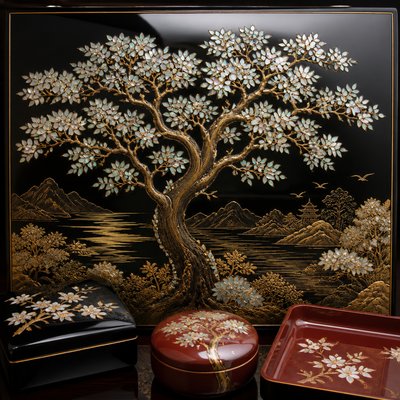
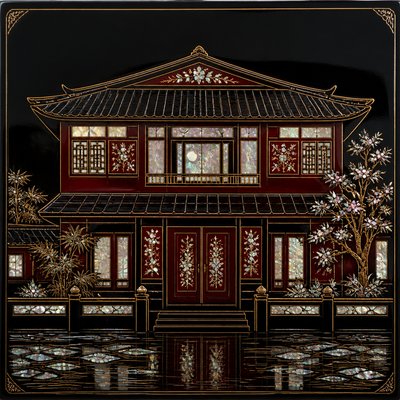
What is Lacquer Art Style?
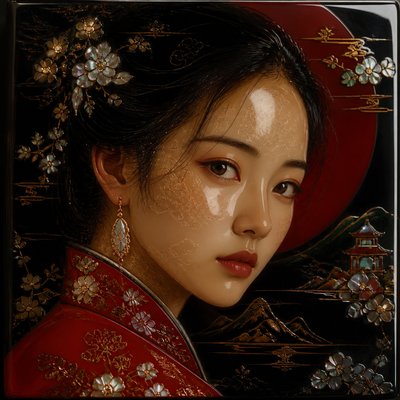
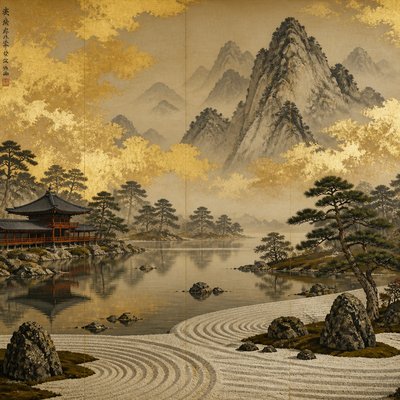
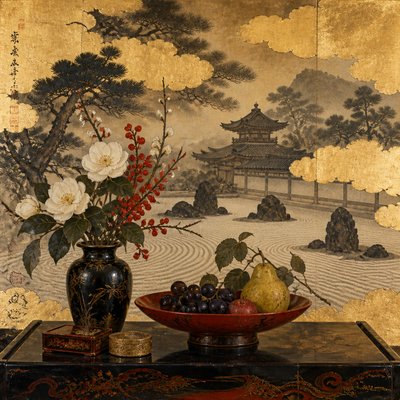
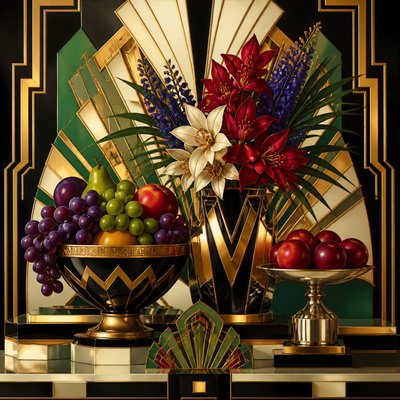
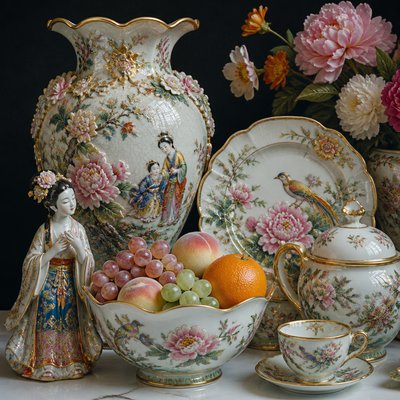
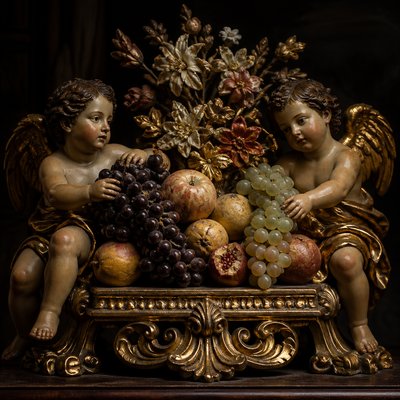
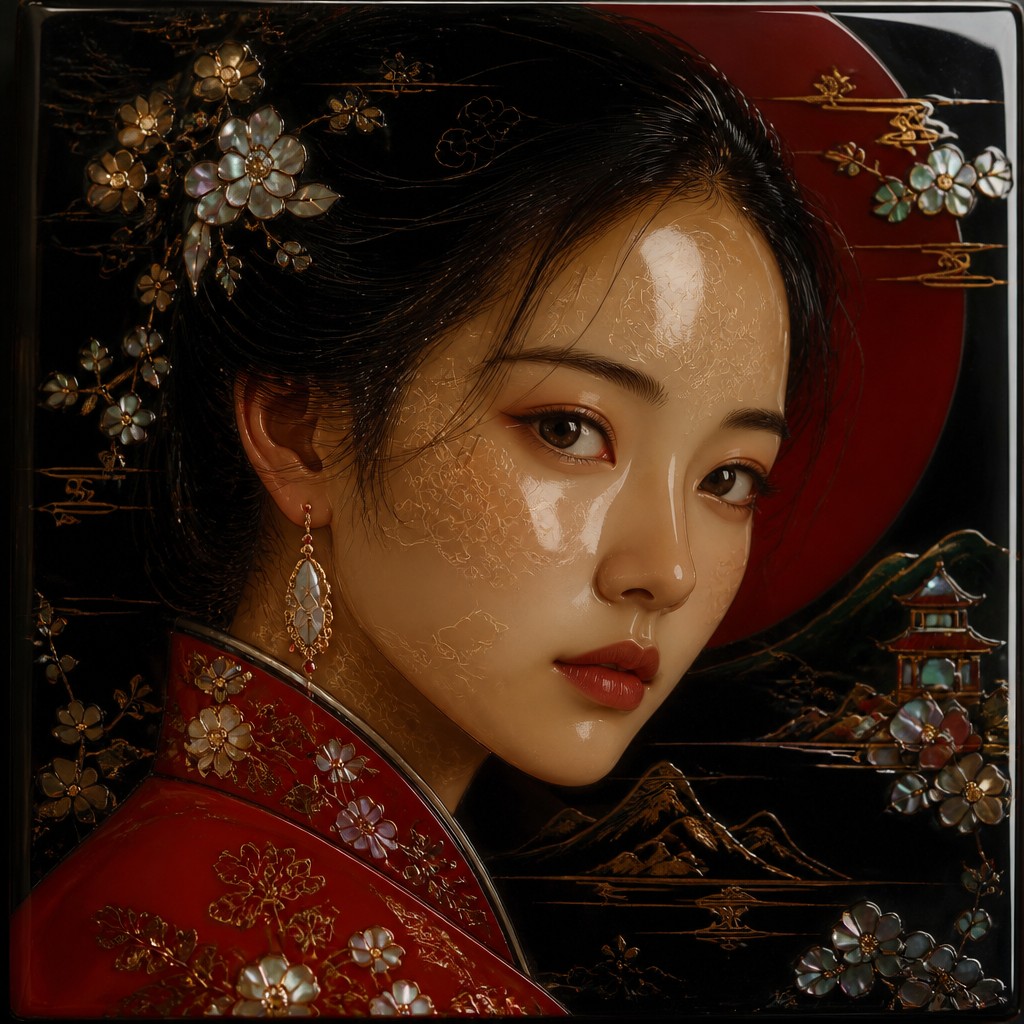
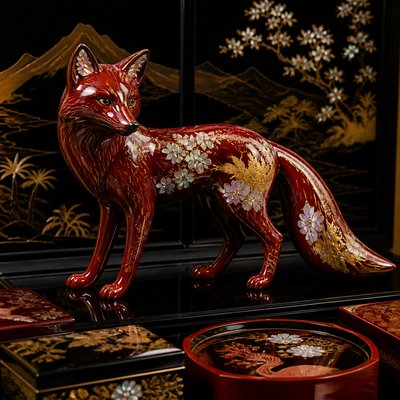
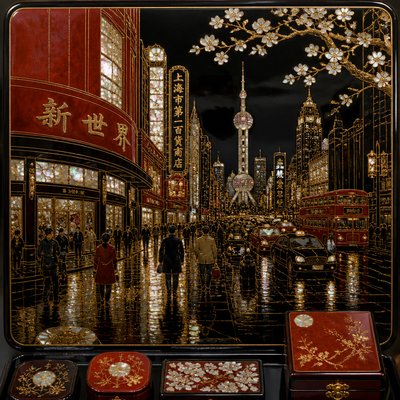
Lacquer art is a decorative art tradition built around polished layers of lacquer, a hard, durable coating traditionally made from tree sap. Its visual identity comes from deep black, red, brown, or amber surfaces with a glasslike sheen, often enriched by gold leaf, mother-of-pearl, eggshell, metal powder, carved relief, or finely painted imagery. Common objects include boxes, trays, screens, cabinets, bowls, furniture, and architectural panels.
The characteristic depth of lacquerware is produced through repeated application, drying, sanding, and polishing. Decoration may be placed between translucent layers, incised into the surface, applied above it, or revealed by carving through contrasting colors. The result combines the visual restraint of a dark reflective ground with intricate ornament that appears suspended beneath or embedded within the finish.
Try It On Your Photos
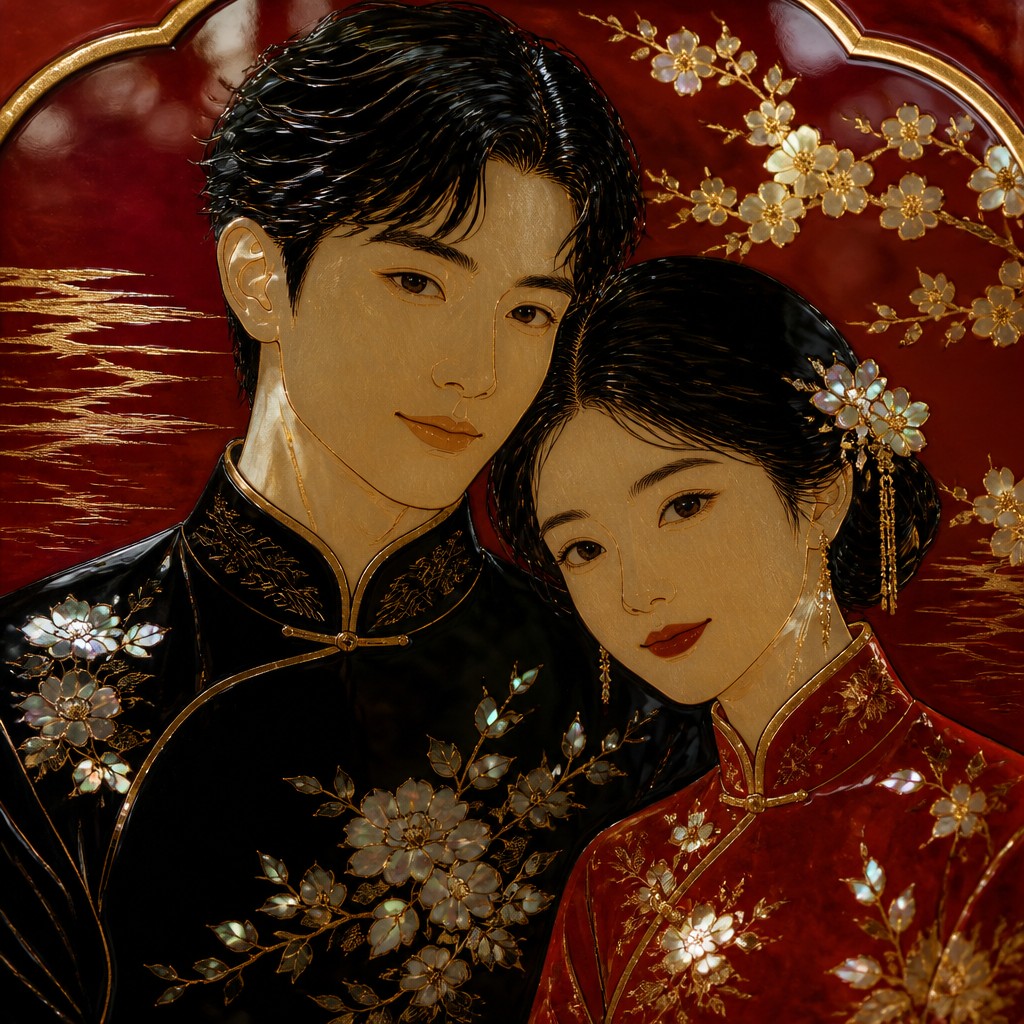
Upload any photo and convert it into Lacquer Art Style — drag the sliders to compare before and after.

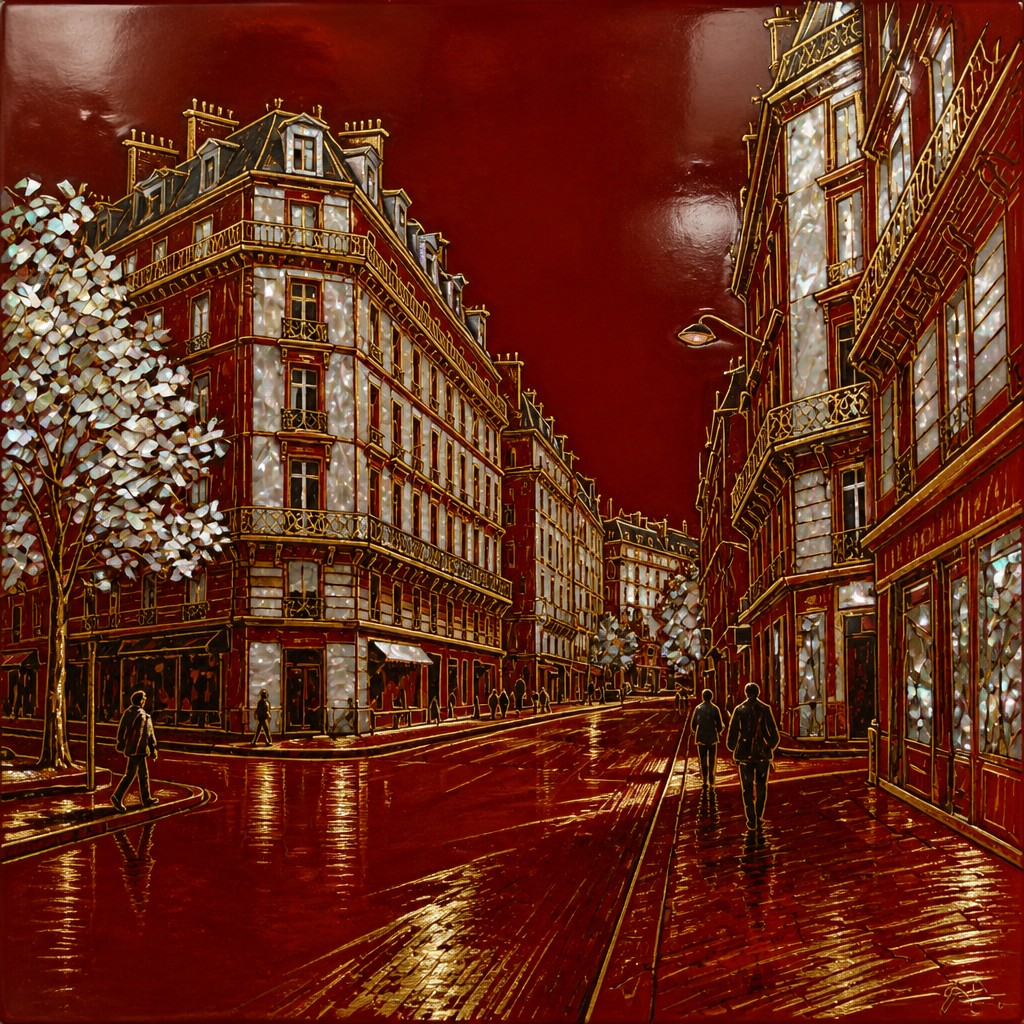

What Defines Lacquer Art Style
The signature details, up close
Deep glossy ground
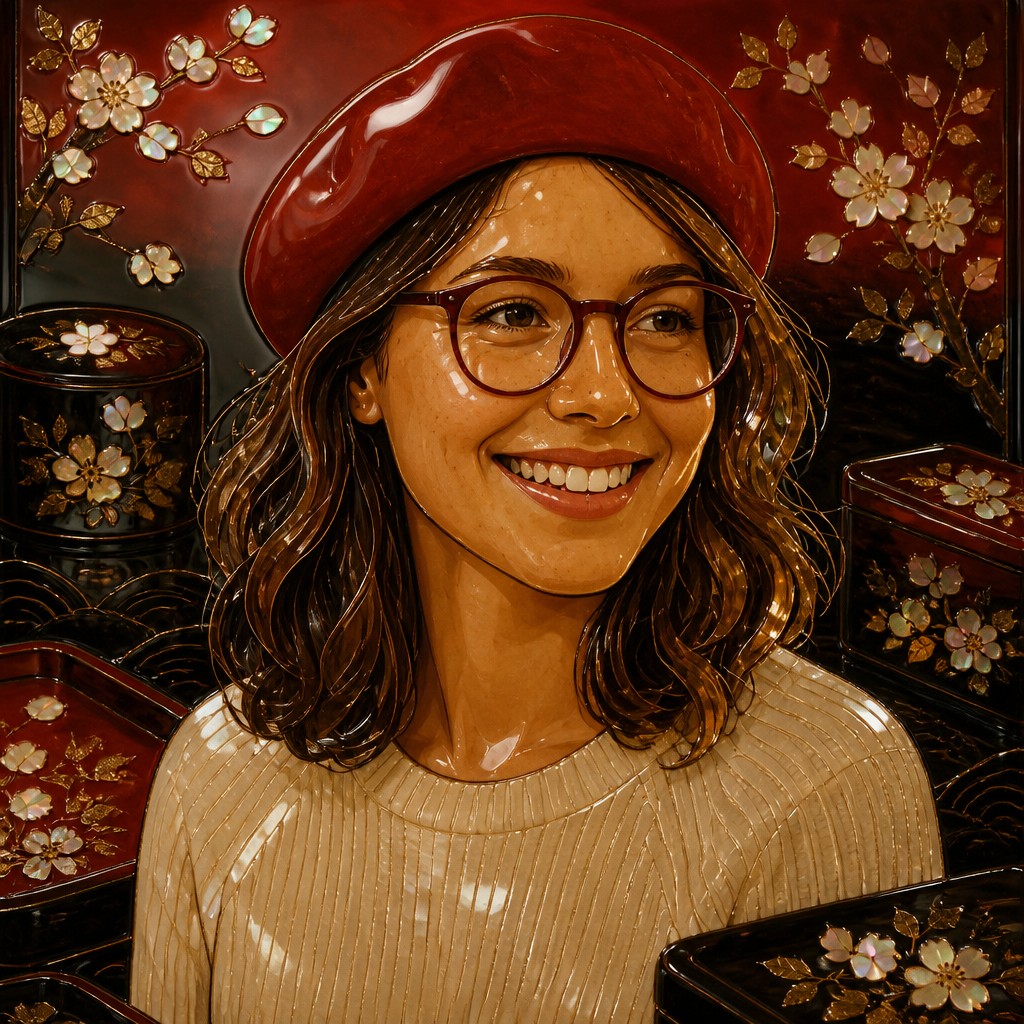
Surfaces are typically saturated black, cinnabar red, brown, or dark amber, with a smooth reflective finish. The depth comes from numerous thin coats rather than a single flat layer.
Layered construction
Lacquer is applied, dried, leveled, and polished repeatedly to create a dense, durable surface. In visual representations, this often appears as subtle depth beneath a flawless glaze.
Gold and metallic ornament
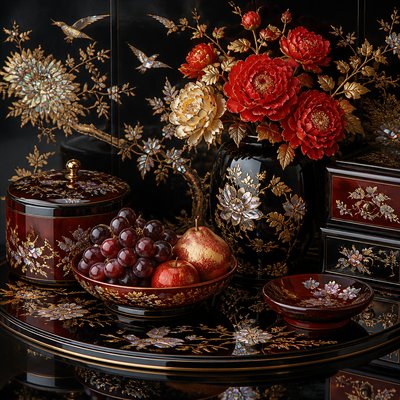
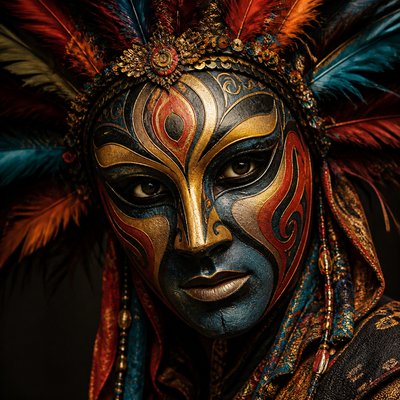
Gold leaf, gold powder, silver, and other metallic materials provide luminous contrast against dark lacquer. Decoration may be sprinkled, painted, inlaid, or trapped beneath translucent coats.
Mother-of-pearl inlay
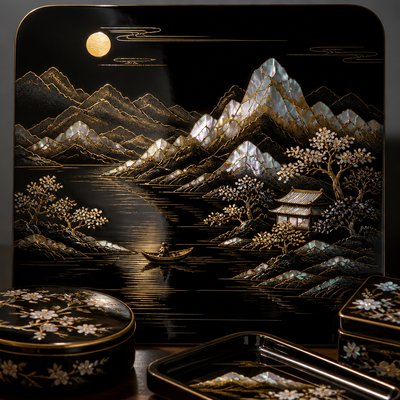
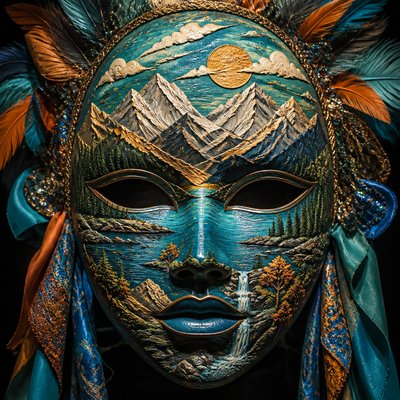
Irregular or carefully cut shell pieces create flashes of blue, green, pink, and silver iridescence. Inlay is commonly arranged into flowers, birds, landscapes, clouds, geometric borders, or abstract patterns.
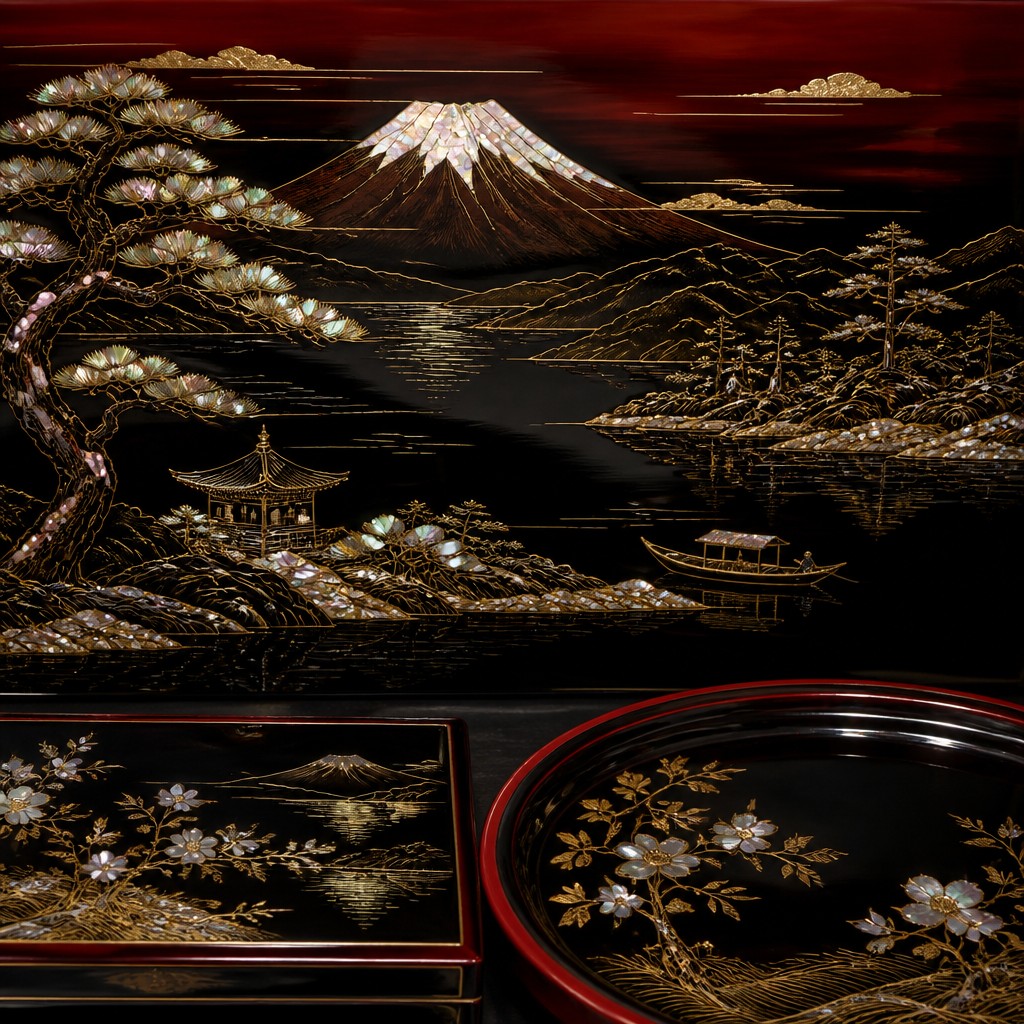
Fine incised linework
Engraved, carved, or painted lines define foliage, waves, architecture, animals, and figures with controlled precision. The marks may sit beneath the final glaze or remain subtly raised on the surface.
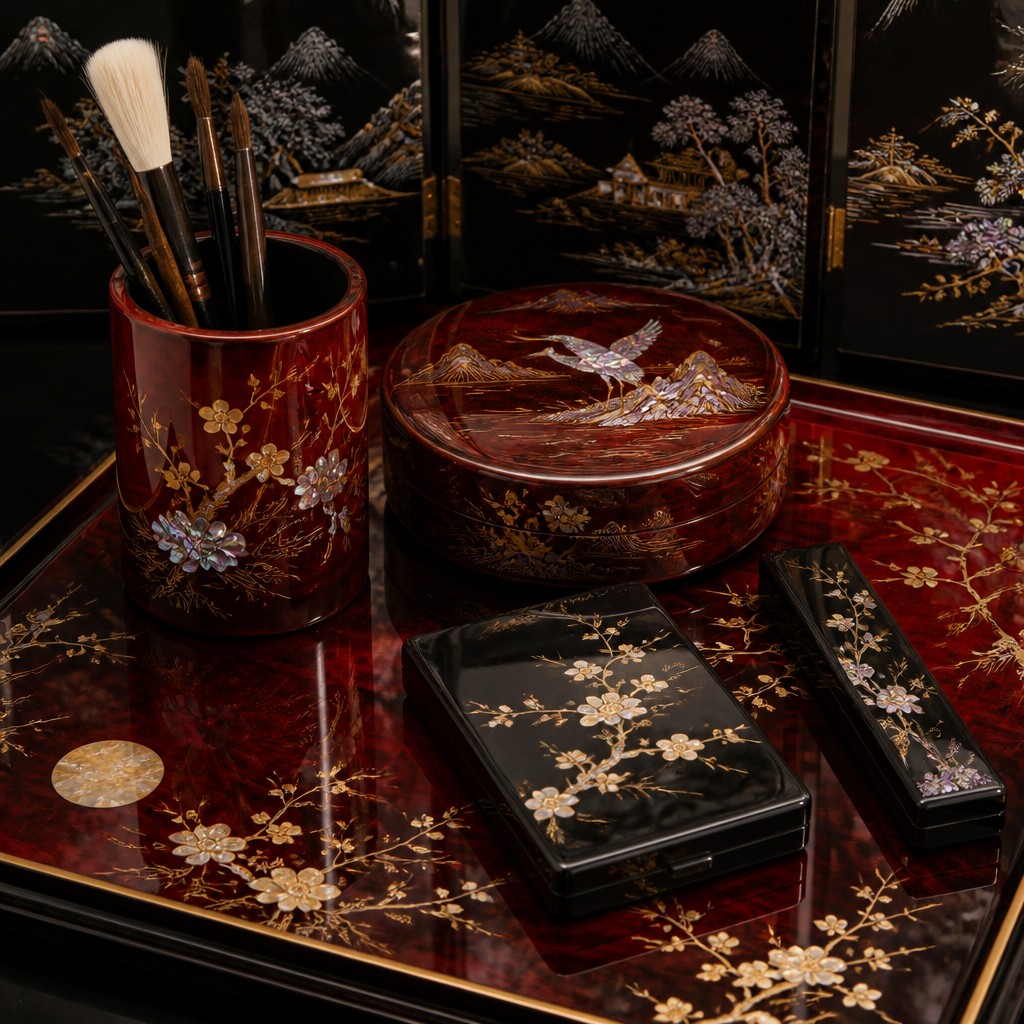
Decorative object formats
The style is strongly associated with boxes, trays, bowls, cabinets, screens, panels, and furniture. Even when adapted to digital imagery, compositions often suggest a precious crafted surface or an object viewed at close range.
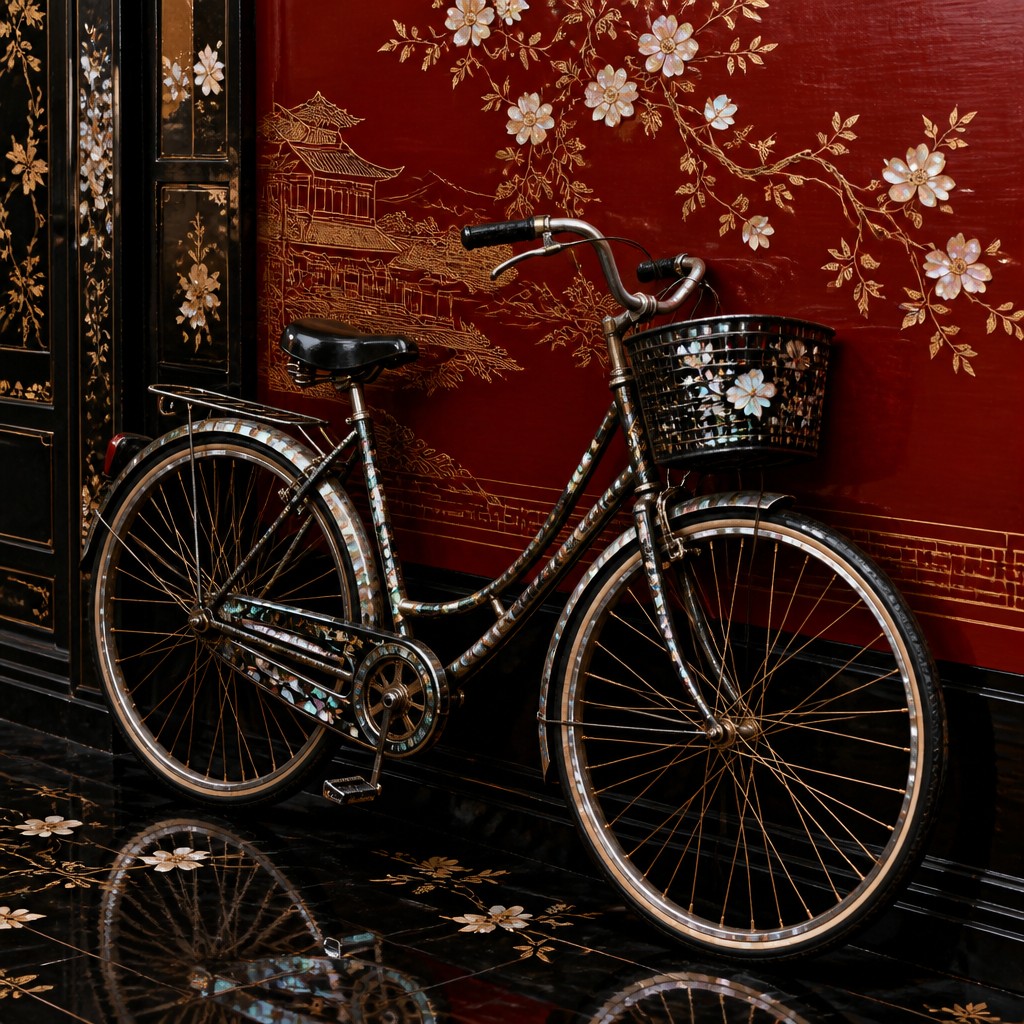
Reflective restraint
Large unornamented areas are important because they let the sheen and material depth remain visible. Ornament is often concentrated in borders, medallions, landscapes, or carefully balanced focal motifs.
Lacquer Prompt Ideas
Start from an idea — each one opens the generator with the style ready to go. See all 40 Lacquer prompts →
How to Create Lacquer Art
Master the craft step by step — or skip straight to creating. Read the full guide →
- 1
Build the ground in layers
For physical work, apply compatible lacquer or lacquer-like coatings in thin layers, allowing each layer to cure before leveling and polishing. Digitally, stack near-black or deep red gradients, subtle translucent textures, and controlled reflections instead of using a single flat color.
- 2
Control the reflective surface
Use broad, soft highlights and low-distortion reflections to suggest a polished finish. Keep reflections smooth and sparse; excessive glare can make the material resemble plastic, glass, or wet paint.
- 3
Add embedded decoration
Place gold leaf, shell, eggshell, mineral pigment, or fine motifs between apparent layers so the ornament feels integrated into the object. In digital work, use masking, opacity, displacement, and slight blur to make inlay appear beneath a clear coating.
- 4
Use precise ornamental drawing
Favor controlled contours, repeating borders, stylized plants, birds, clouds, waves, and landscape details. Fine lines should be deliberate and relatively even, with enough open ground to preserve the calm, formal composition.
- 5
Choose a crafted support
Frame the image as a lacquered box, tray, cabinet door, screen, bowl, tabletop, or decorative panel when material specificity matters. For a contemporary interpretation, apply the same surface logic to sculpture, furniture, architecture, or a symbolic object.
- 6
Write material-specific prompts
Describe the subject first, then specify a deep polished ground, many thin layers, shell and gold inlay, incised linework, and soft reflected light. Ask for a restrained composition and crafted surface detail rather than simply requesting a shiny finish.
The Story
History & Origins of Lacquer
Lacquer art has ancient roots in China, where tree-sap coatings were used on ritual objects, vessels, furniture, and burial goods by the first millennium BCE and earlier. The techniques spread and developed across East and Southeast Asia, including Japan, Korea, Vietnam, and mainland regions where local materials, tools, motifs, and workshop practices produced distinct traditions. Japanese lacquerware became especially associated with layered urushi finishes, gold decoration, carved relief, and refined inlay, while Vietnamese lacquer painting later expanded the medium into large pictorial panels using lacquer, eggshell, gold, silver, and pigments.
Lacquer traditions evolved through court workshops, religious institutions, trade networks, and domestic craft production. In the modern period, artists and designers adapted the medium for wall panels, sculpture, furniture, and contemporary painting, while retaining its defining relationship between laborious layering, reflective surfaces, and embedded decoration.
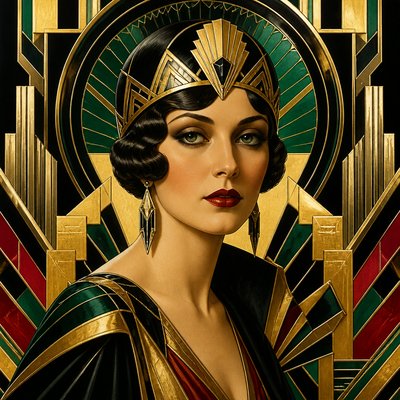
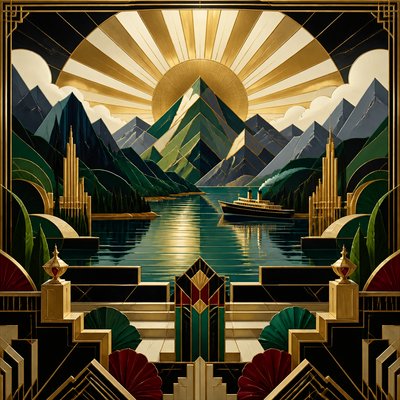
Influences: Lacquer art is related to East Asian decorative arts, Chinese court and ritual craft, Japanese urushi traditions, Korean lacquerware, Vietnamese lacquer painting, and Southeast Asian painted and gilded lacquer objects. It also intersects with inlay, cloisonne-like patterning, miniature painting, wood carving, metalwork, and Art Deco surface design, particularly through its emphasis on symmetry, precious materials, geometric borders, and controlled ornament. Contemporary interpretations may connect it with minimalist product design, material-focused sculpture, and glossy digital illustration.
Frequently Asked Questions
What defines lacquer art?
Lacquer art is defined by a hard, polished surface made from multiple layers of lacquer or a lacquer-like coating. Its visual signatures include deep dark or red grounds, mirrorlike sheen, gold or metallic decoration, shell inlay, and finely controlled incised or painted details.
Is lacquer art a single historical movement?
No. Lacquer art is a broad material tradition rather than one unified movement. It includes distinct regional practices across China, Japan, Korea, Vietnam, and Southeast Asia, as well as modern painting, furniture, sculpture, and digital interpretations.
How is traditional lacquerware made?
Traditional lacquerware is generally built through repeated coating, curing, sanding, and polishing. Decoration may be carved into the layers, painted, sprinkled with metal powder, or inserted as pieces of shell, metal, wood, or eggshell before the final surface is refined.
How does lacquer art differ from glossy digital art?
Gloss alone does not create a convincing lacquer appearance. Lacquer art depends on thin-layer depth, controlled reflections, precise ornament, and the sense that decoration is embedded in a crafted surface rather than floating on top of a generic shiny material.
What subjects work well in this style?
Birds, flowering plants, landscapes, clouds, waves, mythic creatures, geometric patterns, and ceremonial objects are especially effective. Simple silhouettes and carefully framed compositions allow the reflective ground and inlaid materials to remain prominent.
Where is lacquer art used?
Historically, lacquer has been used for ritual objects, furniture, containers, architectural screens, religious furnishings, and luxury gifts. Today it also appears in wall panels, sculpture, contemporary painting, interior surfaces, product design, and digitally imagined decorative objects.
Create your first Lacquer artwork
Describe anything — or upload a photo — and see it in Lacquer Art Style in seconds.
Related Styles
Discover similar art styles