Kyoto Zen Art Style
Explore Kyoto Zen Art Style: gold-leaf clouds, ink-wash pines, raked gravel, and quiet temple elegance rooted in Japanese visual traditions.
Instantly rendered in Kyoto Zen — or transform a photo
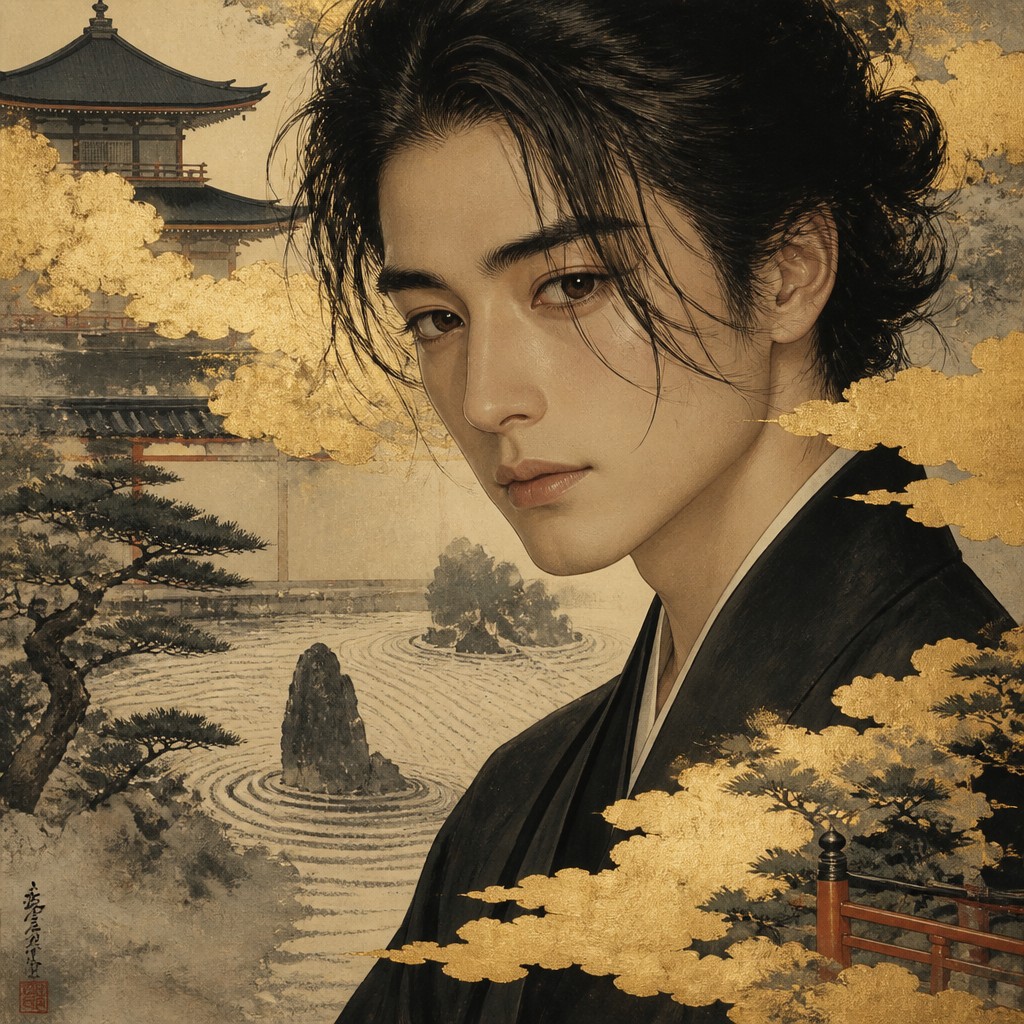
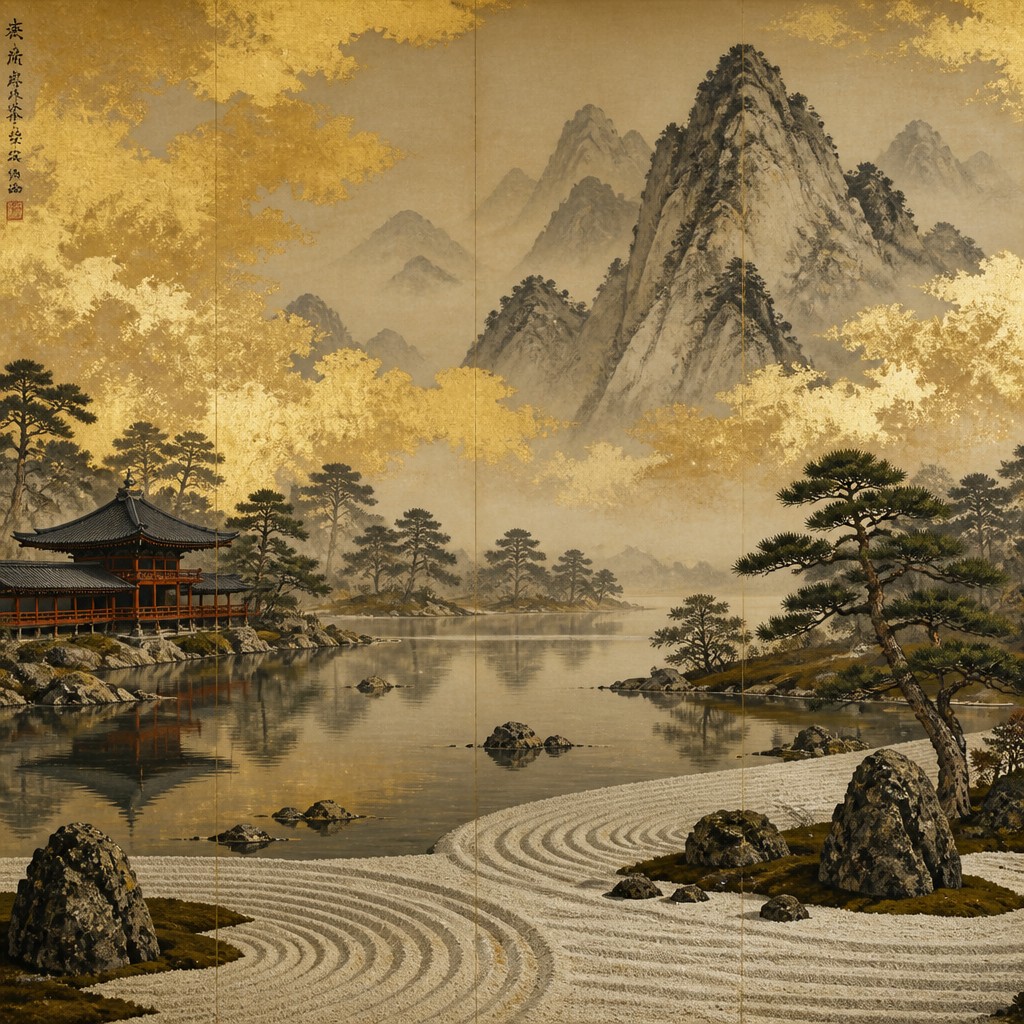
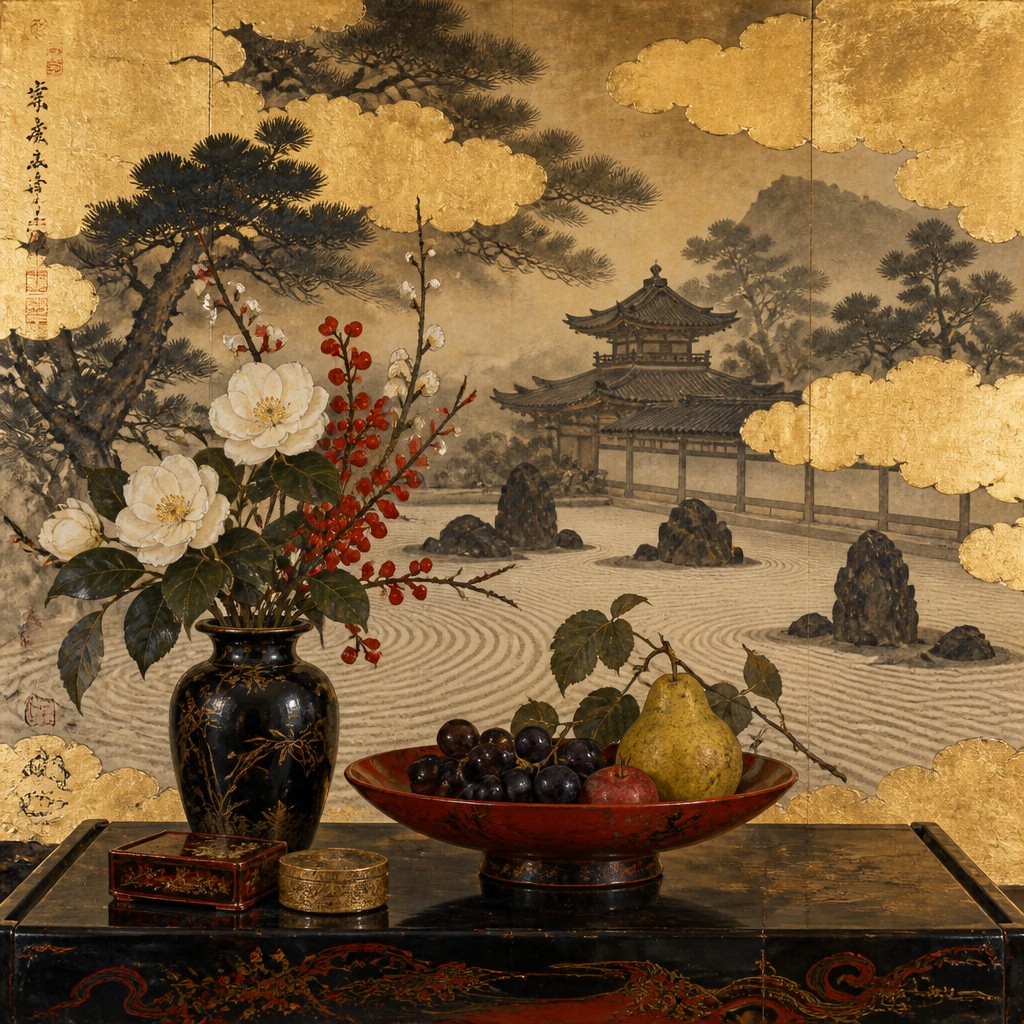
Kyoto Zen Gallery
Tap any artwork to explore it
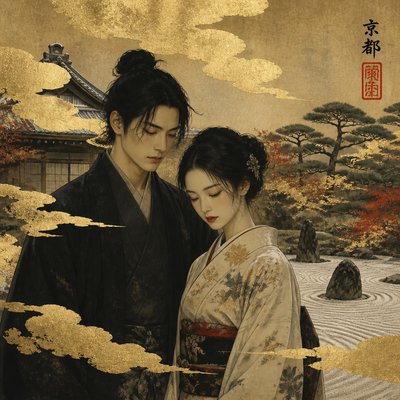
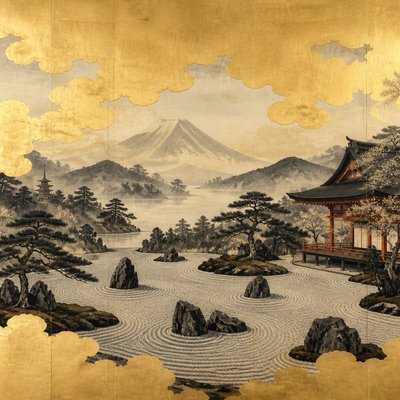
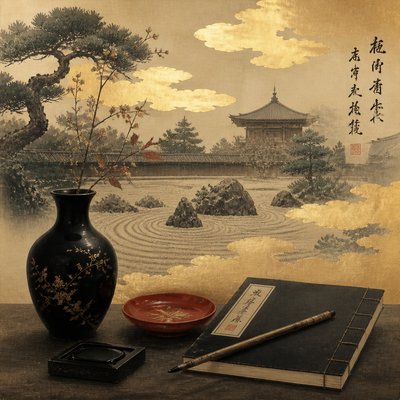
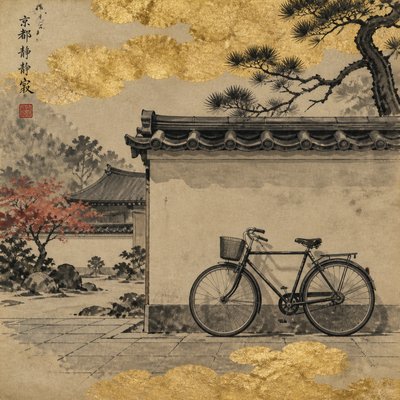
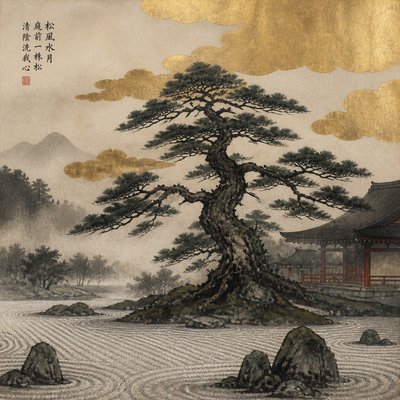
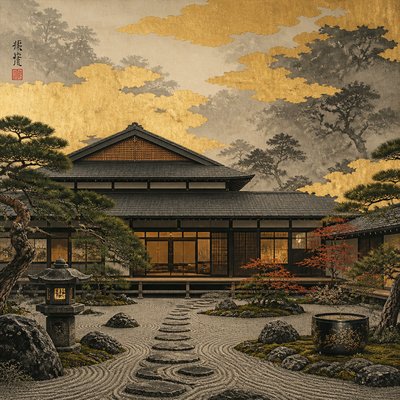
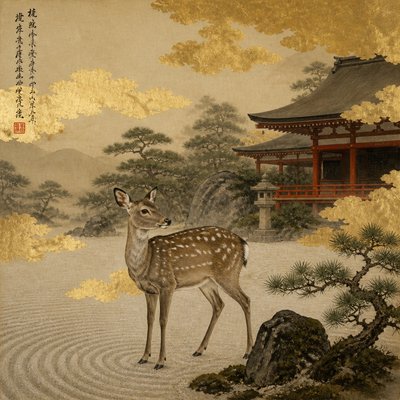
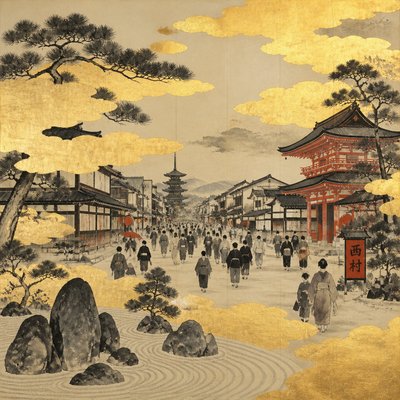
What is Kyoto Zen Art Style?
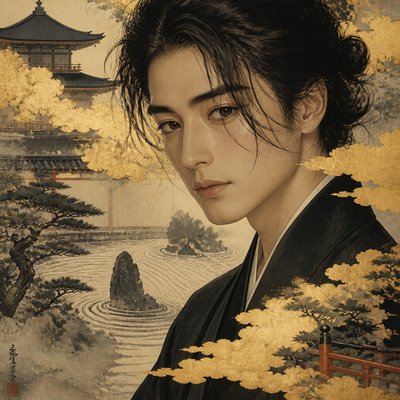
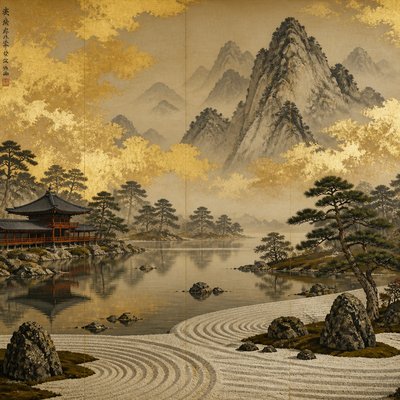
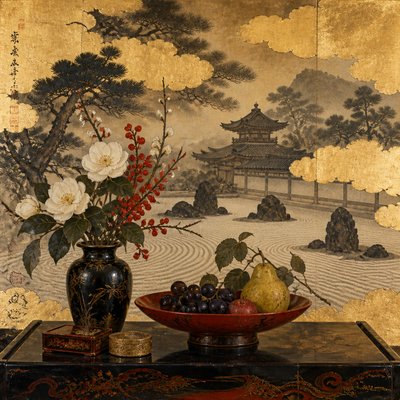
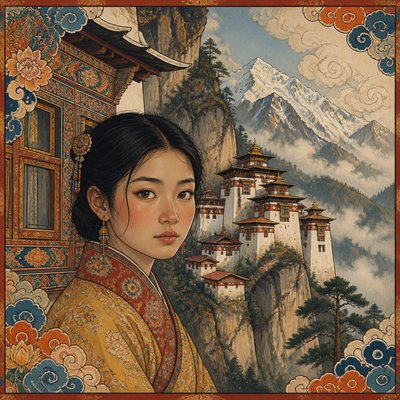
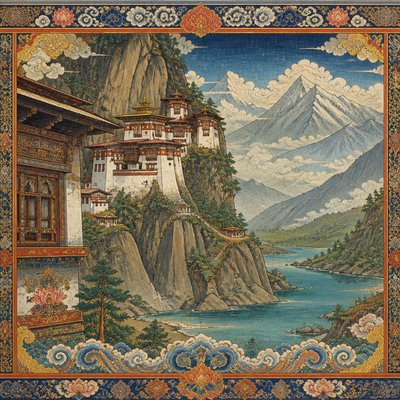
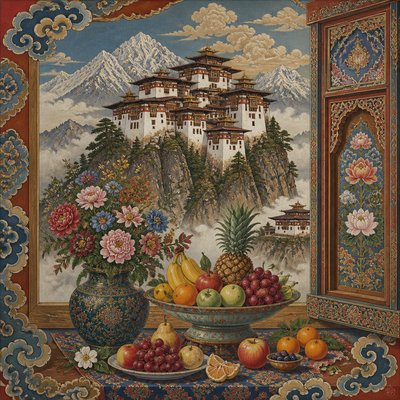
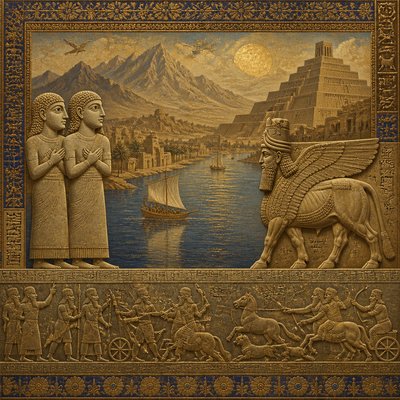
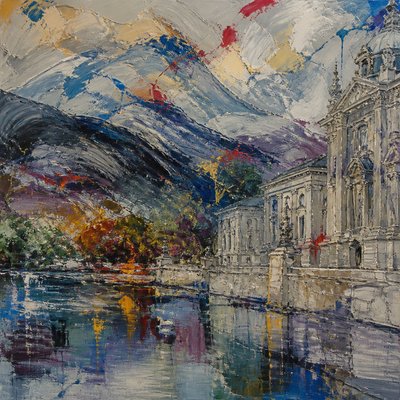
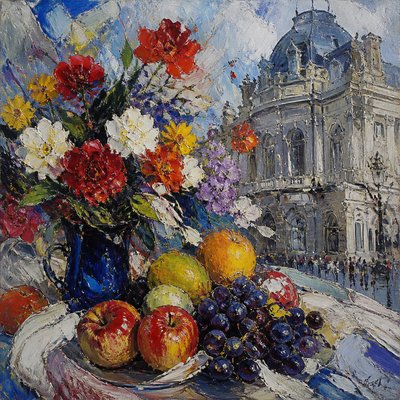
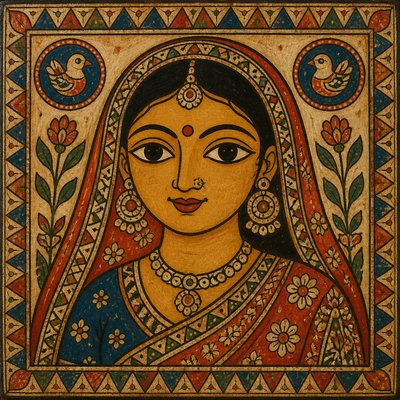
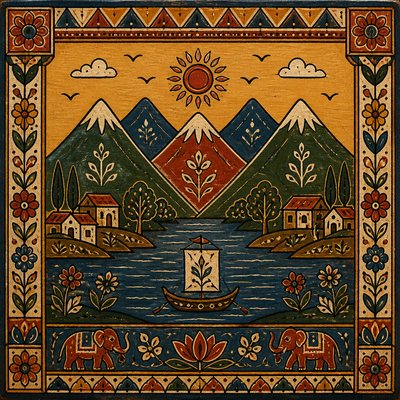
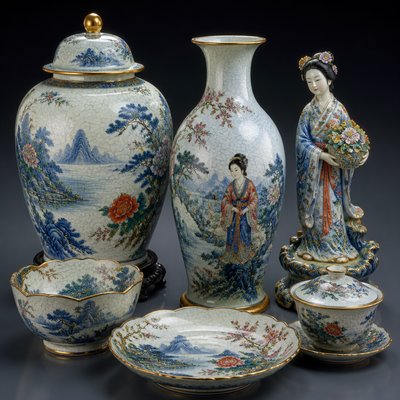
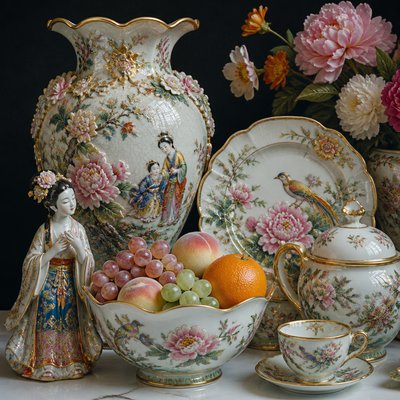
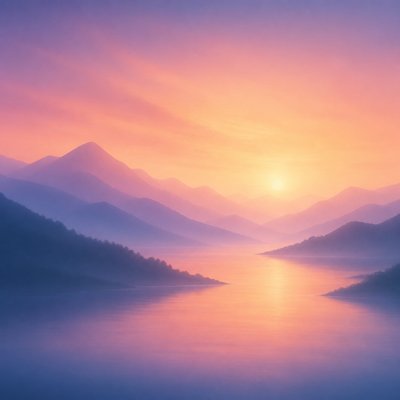
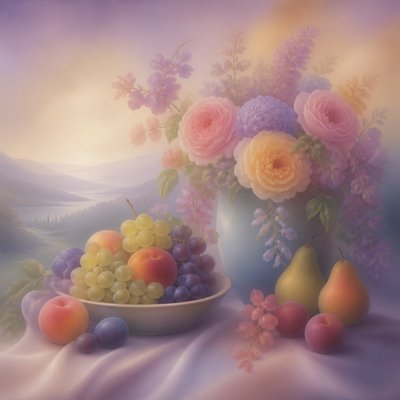
Kyoto Zen Art Style is a contemporary descriptive aesthetic rather than a formally recognized historical movement. It combines the quiet asymmetry and disciplined emptiness associated with Japanese Zen temple arts with the luminous surfaces of gold-leaf folding screens, the measured geometry of dry landscape gardens, and restrained accents of lacquer black and vermilion. Typical imagery places pines, moss, stone, water, or temple architecture within spacious compositions where atmosphere is as important as subject.
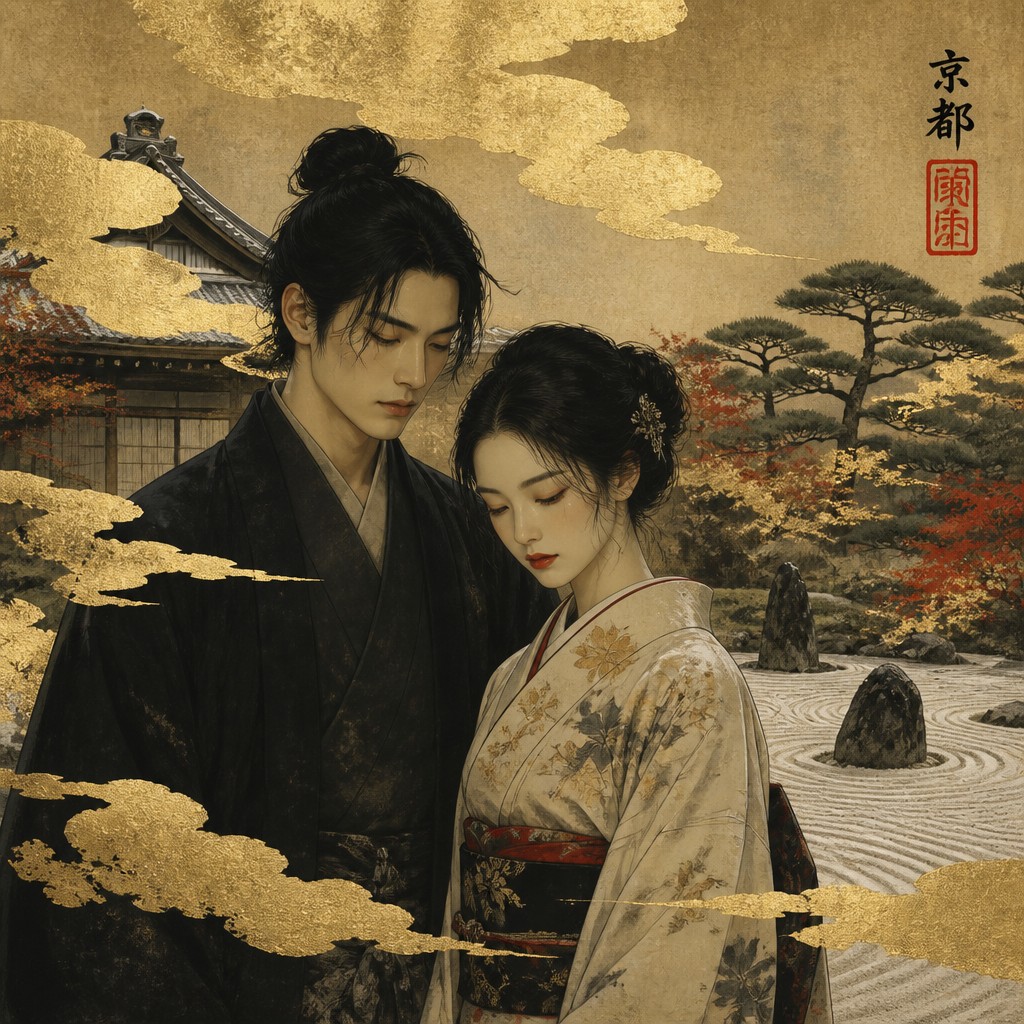
Try It On Your Photos
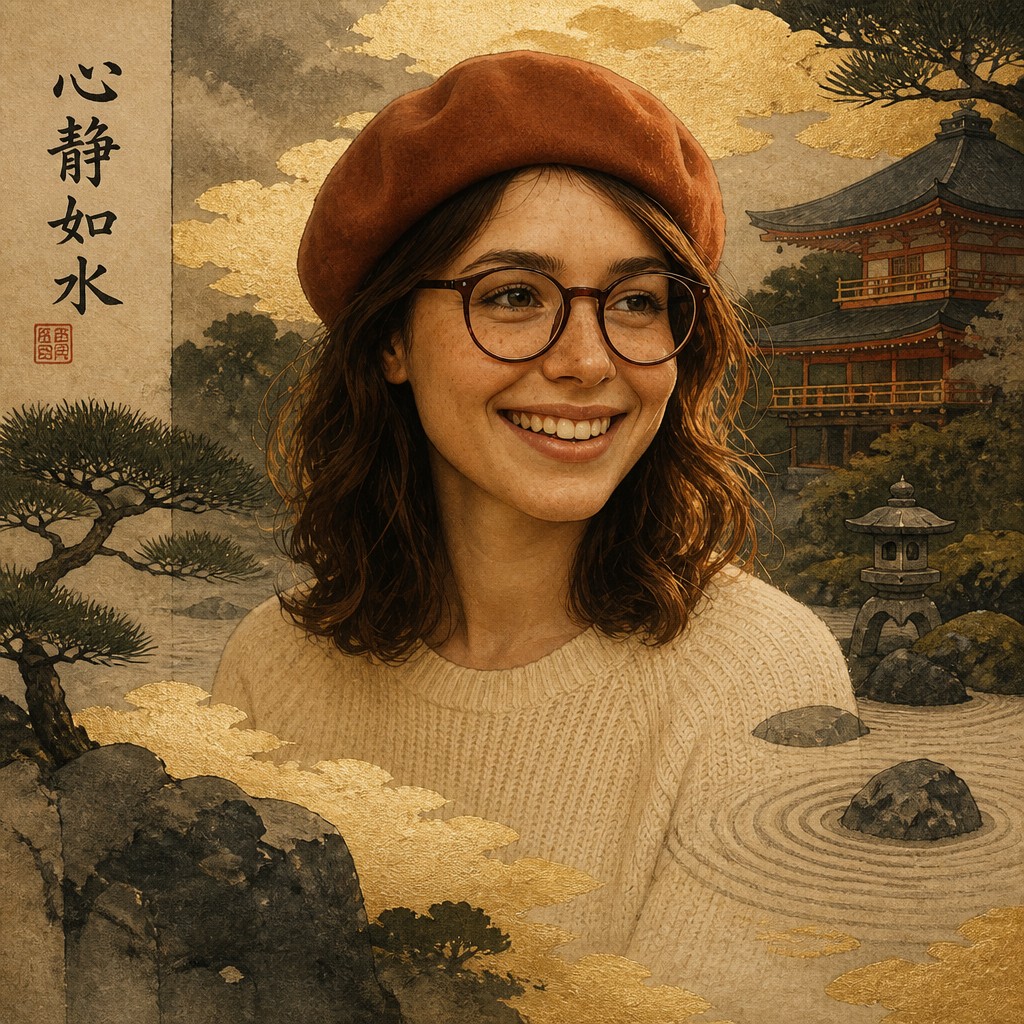
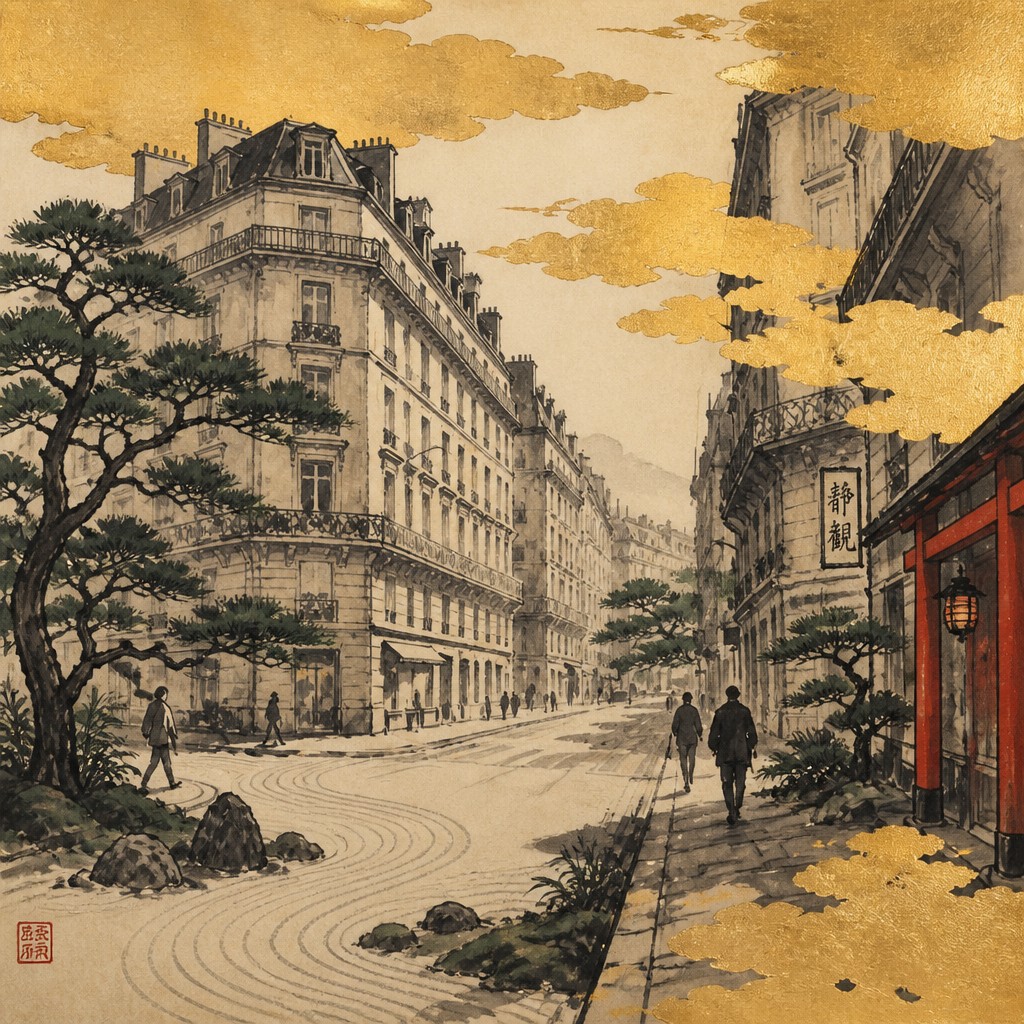
Upload any photo and convert it into Kyoto Zen Art Style — drag the sliders to compare before and after.


What Defines Kyoto Zen Art Style
The signature details, up close
Gold-leaf cloud fields
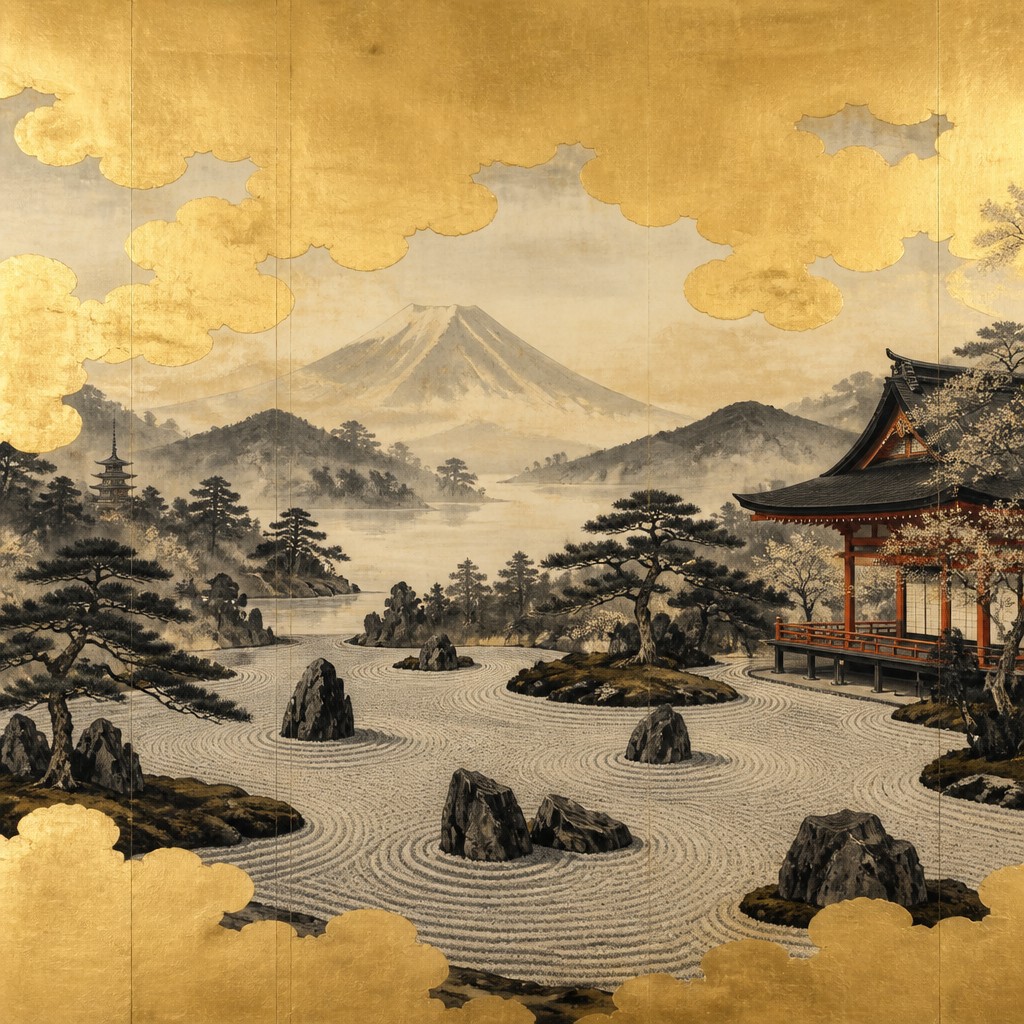
Soft-edged or stylized clouds of warm gold divide the image into atmospheric planes. They may glow like metal leaf, with subtle seams, mottling, and reflective variation rather than behaving like realistic weather.
Ink-wash restraint
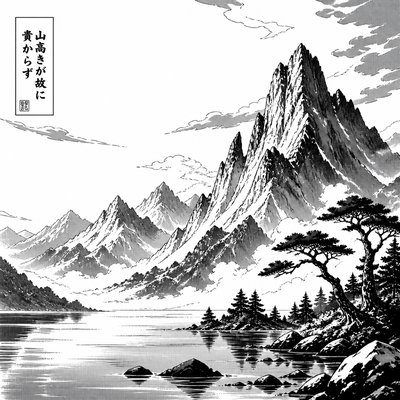
Pines, rocks, mountains, and distant structures are rendered with economical brushwork, tonal dilution, and deliberate blank space. Forms often fade at the edges instead of being fully outlined.
Raked gravel rhythms
Dry garden surfaces introduce parallel furrows, concentric arcs, or carefully spaced ripples. These patterns create a calm visual tempo and guide the eye through otherwise sparse compositions.
Temple-garden subjects
Stone paths, moss, clipped trees, shoji screens, lanterns, meditation halls, and still ponds provide recurring motifs. The setting is usually quiet, ordered, and observed from a contemplative distance.
Lacquer accents
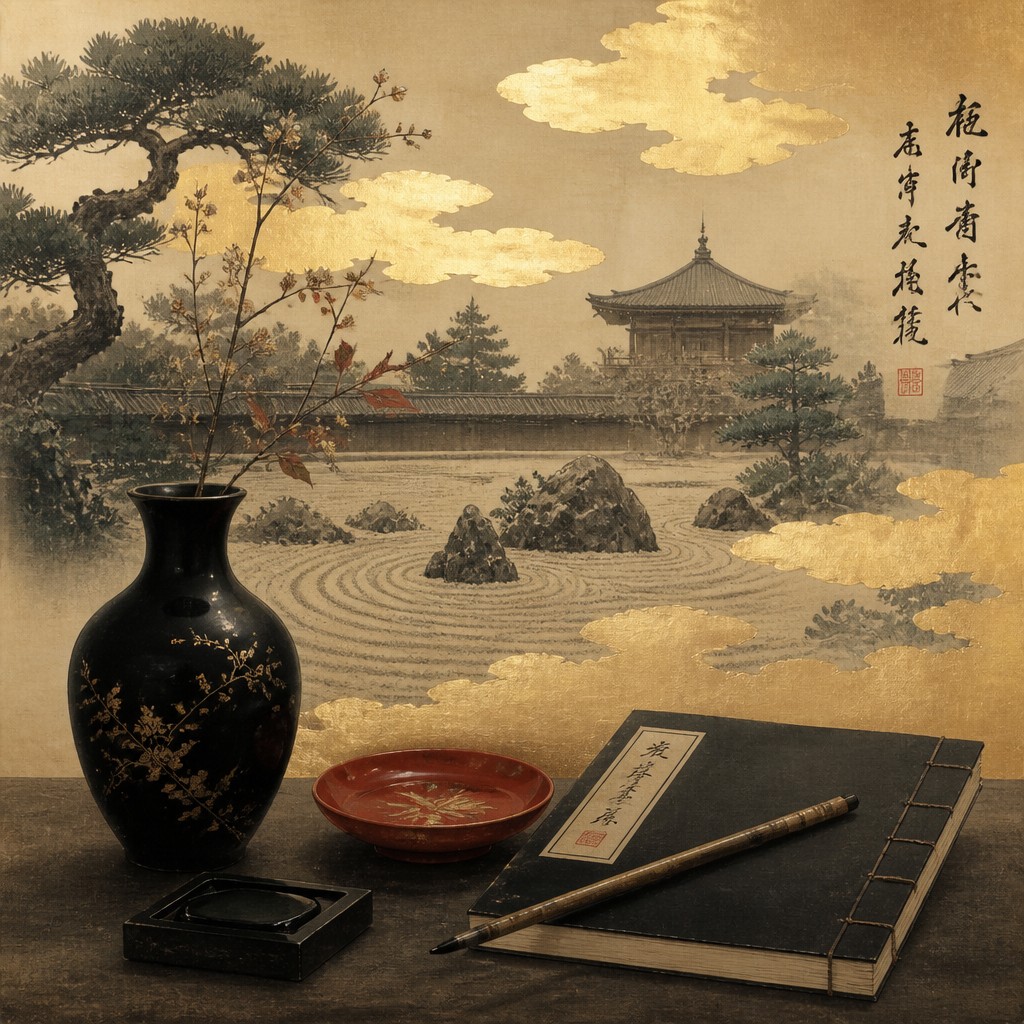
Deep black, muted vermilion, and occasional dark brown give structure to the subdued palette. These accents appear in beams, gates, vessels, brush lines, or architectural details rather than dominating the whole image.
Asymmetry and ma
Compositions leave intentional intervals of empty paper, gold ground, mist, or gravel. This use of negative space, often associated with the Japanese concept of ma, makes small details feel deliberate and significant.
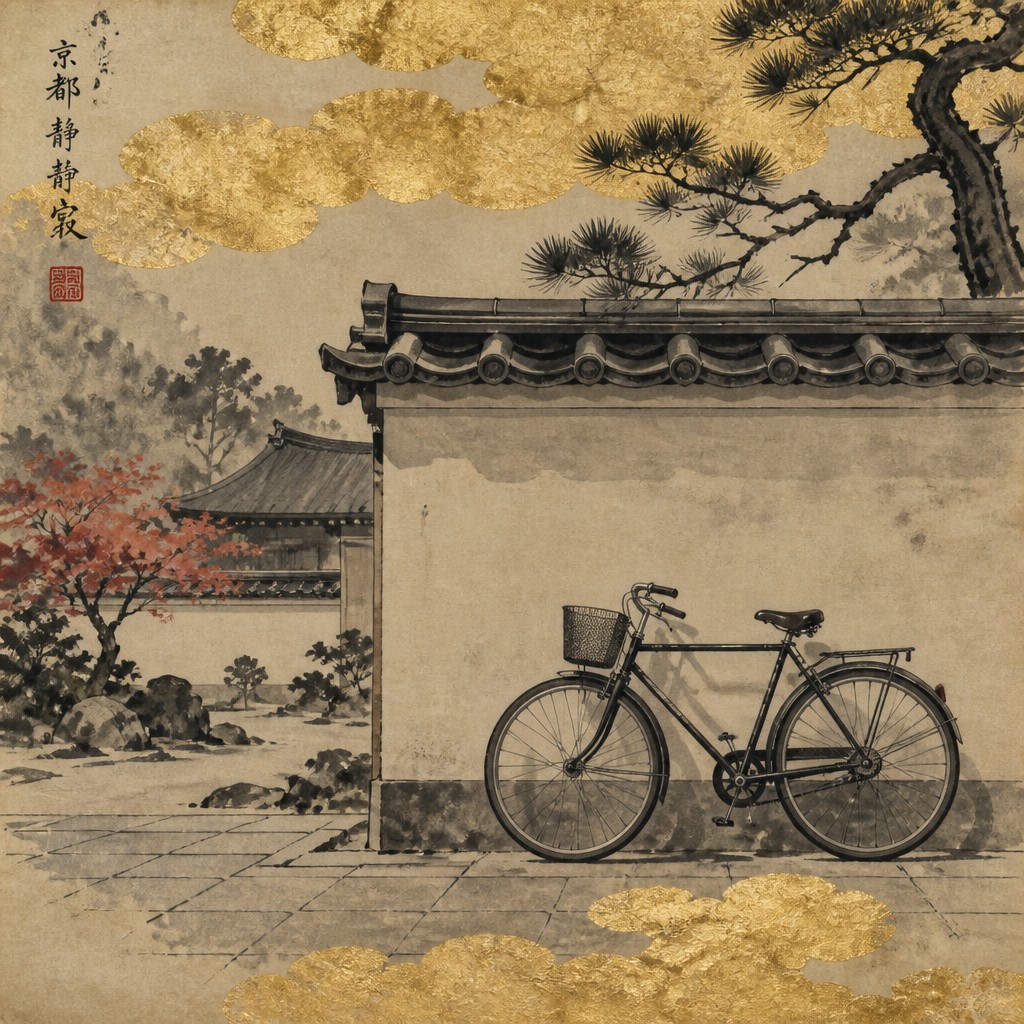
Ancient, tactile surfaces
Visible brush grain, mineral-pigment variation, worn wood, cracked lacquer, and softly abraded gold prevent the scene from looking mechanically perfect. The finish should suggest age, care, and material presence.
Try It
Create Videos in Kyoto Zen Art Style
Styles aren't just for stills — describe a scene or animate an image and get a short video rendered in Kyoto Zen. Press play to see this pond come to life.
Make a VideoKyoto Zen Prompt Ideas
Start from an idea — each one opens the generator with the style ready to go. See all 40 Kyoto Zen prompts →
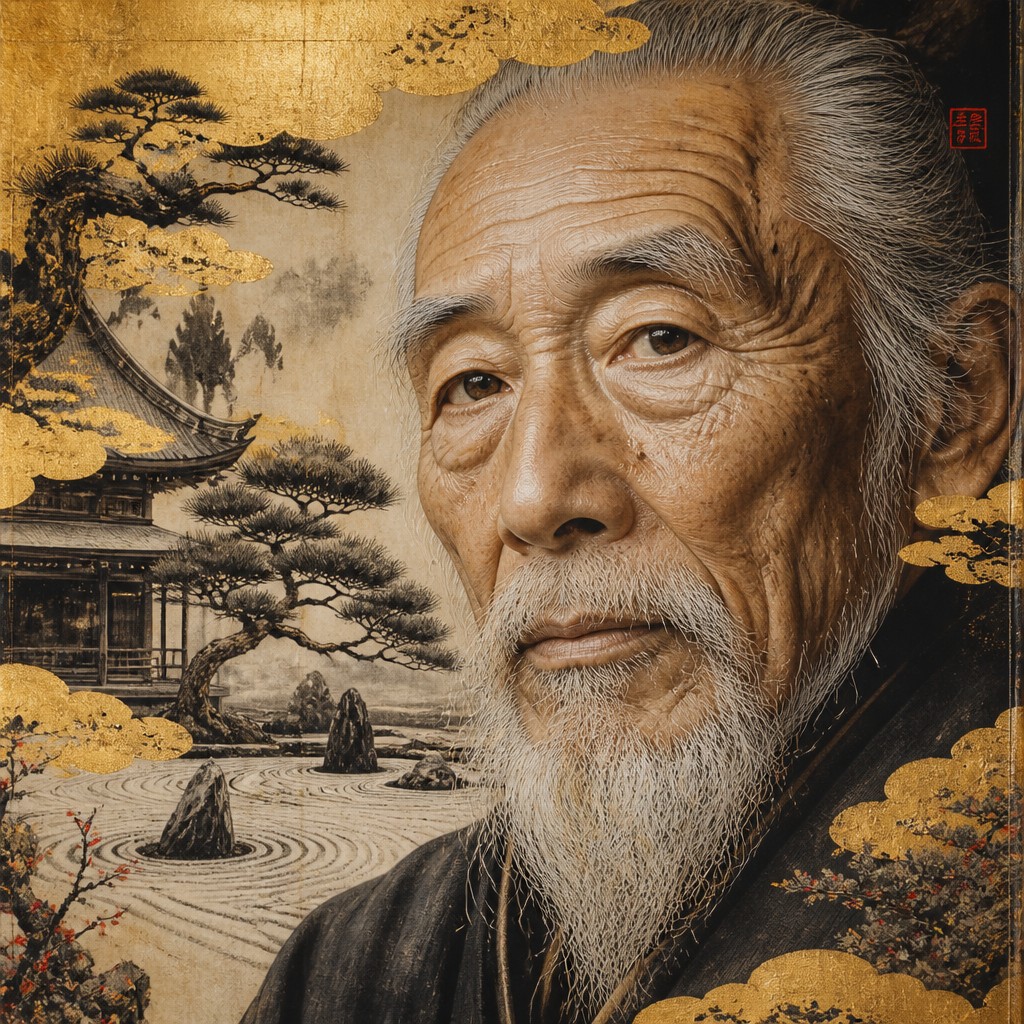
“close-up portrait of an elderly person with expressive weathered features”
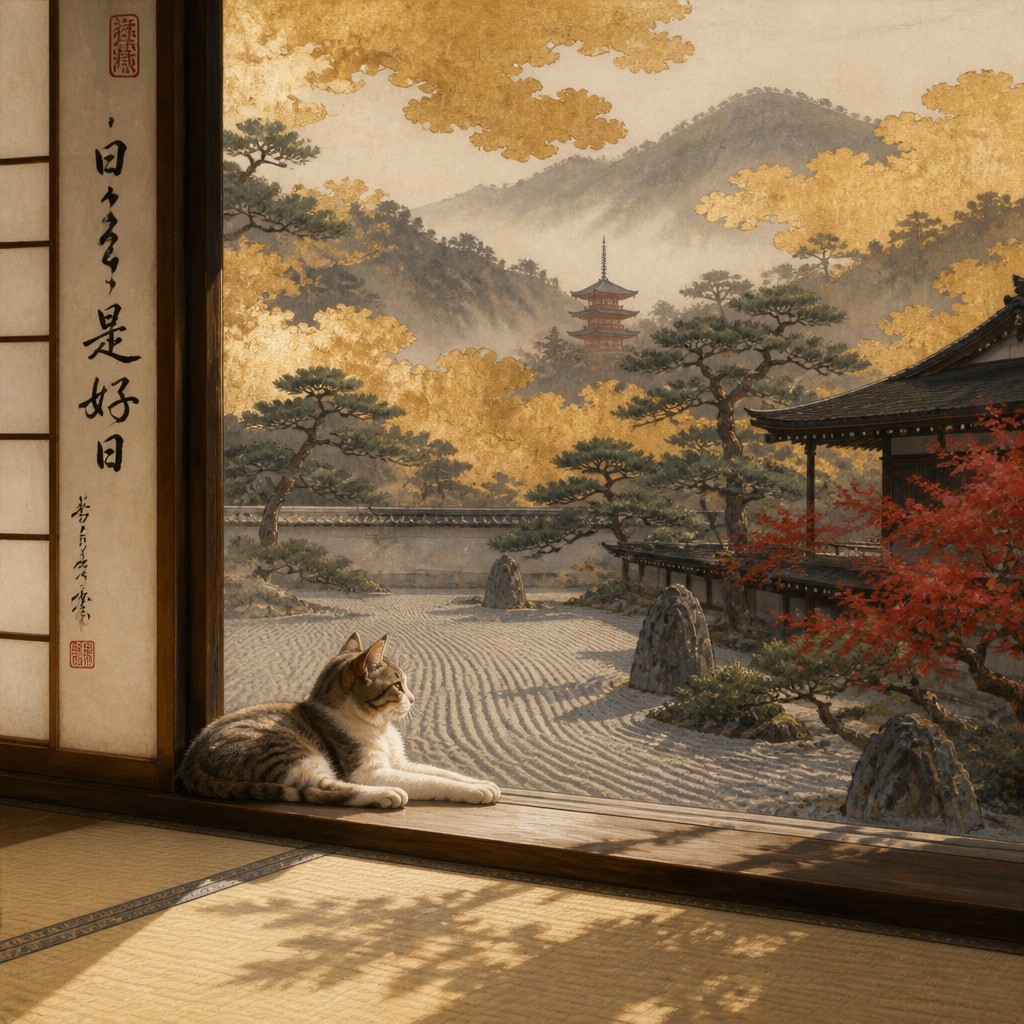
“a cat lounging in a sunlit window”
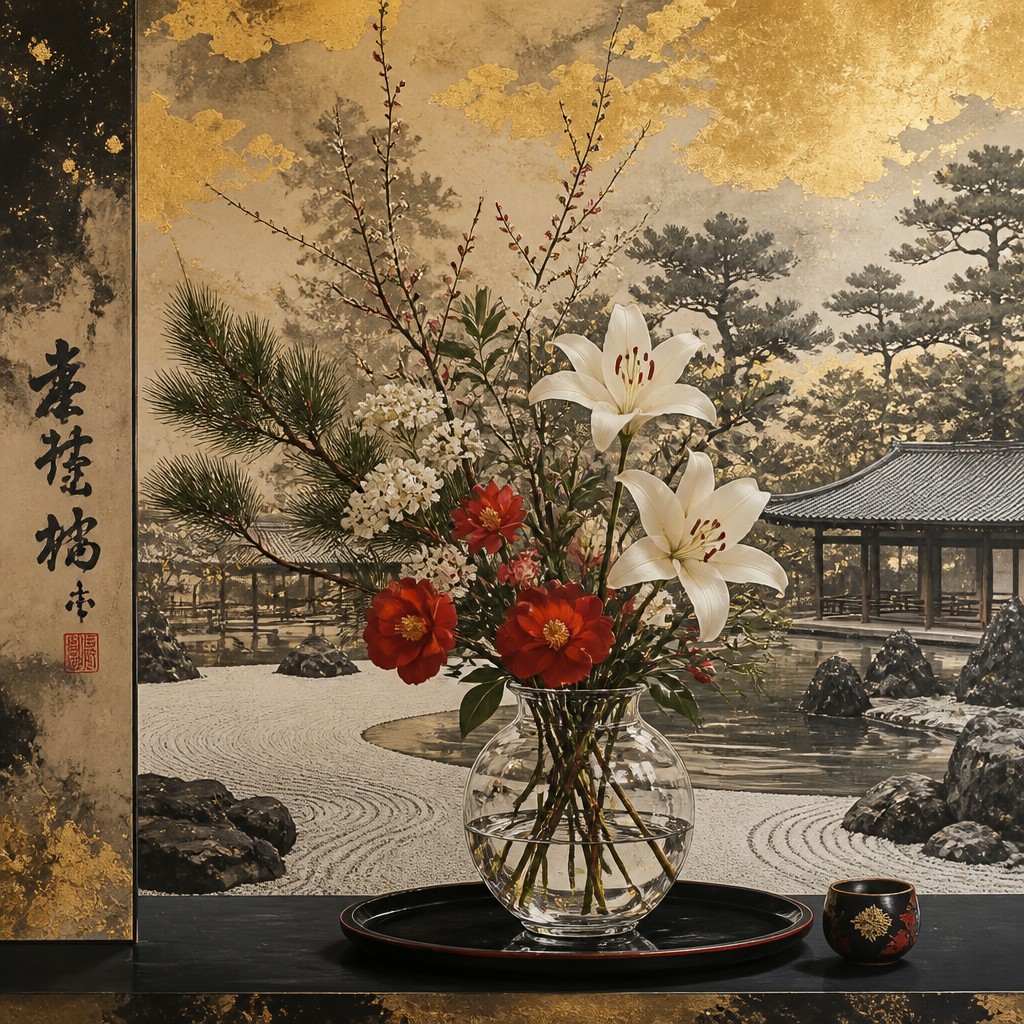
“bouquet of flowers in a glass vase”
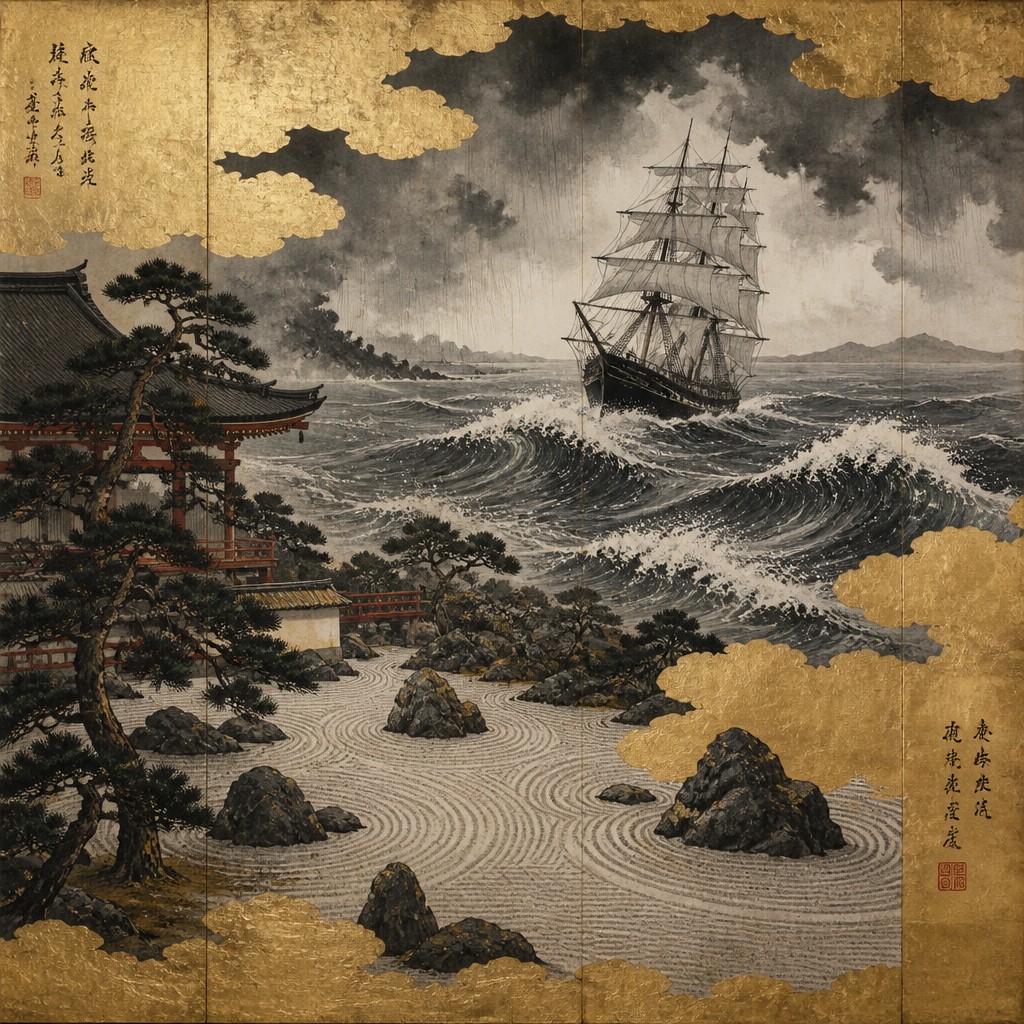
“sailing ship on a stormy sea”
How to Create Kyoto Zen Art
Master the craft step by step — or skip straight to creating. Read the full guide →
- 1
Build a spacious composition
Place one primary subject, such as a pine, pavilion, or stone arrangement, within a broad field of mist, gold, gravel, or pale paper. Favor asymmetry and a low visual density over a crowded scenic illustration.
- 2
Combine materials deliberately
Use diluted ink or translucent digital washes for organic forms, then reserve opaque metallic gold for clouds, screens, or atmospheric divisions. Add only a few lacquer-black or vermilion details to establish hierarchy.
- 3
Organize the ground plane
Treat raked gravel as a rhythmic structure: use parallel lines around stones, arcs around islands, or carefully interrupted bands. Keep the pattern controlled enough to feel meditative rather than decorative noise.
- 4
Preserve hand-made irregularity
In traditional work, vary ink pressure, water load, and mineral-pigment density; in digital work, layer paper fibers, uneven metallic texture, dry-brush edges, and subtle registration shifts. Avoid glossy gradients and perfectly uniform surfaces.
- 5
Use a focused prompt
For text-to-image creation, specify the subject, viewpoint, empty space, gold-cloud placement, ink-wash treatment, and limited accent colors. For image transformation, preserve the source silhouette while simplifying its background into a temple-garden or screen-like composition.
- 6
Control the final palette
Start with charcoal, warm gray, moss green, parchment, and aged gold, then introduce vermilion sparingly. Lower contrast in distant areas so the image retains a quiet, contemplative depth.

The Story
History & Origins of Kyoto Zen
The style draws on several Japanese traditions rather than originating at a single date. Its meditative ink-wash sensibility is related to Zen-influenced painting that developed in medieval Japan, especially during the Muromachi period, while its gold grounds and decorative cloud forms recall the screen-painting traditions that flourished during the Momoyama and Edo periods. Raked gravel gardens and austere temple settings contribute a laterally organized visual language of intervals, pauses, and controlled repetition.
Influences: The aesthetic is informed by Japanese Zen temple painting, medieval ink-wash traditions, gold-ground folding-screen painting, dry landscape gardening, tea-ceremony restraint, lacquerware, shoji architecture, and the compositional principle of ma. It also shares qualities with wabi-sabi, suibokuga, and selected forms of Japanese decorative painting, while remaining a modern synthesis rather than a historical school with a fixed canon.
Frequently Asked Questions
Is Kyoto Zen Art Style a historical Japanese art movement?
No. The term describes a contemporary synthesis of several Japanese visual traditions rather than a documented movement with a defined membership or period. It combines Zen-related ink restraint, gold-ground screen aesthetics, temple gardens, and lacquer accents.
What makes this style look Zen?
Its sense of Zen comes primarily from restraint, spaciousness, asymmetry, and attention to a few natural forms. Quiet gardens, limited palettes, disciplined repetition, and incomplete ink marks encourage contemplation without requiring overt religious symbolism.
How is it different from traditional Japanese ink painting?
Traditional Japanese ink painting can be almost entirely monochrome and follows specific historical schools, formats, and brush conventions. This style borrows its ink economy but adds luminous gold clouds, decorative screen-like surfaces, garden geometry, and carefully limited red and black accents.
How can I make a painting in this style by hand?
Begin with a light compositional plan containing generous empty areas, then establish the main forms with diluted black ink. Apply gold leaf or metallic pigment to selected cloud or screen areas, add mineral-like color sparingly, and finish with gravel rhythms and weathered surface texture.
How should I describe it when creating an image digitally?
Name a clear subject and viewpoint, then request spacious asymmetry, ink-wash pines or rocks, gold-leaf cloud fields, raked gravel, temple architecture, and a restricted charcoal, moss, gold, black, and vermilion palette. For photo transformation, ask for simplified backgrounds and preserved facial or structural proportions rather than replacing every form with a generic temple scene.
Where is this aesthetic commonly used?
It suits editorial illustration, book covers, meditation and wellness graphics, hospitality interiors, packaging, atmospheric concept art, and serene wall art. Its restrained composition also works well for interfaces or layouts that need a calm focal image with substantial negative space.

Create your first Kyoto Zen artwork
Describe anything — or upload a photo — and see it in Kyoto Zen Art Style in seconds.
Related Styles
Discover similar art styles