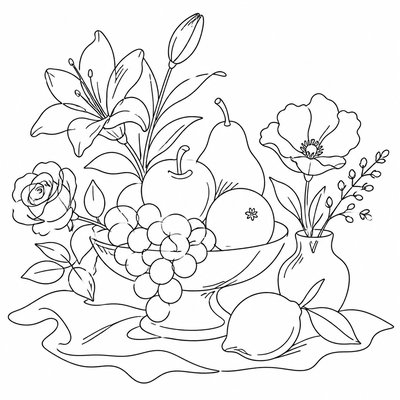
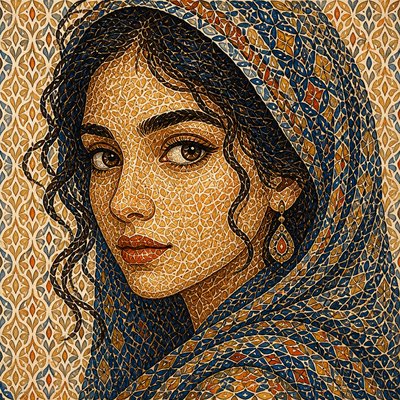
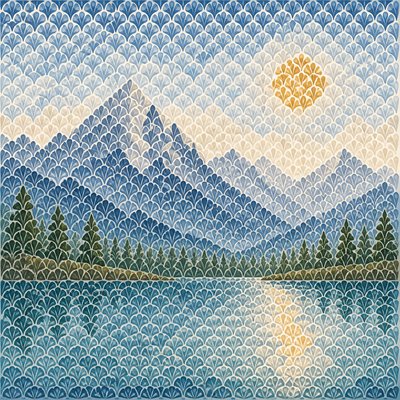
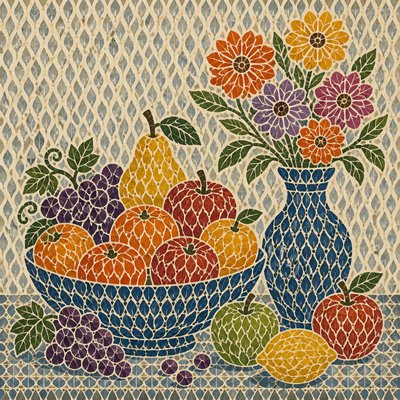
Doodle Art Style
Explore doodle art: spontaneous scribbles, playful figures, dense linework, and expressive visual chatter across every inch of the page.
Instantly rendered in Doodle — or transform a photo
Doodle Gallery
Tap any artwork to explore it
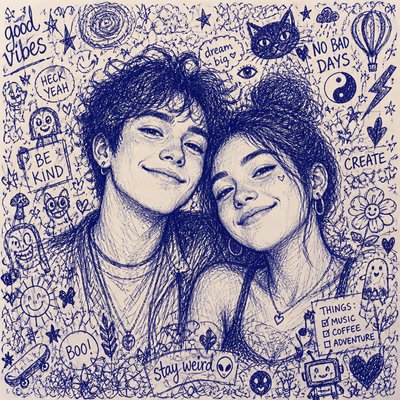
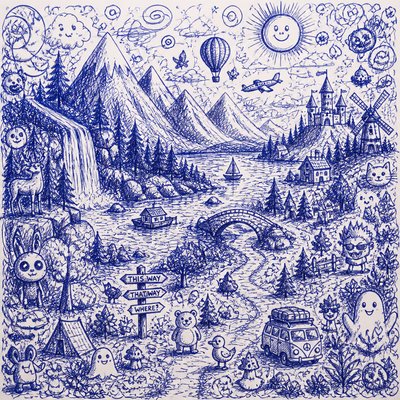
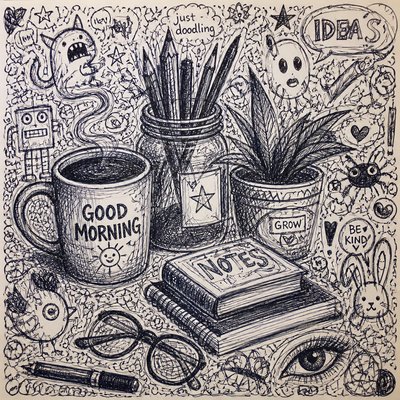
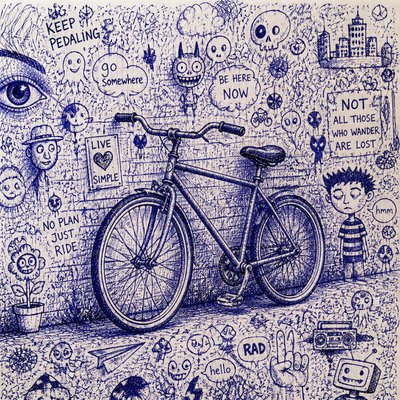
What is Doodle Art Style?
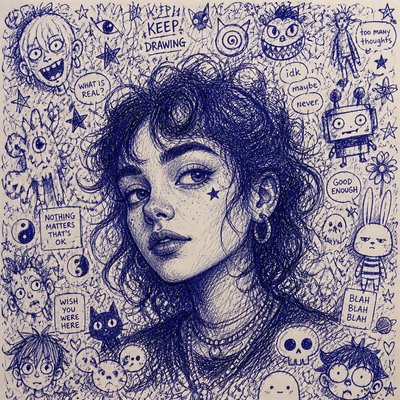
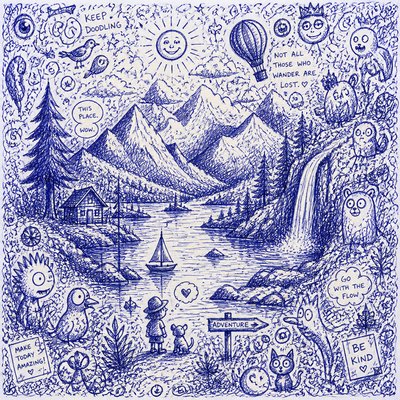
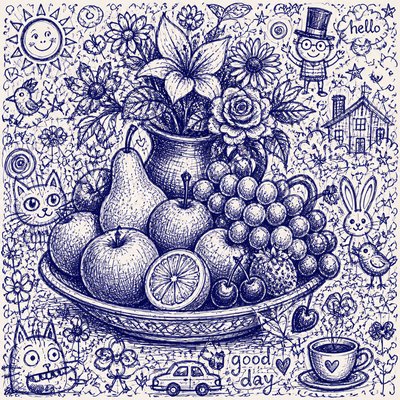
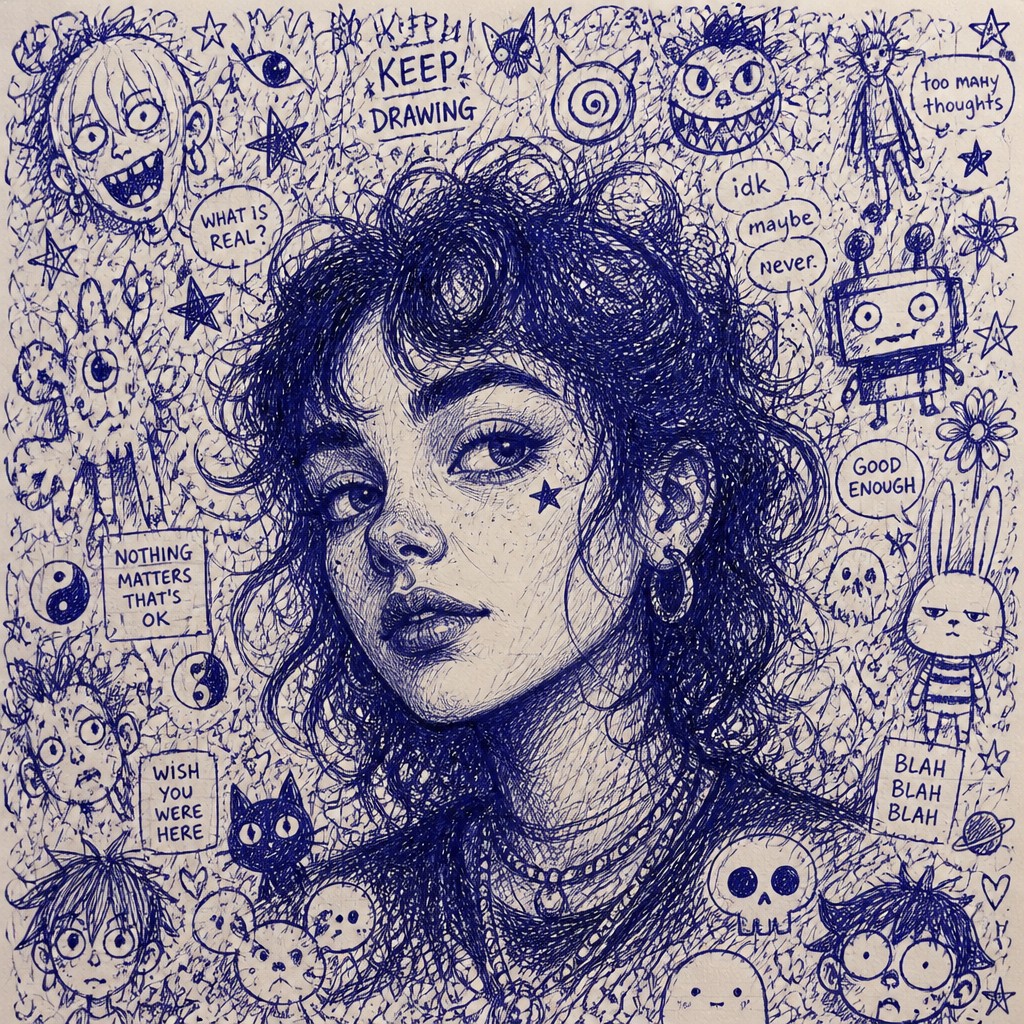
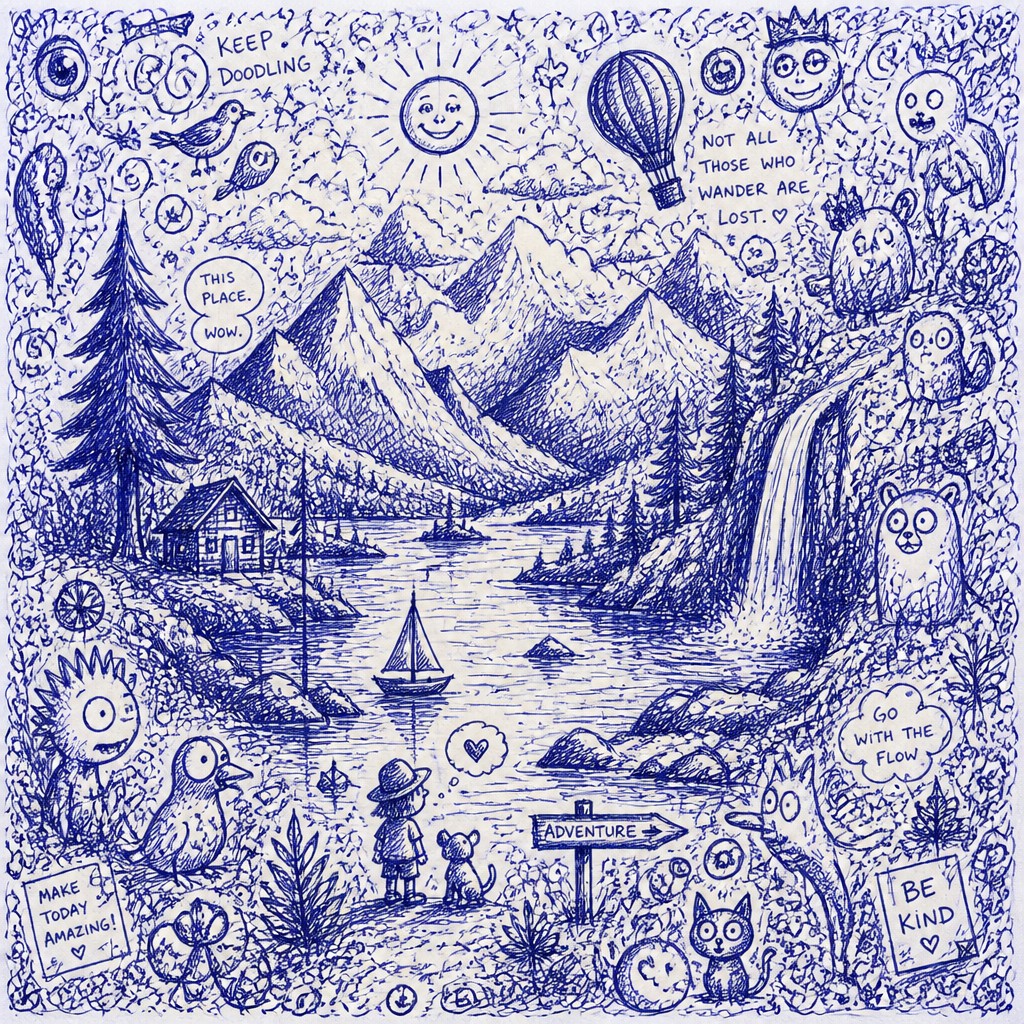
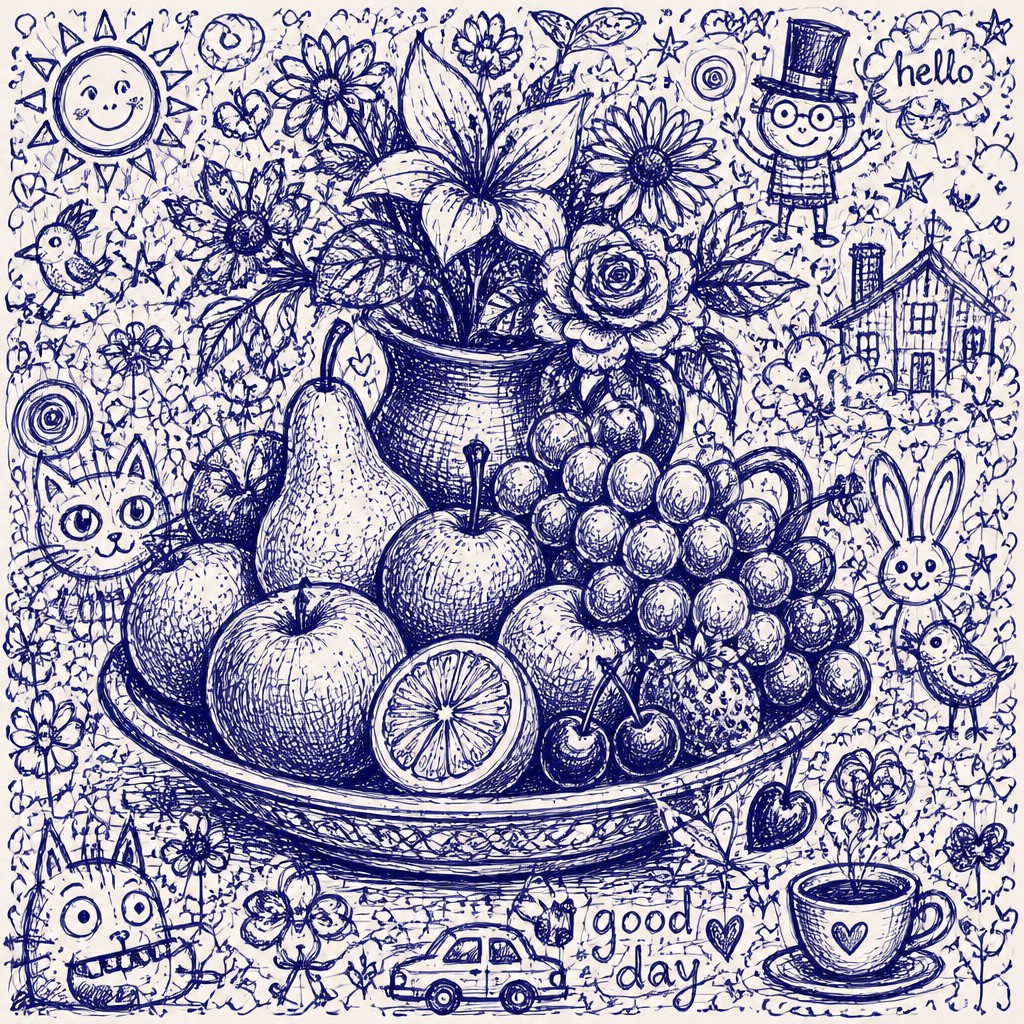
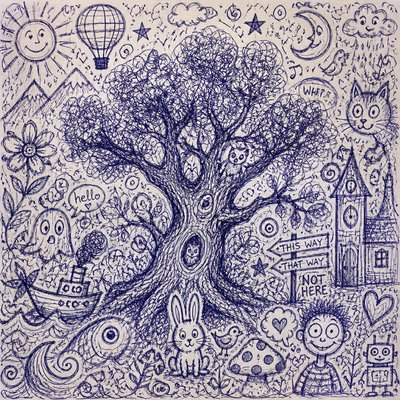
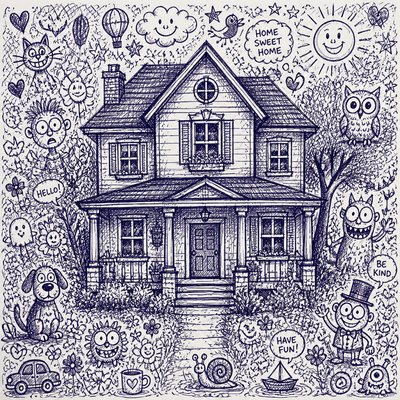
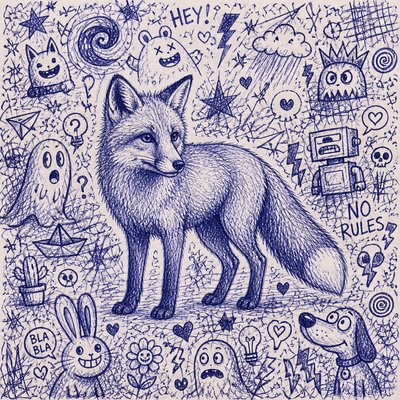
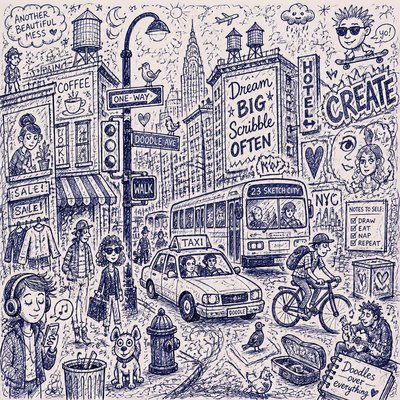
Doodle art turns spontaneous marks into an expressive visual language. It is built from loose scribbles, improvised symbols, cartoonish figures, tangled contours, repeated motifs, and quick areas of cross-hatching. Rather than organizing every element around a single focal point, doodles often spread across the surface in lively clusters, allowing the eye to wander through a field of visual associations.
The style looks unfiltered because it preserves the evidence of speed and improvisation: uneven lines, overlapping sketches, abrupt changes in scale, asymmetry, and unfinished forms. A doodle may begin as a decorative margin mark, a private visual note, or an idle sketch, then grow into a dense image through repetition and accumulation. Humor, rhythm, and personal mark-making are usually more important than realistic perspective or polished anatomy.
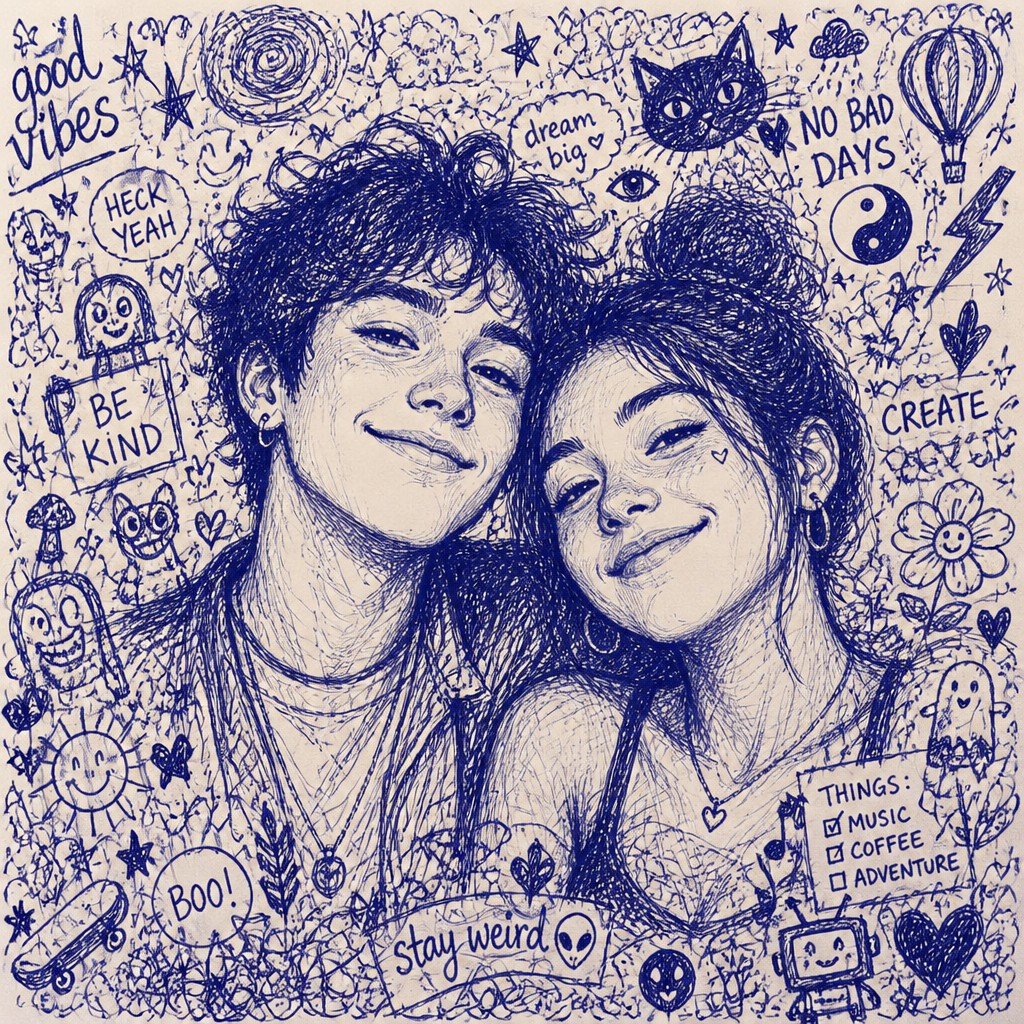
Try It On Your Photos
Upload any photo and convert it into Doodle Art Style — drag the sliders to compare before and after.
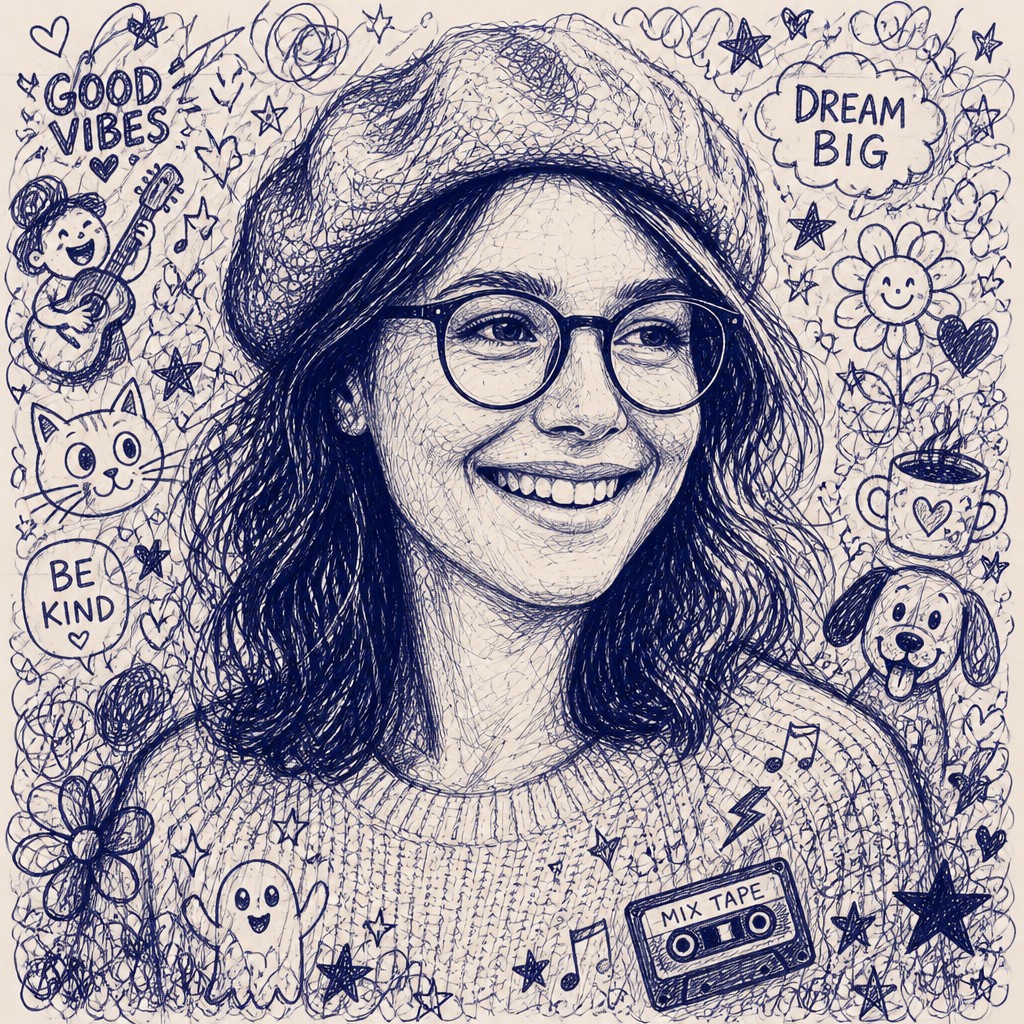

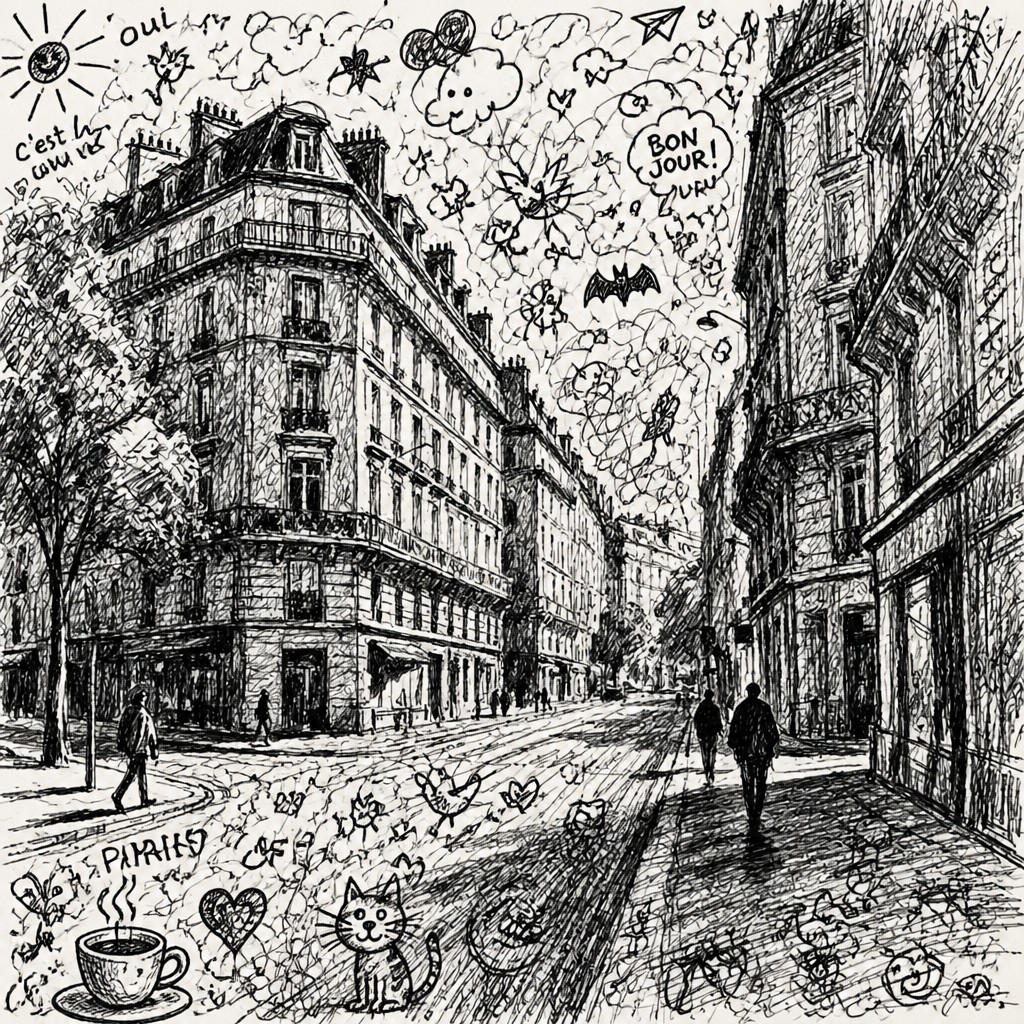

What Defines Doodle Art Style
The signature details, up close
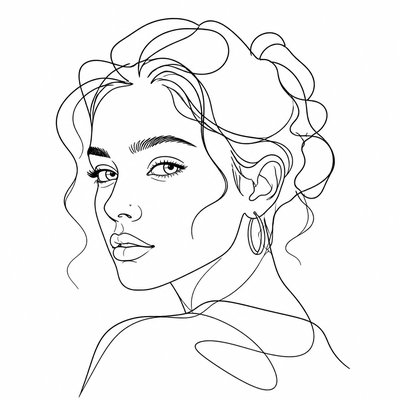
Loose, continuous linework
Lines are quick, irregular, and often allowed to overlap or wander. Uneven pressure and accidental deviations give the drawing an immediate, human quality.
Dense visual coverage
Marks, figures, patterns, and symbols frequently extend into margins and nearly fill the page. Empty space may appear, but it usually functions as a temporary pause within a busy field.
Playful cartoon figures
Simple faces, creatures, objects, and invented characters appear in compact clusters. Anatomy is exaggerated or reduced to a few expressive marks rather than carefully modeled.
Layered improvisation
New forms are drawn over earlier marks, producing tangled contours and unexpected relationships. The composition develops through accumulation instead of a fully planned structure.
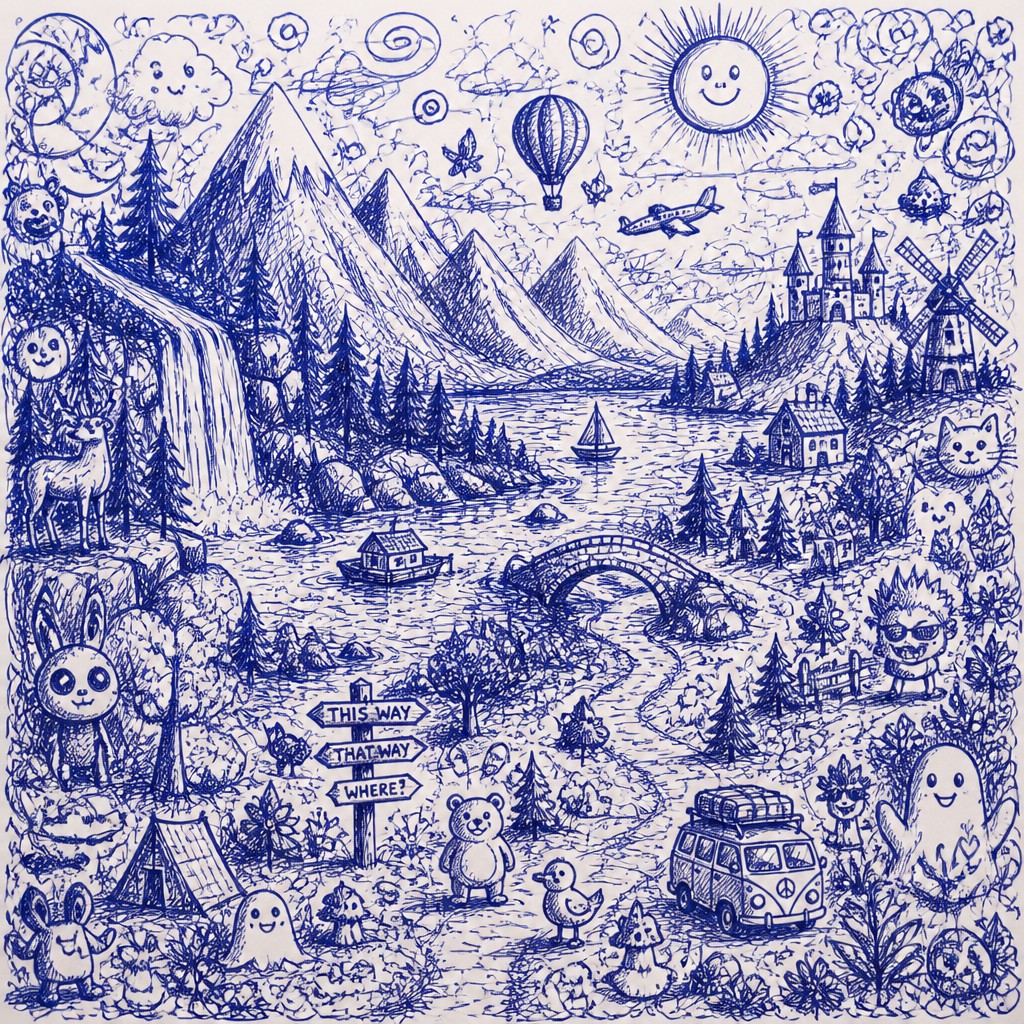
Cross-hatching and scratched shading
Fast diagonal strokes, loops, stipples, and scribbled fills create tone without smooth rendering. Shading often remains visibly energetic rather than blending into realistic volume.
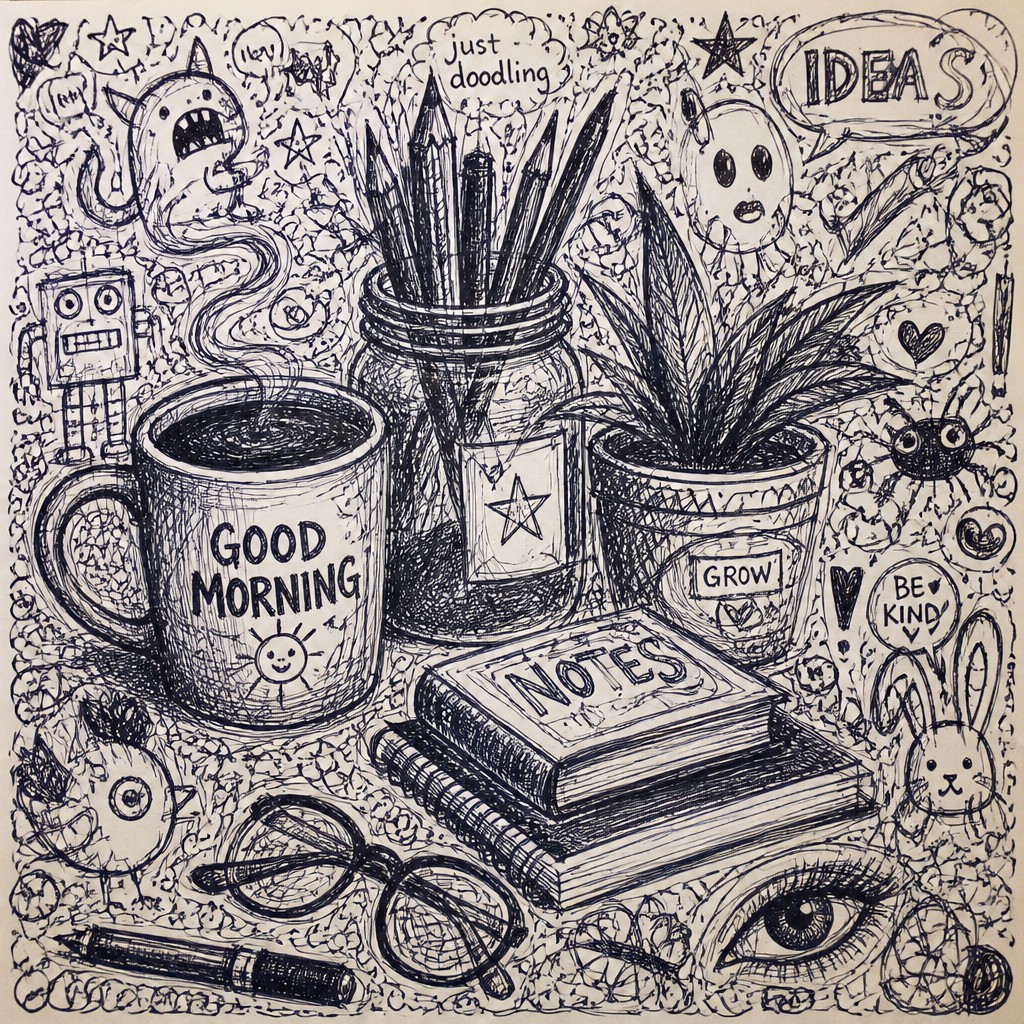
Asymmetry and shifting scale
Large motifs may sit beside tiny symbols, with no consistent horizon or perspective system. Unequal spacing and off-center groupings reinforce the informal, spontaneous character.
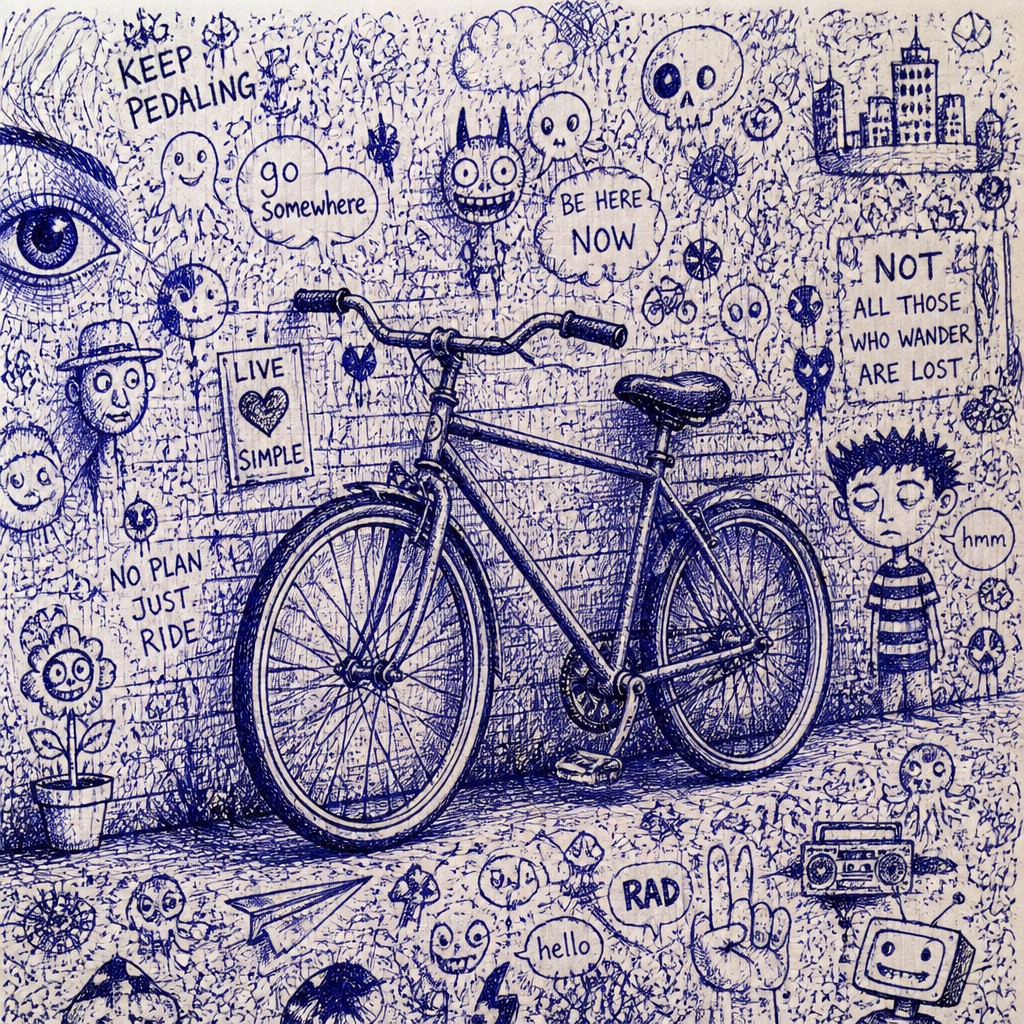
Restricted but emphatic color
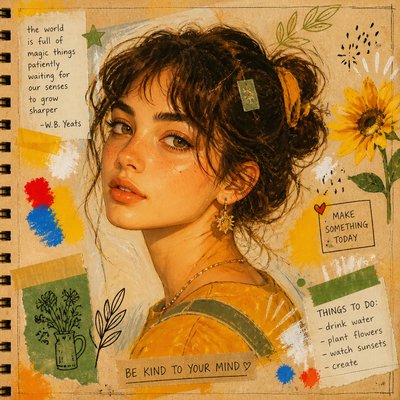
Traditional examples often rely on black or blue ink on paper, while contemporary versions may add bright flat colors or selective highlights. Color is usually used for emphasis and rhythm rather than naturalistic description.
Doodle Prompt Ideas
Start from an idea — each one opens the generator with the style ready to go. See all 40 Doodle prompts →
How to Create Doodle Art
Master the craft step by step — or skip straight to creating. Read the full guide →
- 1
Begin with unrestricted marks
Use a ballpoint pen, fineliner, pencil, or digital ink brush and make repeated loops, zigzags, faces, symbols, and contour fragments without erasing. Let the first marks establish a rhythm instead of attempting a finished drawing immediately.
- 2
Build by accumulation
Add clusters around the initial forms, allowing motifs to overlap and change scale. Preserve some awkward lines and partial figures; they help the image retain its spontaneous character.
- 3
Use fast tonal textures
Create shadow with cross-hatching, stippling, spirals, short scratches, or dense scribbles. Vary the direction and density of marks to suggest depth while keeping the surface visibly hand-made.
- 4
Control visual noise
A busy page still benefits from recurring motifs, a few larger anchor shapes, and occasional lighter passages. Use a limited ink palette or reserve bright color for selected figures so the composition does not become uniformly heavy.
- 5
Adapt the method digitally
Work with a textured ink brush, pressure-sensitive strokes, multiple transparent layers, and a deliberately imperfect stabilizer setting. For prompt-based creation, specify the subject together with dense margins, tangled linework, cartoon clusters, uneven cross-hatching, and an asymmetric page-filling composition.
The Story
History & Origins of Doodle
Doodle art is not a single historical movement with a fixed period or manifesto. Its lineage reaches back to marginalia, notebook sketches, diagrammatic marks, caricature, folk ornament, and the long tradition of drawing during moments of distraction or reflection. In the modern period, automatic drawing and experimental sketching encouraged artists to follow associations without planning a finished composition in advance.
The widespread availability of inexpensive pens and notebooks helped establish the familiar black-ink doodle vocabulary of ballpoint contours, hatching, cartoon symbols, and page-filling patterns. Contemporary doodle art also draws from comics, street-art tagging, zine culture, editorial illustration, and digital brushwork, where layers and undo tools make it possible to imitate or expand the spontaneity of a hand-drawn page.
Influences: Doodle art draws on notebook marginalia, caricature, comics and cartoon drawing, automatic drawing associated with Surrealism, folk pattern-making, zine illustration, graffiti-derived mark-making, and editorial sketching. It also shares methods with ink illustration, observational diagramming, and contemporary digital line art. These traditions contribute its spontaneous contours, symbolic shorthand, repetition, humor, and willingness to let the drawing process remain visible.
Frequently Asked Questions
What defines doodle art?
Doodle art is defined by spontaneous linework, improvised motifs, playful symbols, and a composition that often grows through accumulation. It commonly uses uneven contours, cartoon figures, scribbled textures, and cross-hatching rather than polished realism. The visible process of making the marks is part of the style.
Is doodle art abstract or figurative?
It can be either, and often combines both. A doodle may include recognizable faces, animals, buildings, or objects alongside abstract loops, patterns, and unreadable symbols. Its visual identity comes more from the treatment of line and space than from a particular subject.
How is doodle art different from cartoon illustration?
Cartoon illustration usually gives greater priority to readable characters, controlled staging, and a clear narrative or focal point. Doodle art tends to be more spontaneous and decentralized, with overlapping forms, shifting scales, and unfinished or repeated marks. A cartoon character can appear within a doodle, but the overall page behaves more like a stream of visual associations.
What materials are commonly used for doodle art?
Ballpoint pens, fineliners, pencils, felt-tip markers, and inexpensive paper are traditional choices. Their direct, quick-drying marks encourage improvisation and make dense hatching easy to build. Digital artists can use textured ink brushes and pressure-sensitive tablets to reproduce similar irregularities.
How do I make a doodle look spontaneous rather than messy?
Repeat a small group of motifs, vary the scale of forms, and create a few larger anchors amid the smaller marks. Leave some lines unresolved, but balance dense areas with occasional breathing room and maintain a consistent line or color vocabulary. Spontaneity comes from controlled variation, not from adding random detail everywhere.
Where is doodle art used?
It appears in notebooks, margins, posters, editorial illustration, stickers, apparel graphics, zines, packaging, murals, animation, and interface decoration. Its informal tone makes it useful for subjects involving humor, brainstorming, youth culture, personal expression, and imaginative world-building.
Create your first Doodle artwork
Describe anything — or upload a photo — and see it in Doodle Art Style in seconds.
Related Styles
Discover similar art styles