Anglo-Saxon Metalwork Art Style
Explore Anglo-Saxon metalwork: interlaced beasts, garnet cloisonné, filigree, and the burial-hoard goldwork of early medieval England.
Instantly rendered in Anglo-Saxon Metalwork — or transform a photo
Anglo-Saxon Metalwork Gallery
Tap any artwork to explore it
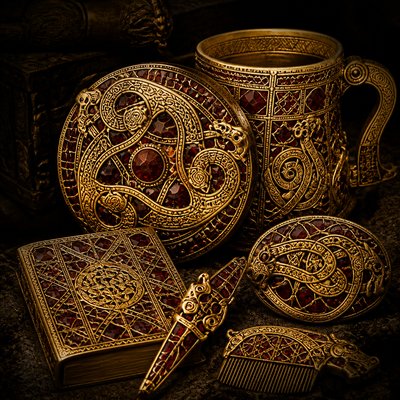
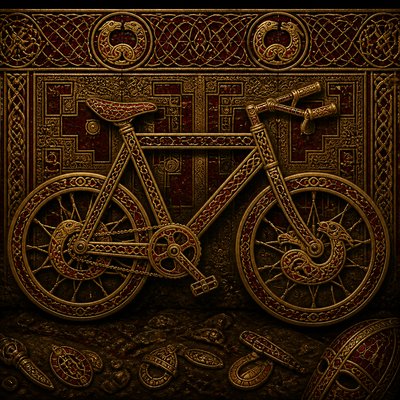
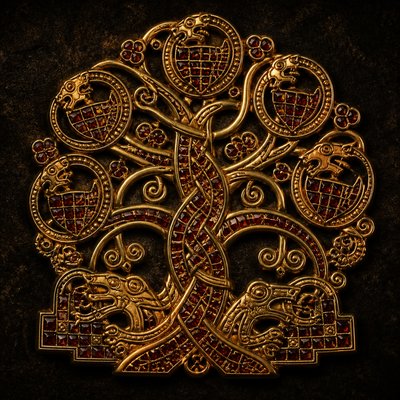
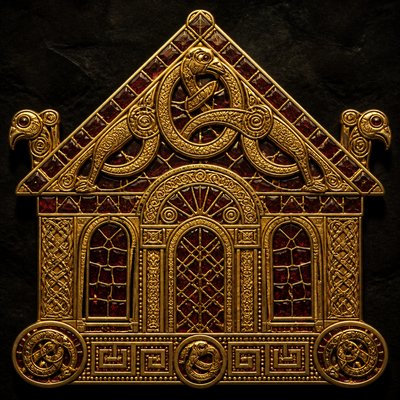
What is Anglo-Saxon Metalwork Art Style?
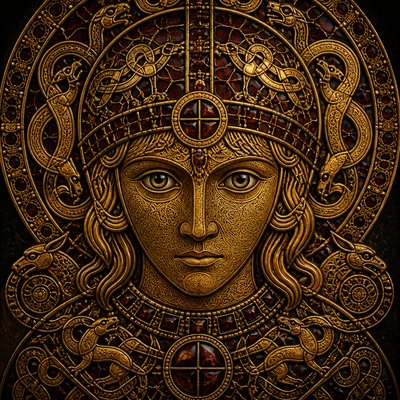
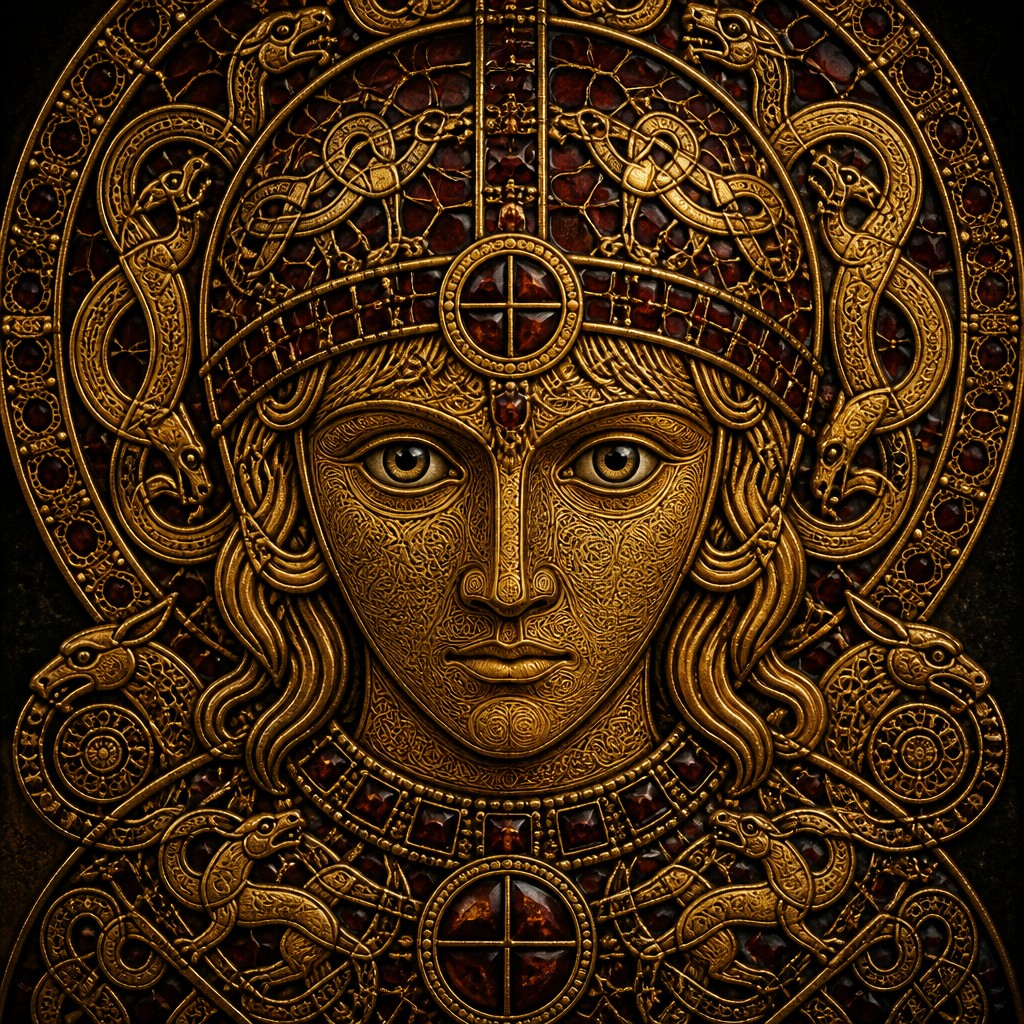
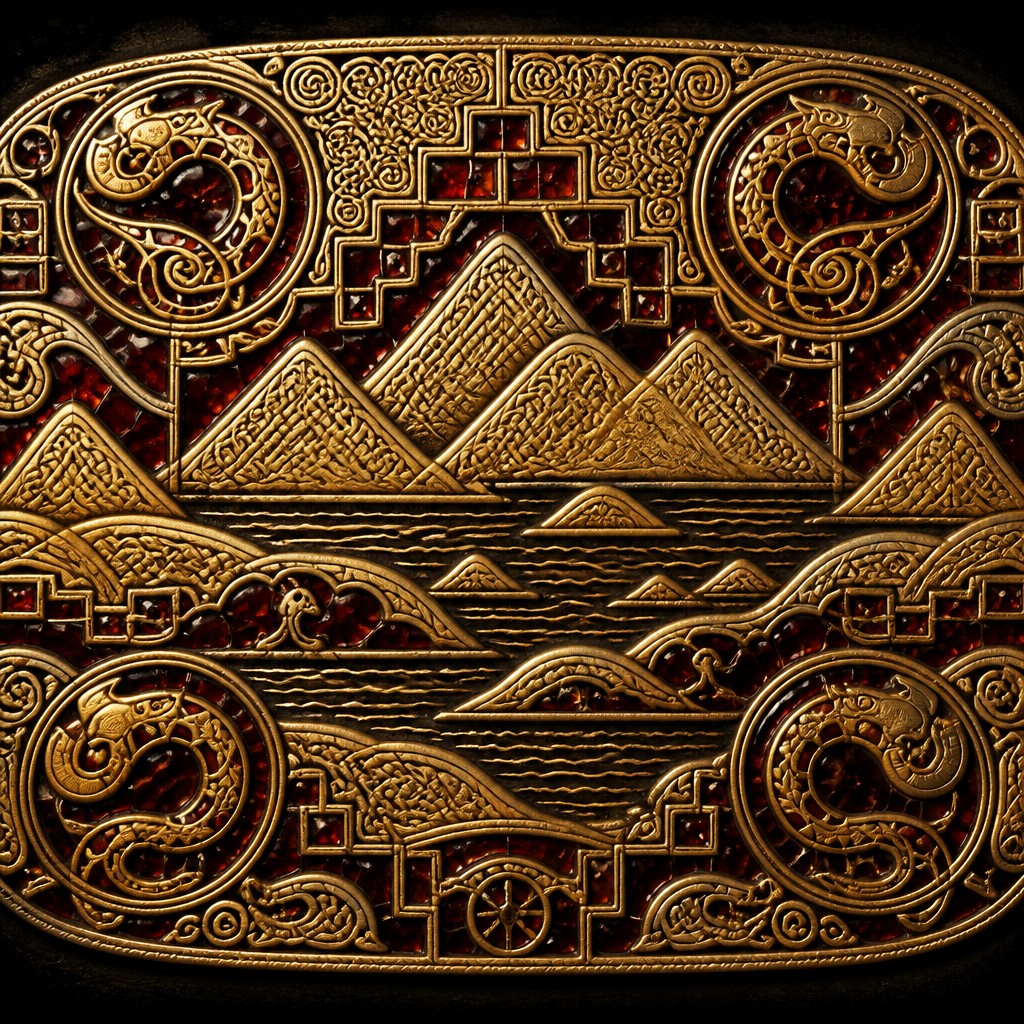
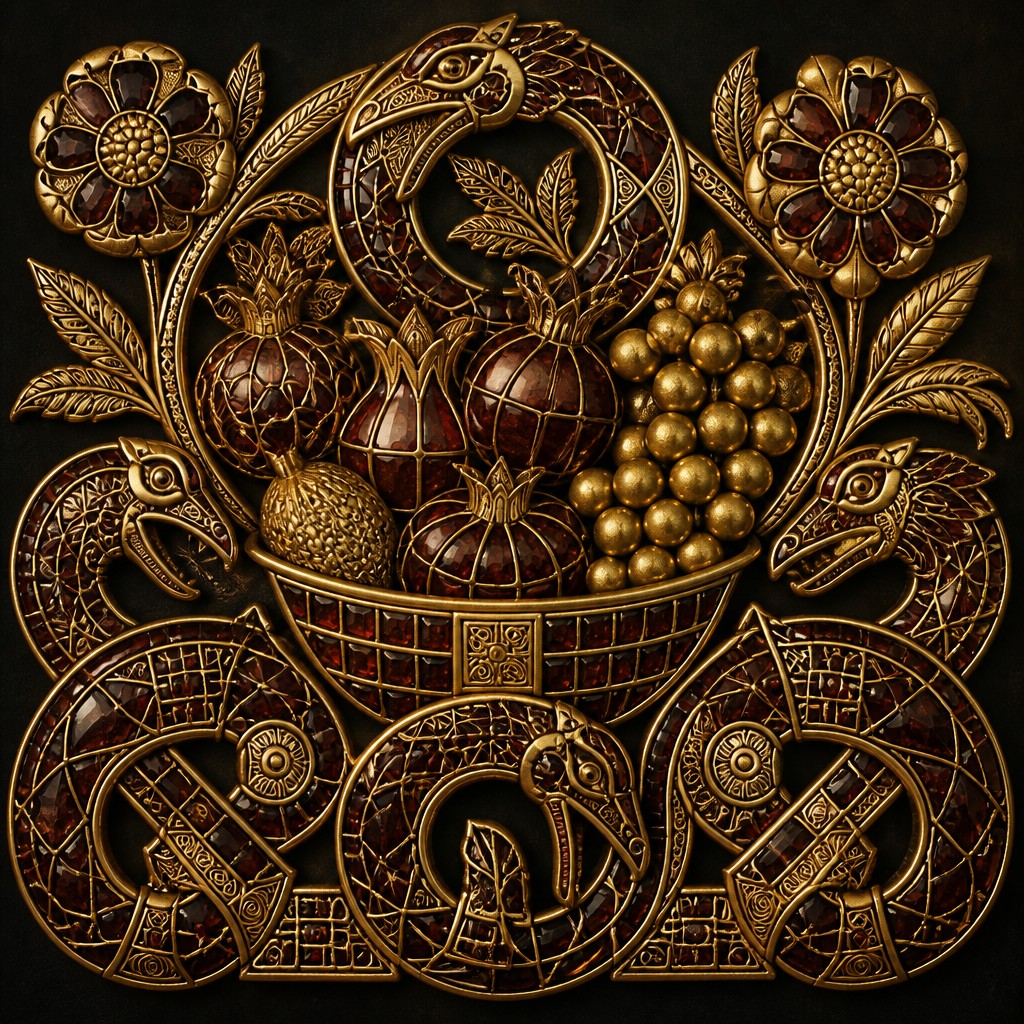
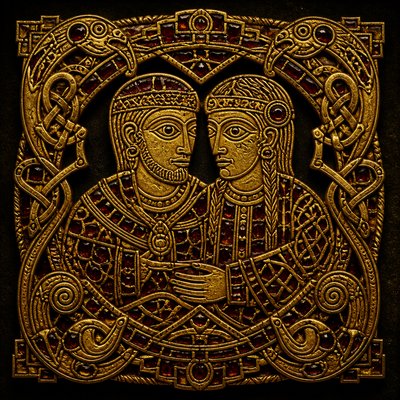
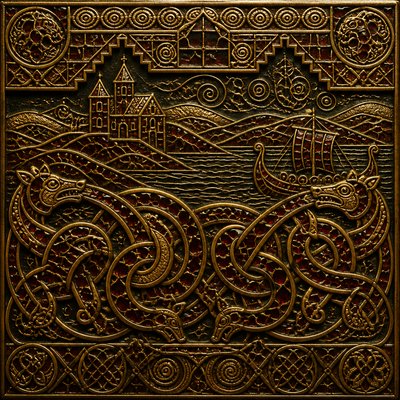
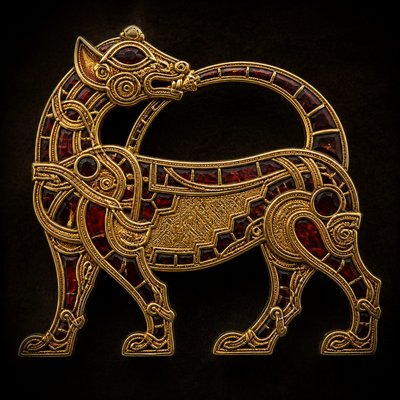
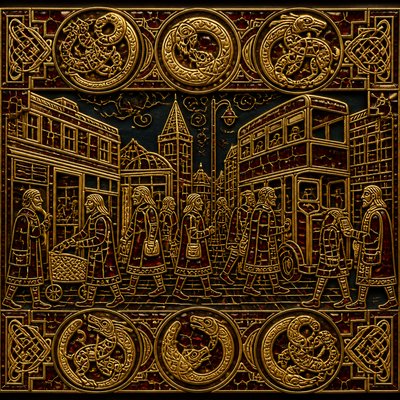
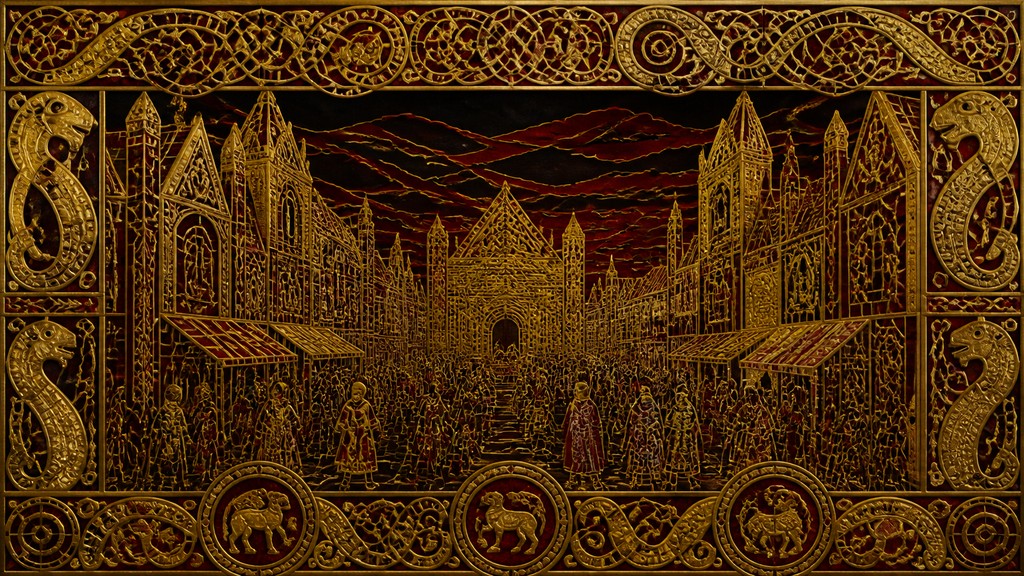
Anglo-Saxon metalwork is the jeweled, highly structured art of early medieval England, especially from the fifth through the eleventh centuries. It is associated with gold and silver ornaments, weapon fittings, buckles, brooches, reliquaries, and other prestigious objects made for elite display, ritual use, and burial. Its most recognizable vocabulary combines interlaced animals, curling tendrils, geometric compartments, polished metal, and vivid garnet inlay.
The style looks dense and intricate because its designs were engineered for small metal surfaces and assembled through demanding techniques. Stylized beasts twist through narrow fields, their bodies reduced to ribbons, masks, claws, and beaks; gold wire and granulation enrich the surface, while red garnets create a strong contrast with the warm metal. Although often associated with treasure hoards and heroic burial objects, Anglo-Saxon metalwork also reflects changing connections among Germanic, Insular, Roman, and Christian artistic traditions.
Try It On Your Photos
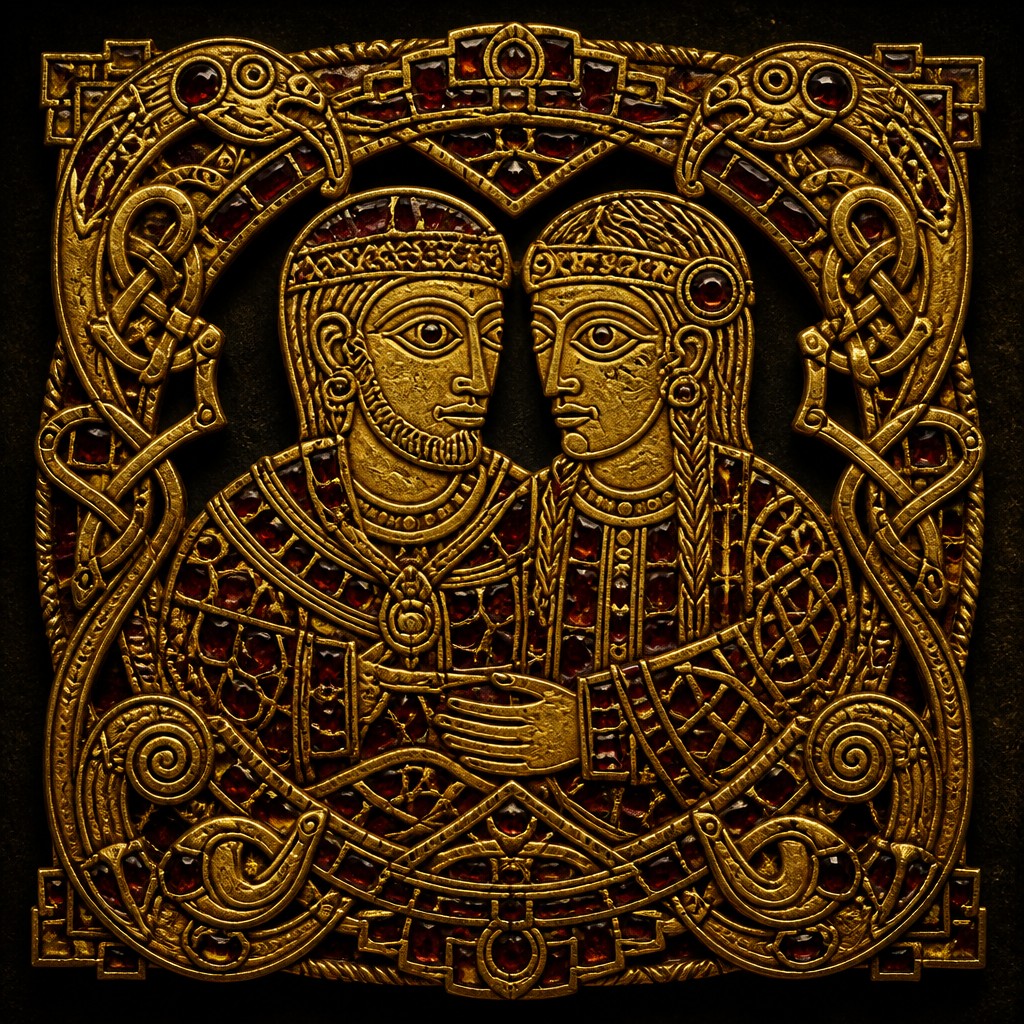
Upload any photo and convert it into Anglo-Saxon Metalwork Art Style — drag the sliders to compare before and after.



What Defines Anglo-Saxon Metalwork Art Style
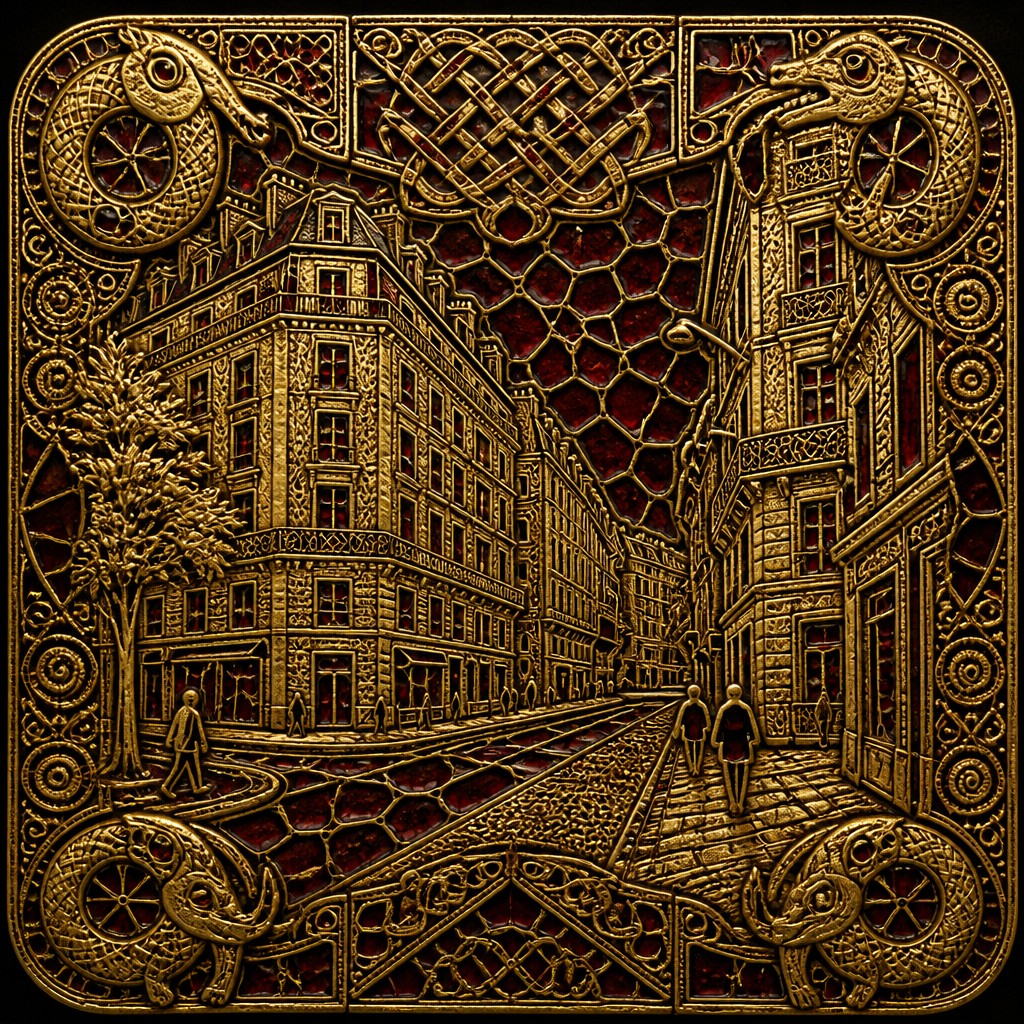
The signature details, up close
Interlaced zoomorphic ornament
Animals are elongated into looping ribbons, with bodies crossing, folding, and sometimes biting their own tails. Heads, jaws, eyes, claws, and beaks are deliberately difficult to separate from the surrounding pattern.
Garnet cloisonné
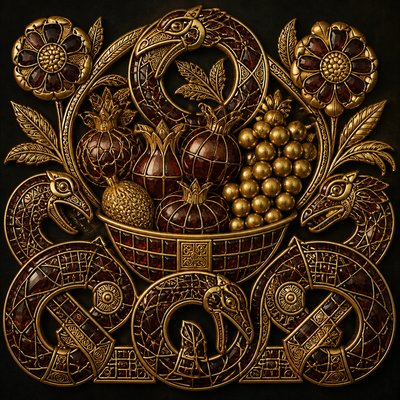
Thin gold partitions form cells that hold shaped pieces of deep red garnet or related glassy inlay. The regular compartments produce a jewel-like grid and a dramatic blood-red contrast against gold.
Filigree and granulation
Fine gold wires create spirals, curls, rosettes, and borders, while tiny beads or granules add granular surface texture. These details reward close viewing and make relatively small objects appear exceptionally rich.
Warm metallic palette
Polished yellow gold dominates, often set against dark recesses, blackened backgrounds, silver, or red stone. The visual effect depends on contrast between reflective highlights and shadowed, densely worked ornament.
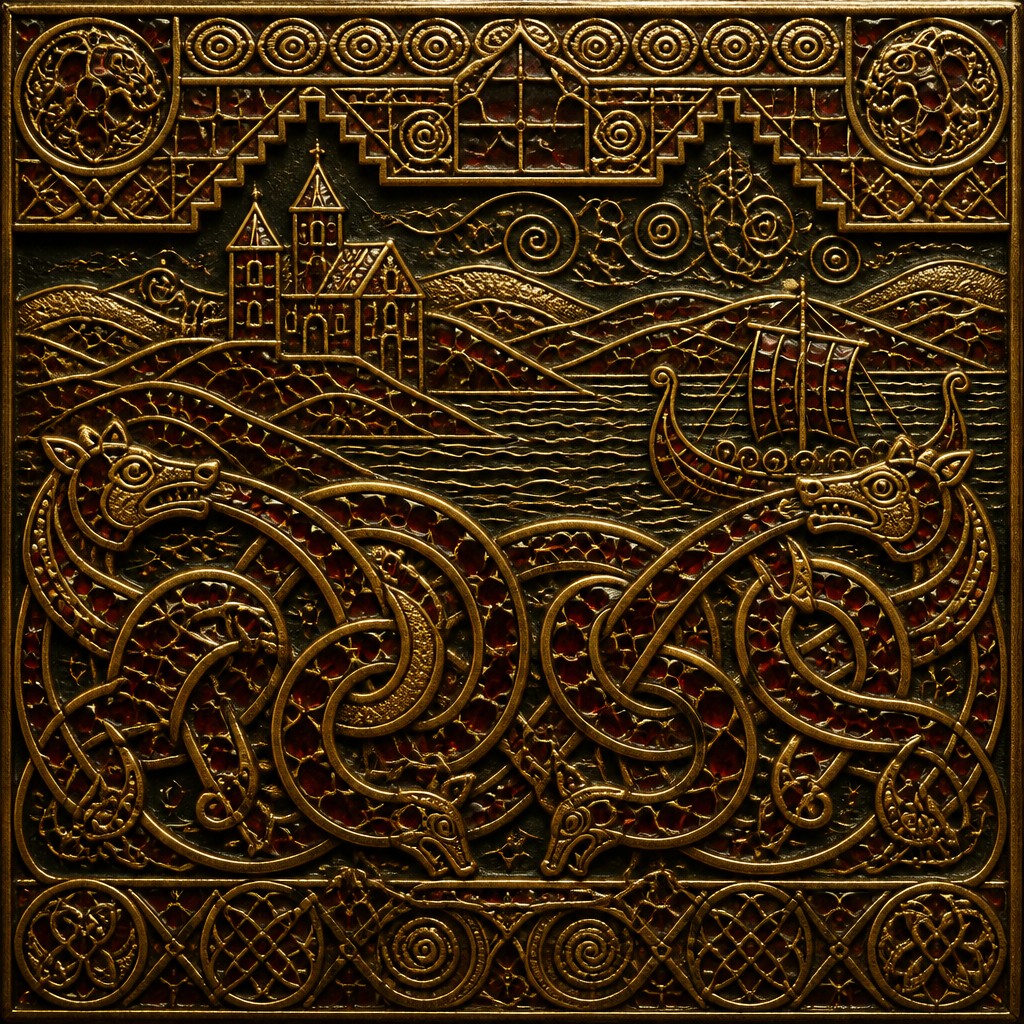
Stepped geometric compartments
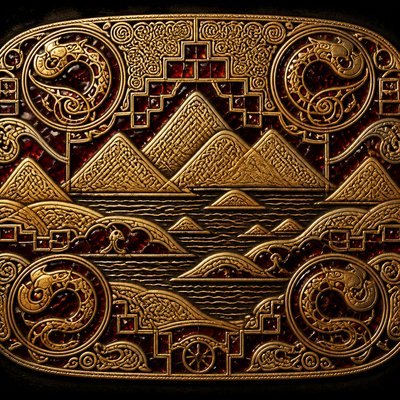
Rectangles, trapezoids, triangles, and stepped panels organize the surface and frame animal or jewel motifs. Geometry provides a strict underlying structure beneath the apparent complexity.
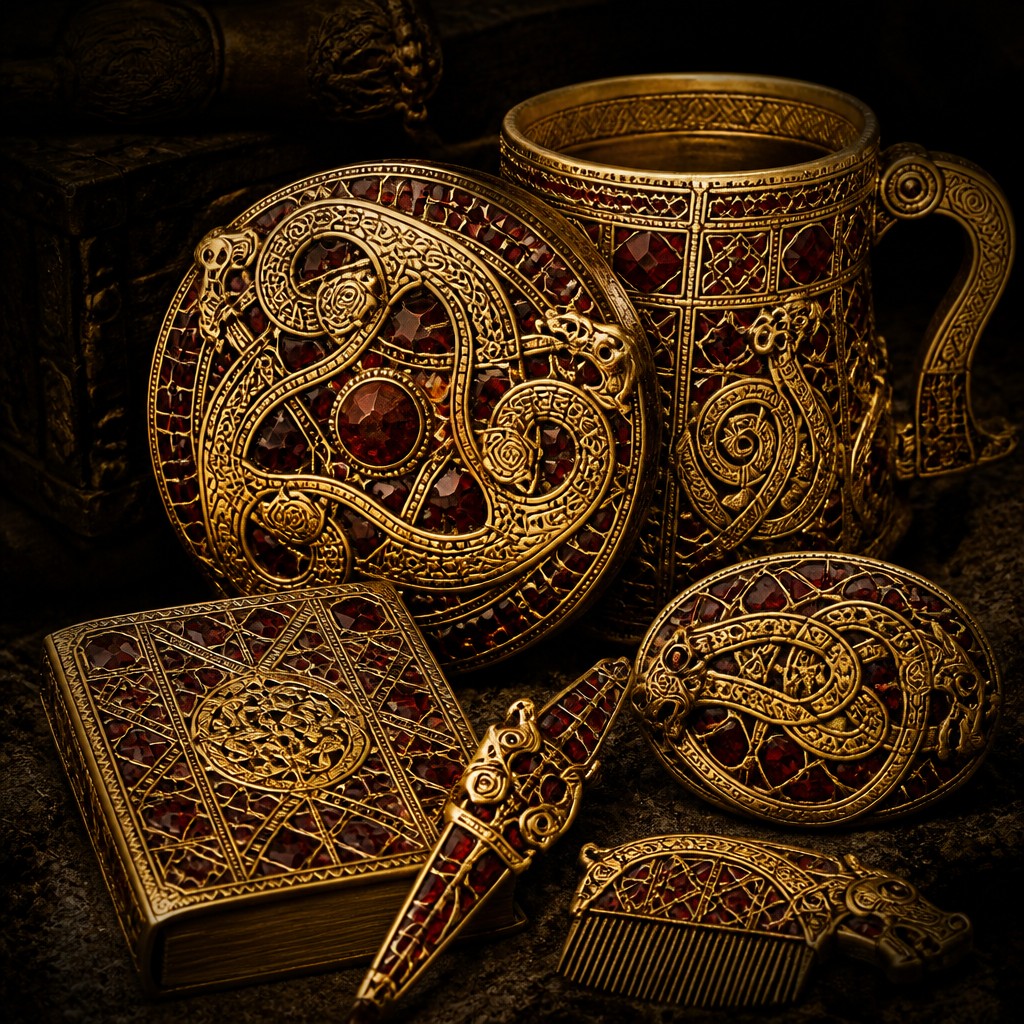
Compressed, frontal animal forms
Creatures are usually symbolic rather than naturalistic, with enlarged eyes, hooked jaws, folded limbs, and flattened bodies. Their legibility comes from selected features instead of anatomical realism.
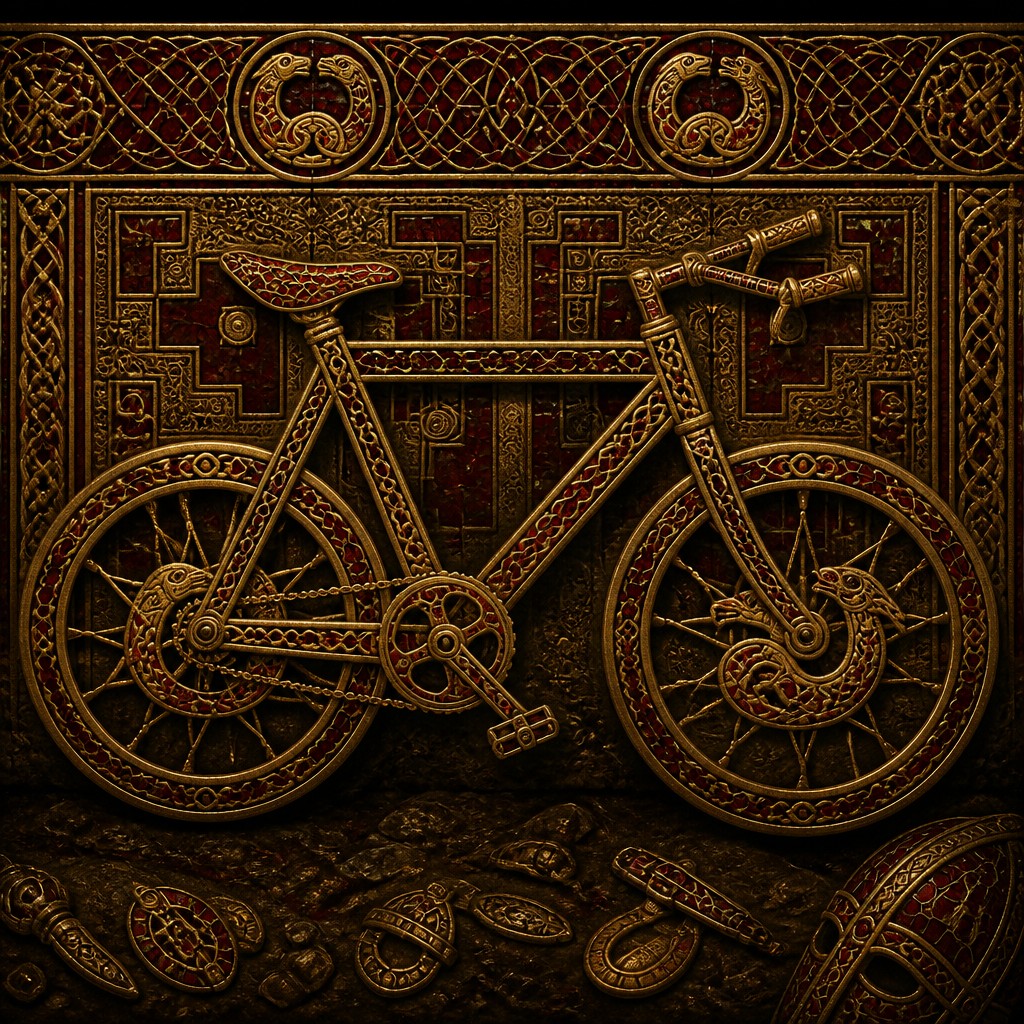
Luxury-object construction
The ornament is conceived as part of a functional object such as a buckle, brooch, sword fitting, helmet, or reliquary. Shape, edge, setting, and decoration work together to communicate status and cultural affiliation.
Try It
Create Videos in Anglo-Saxon Metalwork Art Style
Styles aren't just for stills — describe a scene or animate an image and get a short video rendered in Anglo-Saxon Metalwork. Press play to see this pond come to life.
Make a VideoAnglo-Saxon Metalwork Prompt Ideas
Start from an idea — each one opens the generator with the style ready to go. See all 40 Anglo-Saxon Metalwork prompts →
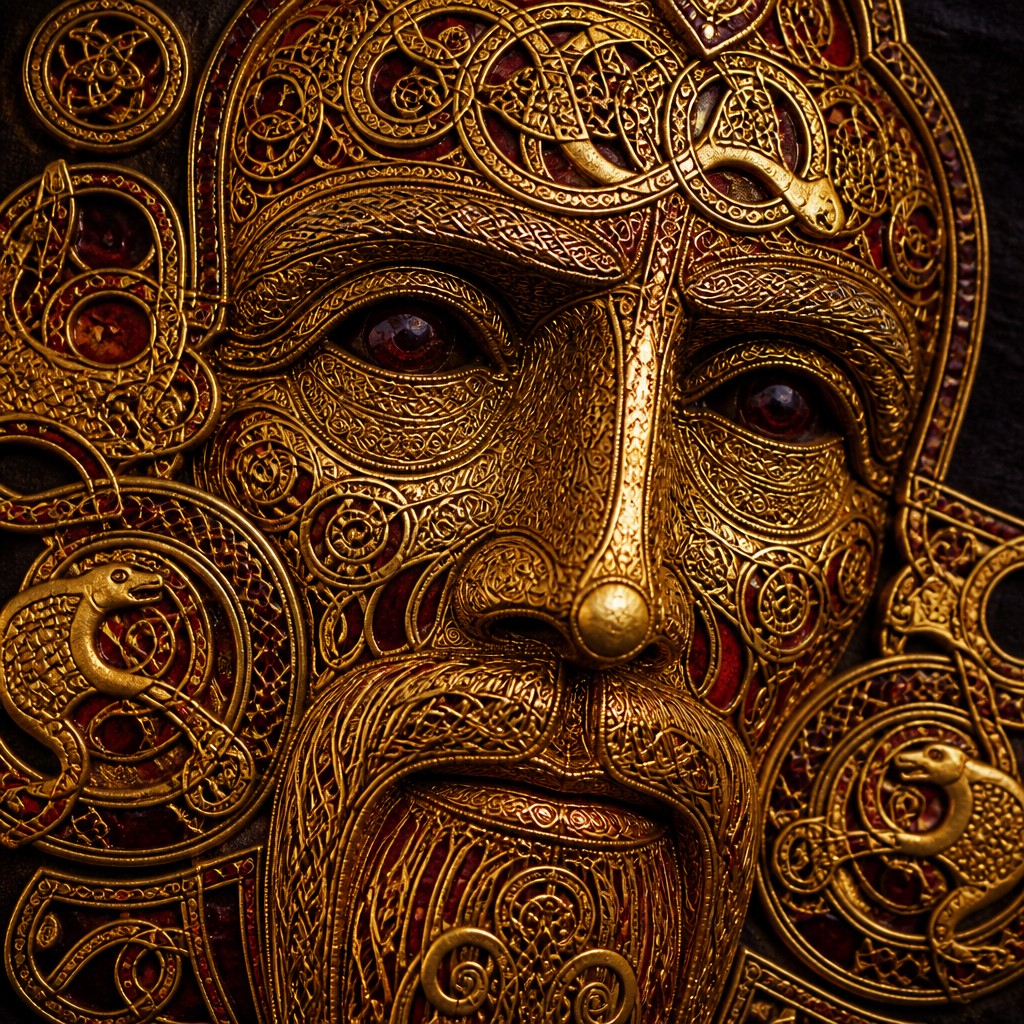
“close-up portrait of an elderly person with expressive weathered features”
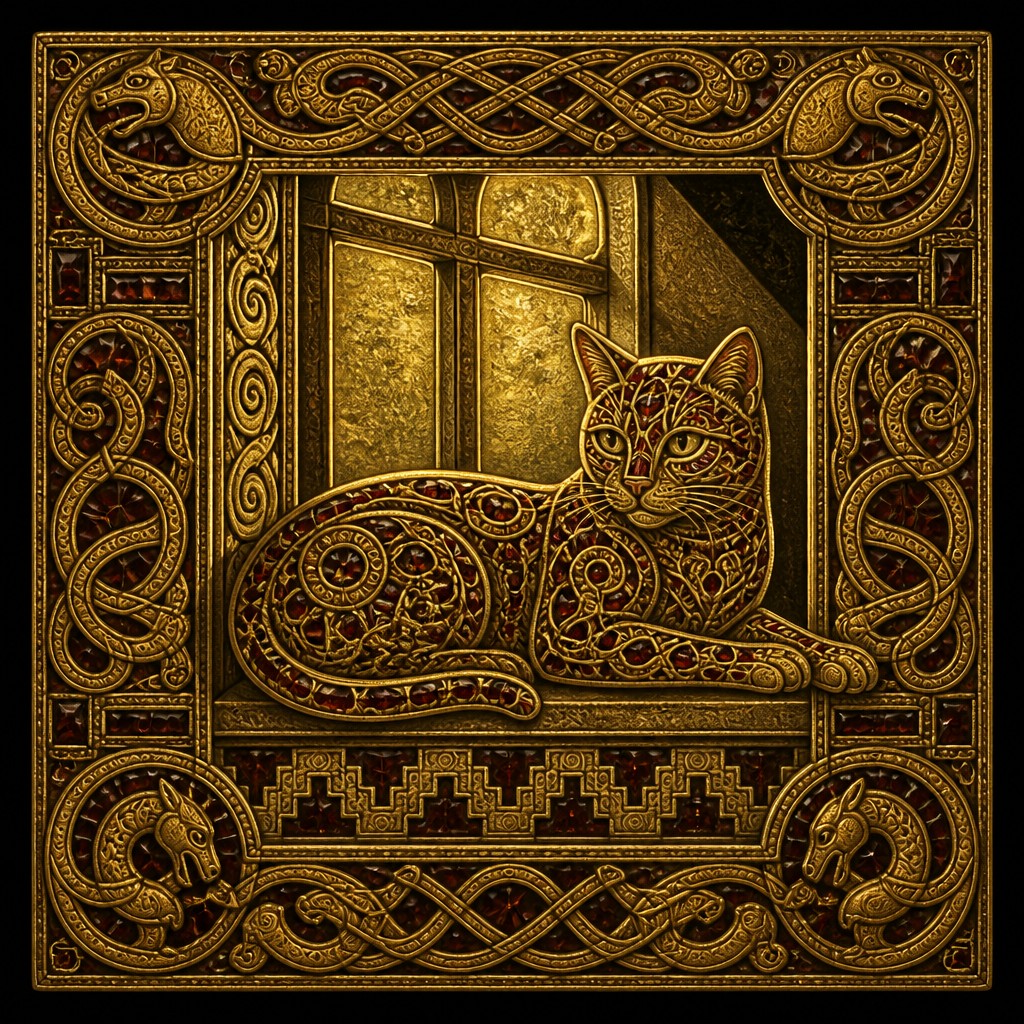
“a cat lounging in a sunlit window”
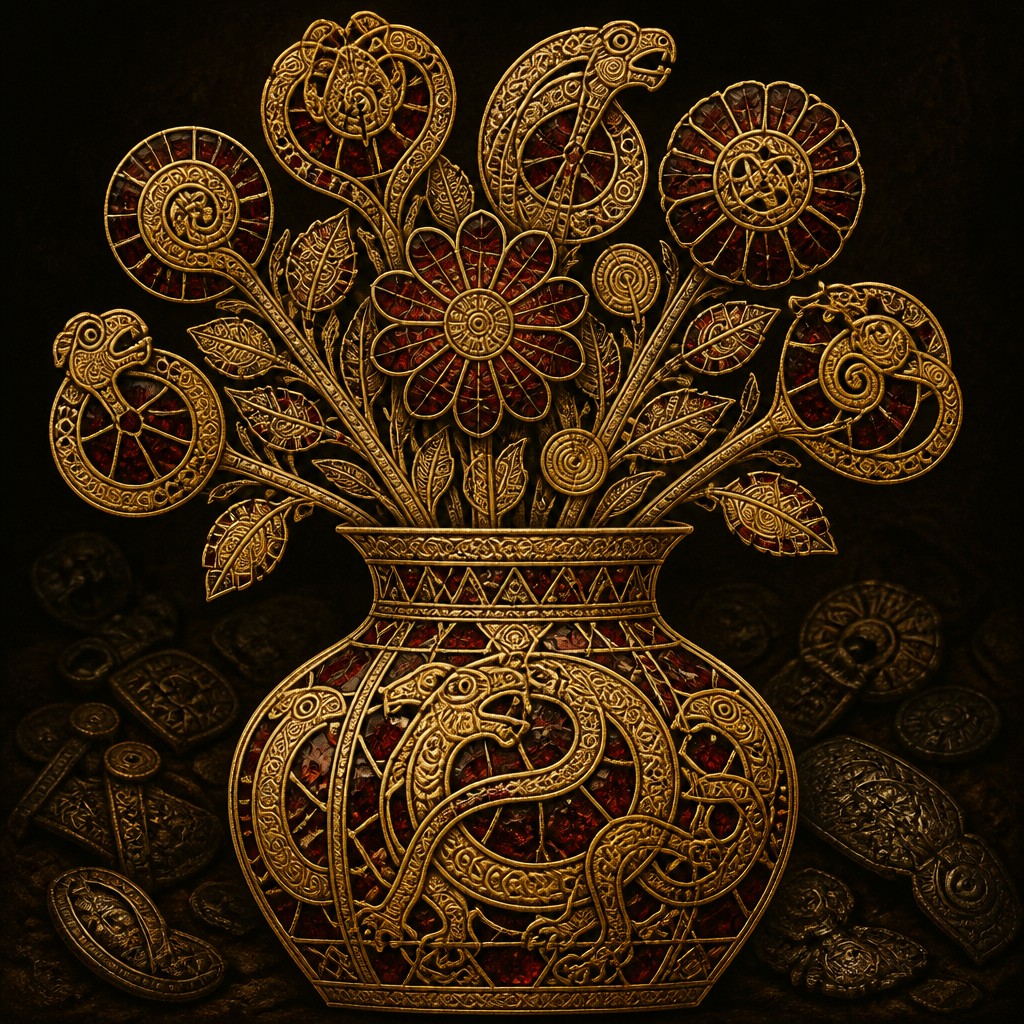
“bouquet of flowers in a glass vase”
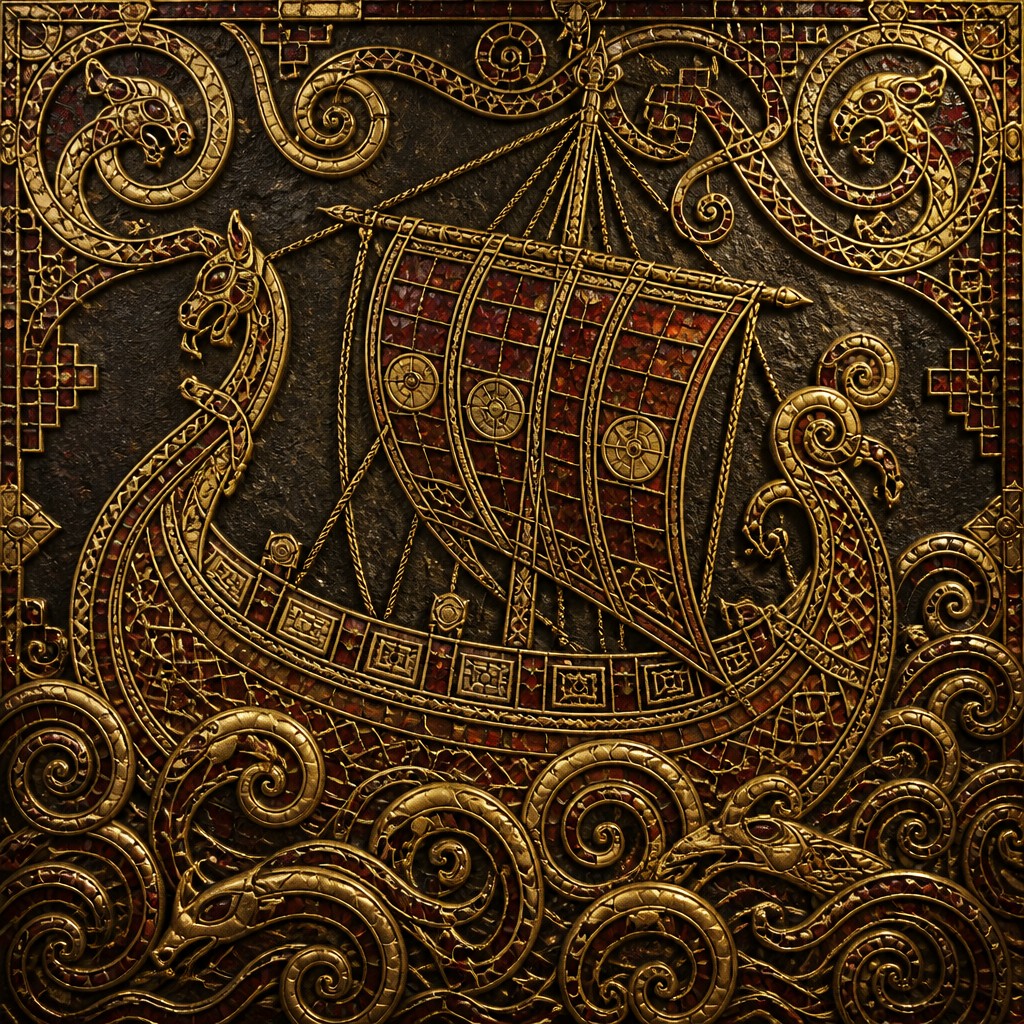
“sailing ship on a stormy sea”
How to Create Anglo-Saxon Metalwork Art
Master the craft step by step — or skip straight to creating. Read the full guide →
- 1
Build a strict compartmental layout
Begin with a central panel, border, or radial framework before adding ornament. Divide the surface into stepped geometric cells so the interlace remains controlled rather than becoming an unstructured tangle.
- 2
Construct beasts from ribbons
Design animals as narrow bands with identifiable heads, jaws, eyes, claws, and tails, then weave their bodies through one another. Keep the anatomy compressed and symbolic, with repeated crossings and hooked contours.
- 3
Simulate metal and inlay
For traditional work, use relief, chasing, engraving, wirework, granulation, and recessed settings to create varied surface depths. Digitally, combine sharp gold highlights, dark cavities, fine wire lines, and opaque red jewel shapes rather than relying on a flat yellow fill.
- 4
Use controlled material contrast
Pair luminous gold with deep shadow and saturated garnet red, adding occasional silver or darkened recesses for separation. Avoid broad modern gradients that obscure the crisp, cell-based construction.
- 5
Adapt the design to an object
Place the ornament on a buckle, brooch, sword hilt, pendant, helmet fitting, manuscript cover, or ceremonial plaque. Respect the object's edges, openings, fasteners, and symmetry so the result feels constructed rather than pasted on.
- 6
Write prompts with material and structure
Specify the subject, object format, interlaced animal anatomy, garnet cell setting, filigree, geometric layout, lighting, and restrained palette. For image transformation, preserve the source silhouette while replacing surface details with engraved gold, cloisonné compartments, and dark recesses.

The Story
History & Origins of Anglo-Saxon Metalwork
Anglo-Saxon metalwork developed in England after Germanic-speaking groups established communities there during the fifth century, drawing on Migration Period ornament from northern and continental Europe. Early examples use animal ornament, stamped patterns, garnet cloisonné, and elaborate gold construction. By the sixth and seventh centuries, elite objects such as great brooches, sword fittings, and purse mounts display increasingly complex combinations of interlaced creatures, geometric cells, and filigree.
The seventh century brought especially rich experimentation in garnet-inlaid goldwork, while contact with Insular Christian culture encouraged new forms of interlace and manuscript-like ornament. Later Anglo-Saxon work continued to use elaborate metal decoration but increasingly incorporated Christian imagery, inscriptions, and regional styles. Important archaeological evidence comes from princely burials and hoards, including the Sutton Hoo finds and the Staffordshire Hoard, though surviving objects represent only part of the original artistic production.
Influences: The style belongs to the wider visual world of Migration Period animal ornament and is closely related to Germanic metalwork traditions, Insular manuscript illumination, Celtic interlace, late Roman decorative techniques, and early medieval Christian luxury arts. Its animal patterns overlap with the formal categories commonly called Animal Style I and Animal Style II, while its garnet-rich construction reflects contacts across northern Europe and the eastern Mediterranean. Modern fantasy illustration, historical reconstruction, heraldic design, and jewelry design frequently borrow its interlace and jewel-toned material language.
Frequently Asked Questions
What defines Anglo-Saxon metalwork art?
Its defining features are elite metal objects decorated with interlaced animals, garnet cloisonné, gold filigree, granulation, and stepped geometric layouts. The style emphasizes symbolic pattern, material richness, and compact ornamental construction rather than naturalistic representation.
When was Anglo-Saxon metalwork produced?
The tradition developed in England from roughly the fifth century and continued through the eleventh century. Its most famous gold-and-garnet examples date from the sixth and seventh centuries, while later objects show stronger Christian and regional influences.
How is it different from Viking metalwork?
The traditions overlap because both draw on northern European animal ornament and interlace. Anglo-Saxon examples are especially associated with garnet cloisonné, fine gold construction, and early English burial or ecclesiastical objects, whereas Viking-period styles often use distinct phases of animal ornament and more extensive cast, carved, or silver-decorated work.
What is garnet cloisonné?
Cloisonné is an inlay technique in which thin metal walls create individual compartments, or cells, that hold stones, glass, or enamel. In Anglo-Saxon luxury work, shaped red garnets were set into gold cells, sometimes over a reflective backing to intensify their color.
How can I make an Anglo-Saxon-inspired design without copying an artifact?
Use the historical principles rather than reproducing a specific object: create a structured border, invent your own ribbon-bodied creatures, and combine geometric cells with gold wire patterns. A contemporary pendant, book cover, emblem, or digital composition can retain the visual logic while using original motifs.
Where was this style used?
It appeared on personal ornaments, weapon fittings, belt hardware, domestic prestige objects, religious furnishings, and burial goods. These objects made wealth, rank, military identity, lineage, and religious affiliation visible through durable and highly portable decoration.
Create your first Anglo-Saxon Metalwork artwork
Describe anything — or upload a photo — and see it in Anglo-Saxon Metalwork Art Style in seconds.
Related Styles
Discover similar art styles