Tattoo Flash Art Style
Explore Tattoo Flash Art: bold black outlines, limited color, roses, daggers, swallows, anchors and vintage banner designs.
Instantly rendered in Tattoo Flash — or transform a photo
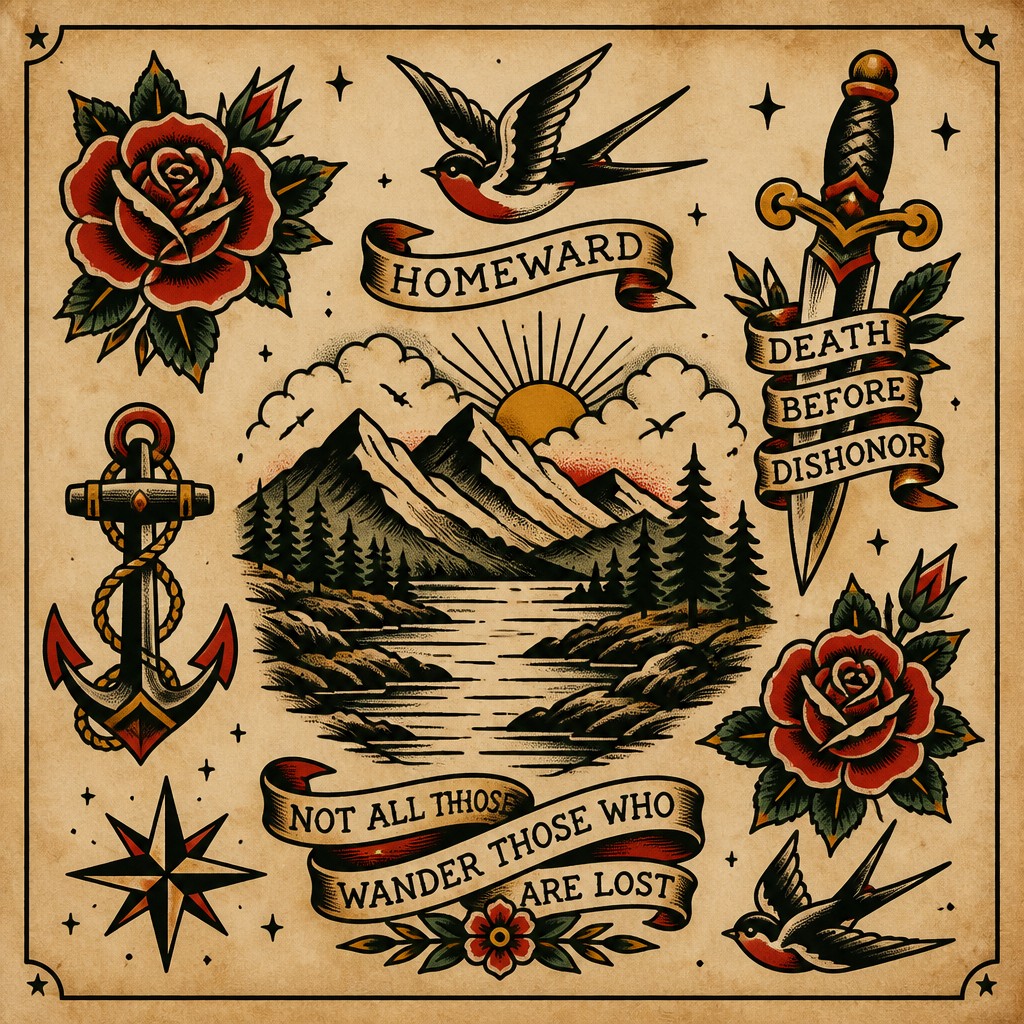
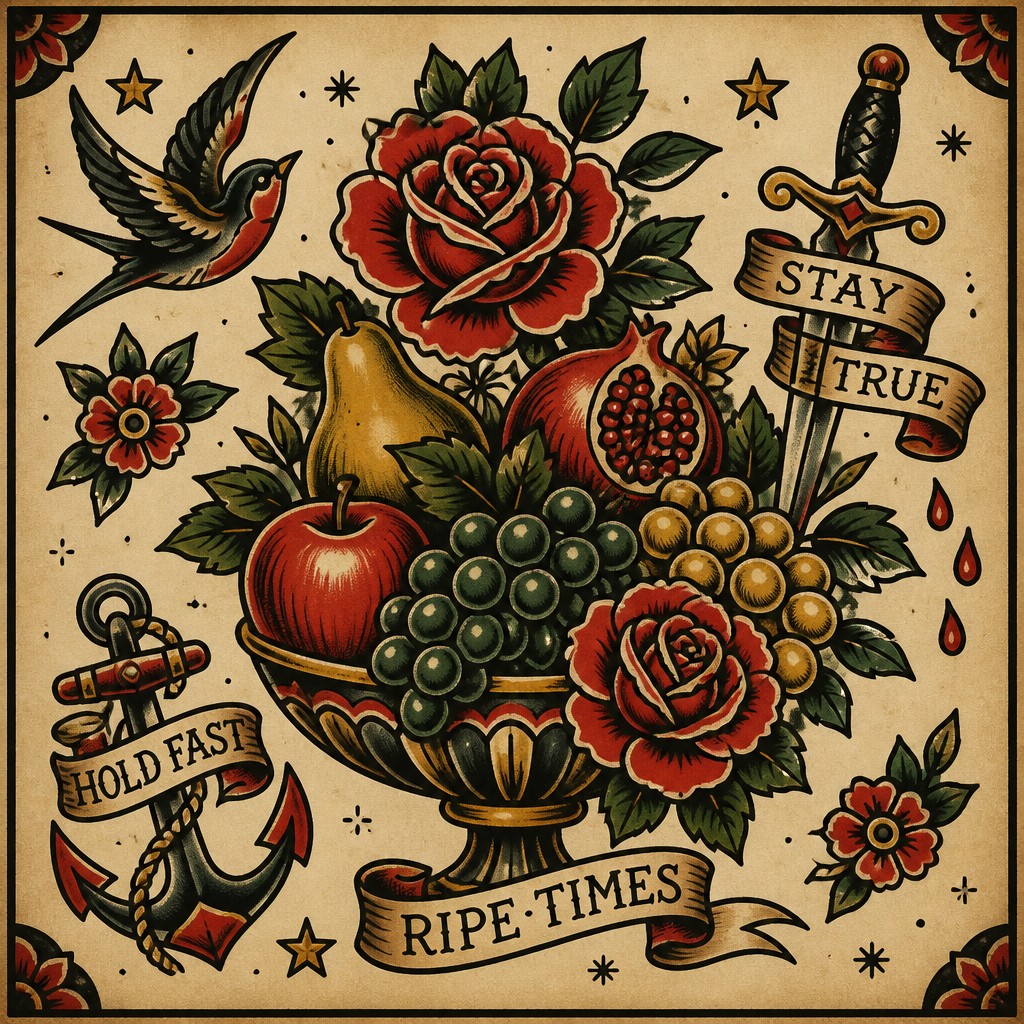
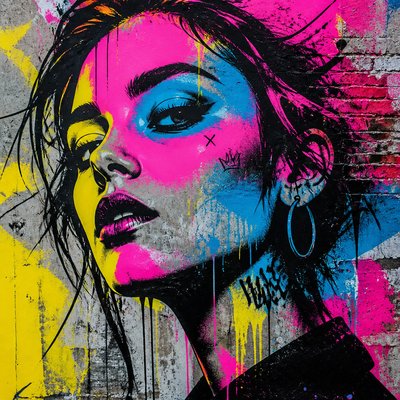
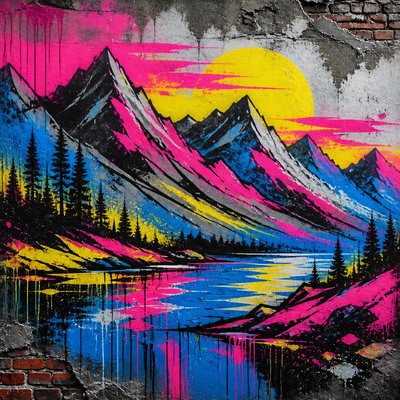
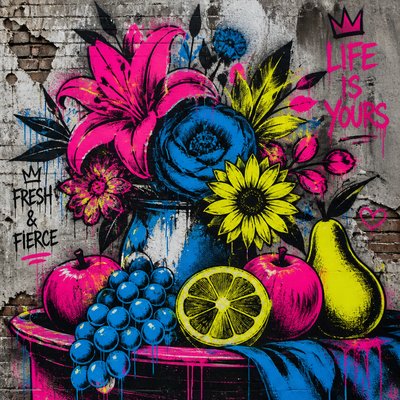
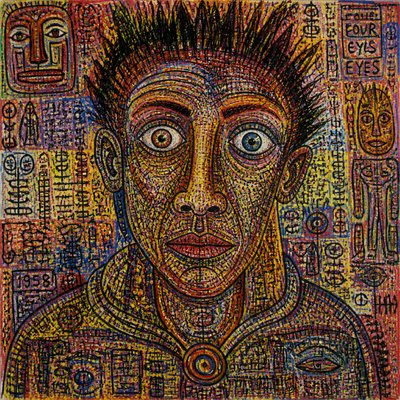
Tattoo Flash Gallery
Tap any artwork to explore it
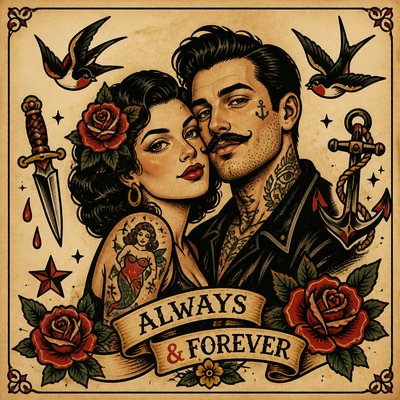
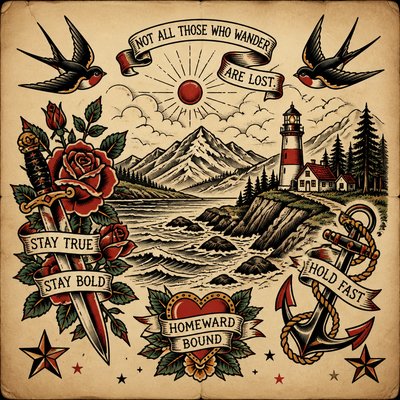
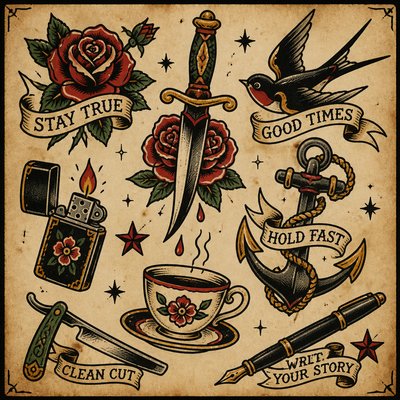
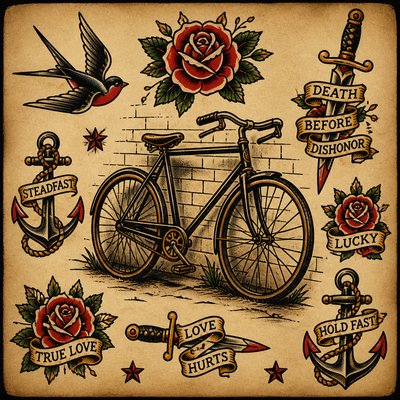
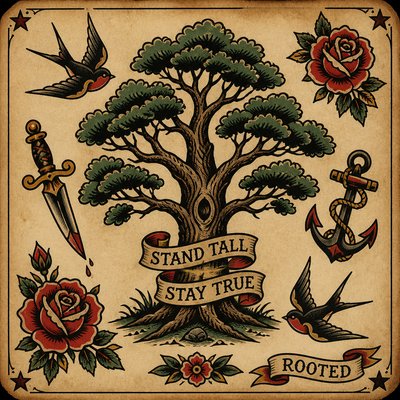
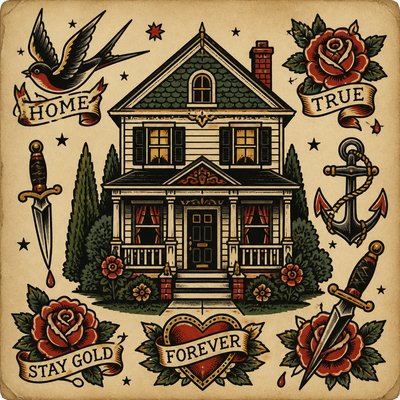
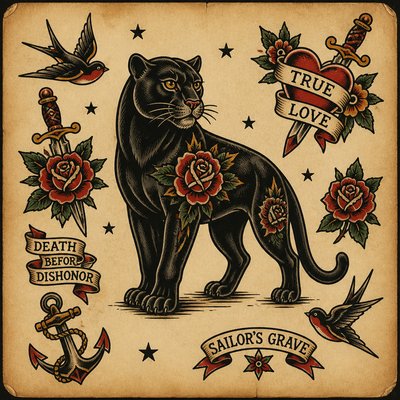
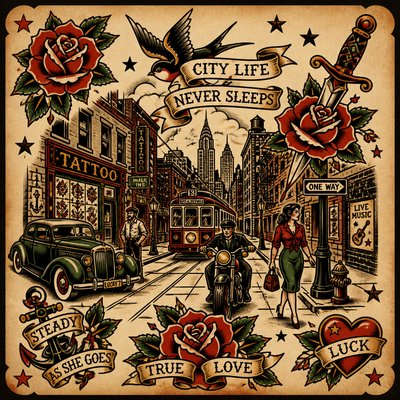
What is Tattoo Flash Art Style?
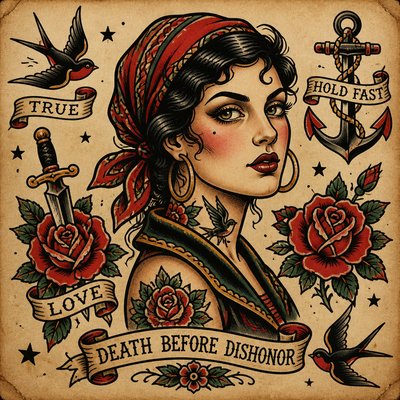
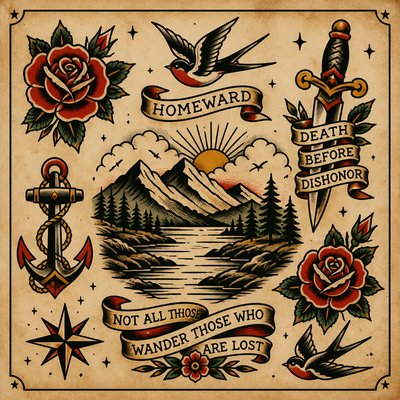
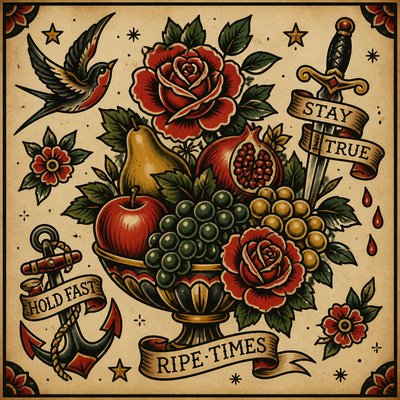
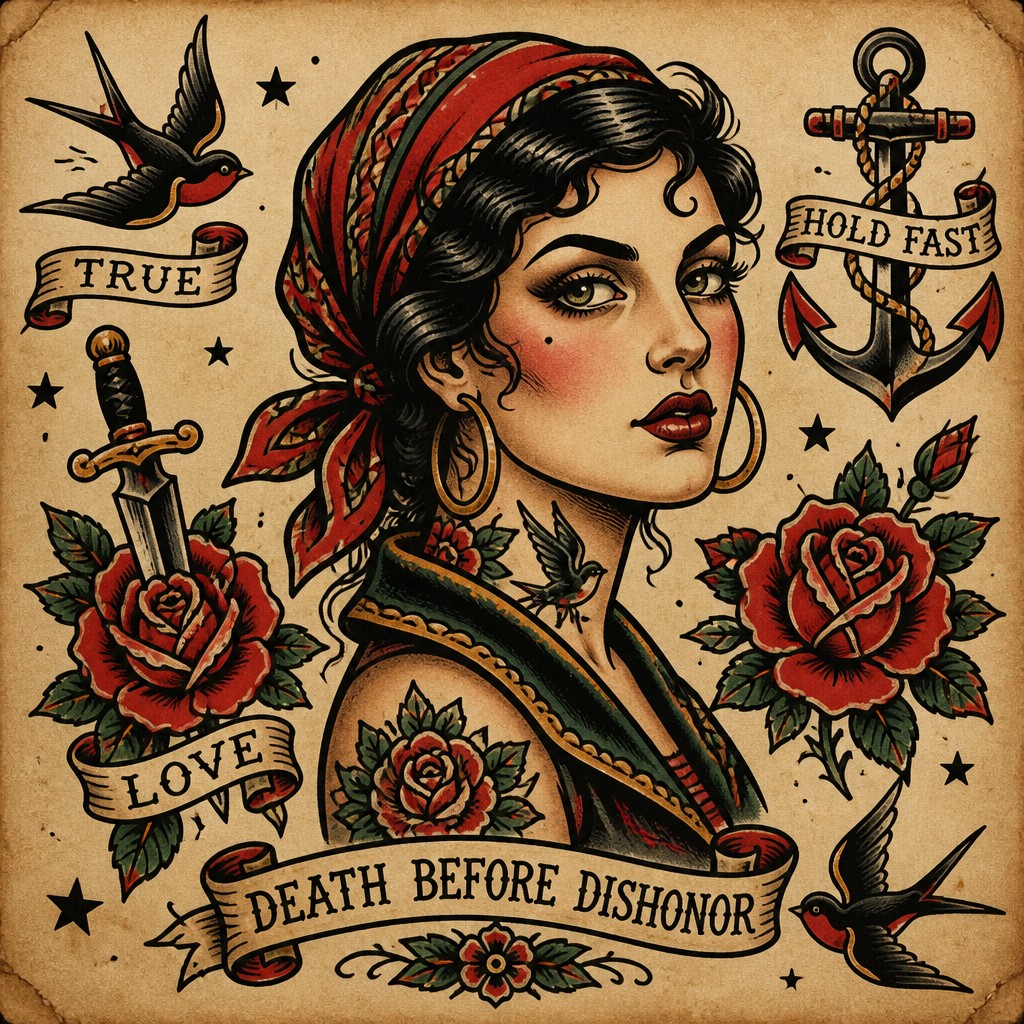
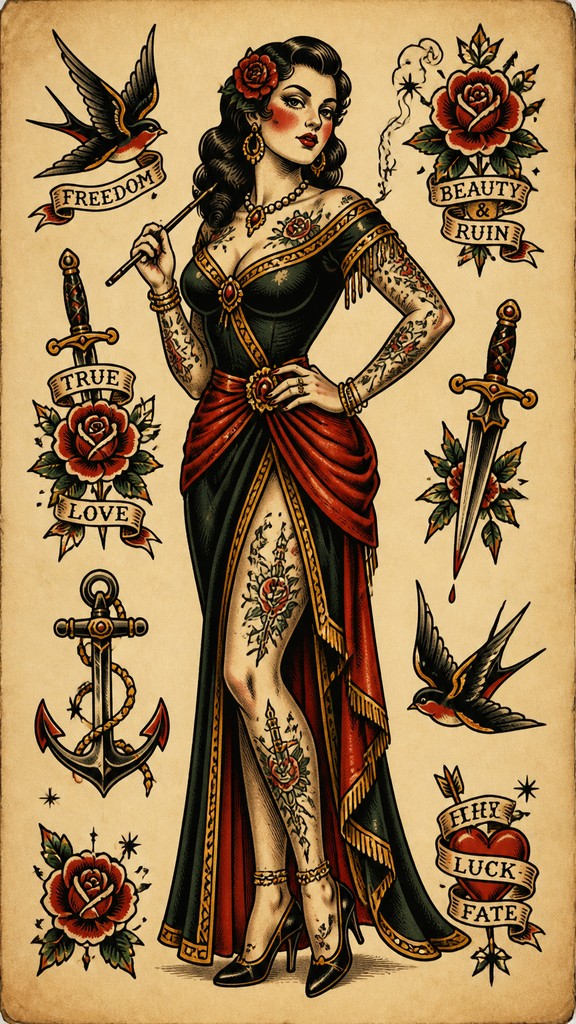
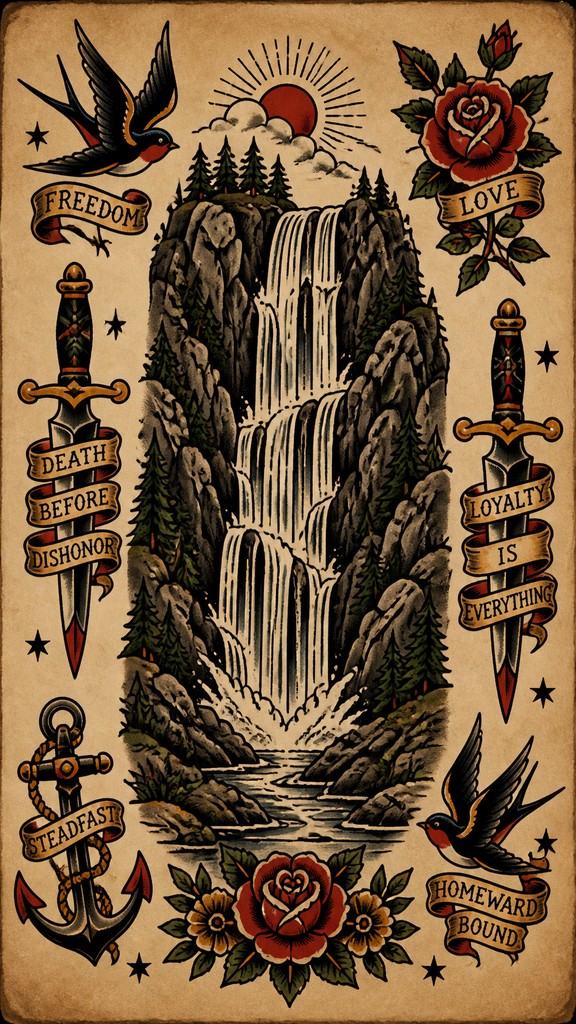
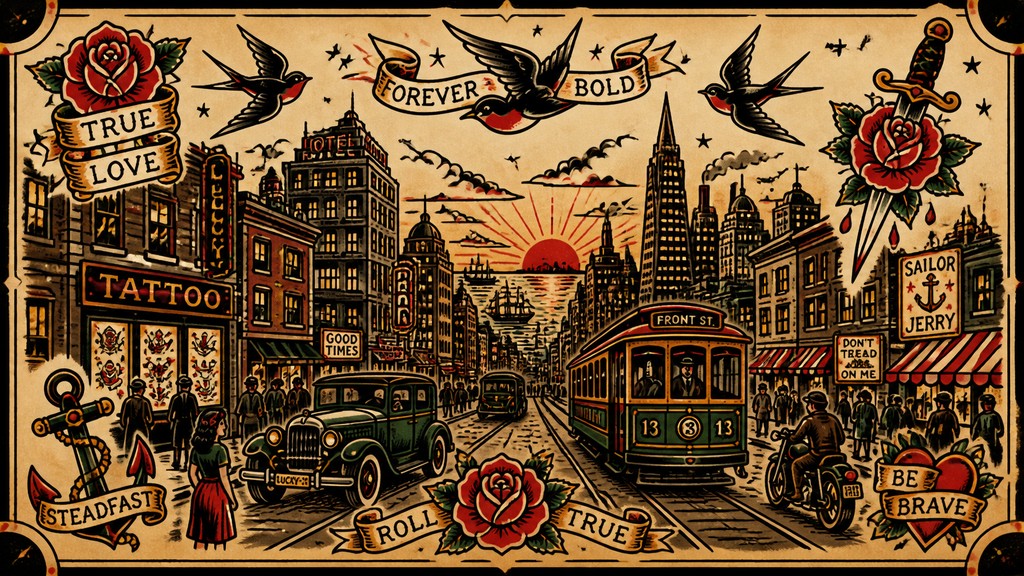
Tattoo Flash Art is a graphic illustration style built for clarity, durability and immediate recognition. It uses heavy black contour lines, simplified shapes, restrained color fields and compact compositions to depict familiar motifs such as roses, daggers, anchors, swallows, hearts, snakes, skulls and banner scrolls. Designs are often arranged as individual emblems or as collections on a single flash sheet, with each image readable at a glance.
The style’s visual identity comes from the practical demands of tattooing as well as from the display culture of the tattoo parlor. Strong outlines help preserve legibility as ink settles and ages, while limited red, green, yellow-gold and black produce bold contrast without relying on delicate gradients. Hand-inked hatching, stippling and small areas of packed shading add volume, and an aged paper ground gives the finished image the character of a vintage working sheet rather than a polished contemporary poster.
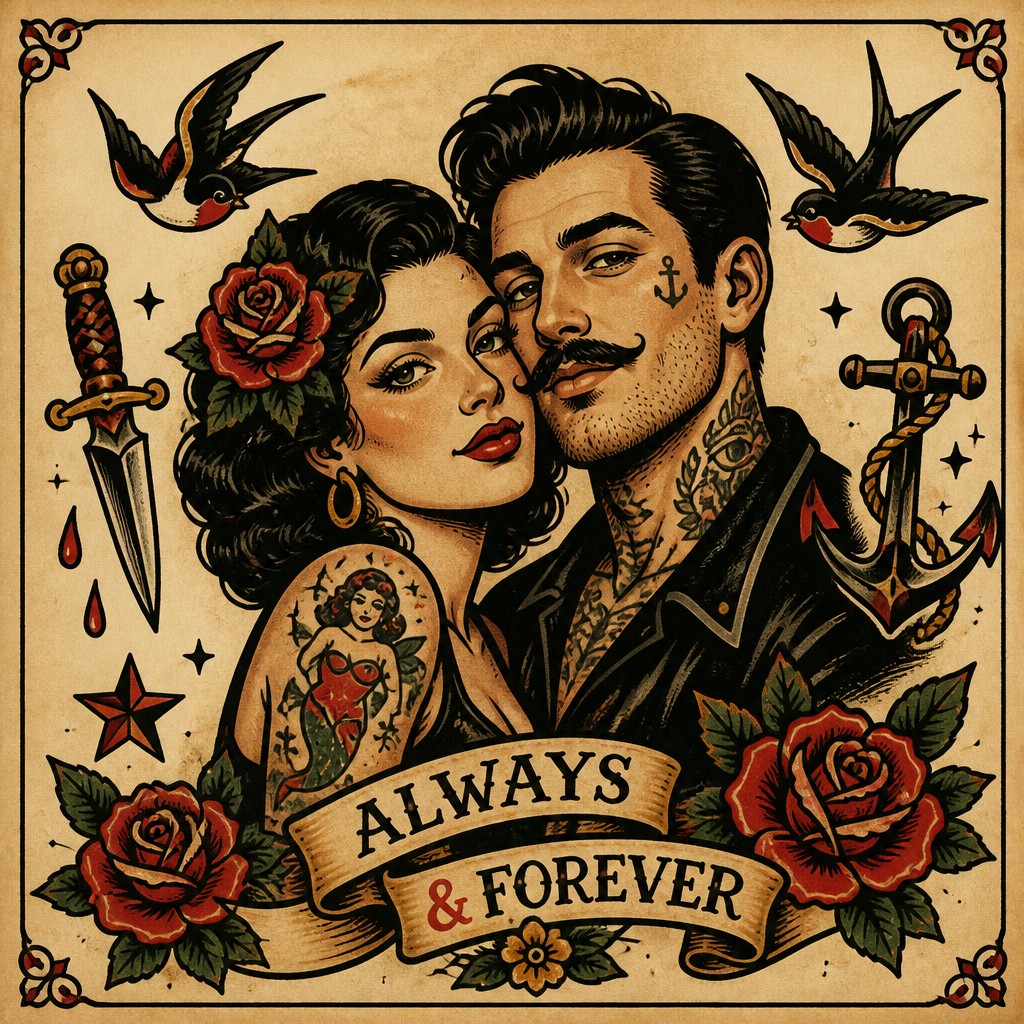
Try It On Your Photos
Upload any photo and convert it into Tattoo Flash Art Style — drag the sliders to compare before and after.
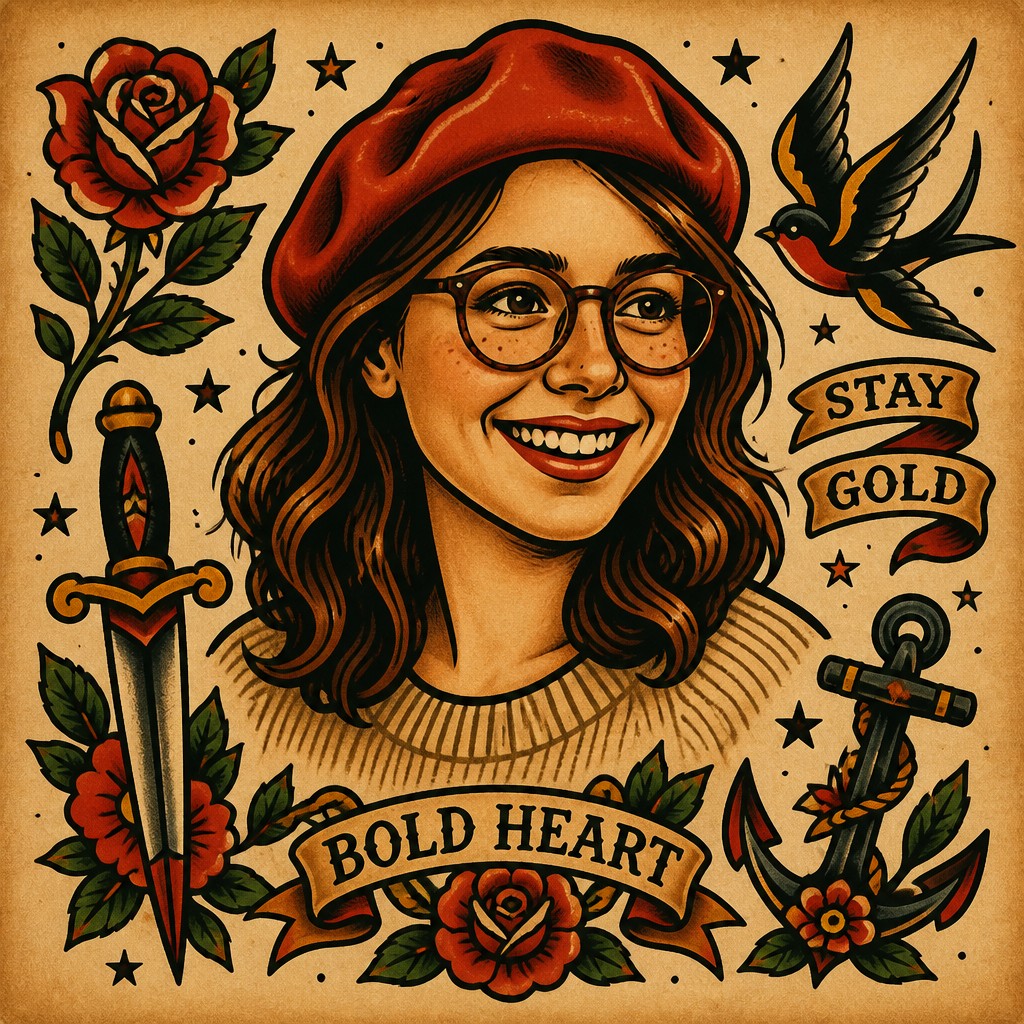


What Defines Tattoo Flash Art Style
The signature details, up close
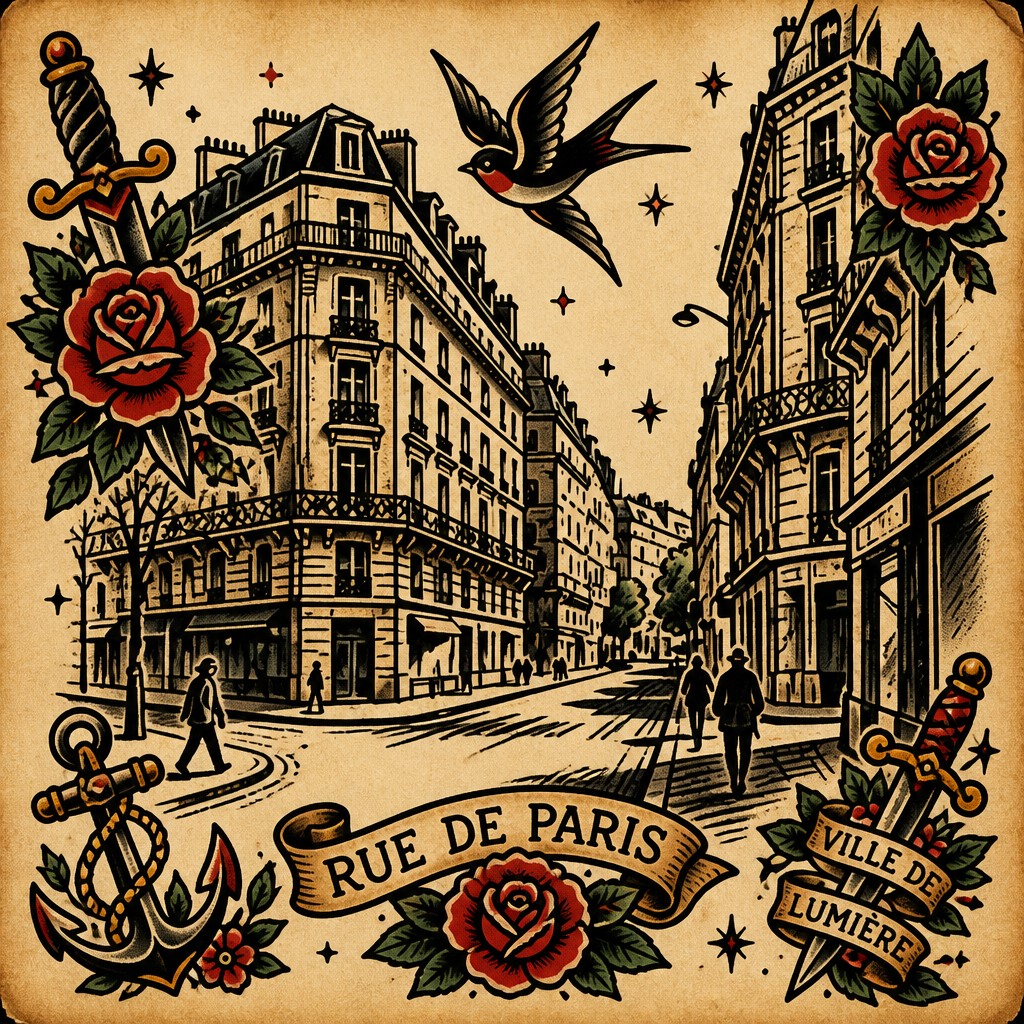
Heavy contour lines
Designs are enclosed by confident black outlines that separate forms clearly and withstand reduction, reproduction and the passage of time. Line weight may vary slightly to suggest depth or emphasis, but the overall contour remains assertive.
Limited, high-contrast palette
Traditional-looking pieces commonly restrict color to black plus a few saturated fills, especially red, green, yellow or gold. Large flat areas of color are favored over subtle, continuous modeling.
Symbolic flash motifs
Roses, daggers, anchors, swallows, hearts, snakes, skulls, stars and nautical objects recur because they are recognizable, adaptable and culturally associated with loyalty, travel, danger, love, remembrance or freedom.
Hand-inked shading
Short hatching marks, stippling, whip shading and compact black masses create volume inside otherwise simplified forms. Shading is usually decorative and economical rather than photorealistic.
Compact emblematic composition
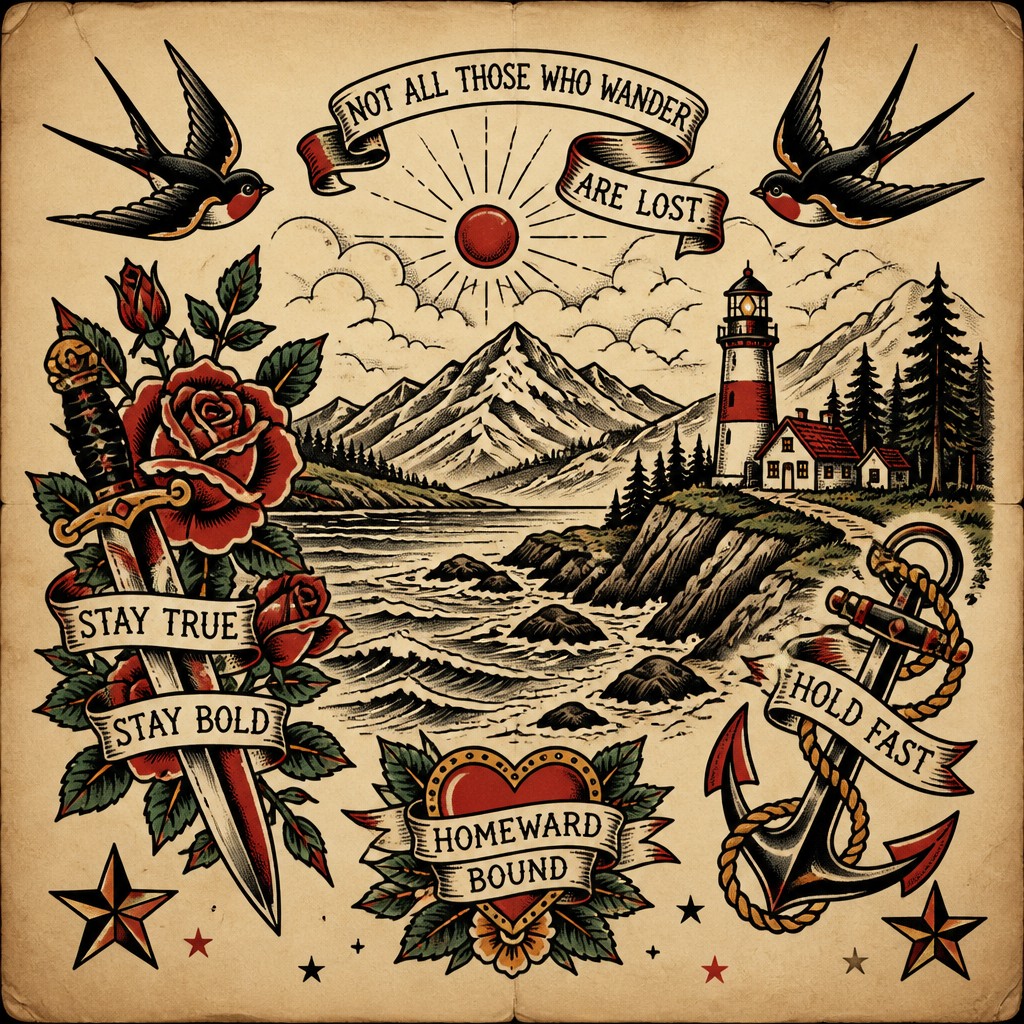
A single subject is organized as a self-contained badge, often with a strong central silhouette and balanced extensions. Flash sheets place several separate designs together without requiring them to form one continuous scene.
Banner and lettering elements
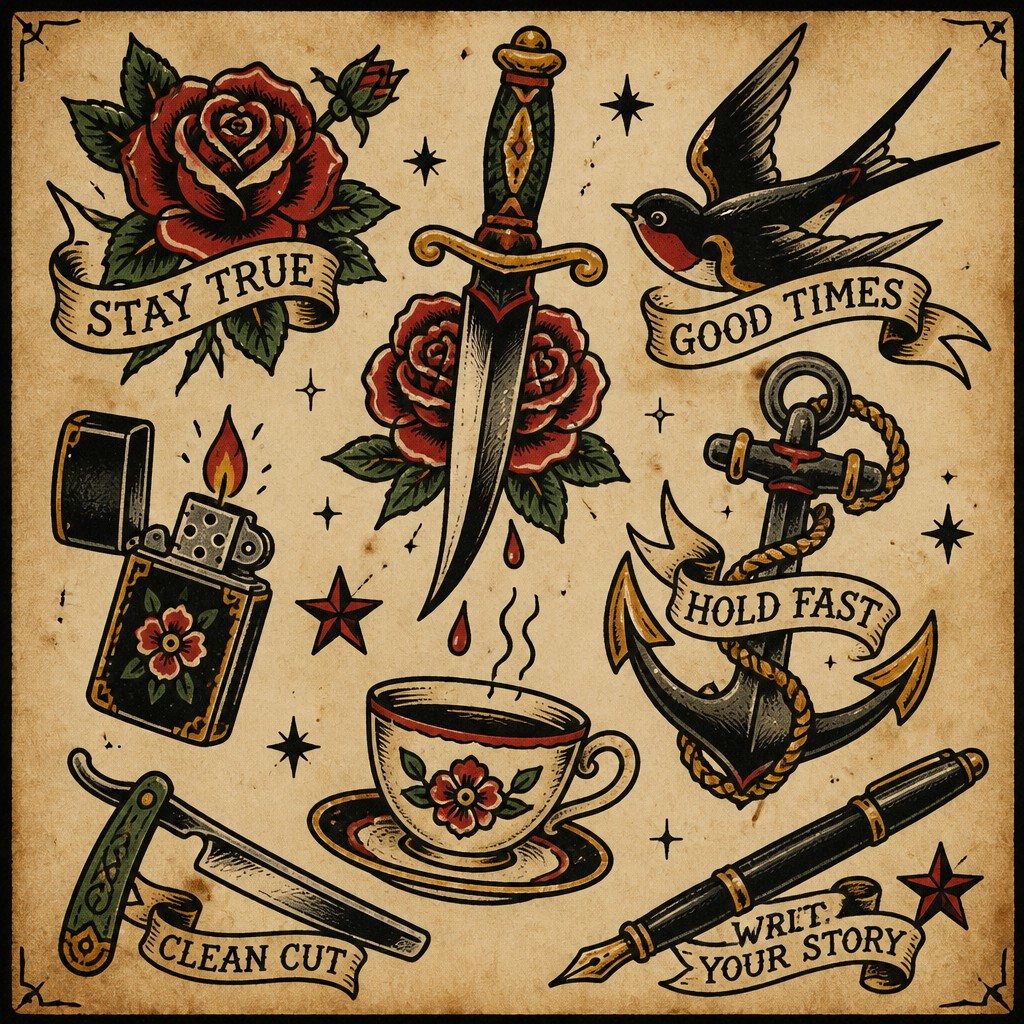
Scrolls, ribbons and curved text provide spaces for names, dates, mottos and short phrases. Lettering is generally bold and decorative, designed to remain legible alongside the surrounding image.
Aged print surface
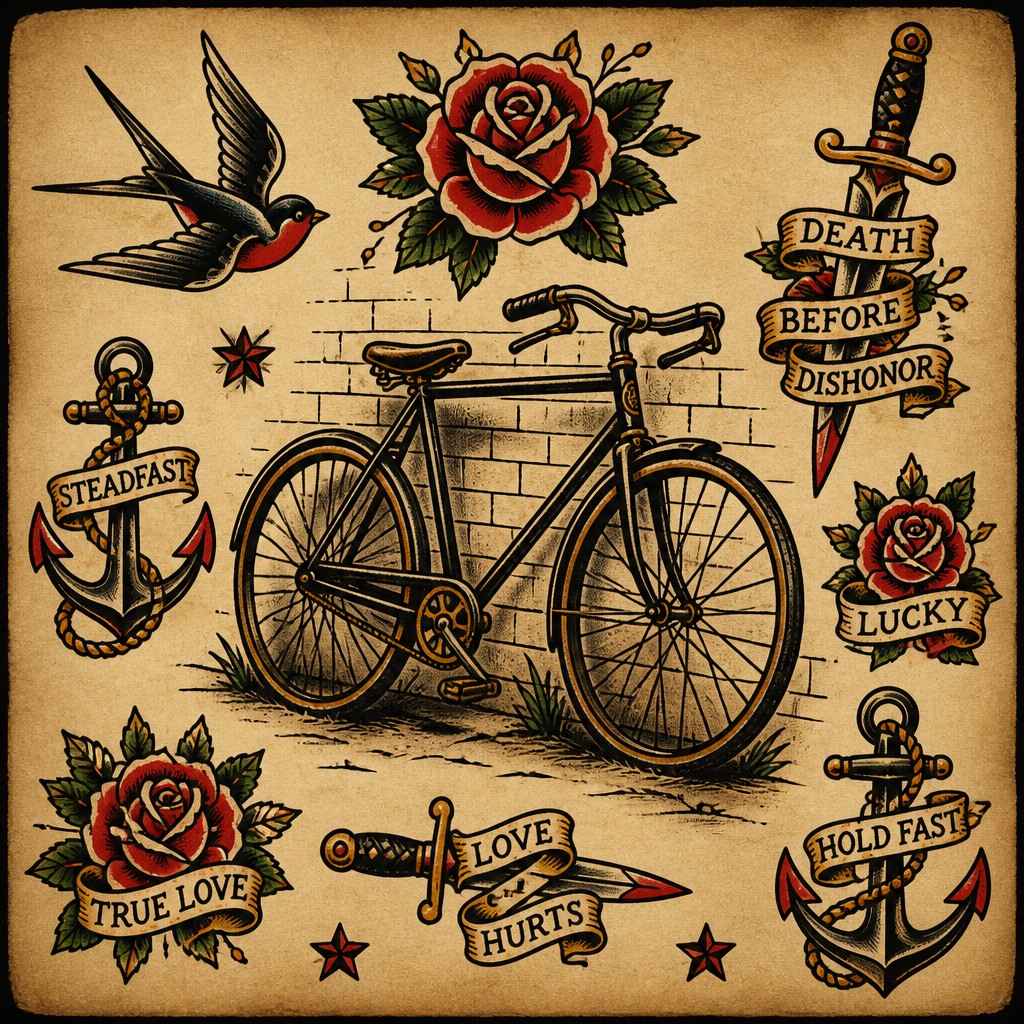
Cream paper, faded pigment, uneven ink density and slight stains evoke a working flash sheet displayed in a traditional parlor. This surface treatment is optional but reinforces the style's vintage character.
Try It
Create Videos in Tattoo Flash Art Style
Styles aren't just for stills — describe a scene or animate an image and get a short video rendered in Tattoo Flash. Press play to see this pond come to life.
Make a VideoTattoo Flash Prompt Ideas
Start from an idea — each one opens the generator with the style ready to go. See all 40 Tattoo Flash prompts →
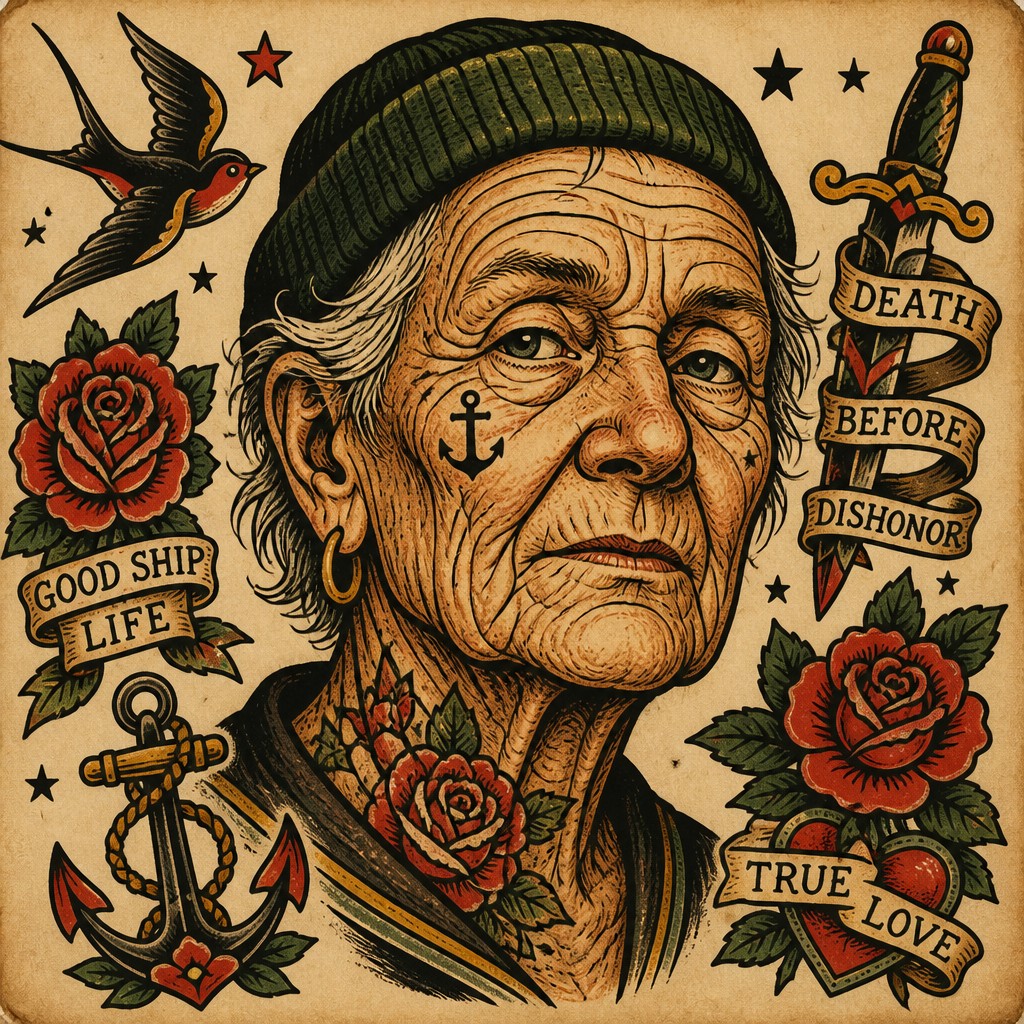
“close-up portrait of an elderly person with expressive weathered features”
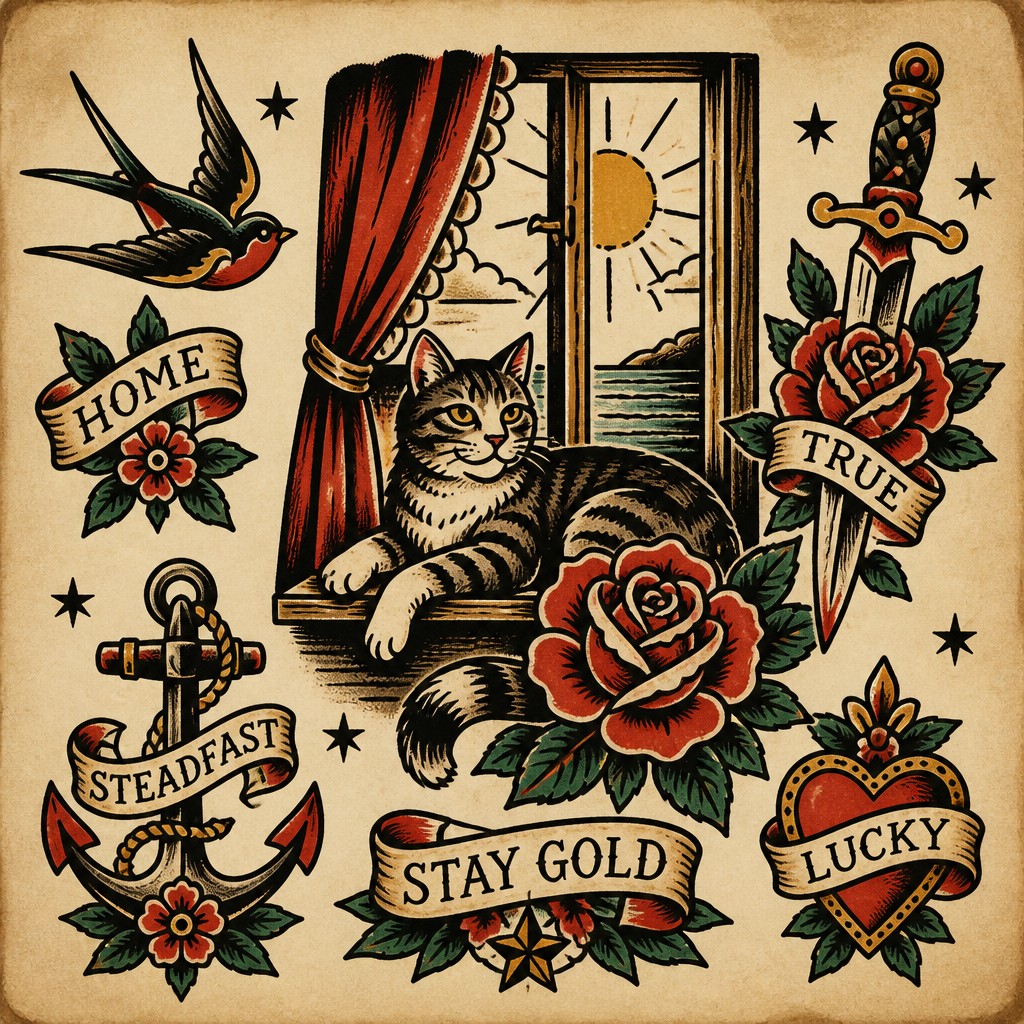
“a cat lounging in a sunlit window”
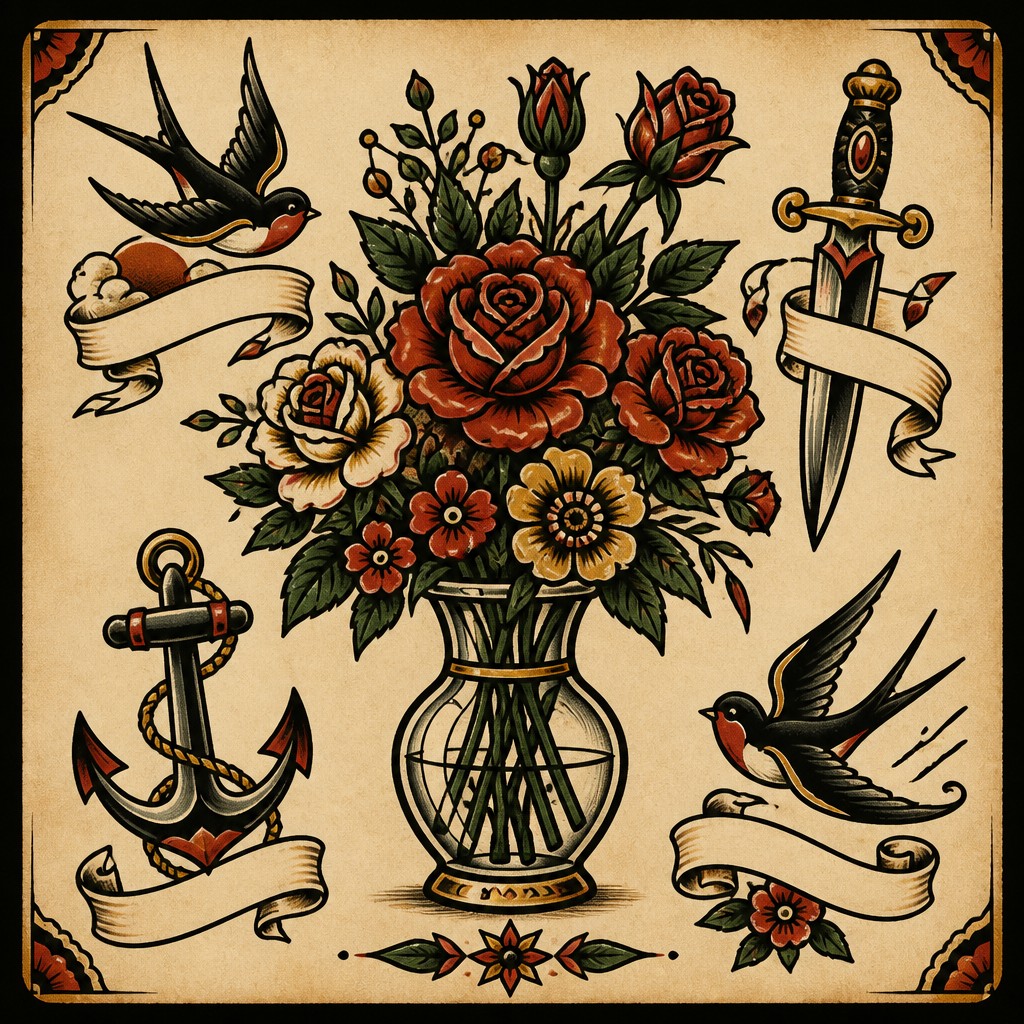
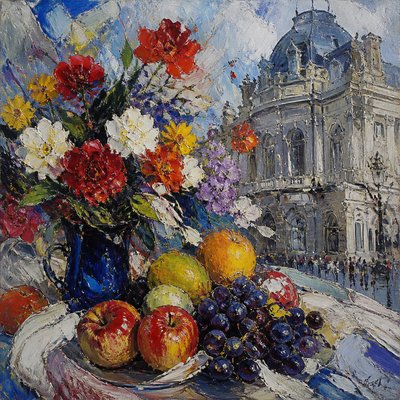
“bouquet of flowers in a glass vase”
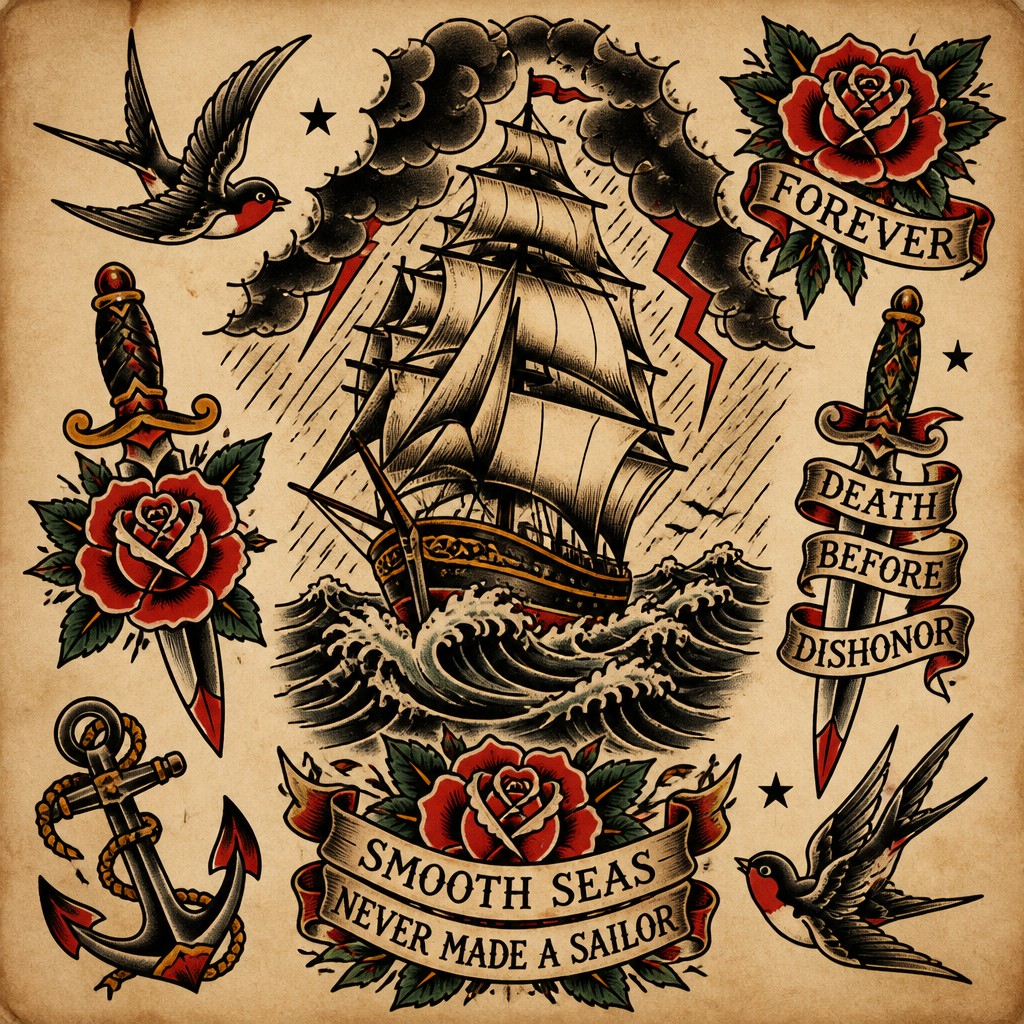
“sailing ship on a stormy sea”
How to Create Tattoo Flash Art
Master the craft step by step — or skip straight to creating. Read the full guide →
- 1
Build the silhouette first
Start with a simple, recognizable outer shape and arrange the main subject around a strong central axis. Remove small details that would weaken the design at tattoo or thumbnail size.
- 2
Use a controlled ink hierarchy
Draw the primary contour with the darkest and most consistent line, then use thinner interior marks for folds, petals and texture. Keep black shadow masses strategically placed so they support, rather than obscure, the silhouette.
- 3
Restrict the color system
Choose black plus two or three saturated accent colors, such as red, green and muted yellow-gold. Test the image in grayscale to ensure that the subject remains readable through value contrast alone.
- 4
Add period-appropriate texture
For traditional work, use brush, nib or marker irregularities, hatching and stippling instead of smooth digital gradients. In digital work, introduce subtle paper grain, imperfect edges and uneven ink density without making the design look unintentionally blurry.
- 5
Compose a flash sheet
Arrange several independent emblems with generous spacing, varied scale and a consistent line-and-color language. Include a mix of small filler symbols, larger centerpiece designs and optional banner lettering.
- 6
Specify the subject and constraints in a prompt
Name the central object, supporting motifs, limited palette, bold contour treatment, shading method and paper surface directly. For image transformation, preserve the source subject's key silhouette while simplifying details into clear tattoo-ready shapes.
The Story
History & Origins of Tattoo Flash
Tattoo Flash Art is not a single formal art movement but a commercial and workshop tradition associated especially with Western tattoo parlors from the late nineteenth and early twentieth centuries onward. Flash consisted of pre-drawn designs displayed for customers to select, adapting motifs from maritime tattooing, military insignia, folk emblems, heraldic devices, circus graphics and popular printed illustration. The format helped tattooists work efficiently while establishing a shared visual vocabulary of compact, repeatable symbols.
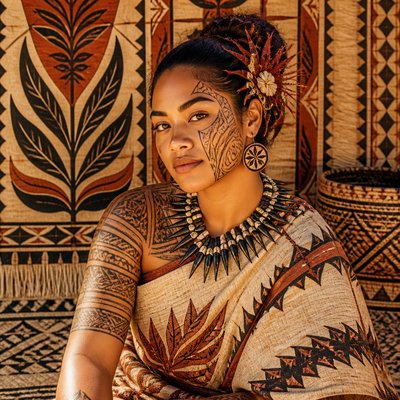
Its development was also shaped by contact between Western tattoo practices and long-established tattoo traditions in East Asia and the Pacific. Over time, parlor flash became closely identified with bold, limited-palette tattooing, while later artists expanded its subjects, composition and color range. Contemporary versions may preserve the vintage vocabulary while using digital drawing, screen-print-like textures or deliberately distressed paper effects.
Influences: The style draws on maritime and military tattoo traditions, folk and heraldic symbolism, nineteenth- and twentieth-century commercial illustration, sign painting, woodcut and screen-print aesthetics. It also shares structural ideas with Japanese tattoo composition, Pacific tattoo traditions and the simplified visual language of comics and poster graphics, while retaining the compact, selectable format of parlor flash sheets.
Frequently Asked Questions
What defines Tattoo Flash Art?
It is defined by bold black outlines, simplified emblematic forms, a restricted palette and familiar symbolic subjects. Roses, daggers, anchors, swallows, hearts and banners are common, but the essential quality is the clear, durable graphic construction rather than any single motif.
Is Tattoo Flash Art the same as traditional American tattooing?
They overlap substantially, especially in their heavy outlines, flat colors and recurring maritime or folk imagery. Tattoo Flash Art refers more specifically to the pre-drawn design and illustration format, while traditional American tattooing can also describe a broader tattoo practice, historical culture and approach to placing designs on the body.
Why does this style use such thick outlines and few colors?
Tattoo designs must remain legible on a curved, living surface and continue to read as pigment softens over time. Strong contours and high-contrast fills provide durability and recognition, while a limited palette reflects the materials and working methods of earlier tattoo parlors.
Can a portrait or personal object be rendered as Tattoo Flash Art?
Yes, provided the subject is simplified into a strong silhouette with selective details and controlled shading. A portrait may become a compact bust with bold contours, while a vehicle, animal or landmark can be converted into an emblem with a banner or symbolic border.
How can I make a digital illustration look like a vintage flash sheet?
Use a small palette, hard-edged fills, irregular black contours and hand-made hatching or stippling. Place the designs on warm paper with restrained grain, fading and ink variation, but keep the motifs sharp enough to retain the practical clarity of tattoo flash.
Where is Tattoo Flash Art commonly used?
It appears in tattoo reference sheets, tattoo-inspired posters, apparel graphics, album and packaging artwork, stickers, patches, editorial illustration and decorative lettering. Its emblematic structure also makes it useful for logos and small-format prints, although commercial adaptations may alter or remove tattoo-specific symbols.
Create your first Tattoo Flash artwork
Describe anything — or upload a photo — and see it in Tattoo Flash Art Style in seconds.
Related Styles
Discover similar art styles