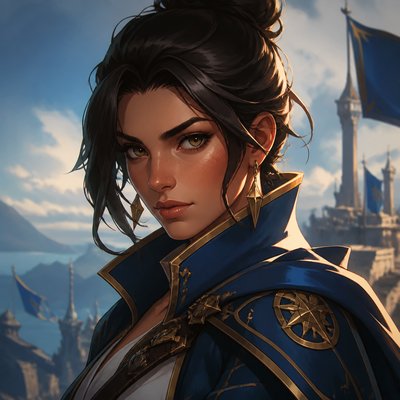
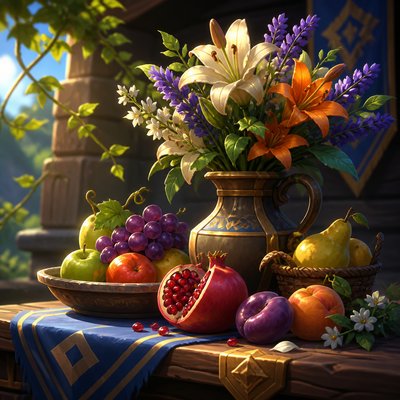
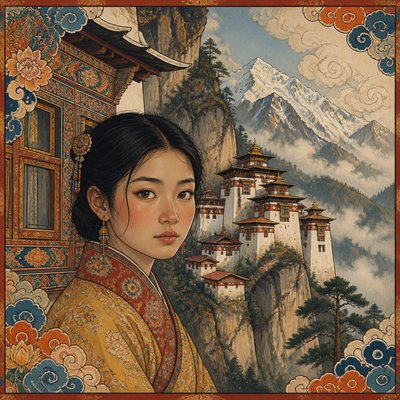
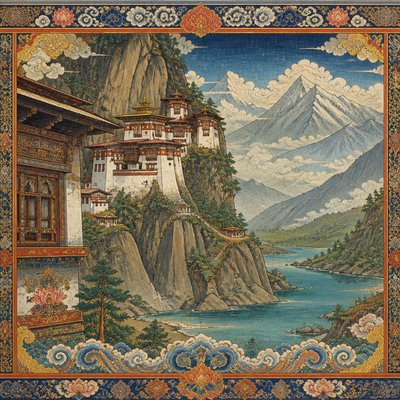
Tang Dynasty Art Style
Explore Tang Dynasty art: sancai amber, cream and green ceramics, elegant court figures, ink contours, silk textures and imperial ornament.
Instantly rendered in Tang Dynasty — or transform a photo
Tang Dynasty Gallery
Tap any artwork to explore it
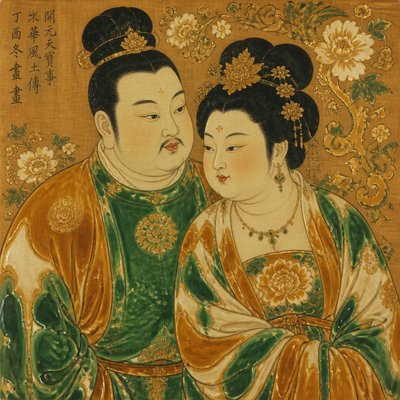
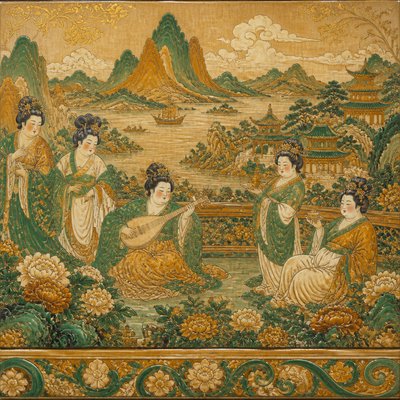
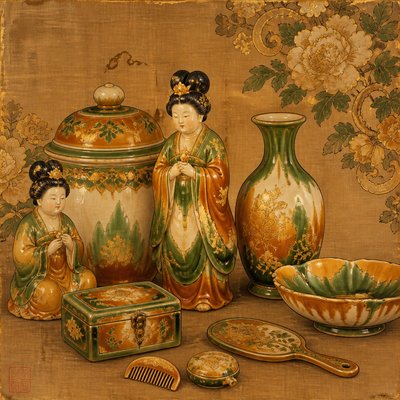
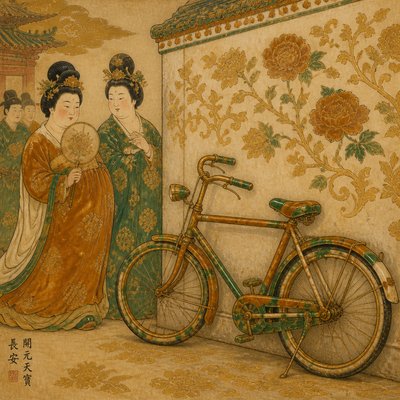
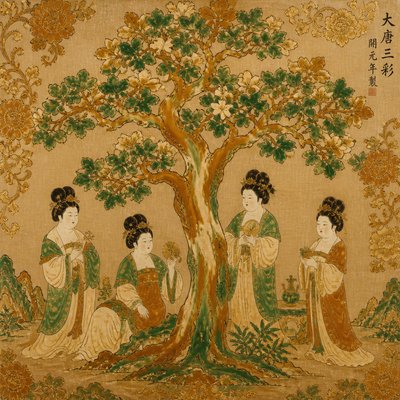
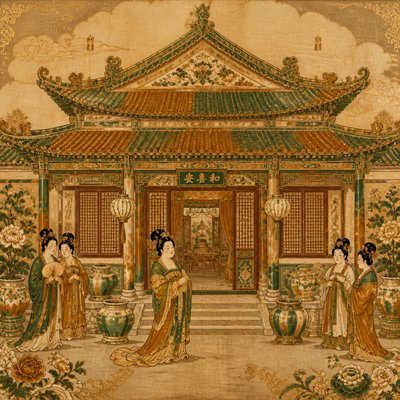
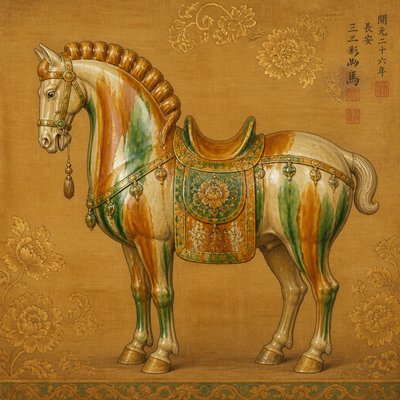
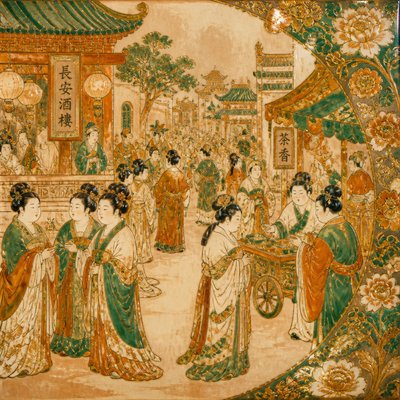
What is Tang Dynasty Art Style?
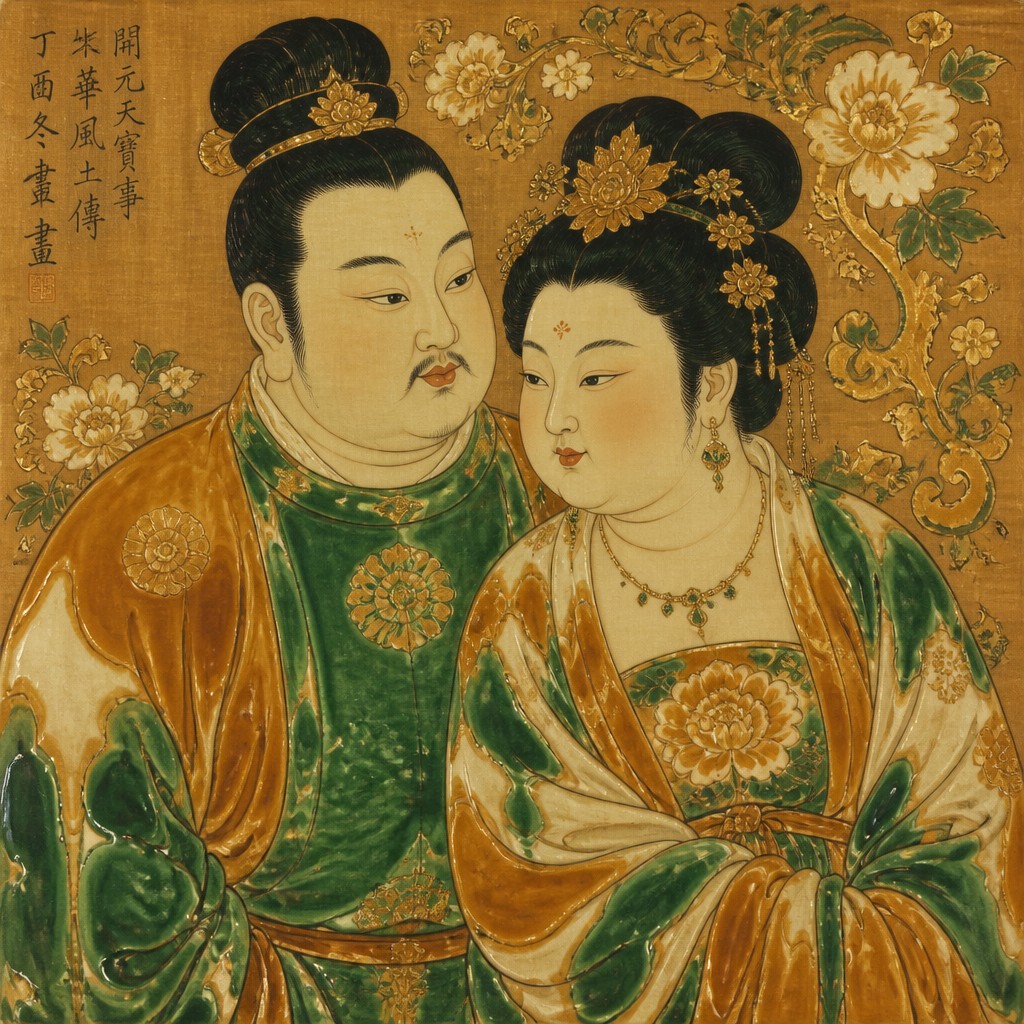
Tang Dynasty art refers to the diverse visual culture of China’s Tang period, conventionally dated 618–907. Its best-known imagery includes richly glazed sancai ceramics, elegantly dressed court figures, Buddhist and funerary sculpture, decorative metalwork, and paintings made with ink and mineral pigments on silk or other prepared surfaces. Together, these traditions produce an aesthetic of warmth, refinement, rhythmic contour, and controlled opulence.
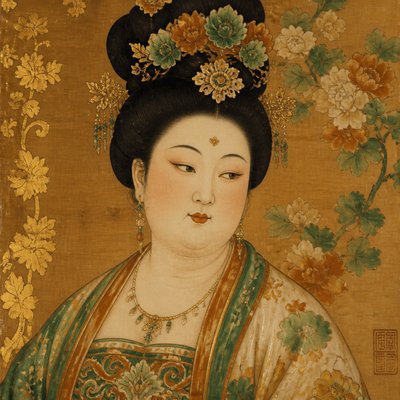
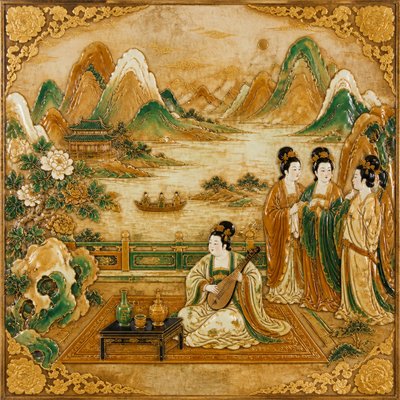
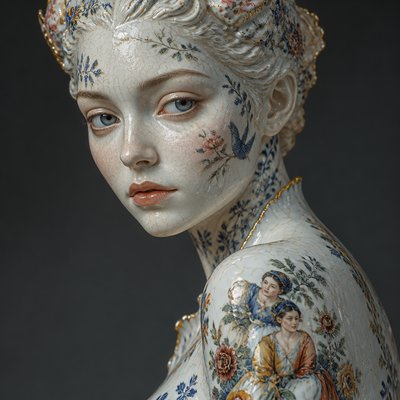
This style interpretation combines several related Tang visual languages rather than describing a single historical medium. Amber, cream, and leaf-green glaze effects recall lead-glazed sancai objects; fine ink outlines and aged silk grounds evoke scroll painting; elaborate coiffures, rounded silhouettes, floral ornament, and peony motifs suggest courtly and ceremonial imagery. The result is a balanced appearance in which soft ceramic color transitions coexist with precise linear drawing and imperial decorative detail.
Try It On Your Photos
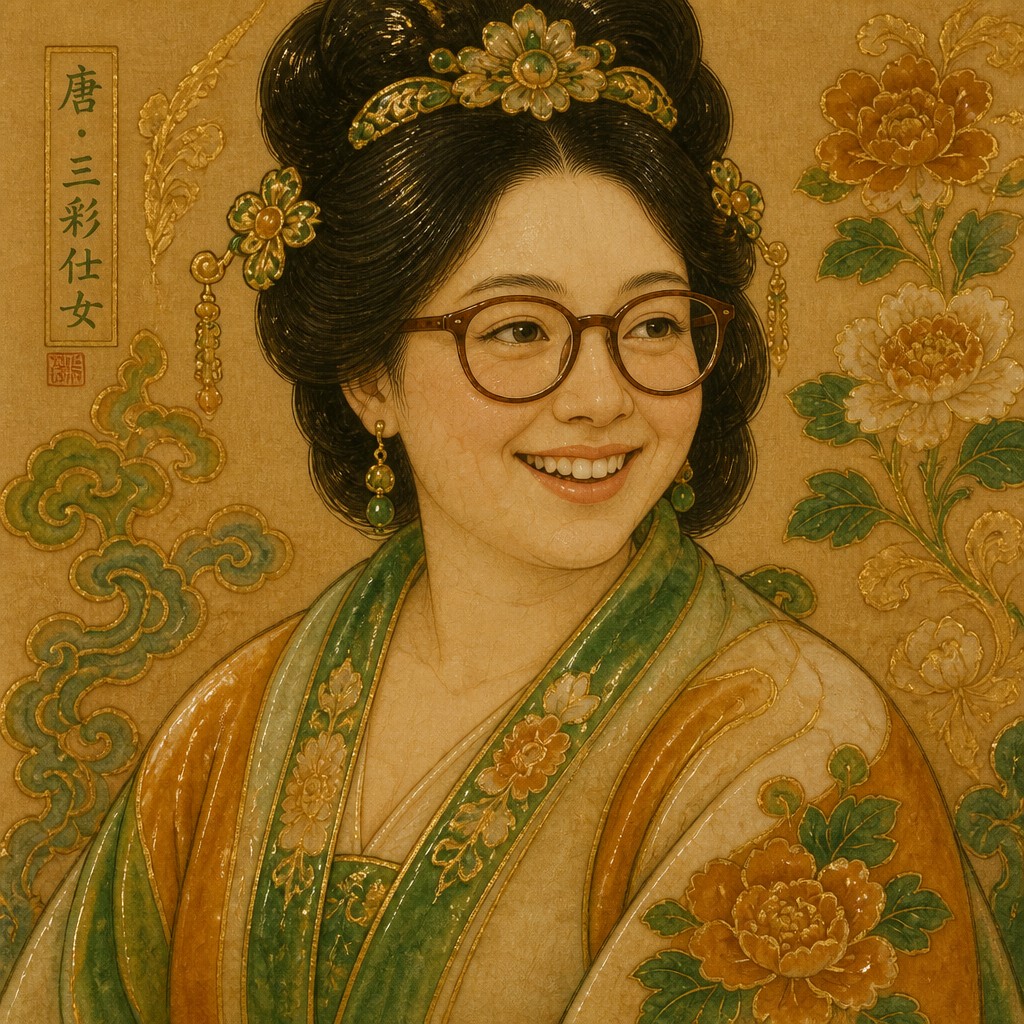
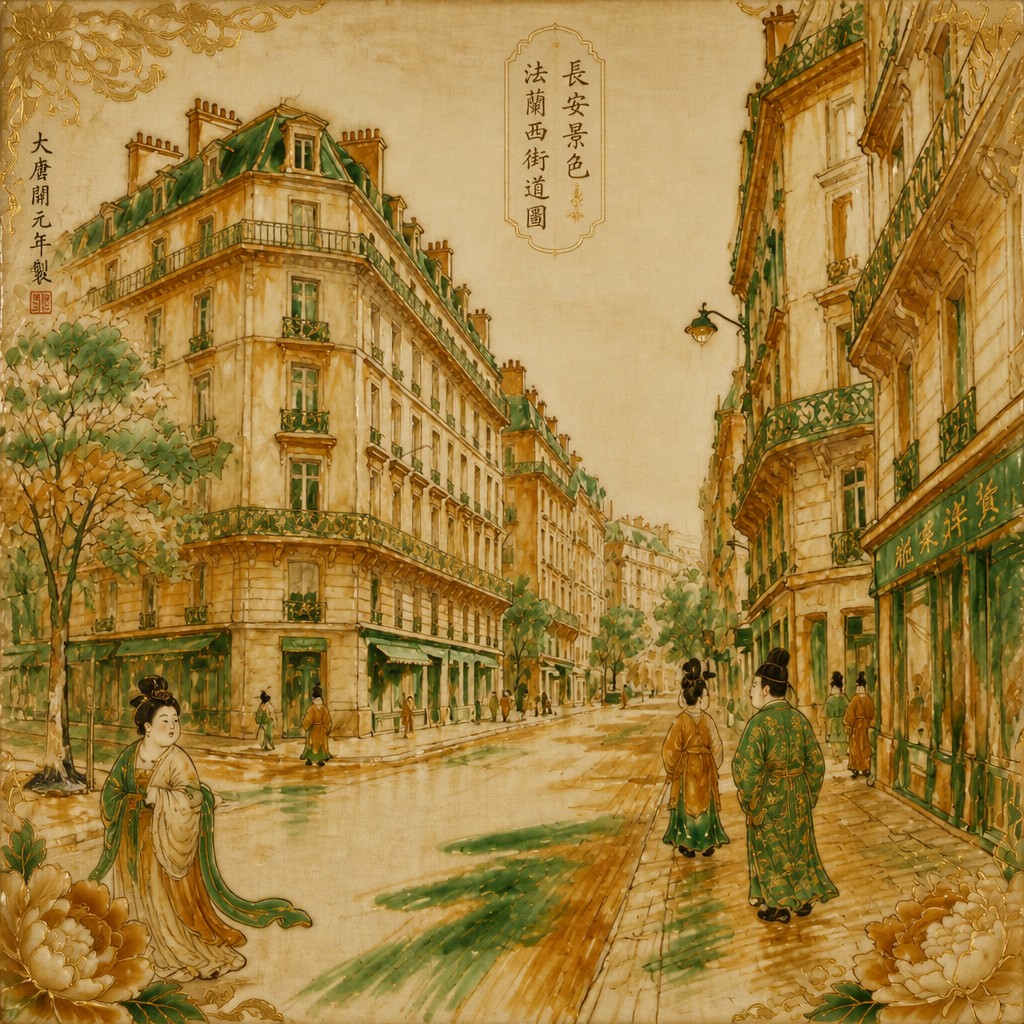
Upload any photo and convert it into Tang Dynasty Art Style — drag the sliders to compare before and after.


What Defines Tang Dynasty Art Style
The signature details, up close
Sancai glaze palette
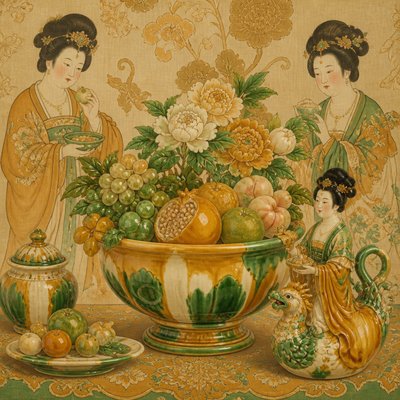
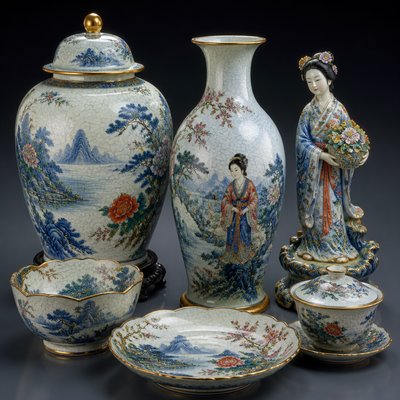
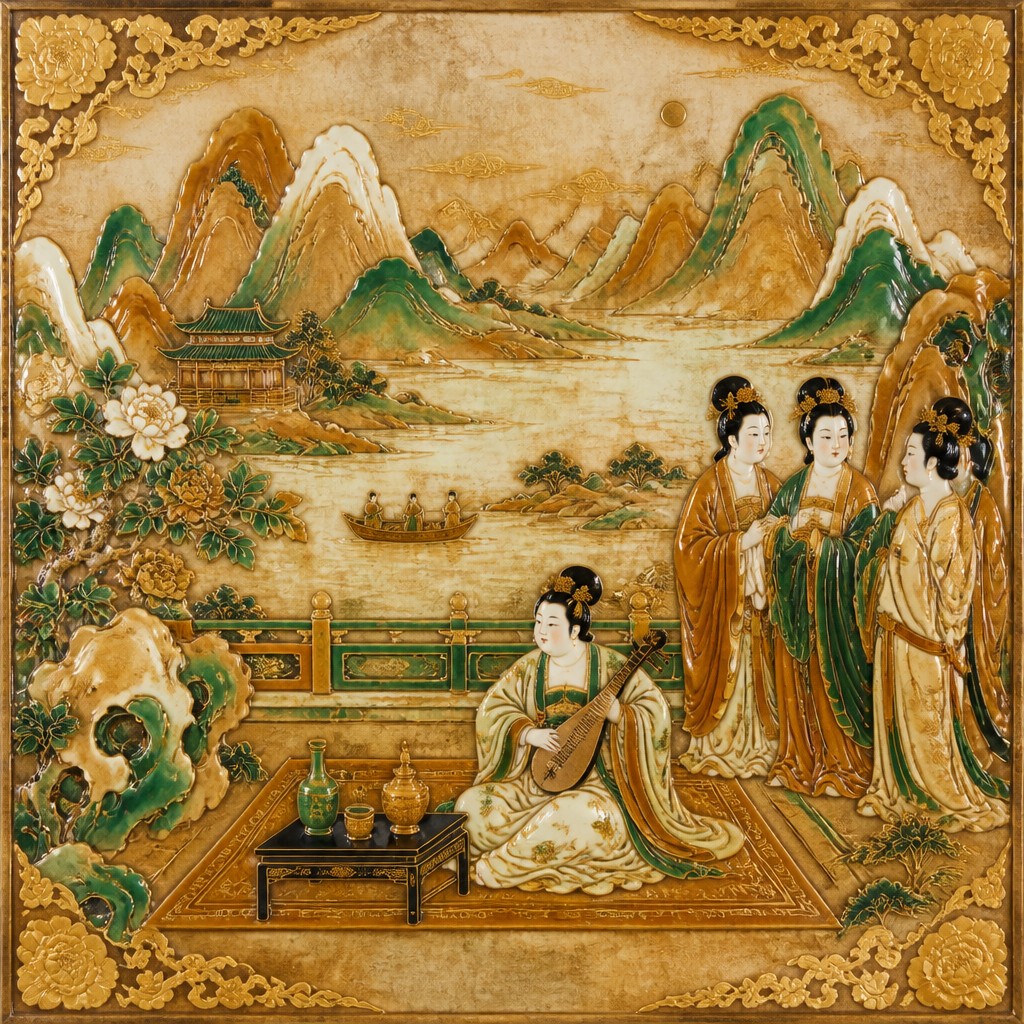
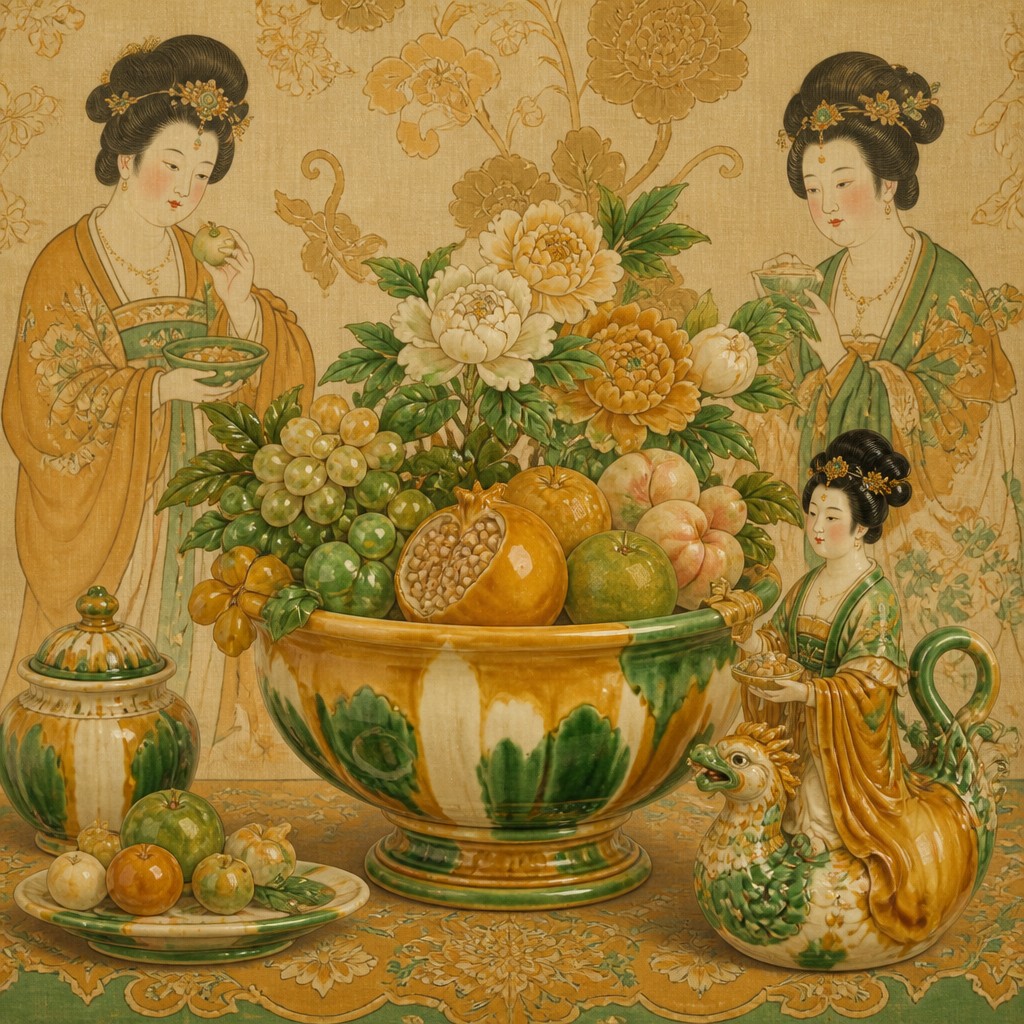
Amber, honey-brown, cream, and leaf-green dominate the palette, often with turquoise or darker accents. Colors appear to flow, pool, and soften into one another like low-fired glaze.
Courtly figures
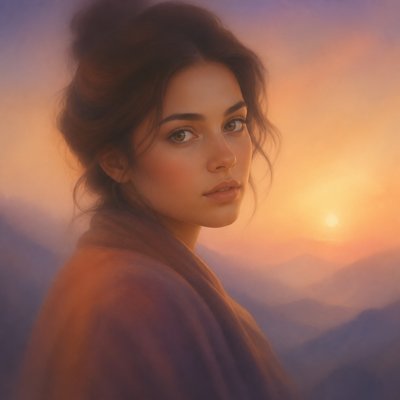
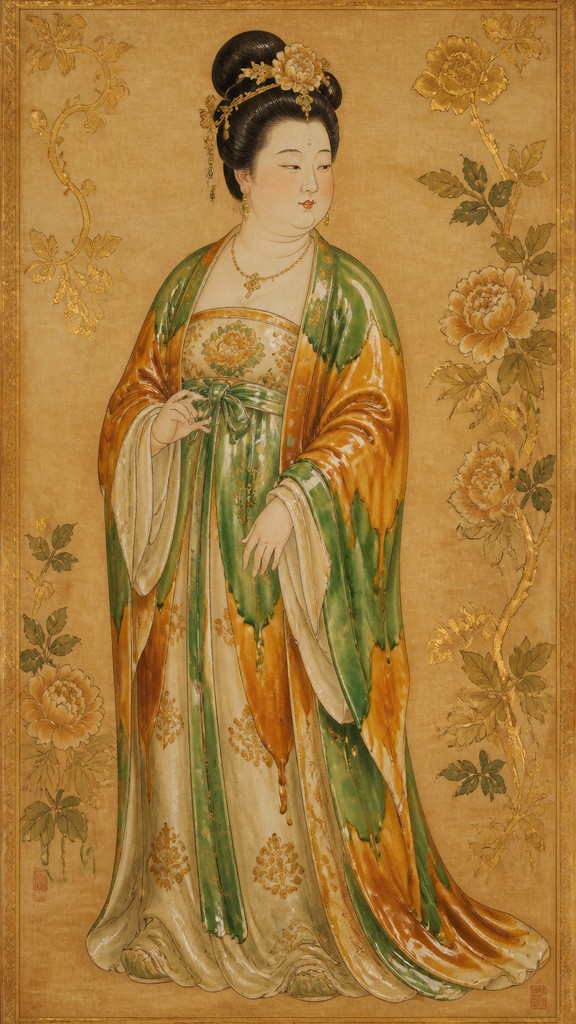
Figures tend to have rounded, dignified silhouettes, carefully arranged robes, relaxed gestures, and an emphasis on social elegance rather than dramatic movement.
Elaborate coiffures and dress
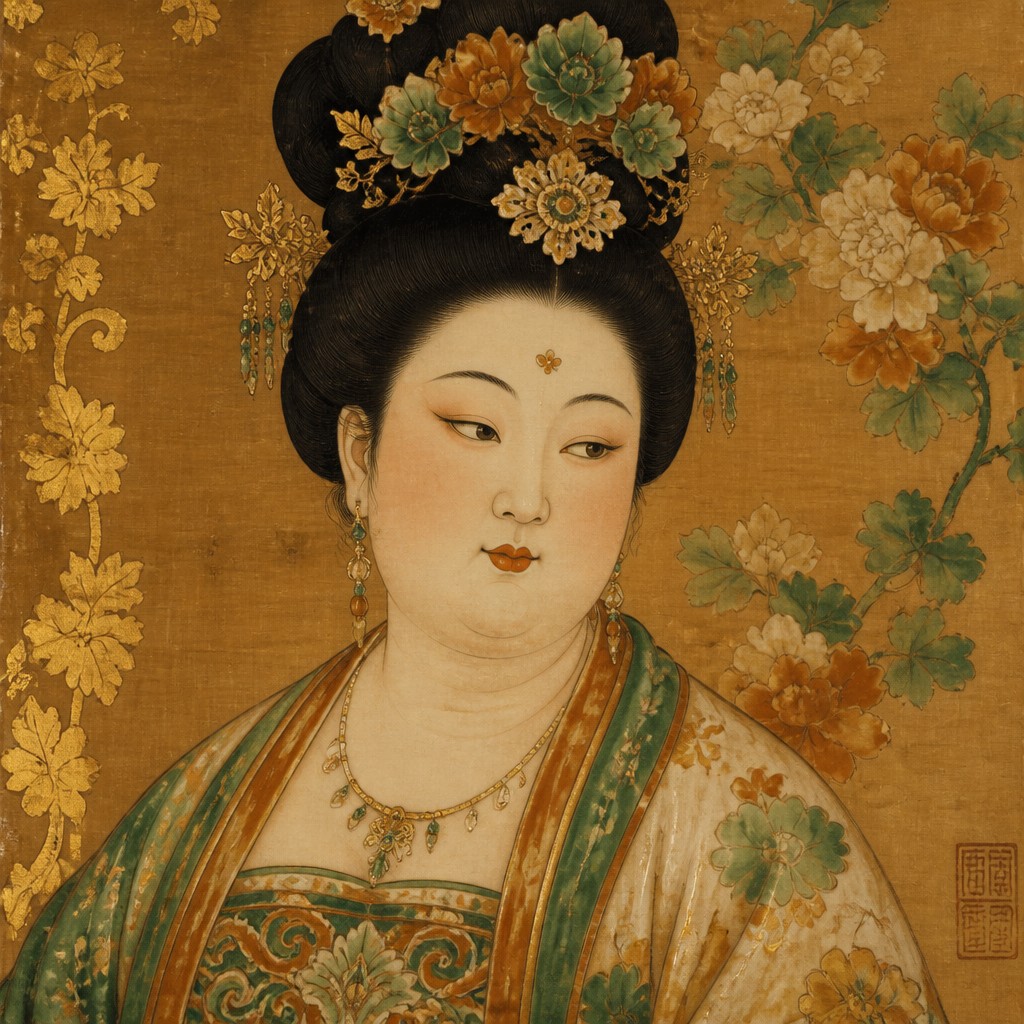
High or sculptural hairstyles, hair ornaments, long sleeves, layered silk garments, and broad belts create a distinctive ceremonial profile. Clothing should read as carefully constructed and richly patterned without becoming visually chaotic.
Fine ink contour
Dark, controlled outlines define faces, sleeves, folds, flowers, and architectural details. The line is deliberate and economical, while interior color fields remain relatively calm.
Aged silk and mineral color
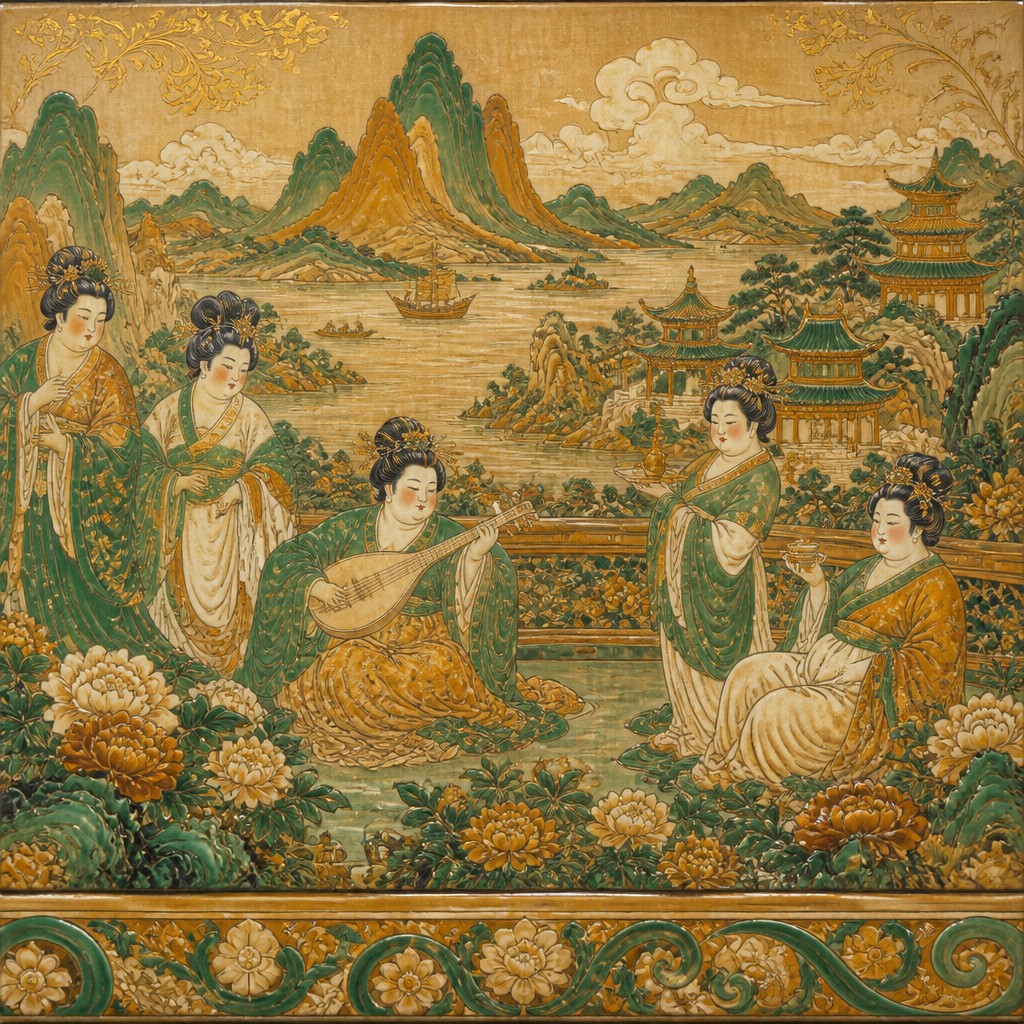
A warm cream or muted tan ground suggests timeworn silk, with subtle fibers, stains, and uneven pigment absorption. Mineral-like colors should feel matte in painted areas, contrasting with the glossy impression of ceramic surfaces.
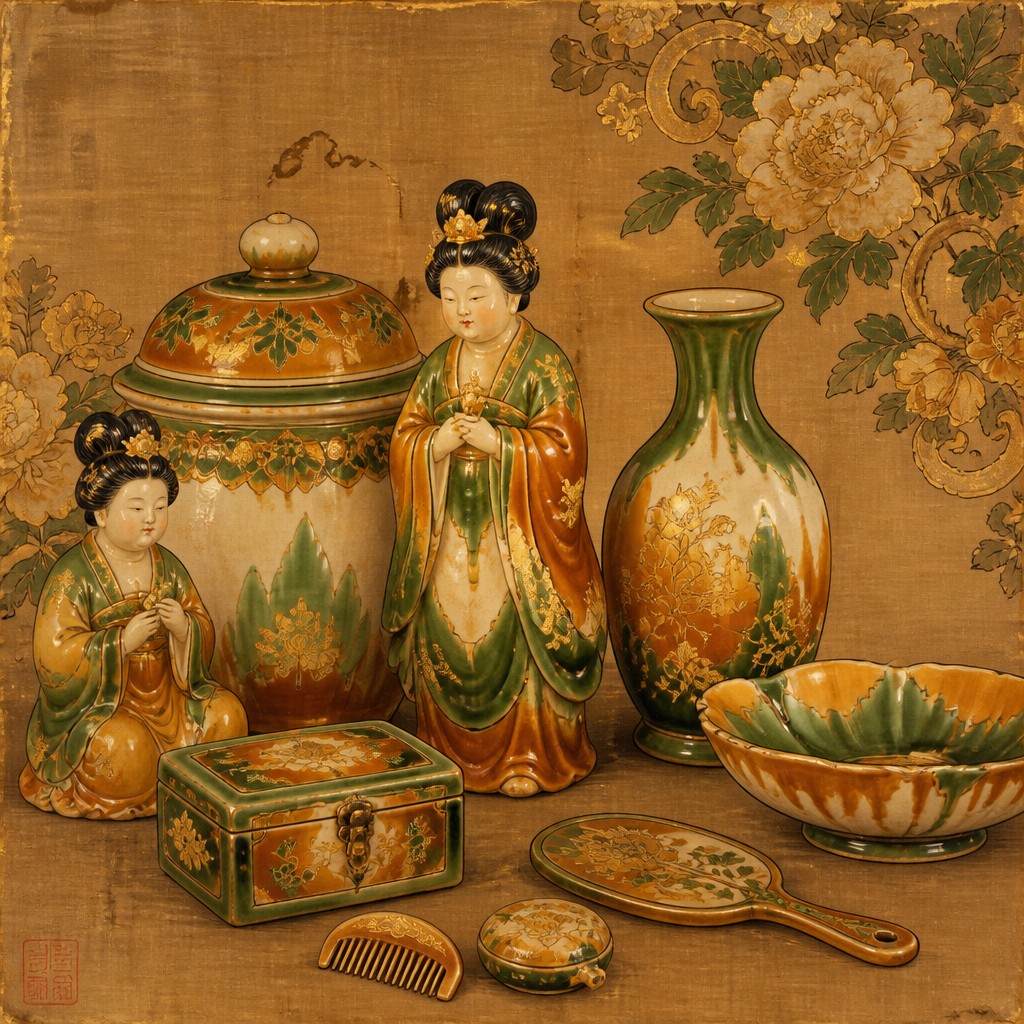
Floral and imperial ornament
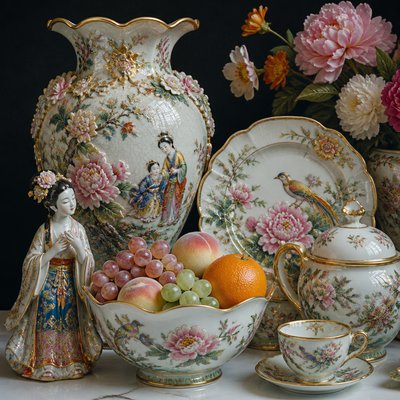
Peony scrolls, curling foliage, cloud forms, roundels, gold accents, and repeating textile patterns provide a formal decorative rhythm. Ornament is usually organized symmetrically or along flowing bands.
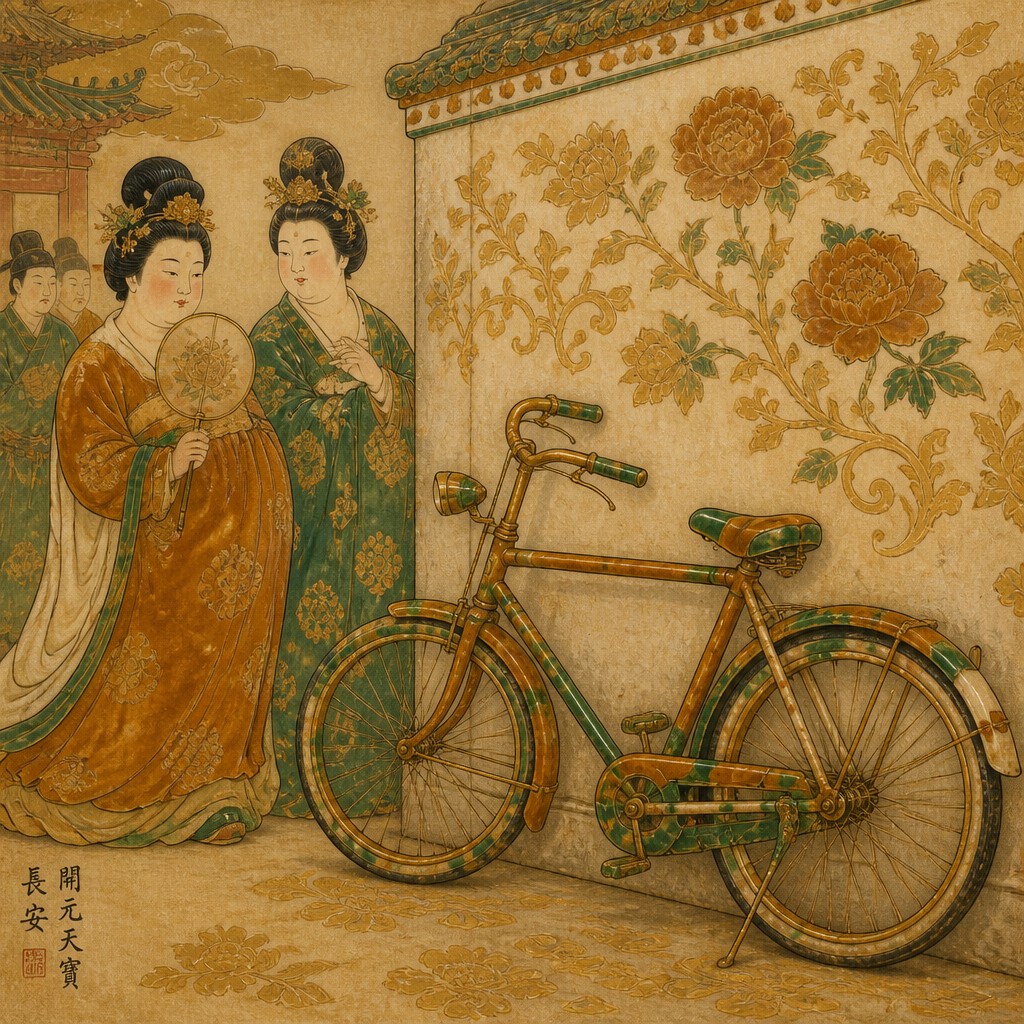
Ceramic sheen and soft transitions
Highlights, pooled edges, translucent glaze overlaps, and restrained reflections can make selected areas appear kiln-fired. The sheen should support the composition rather than turn the entire image into photorealistic pottery.
Try It
Create Videos in Tang Dynasty Art Style
Styles aren't just for stills — describe a scene or animate an image and get a short video rendered in Tang Dynasty. Press play to see this pond come to life.
Make a VideoTang Dynasty Prompt Ideas
Start from an idea — each one opens the generator with the style ready to go. See all 40 Tang Dynasty prompts →
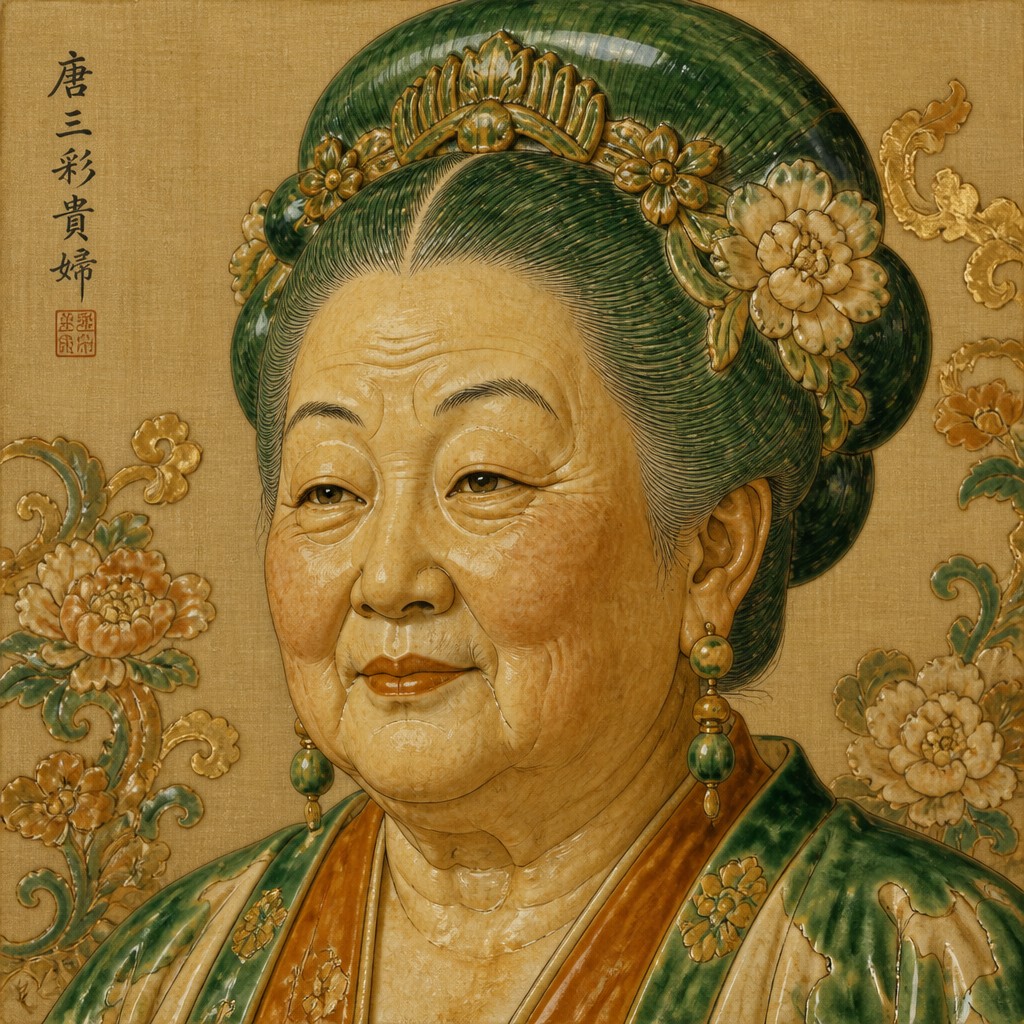
“close-up portrait of an elderly person with expressive weathered features”
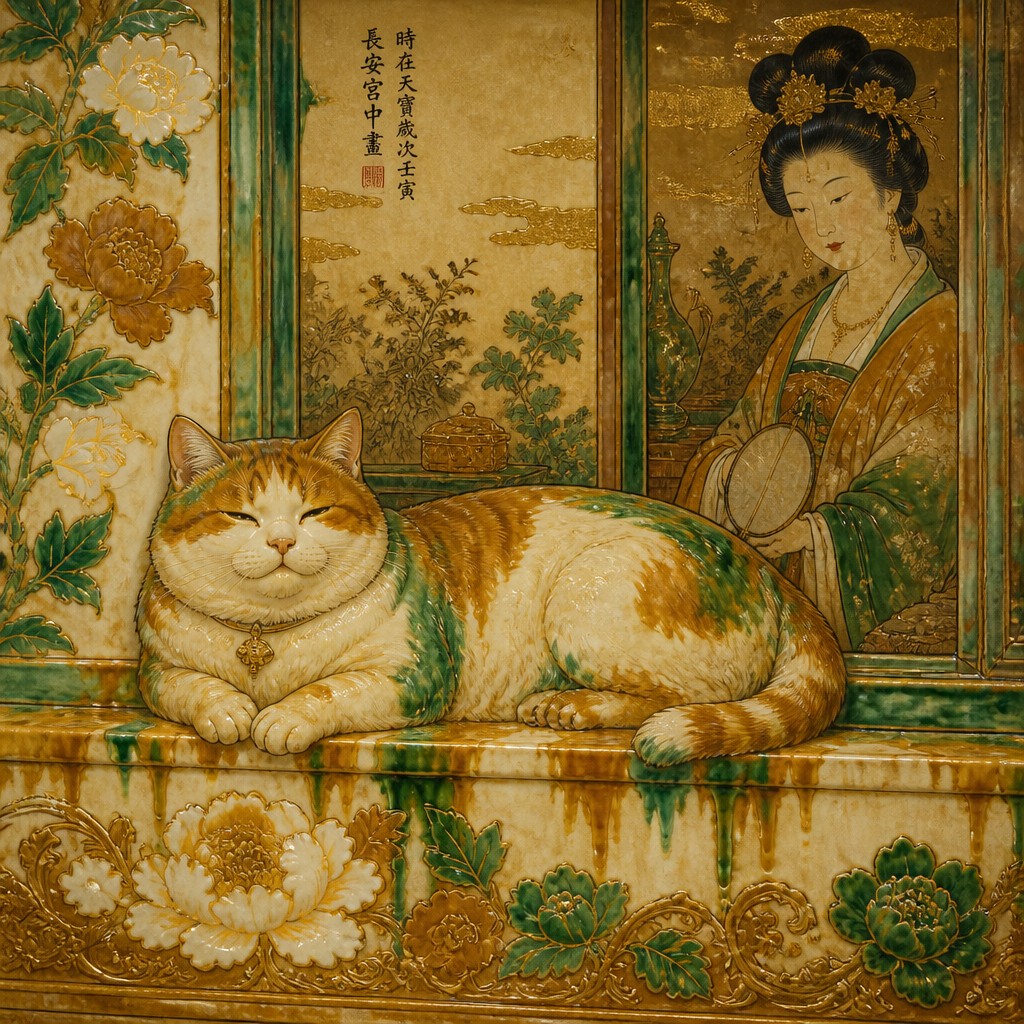
“a cat lounging in a sunlit window”
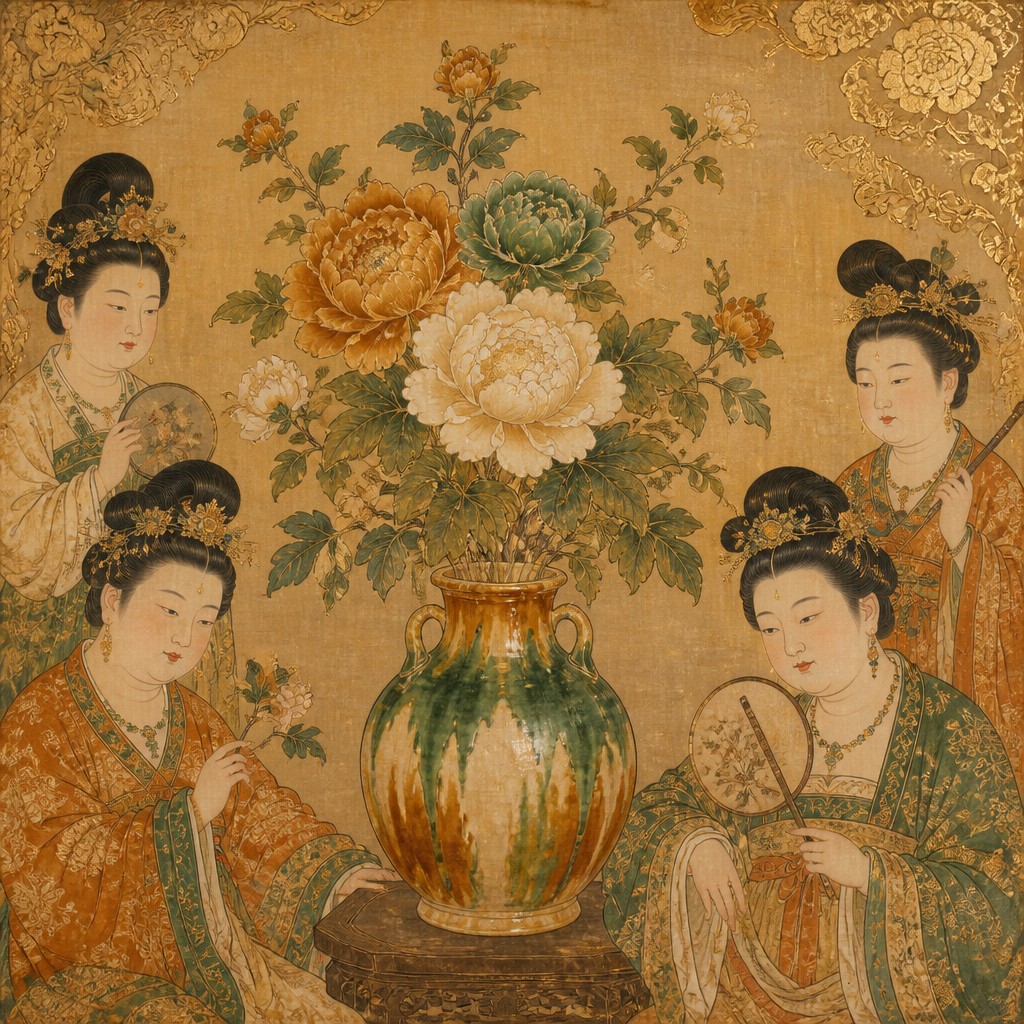
“bouquet of flowers in a glass vase”
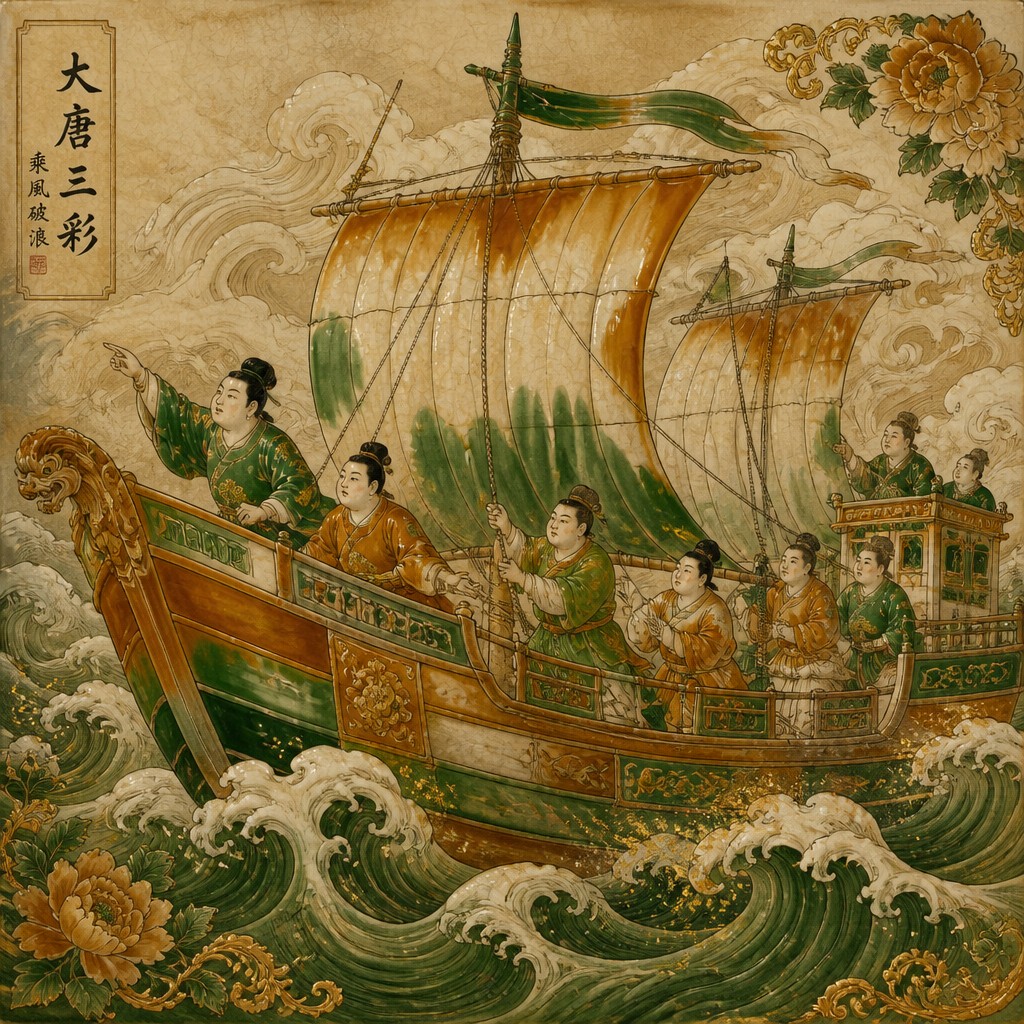
“sailing ship on a stormy sea”
How to Create Tang Dynasty Art
Master the craft step by step — or skip straight to creating. Read the full guide →
- 1
Build the composition with contour first
Begin with a clear ink drawing of the figures, garment folds, and major ornaments before adding color. Use varied but controlled line weight, keeping faces and gestures especially legible.
- 2
Limit the palette
Start with warm cream, amber, leaf-green, muted brown, and small amounts of gold or turquoise. Add tonal variation through glaze-like pooling and transparent overlays instead of introducing many unrelated hues.
- 3
Separate silk and ceramic surfaces
Use matte grain, pigment irregularity, and softened edges for the silk ground, then reserve gloss, drips, and pooled highlights for ceramic objects or selected decorative areas. This contrast creates visual depth.
- 4
Design the figure and ornament together
Give the main figures stable, graceful poses and substantial robes, then use peonies, foliage, cloud bands, or textile motifs to frame them. Repetition and bilateral balance help establish a courtly atmosphere.
- 5
Use digital layering carefully
In digital painting, place ink contours, flat mineral color, glaze transitions, silk texture, and gold ornament on separate layers. Lower opacity and add subtle edge variation so the result feels handmade rather than mechanically airbrushed.
- 6
Write prompts with material and subject details
Specify the subject, pose, period clothing, amber-cream-green glaze palette, silk or ceramic surface, ink contours, and floral ornament. For image transformation, preserve the source silhouette while asking for aged silk texture, restrained courtly geometry, and selective sancai sheen.
The Story
History & Origins of Tang Dynasty
The Tang dynasty was a period of political power, cosmopolitan exchange, expanding trade, and major developments in religious and secular art. Sancai, meaning “three colors,” describes a family of low-fired lead-glazed ceramics commonly using combinations of amber, green, cream, and sometimes other tones. These objects included vessels, figures, animals, architectural models, and funerary goods. Their flowing glazes, pooling color, and occasional drips were produced by the behavior of liquid glaze during firing rather than by painted brushwork.
Tang painting developed through court, religious, and funerary contexts, with artists using controlled ink lines, mineral colors, and silk supports to represent figures, landscapes, narratives, and auspicious motifs. The courtly figure type associated with the period is especially recognizable for its substantial, softly modeled bodies, layered robes, elaborate hair arrangements, and composed gestures. A contemporary style prompt that unites these features should therefore be understood as an aesthetic synthesis of Tang ceramic, pictorial, sculptural, and decorative traditions.
Influences: The style draws from Tang-period sancai ceramics, Chinese ink-and-color painting on silk, courtly figure painting, Buddhist mural traditions, funerary sculpture, textile patterning, and decorative metalwork. It also relates to East Asian scroll composition, traditional Chinese floral ornament, and later revivalist interpretations of imperial Chinese design. Its fusion of painted contour with glazed surface effects is a modern synthesis rather than a standard historical category.
Frequently Asked Questions
What defines Tang Dynasty art style?
It is defined by the combination of warm sancai colors, elegant courtly figures, fine ink contours, elaborate hairstyles and robes, floral ornament, and aged silk or ceramic textures. Historically, these features belong to several Tang-period media rather than one unified style.
What does sancai mean?
Sancai literally means “three colors.” It refers to a family of Tang-period low-fired lead-glazed ceramics, often using amber, green, and cream, although additional colors could appear. The glazes are known for pooling, bleeding, and soft transitions.
Is Tang Dynasty art the same as Chinese ink painting?
No. Ink painting is one important part of the Tang visual world, but Tang art also includes glazed ceramics, sculpture, murals, textiles, metalwork, and richly colored court imagery. Ink contours may be combined with mineral pigments rather than used alone.
How can I make a figure look convincingly Tang-inspired?
Use a composed pose, substantial layered robes, a rounded silhouette, an elaborate but structured hairstyle, and restrained facial expression. Add clear contour lines and period-appropriate decorative motifs, while avoiding modern clothing, dramatic realism, or overly sharp anatomical modeling.
How is this style different from later imperial Chinese art?
Tang imagery is often associated with cosmopolitan energy, robust forms, flowing garments, and strong amber-green ceramic color. Later periods developed different preferences in brushwork, court costume, porcelain, landscape painting, and decorative conventions, so a purely blue-and-white porcelain or literati landscape treatment would not be specifically Tang.
Where is this visual style used today?
It appears in historical illustration, museum-inspired design, costume and character concepts, decorative painting, ceramics, animation, games, editorial imagery, and digitally generated compositions. Contemporary uses often combine historically grounded motifs with imaginative subjects or hybrid materials.

Create your first Tang Dynasty artwork
Describe anything — or upload a photo — and see it in Tang Dynasty Art Style in seconds.
Related Styles
Discover similar art styles