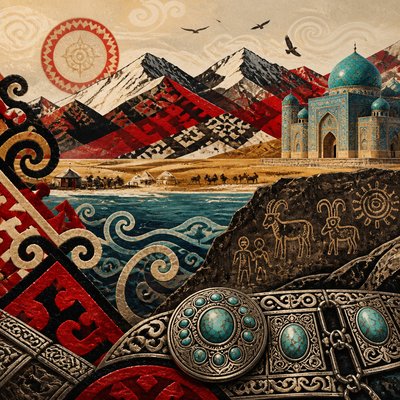
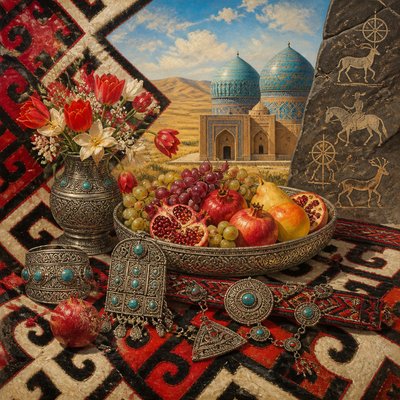
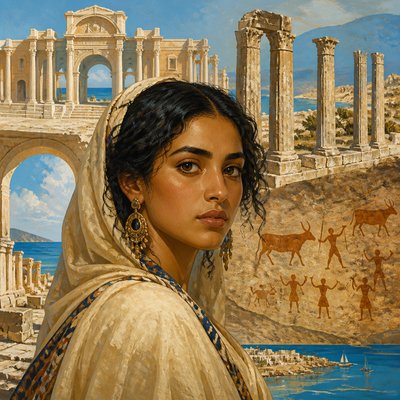
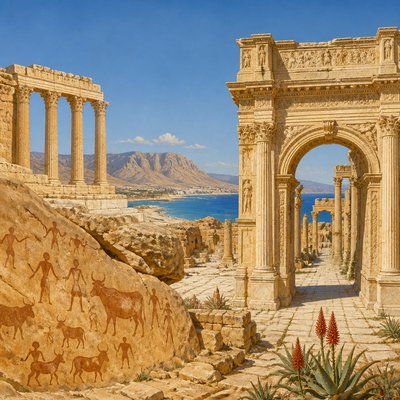
Saint Lucian Art Style
Explore Saint Lucian art style: gingerbread architecture, Carnival plumage, French-Creole streets, lush hills and the twin Pitons.
Instantly rendered in Saint Lucian — or transform a photo
Saint Lucian Gallery
Tap any artwork to explore it
What is Saint Lucian Art Style?
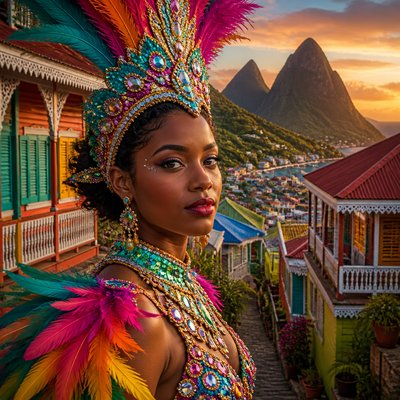
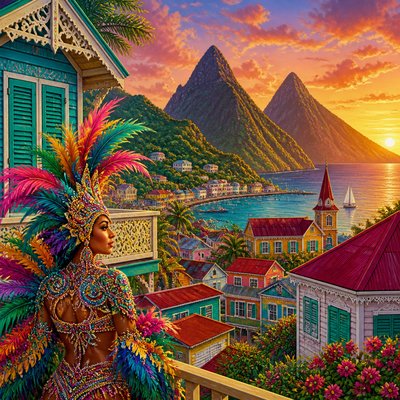
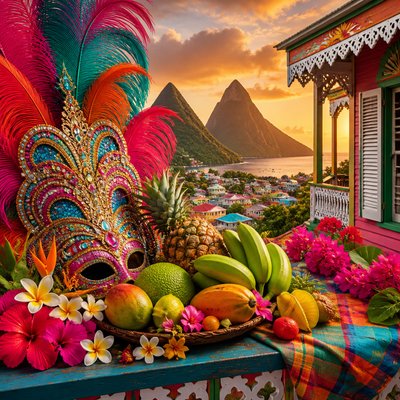
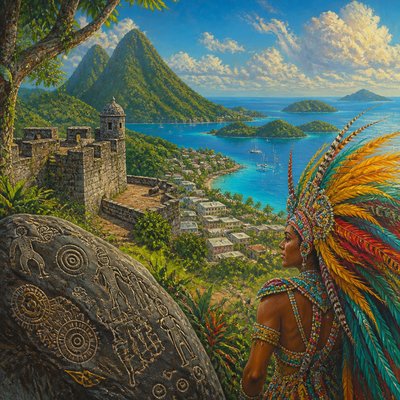
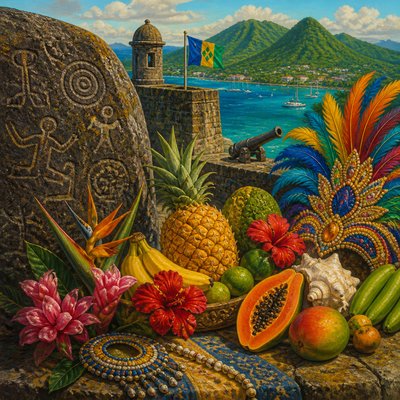
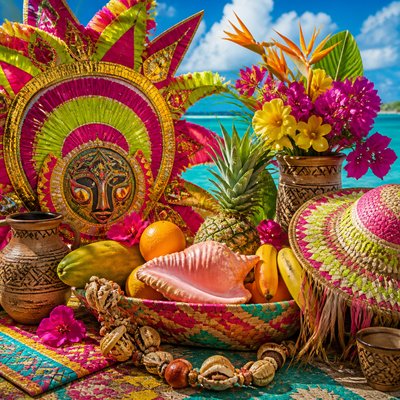
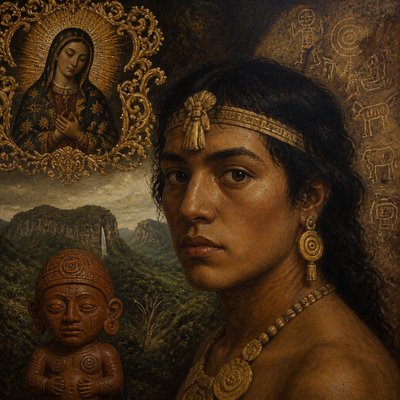
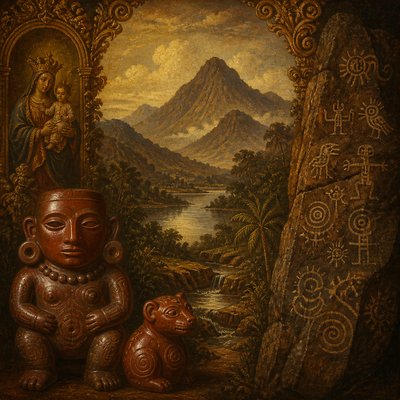
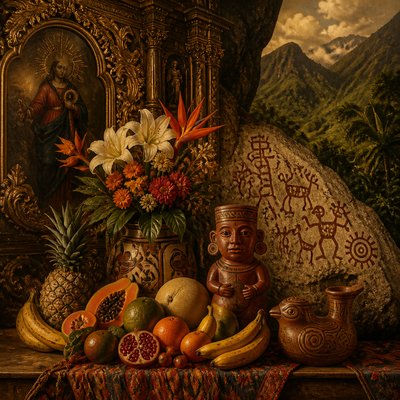
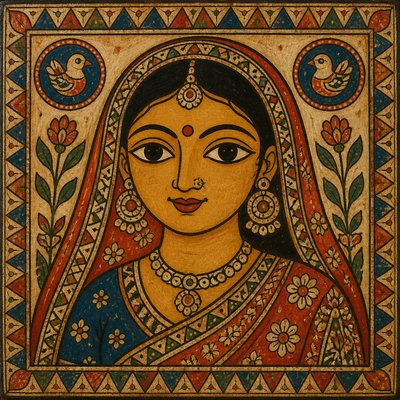
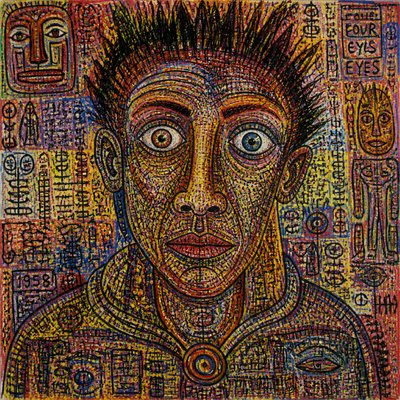
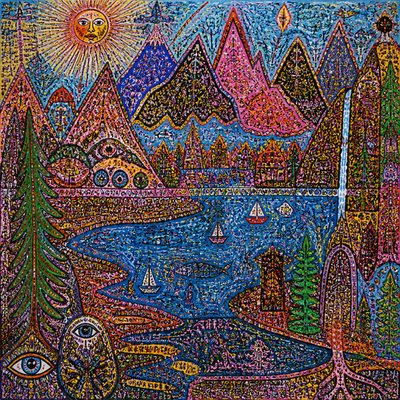
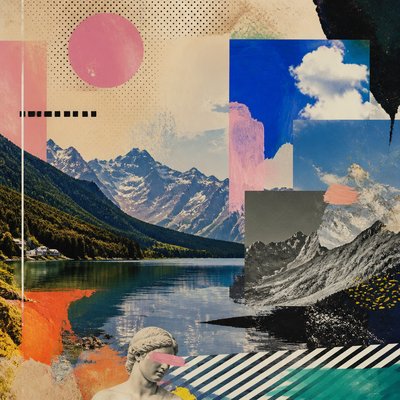
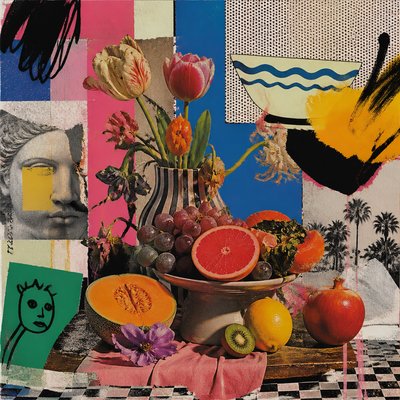
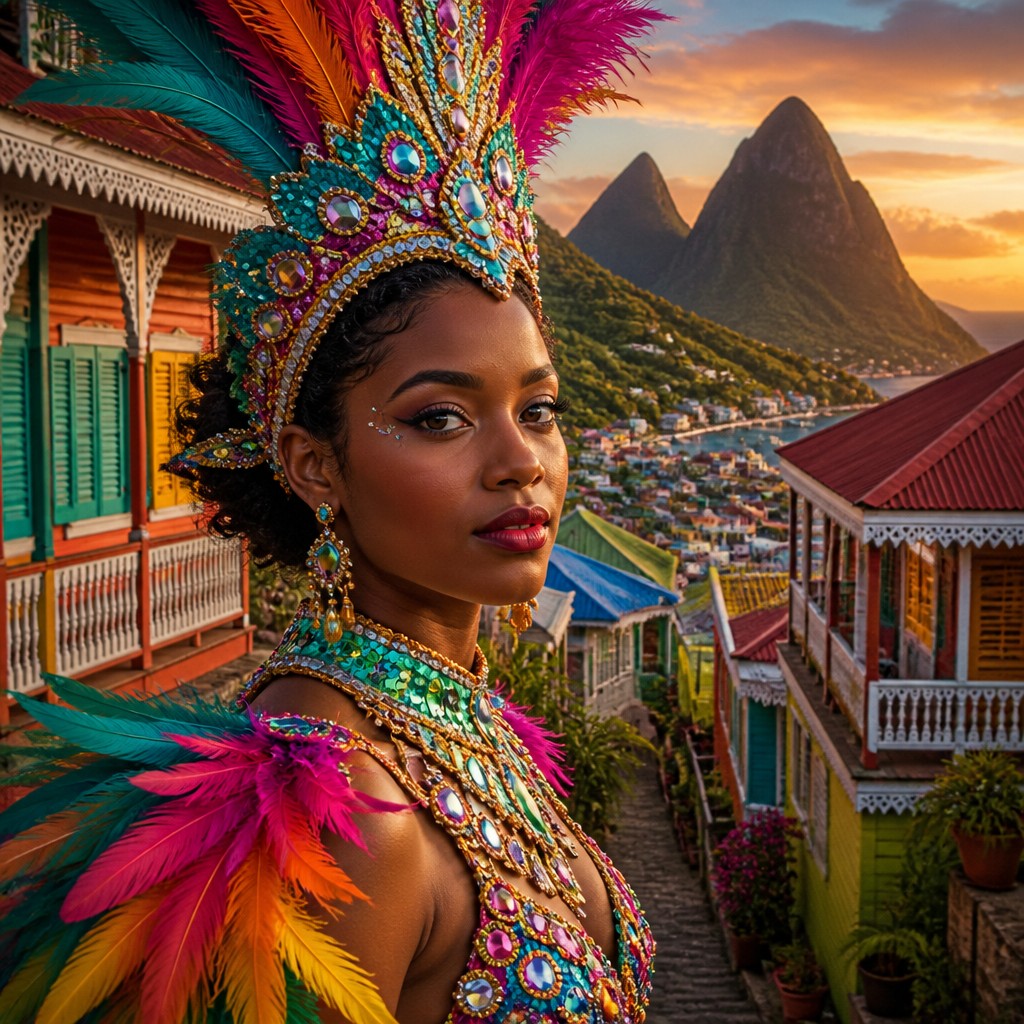
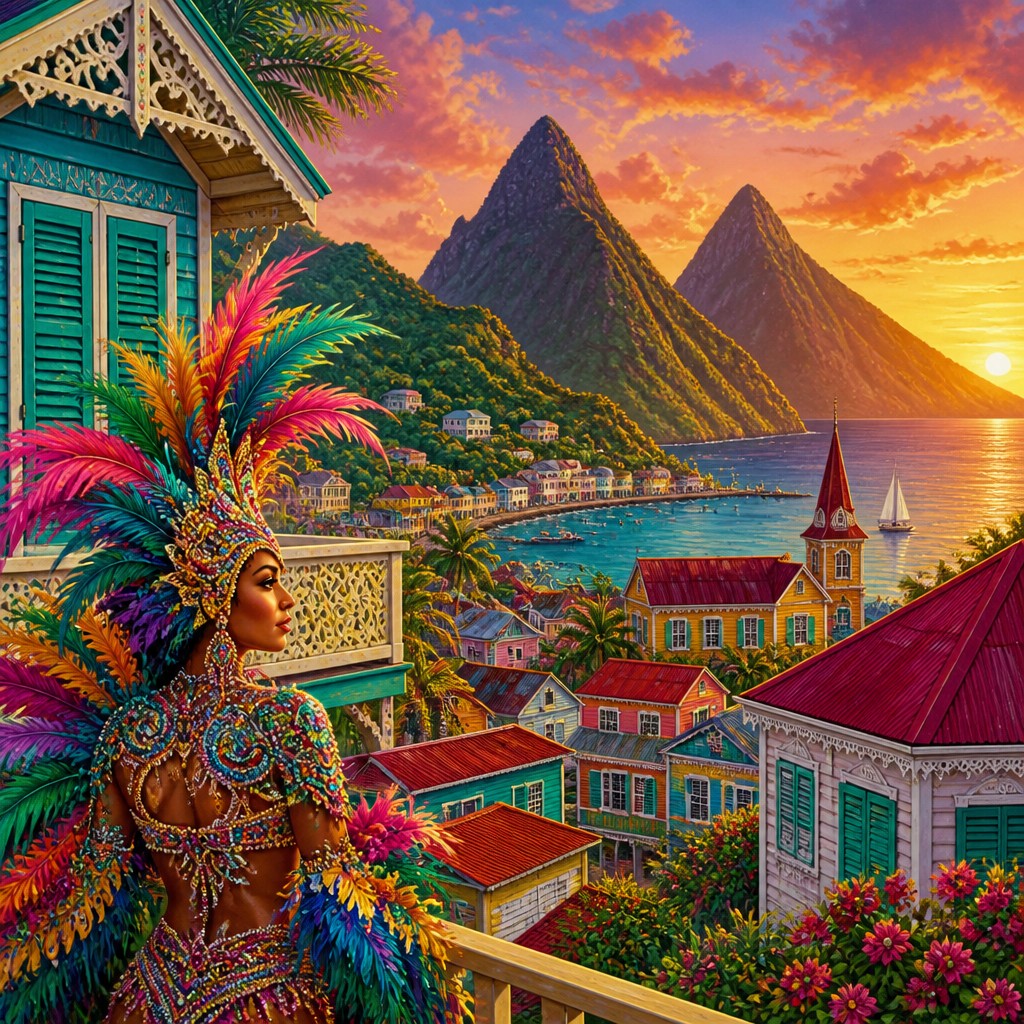
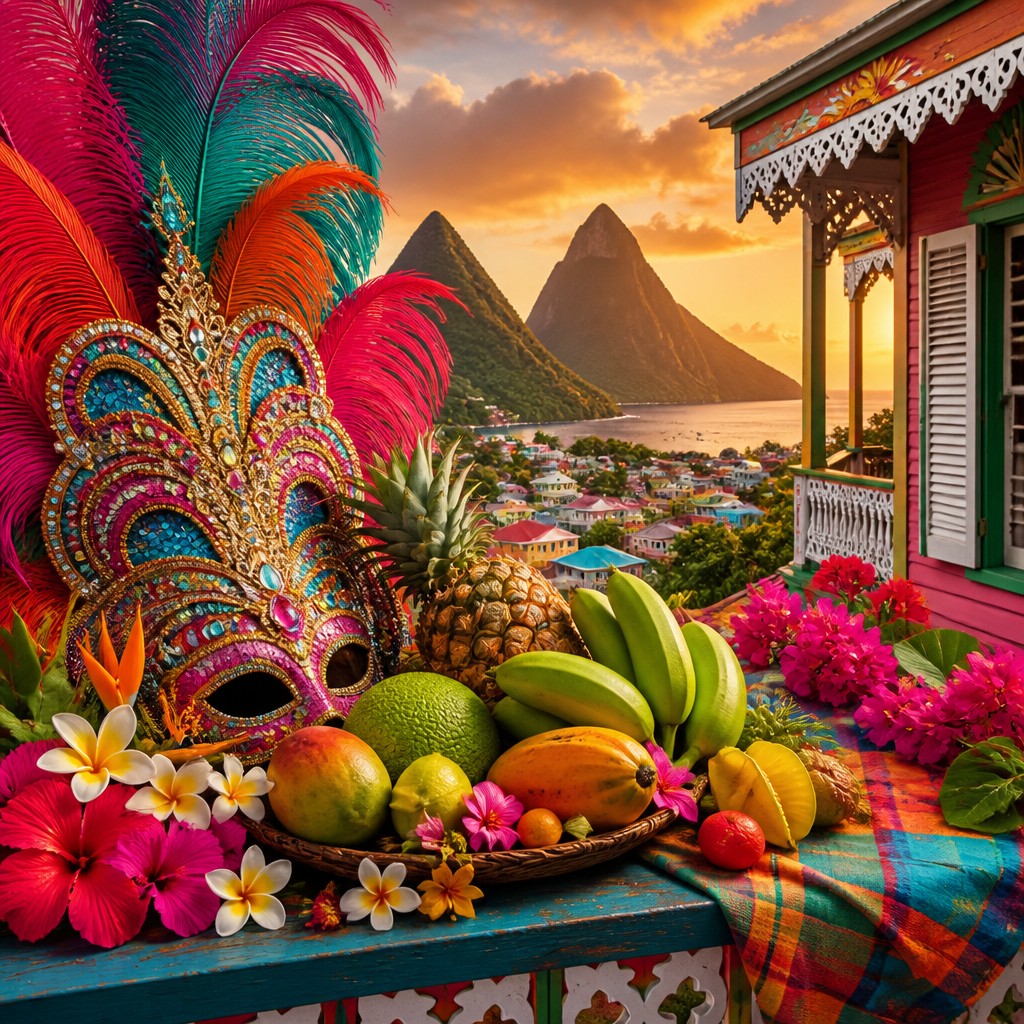
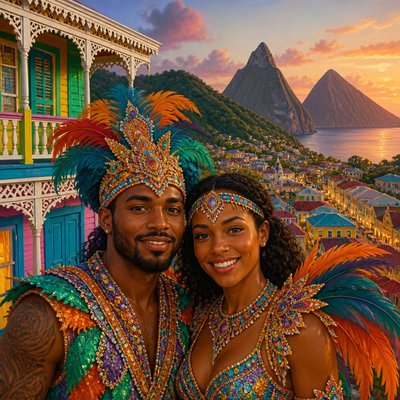
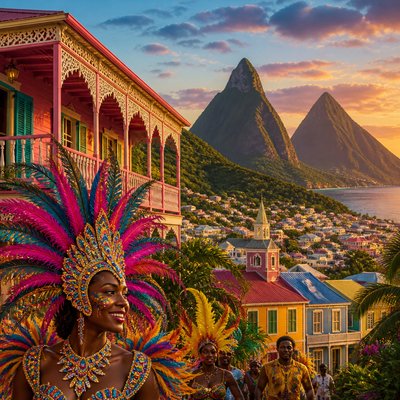
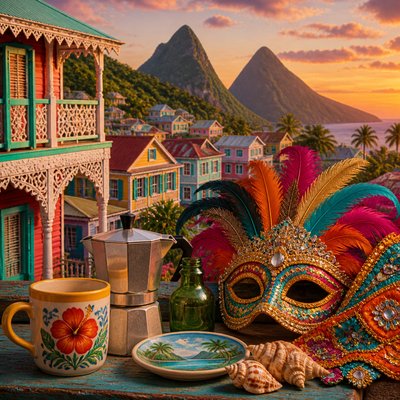
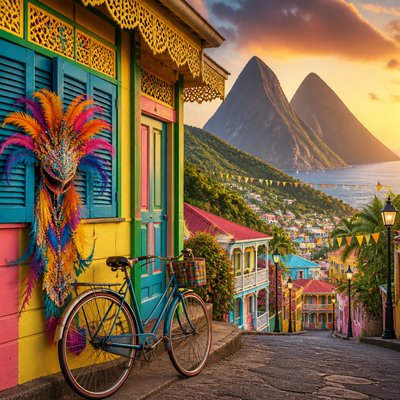
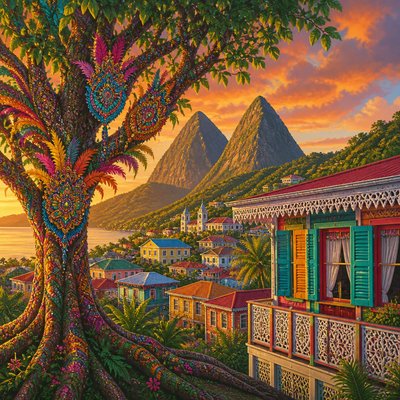
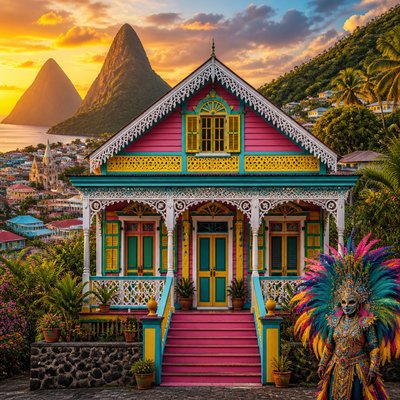
Saint Lucian art style is a contemporary, place-based visual language inspired by Saint Lucia’s Caribbean environment and cultural imagery. Its signature elements include brightly painted timber buildings with gingerbread fretwork, shuttered windows and decorative eaves; elaborate Carnival costumes covered in feathers, sequins and sculptural forms; and the twin volcanic Pitons rising above green hills and coastal settlements.
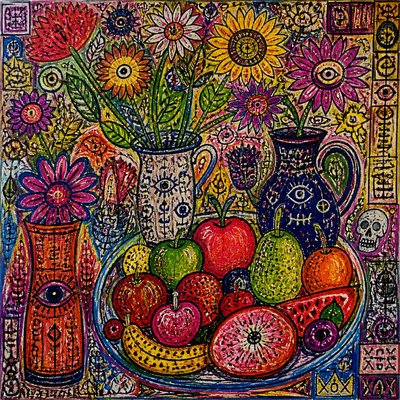
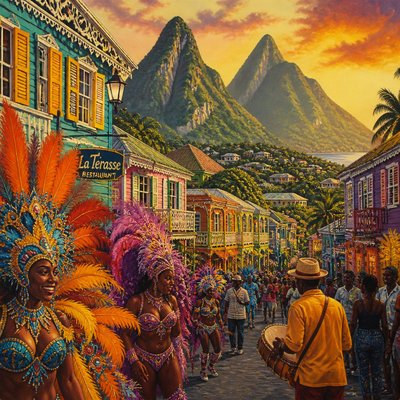
The style combines architectural detail, tropical landscape, festive costume and warm atmospheric color in a single composition. French-Creole townscapes, dense vegetation, volcanic silhouettes and late-day light create a sense of lived-in island space, while candy-bright surfaces and carnival ornament introduce movement, celebration and visual abundance.
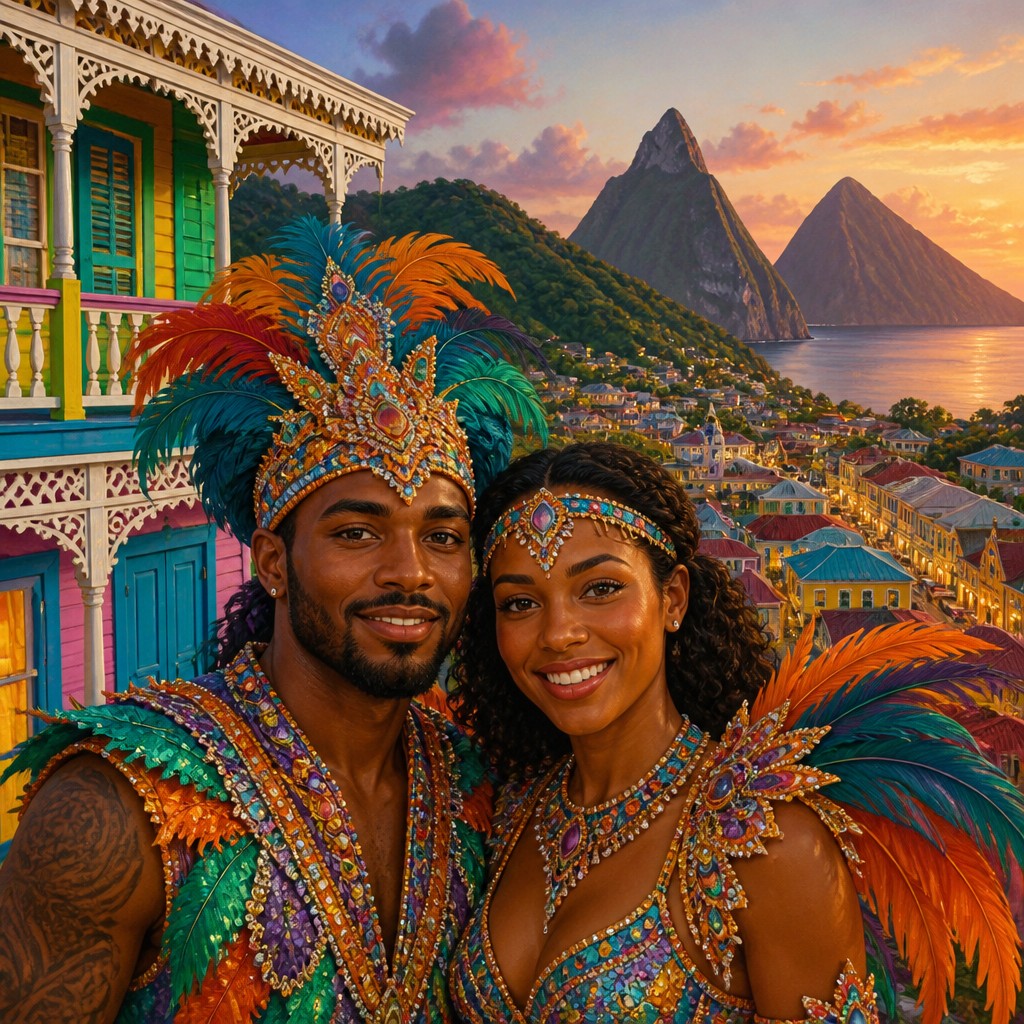
Try It On Your Photos
Upload any photo and convert it into Saint Lucian Art Style — drag the sliders to compare before and after.
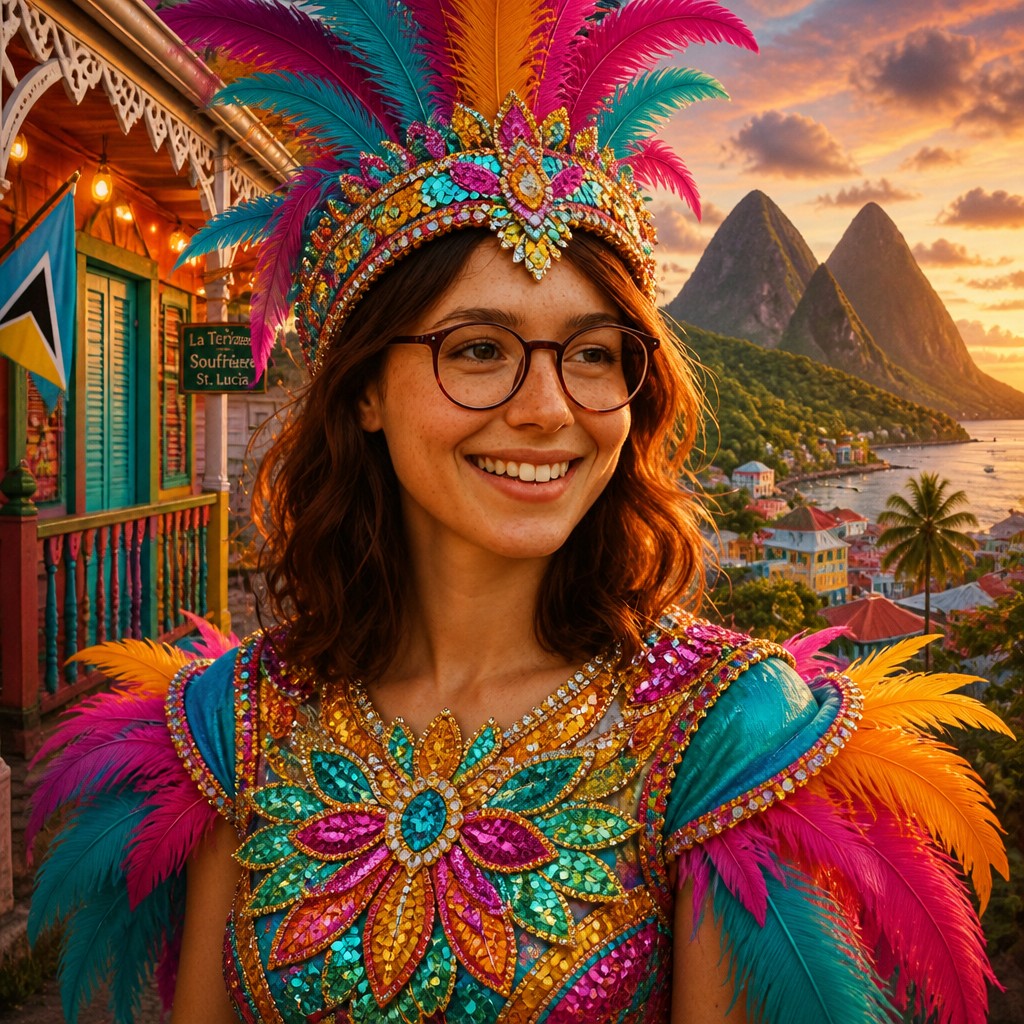


What Defines Saint Lucian Art Style
The signature details, up close
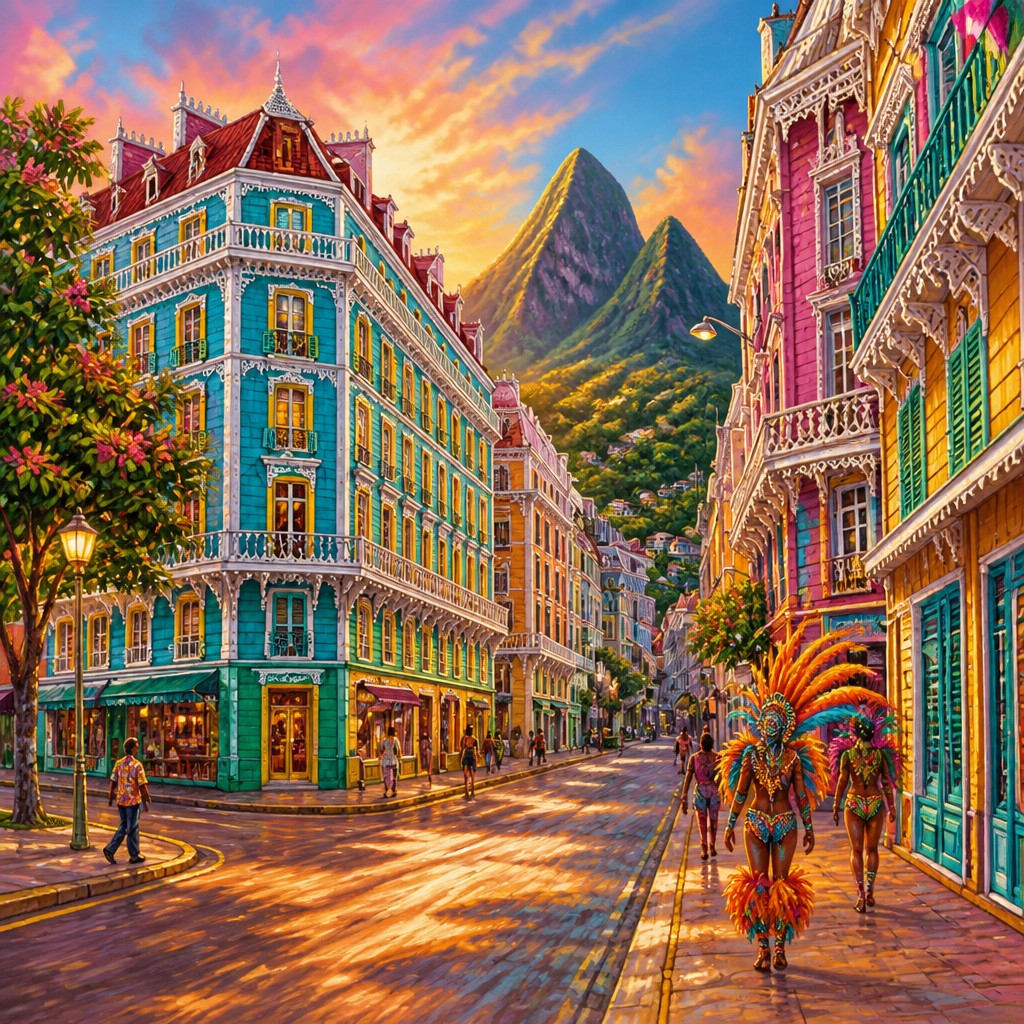
Gingerbread timber architecture
Buildings feature ornamental fretwork, pierced balustrades, scalloped trim, louvered or shuttered windows and steeply articulated eaves. Saturated turquoise, coral, yellow, pink and green paint gives the architecture a handcrafted, celebratory presence.
The twin Pitons
Soufrière’s paired volcanic peaks act as a strong compositional anchor, often appearing behind rooftops, harbor streets or coastal vegetation. Their pointed silhouettes provide immediate geographic identity without requiring a literal map-like depiction.
Carnival plumage and sequins
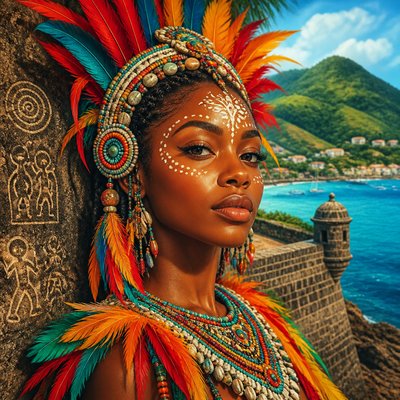
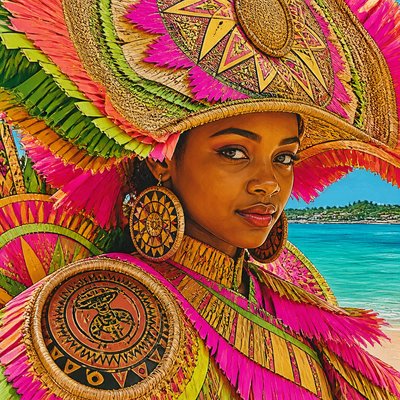
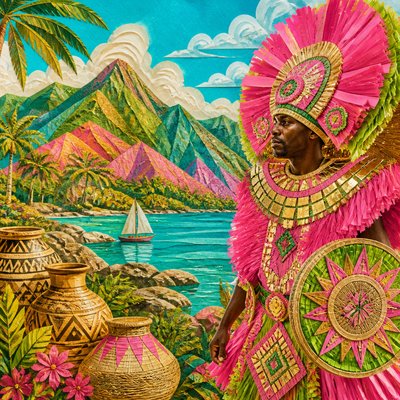
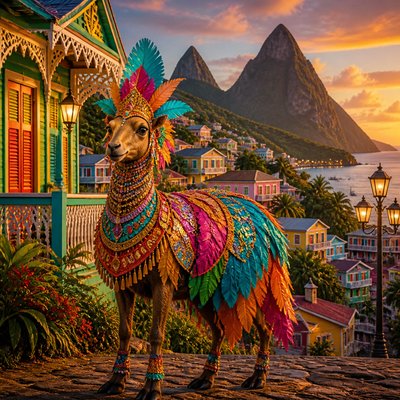
Feathers, reflective sequins, beads, wire structures and layered fabric create elaborate costume surfaces. The details should feel assembled by hand, with rhythmic repetition and expressive silhouettes rather than restrained fashion minimalism.
French-Creole townscape
Compact streets, verandas, colorful façades, market activity and colonial-era spatial references suggest a layered Caribbean urban environment. The architecture works best as a lived setting rather than as an isolated ornamental object.
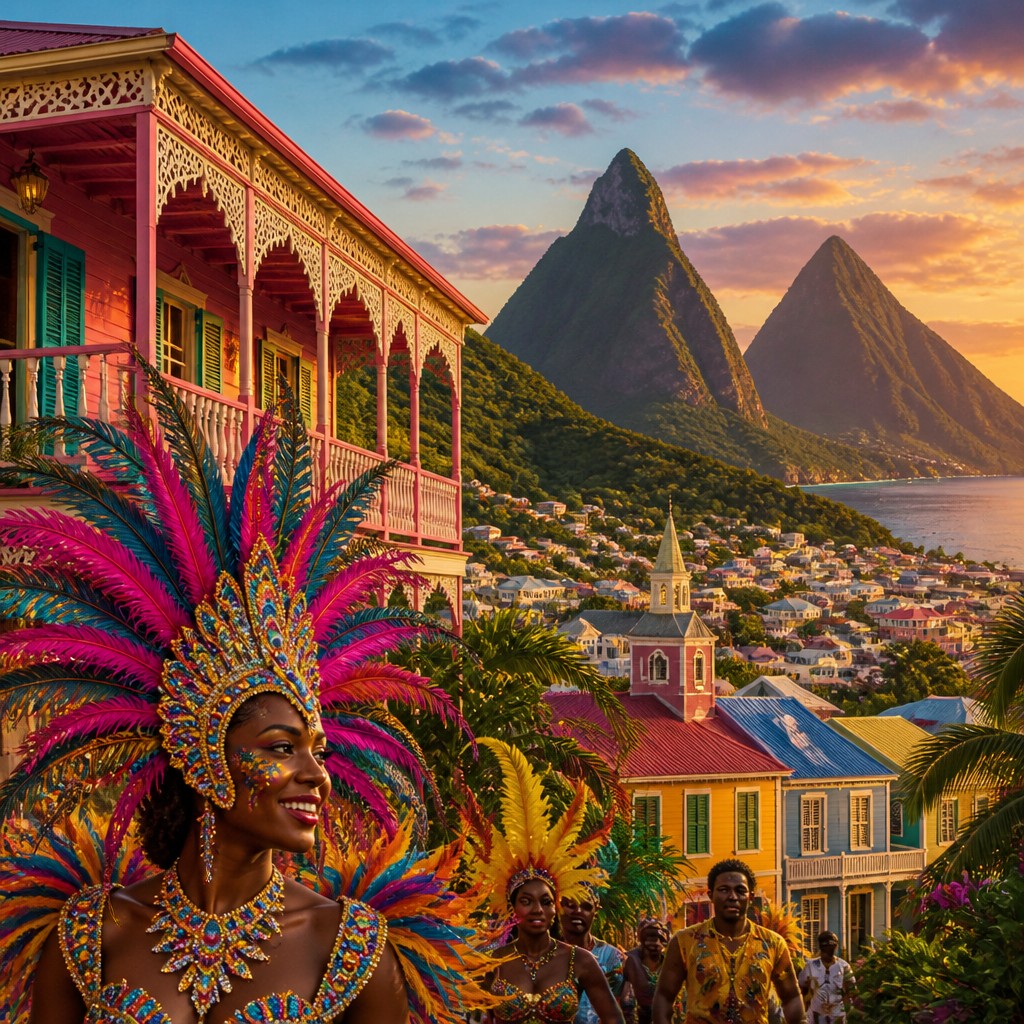
Lush volcanic landscape
Dense tropical foliage, palms, banana leaves, mossy slopes and humid atmospheric depth surround the built environment. Green hills and dark volcanic forms contrast with the brighter architectural and costume colors.
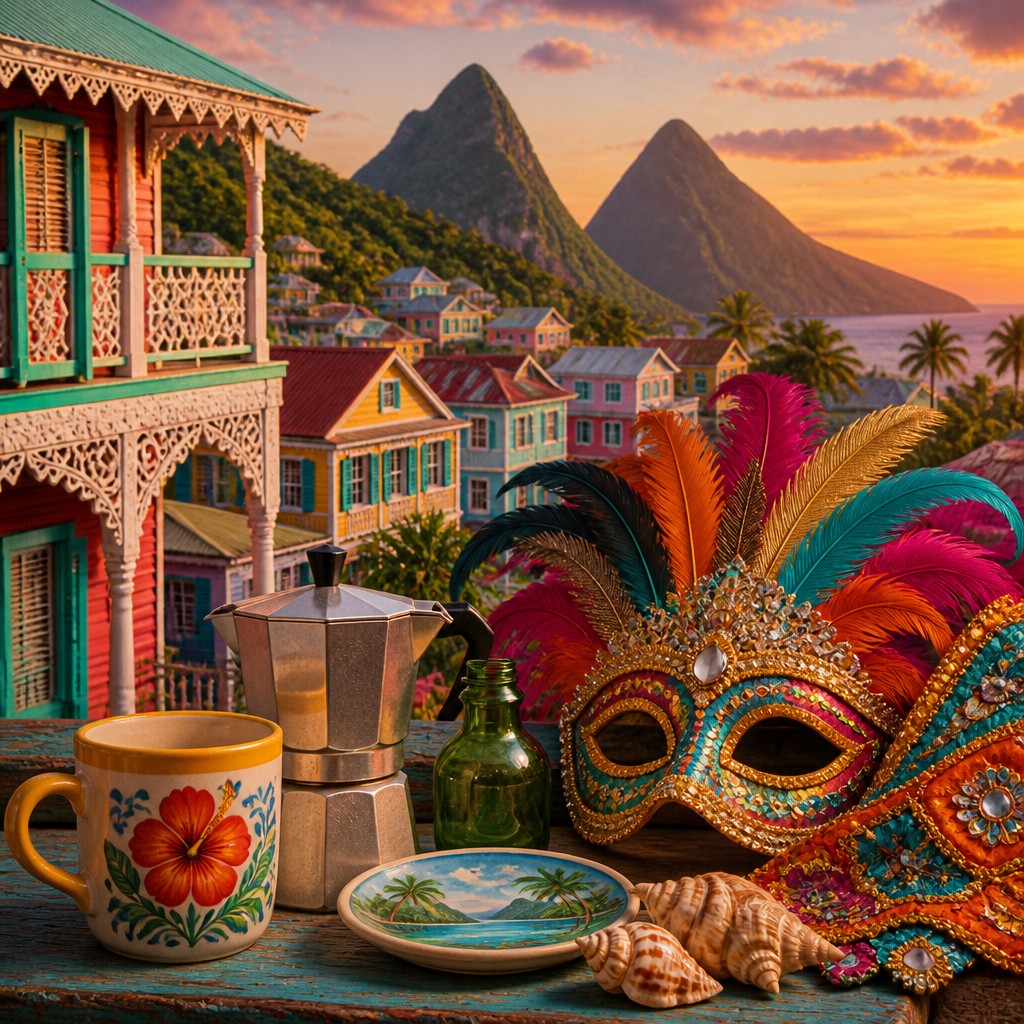
Warm festive illumination
Tropical dusk light produces amber highlights, coral shadows and a soft haze around the hills. Sunlit or lantern-lit scenes can retain strong color while using atmospheric perspective to suggest heat, humidity and distance.
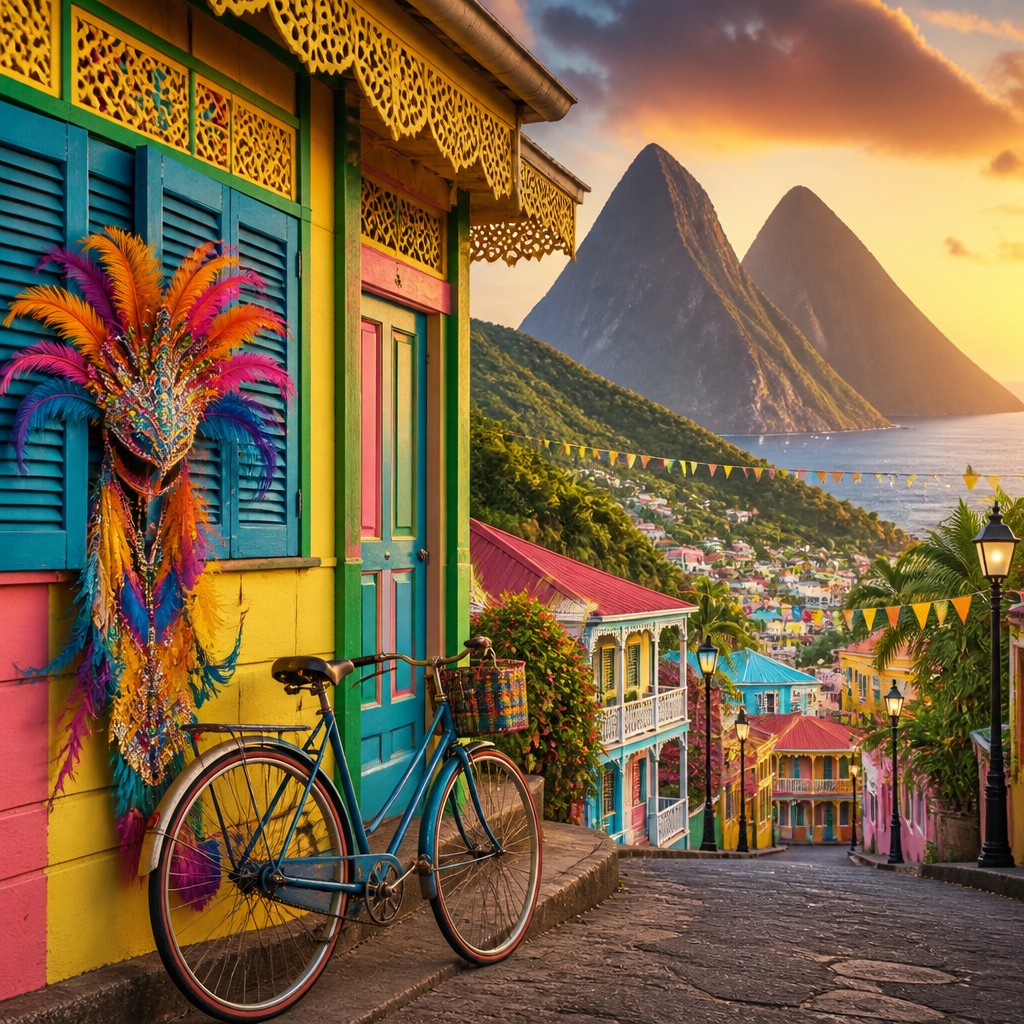
Decorative visual rhythm
Fretwork, feathers, sequins, shutters, leaves and rooflines repeat as graphic patterns across the image. Dense ornament is balanced by clear silhouettes and open areas of sky, sea or hillside.
Saint Lucian Prompt Ideas
Start from an idea — each one opens the generator with the style ready to go. See all 40 Saint Lucian prompts →
How to Create Saint Lucian Art
Master the craft step by step — or skip straight to creating. Read the full guide →
- 1
Build the composition around place
Begin with a clear spatial structure: a foreground street or costume figure, a middle-ground townscape, and the twin Pitons or green hills in the distance. Use overlapping rooflines and vegetation to create depth.
- 2
Design convincing gingerbread detail
Draw trim as repeating cutout shapes with believable supports, shadows and scale rather than random lace-like texture. In digital painting, use separate layers or vector shapes for eaves, shutters, railings and wall color.
- 3
Render costume materials distinctly
Combine matte feathers, glossy sequins, translucent fabric, beads and wire-mounted forms. Small directional highlights and varied edge shapes help the costume read as crafted ornament instead of generic glitter.
- 4
Use a tropical color structure
Pair saturated architectural colors with deep foliage greens and volcanic blue-gray shadows. Add warm dusk illumination selectively to façades, costume edges and atmospheric haze so the palette remains vivid but spatially coherent.
- 5
Choose an appropriate medium
Gouache, acrylic, colored pencil, screen-print methods and layered digital illustration all suit the style’s flat color and decorative patterning. Photography can emphasize real architecture, costume texture and dusk conditions, while compositing can unite separate landscape and cultural elements.
- 6
Write precise generation prompts
Specify the subject, Saint Lucian environmental cues, gingerbread architectural details, Carnival materials, Piton placement, lighting and desired medium. For image-to-image work, preserve the source subject’s pose or composition while requesting the architectural trim, tropical palette and festive surface treatment.
The Story
History & Origins of Saint Lucian
This is best understood as an invented contemporary style rather than a documented historical art movement. Its aesthetic lineage draws on Saint Lucia’s built environment, Caribbean vernacular architecture, Carnival costume culture, French-Creole cultural heritage and the island’s recognizable volcanic geography.
The visual language develops by bringing these references together for illustration, decorative painting, photography, fashion imagery and digital composition. It should not be treated as a single traditional school with a fixed period or named founders; instead, it is a respectful synthesis of regional motifs and contemporary image-making techniques.
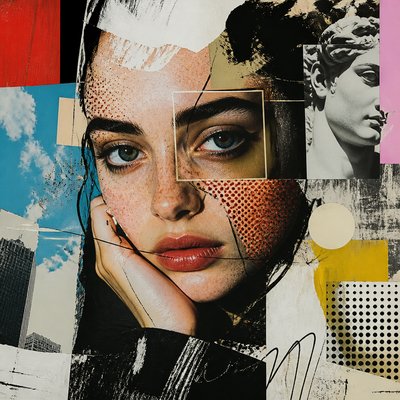
Influences: The style relates to Caribbean vernacular and gingerbread architecture, French-Creole urban and decorative traditions, Caribbean Carnival masquerade, tropical landscape painting, travel-poster illustration, folk-art patterning and contemporary digital collage. It also shares the saturated color and flattened decorative emphasis of screen printing and illustrative poster design, while retaining the environmental specificity of Saint Lucia.
Frequently Asked Questions
What defines the Saint Lucian art style?
It is defined by the combination of gingerbread-trim architecture, Carnival costume ornament, lush volcanic scenery and the twin Pitons. Bright Caribbean color, warm tropical light and dense decorative patterning unify these elements.
Is Saint Lucian art style a historical art movement?
No. The term describes a contemporary, place-based aesthetic synthesis rather than a formally documented movement or period school. It draws from real Saint Lucian cultural and geographic references without claiming a single historical origin.
How does it differ from generic Caribbean art?
Generic Caribbean imagery may emphasize beaches, palms or broad tropical themes. This style is more geographically specific, using Saint Lucia’s gingerbread architecture, French-Creole town settings, Carnival craft and twin volcanic Pitons as recurring identifiers.
Which colors work best for this style?
Use coral, turquoise, yellow, pink, lime and cobalt for buildings and costumes, then balance them with deep foliage greens, volcanic charcoal and warm amber light. A limited shadow family helps bright colors remain readable.
What media can be used to create it?
Gouache, acrylic, watercolor and colored pencil suit its graphic color and ornamental detail. Digital painting, vector illustration, photography, collage and AI-assisted image-making can also work when the architectural, costume and landscape references are specified clearly.
How can I make an image feel culturally respectful?
Treat Saint Lucian architecture, Carnival and landscape as specific cultural subjects rather than generic exotic decoration. Avoid inventing sacred symbols or presenting costume details as interchangeable, and prioritize accurate material details, everyday settings and clear acknowledgment of the island context.
Create your first Saint Lucian artwork
Describe anything — or upload a photo — and see it in Saint Lucian Art Style in seconds.
Related Styles
Discover similar art styles