Normandy Coast Art Style
Discover Normandy Coast art: chalk cliffs, shifting estuary skies, silver-lilac clouds, and luminous broken brushwork shaped by maritime weather.
Instantly rendered in Normandy Coast — or transform a photo
Normandy Coast Gallery
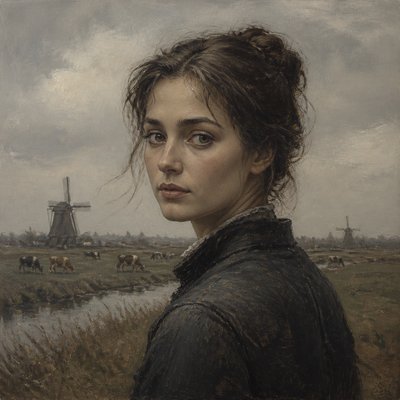
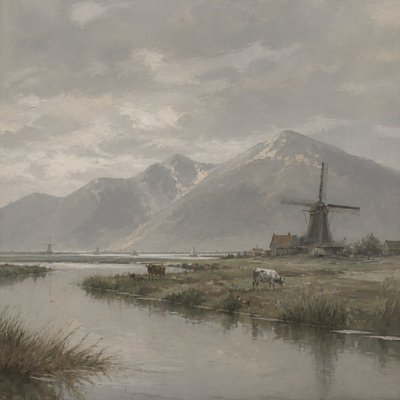
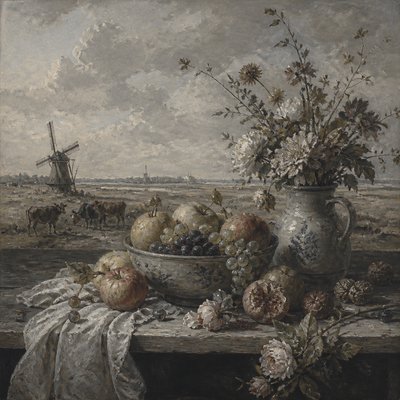
Tap any artwork to explore it
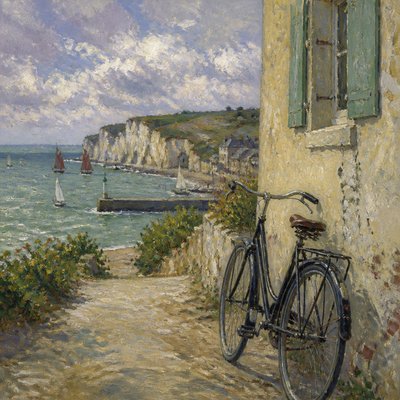
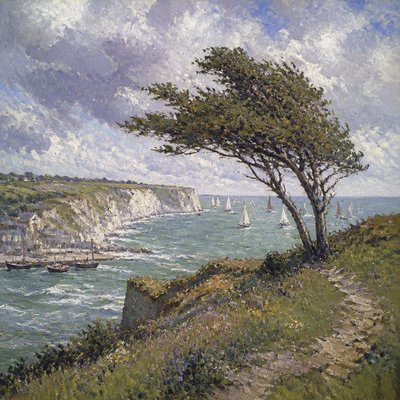
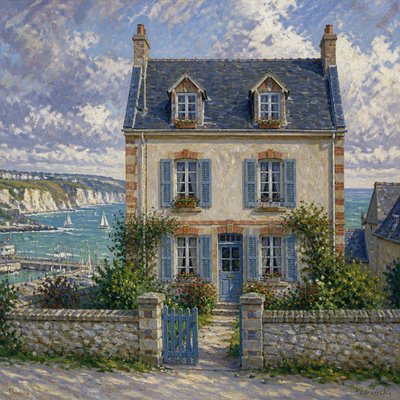
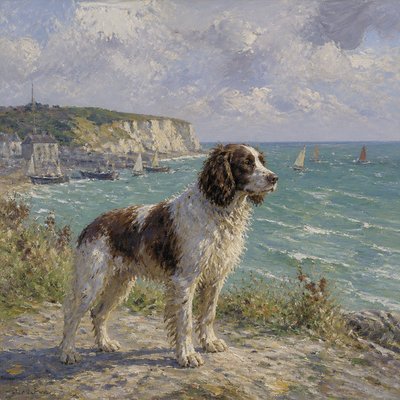
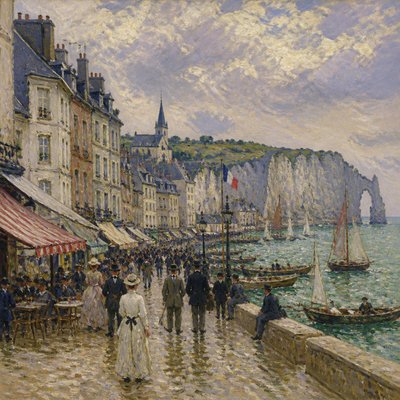
What is Normandy Coast Art Style?
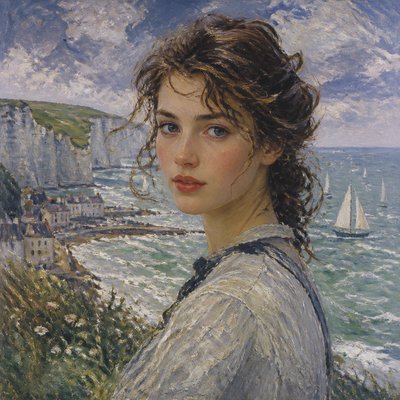
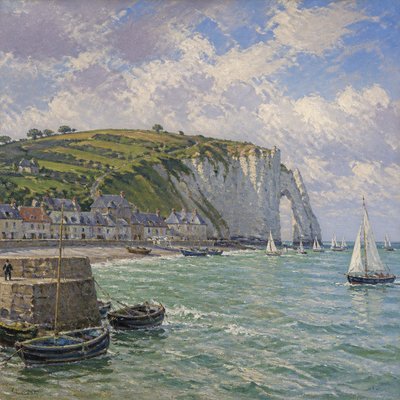
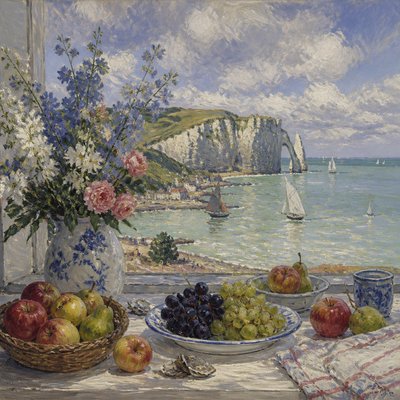
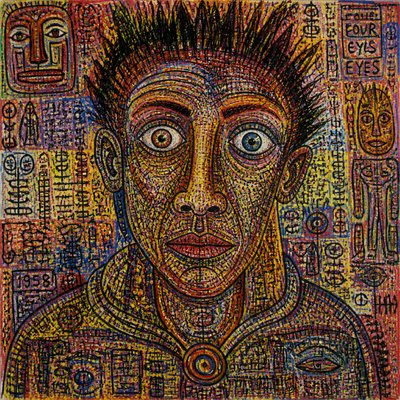
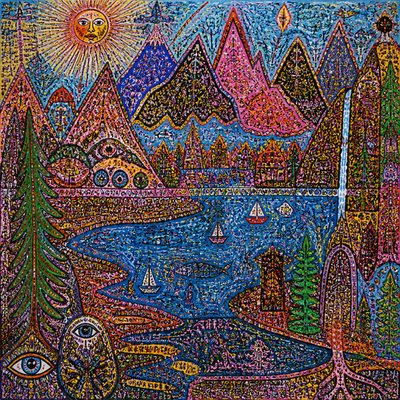
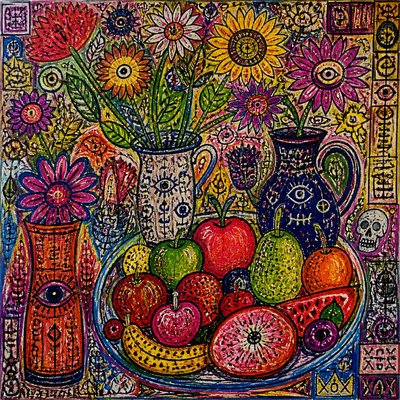
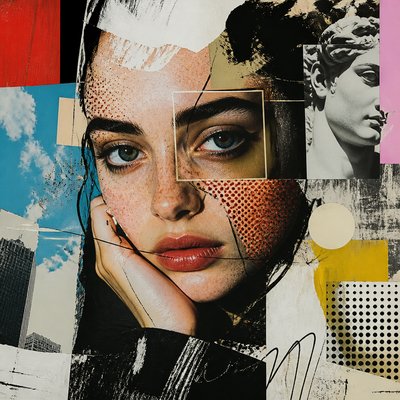
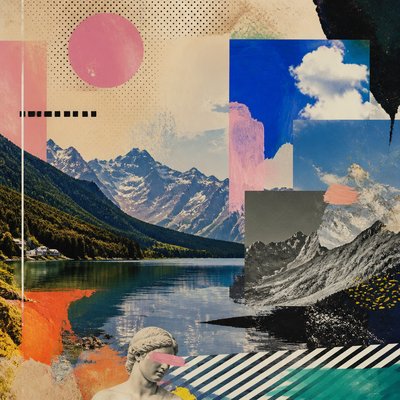
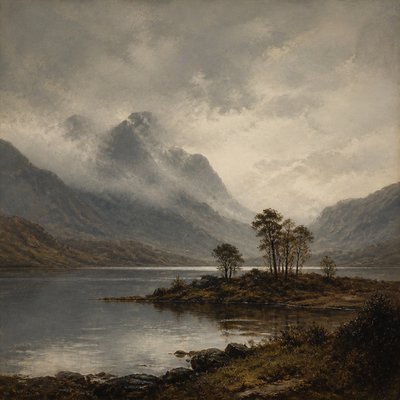
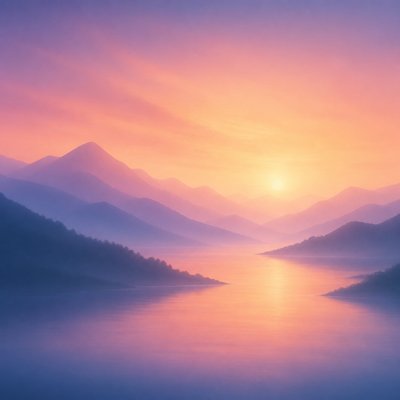
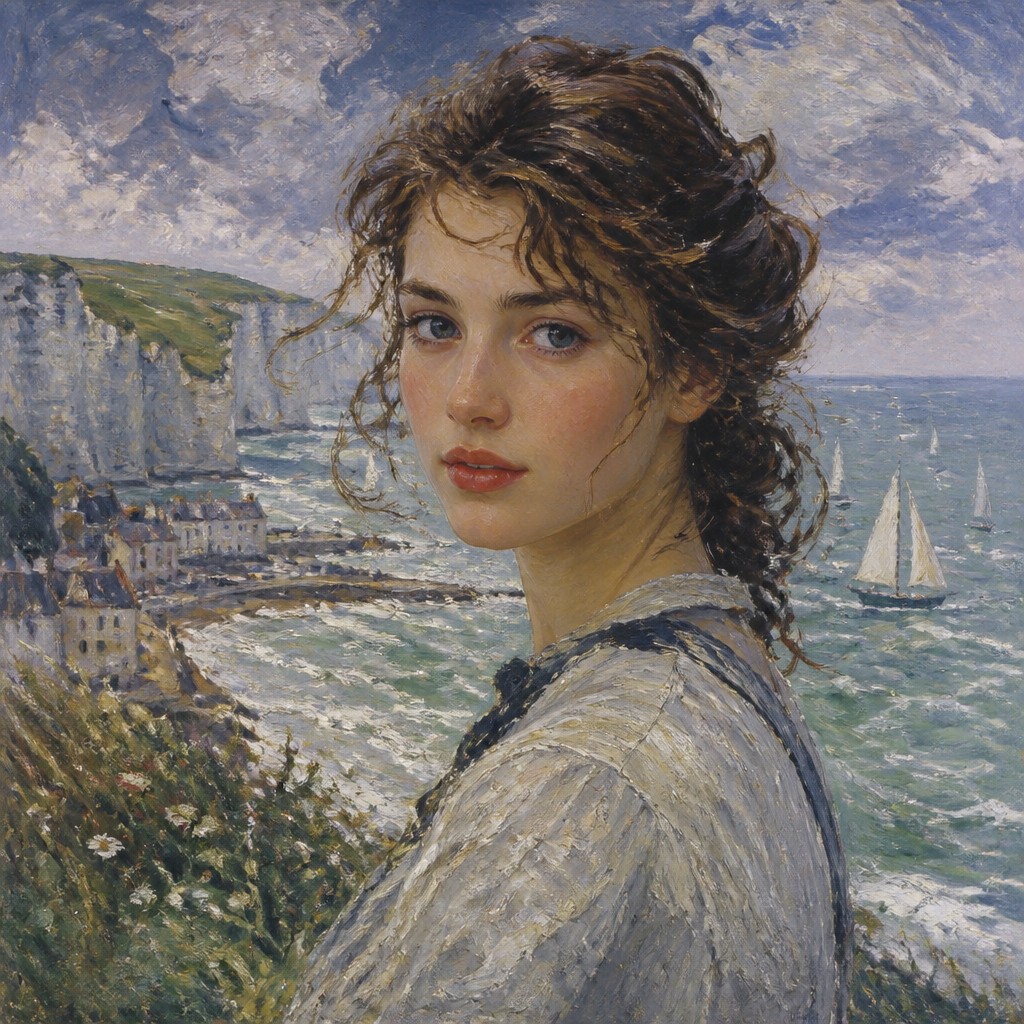
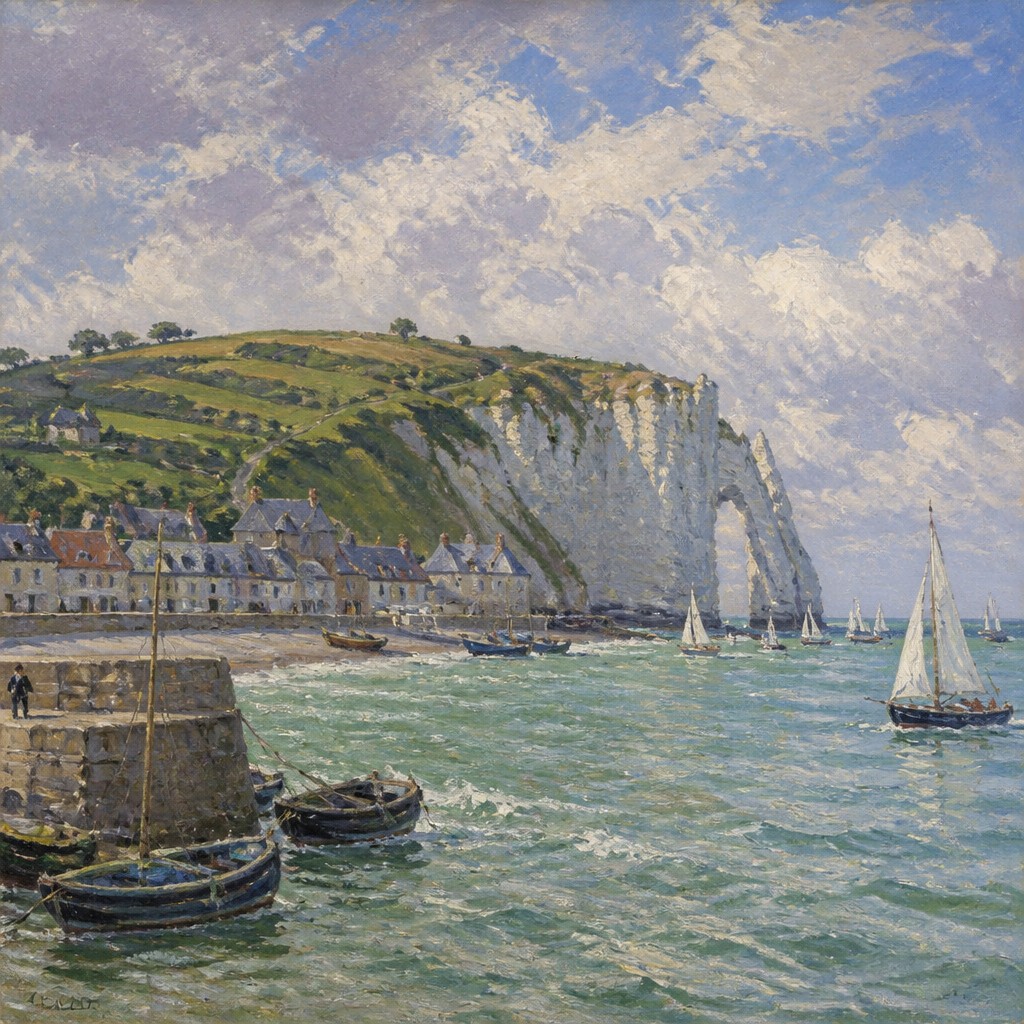
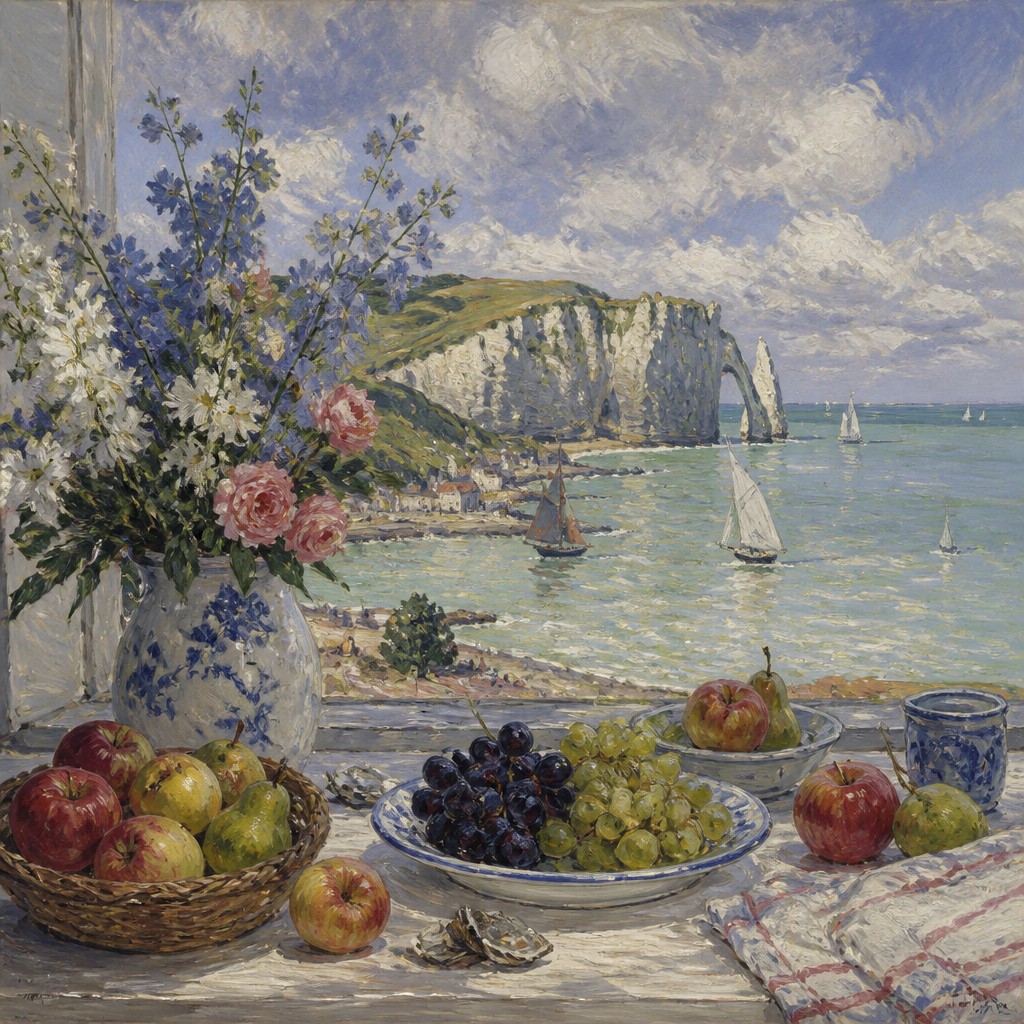
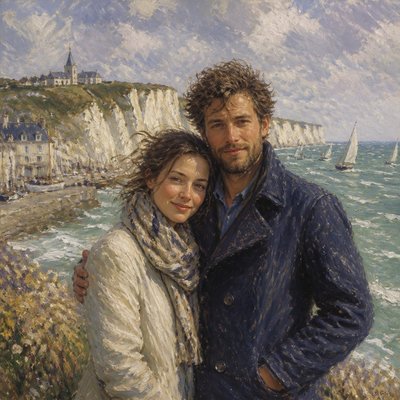
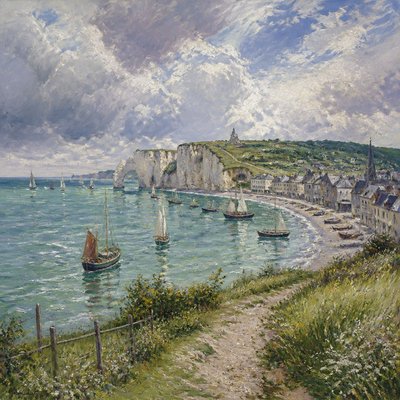
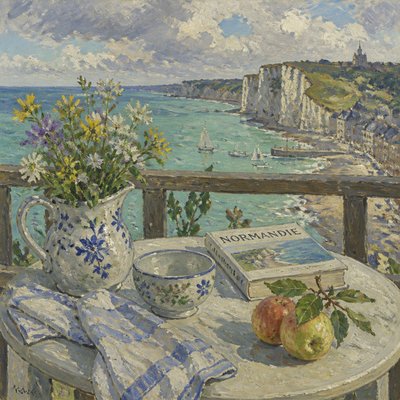
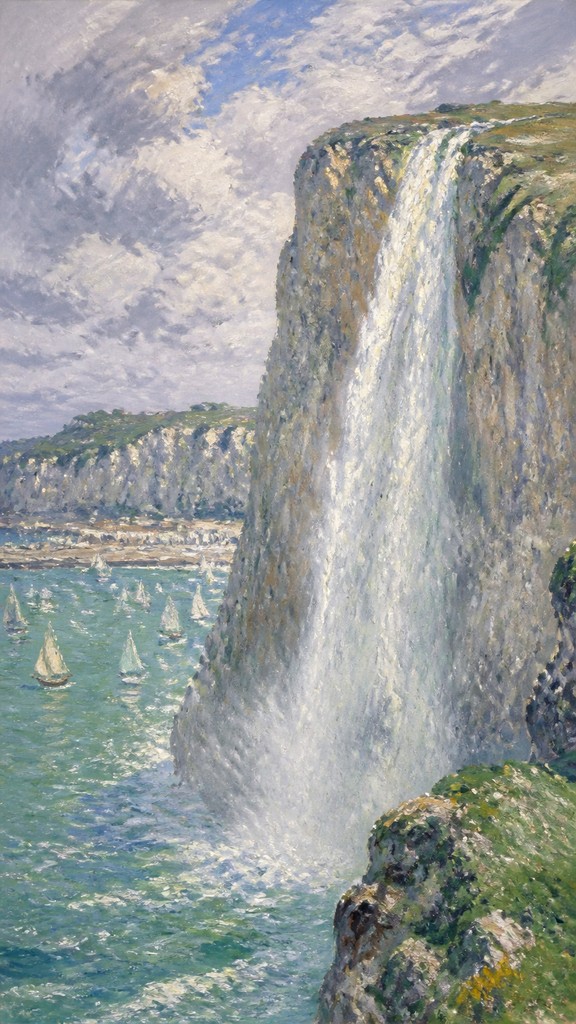
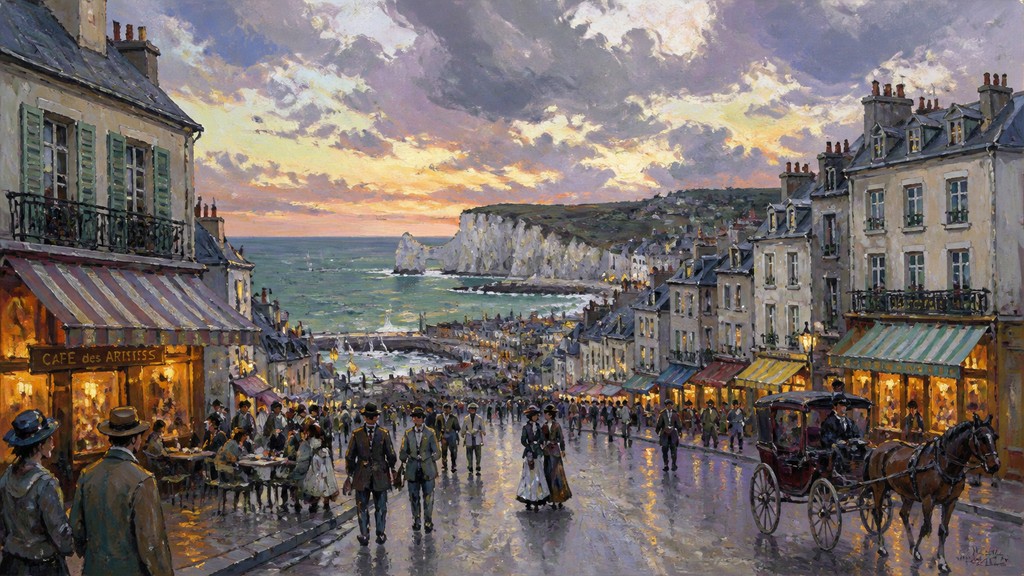
Normandy Coast Art Style is a contemporary, place-based aesthetic centered on the changing light and weather of France’s Channel shoreline. It typically depicts chalk cliffs, tidal estuaries, fishing harbors, beach towns, headlands, and regattas beneath expansive skies. Green and blue water, pale rock, windblown cloud, and sails provide a recurring visual vocabulary.
The style looks atmospheric rather than topographically exact. Its identity comes from fresh, broken brushwork, softened edges, compressed perspective, and a cool maritime palette punctuated by cream, ochre, coral, or sail-white accents. The overall effect evokes outdoor observation: a scene caught between rain and sunlight, with color and luminosity shifting across land, water, and sky.
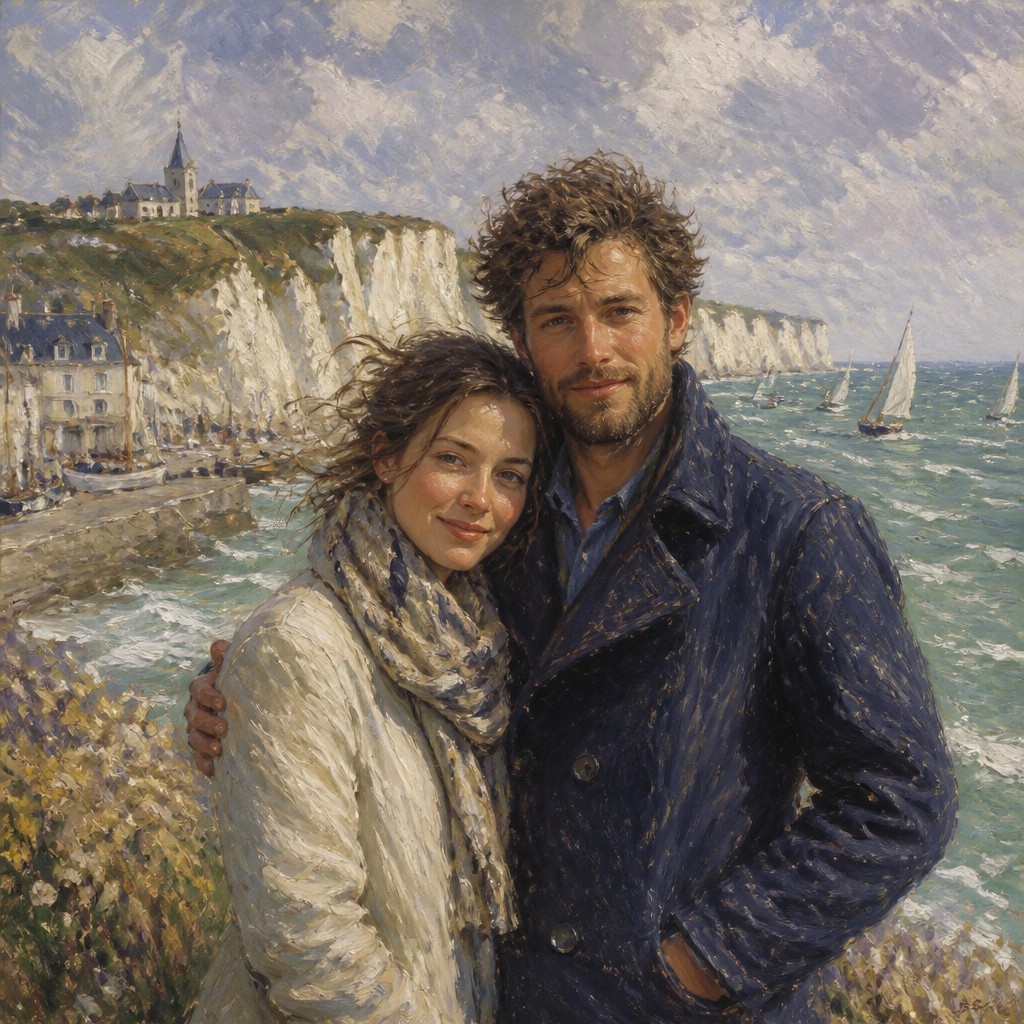
Try It On Your Photos
Upload any photo and convert it into Normandy Coast Art Style — drag the sliders to compare before and after.
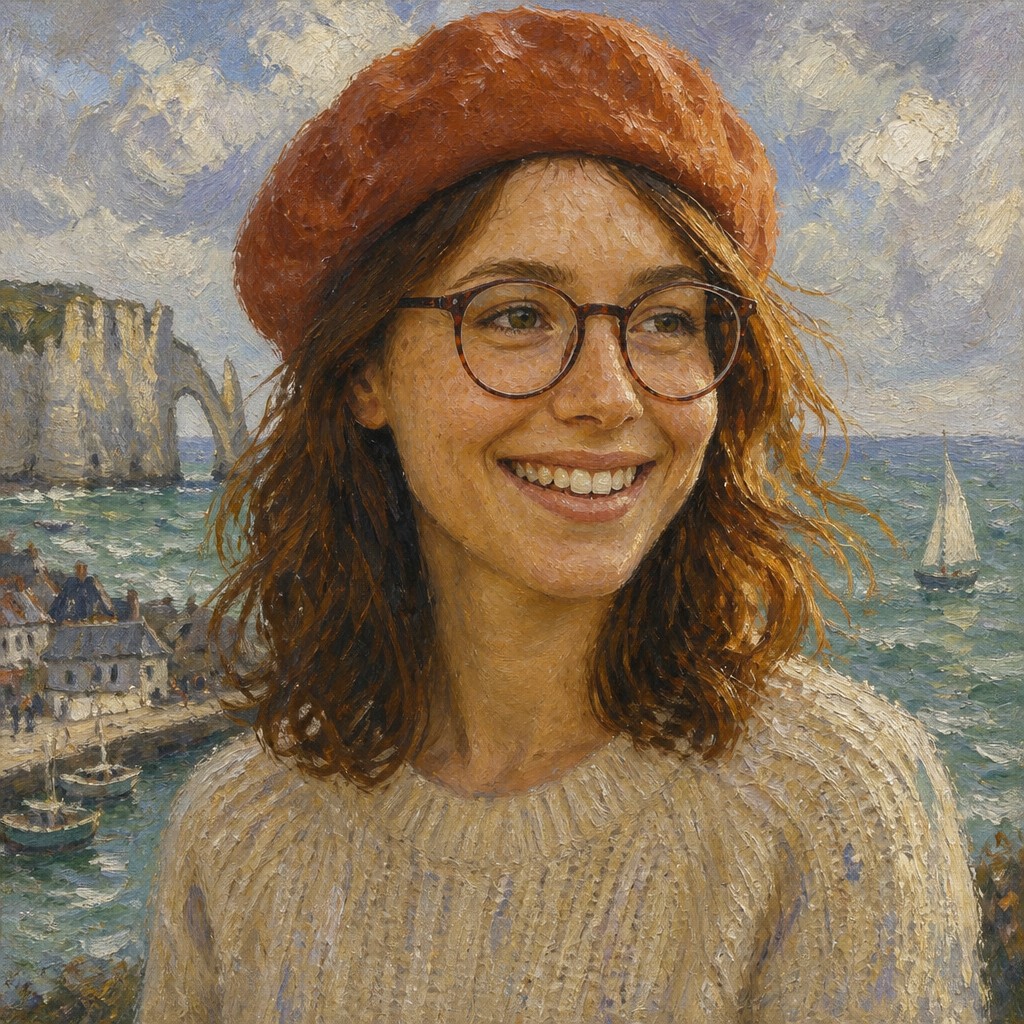

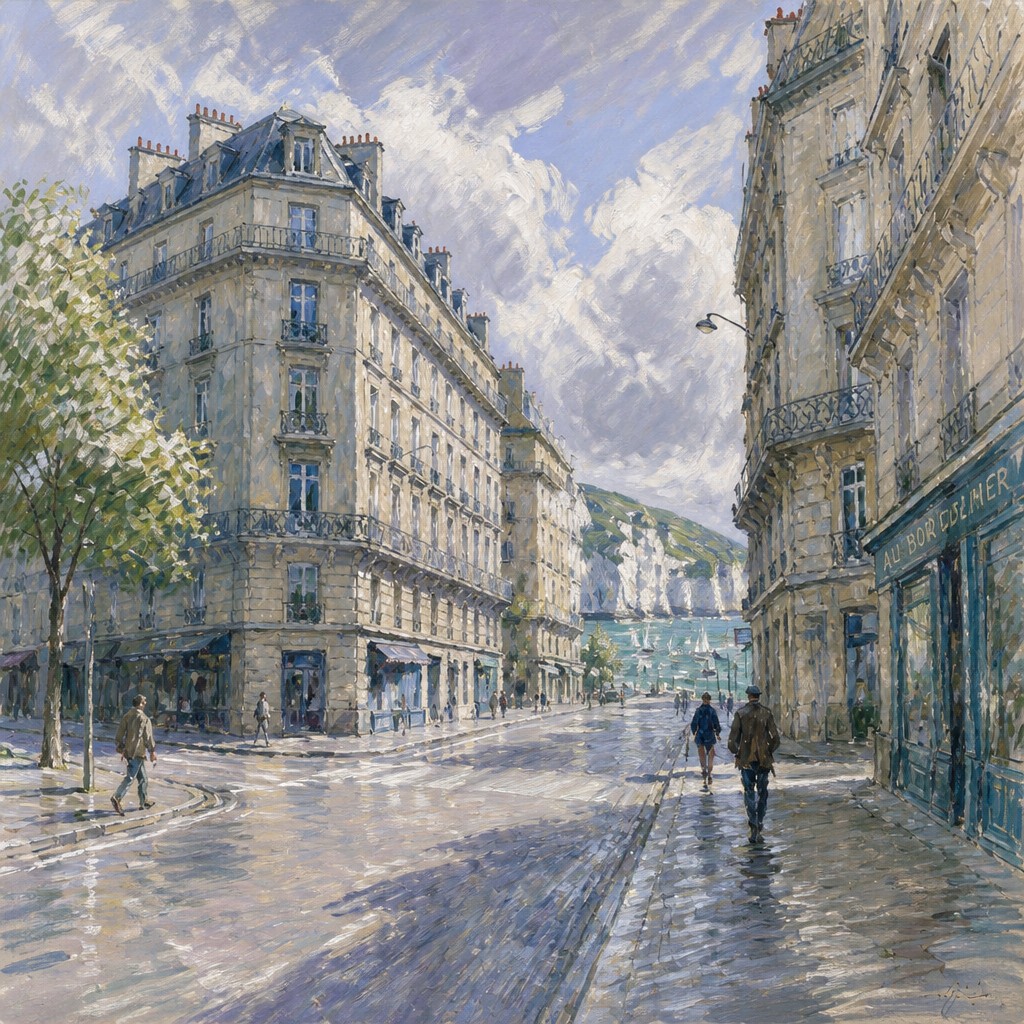

What Defines Normandy Coast Art Style
The signature details, up close
Chalk cliffs and coastal geology
Tall pale cliffs, layered limestone faces, sea arches, and weathered headlands create strong vertical or diagonal structures. Their light surfaces often contrast with dark green water and slate-colored shadow.
Expansive weather-filled skies
The sky occupies a substantial part of the composition, with scudding clouds, breaks of sunlight, mist, and rain-softened horizons. Cloud forms suggest movement and changing atmospheric pressure rather than calm decorative pattern.
Silver-lilac maritime palette
Cool grays, blue-greens, muted violets, chalk whites, and sea-glass tones establish the prevailing mood. Small areas of warm ochre, terracotta, coral, or cream add visual energy without overpowering the cool atmosphere.
Broken, wind-responsive brushwork
Short, visible strokes and irregular patches of color describe moving water, cloud edges, grasses, and reflected light. The surface remains lively, allowing neighboring colors to mix optically rather than blending every transition smoothly.
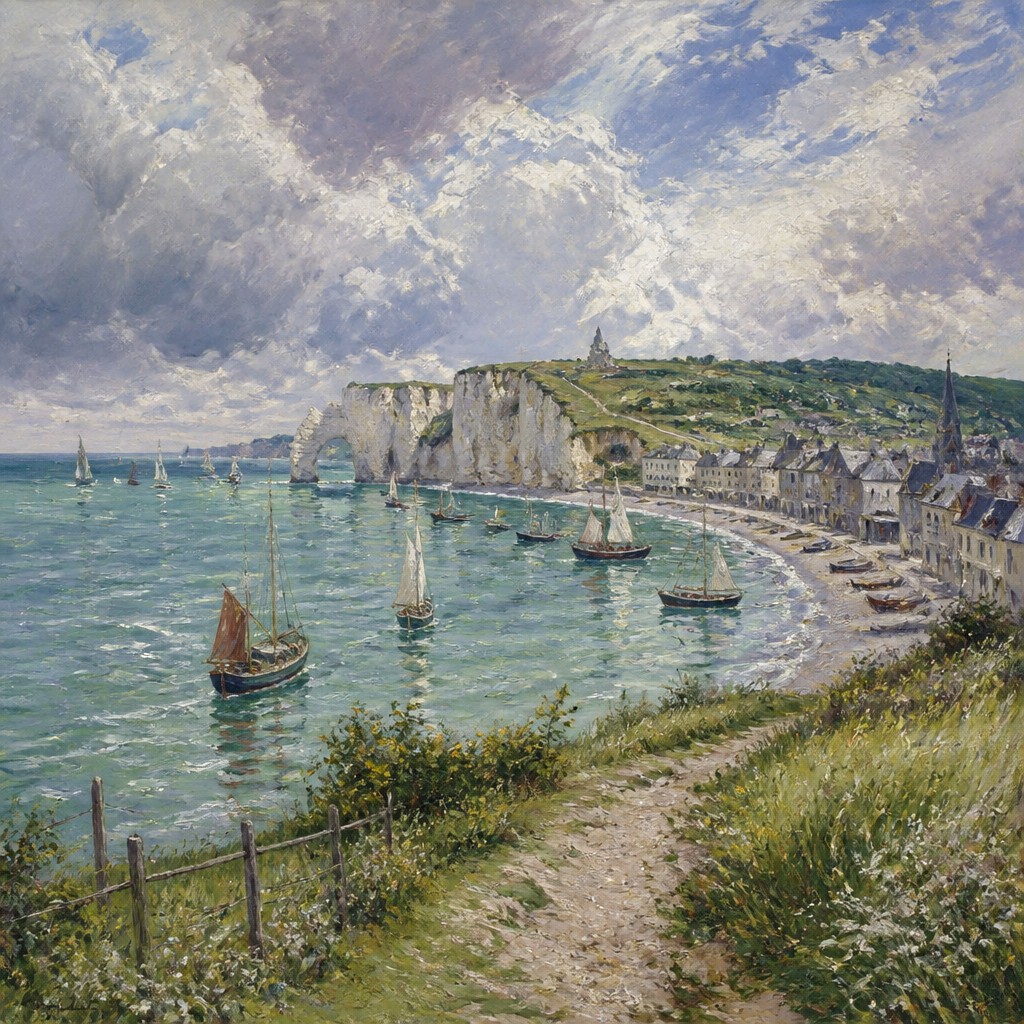
Tidal and estuarine movement
Ripples, channels, wet sand, tide lines, and reflected sky make water a principal subject. Horizontal marks are frequently interrupted by diagonal currents, wakes, mooring lines, or wind-driven texture.
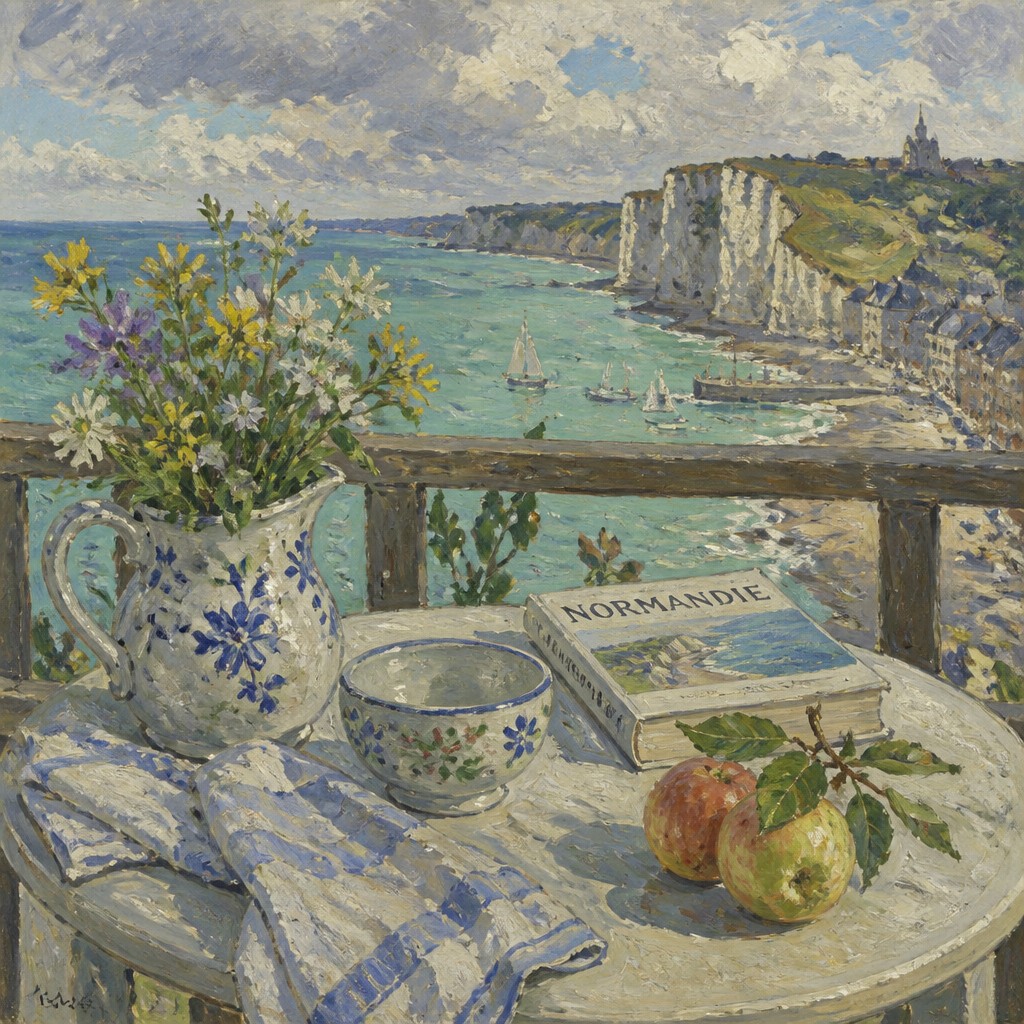
Harbors and regatta details
Small boats, clustered masts, sails, breakwaters, piers, and harbor buildings provide scale and rhythm. These elements are usually simplified into luminous accents instead of rendered with exhaustive architectural precision.
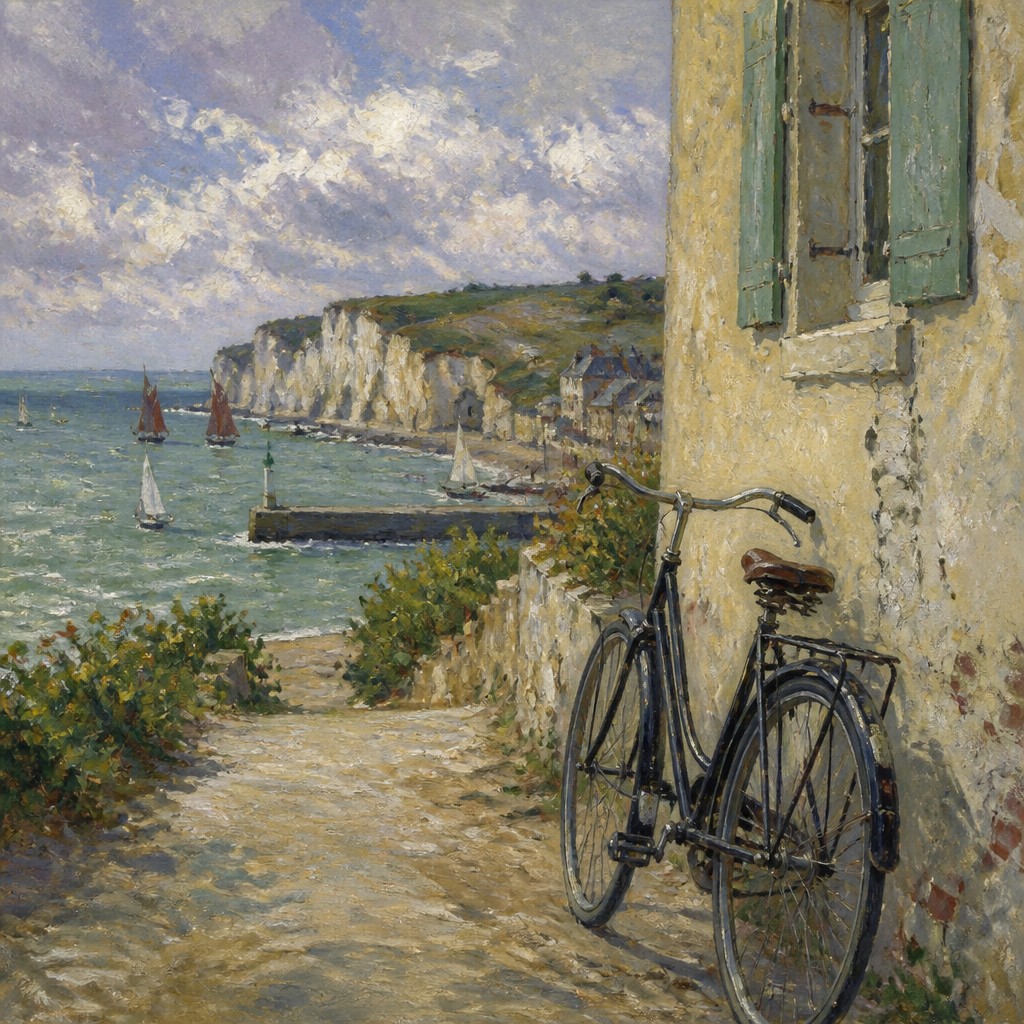
Atmospheric compression
Distant cliffs, boats, and shorelines lose contrast and become cooler as they recede. This compressed depth reinforces the damp, salt-laden air and unifies the scene through weather.
Try It
Create Videos in Normandy Coast Art Style
Styles aren't just for stills — describe a scene or animate an image and get a short video rendered in Normandy Coast. Press play to see this pond come to life.
Make a VideoNormandy Coast Prompt Ideas
Start from an idea — each one opens the generator with the style ready to go. See all 40 Normandy Coast prompts →
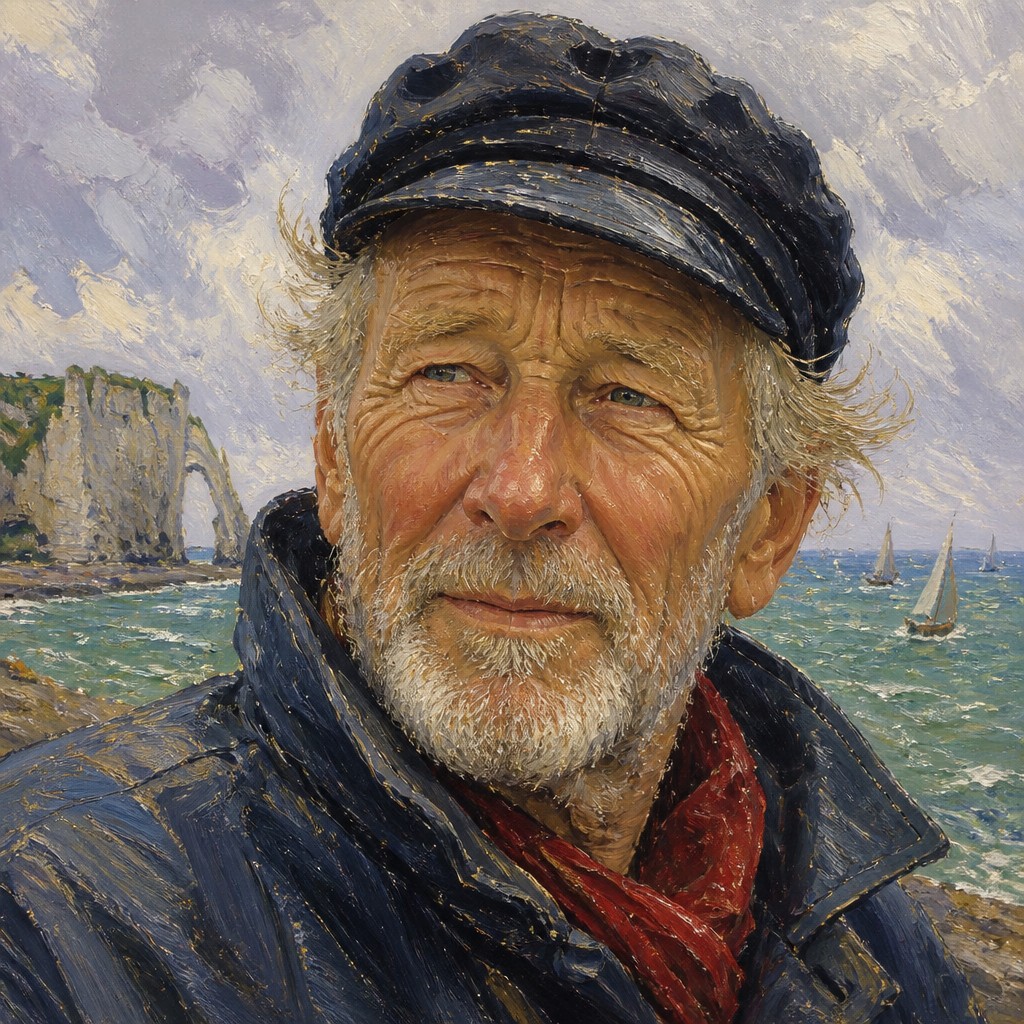
“close-up portrait of an elderly person with expressive weathered features”
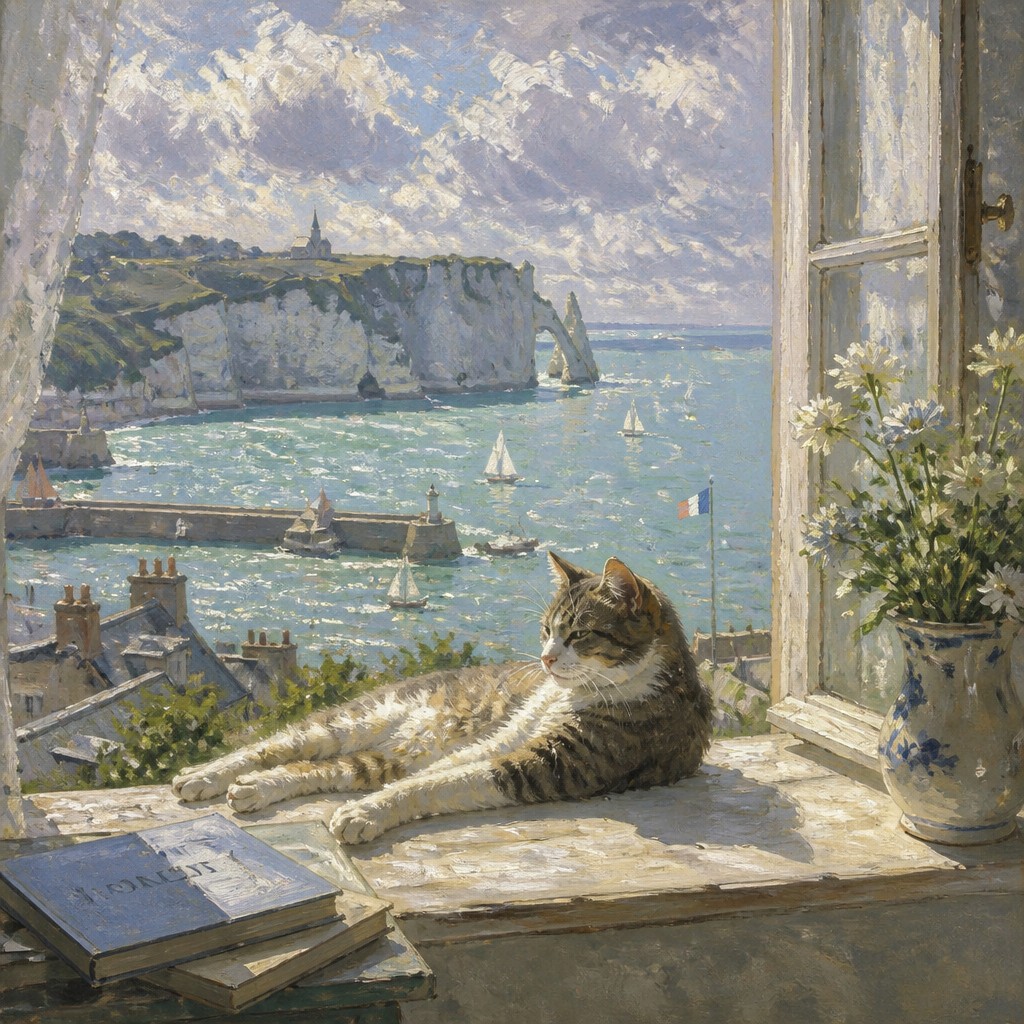
“a cat lounging in a sunlit window”
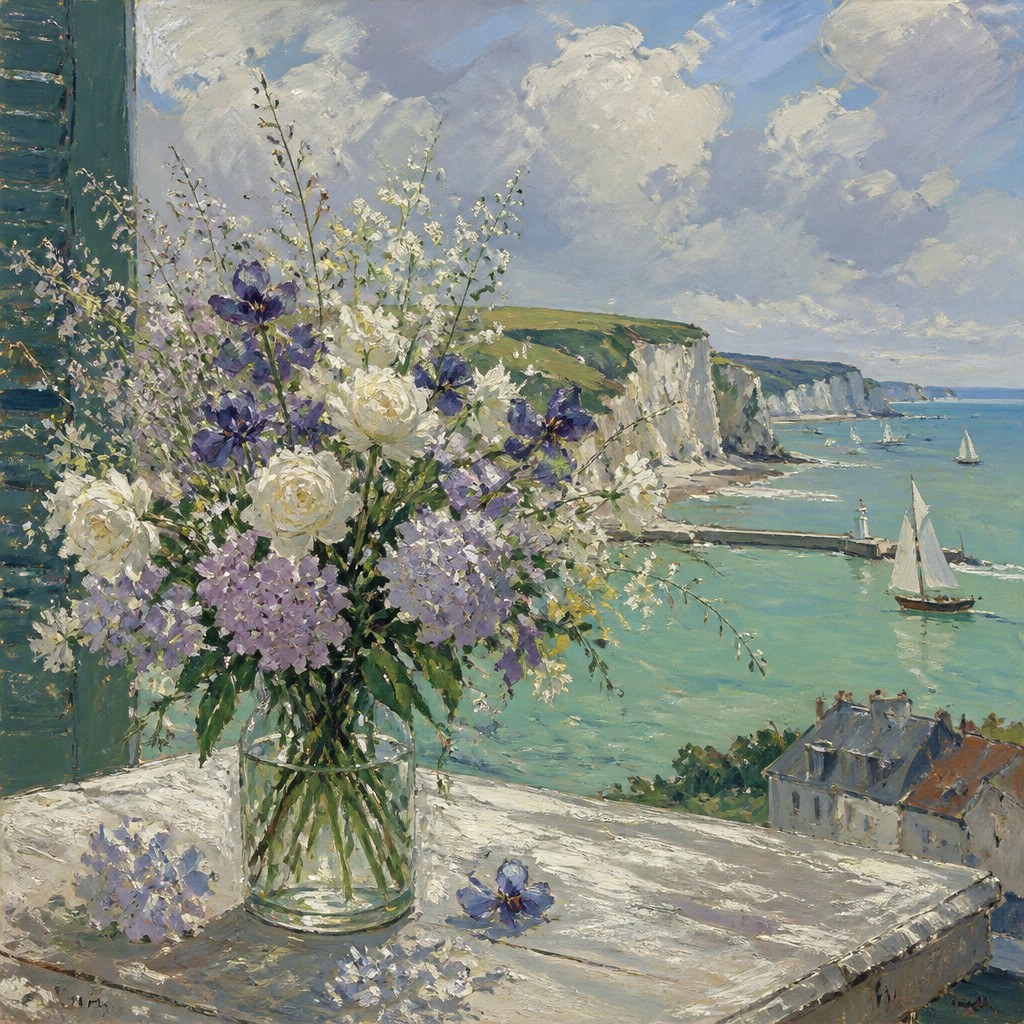
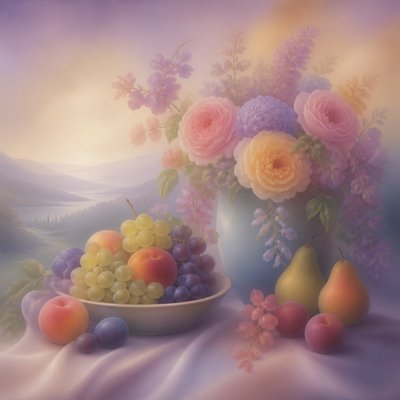
“bouquet of flowers in a glass vase”
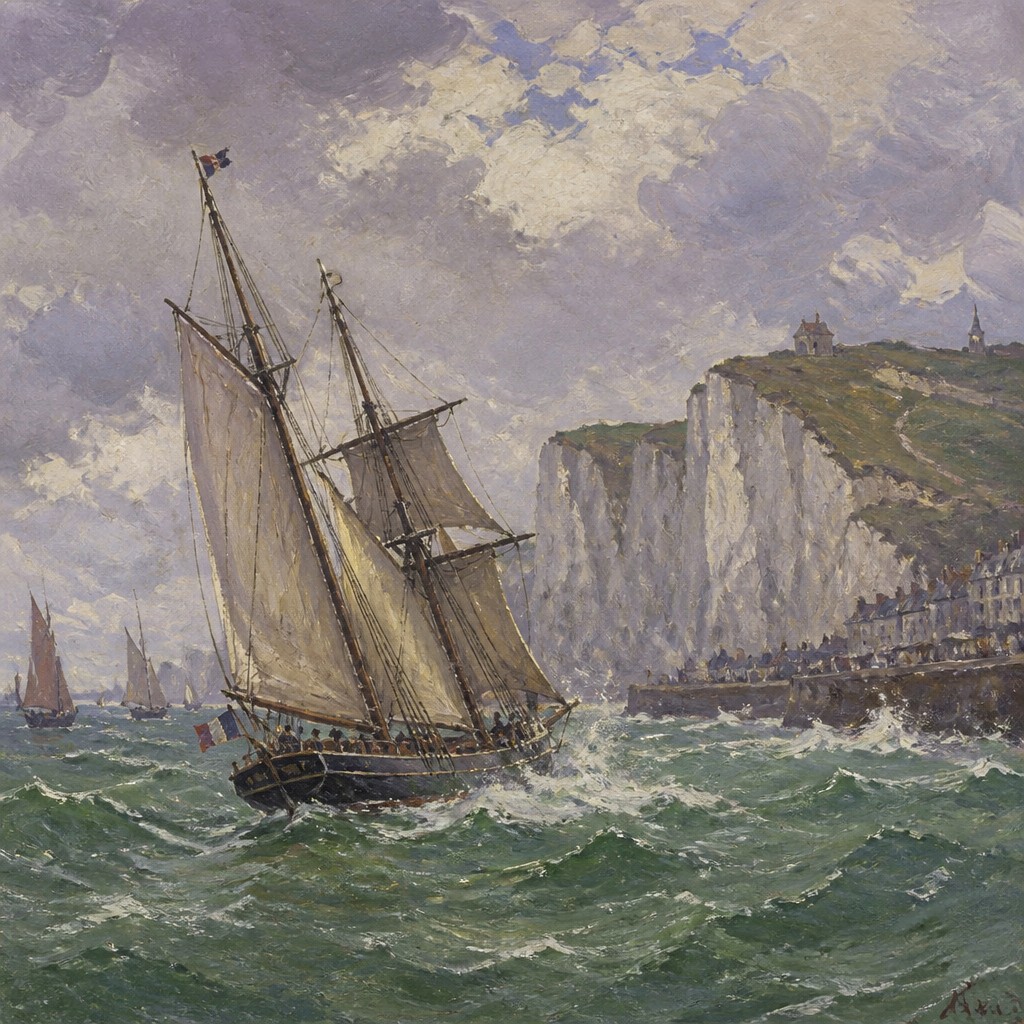
“sailing ship on a stormy sea”
How to Create Normandy Coast Art
Master the craft step by step — or skip straight to creating. Read the full guide →
- 1
Establish a broad value structure
Begin with large shapes for sky, water, cliff, and shoreline before adding detail. Reserve the lightest values for cloud breaks, wet rock, sailcloth, and reflected highlights so the image retains a clear atmospheric hierarchy.
- 2
Build color with broken marks
In paint, use separate strokes of neighboring cool colors rather than mixing every passage into a uniform gray. Digitally, emulate this with textured brushes, layered dabs, varied opacity, and subtle hue shifts across each form.
- 3
Make weather the organizing principle
Choose one dominant condition—bright squall, clearing rain, low mist, or strong wind—and let it control contrast, edge softness, reflections, and cloud direction. Consistent weather makes the composition feel observed rather than assembled.
- 4
Use selective detail
Keep distant structures and boats economical, then place sharper marks at focal points such as a cliff edge, harbor entrance, or illuminated sail. Excessive outlining weakens the style’s atmospheric unity.
- 5
Suggest depth through temperature
Use warmer, clearer color and firmer marks in the foreground, then shift distant forms toward blue-violet, gray-green, and lower contrast. Reflections should echo the sky while remaining broken by tide and wind.
- 6
Write focused generation prompts
Specify the coastal subject, weather, time of day, palette, visible brushwork, and atmospheric depth in that order. For image-to-image work, preserve the source composition while requesting chalk cliffs, estuarine light, maritime color, and softened weather transitions rather than a complete geometric rewrite.
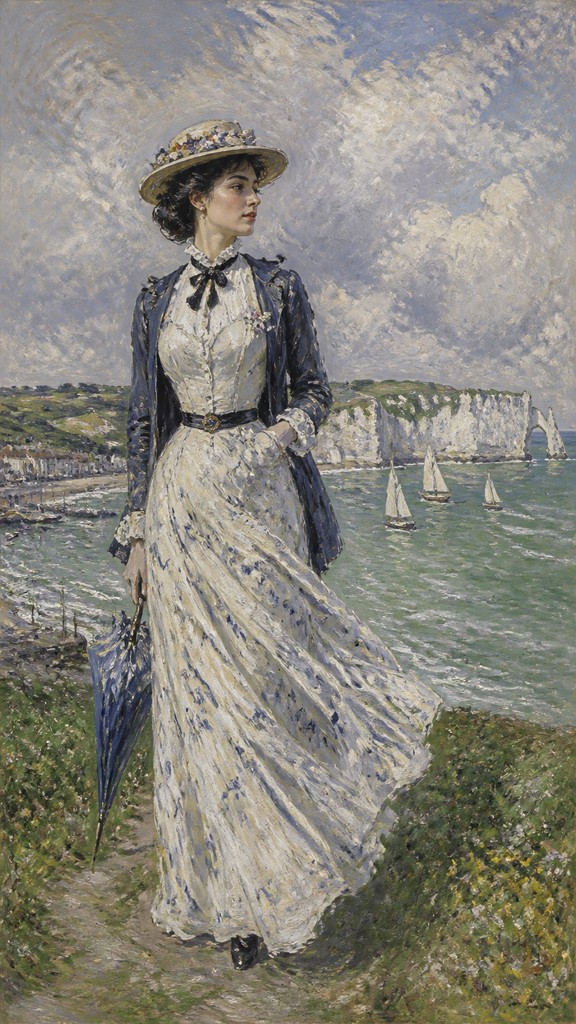
The Story
History & Origins of Normandy Coast
Normandy Coast Art Style is best understood as an invented contemporary style rather than a formally documented historical movement. Its aesthetic lineage draws on nineteenth-century French Impressionism, particularly the practice of painting coastal subjects outdoors and recording transient light, tides, haze, and weather instead of treating landscape as fixed scenery.
It also incorporates elements associated with marine painting, plein-air landscape, coastal travel imagery, and modern digital image-making. The emphasis on estuaries, regattas, chalk formations, and silver-lilac cloud is a thematic synthesis: a recognizable visual language inspired by Normandy’s geography rather than a claim of belonging to a specific historical school.
Influences: The style is related most closely to nineteenth-century French Impressionism and its plein-air treatment of transient light, as well as marine painting, coastal landscape traditions, and atmospheric realism. It also borrows compositional ideas from travel posters and regional landscape illustration, while its visible texture can draw on contemporary digital painting and painterly photography. Unlike a strict historical movement, it combines these sources around the specific geography and weather of the Normandy coast.
Frequently Asked Questions
What defines the Normandy Coast Art Style?
It is defined by chalk cliffs, estuaries, harbors, sails, and expansive skies shaped by changing Channel weather. Cool silver, lilac, blue-green, and chalk-white color combine with broken brushwork and softened atmospheric distance.
Is Normandy Coast Art Style a historical art movement?
No. It is best treated as a contemporary descriptive or AI-native style rather than a documented historical movement. Its visual lineage comes primarily from Impressionist coastal painting, marine art, plein-air landscape, and modern painterly image-making.
How does it differ from general Impressionism?
Impressionism is a broad nineteenth-century movement concerned with modern life, transient light, and visible paint handling across many subjects. Normandy Coast Art Style narrows that language to Channel-coast geography, emphasizing chalk geology, tidal water, regattas, and unsettled maritime skies.
What colors work best for this style?
A foundation of blue-green, slate gray, silver, muted violet, cream, and chalk white is characteristic. Limited warm accents such as ochre, coral, or terracotta can enliven boats, buildings, grasses, or breaks in the cloud.
How can I create this look from a photograph?
Keep the photograph’s major composition and value pattern, then translate hard edges into selective broken marks and atmospheric color shifts. Emphasize sky, water reflections, cliff texture, and weather while reducing distracting detail in distant buildings or vegetation.
What subjects suit the style besides cliffs?
Harbor entrances, tidal flats, fishing villages, beach paths, sea arches, sailing boats, lighthouses, and estuary bridges all work well. The strongest subjects are those that show a relationship between moving weather, reflective water, and a readable coastal structure.
Create your first Normandy Coast artwork
Describe anything — or upload a photo — and see it in Normandy Coast Art Style in seconds.
Related Styles
Discover similar art styles