Crete Art Style
Explore Crete Art Style: Minoan fresco colors, marine spirals, patterned pottery, and bold Bronze Age Aegean figural design.
Instantly rendered in Crete — or transform a photo
Crete Gallery
Tap any artwork to explore it
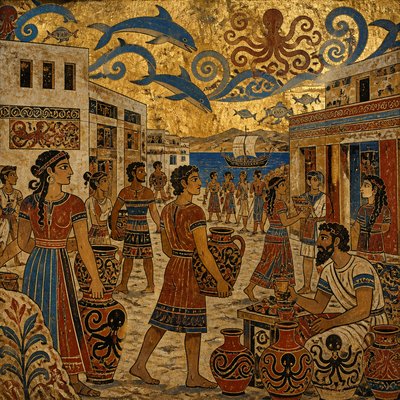
What is Crete Art Style?
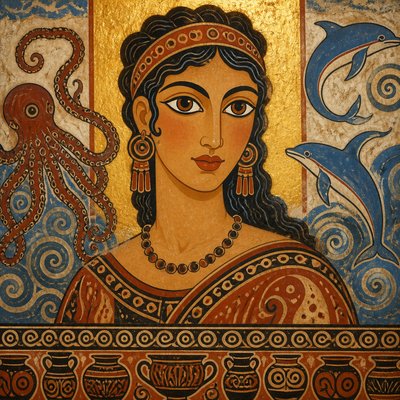
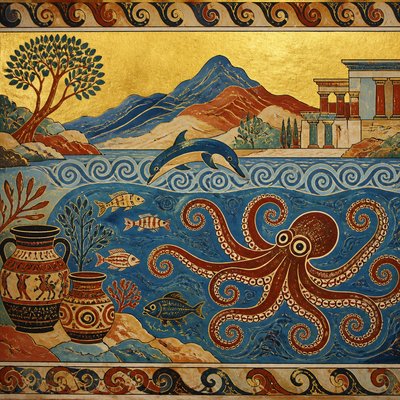
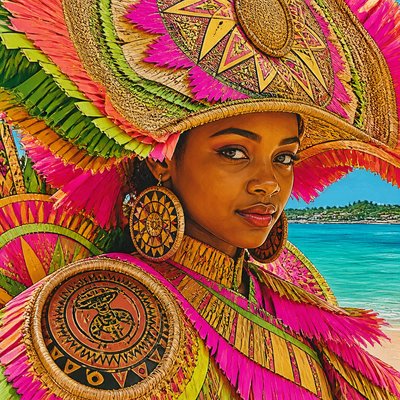
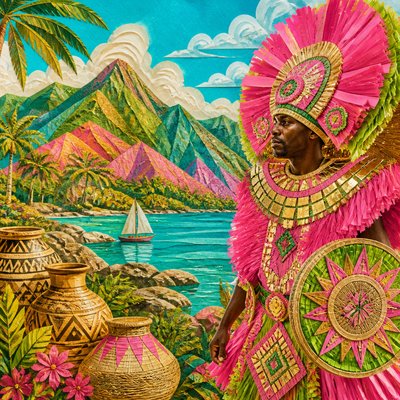
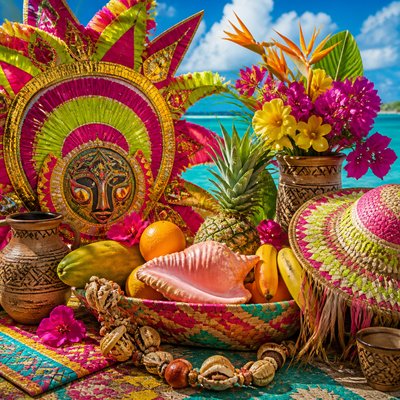
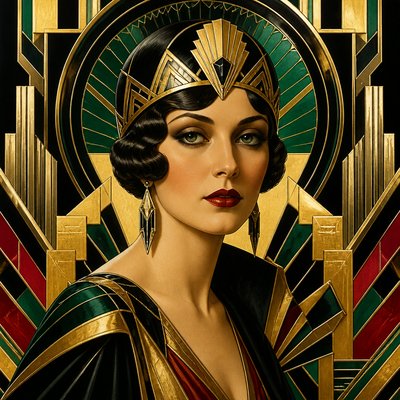
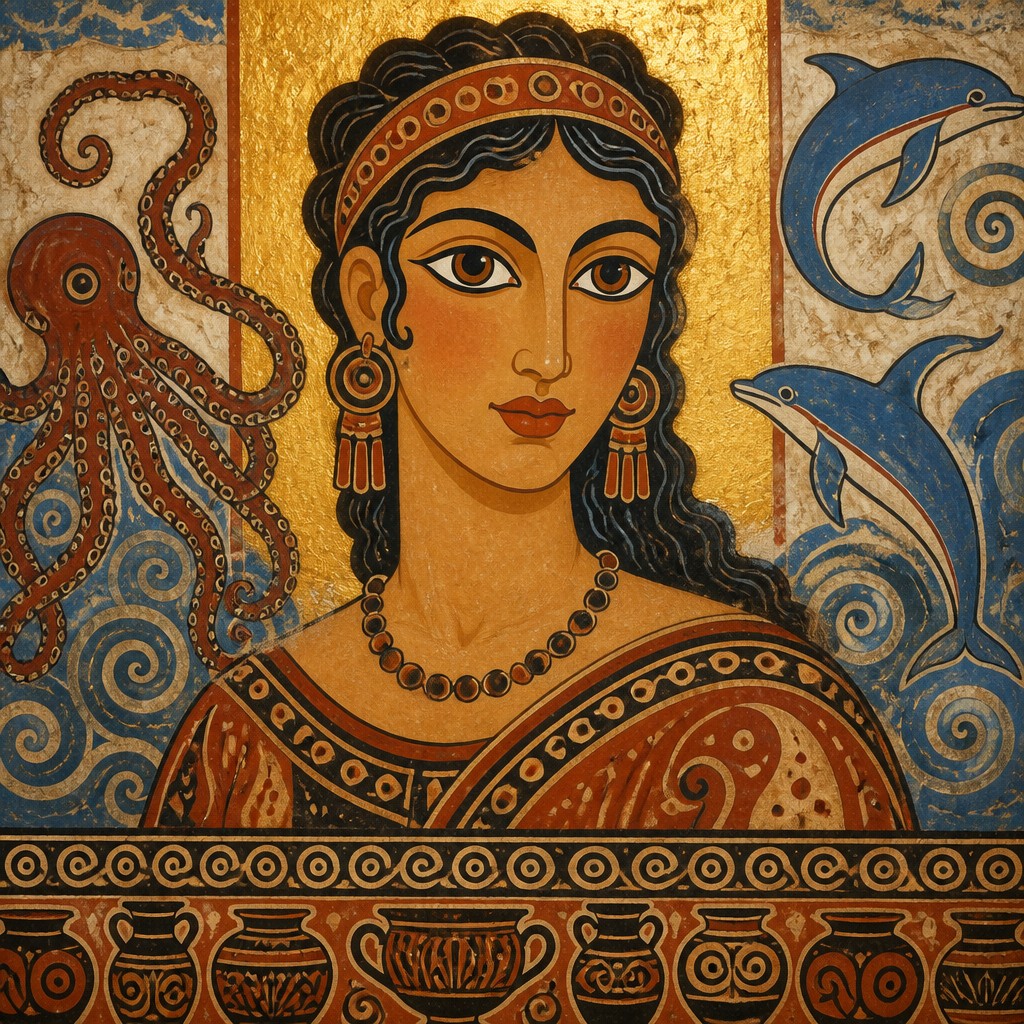
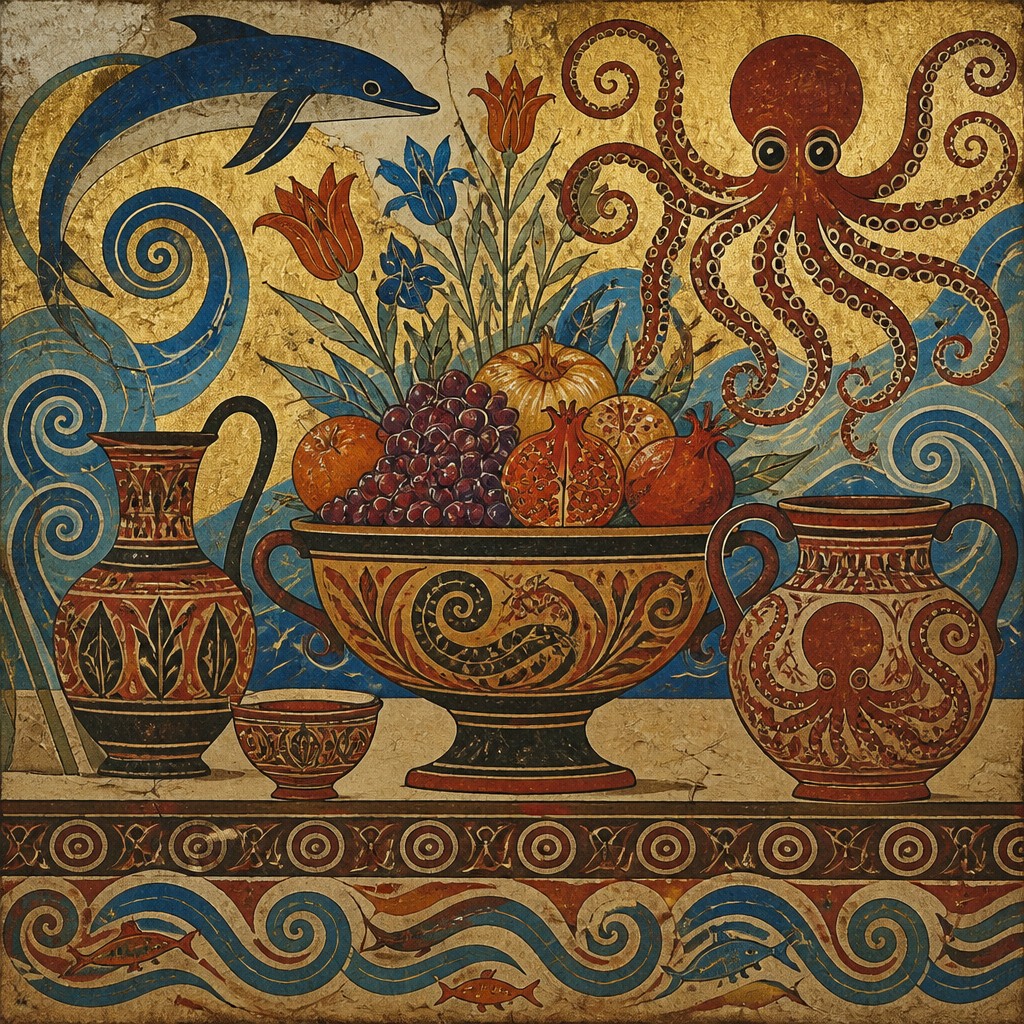
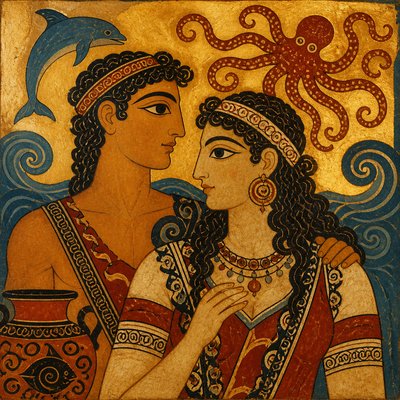
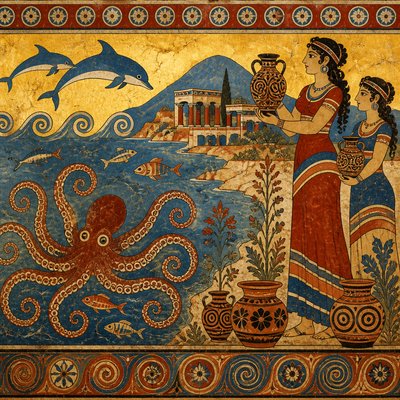
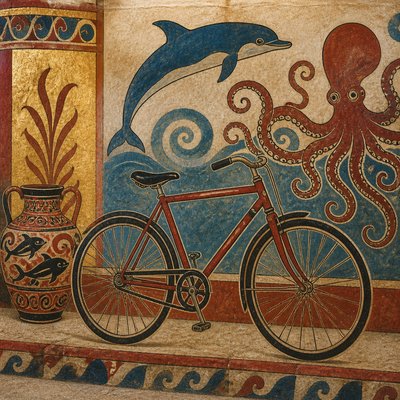
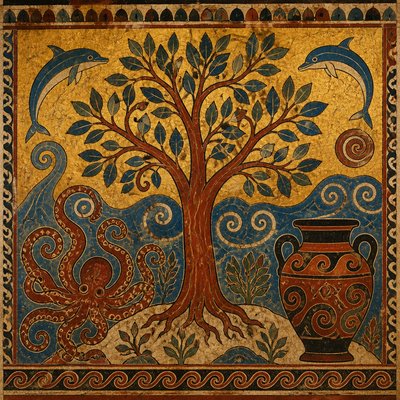
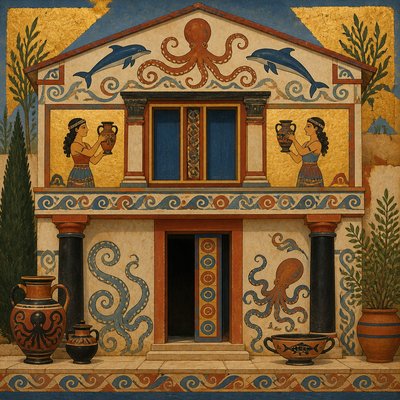
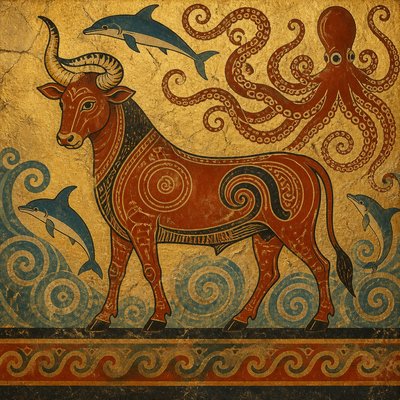
Crete Art Style refers primarily to the visual language of Minoan art, developed on Crete and neighboring Aegean islands during the Bronze Age, roughly from 3000 to 1100 BCE. It is recognized for vivid mineral pigments, fluid contour lines, animated figures, marine imagery, rhythmic spirals, and decorative surfaces. Frescoes often present bodies in profile or composite views, with strongly outlined forms placed against fields of color rather than modeled through deep illusionistic space.
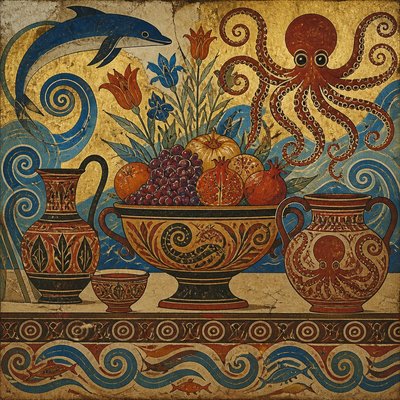
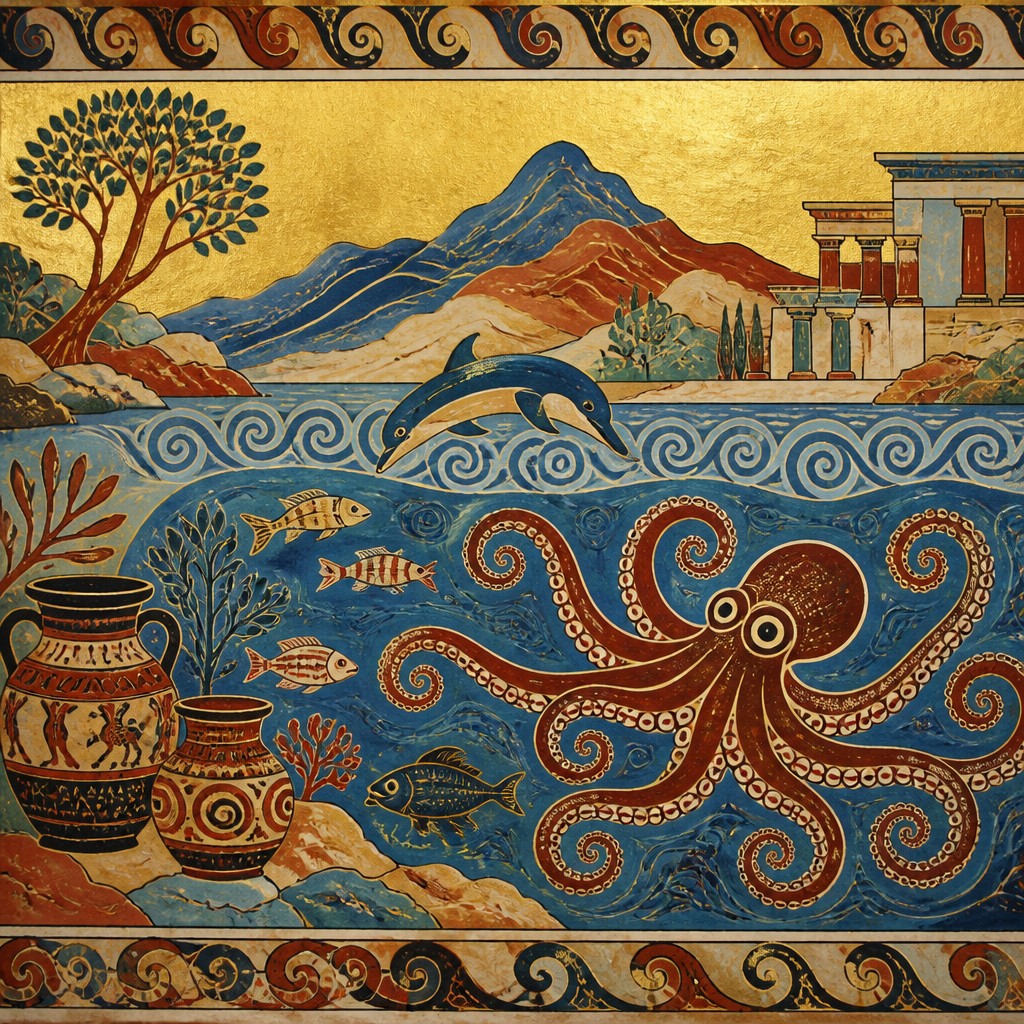
The style’s visual identity comes from the combination of ceremonial wall painting, decorated ceramics, seal imagery, and architectural ornament. Red, ocher, black, blue, white, and green pigments create a warm yet lively palette, while octopuses, dolphins, fish, shells, reeds, flowers, and curling waves establish a strong connection to the sea. Modern interpretations may add softly glowing gold-leaf panels or more graphic frontal compositions; these are contemporary stylistic adaptations rather than universal features of surviving Minoan art.
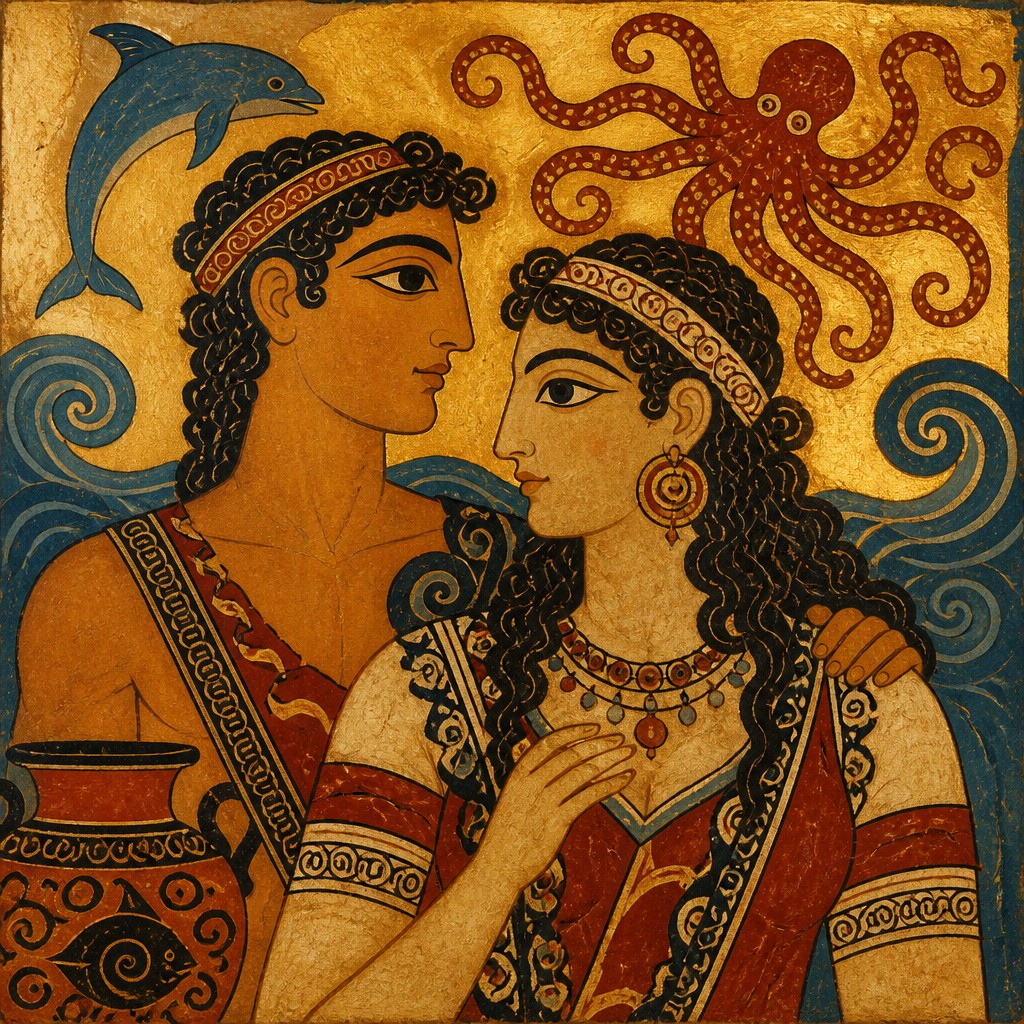
Try It On Your Photos
Upload any photo and convert it into Crete Art Style — drag the sliders to compare before and after.
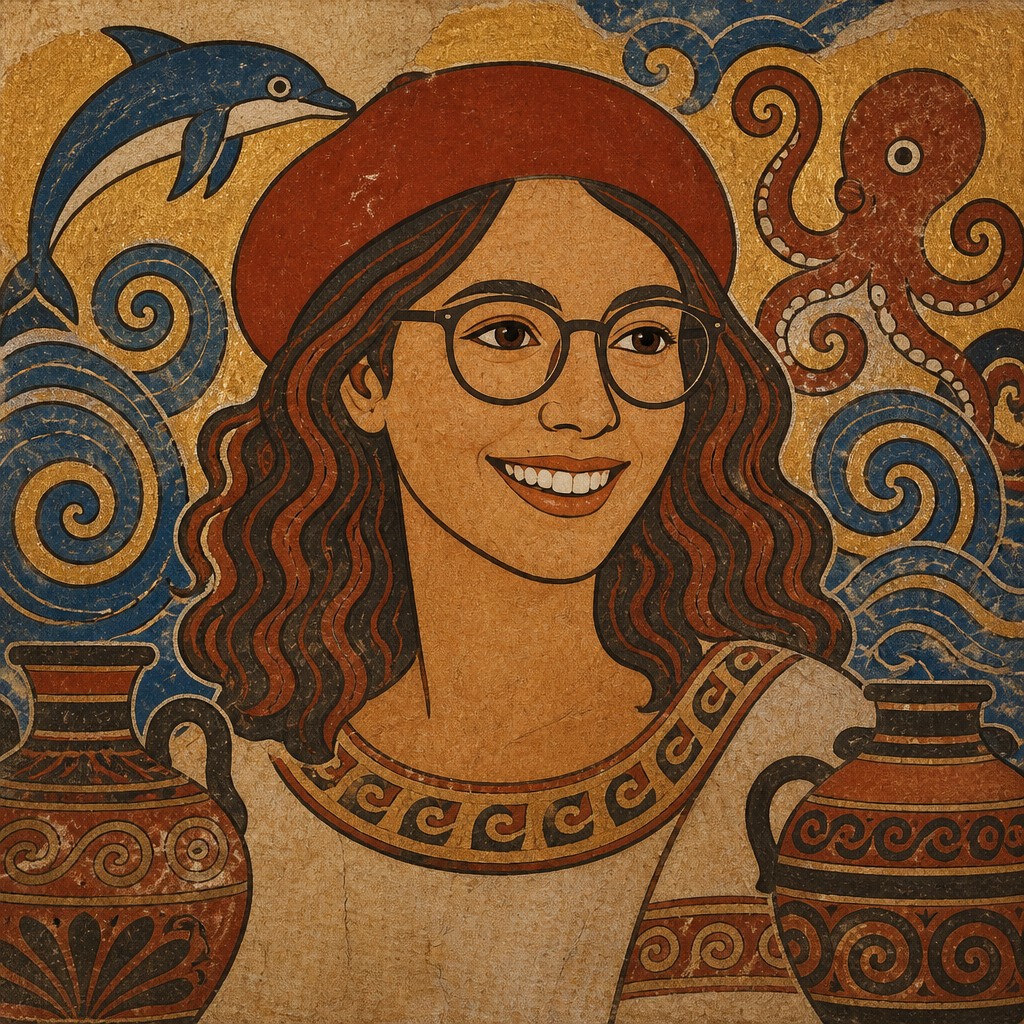

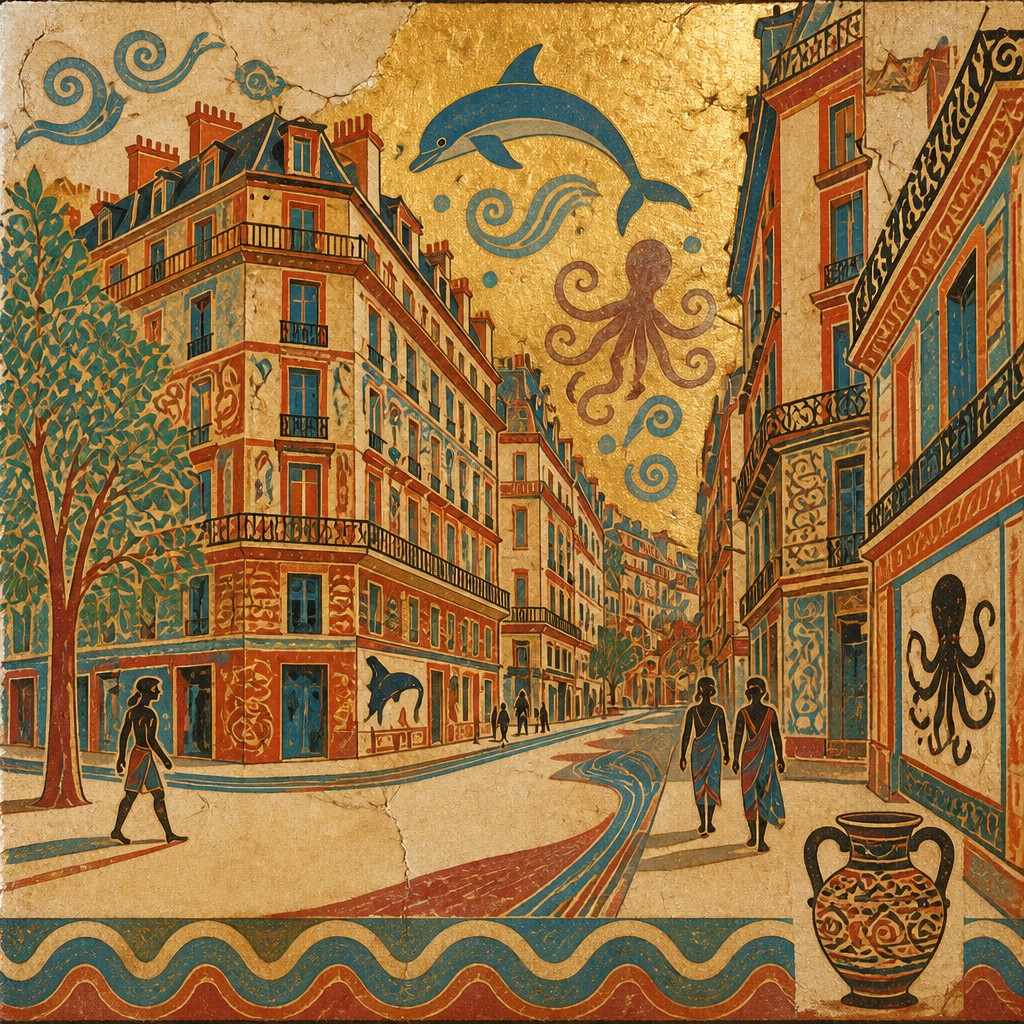

What Defines Crete Art Style
The signature details, up close
Fresco pigments on plaster
The style is associated with mineral-based colors laid onto lime plaster, producing broad, luminous areas of red, ocher, blue, black, white, and green. Surfaces often feel integrated with architecture rather than framed like easel paintings.
Marine and botanical imagery
Octopuses, dolphins, fish, shells, seaweed, lilies, reeds, and curling waves provide recurring subjects. These forms are arranged to suggest movement and abundance rather than static natural history illustration.
Spirals and rhythmic curves
Spiral tendrils, wave patterns, and looping contours organize the composition with continuous visual rhythm. Curved lines frequently guide the eye across the entire surface.
Flattened figural stylization
Figures use clear outlines, simplified anatomy, narrow waists, expressive gestures, and selective profile or frontal views. Depth is limited, allowing posture, costume, and contour to carry the meaning.
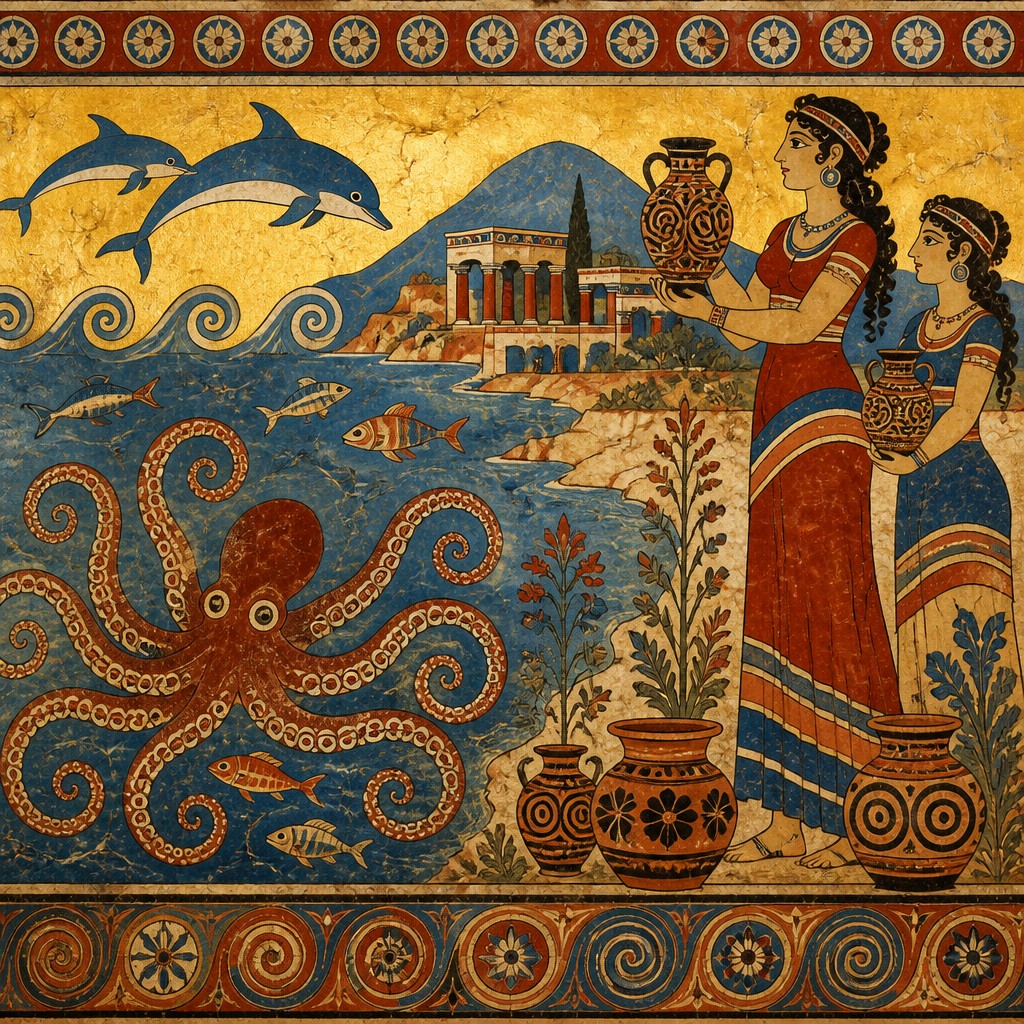
Patterned pottery decoration
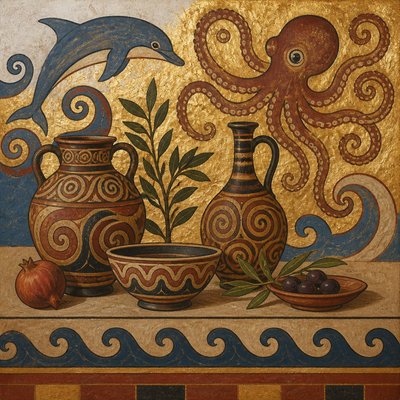
Ceramic surfaces are treated as active fields of ornament, with dark lines, earthy red grounds, repeated motifs, and flowing marine or plant forms. The decoration often follows the vessel’s rounded shape.
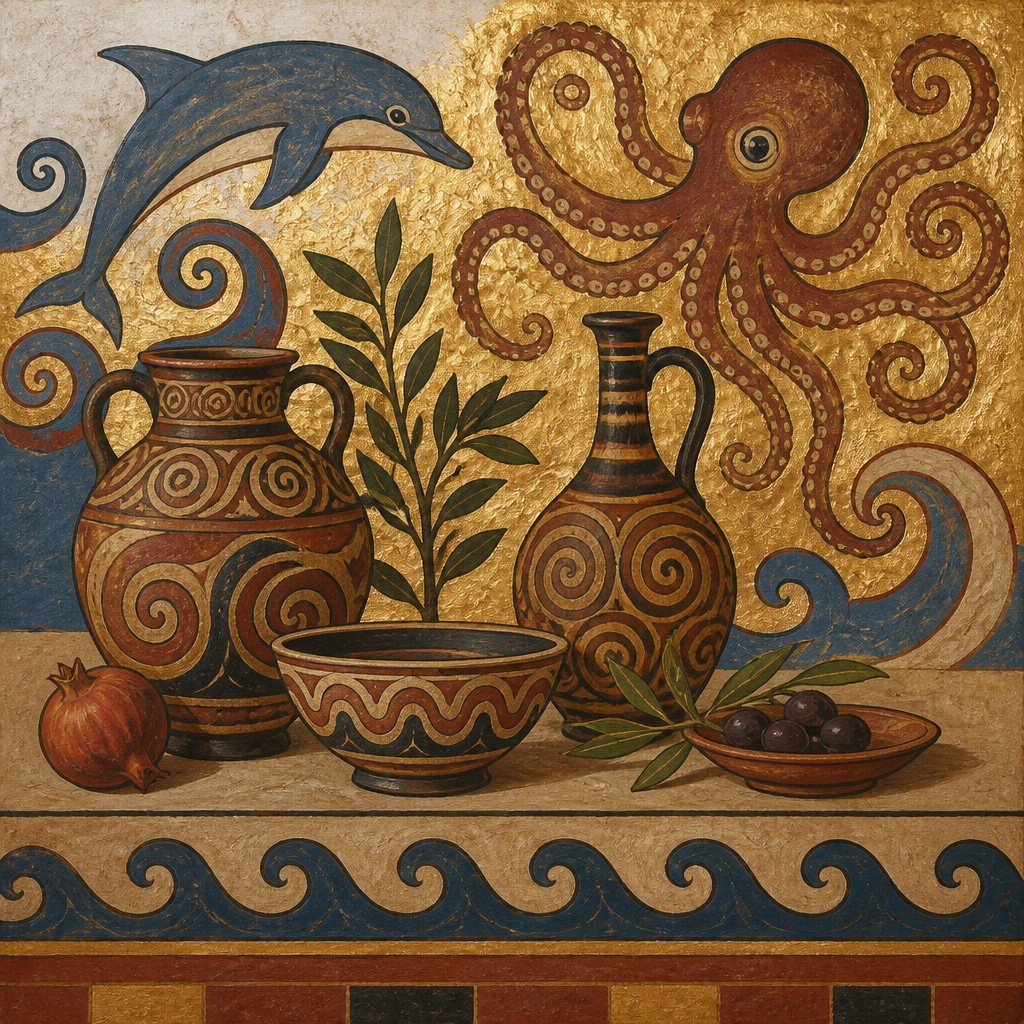
Warm mineral palette
Terracotta red, charcoal black, cream, ocher, muted blue, and sea green create a palette that feels both earthy and maritime. Contemporary versions may intensify saturation or introduce softly glowing gold accents.
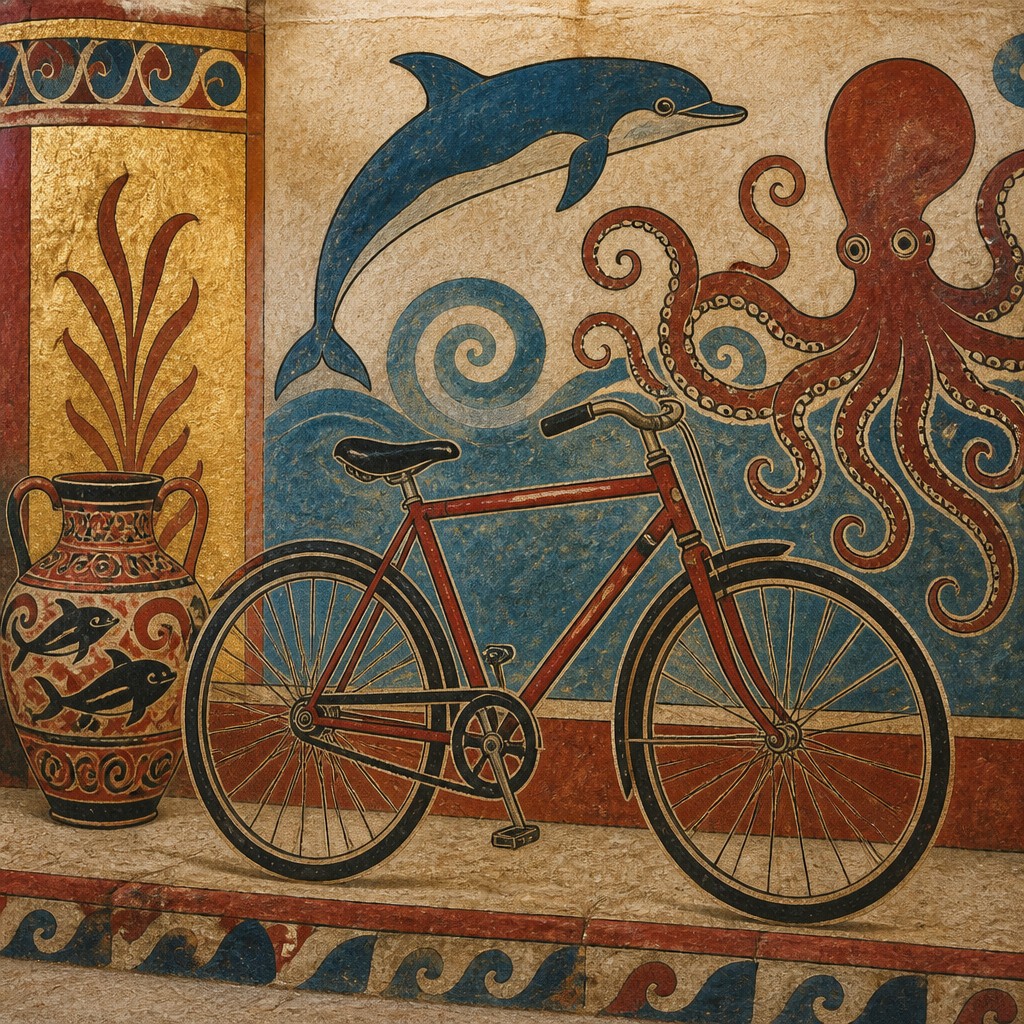
Decorative surface unity
Architecture, clothing, objects, and backgrounds tend to participate in one patterned visual field. Borders, bands, and repeated motifs help connect separate figures and scenes.
Crete Prompt Ideas
Start from an idea — each one opens the generator with the style ready to go. See all 40 Crete prompts →
How to Create Crete Art
Master the craft step by step — or skip straight to creating. Read the full guide →
- 1
Build the composition as a wall painting
Work on a warm plaster-like ground and favor broad, interlocking color zones over deep perspective. In digital media, add subtle lime texture, irregular pigment absorption, and restrained surface wear.
- 2
Use a limited mineral palette
Begin with terracotta, ocher, black, cream, blue, and sea green, then reserve brighter accents for focal motifs. Avoid excessive gradients; flat or lightly mottled color better reflects the source tradition.
- 3
Outline and simplify figures
Define people and animals with confident dark contours, elongated proportions, and expressive gestures. Reduce anatomical detail while preserving movement, costume patterns, and a readable silhouette.
- 4
Fill empty space with organic rhythm
Arrange spirals, reeds, flowers, waves, shells, and marine animals so they flow around the main subject. Repeat curves and directional lines to create a continuous decorative pulse.
- 5
Adapt pottery and gold accents carefully
For a vessel-inspired image, wrap patterns around the form and let motifs follow its curvature. Gold-leaf panels can supply a contemporary luminous effect, but use them as selective framing or background accents rather than treating them as a universal historical feature.
- 6
Write prompts with material and structure
Specify wet lime plaster, mineral pigments, bold contouring, flattened space, marine spirals, and patterned ceramic ornament along with the subject. For photo transformations, preserve the original pose and major features while requesting simplified contours, fresco texture, and a limited Aegean palette.
The Story
History & Origins of Crete
Minoan art emerged in Bronze Age Crete, with roots in Early Minoan material culture and major development during the Middle and Late Minoan periods. Palace complexes and settlements supported fresco painting, finely decorated pottery, carved seals, jewelry, and architectural design. Wall paintings were commonly executed with pigments applied to wet lime plaster, allowing color to become integrated with the surface as it dried, while details could be added after the plaster had set.
The style changed over time through contact with the Cyclades, mainland Greece, Egypt, and the wider eastern Mediterranean. Naturalistic marine and plant subjects, ceremonial scenes, processions, and energetic figures became especially prominent in the mature palace period. After the decline of major Cretan palatial centers and the increasing influence of mainland Greek powers, Minoan visual traditions continued in modified forms within the broader Aegean artistic world.
Influences: Crete Art Style is closely related to Minoan fresco painting, Bronze Age Aegean pottery, Cycladic visual culture, and the decorative traditions of palace architecture in Crete. It also intersects with ancient Mediterranean marine ornament, early Greek geometric patterning, and modern revivalist treatments of archaeological art. Contemporary versions may borrow from graphic illustration, mural painting, ornamental design, and stylized historical fantasy while retaining the Minoan emphasis on movement, pattern, and vivid surface color.
Frequently Asked Questions
What defines Crete Art Style?
It is defined by the visual language of Minoan and Bronze Age Cretan art: vivid fresco pigments, strong contour lines, flattened space, marine and botanical motifs, spirals, and richly decorated surfaces. Figures are generally simplified and energetic rather than modeled with academic realism.
Is Crete Art Style the same as Minoan art?
In most contexts, the terms refer to closely related ideas, but Crete Art Style is a broader and more accessible label. Minoan art describes the historical culture and surviving works of Bronze Age Crete, while Crete Art Style may also include modern adaptations that add graphic, decorative, or imaginative elements.
Were Minoan frescoes really painted on wet plaster?
Many Minoan wall paintings used a fresco process in which pigments were applied to wet lime plaster. Additional details could be painted after the surface dried, so the surviving works may combine true fresco passages with later surface applications.
What subjects work well in this style?
Marine life, dancers, processions, palace scenes, ceremonial figures, plants, animals, and patterned vessels are especially suitable. Modern subjects can also work when simplified into bold silhouettes and surrounded by organic motifs.
How is this style different from ancient Greek vase painting?
Minoan imagery is often more fluid, colorful, and naturalistic in its treatment of plants, animals, and movement. Ancient Greek black-figure and red-figure vase traditions generally rely more heavily on controlled silhouette technique, narrative scenes, and the curved boundaries of ceramic vessels.
Can photographs be transformed into this aesthetic?
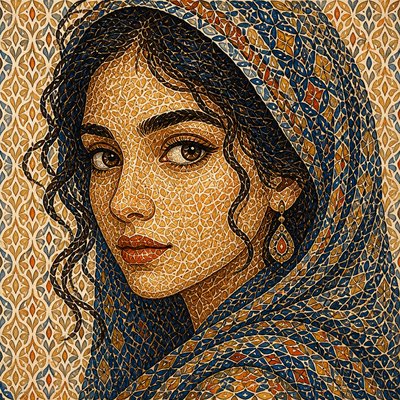
Yes, but the strongest results usually preserve the subject’s pose while simplifying facial features, clothing, and shadows into outlined shapes. Requesting plaster texture, mineral pigments, marine ornament, and limited depth helps maintain the visual logic of the style rather than producing a generic ancient effect.
Create your first Crete artwork
Describe anything — or upload a photo — and see it in Crete Art Style in seconds.
Related Styles
Discover similar art styles